❌

Normal view

There are new articles available, click to refresh the page.
Yesterday β€” 28 October 2026NASA Breaking News

NASA University Challenge Ignites Trajectory of Drone Entrepreneur

By: Jim Banke
28 October 2026 at 14:00

4 min read

Preparations for Next Moonwalk Simulations Underway (and Underwater)

NASA University Challenge image shows four men dressed in t-shirts and jeans, each holding a small quad-copter drone, stand in front of a β€œCamp Grayling” sign with trees and bushes in the background.
Four co-founders of AG3 Labs –from left Matt Atkinson, Gavin Gardner, Ryan Atkinson, and Gryson Gardner – show off the military training drones their company builds at a U.S. Army event at Camp Grayling in Michigan. As a student, Gavin was on a Michigan State team twice selected for participation in NASA’s University Student Research Challenge. His NASA experience served as a foundation for the creation of AG3.
AG3 Labs

Five years ago, Gavin Gardner was a Michigan State University engineering student researching next-generation drone technology as part of a NASA grant. Garder expected the research to be demanding – but he was surprised that navigating the financial side of the work presented an even greater challenge.

Although Gardner was used to leading fellow students in a lab setting, he and his team were completely new to things like creating budgets, handling large sums of money, and promoting their work for crowdfunding.

That’s why demonstrating both engineering and entrepreneurship skills are major tentpoles of NASA’s University Student Research Challenge (USRC), an initiative that provides grants to teams of college students interested in helping the agency realize its aeronautical research goals.

β€œHalf the battle is building your product,” Gardner said recently. β€œThe other half is selling the product in a way that everyone else can understand what you’re doing and not talking in nerdy, engineering ways.”

We hope that every team that participates in the program sees, like Gavin, how they can grow technically, entrepreneurially, and use the opportunity as a launchpad for their own innovative careers.

STEVEN HOLZ

STEVEN HOLZ

NASA USRC Manager

Gardner and his Michigan State USRC alumni teammates are still using those lessons today, as aerospace developers. In 2024, they founded their own company, AG3 Labs, which specializes in drones for military training exercises.

β€œI don’t think I would discredit our technical expertise in getting us to where we are today, but I know that USRC was a booster that really amplified our trajectory at such a young age,” Gardner said.

NASA USRC manager Steven Holz said Gardner’s experience shows what students can accomplish when they receive both a grant and guidance – enabling a future workforce and contributing to the aviation industry.

β€œWe are proud to see the success of USRC alumni,” Holz said. β€œWe hope that every team that participates in the program sees, like Gavin, how they can grow technically, entrepreneurially, and use the opportunity as a launchpad for their own innovative careers.” 

Research path

Gardner’s path to running his own company began with a middle school age trip to Space Camp, where he began realizing that he wanted to be an engineer.

The engineering bug also bit his brother, Gryson Gardner, and the two of them would often be found in their Michigan garage tinkering with various machinery, including drones and electronic kits.

When Gardner arrived at Michigan State, he looked for extracurricular groups and found one dedicated to the increasingly popular hobby of drones. He gained hands-on, practical experience in how drones are made and operated.

In 2021, Gardner received an email from a friend who told him they had just won a USRC grant from NASA for an activity called Aerial Intra-city Delivery Electric Drones (AIDED), and they needed help building a new drone.

β€œWe had this idea that instead of flying through the whole city, why can’t a drone just hitchhike a ride on a city bus like everyone else does?” Gardner said.

The concept was for a cargo-carrying drone to take off, dock on top of public transportation such as a bus, charge its batteries while riding along, and then take off for its final leg of the delivery. The team built and flew a full-scale drone to prove the concept but decided against pursuing a commercial venture.

β€œThe commercial drone market kind of scared us a little bit with the large number of regulations that go into operating such a novel idea like this with flying over people in a dense city,” Gardner said.

But the team’s demonstration of technical prowess and confidence led to a second USRC award from NASA in 2023 – the Laser Energized Aerial Drone System (LEADS), which focused on using a laser to transfer power directly to a drone in flight.

While working on LEADS, which led to flying a prototype, Gardner’s network of contacts within the drone community expanded to include NASA personnel at the Glenn Research Center in Cleveland, who made him aware of internship opportunities, which he applied for and was accepted while in graduate school.
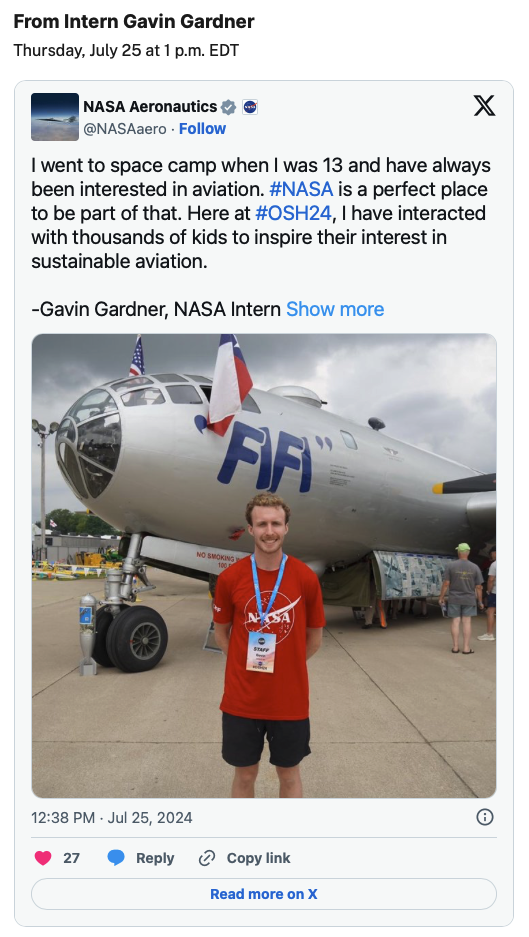
Screen shot of Gavin Gardner's intern post whee he is standing in front of the FIFI aircraft wearing a red NASA t-shirt and dark shorts.
Gavin Gardner, a University Student Research Challenge participant who went on to co-found his own drone company, also was a NASA intern in 2024 and wrote this social media post.Β 

Student challenge paves way for opportunityΒ 

As his graduation in the spring of 2025 with a master’s degree approached, Gardner took the initial steps in late 2024 to co-found with his brother and other USRC alumni AG3 Labs after a friend suggested the military could use low-cost drones to test effective counter drone systems.

An initial award from the U.S. Army led to more contracts, allowing the company to expand and ramp up its operations, where today their production capability enables thousands of drones to be built each month.

Gardner credits his experience with USRC, especially when it came to learning more about the business side of running a technical operation, with helping create the opportunities for success he and his team are experiencing today.

About the Author

Jim Banke

Jim Banke

Aeronautics Senior Writer

Jim Banke is a veteran aviation and aerospace communicator with more than 40 years of experience as a writer, producer, consultant, and project manager based at Cape Canaveral, Florida. He is part of NASA Aeronautics' Strategic Communications Team and is Senior Writer for the Aeronautics Division within the Research Technology Mission Directorate. In 2007 he was recognized with a Distinguished Public Service Medal, NASA's highest honor for a non-government employee.
Facebook logo
Instagram logo
Linkedin logo
Before yesterdayNASA Breaking News

NASA Invites Media to Crew Completion of Yearlong Mars Simulation

27 October 2026 at 15:27
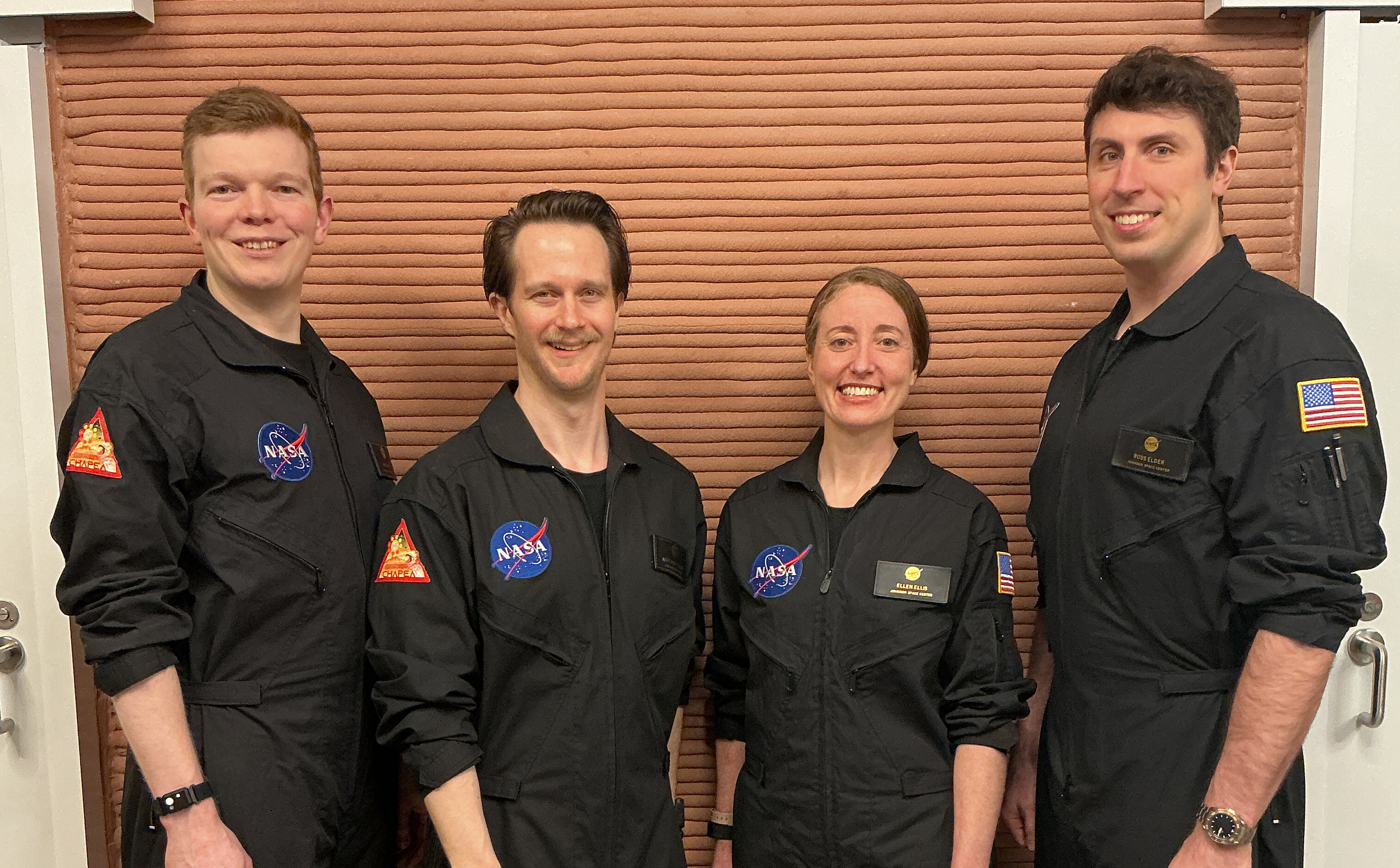
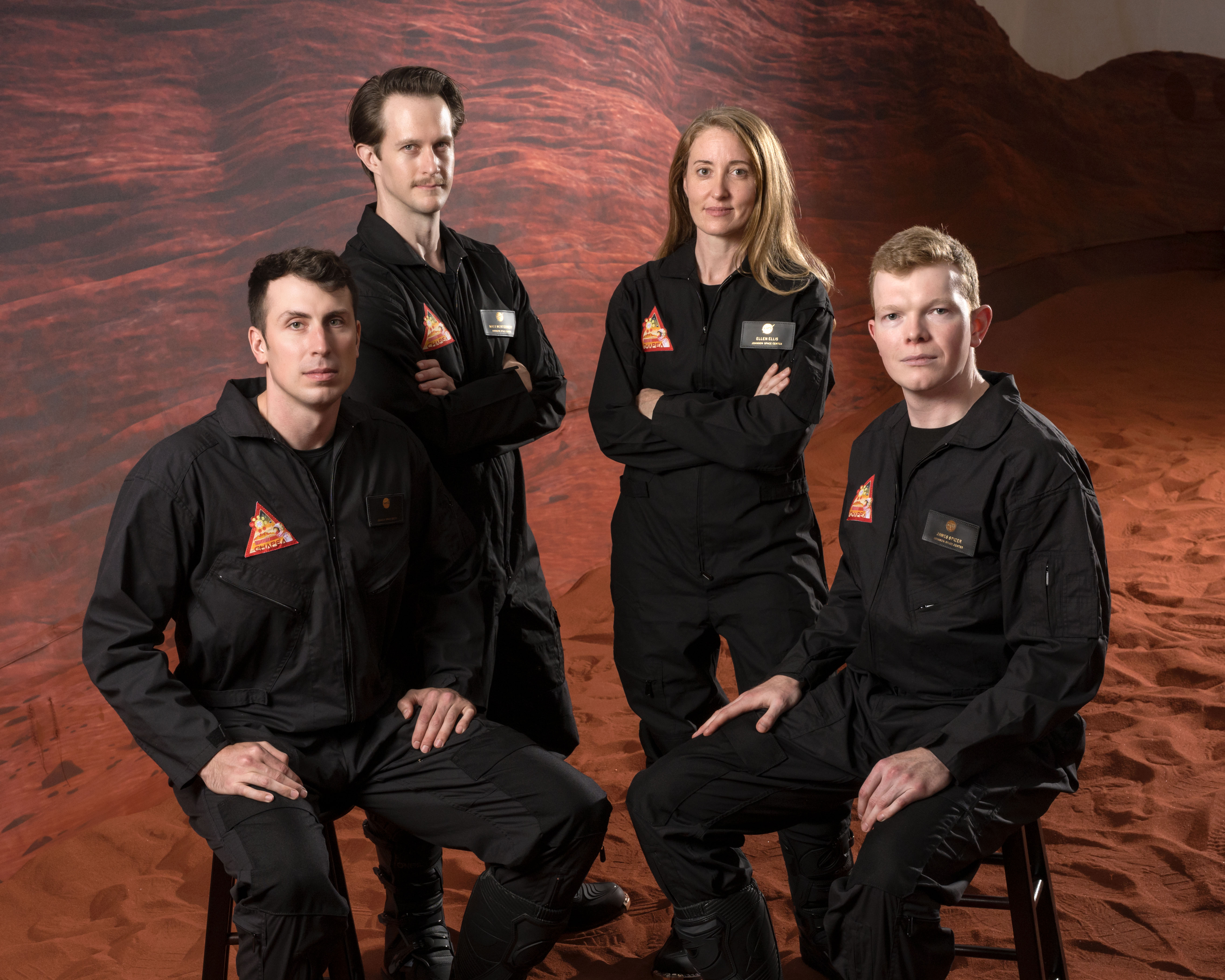
Crew Health and Performance Exploration Analog (CHAPEA) Mission 2 crew members (from left) Ross Elder, Matthew Montgomery, Ellen Ellis, and James Spicer, pose for a photo on Oct. 8, 2025.
Credit: NASA

The four volunteers who lived and worked in a simulated NASA Mars mission for more than a year will exit their habitat on Saturday, Oct. 31, after 378 days of isolation in a facility at the agency’s Johnson Space Center in Houston. Health and performance data collected from the simulation can help NASA develop methods to counter human spaceflight risks for future Artemis and Moon Base missions.

Beginning at 3 p.m. EDT, NASA will provide live coverage of the volunteers’ departure from the Crew Health and Performance Exploration Analog (CHAPEA, pronounced cha-pea’-ah) mission habitat. The exit ceremony will be streamed on NASA Johnson’s YouTube and social accounts.

Johnson Center Director Vanessa Wyche and NASA astronaut Jack Hathaway will provide remarks. The CHAPEA crew members Ross Elder, Ellen Ellis, James Spicer, and Matthew Montgomery also will provide remarks.

Media are invited to watch the CHAPEA Mission 2 ceremony live at NASA Johnson on a screen outside the hangar holding the CHAPEA facility, after which a subject matter expert will be available in person to answer questions. Media will have the opportunity to capture the moment the crew exits the building, stepping outside for the first time in more than a year.

U.S. media interested in attending the activities in person, or media interested in speaking virtually with the CHAPEA Mission 2 crew members in the days following completion of their mission, must contact the NASA Johnson newsroom no later than 2 p.m., Friday, Oct. 30, at jsc-newsroom@mail.nasa.gov.Β 

The second CHAPEA mission began on Oct. 19, 2025. Four crew members have lived and worked inside a 3D-printed 1,700-square-foot facility, simulating Mars mission operations, conducting simulated spacewalks, exercising, performing habitat maintenance, growing plants, and more, while operating under stressors that future deep space crews will likely experience. These included communication delays, resource limitations, and isolation.

Data from the mission can aid preparation for NASA’s lunar missions by optimizing food system design, efficient use of crew time, bandwidth on NASA’s Deep Space Network, and other aspects of living in deep space. In addition, data can help flight doctors and psychologists strengthen spaceflight medical care and behavioral support practices to ensure crew readiness and performance.

To learn more about NASA’s CHAPEA mission, visit:

https://www.nasa.gov/humans-in-space/chapea

-end-

Rachel Kraft
Headquarters, Washington
202-358-1600
rachel.h.kraft@nasa.gov

Kelsey Spivey
Johnson Space Center, Houston
281-483-5111
kelsey.m.spivey@nasa.gov

NASA, Partners Accelerate Lander Development for 2028 Moon Missions

By: Lee Mohon
23 October 2026 at 18:39
7 Min Read

NASA, Partners Accelerate Lander Development for 2028 Moon Missions

015B0749.NEF

As NASA returns humans to the lunar surface and establishes a long-term presence on our closest celestial neighbor, the agency and commercial human landing system providers Blue Origin and SpaceX have streamlined the designs and changed both concepts of operations for its future crewed landers.

Since NASA established initial contracts with Blue Origin and SpaceX for crewed missions to the Moon, the agency has redefined Artemis III to demonstrate rendezvous and docking capabilities between test versions of landers from each provider and the agency’s Orion spacecraft in low Earth orbit next year. In parallel, the companies are also developing crew and cargo versions of their landers for near-term Artemis missions.

β€œWe are executing President Trump’s National Space Policy to complete the long-awaited return of American astronauts to the lunar surface in 2028 and establish a Moon Base,” said NASA Administrator Jared Isaacman. β€œWe have a proven foundation in SLS and Orion, along with two lunar landers in development with Blue Origin and SpaceX. But NASA has no intention of sitting idly by as all the pieces come together. That is not how Apollo succeeded, and it is not how the near-impossible is achieved. NASA is energized, our core capabilities are being rebuilt, our machine shops are running 24/7, and our experts are in the field attacking the critical path. We are building a Super Bowl-caliber team to safely achieve these objectives and everything that comes next.”

NASA is energized, our core capabilities are being rebuilt, our machine shops are running 24/7, and our experts are in the field attacking the critical path. We are building a Super Bowl-caliber team to safely achieve these objectives and everything that comes next.

Jared Isaacman

Jared Isaacman

NASA Administrator

For the initial crewed missions to the Moon, Artemis astronauts will launch in the agency’s Orion spacecraft on top of the SLS (Space Launch System) rocket from NASA’s Kennedy Space Center in Florida. During each Artemis mission, a commercial human landings system will link up with Orion before taking two crew members to the lunar surface while two remain aboard Orion. To accelerate development toward a 2028 landing, the Artemis landers and Orion will no longer rendezvous in a near-rectilinear halo orbit around the Moon and instead meet up in an orbit that differs for each partner, informed by their systems.

Both companies are required to perform an uncrewed demonstration mission with their crewed landers prior to the near-term Artemis crewed missions to the Moon. NASA will certify lander systems prior to the crewed missions to ensure safety and mission success.

Starship lander concept of operations

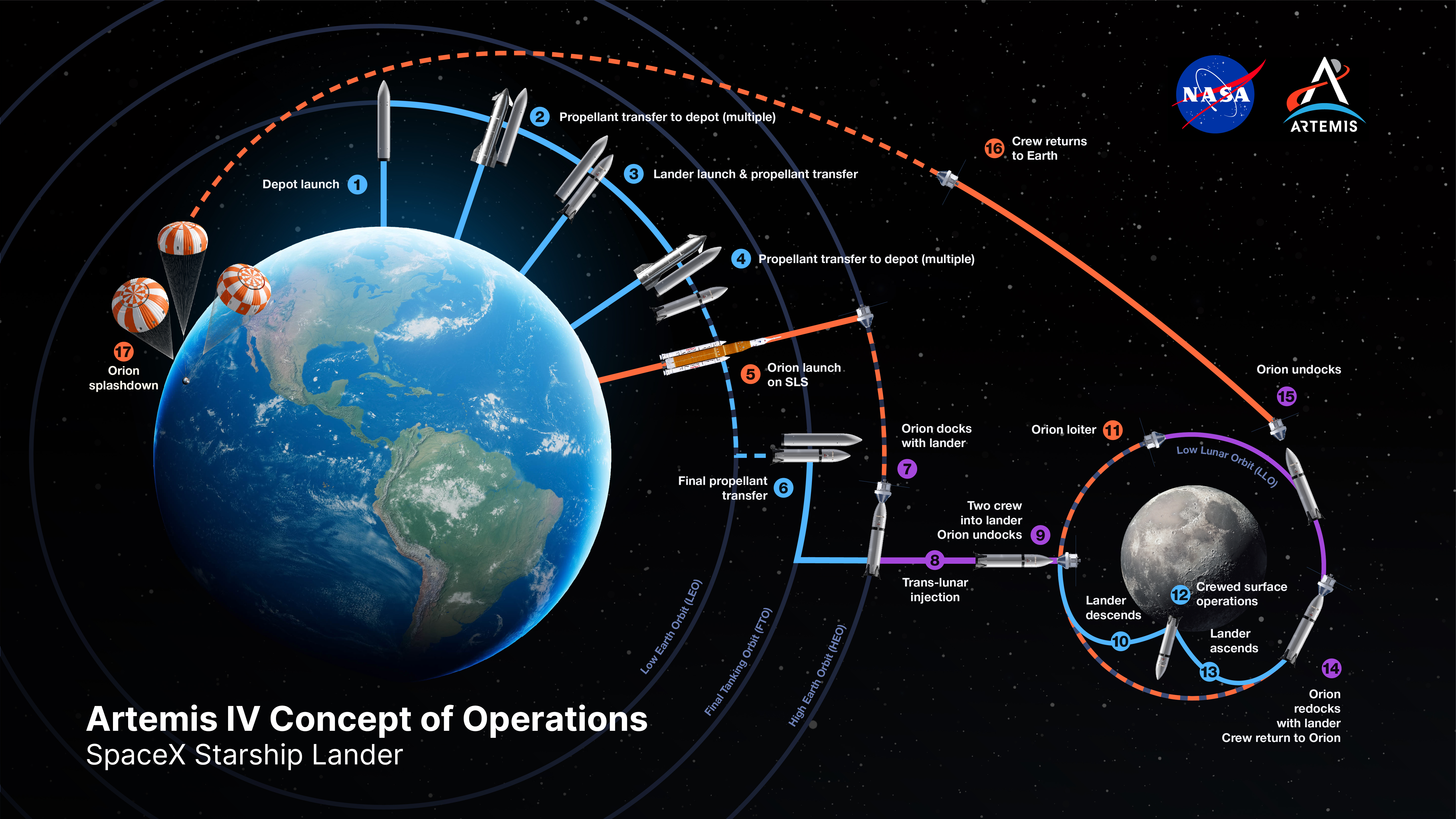
Artemis IV Concept of Operations (SpaceX Starship Lander) infographic.

SpaceX continues to plan for an in-space propellant aggregation approach to transfer super cold, or cryogenic, liquid propellant in space. The company will launch multiple versions of Starship to low Earth orbit prior to the launch of the Starship Human Landing System (HLS) from Florida. Similar to a gas station on Earth, the series of propellant β€œtanker” Starships in low Earth orbit will transfer propellant to the waiting β€œdepot” Starship. The depot Starship will ultimately fuel the Starship lander for its journey to the Moon.

Under the revised operations, Starship HLS will await Orion and its crew in Earth orbit. The lander and Orion will rendezvous and dock in Earth orbit, then the Starship lander will perform a trans-lunar injection burn to send the combined lander and Orion stack to low lunar orbit. NASA is working to modify Orion to enable Starship to push it to the Moon. The lander will bring two crew members to the lunar surface for several days before delivering them back to Orion for the ride back to Earth.

Propellant aggregation in low Earth orbit allows for flexibility in the crew launch timing on SLS, while a trans-lunar injection burn performed by the Starship lander will enable direct access to low lunar orbit. This new concept of operations using low lunar orbit will significantly lower the amount of propellant Starship needs to aggregate in space while reducing the amount of time it can take for astronauts leaving the Moon’s surface in Starship to link back up with Orion. SpaceX will demonstrate the propellant aggregation approach during the uncrewed demonstration mission.

Blue Moon lander concept of operations

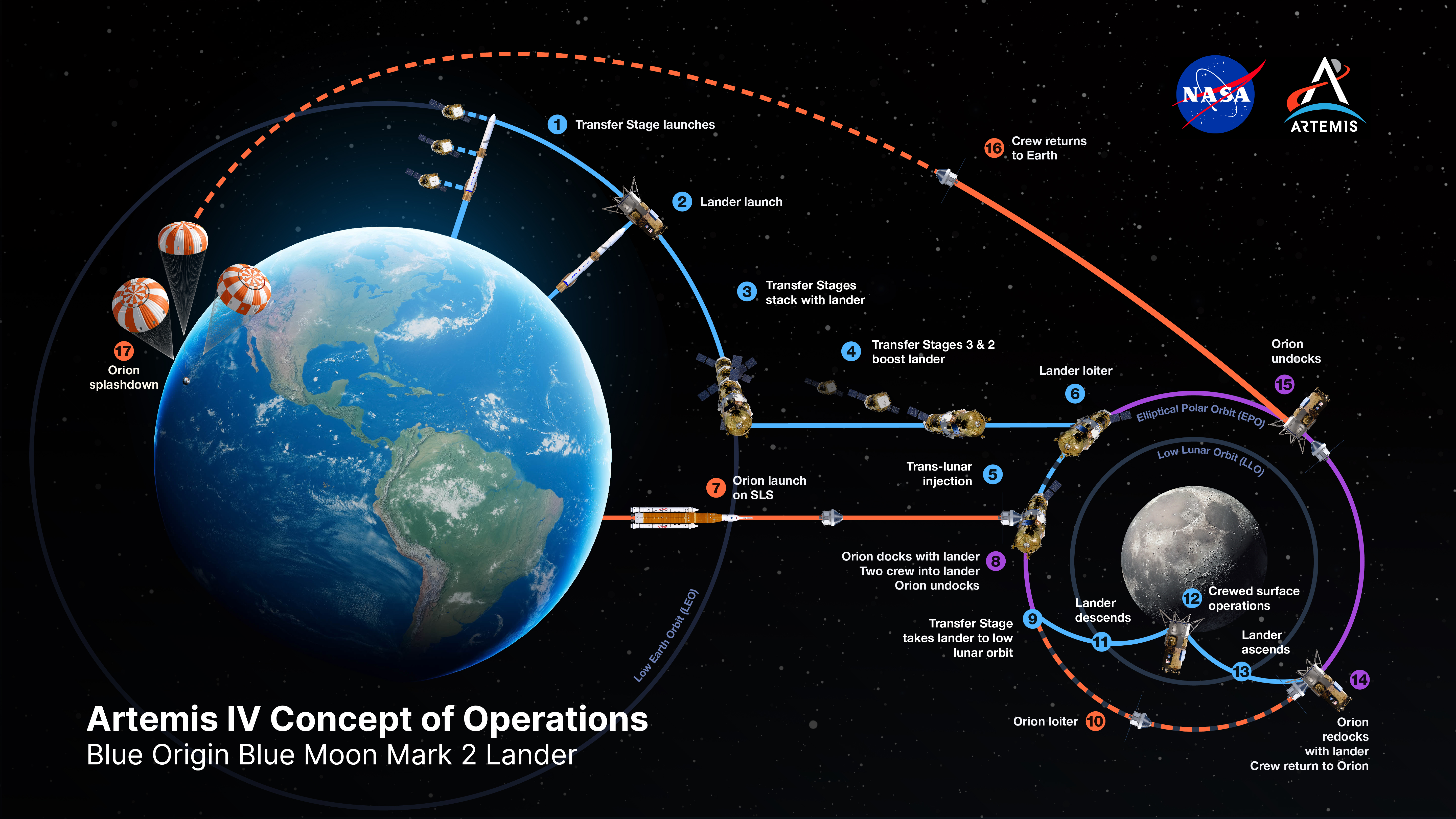
Artemis IV Concept of Operations (Blue Origin Moon Mark 2 Lander) infographic.

For its accelerated 2028 crewed lunar landing mission, Blue Origin will defer propellant transfer and use three transfer stages to send the Blue Moon Mark 2 Alpha Lander to the Moon. Based on existing Mark 1 and Mark 2 hardware, the stages operate like a multistage rocket. They launch into low Earth orbit, followed by the Mark 2 lander. Once docked, the stack departs for an elliptical polar orbit around the Moon, with each transfer stage separating as its propellant depletes. Compared with the previously planned near-rectilinear halo orbit, the elliptical polar orbit offers faster returns from the lunar surface to Orion, reduces Blue Moon lander propellant requirements, and maximizes the performance available by SLS.

This architecture provides multiple opportunities for SLS and Orion to launch the crew to elliptical polar orbit and dock with the Blue Moon Mark 2 lander. Two crew members then transfer to the lander and descend to the Moon’s South Pole. After surface operations, the lander returns to Orion, where the crew transfers for their journey back to Earth.

Blue Origin will incorporate lessons from earlier robotic Mark 1 missions supporting the agency’s Moon Base Program and demonstrate the full mission profile in an uncrewed lander transfer stage demonstration mission.

This artist concept depicts SpaceX's Starship lander on the lunar surface.
This artist concept depicts SpaceX’s Starship lander on the lunar surface.
SpaceX
This artist concept depicts Blue Origin's Blue Moon Mark 2 lander on the lunar surface.
This artist concept depicts Blue Origin’s Blue Moon Mark 2 lander on the lunar surface.
Blue Origin
Artemis IV Concept of Operations (Blue Origin Moon Mark 2 Lander) infographic.
NASA
Artemis IV Concept of Operations (SpaceX Starship Lander) infographic.
NASA

Returning American astronauts to the Moon

Ultimately, based on lander readiness, NASA will determine which company will be first selected to safely deliver astronauts to the Moon’s surface and back to lunar orbit in 2028. A second crewed landing opportunity will follow.

NASA is targeting two, approximately two-hour long lunar surface Moonwalks during initial surface missions. Astronauts will use the Moonwalks to collection lunar samples and test capabilities of the spacesuit provided by Axiom Space.

Earlier this year, NASA updated its contracts with Blue Origin and SpaceX for human landing systems and large cargo deliveries to the Moon. The updates align the agency’s human landing system requirements with acceleration efforts announced earlier this year to streamline Artemis mission architecture, expedite a lunar return, and support an increased mission cadence to the Moon.

Under the original HLS contracts, SpaceX’s Starship human landing system was assigned to the Artemis III and IV missions, while Blue Origin would use its Blue Moon Mark 2 human landing system for Artemis V. Under the contract realignments, both providers are participating in the Artemis III mission in low Earth orbit and neither lander provider has been assigned to a specific Artemis lunar landing mission.

β€œNASA and our lunar lander providers Blue Origin and SpaceX have been working hand in hand to ensure we can return American astronauts to the Moon by 2028,” said Jeremy Parsons, NASA’s Artemis program manager.β€œWhile work to realign with our partners in support of architecture updates announced at Ignition Day in March has been underway since then, updating the contracts ensures NASA and its partners are on the same page with requirements and other milestones to ensure continued insight into lander development to support mission success and the safety of our Moon crews.”

Both Blue Origin and SpaceX have added development milestones to provide NASA with more insight into lander development efforts, reducing risk and enhancing astronaut safety in preparation for crewed Moon landings. SpaceX is adding two demonstrations of its crew cabin, called Cabin 1, for its Starship lander. Blue Origin is adding new human-in-the-loop testing and hardware readiness milestones to streamline training development as well as ground and flight operations.

As part of a Golden Age of innovation and exploration, NASA will send Artemis astronauts on increasingly difficult missions near the lunar South Pole to explore more of the Moon than ever before. In addition to providing economic benefits and advancing scientific discovery though its Moon missions, NASA will establish an enduring human presence on the lunar surface and build on the agency’s foundation for the first crewed mission to Mars.Β 

About the Author

Corinne Beckinger

Public Affairs Official

NASA’s Artemis III Mission to Test Future Moon Lander Operations

23 October 2026 at 18:37

Before astronauts return to the lunar surface, NASA will first conduct one of the most ambitious and complex test missions in the agency’s history.Β 

Launching in 2027, Artemis III will send NASA astronauts Randy Bresnik, Frank Rubio, Andre Douglas, and ESA (European Space Agency) astronaut Luca Parmitano aboard the Orion spacecraft into low Earth orbit to perform a series of demonstrations with test versions, or test articles, of human landing systems being developed by industry partners Blue Origin and SpaceX. During the planned 14-day mission, crews and flight controllers will practice the rendezvous, docking, habitation, and operational procedures that will be essential when Artemis astronauts begin landing near the Moon’s South Pole in 2028. The mission is designed to reduce risk, validate hardware, and gain operational experience before NASA attempts a crewed lunar landing.Β Β 

β€œEvery piece of this mission in Earth orbit is designed to reduce risk before we put astronauts back on the Moon,” said Jeremy Parsons, NASA’s Artemis program manager. β€œWe’re launching three spacecraft on three different rockets and testing how they operate together β€” something NASA has never attempted. Every lesson we learn here gets us closer to landing on the Moon in 2028.” 

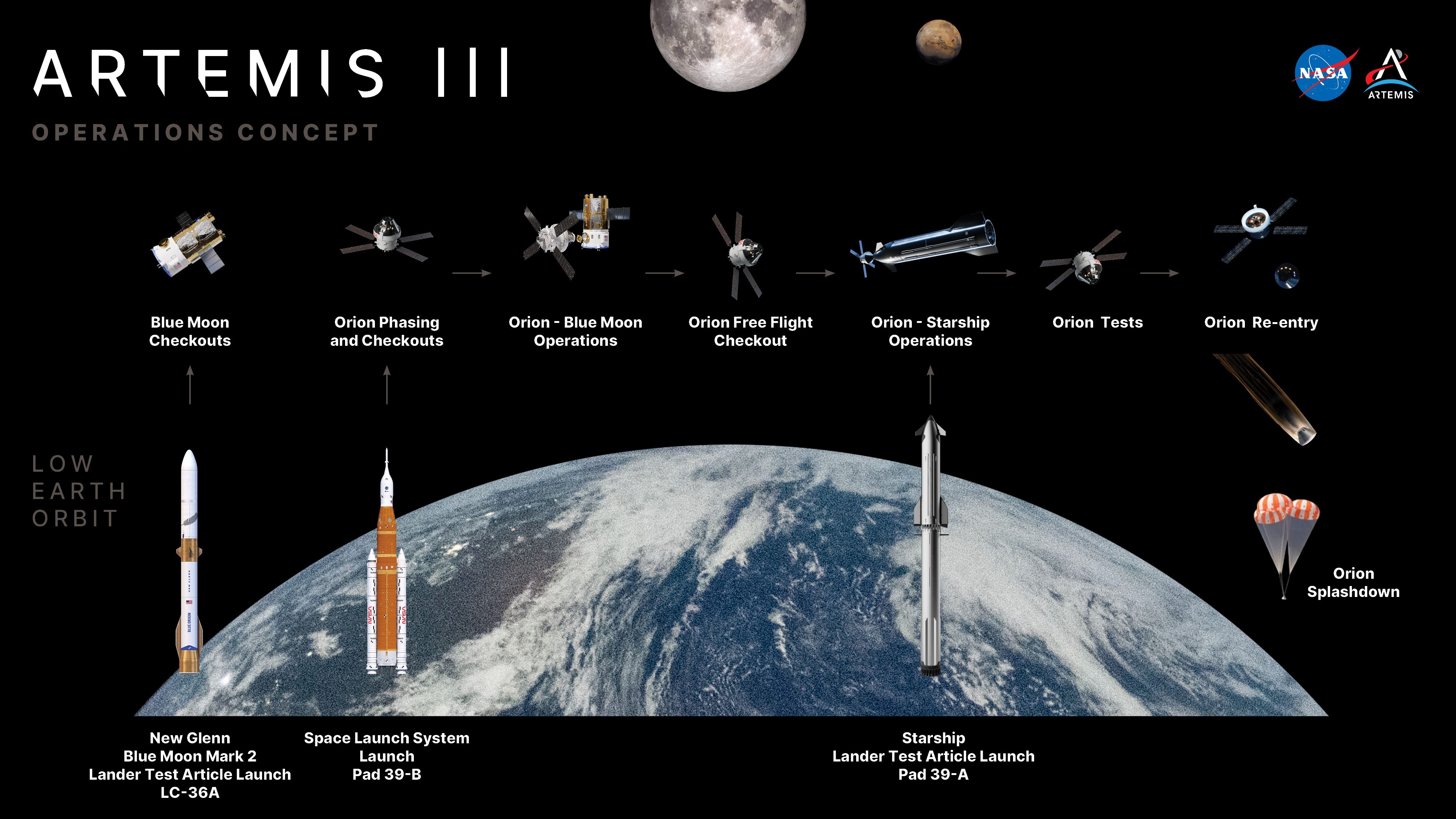
This graphic shows NASA’s concept of operations for Artemis III. The mission will send four astronauts to low Earth orbit next year to test critical systems needed for future lunar landings.
NASA

First stop: Blue Origin’s lunar lander test articleΒ 

Earlier Artemis missions used only NASA’s SLS (Space Launch System) rocket and Orion spacecraft. Artemis III will involve three separate spacecraft launched on three different heavy-lift rockets within a relatively short period of time.Β 

The mission begins with Blue Origin launching a test version of its Blue Moon Mark 2 lander into a circular low Earth orbit approximately 273 miles (237 nautical miles) above Earth. The spacecraft can remain on orbit for up to 30 days providing schedule flexibility. Artemis III is designed as a tightly choreographed campaign, with NASA planning to launch Orion on top of SLS from the agency’s Kennedy Space Center in Florida only days after the Blue Moon test article launch and confirmation the vehicle is healthy and ready for joint operations.Β 

Following launch, Orion will initially enter an elliptical Earth orbit of 18 x 1122 miles (16 x 975 nautical miles). It will use its service module to perform a series of maneuvers to transition to a circular orbit at about 345 miles (300 nautical miles) for thermal stabilization before thenΒ gradually setting up its rendezvous with the waiting Blue Moon lander test article. Because each spacecraft operates in slightly different orbital regimes optimized for its mission requirements, Artemis III requires a carefully choreographed sequence of orbital maneuvers and rendezvous operations throughout the flight.Β 

During the first two days of flight, the crew will check out Orion’s systems, prepare for proximity operations, and gradually position themselves for the mission’s first major objective: rendezvous and docking with the Blue Moon test vehicle.Β 

The operation represents NASA’s first opportunity to evaluate how Orion and a commercial lunar lander work together in space. Engineers will assess how software aboard both spacecraft, guidance systems, communications systems, and operational procedures perform in real-world conditions, while flight controllers gain experience coordinating activities across multiple teams and organizations.Β 

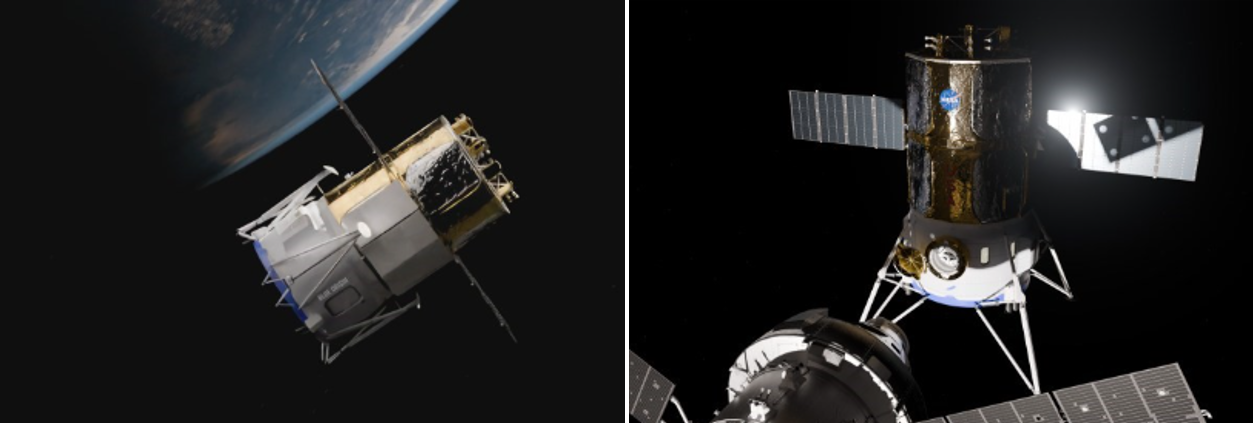
These artist’s concepts depict Blue Origin’s Blue Moon Mark 2 human landing system test article in Earth orbit and docked with NASA’s Orion spacecraft as part of NASA’s upcoming Artemis III demonstration mission in low Earth orbit.
Blue Origin

Once docked, astronauts will spend approximately two days conducting evaluations aboard the Blue Moon test article. Crew members will open the hatch and enter the spacecraft, allowing them to assess the cabin environment, controls, and life-support systems firsthand. Teams will verify the spacecraft’s ability to maintain the proper atmosphere and pressure.Β 

The Blue Moon test article incorporates many of the avionics, software, flight-control systems, crew-cabin technologies, and life-support functions planned for future lunar missions. Testing those systems in orbit will provide the first opportunity to evaluate how many of the lander’s flight systems perform in space as an integrated vehicle.Β 

By the time Orion undocks, NASA will have completed its first evaluation of a commercial lunar lander with crew, gathering data on spacecraft systems, crew operations, and spacecraft interoperability not possible on the ground.Β 

Starship docking demonstration Β 

After completing operations with Blue Origin’s lander, Orion will undock and reposition to support the next phase of the mission: a second rendezvous operation.Β 

SpaceX will launch a Starship Version 3 test article from Florida. Because Starship is designed for a much shorter on-orbit lifetime than Blue Origin’s lander, launch occurs later in the mission, allowing NASA to efficiently sequence the two docking demonstrations. Starship will enter a lower orbit at 206 nautical miles, optimized for communications coverage, and will carry an added docking system mounted at the forward end.Β 

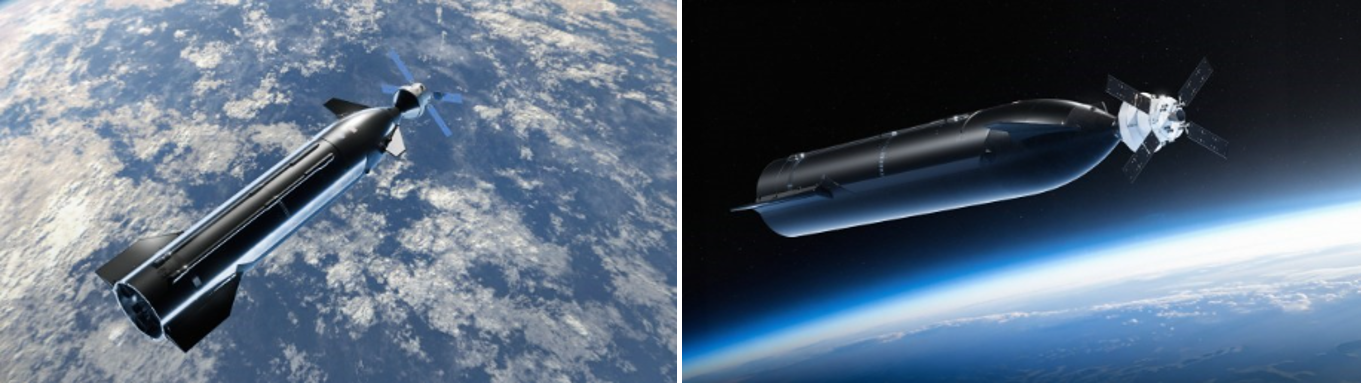
These artist’s concepts depict NASA’s Orion spacecraft and SpaceX’s Starship human landing system test article during docking operations as part of NASA’s upcoming Artemis III demonstration mission in low Earth orbit.
SpaceX

Orion will rendezvous and dock with the spacecraft during a test expected to last up to two hours. Crew will not enter Starship during this test. The demonstration is focused on validating how Orion and Starship interact as a docked system in space. NASA and SpaceX plan to evaluate spacecraft controllability, communications, integrated software performance, and the dynamics associated with docking and undocking operations.Β 

The docking itself also presents a unique test, using different docking geometries. Orion will connect to a port beside Blue Moon’s crew cabin, then later align its forward docking system with the one at Starship’s nose. Testing both approaches during a single mission gives NASA an opportunity to assess different operational concepts while gathering valuable engineering data.Β Β 

Together, the two docking campaigns will demonstrate how Orion interfaces with two very different commercial lander architectures during a single mission.Β 

Testing Orion for future explorationΒ 

Even after docking activities are complete, Artemis III will continue generating data that supports future missions.Β 

Once the Starship demonstration is complete, Orion and its crew will have up to five additional days available in orbit before beginning preparations for the journey home. NASA plans to use this time to complete a variety of test objectives that support future Artemis missions, including additional evaluations of the Orion Crew Survival System suits, docking sensor tests, acoustic and thermal measurements, human-factors assessments, and a range of science and technology demonstrations.Β 

Several investigations led by NASA will build on studies conducted during Artemis II, collecting additional data that will help inform future deep-space missions. The crew also will conduct a proof-of-concept study examining how astronauts could perform health-related assessments when they are unable to communicate directly with mission control, an important capability for future lunar surface expeditions and other missions farther from Earth.Β 

NASA also plans to fly a cellular biology experiment during the mission while researchers use the flight to test concepts for returning lunar samples to Earth. Teams will evaluate how future samples could be transported, received, and moved into curation facilities after landing, while also conducting assessments of Orion’s environment to better understand potential contamination considerations for future lunar missions.Β 

The mission also will include Earth and solar observations that help astronauts continue developing critical observation skills while taking advantage of the spacecraft’s unique orbital vantage point. Plant seeds will fly aboard Orion as well, providing opportunities for scientific study and educational engagement following the mission.Β 

Mission planners have also built flexibility into the flight timeline, providing additional opportunities to complete test objectives depending on how operations unfold in real time.Β 

When ready, Orion will begin phasing for return, and the crew will configure the cabin for reentry and splashdown, which will occur in the Pacific Ocean, off the coast of California. Orion and its crew will be recovered by NASA personnel and the United States Navy.Β 

Practicing for Moon missionsΒ 

Every activity performed during Artemis III supports a larger goal: reducing risk before astronauts return to the lunar surface.Β 

The mission will provide NASA with experience operating alongside multiple commercial partners while managing complex rendezvous and docking operations involving three different spacecraft. Engineers will gain insight into spacecraft interoperability, mission-control coordination, communications architecture, crew operations, and hardware performance.Β 

By the time Artemis III concludes with Orion’s splashdown on Earth, NASA will have demonstrated technologies and operational concepts that future lunar crews will rely on as they travel to and from the Moon.Β Β 

Most importantly, Artemis III will provide the operational experience needed to transform plans for future lunar landings into proven flight procedures. The lessons learned throughout the mission will help refine future exploration plans, strengthen partnerships with industry, and ensure astronauts are prepared for humanity’s next giant leap at the Moon.Β 

As part of a Golden Age of innovation and exploration, NASA will send Artemis astronauts on increasingly difficult missions near the lunar South Pole to explore more of the Moon than ever before. In addition to providing economic benefits and advancing scientific discovery through its Moon missions, NASA will establish an enduring human presence on the lunar surface and build on the agency’s foundation for the first crewed mission to Mars.Β 

To learn more about Artemis, visit:Β 

www.nasa.gov/artemisΒ 

NASA Improves Shock, Vibration Analysis

19 October 2026 at 15:28
A person sits at a workstation viewing a computer monitor that displays a blue 3D wireframe engineering model of a spacecraft component.
Stirling Allen, part of the Dynamic Environments Group with NASA’s Launch Services Program Office, showcases a commercial digital software at NASA’s Kennedy Space Center in Florida. The software performs finite element modeling to support shock and vibration analysis and ensure spacecraft and rockets can withstand harsh vibration, shock, stress, or other physical forces before launch, strengthening mission safety in the process.
NASA/Clayton Rougelot

Rockets vibrate, shake, and flex intensely as they climb into space, and spacecraft packed with delicate scientific instruments must survive those forces. Before any rocket leaves the ground, NASA engineers work to predict how those stresses will affect every part of a spacecraft.

To do that, engineers in the Dynamic Environments Group with NASA’s Launch Services Program Office at the agency’s Kennedy Space Center in Florida have streamlined how they ensure spacecraft and rockets can withstand harsh vibration, shock, stress, or other physical forces, strengthening mission safety in the process.

Using a commercial digital software tool in a new way, the engineers developed a standardized modeling workflow for finite element modeling to strengthen shock and vibration analysis and ensure hardware is prepared for the extreme environments of launch and ascent.

β€œThis computer-based method helps predict how rockets and spacecraft behave under extreme conditions before hardware is built and helps identify weak spots and potential failure risks early so the team can address the findings,” said Brian Beaver, chief of the Flight Analysis Division with the Launch Services Program Office at NASA Kennedy.

The team recently used the software for the first time while certifying a commercial launch provider’s rocket selected for a NASA mission. The commercial partner provided vibration testing but not shock testing. The Dynamic Environments Group determined shock testing was needed and used a template the group created to run what-if comparisons, visualize structural behavior, and answer complex questions that would have required extensive manual modeling in the past. The team verified the company’s testing results for flight environments, and the analysis provided new insights addressing shock during transport.

β€œWe are using a tool that’s existed for decades, but it’s not normally used by the dynamic environments disciplines,” said Alex Hardt, aerospace engineer with the Launch Services Program Office at NASA Kennedy. β€œBut we’re changing that. We’re using it in a relatively new area of dynamics.”

Although rockets and spacecraft are designed to absorb shocks and vibrations, those forces can cause wear and tear or potentially flight failures, especially during launch and ascent.

β€œWe define how severe the random vibration levels and shock levels are, and then we verify that all the parts going on future rockets have been tested to those levels, maximizing their longevity,” Hardt said.

Software time saver

For decades, engineers have estimated shock and vibration environments using rules of thumb or by scaling previous data to estimate how each rocket component or spacecraft equipment would be impacted once assembled and flown. The approach worked, but relied heavily on engineering judgment and simple approximations drawn from past missions.

Because most dynamic environments engineers use finite element modeling tools infrequently, they often need to re-learn complex workflows. The software replaces older tools and provides a standard template that guides engineers more quickly and thoroughly through vibration profiles and shock conditions.

Finite element analysis is a powerful simulation technique that breaks a complex structure into smaller components so computers can accurately predict how a spacecraft or rocket could respond to specific forces or launch environments. This is important because issues can be addressed on the ground; once the rocket leaves the launch pad, most problems cannot be repaired or corrected, making early identification essential.

β€œWe’ve used it to get really valuable insight very quickly into verifying a provider’s system,” Hardt said. β€œIt’s already provided some really deep insight into something that normally takes a lot of effort.”

Hardt says having the ability to visualize non-intuitive dynamics problems using finite element models also highlights the software’s valuable impact on learning, efficiency, and alignment with NASA’s people focused culture. The workflow can help the engineers share knowledge, refine assessments with additional flight data, and increase proficiency with modeling tools. This capability already has saved months by allowing the team to run analysis independently without having to request and wait for analysis reports or data, and by helping them identify risks that weren’t previously considered.

NASA’s Launch Services Program Office is responsible for launching rockets delivering spacecraft that observe the Earth, visit other planets and explore the universe, from weather satellites to space telescopes to Mars rovers. The team is constantly adopting new tools like this to give the agency the highest practical chance of success for each mission.

NASA’s Simulated Mars Crew Marks One Year Inside HabitatΒ 

By: Abby Graf
19 October 2026 at 14:01
Members of NASA’s CHAPEA (Crew Health and Performance Exploration Analog) Mission 2 crew stands in their workspace after spending a year in their isolated and confined habitat at NASA’s Johnson Space Center in Houston. (from left: James Spicer, Matthew Montgomery, Ellen Ellis, and Ross Elder). Credit: NASA
Members of NASA’s CHAPEA (Crew Health and Performance Exploration Analog) Mission 2 crew stands in their workspace after spending a year in their isolated and confined habitat at NASA’s Johnson Space Center in Houston. (from left: James Spicer, Matthew Montgomery, Ellen Ellis, and Ross Elder).
NASA

The four crew members in NASA’s simulated Mars mission have spent the past year living and working in isolation in a confined habitat at NASA’s Johnson Space Center in Houston. For the past 365 days, the Crew Health and Performance Exploration Analog (CHAPEA) Mission 2 crew members have operated as though they were on the Red Planet, growing crops, managing limited resources, navigating communication delays, and conducting suited extravehicular activities on a simulated Martian surface.

Crew members include Ross Elder, mission commander; Ellen Ellis, medical officer; Matthew Montgomery, science officer; and James Spicer, flight engineer. They entered their 1,700 square foot 3D-printed habitat Oct. 19, 2025. Leading up to the one-year mark of their 378‑day mission, science teams at NASA prepared to process health and performance data collected on the crew. This critical data can help NASA balance priorities and develop methods that counter spaceflight risks during future long-duration missions on Mars.

β€œWe are extremely proud of the crew for their commitment and achievements over the last year on such a fast-paced, highly demanding mission,” said Grace Douglas, CHAPEA principal investigator. β€œThe entire CHAPEA team is excited to congratulate the crew in person.” 

The crew will exit their habitat on Saturday, Oct. 31, to conclude their mission. They will have a chance to reconnect with their families, who they’ve only spoken with via email over the course of their mission with a Mars-like communication delay. The crew will then begin two weeks of post-mission evaluations and debriefs with NASA scientists.

These debriefs and evaluations will help scientists learn what it takes for crews to adapt to the routines and demands of daily life on long-duration missions, giving NASA insight into what future explorers may need to stay healthy, productive, and connected during missions far from Earth.

For example, data could shed light on how limited food and exercise systems will influence NASA’s ability to achieve mission objectives, including spacewalks on the surface of Mars. Some data also could help NASA foster autonomy and build decision-making support systems that best aid crew with communication delays lasting up to 45 minutes each way.

β€œThis mission has been incredibly valuable in starting to teach us how to understand requirements for year-long missions, including medical and psychological care, via communication delays,” said Michael Stenger, chief scientist for NASA’s Human Research Program.β€―β€œWhen combining this Mars-realistic mission analog with a suite of physiological, psychological, and performance measures in a rigorously controlled environment, we’ll be able to translate the knowledge from these experiences to Moon Base and beyond.”

To watch the CHAPEA Mission 2 egress ceremony on Oct. 31, visit:

https://www.youtube.com/live/2MONMgAmXNU

James Spicer, Crew Health and Performance Exploration Analog (CHAPEA) Mission 2 flight engineer, participates in an extravehicular geological activity.
NASA
Ellen Ellis, CHAPEA Mission 2 medical officer, performs a medical task with Ross Elder, mission commander. Credit: NASA
Ellen Ellis, CHAPEA Mission 2 medical officer, performs a medical task with Ross Elder, mission commander.
NASA
The CHAPEA crew showcases the instruments they brought on their mission. The crew elected to include instruments as part of their personal item allowance. From left: James Spicer, Ellen Ellis, Matthew Montgomery, and Ross Elder.
NASA
CHAPEA Mission 2 crew members Ellen Ellis (left) and Ross Elder (right) conduct a maintenance task during a simulated extravehicular activity, also known as a spacewalk.
NASA
Photos that the CHAPEA Mission 2 crew arranged around a boot print in the simulated Martian sand outside their habitat.
NASA

____

NASA’s Human Research ProgramΒ 

NASA’sβ€―Human Research Programβ€―pursues methods and technologies to support safe, productive human space travel. Through science conducted in laboratories, ground-based analogs, commercial missions, the International Space Station and Artemis missions, the program scrutinizes how spaceflight affects human bodies and behaviors. Such research drives the program’sβ€―questβ€―to innovate ways that keep astronauts healthy and mission ready as human space exploration expands to the Moon, Mars, and beyond.Β 

πŸ’Ύ

Enjoy the videos and music you love, upload original content, and share it all with friends, family, and the world on YouTube.

NASA to Help Unlock Mysteries of Mars’ Moons in Upcoming Mission

15 October 2026 at 15:58

NASA is playing an important role in JAXA’s (Japan Aerospace Exploration Agency) MMX (Martian Moons eXploration) mission, to advance our understanding of Mars’ moons and build on the agency’s long history of exploring the Red Planet.

The mission aims to characterize and determine the origin of Mars’ moons Phobos and Deimos and deliver a sample of Phobos to Earth. The MMX spacecraft is targeting launch from JAXA’s Tanegashima Space Center in Japan at 3:41 p.m. EDT on Monday, Oct. 19 (4:41 a.m. JST on Tuesday, Oct. 20).

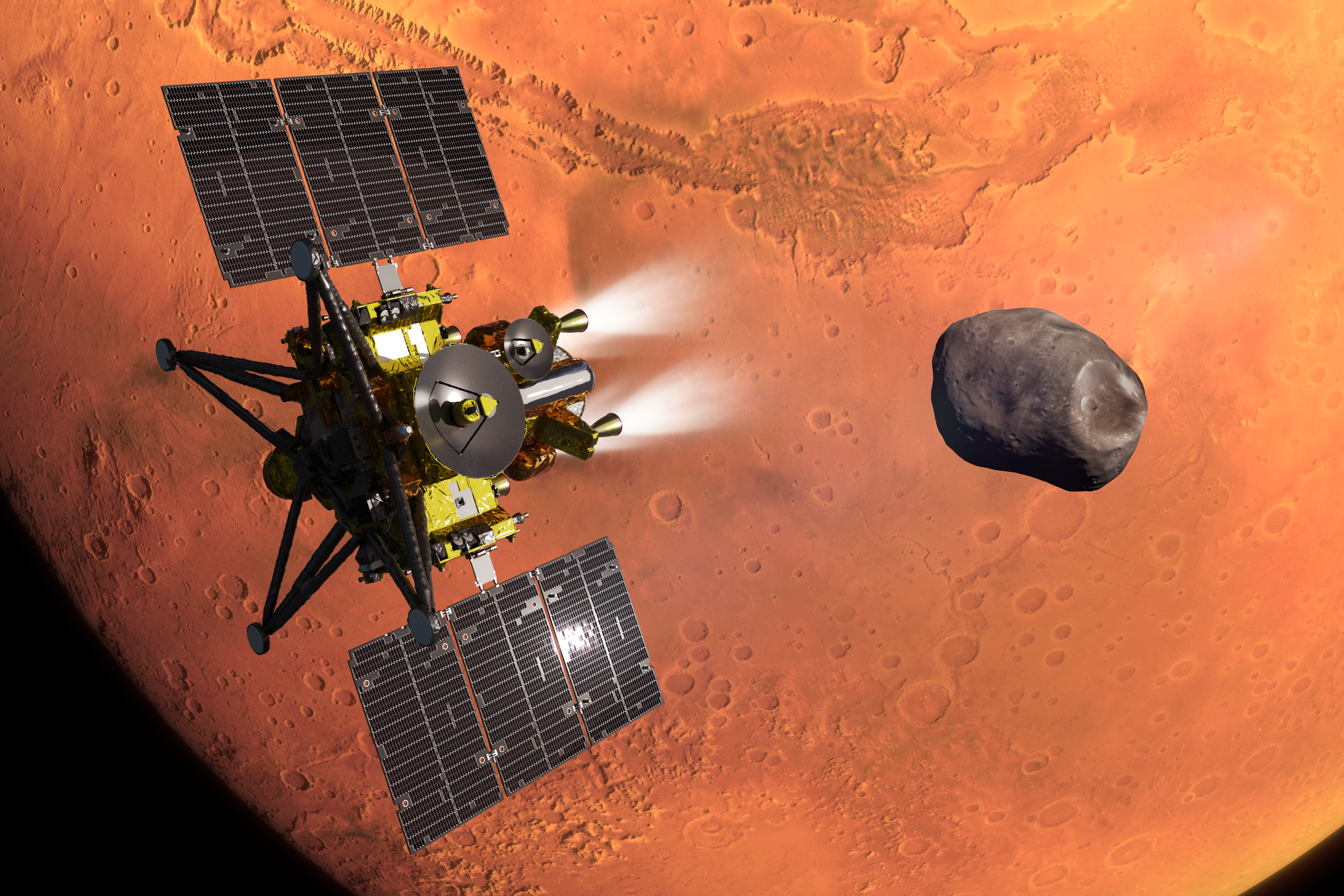
Artist's concept of JAXA's MMX spacecraft with the Martian moon Phobos and planet Mars in the background
An artist’s concept of JAXA’s MMX spacecraft during its Mars’ orbit insertion. The Martian moon Phobos, which MMX will explore and sample, is in the background.
JAXA

β€œThe samples from MMX will bring forth paradigm-shifting science on the Mars system for generations to come, especially as NASA prepares to send the first humans to Mars,” said Nicky Fox, associate administrator, Science Mission Directorate, NASA Headquarters in Washington. β€œThe NASA-JAXA sample curation partnership is extremely valuable, and I am proud that NASA Science is supporting MMX sample curation and will be sharing portions of these samples for study as we continue to expand humanity’s understanding of the universe for the benefit of all.”

NASA’s contributions to the mission include the Mars-moon Exploration with Gamma rays and Neutrons (MEGANE) spectrograph instrument, the Pneumatic Sampler (P-Sampler) technology demonstration, and communications and navigation support from the agency’s Deep Space Network, as well as funding United States scientists participating on the MMX science team.

Scientists have long debated the origin of Mars’ two moons. The data and samples collected by the MMX mission will help answer essential questions about the origins of these moons and the history of the solar system.

β€œPhobos and Deimos may be the remains of a massive impact on Mars that sent material into orbit around the planet, or they could be ancient asteroids that were captured by Mars’ gravity billions of years ago,” said Tom Statler, MMX program executive and program scientist at NASA Headquarters. β€œHaving the answer will help illuminate that early era when Earth and the other inner planets may have been acquiring much of their water and organic compounds.”

The MEGANE (pronounced meh-GAH-nay, the Japanese word for eyeglasses) spectrograph will help scientists β€œsee” what Phobos is made of by measuring neutrons and gamma rays emitted from the moon’s surface and determining its chemical elemental composition, which will provide important clues about its origin.

Mounted on one of the spacecraft’s landing legs, the P-Sampler is designed to collect a ground sample from Phobos. The system gathers surface material using bursts of high-pressure nitrogen gas, complementing JAXA’s C-Sampler, which will extract cores from a few inches deeper. NASA will obtain and curate about 15% of the total returned sample at the agency’s Johnson Space Center Astromaterials Lab in Houston, making it available for research for decades.

Another key part of NASA’s contribution to MMX is its scientific partnership with JAXA. NASA-supported researchers are working alongside international colleagues to help reveal the story of Phobos and will use mission data and returned samples to uncover new clues about the moon’s origin and the evolution of the Mars system.

The MMX spacecraft will arrive at Mars in August 2027 to begin its survey of the Red Planet’s two moons. After surveying Phobos in detail, the spacecraft will collect a sample of the moon’s surface no earlier than December 2028 and deliver it to Earth in 2031.

The MEGANE instrument was developed by the Johns Hopkins Applied Physics Laboratory. Honeybee Robotics, a Blue Origin company, developed the spacecraft’s pneumatic sampler mechanism. NASA’s contributions to the MMX mission were developed under the agency’s Discovery Program. The Discovery Program is managed by NASA’s Marshall Space Flight Center in Huntsville, Alabama, for the agency’s Science Mission Directorate in Washington.

For more information about the MMX mission, visit:

https://science.nasa.gov/mission/mmx

Karen Fox / Alana Johnson
Headquarters, Washington
240-285-5155 / 202-672-4780
karen.c.fox@nasa.gov / alana.r.johnson@nasa.gov

Facebook logo
Instagram logo
Linkedin logo

NASA Develops Batteries to Power Humanity’s Return to Moon

14 October 2026 at 10:41

5 min read

Preparations for Next Moonwalk Simulations Underway (and Underwater)

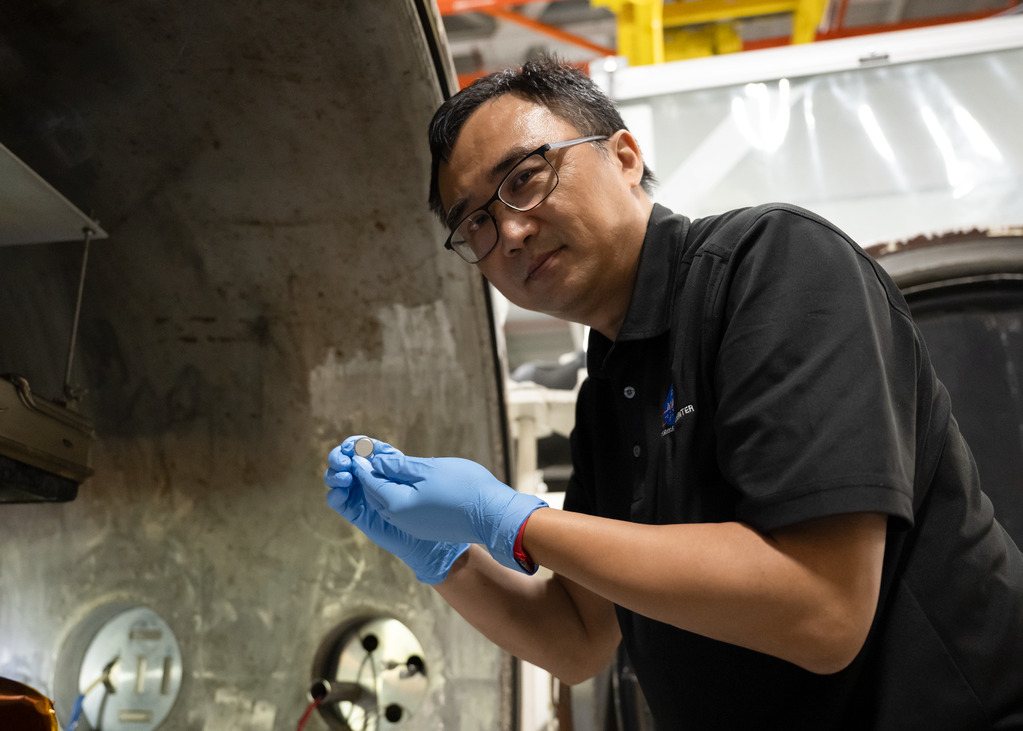
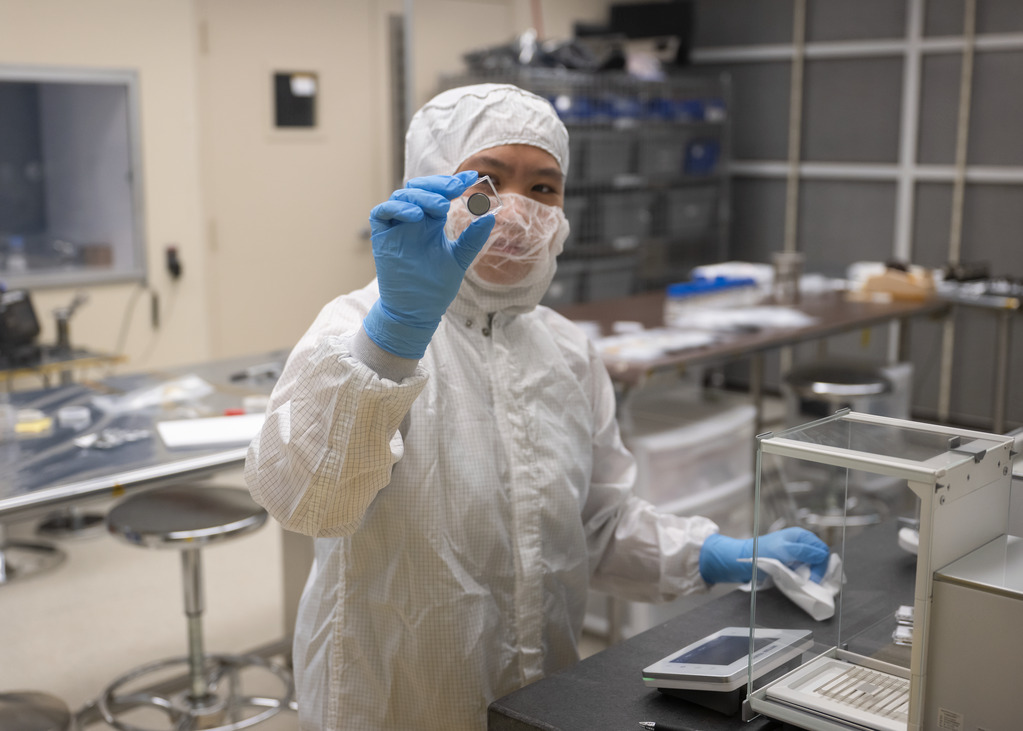
Yi Lin, SPEARS testing and research lead at NASA Langley, holds one of the small coin-cell batteries that had just undergone thermal vacuum testing.
NASA/Ryan Hill

If you’ve ever had your car start sluggishly, or not at all, on a particularly frigid winter morning, you know standard batteries do not like extreme cold. That’s why NASA researchers are working to develop a battery that could function in the brutal cold of the Moon’s South Pole, where nighttime temperatures plunge to minus 328 degrees Fahrenheit (minus 200 Celsius).Β 

For future lunar operations, a battery will need to work immediately when warmed up and be able to power everything from an astronaut’s emergency kit to a rover capable of exploring the Moon’s darkest craters β€” all without posing a fire hazard.Β 

A team of NASA researchers is working to make all that happen. The project is called Solid Power for Extreme Environment Adaptability and Resilience in Space (SPEARS), and it could provide NASA with an important tool to help power humanity’s sustained presence on the Moon through the Artemis campaign.Β 

β€œBatteries have become an important part of our lives here on Earth, which enable our laptops, cell phones, power tools, and even our vehicles,” said Donald Dornbusch, principal investigator for SPEARS at NASA’s Glenn Research Center in Cleveland, where the project is led. β€œWe will need them on the Moon, too, and these batteries will be required to operate reliably and safely in this harsh environment. That’s why we’re working on this technology.” 

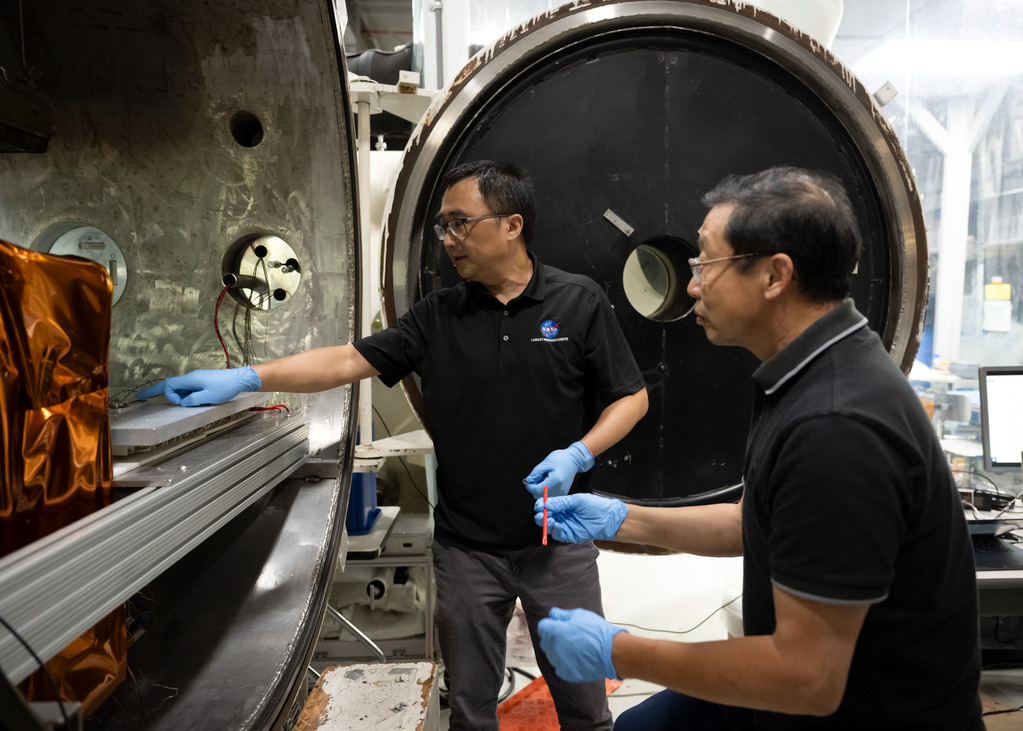
Yi Lin, left, SPEARS testing and research lead, and Ji Su, a polymer materials scientist and the task lead, during the removal of SPEARS batteries from thermal vacuum testing at NASA Langley.
NASA/Ryan Hill

Splashy problem, solid solution

Traditional lithium-ion batteries like those in your cell phone and laptop have a critical weakness: they rely on liquid electrolytes. Cool a conventional battery to the Moon’s nighttime temperatures, and that liquid would freeze, potentially damaging the battery. Heat it up too much β€” say, to daytime lunar temperatures of 212 F (100 C) β€” and it won’t work until cooled. Expose the liquid to the vacuum of space, and it evaporates.Β 

SPEARS batteries solve these problems by replacing the liquid electrolyte with a solid ceramic- or polymer-based material. This change could unlock several advantages. First and foremost, they could operate in the heat and extreme cold.Β 

During recent thermal vacuum testing at NASA’s Langley Research Center in Hampton, Virginia, small prototype battery cells operated well up to 176 F (80 C), down to minus 76 F (minus 60 C), and with slightly reduced performance down to minus 112 F (minus 80 C).Β 

β€œWe proved for the first time that these cells can work down to minus 80 degrees Celsius,” said Yi Lin, SPEARS testing and research lead at NASA Langley.Β Β 

Lin also said he’s confident they can improve performance and maybe even expand that range in coming years.Β 

The batteries need to remain reliable through exposure to the Moon’s wild temperature swings between day and night. The thermal vacuum testing showed that after exposure to temperature extremes from 212 F (100 C) to minus 274 F (minus 170 C), SPEARS batteries don’t sustain damage.Β Β 

Just like the chemistry in your earbuds is different from the chemistry in your phone, which is different from the chemistry in your car, all these chemistries can still function with a solid electrolyte. We can tune for energy, tune for power, tune for durability, depending on the application.

Yi Lin

Yi Lin

SPEARS testing and research lead

Not even solid-state batteries will function while they’re at a temperature as low as minus 274 F, but because solid electrolytes don’t freeze like a liquid, the batteries can survive the extreme low temperatures.Β Β 

In order to get the batteries working again after exposure to such cold, small heaters come into play. SPEARS batteries wouldn’t need to be kept warm all the time, just warmed up to operational temperature. That could reduce the need for heavy thermal management systems in spacecraft and lunar habitats, allowing for lighter designs, lower costs, and longer mission durations.Β 

Nike Lin, a support engineer/technician on the thermal vacuum team, holds up a battery.
Nike Lin, a support engineer/technician on the thermal vacuum team, takes weight measurements of batteries following thermal vacuum testing.
NASA/Ryan Hill

Power for Moon, Earth

The applications for these solid-state batteries are nearly limitless, from small tools like drills that must operate in shadowed lunar craters, to rovers and emergency power packs for astronauts. They also could provide power solutions for long-duration scientific instruments.Β 

β€œWe can tune the chemistry by using different electrode materials,” said Lin. β€œJust like the chemistry in your earbuds is different from the chemistry in your phone, which is different from the chemistry in your car, all these chemistries can still function with a solid electrolyte. We can tune for energy, tune for power, tune for durability, depending on the application.” 

While SPEARS is designed for space, the technology could be spun off into Earth-based applications. In fact, SPEARS evolved out of a previous battery project Lin and Dornbusch worked on that focused on aeronautic applications.Β 

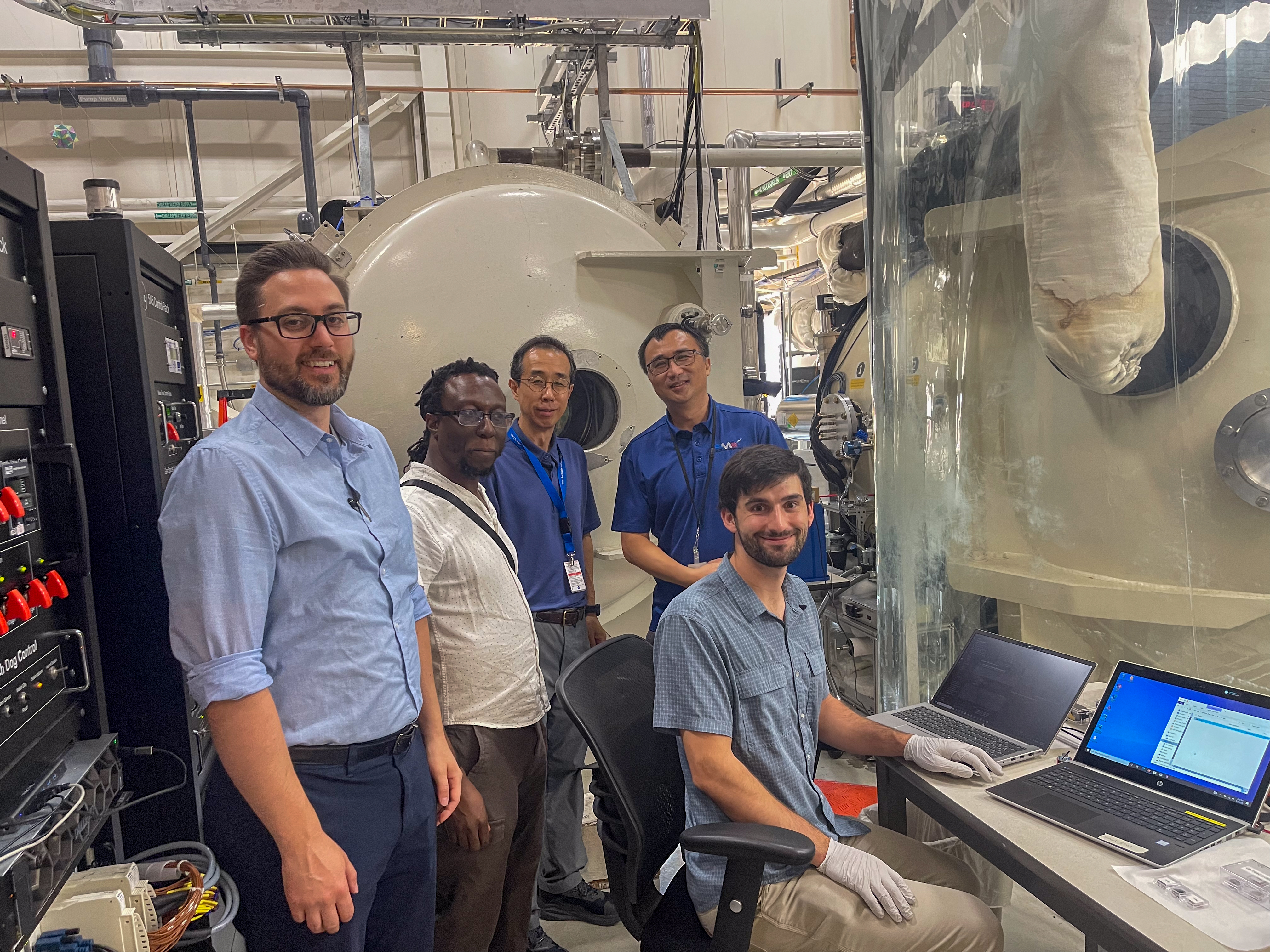
From left to right: Donald Dornbusch (NASA Glenn), Godfrey Sauti, Sang-Hyon Chu, Yi Lin (NASA Langley), and Malachi Mooney-Rivkin (NASA Ames), during a round of TVAC testing at NASA Langley.
NASA

β€œThe potential market for solid-state batteries is very broad,” said Ji Su, a polymer materials scientist and the task lead at NASA Langley. β€œAutomobiles, cell phones, communication devices, drones β€” anything that needs a portable power supply.” 

The SPEARS project began in 2026 with funding through the Advanced Research and Technology division within the agency’s Research and Technology Mission Directorate. The project is set to focus on technology development in its first stages before potentially shifting toward commercial collaboration. NASA’s Ames Research Center in California’s Silicon Valley is working to develop flight hardware such as test boards and electronics to help prepare the SPEARS batteries for spaceflight and test them in space environments.Β 

NASA’s SSPICY Mission to Demonstrate In-Space Inspection Technologies

8 October 2026 at 14:56

2 min read

Preparations for Next Moonwalk Simulations Underway (and Underwater)

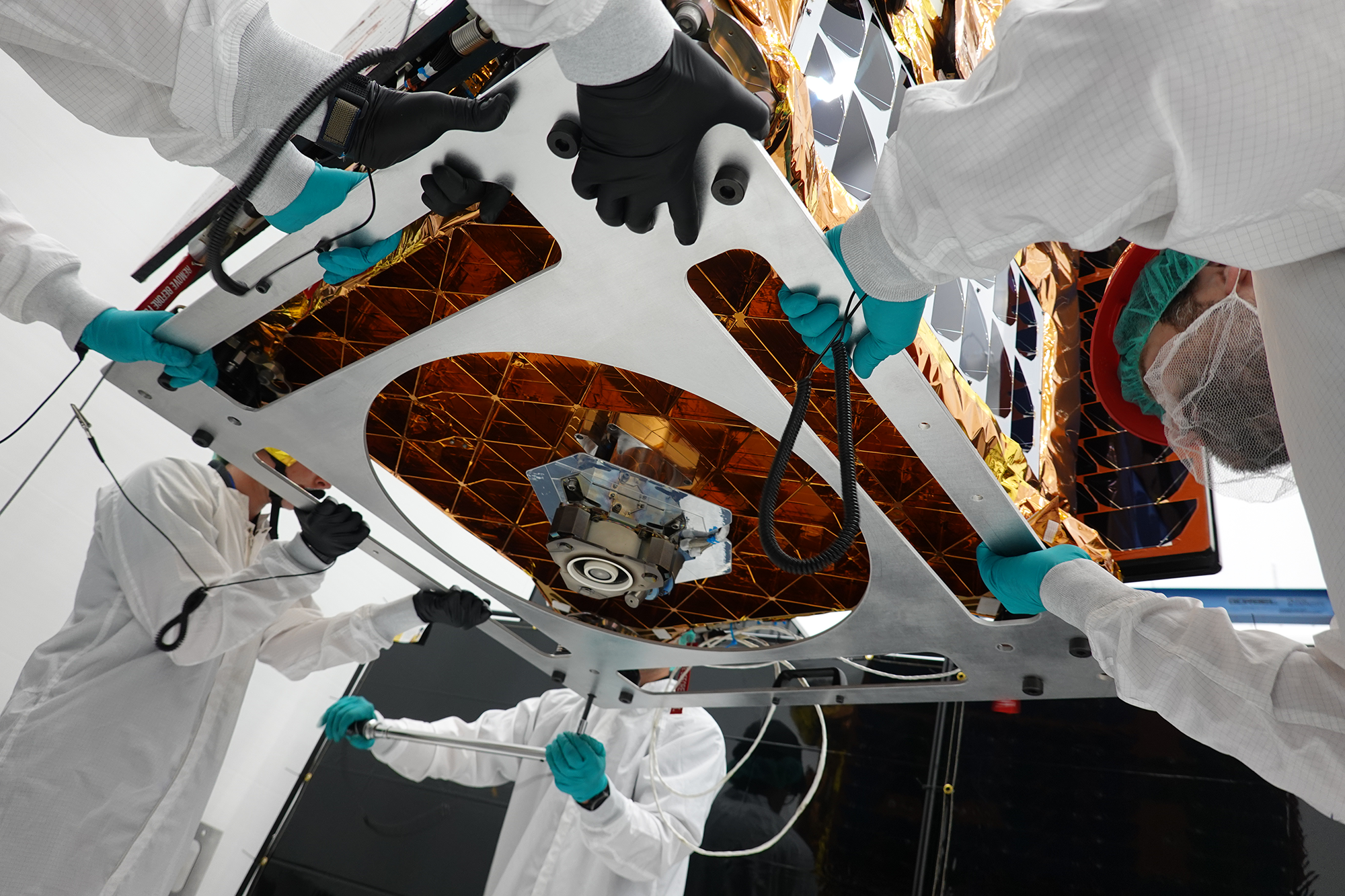
Four people in white suits with teal gloves hold the underside of the SSPICY spacecraft's white frame with
Technicians at Starfish Space prepare the Otter spacecraft ahead of NASA’s SSPICY technology demonstration mission. The spacecraft will demonstrate technologies that could reduce orbital debris.
Starfish Space

A new NASA-supported spacecraft will get up close to satellites that are no longer in service, demonstrating technologies that could support future in-space repairs and reduce orbital debris.

The Small Spacecraft Propulsion and Inspection Capability (SSPICY) mission launched Oct. 1 from Vandenberg Space Force Base in California. The mission is a technology demonstration where an Otter spacecraft will approach up to four inoperable space objects of U.S. origin in low Earth orbit, such as satellites and rocket bodies.

In early 2027, the Otter spacecraft, built by Starfish Space, will begin to navigate within hundreds of yards of each object to perform inspections, using autonomous guidance and control software with minimal input from ground controllers. Computer vision and sensors enable software to make real-time navigation decisions as the spacecraft approaches each target.

During inspection, the Otter spacecraft will gather critical information about each object, such as spin rate, orientation, and surface condition. An electric propulsion system will enable SSPICY to travel between objects, and an articulating robotic boom will test pointing the spacecraft’s thrusters for precise maneuvering between different orbits.

This mission is the first time these technologies will be tested together as an integrated system, paving the way for future autonomous servicing and orbital debris inspection.

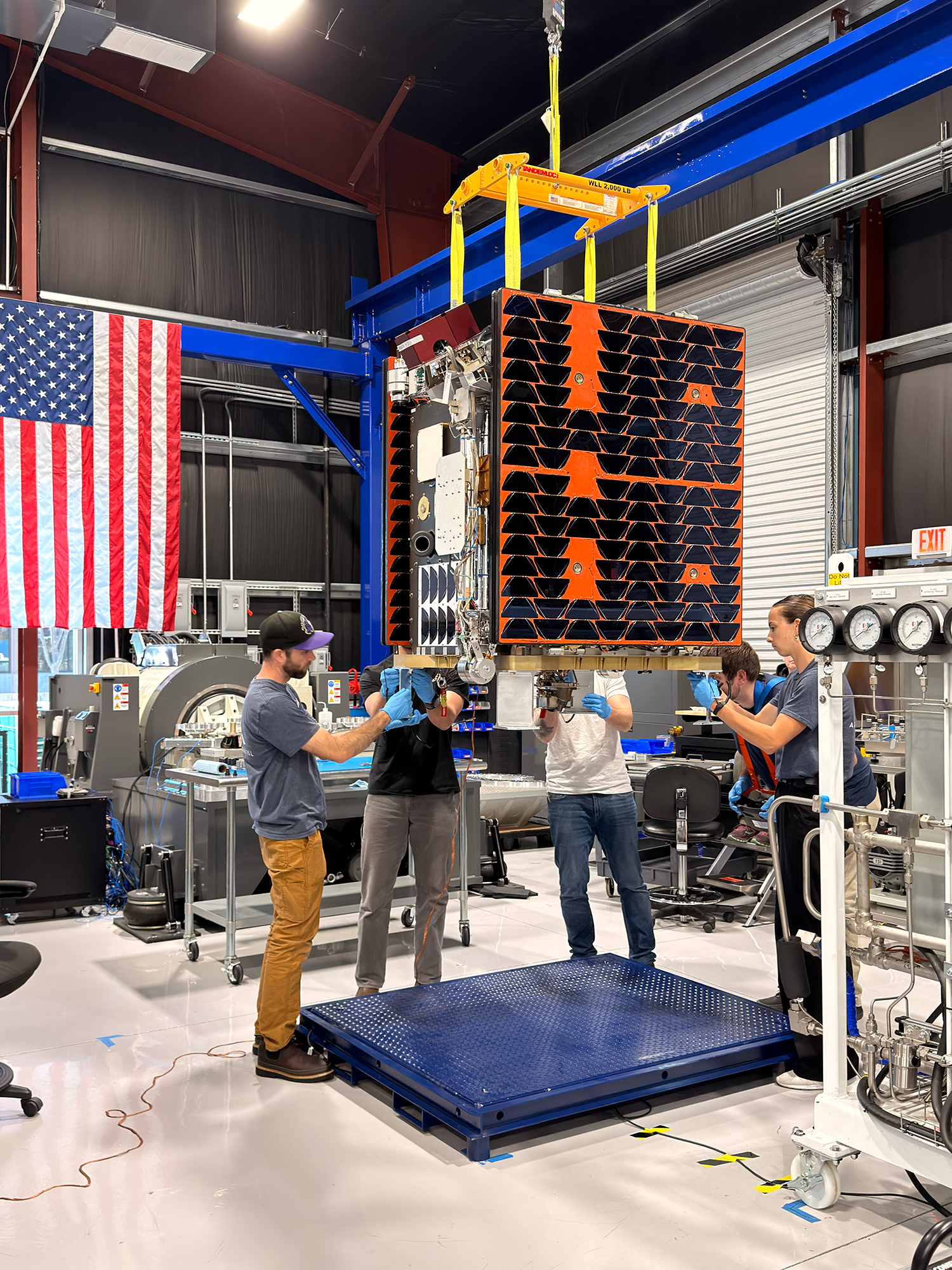
Four individuals stand in a large room with an American flag and equipment in the background. Above them, the SSPICY spacecraft is held by a ceiling mount.
Technicians prepare the Otter spacecraft for NASA’s SSPICY mission at Starfish Space facilities in Seattle. The spacecraft, which is about the size of a washing machine, will autonomously navigate to inoperable space objects of U.S. origin to inspect them, testing technologies to one day make in-space repair possible.

During the SSPICY mission, the Otter spacecraft won’t touch or dock with any satellites, but will test the technologies needed to one day enable missions to service or repair objects in orbit, or to safely remove them by pulling them into Earth’s atmosphere for disposal.

Space objects like rocket bodies and satellites that are experiencing issues or no longer in service can break apart or collide with one another, creating varying forms of orbital debris from large fragments to small particles. With thousands of satellites launched each year to provide communications, weather forecasting, navigation, and other services that people rely on daily, keeping the space near Earth safe for operations is increasingly critical.

Starfish Space developed and operates the Otter 24C spacecraft, which is performing the SSPICY mission. NASA’s Small SpacecraftΒ and Distributed Systems program within the agency’s Research and Technology Mission Directorate funds and manages the technology demonstration.

NASA’s Small Business Innovation Research / Small Business Technology Transfer program funded awards to Starfish Space to support early development of the spacecraft’s key technologies and capabilities.Β Β 

Lunar Grounding Challenge

6 October 2026 at 14:22

2 min read

Preparations for Next Moonwalk Simulations Underway (and Underwater)

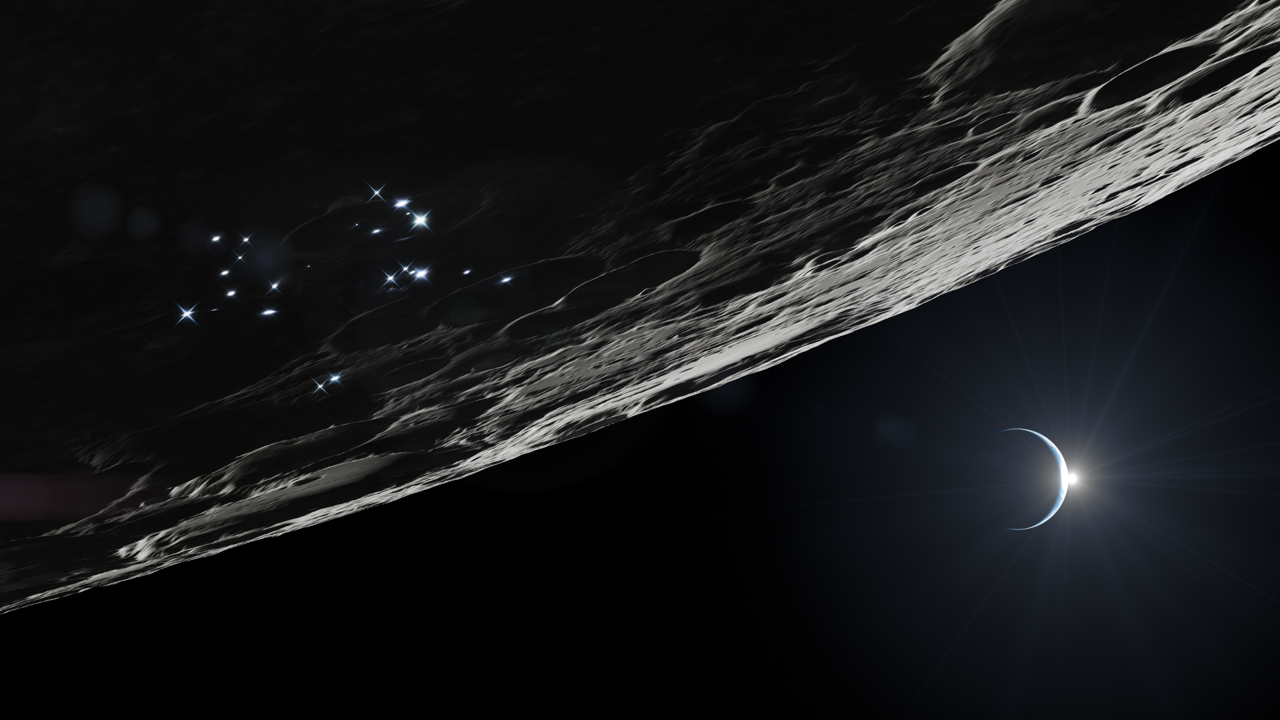
Artist’s rendering of the lunar South Pole region. Glowing points of light scattered across the lunar surface represent surface assets supporting sustained human and robotic operations near the South Pole.
NASA

As an astronaut traverses the lunar South Pole, tribocharging from walking on the lunar surface and plasma charging from the ambient plasma generate electric charge on the spacesuit. This problem is severely compounded when entering lunar shadows and Permanently Shadowed Regions (PSRs). In these dark zones, the spacesuit can buildup a substantial negative potential due to a lack of ambient ion flux and the absence of photoelectron emission to balance ambient electron collection.

The risk occurs when an astronaut returns to the spacecraft. Because the lunar surface lacks a natural environmental mechanism to bleed the charge accumulated on spacesuit away, the astronaut may become a walking, high voltage capacitor.

In the sunlit region, the stationary lander will hold slightly positive electrical potential. When a highly negatively-charged astronaut approaches the vehicle, the extreme voltage differential can trigger electrostatic discharge (an instantaneous electrical arc, or a spark) during physical contact. A rapid discharge from the astronaut to the lander risks degrading vital suit layers, damaging sensitive suit electronics, threatening the oxygen-rich environment inside the suit, and delivering dangerous electrical shocks to the crew.

Through the Lunar Grounding Challenge, NASA is seeking innovative designs and operational solutions to bring a lunar equilibrium capability to safely discharge a suited astronaut from high triboelectric charge buildup during lunar surface EVAs in the South Pole. This challenge seeks innovative concepts for an Electrostatic Discharge (ESD) mitigation solution to neutralize the astronaut in a safe and timely manner under this extreme charge differential before astronauts directly interact with the lander.

Award: Up to $150,000 in prizes

Challenge Open Date: October 5, 2026

Submissions Close Date: January 15, 2027

For more information, visit: https://work.crowdplat.com/challenge/lunar-grounding-challenge

NASA Testing Aims at Supercooled Large Droplet Aviation Safety

5 October 2026 at 11:27
3 Min Read

NASA Testing Aims at Supercooled Large Droplet Aviation Safety

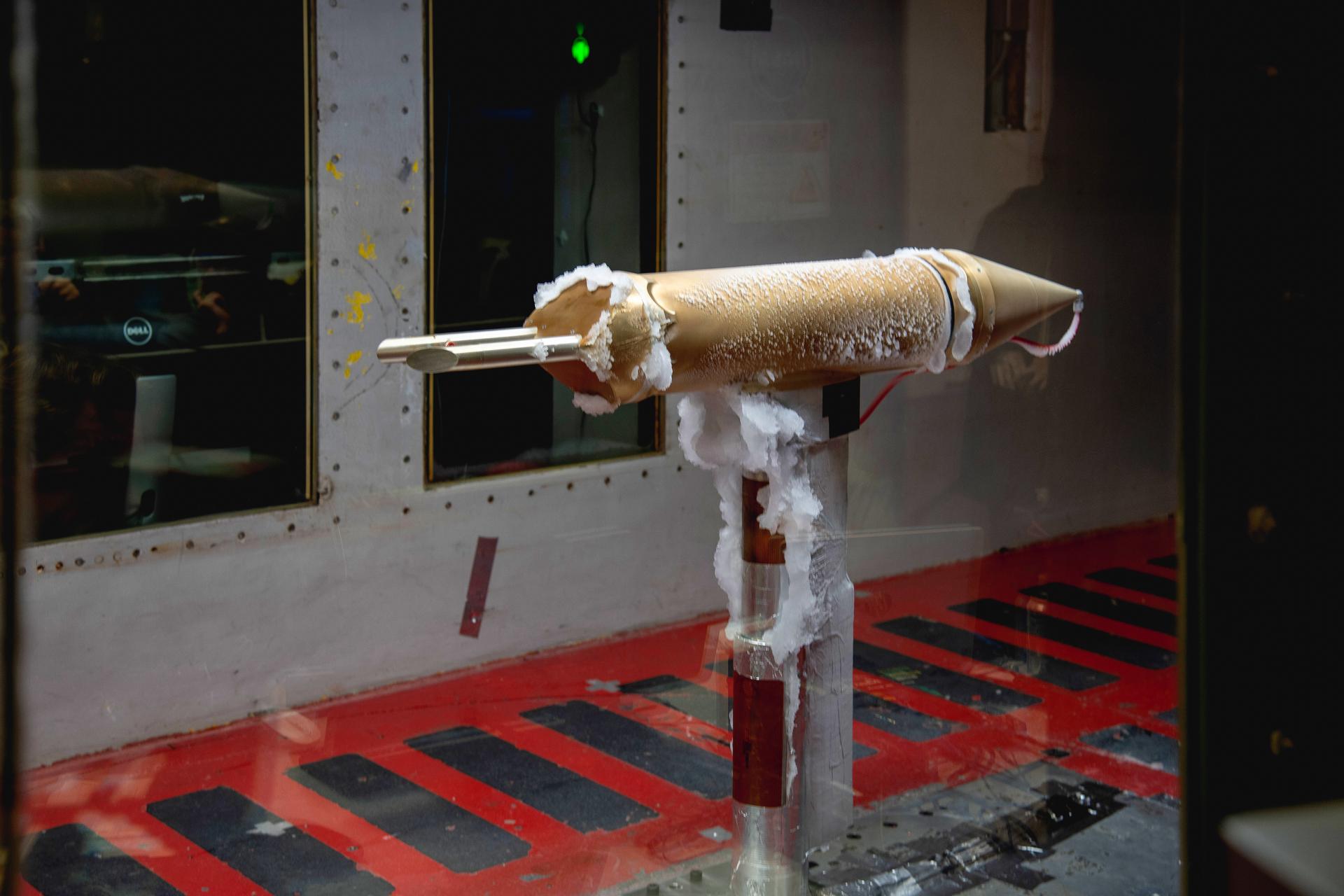
Ice collection seen on un-heated sections of the 1D2D-X ice drop detection probe in the test section of the IRT (Icing Research Tunnel). Drop Size Probe testing – SFD (Subsonic Flight Demonstrator) of SLD (Supercooled Large Drop) Instrumentation Test in IRT (Icing Research Tunnel) – Particle Size Distribution Entry, June 8-11, 2026 Large Drop Testing in IRT
Credits: NASA/Quentin Schwinn

NASA is leveraging its expertise and enhancing its test facilities to help address a rare but persistent aviation hazard: icing that occurs when aircraft encounter unusually large, very cold water droplets in clouds.Β Β 

The problem, known as β€œsupercooled large droplet icing,” occurs when aircraft fly through clouds containing unusually large drops of water that are very cold but remain liquid. When a plane passes through those drops, they can rapidly freeze to surfacesΒ that are not protected from ice buildup.Β Β 

With a series of tests in the Icing Research Tunnel at Glenn Research Center in Cleveland, NASA researchers are helping U.S. industry better understand the phenomenon.Β 

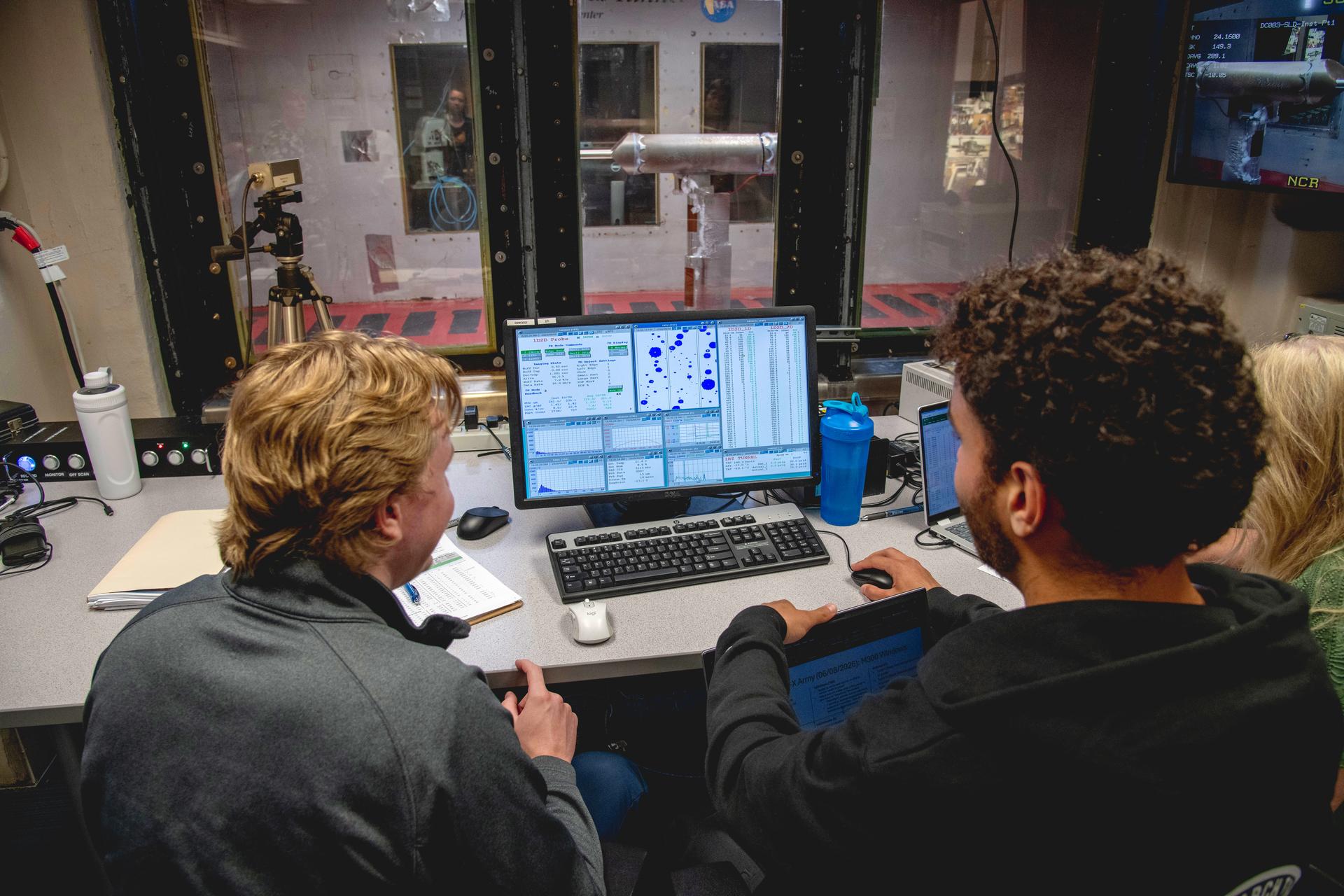
SFD (Subsonic Flight Demonstrator) of SLD (Supercooled Large Drop) Instrumentation Test – Particle Size Measurement in the IRT (Icing Research Tunnel), June 8-11, 2026. Drop size shown on computer from Drop Sizing Probe seen in the IRT test section.
NASA/Quentin Schwinn

Supercooled water is common in clouds – droplets can go below 32 degrees Farenheit but not freeze unless they encounter dust or other tiny particles around which they can crystalize. Aircraft are designed to encounter typical icing conditions where droplets range from 2 to 100 microns in diameter (for comparison, a human hair is about 70 microns wide). But in rarer cases, clouds can contain supercooled large drops up to 2,000 microns in diameter (if you’ve ever been caught in freezing rain, you’ve encountered these droplets at ground level). These much larger droplets can hit or splash to the aft of an aircraft, including areas behind conventional ice protection systems.Β Β 

The aviation industry relies on engineering tools to help design their aircraft. Current tools work well for typical clouds, but engineers have questions about how well they account for the physics of supercooled large drops. To help answer those questions, NASA is working to enhance the equipment it uses to generate and measure experimental clouds for testing in the Icing Research Tunnel.Β Β 

Ice collection seen on un-heated sections of the ice drop detection probe in the test section of the IRT (Icing Research Tunnel). Drop Size Probe testing – SFD (Subsonic Flight Demonstrator) of SLD (Supercooled Large Drop) Instrumentation Test in IRT (Icing Research Tunnel) – Particle Size Distribution Entry, June 8-11, 2026
NASA/Quentin Schwinn

NASA researchers have experimented with brand new probes that help calibrate the sizes of the drops in the clouds the tunnel produces. The probes can β€œsee” drops larger than 45 microns and perform a real-time analysis of their sizes. NASA will compare these results, a laborious technique of post-processing droplet size image data from the tunnel. The results will be mated to results from a different probe that measures droplets smaller than 45 microns. With this, the complete droplet size spectrum is known.Β 

The test campaign marks an important milestone for the Subsonic Flight Demonstrator project, part of NASA’s Research and Technology Mission Directorate. Detailed analysis of the collected data continues, and NASA’s project team will share results with the broader aerospace community once complete.

Keep Exploring

Discover More Topics From NASA

NASA Model Wing Lights Up During First Pressure Sensitive Paint Tests

2 October 2026 at 12:10

2 min read

Preparations for Next Moonwalk Simulations Underway (and Underwater)

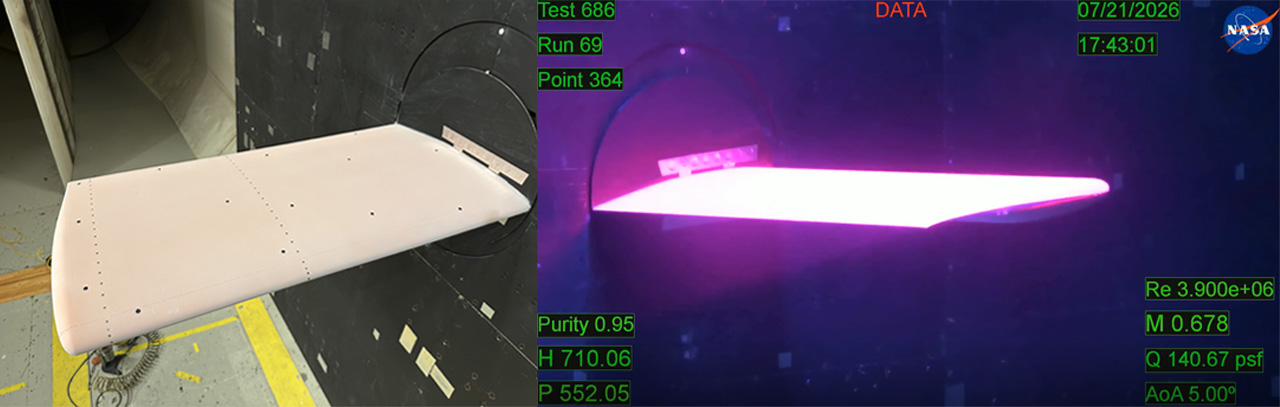
Side‑by‑side images showing a wing-like test article mounted in a wind tunnel. The left image displays the pale, unlit test article attached to instrumentation inside the tunnel. The right image shows the same article under aerodynamic heating, glowing bright pinkish‑purple as test data parameters appear around it, including readings for pressure, temperature, Mach number, and angle of attack.
Left: The Benchmark Supercritical Wing not illuminated in unsteady Pressure Sensitive Paint inside the Transonic Dynamics Tunnel at NASA’s Langley Research Center. Right: The Benchmark Supercritical Wing illuminated in unsteady Pressure Sensitive Paint during testing inside the Transonic Dynamics Tunnel at NASA’s Langley Research Center.
Left: NASA/Sarah Peak | Right: NASA

Groundbreaking tests at NASA’s Langley Research Center in Hampton, Virginia, are paving the way for new wind tunnel capabilities for designing the aircraft technologies of the future.Β 

In a first-of-its-kind test in NASA Langley’s Transonic Dynamics Tunnel, researchers used unsteady Pressure Sensitive Paint to study how air flows around a standard wind tunnel model known as the Benchmark Supercritical Wing. As the team observed the test, the paint’s special capabilities made the model wing glow pink-purple when exposed to special ultraviolet lights, while high-speed cameras captured every detail.Β 

The test combined two valuable NASA tools. NASA’s benchmark wings don’t represent a particular type of aircraft, rather they are meant as universal models to help researchers improve computer modeling using wind tunnel data.Β Β 

Unsteady pressure sensitive paint is a specialized coating that varies in brightness according to how much pressure the air flow applies to the wing. High-speed cameras capture those changes, providing data for computer models. For years, NASA researchers at centers including Langley and the agency’s Ames Research Center in California’s Silicon Valley have been working to integrate the paint into wind tunnel tests for aircraft and rockets. NASA researchers consider the paint a vital tool and expect to find many more wind tunnel applications in the future.Β Β 

This test marked the technique’s first use on a large-scale, freely moving model in a low‑oxygen environment, an achievement made possible by the Transonic Dynamic Tunnel’s unique testing capabilities.Β 

This milestone opens the door for upcoming tests on flexible aircraft models that are designed to bend and adapt during flight to improve efficiency. It also lays the foundation for better simulations and designs as NASA advances the future of flight.Β 

NASA Opens 2027 Human Lander Challenge for Lunar Communications

29 September 2026 at 17:27

3 min read

Preparations for Next Moonwalk Simulations Underway (and Underwater)

Banner image for 2027 Human Lander Challenge.
NASA

NASA’s 2027 Human Lander Challenge is seeking ideas from college and university students to help address one of the most critical needs for sustained lunar exploration: reliable communications.

As NASA prepares for long-term human presence on the Moon through the Artemis and Moon Base programs, communications systems will be just as important as spacecraft and rockets. A resilient communications system will connect astronauts, rovers, habitats, landers, mission support teams on Earth, and more. Reliable communications are essential for ensuring safety, coordinating complex operations, and enabling timely decision-making in the harsh and remote lunar environment.

β€œReliable communications will be at the heart of our ability to explore and operate on the Moon,” said Jeremy Del Greco, Human Landing System program communications integration lead at NASA’s Marshall Space Flight Center in Huntsville, Alabama. β€œAs Artemis and Moon Base missions expand our presence beyond Earth, we will need dependable connections across the lunar surface and beyond. The 2027 Human Lander Challenge gives students the opportunity to help shape the communications capabilities of tomorrow and support future lunar exploration.”

The 2027 competition invites United States-based collegiate teams and their faculty advisers to develop innovative, systems-level solutions to better understand, establish, and optimize lunar communications for landers and surface operations that can be implemented within three to five years.

Teams should submit a non-binding notice of intent by Thursday, Oct. 15, if they would like to participate. Proposal packages, including a five to seven-page proposal and a two-minute video, are due March 4, 2027.

While teams may propose solutions outside of the focus areas, NASA has identified three main categories to advance future lunar communications capabilities:

  • Hardware:
    • Space-rated wireless networks and electronics
    • Antenna signal propagation, modeling, and environmental mitigation
  • Software:
    • Data efficiency and link optimization
    • Network management and scheduling
  • Architecture
    • Surface communications system architecture
    • Orbital communications system architecture

Based on proposal package evaluations in phase 1, up to 12 finalist teams will be selected to receive $9,000 and advance to phase 2 of the competition, which includes a final design review in Huntsville, Alabama, home of NASA’s Marshall Space Flight Center, June 21–24, 2027. The top three teams from phase 2 will share a total prize of $18,000.

The Human Lander Challenge is administered by the National Institute of Aerospace on behalf of the agency and supports NASA’s efforts to foster innovative solutions to a variety of areas for long-duration human spaceflight plans at the Moon. The Human Lander Challenge is sponsored by the agency’s Human Spaceflight Mission Directorate’s Human Landing System Program Office.

Through the Artemis program, NASA will send astronauts to explore the Moon for scientific discovery, economic benefits, and to build the foundation for the first crewed missions to Mars – for the benefit of all.

For more information on NASA’s Human Lander Challenge and how to participate, visit:

https://hulc.nianet.org/

NASA Adds Blue Origin New Glenn 9Γ—4 to Launch Services Contract

29 September 2026 at 16:08
NASA meatball
Credit: NASA

In accordance with a contract on-ramp clause, NASA has added Blue Origin’s New Glenn 9Γ—4 launch service to the NASA Launch Services (NLS) II contract. The New Glenn 9Γ—4 launch service will be available to NASA’s Launch Services Program Office to use for future missions.

The NLS II contracts are multiple-award, indefinite-delivery/indefinite-quantity contracts with an ordering period through June 2030, and an overall period of performance through December 2032. The NLS II contracts include an on-ramp provision that provides an opportunity annually for new launch service providers to compete for future missions and allows existing contractors to introduce launch vehicles not currently on their NLS II contracts.

The NLS II contracts support the goals and objectives of the agency’s Human Spaceflight Mission Directorate, Science Mission Directorate, and the Research and Technology Mission Directorate. Under the contract, NASA also can provide launch services to other government agencies, such as the National Oceanic and Atmospheric Administration.

NASA’s Launch Services Program Office at the agency’s Kennedy Space Center in Florida manages the NLS II contracts. For more information about NASA visit:

https://www.nasa.gov

-end-

Joshua Finch / Jimi Russell
Headquarters, Washington
202-358-1100
joshua.a.finch@nasa.gov / james.j.russell@nasa.gov

Leejay Lockhart
Kennedy Space Center, Fla.
321-747-8310
leejay.lockhart@nasa.gov

Share

Details

Last Updated
Sep 29, 2026
Editor
Jennifer M. Dooren

NASA Opens Applications for Second Season of ORBIT Student Challenge

29 September 2026 at 11:11
2 Min Read

NASA Opens Applications for Second Season of ORBIT Student Challenge

Following a successful inaugural year of ingenuity and career building, NASA ORBIT (Opportunities in Research, Business, Innovation, and Technology) has officially returned for a second season to bring university and college student innovation to the forefront of Earth technology development and deep-space exploration.

Registration for the 2026–2027 challenge is open through Monday, Nov. 16, 2026, through the NASA STEM Gateway.

Expanded for its second season with up to $500,000 in total prize funding, NASA’s ORBIT invites student teams to explore their boldest ideas and invent their brightest solutions. Through the competition, students must conduct targeted research, conceptualize early models, and perform feasibility analyses to refine their proposals. Top-performing teams earn a spot at the in-person Pitch Showcase to present their solutions to a panel of expert judges, who select award recipients based on their presentations and interactive Q&A sessions.

ORBIT has two challenge tracks for teams to choose from. Participants in the ORBIT Earth track must select a NASA-owned patent and develop novel commercial or nonprofit applications addressing critical terrestrial problems. Whether reimagining drones for reduced noise pollution or designing improved medical technology for better patient care, students must demonstrate clear pathways to public benefit.

The ORBIT Space focuses on next-generation space exploration technology designed to support NASA’s Artemis program and future initiatives to establish a sustainable human presence on the Moon, Mars, and beyond. Teams competing in this track develop viable concepts for power, communications, navigation, living solutions, astronaut health and well-being, and more.

Projects that successfully unite the goals of both the Earth and Space tracks can also qualify for a special Integration Bonus, but this season also introduces two new specialty recognitions: the Faculty Advisors’ Choice Award, celebrating professionalism and cross-team communications, and the Next Steps Award, recognizing teams with the strongest roadmaps to continuing their project development after the conclusion of the challenge.

Together with core prizes, ORBIT celebrates student excellence and drives key technical solutions while building a pipeline of interdisciplinary talent. The challenge provides students with immersive experience in NASA’s core missions, direct access to agency mentors, and industry-ready skills that bridge academia and aerospace careers.

For complete competition details, eligibility requirements, and official rules, visit: https://nasaorbit.org/

Registration is open until Nov.16, 2026, through the NASA STEM Gateway.

NASA ORBIT Challenge 2027

28 September 2026 at 10:56

1 min read

Preparations for Next Moonwalk Simulations Underway (and Underwater)

NASA ORBIT graphic design imagery. The words "NASA ORBIT" are displayed encircled by an oval graphic design with a star at the bottom of the oval.

The NASA ORBIT (Opportunities in Research, Business, Innovation, and Technology for the Workforce) Challenge invites university and community college students nationwide to work with real NASA intellectual property and mission challenges.

Choose your path: develop commercial applications of NASA patents that solve problems here on Earth (ORBIT Earth), or design next-generation technologies for space exploration (ORBIT Space). The most ambitious teams can pursue both through the optional Integration Bonus.

Award: Up to $500,000 in prizes, receive mentorship from NASA experts, and present your work at an in-person showcase. Finalists gain access to an exclusive accelerator program designed to launch careers in STEM and entrepreneurship.

Challenge Open Date: September 14, 2026

Registration Close Date: November 16, 2026

For more information, visit: https://nasaorbit.org/

❌
❌