Normal view

There are new articles available, click to refresh the page.
Before yesterdayMain stream

NASA’s Life-Saving Technology Where Cell Signals Can’t Go

10 September 2026 at 16:12
3 Min Read

NASA’s Life-Saving Technology Where Cell Signals Can’t Go

A group of people on a boat, several of them are wearing shirts with text reading "U.S. Coast Guard"
Rescued after more than four hours in the water, Easton Barrett (center, red shorts) and his friend were picked up by the U.S. Coast Guard thanks to a personal locator beacon (PLB). The devise sends a distress signal to satellites that are relayed back to Earth, launching a rescue operation.
Credits: Easton Barrett

Memorial Day weekend 2024 started with a blue sky and a mild three- to four-foot chop in the water off the Gulf Coast of Mississippi — a perfect day for a fishing competition. A team of five was about 40 miles offshore checking their sonar, and 30 seconds later the boat was gone. They were in the water struggling to pull on life jackets and grab the coolers as they bobbed up. When a boat sinks, survivors can be virtually invisible amid the vast expanse of water.

When their fishing trip went wrong, Easton Barrett had the only mobile phone and no cell service. He recorded a brief farewell, planning to put his phone in a cooler in hopes someone would find it.

Another team member activated a personal locator beacon (PLB) that had been stowed at the last minute, which sent a distress signal to the Search and Rescue Satellite-Aided Tracking (SARSAT) technology carried by multiple satellites in Earth orbit. In the SARSAT system, developed partly by NASA, an emergency signal containing the transmitter’s location is directed to the nearest available ground station.

A bearded man stands holding three bright green devices in front of a bag, each has the logo for ACR on it.
406 megahertz is the wavelength dedicated for PLB distress signals. On the annual 406 Day, Easton Barrett posts videos and messages on his social media accounts to help raise awareness about essential survival gear.
Credit: ACR

A mission control center then alerts rescue coordination centers to mobilize search and rescue crews. For Barrett and his crew, that was a Florida Coast Guard boat.

“Ever since, I have tried to teach others about safety on the water and in the outdoors by using a PLB,” said Barrett. “If that will save one life, it’s worth the effort.”

A beacon like the one that saved his crew, a registered ResQLink PLB developed by ACR Electronics Inc. of Fort Lauderdale, Florida, also notifies the device owner’s emergency contact, indicating a distress call was activated. All emergency beacons must meet the same requirements to ensure they work when needed. Every rugged, buoyant, handheld devices have a five- to 10-year battery life.

SARSAT began operations in 1982, becoming an international collaboration in 1985. The flight and ground technologies used globally were originally developed at NASA’s Goddard Space Flight Center in Greenbelt, Maryland. Now there are 62 satellites in the program and 45 nations contributing services, from operating ground stations to providing rescue crews. More than 63,000 lives have been saved.

A close up picture of a green ACR PLB atop a bag in a forest setting
Turning on a ResQLink View PLB from ACR Electronics will automatically “ping” orbiting satellites that send location and GPS information to the nearest search and rescue station. Whether on land or water, the appropriate resources will be dispatched to help anyone in distress anywhere in the world.
Credit: ACR

SARSAT by the Numbers

The Search and Rescue Satellite-Aided Tracking system developed over several decades by NASA and other government agencies saves lives on land or at sea.

  • 1982 — the start of U.S. operations
  • 1985 — the start of international operations
  • 62 operational satellites
  • 45 nations contributing services
  • 63,000+ lives saved

One rescue in 2024 demonstrates how it all comes together.

  • 40 miles off the Mississippi Gulf Coast
  • 5-person team participating in a fishing competition 
  • 30 seconds for a boat to sink
  • 200 pounds of bait dumped to make a cooler buoyant
  • 3 close encounters with wildlife, likely sharks and eels
  • 4 hours in the water
  • 1 personal locator beacon
  • 1 Coast Guard rescue boat
  • 5 lives saved

“If it has anything to do with NASA, it's got to be awesome.”

EASTOn Barrett

EASTOn Barrett

ACR Customer

About the Author

Margo Pierce

Science Writer

New Next-Gen Dish Adds Muscle to NASA’s Deep Space Network

By: albarne1
25 August 2026 at 18:28
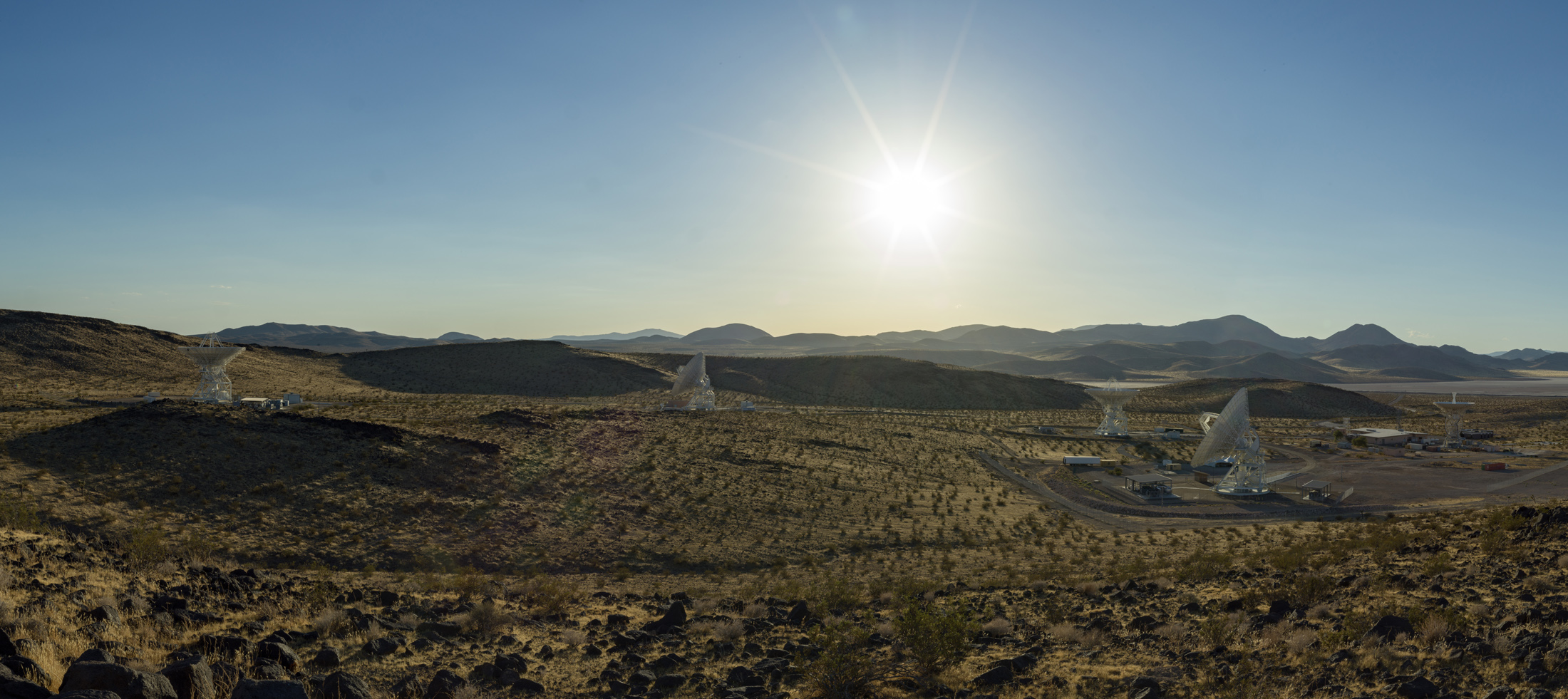
A wide desert landscape featuring several large white satellite dishes pointing toward a bright sun shining in a clear blue sky above distant mountain ranges.
Antennas soak in the summer Sun in August 2026 at the Deep Space Network’s Goldstone complex near Barstow, California, including the recently completed Deep Space Station 23 (shown in the foreground, to the right).
NASA/JPL-Caltech

NASA’s Deep Space Network facility in California is marking the addition of a brand new 34-meter-wide (114-foot-wide) radio frequency antenna to the agency’s deep space communications and navigation system. The network uses giant dish antennas located at three global facilities to support more than 40 spacecraft exploring the solar system and interstellar space.

The new Deep Space Station 23 (DSS-23) is located at the Goldstone Deep Space Communications Complex, near Barstow, and is managed by NASA’s Jet Propulsion Laboratory in Southern California.

NASA leadership and personnel as well as dignitaries gathered at the complete DSS-23 antenna for a ceremonial ribbon cutting. It’s the latest to be added as part of the Deep Space Network’s Aperture Enhancement Project, which began in 2009 to upgrade and expand the network by adding six new 34-meter multifrequency beam-waveguide antennas. These versatile dishes can enhance many missions operating over different radio frequencies.

“By expanding the Deep Space Network, we are strengthening the communications foundation NASA needs for the bold missions ahead — from exploring more of the Moon than ever before to peering deeper into the solar system,” said James Kenyon, associate administrator of the Research and Technology Mission Directorate at NASA Headquarters in Washington. “This new antenna will help us deliver on our national goals for space exploration and push beyond the limits of what once seemed impossible.”

After completing a testing campaign from May through July to demonstrate its capabilities, the new DSS-23 began operations on Aug. 3, tracking NASA’s Chandra X-ray Observatory. Since then, it has been communicating with dozens of missions such as NASA’s Mars Reconnaissance Orbiter, Psyche, Juno, Voyager 1, and other robotic spacecraft in deep space.

A massive white satellite dish antenna stands on a desert plain under a clear blue sky, bathed in warm sunlight alongside small facility structures.
Long shadows are cast by the recently completed Deep Space Station 23 at the Deep Space Network’s Goldstone complex near Barstow, California. A multifrequency beam waveguide antenna, DSS-23 will boost the DSN’s capacity and enhance NASA’s deep space communications capabilities for decades to come.
NASA/JPL-Caltech
Ten people in professional attire pose together outside under a clear blue sky, with a massive white satellite dish standing directly behind them.
NASA, Jet Propulsion Laboratory, and Deep Space Network leadership pose in front of the recently completed Deep Space Station 23 (DSS-23) antenna at the Deep Space Network’s Goldstone complex near Barstow, California, on Aug. 25, 2026..
NASA/JPL-Caltech

“The addition of this next-generation antenna brings us closer to a completely modernized network that embraces advanced technology to ensure NASA’s leadership in deep space communications,” said Dave Gallagher, director of JPL. “After over 60 years of continuous operations supporting consequential missions, these upgrades prime the network for a new era of exploration. The teams that designed, planned, and built DSS-23 should be proud.”

Enhanced capabilities

Construction of DSS-23 began in February 2020. After the 133-ton metal reflector framework was placed and bolted atop the antenna’s pedestal in December 2024, engineers installed the panels to the framework that reflect radio frequency signals transmitted to and received from spacecraft. Then came the careful process of calibrating the antenna so it can work in concert with the rest of the network.

It is the fifth antenna at Goldstone (joining three 34-meter antennas and one 70-meter, or 230-foot, antenna) and the fifth enhancement project antenna to join the network, which includes antennas at the DSN’s Goldstone, Madrid, and Canberra, Australia, complexes. Multifrequency beam waveguide antennas direct signals down to a stable, climate-controlled underground room, rather than housing heavy, sensitive electronic equipment on the moving antenna dish. In addition to offering versatility, this design allows easy access for maintenance and upgrades to the system.

“The biggest challenge wasn’t actually constructing the antenna. It was transforming a complex collection of mechanical, electrical, software, radio frequency, and infrastructure systems into a single, mission-ready asset,” said Germaine Aziz, manager of the Deep Space Network Aperture Enhancement Project at JPL. “Every subsystem must be integrated, calibrated, and verified to operate with extraordinary precision and reliability before it can support NASA’s deep space missions.”

The enhancement project will be complete when a sixth enhancement-project antenna, Deep Space Station 33, comes online at the Canberra facility in 2029, bringing the total number of 34-meter antennas across the network to 13. The 34-meter antennas can be arrayed (combined and operated together) to provide an equivalent communications backup for each facility’s single 70-meter antenna, which, after more than 50 years of near-continuous operation, are getting increasingly costly to maintain and repair.

Managed by Caltech for NASA, JPL manages the agency’s Deep Space Network with the oversight of NASA’s SCaN (Space Communications and Navigation) Program within NASA’s Research and Technology Mission Directorate. More than 100 NASA and non-NASA missions rely on the Deep Space Network and Near Space Network. They include missions that support astronauts aboard the International Space Station and future Artemis missions, monitoring Earth, exploring the Moon, and exploring the solar system and beyond. 

For more information about the Deep Space Network, visit:

https://www.nasa.gov/communicating-with-missions/dsn

NASA Selects University Teams to Help Advance Aviation Research

20 August 2026 at 10:57

4 min read

Preparations for Next Moonwalk Simulations Underway (and Underwater)

Aviation Research ULI Round 9 Awards wreath graphic.

NASA has selected four university teams to help the agency transform the future of aviation through projects ranging from high-supersonic propulsion systems to low-noise routes for small aircraft flying through cities.

The agency made awards through its University Leadership Initiative, which offers  student teams the opportunity to contribute to real-world flight research that advances NASA’s goals in aeronautics.

This year’s awardees are pursuing projects that align with NASA strategic objectives, including innovation in commercial high-speed aircraft, the development of new tools that can lead to transformational aviation breakthroughs, safer and more efficient air traffic management, and the integration of new air transportation options into the national airspace.

“With these four new awards, the University Innovation project is leaning in on NASA’s aeronautics mission priorities,” said Andrew Provenza, project manager, NASA’s Glenn Research Center in Cleveland. “These teams will research new propulsion concepts for supersonic flight, novel engineering methods that can revolutionize aerospace system design and certification, and learning-enabled avionics for new advanced and urban air mobility flight vehicle platforms, which could enhance air traffic control modernization.”

The awards represent the ninth round of NASA University Leadership Initiative funding. 

Totaling about $30 million, NASA’s awards will provide multiyear support for awardee universities to build their teams and conduct research. The initiative provides hands-on experiences for students, developing the U.S. aeronautics research workforce while also producing findings that will help drive aviation forward.

University Leadership Initiative awards go to teams comprised of graduate and undergraduate students and led by faculty members. Recipients form academic partnerships with other universities and community colleges, as well as industry. Experts from NASA, the Federal Aviation Administration, and other organizations provide support and guidance.

The awardees are:

University of Minnesota

Adaptive Supersonic Combined Cycle Engine for Next-generation Transportation

Led by Terrence Meyer, the project will work over four years to develop a fuel-flexible propulsion system that uses a traditional jet turbofan during takeoff and subsonic flight, but would transition to a new type of ramjet engine for supersonic flight. In ramjet mode, the system would cruise at Mach 4, or more than 3,000 mph. The project aims to enable efficient, faster-than-sound flight, including flight at high-supersonic speeds.

Stanford University

Safety Across Lifecycle of Learning-Enabled Avionics Systems: Safety Data Flywheel

Led by Somil Bansal, this four-year project aims to develop an avionics system to control an aircraft’s communications, navigation, and other electronics that incorporates machine learning. The system would take an approach that ensures safety is continuously reinforced throughout its operations. This research could help create a framework for the aviation sector to safely integrate artificial intelligence-enabled avionics into the national airspace.

Stanford University

Noise-Optimal Trajectory Planning for Urban Air Mobility Operations, Including Ambient Noise

Led by Juan Alonso, the center created through this award will work over four years to develop a high-fidelity simulation framework focused on developing low-noise flight paths in urban environments for future small aircraft. Developers are envisioning urban air mobility aircraft as ways to move people and cargo over populated areas. This center would integrate realistic models of how sound travels in cities to enable vehicle flight paths that would reduce community noise exposure from new air traffic.

Virginia Tech

Certification Driven Aircraft Design Under Uncertainty

Led by Darshan Sarojini, this three-year project proposes to transform next-generation aircraft design while integrating powerful new computer modeling tools: model-based systems engineering, multidisciplinary design, analysis and optimization, and high-dimensional uncertainty quantification. The goal is safe, faster, and more efficient modeling that results in fewer costly redesigns later in the aircraft development cycle.

For more than 10 years, NASA’s University Leadership Initiative has fostered bold ideas, collaborative research, and team-led solutions. The initiative is part of NASA’s Research and Technology Mission Directorate.

Facebook logo
Instagram logo
Linkedin logo

NASA Student Aviation Challenge Focuses on Nation’s Infrastructure

18 August 2026 at 14:03

3 min read

Preparations for Next Moonwalk Simulations Underway (and Underwater)

A photo collage showing drones and aeronautics structures for the Gateways to Blue Skies Challenge. The challenge name, InfraAir: Aviation for Infrastructure Inspection, is shown at the bottom.
Credit: National Institute of Aerospace

NASA’s next Gateways to Blue Skies competition invites collegiate teams to imagine innovative new ways aircraft could inspect land-based infrastructure, such as bridges and tunnels, to improve safety, reliability, and costs by 2035 or sooner.

Infrastructure is the foundation of the nation’s strong economy, global competitiveness, and daily quality of life. When that infrastructure is damaged or in disrepair, it restricts the movement of people, goods, and critical resources like water and energy. Inspections are important throughout the lifetime of infrastructure projects, but they often come with challenges.

Structures such as tunnels, bridges, highways, railways, and electric grids can be massive in size and difficult to reach. They can require disruptive shutdowns to access, or force workers to navigate extreme heights, confined spaces, and hazardous environments. As infrastructure ages and expands, there are opportunities to use innovative airborne platforms to improve current inspection practices.

“The demands for creative solutions like airborne platforms to improve the infrastructure sector are increasing exponentially,” said Steven Holz, Gateways to Blue Skies competition lead, NASA’s Langley Research Center in Hampton, Virginia. “The time is ripe for innovative students to transform how we work with our critical infrastructure, and this competition gives talented students the opportunity to do so.”

Sponsored by NASA’s University Innovation Project, the 2027 Gateways to Blue Skies competition encourages multidisciplinary teams of college students to conceptualize innovations in the world of aviation. Each year, the competition selects a new theme based on a complex challenge facing the Nation. It aims to engage as many students as possible from all backgrounds, majors, and collegiate levels.

The competition is open to teams of two to six students and divided into two phases. In Phase 1, teams will submit a proposal and an accompanying two-minute video, which will be judged by NASA and industry experts. Up to eight finalist teams will each receive a $9,000 prize and advance to Phase 2, where they will present their updated work to a panel of NASA and industry experts at a forum in May 2027. Winners will be offered the opportunity to intern with NASA Aeronautics in the academic year following the forum.

Teams interested in participating in the competition can review guidelines and eligibility requirements posted on the competition website. Teams are encouraged to submit a non-binding Notice of Intent by Monday, Oct. 12, via the website to stay apprised of competition news. Proposal and video submissions are due Feb. 22, 2027. The Gateway to Blue Skies Competition is run by the Aeronautics Division in NASA’s Research and Technology Mission Directorate. NASA’s Center of Excellence for Collaborative Innovation, part of the Prizes, Challenges, and Crowdsourcing Program within the Research and Technology Mission Directorate, manages the challenge contract. The National Institute of Aerospace administers the challenge on behalf of NASA.

NASA Competition Invites Students to Help Imagine a Future Enabled by Lunar Technologies 

14 August 2026 at 16:00

3 min read

Preparations for Next Moonwalk Simulations Underway (and Underwater)

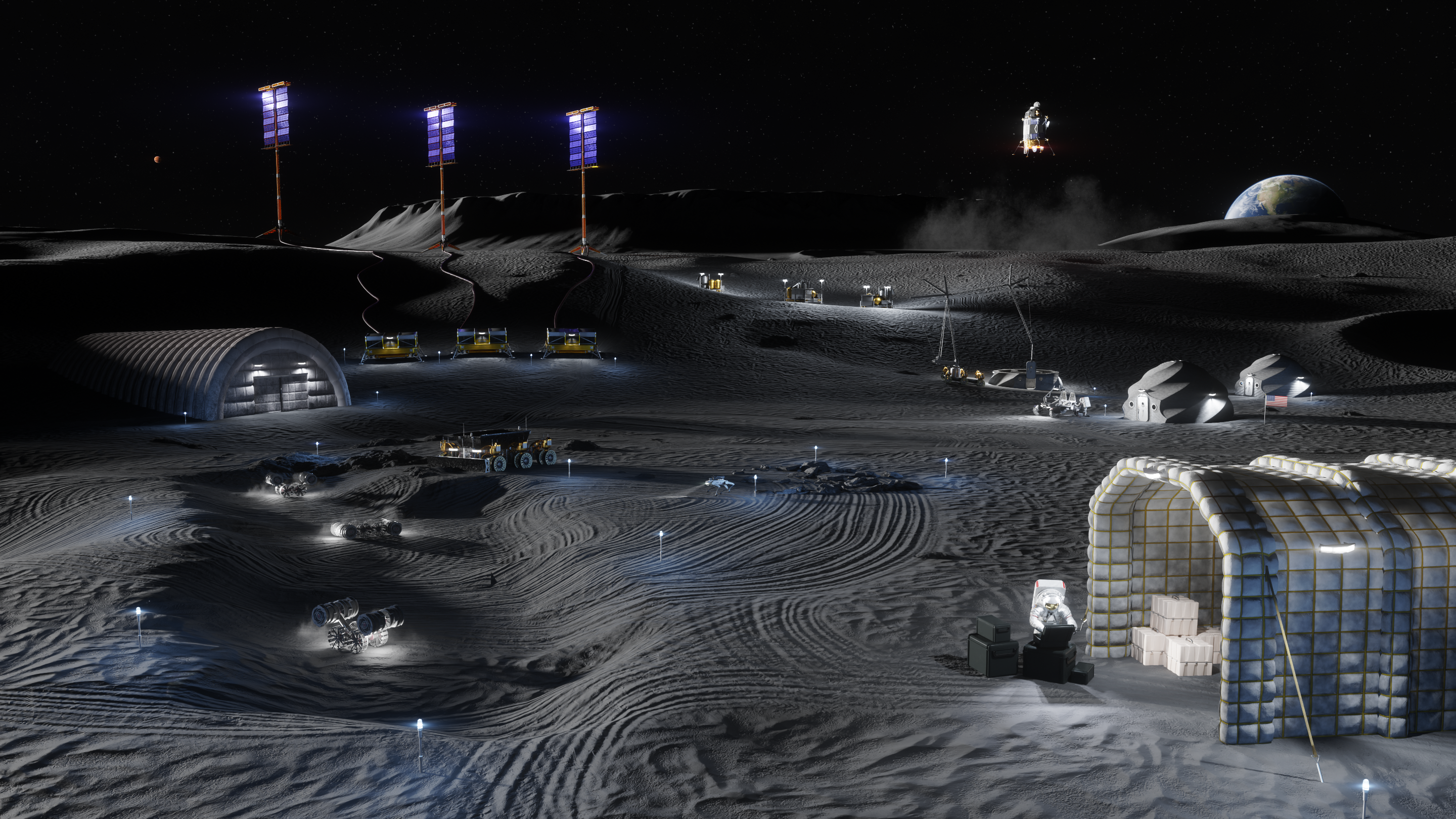
Artist concept of various technologies on a moon base.
Artist’s rendering depicting lunar surface operations at a future base in the lunar South Pole.
NASA

NASA is asking U.S.-based collegiate teams to submit bold, original concepts to the 2027 edition of a student challenge focused on aerospace innovation that could help the agency envision a future on the Moon shaped by new technology. 

The latest NASA Revolutionary Aerospace Systems Concepts – Academic Linkage (RASC-AL) competition invites student teams to explore new operations paradigms and advance the technologies needed to support sustained operations in the lunar South Pole region. 

“This competition showcases the technical excellence and creativity of the next generation of explorers and innovators,” said Chris Jones, chief technologist, Systems Analysis and Concepts Directorate, NASA’s Langley Research Center in Hampton, Virginia. “The concepts students develop through RASC-AL demonstrate exceptional talent and contribute to the body of work that advances NASA’s missions.”   

Since 2002, the annual RASC-AL competition has helped foster aerospace concepts, technology, and prototyping by making connections among universities, NASA, and industry. This year’s competition includes themes ranging from the development of concepts to support prospecting in the permanently shadowed regions of lunar craters to the advancement of critical and expandable infrastructure for future astronauts. 

“NASA’s RASC-AL competition connects top university researchers with the agency’s technology and engineering challenges,” said Gabe Merrill, acting cross-program integration lead for the Advanced Research and Technology Division in NASA’s Research and Technology Mission Directorate. “By asking student innovators to design concepts for what our future on the Moon might look like, this competition accelerates the technology we need to explore the Moon and provides a development opportunity for future aerospace innovators and leaders.” 

Teams interested in participating are required to submit a non-binding notice of intent by Tuesday, Oct. 13, and will be invited to a Q&A session with NASA experts on Oct. 27.  

Challenge proposals and accompanying video submissions are due Feb. 24, 2027. Proposals should demonstrate innovative solutions supported by original engineering and analysis in response to one of the four 2027 RASC-AL themes: 

  • Enabling extreme exploration 
  • Transit pathway construction 
  • Lunar resource exploration 
  • Smart and resilient lunar habitat 

The competition will select as many as 14 teams to advance to its final phase, which involves further developing their concepts, writing a technical paper, and creating a technical poster. Each finalist team will receive a $7,500 award to facilitate its full participation. Finalists will present their concepts to a panel of NASA and industry experts at the 2027 RASC-AL Forum in Cocoa Beach, Florida, June 7 to 10, 2027. 

The top two overall teams will receive an additional monetary award and an invitation to attend and present their concept at an aerospace conference later in 2027. 

Interested student teams are encouraged to visit the official RASC-AL competition website for detailed guidelines and eligibility requirements. 

The 2027 NASA RASC-AL Competition is administered by the National Institute of Aerospace on behalf of NASA’s Advanced Research and Technology Division within the Research and Technology Mission Directorate. NASA’s Center of Excellence for Collaborative Innovation, part of the Prizes, Challenges, and Crowdsourcing Program within the Research and Technology Mission Directorate, manages the challenge contract.

❌
❌