Normal view

There are new articles available, click to refresh the page.
Before yesterdayMain stream

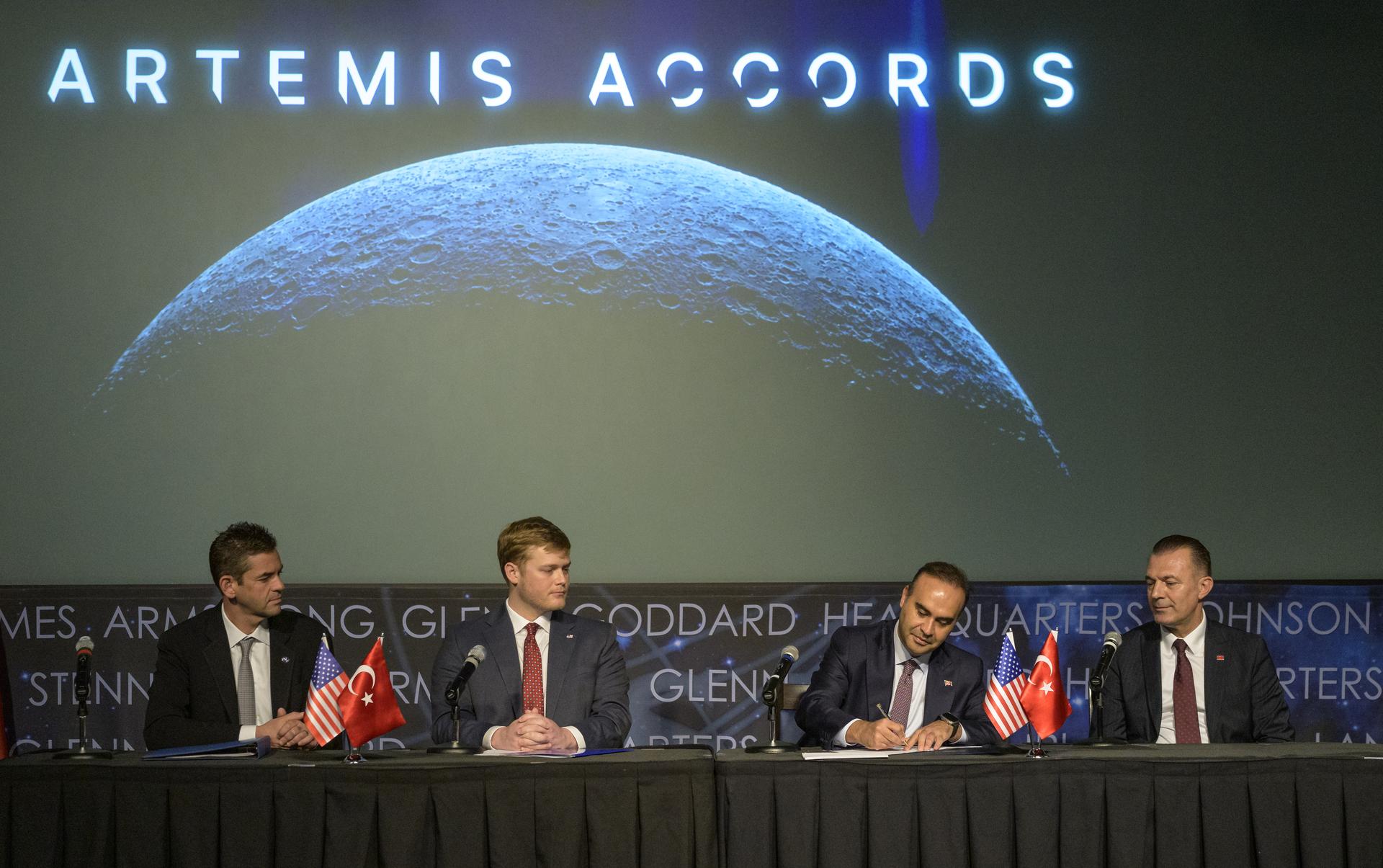
NASA Welcomes Mauritius as 70th Artemis Accords Signatory  

17 July 2026 at 10:48
Credit: NASA

The Republic of Mauritius has officially joined the global coalition committed to responsible space exploration, becoming the newest signatory and seventh African country to join the Artemis Accords. NASA’s Deputy Administrator Matt Anderson contributed video remarks for a signing ceremony on Friday, in the island nation’s city of Ébène.

“We are honored to welcome Mauritius to the Artemis Accords community and look forward to working together in the years ahead,” said Anderson. “Together, we are creating the foundation for future exploration while ensuring that space remains peaceful, accessible, and beneficial for all. America will return to the Moon and ignite the Golden Age of exploration and discovery. That work requires capable partners and a shared commitment to responsible exploration.”

Mauritius’ Permanent Secretary at the Ministry of Tertiary Education, Science and Research Navindsing Jugmohunsing signed the Artemis Accords on behalf of the country. U.S. Deputy Assistant Secretary of State for African Affairs Sarah Troutman and U.S. Chargé d’Affaires to Mauritius Craig Halbmaier were present to witness the signing.

“The accession of Mauritius to the Artemis Accords marks a defining chapter in our New Space journey,” said Jugmohunsing. “As a Small Island Developing State in the Indian Ocean, we are committed to ensuring that space serves humanity by protecting our oceans and coastlines and amplifying the voices of nations like ours. Mauritius stands ready to help shape the future of space governance while unlocking new opportunities for innovation and partnership.”

NASA first engaged with Mauritius through its early global mapping efforts, owing to the nation’s strategic location. Between 1965 and 1980, NASA used several satellite missions to collect global measurements of Earth’s size and shape. As part of that work, NASA sent teams to Mauritius and other international tracking stations that supported satellite photography for geodetic analysis. Their observations strengthened the navigation technologies used from Apollo to Artemis and helped lay the foundation for the partnership reaffirmed today by the Artemis Accords.

In 2020, NASA and the Department of State joined with seven other founding nations to establish the Artemis Accords, responding to the growing interest in lunar activities by both governments and private companies. They introduced the first set of practical principles aimed at enhancing the safety and coordination between like-minded nations as they explore the Moon, Mars, and beyond, committing nations to: 

  • explore peaceably and transparently 
  • render aid to those in need 
  • enable access to scientific data  
  • ensure activities do not interfere with those of others 
  • preserve historically significant sites and artifacts by developing best practices 

Five years later, President Donald J. Trump’s National Space Policy directed NASA to establish a sustained lunar outpost. With this Moon Base, NASA is putting the principles of the Artemis Accords into practice, inviting every signatory including now Mauritius to take part in the endeavor. 

More countries are expected to sign the Artemis Accords in the months and years ahead, as NASA continues its work to establish a safe, peaceful, and prosperous future in space.   

Learn more about the Artemis Accords at:  

https://www.nasa.gov/artemis-accords
NASA Welcomes Serbia as Newest Artemis Accords Signatory 

16 July 2026 at 18:37
Serbia’s Minister of Foreign Affairs Marko Đurić, right, shakes hands with NASA Deputy Administrator Matt Anderson, left, after signing the Artemis Accords Thursday, July 16, at NASA Headquarters in Washington.
NASA/Keegan Barber

The Republic of Serbia signed the Artemis Accords Thursday during a ceremony hosted by NASA at the agency’s Headquarters in Washington, becoming the 69th nation to join a large community of like-minded nations committed to the peaceful, transparent, and responsible exploration of space.

“Serbia’s connection to NASA reaches back to the Apollo program, when the work of Serbian engineers helped make some of humanity’s greatest achievements in space possible,” said NASA Deputy Administrator Matt Anderson. “Among them was Milojko ‘Mike’ Vučelić, who was awarded the Presidential Medal of Freedom for the critical role he played in bringing the Apollo 13 crew safely home. Their story stands as a reminder that the greatest achievements in space are made possible by talented people working together.”

The broader team of Serbian American engineers played key roles during the Apollo era across systems engineering, propulsion, power systems, spacecraft docking, electronics reliability, and mission coordination. Their expertise supported critical functions ranging from lunar landing analysis to safe spacecraft docking.

Serbia’s Minister of Foreign Affairs Marko Đurić signed the Artemis Accords on behalf of the country.

“The great beyond has always inspired humanity to achieve its greatest feats — from the Roman ‘per aspera ad astra’ to Norman Vincent Peale’s belief that if we aim for the Moon, we will at least land among the stars,” said Đurić. “Those words feel especially fitting today. We come from a nation of great minds like Nikola Tesla and Milutin Milanković, but also from the legacy of David Vujic, one of the pioneers of the Apollo missions and a member of the ‘Serbian Seven,’ a group of engineers and technicians whose contributions to NASA helped make the Moon landing possible. In that spirit, we owe it to both our brave ancestors and our children to keep pushing toward new frontiers — to explore, to inspire one another, and to dare even greater things.”

By signing the Artemis Accords, nations open the door to opportunities for future lunar exploration with NASA, such as providing science and technology payloads for the U.S.-led Moon Base and CubeSats for upcoming Artemis missions, advancing humanity’s return to the Moon, and shaping the Golden Age of space exploration and innovation.

Ambassador of the Republic of Serbia to the United States Dragan Šutanovac; State Secretary for Serbia’s Ministry of Science, Technological Development and Innovation Marija Gnjatović; and U.S. Department of State Assistant Secretary for Oceans and International Environmental and Scientific Affairs Wesley Brooks all participated in Serbia’s signing ceremony.

In 2020, NASA and the Department of State joined with seven other founding nations to establish the Artemis Accords, responding to the growing interest in lunar activities by both governments and private companies. They introduced the first set of practical principles aimed at enhancing the safety and coordination between nations as they explore the Moon, Mars, and beyond, committing nations to:

  • explore peaceably and transparently
  • render aid to those in need
  • enable access to scientific data
  • ensure activities do not interfere with those of others
  • preserve historically significant sites and artifacts by developing best practices

Five years later, President Donald J. Trump’s National Space Policy directed NASA to establish a sustained lunar outpost. With this Moon Base, NASA is putting the principles of the Artemis Accords into practice, inviting every signatory to take part in the endeavor.

More countries are expected to sign the Artemis Accords in the months and years ahead, as NASA continues its work to establish a safe, peaceful, and prosperous future in space. 

Learn more about the Artemis Accords at:

https://www.nasa.gov/artemis-accords

How NASA’s Artemis III Lander Test Will Pave Way for Moon Landings

By: Lee Mohon
15 July 2026 at 14:50
7 Min Read

How NASA’s Artemis III Lander Test Will Pave Way for Moon Landings

015B0626.NEF

Before Artemis astronauts land on the Moon’s surface in 2028, NASA will conduct the Artemis III demonstration mission in 2027, allowing teams on Earth and in orbit to practice rendezvous and docking operations between commercial human landing systems and the Orion spacecraft. Data from that mission, along with future uncrewed demonstration missions at the Moon, will support astronaut safety and mission success for crewed lunar landings.

NASA is working with two American companies to develop the human landing systems that will safely transport astronauts from lunar orbit to the Moon’s surface and back for future Artemis missions. For Artemis III, both SpaceX and Blue Origin will fly test versions, or test articles, of the crewed landers that will be used for future Moon landings. The lander test articles will launch by commercial rockets, while the Artemis III crew will launch to low Earth orbit in Orion atop the agency’s SLS (Space Launch System) rocket.

Stage setting for crewed flights

NASA and the human landing system providers have been working closely together to plan and determine capabilities for the Artemis III mission. With missions fast approaching, both SpaceX and Blue Origin are optimizing hardware availability and capability. SpaceX plans to use the company’s latest version of Starship and basis of the future Starship HLS, called Version 3, while Blue Origin will test their planned HLS crew cabin, allowing each company to apply lessons learned prior to uncrewed and crewed missions on the Moon.

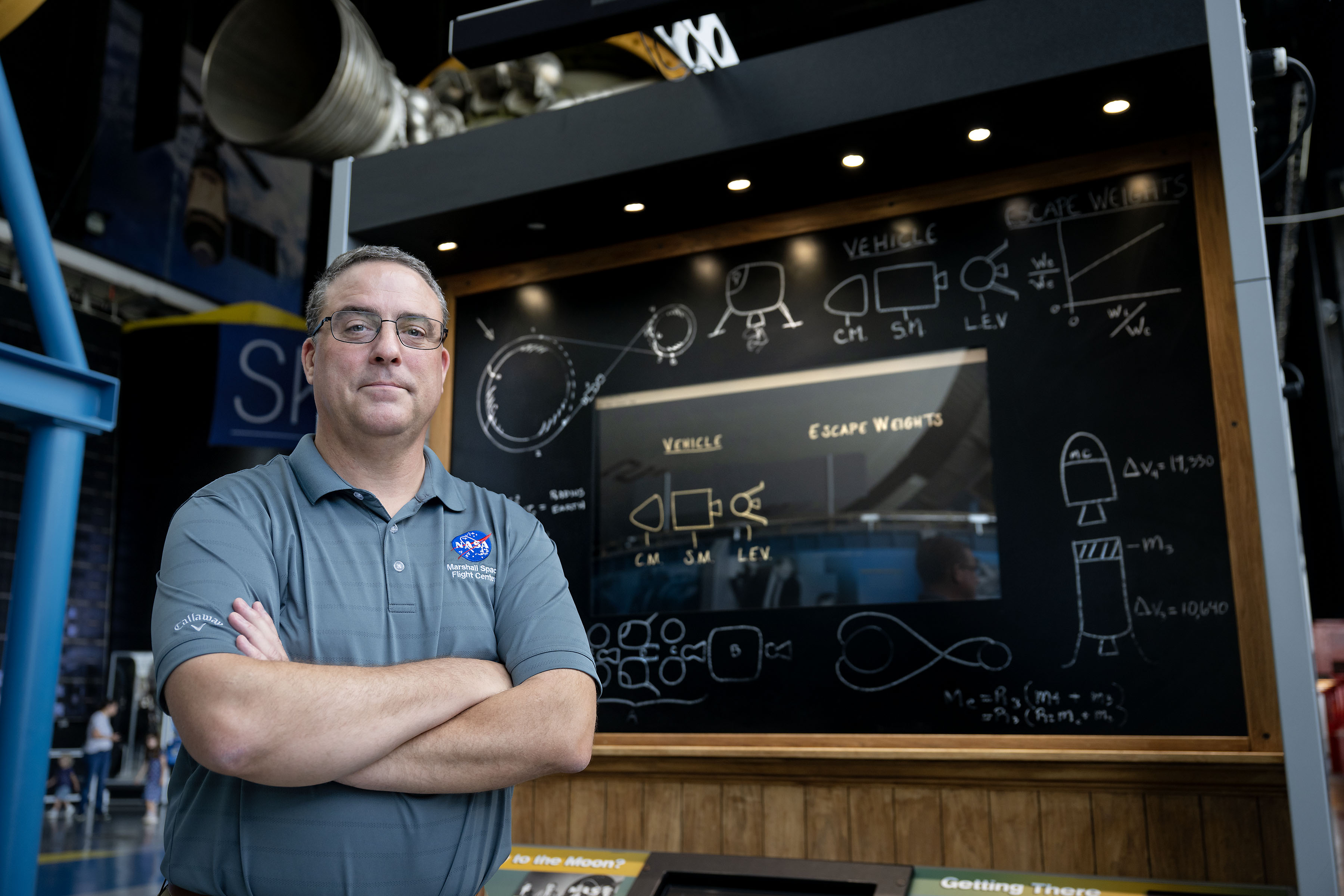
“Each human landing system provider has taken a different approach to the Artemis III mission,” said Steve Creech, program manager, Human Landing System Program, NASA’s Marshall Space Flight Center in Huntsville, Alabama. “Ultimately, SpaceX and Blue Origin have put forward a list of aggressive objectives and goals intended to complement upcoming uncrewed demonstration missions at the Moon so that we can gain both understanding and confidence in the spacecraft and launch vehicles prior to a crewed landing. The lander prototype designs will inform future development efforts and will continue to mature over the next year.”

For the Artemis III mission, the Blue Moon test lander will be based on Blue Origin’s current architecture for its Mark 2 crew lander, incorporating all the major avionics and flight software and control systems to ensure flight operations from this demonstration mission can directly translate to crewed lunar flights. Up to two crew members, donning orange Orion crew survival system suits, will open the hatch to enter the Blue Origin test lander. The production hardware must incorporate many of the same systems and subsystems, including an Environmental Control and Life Support System (ECLSS), a crew cabin, and avionics.

These artist’s concepts depict Blue Origin’s Blue Moon Mark 2 human landing system test article in Earth orbit and docked with NASA’s Orion spacecraft as part of NASA’s upcoming Artemis III demonstration mission in low Earth orbit.
Blue Origin
These artist’s concepts depict Blue Origin’s Blue Moon Mark 2 human landing system test article in Earth orbit and docked with NASA’s Orion spacecraft as part of NASA’s upcoming Artemis III demonstration mission in low Earth orbit.
Blue Origin

The Blue Origin lander also will fly with an instrumented lunar surface spacesuit mass simulator. Like the suited “Moonikin” manikin that flew aboard Orion during the uncrewed Artemis I test flight, the low-fidelity spacesuit mass simulator will provide real-time feedback about the environment within the Blue Moon crew cabin.

SpaceX’s Starship lander test article will use a Starship Version 3, currently in production and testing, with an added docking system installed on the nose of the 171-foot (52-m) spacecraft, enabling NASA and SpaceX to evaluate how the entire integrated stack of Orion and the Starship test lander interact. NASA and SpaceX are identifying controllability and communications tests for the Artemis III mission. Astronauts will not enter the Starship test lander during Artemis III.

These artist’s concepts depict NASA’s Orion spacecraft and SpaceX’s Starship human landing system test article during docking operations as part of NASA’s upcoming Artemis III demonstration mission in low Earth orbit.
SpaceX
These artist’s concepts depict NASA’s Orion spacecraft and SpaceX’s Starship human landing system test article during docking operations as part of NASA’s upcoming Artemis III demonstration mission in low Earth orbit.
SpaceX

Launch cadence

NASA, SpaceX, and Blue Origin will launch three of the world’s most powerful rockets within a short timeframe of one another, exercising ground processing, launch crews, and facilities as well as control centers, networking, and data exchange at key sites across the country during two separate, back-to-back rendezvous and docking maneuvers between Orion and the lander test articles, before a safe splashdown of the Artemis III crew in Orion.

“Artemis III will be a highly choreographed dance with a demanding launch sequence across multiple launch pads and equally demanding mission operations for our ground and flight crews, making it one of the most complex and ambitious missions NASA has ever undertaken,” said Jeremy Parsons, Artemis program manager. “The demonstration mission will set the stage before our next giant leap. NASA’s expertise in systems engineering and integration, as well as launch and mission operations in low Earth orbit, will bring the mission together.”

For future crewed missions to the Moon, NASA and one of the commercial lander partners will execute a “dual launch campaign,” prepositioning the lander in orbit to await a crewed Orion, launched on SLS. Launching the three rockets in succession of one another for Artemis III offers a unique opportunity to practice launch processing and operations.

Blue Origin’s lander test article is planned to launch first and will be able to loiter in space for up to 30 days, allowing for checkouts in orbit prior to the launch of SLS and Orion from Launch Complex 39B at NASA’s Kennedy Space Center in Florida. The Blue Origin test article will launch at a set trajectory to meet a designated “parking” orbit for these systems checks.

Artemis III will be a highly choreographed dance with a demanding launch sequence across multiple launch pads and equally demanding mission operations for our ground and flight crews, making it one of the most complex and ambitious missions NASA has ever undertaken.

Jeremy Parsons

Jeremy Parsons

Artemis program manager

Following the completion of Blue Origin’s rendezvous and docking operations testing  and the Artemis III crewed launch on SLS, SpaceX will launch its Starship lander test article to rendezvous with Orion and its crew for its phase of on-orbit testing.

Throughout the Artemis III mission, Orion will fly in a circular orbit. All three rockets will have more launch opportunities than are available for a lunar mission and will be able to reach the designated mission altitude in a single launch.

Docking operations

During docking and undocking operations, Orion and the Artemis III crew will use the lander test articles as the targets, while Orion will operate as the chaser spacecraft. This is the same configuration planned for future crew landing mission to the Moon.

NASA will ensure both test landers are mission ready and crew safe prior to Artemis III. These verifications will be based on functional and performance requirements for the test lander designs and hazard controls for hardware and software, ensuring the Artemis III astronauts inside Orion are safe throughout both docking phases of the mission.

SpaceX and Blue Origin have already tested their docking capabilities for their respective landers on the ground. SpaceX’s docking capability was qualified in 2023; Blue Origin conducted development ground testing on its pressurized docking system earlier this year.

A key difference between the docking capabilities of both lander test articles will be the location of docking. Orion will dock along the side of the Blue Moon test lander, adjacent to the crew cabin. Later, Orion will dock nose-to-nose with the giant SpaceX test lander.

Software testing between spacecrafts will help demonstrate that the commercial human landing system prototypes and Orion can meet at a precise time and location in space. When Orion docks with the Blue Moon test lander, the Orion spacecraft’s software will control the docked spacecraft. Meanwhile, the SpaceX test article will control the docked spacecraft for the second portion of the mission. During the docking phases, teams with NASA and the commercial partners will be able to test hardware and software interoperability, as well as dynamics of how the integrated lander-Orion spacecraft moves in space.

Through the Artemis program, NASA will send astronauts to explore the Moon for scientific discovery, economic benefits, and to build the foundation for the first crewed missions to Mars – for the benefit of all.  

News Media Contact

AmberJacobson
Headquarters, Washington
240.298.1832
amber.c.jacobson@nasa.gov

Corinne Beckinger
Marshall Space Flight Center, Huntsville, Ala.
256-544-0034
corinne.m.beckinger@nasa.gov

About the Author

Corinne Beckinger

Public Affairs Official

Share

Details

Last Updated
Jul 15, 2026
Editor
Lee Mohon
Contact

NASA Invites Media to Serbia Artemis Accords Signing Ceremony

14 July 2026 at 17:03
Credit: NASA

The Republic of Serbia will sign the Artemis Accords at 5 p.m. EDT Thursday, July 16, during a ceremony at NASA Headquarters in Washington.

NASA Deputy Administrator Matt Anderson will host Serbia’s Minister of Foreign Affairs Marko Đurić and U.S. State Department Assistant Secretary for Oceans and International Environmental and Scientific Affairs Wesley Brooks for the ceremony.

This event is in person only. Media interested in attending must RSVP no later than 3 p.m. on July 16, to: hq-media@mail.nasa.gov. NASA’s media accreditation policy is online.

In 2020, during the first Trump Administration, the United States, led by NASA and the State Department, joined with seven other founding nations to establish the Artemis Accords, responding to the growing interest in lunar activities by both governments and private companies.

The accords introduced the first set of practical principles aimed at enhancing the safety, transparency, and coordination of civil space exploration on the Moon, Mars, and beyond. Serbia will be the 69th country to sign the Artemis Accords.

https://www.nasa.gov/artemis-accords
-end-

Camille Gallo / Elizabeth Shaw 
Headquarters, Washington 
202-358-1600 
camille.m.gallo@nasa.gov / elizabeth.a.shaw@nasa.gov 

❌
❌