Normal view

There are new articles available, click to refresh the page.
Before yesterdayMain stream

NASA Invites Media to Roman Space Telescope, Crew-13 Launches

17 July 2026 at 14:00
Credit: NASA

Media accreditation now is open for the launch of NASA’s Nancy Grace Roman Space Telescope and the agency’s SpaceX Crew-13 missions, both targeting launch in the coming months.

The Roman telescope is slated to launch no earlier than 7:20 a.m. EDT Sunday, Aug. 30, aboard a SpaceX Falcon Heavy rocket from Launch Complex 39A at NASA’s Kennedy Space Center in Florida. The observatory, named after NASA’s first chief astronomer, will have a deep, panoramic view of the cosmos, generating never-before-seen pictures that will revolutionize our understanding of the universe.

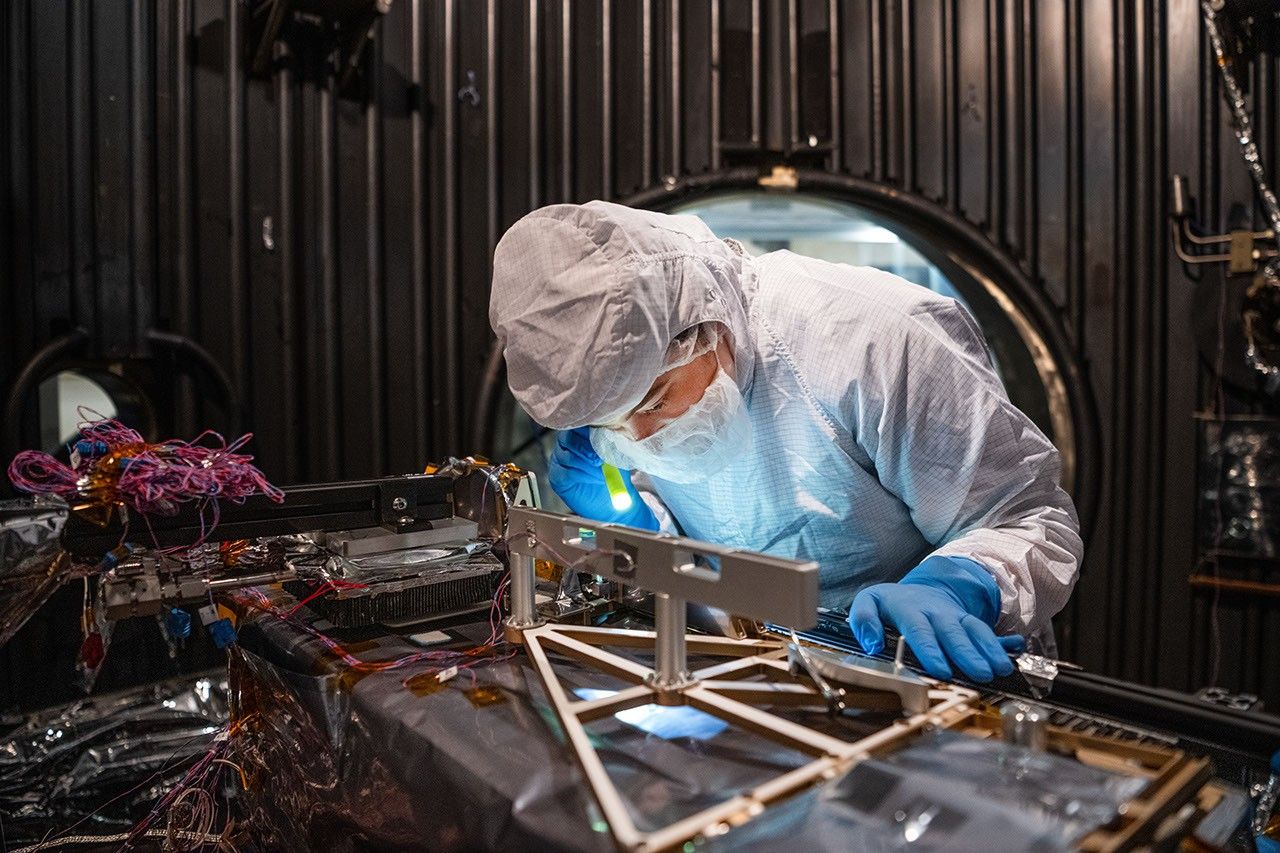
NASA’s Nancy Grace Roman Space Telescope is seen here in the clean room at the agency’s Goddard Space Flight Center in Greenbelt, Maryland, where the observatory was built and tested. Roman’s vast, deep surveys will explore dark matter, dark energy, exoplanets, and almost anything from our own solar system to galaxies at the edge of the observable universe.
Credit: NASA/Jolearra Tshiteya

Crew-13 is scheduled to launch no earlier than mid-September from Space Launch Complex 40 at Cape Canaveral Space Force Station. The mission will carry NASA astronauts Jessica Watkins and Luke Delaney, CSA (Canadian Space Agency) astronaut Joshua Kutryk, and Roscosmos cosmonaut Sergey Teteryatnikov to the International Space Station for a science and research expedition. This will be NASA’s 13th commercial crew rotation mission with SpaceX’s Falcon 9 rocket and Dragon spacecraft.

NASA’s SpaceX Crew-13 members are pictured in their pressure suits seated inside a mockup Dragon spacecraft during a preflight training session at the company’s headquarters in Hawthorne, California. From left to right, Roscosmos Sergey Teteryatnikov, NASA astronauts Luke Delaney and Jessica Watkins, and CSA (Canadian Space Agency) astronaut Joshua Kutryk.
Credit: SpaceX

Media interested in attending either or both launches must apply by the following deadlines:

  • International media without U.S. citizenship must apply by 11:59 p.m. on Sunday, July 26.
  • U.S. media and U.S. citizens representing international media organizations must apply by 11:59 p.m. on Thursday, July 30.

All accreditation requests must be submitted online at:

https://media.ksc.nasa.gov

NASA’s media accreditation policy is online. For questions about accreditation or special logistical requests, email: ksc-media-accreditat@mail.nasa.gov.

For other questions, please contact NASA Kennedy’s newsroom at: 321-867-2468.

For more information about these missions, visit:

https://www.nasa.gov

-end-

Alise Fisher (Roman) / Joshua Finch (Crew-13)
Headquarters, Washington
202-385-1287 / 202-358-2546
alise.m.fisher@nasa.gov / joshua.a.finch@nasa.gov

Leejay Lockhart (Roman) / Steve Siceloff (Crew-13)
Kennedy Space Center, Fla.
321-747-8310 / 321-867-2468
leejay.lockhart@nasa.gov / steven.p.siceloff@nasa.gov

Claire Andreoli (Roman)
Goddard Space Flight Center, Greenbelt, Md.
301-286-1940
claire.andreoli@nasa.gov

NASA’s New Horizons Spacecraft Wakes from Hibernation in Good Health

7 July 2026 at 13:48

3 min read

NASA’s New Horizons Spacecraft Wakes from Hibernation in Good Health

Following its longest hibernation period ever of nearly a year, NASA’s New Horizons spacecraft has emerged in good health and is ready to begin transmitting science data gathered in the distant Kuiper Belt far beyond Pluto.

Flight operators at computers in a mission control center monitor spacecraft data on large wall displays.
From left, flight controllers Mark Lahr and Josh Albers, and Mission Operations Manager Alice Bowman, monitor telemetry streaming from NASA’s New Horizons spacecraft to the mission operations center at the Johns Hopkins Applied Physics Laboratory in Laurel, Maryland, on June 24, 2026. Now approximately 5.9 billion miles (9.5 billion kilometers) from Earth, New Horizons is ready to begin transmitting science data after being awakened from its longest ever, nearly yearlong hibernation period.
NASA/Johns Hopkins APL/SwRI/Justin Gladden

On June 23, flight controllers at the Johns Hopkins Applied Physics Laboratory (APL) in Laurel, Maryland, confirmed New Horizons, acting on stored commands uplinked to its main computer last July, had safely awakened from a 321‑day hibernation period that began Aug. 7. With the spacecraft now approximately 5.9 billion miles (9.5 billion kilometers) from Earth, the radio signals carrying that confirmation took about 8 hours and 52 minutes to reach the APL Mission Operations Center via NASA’s Deep Space Network station near Madrid, Spain.

The mission team typically places New Horizons in resource‑saving hibernation mode during long cruise periods. While the spacecraft is hibernating, operators do not send commands or retrieve data, but the spacecraft continues gathering and storing data around the clock from its heliospheric plasma sensors, Solar Wind at Pluto and the Pluto Energetic Particle Spectrometer Science Investigation, as well as its space dust detector, the Venetia Burney Student Dust Counter.

Alice Bowman, the New Horizons mission operations manager at APL, said the spacecraft reported back to Earth, via the Deep Space Network, with a weekly status beacon. “Every status report through this hibernation period was ‘green,’ meaning all was well aboard New Horizons each and every week,” she said.

As New Horizons resumes active operations, Bowman noted, the team will begin downlinking spacecraft health and safety data, followed by data from the three scientific instruments. In about three weeks, the spacecraft’s onboard Alice ultraviolet spectrograph will look at the hydrogen gas distribution in the outer heliosphere, while the Solar Wind at Pluto, the Pluto Energetic Particle Spectrometer Science Investigation, and the Venetia Burney Student Dust Counter instruments continue their measurements, and the ground team conducts a series of spacecraft and instrument checkouts.

The team also is completing upgrades to the ground‑system software that will make it easier to maintain operations of the spacecraft. Tests are already underway and are expected to continue through the year.

New Horizons is operating on updated autonomy logic designed for operations farther from the Sun and to accommodate the expected reduction in power and the naturally occurring increase in radio‑signal travel time.

The NASA spacecraft’s exploration of this distant region of the solar system marks the latest step in a journey that began in January 2006 with the fastest launch on record; a flyby of Jupiter in February 2007 that included stunning views of the gas giant and its moons; the first exploration through the Pluto system in July 2015; the first exploration of a Kuiper Belt object, Arrokoth, in January 2019, and unique studies of the Sun’s outer heliosphere and dozens of additional Kuiper Belt objects since then.

For more information on NASA’s New Horizons mission, visit:

https://science.nasa.gov/mission/new-horizons/

NASA’s CAPSTONE Completes Extended Mission Testing Lunar Technologies

6 July 2026 at 11:00
5 Min Read

NASA’s CAPSTONE Completes Extended Mission Testing Lunar Technologies

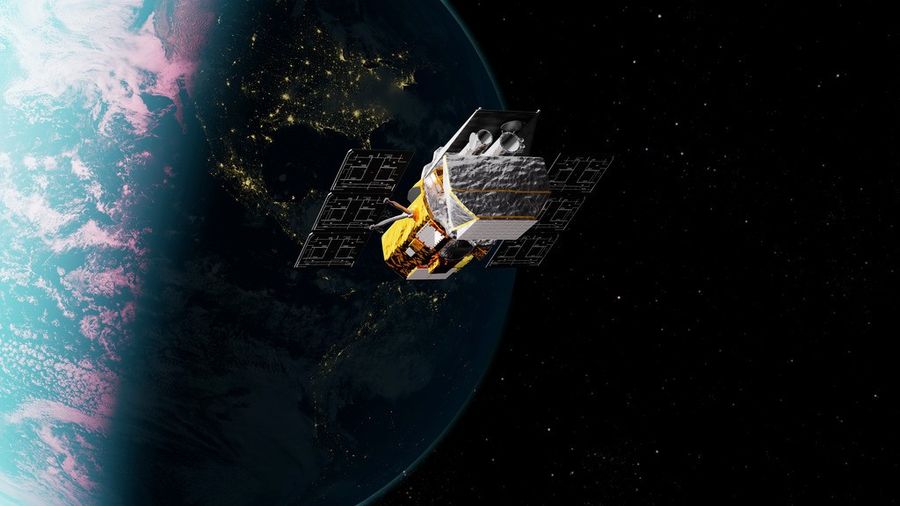
An artist's rendering of a small spacecraft with extended solar panels orbiting over the lunar surface.
The Cislunar Autonomous Positioning System Technology Operations and Navigation Experiment (CAPSTONE) has achieved all primary and extended mission objectives.
Credits: NASA

As NASA prepares for a sustained human presence on the Moon, missions will increasingly require spacecraft that can navigate and communicate without a direct connection to Earth.

NASA’s Cislunar Autonomous Positioning System Technology Operations and Navigation Experiment, or CAPSTONE, validated and advanced these capabilities.

Designed to test and validate technologies in lunar orbit, CAPSTONE launched in June 2022 and became the first U.S. commercial mission at the Moon. The spacecraft tested operations in three-body orbits around the Moon, using the combined gravity of Earth and the Moon to reduce the fuel needed to maintain a stable lunar path. It became the first spacecraft to fly and characterize this orbit for future exploration and science missions. Owned and operated by Advanced Space, the microwave-sized spacecraft then received a 15-month mission extension, becoming a testbed for advanced communications, networking, autonomous navigation, and software-defined satellite technologies.

Team members install solar panels onto the CAPSTONE spacecraft – short for Cislunar Autonomous Positioning System Technology Operations and Navigation Experiment – at Tyvak Nano-Satellite Systems Inc. in Irvine, California.
Dylan Schmidt, CAPSTONE assembly integration and test lead, right, and Lachlan Moore, systems integration engineer, left, install solar panels onto the CAPSTONE spacecraft at Tyvak Nano-Satellite Systems, Inc., in Irvine, California.
NASA/Dominic Hart

Rather than launch a new satellite, NASA’s Research and Technology Mission Directorate demonstrated that CAPSTONE’s existing hardware could host new applications after launch, transforming the spacecraft into a cost-effective, flexible lunar technology demonstration platform. NASA’s SCaN (Space Communications and Navigation) Division will now use the data to demonstrate innovative networking and navigation techniques on future experiments.

“Operating multiple experiments simultaneously aboard the same spacecraft allows NASA to evaluate how these technologies perform together in a real lunar environment,” said Greg Stover, director of the Advanced Research and Technology Division within NASA’s Research and Technology Mission Directorate at NASA Headquarters in Washington. “Investments in autonomous operations and resilient communications infrastructure are essential to ensuring U.S. leadership as activity around the Moon continues to increase.”

Two experiments aboard CAPSTONE used software-defined infrastructure to advance two future mission essentials: autonomous navigation and deep space communications. The autonomous Navigation, Guidance, and Control software, or autoNGC, is designed to allow a spacecraft to determine where it is, where it is going, and how to get where it needs to be without waiting for instructions from the ground. While portions of the software had previously flown in Earth orbit, CAPSTONE marked the first time autoNGC was tested at the Moon.

“To really demonstrate that something works, you have to fly it,” said Sun Hur-Diaz, principal investigator for the autoNGC technology development project at NASA’s Goddard Space Flight Center in Greenbelt, Maryland. “The real environment is key.”

To really demonstrate that something works you have to fly it. The real environment is key.

Sun Hur-Diaz

Sun Hur-Diaz

Principal Investigator for the autoNGC Project, NASA Goddard Space Flight Center

Researchers also evaluated how autoNGC performed with limited contact to Earth. While NASA’s Deep Space Network antennas were supporting the Artemis II crewed test flight around the Moon, CAPSTONE’s communications window dropped to just a few passes per week.

Those gaps became one of the experiment’s most valuable tests. Without data from Earth, autoNGC determined CAPSTONE’s location using an onboard star tracker camera to image the Moon, Earth, and other celestial bodies. The camera-based system, known as optical navigation, at times outperformed ground-based methods for real-time onboard navigation, advancing technologies for future deep-space missions.

Alongside autonomous navigation testing, CAPSTONE also tested delay/disruption tolerant networking (DTN), a communications architecture designed for deep space. Unlike Earth-based internet systems, deep space communications must function despite long delays and frequent signal gaps. The DTN system addresses those challenges by storing information on the spacecraft when no connection is available and automatically forwarding it once communications are restored. With these demonstrations, CAPSTONE became the first to fly the latest DTN protocols beyond Earth orbit and the first to run them in NASA’s core Flight System, an open-source framework that can be implemented on any spacecraft.

In one demonstration, engineers began transmitting data from CAPSTONE to Earth, but the connection ended before the transfer was complete. The spacecraft stored the remaining data until the next communications opportunity, and transmission resumed automatically. Every piece of data made it home.

Artist’s rendering of a future Moon Base on the lunar surface. Two astronauts work near habitats and surface equipment while lunar rovers and cargo systems operate nearby. Tall solar arrays stand in the background alongside landed spacecraft and orbiting vehicles above the Moon’s horizon.
Artist’s rendering depicting astronauts, habitats, rovers, power systems, and cargo operations supporting sustained human activities at the Moon Base near the lunar South Pole. The technologies CAPSTONE tested may be key to NASA’s growing lunar communications and navigation infrastructure.
NASA

“You can imagine an astronaut walking behind a lunar hill or descending into a crater and temporarily losing connectivity,” said Ben Anderson, a systems engineer for the Near Space Network at NASA’s Goddard Space Flight Center in Greenbelt, Maryland. “This technology allows that data to be automatically retransmitted once communications are restored.”

In addition to its primary achievements, CAPSTONE’s second life as a software-defined testing platform demonstrated that new technologies can be affordably tested and proven directly in their operational environment.

After nearly four years of technology maturation, NASA’s activities on CAPSTONE concluded in June 2026, while Advanced Space will continue to use the spacecraft as a technology development testbed.

The CAPSTONE spacecraft was designed and built by Terran Orbital and is owned and operated by Advanced Space. NASA’s Research and Technology Mission Directorate managed the mission through the Small Spacecraft and Distributed Systems program, based at NASA’s Ames Research Center in California’s Silicon Valley. Elements of the CAPSTONE technology suite were supported by NASA’s Small Business Innovation Research program. The autoNGC and DTN demonstrations conducted during CAPSTONE’s extended mission were managed by NASA’s SCaN Division, based at NASA Headquarters in Washington.

About the Author

Korine Powers

Korine Powers

Lead Writer and Communications Strategist

Korine Powers, Ph.D. is a writer for NASA's SCaN (Space Communications and Navigation) Program office and covers emerging technologies, commercialization efforts, exploration activities, and more.

NASA Seeks Volunteers for New Yearlong Simulated Moon, Mars Mission

1 July 2026 at 12:15
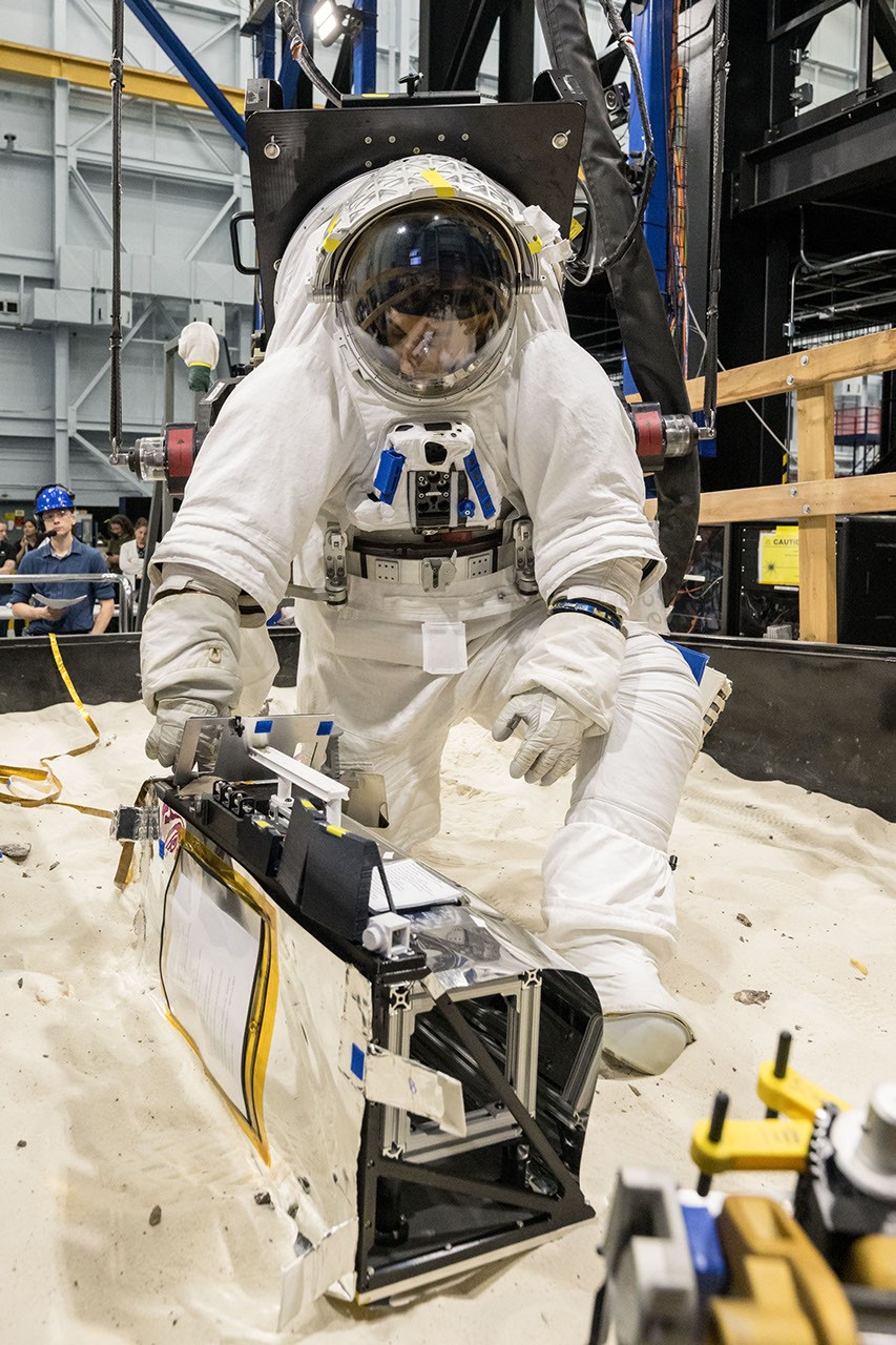
A research volunteer uses augmented reality goggles to perform astronaut-like tasks during a simulated space mission. Participants selected for NASA’s first Moon and Mars Exploration Analog mission also will perform tasks in immersive, interactive environments while living inside habitats that simulate traveling to and living on the Moon and Mars.
Credit: NASA

NASA is recruiting research participants for the agency’s next simulated deep space mission. Beginning no earlier than August 2027, research volunteers will spend one year living and working in interplanetary environments at the agency’s Johnson Space Center in Houston, operating under isolated conditions expected during crewed missions to the Moon or Red Planet.
 
Insights from this new, yearlong experience, called the Moon and Mars Exploration Analog, can be used to help keep astronauts safe and mission-ready during future planetary surface operations. The results also could inform plans for a sustained lunar presence through the agency’s Moon Base and future Artemis missions.
 
NASA is looking for applicants for the approximately year-long mission simulation, which will take place in two confined habitats. In addition to specific physical and education requirements, volunteers must be willing to take part in a multi-day selection process and pass NASA’s physical and psychological assessments, found on the Moon and Mars Exploration Analog web page. Candidates also should have a strong desire for unique, rewarding experiences, and interest in contributing to NASA’s work to prepare for extended stays on the lunar surface and the first crewed mission to Mars.
 
The Moon and Mars Exploration Analog evolves elements of the agency’s HERA (Human Exploration Research Analog) and CHAPEA (Crew Health And Performance Exploration Analog) missions into a single, integrated mission to streamline how researchers evaluate astronaut adaptation across the full range of potential mission scenarios. Using the HERA habitat as a spacecraft and the CHAPEA habitat as a base, the volunteers will live and work in confined, isolated environments that simulate months-long flights to and from other planetary surfaces. They also will mimic surface operations, including mock Mars walks and using a rover to travel to exploration sites located beyond the main habitat.
 
Throughout the Moon and Mars Exploration Analog mission, researchers will study crew health and performance under resource limitations and mission demands. These missions also help NASA assess and validate hardware, technologies, protocols, requirements, and other systems designed to support crew health and performance on long-duration deep space missions, all without leaving Earth. The effort will provide valuable data for NASA’s Human Research Program, which innovates ways to keep astronauts healthy and mission-ready.
 
To apply, visit:

 NASA Analogs Recruiting

As part of the Golden Age of innovation and exploration, NASA will send astronauts on increasingly difficult missions to explore more of the Moon for scientific discovery, economic benefits, establish an enduring human presence on the lunar surface, and to build on the foundation for the first crewed missions to Mars.
 
For more about NASA’s Human Research Program, visit:

https://www.nasa.gov/hrp/


Share

Details

Last Updated
Jul 01, 2026
❌
❌