The Republic of Djibouti will sign the Artemis Accords during a ceremony at 11 a.m. EDT, Monday, Sept. 14, at NASA Headquarters in Washington, becoming the 72nd country signatory.
NASA Deputy Administrator Matt Anderson will host Ambassador of Djibouti to the United States Mohamed Siad Douale for the ceremony, together with U.S. State Department Assistant Secretary for African Affairs Frank Garcia.
In 2020, during the first Trump Administration, the United States, led by NASA and the State Department, joined with seven other founding nations to establish the Artemis Accords, responding to the growing interest in lunar activities by both governments and private companies.
The accords introduced the first set of practical principles aimed at enhancing the safety, transparency, and coordination of civil space exploration on the Moon, Mars, and beyond.
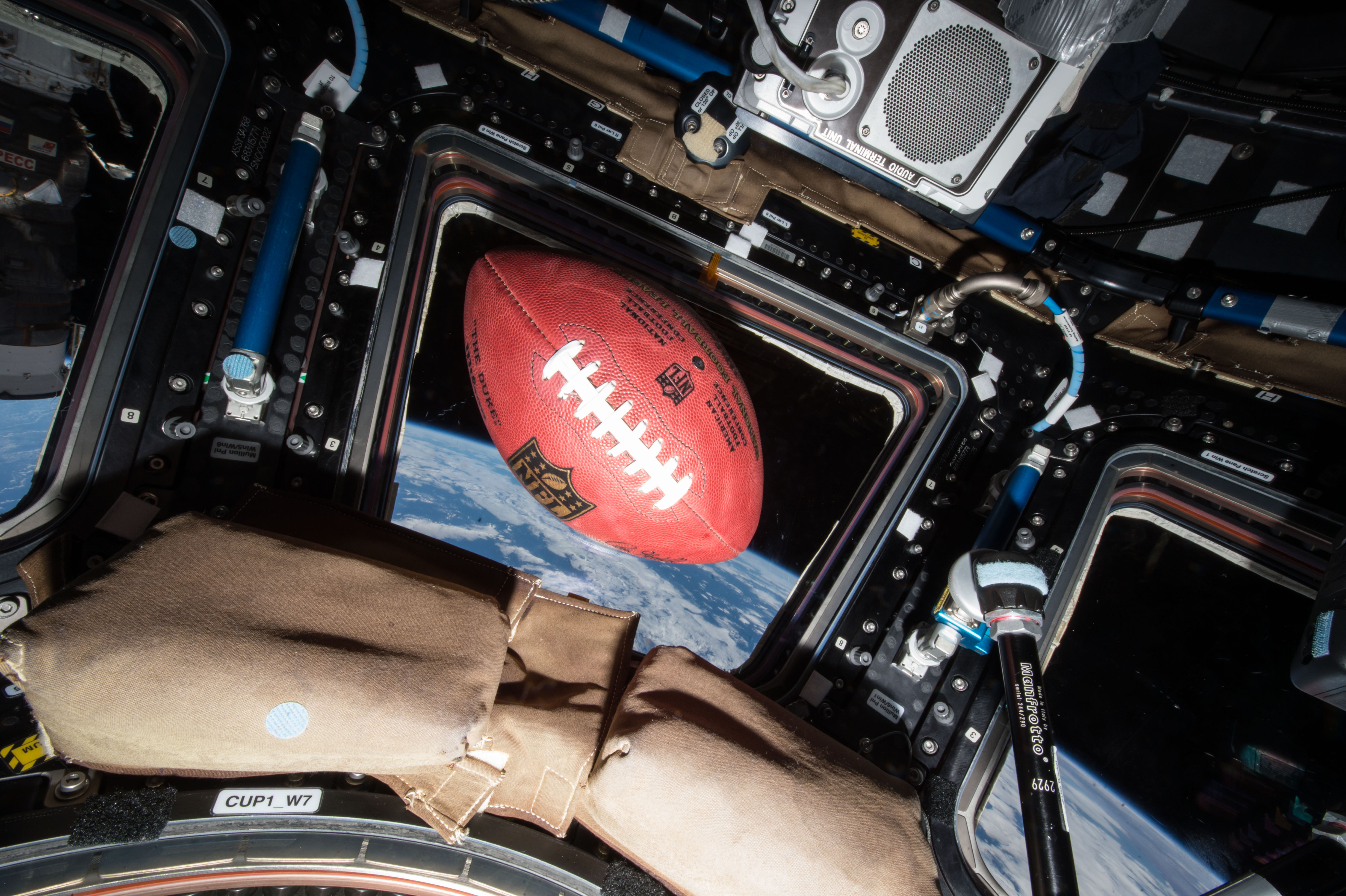
A football floats in microgravity aboard the International Space Station, high above the Earth.
Credit: NASA
Through a new collaboration between NASA and the National Football League (NFL), the agency will soon bring America’s strengths in space exploration and aeronautics innovation to the football field.
NASA will conduct flyovers, astronaut appearances, and fan engagement at NFL games across the United States as part of its new Inspiration Tour.
“This is the first season NASA is taking part in flyovers at NFL games, bringing the excitement of America’s space program directly to fans across the country,” said NASA Administrator Jared Isaacman. “We’re returning to the Moon, building a Moon Base, advancing fission-powered spacecraft, and pushing the boundaries in aeronautics, science, and discovery. Achieving those ambitions will take the very best of America, and partnering with the NFL gives us an incredible platform to inspire the next generation to look up and imagine the possibilities.”
NASA participation is targeted for the following games. Additional details will be released prior to each game, and more dates may be added:
1 p.m., Sunday, Sept. 13: Pittsburgh Steelers vs. Atlanta Falcons in Pittsburgh
1 p.m., Sunday, Sept. 20: Baltimore Ravens vs. New Orleans Saints in Baltimore
1 p.m., Sunday, Oct. 4: Philadelphia Eagles vs. Los Angeles Rams in Philadelphia
1 p.m., Sunday, Oct. 11: New York Jets vs. Cleveland Browns in East Rutherford, New Jersey
Flyovers scheduled at some of the games will showcase NASA’s fleet of aircraft, which are used for high-speed testing, high-altitude research, astronaut training, and more. Regularly flying the aircraft maintains the health of the fleet and publicly demonstrates new technologies that may be applied to future commercial air travel.
With stops across the nation and led by Isaacman, NASA’s Inspiration Tour convenes academic, industry, and public sector stakeholders to connect the agency with the people, technologies, and organizations that drive American leadership in space.
The tour will culminate in MAX POWER, a public exposition of American air and space innovation, Nov. 7 and Nov. 8, on and near the agency’s Kennedy Space Center in Florida. Held in honor of America’s historic 250th anniversary, the multi-day, family-friendly event will showcase the next-generation aircraft, spacecraft, autonomous vehicles, and technologies that will help define the future of transportation in air and space.
For more information about MAX POWER and the agency’s missions, visit:
A NASA Launch Services (NLS) II contract has been awarded by the agency to Relativity Space Inc., and its Terran R launch service in accordance with the contract’s on-ramp provision. The Terran R launch service will be available to NASA’s launch services to use for future missions.
The NLS II contracts are multiple-award, indefinite-delivery/indefinite-quantity contracts with an ordering period through June 2030 and an overall period of performance through December 2032. The NLS II contracts include an on-ramp provision that provides an opportunity annually for new launch service providers to compete for future missions and allows existing contractors to introduce launch vehicles not currently on their NLS II contracts.
The NLS II contracts support the goals and objectives of the agency’s Human Spaceflight Mission Directorate, Science Mission Directorate, and the Research and Technology Mission Directorate. Under the contract, NASA also can provide launch services to other government agencies, such as the National Oceanic and Atmospheric Administration.
NASA’s Launch Services Program Office at the agency’s Kennedy Space Center in Florida manages the NLS II contracts. For more information about NASA, visit:
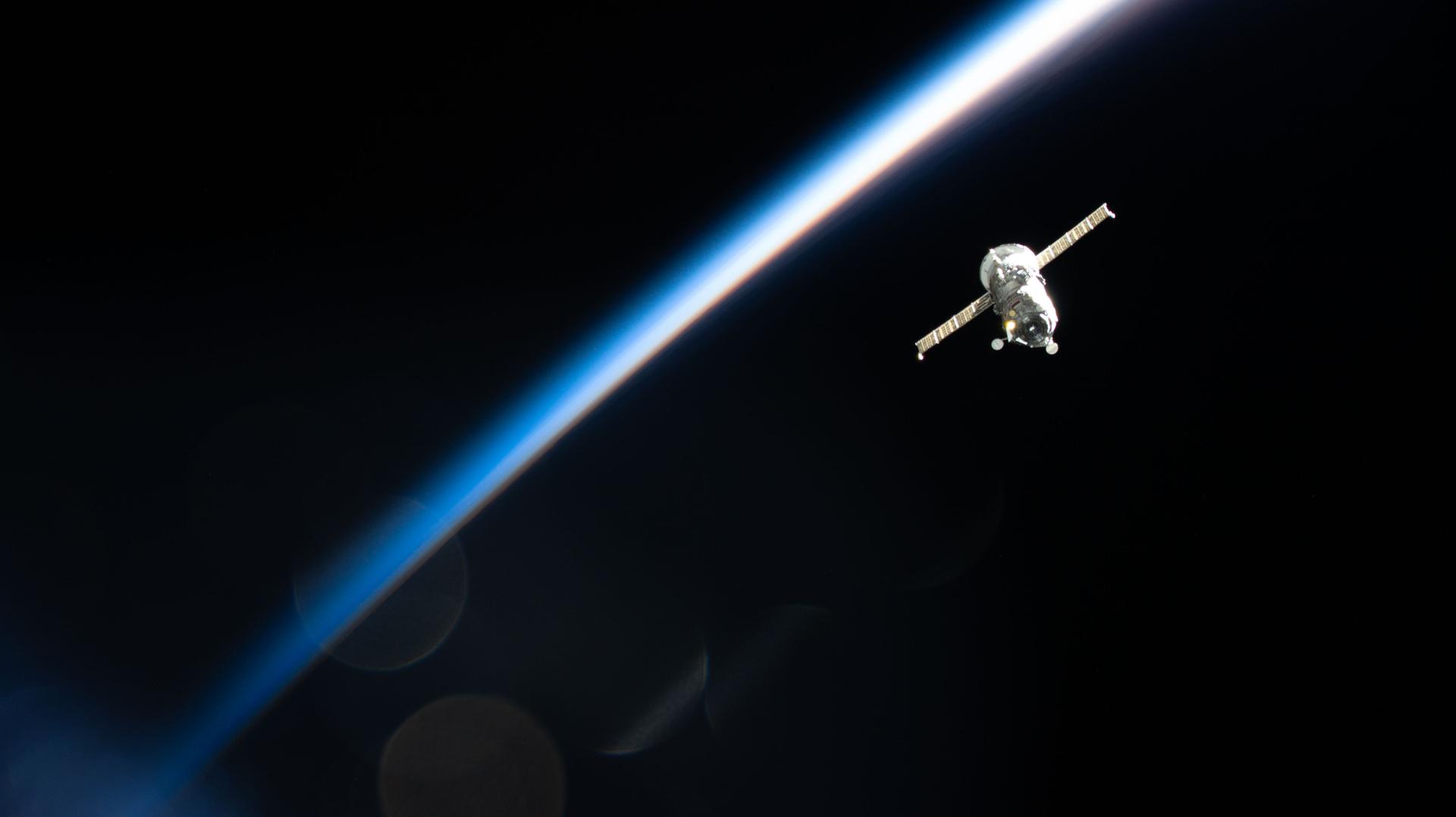
The Roscosmos Progress 92 cargo spacecraft is photographed in March 2026 from the International Space Station as it flies into an orbital sunset 267 miles above Earth’s surface.
Credit: NASA
NASA will provide live coverage of the launch and docking of a Roscosmos cargo spacecraft carrying about three tons of food, fuel, and supplies for the crew aboard the International Space Station.
The unpiloted Progress 96 resupply spacecraft is scheduled to launch at 12:15 p.m. EDT (9:15 p.m. Baikonur time), Wednesday, Sept. 9, on a Soyuz rocket from the Baikonur Cosmodrome in Kazakhstan. NASA’s live launch coverage will begin at 12 p.m.
After a two-day trip to the space station, Progress will dock autonomously to the Poisk module’s space-facing port at 2:37 p.m., Friday, Sept. 11. NASA’s arrival coverage will begin at 1:45 p.m.
NASA will stream these events live through a variety of platforms. Learn where to watch online:
The spacecraft will remain docked to the orbiting laboratory for about five months before departing to re-enter Earth’s atmosphere, where it will harmlessly burn up over the Pacific Ocean.
Before Progress 96 arrives, the Progress 94 spacecraft will undock from the space station at approximately 11:18 a.m., Monday, Sept. 7, for its departure and planned destructive re-entry. NASA will not stream coverage of Progress 94 undocking.
For more than 25 years, people have lived and worked continuously aboard the International Space Station, advancing scientific knowledge and making research breakthroughs not possible on Earth. The space station helps NASA understand and overcome the challenges of human spaceflight, expand commercial opportunities in low Earth orbit, and build on the foundation for long-duration missions to the Moon, as part of the Artemis program, and to Mars.
Learn more about the International Space Station, its research, and crew, at:
NASA awarded Blue Origin a contract Tuesday to develop the agency’s Mars Telecommunications Network, a next-generation communications system that will enable reliable, high-bandwidth communications and navigation services for current and future Mars missions.
The firm-fixed-price contract has a maximum potential value of approximately $700 million to deliver a high-performance Mars telecommunications orbiter to NASA no later than Dec. 31, 2028.
Blue Origin will design, develop, integrate, launch, and operate the network as a part of the agency’s broader space communications and navigation infrastructure. The architecture will consist of a high-performance telecommunications spacecraft orbiting Mars, transmitting science data, imagery, navigation information, and critical mission communications for spacecraft operating on and around the planet.
The award marks a milestone in NASA’s strategy to expand communications and navigation services beyond Earth and the Moon, establishing the foundation for sustained exploration of Mars in the coming decades.
Under the Artemis program, NASA is sending astronauts to explore the Moon and prepare for missions to Mars. Robotic missions will pave the way for human exploration of the Red Planet, and as these missions expand, demand for data will continue to increase. To meet this need, NASA is pursuing a purpose-built network capable of supporting a growing number of missions while providing greater capacity, reliability, and operational flexibility.
The selection follows NASA’s request for proposal issued in May. As the agency increasingly taps commercial partners for transportation and communications services in Earth orbit and to develop the Moon Base, the Mars Telecommunications Network initiative similarly seeks to harness private-sector capabilities while enabling NASA to focus on exploration and scientific discovery.
The network, managed by NASA’s Space Communications and Navigation program, is expected to be operational at Mars by 2030 and will support both current and future missions to the Red Planet, as NASA ventures deeper into space.
For more information about NASA’s space communications efforts, visit:
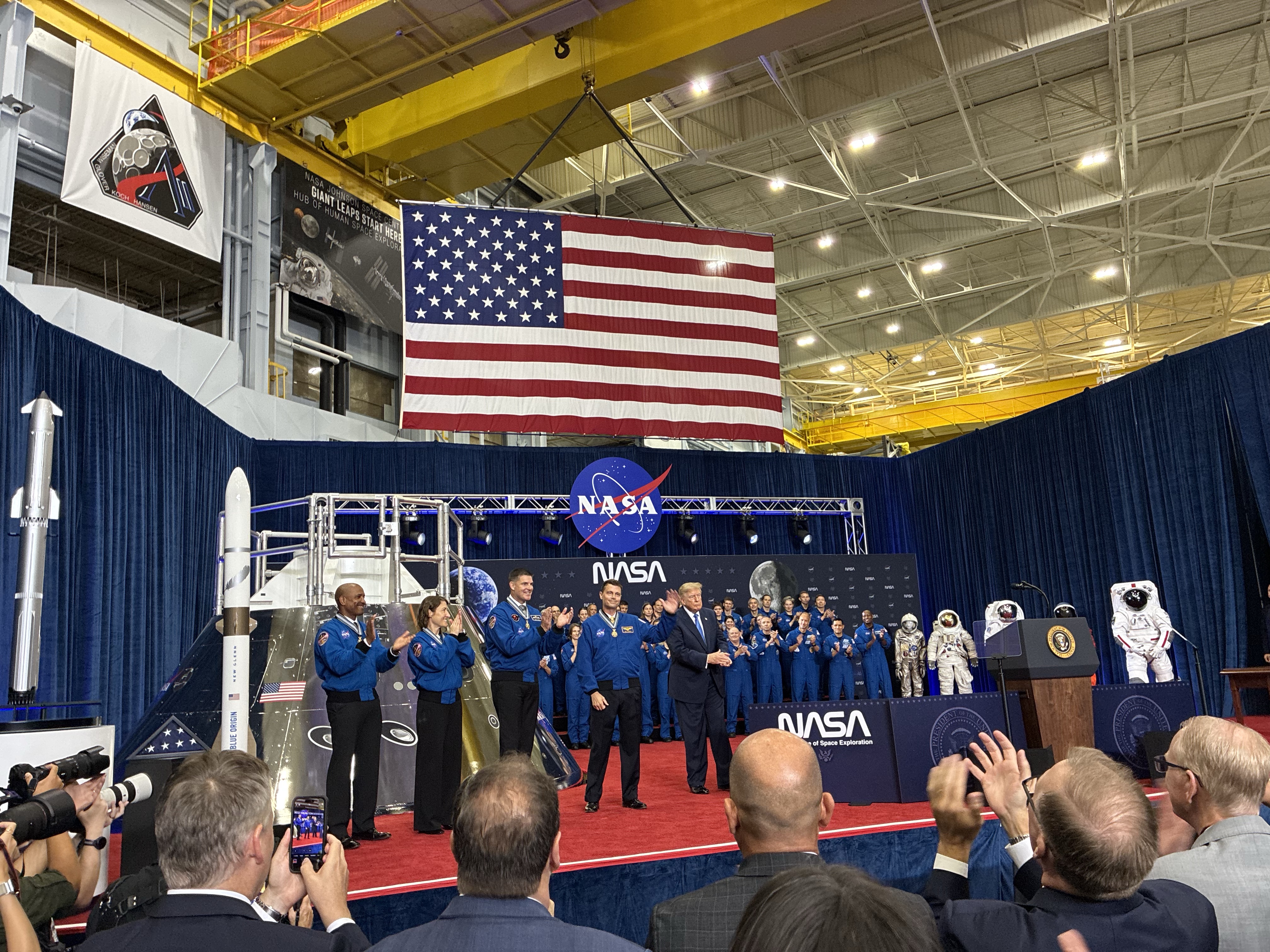
President Donald J. Trump awarded NASA astronauts Reid Wiseman, Victor Glover, and Christina Koch, and CSA (Canadian Space Agency) astronaut Jeremy Hansen with the Congressional Space Medal of Honor on Aug. 28, 2026, at NASA’s Johnson Space Center in Houston.
Credit: NASA
President Donald J. Trump awarded NASA astronauts Reid Wiseman, Victor Glover, and Christina Koch, and CSA (Canadian Space Agency) astronaut Jeremy Hansen with the Congressional Space Medal of Honor Friday for their service during the Artemis II mission. He presented the awards during a ceremony at NASA’s Johnson Space Center in Houston, honoring the first medal recipients since 2023.
NASA’s historic Artemis II mission launched on April 1, and splashed down safely in the Pacific Ocean on April 10. The crew members were the first astronauts to launch on the agency’s SLS (Space Launch System) rocket, flying aboard NASA’s Orion spacecraft, which the crew named Integrity. During their record-setting mission, the astronauts traveled 252,756 miles from Earth, farther than any humans have traveled before, surpassing a previous record set by Apollo 13 astronauts in 1970. In total, they flew 695,081 miles, including a lunar flyby.
“We gather on these historic grounds to celebrate the immense courage of four intrepid space heroes whose sense of daring and adventure led them further from Earth than anyone has ever traveled ever before,” said President Trump. “Today we’re proudly awarding the Congressional Space Medal of Honor to the remarkable crew of Artemis II. These astronauts did not do it alone. I want to salute all of the engineers, and scientists, launch and landing specialists, everyone at NASA who helped make this mission a great success.”
The Congressional Space Medal of Honor was authorized by Congress in 1969 to recognize an astronaut who in the performance of duties has distinguished himself or herself by exceptionally brave and meritorious efforts, and contributions to the welfare of the nation and humanity. There now are 34 recipients of the award since the beginning of the space program, including the crews of Apollo 1, Challenger, and Columbia who received the award posthumously.
“President Trump’s leadership has put America back on a path to lead the world in space, from creating the Artemis program to giving NASA the resources and mandate to win this new space race,” said NASA Administrator Jared Isaacman. “The Artemis II crew answered that call with extraordinary skill and courage, showing the world the Moon again and what American leadership and exploration look like at their best. Their achievement was made possible by the exceptional NASA workforce, alongside our industry and international partners, who showed once again what can be accomplished when we commit to big, bold endeavors. We will build on this success as we return to the lunar surface and establish an enduring presence on the Moon.”
The first crewed mission under NASA’s Artemis program paved the way for the 2027 Artemis III test flight in low Earth orbit to demonstrate rendezvous and docking capabilities between Orion and commercial human landing systems, and the Artemis IV mission in 2028, which will return American astronauts to the lunar surface.
“It was the honor of my lifetime to fly on Integrity around the Moon with Victor, Christina, and Jeremy. Having President Trump here at the agency’s Johnson Space Center to honor NASA and my crew underscores the significance of what our teams accomplished,” said Wiseman, who served as commander of the mission. “I can’t wait to see my friends continue this legacy on Artemis III.”
Glover served as pilot of the Orion spacecraft.
“Piloting Orion for the first time in space was a profound honor, made possible because of the years of hard work, dedication, and expertise by countless individuals dedicating their time and talents to the mission,” said Glover. “We share this recognition with the thousands of people who launched us around the Moon and brought us safely back to Earth.”
Koch served as a mission specialist.
“The response to our mission here on Earth was beyond anything we ever imagined and all we ever hoped for. We are grateful every time we hear from people who followed along with our journey. As team members on this shared mission, we accept this award to honor those who made it happen, from factory floors to clean rooms and mission control rooms,” said Koch.
Hansen also served as a mission specialist.
“It is a privilege to receive the Congressional Space Medal of Honor alongside my Artemis II crewmates,” said Hansen. “I share this recognition with the dedicated teams in Canada, the United States, and our international partners who made the mission possible. Artemis II showed what we can accomplish for humanity when we set ambitious goals and work together. For Canada, the mission and the Artemis program as a whole are about much more than just going back to the Moon. It is about the pursuit of excellence and collaboration.”
As part of a Golden Age of innovation and exploration, NASA will send Artemis astronauts on a series of challenging missions to explore more of the Moon and establish a Moon Base on the lunar surface for long-term exploration. These missions will set the stage for sending the first astronauts — Americans — to Mars. Learn more:
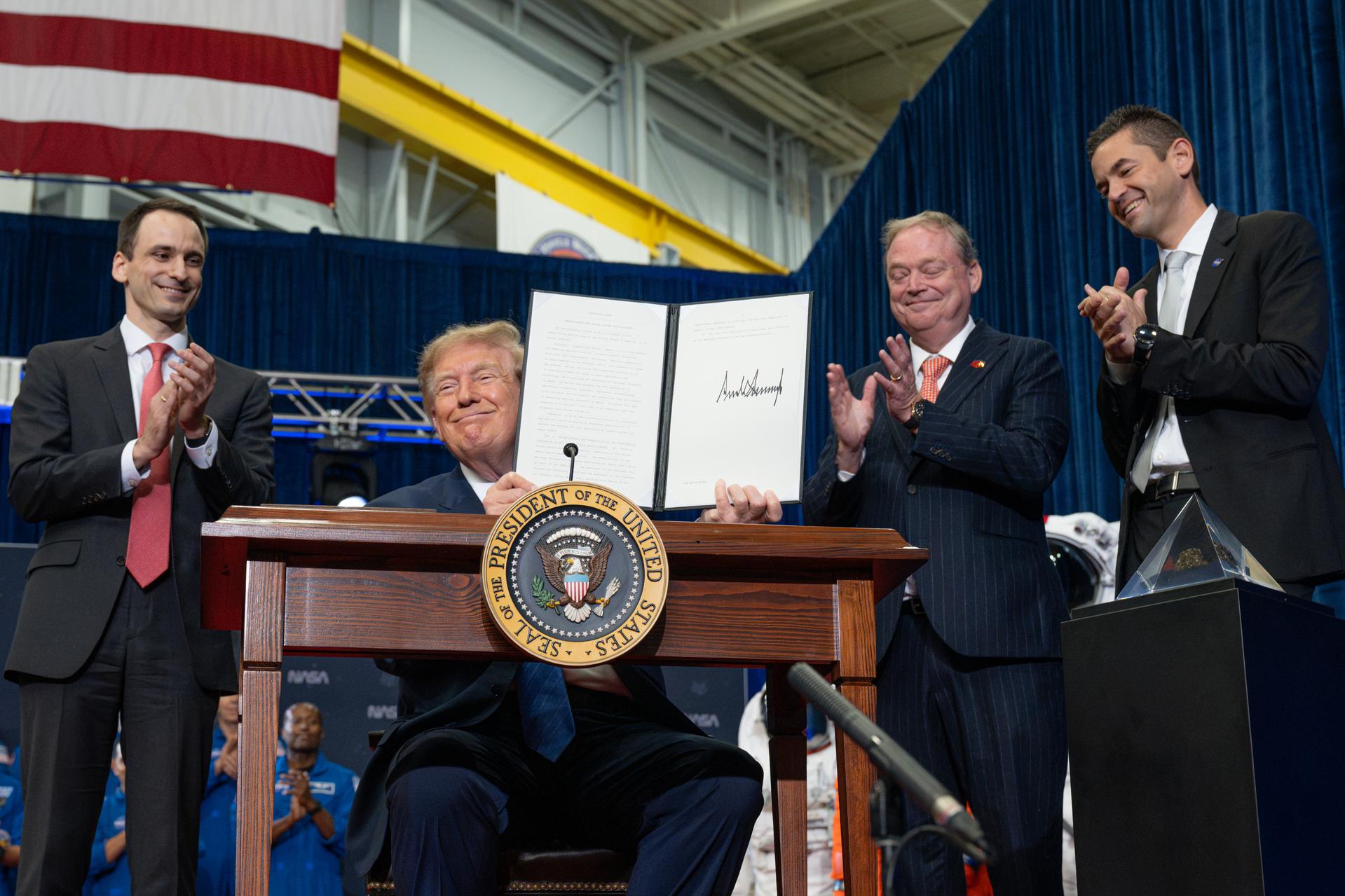
President Donald Trump presents an executive order establishing the United States Space Academy during an event to award the Congressional Space Medal of Honor to the Artemis II crew as Michael Kratsios, director of the Office of Science and Technology Policy, left; Kevin Hassett, director of the National Economic Council, third from left; and NASA Administrator Jared Isaacman, right, applaud, Friday, Aug. 28, 2026, at NASA’s Johnson Space Center in Houston.
Credit: NASA/John Kraus
To strengthen the nation’s space workforce and develop the next generation of space leaders, President Donald J. Trump signed an Executive Order on Friday to establish the nation’s first U.S. Space Academy.
The order highlights how space is a critical domain for American national security, economic growth, scientific discovery, and technological innovation. The proposed academy would focus technical education with leadership development, discipline, and a commitment to public service, helping ultimately advance U.S. interests in space.
“Given the rapid growth of the U.S. Space Force and commercial space industry, and the expansion of our ambitions to the Moon and far beyond the Moon, it’s clear we will need to educate and train an entire generation of skilled service members, engineers, and civil operators,” said President Trump. “That’s why I will sign an Executive Order to begin the process of creating a new a national academy called the U.S. Space Academy.”
The order also calls on NASA Administrator Jared Isaacman to serve as the chair of a new Presidential Commission on the United States Space Academy, and NASA Deputy Administrator Matt Anderson to serve as the executive director. They will work with vice chairs — Assistant to the President for Science and Technology, Michael Kratsios, and Assistant to the President for Economic Policy, Kevin Hassett — and other representatives from the White House and the interagency on the commission.
“President Trump’s vision for a new academy is a transformational step to educate the engineers, scientists, technicians, operators and even the astronauts who will be necessary for the inspiring future we are pursuing in space. In the years ahead, we will return NASA astronauts to the lunar surface, build the Moon Base, get underway on nuclear power, ignite the orbital economy and launch more missions of science and discovery,” said Isaacman. “I have no doubt that so much of the future talent that will graduate and contribute to these exciting endeavors will be educated at the United States Space Academy.”
A report from the commission to the President is due within 120 days of the signing with recommendations on governance framework, service obligations for graduates, physical location of the academy, legislative requirements, and more.
The signing of “Establishing the United States Space Academy Executive Order,” took place at NASA’s Johnson Space Center in Houston where the President also presented the Artemis II crew members with the Congressional Space Medal of Honor.
The Executive Order is the latest from President Trump that demonstrates his commitment to maintaining U.S. leadership in space and advancing NASA’s Golden Age exploration and innovation. In December 2025, he signed the Ensuring American Space Superiority, and recently, a new National Space Transportation Policy memorandum on Aug. 20.
Read the full Executive Order on The White House website:
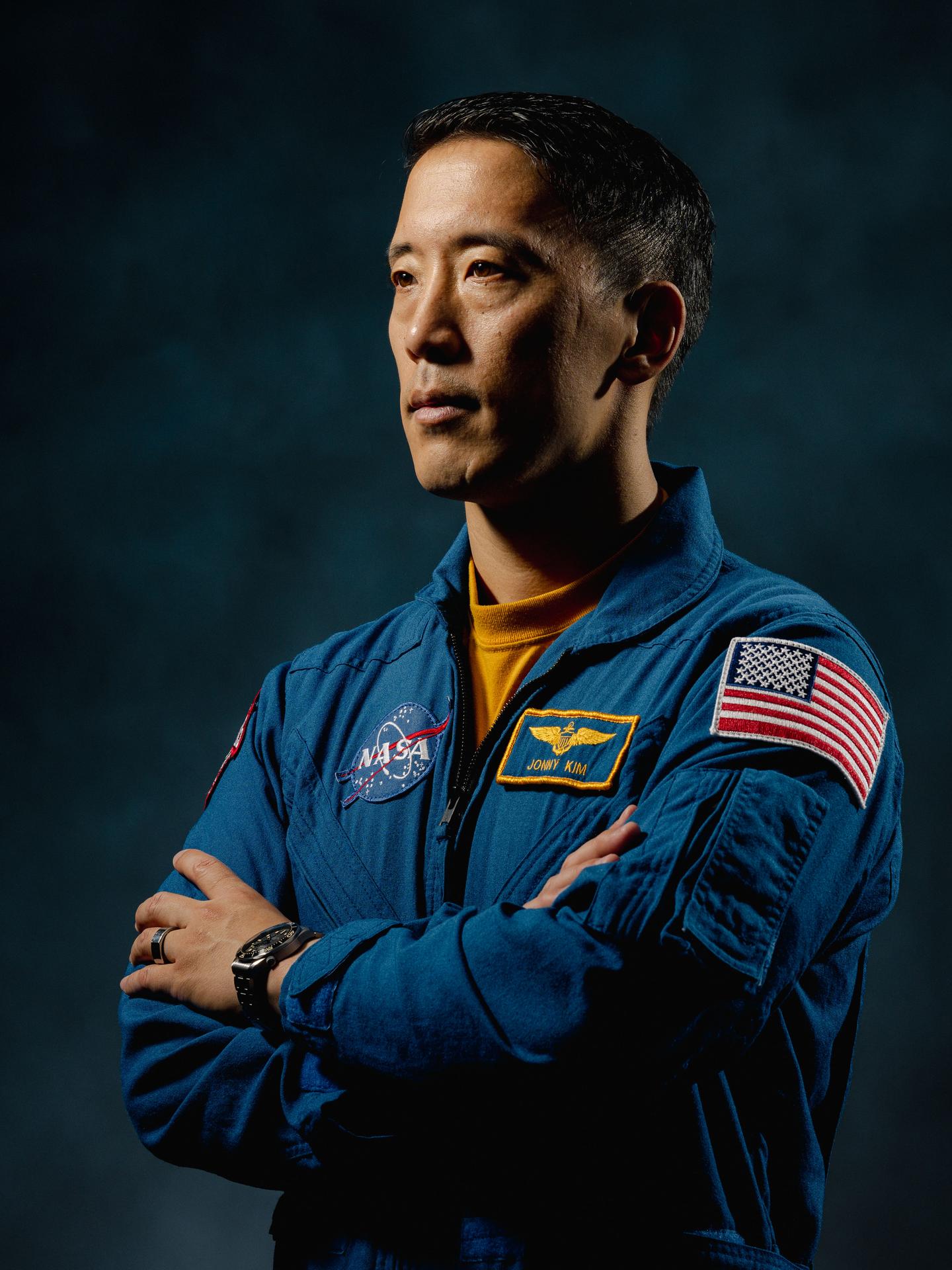
NASA astronaut Jonny Kim poses for a portrait at NASA’s Johnson Space Center in Houston.
Credit: NASA/Josh Valcarcel
After nearly a decade of service to NASA, including an eight-month science expedition aboard the International Space Station, astronaut Jonny Kim’s last day at the agency is Thursday. He will continue serving as lieutenant commander in the U.S. Navy.
Kim launched to the space station in April 2025 aboard the Soyuz MS‑27 spacecraft to conduct scientific research as a flight engineer during Expeditions 72/73. During the mission, he orbited Earth 3,920 times, traveled nearly 104 million miles, and contributed to a broad range of scientific investigations spanning technology development, Earth science, biology, and human research critical for future exploration.
“Jonny Kim represents the very best of NASA, a person who continually pushed the boundaries of exploration while inspiring countless others,” said NASA Administrator Jared Isaacman. “His contributions aboard the International Space Station advanced critical science that will shape NASA’s future missions for decades to come. We are grateful for his dedication to our nation and to the pursuit of knowledge, and we wish him success as he continues his service in the U.S. Navy.”
Serving as the U.S. Operating Segment lead for the second half of Expedition 73, Kim oversaw operations across the station’s international modules. During the expedition, the station achieved a historic milestone when every available docking port was occupied for the first time in 25 years. He also commanded the Canadarm2 robotic arm during the first capture of Northrop Grumman’s new Cygnus XL spacecraft, securing 11,000 pounds of supplies for the station. Kim and his Roscosmos crewmates landed safely in Kazakhstan in December 2025.
“Jonny has been an integral part of the agency, and his immeasurable impact will be felt for generations to come,” said Vanessa Wyche, director of NASA’s Johnson Space Center in Houston. “From advancing groundbreaking science to inspiring the next generation, Jonny has been an incredible source of inspiration to our nation. His exceptional talent, determination, and grit will leave a lasting legacy at NASA.”
Kim was selected as a NASA astronaut in 2017 and completed two years of astronaut candidate training, which included instruction in space station systems, Russian language, robotics, T‑38 flight operations, geology, survival training, and spacewalk preparation.
He later supported station operations as a capsule communicator, or capcom, in NASA’s Mission Control Center at Johnson. Kim also contributed to Artemis program development through his work in the astronaut exploration branch, leading the astronaut crew operations branch, and serving as increment lead for Expedition 65. His experiences as a Navy SEAL, physician, and naval aviator provided unique perspectives in mission operations and crew support.
“Jonny approached every assignment with humility, precision, and steadfast commitment to the mission,” said Scott Tingle, chief of the Astronaut Office at NASA Johnson. “His combination of medical training, operational experience, and engineering insight strengthened our team and contributed to advancements in exploration and space station operations.”
Born in Los Angeles, Kim enlisted in the U.S. Navy after graduating high school in 2002. He trained as a hospital corpsman and completed Basic Underwater Demolition/SEAL training before joining SEAL Team Three. Over the course of more than 100 combat operations, he served as a medic, sniper, navigator, and point man, earning the Silver Star, Bronze Star with Combat “V,” and numerous additional commendations.
He earned a bachelor’s degree in mathematics from the University of San Diego and a doctor of medicine from Harvard Medical School. He completed his internship at Massachusetts General Hospital and Brigham and Women’s Hospital in Boston. Kim became a dual-designated naval aviator and flight surgeon, completing flight training at Naval Air Stations Corpus Christi in Texas and Whiting Field in Florida, and aerospace medical training at the Naval Aerospace Medical Institute at Naval Air Station Pensacola.
Kim is returning to active duty to finish out the remainder of his military career within naval aviation training.
“Contributing to space exploration and serving NASA has been the honor of a lifetime,” said Kim. “Throughout my career, I’ve learned that beyond the missions, the training, and the hardware, success always comes down to the people. They are our greatest asset, and leading with love and empathy is how we achieve the impossible. I look forward to carrying my commitment to service, my enduring love for space and technology, and the hard-earned lessons of this past decade into my next chapter to make a meaningful impact on humanity’s future.”
To learn more about NASA’s astronauts and human space exploration, visit:
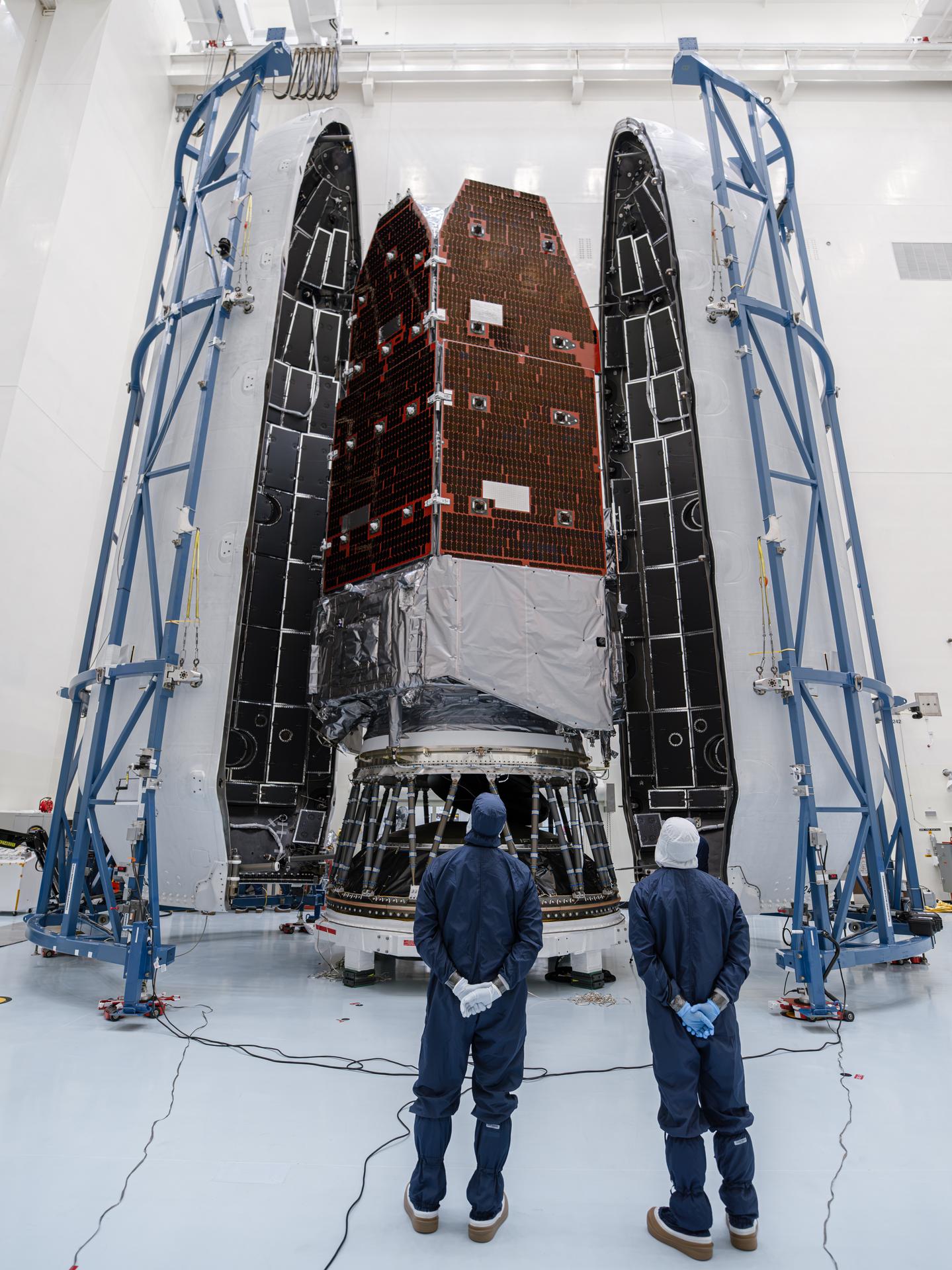
NASA’s Nancy Grace Roman Space Telescope is encapsulated within the payload fairing at the agency’s Kennedy Space Center in Florida, ahead of mating to a SpaceX Falcon Heavy rocket for launch.
Credit: NASA/Sydney Rohde (Rocz)
Coverage plans are ready for NASA’s Nancy Grace Roman Space Telescope prelaunch and launch activities. Roman is NASA’s next-generation observatory designed to explore some of the universe’s biggest mysteries, including dark energy.
NASA and SpaceX are targeting Roman’s liftoff for no earlier than 7:26 a.m. EDT Sunday, Aug. 30, aboard a SpaceX Falcon Heavy rocket from Launch Complex 39A at the agency’s Kennedy Space Center in Florida. Launch coverage begins at 6:20 a.m.
Live coverage of these events will stream through a variety of platforms. Learn where to watch online:
Named for NASA’s first chief astronomer, the Nancy Grace Roman Space Telescope will pair sharp infrared vision with a field of view at least 100 times larger than the agency’s Hubble Space Telescope. Its crisp, sweeping surveys will help scientists investigate dark energy and dark matter, discover and characterize exoplanets, map billions of galaxies, study black holes, and explore objects from our own solar system to the edge of the observable universe.
After launch and separation from the rocket, Roman will travel to the second Sun-Earth Lagrange point, or L2, about one million miles from Earth. The mission has a five-year primary lifetime with a goal of operating for 10 years, and Roman’s science data will be publicly available after processing.
NASA’s mission coverage is as follows (all times are Eastern and subject to change based on real-time operations):
Saturday, Aug. 29
9 a.m.: NASA’s Roman Space Telescope Mission Science Briefing: The briefing will take place in the NASA Kennedy Press Site auditorium with the following participants:
Shawn Domagal-Goldman, director, Astrophysics Division, NASA Headquarters
Julie McEnery, Roman telescope senior project scientist, NASA Goddard Space Flight Center
Vanessa Bailey, Roman Coronagraph Instrument scientist, NASA Jet Propulsion Laboratory
Kristen McQuinn, Roman Science Operations Center lead, Space Telescope Science Institute
Lee Armus, Roman Science Support Center lead, Caltech/IPAC
Media may ask questions in person or by phone. Limited auditorium space will be available for in-person participation. For the dial-in number and passcode, media should contact the NASA Kennedy newsroom no later than one hour before the briefing at: ksc-newsroom@mail.nasa.gov.
10:30 a.m.: NASA’s Roman Space Telescope Prelaunch News Conference: The news conference will take place in the NASA Kennedy Press Site auditorium with the following participants:
Nicky Fox, associate administrator, Science Mission Directorate, NASA Headquarters
Lucas Paganini, Roman telescope program executive, NASA Headquarters
Jackie Townsend, Roman telescope project manager, NASA Goddard
Denton Gibson, launch director, NASA’s Launch Services Program, NASA Kennedy
Julianna Scheiman, director, NASA Science and Dragon Programs, SpaceX
Justin McReynolds, launch weather officer, 45th Weather Squadron, U.S. Space Force
Media may ask questions in person or by phone. Limited auditorium space will be available for in-person participation. For the dial-in number and passcode, media should contact the NASA Kennedy newsroom no later than one hour before the briefing at: ksc-newsroom@mail.nasa.gov.
11:45 a.m.: NASA Administrator Jared Isaacman is expected to fly past the Nancy Grace Roman Space Telescope and Falcon Heavy rocket on the launchpad in his jet. The flyby will be shown live on the same stream as the prelaunch news conference, with a view of the launch pad during the transition. The flyby is subject to weather and operational considerations.
12 p.m.: In-person interviews will take place in the NASA Kennedy Press News Center:
Nicky Fox, associate administrator, Science Mission Directorate, NASA Headquarters
Lucas Paganini, Roman telescope program executive, NASA Headquarters
Dalia Kirschbaum, acting director, Sciences and Exploration Directorate, NASA Goddard
Josh Schlieder, Roman telescope project scientist, NASA Goddard
Jason Hylan, Roman telescope flight segment and observatory manager, NASA Goddard
Bertrand Mennesson, Roman Coronagraph Instrument project scientist, NASA JPL
Jeff Hanke, president, Space Systems, Space and Mission Systems, L3Harris Technologies
Wendy Minotti, program manager, Exquisite Imaging, Space and Mission Systems, L3Harris Technologies
Bonnie Patterson, vice president and general manager, Civil Space, Space and Mission Systems, BAE Systems
Sarah Lipscy, director, Strategic Operations, Space and Mission Systems, BAE Systems
Previously credentialed media interested in scheduling an interview should contact the NASA Kennedy newsroom at: ksc-newsroom@mail.nasa.gov.
Sunday, Aug. 30
6:20 a.m.: Launch coverage begins.
7:26 a.m.: Launch
9:30 a.m.: Postlaunch news conference with the following participants:
NASA Administrator Jared Isaacman
Nicky Fox, associate administrator, Science Mission Directorate, NASA Headquarters
Jackie Townsend, Roman telescope project manager, NASA Goddard
Julie McEnery, Roman telescope senior project scientist, NASA Goddard
Denton Gibson, launch director, NASA’s Launch Services Program, NASA Kennedy
Media may ask questions in person or by phone. Limited auditorium space will be available for in-person participation. For the dial-in number and passcode, media should contact the NASA Kennedy newsroom no later than one hour before the news conference at: ksc-newsroom@mail.nasa.gov.
Audio-only coverage
Audio-only coverage of the launch will be carried on the NASA “V” circuits, accessible by dialing 321-867-1220 or 321-867-1240. On launch day, mission audio countdown activities without NASA broadcast commentary will be carried on 321-867-7135.
Launch audio also will be available on Launch Information Service and Amateur Television System’s VHF radio frequency 146.940 MHz and KSC Amateur Radio Club’s UHF radio frequency 444.925 MHz, FM mode, heard within Brevard County on the Space Coast.
NASA website launch coverage
Launch day coverage will be available on the NASA website, including the livestream and blog updates as countdown milestones occur. On-demand streaming video and launch photos will be available shortly after liftoff. Follow mission updates on the Roman launch blog.
Attend launch virtually
Members of the public may register to attend the Roman launch virtually. NASA’s Virtual Guest Program includes curated launch resources, notifications about related opportunities or schedule changes, and a stamp for the NASA virtual guest passport following launch.
Watch, engage on social media
Let people know you’re watching the mission on X, Facebook, and Instagram by following and tagging these accounts:
The Roman telescope is managed at NASA Goddard with participation by the agency’s Jet Propulsion Laboratory in Southern California; Caltech/IPAC in Pasadena, California; the Space Telescope Science Institute in Baltimore; and a team of scientists from various research institutions. The primary industrial partners are BAE Systems Inc., L3Harris Technologies, and Teledyne Scientific & Imaging. Contributions to Roman also are made by ESA (European Space Agency), JAXA (Japan Aerospace Exploration Agency), the French space agency CNES (Centre National d’Études Spatiales), and the Max Planck Institute for Astronomy in Germany. NASA’s Launch Services Program, based at Kennedy, manages the launch service for the Roman mission.
For more information about NASA’s Roman telescope, visit:

 Login
Login