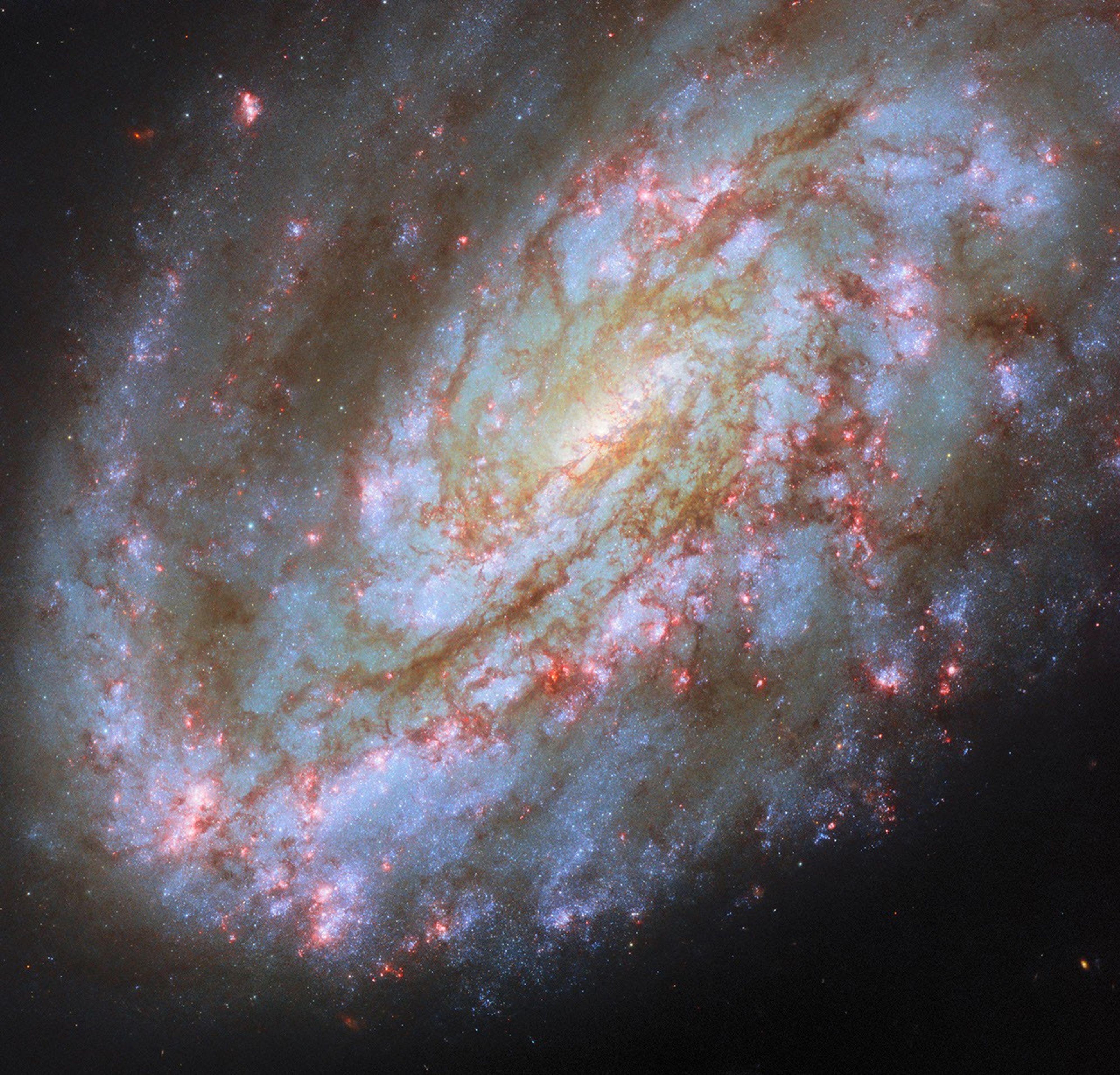
This NASA/ESA Hubble Space Telescope image features the spiral galaxy NGC 4654, located 72 million light-years away in the constellation Virgo (the Maiden).
NASA, ESA/Hubble, D. Thilker, J. Lee, and the PHANGS-HST Team
The subject of this NASA/ESA Hubble Space Telescope image is a spiral galaxy struggling against titanic forces that appear on galactic scales in space. This is NGC 4654, an intermediate spiral galaxy in the constellation Virgo (the Maiden). It is classified as an “intermediate” because its overall shape lies between spiral galaxies that have a bar across their centers and those that don’t. NGC 4654 has a weak bar structure at its center and is located 72 million light-years from Earth in the Virgo Cluster, a particularly massive and populous galaxy cluster.
NGC 4654 is particularly asymmetric, with a rounded and clearly-defined edge on one side and a long tail of gas stretching out from the opposite side — outside the field of view captured in this image. This gaseous tail is the result of ram pressure stripping, a force that galaxies can experience as they plow through space. NGC 4654 moves with such high velocity that it sweeps up and rams through the hot, rarefied gas filling the space between the Virgo Cluster’s galaxies. This intracluster medium in turn exerts a “ram pressure” on the galaxy, compressing the galaxy’s leading edge and dragging its gas behind the galaxy, creating the elongated tail.
It’s not just the galaxy’s gas that is unevenly distributed: its stars are too, and this is more unusual for a spiral galaxy. While the spiral arm on its leading edge is rich with stars and gas, the opposite arm noticeably lacks stars, influencing the galaxy’s lopsided spiral shape. Astronomers think that ram pressure alone is unlikely to cause this effect. Rather, NGC 4654 was also subjected to the gravitational force of fellow Virgo Cluster galaxy NGC 4639. While the two galaxies are far apart now, it’s thought that a fly-by interaction between them around 500 million years ago ripped away NGC 4654’s gas along one side, limiting star formation there and creating the asymmetry in its shape.
Many galaxies that undergo ram pressure stripping suffer reduced star formation rates as the cold gas that collapses to form their stars is pulled away and lost. NGC 4654, however, is still forming nearly two Suns’ worth of stars every year, a rate comparable to other galaxies of similar size. The active star formation is visible in the latest Hubble data included in this image. The data picks up on a wavelength of red light emitted by the clouds of energized gas where newborn stars lurk. The bright pink bubbles that appear across NGC 4654 — from its forward spiral arm, to around its weak bar, and out to the edge of its disk — are areas where these newborn stars shine.
The data used in this image came from two observing programs (#15654, #17502) that aim to link the gas in galaxies with star formation. By observing many prominent galaxies in the vicinity of our own, researchers hope to better understand how gas moves in galaxies, where and when it collapses to form stars and star clusters, and what effect those new stars have on the gas around them.
This illustration depicts charged particles from a solar storm stripping away charged particles of Mars’ atmosphere, one of the processes of Martian atmosphere loss studied by NASA’s MAVEN mission.
NASA/GSFC
NASA MAVEN (Mars Atmosphere and Volatile Evolution) mission scientists have uncovered a key puzzle piece in understanding certain types of auroras on Mars, finding that they form in a similar way to Earth-based auroras.
Results published Thursday in Nature Communications show the same mechanism that circulates and catapults charged particles into Earth’s atmosphere is happening at Mars on much smaller scales because of differences in the two planets’ magnetic fields.
The MAVEN spacecraft, in orbit around Mars, experienced a loss of signal with ground stations on Earth on Dec. 6, 2025. On June 3, NASA declared the mission had concluded after finding the spacecraft to be unrecoverable. However, data from the mission is still being used to inform NASA science and future missions to Mars.
When the Sun’s magnetic field lines get close to Earth’s magnetosphere, the large magnetic bubble protecting the planet, they can reconnect and inject energy and mass throughout Earth’s magnetosphere and magnetotail, ultimately firing electrons back into the atmosphere to generate Earth’s auroras. This process, called the Dungey cycle, drives electrical currents, accelerates charged particles that create auroras, and controls the circulation of plasma in Earth’s magnetosphere and ionosphere.
This new study shows that a miniature version of the Dungey cycle is happening over Mars’ strong crustal magnetic fields, which gives scientists a better look into the physics of Martian auroras.
“We knew that magnetic reconnection was happening at Mars but did not expect it to be like the Dungey cycle,” said Shaosui Xu, lead author of the study and associate research physicist at the Space Sciences Laboratory at the University of California, Berkeley.
Mars does not have a global magnetic field like Earth. Earth’s magnetic field is created by our planet’s churning core, while Mars has numerous miniature magnetospheres that arise from intensely magnetized crust scattered around the planet. These regions were formed around 4 billion years ago when lava cooled in the presence of Mars’ ancient global magnetic field, which has since disappeared due to intense solar wind stripping the planet’s atmosphere.
The MAVEN mission has observed highly localized auroras over these crustal fields, similar to Earth’s auroras at the poles, but it wasn’t until now that scientists could fully understand the physics of how they form. The study used several instruments aboard the MAVEN spacecraft to build up a picture of the Dungey-like behavior: the Magnetometer and Solar Wind Electron Analyzer instruments, which were used to determine the magnetic configuration and derive electrical currents, and the STATIC (Suprathermal and Thermal Ion Composition) instrument, which was used to measure plasma flows in the ionosphere.
“We really pushed the limit of STATIC to get the data we needed,” said Xu. “It was the final piece to the puzzle in understanding these localized auroras.”
The realization that a Dungey-like cycle was happening within these crustal magnetic fields answered the question of how the electrons were being energized to create the auroras. It also shows that a Dungey-like mechanism can happen on both large and small scales, giving more insight into where in the solar system this process could be taking place.
“This is a remarkable result that changes how we think of Martian auroras and is another important step toward understanding why Mars and Earth have evolved so differently despite being governed by the same underlying physics.” said Shannon Curry, MAVEN’s principal investigator and a research scientist at the Laboratory for Atmospheric and Space Physics at the University of Colorado Boulder. “I am incredibly proud of our team’s work on this discovery and excited to uncover new insights into the Red Planet and its evolution.”
By finding out more about this process, scientists also are gaining a better understanding of how the solar environment interacts with the Red Planet as a whole, which is essential for future robotic and crewed missions.
“I remember in graduate school discussing with my advisor how the cycling of crustal magnetic fields could work at Mars,” said Xu. “It’s incredible to be part of the team that found the answer to that question.”
The MAVEN mission is part of NASA’s Mars Exploration Program portfolio. The mission’s principal investigator is based at the Laboratory for Atmospheric and Space Physics at the University of Colorado Boulder, which also is responsible for managing science operations and public outreach and communications. NASA’s Goddard Space Flight Center in Greenbelt, Maryland, manages the MAVEN mission. Lockheed Martin Space built the spacecraft and is responsible for mission operations. NASA’s Jet Propulsion Laboratory in Southern California provides navigation and Deep Space Network support.
For more information on NASA’s MAVEN mission, visit:
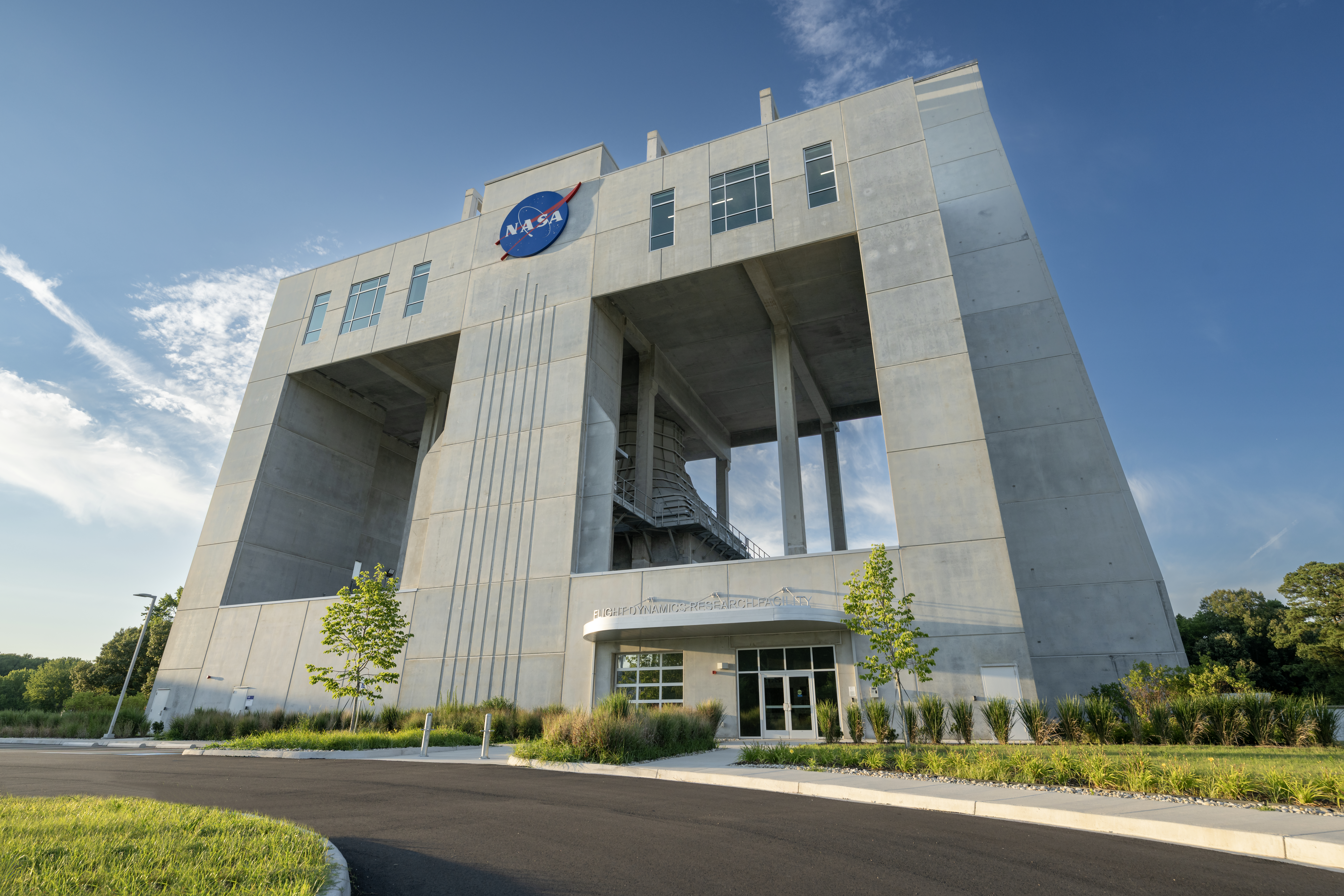
The Flight Dynamics Research Facility, located at NASA’s Langley Research Center in Hampton, Virginia, is the agency’s first major wind tunnel built in more than 40 years.
NASA/Mark Knopp
Media are invited to NASA’s Langley Research Center in Hampton, Virginia, on Friday, July 31, to attend a media tour and ribbon-cutting ceremony for the Flight Dynamics Research Facility, the agency’s first new wind tunnel in more than 40 years.
The event will include a brief media availability with:
NASA Administrator Jared Isaacman
Dr. Trina Dyal, center director, NASA Langley
Administrator Edward C. Forst, U.S. General Services Administration
This event is in person only and open to members of the media who are United States citizens or lawful permanent residents. Information about timing will be shared closer to the event. NASA’s media accreditation policy is available online.
Media requesting to participate in person must RSVP no later than 5 p.m. EDT on Wednesday, July 29. Media RSVPs must be sent to Kimiko Booker, kimiko.s.booker@nasa.gov, and Brittny McGraw, brittny.v.mcgraw@nasa.gov, with the following information:
Legal first and last names (must match government identification)
Email
Phone number
Job title and organization
The wind tunnel opening marks a major milestone in the evolution of NASA and the nation’s aeronautics and space research capabilities. The state-of-the-art facility will support research and technology development that will advance NASA’s aeronautics, exploration, and science goals, including establishing a sustained human presence on the lunar surface through the Artemis program and the development of a Moon Base.
Learn more about the Flight Dynamics Research Facility at:
Wildland fire activity in Canada ramped up in July 2026, a time of year when lightning ignitions typically increase, according to a seasonal outlook published by several North American fire agencies. The blazes sent smoke plumes pouring across the U.S. and Canada, affecting air quality in both countries.
This animation tracks brown carbon, the organic aerosols emitted by fires that give smoke plumes their characteristic yellow, orange, and brown tint. Brown carbon is a major component of a fire’s PM2.5 emissions, a type of air pollution that can aggravate cardiovascular and respiratory conditions. Here, the plume drifts across North American skies from July 14 through July 20, 2026.
Data for the animation come from a version of the GEOS (Goddard Earth Observing System) model, which assimilates data from satellites, aircraft, and ground-based observing systems. In addition to satellite observations of aerosols and fires, the model also incorporates meteorological data such as air temperature, moisture, and winds to project the plume’s behavior.
On July 14, at the start of the animation, numerous fires had already cropped up, including more than 180 in Ontario and several in northern Minnesota. Winds carried the smoke southeast, and by July 15, skies turned hazy and air quality declined from southern Ontario in Canada to the Upper Midwest and Northeast in the U.S. July 16 and 17 saw air quality in many areas continue to plummet, including in Detroit, where it stayed in the hazardous range for several consecutive days. Toronto, Chicago, New York City, and Washington, D.C., saw air quality ranging from unhealthy to hazardous.
On July 19 and 20, smoke continued to affect air quality downwind, including in the Great Lakes region, according to the National Weather Service. Storms began clearing it away in parts of the East, where air quality improved to good or moderate. Meanwhile, fires in the Pacific Northwest began degrading air quality there.
The brown carbon shown in this animation represents organic carbon that comes specifically from wildfire smoke. Wildfires also emit black carbon, or soot, which contributes to their PM2.5 output. Black carbon has long served as a tracer for smoke plumes, but human sources—such as vehicle exhaust and industrial combustion—produce it too, blending in with the black carbon from fires. The GEOS model has been able to make that distinction for brown carbon since February 2026, when an update enabled it to split organic carbon into its anthropogenic and biomass-burning components.
Preparations for Next Moonwalk Simulations Underway (and Underwater)
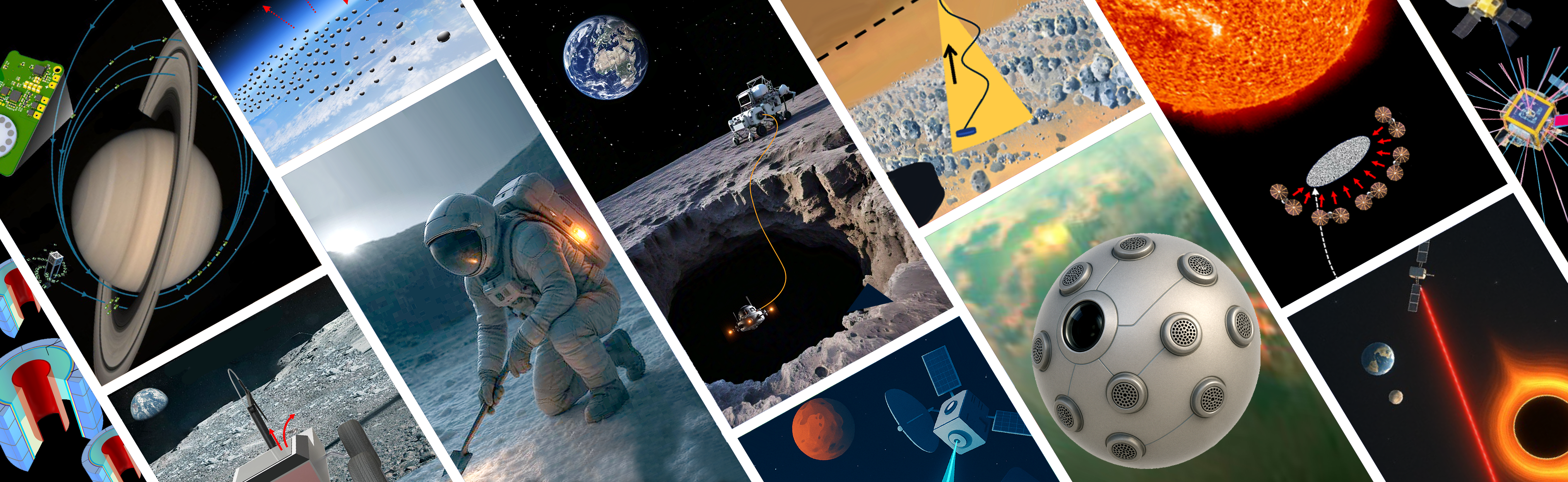
A collage of artist concepts highlighting the novel approaches proposed by the 2026 NIAC awardees for possible future missions.
NASA/Left to Right: Keunhan Park, Michael Rubenstein, Austin Phoenix, Benjamin Schafer, A.C. Charania, Gilly Elor, Pablo Sobron, Marco Quadrelli, Daniel Drew, Saptarshi Bandyopadhyay, Jeff Nosanov, Anish Damodaran
Preparations for Next Moonwalk Simulations Underway (and Underwater)
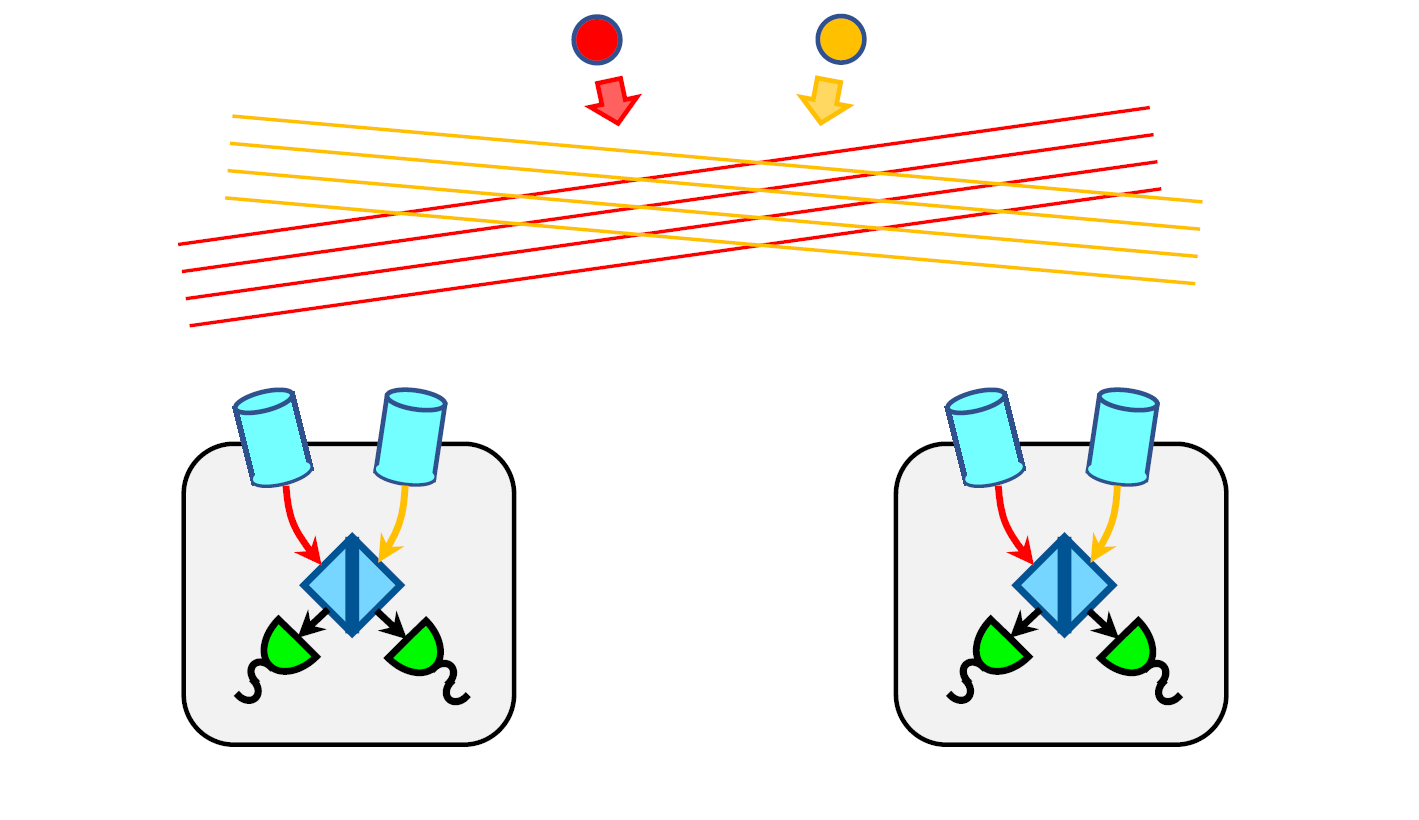
Graphic depiction of the Graviational Wave Detection concept.
Paul Stankus
PaulStankus Brookhaven Science Associates
The scientific goal is to enable a new method for observing gravitational waves at low frequencies, based on the astrometric GW signature — gravitational waves passing by the Earth will cause a (very small) coordinated apparent motion of all sky objects. Our innovation is to deploy a new approach to precision astrometry using quantum mechanical two-photon interference, which was published quite recently. The approach has the great benefit that two separate interferometric spacecraft stations can operate independently, ie without an optical connection between them, greatly simplifying spacecraft requirements compared to standard space-based interferometric designs. With this capability we propose to be able to detect passing gravitational waves at low frequencies, in the micro-Hz to nano-Hz range, at a sensitivity at an astronomically interesting level (note that there are, currently, essentially no alternative approaches for GW detection in this band). We show how this could be achieved with a straightforward mission using two modest-sized spacecraft in free-fall orbits; and detection of such GW’s would be of great interest for galaxy formation and SM black hole physics, as well as exciting the public imagination.
Preparations for Next Moonwalk Simulations Underway (and Underwater)
Graphic depiction of the Mapping Alien Continents concept.
Paul Stankus
PaulStankus Brookhaven Science Associates
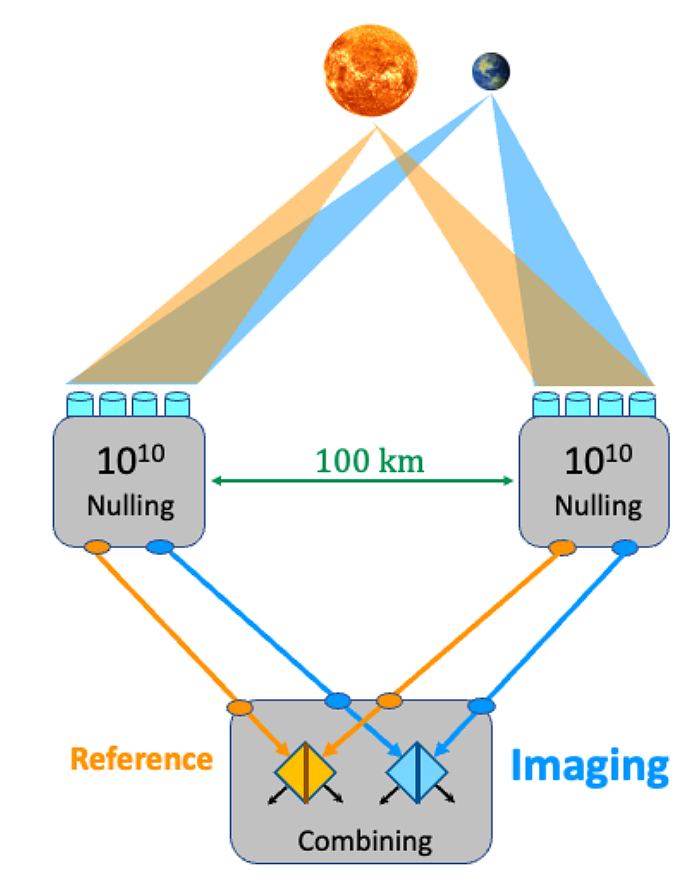
The scientific goal of the proposed work will be reconstructing the image, ie resolving surface features, of an Earth-like exoplanet around a nearby star as seen in visible light. The innovation is in two stages. First, the design of a new kind of nulling interferometer — “dynamic hierarchical nulling” — combining inputs from multiple apertures and capable of separating star light from planet light with contrast of 10^10 or better in the visible. Second, combine the output beams from two such nullers on spacecraft stationed ~100km apart to achieve the required angular resolution using Michelson interferometric imaging; note that the hierarchical nuller preserves the star’s light in a separate beam which can then be used as in interference phase reference. The capability to survey the features of Earth-like exoplanets is perfectly aligned with NASA priorities and sure to excite public interest.
Preparations for Next Moonwalk Simulations Underway (and Underwater)
Graphic depiction of the Interworld Slingshot Resource Surveys concept.
Pablo Sobron
Pablo Sobron Sanchez SETI Institute
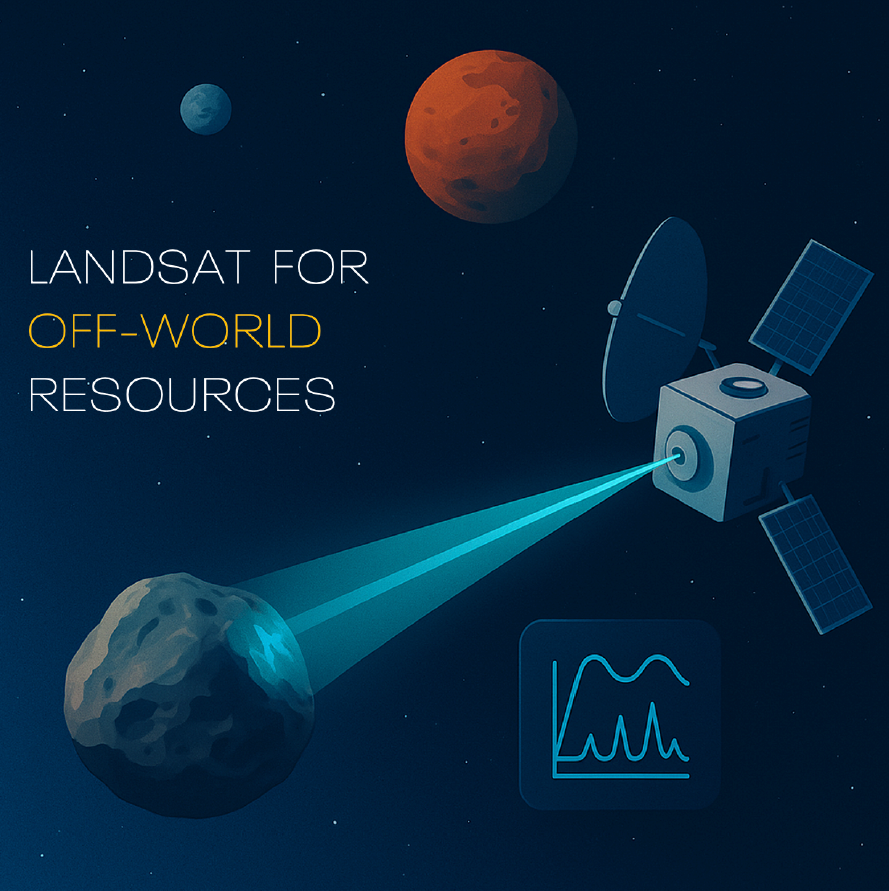
This proposal explores a new class of reconnaissance spacecraft that map minerals from orbit using Raman spectroscopy during high-speed flybys–without landing, sample return, or extended dwell. If feasible, this concept would enable NASA to evaluate ice and ilmenite at the Moon, ore content at asteroids, and volatile-bearing minerals at Mars’ moons–all with a single 300-kg spacecraft. The capability addresses NASA’s long-term goals in sustainable lunar presence, asteroid resource evaluation, and Mars logistics by answering a key operational question: what exactly is this material?
The central objective is to determine whether Raman spectroscopy–a technique that identifies minerals by their molecular fingerprints–can operate from tens of kilometers away during flyby or orbital arcs. To date, planetary Raman has only been used from meters away on rovers. Performing Raman from 30–50 km standoff would open a new regime for planetary science and space resource mapping, delivering the compositional specificity that passive reflectance or neutron methods cannot.
The reference mission concept uses a single solar electric propulsion spacecraft to conduct three reconnaissance legs: (1) 50 km polar orbit of the Moon to map ice and ilmenite; (2) a 30 km flyby of a near-Earth asteroid to identify silicates, metals, and organics; (3) a 30—50 km orbit of Phobos or Deimos to detect volatile-rich phases that inform Mars mission logistics.
At each leg, a high-energy pulsed laser, time-gated photon-counting detector, and rad-class beam steering system isolate Raman signals from the planetary surface. No existing sensor or mission class can perform this function.
To determine feasibility, this NIAC Phase I study answers three core questions: (1) Can key mineral Raman lines be detected with adequate signal-to-noise from 50 km? (2) Can beam pointing and smear be stabilized during fast flybys to allow integration over dwell time? (3) Can a 300-kg spacecraft with realistic propulsion, power, and attitude control systems close the mission architecture across all three destinations?
Methods include first-principles photon modeling based on known Raman cross-sections, spacecraft jitter analysis, and trajectory design using NASA’s standard mission planning tools. The study is divided into three technical work packages plus synthesis and reporting. Sensitivity analyses and decision gates are built in to determine how changes in photon return or pointing control would affect overall mission viability. Alternative architectures are explored for each leg, including lower flyby altitudes and different propulsion schemes.
The study team combines deep expertise in Raman instrumentation, spaceborne lidar, and mission design. PI Sobron led field 120-meter-range Raman systems and contributed to SuperCam and SHERLOC on Mars. Co-I Lee and Collaborator Yu from NASA Goddard bring direct heritage from ICESat-2 and other orbital laser systems. Co-I Casell at NASA Ames leads early mission design and brings prior NIAC experience. The team is supported by SETI and OffWorld, a commercial partner.
If successful, the work will define the first architecture for orbital Raman mineral detection and demonstrate that high-resolution molecular mapping is possible without landing. Even partial success would establish new boundaries for remote sensing physics, provide validated models, and support future NASA decisions in Artemis siting, asteroid mining, and Mars ISRU planning. The architecture enables a cost-effective Discovery-class template that could eventually scale to a fleet of inner Solar System scouts–bringing Landsat-style mineral intelligence to planetary exploration.
Preparations for Next Moonwalk Simulations Underway (and Underwater)
Graphic depiction of the Robotically Assembled Electromagnetic Metamaterials concept.
David Smith
DavidSmith Duke University
The increasing population of spacefaring vehicles and satellites motivates increasingly powerful technologies for space situational awareness (SSA). While the US space surveillance network (SSN) is able to monitor objects down to about four inches in size using, for example, the latest upgrade to the space fence, the associated requirements limit implementation to ground-based tracking of low earth orbit (LEO) objects using kilometer-scale radar arrays. Beyond LEO, the prospect of cislunar traffic and the extreme distances involved render ground-based arrays impractical. This limitation is fundamental to coherent radar systems: for a given detection performance, the required array size grows in direct proportion to the target distance. As a result, it can in fact become simpler to decrease the sensing distance rather than extend array sizes, and this can only be achieved by shifting to a space-based SSA platform.
Although space-deployed radar systems offer distinct advantages in terms of sensing capabilities, the large distances associated with cislunar surveillance still require extremely large apertures for adequate performance. This poses significant practical challenges based on limitations to modern deployable structures which, to date, cannot consistently achieve dimensions greater than 100 meters. This limitation arises because state-of-the-art deployable antennas, including membrane, mesh, and inflatable architectures, require the entire structure to be housed inside a single launch fairing. In contrast, the prospect of in-space assembly suggests the potential for scalable structures that are not limited by launch constraints and so can meet the challenging requirements of long-range SSA.
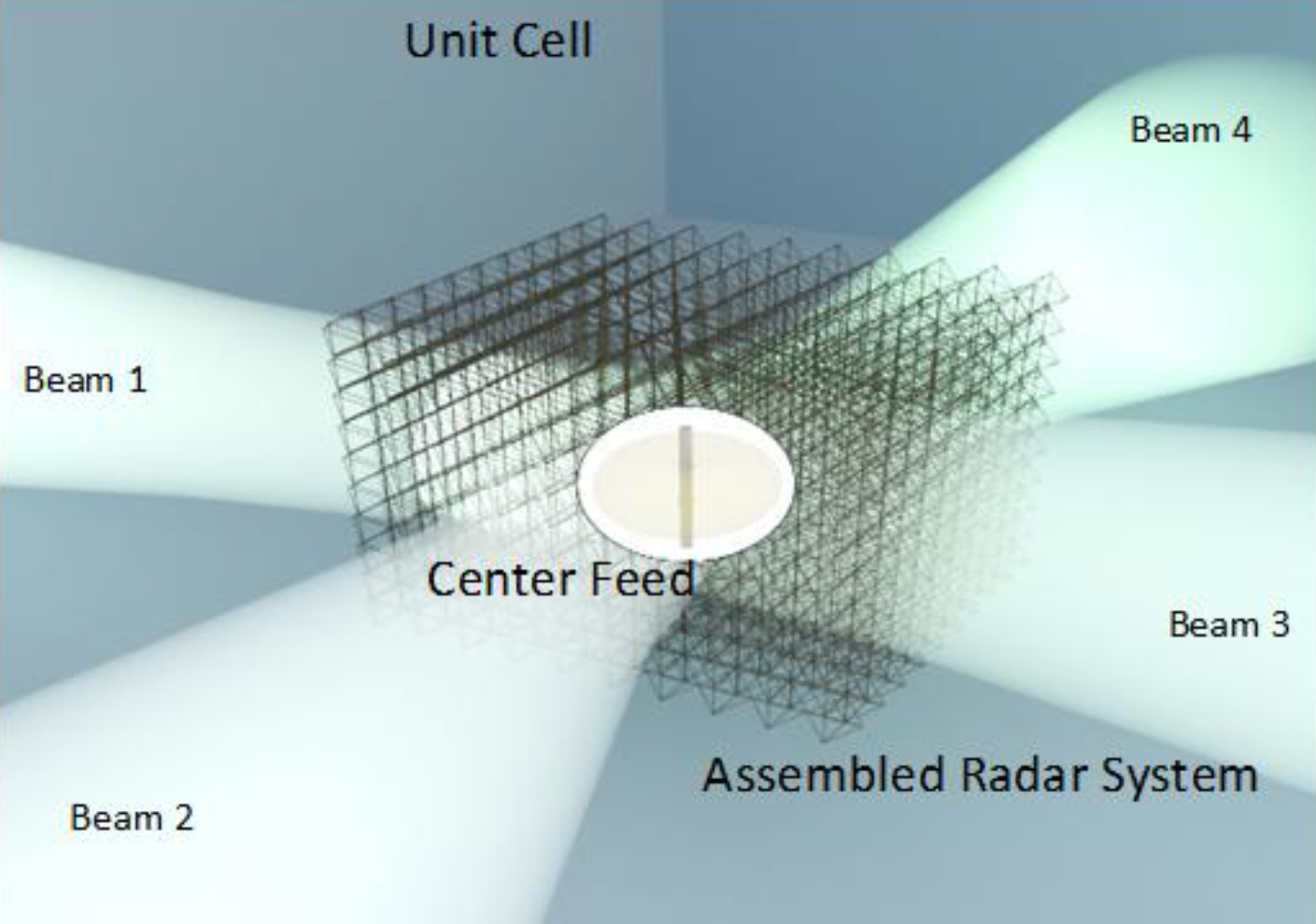
We propose a spaceborne radar system that pairs the demonstrated performance of robotically assembled mechanically stable structures with reconfigurable, volumetric electromagnetic metamaterials. The former technology enables modular and precise construction of arbitrary volumetric structures, while the latter offers a sophisticated and readily compatible design platform for achieving the challenging requirements of long-range SSA. Both approaches exploit a unit cell-driven, modular design procedure that enables nearly arbitrary scaling for mechanically and electromagnetically robust antenna platforms. The ability to reliably assemble and control volumetric antenna structures in this way provides access to new and powerful capabilities including steering over wide fields of view (FOV) without the need for slow, mechanical slewing of the antenna.
The proposed work will demonstrate the feasibility and scalability of a reconfigurable, volumetric S-band metamaterial for achieving various beam steering capabilities. This effort will include advancement of metamaterial design strategies for omnidirectional electromagnetic beam forming and initial assessment/design of a reconfigurable unit cell compatible with robotic assembly. The development of the metamaterial design procedure will exploit a numerically efficient dipole model that has been previously validated at smaller scales, while the metamaterial element design will proceed by established full-wave numerical methods. System design concepts will incorporate practical constraints according to successful demonstrations of robot assembly by the Automated Reconfigurable Mission Adaptive Digital Assembly Systems (ARMADAS) project.
While the project will target SSA applications, the design considerations involved are equally applicable to missions requiring large physical apertures such as low-frequency radiometry for earth observation and deep-space communications. Since the performance (resolution, sensitivity) of all beam steering, radar, and observation missions improves with increased aperture sizes, the realization of alternative electromagnetic strategies that offer reduced CSWaP can provide advantages across a wide range of NASA programs.
Preparations for Next Moonwalk Simulations Underway (and Underwater)
Graphic depiction of the Stacked Solar Sails for Very High delta-V Missions concept.
Benjamin Schafer
BenjaminSchafer Rarified Technologies, Inc.
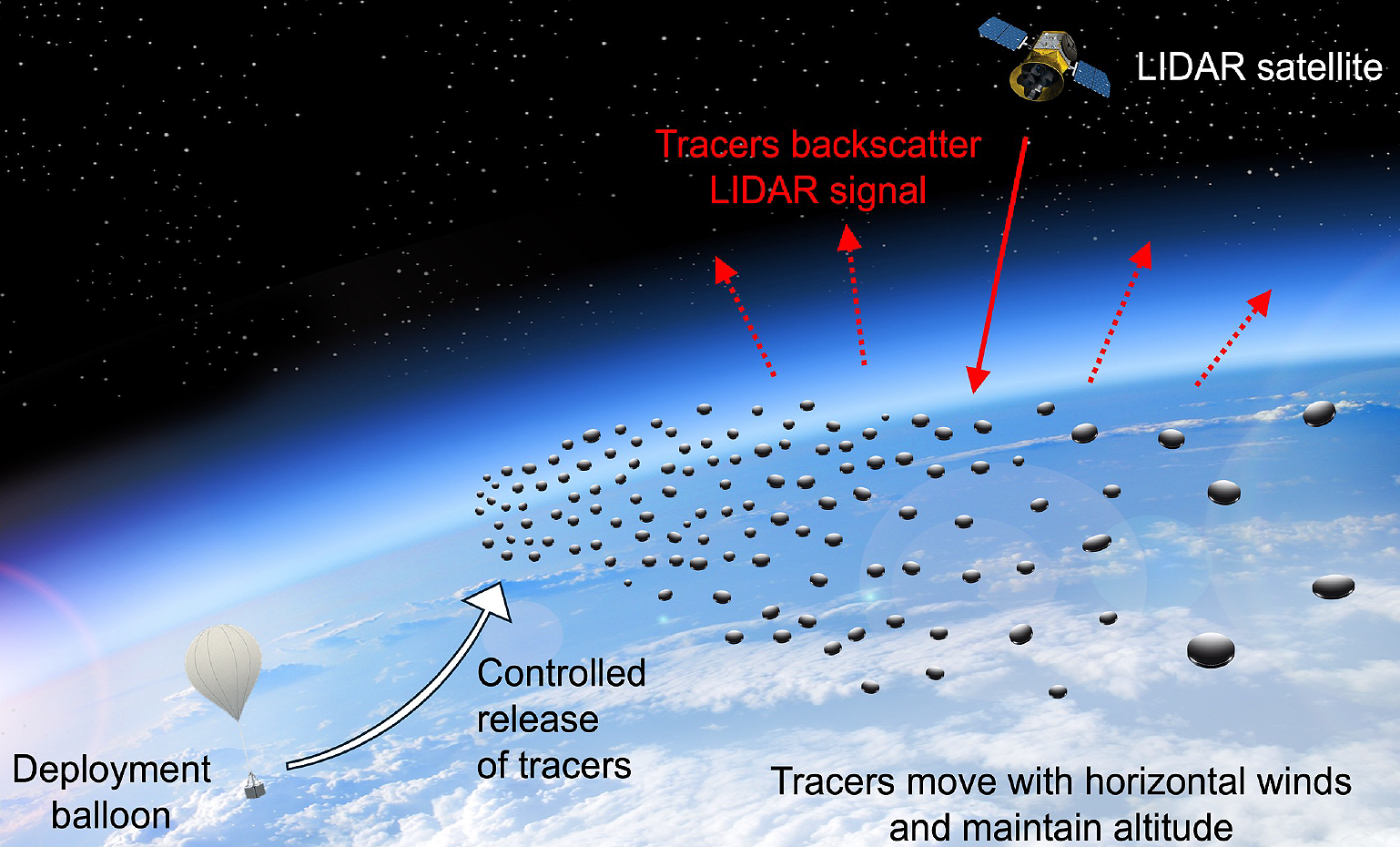
We propose a new approach to atmospheric sensing at 30-100 km altitudes using photophoretically levitating tracers. These lightweight structures harness sunlight to remain suspended for up to months at controlled altitudes and can be remotely tracked by satellite-based lidar or radar. Unlike natural aerosols, these tracers are designed to provide strong andtunable backscatter at standard remote sensing wavelengths, enabling passive, persistent, and altitude-selective measurements of wind, temperature, and pressure in a region that is critically under-measured by existing systems.
This concept addresses a major gap in current sensing capabilities. The mesosphere and upper stratosphere play a key role in atmospheric dynamics, space-domain awareness, space weather, and high-altitude platform navigation. Despite the importance of this region, data collection remains a challenge. Near-space is too high for sustained balloon flight and too low for satellites to orbit. Concentrations of extant atmospheric species are also too low for remote sensing techniques such as lidar and radar. Photophoretic tracers offer a new solution: a persistent, stratified sensor layer of non-toxic, inert backscattering points that require no onboard power, propulsion, or control. These tracers can be deployed via high-altitude balloons or rockets and autonomously reach their target altitudes based on their geometry and coatings.
In a representative mission, thousands of tracers are released from a lightweight balloon at around 30 km. The tracers rise to their target altitude of 90-100 km, the lower ionosphere. Satellite-based lidar tracks their motion over their month-long lifetimes. Tracer trajectories enable continuous mapping of wind shear, thermal gradients, and pressure profiles at sub-kilometer resolution and hourly cadence. The collected real-time data are used to calibrate boundary conditions of ionospheric space weather models. As more data is collected, the predictive capabilities of these models improve, leading to enhanced situational awareness and communications resilience in near-space and LEO. Other early deployments could, for example, support weather model improvements in the tropics and monitor atmospheric conditions over spaceports.
This work builds on emerging experimental results in photophoretic flight, with laboratory validation of levitation in near-space conditions and initial simulations of tracer dispersion and visibility. Backscatter models confirm feasibility for orbital detection using commercially available lidar systems. The tracers are designed to safely disintegrate at end-of-life and are compatible with scalable fabrication techniques. By engineering the scattering medium itself, this concept inverts traditional atmospheric remote sensing. It enables lower-SWaP-C satellite sensing systems and a fundamentally new class of persistent measurement tools for national security, meteorology, heliophysics, and planetary exploration.
Preparations for Next Moonwalk Simulations Underway (and Underwater)
Graphic depiction of the Actively Steerable Femtosat Constellations concept.
Michael Rubenstein
MichaelRubenstein Northwestern University, Chicago
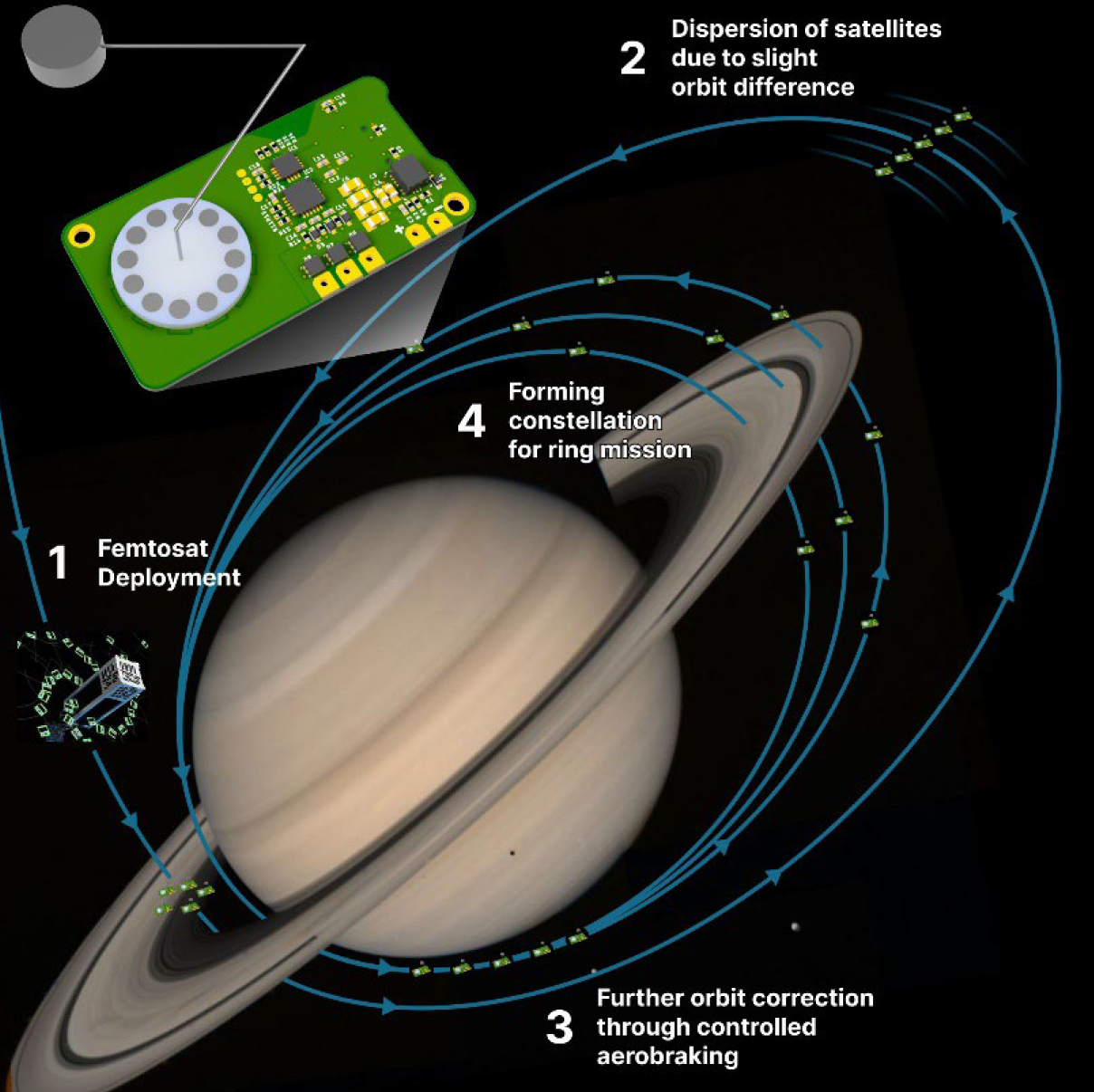
We propose a mission to use ~10,000 actively steerable femtosats to map the ring composition, atmospheric composition and density, and the magnetic field distribution of Saturn. Conducting in-situ surveys of Saturn’s rings with a single flagship mission, such as Cassini, would carry an unacceptably high risk of mission failure due to particle collisions. However, the distributed nature of the proposed mission means it can accept a risk that could destroy many of femtosats in the constellation, making in-situ survey of the ring possible.
Preparations for Next Moonwalk Simulations Underway (and Underwater)
Graphic depiction of the PRAXIS concept.
Marco Quadrelli
MarcoQuadrelli NASA Jet Propulsion Laboratory
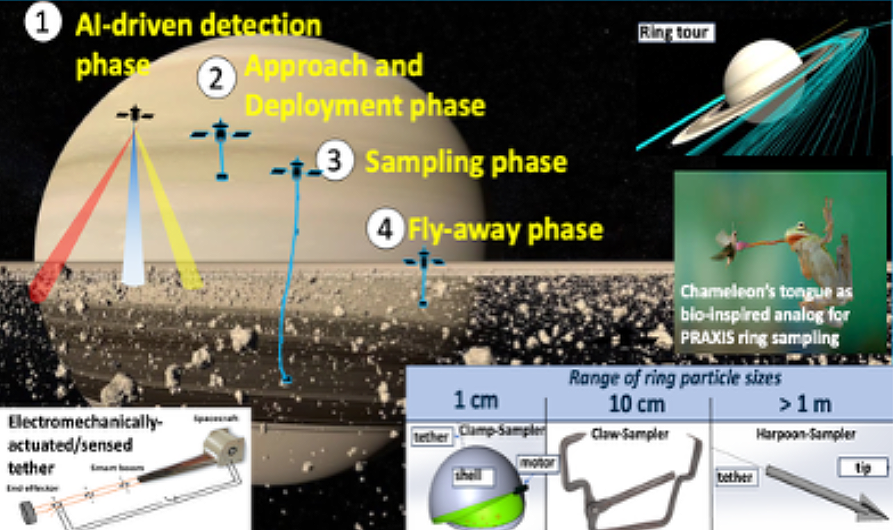
Humanity has never touched the particles of a planetary ring, but if we were able to get close enough and sample them, it will transform understanding of ring structure and origins for Saturn (dense), Uranus and Neptune (tenuous), rings of other objects such as Centaurs Chariklo and Chiron, and even early protoplanetary and circumstellar disks. Despite Cassini’s groundbreaking discoveries, fundamental questions about the formation, dynamics, and evolution of planetary rings remain unanswered. After Cassini, there is a very strong scientific case to learn more about the microphysical interactions of Saturn’s rings, and this necessitates sampling them. Many ring structures and features such as self-gravity wakes, “propellers”, density waves and gap edges remain to be explored at high resolution. Saturn’s rings are micron-size grains to house-size boulders, always in motion. They are made mostly of water ice, piles of rubble coming together and breaking apart. PRAXIS addresses a key Decadal priority by delivering the first direct observations of mm- to cm-scale ring particles, a capability Cassini lacked. Planetary rings are highly dynamic environments where constant particle motion demands advanced robotic autonomy for collision avoidance, precision sampling, and in situ analysis. Our system adapts innovations from sport casting to capture free-floating particles, and instrument miniaturization for real-time analysis. AI integration enables the first-ever autonomous collection of ring particles, directly measuring science priorities like particle size, porosity, and composition. PRAXIS develops and tests a novel AI-driven, bio-inspired robotic explorer to perform in situ ring sampling, a capability never before attempted. This effort directly supports Decadal Survey priorities in planetary ring science while spearheading the next generation of planetary robotic exploration and delivering transformative insights into the origins and evolution of ring systems. Feasibility of PRAXIS is already on firm ground because it leverages key element of the Saturn Ring Observer Mission Study, which considered an orbit grazing the rings and hovering above them to directly image the ring particles in motion. After an initial imaging and characterization phase to select the ring particle, the spacecraft conducts a touch-and-go sampling event of the particle surface with a long and soft deployable boom. Since the particles are always in motion within the ring, there is a compelling case for the spacecraft staying away to avoid collision, hence the agile sampling with the long boom is justified. Once the sample is retrieved, the PRAXIS exploration system moves to another section (or gap) of the rings, thus sampling many diverse regions. Feasibility of PRAXIS will be demonstrated Phase I with simulation and sound system design, motivating solid system design and development of a physical prototype in Phase II. The system’s versatility makes it valuable across planetary formation missions, positioning it for infusion into the upcoming Uranus Probe mission.
Preparations for Next Moonwalk Simulations Underway (and Underwater)
Graphic depiction of the ECLIPSE concept.
Austin Phoenix
AustinPhoenix
Virginia Polytechnic Institute & State
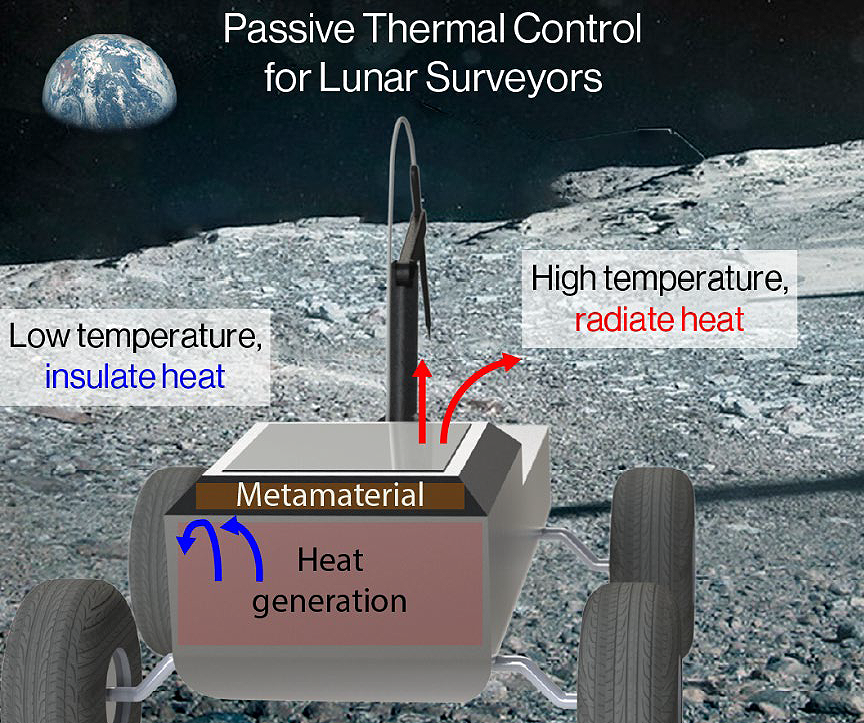
A disaggregated lunar infrastructure requires novel thermal management methods to enable future lunar operations. While thermal management solutions exist for large infrastructure, the smaller mobile systems that operate independently require improved temperature regulation devices that can survive without heaters or substantial power requirements, while limiting stress-inducing temperature fluctuations. New material solutions can passively regulate the flow of thermal energy to enable small devices to survive the extremes of the lunar environment without relying on external infrastructure. The Variable Thermal Conductivity Metamaterial (VTCM) outperforms other VTCMs and can be designed to act as an advanced mechanical thermal switch. Variable internal contact is used to regulate the flow of energy to the radiator passively. The design of the metamaterial’s internal geometry, material selection, and the passive shape memory alloy actuation system can achieve an arbitrary thermal conductivity as a function of temperature using internal mechanical contact. The metamaterial concept begins in a low temperature state with no initial contact and a corresponding low conductivity state. As the temperature of the metamaterial increases, partial SMA actuation induces partial contact internal to the metamaterial, resulting in an increase in conductivity. As the temperature continues to increase, the contact area increases until full contact is achieved. This metamaterial enables the design of an arbitrary thermal conductivity as a function of temperature by designing the thermal pathways’ cross-sectional area and length. The proposed work will use the variable thermal conductivity metamaterial, capable of passive thermal control, to enable mobile autonomous surveyors that can perform extended lunar operations while minimizing Size, Weight, Power, and Cost (SWaP-C).
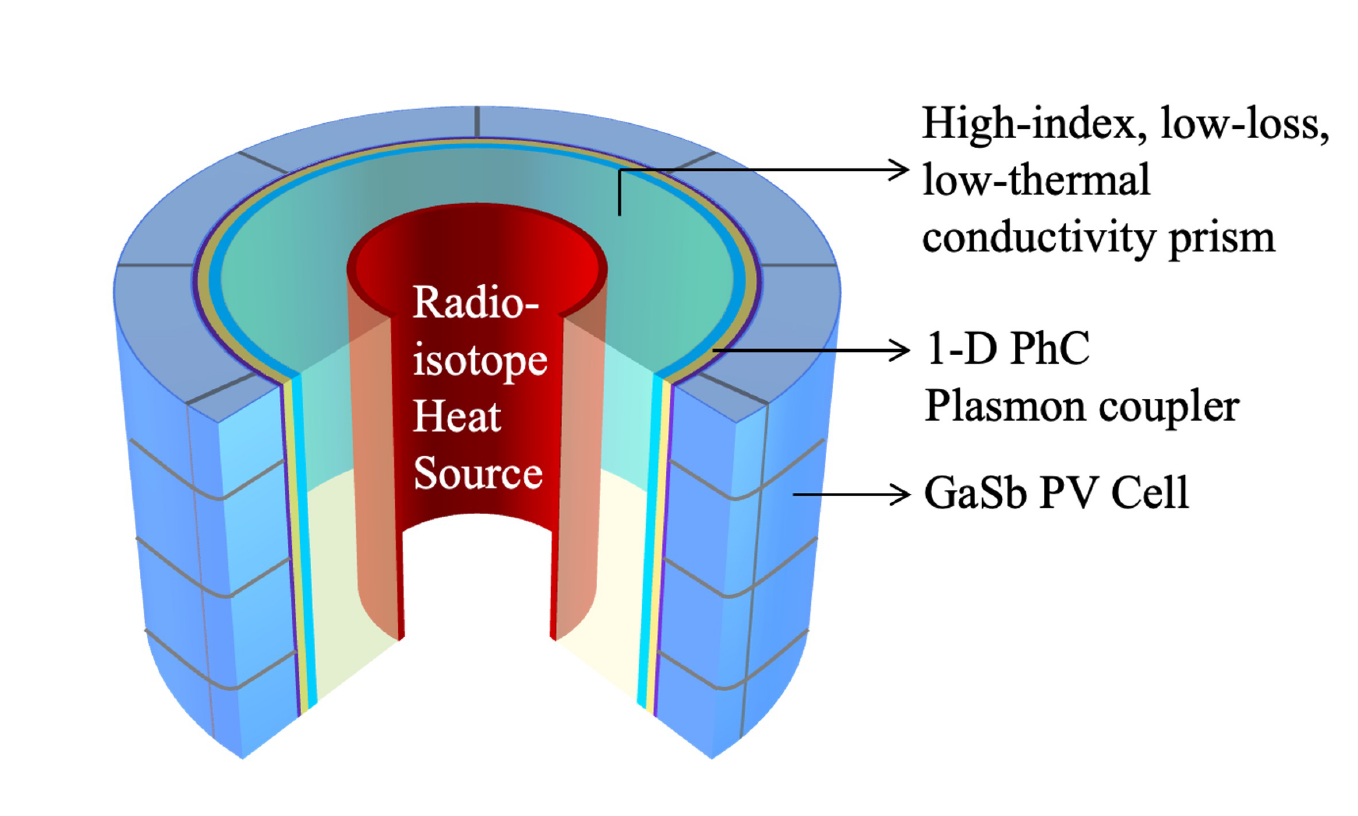
This proposal seeks to develop a transformative energy system — the plasmon-enhanced radioisotope Thermophotovoltaic (PRTPV) generator — that significantly surpasses the performance of current radioisotope thermoelectric generators (RTGs) in both specific power and efficiency. Designed to achieve a specific power of 17 W/kg and a thermal-to-electric conversion efficiency greater than 40%, the PRTPV offers a sevenfold improvement in efficiency and nearly an order-of-magnitude increase in specific power compared to state-of-the-art RTGs. The system combines two novel innovations: the use of a high-refractive-index, low infrared loss, low-thermal-conductivity, and high-melting point material (e.g., Al2O3) to replace the traditional vacuum gap between the heat source and photovoltaic (PV) cell, enhancing thermal radiation power density proportional to the square of the refractive index, and the integration of a multilayered photonic crystal plasmon coupler to spectrally tune the thermal radiation by exciting surface plasmons at the coupler-PV cell interface matching with the PV cell’s bandgap, further improving conversion efficiency. Together, these advances overcome the low power density that limits current TPV systems. The resulting technology is compact, efficient, and scalable, opening the door to new classes of NASA missions, including long-duration surface operations in permanently shadowed lunar regions and interstellar missions where solar power is impractical. The proposed work directly supports NASA’s long-term goals in space exploration and energy innovation.
The NSSC supports the Agency’s internal effort to create an environment conducive to streamlining and simplifying grants and cooperative agreements. The National Aeronautics and Space Administration (NASA), through the establishment of the NSSC, has transitioned to a consolidated model for the award and administration of all Agency grants and cooperative agreements. The consolidation is designed to achieve efficient and effective service, improve data quality, standardize processes, leverage skills and investments, and provide economies of scale.
*Notice*
The Payment Management System (PMS) is currently experiencing issues affecting Federal Financial Report (FFR) generation. Impacted NASA grant recipients will not be considered noncompliant. NASA is working with PMS to resolve the issue. Updates will be posted here.
Grants Status Requests
To submit a request, visit NASA General Information Request Form and complete the form. You will receive an automated email with the most commonly requested grant status information.
Important Instructions:
Ensure you enter a valid email address, as replies will only be sent via email.
The confirmation email may take a few minutes to arrive in your inbox.
How to Fill Out the Form:
Category: Select “Procurement including Grants & Cooperative Agreements.”
Per OP’s memo, NASA grant and cooperative agreement recipients shall immediately cease and desist all DEIA activities required for their grant. This work may include but is not limited to: DEIA plan requirements, training, workshops, reporting, considerations for staffing, or any other direct or indirect grant activity related to DEIA. All grant recipients shall notify their cognizant Grant Officer if they identify requirements within their grants that are in violation of this guidance. Your Grant Officer’s contact information can be found on your NF 1687, Notice of Award for Grant and Cooperative Agreement (NOA).
Thank you for your work and partnership with NASA.
NASA Grant and Cooperative Agreement Terms and Conditions
In FY2025, NASA separated the Terms and Conditions from the GCAM to create a standalone document. This document outlines both the general and specific terms and conditions and applies to all awards issued under 2 CFR 1800 (NASA’s adoption of 2 CFR 200.) NASA Grant and Cooperative Agreement Terms and Conditions – January 2026
Request for Supplemental Grant and Cooperative Agreement Actions
Grantees are strongly encouraged to use the NASA Insignia Format identified in the guidelines at NASA Insignia Guidelines for NASA Grantees. These guidelines aim to increase awareness of NASA’s mission activities via Grantee partnerships for a broader and more diverse population.
NASA uses a service provider, currently the Department of Health and Human Services (HHS) Payment Management System (PMS), to provide Federal funds to recipients. PMS will provide instructions to the recipients for registering and requesting funds through the system.
Routine Monitoring
NASA is responsible for routine post-award monitoring on all awards, regardless of the award’s risk determination. At a minimum, routine monitoring includes reviewing award recipients’ annual performance reports, semi-annual Federal Financial Report (FFR), and Transactions Testing Review.
Research Performance Progress Reports
All NASA award recipients must submit annual performance reports. Annual reports are due to NASA 60 days prior to the annual anniversary of the award’s POP start date (e.g., if the POP of an award is October 1 – September 30, the report would be due 60 days prior to October 1.)
Final Performance Reports: Submit via email to NSSC-CloseOut@mail.nasa.gov
Performance Reports: Submit via email to NSSC-Grant-Report@mail.nasa.gov
Federal Financial Reports (SF-425)
Recipients will submit their semi-annual FFRs in PMS:
Period 1 (October 1 – March 31): Due by April 30 each year.
Period 2 (April 1 – September 30): Due by October 30 of each year.
Final FFRs are due 120 days after the end of the POP
Additional information and training are available on the Payment Management System website at https://pms.psc.gov/. The PMS help desk number is 1-877-614-5533.
NASA Grant and Cooperative Agreement Manual (GCAM): NASA’s Grant Manual for Proposers and Recipients
The NASA Grant and Cooperative Agreement Manual (GCAM) provides pre and post award policy guidance to NASA proposers and award-managing personnel and award recipients to implement government-wide and NASA-specific regulations for applying for, awarding and administering grants and cooperative agreements with educational and non-profit organizations; State, local, and Indian tribal governments; and for-profit organizations.
NASA Grant and Cooperative Agreement Terms and Conditions
In FY2025, NASA separated the Terms and Conditions from the GCAM to create a standalone document. This document outlines both the general and specific terms and conditions and applies to all awards issued under 2 CFR 1800 (NASA’s adoption of 2 CFR 200.)
Research Terms and Conditions (For Research Awards Issued Prior to October 1, 2024)
NASA implemented the Federal-wide research terms and conditions for all research and research-related grant and cooperative agreement awards issued under 2 CFR 1800 (NASA’s adoption of 2 CFR 200). The Research Terms and Conditions implement the requirements of the Uniform Guidance and includes three companion documents:
RTC Appendix A: Prior Approval Matrix, RTC Appendix B: Subaward Requirements, and RTC Appendix C: National Policy Requirements).
The Research Terms and Conditions and companion documents are accessible on the NSF website.
NASA Office of Inspector General
To file a complaint regarding denial of equal opportunity or discrimination based on race, color, national origin, sex, disability, or age; go to
New NASA Earth Missions Gear Up to Start Science Flights
Satellite imagery captured wildfires burning hot enough to generate pyrocumulonimbus clouds north of Lake Superior in July 2026. NASA aircraft will help scientists study the powerful storms as they develop.
Credits: CSU/CIRA & NOAA
Landslides in Alaska. Air quality in Atlanta. Fire clouds out West. From the Arctic fringes to farm country, NASA’s newest class of suborbital Earth Venture missions is gearing up to deliver science that will benefit communities in the United States and beyond.
The six projects will mobilize hundreds of scientists and pilots from NASA, the U.S. Navy, universities, and other institutions over the next several years. While the investigations range across topics, a defining feature of suborbital missions is the use of sensors mounted on aircraft.
Airborne remote sensing serves as a bridge between ground-based instruments and satellites. Data collected via planes, helicopters, drones, and balloons can fill in gaps in computer models used by weather forecasters, city planners, and others.
When wildfires create their own weather
The first project to take wing this summer is Injected Smoke and PYRocumulonimbus Experiment (INSPYRE), led by the Naval Research Laboratory. From mission headquarters in Colorado, the team will chase one of the least understood forms of severe weather on Earth: towering “fire clouds” generated when extreme wildfires burn hot enough to brew their own thunderstorms.
Pyrocumulonimbus clouds crackle with lighting in imagery captured over Utah and Colorado by the GOES-18 satellite in early July 2026.
CSU/CIRA & NOAA
Smoky and crackling with lightning, these unique storms can create blind spots for aviators above and spark new blazes below. Measuring and mapping the dangerous storms as they develop in real-time will help scientists forecast them in the future. Several aircraft, including NASA’s high-altitude ER-2, flying out of Montana, will carry a large suite of instruments over wildfire-generated storm systems. Among them will be two state-of-the-art infrared wildfire trackers, which were developed at NASA’s Jet Propulsion Laboratory (JPL) in Southern California and will be flying as part of the agency’s FireSense program.
Testing the air over farmland, megacities
Agricultural emissions represent an important and understudied part of Earth’s land and atmosphere systems. The FarmFlux mission, which kicks off this year, will deploy more than a dozen sensors to measure ozone, methane, ammonia, particulates, and other pollutants rising from agricultural lands and animal farms stretching from the Midwest to California’s Central Valley. These emissions affect human health, global climate, and stratospheric ozone. The mission is led by NASA’s Goddard Space Flight Center in Greenbelt, Maryland, along with Colorado State University, and Boston University.
NASA’s 777 aircraft is gearing up to start science flights. Structural modifications – like enlarged cabin windows and instrument portals – have transformed the former passenger plane into a flying laboratory. It’s seen here at Langley Research Center in Hampton, Virginia, in April 2026.
NASA/Ryan Hill
Two North American cities with air quality concerns are Atlanta and Mexico City. But the causes differ, with weather and terrain playing a role. To explore these differences, the Hemispheric Airborne Measurements of Air Quality (HAMAQ) mission will investigate areas of poor air in the two capitals and test how satellite information can help forecasting and mitigation efforts. The team will deploy two aircraft at different altitudes: NASA’s P-3B will fly close to the surface, directly measuring fine particle and gaseous pollutants, while the recently acquired 777 science jet will soar high above, mapping pollution with remote sensors. NASA’s Langley Research Center in Hampton, Virginia, is leading the mission.
Fast-changing north
As the Arctic warms at least twice as fast as the rest of Earth, data collected today can help guide communities on the front lines of change.
Alaska’s glaciers are losing ice and contributing to sea level rise. NASA is tracking the changes from land, air, and space.
NASA
The Snow4Flow campaign, led by the University of Arizona, seeks to measure and model how far and fast glaciers are retreating in the far north. Traversing remote icescapes across Alaska, the Yukon, Arctic Canada, Greenland, and Svalbard, Norway, they’ll sound both the near-surface and frozen depths of hundreds of glaciers while flying over in a modernized WWII-era aircraft outfitted with a scanning laser altimeter and two custom radars. Their observations, combined with satellite data and advanced models of snowfall and glacier flow, will advance our understanding of how glaciers behave in different regions of the Arctic. The mission seeks to uncover not just what these glaciers look like beneath the surface today, but the processes that will drive changes in the future.
As permafrost thaws, rivers on the doorstep of the Arctic become conveyor belts of carbon and sediment. NASA Goddard, and the City College of New York lead a multidisciplinary team studying how rivers, lagoons, and estuaries across Alaska’s North Slope interact with the Arctic Ocean. The project, called Frontlines of Rapidly Transforming Ecosystems (FORTE) will combine optical and radar measurements from satellites, planes, high-tech research vessels, drones, and underwater autonomous systems to track microscopic marine life, water flow, and chemistry. The team will collaborate with local and tribal communities to sustain observations over time and apply NASA assets to address emerging local needs and decision-making priorities.
Landslide triggers
When a slow-moving landslide in California suddenly collapsed and buried a section of coastal highway in 2017, scientists at NASA JPL wanted to know how precipitation swings played a role. JPL studies how water infiltrates and destabilizes hillslopes all over the world. The Landslide Change Characterization Experiment (LACCE) project will combine airborne synthetic aperture radar with land-based sensors to track how slopes in California are responding to a world of intensifying droughts and downpours. The project also takes aim at emerging landslide hazards in Alaska, where rapidly retreating glaciers are accelerating slope movements that have the potential to create mega-tsunamis.
This series of images shows the collapse of the Mud Creek landslide in May 2017 along the Big Sur coast in Central California, and the subsequent repairs to Highway 1, which was damaged during the event.
Andy Ritchie/USGS Pacific Coastal and Marine Science Center
NASA’s Earth Venture Suborbital program, designed to be nimble and high impact, was established following a recommendation by the National Research Council in 2007. In the decades since, teams have studied phenomena, including blizzards, coral reefs, and ocean whirlpools.
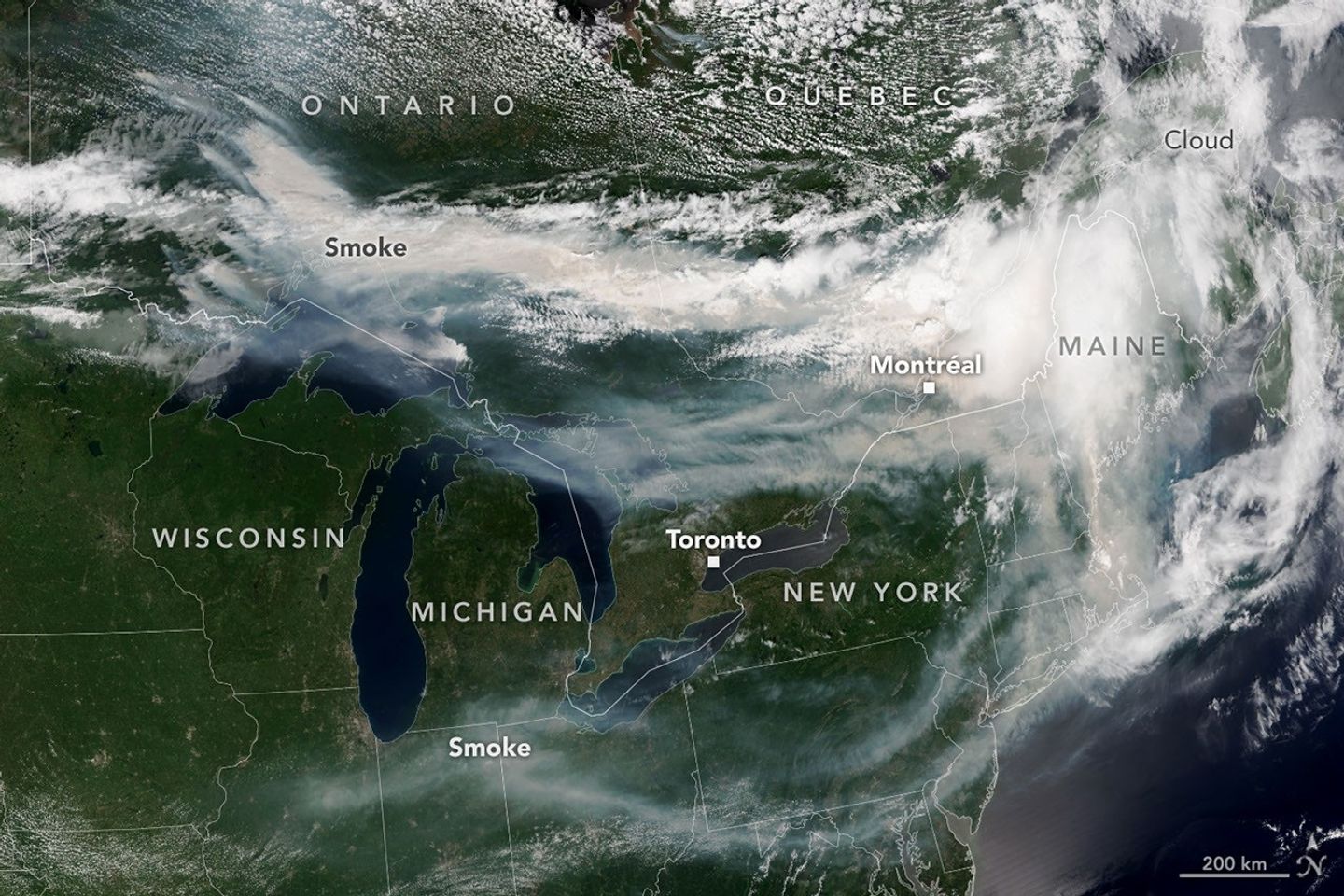
Smoke from wildland fires pours eastward over Canada and the U.S. in an image captured on the afternoon of July 14, 2026, by the VIIRS (Visible Infrared Imaging Radiometer Suite) on the NOAA-21 satellite.
NASA Earth Observatory/Lauren Dauphin
After a slow start to Canada’s 2026 fire season, activity picked up by the end of June amid dry, warm conditions and returned closer to the 25-year average. By mid-July, almost 850 fires were actively burning across the country, according to the Canadian Interagency Forest Fire Centre. More than 180 of those were burning in Ontario.
This NOAA-21 image, acquired on the afternoon of July 14, 2026, shows smoke billowing from the Ontario fires. Winds carried the smoke primarily southeast over much of the southern part of the province, as well as parts of Quebec and the U.S. Midwest and Northeast, tinting the sky shades of gray and yellow and the Sun orange in many areas.
The smoke’s impact on air quality varied, depending largely on altitude. In areas where smoke was high in the atmosphere, air quality impacts were negligible; where it drifted closer to the ground, conditions worsened. Air quality in Toronto, for instance, reached unhealthy levels, according to AirNow. People in the southern parts of the province were also grappling with a heat wave, compounding the health risks.
Much of the smoke came from fires in Northwestern Ontario, where eight blazes saw significant growth on July 13 and 14. The fires prompted officials to issue evacuation orders for several communities in this part of the province, according to news reports.
As of July 14, fires across Canada have burned 1.9 million hectares (4.7 million acres) since the start of the year—still well below the season totals from the extreme fire years of 2023 and 2025. How the rest of the season plays out remains to be seen. A seasonal fire outlook—compiled by wildland fire experts from the U.S., Canada, and Mexico—shows where fire conditions are more or less likely through July, August, and September.
NASA Earth Observatory image by Lauren Dauphin, using VIIRS data from NASA EOSDIS LANCE , GIBS/Worldview , and the Joint Polar Satellite System (JPSS). Story by Kathryn Hansen.
Downloads
July 14, 2026
JPEG (3.96 MB)
References & Resources
AirNow (2026, July 15) Wildfires. Accessed July 15, 2026.
NASA Study of Pristine Meteorite Adds to Story of Ancient Asteroids
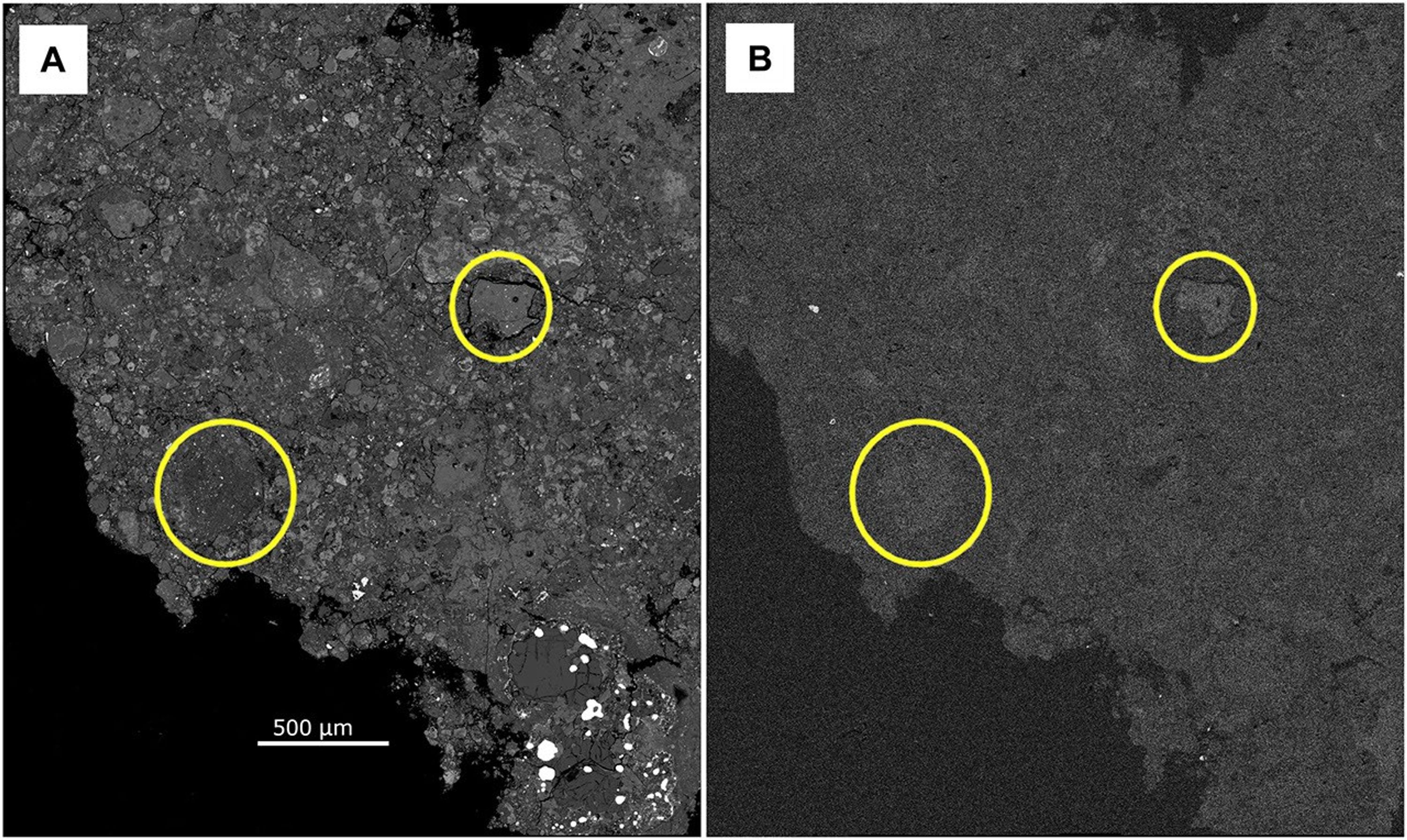
C1 clasts in Hillsborough: On the left is a back-scattered electron image with two C1 748 clasts circled. On the right, an X-ray map of the same area as (A), indicating Na enrichment in 749 of the C1 clasts relative to the bulk of Hillsborough. Credit: NASA/SETI
A meteorite recovered immediately upon its fall to Earth on July 16, 2024, is helping NASA scientists uncover new clues about ancient water, the chemical evolution of primitive asteroids, and the ingredients that may have helped make life possible throughout the early solar system.
This rapid recovery began when an amateur astronomer in New Jersey quickly recognized that a newly fallen meteorite had landed on his property. Recognizing its scientific value and wearing protective gloves, he collected the fragments and stored them in aluminum foil and glass containers, which preserved delicate minerals and organic compounds that are often altered by moisture, weather, and contamination.
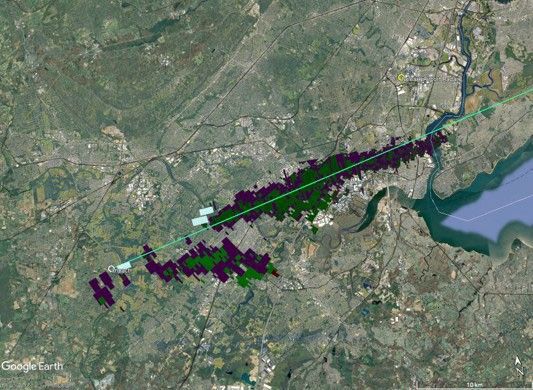
As the meteorite fell to Earth, cameras across New Jersey captured its fiery passage through the atmosphere. Scientists used these observations to reconstruct the fireball’s trajectory and, after recovering the meteorite, combined this data with laboratory analyses to determine where in the solar system the rock most likely originated. In a study published Wednesday in the journal Science Advances, researchers found evidence that ancient salty water altered minerals within the meteorite’s parent asteroid, preserving unique minerals and a rich inventory of organic compounds.
“When we have both a documented fireball and a quick recovery of its meteorite, we can learn not only what the rock is made of, but where it came from in the asteroid belt,” said Peter Jenniskens, meteor astronomer at both NASA’s Ames Research Center in California’s Silicon Valley and the SETI Institute, and lead author of the study.
Combined radar detections from the Hillsborough meteorite fall. The green line shows the fireball’s projected path, while colored radar signatures show falling meteorite fragments drifting east-northeast with prevailing winds. Credit: NASA/Marc Fries
Named for the township where it was recovered, the Hillsborough meteorite belongs to a class of carbon-rich meteorites known as CM carbonaceous chondrites. These primitive rocks preserve some of the oldest materials in the solar system, recording the chemical processes that shaped asteroids more than 4.5 billion years ago.
While examining the unusually pristine meteorite, researchers found a mosaic of tiny broken-up rocks and noticed that some contained unusually high concentrations of sodium — an unexpected finding for this type of meteorite. The surprising signal prompted a closer investigation using powerful electron microscopes that allowed scientists to examine the meteorite from the millimeter scale down to individual atoms. By combining observations across multiple scales, researchers reconstructed the history of the minerals and the fluids that once flowed through them.
These analyses revealed microscopic fractures filled with sodium-rich material left behind by ancient brines. Unlike pure water, brines contain dissolved salts that allow them to transport elements and chemically alter the rocks they move through. In the case of the Hillsborough sample, those ancient fluids altered the asteroid’s minerals and left behind chemical evidence that remained preserved for billions of years.
Scientists were also able to detect fragile sodium-carbonate salts that normally react with moisture in Earth’s atmosphere before they can be studied. Jangmi Han, a paper co-author and mineralogist at NASA’s Johnson Space Center in Houston, identified evidence of ancient brines preserved within microscopic fractures. Similar salts were identified in samples returned from the asteroids Bennu and Ryugu by NASA’s OSIRIS-REx mission and JAXA’s (Japan Aerospace Exploration Agency) Hayabusa2 mission. However,Hillsborough marks the first time the salts have been identified in a CM carbonaceous chondrite meteorite, offering a new glimpse into the surfaces of the primitive asteroids that produced these meteorites.
Together, these findings suggest that ancient, salt-rich brines were more widespread among primitive asteroids than previously recognized, and provide scientists with new opportunities to compare how water altered different asteroid bodies across the early solar system.
“The chips of the most salt-rich bits of this meteorite are quite comparable to the samples returned by the Hayabusa2 and OSIRIS-REx missions,” said Mike Zolensky, a meteorite researcher at NASA Johnson and co-author of the study. “They’re not identical. They’re different in some very interesting ways, but they’ve seen very similar processes.”
Following the history of water through the solar system is an essential part of understanding the origin of life.
Mike Zolensky
Meteorite Researcher
Scientists expected Hillsborough to contain a rich suite of organic compounds because it is a CM carbonaceous chondrite. What made the meteorite exceptional was how quickly it was recovered, allowing researchers to study those compounds before prolonged exposure to Earth’s environment could contaminate the sample.
“One of the big surprises for me when we analyzed a small chip of the Hillsborough meteorite was the complexity of amino acids and other organic compounds,” said Danny Glavin, senior scientist in the Astrobiology Analytical Laboratory at NASA’s Goddard Space Flight Center in Greenbelt, Maryland, and co-author of the study.
Its diversity of amino acids and other organic compounds is, comparable to the Murchison meteorite, a nearly 100-kilogram carbonaceous chondrite that fell in Australia in 1969 and became the benchmark for extraterrestrial organic chemistry.
“It’s just more proof that the chemical building blocks of life could have been delivered — and are still being delivered — to Earth today by these carbonaceous asteroid fragments,” said Glavin, who was a co-investigator on OSIRIS-REx, leading an international team that studied the organic composition of the samples delivered to Earth from asteroid Bennu in 2023.
Understanding the Hillsborough meteorite required expertise from multiple scientific disciplines.
Astronomers reconstructed the meteorite’s journey through space, finding evidence that it may have originated from the Erigone asteroid family in the inner asteroid belt, home to the asteroid Donaldjohanson, which was visited in 2025 by NASA’s Lucy spacecraft. Mineralogists identified evidence of ancient brines preserved within microscopic fractures, while organic chemists analyzed the meteorite’s inventory of amino acids and other organic compounds.
“Together, those complementary studies are helping scientists build one of the clearest pictures yet of how primitive asteroids such as the asteroid Erigone evolved chemically over billions of years,” said Jenniskens.
Researchers continue to study the Hillsborough meteorite, revealing new details about how water transformed primitive asteroids and shaped the early solar system.
By tracing the history of water on primitive asteroids, scientists are learning how water and the chemical ingredients for life were distributed throughout the early solar system.
“If you follow the water through the solar system, you’re actually following life,” Zolensky said. “Following the history of water through the solar system is an essential part of understanding the origin of life.”
For more information on NASA’s astromaterials research and exploration, visit:
How do black holes at the center of galaxies form and grow over time? To answer this question, scientists need to detect and study supermassive black holes at great distances, which existed much earlier in the universe’s history. New research suggests NASA’s Nancy Grace Roman Space Telescope, which is on track to launch Aug. 30, 2026, will be able to detect these distant, ancient black holes that existed up to 11 billion years ago.
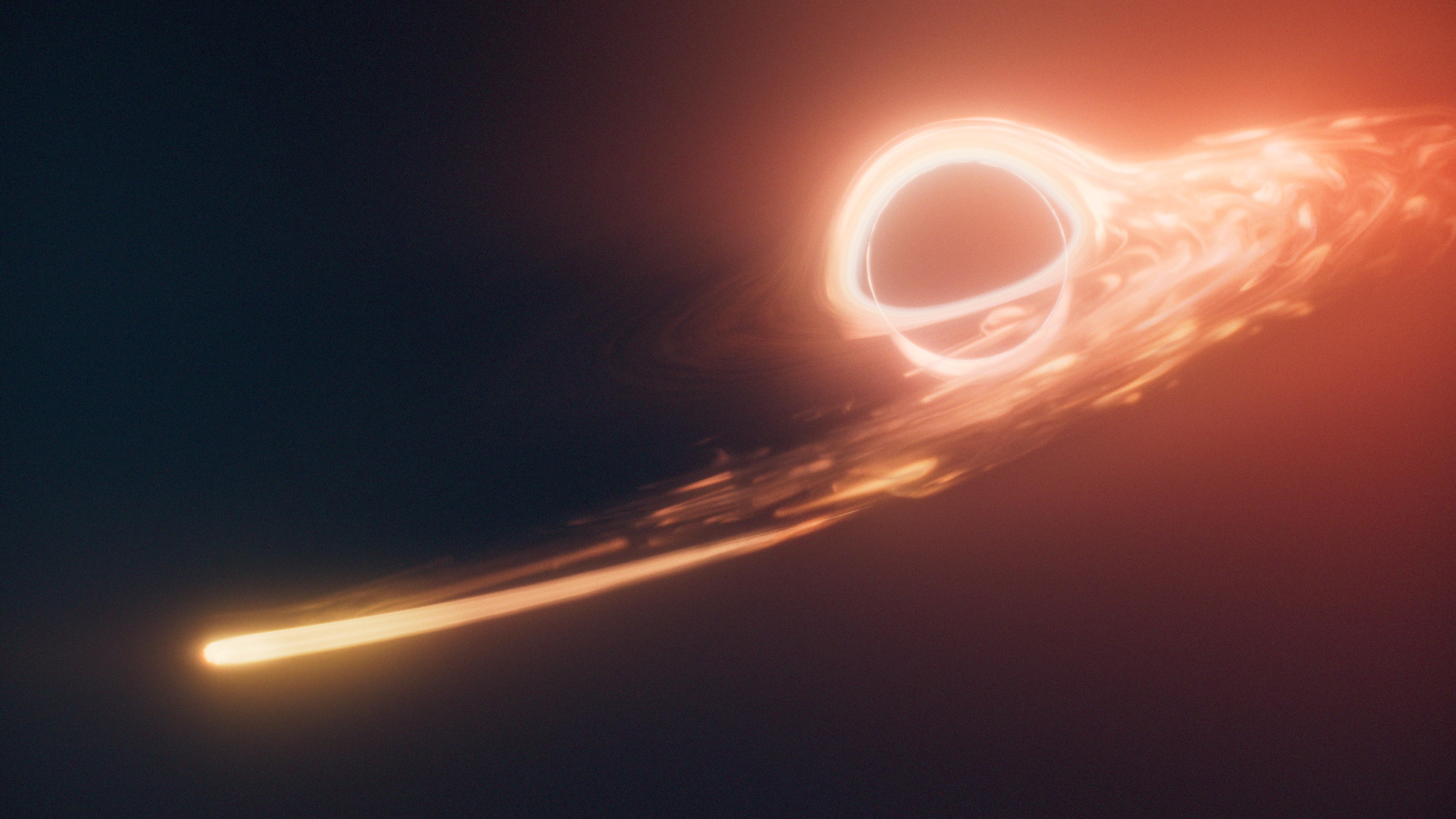
This artist’s concept portrays a Sun-like star being shredded by a supermassive black hole — a phenomenon known as a tidal disruption event. During these events, the region around a black hole can brighten and become visible across great distances. NASA’s Nancy Grace Roman Space Telescope will be able to spot and study tidal disruption events that occurred early in the universe’s history. By characterizing an earlier population of supermassive black holes, astronomers can learn about their origins.
NASA, Ralf Crawford (STScI)
Black holes are best studied by looking for the light emitted from their accretion disk — the matter that swirls around them before being consumed. Lighter supermassive black holes are challenging to observe because they tend to be less luminous due to less accretion. But occasionally, they shred and consume an entire star, brightening to outshine their entire host galaxy — known as a tidal disruption event (TDE). By characterizing that population of early supermassive black holes and how they evolve and grow for billions of years, Roman will provide clues to the ultimate origin of these behemoths.
“The Roman Space Telescope is going to be transformative for transient science,” said lead author Mitchell Karmen of the Johns Hopkins University, a graduate student and National Science Foundation Graduate Research Fellow. “Thanks to Roman’s high sensitivity, we can find multiple tidal disruption events out to greater distances and earlier cosmic times than ever before.”
Roman’s High-Latitude Time-Doman Survey, one of three core community surveys, is particularly well suited to find and study TDEs in the early universe. This survey will cover about 18 square degrees on the sky, an area equivalent to 90 full moons, at a regular cadence. By revisiting the same regions repeatedly, astronomers can find large numbers of transient events like TDEs.
Tidal disruption events are phenomena unique to lighter supermassive black holes. Heftier black holes weighing more than 1 billion Suns will swallow incoming stars whole. But lighter black holes of about 100,000 to 100 million Suns can shred a star before consuming it, creating a beacon that brightens over a couple of weeks before gradually fading away.
The rate of TDEs fluctuates over cosmic time. Previous work predicted that the rate of TDEs would decrease with increasing distance because most young black holes were too light to generate a TDE. However, this new research takes into account numerous factors that evolve over time, like the frequency of galaxy (and hence black hole) mergers as well as the number of stars within the core of each galaxy and how closely packed they are.
Karmen and his colleagues modeled these and other effects to predict how many tidal disruption events Roman could observe, as well as other observatories like the ground-based National Science Foundation-Department of Energy Vera C. Rubin Observatory and NASA’s James Webb Space Telescope. The team forecasts that astronomers will see the rate of TDEs increase as Roman probes greater distances and earlier times until “cosmic noon,” about 11 to 12 billion years ago when star formation peaked throughout the universe, before decreasing again.
This visualization shows the average number of tidal disruption events NASA’s Nancy Grace Roman Space Telescope is predicted to detect in a year, based on simulations. Roman is expected to record about 100 such events in a year.
Video: NASA, STScI. Visualization: Christian Nieves (STScI). Sound: Christian Nieves (STScI). Designer: Dani Player (STScI). Animation: Greg Bacon (STScI)
Complementary Observations
Roman will observe near-infrared wavelengths of light. Light from distant TDEs becomes stretched to longer wavelengths by the expansion of the universe, a phenomenon known as cosmological redshift. As a result, Roman is inherently optimized to detect TDEs whose light traveled anywhere from 8 billion to 11 billion years to reach us.
The Rubin Observatory also will scan large swaths of the sky and pick up many new TDEs. However, it will observe visible light, which limits it to closer TDEs than Roman.
The research by Karmen’s team finds that Rubin will detect thousands to tens of thousands of TDEs per year. While Roman is expected to find up to 100 TDEs per year, those black holes will be much more distant, within the realm of cosmic history that is most important for distinguishing among black hole origin scenarios.
“Just by counting the number of TDEs as a function of redshift, you can put meaningful constraints on the population of million-solar-mass black holes,” said co-author Suvi Gezari, an associate professor of astronomy at the University of Maryland. “Roman will be transformative in that it can probe tidal disruption events out to greater distances, so you can look at how the rate of TDEs evolves over time.”
Origins of supermassive black holes
Astronomers have observed truly gargantuan black holes very early in the history of the universe — so early that theories struggle to explain how they could have become so large, so quickly. They must have started smaller and grown over time, but how much smaller?
One theory, known as “light seeds,” begins with black holes that are created from the deaths of massive stars. Such black holes might weigh up to a few hundred times our Sun. These black holes then would merge over time, as well as consume surrounding gas at an astonishing rate. In this scenario, every young galaxy would be expected to have a massive black hole at its center.
A second theory, known as “heavy seeds,” suggests that a black hole could be born with a much higher mass, up to a million times our Sun, through a process such as the direct collapse of a gas cloud. This process should be less common, though, which would result in supermassive black holes being much rarer in early galaxies.
“Tidal disruption events help us probe the population of light supermassive black holes, which can help us discriminate between these models,” Karmen said.
Ultimately, Roman’s tally of tidal disruption events will help researchers trace global effects that impact the black hole population over time.
Once Roman and Rubin begin regular science operations, the team looks forward to comparing their forecasts to the actual detections those observatories make.
“Just like Webb has transformed our understanding of distant, high-redshift galaxies, Roman is poised to transform our understanding of high-redshift transients,” Gezari said.
The Nancy Grace Roman Space Telescope is managed at NASA’s Goddard Space Flight Center in Greenbelt, Maryland, with participation by NASA’s Jet Propulsion Laboratory in Southern California; Caltech/IPAC in Pasadena, California; the Space Telescope Science Institute in Baltimore; and a science team comprising scientists from various research institutions. The primary industrial partners are BAE Systems, Inc. in Boulder, Colorado; L3Harris Technologies in Melbourne, Florida; and Teledyne Scientific & Imaging in Thousand Oaks, California.
By Christine Pulliam Space Telescope Science Institute, Baltimore, Md.
NASA’s Hubble Discovers First of Star Cluster’s Missing Black Holes
An image of the globular cluster Omega Centauri, a collection of myriad stars colored red, white, and blue on the black background of space.
Credits: Science: Maximilian Häberle (MPIA)
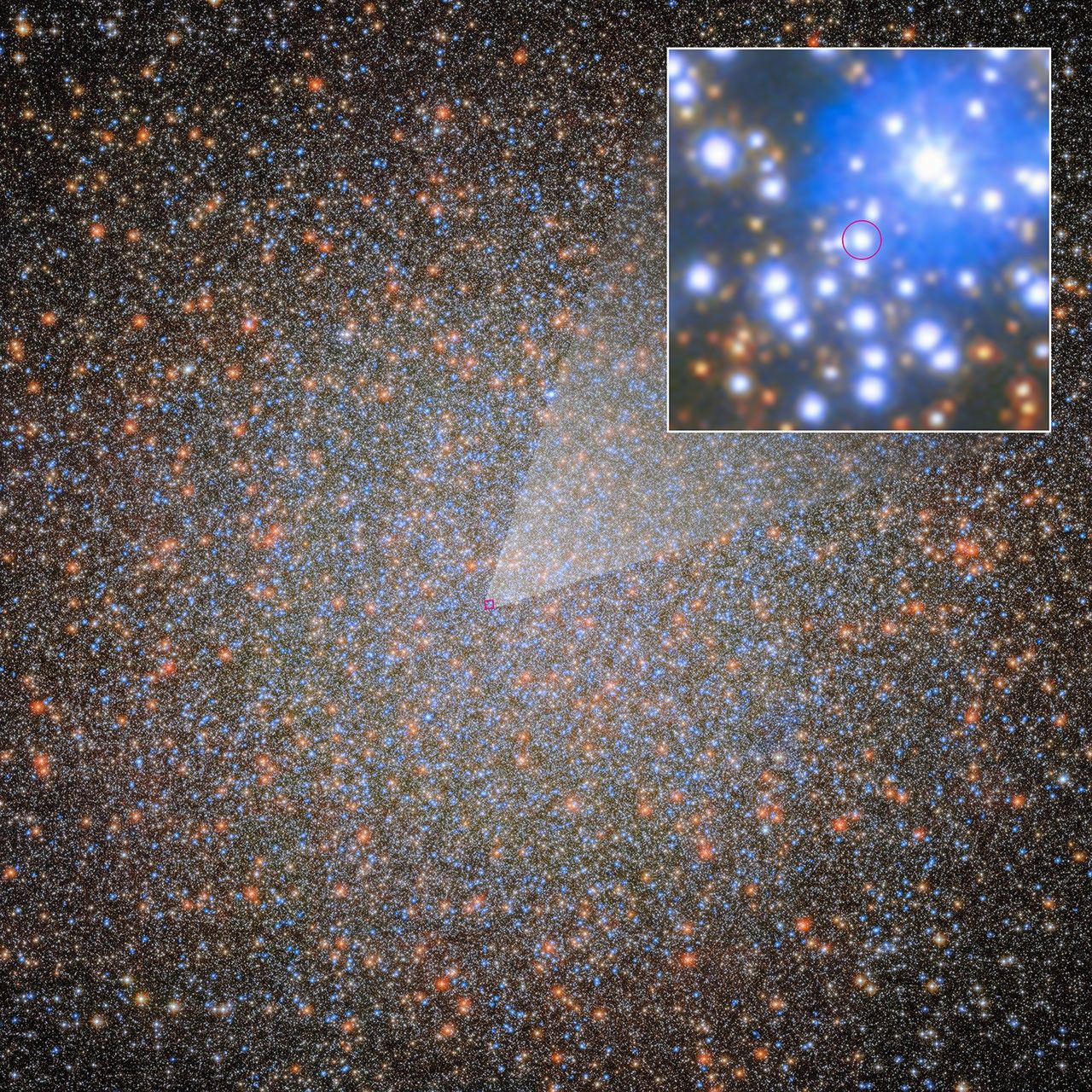
The massive globular star cluster Omega Centauri has puzzled astronomers for decades. It should be filled with black holes left behind by exploding stars, yet evidence for them is scarce. Now, astronomers using archival data from NASA’s Hubble Space Telescope and supportive observations from NASA’s James Webb Space Telescope have finally located their first stellar-mass black hole in this cluster. Discovering the first of this missing black hole population will help refine current theories on black hole formation within environments such as Omega Centauri. The team’s findings published Monday in The Astrophysical Journal Letters.
Omega Centauri is composed of 10 million gravitationally bound stars. Though the astronomical community previously found evidence with Hubble that an intermediate-mass black hole lurks at its center, models suggest this star cluster should also contain about 10,000 smaller, stellar-mass black holes. This notable population of black holes evaded detection in previous observational studies, which used the radial velocity method or looked for radio and X-ray emission from material falling onto black holes.
This new discovery features a different approach, known as astrometry, to measure very small movements of stars over time. By sifting through more than 20 years of Hubble archival data and pulling in recent Webb data to further refine their astrometric measurements, the team located a star orbiting an invisible object so hefty that it has to be a black hole. Dubbed oMEGACat BH-2, it is the first stellar-mass black hole detected in Omega Centauri, and it has some surprising qualities. oMEGACat BH-2 has a lower-than-expected mass and, with its visible star companion, the black hole-star duo has the longest orbital period of any black hole binary system known to date.
“With Hubble and Webb data, we were able to see the motion of the visible main sequence star that is part of this binary, which is about 18,000 light-years away in the dense environment of Omega Centauri,” said Matthew Whitaker of the University of Utah, Salt Lake City, lead author of the paper. “The precision of these measurements is incredible, down to a fraction of a pixel on Hubble and Webb’s detectors. It would not have been possible to find this black hole without these two space telescopes.”
Astronomers found Omega Centauri’s first stellar-mass black hole, which has a visible star companion that is shown in greater detail. They used 20-plus years of data from NASA’s Hubble Space Telescope and recent data from NASA’s James Webb Space Telescope to make the discovery.
Image: ESA, NASA, Maximilian Häberle (MPIA), Joseph DePasquale (STScI)
The team’s findings refine a past study by a different group of scientists that suggested this binary system included a neutron star. By expanding Hubble data from the earlier investigation with archival Hubble astrometric measurements from 2002 to 2023, and pulling in Webb near-infrared data to improve precision, the University of Utah-led team was able to better constrain the mass of the visible star’s dark companion, ruling out the neutron star possibility.
“While we already knew that the star was 0.78 solar masses, we can now calculate the black hole’s mass, which is 4.46 solar masses and therefore too heavy to be a neutron star. However, its mass is much lower than would be expected in a metal-poor environment like Omega Centauri. This is surprising and exciting,” said Anil Seth of the University of Utah, a coauthor of the study. “We now know that a metal-poor star is able to form a black hole like this, and we need to figure out how that happens. This detection is providing some data to those who do that kind of modeling.”
Long time coming
Based on the precise data from Hubble and Webb, the team could chart the star’s path over 20-plus years, during its closest approach to its black hole companion when it moved the fastest across the sky. From the extensive data, the team determined that the visible star orbits oMEGACat BH-2 once every 94 years, making it the longest-period black hole binary ever known.
Its long orbital period also gives a clue to the origin of this binary system. It was probably dynamically formed, meaning the star and its black hole companion did not start out together but rather found each other in this cluster. The researchers calculated that a system like oMEGACat BH-2 will survive for less than a billion years before it is torn apart by encounters with nearby stars, a much shorter span than the age of the cluster (approximately 12 billion years old).
“It’s important to understand black hole populations in globular clusters because there’s uncertainty about their physics and formation,” said Seth. “More specifically, understanding the process of forming black holes and then dynamically forming binaries is vital, because it affects our ability to interpret and understand gravitational wave events. Environments like Omega Centauri are the primary places where we think binaries are merging and creating these waves.”
The team’s discovery of stellar-mass black hole oMEGACat BH-2 with the Hubble-Webb dataset is just the start of finding these evasive black hole populations in globular star clusters.
“With Hubble and Webb, we can continue to look at Omega Centauri and expand our search for similar systems within other clusters,” said Whitaker. “We’re also very excited for the launch of NASA’s Nancy Grace Roman Space Telescope because it will image the crowded galactic bulge, including the galactic center, very regularly with Hubble-like resolution and with a much wider field of view. We’re hoping we’ll be able to find black hole binary systems like this one because of the regular cadence of Roman’s observations.”
The Hubble Space Telescope has been operating for over three decades and continues to make ground-breaking discoveries that shape our fundamental understanding of the universe. Hubble is a project of international cooperation between NASA and ESA (European Space Agency). NASA’s Goddard Space Flight Center in Greenbelt, Maryland, manages the telescope and mission operations. Lockheed Martin Space, based in Denver, also supports mission operations at Goddard. The Space Telescope Science Institute in Baltimore, which is operated by the Association of Universities for Research in Astronomy, conducts Hubble science operations for NASA.
Astronomers found Omega Centauri’s first stellar-mass black hole, which has a visible star companion that is shown in greater detail. They used 20-plus years of data from NASA’s Hubble Space Telescope and recent data from NASA’s James Webb Space Telescope to make the discovery.
Star Orbiting Black Hole Animation
The precise data collected by NASA’s Hubble and James Webb space telescopes enabled a team of astronomers to chart the visible star’s orbital path over a 20 year-plus period.

 Login
Login