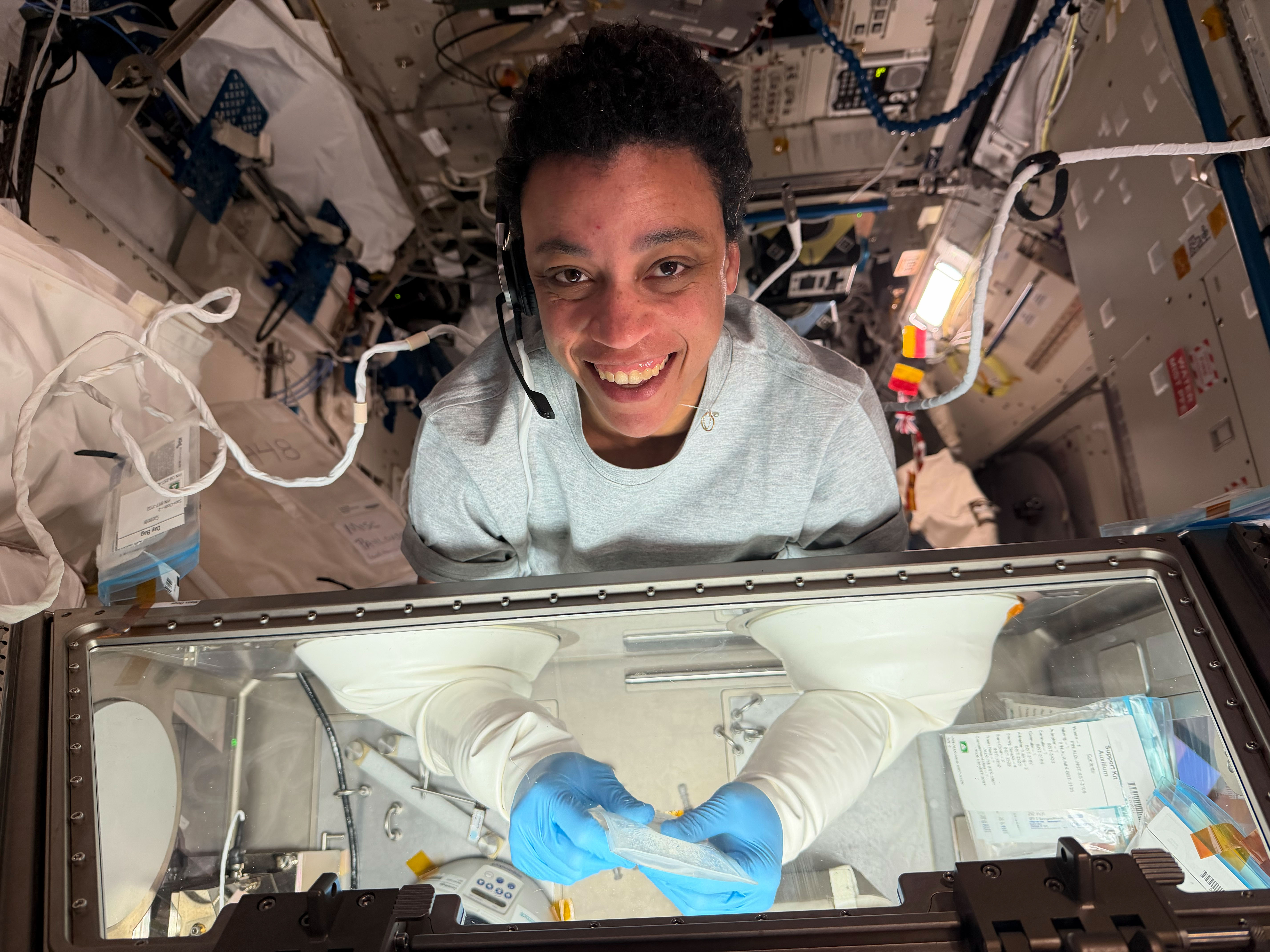
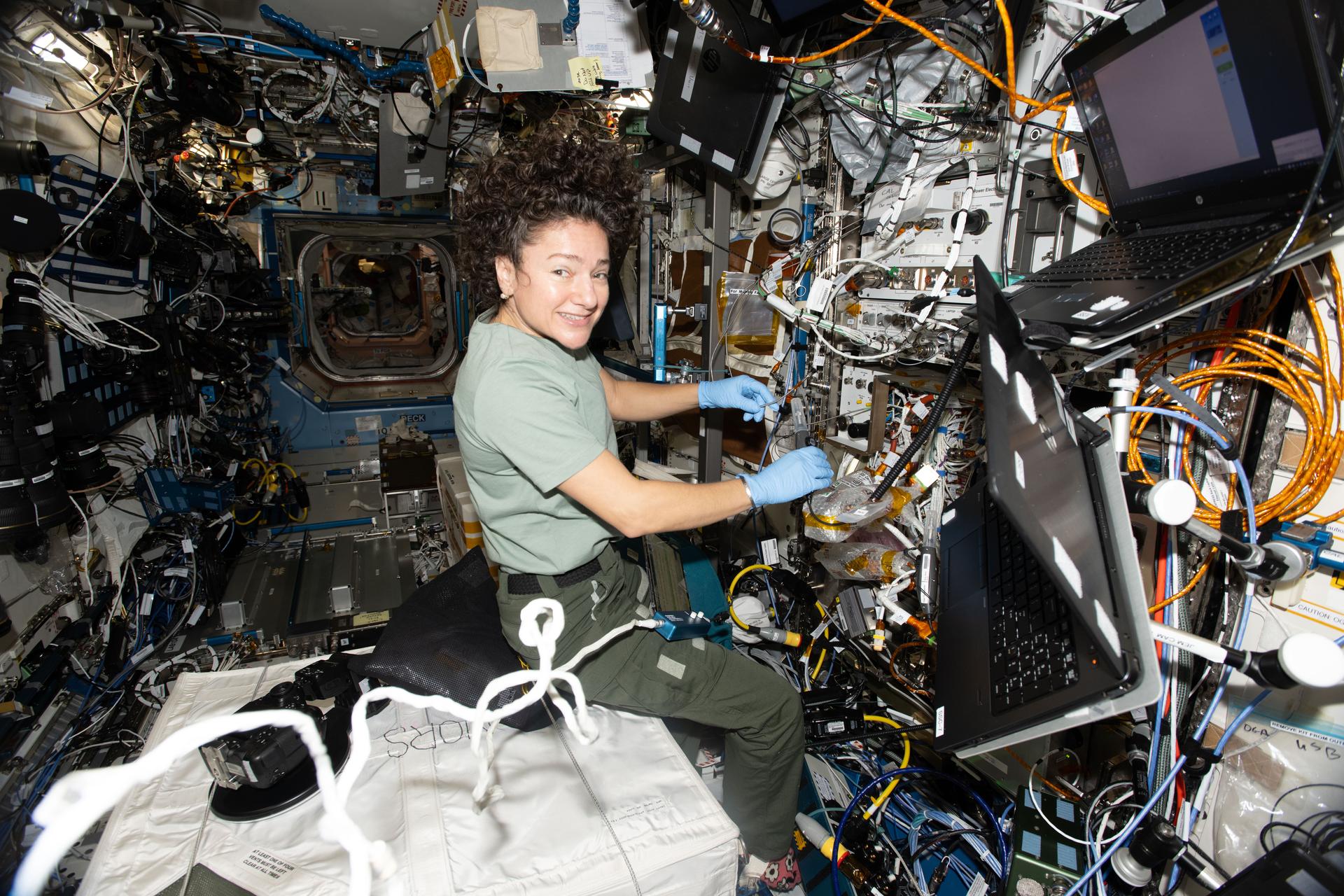
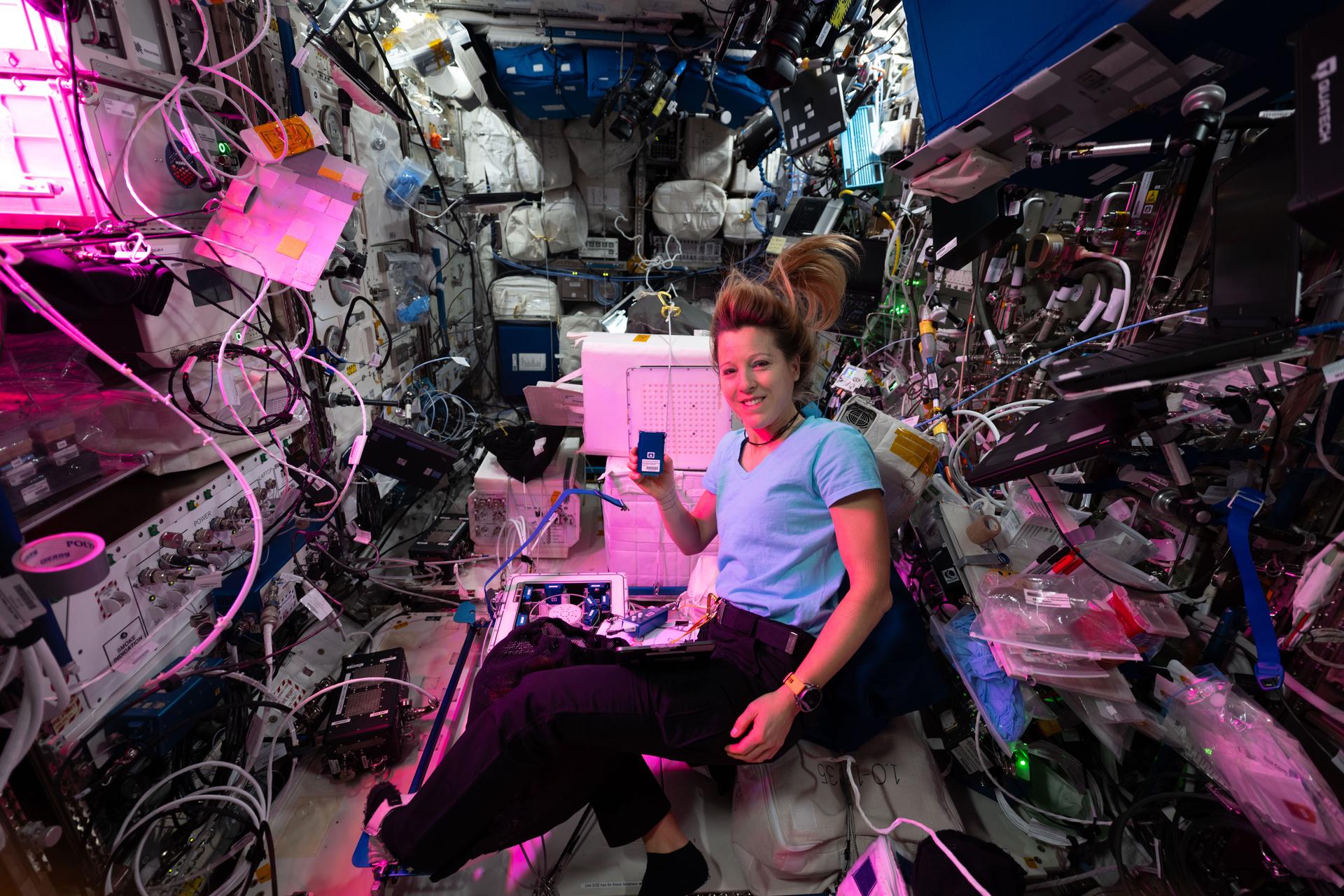
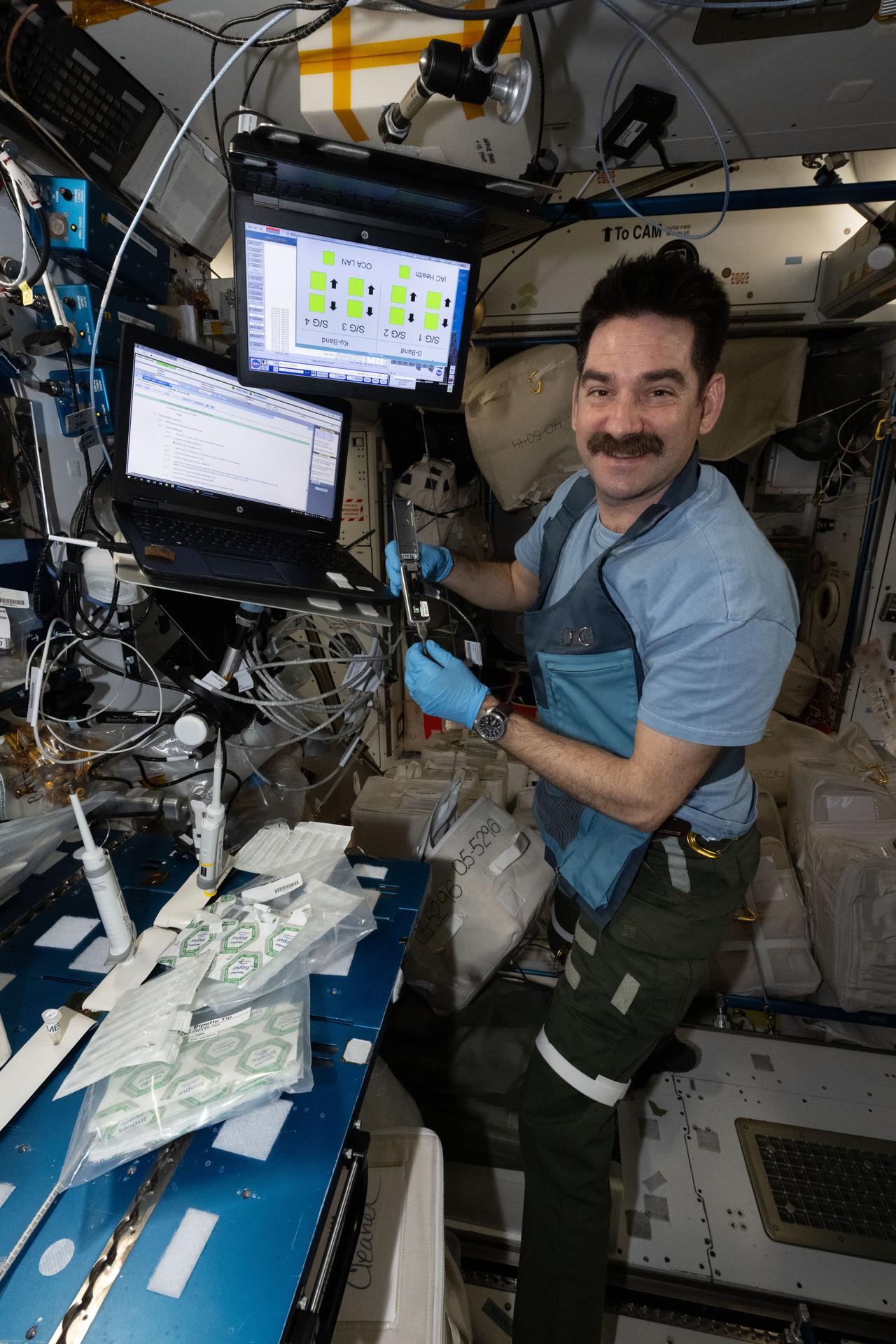
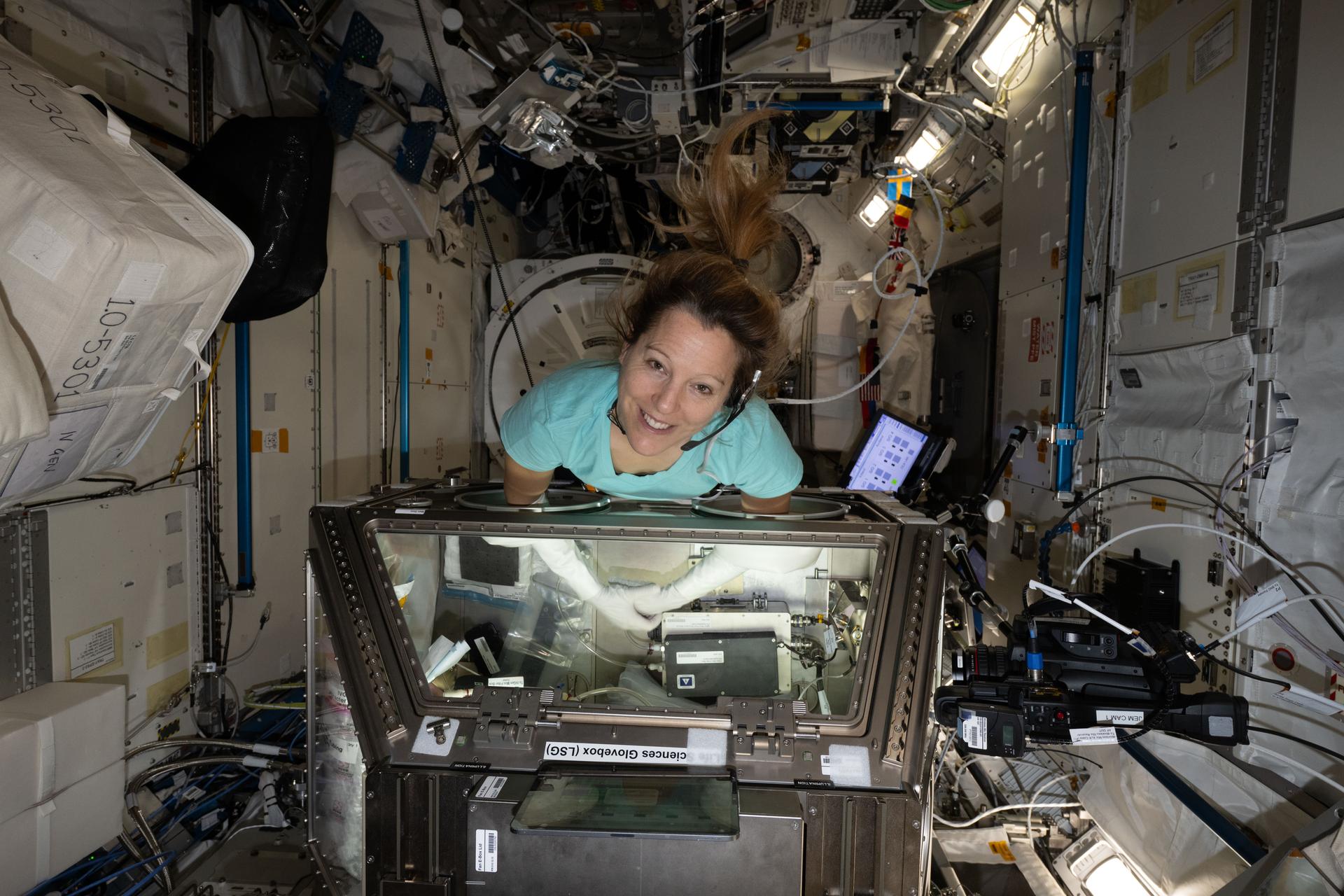
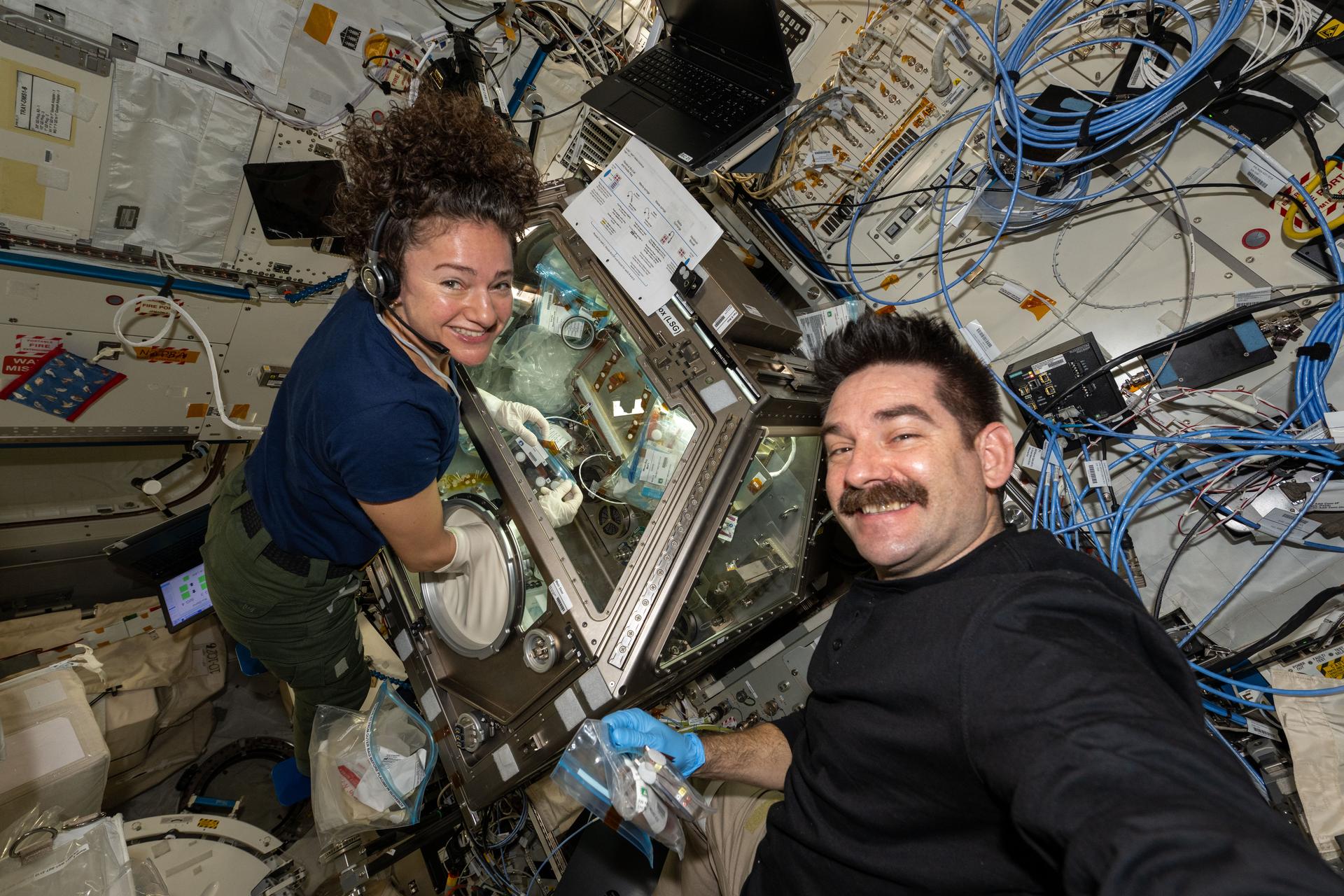
NASA astronaut and Expedition 75 flight engineer Jessica Watkins works inside the Kibo laboratory module’s Life Science Glovebox on Oct. 9, 2026, safely mixing living cell samples with a bioink and then filling a special cartridge with the cell‑ink mixture.
The advanced research operations were part of the InSPA‑Auxilium Bioprinter‑Cell Printing investigation, which explores 3D bioprinting cartilage tissue in microgravity of higher quality than that produced on Earth. Results may advance the ability to biomanufacture cartilage, benefiting patients on Earth and crew members on long‑duration space missions.
Preparations for Next Moonwalk Simulations Underway (and Underwater)
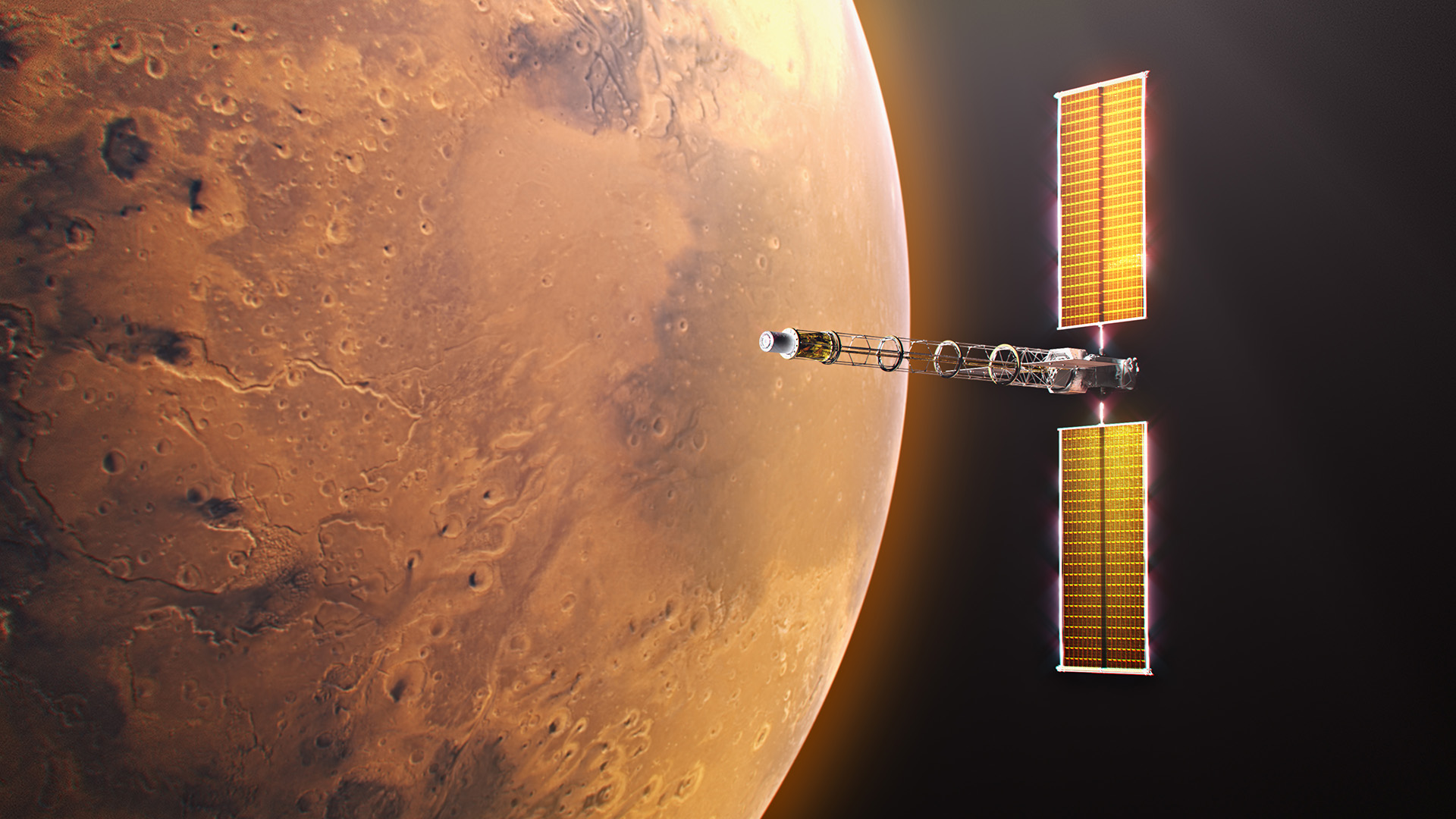
Space Reactor-1 Freedom will be the first spacecraft ever to demonstrate fission power beyond Earth’s orbit, traveling to Mars to deliver a science payload called SkyFall.
NASA/Alberto Bertolin
Destined for Mars and beyond, NASA’s Space Reactor-1 (SR-1) Freedom will be humanity’s first fission-powered spacecraft to travel outside Earth’s orbit. Announced during NASA’s “Ignition” event, this mission will demonstrate nuclear electric propulsion in deep space, and progress is underway on its key element: the nuclear power module. To expedite development of the spacecraft, NASA and its partners have mutually agreed to key contract actions that will advance the SR‑1 Freedom mission.
“These contract actions not only reduce technical risk and help us maintain momentum toward our 2028 launch, but they also strengthen collaboration across our partners,” said Steve Sinacore, SR-1 Freedom program director. “These actions keep SR‑1 Freedom on track and ensure we’re building the strongest possible foundation for NASA’s first fission‑powered voyage beyond Earth orbit while developing technology extensible to a vibrant space nuclear future.”
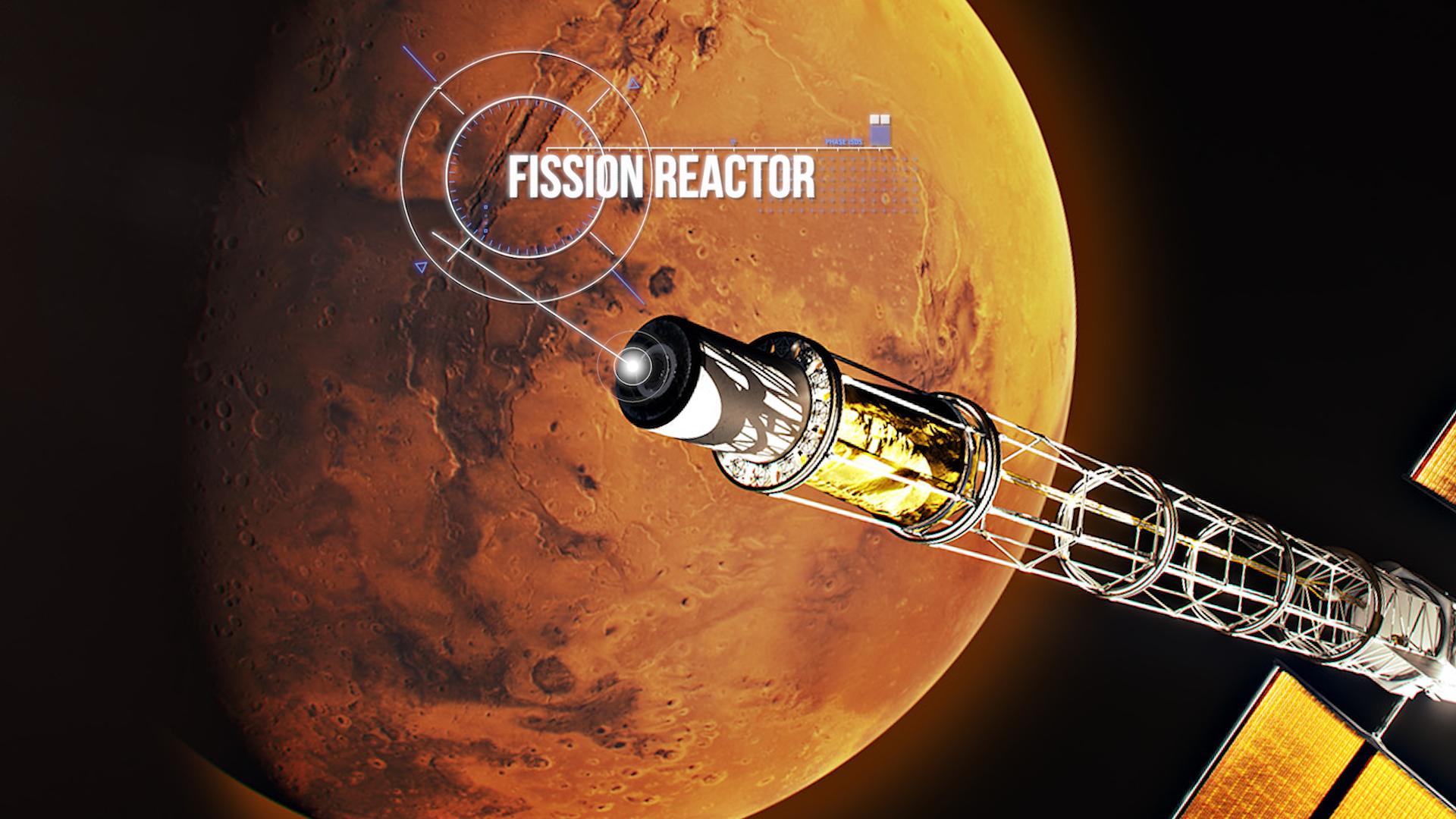
Space Reactor-1 Freedom’s nuclear power module, located at the end of the spacecraft’s boom, consists of a reactor that generates heat through nuclear fission and a power conversion system that converts that heat into electricity to power systems and electric propulsion.
NASA/Alberto Bertolin
Sierra Lobo Inc. will provide the nuclear power module’s closed Brayton cycle power conversion system, which converts thermal energy from its fission reactor into electrical power needed for SR-1 Freedom’s nuclear electric propulsion demonstration. The work will be conducted under the Space Flight Systems Development and Operations Contract III, awarded in 2024, to support spaceflight hardware design, development, testing, and operations at NASA’s Glenn Research Center in Cleveland.
The power conversion system will be integrated with the fission reactor, which is being designed and developed by the Department of Energy (DOE)’s Idaho National Laboratory to complete the nuclear power module. NASA and DOE incorporate thorough safety standards throughout the design and development of the SR-1 Freedom spacecraft, including interagency safety reviews, continuous oversight by a NASA chief safety officer, regulatory compliance, and a rigorous safety design process focusing on hazards, failure tolerance, and nuclear safety. In addition, the nuclear reactor portion of SR-1 Freedom will remain inactive until the spacecraft leaves Earth orbit.
Launching in late 2028, SR‑1 Freedom will deliver the SkyFall science mission, a team of three Mars helicopters evolved from the Ingenuity design, to collect scientific data, demonstrate exploration zones, and identify potential water sources. The mission will pave the way for deep space exploration and next‑generation fission-powered systems designed to keep NASA’s Moon Base operating through periods of darkness and in locations where solar power alone is not sufficient.
Rotor blade cross-sections highlight the thinner profile of the roamx-0201 design (right) compared to the more traditional, rounded shape used by NASA’s Ingenuity Mars helicopter, which accomplished the first powered flight on Mars.
NASA researchers are developing the future of flight on Mars, laying the groundwork for helicopters with the ability to fly higher and farther while conducting science on the Red Planet. Using high-fidelity computer simulations and wind tunnel tests, engineers are reimagining the rotorcraft blades that could carry the next generation of Mars flyers.
NASA’s Ingenuity helicopter made history as the first powered aircraft to fly on another planet. The SkyFall mission, scheduled for launch in 2028, builds on that legacy with a trio of helicopters destined for Mars exploration. Both missions utilize a blade designed to operate in Mars’ thin atmosphere, with a curved edge reminiscent of but distinct from blades used on Earth.
Researchers are exploring unconventional blade designs that are thinner and sharper, aiming to enable future missions after Skyfall to expand their single-flight range across Mars. One team at NASA’s Ames Research Center in California’s Silicon Valley is working with Imperial College London, United Kingdom, and Nagoya University, Japan, to test a new blade cross-section, or airfoil, that promises to significantly boost aerodynamic performance on Mars.
Researchers designed the new airfoil, called roamx-0201, using advanced simulations and algorithms tuned to Mars conditions, pointing researchers toward a thinner, asymmetrical shape. Subsequent wind tunnel tests showed that the optimized design boosted performance and was better able to recover in risky flight conditions.
Researchers used high-fidelity simulation tools to analyze the performance of the roamx-0201 airfoil and compare it to Ingenuity’s capacity. They found that the redesigned blades could enable future Mars helicopters to expand the distances that can be covered in one uninterrupted flight from Ingenuity’s 0.7 kilometers to as much as 18.7 kilometers while carrying scientific instruments. The findings were announced in a paper published Sept. 22 in the journal of the American Institute of Aeronautics and Astronautics.
The roamx‑0201 blades performed well in part because they were able to operate longer at higher speeds before experiencing a phenomenon known as “drag divergence”, where performance drops suddenly when the rotors approach the speed of sound, which is lower on Mars than on Earth.
The new blade also differs from earlier designs in how it uses turbulence to create lift. As air flows over a rotorcraft blade, it forms a thin region called the “boundary layer.” The new airfoil intentionally disrupts the flow of that boundary layer at the front of the airfoil directly at the leading edge to create a disturbance that, counterintuitively, pulls the blade upward to help lift the rotorcraft more effectively than with earlier designs.
Another challenge for rotorcraft is “stall,” an aerodynamic condition in which performance drops sharply and flight becomes unstable following a change in the angle of airflow. Ingenuity’s blades experienced steep performance degradation at stall, but under the conditions studied, the roamx-0201 design showed significantly improved stall behavior. That means future helicopters could operate safely at a wider range of flight angles.
While the technology is not yet ready for Mars, tests are helping engineers understand and resolve discrepancies between computational predictions and real-world performance. Ongoing research across NASA aims to enable more efficient Mars helicopters that can fly farther, carry more payload, and unlock new science and discovery missions.
Preparations for Next Moonwalk Simulations Underway (and Underwater)
Research teams at NASA’s Glenn Research Center are involved in developing theory and software to predict the noise from aircraft engines. This software helps engineers to design and analyze new and improved aircraft propulsion systems. Copies of our software can be requested from NASA’s Software Catalog.
Aerodynamic predictions of a the hot exhaust flow through a dual stream nozzle with chevrons.
NASA
JeNo
Development of jet noise prediction codes is multifaceted. Since JeNo predicts jet noise using Lilley’s Acoustic Analogy and the mean flow solutions from a Reynolds-Averaged Navier-Stokes (RANS) code, accurate acoustic predictions hinge on accurate aerodynamic predictions. This is why acoustic source modeling and turbulence modeling, together with the development of advanced measurement systems, are the leading areas of research in jet noise prediction at NASA Glenn. RANS-based jet noise prediction schemes based on Lilley’s Acoustic Analogy offer relatively quick answers compared to those from alternative methods like Large-Eddy Simulations (LES) or Direct Numerical Simulation (DNS).
The JeNo jet noise prediction code calculates the far-field sound spectral density produced by axisymmetric jets at a user-specified observer location and frequency range. Currently, JeNo has been validated for subsonic and low supersonic, unheated axisymmetric jets. Copies of the JeNo code can be requested from NASA’s Software Catalog.
MGBK
Development of the MGBK code preceeded JeNo. Researchers at NASA GRC have used MGBK to predict trends in jet noise for complicated aircraft engine exhaust nozzles. MGBK was used to analyze the noise reduction benefits of chevrons–serrations on teh edge of turbofan nozzles–which are a familiar site on many commercial aircraft engines today. Copies of the MGBK codes can be requested from NASA’s Software Catalog.
V072
Predicated on simplistic models of the fan flow and geometry, V072 has been proven useful in studying rotor/stator interaction tone noise. When you need to design a low-noise fan stage, tone noise level predictions from V072 can help you make smart choices for such important design parameters as blade and vane counts, rotor-stator spacing, and stator vane sweep and lean. When you’re after quick noise estimates early in the design cycle, V072 may be your tool of choice. Copies of V072 can be requested from NASA’s Software Catalog.
TFaNS
Taking rotor/stator interaction noise prediction to the next level, not only can TFaNS calculate the tone noise levels generated by rotor/stator interaction it can also account for the blade row acoustic coupling effects such transmission and reflection and can propagate those tones to the far field. Like V072, TFaNS runs quickly and can be used in early design stages for studying trends. Copies of TFaNS can be requested from NASA’s Software Catalog
Linflux
When simple models are too simple, an analysis with Linflux gives you the power to study realistic, 3-D flows and blade geometries. Compared with V072 and TFaNS, Linflux requires significantly more computational resources since it models much more of the physics involved. Linflux predicts rotor/stator tone noise and, like all the software developed by the NASA Glenn Acoustics Branch, has been rigorously validated against experimental data. Copies of Linflux can be requested from NASA’s Software Catalog.
BFANS
Using estimates of turbulence intensity and characteristic length scale as input, BFANS can be used to calculate the broadband noise generated by turbulence impinging on the leading edges of the rotor blades and stator vanes. Calculations with BFANS, combined with experimental data from tests at facilities like NASA Glenn’s 9’x 15’ Low Speed Wind Tunnel, can be used to hunt down the noisiest components in a fan stage. Copies of BFANS can be requested from NASA’s Software Catalog.
RSI
RSI is a computer code for calculating the spectrum of broadband noise produced as a result of the interaction of the fan rotor wake turbulence with the fan exit guide vanes. The software computes the spectra of acoustic power upstream and downstream of the stator on a mode-by-mode basis at each frequency of interest given information about the incident turbulence characteristics. The target frequencies are arbitary and need not be harmonics of the blade passing frequency of the fan. Copies of RSI can be requested from NASA’s Software Catalog.
WOBBLE
Propeller noise can be strongly affected by any inflow that leads to unsteady blade loading. The WOBBLE code computes the tone noise associated with propellers with varying inflow angle and predicts the axial and circumferential directivity. Inflow angle is specified in terms of yaw, pitch, and roll angles of the aircraft. The acoustic model is exact and accounts for all unsteady sources such as thickness and loading effects from the blades. Copies of WOBBLE can be requested from NASA’s Software Catalog.
MPT
Multiple pure tone noise (aka “buzz saw” noise), created by rotor locked shocks present when the fan blade tip speed is supersonic, can be estimated with the MPT code. The MPT codes also use flow predictions from a Computational Fluid Dynamics (CFD) code as input. This tool can be used by engineers to study the real-world effects of blade-to-blade difference caused during fabrication (manufacturing variations) or during hot-running operation (blade setting angle and untwist variations). Copies of the MPT code can be requested from NASA’s Software Catalog.
ADPAC
Developed by the Allison Engine Company under contracts with Glenn Research Center, ADPAC solves tightly coupled internal/external flows through future-concept short-duct turbofan engines. ADPAC is one of our flexible validated CFD tools. Characteristics of the problems that can be modeled with ADPAC include: 2D/axisymmetric/3D/mixed, steady/unsteady, inviscid/viscous, rotating/non-rotating/mixed components, with bleeds, leakages, and injection. ADPAC was developed specifically for propulsion system aerodynamic analysis Copies of the ADPAC code can be requested from NASA’s Software Catalog.
Contact Us
Need to reach us for more information about our research, software, or data? Get in touch via the link below.
Preparations for Next Moonwalk Simulations Underway (and Underwater)
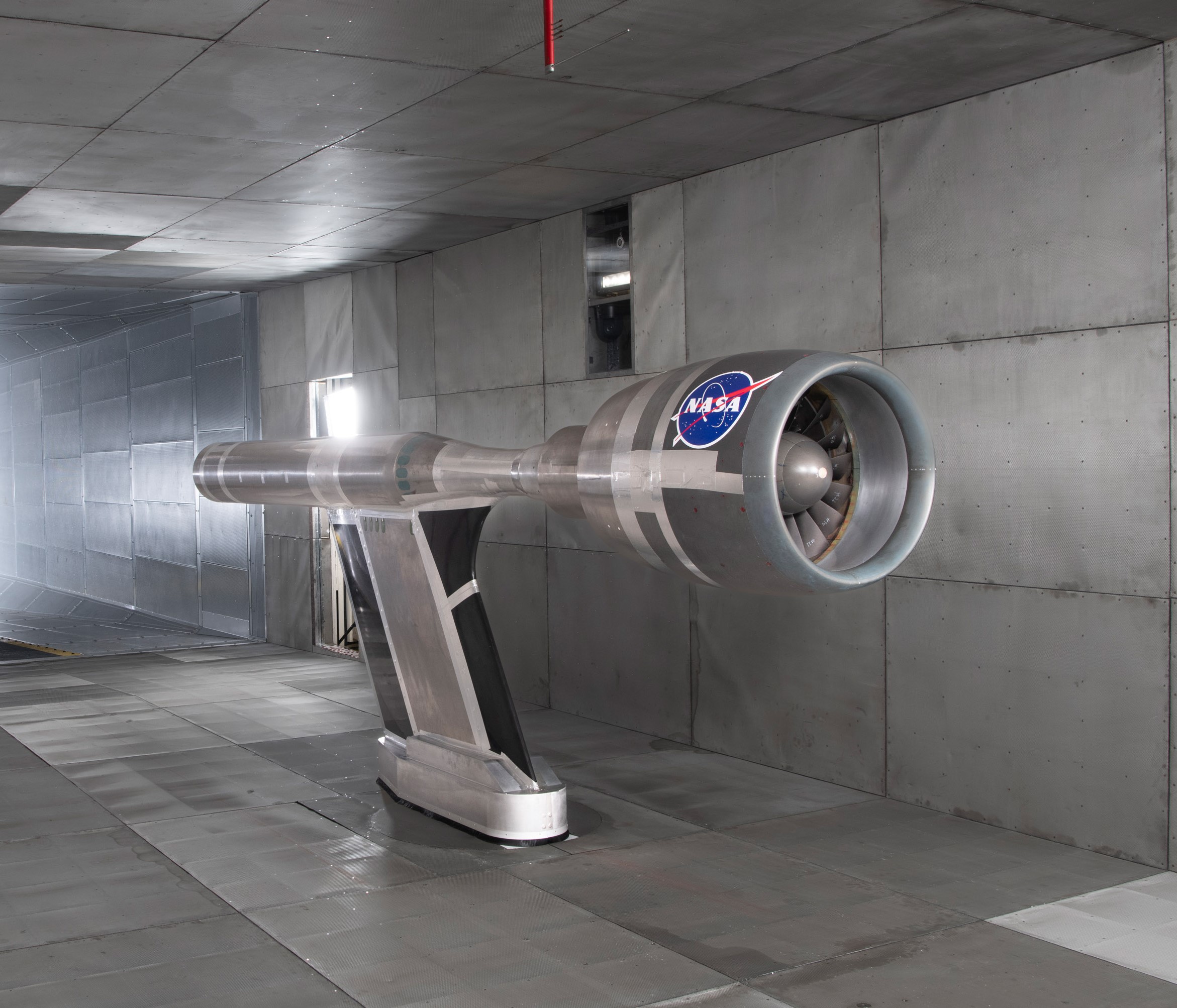
Research teams at the NASA Glenn Research Center perform experiments in world-class facilities such as the 9- by 15-Foot Low-Speed Wind Tunnel (9 x15 LSWT), the Aero-Acoustic Propulsion Laboratory (AAPL), the Small Hot Jet Acoustic Rig (SHJAR), the Nozzle Acoustic Test Rig (NATR), the DGEN AeroPropulsion Research Turbofan (DART), and the Acoustical Testing Laboratory (ATL).
9×15 Low-Speed Wind Tunnel (9×15 LSWT)
The 9- by 15-Foot Low Speed Wind Tunnel is specially designed to give researchers a controlled environment to study aircraft engine aerodynamics and acoustics at takeoff and landing conditions. This helps us to reduce noise in communities near airports. Major modifications were completed in 2019 to improve the flow and lower the background noise of the tunnel. A new 5-sensor traversing microphone rake helps measure sound produced by scale experimental propulsors. Read more about the capabilities of the 9 x 15 LSWT on our facilities page.
Advanced Ducted Propulsor (ADP) Fan Commissioning Test (side view) in the 9×15 Low-Speed Wind Tunnel.
NASA
Aero-Acoustic Propulsion Laboratory (AAPL)
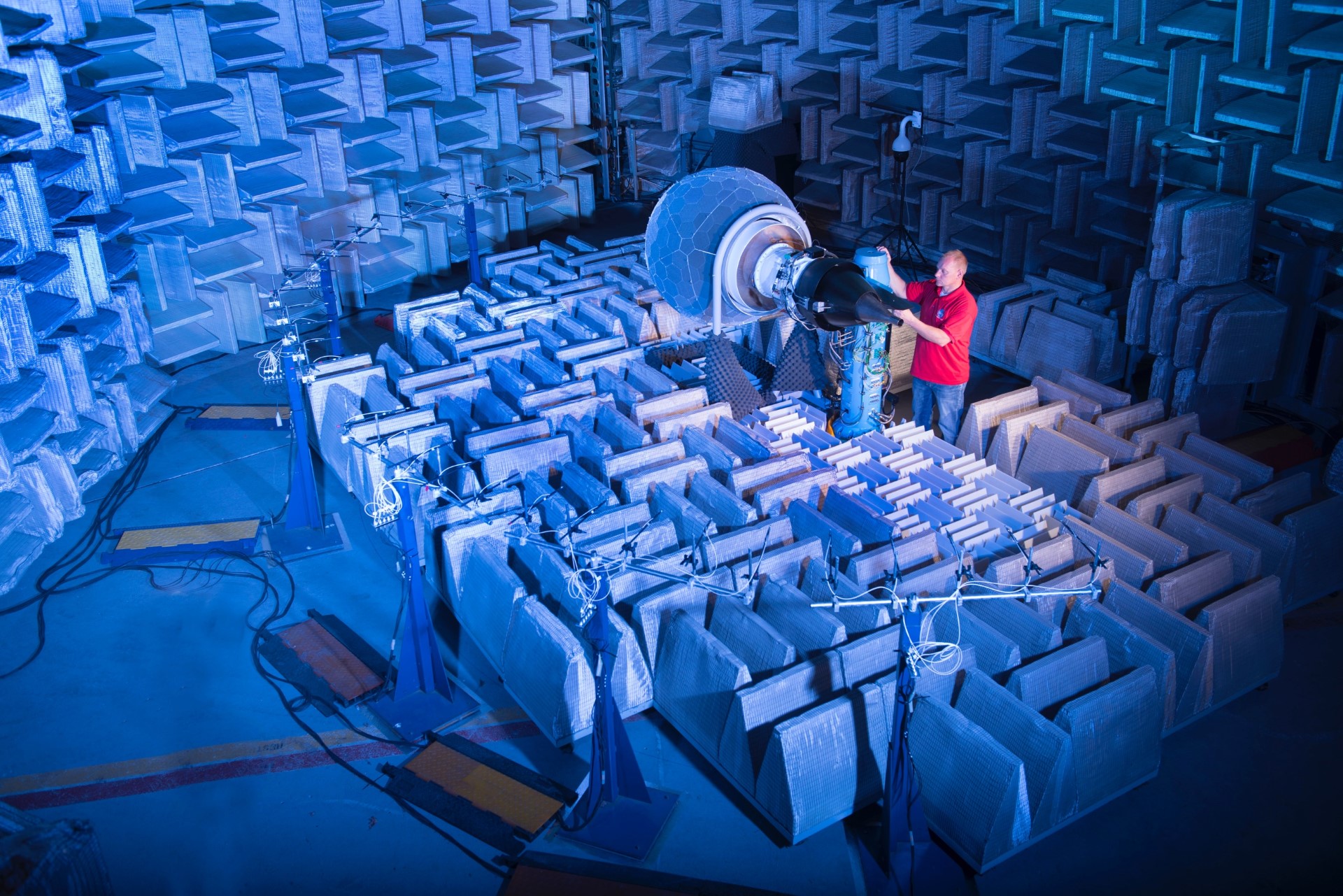
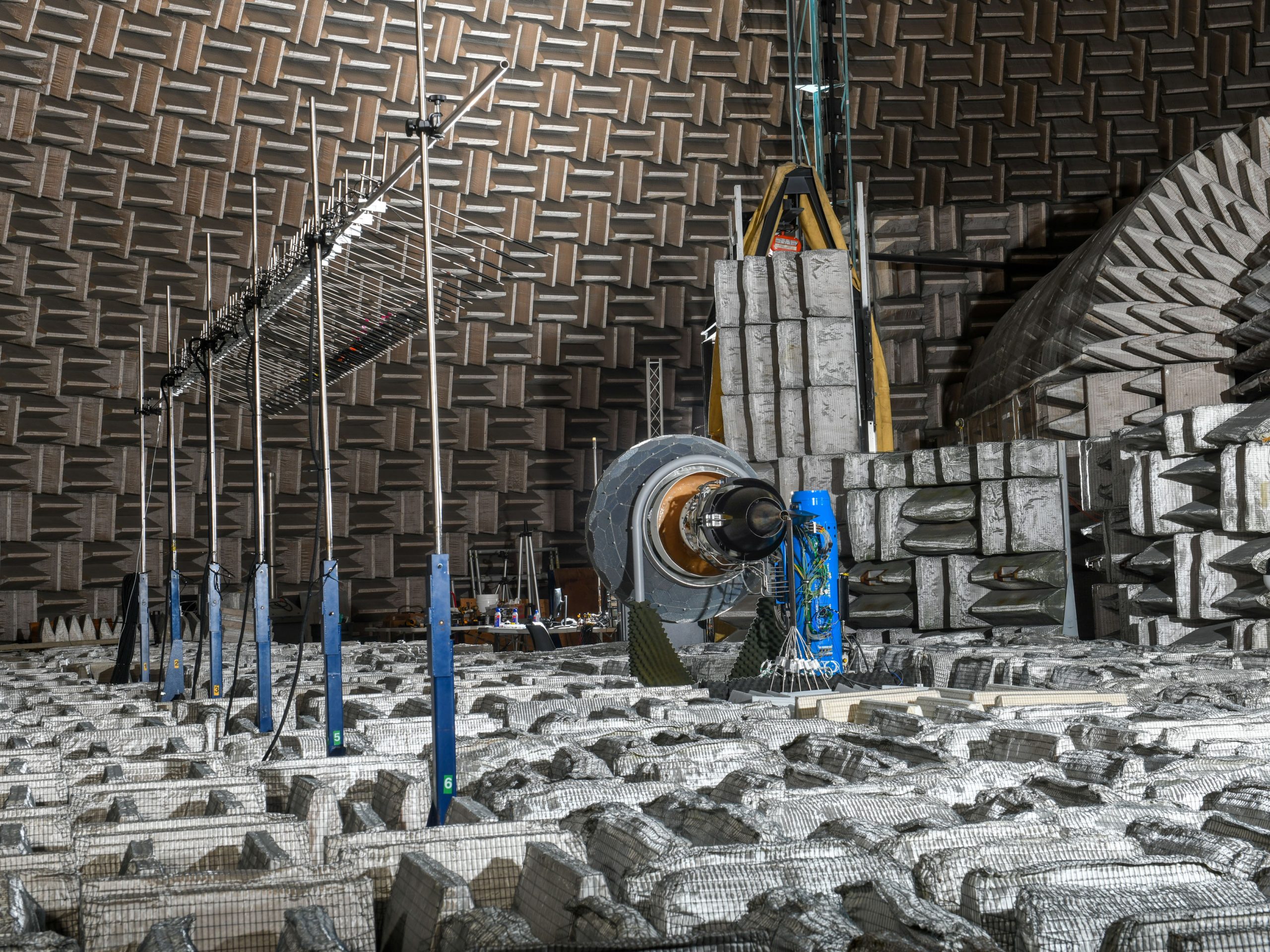
The Aero-Acoustic Propulsion Laboratory (AAPL) is a dual-purpose 65-foot radius geodesic dome used to reduce community noise and perform aeroacoustic tests of aircraft engines and engine components. The test area inside the dome can be configured as a hemi-anechoic or anechoic chamber. There are no echoes in the dome during tests because 17,000 custom-designed 2-ft thick fiberglass wedges are mounted to the inside surface of the dome walls and placed on the floor and around test rigs to absorb sound and prevent sound reflections. When AAPL was constructed in 1993, it was the first known free-standing geodesic dome to include materials to reduce transmission of sound through the walls and absorb sound within it. AAPL currently houses the Nozzle Acoustic Test Rig (NATR), Small Hot Jet Acoustic Rig (SHJAR), and the DGEN 380 Aeropropulsion Research Turbofan (DART). Read more about the capabilities of the AAPL on our facilities page.
The Aero-Acoustic Propulsion Laboratory at The NASA Glenn Research Center in Cleveland is an anechoic chamber used to measure noise from experimental aircraft engines such as the DGEN 380 Aeropropulsion Research Turbofan (DART) shown here.
NASA/Bridget Caswell
Small Hot Jet Acoustic Rig (SHJAR)
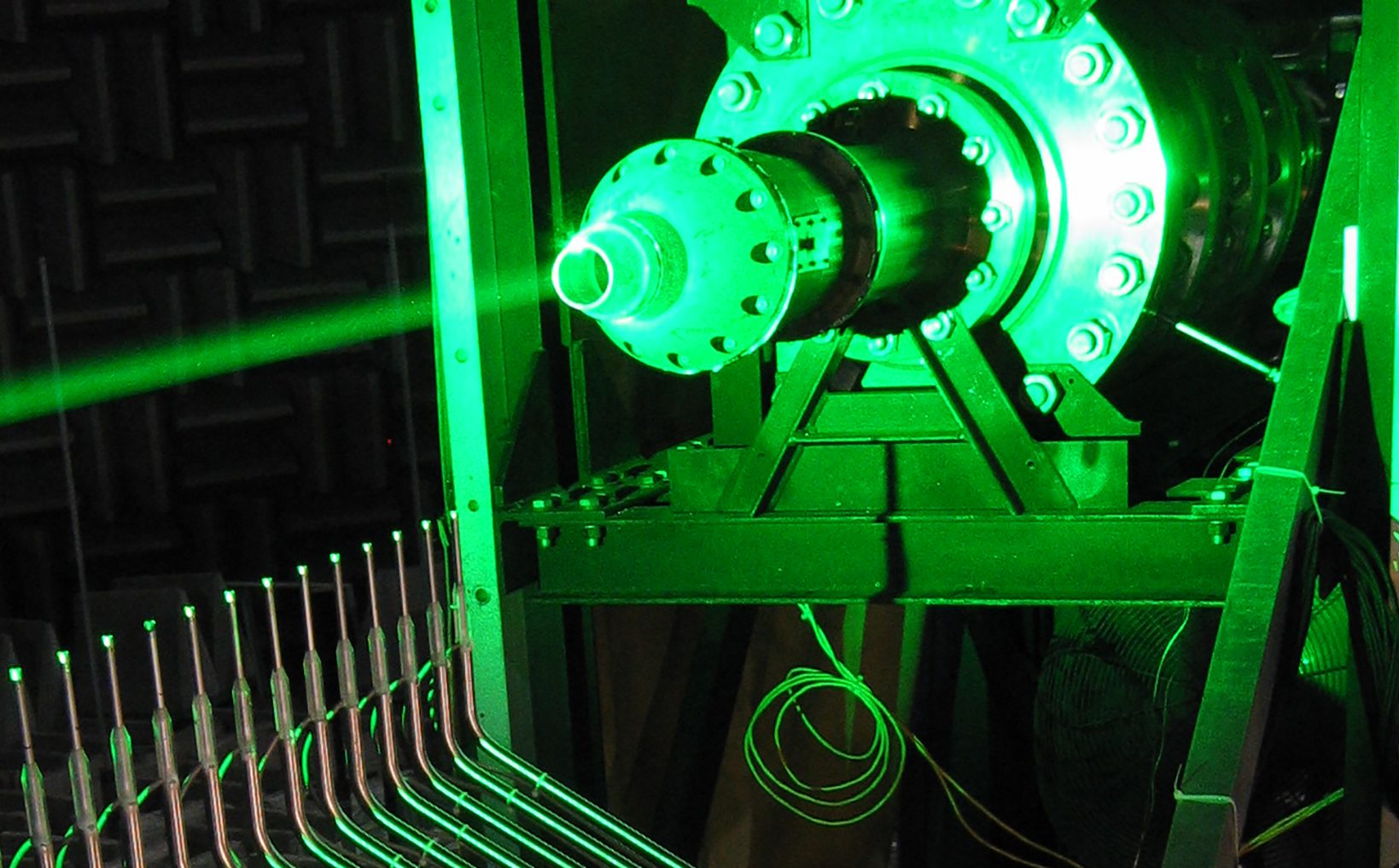
SHJAR is one of three rigs installed inside the anechoic dome of the Aeroacoustic Propulsion Lab. It can be used to test single stream nozzles up to 5 cm in diameter, Mach 2.0 and 800 K. SHJAR is a key tool in connecting the dots between nozzle geometry, jet flow, and noise. Creative nozzle designs are inexpensively created for this rig, and their impact on flow and noise is measured with world-leading measurement techniques. Researchers at NASA Glenn have been using SHJAR to develop advanced flow measurement techniques like Rayleigh Scattering, Raman Scattering, digital Schleiren, and real-time Particle Image Velocimetry. Three-dimensional microphone arrays have been deployed to map the sources of the noise. These techniques hold the promise of unlocking some of the mysteries of how the turbulence caused by the nozzle creates noise. The data from this rig is used to validate the computer codes that are being developed to calculate jet noise. Better noise prediction codes will help engineers design quieter nozzles.
Among the many firsts in turbulent jet research produced on SHJAR, time-resolved measurements of turbulent temperature were recently made using Raman-based optical methods, achieving high-frequency measurements of thermodynamic temperature fluctuations needed to complete turbulence models used in heat transfer as well as jet noise. In 2006, researchers had used the first time-resolved particle image velocimetry to measured space-time correlations of turbulent velocities in hot jets, a flow statistic key to the production of noise. Time-resolved velocimetry was also used to map convection speeds of turbulence, another flow metric required by jet noise theory but previously unavailable in hot jets.
The SHJAR is not only a good place to develop advanced diagnostic techniques, it has been a good testbed for exploring canonical problems in jet noise such as how the installation of the jet on an aircraft changes the noise produced by the jet. Jet-surface interaction, where the plume of the jet interacts with the wings, flaps, and tail of an aircraft, was identified as a fundamentally different noise mechanism in SHJAR tests.
Most of these ground-breaking measurement techniques and practical noise insights first developed on the relatively simple SHJAR have been deployed on the high-fidelity Nozzle Acoustic Test Rig (NATR), co-located in the Aero-Acoustic Propulsion Lab. Read more about the capabilities of the SHJAR on our facilities page.
Simultaneous measurements of turbulent flow and near-field acoustics in the Small Hot Jet Acoustic Rig (SHJAR)
NASA
Nozzle Acoustic Test Rig (NATR)
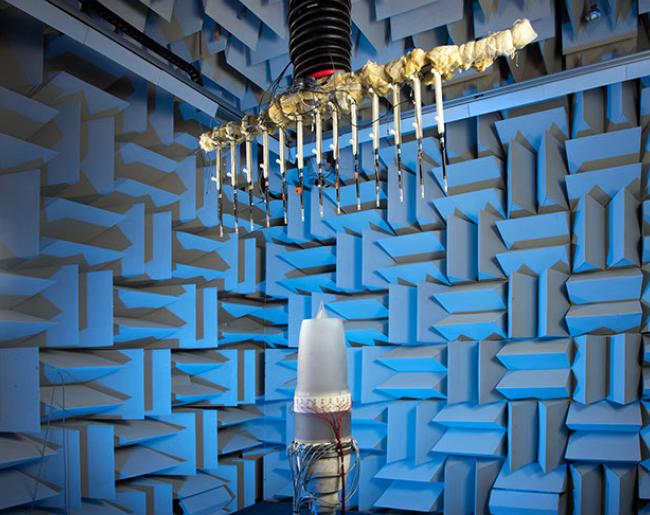
The Nozzle Acoustic Test Rig (NATR), a free-jet wind tunnel, plays a key role in evaluating jet noise reduction concepts so that only the most promising concepts are selected for full-scale engine tests. Scale models of nozzles from both military and commercial aircraft engines can be tested in the NATR, which is one of three test rigs housed in the NASA Glenn Aero-Acoustic Propulsion Lab. The NATR can simulate take-off and landing flight conditions up to Mach 0.35. A jet engine simulator with up to three streams of air at a variety of pressures and temperatures simulate the flow of a turbofan engine to evaluate advanced nozzle concepts. The arc of microphones overhead simultaneously measures the far-field noise at all angles, allowing accurate translation of measurements to those of an actual aircraft flying overhead. The NATR enables engineers to evaluate a number of nozzle noise reduction concepts at a fraction of the cost and time required for a full-scale engine test.
Over its 30-year history, NATR has been the origin of many important jet noise breakthroughs. First built to support jet noise testing for the High-Speed Research program on commercial supersonic airliners, the facility has hosted many test programs led by NASA and industry. The chevron nozzles seen flying on today’s aircraft were first ‘discovered’ during a NASA-led test campaign in 1997. Over the years industry has used the rig to develop noise prediction methods for near-term designs. NASA has explored low-noise concepts for engines that are not yet available, such as engines with dual-fan systems. Recent tests have measured the noise likely to be heard from supersonic airliners, reducing the risk that these unique aircraft will not be allowed to fly from current airports. The tests also point to technologies to reduce their noise, allowing the aircraft designers to make the aircraft more efficient and environmentally acceptable.
The ability to test nozzle with flight is critical, as this has a strong impact on the noise produced by the relative velocity of the jet and the surrounding air, and it is a key feature allowing noise measurements to be directly transformed to what would be heard from a real airplane flying overhead. The large size of the anechoic space around the NATR is also critical to measuring the true acoustic far-field of the jet nozzle. The NATR in the Aero-Acoustic Propulsion Lab is one of the very few facilities in the world where these measurements are possible, and the only facility where both flow diagnostics and acoustics can be made on the same rig, a key capability in understanding the relationship between jet flow and noise. Read more about the capabilities of the NATR on our facilities page.
Harware photographs of Lear Jet Nozzle Test 2018 in the Aero-Acoustic Propulsion Laboratory AAPL, Nozzle Acoustic Test Rig, NATR
NASA/ Rami Daud
DGEN AeroPropulsion Research Turbofan (DART)
DGEN 380 is the primary component integrated into the NASA Glenn Research Center’s DGEN Aero-propulsion Research Turbofan (DART). It serves as a flexible, relevant, experimental aeroacoustic and aero-performance test bed, providing valuable information throughout NASA’s technology maturation process for a variety of multidisciplinary research that includes turbofan noise, engine controls, installation effects, and measurement technologies.
Recent tests were completed August 2019 to develop a better understanding of propulsion-noise sources to enable improved turbofan noise-prediction methods and noise-mitigation techniques. Simultaneous acoustic measurements were obtained using a circumferential infinite-tube-probe array at the core-nozzle exit in conjunction with sideline and farfield microphone arrays. The extensive data set will allow for the application of advanced source-separation and phased-array methods to elucidate not only the core-noise structure, but also the propagation characteristics of other propulsion noise sources. Read more about the capabilities of the DART on our facilities page.
DGEN 380 AeroPropulsion Research Turbofan (DART) in the Aero-Acoustic Propulsion Laboratory.
NASA
Acoustical Testing Laboratory
The Acoustical Testing Laboratory at NASA GRC is used to support NASA’s human space exploration and aeronautics research missions. The ATL is a versatile test chamber that can be configured as an anechoic or hemi-anechoic chamber. Dense rubber material in the walls and ceiling of the ATL absorb or reflect sound from the outside. 34-inch deep fiberglass wedges that line the walls and floor are designed to absorb 99% of incident sound above 100 Hz which helps create an ideal environment for making acoustic measurements. A separate control room is attached for any noisy equipment or persons needed to perform the measurements.
The ATL has been used to quantify the noise emissions of experiments performed on the International Space Station, to measure noise sources and levels from electric motors, to calibrate microphone equipment, to measure the effectiveness of acoustic liners for aircraft engine models and to evaluate the over-the-wing engine placement for reducing takeoff and landing noise. Recent tests in the ATL have also included a scale model of a supersonic aircraft engine inlet and a spacecraft cabin ventilation fan.
Preparations for Next Moonwalk Simulations Underway (and Underwater)
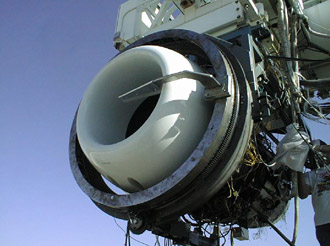
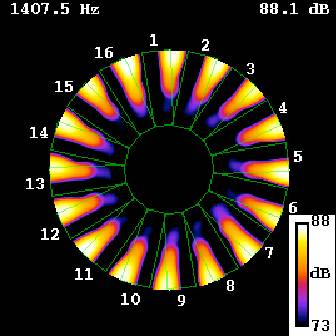
To measure airflow and sound, research teams at the NASA Glenn Research Center use special instrumentation like particle image velocimetry, hot wire anemometry, Raman spectroscopy, microphones in phased arrays or continuously rotating rakes. The global aviation noise reduction community relies on data from NASA GRC experiments to validate theory and noise prediction software.
Rotating Rake Mode Measurement System (RRMS)
Hear an annoying tone from your turbofan engine? Engineers might prescribe an advanced liner or specially tuned active noise control system to quiet it down.
To get it right, though, more information about the modal content of the tone is needed. This kind of data can’t be measured with a stationary microphone, which is why NASA Glenn engineers pioneered procedures using rotating microphones in the 1990s.
Rotating Microphone Rakes have been used by NASA Glenn researchers in a wide variety of tests ranging from low-speed proof of concept tests in the Advanced Noise Control Fan Rig and 9- by 15-Foot Low Noise Wind Tunnel to full-scale turbofan engine ground tests.
Rotating Rake Mode Measurement System (RRMS)
NASA
Microphone Phased Arrays
In a phased array system, microphones are placed in a 1D, 2D or 3D arrangement and when sound measurements from these microphones are properly processed, noise sources can be pinpointed.
NASA Glenn has an Array48 microphone system that has been used extensively to locate noise sources in scale-model jet flows, a counter-rotating open rotor fan model, and even a full-scale F404 military engine. Through NASA funding, a method has been developed to use microphones embedded in the fan duct of an engine to determine the location of noise sources on the rotating blades.
Phased Array Microphones determining the location of noise sources on the rotating blades.
NASA
Hotwire, Hotfilm, and Laser Doppler Velocimetry
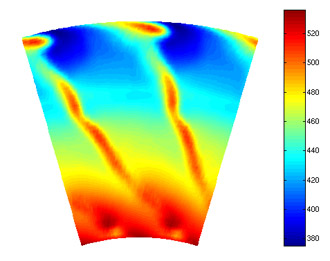
We know that annoying tone noises can be created by periodic disturbances, such as when the wake from a fan blade interacts with a downstream stator vane. We also know that broadband noise is generated when an aircraft engine ingests turbulent air. Therefore, we must be able to record detailed velocity measurements of the air passing through an experimental propulsor so we can identifying noise sources and work to mitigate them. We must use special instrumentation like hotwire probes and Laser Doppler Velocimeters (LDV) to measure the air velocity upstream, downstream, and between the rotor and the stator of an experimental propulsor. Plots of the velocity measurements can be made which allow us to visualize the disturbances that the rotor created. Hotwire and LDV data are routinely used to validate calculations used to estimate noise from turbofan engines.
Hotwire, Hotfilm, and Laser Doppler Velocimetry
NASA
Contact Us
Need to reach us for more information about our research, software, or data? Get in touch via the link below.
Power Up: Roll Out Solar Arrays Boost Space Station Power Supply
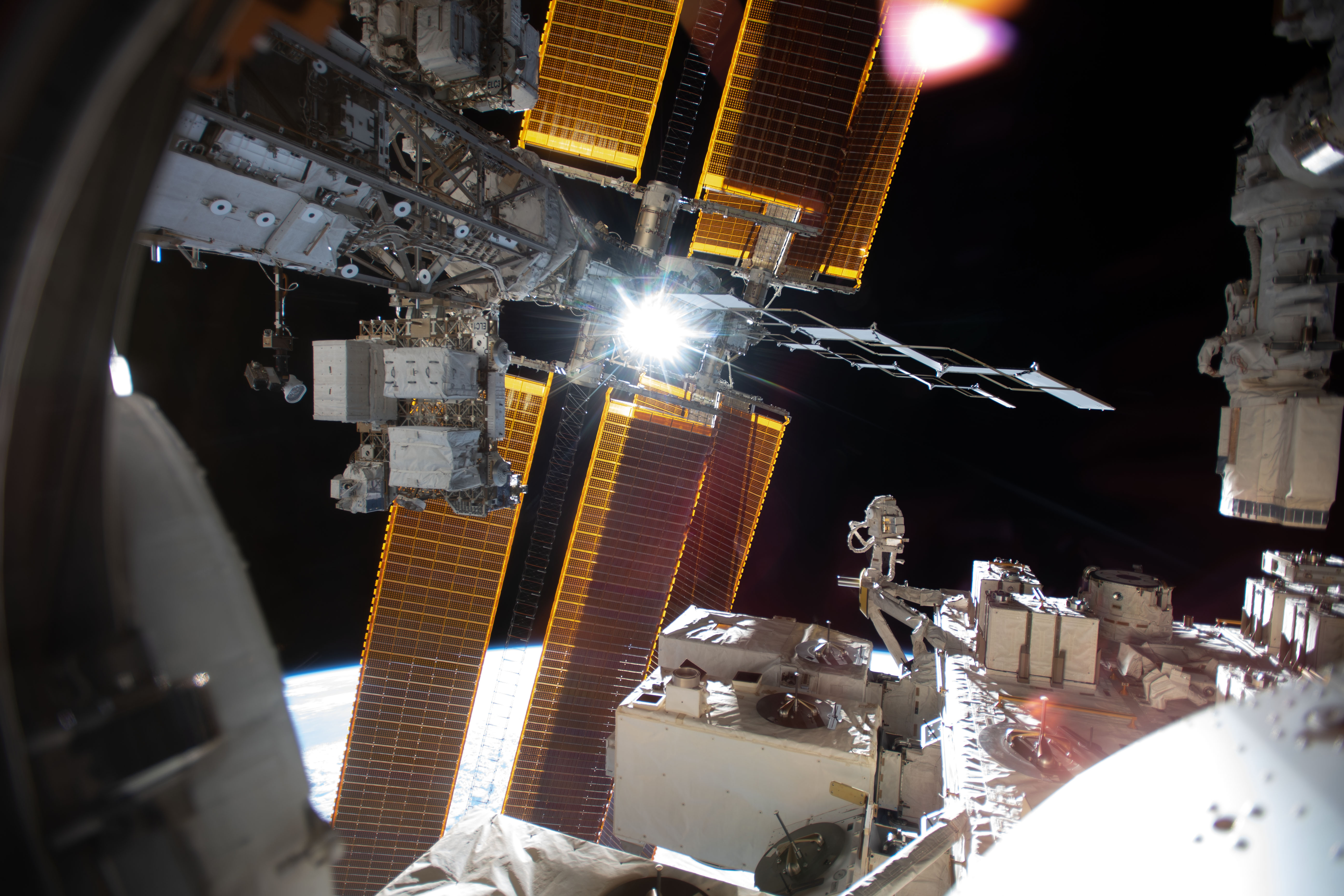
From the International Space Station’s unique position 250 miles above Earth, the Sun is a vital source of energy. Solar power supports the station’s life support systems, daily activities, and hundreds of research investigations that improve life on Earth and prepare humans for deep space exploration. Over the past five years, NASA augmented the station’s power generation and distribution capability with next-generation International Space Station Roll Out Solar Arrays (IROSAs).
An International Space Station Roll Out Solar Array deploys in 2022.
NASA
In 2017, a technology demonstration conducted aboard the space station tested the effectiveness of the arrays. The lightweight, compact design launches as a cylinder and unfurls like a yoga mat after installation. This advanced design reduces mass and volume at launch and uses an autonomous, self-deploying system that minimizes risks during rollout.
Sunlight flares across the International Space Station’s solar arrays.
NASA
The IROSAs were designed, manufactured, and tested by Redwire under a contract with Boeing and are about half the size of the station’s legacy arrays. Despite being smaller, the arrays are capable of producing about 28 kilowatts of additional power.
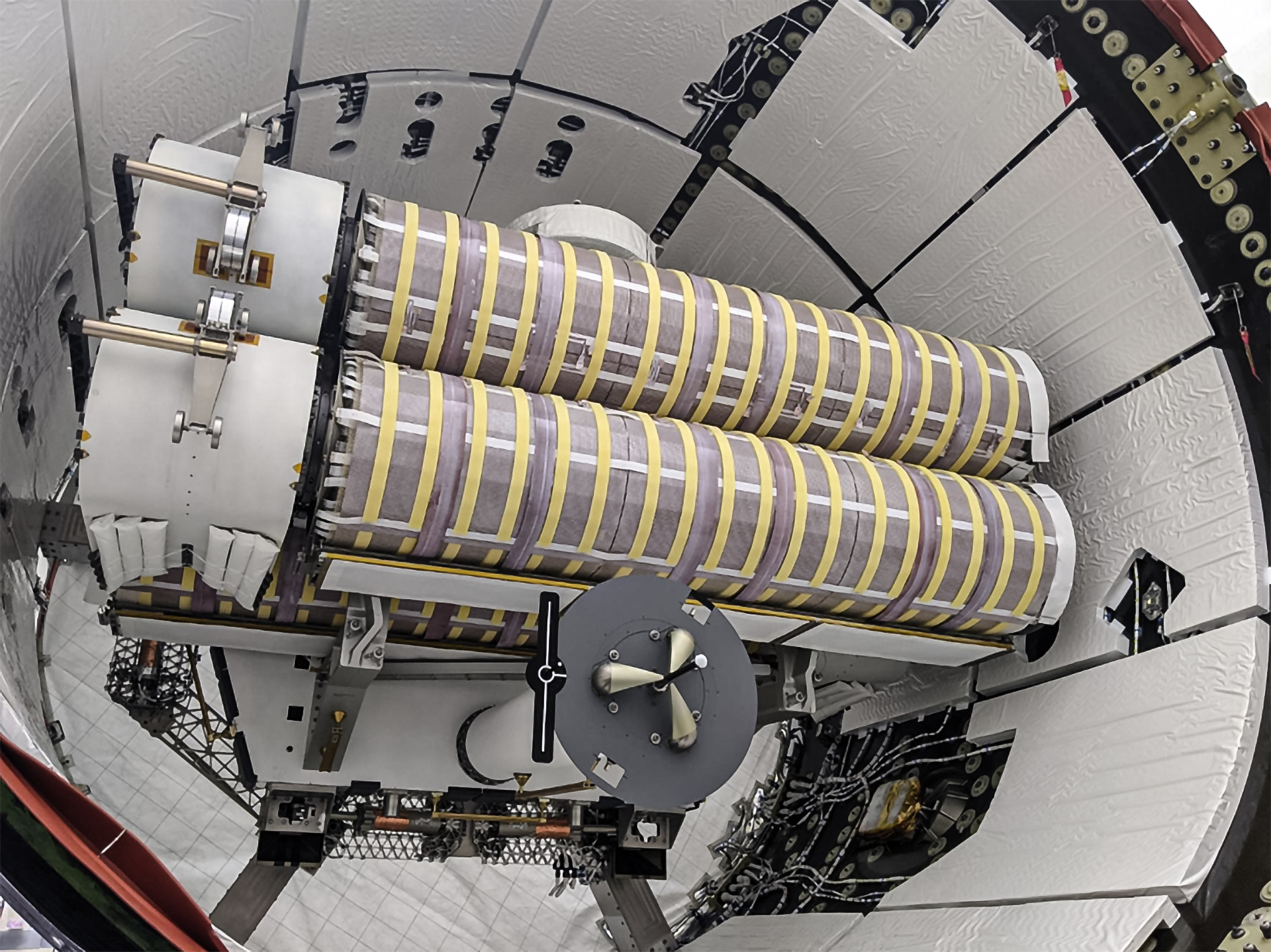
The first two International Space Station Roll Out Solar Arrays loaded in a SpaceX Dragon’s trunk before delivery to the orbiting laboratory during the company’s 22nd commercial resupply services mission for NASA in 2021.
SpaceX
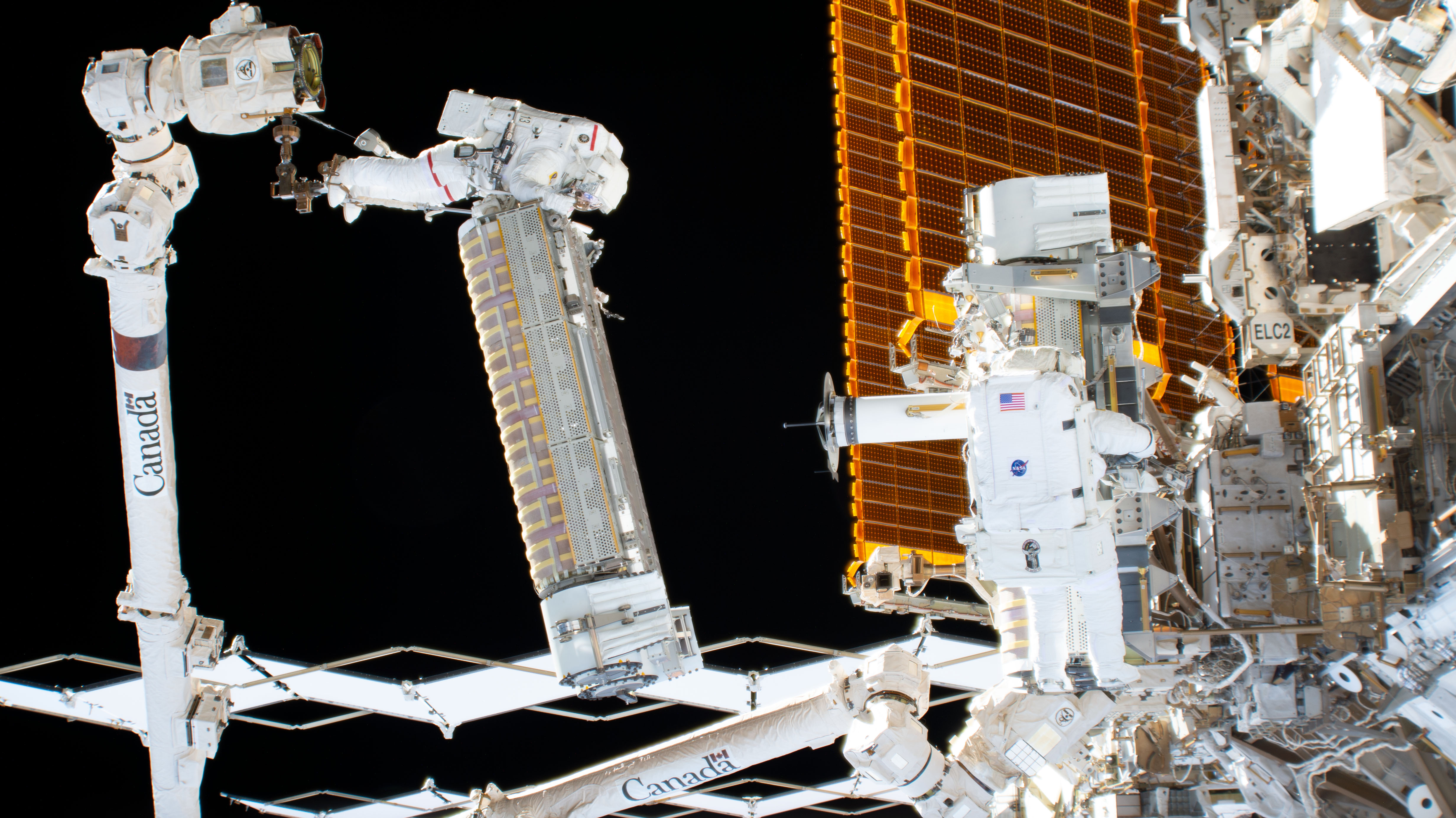
Six IROSAs were installed outside of the space station between 2021 and 2023. In 2023, power projections prompted a request for another set of IROSAs, which launched in Dragon spacecraft’s trunk during the SpaceX 35th commercial resupply services mission to space station for NASA. Together, the eight IROSAs will increase power by more than 160kW for research and operations.
NASA astronauts perform a spacewalk to install an International Space Station Roll Out Solar Array with the assistance of the Canadarm2 robotic arm in 2022.
NASA
With the full upgrade in place, the space station’s revitalized power system not only supports NASA’s legacy in low Earth orbit but also helps advance technology that will extend the agency’s reach into the solar system. From planetary defense demonstrations, like the Double Asteroid Redirection Test, to future human exploration efforts, the space station is an essential testbed for the technologies needed for expeditions beyond Earth’s orbit.
Preparations for Next Moonwalk Simulations Underway (and Underwater)
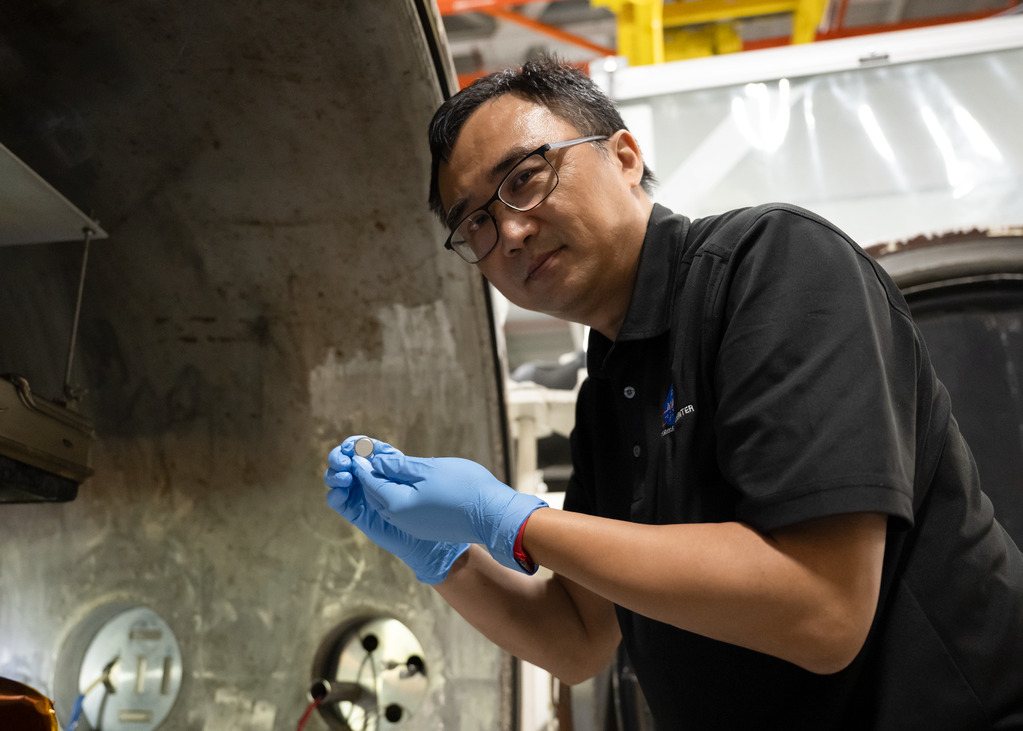
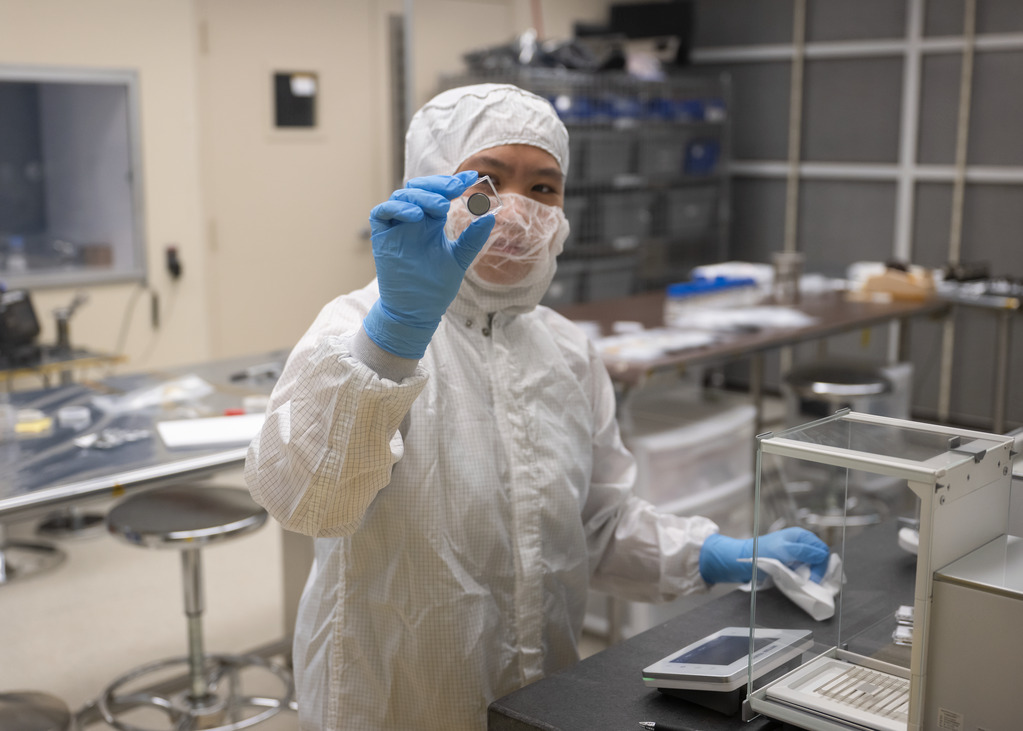
Yi Lin, SPEARS testing and research lead at NASA Langley, holds one of the small coin-cell batteries that had just undergone thermal vacuum testing.
NASA/Ryan Hill
If you’ve ever had your car start sluggishly, or not at all, on a particularly frigid winter morning, you know standard batteries do not like extreme cold. That’s why NASA researchers are working to develop a battery that could function in the brutal cold of the Moon’s South Pole, where nighttime temperatures plunge to minus 328 degrees Fahrenheit (minus 200 Celsius).
For future lunar operations, a battery will need to work immediately when warmed up and be able to power everything from an astronaut’s emergency kit to a rover capable of exploring the Moon’s darkest craters — all without posing a fire hazard.
A team of NASA researchers is working to make all that happen. The project is called Solid Power for Extreme Environment Adaptability and Resilience in Space (SPEARS), and it could provide NASA with an important tool to help power humanity’s sustained presence on the Moon through the Artemis campaign.
“Batteries have become an important part of our lives here on Earth, which enable our laptops, cell phones, power tools, and even our vehicles,” said Donald Dornbusch, principal investigator for SPEARS at NASA’s Glenn Research Center in Cleveland, where the project is led. “We will need them on the Moon, too, and these batteries will be required to operate reliably and safely in this harsh environment. That’s why we’re working on this technology.”
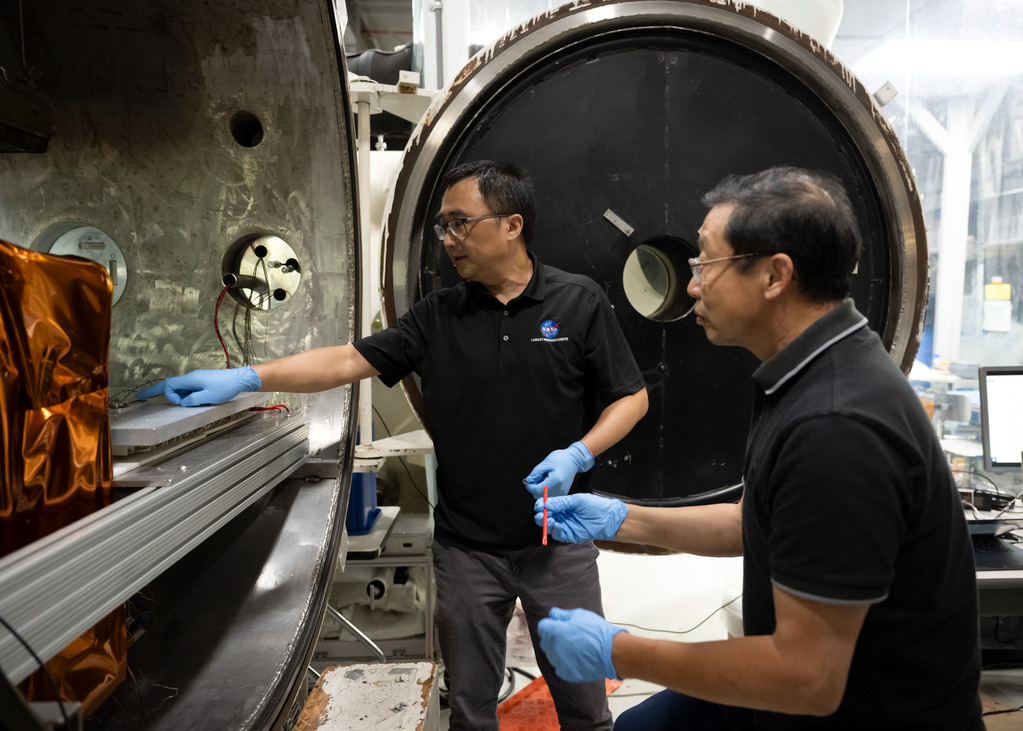
Yi Lin, left, SPEARS testing and research lead, and Ji Su, a polymer materials scientist and the task lead, during the removal of SPEARS batteries from thermal vacuum testing at NASA Langley.
NASA/Ryan Hill
Splashy problem, solid solution
Traditional lithium-ion batteries like those in your cell phone and laptop have a critical weakness: they rely on liquid electrolytes. Cool a conventional battery to the Moon’s nighttime temperatures, and that liquid would freeze, potentially damaging the battery. Heat it up too much — say, to daytime lunar temperatures of 212 F (100 C) — and it won’t work until cooled. Expose the liquid to the vacuum of space, and it evaporates.
SPEARS batteries solve these problems by replacing the liquid electrolyte with a solid ceramic- or polymer-based material. This change could unlock several advantages. First and foremost, they could operate in the heat and extreme cold.
During recent thermal vacuum testing at NASA’s Langley Research Center in Hampton, Virginia, small prototype battery cells operated well up to 176 F (80 C), down to minus 76 F (minus 60 C), and with slightly reduced performance down to minus 112 F (minus 80 C).
“We proved for the first time that these cells can work down to minus 80 degrees Celsius,” said Yi Lin, SPEARS testing and research lead at NASA Langley.
Lin also said he’s confident they can improve performance and maybe even expand that range in coming years.
The batteries need to remain reliable through exposure to the Moon’s wild temperature swings between day and night. The thermal vacuum testing showed that after exposure to temperature extremes from 212 F (100 C) to minus 274 F (minus 170 C), SPEARS batteries don’t sustain damage.
Just like the chemistry in your earbuds is different from the chemistry in your phone, which is different from the chemistry in your car, all these chemistries can still function with a solid electrolyte. We can tune for energy, tune for power, tune for durability, depending on the application.
Yi Lin
SPEARS testing and research lead
Not even solid-state batteries will function while they’re at a temperature as low as minus 274 F, but because solid electrolytes don’t freeze like a liquid, the batteries can survive the extreme low temperatures.
In order to get the batteries working again after exposure to such cold, small heaters come into play. SPEARS batteries wouldn’t need to be kept warm all the time, just warmed up to operational temperature. That could reduce the need for heavy thermal management systems in spacecraft and lunar habitats, allowing for lighter designs, lower costs, and longer mission durations.
Nike Lin, a support engineer/technician on the thermal vacuum team, takes weight measurements of batteries following thermal vacuum testing.
NASA/Ryan Hill
Power for Moon, Earth
The applications for these solid-state batteries are nearly limitless, from small tools like drills that must operate in shadowed lunar craters, to rovers and emergency power packs for astronauts. They also could provide power solutions for long-duration scientific instruments.
“We can tune the chemistry by using different electrode materials,” said Lin. “Just like the chemistry in your earbuds is different from the chemistry in your phone, which is different from the chemistry in your car, all these chemistries can still function with a solid electrolyte. We can tune for energy, tune for power, tune for durability, depending on the application.”
While SPEARS is designed for space, the technology could be spun off into Earth-based applications. In fact, SPEARS evolved out of a previous battery project Lin and Dornbusch worked on that focused on aeronautic applications.
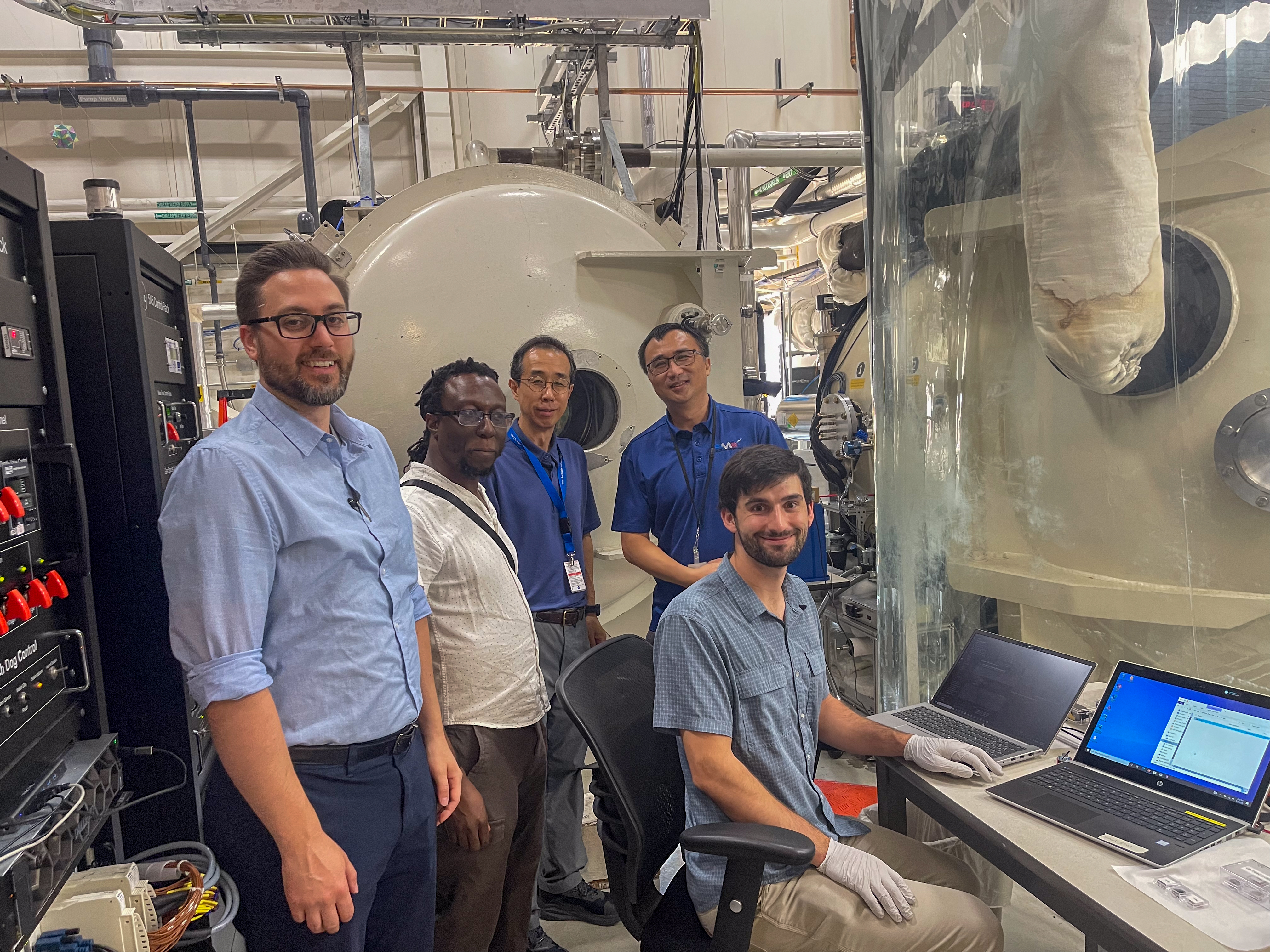
From left to right: Donald Dornbusch (NASA Glenn), Godfrey Sauti, Sang-Hyon Chu, Yi Lin (NASA Langley), and Malachi Mooney-Rivkin (NASA Ames), during a round of TVAC testing at NASA Langley.
NASA
“The potential market for solid-state batteries is very broad,” said Ji Su, a polymer materials scientist and the task lead at NASA Langley. “Automobiles, cell phones, communication devices, drones — anything that needs a portable power supply.”
The SPEARS project began in 2026 with funding through the Advanced Research and Technology division within the agency’s Research and Technology Mission Directorate. The project is set to focus on technology development in its first stages before potentially shifting toward commercial collaboration. NASA’s Ames Research Center in California’s Silicon Valley is working to develop flight hardware such as test boards and electronics to help prepare the SPEARS batteries for spaceflight and test them in space environments.
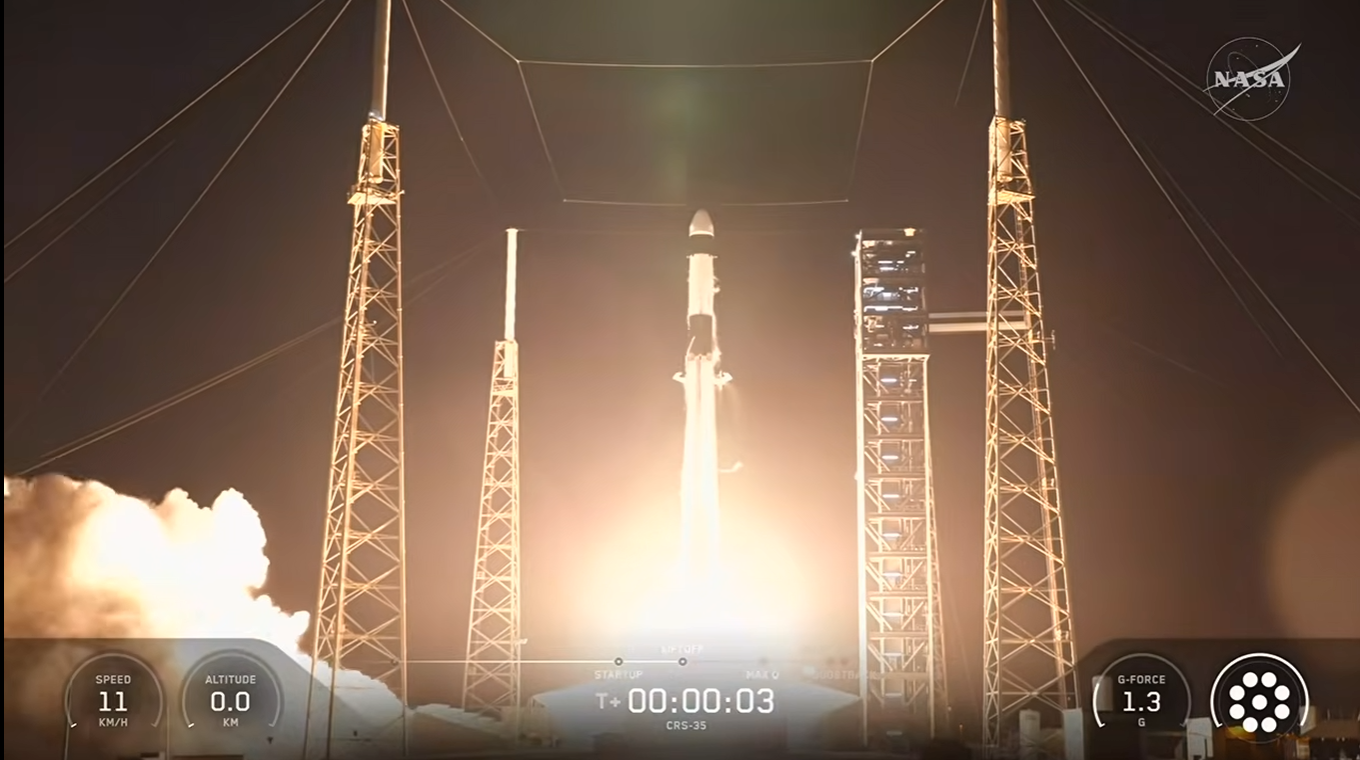
A SpaceX Falcon 9 rocket and Dragon spacecraft launched on Tuesday, Oct. 13, 2026, from Space Launch Complex 40 at Cape Canaveral Space Force Station in Florida as part of the company’s 35th Commercial Resupply Services mission to the International Space Station for NASA.
Credit: NASA
NASA’s SpaceX 35th commercial resupply mission lifted off at 6:33 a.m. EDT Tuesday aboard a Falcon 9 rocket from Space Launch Complex 40 at Cape Canaveral Space Force Station in Florida, carrying more than 6,300 pounds of supplies and hardware, bound for the International Space Station. Following its successful launch, the SpaceX Dragon spacecraft will carry new scientific experiments, cargo, and the final pair of International Space Station Roll-Out Solar Arrays to the orbiting laboratory.
Dragon is scheduled to autonomously dock at 11 a.m., Thursday, Oct. 15, to the space-facing port of the space station’s Harmony module. NASA will stream rendezvous and docking coverage beginning at 9:15 a.m., through a variety of platforms. Learn where to watch online:
The final pair of solar arrays will complete the space station’s power system augmentation, boosting available electricity for research, operations, and the station’s safe, controlled deorbit. Astronauts will install the arrays during a series of spacewalks planned for later this fall.
Dragon also is delivering several new experiments, including hardware to manufacture artificial retinas in microgravity that could help restore vision for patients on Earth and 3D heart tissue models to advance large-scale drug testing on future space missions. Dragon also will carry materials to study how a new type of glass is formed in microgravity, and brain organoids that could uncover potential treatment targets for neurodegenerative diseases like Alzheimer’s, Parkinson’s, and multiple sclerosis.
These are just a sample of the hundreds of investigations conducted aboard the orbiting laboratory in the areas of biology and biotechnology, physical sciences, and Earth and space science. Research and technology investigations taking place aboard the space station benefit people on Earth and lay the groundwork for other agency deep space missions. As part of NASA’s Artemis program, the agency will send astronauts to the Moon to prepare for future human exploration of Mars, inspiring the world through discovery in a new Golden Age of innovation and exploration.
The Dragon spacecraft is scheduled to remain at the space station until mid-November when it will depart and return to Earth with time-critical research and cargo, splashing down off the coast of California.
Learn more about the International Space Station, its research, and crew, at:
NASA experiments focused on human and plant health and drug-resistant organisms will travel to the International Space Station aboard SpaceX’s 35th Commercial Resupply Services mission for the agency from Cape Canaveral Space Force Station in Florida, advancing research that benefits life on Earth and future exploration.
This research supports astronaut health during long-duration missions through four investigations from the agency’s Biological and Physical Sciences division, including 3D models of the human brain, a crop disease study, a faster way to assess astronaut health, and an analysis of antibiotic-resistant bacteria aboard the space station.
Tiny brain models, big questions
A new precision health investigation helps address a key question: What happens to the human brain in space?
The experiment sends small, lab-grown models of the human brain to the orbiting laboratory for five weeks. Researchers compare tissue models that traveled to space with identical ones kept on Earth to determine how a short spaceflight affects the human brain at the cellular level.
The effort could deepen our understanding of how the human brain responds to stress and help lay the groundwork for methods that counter risks to brain health that astronauts may face on future missions to the Moon and beyond.
Disease-resistant crops for space
A space crops investigation tests whether crop diseases develop faster and more severely in microgravity.
The experiment compares molecular and structural changes between Earth-grown and space station-grown plants infected with a disease-causing fungus. The findings could guide plant breeding on Earth to produce disease-resistant crops and help minimize yield losses in future space agriculture systems.
Space crops provide nutrition, increase dietary variety, and offer psychological benefits for astronauts during extended missions. They also absorb carbon dioxide, produce oxygen, and recycle water, which will become increasingly important as human missions extend farther from Earth.
Analysis helps astronauts thrive
The spacecraft also carries the first test of a compact microplate reader that arrived aboard the space station earlier this year.
Use of the plate reader would allow scientists to analyze samples aboard the space station and obtain data quickly, rather than wait for the samples to return to Earth for analysis.
Ultimately, the research aims to support the timely detection of infections and other health issues in astronauts while expanding science capabilities in remote exploration locations where resupply will be more difficult.
Tracking antibiotic-resistant bacteria
A precision health investigation returns for its fourth and final planned stay aboard the space station to study how antibiotic-resistant bacteria survive and evolve in microgravity.
As part of the investigation, astronauts repeatedly sample surfaces throughout the space station to monitor for drug-resistant organisms.
The work could help develop ways to protect astronauts against bacterial infections during long-duration missions. On Earth, the findings could provide insight into how superbugs develop from the overuse of antibiotics.
NASA’s Biological and Physical Sciences Division pioneers scientific discovery and enables exploration by using space environments to conduct investigations not possible on Earth. Studying biological and physical phenomena under extreme conditions allows researchers to advance the fundamental scientific knowledge required to go farther and stay longer in space, while also benefitting life on Earth.
Webb Measures Distance to Farthest Fast Radio Burst, Suggesting Origin
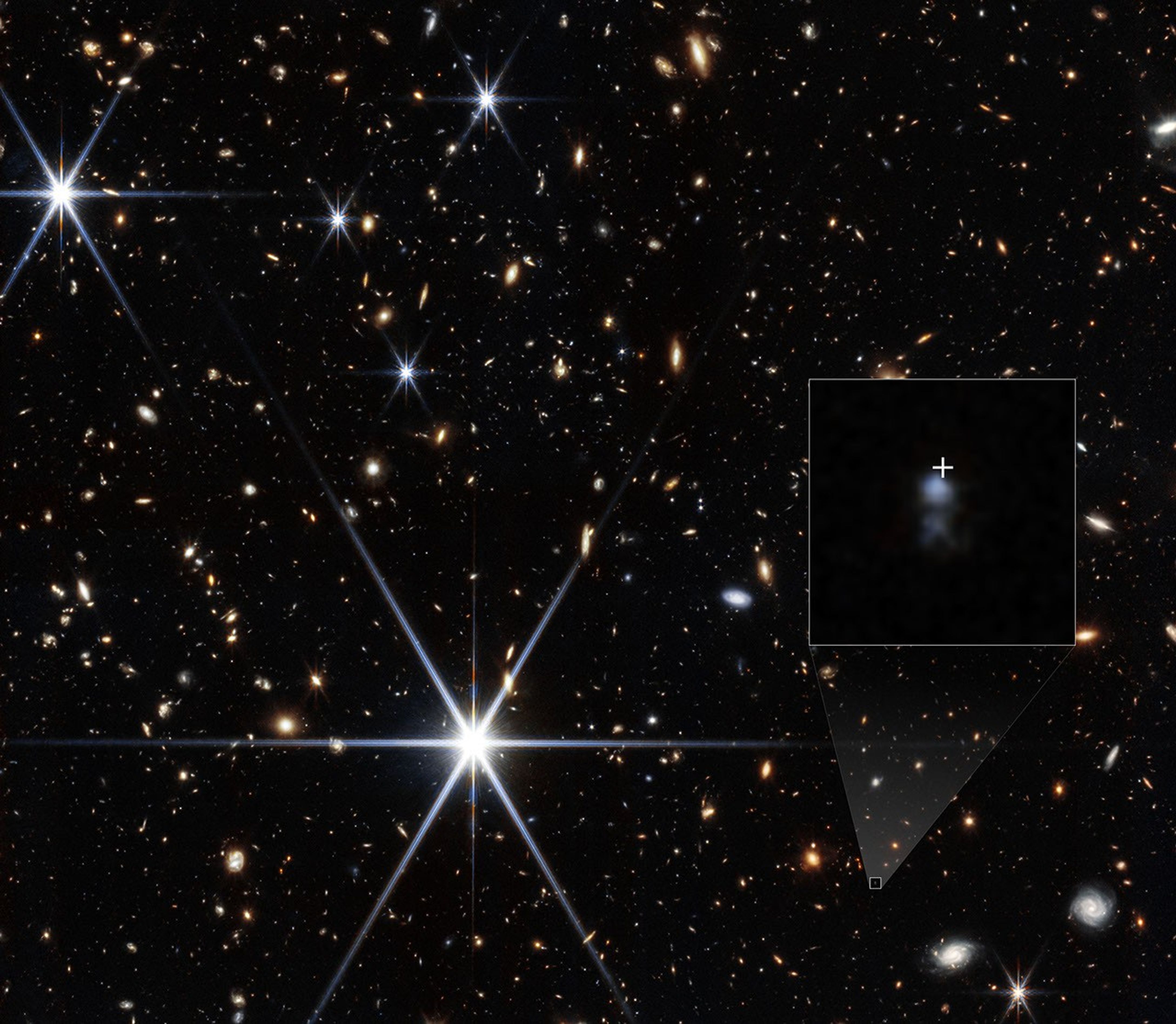
NASA’s James Webb Space Telescope’s NIRCam (Near-Infrared Camera) was able to detect the host galaxy of the fast radio burst called FRB 20240304B, whose location is shown by the white cross. They found it is a small dwarf galaxy actively forming stars.
Credits: Image: NASA, ESA, CSA, STScI, Themiya Nanayakkara (USYD); Image Processing: Joseph DePasquale (STScI)
First discovered in 2007, fast radio bursts are enigmatic, millisecond-long flashes of radio emission from the distant universe. Their origin remains uncertain, particularly since most are seen once and never again. Astronomers using NASA’s James Webb Space Telescope have pinpointed the host galaxy of the most distant fast radio burst (FRB) seen to date. Their finding has implications for what kind of energetic event creates these bursts.
“What makes fast radio bursts interesting is that we don’t know what generates them. We have theories for what objects produce them, but we don’t have conclusive proof,” said Manisha Caleb of the University of Sydney, lead author on the study published Thursday in the journal Science.
The MeerTRAP team used the MeerKAT telescope to detect the burst on March 4, 2024, leading to its designation as FRB 20240304B. The radio data from this burst suggested that it was extremely distant, possibly the most distant one seen to date. To confirm that distance, though, astronomers would need to study its host galaxy. Although they knew the location of the FRB very precisely, the world’s largest ground-based telescopes could not see any galaxy at that spot in the sky. As a result, the team turned to the Webb telescope.
Image: FRB 20240304B (NIRCam Image)
NASA’s James Webb Space Telescope’s NIRCam (Near-Infrared Camera) was able to detect the host galaxy of the fast radio burst called FRB 20240304B, whose location is shown by the white cross. They found it is a small dwarf galaxy actively forming stars.
Image: NASA, ESA, CSA, STScI, Themiya Nanayakkara (USYD); Image Processing: Joseph DePasquale (STScI)
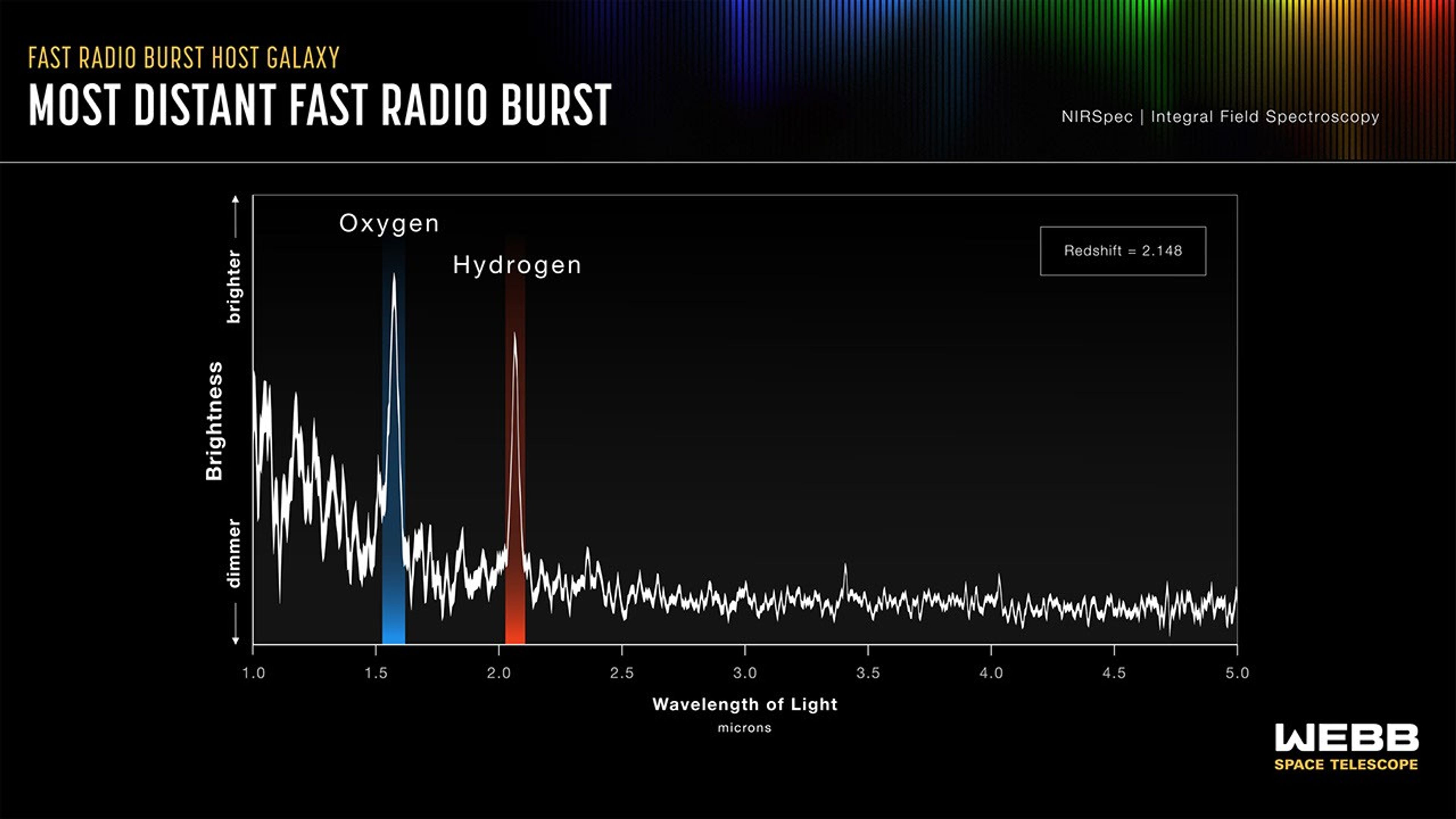
Webb’s NIRCam (Near-Infrared Camera) instrument detected a galaxy in the right location, and its NIRSpec (Near-Infrared Spectrograph) instrument provided a precise measurement of the galaxy’s redshift: 2.148, corresponding to a time just 3 billion years after the big bang. The vast majority of FRBs detected to date occurred billions of years later in cosmic history.
The team discovered that the host galaxy of FRB 20240304B was not typical of other galaxies with FRBs. Most FRB galaxies are massive star-forming galaxies, but the galaxy they found was 1,000 times less massive than they expected.
“We thought it would be a big, nicely formed galaxy with lots of stars, and instead it was a little dwarf galaxy, although it was actively forming stars,” said Caleb.
“The host sticks out in the whole galaxy sample that we have. And it definitely was not what we were expecting,” said Ben Stappers of the University of Manchester, United Kingdom, a co-author on the paper. “This combination of using the MeerTRAP project on the MeerKAT telescope to discover and localize these distant bursts and Webb to study their hosts is very exciting.”
The galaxy existed at the height of “cosmic noon” – a period in the history of the universe when star formation was at its peak. The galaxy’s rate of star formation suggested that the majority of its stars may have formed within just 30 million years.
This has important implications for the origin of fast radio bursts. One theory suggests that FRBs may originate from the merger of two neutron stars. However, the process of orbiting neutron stars gradually approaching closer and closer until they collide is expected to take billions of years. As a result, FRBs would be expected to be associated with older galaxies containing more evolved stellar populations.
A second theory proposes that an FRB can originate from a single, young, highly magnetic neutron star known as a magnetar through a mechanism like starquakes. In that case, once a massive star explodes as a supernova and leaves behind a magnetar, an FRB might occur relatively quickly with no large time delay. As a result, FRBs would also be expected to be found in younger galaxies like the host of FRB 20240304B.
“Our work suggests that it’s very unlikely that this FRB was produced by a merger,” said Caleb.
“Our results further show the amazing capability of Webb where we can push boundaries beyond what was previously possible,” said co-author Themiya Nanayakkara of the University of Sydney, Australia.
In addition to being a record-holder, the new FRB enabled the team to learn more about the billions of light-years of apparently empty space between the burst and Earth.
“A fast radio burst is almost like a cosmic flashlight. It lights up everything along the path. It carries an imprint of everything that it travels through, so you can use it to trace the ‘cosmic web’ – the otherwise invisible matter and structures that it encounters along the way,” said co-author J. Xavier Prochaska of the University of California, Santa Cruz.
The team found the imprint of two cosmic structures on the FRB’s signal – one previously unknown galaxy cluster at a redshift of 0.3 (about 3.5 billion light-years from Earth), and the nearby Virgo Cluster, which is located about 54 million light-years from Earth.
Image: Farthest Fast Radio Burst Host Galaxy Spectrum
Astronomers using NASA’s James Webb Space Telescope were able to study the host galaxy of the most distant known fast radio burst (FRB). They confirmed it has a cosmological redshift of 2.148 and that the FRB occurred just 3 billion years after the big bang.
Illustration: NASA, ESA, CSA, Joseph Olmsted (STScI); Science: Manisha Caleb (SIfA)
In the future, the team is excited about the potential to discover more distant FRBs. They estimate that the MeerKAT telescope may be able to detect and localize several FRBs per year at a redshift greater than 1.0, meaning they existed more than halfway back to the start of the universe. As other new radio telescope facilities and instruments come online, that discovery pace may grow. The Webb telescope will be essential for characterizing those distant host galaxies.
The James Webb Space Telescope is the world’s premier space science observatory. Webb is solving mysteries in our solar system, looking beyond to distant worlds around other stars, and probing the mysterious structures and origins of our universe and our place in it. Webb is an international program led by NASA with its partners, ESA (European Space Agency) and CSA (Canadian Space Agency).
The following sections contain links to download this article’s images and videos in all available resolutions followed by related information links, media contacts, and if available, research paper and Spanish translation links.
Related Images & Videos
FRB 20240304B (NIRCam Image)
NASA’s James Webb Space Telescope’s NIRCam (Near-Infrared Camera) was able to detect the host galaxy of the fast radio burst called FRB 20240304B, whose location is shown by the white cross. They found it is a small dwarf galaxy actively forming stars.
Farthest Fast Radio Burst Host Galaxy Spectrum
Astronomers using NASA’s James Webb Space Telescope were able to study the host galaxy of the most distant known fast radio burst (FRB). They confirmed it has a cosmological redshift of 2.148 and that the FRB occurred just 3 billion years after the big bang.
FRB 20240304B (NIRCam Compass Image)
This image of the host galaxy of fast radio burst FRB 20240304B, captured by the James Webb Space Telescope’s Near Infrared Camera (NIRCam), shows compass arrows, scale bar, and color key for reference.
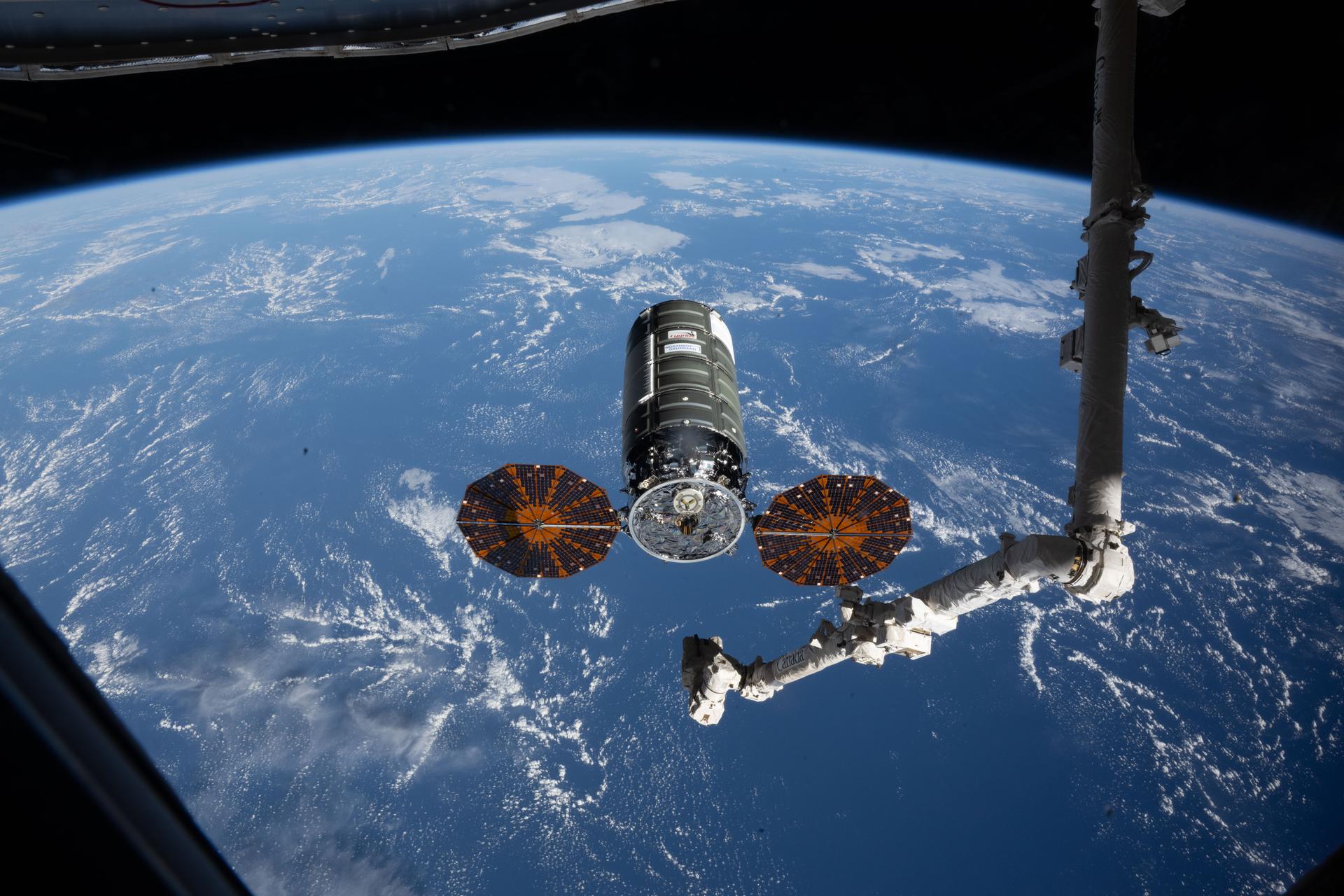
Northrop Grumman’s Cygnus XL cargo spacecraft rests at its capture point on April 13, 2026, 12 meters from the International Space Station, as the Canadarm2 robotic arm prepares to grapple the resupply ship.
Credit: NASA/Jessica Meir
After delivering more than 11,000 pounds of supplies, science experiments, and other cargo to the International Space Station for NASA, Northrop Grumman’s Cygnus XL spacecraft is scheduled to depart Friday, Oct. 9, as part of the company’s Commercial Resupply Services-24 mission, or Northrop Grumman CRS-24.
Watch NASA’s live coverage of undocking and departure beginning at 12:30 p.m. EDT through a variety of platforms. Learn where to watch online:
Flight controllers on the ground will send commands for the space station’s Canadarm2 robotic arm to detach the Cygnus XL spacecraft from the Unity module’s Earth-facing port and maneuver it into position for release at 12:45 p.m. NASA astronaut Luke Delaney will monitor the operation from aboard the orbital complex.
Loaded with thousands of pounds of disposal items and other unneeded cargo, Cygnus XL will deorbit Sunday, Oct. 11, for a destructive re-entry into Earth’s atmosphere, where it will safely burn up. NASA will not provide coverage of the spacecraft’s deorbit.
The resupply spacecraft launched on April 11 on a SpaceX Falcon 9 rocket from Space Launch Complex 40 at Cape Canaveral Space Force Station in Florida.
Learn more about this NASA commercial resupply mission at:
NASA’s Webb Captures Commotion From Nebula’s Stellar Jets
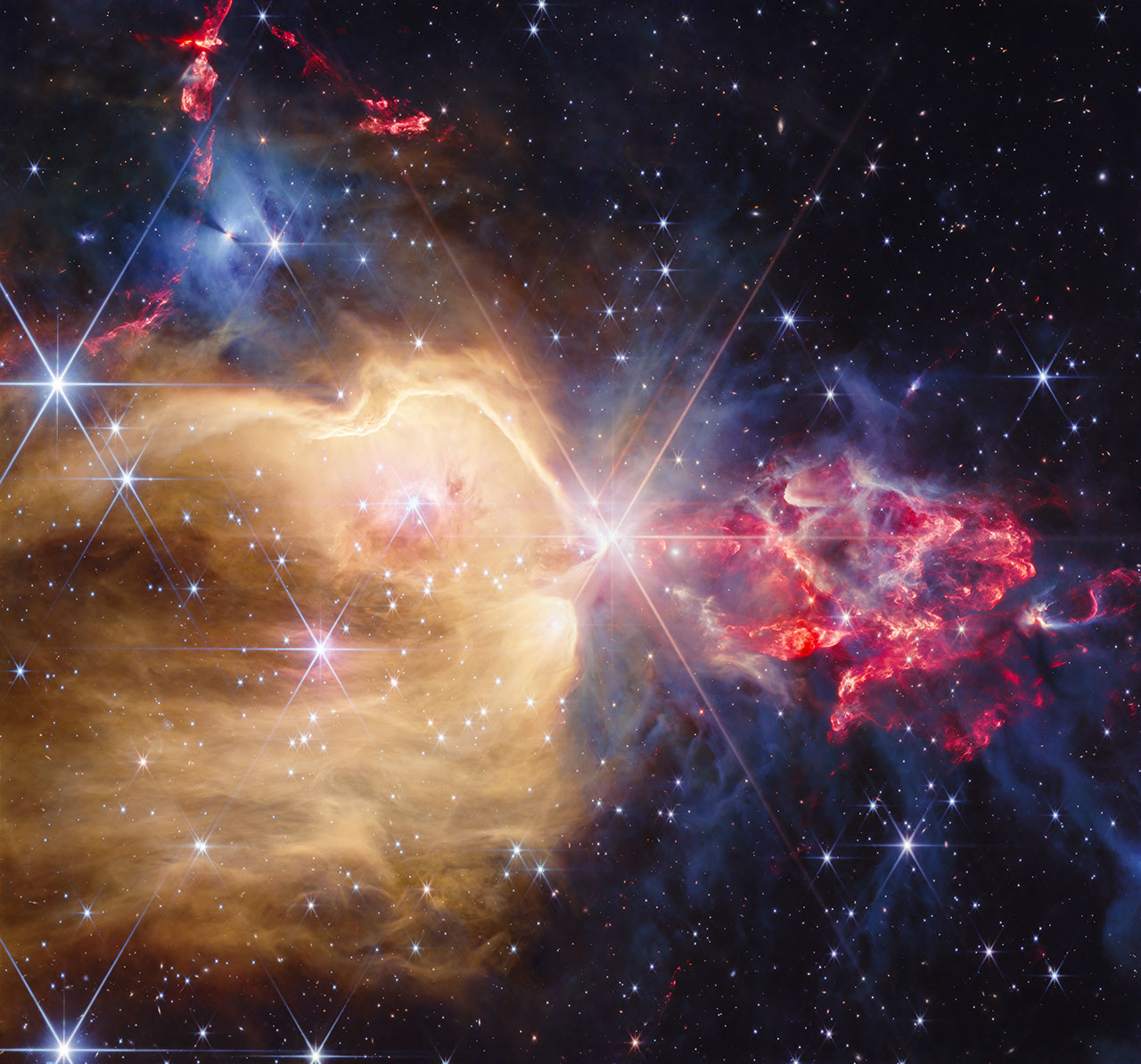
NASA’s James Webb Space Telescope has revealed many protostars and stars within the glowing gases of NGC 7129. Hot, atomic hydrogen gas is shown here in the golden region, while cooler, molecular hydrogen gas, shocked by embedded protostars, is represented in red.
A cauldron of cosmic creation is being revealed in a new image from NASA’s James Webb Space Telescope. Webb has unveiled numerous stars formerly hidden by clouds of dust in a stellar nursery known as NGC 7129, which resides about 3,300 light-years from Earth.
Stars, the engines of elemental creation, have life cycles that begin with their birth in molecular clouds – cold, dense regions of dust and gas. Because of these dusty cocoons, young stars are often impossible to view by many telescopes, particularly those incapable of capturing infrared light. Webb, however, has a high degree of infrared sensitivity, allowing astronomers to peer through that dust and study the beginning of the star life cycle.
Image: NGC 7129 (NIRCam Image)
NASA’s James Webb Space Telescope has revealed many protostars and stars within the glowing gases of NGC 7129. Hot, atomic hydrogen gas is shown here in the golden region, while cooler, molecular hydrogen gas, shocked by embedded protostars, is represented in red.
Image: NASA, ESA, CSA, STScI; Image Processing: Alyssa Pagan (STScI)
The stars from this cluster are in different stages of their development, as the more massive stars form and evolve the fastest. The most massive (and the most mature) is the region’s luminous central star, LkH(alpha) 234 (pronounced Lick-H-alpha). This star, which sports the image’s most prominent diffraction pattern, is a pre-main-sequence star weighing around 5 to 8 times the mass of our Sun. Pre-main-sequence stars like these have mostly finished gathering mass and are contracting under the force of gravity, causing their temperatures to rise. In time, this star will fuse its own hydrogen like our Sun.
The cavity to its left, which appears in gold and spans about 3.5 light-years, is the largest demonstration of the central star’s impact. Outflows from an earlier stage of the star’s life cycle carve into the dense molecular cloud of hydrogen. Both the outflows and the star’s light energize the gas, causing it to glow. While much of this hydrogen gas is blown away, a large amount is also compressed, creating the conditions for even more stars to form.
Interactive: The Colorful Clouds of NGC 7129
Explore the details of NGC 7129 in to uncover the hidden features and activity within the clouds of this young star-forming region. In this interactive, venture to individual points of interest or follow guided tours through related locations and stories. Launch in full-screen for the complete interactive experience — or view directly in your browser.
NASA and STScI
A few of these stars are visible within the cavity. Several of them are also pre-main-sequence and emit stellar winds. The nearby bow shocks, the curved compressed gas that appears near the stars, are created as those winds push into the energetic gas and create their own, smaller cavities.
Together, the central and embedded stars also create the sharp ridge seen at the top of the golden cavity. Their light generates a hot environment that pushes against the colder and denser molecular gas outside the cavity, and creates a boundary known as a photodissociation region. In this region, the molecules of hydrogen break down into atoms. By influencing the temperature and chemistry of the region, this collection of stars offers insight into how these molecular clouds will gradually erode over millions of years.
The region to the right of the central star narrates a different, but equally chaotic tale. This clumpy matter represented in red hides much younger objects than those on the left: protostars. The protostar stage is earlier than the pre-main-sequence stage and occurs after molecular clouds of gas and dust initially compress and fragment.
As the protostars accumulate matter and increase their mass, they eject outflows of superheated material. These outflows interact with the dense, gray, translucent matter the protostars are wrapped within, creating shocks that cause a textured appearance. The red glow is also the result of the interaction. Multiple outflows from multiple stars overlap from our point of view, leading to the scene’s chaotic look.
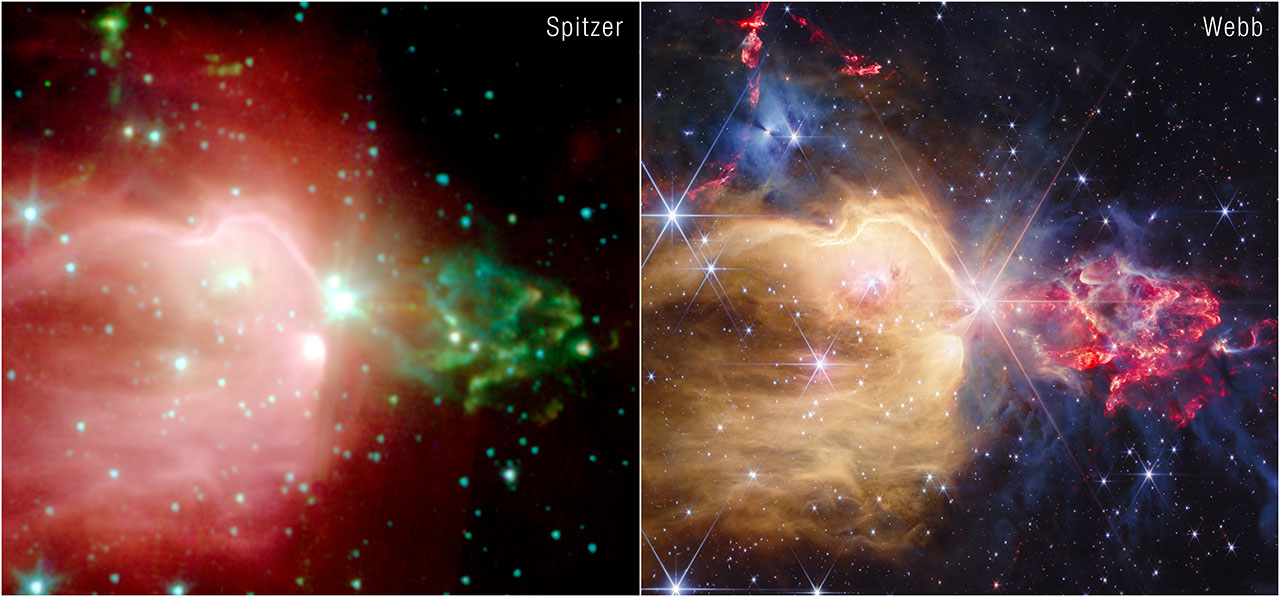
Image: NGC 7129 Side-by-Side (Spitzer and Webb Image)
NASA’s retired Spitzer Space Telescope observed the gas and dust within NGC 7129; however, NASA’s James Webb Space Telescope’s improved resolution shows more detailed gas and dust filaments, along with many background galaxies.
More of these protostellar outflows can be seen at the upper left of the image, near a blue-colored nebula. The center of this blue region hosts a protostar surrounded by a donut-shaped disk of material. This disk casts a shadow against the surrounding nebula, reminiscent of a similar structure known as the “Bat Shadow” that was observed by NASA’s Hubble Space Telescope.
Webb’s high spatial resolution reveals many rich structures in the region’s gas, building on research done previously by NASA’s retired Spitzer Space Telescope. Astronomers will continue to use this Webb data to study how the stars and protostars in this region influence the surrounding gas and dust.
The James Webb Space Telescope is the world’s premier space science observatory. Webb is solving mysteries in our solar system, looking beyond to distant worlds around other stars, and probing the mysterious structures and origins of our universe and our place in it. Webb is an international program led by NASA with its partners, ESA (European Space Agency) and CSA (Canadian Space Agency).
The following sections contain links to download this article’s images and videos in all available resolutions followed by related information links, media contacts, and if available, research paper and Spanish translation links.
Related Images & Videos
NGC 7129 (NIRCam Image)
NASA’s James Webb Space Telescope has revealed many protostars and stars within the glowing gases of NGC 7129. Hot, atomic hydrogen gas is shown here in the golden region, while cooler, molecular hydrogen gas, shocked by embedded protostars, is represented in red.
NGC 7129 Side-by-Side (Spitzer and Webb Image)
NASA’s retired Spitzer Space Telescope observed the gas and dust within NGC 7129; however, NASA’s James Webb Space Telescope’s improved resolution shows more detailed gas and dust filaments, along with many background galaxies.
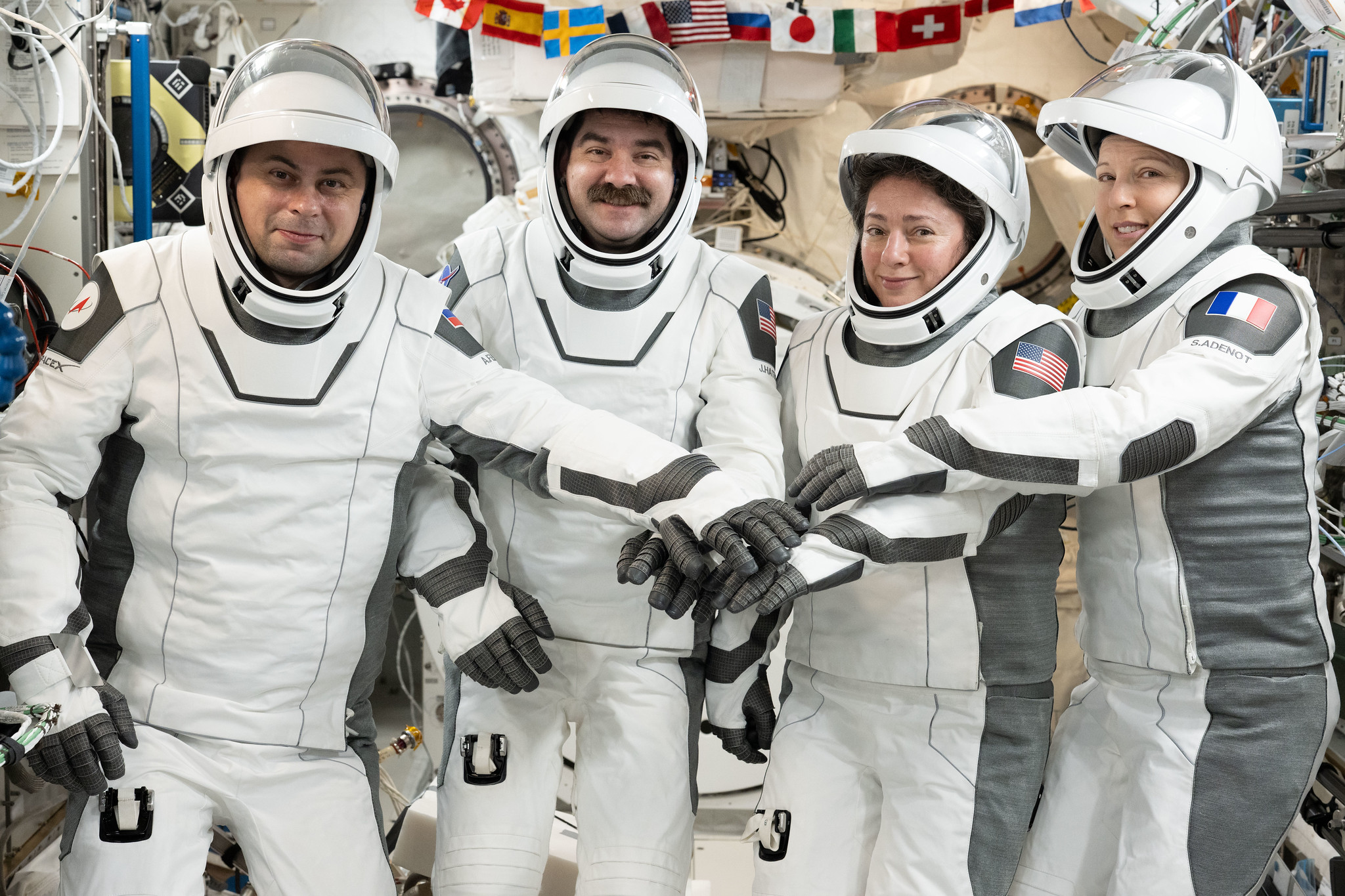
NASA’s SpaceX Crew-12 members gather for a portrait in the pressure suits they will wear when they depart the International Space Station inside the SpaceX Dragon spacecraft. From left, Roscosmos cosmonaut and mission specialist Andrey Fedyaev, NASA astronauts Jack Hathaway and Jessica Meir, Crew-12 pilot and commander respectively, and ESA (European Space Agency) astronaut and mission specialist Sophie Adenot.
Credit: NASA/Anil Menon
NASA and SpaceX are targeting no earlier than 8:05 a.m. EDT, Wednesday, Oct. 7, for the undocking of the agency’s SpaceX Crew-12 mission from the International Space Station, pending weather conditions.
An Oct. 7 undock puts NASA astronauts Jessica Meir and Jack Hathaway, ESA (European Space Agency) astronaut Sophie Adenot, and Roscosmos cosmonaut Andrey Fedyaev on schedule to splash down off the coast of California at approximately 11:34 a.m. on Thursday, Oct. 8.
NASA’s live Crew-12 return coverage will stream through a variety of platforms. Learn where to watch online:
Mission managers continue monitoring conditions in the recovery area, as undocking of the SpaceX Dragon depends on spacecraft readiness, recovery team readiness, weather conditions in the Pacific off the coast of California, and other factors.
NASA’s coverage is as follows (all times Eastern and subject to change based on real-time operations):
Wednesday, Oct. 7
6 a.m.: Hatch closure coverage begins
6:20 a.m.: Hatch closing
7:45 a.m.: Undocking coverage begins
8:05 a.m.: Undocking
Following the conclusion of undocking coverage, NASA will provide audio-only communications between Crew-12, the space station, and flight controllers during Dragon’s transit away from the orbital complex.
Bill Spetch, deputy manager of Commercial, NASA’s Low Earth Orbit Program
Dr. Liz Warren, deputy chief scientist, NASA’s Low Earth Orbit Program
Lee Echerd, senior mission manager, Customer Operations and Integration, SpaceX
Andreas Mogensen, leader, Human Exploration Group, ESA
To participate virtually in the teleconference, media must contact the NASA Johnson newsroom for call details by 12 p.m., Oct. 8, at: jsccommu@mail.nasa.gov or 281-483-5111. To ask questions, media must dial in no later than 10 minutes before the start of the call. The agency’s media credentialing policy is available online.
For more information about the Crew-12 mission, visit:
Heading Home: NASA’s SpaceX Crew-12 Concludes Station Science Mission
NASA’s SpaceX Crew-12 mission is ending, with the crew scheduled to return in early October. NASA astronauts Jessica Meir and Jack Hathaway, ESA (European Space Agency) astronaut Sophie Adenot, and Roscosmos cosmonaut Andrey Fedyaev will head home from the International Space Station after supporting research that benefits life on Earth and prepares humans for missions into deep space.
Here’s a look back at some of their accomplishments:
Orbital transit
NASA/ESA
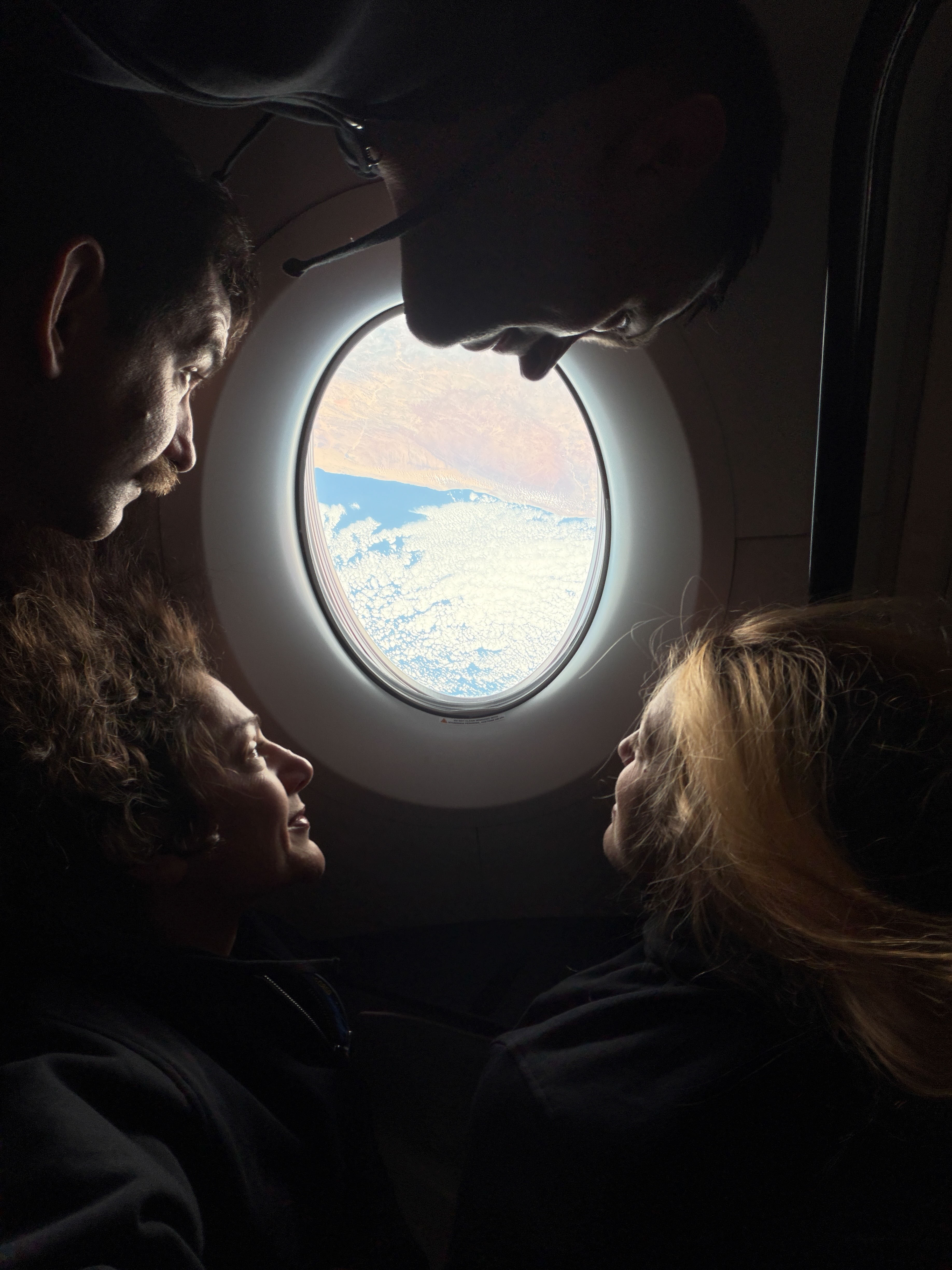
The crew members look out the window of a Dragon spacecraft during their journey to the space station, a destination that offers a unique vantage point to observe both Earth and the cosmos. Research in microgravity allows the scientific community to experiment through a new perspective, from changes in how cells behave to how materials take shape, space offers new paths to scientific discovery.
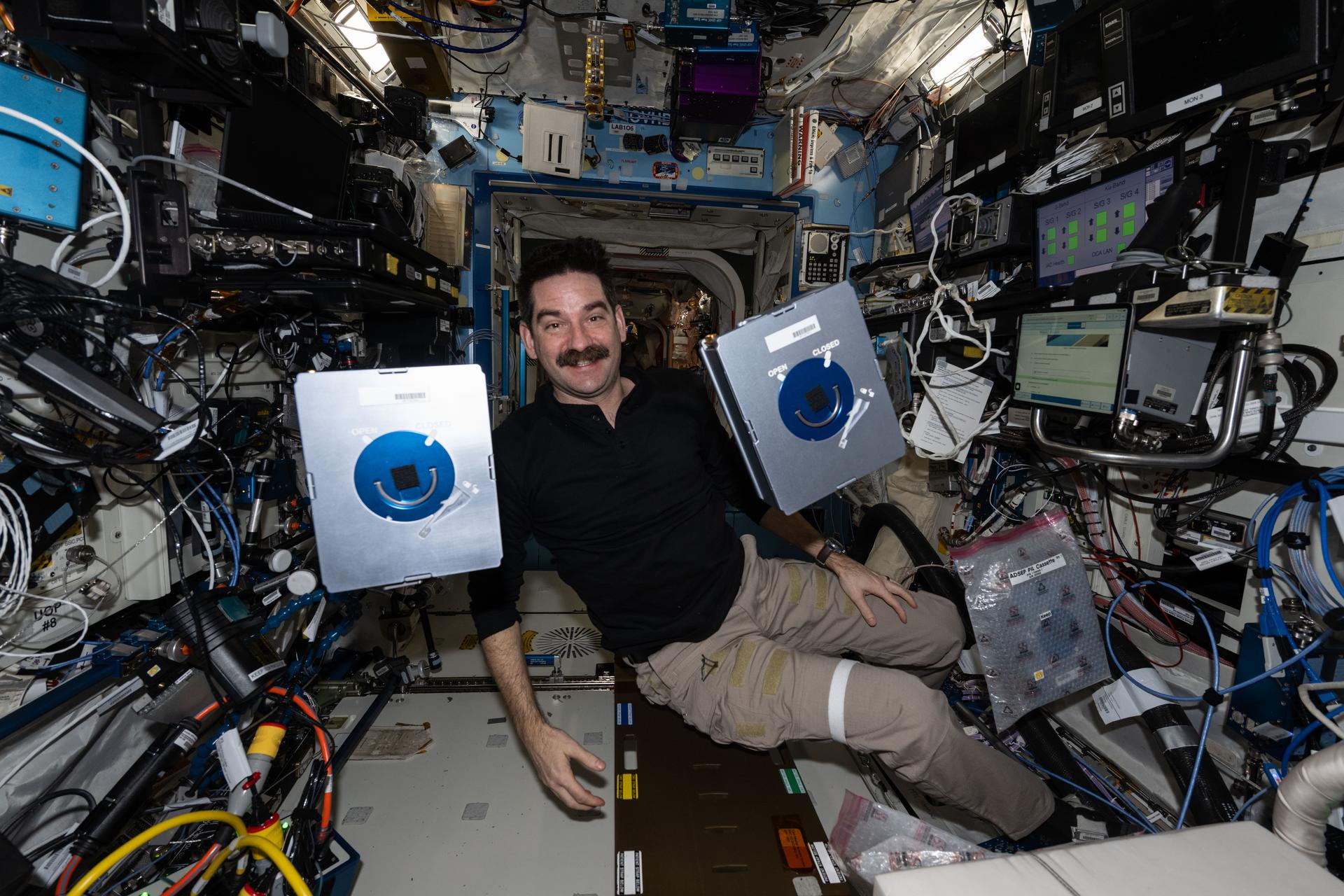
Hathaway floats alongside hardware used for crystal growth experiments aboard the orbiting laboratory. Microgravity reveals new details about crystal structures, helping researchers improve the quality and stability of pharmaceuticals. Here, cancer-targeting treatments are crystallized to better understand their properties and help advance cancer therapies on Earth.
Learn more about the Pharmaceutical In-space Laboratory (ADSEP-PIL-15).
Boosting quantum science
NASA/Jack Hathaway
Meir works with cables that deliver light used to cool, trap, and study atoms inside the Cold Atom Lab. In microgravity, ultracold atoms can be observed for longer periods, giving scientists a window to peer into the quantum realm. A recent upgrade to the facility increases the number of atoms produced, providing more data to advance quantum technologies such as solar cells and the components that power cell phones and computers.
Adenot holds a small container that houses a bone scaffold made from wood, designed to mimic the structure of real bones and support the growth of bone cells. Since microgravity can accelerate bone loss, it offers a unique opportunity to test how well the scaffold promotes bone regeneration. Insights from this study could protect future space explorers and provide new treatment options for patients with osteoporosis, a disease that affects more than 200 million people globally.
Meir sets up hardware for an investigation that studies soft materials made from tiny particles suspended in water. In microgravity, scientists can study how these particles interact and assemble into structures differently than they do on Earth. Understanding these interactions could help scientists fine-tune the texture, stability, and performance of materials used for growing plants, 3D printing, and producing pharmaceuticals.
Hathaway holds equipment to test for antibiotic-resistant bacteria aboard the space station. Some bacteria can withstand antibiotics, starvation, and disinfection, making them a concern in closed environments like spacecraft. Sequencing DNA in microgravity can reveal how resilient microbes adapt to space, helping scientists identify countermeasures to manage antibiotic‑resistant bacteria during exploration missions while also advancing efforts to combat resistance on Earth.
Learn more about CS-05A: Genomic Enumeration of Antibiotic Resistance in Space (GEARS).
Fresh delivery
NASA/Chris Williams
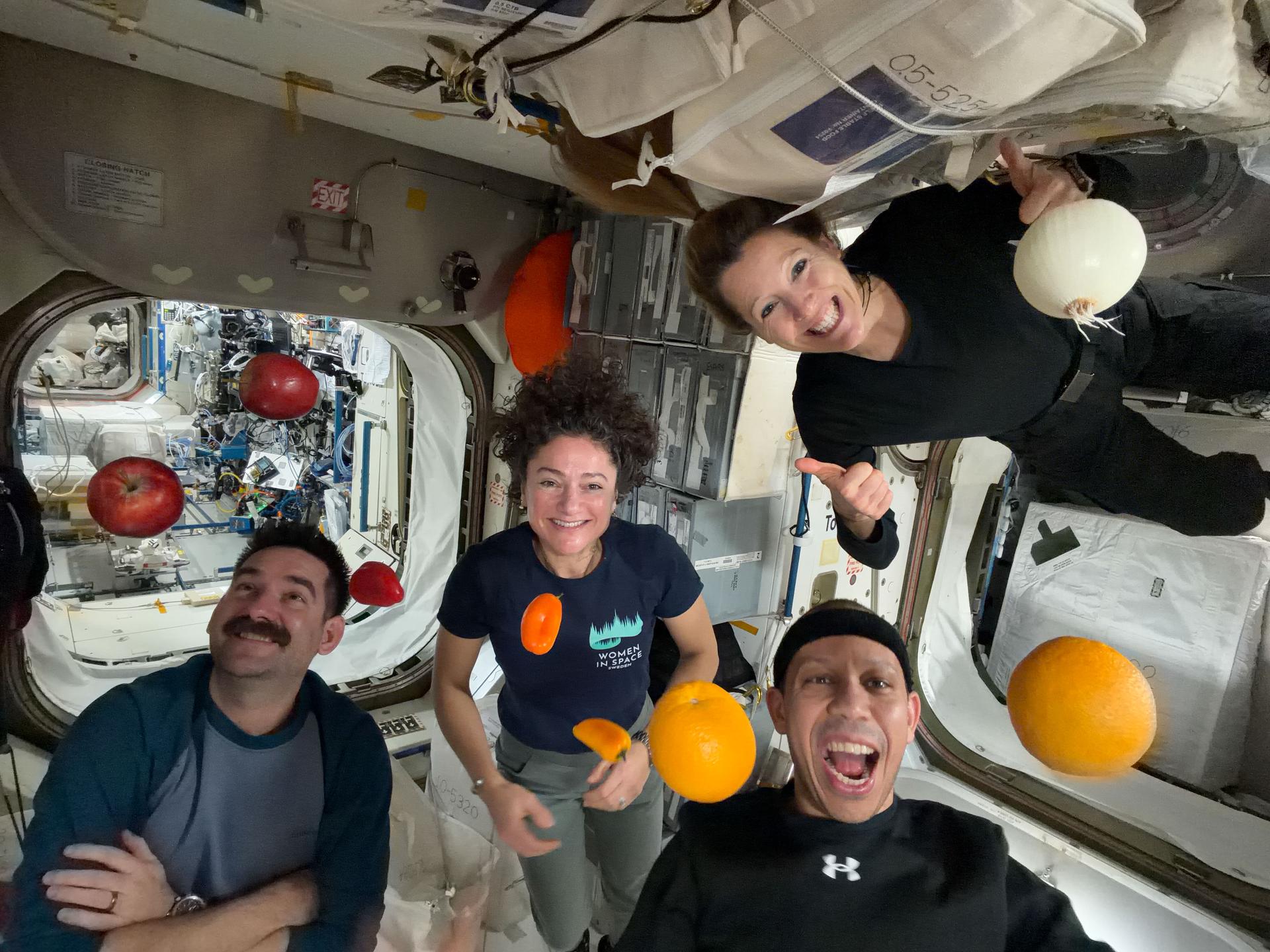
Expedition 74 crew members smile among fresh produce delivered aboard NASA’s Northrop Grumman Commercial Resupply Services 24 mission. Cargo flights bring critical supplies, fresh food, sweet treats, and new science to the space station. The Cygnus XL spacecraft also delivered many research projects, including an instrument that could improve space-weather modeling and a project that could help protect gut-microbiome stability on future exploration missions.
Reshaping cartilage
NASA
Meir works on an investigation that studies how engineered cartilage tissue develops in microgravity, which may help scientists produce medical implants that more closely resemble natural cartilage. For millions of people with cartilage injuries, space-grown tissue could offer treatment options that don’t require transplanting cartilage from another part of the body.
Learn more about Biomimetic Tissue Engineering in Microgravity for Cartilage using Aggregate Rejuvenation, Tension, and Self-Assembly (BEM-CARTS).
Printing meets metal
NASA
Adenot installs the Metal 3D Printer aboard the orbital complex. Several small metal parts have already been 3D printed in microgravity and returned to Earth, where their quality is evaluated against those made on the ground. Producing metal parts on demand in space could give future crews the ability to make or replace what they need far from Earth, reducing reliance on spare parts and resupply missions.
Adenot works to produce intravenous (IV) fluid on demand in microgravity. Commercial IV fluids expire after about 16 months and carrying them on long-duration missions adds weight and takes up valuable space. This system could provide a critical medical resource when resupply is limited and improve access in remote areas or during emergencies on Earth.
Learn more about Intravenous Fluid Generation – Mini (IVGEN Mini).
Multiplying stem cells
NASA
Hathaway takes a selfie as Meir conducts a stem cell investigation in space. Microgravity can help produce larger numbers of clinical-grade stem cells that retain their ability to transform into other cells. Cells used in this experiment could help rebuild blood and immune systems after chemotherapy, advancing care for leukemia and other blood diseases on Earth.
Learn more about the Hematopoietic Stem Cell Expansion in Space: Pathfinder Investigation (InSPA-StemCellEX-H2).
Training bone cells
NASA/Jack Hathaway
Hathaway holds an experiment container that uses bone marrow cells to study how microgravity affects bone and muscle. The research uses structures that mimic parts of bone marrow, and some samples are exposed to vibrations that simulate exercise. Tracking changes in these cells could reveal new ways to combat bone and muscle loss during spaceflight and support bone health on Earth.
Orbiting more than 200 miles (320 km) above Earth, the International Space Station is a powerhouse of cutting-edge science that is unlocking discoveries not ...
NASA’s Webb Provides Crash Course on Planet-Shattering Collisions
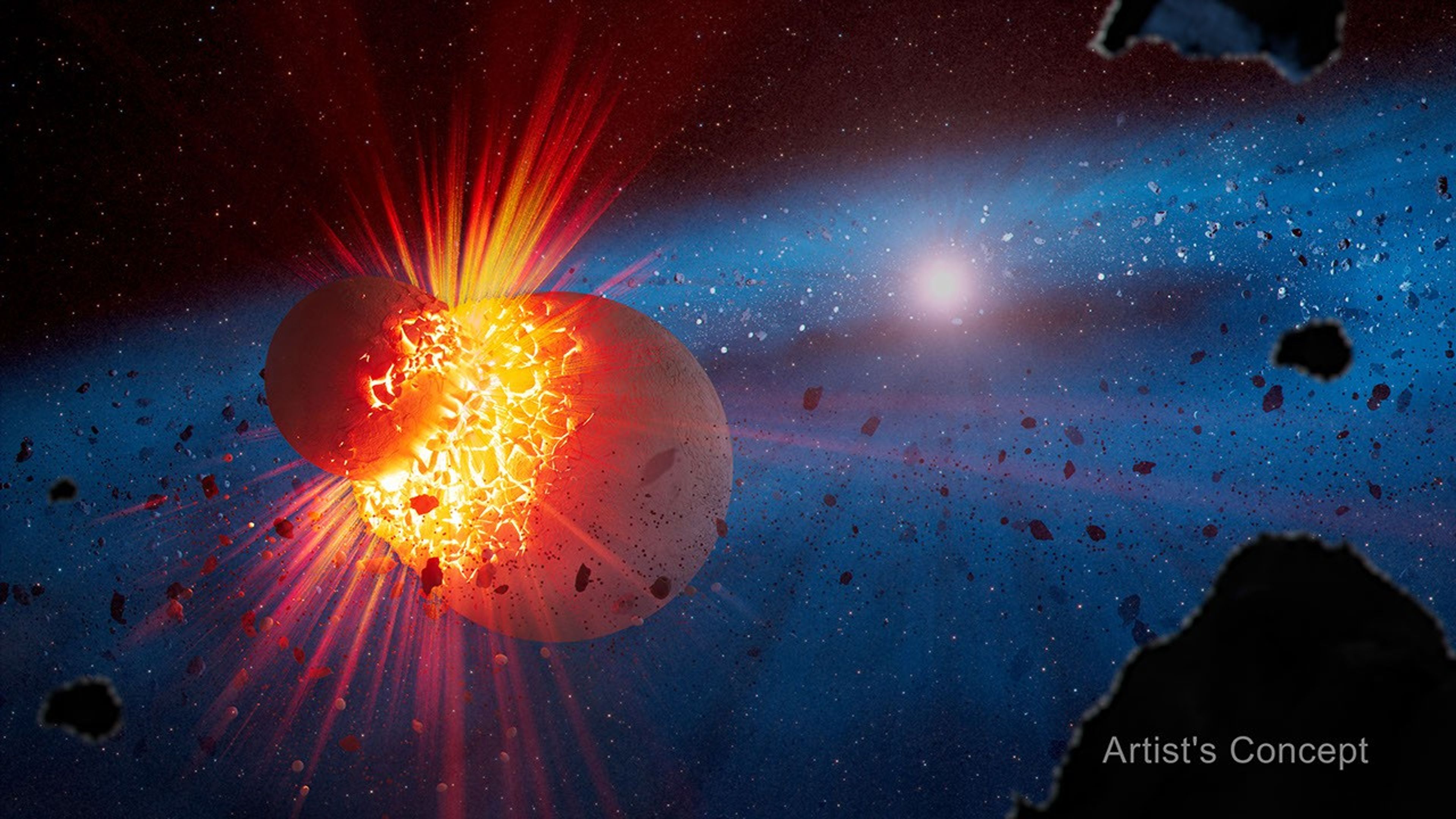
The types of collisions within young stellar systems known as extreme debris disks are relevant to scientists’ understanding of our own solar system, which is thought to have undergone similar impact events that created our Moon and shaped Earth’s initial state.
Credits: Artwork: NASA, ESA, CSA, Joseph Olmsted (STScI)
In the early history of our solar system, scientists theorize that a Mars-sized object called Theia smashed into the infant Earth, vaporizing massive amounts of rock and blasting it into space. Some of that material coalesced into the Moon, where NASA’s Artemis program is returning humans, preparing for Mars, and shaping the future of space exploration.
That long-ago, violent collision reshaped our home planet. Astronomers have used NASA’s James Webb Space Telescope to examine a class of young stellar systems that show signs of similar upheavals, providing clues to the amount of energy in their collisions. The results offer insights into the composition and evolution of these chaotic systems.
The types of collisions within young stellar systems known as extreme debris disks are relevant to scientists’ understanding of our own solar system, which is thought to have undergone similar impact events that created our Moon and shaped Earth’s initial state.
Artwork: NASA, ESA, CSA, Joseph Olmsted (STScI)
The environment surrounding a star changes as it ages, beginning with a juvenile, gas-rich protoplanetary disk where forming planets can reside, before evolving to a gas-poor debris disk. During its mission lifetime, NASA’s retired Spitzer Space Telescope examined the debris disk stage and discovered a subclass termed extreme debris disks. These systems harbor unusually large amounts of warm dust close to the star, in the region comparable to where rocky planets orbit in our solar system. A team of astronomers led by Kate Su of the Space Science Institute in Boulder, Colorado investigated these intriguing objects with Webb.
Contrary to theoretical predictions, which suggest we should observe many extreme debris disks, observations indicate that these environments are rare. Scientists estimate roughly only 1% of young stars show observable signatures of this phase based on the data collected so far, including possibly our own solar system during its formation. Despite their rarity, the team was able to compile a sample of 21 extreme debris disks, including five from Spitzer’s archival data and 16 from Webb, with 12 newly observed disks and follow-up observations on four of Spitzer’s.
“This is the first time we have gathered enough systems to truly understand this subclass that we call extreme debris disks,” said Su, lead author of the paper. “Before Webb, we had limited information. We knew that they are weird and very different from the typical cold debris disks that we know, like Vega and Fomalhaut. Now that we have more data, we can pin down what these disks represent for planet formation and evolution.”
The team confirmed that extreme debris disks share three key properties: smaller dust grains than those in protoplanetary or classic debris disks, a high concentration of warm dust, and irregular brightness variations, all revealed by mid-infrared spectra from Webb and Spitzer.
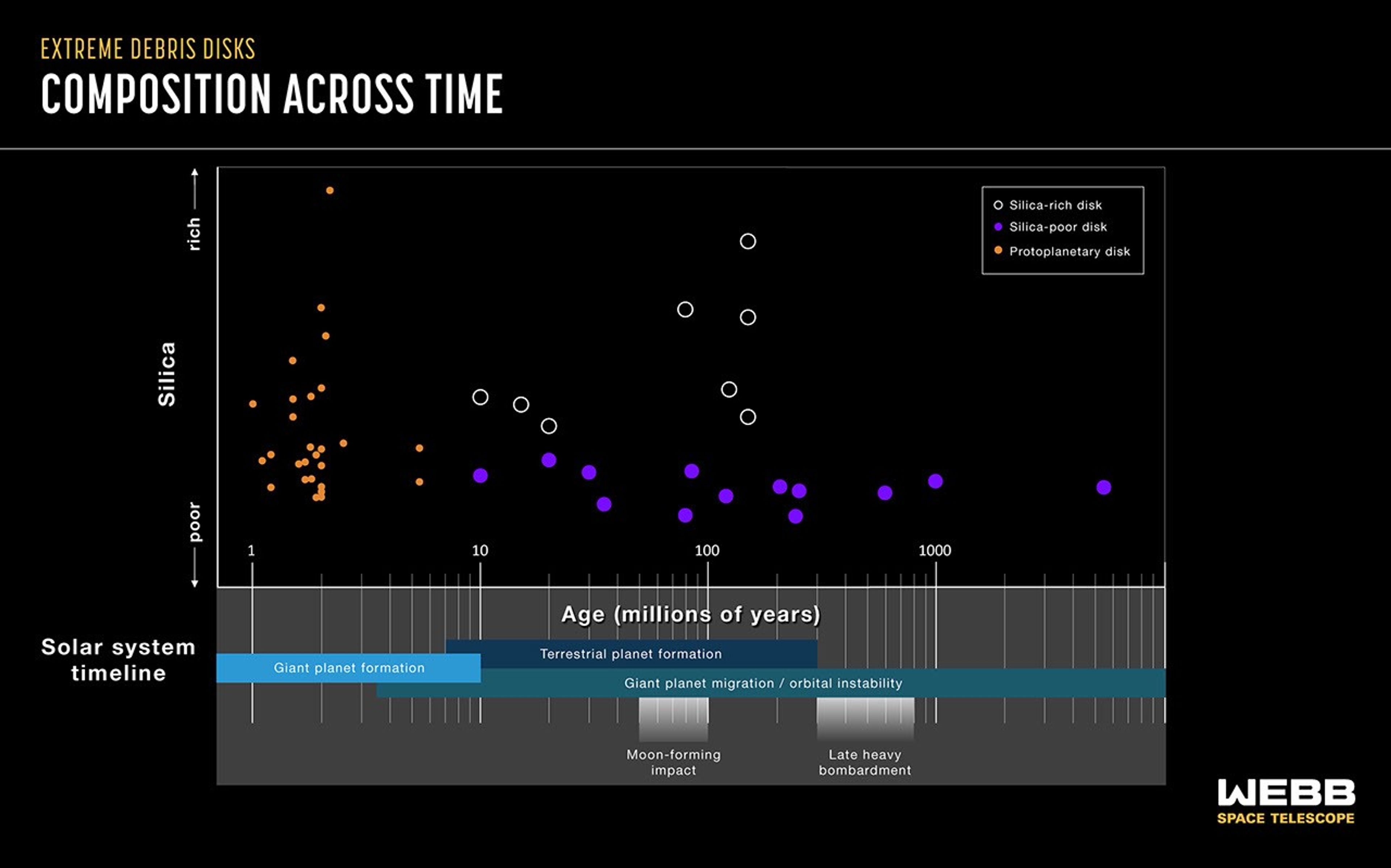
To determine the driving factor for these qualities, the team studied the mineralogical makeup of the disks. They found that their sample could be categorized into silica-rich and silica-poor disks. Volcanic glass like obsidian is one example of silica-rich material found on Earth, whereas the silica-poor mineral forsterite appears as green sand grains on some beaches in Hawaii. An extreme debris disk’s category relays information on the type of collisions producing the impact debris and may help account for its variability in infrared brightness.
“To just see their mid-infrared emission and beautiful spectral features with Webb, which allowed us to identify their compositions, was the most exciting thing for me,” said Agnes Kospal of Konkoly Observatory in Budapest, Hungary, and a coauthor of the study. “We have no other way to study these planetary embryos directly because they are too small.”
Of their sample, about one-third is silica-rich, suggesting these disks are produced by high-energy impacts between Mars-sized bodies where a significant portion of the material is vaporized. The remaining two-thirds of their sample is silica-poor, indicating that the collisions are occurring on smaller scales, like grazing, between Moon-sized objects. Silica-rich disks are found only around stars younger than 300 million years, while silica-poor disks persist across a broad range of ages and often show greater brightness variability. The team proposes that this variability is driven by the rapid evolution of fresh debris through orbital changes and additional impacts.
Their findings can be applied to our own solar system, which may have experienced more than one extreme debris disk phase.
“How rocky planets formed and giant planets evolved are part of the broader story of the solar system’s formation. It’s all one story,” said Su. “Our work on extreme debris disks helps us bring together the big picture of what we currently understand.”
Image: Composition of Extreme Debris Disks Across Time
By investigating the compositions of extreme debris disks, scientists inferred that silica-rich disks are produced by high-energy impacts of Mars-sized objects, while silica-poor disks are created by less energetic events from Moon-sized bodies.
Illustration: NASA, ESA, CSA, Joseph Olmsted (STScI)
Simulations suggest that terrestrial planets, such as Earth, should form within the first few hundred million years of a solar system’s formation. This period fits with the ages of silica-rich extreme debris disks observed so far and aligns with the estimation that Earth and the Moon formed around 100 million years after the Sun formed, with the Moon likely being the result of a collision between Earth and a Mars-sized object.
As for whether our Sun underwent a silica-poor extreme disk phase, if older silica-poor disks and their random intervals of infrared brightness do reflect orbital instability, this would be broadly consistent with the Late Heavy Bombardment hypothesis for our solar system. In that scenario, the gas giant planets migrated significant distances, gravitationally disrupting the orbits of smaller bodies and triggering catastrophic collisions that generated the short-lived, dust-rich phases observed in extreme debris disks.
“Of course, there’s many things we still don’t know about these disks,” said Attila Moor of Konkoly Observatory, a coauthor of the study. “We expect no silica-rich systems among older extreme debris disks. We only have three disks in our sample that fit that age criteria, so it’ll be nice to observe more of these systems to confirm our hypothesis.”
The James Webb Space Telescope is the world’s premier space science observatory. Webb is solving mysteries in our solar system, looking beyond to distant worlds around other stars, and probing the mysterious structures and origins of our universe and our place in it. Webb is an international program led by NASA with its partners, ESA (European Space Agency) and CSA (Canadian Space Agency).
The following sections contain links to download this article’s images and videos in all available resolutions followed by related information links, media contacts, and if available, research paper and Spanish translation links.
Related Images & Videos
Extreme Debris Disk (Artist’s Concept)
The types of collisions within young stellar systems known as extreme debris disks are relevant to scientists’ understanding of our own solar system, which is thought to have undergone similar impact events that created our Moon and shaped Earth’s initial state.
Composition of Extreme Debris Disks Across Time
By investigating the compositions of extreme debris disks, scientists inferred that silica-rich disks are produced by high-energy impacts of Mars-sized objects, while silica-poor disks are created by less energetic events from Moon-sized bodies.
NASA, CSA (Canadian Space Agency), and the German Aerospace Center signed a joint statement of intent to begin coordinated, preparatory work toward an Earth-based demonstrator to learn how to grow crops on the Moon, which will be essential to helping astronauts go farther and stay longer in space.
The Lunar Agriculture Module-Ground Test Demonstrator aims to develop the technologies needed to grow space crops and study how they perform under atmospheres and controlled environments similar to those expected during missions at Moon Base. Through Moon Base, NASA and its partners will build the infrastructure to support an enduring human presence near the Moon’s South Pole, advancing science and technology while preparing for future human missions to Mars.
Space crops will provide deep space crews with whole-food nutrition and increase dietary variety. They can also absorb carbon dioxide, produce oxygen, and recycle water. These capabilities will become increasingly important as human missions extend farther from our home planet.
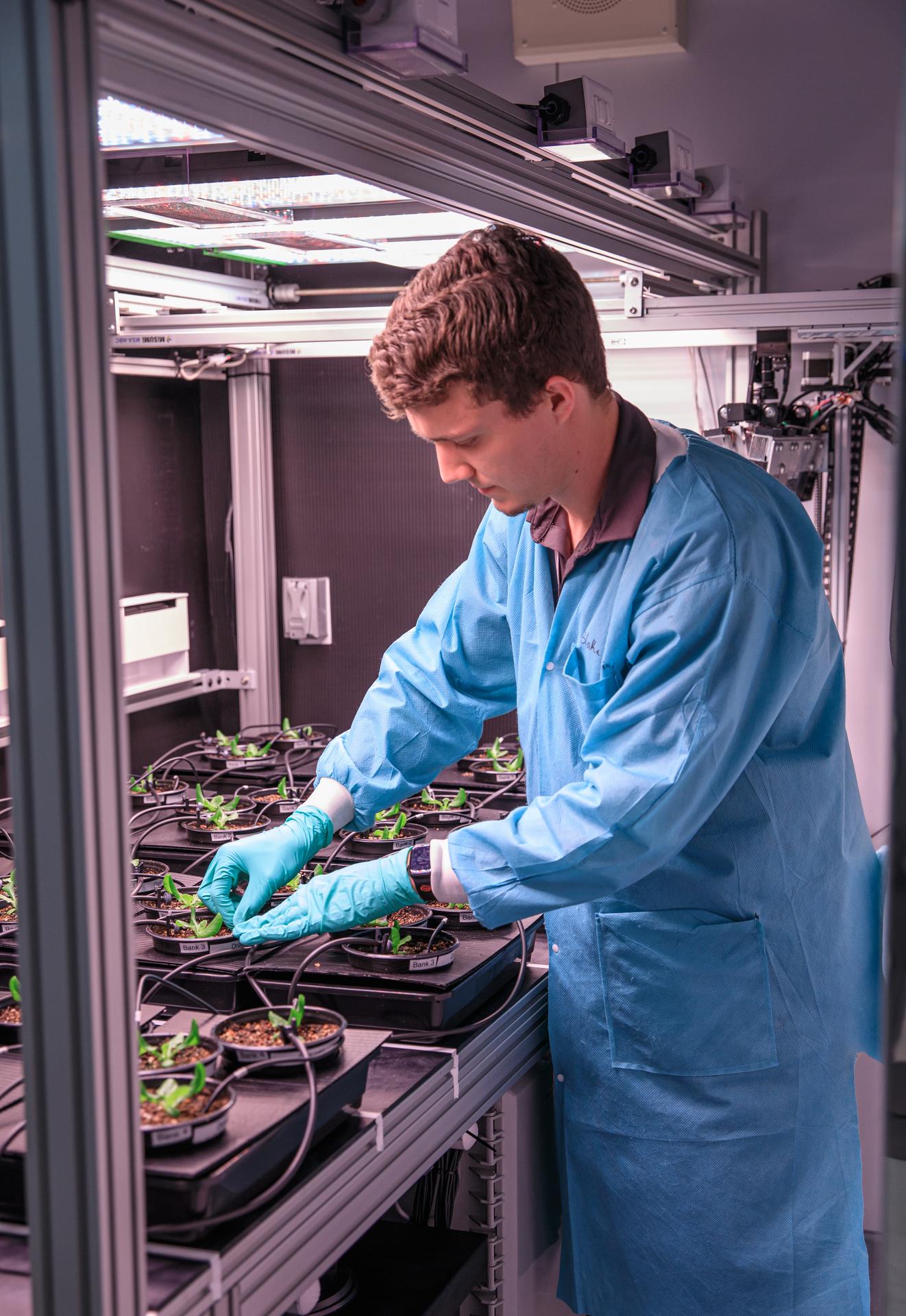
Horticulture scientist Blake Costine adjusts moisture sensors for the Advanced Plant Imaging project at NASA’s Kennedy Space Center on April 17, 2023. In this project, hyperspectral cameras are used to assess plant health. The activity is taking place inside the Plant Production Area at the Florida spaceport’s Space Station Processing Facility.
Photos taken using a microscope reveal the colorful, kaleidoscope-like crystal structure of a new NASA-made material that could be used for manufacturing during future space missions. Developed at NASA’s Glenn Research Center in Cleveland, the material could be created directly on the Moon or Mars, allowing NASA to pack fewer supplies — saving weight and reducing launch costs.
To make the material, research chemical engineer Allison Christy and her team of summer interns at NASA Glenn — Tyler Klinchuch, Ethan Bilodeau, and Emma Levenson — mixed a special plastic with simulated Moon and Mars dust. This plastic is biodegradable and could be produced by bacteria fed with crew waste or carbon dioxide.
“The plastic literally grows within the bacteria’s little bodies,” Christy said. “It’s really cool.”
The team found that incorporating simulated lunar and Martian dust particles into this plastic made it stronger and easier to process. Adding different types and amounts of dust allowed them to adjust the material’s properties. The gray image shows sample material manufactured using mock Moon dust, while the reddish image shows material made with mock Mars dust.
The material could be used to manufacture equipment used inside future Moon or Mars habitats, like structural brackets, wrenches, or chairs. By potentially enabling on‑demand, fully recyclable fabrication with lunar surface material, this could help advance NASA’s objective of a permanent Moon Base by reducing resupply needs and empowering crews to build and repair essential equipment on-site.
“You can’t just bring everything with you to the Moon or Mars,” Christy said. “If something breaks, you have to find a way to fix it with what you have. This is a very versatile material, which is a huge benefit.”
Going forward, the team hopes to analyze whether this material could also be used outside in the harsh environments of the lunar or Martian surfaces.
The material is now undergoing testing in Glenn’s Lunar Environment Structural Test Rig to see how it holds up in extreme temperatures. Several samples are also slated to launch aboard the upcoming Materials International Space Station Experiment 23 (MISSE-23) mission and will be exposed to intense conditions outside the station.
This research is funded through NASA Glenn’s 2026 Center Innovation Fund, which is managed by the agency’s Research and Technology Mission Directorate.
The SpaceX Crew-13 members pose for a portrait in their pressure suits during a preflight training session at the company’s headquarters in Hawthorne, California. From left are, Roscosmos cosmonaut Sergey Teteryatnikov, NASA astronauts Jessica Watkins and Luke Delaney, and CSA (Canadian Space Agency) astronaut Joshua Kutryk.
SpaceX
Four crew members are set to launch to the International Space Station as part of NASA’s SpaceX Crew-13 mission to perform research, technology demonstrations, and maintenance aboard the orbiting laboratory.
NASA astronauts Jessica Watkins and Luke Delaney will support the mission as spacecraft commander and pilot, respectively, joined by CSA (Canadian Space Agency) astronaut Joshua Kutryk and Roscosmos cosmonaut Sergey Teteryatnikov as mission specialists. Crew-13 will lift off no earlier than 11:10 a.m. EDT, Thursday, Oct. 1, from Space Launch Complex 40 at Cape Canaveral Space Force Station in Florida and join the space station’s Expedition 75 crew. Throughout its long‑duration mission, the crew will conduct science experiments to advance research and technology for future Moon and Mars missions and improve life on Earth.
“During the mission, the crew will help researchers treat heart disease and Parkinson’s disease by studying human stem-cell derived tissues that can help improve medicine, disease modeling, and pharmaceutical testing,” said Dana Weigel, manager of NASA’s Low Earth Orbit Program at the agency’s Johnson Space Center in Houston. “They also will explore crop production, which is important for longer-duration spaceflight missions, help us better understand blood flow abnormalities that we see in space, and test new diagnostic medical equipment for monitoring crew health.”
The flight is the 13th crew rotation mission with SpaceX to the space station as part of NASA’sCommercial Crew Office.
Support teams continue to progress through Dragon preflight milestones for Crew-13 and are preparing a SpaceX Falcon 9 rocket booster for its third flight. Up in orbit, NASA’s SpaceX Crew-12 is preparing to return to Earth after a brief handover once Crew-13 arrives.
After all rocket and spacecraft system checkouts are complete and all components are certified, teams will mate Dragon to Falcon 9 in SpaceX’s hangar at the launch site. The integrated spacecraft and rocket will then roll to the pad, where it will be raised vertically for a dry dress rehearsal with the crew and an integrated static fire test before launch.
The quartet will fly aboard a SpaceX Dragon spacecraft named Grace. This spacecraft previously flew in summer 2025 in support of private astronaut mission Axiom Mission 4.
Meet Crew-13
Commander Jessica Watkins
NASA astronaut Jessica Watkins, commander of NASA’s SpaceX Crew-13 mission to the International Space Station, poses for a portrait in her pressure suit at SpaceX headquarters in Hawthorne, California.
SpaceX
This will be the second flight to the space station for Watkins, who was selected as a NASA astronaut in 2017. She grew up in Lafayette, Colorado, and earned an undergraduate degree in geological and environmental sciences from Stanford University, as well as a doctorate in geology from the University of California, Los Angeles. As a geologist, Watkins studied the Martian surface and was a member of the Curiosity rover science team at NASA’s Jet Propulsion Laboratory in Southern California. She first launched to the space station aboard NASA’s SpaceX Crew-4 mission, spending a total of 170 days in space across Expeditions 67/68 in 2022. She will be the first NASA astronaut to launch twice aboard a SpaceX Dragon spacecraft. Follow Jessica on X and Instagram.
Pilot Luke Delaney
NASA astronaut Luke Delaney, pilot of NASA’s SpaceX Crew-13 mission to the International Space Station, poses for a portrait in his pressure suit at SpaceX headquarters in Hawthorne, California.
SpaceX
Selected as a NASA astronaut in 2021, Delaney earned a bachelor’s degree in mechanical engineering at the University of North Florida and a master’s degree in aerospace engineering at the Naval Postgraduate School. The Florida native is a distinguished naval aviator who participated in exercises throughout the Asia-Pacific region and flew missions in support of Operation Enduring Freedom. As a test pilot, Delaney evaluated developmental aircraft systems and served as a test pilot instructor. He also worked as a research pilot at NASA’s Langley Research Center in Hampton, Virginia, where he supported airborne science missions. This is Delaney’s first spaceflight.
Mission Specialist Joshua Kutryk
CSA (Canadian Space Agency) astronaut Joshua Kutryk, mission specialist of NASA’s SpaceX Crew-13 mission to the International Space Station, poses for a portrait in his pressure suit at SpaceX headquarters in Hawthorne, California.
SpaceX
The Crew-13 mission also is the first spaceflight for Kutryk. Prior to his selection as a CSA astronaut in 2017, he served as a CF-18 fighter pilot, flying missions in support of Canada’s NATO, U.N., and North American Aerospace Defense Command commitments. A native of Fort Saskatchewan, Alberta, Kutryk worked as an experimental and operational test pilot at the Aerospace Engineering Test Establishment in Cold Lake, Alberta. Kutryk received a bachelor’s degree in mechanical engineering from the Royal Military College of Canada in Kingston, Ontario, and is a distinguished graduate of the United States Air Force Test Pilot school in Edwards, California. He has master’s degrees in space studies, flight test engineering, and defense studies. Follow Josh on X and Instagram.
Mission Specialist Sergey Teteryatnikov
Roscosmos cosmonaut Sergey Teteryatnikov, mission specialist of NASA’s SpaceX Crew-13 mission to the International Space Station, poses for a portrait in his pressure suit at SpaceX headquarters in Hawthorne, California.
SpaceX
This mission will be Teteryatnikov’s first trip to the orbiting laboratory. He graduated from the Naval Academy, St. Petersburg, Russia, in 2011 as an engineer specializing in ship power plant operations. Before his selection as a test cosmonaut, Teteryatnikov served in various naval engineering roles, including undersea vessels and specialized engine room operations. He was selected for the Gagarin Research and Test Cosmonaut Training Center Cosmonaut Corps in 2021 and has served as a test cosmonaut since 2023.
Mission Overview
CSA (Canadian Space Agency) astronaut Josh Kutryk (left) and NASA astronaut Luke Delaney (right), with assistance from training specialists, practice suiting up in spacesuits in an International Space Station airlock simulator at Johnson Space Center’s (JSC) Space Vehicle Mockup Facility in Houston, Texas. Astronauts familiarize themselves with spacesuit systems and procedures and practice Quest airlock operations before conducting spacewalk training at JSC’s Neutral Buoyancy Laboratory in simulated microgravity.
NASA/Josh Valcarcel
Following liftoff, Falcon 9 will accelerate Dragon to approximately 17,500 mph. Once in orbit, the crew, along with NASA and SpaceX mission control, will monitor a series of maneuvers guiding Dragon to the forward-facing port of the station’s Harmony module. The spacecraft is designed to dock autonomously, but the crew can take manual control if necessary.
After docking, Crew-13 will be welcomed aboard the station by the seven-member Expedition 75 crew, including NASA astronauts Jessica Meir, Anil Menon, and Jack Hathaway, ESA (European Space Agency) astronaut Sophie Adenot, and Roscosmos cosmonauts Pyotr Dubrov, Andrey Fedyaev, and Anna Kikina. After a short handover period, the crew will bid farewell to the Dragon spacecraft carrying NASA’s SpaceX Crew-12 crew of Meir, Hathaway, Adenot, and Fedyaev.
While aboard the orbiting laboratory, Crew-13 will welcome NASA’s SpaceX’s 35th commercial resupply mission in the fall for station resupply and the delivery of International Space Station Roll-Out Solar Arrays. The crew also will welcome NASA’s Northrop Grumman Commercial Resupply Services-25 mission later this year.
For more than 25 years, people have lived and worked continuously aboard the International Space Station, advancing scientific knowledge and making research breakthroughs not possible on Earth. The space station helps NASA understand and overcome the challenges of human spaceflight, expand commercial opportunities in low Earth orbit, and build on the foundation for long-duration missions to the Moon, as part of the Artemis program, and to Mars.
Learn more about the space station, its research, and crew, at:

 Login