❌

Normal view

There are new articles available, click to refresh the page.
Yesterday — 28 October 2026Main stream

PicoBrew’s patents are back on the market, six years after the Seattle homebrew startup’s collapse

28 October 2026 at 13:36
PicoBrew machine
Seattle-based PicoBrew set out to revolutionize home beer brewing with a line of machines it initially sold on Kickstarter. (PicoBrew File Photo)

The patents behind PicoBrew, the Seattle startup that once promised to do for home beer what Keurig did for coffee, are up for sale again — six years after the company collapsed into receivership and after two changes of ownership.

Hilco Global, an Illinois-based diversified financial services company, announced this week that its Intellectual Property Services group has been retained by PicoBrew’s current owner to market the startup’s technology to potential buyers.

The sale includes 17 patents and patent applications, two of them pending, along with engineering and design files and product concepts. Buyers can bid on all or part of the portfolio, and non-binding indications of interest are due Nov. 18. Hilco is pitching the assets to companies in coffee, tea, kombucha, spirits, beverage appliances and housewares.

The seller is Pico Craft Group, which Hilco described as led by a former PicoBrew investor. After PicoBrew’s 2020 collapse, its bridge lender took over the assets. That lender, PB Funding Group, was managed by former Microsoft software developer Greg Whitten, The Seattle Times reported at the time. Pico Craft Group bought the assets from the lender in 2024 for an undisclosed amount, according to Hilco, which did not say who runs the group.

“PicoBrew was a true innovator in the consumer and commercial craft beverage space, and its portfolio has applications well beyond beer,” Eric Hurwitz, a senior director at Hilco, said in a news release.

The portfolio covers technology from PicoBrew’s full product line, according to the release, including the Pico Pro and Pico C home brewing appliances, the PicoStill accessory for spirits, the Pico U Multibrew platform for beer, coffee, tea and kombucha, and Z-Series brewing machines and KegSmarts kegerators for commercial use.

Bill Mitchell, a former Microsoft vice president and longtime homebrewer, founded PicoBrew in 2010 with his brother Jim Mitchell, a food scientist, and Avi Geiger, an engineer who also worked at Microsoft. Their countertop machines automated the brewing process using PicoPaks, ingredient packs based on recipes from craft breweries.

The startup became a Kickstarter regular. Its 2017 campaign for the Pico Model C raised $1.93 million from 4,301 backers, a record at the time in the site’s food category, and the $549 machine landed at retailers including Best Buy, Williams-Sonoma and Amazon. A 2018 campaign for the Pico U pushed PicoBrew into coffee, tea and kombucha.

But the company struggled to land more funding. In February 2020, after failing to close a new round, PicoBrew entered receivership. It had raised more than $15 million and cut its staff to fewer than 40, down from a peak of more than 80.

PicoBrew ceased operations in 2020, and no one has supported existing devices since, according to Hilco. Any decision about future support would be up to a buyer. The King County Superior Court approved the 2020 sale, which freed PicoBrew’s bridge lender from the company’s liabilities and from responsibility to past customers, The Seattle Times previously reported.

Some owners kept their machines brewing without the company’s servers by using a workaround developed by a Facebook group of PicoBrew users, The Spoon reported in 2020. The founders were let go after the receivership, according to the site.

When PicoBrew went up for sale in 2020, Mitchell told GeekWire that hardware takes time and multiple funding rounds backed by firm investor commitment.

He shared advice he’d gotten from Dan Leviton of Maveron: “Startups only fail for one of two reasons — they run out of heart, or they run out of money.”

Before yesterdayMain stream

Ripple Swell draws Bessent reports as Robinhood deal unfolds

27 October 2026 at 17:00
Ripple Swell has drawn reports of a planned appearance by U.S. Treasury Secretary Scott Bessent, as the company has announced a Robinhood partnership covering RLUSD, institutional financing, and treasury management. Ripple’s October 27 announcement describes an agreement spanning both Robinhood’s…

NASA updates lander plans for Moon landings, finally solves long-festering Orion issue

23 October 2026 at 18:48

During a lengthy news conference on Friday, NASA provided a detailed overview of how it plans to return astronauts to the lunar surface as soon as 2028 as part of its Artemis Program.

Although much of the information behind these plans has been previously reported at Ars Technica and elsewhere, this marked the first time NASA has laid them out in detail and acknowledged some substantial changes in the architecture.

Most notably, for SpaceX's Starship vehicle, the revised plan calls for the Orion spacecraft to dock with the Starship lunar lander in high-Earth orbit before transiting to the Moon. And for Blue Origin, the mission architecture includes four launches of the New Glenn rocket, but no spacecraft-to-spacecraft refuelings. Additionally, the Blue Origin plan allows for the possibility of its Blue Moon lander rendezvousing with Orion in low-lunar orbit.

Read full article

Comments

© NASA

Latest estimate for Starship launches required to support a Moon landing? 22.

22 October 2026 at 17:52

NASA does not have, nor want, nuclear weapons. But when it comes to a particular metric that is part of the Artemis Program to land people on the Moon, NASA guards a particular number like it is trying to prevent outsiders from cracking nuclear codes.

I am speaking of the number of Starship launches required to fuel a Starship-based lunar lander in low-Earth orbit such that it can fly out to the Moon, land there, and return to lunar orbit.

This number has been a moving target over the years. The general response from NASA has typically been, 'We don't know for sure, so we're not going to say.' In 2023, for example, the then-director of NASA's Human Landing System, Lisa Watson-Morgan, told Ars, "We have a general idea, but I’m reluctant to say exactly what that is."

Read full article

Comments

© SpaceX

U.S. Navy tests camera system that spots sailors overboard

22 October 2026 at 04:39
U.S. Navy engineers in California have tested a prototype camera system designed to spot a sailor falling overboard and alert the ship’s bridge automatically, throwing a 35-pound rescue dummy off the side of a decommissioned destroyer to see whether the cameras would catch it. The test took place on Aug. 14 aboard the Self Defense […]

SpaceX to attempt Starship catch on next flight, with eye on rapid cadence increase

21 October 2026 at 12:46

In its current iteration, SpaceX is largely a data company seeking to provide enormous amounts of compute for artificial intelligence. During an earnings call on Tuesday afternoon, company officials spent much of their time discussing ambitious plans to roll out up to 10 GW of compute in 2027—on the ground.

Gone are the days of aspirational talk about sending humans to Mars and settling the red planet. Now it is almost all about artificial intelligence and the data needed to support its expansion. However, the company's long-term ambitions to provide data services from space, initially with the Starlink Internet constellation and eventually through the "Starmind" data center constellation, still rely on an actual rocket.

That would be the Starship vehicle, and during the earnings call, SpaceX founder Elon Musk and the company's president and chief operating officer, Gwynne Shotwell, provided new performance targets for the vehicle.

Read full article

Comments

© SpaceX

7 Factors Investors and Partners Look For in an Investable Business

21 October 2026 at 11:01
Photo by Adeolu Eletu on Unsplash

Most founders believe investors fund ideas. In practice, they fund evidence. An investable business shows, publicly and on paper, that it solves a real problem, is led by people who can execute, and is already gaining momentum. That is why PR strategy for startups matters: it puts that evidence in front of the right people before the first meeting.

1. A Real Market Need

This is where most startups fail. A CB Insights analysis of 101 startup post-mortems, summarised by the CMO Council, found that 42% of failed companies cited “no market need,” ahead of running out of cash (29%) and not having the right team (23%). Investors know these numbers, so they test for demand first.

What to show: Customer interviews, waitlists, pilot results, and a bottom-up market estimate. Seed investors want to see how you calculated your market size, because the method reveals how well you understand your customer and competitive position.

2. A Capable, Complementary Founding Team

Many investors weigh the team above the idea. They often look for co-founder history, since shared history tends to predict how a team handles pressure. A strong team covers product, sales, and operations, with visible domain experience.

What to show: founder bios with proof of past delivery, credible advisors, and key hires already made.

3. Traction and Growth Rate

Photo by Jakub Żerdzicki on Unsplash

Traction is demand made measurable. The bar has risen meaningfully since 2021, and investors now expect stronger proof that a product works in the real world. Traction is judged by growth rate rather than absolute size, so steady week-over-week momentum can outweigh a larger but flat number.

What to show: revenue, active users, retention, signed partnerships, or letters of intent.

4. A Clear, Scalable Business Model

Investors want to know how you make money and whether the model improves with scale. Pricing, margins, customer acquisition cost, and payback period should be explainable in two minutes.

Weak monetisation and poor marketing both appear in the failure data compiled by Quake Capital, where a lack of marketing was cited by 14% of failed startups.

What to show: unit economics, a revenue model, and a realistic path to profitability.

5. A Defensible Edge Over Competitors

Too much competition was cited by 19% of failed startups in the same research. Investors will ask what stops a larger player from copying you. Your answer might be proprietary technology, distribution, brand trust, regulatory know-how, or community.

What to show: an honest competitor map and the specific reason customers choose you.

6. Financial Discipline and Runway

Running out of cash was the second most-cited failure reason in the CB Insights data. Investors reward founders who know their burn rate, runway, and use of funds, and who keep clean records. Tidy books also speed up due diligence.

What to show: A simple financial model, a use-of-funds breakdown, and milestones tied to each funding stage.

7. Credibility, Reputation, and Third-Party Trust

This is the factor founders most often underestimate. Investors and partners search for you, and increasingly they ask AI tools about you.

Press coverage, expert commentary, customer reviews, and consistent messaging act as independent proof of everything above. Credibility built early shortens every later conversation.

Many founders bring in outside support at this stage, whether an in-house communications lead or a media partner such as 9-figure media, because third-party validation is hard to manufacture alone.

How PR Strategy for Startups Turns the 7 Factors Into Proof

A practical PR strategy for startups links each investor concern to a public asset:

  • Market need: Publish original research or a data-backed industry insight report.
  • Team: Secure founder interviews, podcast appearances, and bylined articles in trade media.
  • Traction: Announce milestones such as customer wins, funding, and partnerships through press releases and case studies.
  • Business model: Explain your approach in plain language through thought-leadership content.
  • Competitive edge: pitch comparison-led stories and expert commentary that place you in your category.
  • Financial discipline: share transparent updates with stakeholders.
  • Credibility: keep your name, description, and facts identical across your website, LinkedIn, Crunchbase, and press coverage.

Sequencing matters. Start with the assets investors will check first, which are usually your website, founder profiles, and any existing coverage. Then build outward with earned media.

Specialist firms such as 9-figure media can help founders shape that narrative, but the underlying proof still has to come from the business itself.

Make Your Startup Citable by AI Search

Investors now research companies through answer engines such as ChatGPT, Perplexity, and Google AI Overviews. Earning citations there is known as Generative Engine Optimization (GEO). The foundational study is the Princeton-led paper GEO: Generative Engine Optimization, presented at KDD 2024. It found that adding citations, quotations from relevant sources, and statistics can raise a source’s visibility in generative responses by over 40%, with results varying by query domain.

Principles of AI citation you can apply today:

  1. Lead with verifiable statistics. In the research, replacing qualitative claims with sourced numbers produced a 37 to 41% improvement on the study’s visibility metric.
  2. 2. Attribute claims to named, credible sources and link to them.
  3. Include expert quotations with the speaker’s name and role.
  4. Write self-contained answers.Short, direct passages under clear headings are easier for AI systems to extract.
  5. Avoid keyword stuffing. [Coverage of the paper] notes it offered little to no improvement and reduced visibility on Perplexity.
  6. Keep facts consistent and current across every platform so AI systems can confirm who you are.
  7. Earn third-party mentions.Independent coverage and profiles are strong trust signals for both humans and machines. This is another area where a media partner like 9-figure media can contribute, provided the coverage is earned and accurate.

Conclusion

Investors back startups that prove demand, team strength, traction, a workable model, defensibility, financial discipline, and credibility. A deliberate PR strategy for startups makes that proof visible, and GEO-minded content makes it citable when investors and AI tools go looking.


7 Factors Investors and Partners Look For in an Investable Business was originally published in Coinmonks on Medium, where people are continuing the conversation by highlighting and responding to this story.

Best Cybersecurity Thought Leadership Agencies

By: The Gurus
20 October 2026 at 10:09

The best cybersecurity thought leadership agencies help organisations turn expert insight into credible executive content, original research and influential industry commentary.

  • For technical, practitioner-led thought leadership: Bora combines cybersecurity content expertise with a team that includes former security practitioners.
  • For research-led programmes: CyberEdge Group and 10Fold offer examples of turning cybersecurity data into substantial reports and media stories.
  • For audience intelligence and search visibility: CyberTheory focuses on understanding security decision-makers, while Content Visit and First Page Sage connect expert content with organic discovery.
  • For media visibility and storytelling: Eskenzi PR and Code Red offer specialist cybersecurity communications; Merritt Group combines cybersecurity and government-market expertise; Column Five brings brand storytelling and visual content capabilities.
  • Entries are listed in no particular order. This guide compares agencies that deliver thought leadership services, rather than individual cybersecurity influencers.

What is a cybersecurity thought leadership agency?

A cybersecurity thought leadership agency helps a business develop and communicate informed perspectives on security challenges, technologies and industry developments.

The work can include executive ghostwriting, cybersecurity bylines, original research, white papers, interviews and expert commentary. Its defining feature is the substance behind the content: a useful argument, a distinctive interpretation or evidence that helps readers make better decisions.

A cybersecurity PR agency typically focuses on reputation, media relationships and communications. A cybersecurity content marketing agency may support a wider range of educational and commercial material. Either can deliver thought leadership when it has the expertise and processes to develop original insights.

For example, a basic article explaining ransomware is educational content. A research-backed argument about how organisations should rethink ransomware recovery can become thought leadership. The format may be similar, but the contribution is different.

For buyers, the question is whether an agency can extract expertise, challenge familiar assumptions and turn that work into a sustained programme.

How we selected these agencies

Agencies were assessed through their first-party service descriptions, published research, client references and case studies.

To qualify, an agency needed to demonstrate cybersecurity expertise or an established cybersecurity practice; services relevant to thought leadership, such as expert writing, research or earned editorial; and publicly identifiable client work or a substantive published research asset.

The selection includes cybersecurity specialists and broader agencies with relevant experience. Their different levels of cybersecurity focus are identified in the comparison table.

Agencies without demonstrable cybersecurity work, providers offering only routine content production, and individual influencers were excluded. Directory appearances alone were not treated as sufficient evidence.

Entries are listed in no particular order. “Best for” labels are editorial assessments of likely fit, rather than performance rankings. Agency-reported results are attributed accordingly and have not been independently audited. Historical case studies demonstrate experience, rather than necessarily confirming a current client relationship.

The guide will be reviewed annually to check services, supporting evidence and continued relevance.

Best cybersecurity thought leadership agencies in 2026

The right shortlist depends on the work you need: original research, technically credible writing, executive visibility, search discovery or international communications.


Agency Cyber focus Best for Named clients or public references Illustrative work or research
Bora Cybersecurity specialist Technical, practitioner-led content Fortra, Thales, Tenable, Pentest-Tools.com Expert-led content programmes
CyberEdge Group Cybersecurity specialist Research-led thought leadership Google Cloud Security: report sponsor Cyberthreat Defense Report
Content Visit Cybersecurity specialist SEO and AI-search visibility IBM/Randori, Morphisec IBM red-teaming content programme
CyberTheory Cybersecurity specialist within ISMG CISO audience intelligence Client cases anonymised; research partner Cyentia Institute CISO Engagement and Decision Drivers Study
Merritt Group Dedicated cybersecurity practice Commercial and government markets Wandera; security references include Telos and Checkmarx Wandera media programme
10Fold Cybersecurity practice within deep-tech PR Research-driven earned media ForgeRock, AttackIQ ForgeRock Consumer Breach Report
Eskenzi PR Cybersecurity specialist Expert commentary and media visibility Bridewell, Armis, Huntress, KnowBe4 Bridewell thought leadership campaign
Code Red Cybersecurity specialist network Multi-region PR and research BlackFog Cross-border research and commentary
First Page Sage Cybersecurity vertical within a broader agency Search-led thought leadership Cyberfort and Okta listed as client experience; Cadence case study Cadence technical content programme, outside cybersecurity
Column Five Cybersecurity experience within a broader agency Brand storytelling and visual content HackerOne Cyberstrength campaign

The profiles below explain the evidence behind these examples.

Bora

Best for: Technical, expert-led thought leadership informed by former security practitioners.

Bora focuses on cybersecurity marketing and thought leadership. Its staffing differentiator is explicit: the team includes former cybersecurity practitioners alongside journalists, writers, marketers and PR professionals. Bora describes its combined cybersecurity experience as 150 years.

Named work includes Fortra, Thales, Tenable and Pentest-Tools.com. Its published examples describe interviewing subject-matter experts, creating technical guides and developing market narratives from offensive security expertise. Bora also reports producing seven of Thales’s ten leading globally deployed content pieces in 2025.

Its long-running Thales and Fortra relationships illustrate ongoing editorial support, including expert interviews and content development. The fit is strongest where writers need to understand technical detail while making an organisation’s expertise useful to buyers.

CyberEdge Group

Best for: Syndicated research assets and data-driven thought leadership.

CyberEdge Group combines cybersecurity research, content and marketing services. Its offering includes custom research reports and competitive sales tools designed to support thought leadership and commercial conversations.

Its flagship asset is the annual Cyberthreat Defense Report. The 2026 edition draws on responses from 1,200 IT security professionals across 17 countries and 19 industries. Google Cloud Security identifies itself as a sponsor, providing a named example of the report’s industry relationships. Source: 2026 Cyberthreat Defense Report, CyberEdge Group, LLC.

CyberEdge is worth considering when a programme needs a substantial evidence base. Buyers should distinguish between sponsoring an existing study and commissioning proprietary research: these offer different levels of ownership, differentiation and flexibility.

Content Visit

Best for: Connecting technical cybersecurity content with SEO and AI-search visibility.

Content Visit offers cybersecurity content strategy, writing, campaign support and organic discovery services. It describes turning technical interviews, data and original research into reports, white papers and other marketing assets.

Its IBM/Randori case study provides a concrete example. Following IBM’s acquisition of Randori, Content Visit audited existing material, interviewed IBM experts and developed foundational red-teaming content. Its website also identifies work with Morphisec.

Content Visit is a relevant option when expert perspectives need to support both credibility and discoverability. Buyers should ask how original insights are developed alongside keyword planning.

For context, cybersecuritymarketingagencies.com currently features Content Visit prominently; the directory describes featured placements as paid positions rather than rankings or recommendations.

CyberTheory

Best for: Enterprise vendors developing CISO-targeted thought leadership using audience intelligence.

CyberTheory is ISMG’s cybersecurity marketing advisory business. Its services include research, content strategy, white papers, interviews and assets mapped to the buyer’s journey.

Its 2025 CISO Engagement and Decision Drivers Study, developed with Cyentia Institute, analyses content-consumption patterns using ISMG audience activity. That gives buyers a tangible example of its research approach and focus on how security decision-makers engage with information.

The public client case studies reviewed are anonymised, so prospective buyers should request named references relevant to their market.

CyberTheory merits consideration when the challenge is deciding which perspectives, formats and topics will resonate with senior security audiences, as well as producing the content itself.

Merritt Group

Best for: Cybersecurity vendors addressing commercial and government markets.

Merritt Group has a dedicated cybersecurity practice alongside government-market capabilities. Its security offering explicitly includes thought leadership programmes, technical storytelling and relationships with journalists and analysts.

Its published Wandera work illustrates a data-driven media programme. Merritt reports securing coverage in outlets including CNBC, The Washington Post and Politico, alongside an increase in share of voice. Its security page also identifies references including Telos, Checkmarx and BlueVoyant.

This combination makes Merritt a useful shortlist candidate for businesses whose audience extends beyond one commercial buyer group. Ask how the agency would adapt executive perspectives, evidence and distribution for each market, rather than assuming one message will serve everyone.

10Fold

Best for: Research-driven earned media and thought leadership in crowded technology markets.

10Fold is a technology communications agency with cybersecurity experience. Its security practice identifies work with ForgeRock and AttackIQ, including programmes intended to amplify expertise and secure significant media coverage.

The ForgeRock Consumer Breach Report is a clear example of its approach. 10Fold developed the report to create an editorial opportunity without relying on a major company announcement. Its case study reports coverage in publications including Dark Reading and TechRepublic, plus increased engagement with the asset.

The appeal is the connection between research and distribution: an evidence-backed story gives the media something substantive to examine. Buyers should ask about research methodology, data sourcing and how findings will become an ongoing executive narrative.

Eskenzi PR

Best for: Earned media and rapid-response expert commentary, particularly for UK, US and European visibility.

Eskenzi PR’s published cybersecurity work includes Bridewell, Armis, Huntress and KnowBe4. Its campaigns combine proactive media outreach, research amplification, thought leadership and timely commentary.

Eskenzi clients can expect coverage in national, tier 1 and vertical trade publications through rapid response, thought leadership, research, press releases, reports and more and boast an exceptional relationship with cybersecurity journalists

Eskenzi is relevant when internal experts have valuable perspectives but need stronger editorial access and consistent media engagement.

Evaluate the audience and substance of coverage alongside volume. Relevant commentary can support credibility, but buyers should agree how communications success will be assessed.

Pricing: £8-10k monthly retainer depending on location and services included

Code Red

Best for: Coordinated cybersecurity thought leadership across multiple regions.

Code Red is the cybersecurity communications agency and network at coderedcomms.com. Its BlackFog case study describes a coordinated US and UK programme covering media engagement, rapid response and research.

The work included research into CISO challenges and a separate project examining security decision-makers in smaller businesses. Code Red has also commissioned research involving 819 senior security decision-makers to explore thought leadership’s role across the customer lifecycle.

That makes it a relevant option for vendors needing a coherent perspective across markets. The key buying question is how central strategy and local expertise work together: a strong international programme should preserve the argument while adapting examples, timing and media outreach.

First Page Sage

Best for: SEO-driven thought leadership when organic discovery is a primary goal.

First Page Sage is a broader SEO and thought leadership agency with a cybersecurity offering. Its cybersecurity page lists experience with businesses including Cyberfort, Okta and BeyondTrust, and describes interviewing engineers and researchers to develop technically accurate content.

A detailed named example is its Cadence Design Systems case study. Although outside cybersecurity, it demonstrates the agency’s approach to expert ghostwriting, technical content and search strategy. The programme used engineering expertise to answer audience questions through a structured resource hub.

First Page Sage is worth exploring when search visibility is central to the brief. Buyers should request a comparable cybersecurity reference and assess originality separately from rankings and traffic.

Column Five

Best for: Enterprise thought leadership storytelling supported by design and visual content.

Column Five is a broader B2B brand and content agency whose services include developing points of view, data visualisation, long-form thought leadership and advocacy programmes.

Its HackerOne Cyberstrength campaign provides a named cybersecurity example. The work included campaign strategy, a messaging framework, visual identity and video, intended to develop HackerOne’s enterprise-market story. This demonstrates storytelling and presentation capabilities, rather than proving an executive-bylines programme.

Column Five is a relevant option where strong ideas need a clearer narrative and more effective presentation. Buyers requiring ghostwriting, original cybersecurity research or earned media should confirm those deliverables specifically, rather than treating a successful brand campaign as evidence of every capability.


Agencies vs individual thought leaders: which do you need?

An agency and an individual expert solve different parts of the problem.

An agency can provide the processes and capacity to run a programme: interviewing experts, developing arguments, researching evidence, writing, editing, designing and distributing material. This is useful when internal specialists have valuable knowledge but limited time to turn it into publishable work.

An individual thought leader may bring specialist expertise, an established audience, speaking experience or an independent perspective. That can be valuable for a particular topic or event.

Many organisations benefit from both. Internal or external practitioners supply the insight; the agency helps develop and communicate it consistently.

The key is to establish whose expertise the programme will represent. A credible agency should strengthen identifiable voices rather than manufacture opinions disconnected from the people publishing them.

How to evaluate a cybersecurity thought leadership agency

Start with the people who will deliver the work. Ask who conducts interviews, writes drafts and checks technical accuracy. Relevant experience should extend beyond the pitch team.

Next, examine originality. Request examples containing a defensible argument, useful research or a clear contribution to an industry debate. Familiar advice rewritten elegantly is still familiar advice.

Check the evidence behind case studies. What did the agency deliver? Which results were measured, over what period, and against what baseline? Distinguish client-specific outcomes from agency-wide claims.

Discuss distribution before commissioning content. An executive byline, a research report and a technical guide need different routes to their audiences. Clarify whether the scope includes media outreach, analyst engagement, search optimisation or sales enablement.

Finally, agree on measurement. Useful indicators may include relevant coverage, target-account engagement, research citations, speaking opportunities and sales-team use. Traffic and rankings can contribute, but they cannot establish credibility on their own.

Ask for a proposed programme that connects the audience, central argument, evidence, formats and measures of success. That will reveal more than a list of monthly deliverables.

Frequently asked questions

What’s the difference between a cybersecurity thought leadership agency and a cyber PR agency?

Thought leadership focuses on developing credible ideas and expert perspectives. PR focuses on reputation, communications and access to relevant audiences. The two often overlap: a PR agency may develop bylines and research, while a thought leadership agency may support media outreach. Assess the actual service scope.

What does a cybersecurity thought leadership programme include?

A programme usually combines audience research, expert interviews, editorial planning, content development and distribution. Deliverables can include executive articles, research reports, white papers, commentary, webinars and presentations. The useful starting point is a coherent argument, rather than a predetermined number of assets.

How is thought leadership different from content marketing?

Content marketing covers material that attracts, educates and supports buyers. Thought leadership contributes expertise, evidence or a distinctive perspective to that work. A product guide can be valuable content marketing without being thought leadership; a research-led argument may serve both purposes.

How long before thought leadership produces measurable results?

There is no universal timeline. Publication and relevant engagement can be measured early; changes in reputation, inbound interest and commercial outcomes need sustained assessment. Agree on milestones and account for publication schedules, existing visibility, distribution and the sales cycle. Treat promises of immediate authority cautiously.

Should I hire a cyber specialist or a generalist for thought leadership?

A specialist may offer deeper familiarity with security audiences, technical language and industry debates. A broader agency may bring useful creative or cross-market capabilities. Judge the proposed delivery team, relevant work and research process. The agency’s category label is a starting point, not sufficient evidence.

Do I need an agency or an individual thought leader?

Choose an agency when you need ongoing production, editorial management and distribution. Consider an individual expert when you need specialist insight, speaking or access to a particular audience. A programme can combine both, provided roles, authorship and approval responsibilities are clear.


The post Best Cybersecurity Thought Leadership Agencies appeared first on IT Security Guru.

NASA Names Stephen Cash Marshall Space Flight Center Director

16 October 2026 at 16:14
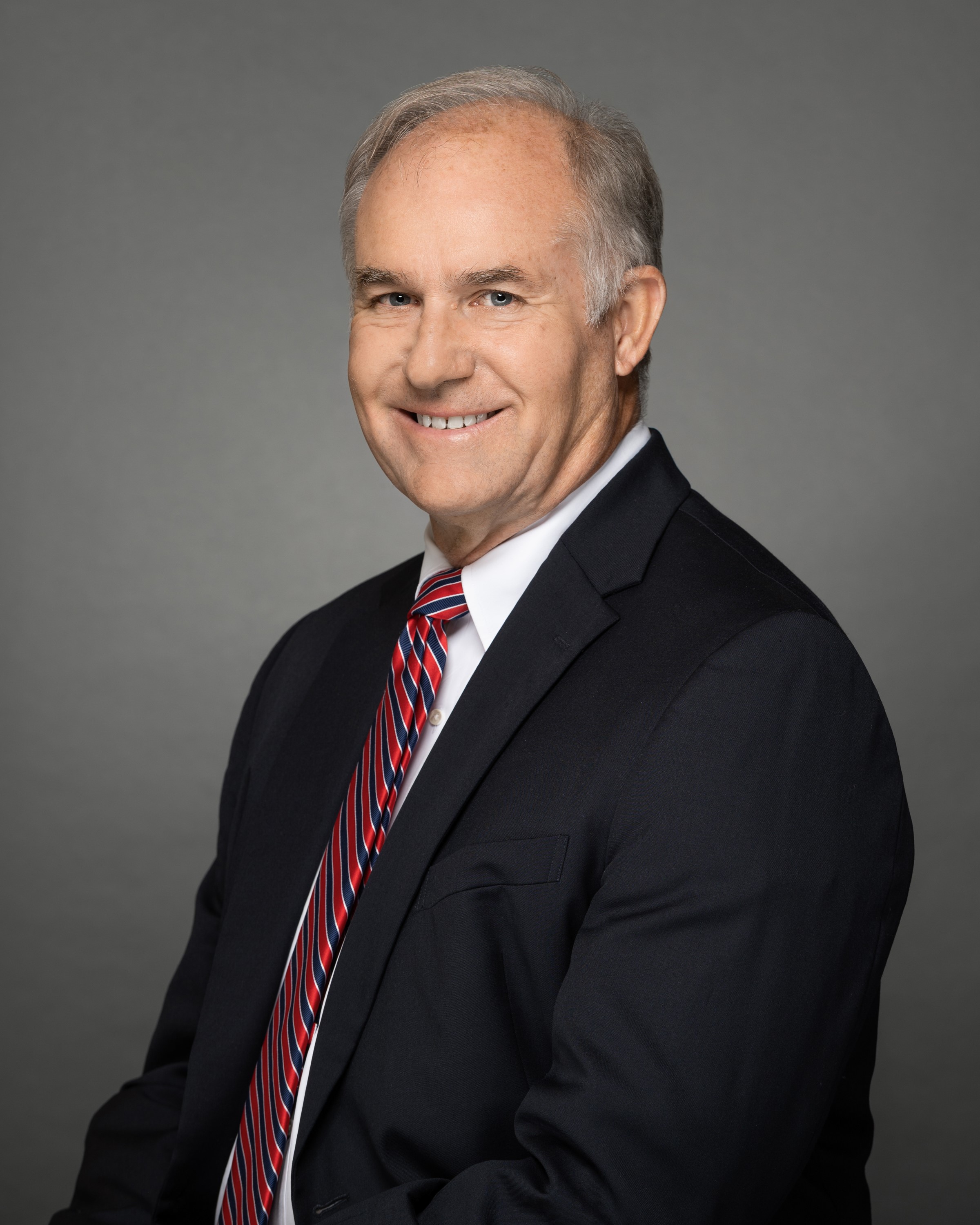
Stephen Cash
Photo of Stephen Cash

NASA Administrator Jared Isaacman has named Stephen Cash director of the agency’s Marshall Space Flight Center in Huntsville, Alabama, effective Monday, Oct. 19. Cash, a veteran NASA engineer and aerospace executive, returns to lead the center where he began his career more than four decades ago.

“Marshall contributions to NASA’s missions are historic and it’s no question why it’s the Center of Excellence for propulsion,” said Isaacman. “Steve Cash is a Marshall legend, has spent his career around the hardware, the people and has been in the seat before making the decisions when human spaceflight is on the line. As Marshall continues its critical role in Artemis and takes on new challenges in advanced propulsion, nuclear power, and the systems that will carry us deeper into the solar system, Steve brings the experience, technical judgment, and mission focus needed to lead the center into that next chapter. I am also grateful to Rae Ann Meyer for the leadership she has provided to Marshall during this transition and for her continued service to NASA.” 

“Leading a NASA center requires a commitment to its people and to the technical capabilities entrusted to them,” said Amit Kshatriya, NASA associate administrator and chief engineer. “Steve understands that the jewel of Marshall is its workforce and that engineering excellence is sustained by giving talented people the opportunity to design, build, test, and learn through hands-on work. As Marshall continues strengthening the manufacturing, structural loads and dynamics, and propulsion capabilities that underpin NASA’s exploration enterprise, Steve’s leadership will help ensure the workforce has opportunities to develop and apply the expertise needed to deliver the agency’s most ambitious missions.”

 As center director, Cash will lead one of NASA’s largest field centers, overseeing a workforce of more than 5,000 civil service and contractor employees and a broad portfolio of propulsion, space systems, scientific research, and technology development activities.  Marshall plays a critical role in NASA’s Artemis program, including the development of NASA’s SLS (Space Launch System) rocket, management of the Human Landing System Program, as well as other capabilities supporting sustained exploration of the Moon and future missions to Mars. Further, Marshall plays a key role in the advancement of nuclear power and propulsion, an area of focus that is expected to grow as NASA works towards sending the first humans to Mars.  

“It is a profound honor to be back home at the Marshall Space Flight Center,” said Cash. “I am humbled to stand alongside the brilliant minds here as we continue to turn the impossible into everyday history.”

Cash began his NASA career at Marshall in 1982 and spent 34 years with the agency, holding senior engineering and management positions supporting some of the nation’s most significant human spaceflight programs.

During his NASA career, Cash served as manager of Marshall’s Space Shuttle Propulsion Office, overseeing critical propulsion systems supporting shuttle through its final missions. He later served as director of Marshall’s Safety and Mission Assurance Directorate from 2011 until his retirement in 2016, providing leadership in safety, reliability, and quality engineering to support mission success across the center.

Following his retirement from NASA, Cash continued his work in the aerospace industry, including serving as vice president for advanced space systems at Axient, supporting the development and execution of major spaceflight programs. In 2024, he was inducted into the Alabama Engineering Hall of Fame in recognition of his contributions to engineering and the nation’s space program.

Cash succeeds Rae Ann Meyer, who has served as Marshall’s acting center director since September 2025. Meyer, who previously served as Marshall’s deputy center director and associate director, has provided leadership and continuity across the center’s programs and operations during her tenure as acting director. Meyer will return to her role as Deputy Center Director.

Established in 1960, Marshall has played a central role in American space exploration for more than six decades, from developing the Saturn rockets that carried astronauts to the Moon during Apollo to advancing the propulsion systems, infrastructure, and technologies supporting the next era of human spaceflight.

For more information about NASA’s Marshall Space Flight Center, visit:

https://www.nasa.gov/marshall

-end-

George Alderman / Cheryl Warner
Headquarters, Washington
202-358-1600
george.a.alderman@nasa.gov / cheryl.m.warner@nasa.gov

Lance Davis
Marshall Space Flight Center, Huntsville, Ala.
256-544-0034
lance.d.davis@nasa.gov

Share

Details

Last Updated
Oct 16, 2026

Rocket Report: FAA eyes more Starbase traffic; India's Skyroot snares US customer

16 October 2026 at 07:00

Welcome to Edition 9.15 of the Rocket Report! The launch I'm most looking forward to in the next few weeks is that of Japan's Martian Moons Exploration (MMX) mission. MMX is one of the marquee space science missions launching this year, and it's set to leave Earth as soon as Monday (US time) aboard a Japanese H3 rocket. The spacecraft will visit Phobos and Deimos, the two asteroid-like moons of Mars, deploying a rover and collecting specimens for return to Earth in 2031. Exploration at its finest.

As always, we welcome reader submissions, and if you don't want to miss an issue, please subscribe using the box below (the form will not appear on AMP-enabled versions of the site). Each report will include information on small-, medium-, and heavy-lift rockets as well as a quick look ahead at the next three launches on the calendar.

Reflect Orbital looks to India for launch capacity. California-based Reflect Orbital, the startup attempting to offer sunlight on-demand with in-space mirrors, announced the purchase of two launches Wednesday from Indian launcher Skyroot Aerospace, Payload Space reports. One of the launches will use Skyroot's Vikram-1 rocket, which became the first privately developed Indian rocket to reach orbit in July. The other will fly on an upgraded rocket called the Vikram-1U.

Read full article

Comments

© Stoke Space

Software development and rules stability: Prototype racing in 2030

14 October 2026 at 15:44

The rising tide that has been the Drive to Survive effect has lifted more boats in motorsport than simply Formula 1’s. Sportscar racing is enjoying its own surge in popularity internationally at races like Le Mans in France, but also in North America in IMSA’s WeatherTech Sportscar Championship. For one thing, multi-hour, multi-class racing lends itself better to the age of streaming and second screens than it did linear broadcast TV, and fans are taking advantage of that: IMSA’s audience grew by more than a third domestically and almost a quarter internationally last year.

Having some of the coolest-looking cars racing today certainly helps, whether that’s the (mostly) hybrid prototypes or the GTs, racing versions of road-going cars from Porsche, Ferrari, and others. And it definitely helps that fan access at the races is virtually unmatched, with open paddocks and grid walks that now see huge crowds get up close to the cars just before the start of each race.

“I think we're just scratching the surface,” said IMSA President John Doonan. “I think besides the people that are here on the ground, the people watching, people engaging with us on social media, I'm seeing the passion come out more. Just on the grid walk, these fans coming up and being so excited to be here.” The series has certainly been making an effort, among other things getting local high school students exposed to the industry and starting a partnership to train more mechanics with ASE.

Read full article

Comments

© Porsche

NASA Names Astronaut Christina Koch Acting Deputy Chief Engineer

13 October 2026 at 16:41
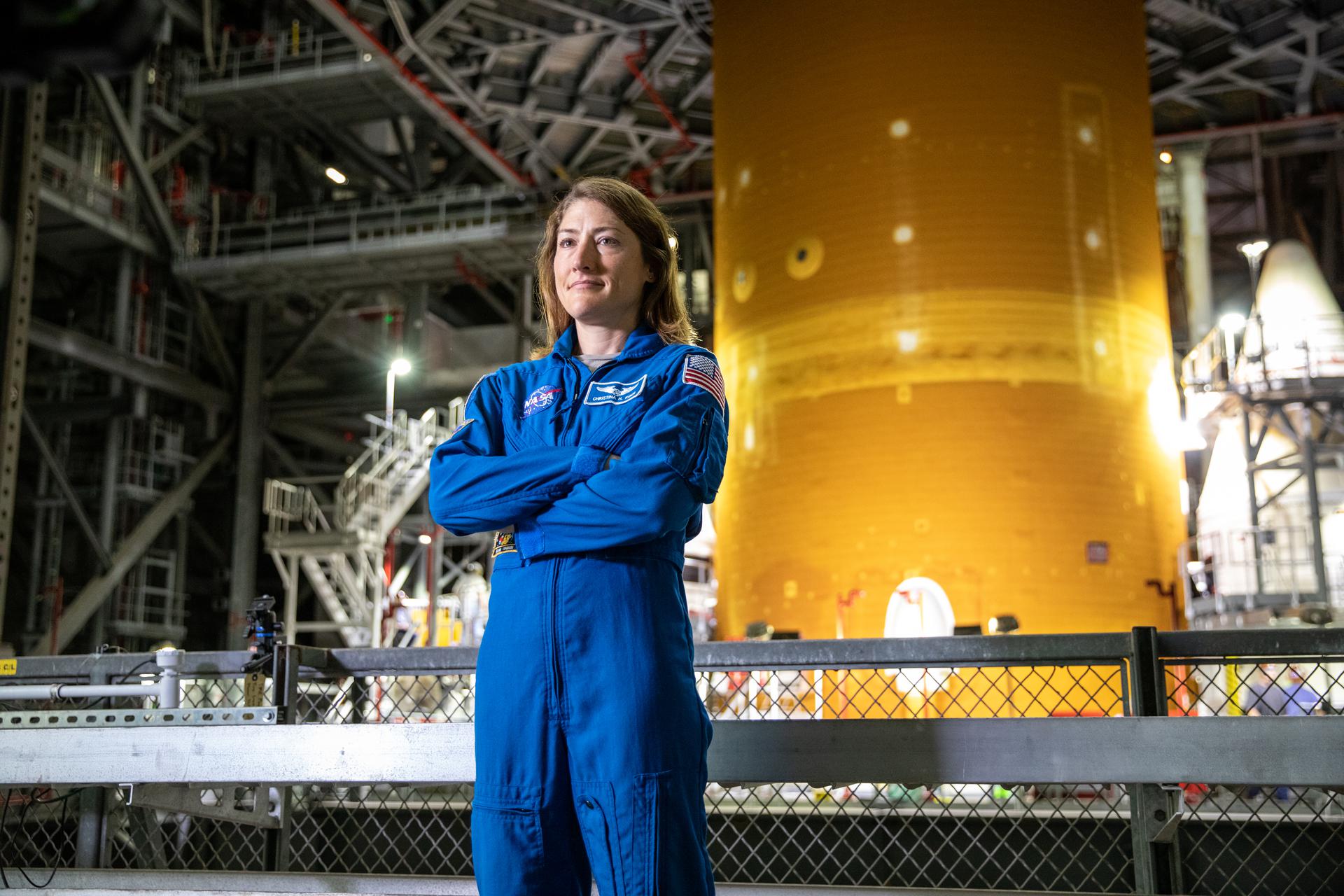
NASA astronaut Christina Koch stands inside Kennedy Space Center’s Vehicle Assembly Building on July 14, 2021, in front of the agency’s Space Launch System (SLS) rocket that ultimately powered the Orion spacecraft on the Artemis I mission. Koch later served as a crew member on the Artemis II mission in 2026, and on Oct. 13, 2026, NASA announced she will serve next as the agency’s acting deputy chief engineer.
NASA/Glenn Benson

NASA engineer and astronaut Christina Koch will serve as the agency’s acting deputy chief engineer beginning on Sunday, Nov. 1, following the retirement of Katherine Van Hooser, who will conclude more than 35 years of distinguished service to the agency on Wednesday, Oct. 21.

In her new role, Koch will help lead NASA’s engineering community, supporting technical oversight, mission readiness, and engineering excellence across the agency’s programs and projects. With this appointment, Koch will transition to management astronaut status and will no longer be eligible for future spaceflight assignments.

“Christina has seen NASA engineering from both sides of the equation: developing complex systems on the ground and trusting them with her life in space,” said NASA Administrator Jared Isaacman. “After spending nearly a year living and working aboard the International Space Station and helping lead America back around the Moon on Artemis II this year, she brings an extraordinary combination of technical expertise, operational experience, and judgment to this role. I am excited to see the impact she will have across NASA as we return Americans to the lunar surface, build the Moon Base, get underway on nuclear power in space, and develop the capabilities that will ultimately take us on to Mars.”

“Katherine has been an extraordinary leader throughout her career, bringing technical expertise, sound judgment, and an unwavering commitment to mission success to some of NASA’s most complex engineering challenges,” said Amit Kshatriya, NASA associate administrator and chief engineer. “Her leadership has strengthened our engineering community and helped guide the agency through critical milestones and transitions. Christina brings a unique combination of engineering expertise, operational experience, and proven leadership, both on the ground and in space. I am grateful to Katherine for her exceptional service and confident Christina will continue the tradition of technical excellence that is essential to everything we do at NASA.”

Koch most recently served as a mission specialist aboard NASA’s Artemis II mission in April, helping carry out the first crewed flight around the Moon in more than 50 years. She previously spent 328 consecutive days aboard the International Space Station, setting the record for the longest single spaceflight by a woman and participating in the first all-female spacewalks.

Koch began her NASA career as an electrical engineer at the agency’s Goddard Space Flight Center in Greenbelt, Maryland, developing scientific instruments for space missions. Before her selection as an astronaut in 2013, her experience also included scientific field engineering in Antarctica and the Arctic. She has since held leadership positions within NASA’s Astronaut Office and at the agency’s Johnson Space Center in Houston, bringing a combination of technical expertise, operational experience, and firsthand understanding of the demands of human spaceflight to her new role.

Van Hooser joined NASA in 1991 at the agency’s Marshall Space Flight Center in Huntsville, Alabama, beginning a distinguished career in propulsion engineering and technical leadership. Her early work focused on liquid rocket engine turbomachinery before she became chief engineer for the space shuttle main engine, leading engineering efforts through the final 21 shuttle flights. She later served as the first chief engineer for the Space Launch System’s Liquid Engines Element, helping advance the propulsion systems supporting NASA’s Artemis missions.

As Marshall’s chief engineer and, since 2023, NASA’s deputy chief engineer, Van Hooser provided critical technical leadership and oversight across the agency’s programs. Her steady guidance through complex engineering challenges and organizational transitions helped maintain continuity, strengthen collaboration, and keep mission readiness at the forefront of NASA’s work.

Learn more about NASA’s missions on the agency’s website:

https://www.nasa.gov/

George Alderman / Cheryl Warner
Headquarters, Washington
202-358-1600
george.a.alderman@nasa.gov / cheryl.m.warner@nasa.gov

Share

Details

Last Updated
Oct 13, 2026

Don’t Worry, This R/C Airship is Supposed To Be On Fire

7 October 2026 at 01:00
[Avery] standing inside the inflating envelope of his airship

We’ve had a lot of flying hacks here over the years, and that includes just about any way to get airborne you can think of — but very few of those have been airships. Fewer still have been 27-foot thermal airships, like the one [Avery Flies] designed and put together recently.

A thermal airship, in case the name doesn’t give it away, is a dirigible hot air balloon. Like a hot air balloon, it gets its lift from the density difference between hot air and the regular atmosphere. Unlike a hot air balloon, it has control surfaces and an engine so it goes where you tell it to. The craft uses good-old-fashioned radio control, and except for the nylon envelope he spends the first 15 minutes of the video below designing and sewing up, the technology mostly comes from be from the world of R/C aircraft.

The big exception is of course the a propane burner used to generate heat, said propane being supplied by a pair of small green tanks such as you might use on a portable barbecue. Everything that moves is electric, though: there’s a 70 mm (about 2¾“) electric ducted fan acting to push the air up into the balloon so it keeps shape, and a great big brushless DC motor pushing an 18” (about 457 mm) prop for thrust. The steering servo is actually a repurposed winch servo from an R/C sailboat, rather than anything from the world of model aircraft. But it makes sense, as the meter-scale fabric rudder is more like a sail than the control surfaces of most R/C aircraft.

You might expect a blimp to be the biggest flying machine we’ve featured on Hackaday, but some truly giant-scale R/C aircraft have come our way in the past. We’ve also seen some pretty teeny blimps.

Inside Iran’s New Wartime Leadership

17 August 2026 at 09:47


Tehran’s new power brokers

A wave of assassinations rebuilt Iran’s leadership from the top down, leaving a severely wounded supreme leader and a security establishment now calling the shots. Tehran, however, isn’t saying who is actually in charge. The silence is part of the narrative; who are the country’s power players?

Earlier this month, Iranian state media did something it had never done before.

Mehr News, an outlet controlled by the country’s Islamic Development Organization, released a video titled “First Images of the Leader,” showing Supreme Leader Mojtaba Khamenei addressing a small group of students. The footage was undated. It came, however, days after Israeli outlets reported the 56-year-old cleric was in “extremely critical condition,” and it appears to have done little to settle the question consuming Iran’s political class: is anyone actually running the country right now.

The clip echoed a similar undated video IRIB released in March, showing Khamenei teaching religious sciences. President Masoud Pezeshkian acknowledged this week that reaching him has been “very difficult,” though he described their last exchange as constructive.

Multiple sources close to Pezeshkian’s administration told IranWire that no cabinet minister has met with Khamenei since the February 28 strike that killed his father, Ali Khamenei, and that officials “would not be surprised” to hear news of his death.

Iranian authorities have repeatedly denied he’s incapacitated. But the man now holding life-tenure authority over Iran’s armed forces, judiciary and clerical establishment hasn’t spoken publicly, delivered a sermon, or appeared unedited on camera since taking the post in March.

“The main issue for U.S. policymakers — especially any president — is whether the new leadership in Iran, or any leadership we can currently anticipate, is likely to depart materially from the strategic policies of the previous leadership,” Norman Roule, a former CIA officer who spent 34 years managing programs related to Iran and the Middle East, tells The Cipher Brief. “The evidence to date suggests no fundamental break.”

The vacuum at the top didn’t stay empty for long.

A Leadership Rebuilt Through Killings

The cascade began on February 28, when a joint U.S.-Israeli strike killed longstanding leader Ali Khamenei along with Mohammad Pakpour, the Islamic Revolutionary Guard Corps’ commander-in-chief, and a string of other senior officials. An interim leadership council, made up of Pezeshkian, judiciary chief Gholamhossein Mohseni-Ejei and cleric Alireza Arafi, held the state together for less than a week before the Assembly of Experts named Mojtaba Khamenei as Iran’s third Supreme Leader on March 8.

The choice was unusual on its face. The Islamic Republic was founded on the overthrow of hereditary monarchy, yet its clerical establishment had just installed the son of the man he replaced. Mojtaba lacked the religious credentials typically required of a Supreme Leader. He was widely regarded as a hojatoleslam, a mid-ranking cleric, rather than an ayatollah — yet he had spent nearly two decades as his father’s gatekeeper and enjoyed deep loyalty inside the Revolutionary Guard.

President Trump, who had labeled him “unacceptable” during the war, later told Fox News that the succession was not one his own father had wanted, adding, “their leadership is gone, their second leadership is gone, now their third leadership is in trouble.”

Roule, however, cautions against reading the new bench as a break from what came before it. Most of Iran’s current leaders, he notes, “rose within institutions shaped by Ali Khamenei and were trusted, promoted, or shaped within, and by the system he developed over years of rule.”

Roule points to the generational math: Pezeshkian, Mohsen Rezaee and Ali Reza Zolghadr were about 25 years old at the time of the 1979 revolution; Ahmad Vahidi was 21; Mohammad Bagher Ghalibaf and Sadeq Amoli Larijani around 18; Mojtaba Khamenei just 10.

“For this group, the 1979 Revolution remained the ideological foundation of the system, but the Iran-Iraq War and the post-2003 campaign for regional influence were more important professional experiences,” Roule explains. “Most are veterans of the Iran-Iraq War or were directly shaped by it.”

The current command of the Islamic Revolutionary Guard Corps has followed the same brutal pattern.

Amir Ali Hajizadeh, head of the Guard’s aerospace force, was killed in a strike in June 2025. Pakpour, who had succeeded Hajizadeh’s predecessor Hossein Salami, was killed at the outset of the U.S.-Israeli campaign in February. His successor, Ahmad Vahidi, a Quds Force founder and former interior minister with an Interpol red notice tied to the 1994 AMIA bombing in Buenos Aires, was formally installed as commander-in-chief on March 1.

Unverified reports of Vahidi’s own death circulated in Tehran in late May and again in early June; Iranian, Israeli or American officials have confirmed none, and Vahidi continues to be listed as the IRGC’s active chief.

A Crackdown That Fits the Moment

The uncertainty at the top has coincided with a sharp rise in executions and threatened executions, months after the January protests that shook the regime.

Austin Sarat, a professor of jurisprudence and political science, says the war and the unrest have compounded each other rather than one driving the other alone.

“The protests and the war have fueled — it’s like putting a little bit of an accelerant into something that’s already pretty flammable,” Sarat tells The Cipher Brief. “The protests were, I think, much more trigger than the war itself. The war has just provided yet another excuse, because it’s jacked up nationalist fervor.”

Sarat is skeptical that outside pressure, including past White House rhetoric threatening consequences over executions, has had much bearing on Tehran’s calculus.

“The administration has said nothing about human rights abuses, let alone execution practices around the world,” he says, underscoring that any outside leverage is more likely to come from Europe than Washington. He views the surge itself as a familiar survival tactic for a leadership still finding its footing.

“It’s not a kind of unfamiliar tactic for a regime new to power to want to flex its muscle and terrorize the population,” he observes. “This is a survival moment, and they are going to do what they are going to do to preserve the essential character of their regime.”

The Guard Consolidates Around the Vacuum

With the younger Khamenei largely unseen, the Revolutionary Guard didn’t sit on its hands. It moved fast, filling top posts through official decrees.

Along with Vahidi, the Supreme Leader’s office named Mostafa Izadi as deputy IRGC commander, Ali Azmaei to head the IRGC Navy and Hossein Taeb to lead the Basij paramilitary force, filling six senior military posts vacated by wartime deaths.

Mohsen Rezaee, who commanded the IRGC from 1981 to 1997, was separately appointed as the Supreme Leader’s representative on the Supreme National Security Council. This post opened up, according to Rose Kelanic, director of the Middle East Program at Defense Priorities, after Zolghadr was pushed out.

Kelanic argues the reshuffle amounts to more than a personnel change.

“Mojtaba Khamenei’s role appears to be that of a figurehead and potential scapegoat, enjoying far less authority than his father, whom he replaced,” Kelanic tells The Cipher Brief. “The real power rests with Ghalibaf, Vahidi and Rezaee, who are all career IRGC officers, which functionally means that Iranian government authority has shifted even further from civilian control to military control.”

That shift, she continues, carries its own risk for any settlement with Washington.

“When military leaders assume control as heads of state in wartime, they tend to make worst-case assumptions about adversaries’ intentions, view compromise as weakness, and favor offensive military strategies over defensive ones,” Kelanic points out.

Roule, meanwhile, frames the Guard’s rise in institutional rather than personal terms, and says the war has widened rather than preserved its reach. Estimates of how much of Iran’s economy the IRGC touches “vary widely — roughly from a fifth to a third,” he says, depending on whether one counts only directly controlled firms or also affiliated holding companies, pension funds and sanctions-evasion networks.

“A better way to think about the IRGC is not simply as a military organization with commercial interests, but as a central actor in a state-security-economic network,” Roule notes.

Ghalibaf’s Quiet Climb to the Center

The other figure benefiting from the uncertainty at the top is Ghalibaf, the parliament speaker and former IRGC commander who has spent the war years turning what is traditionally a legislative post into something closer to a shadow foreign ministry.

Ghalibaf, a two-time presidential also-ran who trailed Pezeshkian in the first round of the 2024 election, has emerged as Tehran’s principal interlocutor in the indirect talks with Washington, serving simultaneously as Iran’s special envoy to China and as a bridge between the political and military-security establishments that Pezeshkian, a physician by training with no roots in the security services, has struggled to command.

Parliament re-elected Ghalibaf to a seventh consecutive term as speaker in late May, with 235 of 271 votes cast, as reports circulated of friction between Pezeshkian and the new Supreme Leader’s office. Judiciary chief Mohseni-Ejei congratulated Ghalibaf on the vote by calling him a “tireless and battle-hardened jihadist leader” who had waged jihad “both in the field and in diplomacy” during the war.

Roule warns against reading Ghalibaf’s prominence as a formal power grab.

“His current prominence should not be confused with general supremacy over Pezeshkian,” he says. “Pezeshkian nonetheless remains president, heads the executive branch, and formally chairs the Supreme National Security Council. There is no evidence that Ghalibaf has assumed any of the presidency’s general constitutional authorities.”

His influence, Roule highlights, “is best understood as issue-specific power produced by circumstances, his political standing, longstanding IRGC relationships, and wartime delegation.”

Who Actually Holds the Reins

What emerges from the past five months of conflict, however, is a regime governed less by the clerical hierarchy that has defined the Islamic Republic since 1979 than by an overlapping wartime trio.

A Supreme Leader whose authority is formally absolute but whose physical capacity to exercise it remains unverified. An IRGC command structure rebuilt twice over through assassination and now operating with wide latitude, alongside a parliament speaker who has converted legislative standing into genuine diplomatic weight.

Still, Roule sees continuity as the most likely outcome even if Mojtaba’s health worsens further.

“If Mojtaba Khamenei becomes seriously incapacitated or dies, the most likely outcome absent a successful mass uprising or a major elite fracture is continuity rather than reversal on the issues of greatest concern to the United States,” he says. “The IRGC would remain a central power center, and the system has constitutional procedures for interim leadership and selection of a successor.”

He also points out that if Mojtaba’s death were tied to the war, “the state would almost certainly use a martyrdom narrative to reinforce regime legitimacy and resistance.”

Kelanic is less sanguine about what that continuity means for diplomacy. Iran, she stresses, will also grow harder to negotiate with simply because power is now split among rivals rather than concentrated in one office, leaving Washington without a clear address for any deal.

“The IRGC’s strengthened rule over a weaker civilian leadership makes reaching a peace deal harder,” Kelanic adds, “which is one of many ways the Iran War has backfired.”

The Cipher Brief is committed to publishing a range of perspectives on national security issues submitted by deeply experienced national security professionals. Opinions expressed are those of the author and do not represent the views or opinions of The Cipher Brief.

Have a perspective to share based on your experience in the national security field? Send it to Editor@thecipherbrief.com for publication consideration.

Read more expert-driven national security insights, perspective and analysis in The Cipher Brief

❌
❌