NASA, IBM Launch AI Foundation Model for Lunar Science
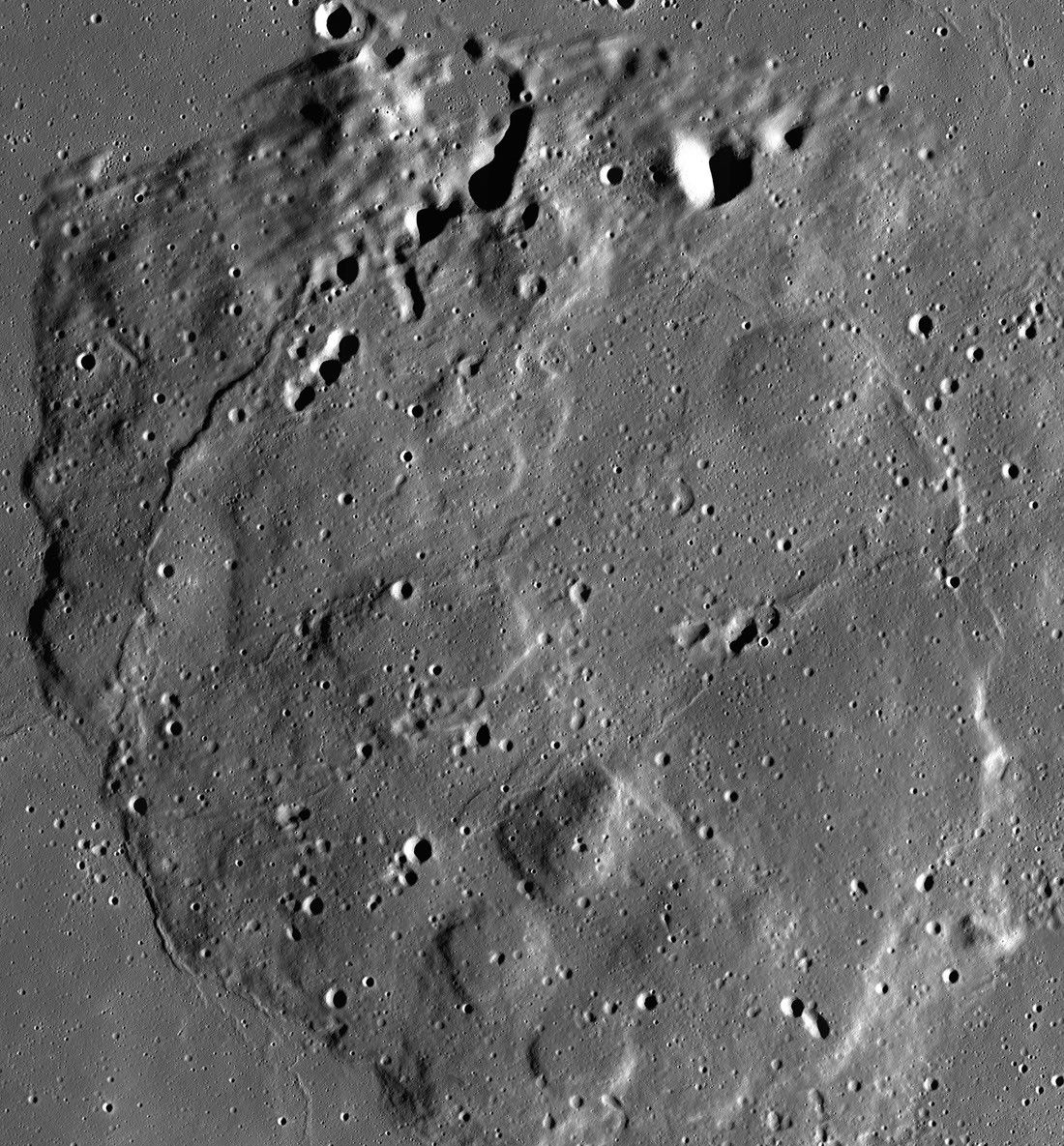
A 10-image mosaic captured by NASA’s Lunar Reconnaissance Orbiter’s Narrow Angle Camera between June 2012 and April 2016 showing the volcanic feature Mons Rümker and its surrounding mare plains.
NASA/GSFC/Arizona State University
NASA is bringing artificial intelligence to the study of the Moon, helping researchers transform how they analyze the Moon’s surface. In an ongoing collaboration with IBM Research and several academic institutions, NASA has launched the NASA-IBM Lunar Foundation Model, among the first open-source AI models built specifically for lunar science. The model, trained primarily on data from NASA’s Lunar Reconnaissance Orbiter (LRO), is hosted publicly on Hugging Face for anyone to use, with the complete codebase available on GitHub for testing and experimentation.
The NASA-IBM Lunar Foundation Model supports the next generation of lunar science by helping researchers quickly analyze vast quantities of data to better understand the Moon’s surface. Using the model as a mapping tool, researchers can rapidly develop actionable strategies for evaluating the Moon’s rugged surface, understanding its geological past, and planning future lunar research.
“NASA has spent decades building an extraordinary scientific record of the Moon, but collecting data is only part of the job,” said Kevin Murphy, chief science data officer and acting chief data and AI officer at NASA Headquarters in Washington. “We also have to make data easier for scientists to explore and use. The NASA-IBM Lunar Foundation Model shows what’s possible when we bring AI to NASA’s petabytes of scientific data. That’s a real opportunity we see with AI: turning large-scale data into new discoveries.”
Unlike traditional models that require building and training specialized algorithms from scratch for specific tasks, foundation models are pre-trained on vast, unlabeled datasets. The broad knowledge they acquire through pre-training allows them to generalize across multiple scientific domains through quick fine-tuning, making foundation models both versatile and efficient in accelerating scientific research.
The NASA-IBM Lunar Foundation Model shows what’s possible when we bring AI to NASA’s petabytes of scientific data.
Kevin Murphy
NASA Chief Science Data Officer and Acting Chief Data Officer/Chief AI Officer
Data collected by NASA’s LRO over the past 17 years was well-suited for training this foundation model because it covers most of the lunar surface in detail. The data produced from the LRO mission is larger than all other NASA planetary missions combined, capturing an almost seamless, high-resolution mosaic of the entire Moon. The NASA-IBM model was trained on roughly 2 million image tiles from this dataset, comprising more than 1 million high-resolution camera images at 1-meter resolution and nearly 964,000 multispectral images at 100-meter resolution. The model also was trained on high-resolution Moon imagery and terrain data from multiple other missions such as NASA’s GRAIL (Gravity Recovery and Interior Laboratory), NASA’s Lunar Prospector, and JAXA’s (Japan Aerospace Exploration Agency) Selenological and Engineering Explorer.
Because the foundation model is already pre-trained on this dataset, planetary scientists can adapt the model to many different lunar research tasks such as mapping craters, spotting young volcanic features, and estimating where ice may exist near the lunar poles by using only small amounts of labeled data. For researchers who study the Moon’s polar ice, the NASA-IBM model can help them estimate where ice patches are likely to be stable, on and below the surface. Dark areas like the Moon’s permanently shadowed regions remain cold enough to trap and preserve ice for up to billions of years. Studying these areas offers insight into the Moon’s history and presents an opportunity to map potentially usable resources for future space exploration.
The NASA-IBM model reproduces patterns of lunar ice prospectivity (scaled from blue to yellow), shown at four locations (left) near the Moon’s pole. Top row: reference ice prospectivity map of Mons Mouton near the lunar south pole; middle row: predictions from the ConvNeXt model; bottom row: predictions from the NASA-IBM model. The NASA-IBM model preserves many fine-scale prospectivity patterns in the reference data.
NASA/IBM Research
While the Moon is thought to no longer be volcanically active, it once experienced dynamic geological processes. For researchers studying lunar volcanism, the NASA-IBM model accelerates the identification of unusual looking volcanic features known as irregular mare patches. Because these structures appear relatively young, they challenge established timelines for lunar cooling, and mapping them could help scientists piece together a more accurate understanding of the Moon’s thermal evolution.
The model also can map surface features, such as craters, more efficiently than manual methods. Every crater is formed by an impact, making crater counts and measurements essential for dating the lunar surface and reconstructing solar system history. The foundation model helps speed up the process of identifying and measuring craters, allowing scientists to focus on interpreting findings and determining their implications for exploration.
These Lunar Reconnaissance Orbiter images show the Moon’s surface near Einstein crater before (left) and after (right) a SpaceX rocket body impact. The NASA-IBM Lunar Foundation Model detected existing craters (blue outlines) and highlighted the newly formed impact crater (red box). Because the post-impact image was excluded from pre-training, this test demonstrates how the model can be fine-tuned to recognize novel surface changes between observations. This approach can help scientists automatically detect natural impacts and surface changes across vast lunar datasets, though varying lighting conditions between orbits may influence smaller crater visibility.
NASA/IBM Research
Overall, the model matched or exceeded the performance of several other strong baseline models across all evaluated tasks, achieving comparable results on crater mapping and segmentation of irregular mare patches, while demonstrating a clear advantage on estimating polar ice stability.
The NASA-IBM Lunar Foundation Model is part of the agency’s Office of the Chief Science Data Officer’s strategy for AI for science — a larger, ongoing collaboration between NASA and IBM aimed at using advanced AI to explore our planet and solar system. It joins a growing collection of AI models developed through this partnership, including:
The Prithvi Models: a family of models pre-trained on Earth observation data and designed to support applications such as disaster monitoring, flood mapping, crop yield prediction, and hurricane prediction.
The Surya Model: a heliophysics model trained on high-resolution solar observation data to predict space weather phenomena such as solar flares which can disrupt power grids and satellite operations.
Within NASA, the Impact AI team at the agency’s Marshall Space Flight Center in Huntsville, Alabama, collaborated with scientists in the agency’s Science Mission Directorate Planetary Science Division, NASA’s Goddard Space Flight Center in Greenbelt, Maryland, and NASA’s Ames Research Center in California’s Silicon Valley, to build the NASA-IBM model. The model is an example of open science in action, uniting experts from NASA, industry, and academia to turn raw data into a resource for lunar discovery. To support the global research community, the team released comprehensive machine learning-ready pre-training datasets and benchmark collections alongside the model, which is integrated into the open-source TerraTorch toolkit. Supported by a companion paper available on Hugging Face, this open release ensures reproducible research and equips scientists worldwide to build, compare, and refine AI models for the future of lunar exploration.
The science team, assembled by NASA Headquarters, included experts from the Universities Space Research Association in Huntsville, Alabama; the SETI Institute in Silicon Valley, California; the University of Maryland, Baltimore County in Catonsville, Maryland; Howard University in Washington, D.C.; NASA’s Science Mission Directorate Planetary Science Division; NASA Ames; and NASA Goddard.
For more information about NASA’s strategy of developing foundation models for science, visit:
Use the Moon to find Antares and the Teapot, spot brilliant Venus, welcome the equinox, and see the Harvest Moon near Saturn and Neptune.
Skywatching Highlights
Sept. 14-20: Use the Moon to find Antares and the Teapot; dark skies may reveal the Milky Way center
Sept 18: Venus reaches peak brilliance for this evening appearance
Sept. 22: September equinox; fall begins in the Northern Hemisphere and spring in the Southern Hemisphere
Sept. 26: Harvest Moon rises near Saturn and Neptune
Birds fly over a barn as a harvest Moon rises.
Mike Linnihan
Transcript
The Moon joins a tea party… Venus cranks up the brightness… the seasons officially change… and the Harvest Moon meets up with some planetary neighbors.
That’s What’s Up for September.
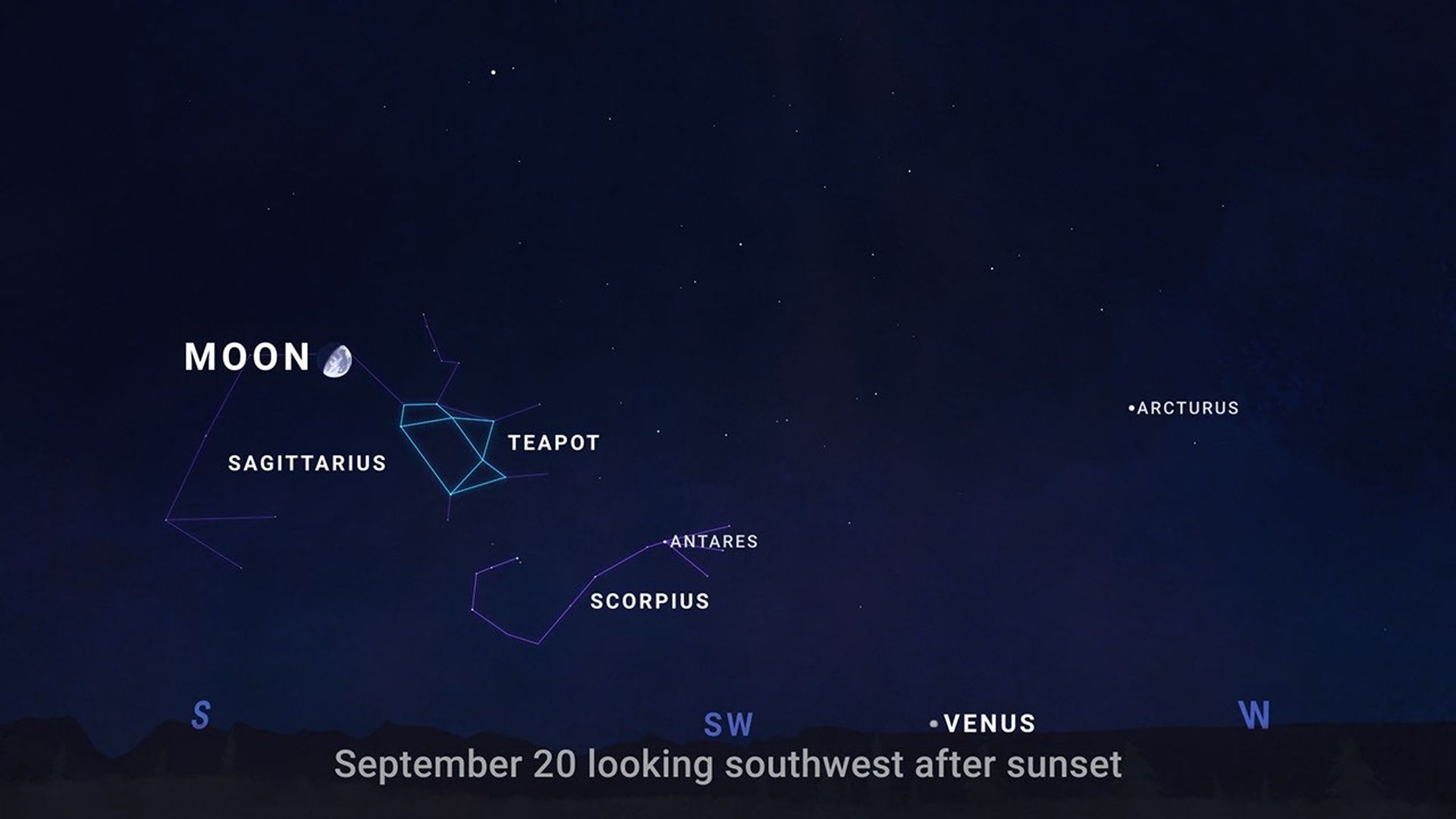
A sky chart looking southwest after sunset on Sept. 20, 2026.
NASA/JPL-Caltech
From September 14 through 20, let the Moon guide you to a few celestial landmarks. About an hour after sunset, look south to find the Moon in the evening sky.
Night by night, the Moon shifts position against the background stars, passing near Antares.
This bright, reddish star marks the heart of the constellation Scorpius.
Next you’ll see the Teapot, a group of stars in neighboring Sagittarius that really does resemble a teapot, complete with a handle, lid, and spout.
If you are under an especially dark sky… you may see hazy steam rising from the Teapot’s spout. Follow that steam to its thickest part, and you’ll be looking toward the center of our Milky Way galaxy.
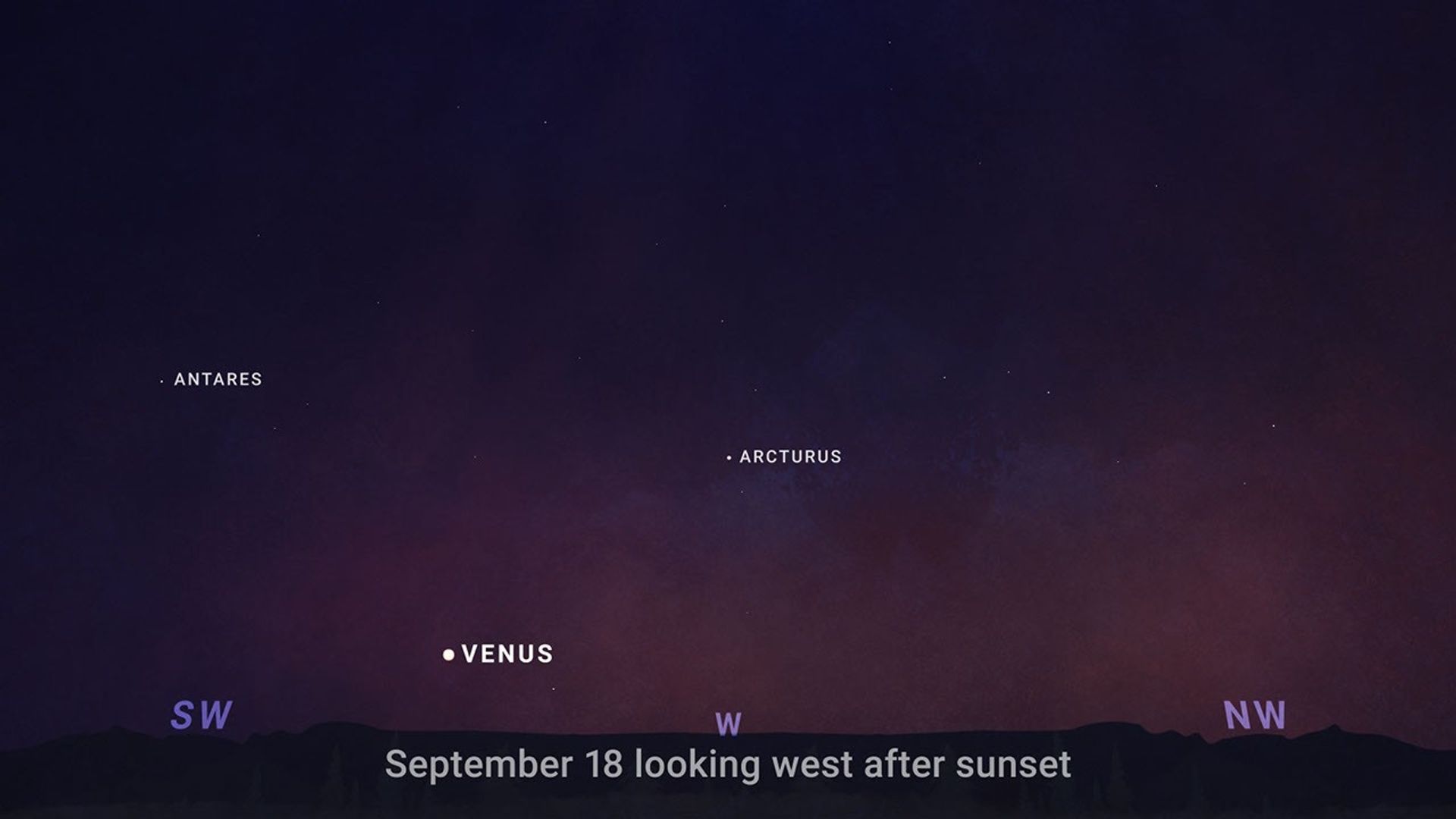
A sky chart looking west after sunset on Sept. 18, 2026.
NASA/JPL-Caltech
Look west on September 18 as Venus hits peak brilliance, shining at its brightest of this evening appearance..
You won’t have to search hard to find it. Shortly after sunset, Venus will stand out as a brilliant point of light low above the western horizon, outshining every star around it. A clear view of the horizon will give you the best chance to catch it before it sets.
On September 19, celebrate International Observe the Moon Night!
People around the world are invited to look up and connect with our nearest celestial neighbor while learning more about lunar science, exploration, and the many ways the Moon has shaped cultures around the world. Find an event near you — or learn how to participate from wherever you are — at go.nasa.gov/ObserveTheMoon.
Then on September 22, it’s officially fall in the Northern Hemisphere …while spring begins in the Southern Hemisphere.
That’s the September equinox, when the Sun is directly above Earth’s equator and day and night are close to equal in length around the world.
From there, daylight keeps getting shorter in the Northern Hemisphere and longer in the Southern Hemisphere.
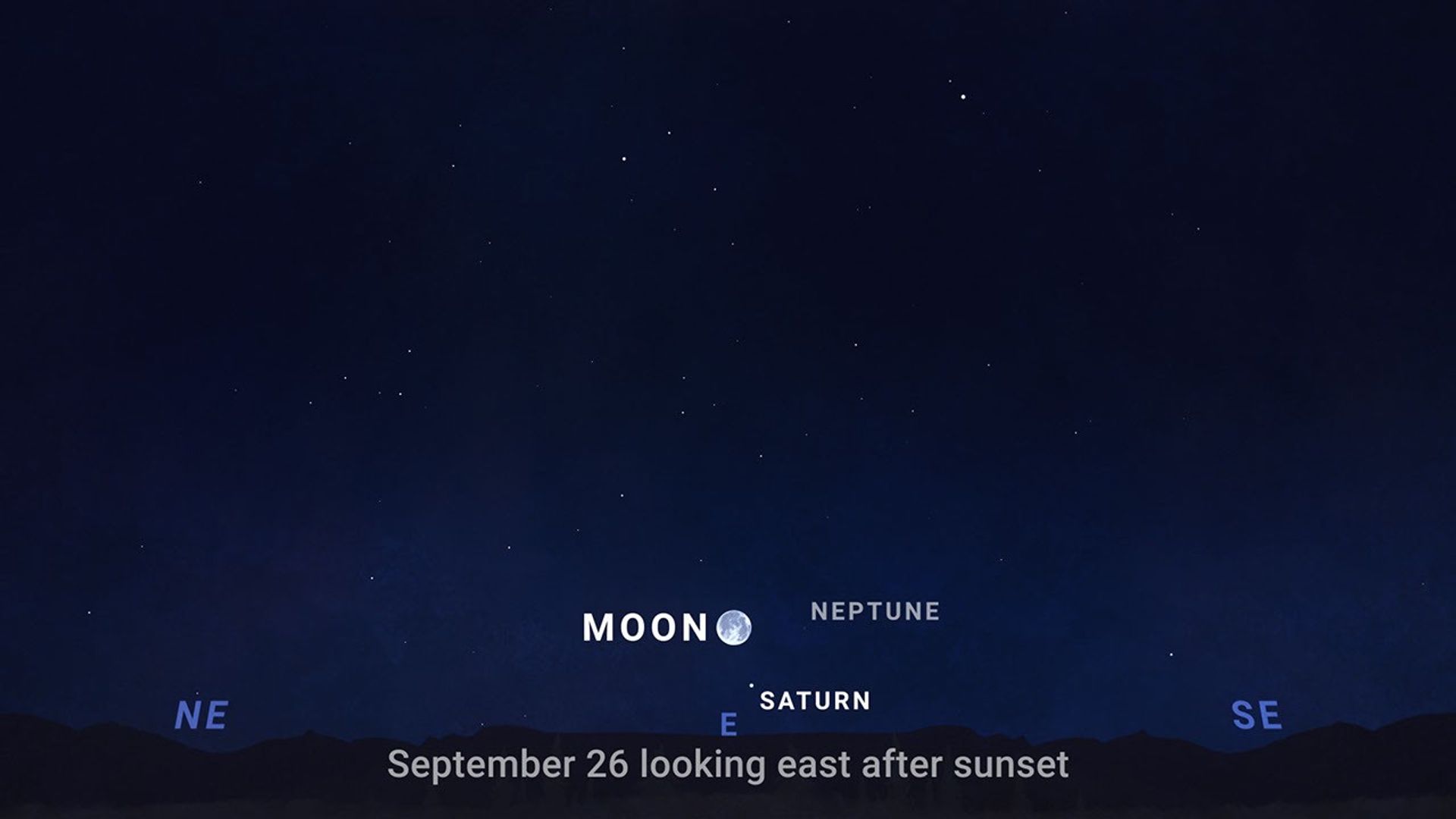
A sky chart looking east after sunset on Sept. 26, 2026.
NASA/JPL-Caltech
And on September 26, the Harvest Moon takes center stage, rising in the east shortly after sunset.
It won’t be alone. Saturn appears nearby, with faint Neptune completing a wide triangle in the sky.
Saturn is the easy one-you can see it with just your eyes. Neptune is a bit more challenging. At around magnitude 8, it’s too faint to see with the unaided eye …so you’ll need binoculars or a telescope to spot it. Darker skies and good observing conditions can help bring it into view.
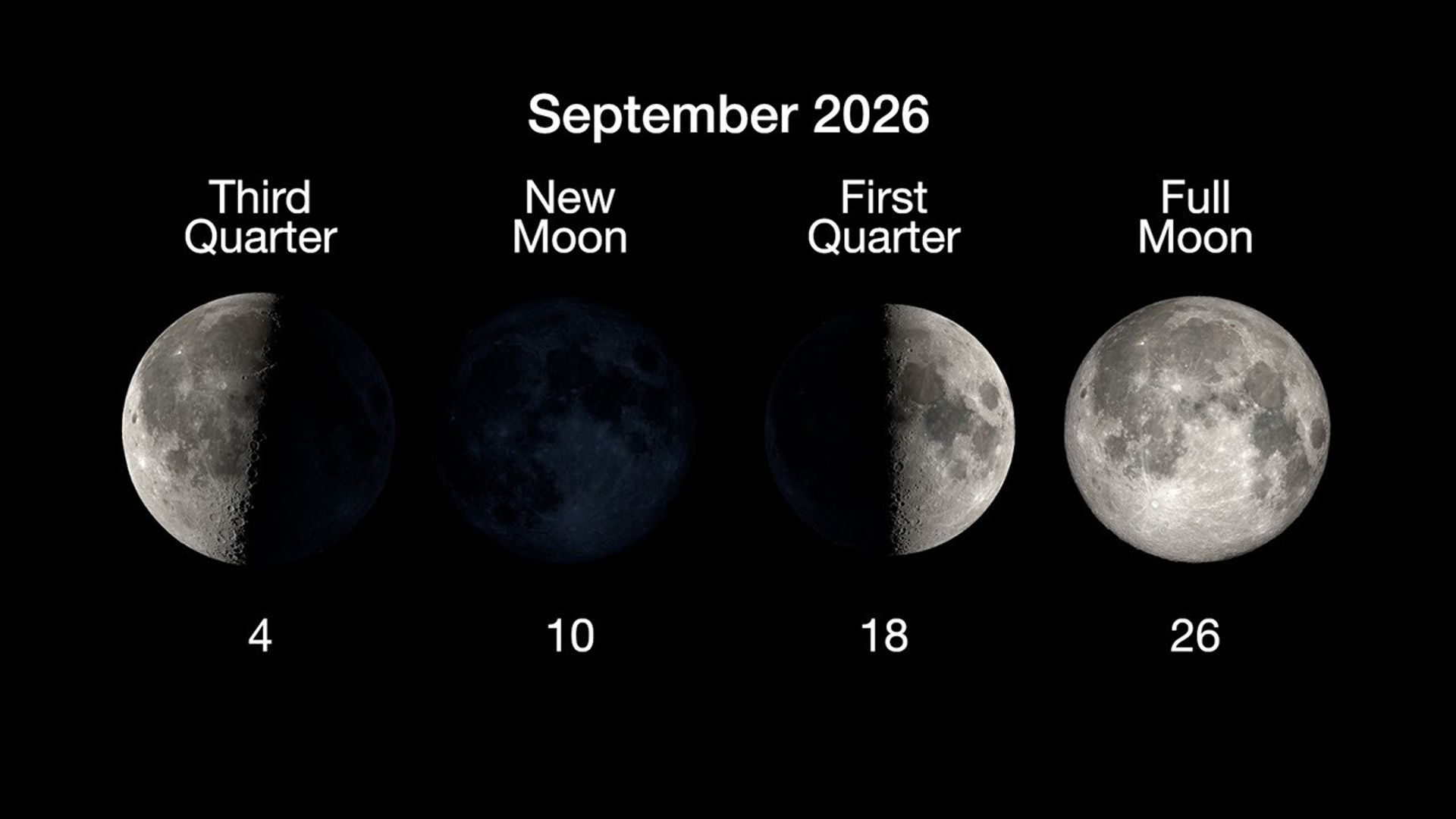
Here are the phases of the Moon for September.
The phases of the Moon for September 2026.
NASA/JPL-Caltech
You can stay up to date on all of NASA’s missions exploring the solar system and beyond at NASA Science. I’m Raquel Villanueva from NASA’s Jet Propulsion Laboratory, and that’s What’s Up this month.
Learn More and Get Involved
Night Sky Network
The Night Sky Network is a nationwide coalition of amateur astronomy clubs bringing the science, technology, and inspiration of NASA’s missions to the general public.
NASA Skywatching Resources
Expert skywatching tips and more from our experts.
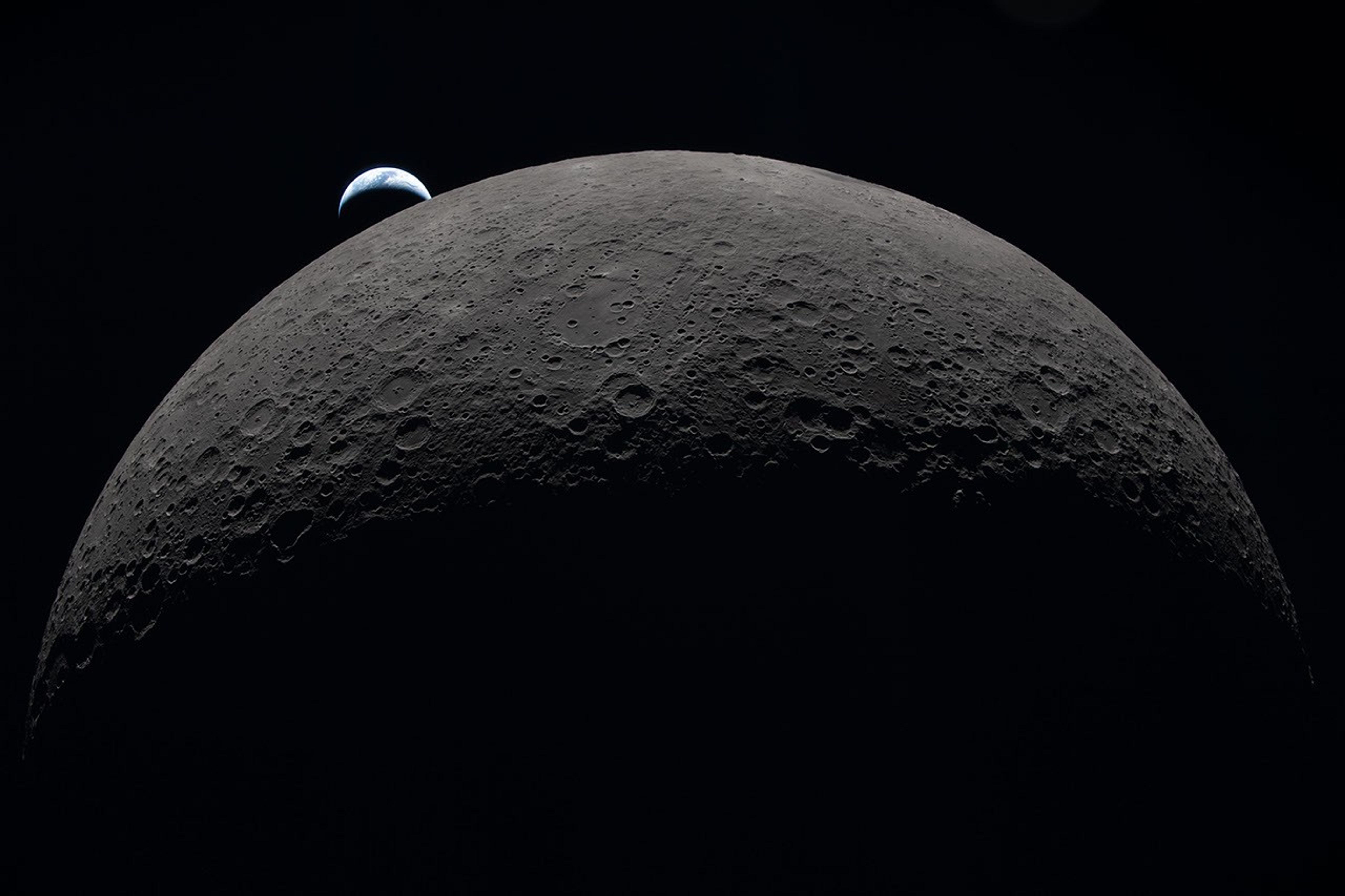
This image was taken by an Artemis II astronaut from the Orion capsule in April 2026, as the spacecraft traveled past the Moon and back over 10 days. The gray-brown, heavily cratered Moon dominates the frame against black space, with a partially lit crescent Earth setting behind its upper-left edge.
Some of Earth’s microbes likely to hitch a ride to space with human explorers could survive in the shaded nooks and crannies of the Moon’s South Pole region, NASA scientists say.
Published on Aug. 19, 2026, in Science Advances, these findings highlight a need to better understand microbial persistence in extreme lunar environments. As humans build a permanent presence on the Moon, it may become difficult to distinguish ancient lunar chemistry from contamination delivered by visiting astronauts. The concern extends beyond the Moon and on to Mars, scientists say.
“Humans are natural explorers, and with them come their voices, their memories … and their microbes,” said Prabal Saxena, a planetary scientist who led the study from NASA’s Goddard Space Flight Center in Greenbelt, Maryland. “For some scientists, myself included, that reality can be unsettling. But it also creates an opportunity to turn an imperfect situation into a useful experiment.”
Bringing microbes along is unavoidable: Humans have, on average, 1 million bacteria living on each patch of skin the size of a pencil eraser, for example. These bacteria vent from spacesuits and habitats. Though the paper’s authors worry about contamination interfering with the search for chemical clues to ancient geology or biology, they also argue that the Moon should be used as a natural lab. In shaded areas around the South Pole, scientists could carefully test the real-life limits of microbial survival in an environment that can’t easily be reproduced on Earth.
The Apollo program landed six pairs of astronauts on the Moon between 1969 and 1972. All six landing sites are near the lunar equator. In this visualization, the Apollo sites are contrasted with the South Pole, an area with enormous potential for future exploration. Time passes as we zoom toward Shackleton crater at the South Pole, revealing illumination conditions quite different from those near the equator. While many craters remain in permanent shadow, some nearby mountains and ridges are in persistent sunshine, making them attractive candidates for solar power and long-term habitation.
Before any surface science can happen, scientists need a baseline measurement of what contaminants humans bring, the authors say.
“We need to understand what was there before us, because when we go to Mars to search for signs of life beyond our planet, we will want to make sure it’s not stuff we brought,” said Andrew Needham, a NASA Goddard-based paper co-author who is an Artemis contamination‑control scientist for lunar samples.
Even with strict sterilization procedures, some organisms are stubbornly resilient. A good example is Aspergillus niger, which is a fungus that thrives in warm, damp places like household bathrooms and heating, ventilation, and air conditioning systems. Astronauts have sampled it inside the International Space Station, and experiments demonstrate that the fungus can survive outside the station as well. Aspergillus niger was one of five microbes, including bacteria and fungi, selected for this study because of its known toughness in spaceflight environments.
That microbes survived on the space station’s exterior surprised scientists. These species are typically not considered “extremophiles” that can withstand harsh conditions, such as the vacuum of space, according to Aaron Regberg, a geomicrobiologist at NASA’s Johnson Space Center in Houston.
“I would have expected these microbes to have dried out,” said Regberg, who studies space station bacteria and was a co-author on the paper.
NASA astronaut Kate Rubins on Oct. 14, 2016, collecting microbes in the Japanese Experiment Module aboard the International Space Station.
JAXA/Takuya Onishi
He pointed out that NASA often bakes robotic spacecraft at temperatures above 400 degrees Fahrenheit to reduce the number of living organisms on them. But that’s not possible with astronauts, so contamination concerns take on new meaning in crewed exploration of the Moon’s south polar environment.
A clearer picture of where microbes might survive comes from understanding how sunlight behaves at the poles. Survival in this study means the microbe can stay alive for at least one Earth day, which does not mean that it can grow and reproduce.
Because the Moon has a very small tilt on its axis, the view from its poles is of a Sun that appears to hover just above the horizon, skimming the surface like a flashlight laying on a table. As a result, elevated parts of the surface, including crater ridges, mountains, and even small bumps, block light from reaching low-lying terrain. This produces pockets of shadowed areas that can remain cold and preserve water, as well as shield fragile molecules and possible microorganisms from lethal radiation.
With that scientific context in mind, the team set out to test which Earth microbes could survive extreme polar conditions. They focused on organisms commonly found in spaceflight environments and those common on human skin. Besides Aspergillus niger, these included Bacillus subtilis, Staphylococcus aureus, Deinococcus radiodurans, and several species of Fusarium. Based on an analysis of previous studies, the scientists noted the maximum amount of heat and ultraviolet (UV) radiation each organism can withstand.
Then, the organisms were tested in simulations of three regions near the lunar South Pole — Nobile Rim, Connecting Ridge, and De Gerlache Rim. Those simulations used detailed environmental maps built from elevation and temperature data collected by instruments aboard NASA’s Lunar Reconnaissance Orbiter, combined with models of how radiation strikes the surface.
The models showed maps of “survivable niches” that range in size from a miles-wide crater floor to an astronaut’s boot print. Aspergillus niger, which was most resistant to UV radiation, was able to survive even in areas with some sunlight exposure. UV radiation is so deadly to most microbes that it’s used for sterilization in hospitals.
“When we think of the Moon, we don’t typically think of biology,” said Heather Graham, a paper co-author at NASA Goddard who helps develop tools and techniques for detecting biology that may look nothing like Earth’s. “But the Moon is a place where a cell can survive, so our first exploration of these sites should pay extra attention to our microbial hitchhikers and work hard to characterize lunar chemistry before our visits change what we will find.”
The authors note that while some microbes can survive in a dormant state in regions around the South Pole, and thereby confuse some future scientific investigations, there is no evidence the Moon has key ingredients to sustain growth and replication. Such ingredients include liquid water, which typically requires an atmosphere and moderate temperatures.
International Observe the Moon Night, Sept. 19, 2026
Each year, observers around the world come together to celebrate Earth’s Moon through direct observations, hands-on activities, lunar-themed music, artwork, readings, and more.
The Moon
From lighting up our skies to preserving evidence of our solar system’s history, Earth’s closest neighbor plays a pivotal role in the study of our planet and beyond.
About the Author
Lonnie Shekhtman
Senior Science Writer
Shekhtman helps communicate NASA planetary science to the world through news and feature stories on NASA.gov, videos for NASA+ and YouTube, and by working with the media. She reports on lunar and Mars science and exploration; NASA’s search for life; missions to Venus, Titan, and Jupiter’s Trojan asteroids; and many other topics related to NASA’s exploration of our solar system and beyond.
An artist’s conception shows Firefly’s Blue Ghost lander on the moon’s surface during the lunar night, with Zeno Power Systems’ radioisotope heater unit highlighted with a blue glow on the left side of the lander’s top deck. (Firefly Aerospace Illustration)
A nuclear-powered heater built by Zeno Power Systems is slated to fly to the moon aboard Firefly Aerospace’s Blue Ghost lunar lander for a demonstration mission that could take place as early as 2028.
Zeno’s Seattle engineering hub played a leading role in developing the radioisotope heater unit, which will be powered by americium-241, a radioactive isotope typically recovered from recycled nuclear material.
The unit will provide 5 watts of thermal energy — enough to sustain the payload during the lunar night, which lasts 14 Earth days. Firefly’s first solar-powered Blue Ghost lander, which touched down on the moon in March 2025, operated successfully through the lunar day but gave up the ghost shortly after sunset.
“Our first Blue Ghost mission gave us firsthand insight into the moon’s extreme thermal environment, where we measured temperatures ranging from more than 230 degrees F during the lunar day to below -275 degrees F at night,” Ray Allensworth, Firefly’s vice president of spacecraft, said today in a news release. “Now we’re looking forward to advancing technologies that can extend missions beyond sunset and support long-duration surface operations required for NASA’s Moon Base initiative and the growing lunar economy.”
This illustration provides a closeup view of Zeno’s radioactive heater unit on a Blue Ghost lander. (Firefly Aerospace Illustration)
The lander will rely on solar power to run NASA-funded science payloads on the moon’s near side during the lunar day. When night falls, Zeno’s payload will go into operation and transmit data back to Earth.
“Hardware capable of surviving the extreme cold of the lunar night will be essential to enabling sustained operations on the moon,” said Tyler Bernstein, CEO and co-founder of Zeno Power. “NASA’s Moon Base program has identified the need for technologies such as radioisotope power systems to support future lunar exploration, and Zeno is proud to answer that call to demonstrate this capability aboard Firefly’s Blue Ghost mission.”
Beyond radioisotope heater units, Zeno is developing radioisotope power generators to supply electricity for missions on the moon and in extreme environments on Earth. “As demand for long-duration lunar infrastructure grows, we are building the production capacity to support future commercial and government missions,” Bernstein said.
“Zeno has raised $105 million to date in private investment and has 95 employees,” Kelsey Bates, the company’s communications manager, told GeekWire in an email. The Seattle hub accounts for the largest proportion of those employees.
NASA’s LRO Images Falcon 9 Crater on Moon, Learns New Details
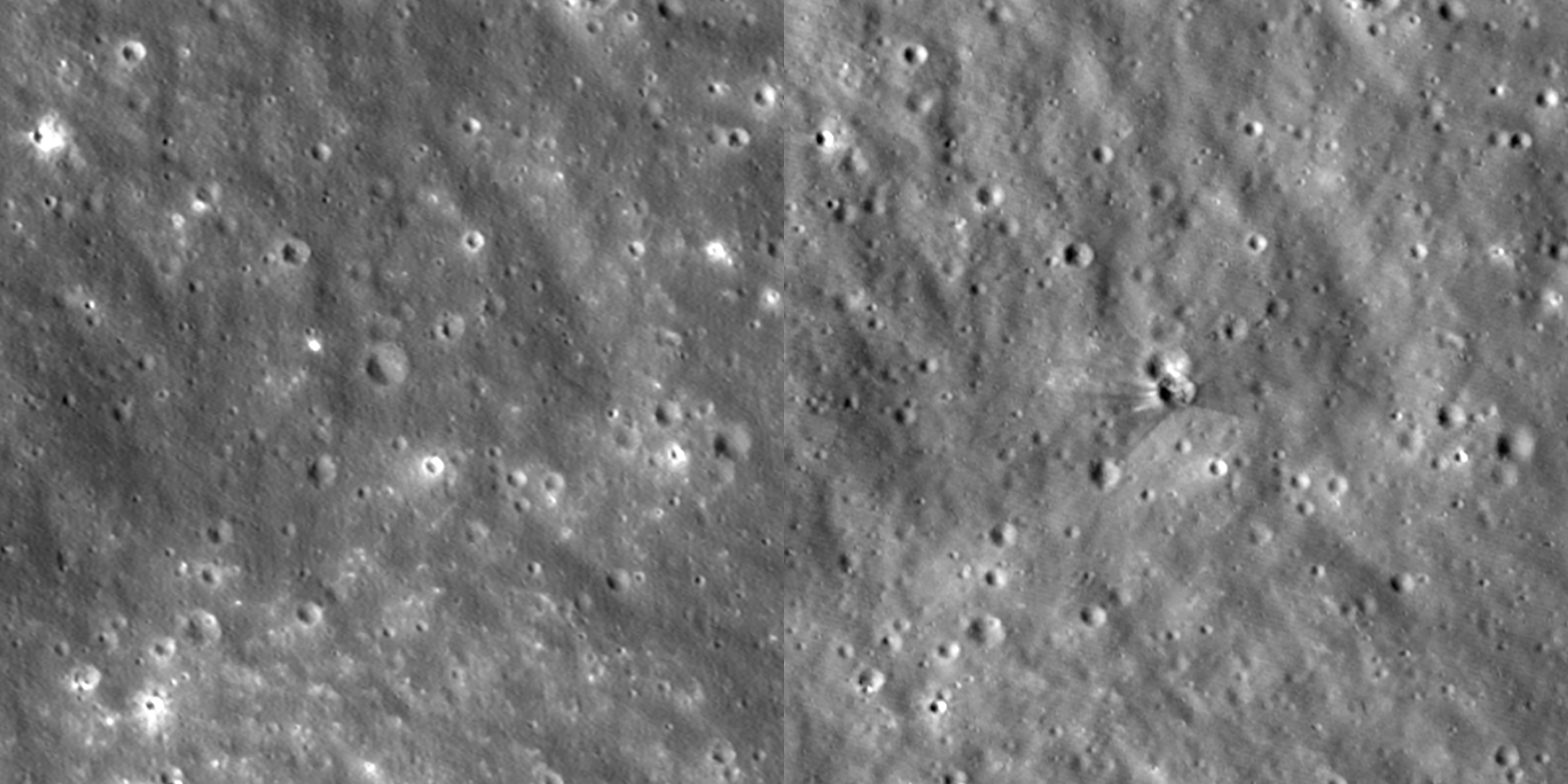
This is an animated before-and-after view of the crater formed after a Falcon 9 upper stage struck the Moon’s surface on Aug. 5, 2026. These images were taken between Aug. 11 and 12 by the Narrow-Angle Camera on NASA’s Lunar Reconnaissance Orbiter. These images are enlarged three times from the original, with north facing up, and they cover an area about a quarter of a mile wide.
NASA Goddard/Intuitive Machines
Between Aug. 11 and 12, NASA’s Lunar Reconnaissance Orbiter (LRO) captured a series of images of a new crater on the Moon. The crater formed on Aug. 5, when a SpaceX Falcon 9 upper stage impacted the surface following its January 2025 launch of the Firefly Blue Ghost 1 mission.
To capture imagery of the impact, engineers tilted the spacecraft so its cameras would point toward the crater each time LRO passed about 60 miles above the Moon, traveling 1 mile per second. The orbiter circles the Moon from pole to pole every two hours, while the Moon slowly rotates underneath it. To photograph a specific spot, the spacecraft must wait until that location turns into view, which took six days in this case.
Getting the pointing right was only half the challenge; timing had to be accurate as well. If the camera snapped even 10 seconds too early or too late, the target would drift off-center by 10 miles.
An artist concept video showing NASA’s Lunar Reconnaissance Orbiter circling the Moon.
NASA’s Goddard Space Flight Center Conceptual Image Lab
Because of the variety of viewing angles, scientists could see the crater under multiple lighting conditions that revealed unique features. In images where the crater rim stood out, scientists measured its 60‑foot width. Scientists also determined the crater is less than 10 feet deep based on the length of its shadow.
To capture these details, LRO used its Narrow-Angle Camera, which can spot features as small as 3 feet wide.
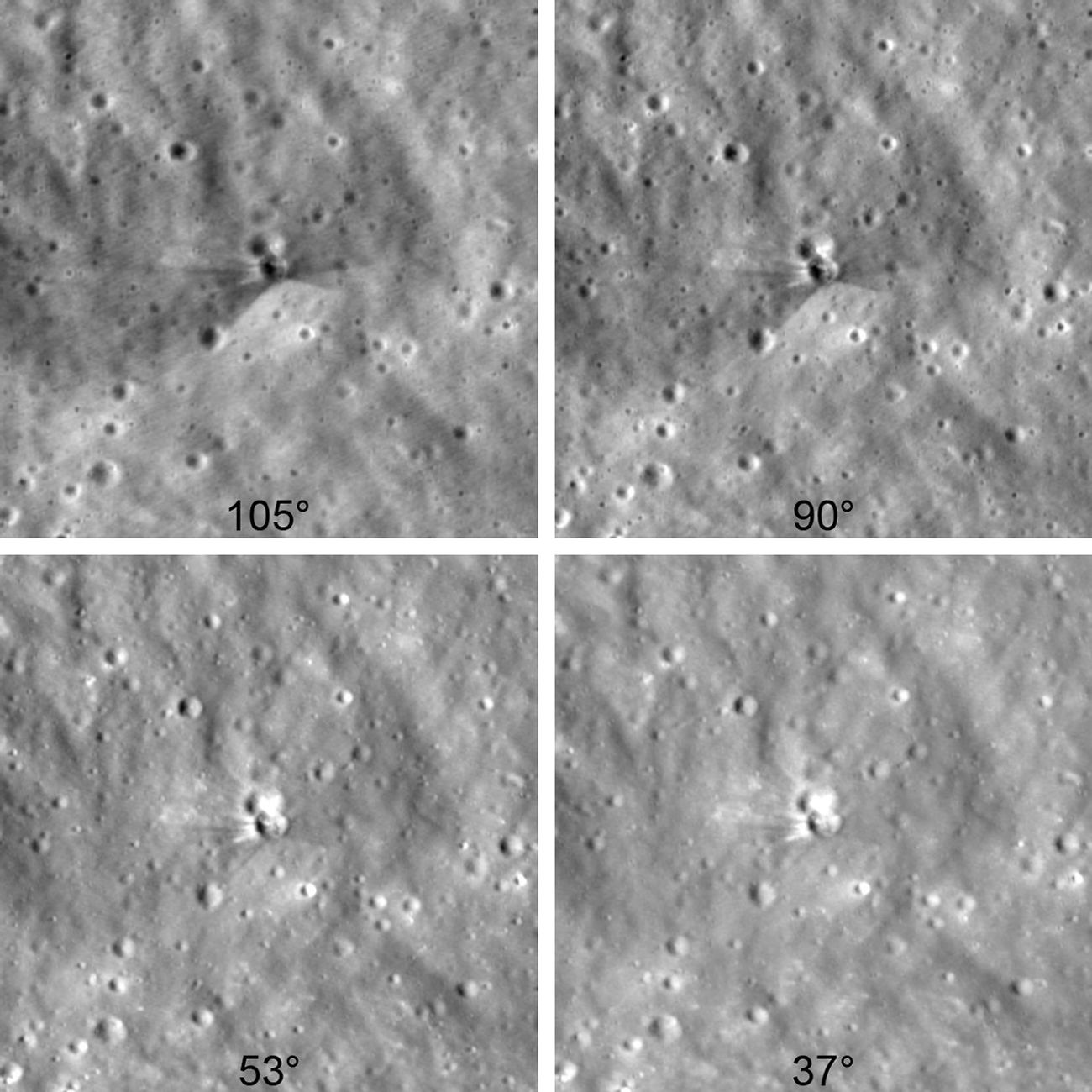
Collected between Aug. 11 and 12 by NASA’s Lunar Reconnaissance Orbiter, six days after a Falcon 9 upper-stage booster impacted the Moon, these images were taken from different viewing angles, bringing out different features. The darker area that fans around the crater in the upper-left image is rougher than the surroundings, as this surface material has been altered over a long time by solar wind, galactic cosmic rays, and micrometeorite impacts. The brighter rays and splotch above the crater in the lower-right image is fresher material that was excavated from deeper below the surface. The pictures are arranged in the order they were taken, starting at the top left and moving toward the bottom right, with the lighting angle from the Sun gradually changing from one image to the next. Each image is enlarged two times and shows an area of the Moon about 1,000 feet wide.
NASA Goddard/Intuitive Machines
The images above show bright and dark rays stretching out from the crater. The darker streaks are made of surface dust and rocks altered over a long time by solar wind, galactic cosmic rays, and micrometeorite impacts. This weathered material was excavated by the collision from 1.5 feet into the lunar surface. The brighter streaks near the crater rim are made of fresh material excavated from deeper underground.
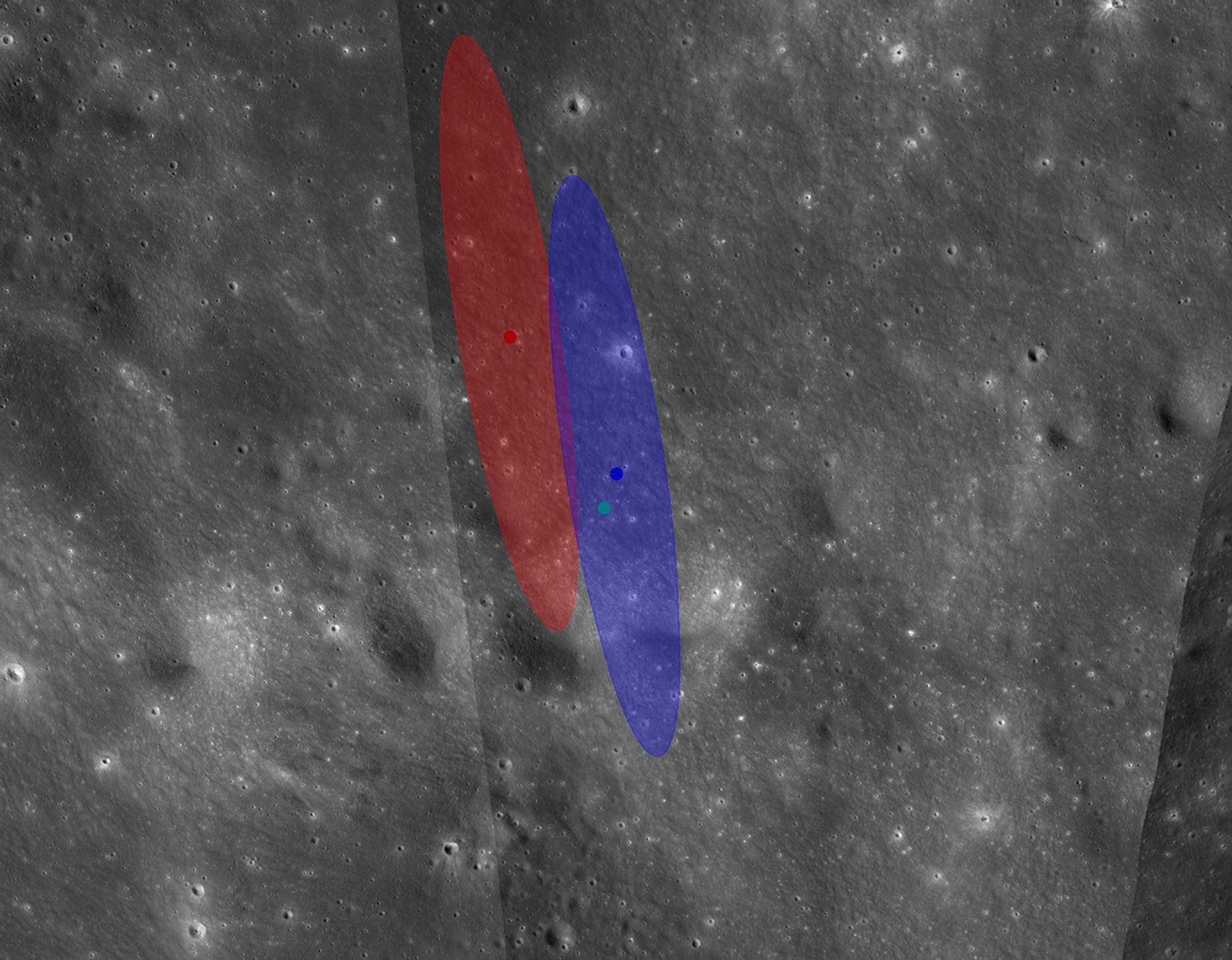
This image from NASA’s Lunar Reconnaissance Orbiter shows two oval regions where the Falcon 9 upper stage was likely to impact the Moon, based on calculations by engineers with NASA’s Center for Near Earth Object Studies. Both ellipses are 2.1 miles long and 0.4 miles wide. Both predictions use the same booster-trajectory calculations, but only the blue ellipse takes into account the lunar terrain. The red and blue dots show predicted impact locations, whereas the cyan dot shows the actual impact site.
NASA/JPL-Caltech
Finding the impact site took global coordination among experts and hobbyists. Independent astronomers first identified the rocket’s trajectory using publicly available data. NASA’s Center for Near Earth Object Studies, which tracks natural objects that could pose hazards to Earth for the agency’s Planetary Defense program, used this opportunity to test and validate tools and techniques for predicting impacts.
Based at NASA’s Jet Propulsion Laboratory in Southern California, the center incrementally refined the trajectory until identifying the location of impact, which it provided to the Republic of Korea for their Korea Pathfinder Lunar Orbiter (Danuri) team. The team used the high-resolution LUTI camera on Danuri a few hours later to image the crater, finding the prediction was accurate to about 0.6 miles.
After capturing images of the crater, the Danuri mission sent coordinates to NASA’s LRO team to help refine their follow-up imaging sequence. Comparing their new crater images with the pre-impact images, the LRO team updated the crater center coordinates: 19.4759°N, 266.7138°E, 511 meters elevation.
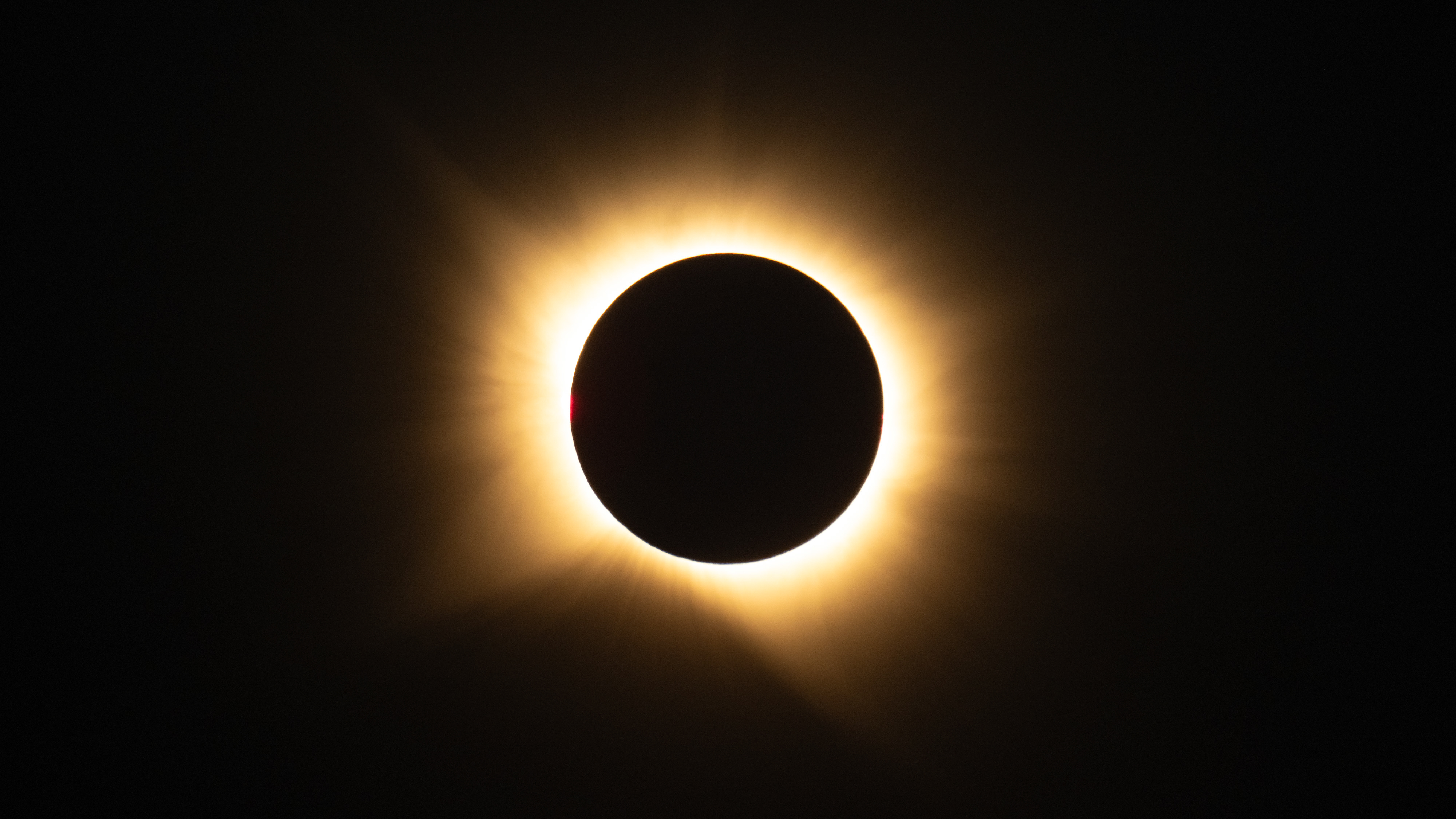
A total solar eclipse is seen from San Millán de los Caballeros, Spain, Wednesday, Aug. 12, 2026. A total solar eclipse – the Moon passing between the Sun and Earth, completely blocking the face of the Sun – swept across parts of Greenland, Iceland, northern Russia, the Atlantic Ocean, Spain, and a small corner of Portugal. A partial eclipse was visible in parts of the U.S., most of Canada, much of Europe, and northwest Africa.
The fully-integrated LEMS (Lunar Environment Monitoring Station) ready for environmental testing. A small suitcase-size instrument suite built at NASA Goddard, LEMS is designed to carry out continuous, long-term monitoring of the seismic environment at the Moon, including surface motion caused by moonquakes and meteorite impacts in the lunar south polar region.
NASA Goddard/Mike Guinto
NASA has declared “wrenches down” on the first completed payload designed for Artemis astronauts to deploy on the Moon’s surface. Engineers working on NASA’s Lunar Environment Monitoring Station, or LEMS, have completed hardware development and testing and the payload is ready for its permanent home near the lunar South Pole. With the hardware complete, LEMS is ready to support one of the Artemis program’s core goals: enabling sustained lunar science and exploration.
The LEMS instrument package contains two highly sensitive seismometers that will monitor ground vibrations from moonquakes and meteorite impacts, providing scientists with insights into the Moon’s interior and the seismic hazards astronauts might encounter at the surface. Its modular design allows the system to be adapted or expanded to host new instruments in the future, creating a reusable platform that can evolve as scientific priorities grow.
The payload will remain in a clean room at NASA’s Goddard Space Flight Center in Greenbelt, Maryland, where it was built, until it is assigned to an Artemis mission for deployment to the lunar surface.
“The completion of the LEMS scientific instrument is a major step in a new era of lunar surface science. Innovative science experiments will uncover, measure, and reveal the Moon’s secrets while astronauts open new frontiers for discovery,” said Joel Kearns, deputy associate administrator for exploration, Science Mission Directorate, NASA Headquarters in Washington. “And, behind the scenes, countless teams across NASA and our partners are pushing the boundaries of what surface instruments can do, building the tools that will make future exploration possible and safer.”
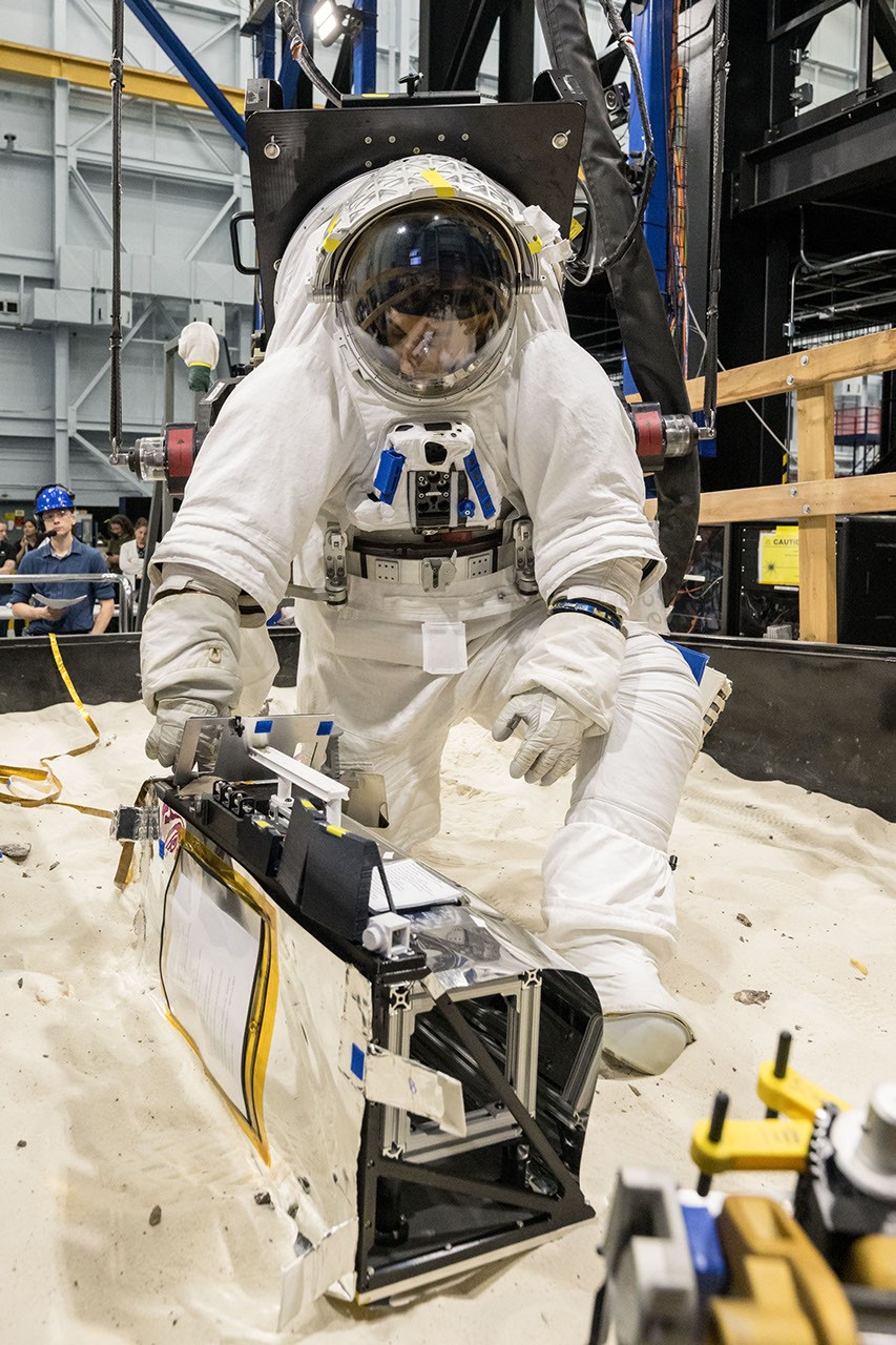
A scientist wearing NASA’s xEMU prototype space suit is testing the handling of a mockup version of NASA’s Lunar Environment Monitoring Station, or LEMS. The testing took place at the Active Response Gravity Offload System, a simulated reduced gravity environment at NASA’s Johnson Space Center in Houston.
NASA Johnson
The LEMS payload builds on a legacy of lunar seismic tracking. Apollo astronauts deployed a network of seismometers on the Moon’s nearside equatorial region between 1969 and 1972. Those instruments operated until 1977, recording about 13,000 moonquakes and other ground vibrations that helped scientists begin to understand the composition of the Moon’s interior. For decades, researchers have hoped to spread more seismometers, updated with new technologies, across the lunar surface.
Now, LEMS will carry the first seismometers to be deployed by future astronauts to listen for faint ground vibrations, collecting new clues to the Moon’s internal structure and ongoing seismic activity. The sensors will be the most compact, sensitive, and energy-efficient seismometers ever built for planetary exploration.
LEMS itself is about the size of a small suitcase, weighing 11 pounds in the Moon’s low-gravity environment. It will carry not just these seismic sensors, but everything it needs to function independently of humans after deployment. LEMS is built to manage its own power production via a lightweight, flexible solar array that conforms to the shape of the LEMS unit. It also will manage its operational activities to ensure continuous data collection based on a preset plan, and monthly data transmission to Earth. The payload will do all this while maintaining a stable internal temperature throughout the massive day-to-night temperature swings of the South Pole region.
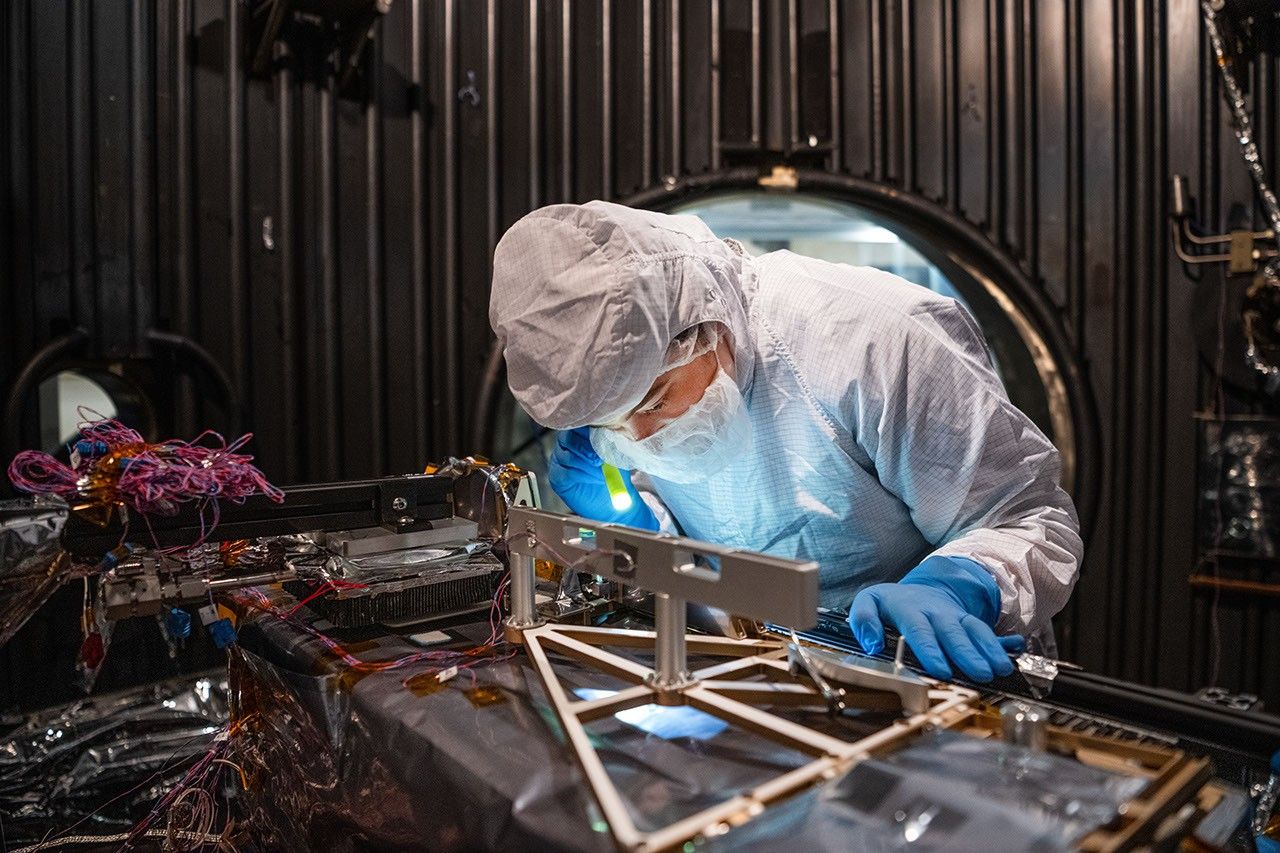
Mechanical Engineer Brie Ludwig inspects the Lunar Environment Monitoring Station (LEMS) in preparation for testing in a thermal vacuum chamber at Goddard Space Flight Center in Greenbelt, Maryland, on March 31, 2026. LEMS is a compact, autonomous, and self-sustaining seismometer suite designed to carry out continuous, long-term monitoring of the lunar seismic environment at the South Polar region.
NASA/Denny Henry
“When we conceived of LEMS, we weren’t just thinking about the next mission, we were thinking about the next generation of lunar exploration,” said Mehdi Benna, a University of Maryland Baltimore County scientist who leads LEMS from NASA Goddard. “Our vision was to create a scientific buoy for the Moon. Like an ocean buoy on Earth, LEMS is designed to be easy to build, adaptable to different scientific objectives, and capable of operating independently for years.”
Before any surface science could happen, Benna and his team had to ensure that LEMS could survive the trip to the Moon and the harsh environment of its surface. Over the past five months, LEMS and its components have been subjected to a demanding series of environmental and operational tests. Engineers verified LEMS can endure the violent shaking of launch, the journey to the lunar surface, and the Moon’s temperature and radiation environment. The team also showed that the instrument package’s mechanical and electrical design is safe for astronaut handling.
The LEMS payload was built to operate through the lunar night, which lasts two Earth weeks, without external power assistance or a heat source. Past lunar surface instruments relied on radioisotope heaters for warmth and power. But LEMS instead will withstand temperatures that dip to minus 400 degrees Fahrenheit in some areas by using advanced insulation materials, low-thermal-conductivity cables that minimize heat loss, and a thermal regulator that conducts heat away during the day to prevent overheating and helps retain heat at night.
These innovations reduce mass and power needs, setting the stage for lighter, energy-efficient instruments that can operate continuously at future Artemis landing sites and the NASA-led Moon Base.
The LEMS payload is led by University of Maryland Baltimore County and University of Maryland College Park. Technical implementation is led by NASA Goddard. The University of Arizona, in partnership with Silicon Audio, Inc., supplied LEMS’ two state-of-the-art seismometers. Morehead State University in Kentucky provided LEMS’ telecommunication system and will operate the instrument on the surface. Washington University in St. Louis will manage the instrument’s data processing and dissemination to the larger scientific community.
This full-scale prototype of Interlune’s lunar excavator was developed in partnership with Vermeer in 2025. Testing as shown was done with auxiliary components. (Interlune / Vermeer Photo)
Seattle-based Interlune is expanding its partnership with Vermeer, an Iowa-based industrial equipment manufacturer, to develop construction tools for use on the moon.
The two companies forged their initial strategic partnership to further Interlune’s plans to extract helium-3 from tons of moon dirt and rocks, also known as regolith. Their full-scale prototype of a lunar excavator was unveiled a little more than a year ago.
At the time, Interlune was focused on mining helium-3 and bringing it back to Earth for applications ranging from quantum computing to medical imaging and nuclear fusion. But a major shift came in March when NASA announced a 10-year, $30 billion initiative to build the infrastructure for a moon base.
Interlune co-founder and CEO Rob Meyerson said he and his teammates realized that the partnership with Vermeer could support NASA’s plans. “We went back to Vermeer … and we decided that it made sense to formally expand the partnership to focus on all these other things that we’ve had in mind,” Meyerson told GeekWire.
For example, a lunar construction project is likely to involve building roads, compacting surfaces, digging trenches for underground utilities and moving rocks to clear space for a habitat. Heavy equipment might be needed to build protective berms around nuclear reactors.
“When I left NASA and came to work for Vermeer, my hope always was to be able to re-merge my passion for aerospace, specifically for the human exploration and human colonization of the moon and Mars, with my coming back to my family business … and use what I knew Vermeer was best at on Earth to do important work on the moon and Mars,” he told GeekWire.
Executives get a look at a regolith-processing experiment at an Interlune lab in Seattle. Gary Lai, Interlune’s chief technology officer, is pointing at hardware. Interlune CEO Rob Meyerson is at far left, and Vermeer CEO Jason Andringa is at far right. (Interlune Photo)
“We want to really formalize the partnership so that we can start to think beyond prototypes, and think about sustainable operations, systems that are resilient to the environment,” he said. “That is what Interlune and Vermeer bring together as a team.”
Interlune will work with Vermeer to build a demonstration tool that could be put on a lunar vehicle and sent to the moon in 2028 or 2029. “It is going to be something around leveling, rock removal and compaction,” Meyerson said. “That will be the priority for the first one.”
Andringa said Vermeer would follow Interlune’s lead on the requirements for a lunar site preparation tool. “It would most likely involve what we call surface mining, which is a big drum attachment on a machine that basically mills out a level of the very top part of the regolith, and then it could be compacted,” he said. “Depending on the exact location on the moon and the exact properties of the material, you might just need to go over it with the drum one time.”
A lunar site-leveling tool could look something like the drum attachment mounted on this surface mining vehicle. (Vermeer Photo)
Over the longer term, Interlune and Vermeer would add to the toolkit. “Sometime in the future, you may have a specific-purpose machine that the two companies put together, that is specially designed just for that industrial operation, rather than the missions that NASA has in mind for the LTV,” Meyerson said.
In the meantime, Interlune is continuing work on its helium-3 mining initiative. The company’s first space mission, known as Crescent Moon, involves sending a multispectral camera to the lunar surface later this year. The camera is designed to estimate how much helium-3 is present in the soil around the landing site.
Interlune’s second mission, Prospect Moon, recently received $6.9 million in NASA funding for design and development. That mission is currently due for launch in 2028 and will test methods for extracting helium-3 and hydrogen from lunar regolith.
“We have the team in place, and things are going well,” Meyerson said. “We’re ticking through all of our milestones with the NASA team.”
Meanwhile, Vermeer is pursuing a separate partnership with Texas-based Astroport Space Technologies, which is developing its own suite of robotic systems for lunar construction projects. “Interlune and Astroport are aware of each other, and both of them feel as though there’s going to be plenty of work to go around,” Andringa said.
Andringa emphasized that the work on lunar construction equipment makes up just a small percentage of what Vermeer does. About 10 of Vermeer’s 4,500 employees are working on moon projects, and even those employees have other projects in their portfolio, he said.
Nevertheless, Andringa acknowledged that there’s something inspirational about extending the company’s reach beyond Earth. “It’s always going to be a small part of Vermeer, but it’s going to be a super-engaging, motivating, fun, stimulating, challenging part of Vermeer,” he said. “And you know what? What we learn to build stuff and fly stuff and operate stuff on the moon is just going to make us even better at the job sites where Vermeer machines work on Earth. That’s the reason we’re doing it.”

 Login
Login