❌

Normal view

There are new articles available, click to refresh the page.
Yesterday — 28 October 2026Main stream

NASA University Challenge Ignites Trajectory of Drone Entrepreneur

By: Jim Banke
28 October 2026 at 14:00

4 min read

Preparations for Next Moonwalk Simulations Underway (and Underwater)
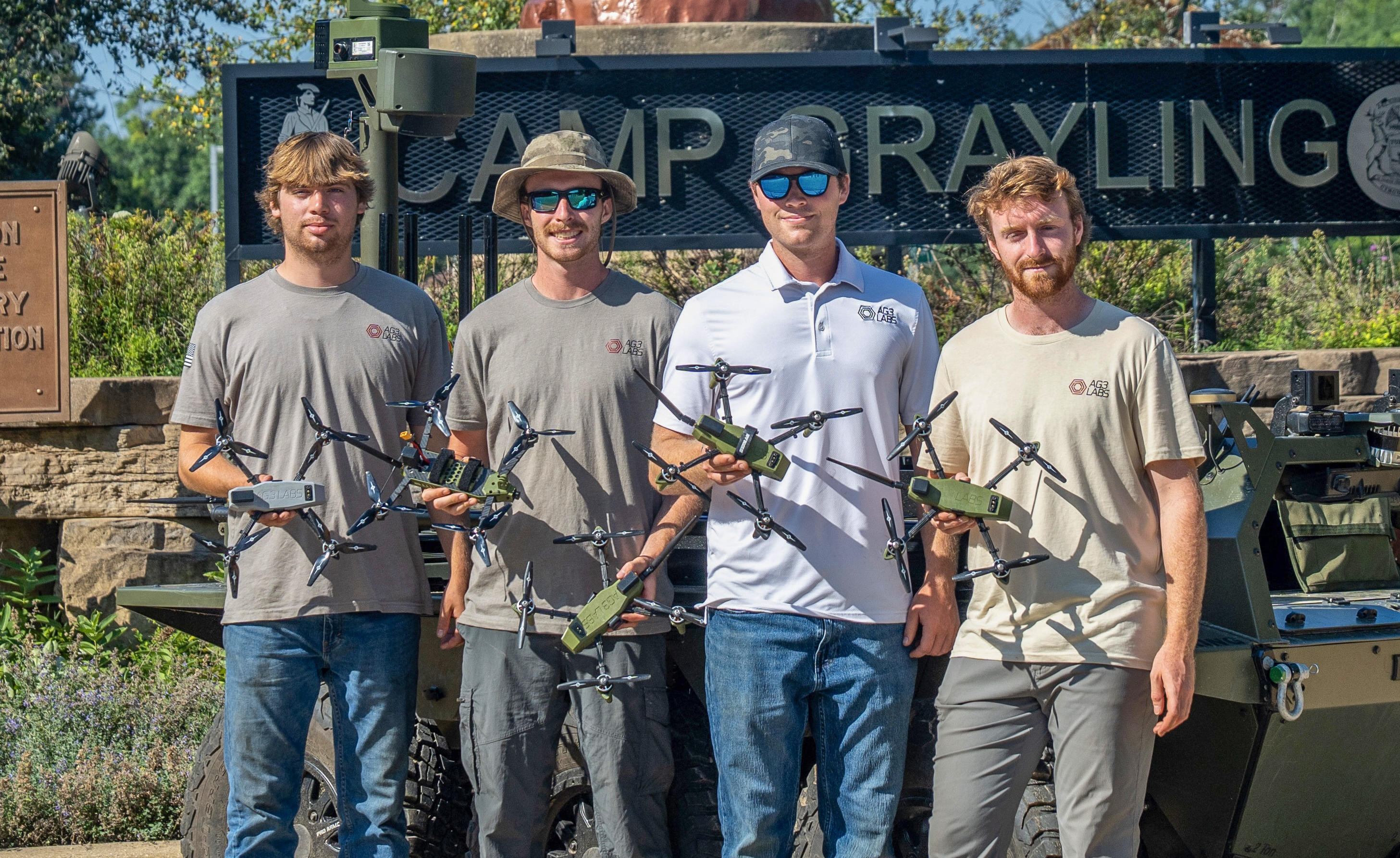
NASA University Challenge image shows four men dressed in t-shirts and jeans, each holding a small quad-copter drone, stand in front of a “Camp Grayling” sign with trees and bushes in the background.
Four co-founders of AG3 Labs –from left Matt Atkinson, Gavin Gardner, Ryan Atkinson, and Gryson Gardner – show off the military training drones their company builds at a U.S. Army event at Camp Grayling in Michigan. As a student, Gavin was on a Michigan State team twice selected for participation in NASA’s University Student Research Challenge. His NASA experience served as a foundation for the creation of AG3.
AG3 Labs

Five years ago, Gavin Gardner was a Michigan State University engineering student researching next-generation drone technology as part of a NASA grant. Garder expected the research to be demanding – but he was surprised that navigating the financial side of the work presented an even greater challenge.

Although Gardner was used to leading fellow students in a lab setting, he and his team were completely new to things like creating budgets, handling large sums of money, and promoting their work for crowdfunding.

That’s why demonstrating both engineering and entrepreneurship skills are major tentpoles of NASA’s University Student Research Challenge (USRC), an initiative that provides grants to teams of college students interested in helping the agency realize its aeronautical research goals.

“Half the battle is building your product,” Gardner said recently. “The other half is selling the product in a way that everyone else can understand what you’re doing and not talking in nerdy, engineering ways.”

We hope that every team that participates in the program sees, like Gavin, how they can grow technically, entrepreneurially, and use the opportunity as a launchpad for their own innovative careers.

STEVEN HOLZ

STEVEN HOLZ

NASA USRC Manager

Gardner and his Michigan State USRC alumni teammates are still using those lessons today, as aerospace developers. In 2024, they founded their own company, AG3 Labs, which specializes in drones for military training exercises.

“I don’t think I would discredit our technical expertise in getting us to where we are today, but I know that USRC was a booster that really amplified our trajectory at such a young age,” Gardner said.

NASA USRC manager Steven Holz said Gardner’s experience shows what students can accomplish when they receive both a grant and guidance – enabling a future workforce and contributing to the aviation industry.

“We are proud to see the success of USRC alumni,” Holz said. “We hope that every team that participates in the program sees, like Gavin, how they can grow technically, entrepreneurially, and use the opportunity as a launchpad for their own innovative careers.” 

Research path

Gardner’s path to running his own company began with a middle school age trip to Space Camp, where he began realizing that he wanted to be an engineer.

The engineering bug also bit his brother, Gryson Gardner, and the two of them would often be found in their Michigan garage tinkering with various machinery, including drones and electronic kits.

When Gardner arrived at Michigan State, he looked for extracurricular groups and found one dedicated to the increasingly popular hobby of drones. He gained hands-on, practical experience in how drones are made and operated.

In 2021, Gardner received an email from a friend who told him they had just won a USRC grant from NASA for an activity called Aerial Intra-city Delivery Electric Drones (AIDED), and they needed help building a new drone.

“We had this idea that instead of flying through the whole city, why can’t a drone just hitchhike a ride on a city bus like everyone else does?” Gardner said.

The concept was for a cargo-carrying drone to take off, dock on top of public transportation such as a bus, charge its batteries while riding along, and then take off for its final leg of the delivery. The team built and flew a full-scale drone to prove the concept but decided against pursuing a commercial venture.

“The commercial drone market kind of scared us a little bit with the large number of regulations that go into operating such a novel idea like this with flying over people in a dense city,” Gardner said.

But the team’s demonstration of technical prowess and confidence led to a second USRC award from NASA in 2023 – the Laser Energized Aerial Drone System (LEADS), which focused on using a laser to transfer power directly to a drone in flight.

While working on LEADS, which led to flying a prototype, Gardner’s network of contacts within the drone community expanded to include NASA personnel at the Glenn Research Center in Cleveland, who made him aware of internship opportunities, which he applied for and was accepted while in graduate school.
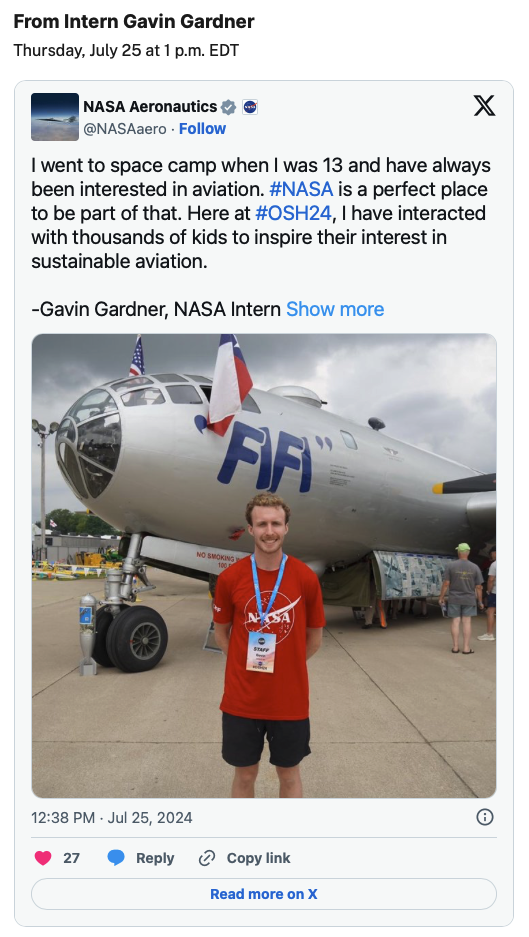
Screen shot of Gavin Gardner's intern post whee he is standing in front of the FIFI aircraft wearing a red NASA t-shirt and dark shorts.
Gavin Gardner, a University Student Research Challenge participant who went on to co-found his own drone company, also was a NASA intern in 2024 and wrote this social media post. 

Student challenge paves way for opportunity 

As his graduation in the spring of 2025 with a master’s degree approached, Gardner took the initial steps in late 2024 to co-found with his brother and other USRC alumni AG3 Labs after a friend suggested the military could use low-cost drones to test effective counter drone systems.

An initial award from the U.S. Army led to more contracts, allowing the company to expand and ramp up its operations, where today their production capability enables thousands of drones to be built each month.

Gardner credits his experience with USRC, especially when it came to learning more about the business side of running a technical operation, with helping create the opportunities for success he and his team are experiencing today.

About the Author

Jim Banke

Jim Banke

Aeronautics Senior Writer

Jim Banke is a veteran aviation and aerospace communicator with more than 40 years of experience as a writer, producer, consultant, and project manager based at Cape Canaveral, Florida. He is part of NASA Aeronautics' Strategic Communications Team and is Senior Writer for the Aeronautics Division within the Research Technology Mission Directorate. In 2007 he was recognized with a Distinguished Public Service Medal, NASA's highest honor for a non-government employee.
Facebook logo
Instagram logo
Linkedin logo
Before yesterdayMain stream

NASA’s X-59 Aircraft and Test Pilot

26 October 2026 at 11:25
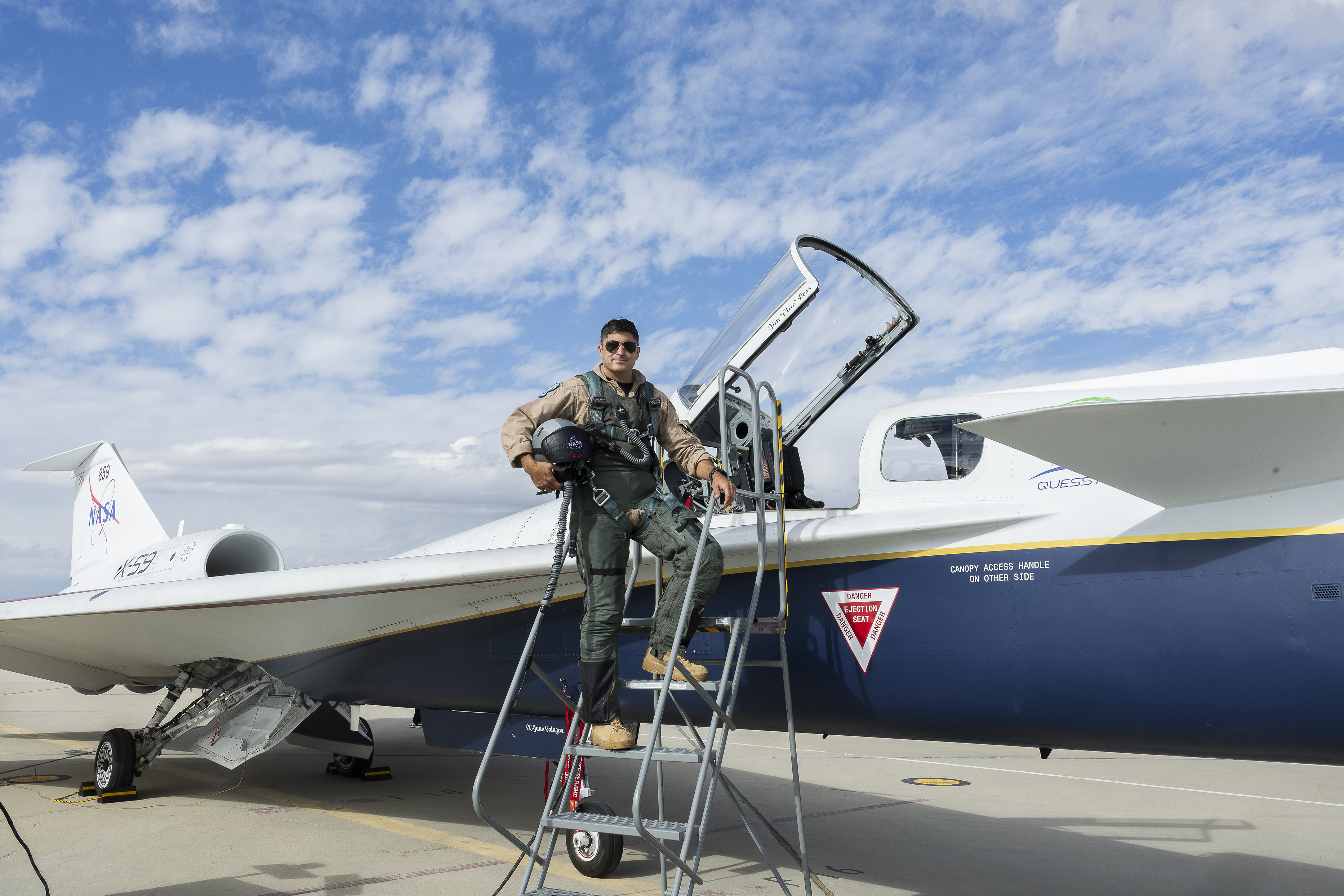
NASA test pilot Mike Lippert stands on a gray metal ladder before getting into the X-59 plane. He is holding his helmet under his right arm. The cockpit of the plane is open.
NASA/Carla Escamilla

NASA test pilot Mike Lippert poses for a photo ahead of his first time flying the agency’s X-59 quiet supersonic research aircraft on Oct. 21, 2026. The X-59 has flown numerous times since its inaugural flight in November 2025; its first supersonic flight was on June 5, 2026.

Lippert took off from NASA’s Armstrong Flight Research Center in Edwards, California, and landed one hour later. The flight came after scheduled maintenance and a review of the X-59’s systems following the aircraft’s busiest week of testing to date.

Read more about Lippert and the Oct. 21 flight.

Image credit: NASA/Carla Escamilla

NASA to Conduct NCAA Flyover, Engage Fans at University of Alabama

By: Lee Mohon
21 October 2026 at 12:31
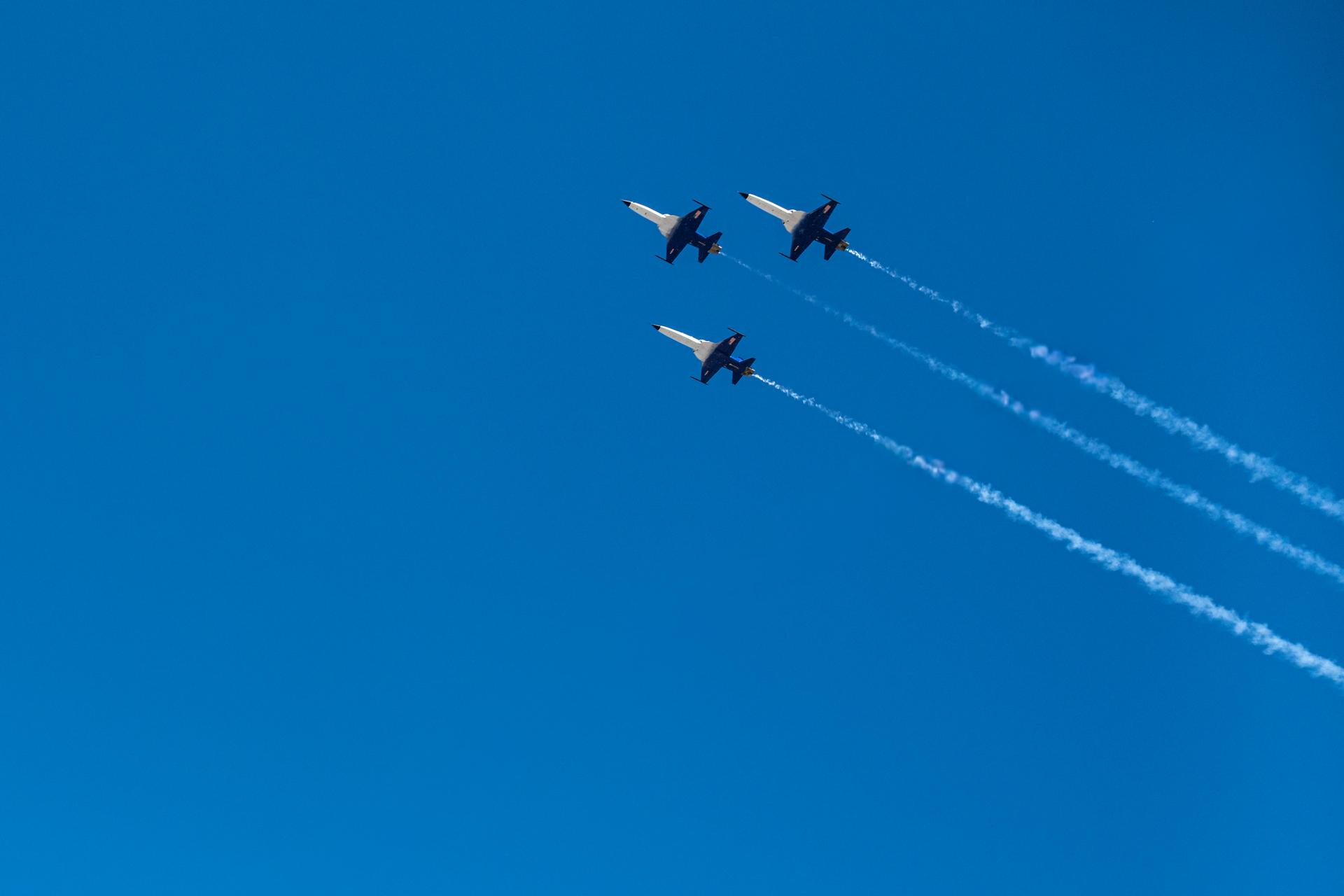
Looking up, three white and black fighter jets fly in formation across a bright, blue sky.
NASA’s Freedom 250 F-5 team, including NASA Administrator Jared Isaacman, performs a flyover during the national anthem at an NFL game between the Cleveland Browns and the Carolina Panthers at Huntington Bank Field, Sept. 27, 2026, in Cleveland.
NASA/Jordan Cochran

As part of the agency’s Inspiration Tour, NASA will conduct a flyover at the University of Alabama vs. Texas A&M football game in Tuscaloosa, Alabama, on Saturday, Oct. 24. NASA Administrator Jared Isaacman will pilot one of three F-5 fighter jets during the flyover, highlighting NASA’s contributions to aeronautics and the agency’s continued commitment to advancing aviation technologies.

Ahead of the game, members of the news media are invited to visit the NASA Experience Zone on Champions Lane, where Isaacman will participate in a media opportunity at 11 a.m. CDT. Media interested in attending should confirm their attendance by 12 p.m. Friday, Oct. 23, with Lance D. Davis at lance.d.davis@nasa.gov to receive additional details and instructions.

Supported by NASA’s Marshall Space Flight Center in Huntsville, Alabama, the NASA Experience Zone will be open to the public from 10:30 a.m. to 2:30 p.m. CDT, with no game ticket required. The experience will give visitors an opportunity to meet NASA team members and learn more about the people and technologies advancing the agency’s missions in aeronautics and space exploration.

Attendees can engage with NASA team members and explore exhibits highlighting the agency’s Artemis campaign and efforts to return astronauts to the Moon, including:

  • An inflatable SLS (Space Launch System) rocket.
  • Displays featuring the Starship and Blue Moon human landing systems.
  • Information about NASA internship opportunities.
  • Photo opportunities featuring NASA exhibits and displays.

With stops across the nation, NASA’s  Inspiration Tour  convenes academic, industry, and public sector stakeholders to connect the agency with the people, technologies, and organizations that drive American leadership in space.

The tour will culminate in MAX POWER, a public exposition of American air and space innovation, Saturday, Nov. 7, and Sunday, Nov. 8, on and near the agency’s Kennedy Space Center in Florida. Held in honor of America’s historic 250th anniversary, the multi-day, family-friendly event will showcase the next-generation aircraft, spacecraft, autonomous vehicles, and technologies that will help define the future of transportation in air and space. 

 For more information about MAX POWER and the agency’s missions, visit:


https://www.nasa.gov/maxpower

-end-

Lance D. Davis 
Marshall Space Flight Center, Huntsville, Ala. 
256-640-9065 
lance.d.davis@nasa.gov  

Share

Details

Last Updated
Oct 21, 2026
Editor
Lee Mohon
Contact

Software

19 October 2026 at 14:11

5 min read

Preparations for Next Moonwalk Simulations Underway (and Underwater)

Research teams at NASA’s Glenn Research Center are involved in developing theory and software to predict the noise from aircraft engines. This software helps engineers to design and analyze new and improved aircraft propulsion systems. Copies of our software can be requested from NASA’s Software Catalog.

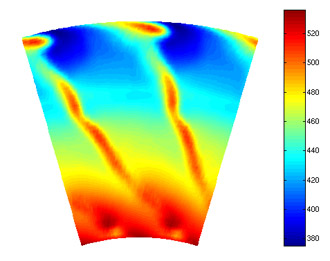
Aerodynamic predictions of a the hot exhaust flow through a dual stream nozzle with chevrons.
NASA

JeNo

Development of jet noise prediction codes is multifaceted. Since JeNo predicts jet noise using Lilley’s Acoustic Analogy and the mean flow solutions from a Reynolds-Averaged Navier-Stokes (RANS) code, accurate acoustic predictions hinge on accurate aerodynamic predictions. This is why acoustic source modeling and turbulence modeling, together with the development of advanced measurement systems, are the leading areas of research in jet noise prediction at NASA Glenn. RANS-based jet noise prediction schemes based on Lilley’s Acoustic Analogy offer relatively quick answers compared to those from alternative methods like Large-Eddy Simulations (LES) or Direct Numerical Simulation (DNS).

The JeNo jet noise prediction code calculates the far-field sound spectral density produced by axisymmetric jets at a user-specified observer location and frequency range. Currently, JeNo has been validated for subsonic and low supersonic, unheated axisymmetric jets. Copies of the JeNo code can be requested from NASA’s Software Catalog.

MGBK

Development of the MGBK code preceeded JeNo. Researchers at NASA GRC have used MGBK to predict trends in jet noise for complicated aircraft engine exhaust nozzles. MGBK was used to analyze the noise reduction benefits of chevrons–serrations on teh edge of turbofan nozzles–which are a familiar site on many commercial aircraft engines today. Copies of the MGBK codes can be requested from NASA’s Software Catalog.

V072

Predicated on simplistic models of the fan flow and geometry, V072 has been proven useful in studying rotor/stator interaction tone noise. When you need to design a low-noise fan stage, tone noise level predictions from V072 can help you make smart choices for such important design parameters as blade and vane counts, rotor-stator spacing, and stator vane sweep and lean. When you’re after quick noise estimates early in the design cycle, V072 may be your tool of choice. Copies of V072 can be requested from NASA’s Software Catalog.

TFaNS

Taking rotor/stator interaction noise prediction to the next level, not only can TFaNS calculate the tone noise levels generated by rotor/stator interaction it can also account for the blade row acoustic coupling effects such transmission and reflection and can propagate those tones to the far field. Like V072, TFaNS runs quickly and can be used in early design stages for studying trends. Copies of TFaNS can be requested from NASA’s Software Catalog

Linflux

When simple models are too simple, an analysis with Linflux gives you the power to study realistic, 3-D flows and blade geometries. Compared with V072 and TFaNS, Linflux requires significantly more computational resources since it models much more of the physics involved. Linflux predicts rotor/stator tone noise and, like all the software developed by the NASA Glenn Acoustics Branch, has been rigorously validated against experimental data. Copies of Linflux can be requested from NASA’s Software Catalog.

BFANS

Using estimates of turbulence intensity and characteristic length scale as input, BFANS can be used to calculate the broadband noise generated by turbulence impinging on the leading edges of the rotor blades and stator vanes. Calculations with BFANS, combined with experimental data from tests at facilities like NASA Glenn’s 9’x 15’ Low Speed Wind Tunnel, can be used to hunt down the noisiest components in a fan stage. Copies of BFANS can be requested from NASA’s Software Catalog.

RSI

RSI is a computer code for calculating the spectrum of broadband noise produced as a result of the interaction of the fan rotor wake turbulence with the fan exit guide vanes. The software computes the spectra of acoustic power upstream and downstream of the stator on a mode-by-mode basis at each frequency of interest given information about the incident turbulence characteristics. The target frequencies are arbitary and need not be harmonics of the blade passing frequency of the fan. Copies of RSI can be requested from NASA’s Software Catalog.

WOBBLE

Propeller noise can be strongly affected by any inflow that leads to unsteady blade loading. The WOBBLE code computes the tone noise associated with propellers with varying inflow angle and predicts the axial and circumferential directivity. Inflow angle is specified in terms of yaw, pitch, and roll angles of the aircraft. The acoustic model is exact and accounts for all unsteady sources such as thickness and loading effects from the blades. Copies of WOBBLE can be requested from NASA’s Software Catalog.

MPT

Multiple pure tone noise (aka “buzz saw” noise), created by rotor locked shocks present when the fan blade tip speed is supersonic, can be estimated with the MPT code. The MPT codes also use flow predictions from a Computational Fluid Dynamics (CFD) code as input. This tool can be used by engineers to study the real-world effects of blade-to-blade difference caused during fabrication (manufacturing variations) or during hot-running operation (blade setting angle and untwist variations). Copies of the MPT code can be requested from NASA’s Software Catalog.

ADPAC

Developed by the Allison Engine Company under contracts with Glenn Research Center, ADPAC solves tightly coupled internal/external flows through future-concept short-duct turbofan engines. ADPAC is one of our flexible validated CFD tools. Characteristics of the problems that can be modeled with ADPAC include: 2D/axisymmetric/3D/mixed, steady/unsteady, inviscid/viscous, rotating/non-rotating/mixed components, with bleeds, leakages, and injection. ADPAC was developed specifically for propulsion system aerodynamic analysis Copies of the ADPAC code can be requested from NASA’s Software Catalog.

Contact Us

Need to reach us for more information about our research, software, or data? Get in touch via the link below.

Experimental Facilities

19 October 2026 at 14:08

8 min read

Preparations for Next Moonwalk Simulations Underway (and Underwater)

Research teams at the NASA Glenn Research Center perform experiments in world-class facilities such as the 9- by 15-Foot Low-Speed Wind Tunnel (9 x15 LSWT), the Aero-Acoustic Propulsion Laboratory (AAPL), the Small Hot Jet Acoustic Rig (SHJAR), the Nozzle Acoustic Test Rig (NATR), the DGEN AeroPropulsion Research Turbofan (DART), and the Acoustical Testing Laboratory (ATL).

9×15 Low-Speed Wind Tunnel (9×15 LSWT)

The 9- by 15-Foot Low Speed Wind Tunnel is specially designed to give researchers a controlled environment to study aircraft engine aerodynamics and acoustics at takeoff and landing conditions. This helps us to reduce noise in communities near airports. Major modifications were completed in 2019 to improve the flow and lower the background noise of the tunnel. A new 5-sensor traversing microphone rake helps measure sound produced by scale experimental propulsors. Read more about the capabilities of the 9 x 15 LSWT on our facilities page.

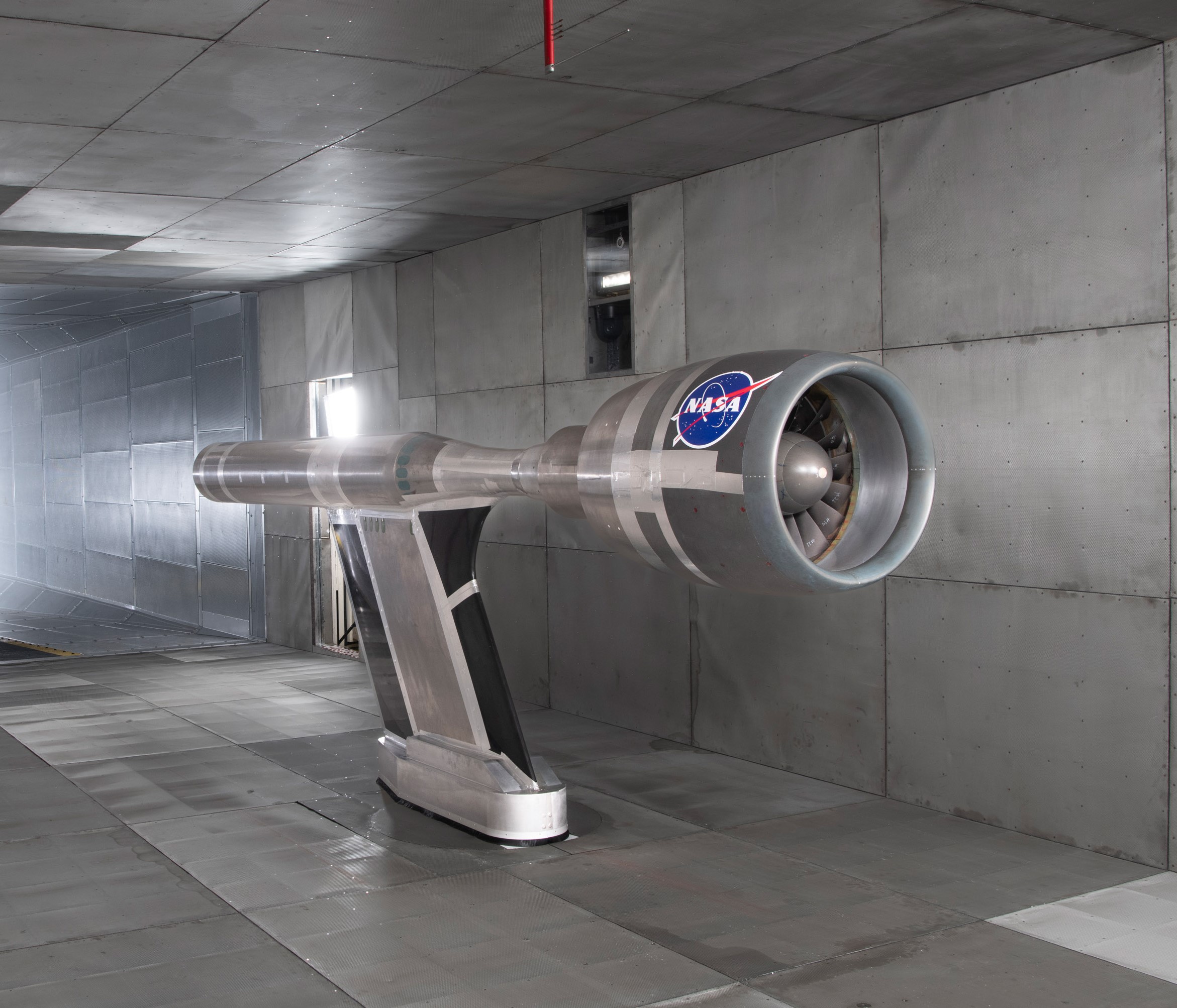
Advanced Ducted Propulsor (ADP) Fan Commissioning Test (side view) in the 9x15 Low-Speed Wind Tunnel.
Advanced Ducted Propulsor (ADP) Fan Commissioning Test (side view) in the 9×15 Low-Speed Wind Tunnel.
NASA

Aero-Acoustic Propulsion Laboratory (AAPL)

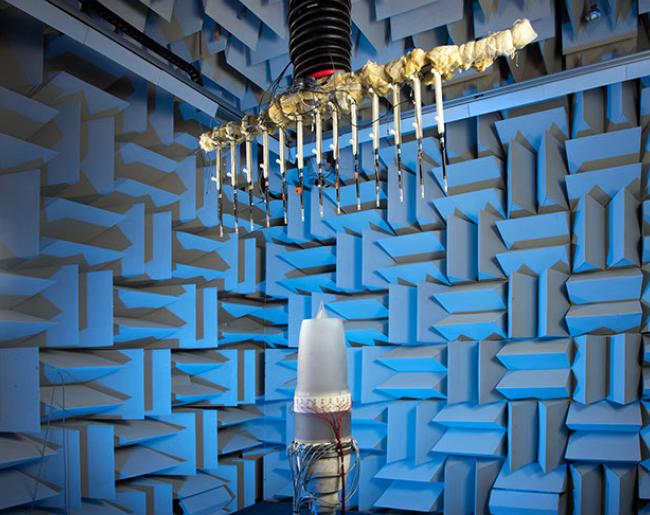
The Aero-Acoustic Propulsion Laboratory (AAPL) is a dual-purpose 65-foot radius geodesic dome used to reduce community noise and perform aeroacoustic tests of aircraft engines and engine components. The test area inside the dome can be configured as a hemi-anechoic or anechoic chamber. There are no echoes in the dome during tests because 17,000 custom-designed 2-ft thick fiberglass wedges are mounted to the inside surface of the dome walls and placed on the floor and around test rigs to absorb sound and prevent sound reflections. When AAPL was constructed in 1993, it was the first known free-standing geodesic dome to include materials to reduce transmission of sound through the walls and absorb sound within it. AAPL currently houses the Nozzle Acoustic Test Rig (NATR), Small Hot Jet Acoustic Rig (SHJAR), and the DGEN 380 Aeropropulsion Research Turbofan (DART). Read more about the capabilities of the AAPL on our facilities page.

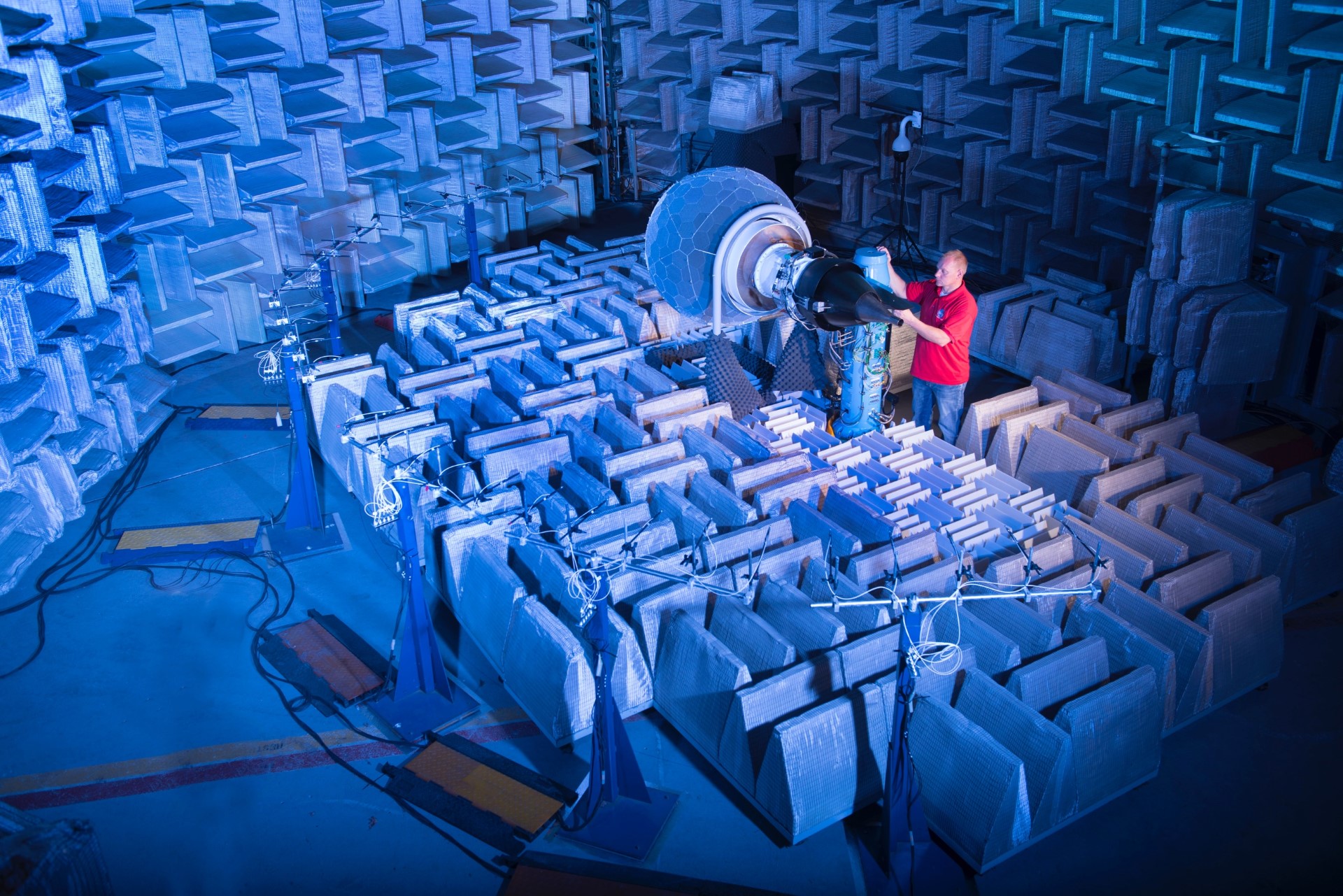
A person stands next to a small jet engine inside a soundproofed room.
The Aero-Acoustic Propulsion Laboratory at The NASA Glenn Research Center in Cleveland is an anechoic chamber used to measure noise from experimental aircraft engines such as the DGEN 380 Aeropropulsion Research Turbofan (DART) shown here.
NASA/Bridget Caswell

Small Hot Jet Acoustic Rig (SHJAR)

SHJAR is one of three rigs installed inside the anechoic dome of the Aeroacoustic Propulsion Lab. It can be used to test single stream nozzles up to 5 cm in diameter, Mach 2.0 and 800 K. SHJAR is a key tool in connecting the dots between nozzle geometry, jet flow, and noise. Creative nozzle designs are inexpensively created for this rig, and their impact on flow and noise is measured with world-leading measurement techniques. Researchers at NASA Glenn have been using SHJAR to develop advanced flow measurement techniques like Rayleigh Scattering, Raman Scattering, digital Schleiren, and real-time Particle Image Velocimetry. Three-dimensional microphone arrays have been deployed to map the sources of the noise. These techniques hold the promise of unlocking some of the mysteries of how the turbulence caused by the nozzle creates noise. The data from this rig is used to validate the computer codes that are being developed to calculate jet noise. Better noise prediction codes will help engineers design quieter nozzles.

Among the many firsts in turbulent jet research produced on SHJAR, time-resolved measurements of turbulent temperature were recently made using Raman-based optical methods, achieving high-frequency measurements of thermodynamic temperature fluctuations needed to complete turbulence models used in heat transfer as well as jet noise. In 2006, researchers had used the first time-resolved particle image velocimetry to measured space-time correlations of turbulent velocities in hot jets, a flow statistic key to the production of noise. Time-resolved velocimetry was also used to map convection speeds of turbulence, another flow metric required by jet noise theory but previously unavailable in hot jets.

The SHJAR is not only a good place to develop advanced diagnostic techniques, it has been a good testbed for exploring canonical problems in jet noise such as how the installation of the jet on an aircraft changes the noise produced by the jet. Jet-surface interaction, where the plume of the jet interacts with the wings, flaps, and tail of an aircraft, was identified as a fundamentally different noise mechanism in SHJAR tests.

Most of these ground-breaking measurement techniques and practical noise insights first developed on the relatively simple SHJAR have been deployed on the high-fidelity Nozzle Acoustic Test Rig (NATR), co-located in the Aero-Acoustic Propulsion Lab. Read more about the capabilities of the SHJAR on our facilities page.

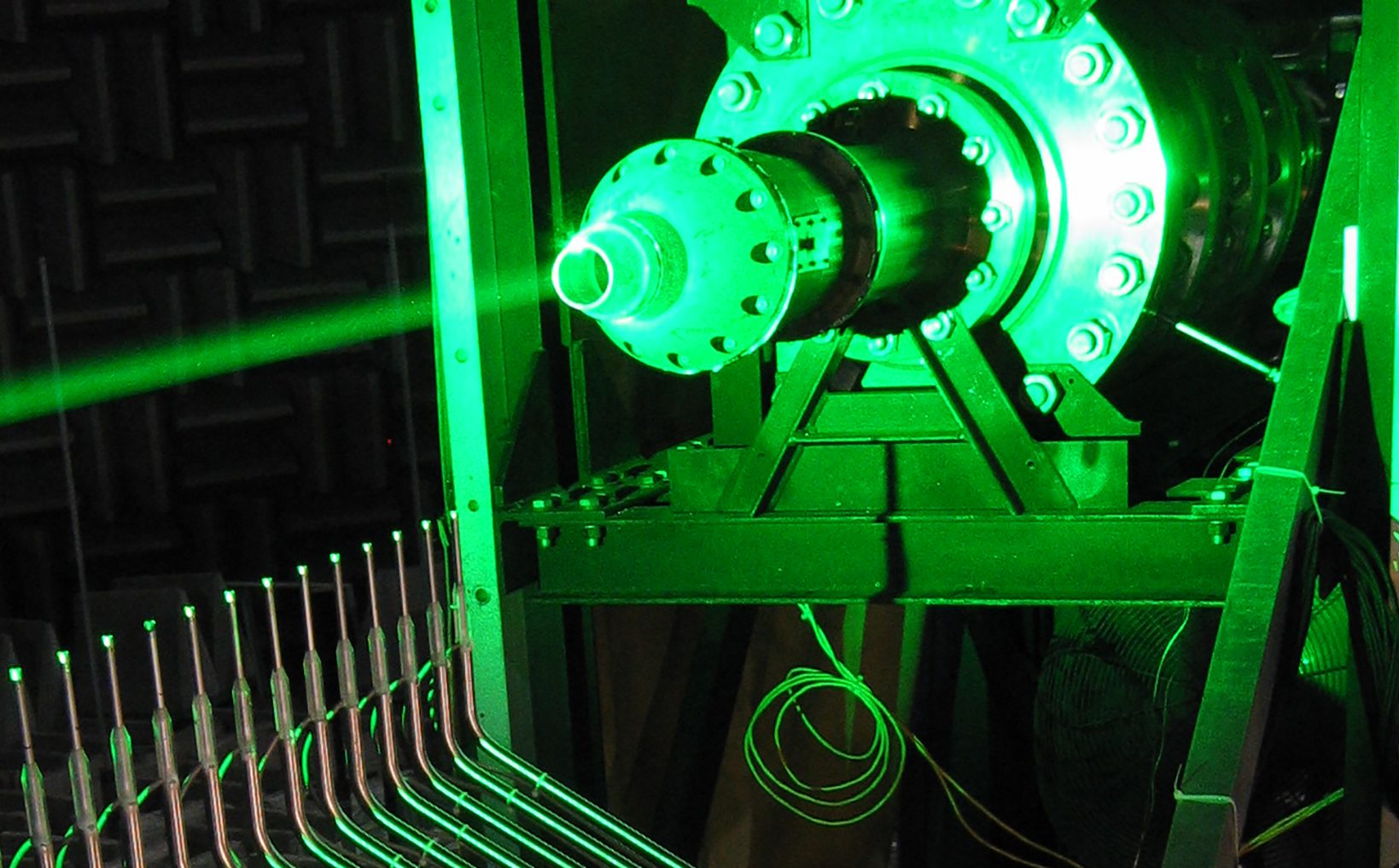
Simultaneous measurements of turbulent flow and near-field acoustics in the Small Hot Jet Acoustic Rig (SHJAR)
NASA

Nozzle Acoustic Test Rig (NATR)

The Nozzle Acoustic Test Rig (NATR), a free-jet wind tunnel, plays a key role in evaluating jet noise reduction concepts so that only the most promising concepts are selected for full-scale engine tests. Scale models of nozzles from both military and commercial aircraft engines can be tested in the NATR, which is one of three test rigs housed in the NASA Glenn Aero-Acoustic Propulsion Lab. The NATR can simulate take-off and landing flight conditions up to Mach 0.35. A jet engine simulator with up to three streams of air at a variety of pressures and temperatures simulate the flow of a turbofan engine to evaluate advanced nozzle concepts. The arc of microphones overhead simultaneously measures the far-field noise at all angles, allowing accurate translation of measurements to those of an actual aircraft flying overhead. The NATR enables engineers to evaluate a number of nozzle noise reduction concepts at a fraction of the cost and time required for a full-scale engine test.

Over its 30-year history, NATR has been the origin of many important jet noise breakthroughs. First built to support jet noise testing for the High-Speed Research program on commercial supersonic airliners, the facility has hosted many test programs led by NASA and industry. The chevron nozzles seen flying on today’s aircraft were first ‘discovered’ during a NASA-led test campaign in 1997. Over the years industry has used the rig to develop noise prediction methods for near-term designs. NASA has explored low-noise concepts for engines that are not yet available, such as engines with dual-fan systems. Recent tests have measured the noise likely to be heard from supersonic airliners, reducing the risk that these unique aircraft will not be allowed to fly from current airports. The tests also point to technologies to reduce their noise, allowing the aircraft designers to make the aircraft more efficient and environmentally acceptable.

The ability to test nozzle with flight is critical, as this has a strong impact on the noise produced by the relative velocity of the jet and the surrounding air, and it is a key feature allowing noise measurements to be directly transformed to what would be heard from a real airplane flying overhead. The large size of the anechoic space around the NATR is also critical to measuring the true acoustic far-field of the jet nozzle. The NATR in the Aero-Acoustic Propulsion Lab is one of the very few facilities in the world where these measurements are possible, and the only facility where both flow diagnostics and acoustics can be made on the same rig, a key capability in understanding the relationship between jet flow and noise. Read more about the capabilities of the NATR on our facilities page.

A Learjet engine nozzle peeks out from NASA Glenns Nozzle Acoustic Test Rig, a cylinder surrounded by tan wedges. The walls of the Aero-Acoustic Propulsion Facility, also covered in wedges, glow blue in the background.
Harware photographs of Lear Jet Nozzle Test 2018 in the Aero-Acoustic Propulsion Laboratory AAPL, Nozzle Acoustic Test Rig, NATR
NASA/ Rami Daud

DGEN AeroPropulsion Research Turbofan (DART)

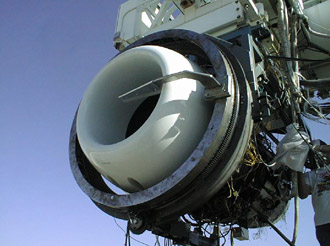
DGEN 380 is the primary component integrated into the NASA Glenn Research Center’s DGEN Aero-propulsion Research Turbofan (DART). It serves as a flexible, relevant, experimental aeroacoustic and aero-performance test bed, providing valuable information throughout NASA’s technology maturation process for a variety of multidisciplinary research that includes turbofan noise, engine controls, installation effects, and measurement technologies.

Recent tests were completed August 2019 to develop a better understanding of propulsion-noise sources to enable improved turbofan noise-prediction methods and noise-mitigation techniques. Simultaneous acoustic measurements were obtained using a circumferential infinite-tube-probe array at the core-nozzle exit in conjunction with sideline and farfield microphone arrays. The extensive data set will allow for the application of advanced source-separation and phased-array methods to elucidate not only the core-noise structure, but also the propagation characteristics of other propulsion noise sources. Read more about the capabilities of the DART on our facilities page.

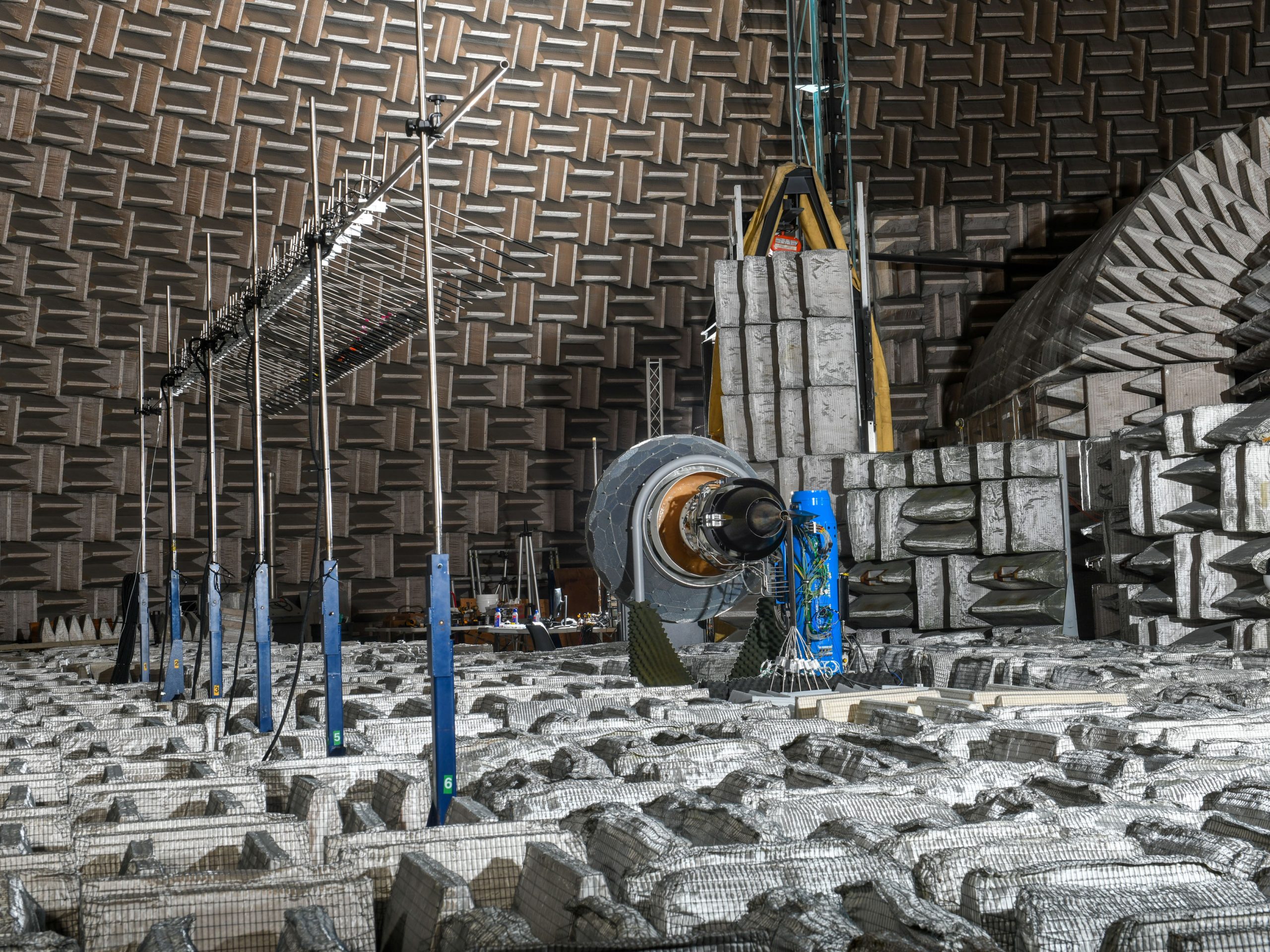
DGEN 380 AeroPropulsion Research Turbofan (DART) in the Aero-Acoustic Propulsion Laboratory.
NASA

Acoustical Testing Laboratory

The Acoustical Testing Laboratory at NASA GRC is used to support NASA’s human space exploration and aeronautics research missions. The ATL is a versatile test chamber that can be configured as an anechoic or hemi-anechoic chamber. Dense rubber material in the walls and ceiling of the ATL absorb or reflect sound from the outside. 34-inch deep fiberglass wedges that line the walls and floor are designed to absorb 99% of incident sound above 100 Hz which helps create an ideal environment for making acoustic measurements. A separate control room is attached for any noisy equipment or persons needed to perform the measurements.

The ATL has been used to quantify the noise emissions of experiments performed on the International Space Station, to measure noise sources and levels from electric motors, to calibrate microphone equipment, to measure the effectiveness of acoustic liners for aircraft engine models and to evaluate the over-the-wing engine placement for reducing takeoff and landing noise. Recent tests in the ATL have also included a scale model of a supersonic aircraft engine inlet and a spacecraft cabin ventilation fan.

To get a copies of NASA technical reports related to research in the Acoustical Testing Laboratory, please visit the NASA Technical Reports Server (NTRS).

Supersonic Engine Inlet Model in Acoustical Testing Laboratory
NASA

Contact Us

Need to reach us for more information about our research, software, or data? Get in touch via the link below.

Instrumentation

19 October 2026 at 12:37

3 min read

Preparations for Next Moonwalk Simulations Underway (and Underwater)

To measure airflow and sound, research teams at the NASA Glenn Research Center use special instrumentation like particle image velocimetry, hot wire anemometry, Raman spectroscopy, microphones in phased arrays or continuously rotating rakes. The global aviation noise reduction community relies on data from NASA GRC experiments to validate theory and noise prediction software.

Rotating Rake Mode Measurement System (RRMS)

Hear an annoying tone from your turbofan engine? Engineers might prescribe an advanced liner or specially tuned active noise control system to quiet it down.

To get it right, though, more information about the modal content of the tone is needed. This kind of data can’t be measured with a stationary microphone, which is why NASA Glenn engineers pioneered procedures using rotating microphones in the 1990s.

Rotating Microphone Rakes have been used by NASA Glenn researchers in a wide variety of tests ranging from low-speed proof of concept tests in the Advanced Noise Control Fan Rig and 9- by 15-Foot Low Noise Wind Tunnel to full-scale turbofan engine ground tests.

Rotating Rake Mode Measurement System (RRMS)
NASA

Microphone Phased Arrays

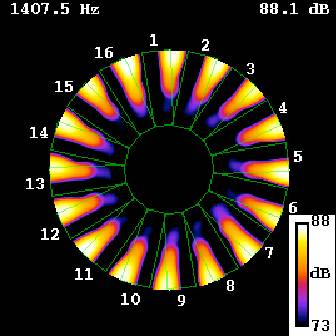
In a phased array system, microphones are placed in a 1D, 2D or 3D arrangement and when sound measurements from these microphones are properly processed, noise sources can be pinpointed.

NASA Glenn has an Array48 microphone system that has been used extensively to locate noise sources in scale-model jet flows, a counter-rotating open rotor fan model, and even a full-scale F404 military engine. Through NASA funding, a method has been developed to use microphones embedded in the fan duct of an engine to determine the location of noise sources on the rotating blades.

Phased Array Microphones determining the location of noise sources on the rotating blades.
NASA

Hotwire, Hotfilm, and Laser Doppler Velocimetry

We know that annoying tone noises can be created by periodic disturbances, such as when the wake from a fan blade interacts with a downstream stator vane. We also know that broadband noise is generated when an aircraft engine ingests turbulent air. Therefore, we must be able to record detailed velocity measurements of the air passing through an experimental propulsor so we can identifying noise sources and work to mitigate them. We must use special instrumentation like hotwire probes and Laser Doppler Velocimeters (LDV) to measure the air velocity upstream, downstream, and between the rotor and the stator of an experimental propulsor. Plots of the velocity measurements can be made which allow us to visualize the disturbances that the rotor created. Hotwire and LDV data are routinely used to validate calculations used to estimate noise from turbofan engines.

Hotwire, Hotfilm, and Laser Doppler Velocimetry
NASA

Contact Us

Need to reach us for more information about our research, software, or data? Get in touch via the link below.

NASA to Conduct Flyover, Engage NFL Fans at MetLife Stadium

10 October 2026 at 10:18
NASA’s Freedom 250 F-5 team, including NASA Administrator Jared Isaacman, performs a flyover during the national anthem at an NFL game between the Cleveland Browns and the Carolina Panthers at Huntington Bank Field, Sept. 27, 2026, in Cleveland.
Credit: NASA/Jordan Cochran

As part of the agency’s Inspiration Tour flyover, NASA Administrator Jared Isaacman will pilot one of three F-5 fighter jets to kick off the New York Jets vs. Cleveland Browns game in East Rutherford, New Jersey, on Sunday, Oct. 11.

NASA team members will engage with fans at the agency’s Experience Zone, located at the Jets Tailgate Zone outside the stadium, from 10 a.m. to 1 p.m. EDT before the game. Fans can learn more about NASA’s return to the Moon under the agency’s Artemis dome, enjoy interactive games, and capture photos with a large, inflatable SLS (Space Launch System) rocket.

Isaacman will be available for limited media interviews during the game. To arrange interviews, please contact Camille Gallo at: camille.m.gallo@nasa.gov or 202-531-8057.

With stops across the nation, NASA’s Inspiration Tour convenes academic, industry, and public sector stakeholders to connect the agency with the people, technologies, and organizations that drive American leadership in space.

The tour will culminate in MAX POWER, a public exposition of American air and space innovation, Saturday, Nov. 7, and Sunday, Nov. 8, on and near the agency’s Kennedy Space Center in Florida. Held in honor of America’s historic 250th anniversary, the multi-day, family-friendly event will showcase the next-generation aircraft, spacecraft, autonomous vehicles, and technologies that will help define the future of transportation in air and space.

For more information about MAX POWER and the agency’s missions, visit:

https://www.nasa.gov/maxpower

-end-

Camille Gallo / Jessica Taveau
Headquarters, Washington
202-358-1600
camille.m.gallo@nasa.gov / jessica.c.taveau@nasa.gov

Share

Details

Last Updated
Oct 13, 2026
Editor
Jessica Taveau

NASA Testing Aims at Supercooled Large Droplet Aviation Safety

5 October 2026 at 11:27
3 Min Read

NASA Testing Aims at Supercooled Large Droplet Aviation Safety

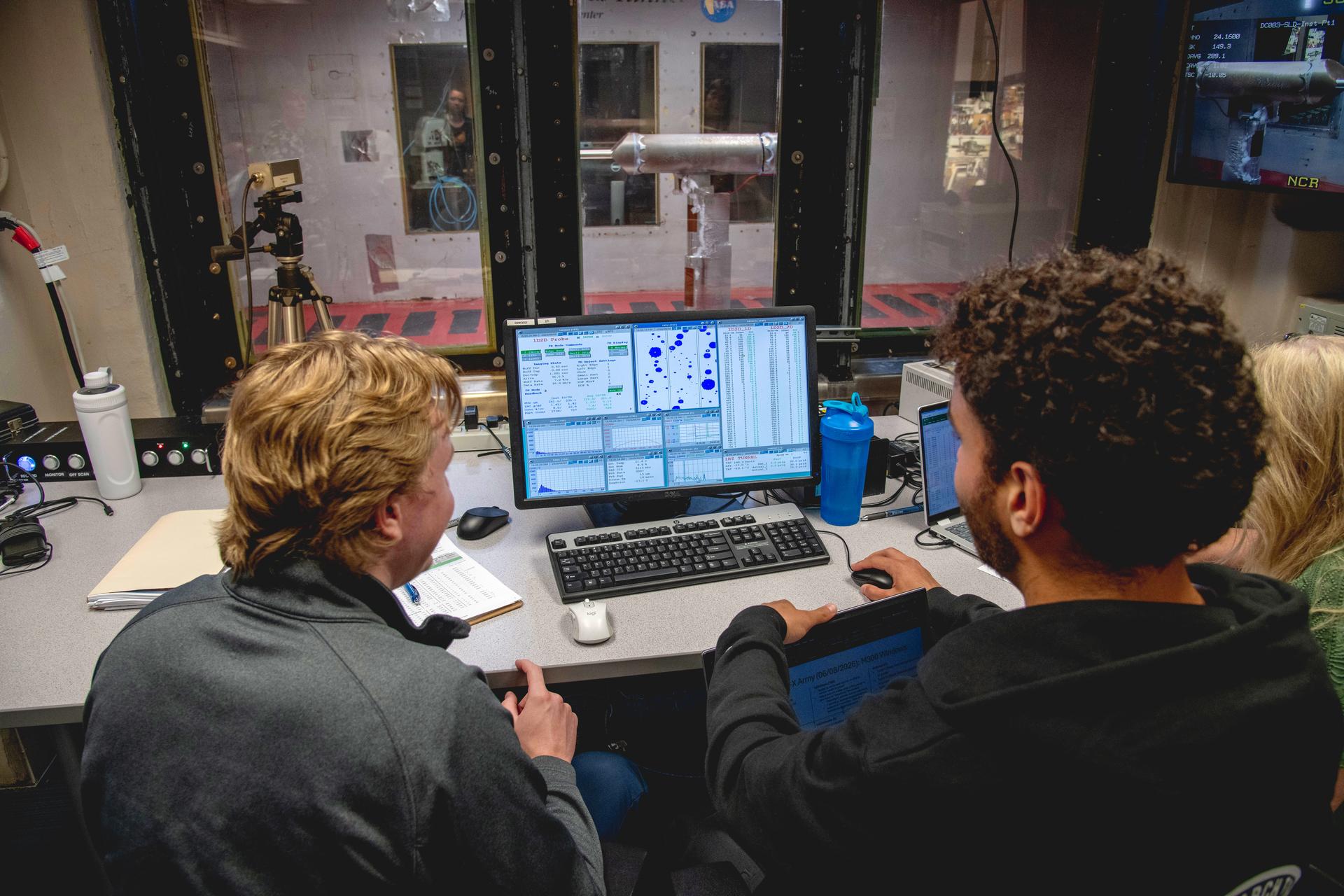
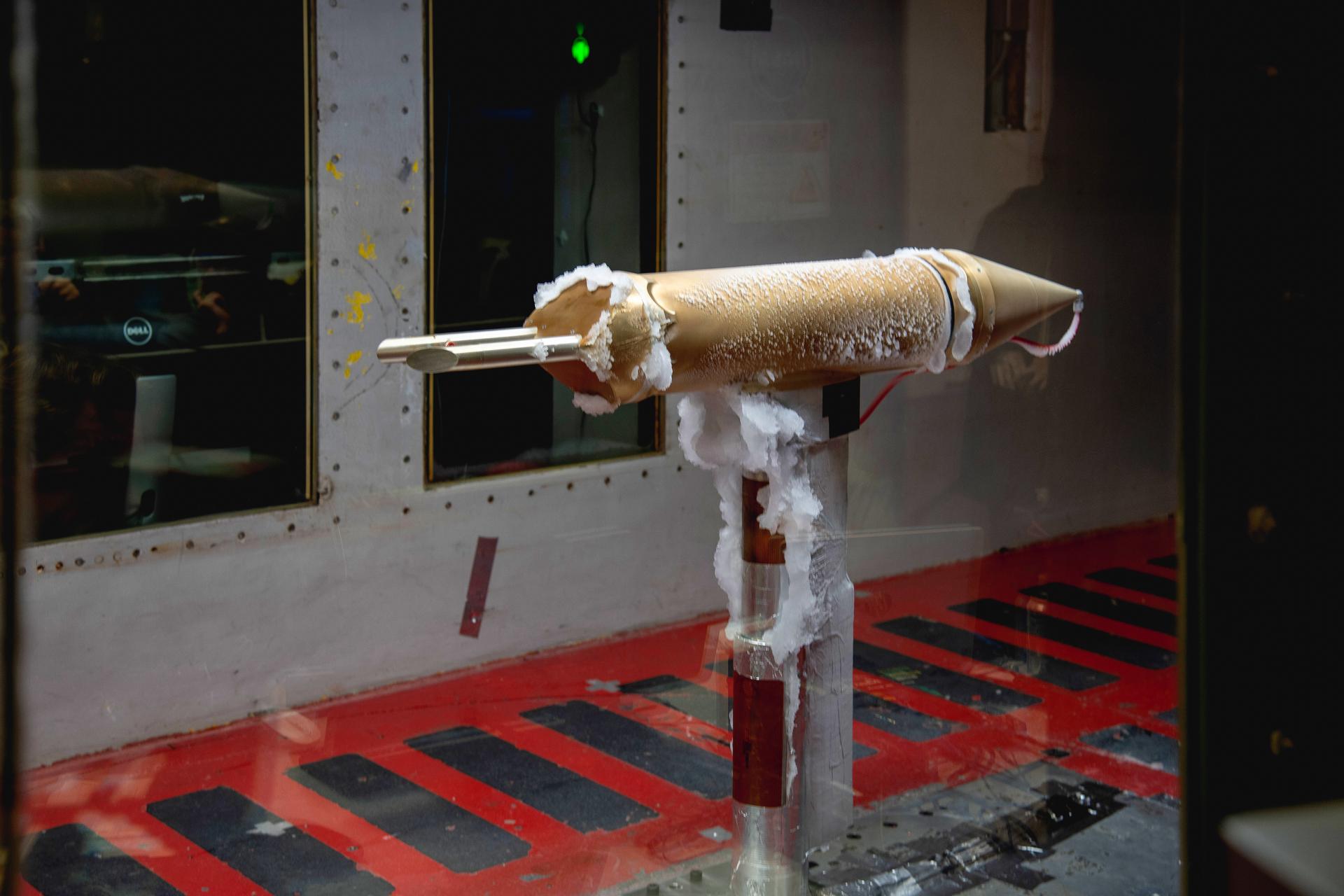
Ice collection seen on un-heated sections of the 1D2D-X ice drop detection probe in the test section of the IRT (Icing Research Tunnel). Drop Size Probe testing – SFD (Subsonic Flight Demonstrator) of SLD (Supercooled Large Drop) Instrumentation Test in IRT (Icing Research Tunnel) – Particle Size Distribution Entry, June 8-11, 2026 Large Drop Testing in IRT
Credits: NASA/Quentin Schwinn

NASA is leveraging its expertise and enhancing its test facilities to help address a rare but persistent aviation hazard: icing that occurs when aircraft encounter unusually large, very cold water droplets in clouds.  

The problem, known as “supercooled large droplet icing,” occurs when aircraft fly through clouds containing unusually large drops of water that are very cold but remain liquid. When a plane passes through those drops, they can rapidly freeze to surfaces that are not protected from ice buildup.  

With a series of tests in the Icing Research Tunnel at Glenn Research Center in Cleveland, NASA researchers are helping U.S. industry better understand the phenomenon. 

SFD (Subsonic Flight Demonstrator) of SLD (Supercooled Large Drop) Instrumentation Test – Particle Size Measurement in the IRT (Icing Research Tunnel), June 8-11, 2026. Drop size shown on computer from Drop Sizing Probe seen in the IRT test section.
NASA/Quentin Schwinn

Supercooled water is common in clouds – droplets can go below 32 degrees Farenheit but not freeze unless they encounter dust or other tiny particles around which they can crystalize. Aircraft are designed to encounter typical icing conditions where droplets range from 2 to 100 microns in diameter (for comparison, a human hair is about 70 microns wide). But in rarer cases, clouds can contain supercooled large drops up to 2,000 microns in diameter (if you’ve ever been caught in freezing rain, you’ve encountered these droplets at ground level). These much larger droplets can hit or splash to the aft of an aircraft, including areas behind conventional ice protection systems.  

The aviation industry relies on engineering tools to help design their aircraft. Current tools work well for typical clouds, but engineers have questions about how well they account for the physics of supercooled large drops. To help answer those questions, NASA is working to enhance the equipment it uses to generate and measure experimental clouds for testing in the Icing Research Tunnel.  

Ice collection seen on un-heated sections of the ice drop detection probe in the test section of the IRT (Icing Research Tunnel). Drop Size Probe testing – SFD (Subsonic Flight Demonstrator) of SLD (Supercooled Large Drop) Instrumentation Test in IRT (Icing Research Tunnel) – Particle Size Distribution Entry, June 8-11, 2026
NASA/Quentin Schwinn

NASA researchers have experimented with brand new probes that help calibrate the sizes of the drops in the clouds the tunnel produces. The probes can “see” drops larger than 45 microns and perform a real-time analysis of their sizes. NASA will compare these results, a laborious technique of post-processing droplet size image data from the tunnel. The results will be mated to results from a different probe that measures droplets smaller than 45 microns. With this, the complete droplet size spectrum is known. 

The test campaign marks an important milestone for the Subsonic Flight Demonstrator project, part of NASA’s Research and Technology Mission Directorate. Detailed analysis of the collected data continues, and NASA’s project team will share results with the broader aerospace community once complete.

Keep Exploring

Discover More Topics From NASA

NASA Model Wing Lights Up During First Pressure Sensitive Paint Tests

2 October 2026 at 12:10

2 min read

Preparations for Next Moonwalk Simulations Underway (and Underwater)

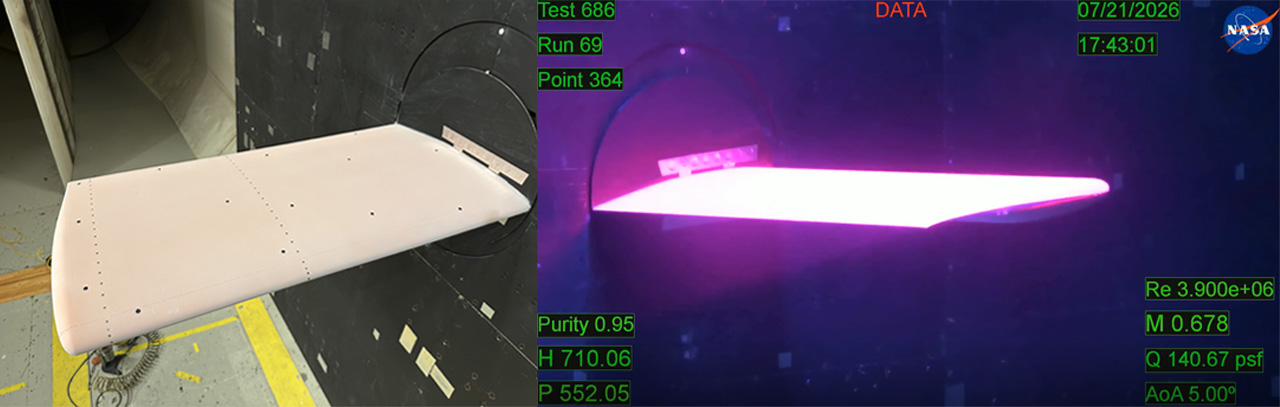
Side‑by‑side images showing a wing-like test article mounted in a wind tunnel. The left image displays the pale, unlit test article attached to instrumentation inside the tunnel. The right image shows the same article under aerodynamic heating, glowing bright pinkish‑purple as test data parameters appear around it, including readings for pressure, temperature, Mach number, and angle of attack.
Left: The Benchmark Supercritical Wing not illuminated in unsteady Pressure Sensitive Paint inside the Transonic Dynamics Tunnel at NASA’s Langley Research Center. Right: The Benchmark Supercritical Wing illuminated in unsteady Pressure Sensitive Paint during testing inside the Transonic Dynamics Tunnel at NASA’s Langley Research Center.
Left: NASA/Sarah Peak | Right: NASA

Groundbreaking tests at NASA’s Langley Research Center in Hampton, Virginia, are paving the way for new wind tunnel capabilities for designing the aircraft technologies of the future. 

In a first-of-its-kind test in NASA Langley’s Transonic Dynamics Tunnel, researchers used unsteady Pressure Sensitive Paint to study how air flows around a standard wind tunnel model known as the Benchmark Supercritical Wing. As the team observed the test, the paint’s special capabilities made the model wing glow pink-purple when exposed to special ultraviolet lights, while high-speed cameras captured every detail. 

The test combined two valuable NASA tools. NASA’s benchmark wings don’t represent a particular type of aircraft, rather they are meant as universal models to help researchers improve computer modeling using wind tunnel data.  

Unsteady pressure sensitive paint is a specialized coating that varies in brightness according to how much pressure the air flow applies to the wing. High-speed cameras capture those changes, providing data for computer models. For years, NASA researchers at centers including Langley and the agency’s Ames Research Center in California’s Silicon Valley have been working to integrate the paint into wind tunnel tests for aircraft and rockets. NASA researchers consider the paint a vital tool and expect to find many more wind tunnel applications in the future.  

This test marked the technique’s first use on a large-scale, freely moving model in a low‑oxygen environment, an achievement made possible by the Transonic Dynamic Tunnel’s unique testing capabilities. 

This milestone opens the door for upcoming tests on flexible aircraft models that are designed to bend and adapt during flight to improve efficiency. It also lays the foundation for better simulations and designs as NASA advances the future of flight. 

NASA Armstrong Celebrates 80 Years of Flight Innovation

28 September 2026 at 15:20

On Sept. 30, 1946, five National Advisory Committee of Aeronautics (NACA) engineers arrived at Muroc Army Airfield in California’s high desert to achieve supersonic flight for the first time. In less than two years, NACA flew the X-1 aircraft faster than the speed of sound, marking an important milestone in aviation history.

Fast forward 80 years, and that former NACA outpost is now NASA’s Armstrong Flight Research Center in Edwards, California, flying the X-59 supersonic X-plane in the same skies to demonstrate that supersonic flight doesn’t have to come with a boom.

Over Armstrong’s 80-year history, the center has supported milestone missions ranging from space shuttle landings to SR-71 flights, shaping the evolution of science, aeronautics, and space research.

This Southern California NASA center is poised to lead the next era of aeronautics and human spaceflight, advancing technologies that will define the future of flight.

Fast facts

  • NASA Administrator Jared Isaacman recently named Armstrong as the agency’s Center of Excellence for Flight Test and Aircraft Operations, recognizing the center’s unmatched rigor in executing unique missions only NASA can fly.
  • To support NASA’s Artemis missions and return to the Moon, Armstrong uses research aircraft such as a 737 for astronaut suit testing, the G-III for Artemis II heat-shield data collection, and an F/A-18 aircraft that tested the autopilot for the SLS (Space Launch System) rocket.
  • NASA’s aeronautics centerpiece, the X-59, is undergoing rigorous testing and a series of flights at Armstrong to prepare for upcoming quiet supersonic demonstrations over U.S. communities.
  • NASA Armstrong has transformed commercial and military aviation — from early supersonic flight research to digital fly-by-wire — and continues working with other government agencies, industry, and academia to make flying safer, more autonomous, and more efficient.
  • The center plays a vital role in global science by flying aircraft like the ER-2, C-20A, and Gulfstream G-III/IV/V to collect critical data on wildfires, glacier melt, pollution, minerals, and more.

Behind these achievements are the engineers, pilots, technicians, and mission support teams who continue to push the boundaries of what’s possible.

For more about NASA Armstrong, visit:

https://www.nasa.gov/armstrong

-end-

Dede Dinius / Teresa Whiting
Armstrong Flight Research Center, Edwards, California
661-276-3449
darin.l.dinius@nasa.gov / teresa.whiting@nasa.gov

💾

Red, White, and Boom, the U.S. Air Force Test Center’s celebration of America’s 250th anniversary and NASA Armstrong’s commemoration of its 80th year, was Fr...
❌
❌