The company’s September event introduced Apple’s first ever foldable iPhone, along with new iPhone 18 Pro models, updates to the Apple Watch, some AirPods, and more advances to Siri AI.
The iPhone with a folding screen is the first radical redesign of Apple’s flagship handset in years. The iPhone Duo will cost $1,999 when it arrives in October.
Apple’s latest smartwatches—the Apple Watch Series 12 and Ultra 4—get a faster chip, expanded health tracking, and new Siri capabilities. Plus, the ceramic finish is back.
Preparations for Next Moonwalk Simulations Underway (and Underwater)
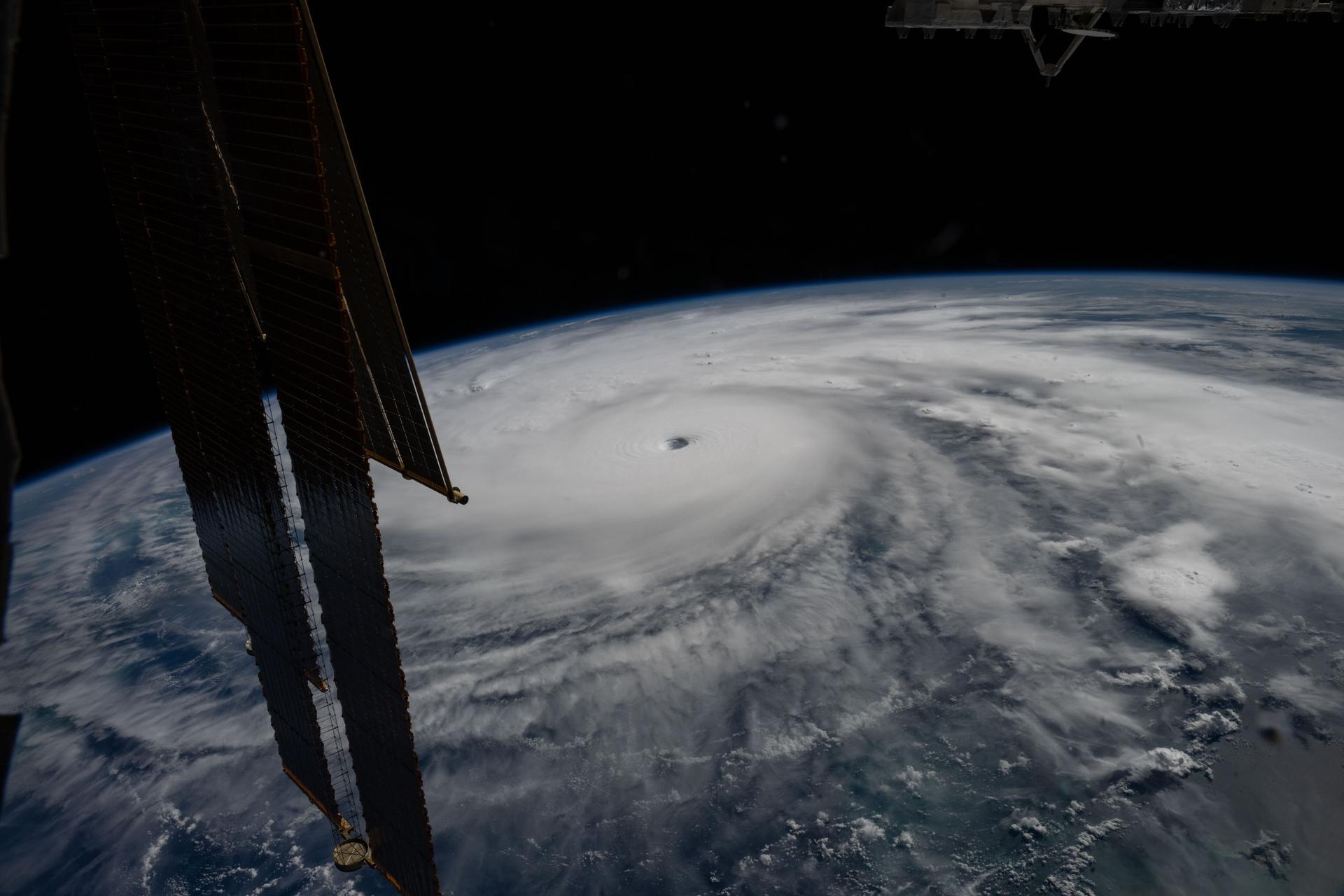
Hurricane Melissa is seen 50 miles south of Jamaica in this photograph taken from the International Space Station on Oct. 28, 2025.
NASA
Last November, NASA and its European partners launched the Sentinel-6B satellite to improve hurricane forecasts, help protect infrastructure, and benefit commercial industries, including shipping. The satellite now is flying 30 seconds behind its predecessor, Sentinel-6 Michael Freilich. Both satellites are providing precise sea level height measurements during what oceanographers expect to be a historic El Niño, a naturally occurring oceanic phenomenon in which warmer-than-usual Pacific waters shift global weather patterns.
The two satellites make up the Copernicus Sentinel-6/Jason-CS (Continuity of Service) mission, the latest in a series of ocean-observing radar altimetry missions that have been monitoring Earth’s changing seas continuously since the early 1990s.
The data each satellite is collecting will not only allow scientists to better understand this year’s El Niño but will also help them create more accurate hurricane predictions.
“This El Niño was a late-bloomer,” said Josh Willis, Sentinel-6B’s project scientist at NASA’s Jet Propulsion Laboratory in Southern California. “It didn’t kick off until the middle of the year and is just now reaching a strength similar to what we’ve seen in the satellite record during significant El Niños in 1997 and 2015. We expect it to be big, and it’s already having big impacts.”
El Niños generally scramble weather patterns tied to rainfall and storms, including hurricanes. They also redistribute heat in the ocean, which affects sea level. Normally, Earth’s warmest ocean waters sit along the equator in the western Pacific. During El Niño, weakened winds, which usually blow westward along the equator, result in heat spreading east toward South America. The change in ocean heat shifts hurricane activity from the Atlantic to the Pacific Ocean.
Predicting hurricane strength
On July 15, Sentinel-6B began delivering low-latency data to scientists that could be used for weather predictions. That data will take some time to work its way into the research models on which meteorologists and climate scientists rely, but when it does, those improved models could save lives.
Data from Sentinel-6 satellite missions feeds into hurricane tracking algorithms used by federal and state agencies. Those predictions can activate disaster response efforts, mobilizing resources ranging from sandbag placement to National Guard activation. They also can lead to evacuation orders that require quick but well-informed decisions about logistics at a local level. More severe events may require engaging larger organizations, such as the Federal Emergency Management Agency.
A tropical storm can take a week or more to become a hurricane and make its way to a coastline, but a hurricane can rapidly intensify in the 48 hours prior to landfall, leaving planners little time to prepare.
“Hurricanes have been known to speed up quickly at the last moment, so the window in which to decide what to do is short,” said Deirdre Byrne, an oceanographer and altimetry expert with the National Oceanic and Atmospheric Administration (NOAA). “The goal is to forecast how much and how rapidly intensification will happen so that officials can make the right calls.”
Each Sentinel-6 satellite measures ocean height, as well as the size of waves and marine wind speed, using a radar altimeter, which bounces thousands of radar pulses a second off the crests and troughs of waves. Ocean height varies from place to place and provides insight into the ocean’s heat content, since warm water expands. That, in turn, helps forecast how fast hurricanes will grow.
Among the measurements Sentinel-6 is gathering, Byrne is most anticipating the ocean height data, which she plans to begin incorporating into the current Satellite Ocean Heat Content Suite algorithm by the end of the year.
“In terms of data quality, the Sentinel-6 missions are unparalleled,” Byrne said.
Together, the missions are also extending a precise dataset deep into its fourth decade. This record of sea level observations traces back to the TOPEX/Poseidon mission, which launched in 1992, and continues through to the present day with Sentinel-6 Michael Freilich. Sentinel-6B will take over for its predecessor as the reference satellite for global sea level measurements later this year.
“The key is consistency, measuring the same way, every time,” said Severine Fournier, Sentinel-6B deputy project scientist, JPL. “That’s what lets us predict hurricanes, and, in turn, protect coastal communities and infrastructure.”
More about Sentinel-6B
Sentinel-6 Michael Freilich, named after a former director of NASA’s Earth Science Division, is one of two satellites that compose the Copernicus Sentinel-6/Jason-CS mission.
Sentinel-6/Jason-CS, a part of the European Union’s Earth observation program called Copernicus, was jointly developed by ESA (European Space Agency), EUMETSAT (European Organisation for the Exploitation of Meteorological Satellites), NASA, and NOAA, with funding support from the European Commission and technical support on performance from the French space agency CNES (Centre National d’Études Spatiales). Spacecraft monitoring and control, as well as the processing of all the altimeter science data, is carried out by EUMETSAT on behalf of the European Union’s Copernicus Programme, with the support of all partner agencies.
NASA JPL, a division of Caltech in Pasadena, contributed three science instruments for each Sentinel-6 satellite: the Advanced Microwave Radiometer, the GNSS-RO, and the Laser Retroreflector Array. NASA also contributed launch services, ground systems supporting operation of the agency’s science instruments, the science data processors for two of these instruments, and support for the United States members of the international Ocean Surface Topography Science Team.
Vulcan oven mitts, spaceship baking dishes, and an out-of-this-world communicator grater—you'll need warp speed to Klingon to this limited-edition kitchen kit, ideal for perfecting the broth of Khan.
I was initially enamored with the beta version of Apple’s revamped smartphone assistant. As the full release approaches, I’ve forgotten Siri AI even exists.
Apple is expected to announce several products at its September event next week—including a folding phone—but the iPhone 18 might not be among them. It would be a first for the company.
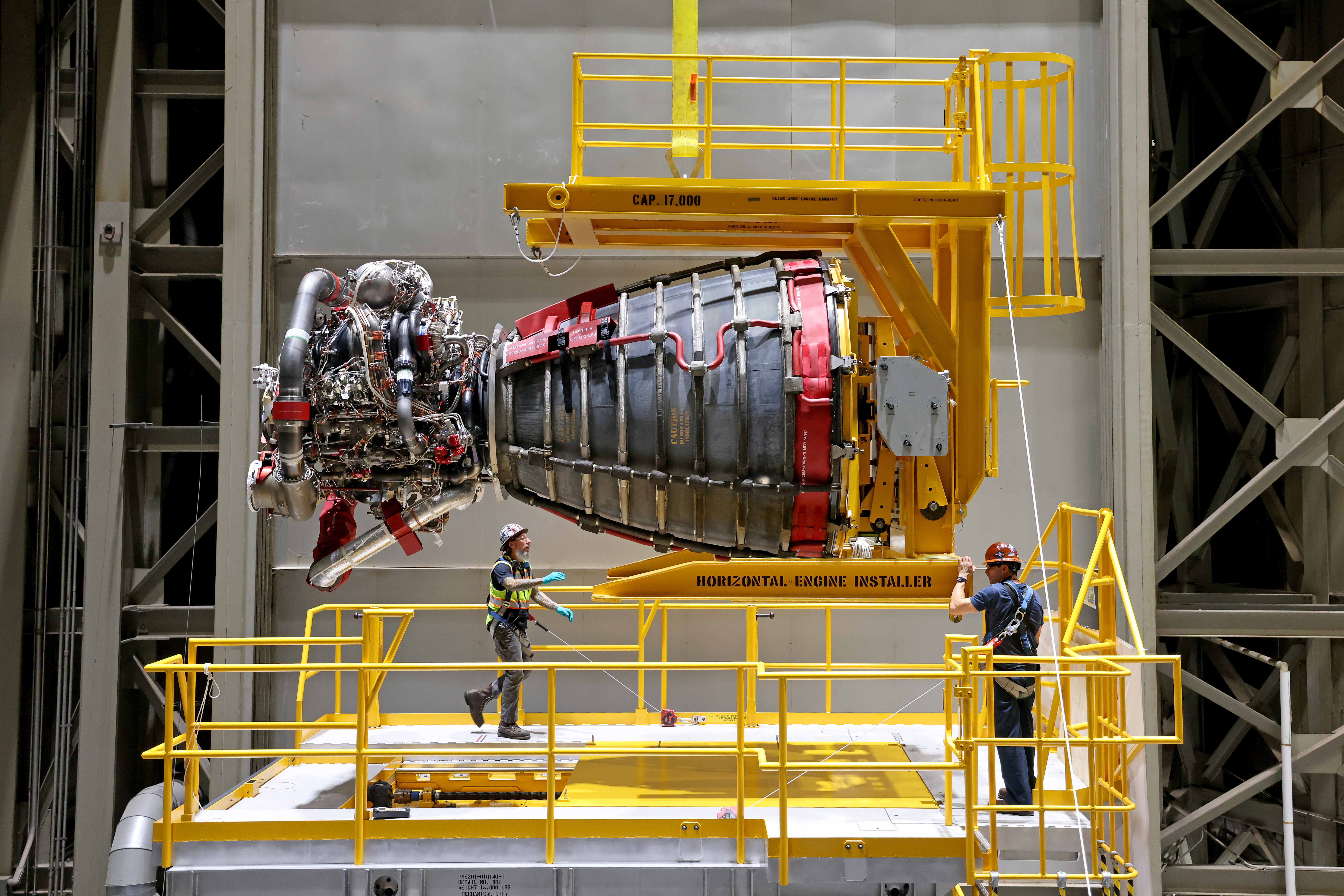
Two technicians at NASA’s Michoud Assembly Facility in New Orleans stand around one of the four RS-25 engines for the agency’s SLS (Space Launch System) rocket on Sept. 8, 2023. The RS-25 engine looks like a bell-shaped nozzle attached to a network of pipes. The engine is being lifted by the horizontal engine installer so it appears to be lying on its side. The RS-25 engine is about the size of a large pickup truck. The technicians are wearing hard hats and safety harnesses.
Credit: NASA/Michael Democker
NASA will host a virtual webinar at 2 p.m. EDT on Friday, Oct. 2, titled “The RS-25 Engine and the Future of Artemis Missions: An Accessible Webinar for the Blind and Low-Vision Community.” This webinar is open to the public, however it is tailored specifically for a blind and low-vision audience.
The webinar will last about two hours and include an audio-described video of an RS-25 engine test, a Q&A session with an Artemis engineer, and a panel about accessibility in space and science. The event will be hosted on the Zoom platform.
Participants in the session include:
Dr. Kimberly Arcand, visualization scientist, NASA’s Chandra X-ray Observatory
Josh Greiner, test director, NASA’s Stennis Space Center in Bay St. Louis, Mississippi
Dr. Craig Moore, materials engineer, NASA’s Marshall Space Flight Center in Huntsville, Alabama
Dr. Robert Shelton, lead simulation engineer, NASA’s Johnson Space Center in Houston
Christine Malec, freelance writer and consultant
Those interested in attending the webinar must RSVP using this form by Friday, Sept. 25. Any questions can be directed to thalia.k.patrinos@nasa.gov. The details of the webinar will be emailed to registrants in the days leading up to the event.
NASA’s Artemis program will send astronauts on increasingly difficult missions to explore the Moon and establish a Moon Base on the lunar surface. For additional information on the Artemis missions, visit:
KnowBe4 is set to explore the growing challenge of determining what organisations can trust in the age of AI at an exclusive cybersecurity briefing during Leeds Digital Festival 2026.
Taking place on 1 October, CyberSecure Leeds: Who Do You Trust Now? Human Judgement in the Age of AI will examine how the growing role of AI agents in business processes is changing the security landscape and creating new questions around identity, decision making and human oversight.
At the centre of the event will be an unusual real-world experiment from Javvad Malik, lead CISO advisor at KnowBe4, which started with a disputed parking ticket. During the experiment, Malik explored how AI could be used to help create convincing documentation and establish a digital presence that automated systems subsequently treated as legitimate, all within 48 hours.
While the experiment started with a relatively everyday scenario, KnowBe4 believes it highlights a much broader security concern. As organisations integrate AI into workflows, approvals and other business processes, systems may be placed in a position where they are effectively helping to determine what is legitimate and what should be trusted.
This becomes particularly significant as the digital workforce expands beyond human employees to include AI agents capable of accessing information, interacting with applications and influencing decisions.
“AI is rapidly becoming part of how organisations decide what is real, what is legitimate and what should be trusted,” said Malik.
“The problem is that AI can be extremely convincing without necessarily being right. As organisations give these systems greater influence over business processes, we need to think carefully about where human judgement fits and how attackers could exploit that trust. The workforce is now a combination of people and AI agents, and our approach to security has to reflect that reality.”
Phishing Beyond the Inbox
The briefing will also look at how the social engineering landscape is changing as attackers adopt AI-generated content and increasingly target users across multiple communications channels. James Dyer, head of threat intelligence at KnowBe4, will provide an update on current phishing activity, including the growth of phishing-as-a-service and the ways attackers are adapting their techniques to bypass existing security controls.
The session will examine why organisations can no longer treat phishing solely as an email security problem, with social engineering attacks capable of moving across different platforms and exploiting the trust employees place in digital communications.
The event coincides with the beginning of Cybersecurity Awareness Month and forms part of Leeds Digital Festival, which runs from 21 September to 2 October with more than 200 technology events taking place across the region.
The KnowBe4 briefing will run from 8:30am to 11:00am at the company’s Leeds office and is aimed at CISOs, IT leaders, security practitioners and business decision makers.
Attendance is free but limited to 30 places, with advance registration required through the Leeds Digital Festival event programme. Interested delegates can register here: https://web.cvent.com/event/96b273cf-5129-4734-b54c-0dfd0a38aa61/summary

 Login
Login