❌

Normal view

There are new articles available, click to refresh the page.
Yesterday — 28 October 2026Main stream

Caltech Names Artemis II Commander Reid Wiseman as NASA JPL Deputy

28 October 2026 at 22:49

4 min read

Preparations for Next Moonwalk Simulations Underway (and Underwater)
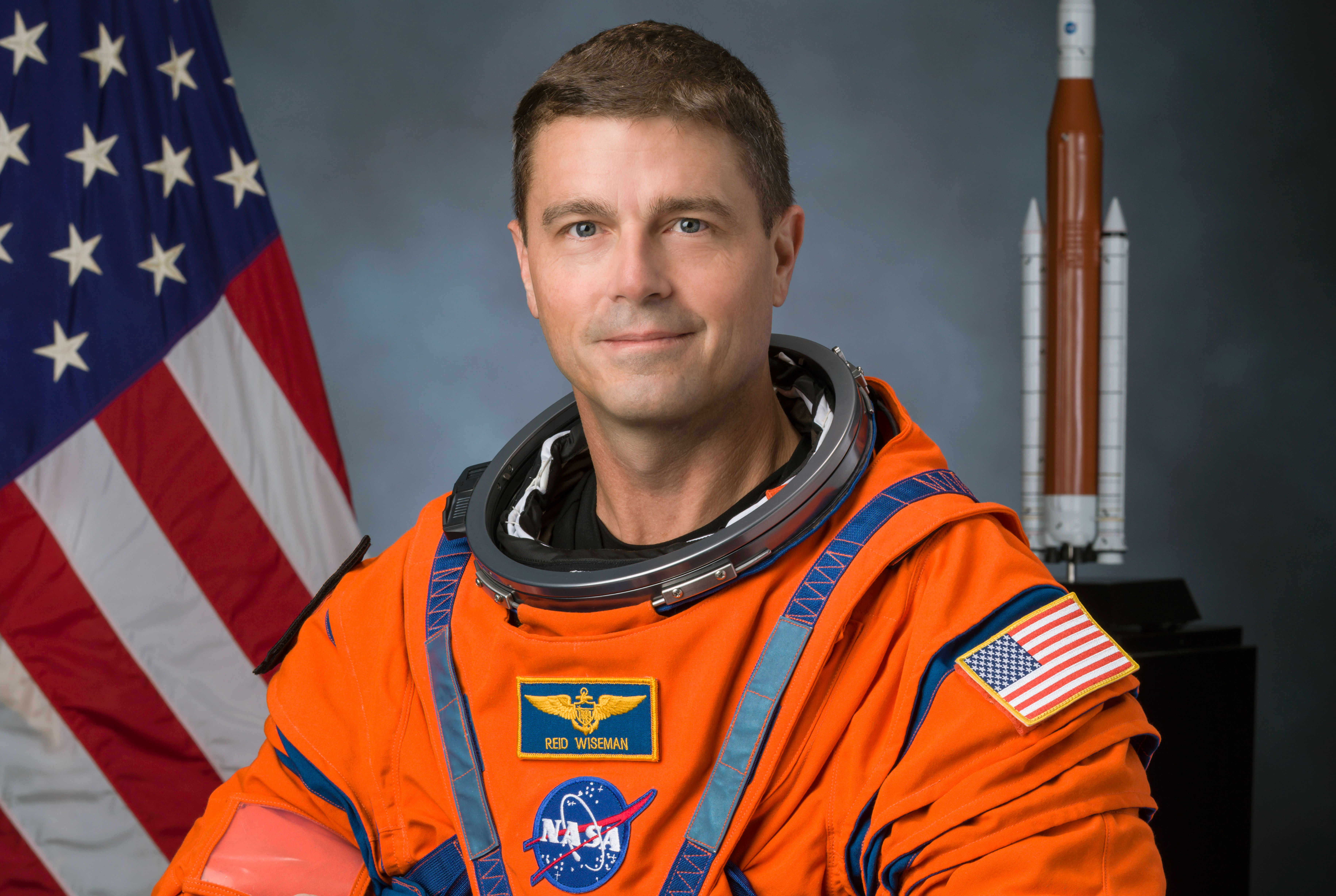
Former NASA astronaut and Artemis II Commander Reid Wiseman joins Caltech and NASA JPL as Caltech associate vice president and JPL deputy director on Nov. 30.
Photo Credit: NASA

Artemis II Commander Reid Wiseman has been named Caltech associate vice president and deputy director of NASA’s Jet Propulsion Laboratory in Southern California. The emeritus astronaut and retired U.S. Navy captain begins his new role at NASA’s center of excellence for robotics and deep space exploration and at Caltech, which manages JPL for NASA, on Nov. 30, 2026.

“Reid has spent his career at the edge of what is possible, and he has the technical judgment, operational experience, and leadership to help push that edge farther,” said NASA Administrator Jared Isaacman. “As commander of Artemis II, he helped carry America back around the Moon, and now, as an emeritus astronaut, he will continue giving back to NASA from a new vantage point at JPL. Reid is joining a storied laboratory that has made an enormous amount of history, and there is a lot more ahead. I am excited to see what he and the JPL team accomplish in the years to come.”

During the Artemis II test flight, Wiseman, Victor Glover, Christina Koch, and Jeremy Hansen journeyed 695,081 miles on a lunar flyby that took them farther than any humans have ever traveled before.

“It feels fitting for Reid, who with the Artemis II crew traveled farther from Earth than any human in history, to join Caltech and JPL — institutions that for nearly 90 years have sent spacecraft into the far reaches of our solar system and beyond,” said Dave Gallagher, JPL director and Caltech vice president. “Reid shares our drive for discovery, knows what it takes to lead teams through high-stakes missions, and has a remarkable ability to inspire people everywhere. He adds incredible bench strength to our leadership team as we build on the lab’s legacy and shape its future together.”

After joining NASA’s astronaut corps in 2009, Wiseman went on to serve as flight engineer aboard the International Space Station for the 165-day Expedition 41 mission in 2014 and was a commander of NASA’s 21st Extreme Environment Mission Operations expedition, during which he lived for eight days in a habitat on the ocean floor in 2016. As the agency’s chief astronaut from December 2020 to November 2022, Wiseman led NASA’s astronaut corps, overseeing crew flight readiness and crew safety for all NASA human spaceflight missions. During his years of service at the agency, he has conducted hundreds of scientific experiments.

“I’ve explored the furthest reaches of what a human can explore at NASA — and there were truly no words in the English vocabulary to describe seeing the Sun disappear behind the Moon from deep space. But that experience was really the jumping off point to go do the impossible things that Caltech and JPL dream, dare together, and do for NASA and the nation,” Wiseman said. “What an awesome time in my career to join this team and to try and push humanity and push our understanding of the solar system and the universe.”

Wiseman joins JPL, NASA’s only federally funded research and development center, as the lab approaches its 90th anniversary since being founded by Caltech. In his role as Caltech’s associate vice president and JPL deputy director, Wiseman will be responsible for the strategic leadership, stewardship and continuous improvement of laboratory operations, including close partnership with Caltech on institutional planning, management and compliance. Serving as Center Management Authority for JPL mission execution, Wiseman will ensure operational excellence across mission support functions in accordance with NASA requirements and applicable federal and state regulations. In addition, he will be JPL’s primary interface for national security programs.

“Reid brings to Caltech and JPL a truly unprecedented view of what humanity can achieve when ingenuity and determination are matched with the courage to pursue the furthest frontiers,” said Caltech president Ray Jayawardhana. “His pioneering spirit coupled with unbounded curiosity make him a natural fit for Caltech and JPL, a force-multiplier for a community whose daring continues to push the limits of humanity’s reach. I look forward to working closely with Dave and Reid as we chart our next era of exploration in partnership with NASA, elevating America’s space ambitions to breathtaking new heights.”

After receiving a bachelor’s degree in computer and systems engineering from Rensselaer Polytechnic Institute, Wiseman joined the Navy, going on to fly combat missions and serve as a test pilot. He also has a master’s degree in systems engineering from Johns Hopkins University in his hometown of Baltimore.

-end-

Media Contact

Matthew Segal
Jet Propulsion Laboratory, Pasadena, Calif.
818-354-8307
matthew.j.segal@jpl.nasa.gov

2026-077

Share

Details

Last Updated
Oct 28, 2026
Before yesterdayMain stream

Artemis II Heat Shield After Splashdown

16 October 2026 at 12:28
The Orion spacecraft's heat shield dominates this underwater photo. Due to the water, the heat shield appears to be teal-colored.
US Navy

Shortly after NASA’s Artemis II mission splashed down on April 10, 2026, U.S. Navy divers captured underwater imagery of the Orion spacecraft’s heat shield. In the months after, the agency measured whether the thermal protection system effectively safeguarded the crew and Orion systems as the spacecraft reentered Earth’s atmosphere. This rigorous analysis confirmed that the heat shield performed as expected.

Learn how Orion’s heat shield was examined.

Image credit: US Navy

Rigorous Analysis Confirms NASA’s Artemis II Heat Shield Performance 

15 October 2026 at 10:57
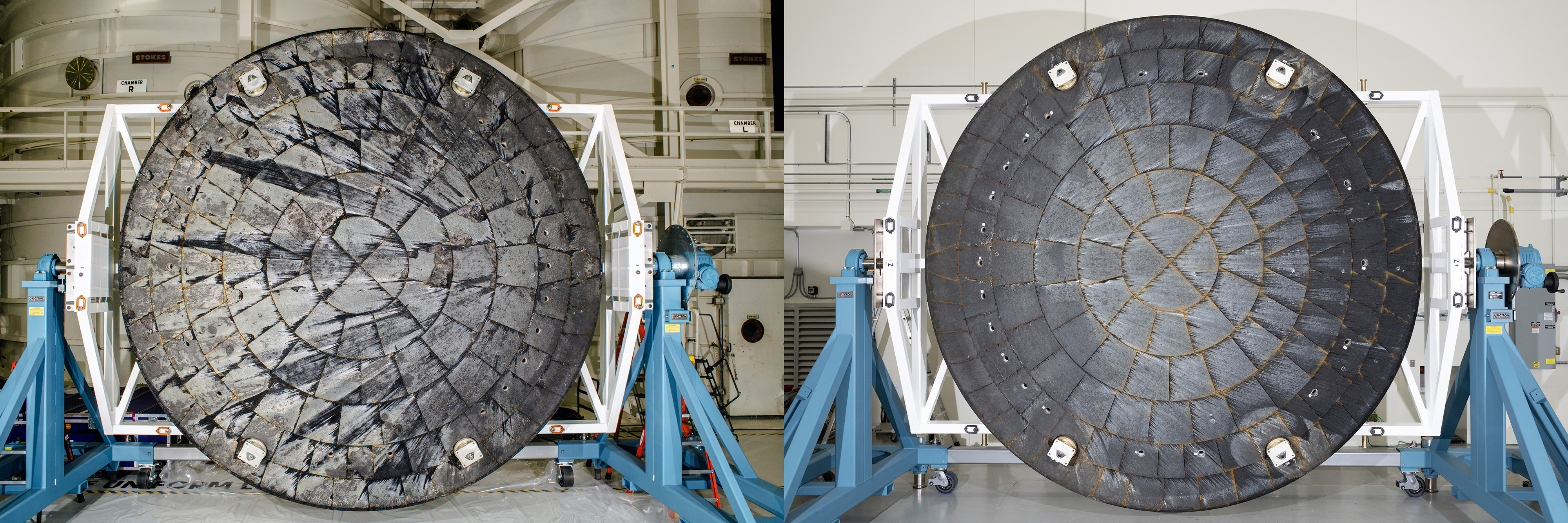
A post‑mission comparison of the Orion spacecraft heat shields from Artemis I (left) and Artemis II (right) are shown after removal from their crew modules. Both heat shields are seen rotated for inspection inside the Operations and Checkout Building at NASA’s Kennedy Space Center in Florida.
NASA

NASA’s Artemis II mission sent four astronauts around the Moon and brought them safely back to Earth, laying a foundation for crewed flights to the Moon’s surface.

Additional engineering data analysis of the Orion spacecraft’s heat shield confirmed initial data showing the heat shield performed as expected.  

In particular, NASA measured whether the thermal protection system effectively safeguarded the crew and Orion systems as the spacecraft reentered Earth’s atmosphere. This test flight was the first time astronauts flew aboard Orion. 

Orion reached a maximum velocity of 39 times the speed of sound and experienced external temperatures exceeding 4,000 degrees Fahrenheit at its peak, all while the four astronauts inside Orion stayed relatively cool with a cabin temperature in the mid-70 degree Fahrenheit range during their return to Earth from the Moon.  

After NASA’s thorough analysis of Artemis I heat shield findings, informed by extensive arc jet material testing at NASA’s Ames Research Center in California’s Silicon Valley, the agency modified Orion’s reentry trajectory for Artemis II by shortening the maximum downrange distance the spacecraft could fly between when it entered Earth’s atmosphere and splashed down in the Pacific Ocean. Analysis prior to the mission showed that limiting downrange distance would limit how long the spacecraft’s heat shield spent in the temperature range at which the Artemis I heat shield phenomenon occurred.  

Shortly after Artemis II splashdown on April 10, 2026, U.S. Navy divers captured underwater imagery of the Orion spacecraft’s heat shield.
US Navy

The spacecraft reentered with precision, entering within only 192 feet of its targeted entry interface, and successfully splashed down only 0.59 miles from the predicted landing site off the coast of San Diego. Initial inspections of the thermal protection system, including diver imagery of the spacecraft’s heat shield taken just after splashdown and further inspections on the recovery ship, found it performed as expected, with a significant reduction in the amount of cracks and char loss as compared to Artemis I.  

Upon the spacecraft’s return to NASA’s Kennedy Space Center in Florida after the Moon mission, thermal protection system experts began additional examination of the heat shield, made of 186 unique blocks of an ablative material called Avcoat. The heat shield was then transported to NASA’s Marshall Space Flight Center in Huntsville, Alabama, where work on sample extraction and internal x-ray scans began in August to provide further engineering insight into the system and behavior of the material.

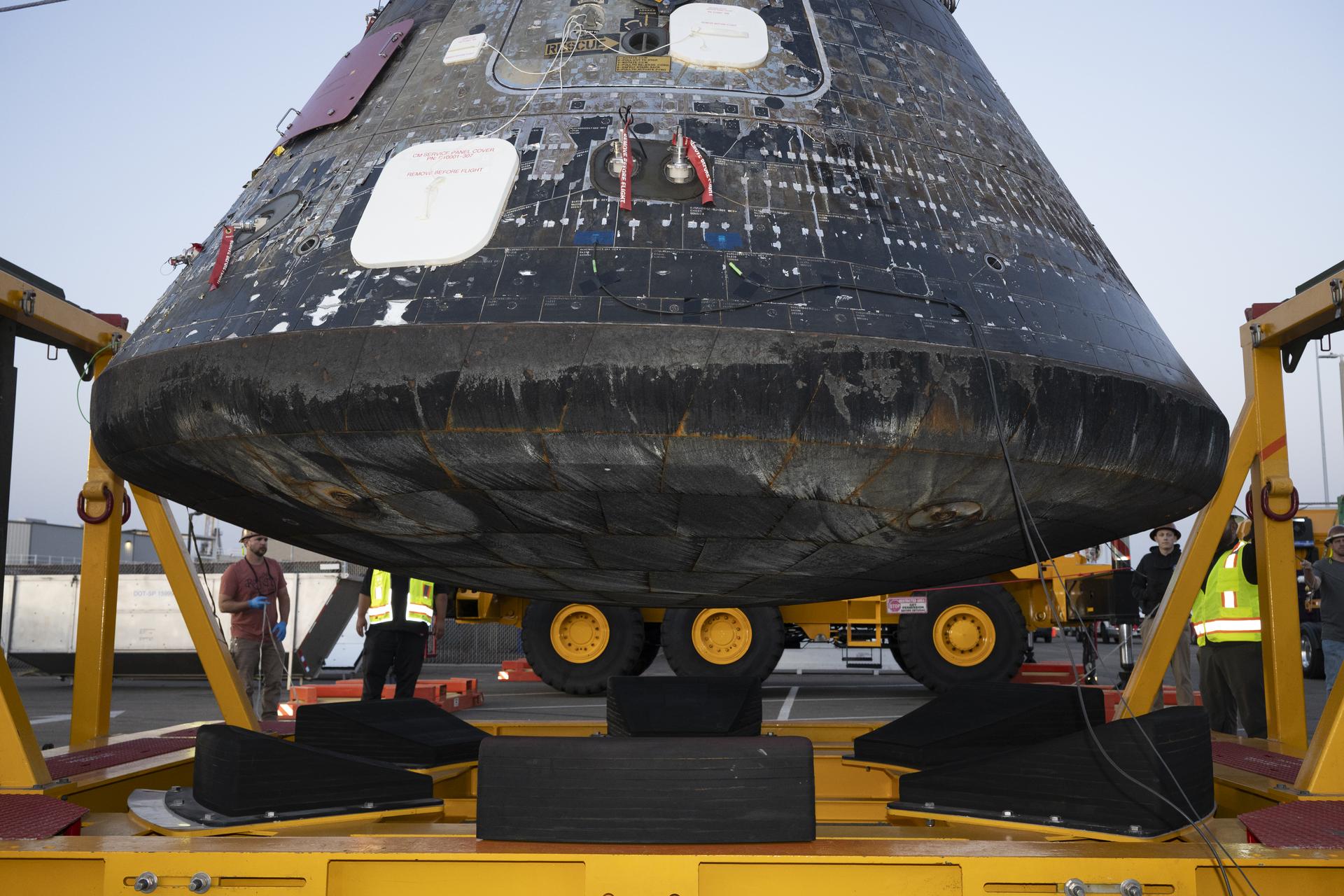
The Artemis II Orion crew module after being offloaded from the well deck of USS John P. Murtha at Naval Base San Diego and lifted from the Orion Recovery Cradle Assembly on April 18, 2026. The gray area, as seen on the edge where the spacecraft’s heat shield and the backshell meet, is from recovery operations.
NASA/Kevin Davis

A thorough post-flight assessment review found that Orion’s aerodynamic and aerothermal performance, including the heat shield and backshell thermal protection system, was in line with engineering predictions based on pre-flight analyses and ground testing. The shorter allowable down range during entry reduced the cracking and char loss experienced on the Artemis II heat shield relative to the Artemis I heat shield by a factor of ten, proving the effectiveness of the trajectory modification. Engineers found only nine spots of char loss of varying sizes on the Artemis II heat shield dish, compared to 103 during Artemis I. 

The analysis also showed that Orion’s robust heat shield design showed consistency from Artemis I to Artemis II, evident by the performance of system features such as the seams between the heat shield Avcoat blocks and the Avcoat surrounding the heat shield compression pad separation bolts. 

Post-flight inspection of Orion’s backshell, the protective cover on the sloped sides of the crew module made up of 1,300 ceramic tiles, showed expected performance across the crew module surface. Visual inspections indicated backshell features designed to seal and protect penetrations such as windows, vents, thrusters, and the side hatch also met expectations, with no signs of overheating observed. 

The team also performed post-flight laser scans of the heat shield surface and is comparing this data to pre-flight measurements to determine material recession, which will then be compared to analysis predictions. Engineers are continuing with heat shield sample extraction at NASA Marshall and subsequent material test and assessment and thermal analysis, to support long-term heat shield development, manufacturing efforts, and data capture. 

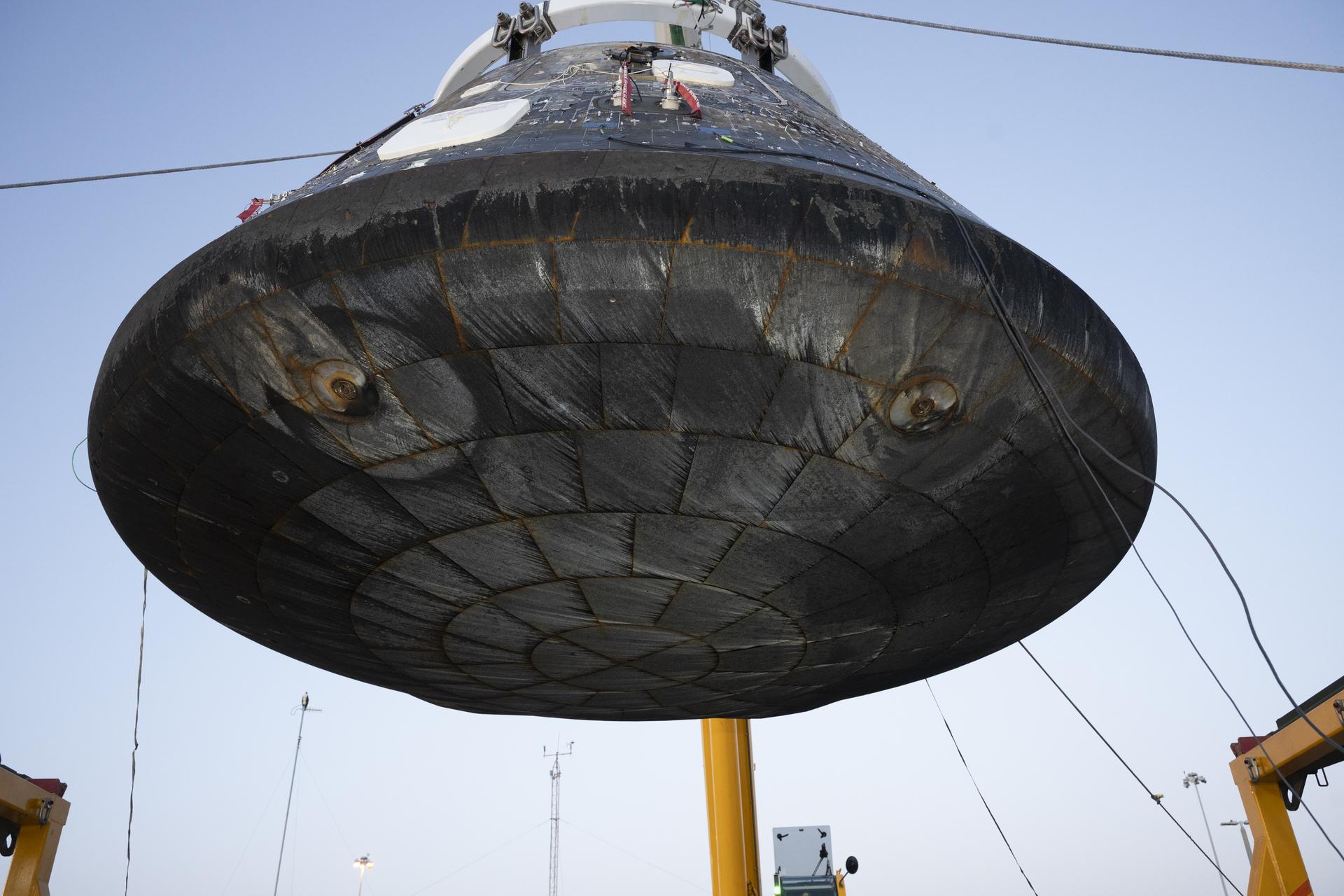
The Artemis II Orion crew module is lifted from its recovery fixture for inspection and engineering imagery after being offloaded from the USS John P. Murtha at Naval Base San Diego on April 18, 2026. The recessed areas, or smaller concentric circles, seen on the heat shield are associated with the separation bolts that connect the crew module with the service module. The larger circular patterns are formed due to compression pad material used within this location of the spacecraft, creating flow disturbances caused by extreme aerodynamic and thermal airflow during reentry. This causes increased heating locally and therefore Avcoat ablator thickness is increased in these areas by design.
NASA/Kevin Davis

Orion’s performance and the team’s analysis on Artemis II reflect system robustness, capability to support crew, and critical insights gathered that will enhance the Artemis III mission and beyond. Following the extensive Artemis I heat shield investigation, upgrades were made to the heat shield design for Artemis III to achieve uniformity and consistent permeability of the Avcoat blocks. Technicians attached the heat shield for the Artemis III Orion crew module at NASA Kennedy in early July, and the Orion crew and service modules were joined at the end of July. The spacecraft has since been successfully powered up for the first time, enabling engineers to check all connection lines between the two modules are working as planned.

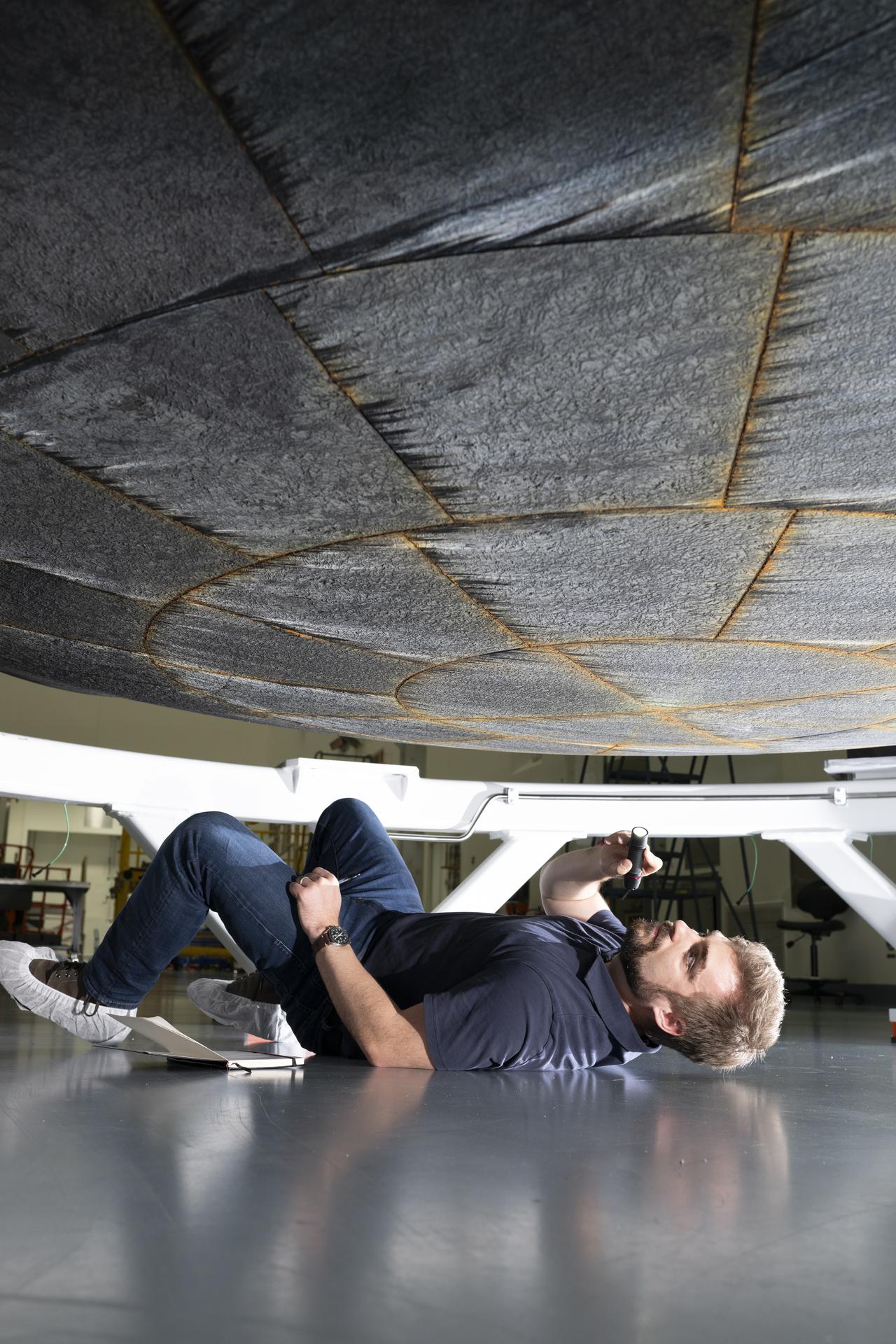
A person lies on the floor of a workshop, holding a flashlight to inspect the underside of a large, circular heat-shield-like structure suspended above them. The individual is positioned on their side beneath the hardware, with tools and equipment visible in the background.
An engineer from NASA’s Ames Research Center inspects the Artemis II Orion heat shield at NASA Kennedy’s Multi-Purpose Payload Facility on April 30, 2026, prior to its removal from the crew module. The orange tint seen between Avcoat tiles is an expected effect of the silicone used to fill the gaps between the blocks. The silicone gap filler contains iron oxide, which gives it a red appearance after enduring reentry. 
NASA/Kevin Davis

NASA continues to advance toward Artemis III as teams ready the Orion spacecraft for next year’s mission in low Earth orbit. NASA will launch the SLS (Space Launch System) rocket and Orion spacecraft with NASA astronauts Randy Bresnik, Frank Rubio, Andre Douglas, and ESA (European Space Agency) Luca Parmitano, to rendezvous with human lander test articles from Blue Origin and SpaceX to demonstrate critical systems and operations needed for future lunar landings, beginning with Artemis IV in 2028.

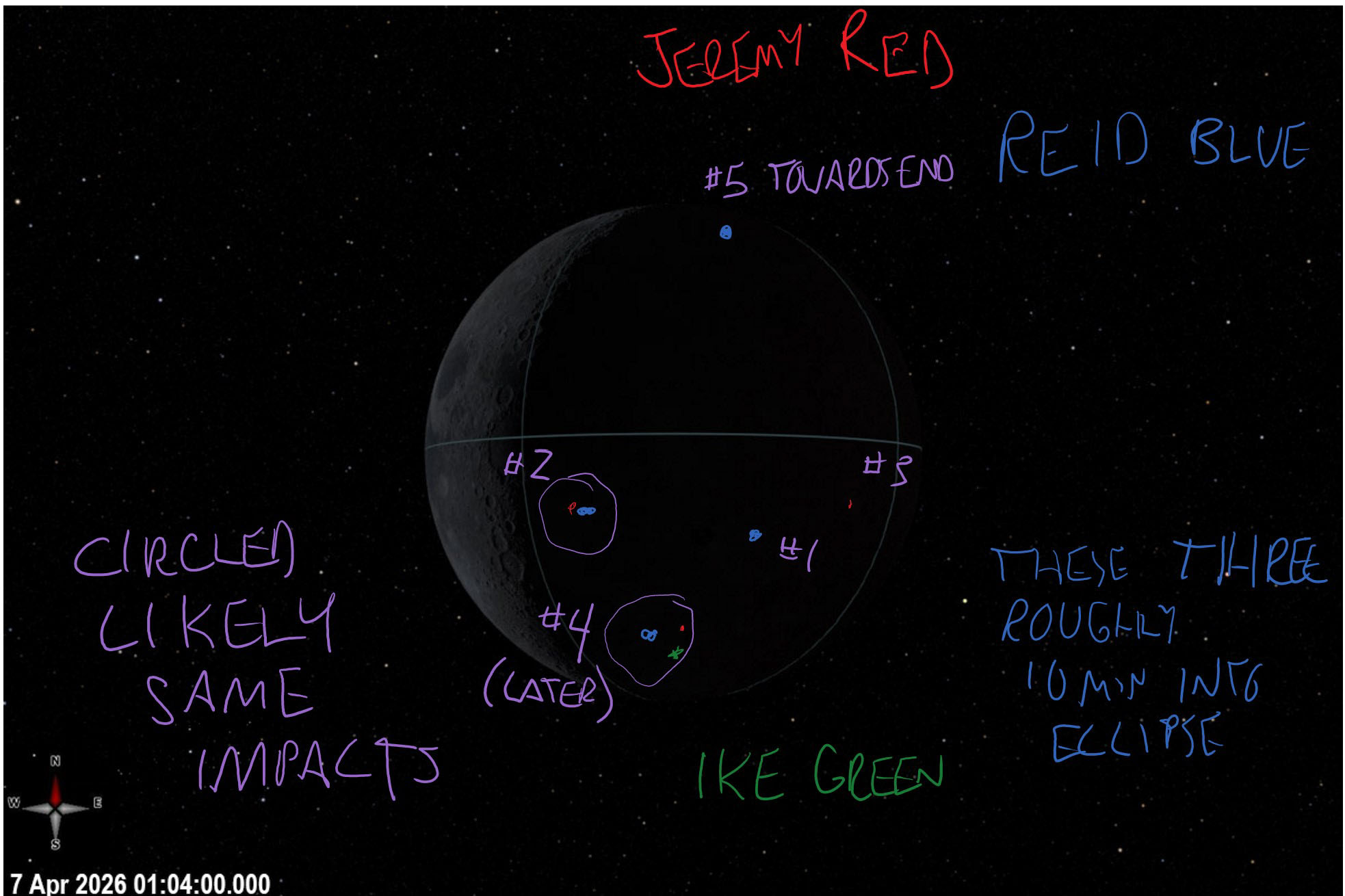
Artemis II Crew Moon Photo Annotations

7 October 2026 at 11:44
A simulated image of the crew’s view of the dark, eclipsed Moon on April 6, 2026. Three crew members annotated impact flashes on this image in OneNote. Reid Wiseman wrote in blue. Victor “Ike” Glover wrote in green. Jeremy Hansen wrote in red. General annotations are in purple ink. A note on the left side in purple is “circled likely same impacts.” Five impact flashes are numbered across the Moon. #1 with a blue dot (observed by Wiseman) is located at the 4 o’clock position, but more central. #2 is circled with a red dot (observed by Hansen) and a blue dot (observed by Wiseman) is located at the 8’clock position, but near the Moon’s center. #3 with a red dot (observed by Hansen) is located at 3 o’clock. #4 is circled with a red dot (observed by Hansen), a blue dot (observed by Wiseman), and a green dot (observed by Glover). It is at the 6 o’clock position. A note of “(later)” is under #4. #5 with a blue dot (observed by Wiseman) is located at the 12 o’clock position. A note of “towards end” is to the right of #5. Wiseman wrote an additional note in blue: “these three roughly 10 min into eclipse.” The three indicated are the blue dots at #1, #2, and #4.
NASA

A visualization of a dark Moon eclipsing the Sun is marked with handwritten notes in this April 6, 2026, screenshot from an Artemis II crew member’s tablet.

NASA astronauts Reid Wiseman (in blue) and Victor “Ike” Glover (in green) and CSA (Canadian Space Agency) Jeremy Hansen (in red) observed impact flashes and their locations, which are noted on the image. Overall, the astronauts reported seeing five extremely faint “pinprick” bursts of light from their view aboard Orion, which was 46,000 miles away from the Moon at the time. These flashes are sparked by rocky fragments hitting the Moon.

From April 1 through April 10, 2026, NASA’s Artemis II crew traveled to the Moon and back and along the way, captured stunning imagery and scientific observations of our nearest neighbor. Now, the full lunar science dataset from their journey is available to the global science community, and to the public, for further study. Read about the report, listen to crew audio observations, and explore more.

Image credit: NASA

NASA Astronaut Christina Koch to Join NFL Fans in Philadelphia

2 October 2026 at 15:54
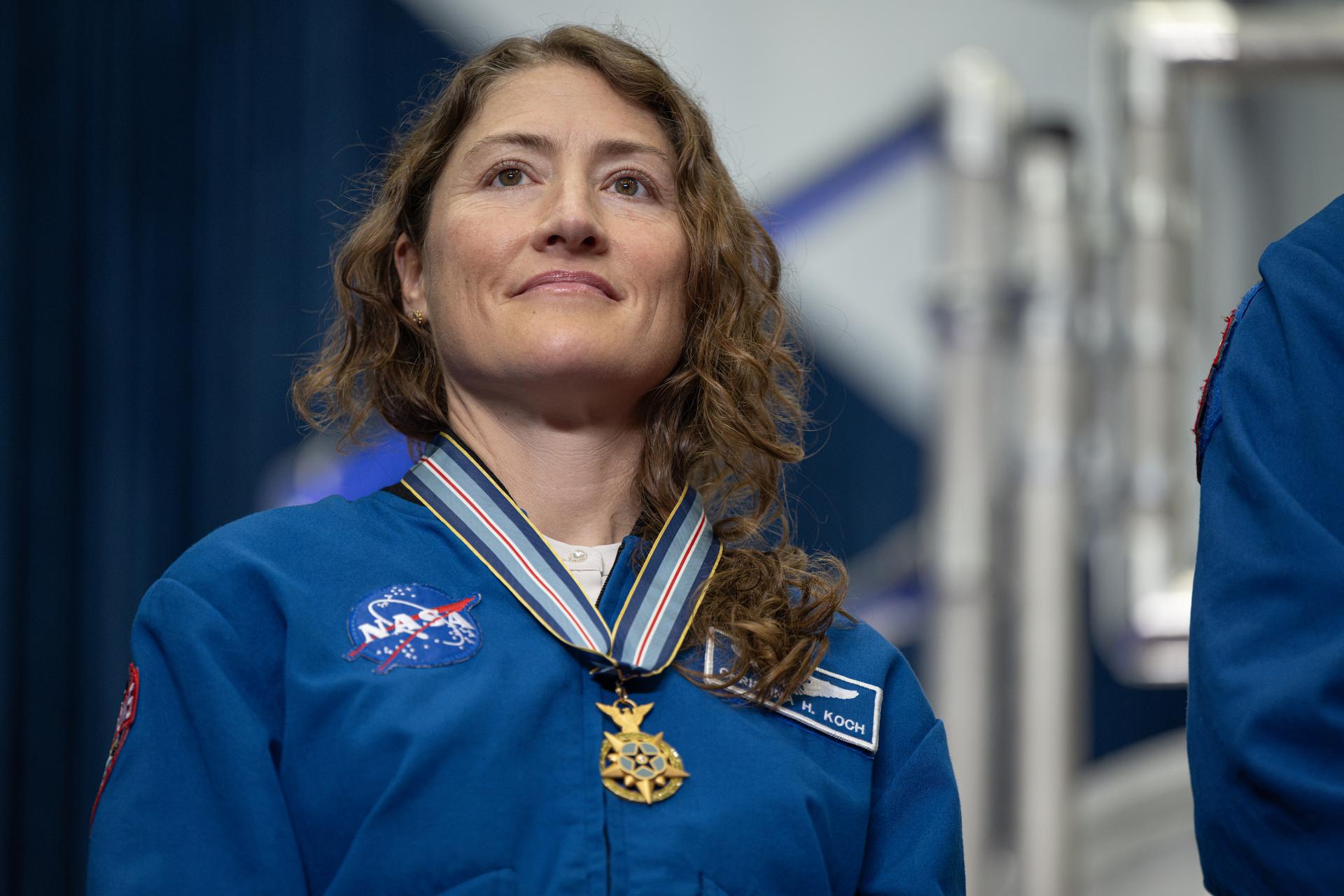
NASA astronaut Christina Koch is seen during an event to award the Congressional Space Medal of Honor to the Artemis II crew, Friday, Aug. 28, 2026, at the agency’s Johnson Space Center in Houston.
Credit: NASA/John Kraus

As part of NASA’s ongoing Inspiration Tour, NASA astronaut Christina Koch will highlight America’s strengths in space exploration and aeronautics innovation at the Philadelphia Eagles vs. Los Angeles Rams game in Philadelphia on Sunday, Oct. 4.

A self-proclaimed Philadelphia sports fan, Koch is an explorer and engineer who spent a total of 338 days in space across two missions, including serving as a mission specialist for the agency’s Artemis II mission earlier this year. On April 1, Koch launched from NASA’s Kennedy Space Center in Florida aboard the Orion spacecraft on top of the agency’s SLS (Space Launch System) rocket as part of Artemis II. Koch and her fellow crew members completed a historic lunar flyby, marking humanity’s return to the vicinity of the Moon for the first time in more than 50 years.

NASA team members will engage with fans at the agency’s Experience Zone, located outside the stadium from 10 a.m. to 1 p.m. before the game. Fans can learn more about NASA’s return to the Moon through the agency’s Artemis program, enjoy interactive games, and capture photos at a selfie station and with a large, inflatable NASA logo.

With stops across the nation, NASA’s Inspiration Tour convenes academic, industry, and public sector stakeholders to connect the agency with the people, technologies, and organizations that drive American leadership in space.

The tour will culminate in MAX POWER, a public exposition of American air and space innovation, Saturday, Nov. 7, and Sunday, Nov. 8, on and near the agency’s Kennedy Space Center in Florida. Held in honor of America’s historic 250th anniversary, the multi-day, family-friendly event will showcase the next-generation aircraft, spacecraft, autonomous vehicles, and technologies that will help define the future of transportation in air and space.

For more information about MAX POWER and the agency’s missions, visit:

https://www.nasa.gov/maxpower

-end-

Camille Gallo / Jessica Taveau
Headquarters, Washington
202-358-1600
camille.m.gallo@nasa.gov / jessica.c.taveau@nasa.gov

Share

Details

Last Updated
Oct 02, 2026
Editor
Jessica Taveau
❌
❌