Vitalik’s Single Slot Finality Proposal Puts Ethereum Settlement Speed Back Under The Microscope is the kind of crypto story that looks simple at headline level but becomes more useful once you place it inside the wider market backdrop. Ethereum’s rollup roadmap gets most of the scaling attention, but finality at the base layer remains one of the network’s most important user-experience questions.
The reason it deserves attention today is not that one announcement or filing magically changes the whole market. It is that the update adds another data point to a sector still trying to work out where capital, users, and regulation are actually moving.
For more details, visit the official Vitalik Buterin platform.
TL;DR
Vitalik Buterin published new thoughts on single slot finality.
The concept could reduce the time users wait for Ethereum settlement confidence.
The proposal shows the base chain still has major research questions to solve.
Why Ethereum Research Still Matters
Single slot finality aims to make settlement happen much faster.
The trade-offs involve validator load, network safety, and cryptographic design.
The hard part with Ethereum research is that the practical payoff often arrives long after the first proposal. That does not make the work less important. It means the market has to separate near-term price noise from the slow process of making the protocol easier to use and harder to break.
The Market Impact Will Take Time
For users, the end goal is simple: less waiting, clearer confirmation, and a chain that feels more responsive.
For readers, the useful lens is whether the idea changes the direction of travel. Ethereum is still trying to improve settlement, verification, and scalability at the base layer, even while layer-2 networks take on more everyday activity.
For Bitcoinist readers, the practical takeaway is to avoid treating this as an isolated headline. The stronger read is to connect it with the current market environment: liquidity is still selective, regulatory pressure has not disappeared, and the projects that keep shipping useful updates are the ones most likely to hold attention when the cycle gets noisy.
That does not mean the story should be stretched beyond what the source supports. The cleaner approach is to keep the facts tight, explain the mechanism, and show readers why it may matter if follow-up data confirms the same direction over the next few sessions.
In other words, this is a development to watch rather than a guaranteed turning point. Crypto moves quickly, but the useful signals are usually the ones that still make sense after the first reaction fades.
The important thing for readers is context. A single development rarely defines the market on its own, but a series of source-backed updates can show where momentum is building. That is why this article keeps the focus on the specific mechanism in play, the source behind it, and the reason traders or builders may care today.
This article is based on information from vitalik.eth.limo.
This article was written by the News Desk and edited by Samuel Rae.
This report is based on information from Vitalik Buterin. at Vitalik Buterin
You almost certainly don’t have an application for the sort of accurate timekeeping that’s made possible by this enhanced version of [Cristiano Monteiro]’s satellite-backed time server. By his own admission, the vast majority of users will be more than happy to have their system’s time synchronized by the traditional Network Time Protocol (NTP). But if you’re really chasing those last few microseconds, that’s where the Precision Time Protocol (PTP) comes in.
With NTP, you can get within 10 milliseconds or so of your upstream time source — but PTP is accurate down to nanoseconds. Unless you’re performing some kind of scientific research, running a robotic assembly line, or perhaps doing high-speed financial trading, there’s no reason for this level of accuracy. In fact, PTP is such a niche technology that until the release of the ESP32-P4, [Cristiano] couldn’t even find an affordable enough chip that supported it.
Hardware-level support for PTP is important as there’s no way to achieve this level of accuracy with software alone, the capability needs to be baked into the Ethernet controller. As you might expect, it takes a highly accurate time source to make the most of PTP, and that’s where the navigation-grade Global Navigation Satellite System (GNSS) receiver comes in. All told the cost of the build is unsurprisingly higher than that of its predecessor, but [Cristiano] says it’s still a couple zeros shy of what a commercial offering would run.
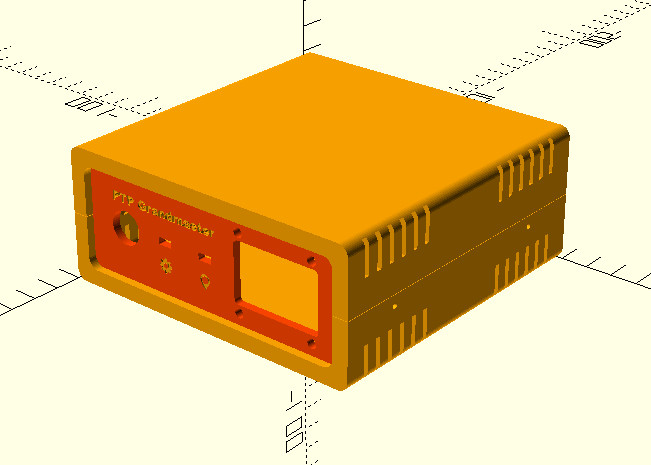
As with his original time server from 2021, [Cristiano] made sure this build was as friendly as possible for hackers and makers. We especially like the 3D printed case designed in OpenSCAD, and his insistence that the gadget have a front panel with blinking status LEDs. Again, the vast majority of us don’t need our clocks to be accurate down to the nanosecond…but it’s nice to know we have the option.
Tether, the company behind USDT, is preparing to issue the stablecoin natively on Bitcoin through the RGB protocol version v0.11.1. Deployed by the UTEXO software lab, USDT is set to return to the chain where it first launched in 2014 via the Omni-Mastercoin Layer.
UTEXO, the company leading the commercial rollout, has positioned itself as the issuer and distributor of this Bitcoin-native USDT in partnership with Tether. “Finally, after eight years of development—if not more—we are the company that is launching USDT over Bitcoin with strong support from Tether,” said Viktor Ihnatiuk, UTEXO co-founder, in an exclusive interview with Bitcoin Magazine.
The RGB protocol combines its novel client-side validation with the Lightning network for instant, private settlements, while anchoring security to Bitcoin’s UTXO model. Users can expect to be able to handle USDT on native Bitcoin addresses as well as send and receive it over the Lightning network with compatible wallets.
The RGB protocol on Bitcoin also offers significant privacy features to USDT users as the asset benefits from Bitcoin’s UTXO model, which standardizes fresh addresses for every transaction compared to the account-based address reused commonly in EVM blockchains like Tron, Ethereum or Solana. Address reuse is the first mistake of onchain privacy, yet most altcoins built their interfaces to reuse addresses, despite the risk it poses to users. RGB’s integration with the Lightning network further protects user privacy by moving USDT via the offchain payments network, which leaves few marks on the public blockchain. The deep integration with Tether also means that there are fewer middleman companies charging extra fees or collecting data.
On the topic, Vktor emphasized that, “We built Utexo so that USDT could move on Bitcoin the way money is supposed to move: instantly, privately, with no surprises on costs. Our partners integrate our API once and can route USDT on the most resilient open network ever built, with full control over cost structure.”
UTEXO vs TRON
UTEXO emerged from a joint venture involving Viktor’s Boosty Venture Studio, Fulgur Ventures, and Tether Investments. The goal was straightforward: bring RGB to mainnet after years of delays under prior development teams. The protocol had been in active development since at least 2016, but failed to be ready for the 2017 bull market, giving the TRON blockchain dominance over USDT volume and usage throughout the developing world, a dominance which it still retains.
UTEXO of specifically building “the last mile” of software needed for wide USDT deployment across the Bitcoin ecosystem, which includes a software development kit, APIs, mid-level protocols, UI design work and even a mint bridge that is live today at mint.utexo.com. This bridge lets users move USDT across popular blockchains with “deterministic low fees” and no middlemen thanks to its direct integration with Tether as the primary mint. The RGB protocol layer was developed by Bitfinex R&D Strategist Federico Tenga.
“Right now if you want to swap USDT to Bitcoin you need to pay high fees for all these wallets who charge you a one percent wallet fee plus a swap provider charge of one percent plus, and you have slippage one percent as well, so you pay three percent, and also you wait forever until the swap happens” Viktor told Bitcoin Magazine, adding that; “with USDT and Bitcoin over Lightning, for the first time you have two main assets on one chain, you can swap instantly without any slippage. You can swap decentralized USDT to Bitcoin and back on-chain. The price is almost the same as spot markets in Binance.”
Networks like Tron that are primarily used to move USDT also add extra fees, swap commissions and friction to the user experience. They require a different address type, with fees paid in an asset like TRX, which is only ever used to move the stablecoin. With most of the monetary volume in the crypto market concentrated in Bitcoin and Tether, having to buy an altcoin just to pay fees ends up feeling like red tape.
Bitcoin, as the payment rails of USDT, also comes with blockchain levels of security that other chains simply can not offer. While USDT will always be fundamentally centralized in Tether as a corporation, the rails can also add risk, for example, if a contentious fork occurs or major bugs are found on novel blockchain systems. Bitcoin, being the oldest and most conservative blockchain, delivers a quality assurance of sorts that can not be matched by other chains.
RGB traces its roots to Peter Todd’s single-use seals back in 2014 and was formalized in 2016 by Giacomo Zucco and Riccardo Casatta. The RGB acronym, originally derived from “Riccardo Giacomo Bitcoin,” was later rebranded “Really Good Bitcoin”. Tether explored the protocol early but faced delays with the previous team. Had RGB shipped on schedule around 2019, the stablecoin landscape and broader DeFi industry might have developed differently around Bitcoin’s UTXO model instead of Ethereum’s account-based system.
As such, bringing USDT back to Bitcoin is a core motivation for UTEXO. Viktor minced no words on the matter: “For the first time in eight years or nine years, USDT is coming back home. We have no chance to fail. If we fail, no one will think about Bitcoin as a settlement layer anymore.”
USDT on Bitcoin via RGB is expected to be launched within weeks, possibly this July, with wallets like Tether Wallet among others announcing support, and exchanges across the world announcing integrations.
SPOILER ALERT: Jeff Booth does not know what the world will look like in 2036.
I know, I know… You probably wanted to hear from Jeff — author of The Price of Tomorrow and someone with incredible foresight and vision — that all eight billion of us would be living in the type of abundance he often talks about on podcasts.
You likely wanted to read that Jeff foresees Bitcoin replacing fiat by 2036 and that we’ll all be able to just kick back and relax as we enjoy living in a deflationary system by then.
I, too, was slightly disappointed when he didn’t paint a picture of a Bitcoin-fueled utopia that will exist a decade from now.
That said, in true Jeff Booth fashion, he offered some perspective that was perhaps even more profound than expected:
“It can exist for them right this second,” said Jeff in regard to when people can begin to reap the benefits of existing in a Bitcoin-buoyed system. “The question is ‘Do people move their time and energy to this new system?’”
Leave it to Jeff, someone who I often refer to as the Eckhart Tolle (author of The Power of Now) of Bitcoin to remind us that we don’t have wait for a day in the far off future when Bitcoin has transformed the world, we can begin to use right now it to transform our own personal world and the worlds of those with whom we engage.
“We are the change,” said Jeff. “We always have been.”
There’s just one caveat to Jeff’s message, though…
To fully experience the benefits that Bitcoin offers, we cannot simply view it as another asset within a broken system, we have to see it for what it actually is: a protocol.
Bitcoin As A Protocol
According to Jeff, seeing Bitcoin as anything but a protocol will not only result in our not fully benefitting from it, but ultimately in the failure of the protocol itself.
That’s a lot, I know.
Let’s unpack it.
When Jeff looks out at the world, he sees a spectrum of Bitcoin enthusiasts — and, of course, those who will continue to simply dismiss Bitcoin.
The latter will resume focusing their efforts on trying to reform the broken and insolvent system that continues to steal their time and wealth while consistently blaming the powers that be for their lot in life, further handing over their power to those actors in the process.
If you’re reading this article, you’re likely not one of those types. You, instead, exist somewhere on a spectrum of Bitcoin understanding that Jeff has conceptualized.
On one side of that spectrum are those who take risky bets with bitcoin or even with other crypto assets in efforts to get rich quickly. This type lends much of their energy to searching for the next scheme to trade. Very few in this world win big and almost all lose over a longer time horizon.
One level up from that are those who see bitcoin as a store of value. The problem with this perspective is that the asset is trapped within the broken monetary and financial systems instead of replacing them. If bitcoin only remains a store of value, its ownership will continue to centralize over time, leading to a Bitcoin elite, a new breed of kings, as opposed to a world in which all human beings benefit from bitcoin. This scenario will also lead to continued issues with Bitcoin custodians.
“If we continue to have a debt-based system on top of bitcoin, bitcoin will continue to be held by custodians who will get liquidated time and time again as they take risks with their customers’ bitcoin,” said Jeff. “It’ll look like Celsius and BlockFi over and over and over again.”
Finally, there are those who see Bitcoin as a protocol.
They understand that Bitcoin emerges in layers, each of them enabling it to be used more easily and privately as money. It’s those for whom Bitcoin will serve as a true catalyst.
“It’s only if you view Bitcoin through the protocol lens that the world will change for you,” said Jeff.
“Every single other one of those perspectives relies on ‘It’s somebody else, not me.’ But the last one says ‘I create the future from my intention,’” he added.
“So, when we think about 2036, the real question is ‘How many people realize that they have the agency to change the world?’”
While this may seem like a relatively easy question to answer for oneself, it becomes more challenging when considering that we exist in a world that is constantly trying to distract us from what Bitcoin truly is.
Don’t Get Caught
From flavor of the month FUD to hero worship, it’s easy to give up your power.
“People often give their agency away to the likes of those who spread fear around quantum computing breaking Bitcoin or to those talking about how Jeffrey Epstein tried to infiltrate Bitcoin Core,” said Jeff.
Much of the Core vs. Knots debate was also driven by fear, which also siphoned people’s power, according to Jeff. With regard to this particular issue, Jeff noticed the name calling and ad hominem attacks, but opted not to contribute to the drama. Instead, he simply saw it as a signal that the issue was worth investigating. He believes that the debate offered people an important opportunity to fight for what they want Bitcoin to be.
“We’re used to seeing only a small part of consensus and not seeing views that are outside of it,” said Jeff. “The consensus mechanism and the agency of all participants fighting for what they see bitcoin as allows each person to see the entire debate and make their choice of what bitcoin is to them.”
Jeff went on to say that instead of being driven by fear and blindly digging in with one side or the other in such debates, it’s important to look inward at these times. Both doing so and advocating for what you want Bitcoin to be is ultimately how the protocol stays safe in his eyes.
“If there are enough hypervigilant people focused on the issues, Bitcoin stays secure,” said Jeff. “If there are enough people building on this and they are all hypervigilant as they build, it stays decentralized.”
Bitcoin enthusiasts also give away their agency to figures in the Bitcoin space who convince them that bitcoin is nothing more than a store of value — digital capital, if you will — according to Jeff.
“If you talk about digital capital and digital assets or building a debt-based system on top of Bitcoin, you aren’t viewing Bitcoin as a protocol,” explained Jeff. “Building a debt-based system on top of Bitcoin is centralizing, which isn’t good for Bitcoin. If you’re trying to concentrate bitcoin and become a new king, then both Bitcoin and the game you’re playing will ultimately fail.”
Jeff attributes the fact that some aren’t able to see how building a system that resembles the system Bitcoin was designed to replace is ultimately doomed to the notion that many are trapped in old mental models. In other words, we often bring our baggage from the old system into this new one. Those who see Bitcoin as a protocol, those using it as money in Bitcoin circular economies on a day-to-day basis, fundamentally understand Bitcoin through a different lens. They intuitively know that every choice, want, and need is a choice to distribute value or give value. And as bitcoin becomes more ubiquitous as money, then those playing financial games with bitcoin will ultimately be forced to give up their coins.
“You can try to create debt on top of bitcoin, but, eventually, as Bitcoin adoption increases, prices will begin falling so fast that those trying to centralize Bitcoin will have to figure out a way to deliver value to society in excess of what they’re spending to pay back and service their debt, which they won’t be able to do, forcing them to distribute their bitcoin,” said Jeff.
In short, Bitcoin inevitably liquidates those playing a zero-sum game; therefore, according to Jeff, it’s best to focus on what you’re doing to provide value to the world rather than focusing on how prominent figures in the Bitcoin space are rebuilding the same type of debt-based system that we’re trying to escape on top of bitcoin.
Why Bitcoin Remains Decentralized and Secure
For this issue, the editorial staff and writers involved have presupposed that Bitcoin is still sufficiently decentralized and secure come 2036. The truth is, though, as Jeff points out, if we all don’t claim our own power and embrace Bitcoin as a protocol, then it centralizes and fails.
Put another way, Bitcoin is not inevitable.
Yet, at the same time, Jeff is all but 100% convinced that Bitcoin does, in fact, succeed.
Why is that? you might ask.
Well, to use Jeff’s own words, he believes that Bitcoin will win because he “believes in us.”
Now, I know what you might be thinking: How could Jeff believe in us?… I mean, has he seen all the pleb slop out there? Has he seen how quickly many have been to abandon their Bitcoin vision and morals in pursuit of fiat gains? And does he think we’re all as good at thinking for ourselves as he is?
While I didn’t ask Jeff those questions, I’d imagine his answers to the second and third ones are “yes” and that he’s too humble to even respond to the final one. And as for the first question, he answered it without my posing it to him directly.
“As time goes on, more and more people discover what Bitcoin truly is, and each of them begins to move their agency into this space,” he explained. “In the process, people discover that their agency matters and that they can bend reality to their will. And when we share different thoughts about Bitcoin with others, it opens people’s minds, further causing them to shift their time and energy. I’m so positive that Bitcoin succeeds because I believe in the best in us, and I’ve already seen so many people move their time into this space and how that has had such a positive impact on them.”
Still, Jeff, c’mon! Most of us are still simply trying to convince our friends and family members that Bitcoin isn’t a scam, much less something that they should be moving their time and energy into. Even the idea of moving one’s time and energy into Bitcoin seems like an abstract and foreign concept to most people today.
Jeff gets that, too. And so he offered a caveat:
“Not everybody has to move their time — only a small fraction do.”
Now, given that my intention in writing this piece isn’t simply to help share Jeff’s perspective but to encourage you to embrace your own agency and power, I’m not going to share how much that small fraction is composed of in Jeff’s mind. Doing so might put you back into the mindset you may have had before you started reading this piece, the “Bitcoin is inevitable, and my efforts mean nothing in regard to its success or failure” mindset. Since that’s neither productive nor empowering, let’s not go there. The point is that Jeff believes that there are enough of us out there who will “hold the line and fight for freedom” as we work to maintain what he terms “the honest chain.”
“__% of people will cheat and go back to the dishonest chain,” said Jeff. “They’ll tell themselves ‘I needed to do it for my family.’ Deep down, they won’t have wanted to move to the dishonest chain, but they will feel that the consequences of not doing so were just too great. So, they’ll take the bribe. They’ll tell themselves ‘If not me, somebody else will do it, and I have to do it, too.”
Though that remaining percentage of people who support the honest chain may be small, it will be more than enough to have the balance of most people eventually move with them, according to Jeff.
“That small group forces a foundation from which others can benefit,” said Jeff.
A beautiful dimension of Bitcoin is that it’s a group, as opposed to a single figure, that keeps the network safe. And what shields this group is that Bitcoin enables them to remain anonymous. This can be contrasted with public leaders or religious figures who’ve challenged power and been martyred for it.
“Those leaders and religious figures had to be killed because they were open and very dangerous to the system of power,” said Jeff. “Now, those who want to stand up for what’s right no matter what to keep Bitcoin protected can do so because privacy is built into its layers. If this fight were occurring in the open, the intransigent minority, those who want to stand up for what is right, would be knocked off in time; it would be too dangerous for them to stand up.”
In this light, Bitcoin could be viewed as the greatest tool for human liberation we’ve ever seen. And the most exciting part is, we may have all of the components we need to scale it securely and in a manner that offers people transactional privacy.
Scaling Bitcoin: We May Already Have All We Need
Given how often Jeff refers to scaling Bitcoin in layers, I asked him how many layers he envisions Bitcoin having by 2036, anticipating that he had some ideas for layers that few of us could have yet conceptualized.
To my surprise, his answer to my question was direct: “I think we have almost everything already.”
(LFG.)
“We have Bitcoin, composed of energy, mining, and the consensus rules,” began Jeff. “Next, we have Lightning, Liquid, Ark, etc. This is the transport layer where you can now transport value instantly at very fast speeds. On top of or integrated with that, you have fedimints for ecash, the privacy layer. We also have Nostr, the identity layer, web of trust, and privacy layer. And that might be all we require. Everything there is enough to enable all applications to take part in the first global free market that’s ever existed.”
But what about a capital markets layer? Will we see tokenized assets on a Bitcoin layer by 2036, or at any point in the future for that matter?
According to Jeff, that’s a hard “no.”
“Tokenization is part of the fiat scam,” said Jeff. “The idea with tokenization is that people are going to take more assets and drive more money into those assets. In the world I’m talking about, you don’t need tokenization because the protocol preserves value for you — everything is priced in prices that are falling.”
According to Jeff, tokenized assets, whether on traditional ledgers (e.g., brokerage accounts) and on blockchains, are part of the current system, which is extractive. In a world underpinned by bitcoin, people won’t need to rely on tokenized assets to preserve their wealth.
“In this new world, capital markets get way smaller,” said Jeff. “In 1900, capital markets only made up about 1% of the economy, and now it’s closer to 40%. Tokenization helps the extractive economy carry on; it becomes unnecessary in a world in which Bitcoin succeeds as a protocol.”
Jeff contextualized his point by describing how he and the team at ego death capital, the Bitcoin venture capital firm that he co-founded, think about making investments in a world where bitcoin continues to appreciate in value.
“At ego death, we deploy risk capital where we think we can exceed a 45% IRR (internal rate of return),” Jeff explained. (Bitcoin’s IRR over the past 15 years is approximately 45%.) “Most startups don’t get funded with debt. Family and friends typically fund startups and what they’re doing is saying ‘I believe you can do this,’ while not necessarily considering the fact that most startups fail because it’s so hard to create value in the free market. Investors only come in when they see a startup starting to win and when they think a business will provide tons of value moving forward.”
And most investors in public markets today are only investing because fiat currencies are losing value at such an alarming rate. In a world that’s on a bitcoin standard, speculating in markets as a means to preserve value is no longer necessary.
Start Today
Each of our actions in this Bitcoin space have power.
They are helping to chart a course in which, by 2036, there will be exponentially more of us reaping the benefits of living on a bitcoin standard.
While that future surely isn’t promised, Jeff feels confident that we’re on the right path.
“Our future is created by these collisions of us talking to each other, learning from one another, and expanding our knowledge to other people,” he explained.
Plus, the longer Jeff works with and invests in high-integrity builders in the Bitcoin space, the more confident he feels that Bitcoin remains decentralized and secure, as it must for it to succeed.
With that said, Jeff understands that many will sell out as the fight continues to be brought to Bitcoin’s doorstep, which is why he says that we should feel free to “slay our heroes.” Instead, he believes, we should look within ourselves for answers.
The Bitcoin story isn’t one of looking out to or up to; it’s one of looking inward and embracing responsibility and critical thinking, both of which are necessary in pursuit of increased personal power and agency.
If we want a world transformed by Bitcoin in 2036, we have to start by making the essential personal transformations and moving more of our time and energy into Bitcoin today.
This piece is featured in the latest Print edition of Bitcoin Magazine, The 2036 Issue. We’re sharing it here as an early look at the ideas explored throughout the full issue.

 Login
Login