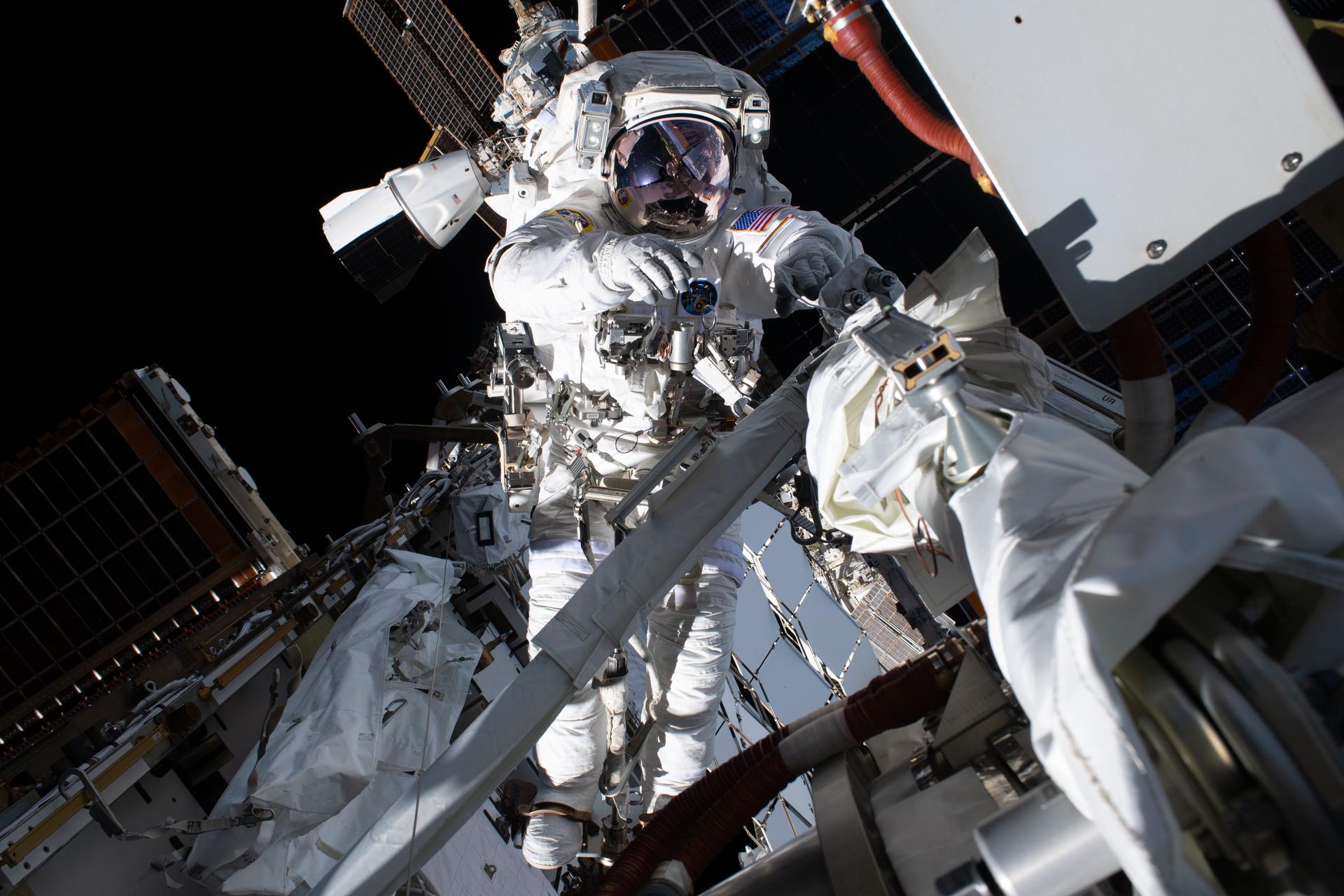
NASA astronaut Anil Menon conducts a spacewalk on Aug. 6, 2026, to prepare the International Space Station for future upgrades to its power system.
Credit: NASA
NASA will preview two upcoming spacewalks to complete solar array installation and power augmentation of the International Space Station during a news conference at 2 p.m. EDT, Tuesday, Oct. 20, from NASA’s Johnson Space Center in Houston.
NASA will stream the event through a variety of platforms. Learn where to watch online:
United States-based media interested in attending in person must contact the Johnson newsroom no later than 3 p.m., Monday, Oct. 19, at: jsccommu@mail.nasa.gov. Media joining by phone should request dial-in details by the same deadline. To ask a question, media must dial in no later than 15 minutes before the start of the news conference.
Thursday, Oct. 29
During U.S. spacewalk 100, NASA astronaut Anil Menon and CSA (Canadian Space Agency) astronaut Joshua Kutryk will exit the station’s Quest airlock to install and deploy an International Space Station Roll-Out Solar Array (IROSA) on the 2A electrical power channel. The solar array will be the seventh IROSA and will provide additional power to support critical station operations, including its safe and controlled deorbit.
Thursday, Nov. 5
During U.S. spacewalk 101, Menon and Kutryk will install and deploy the eighth and final IROSA on the 3B channel of the space station, completing the power augmentation upgrades.
The final two roll-out solar arrays will complete the space station’s power system augmentation. Together, the eight roll-out arrays will increase available power by up to 30%, boosting the station’s electric power generation capacity from 160 kilowatts to approximately 215 kilowatts.
NASA will share additional coverage details about U.S. spacewalks 100 and 101 closer to each operation on the agency’s live events web page and the space station blog. The spacewalks will be the 285th and 286th conducted in support of space station assembly, maintenance, and upgrades.
To learn more about International Space Station research, operations, and its crews, visit:
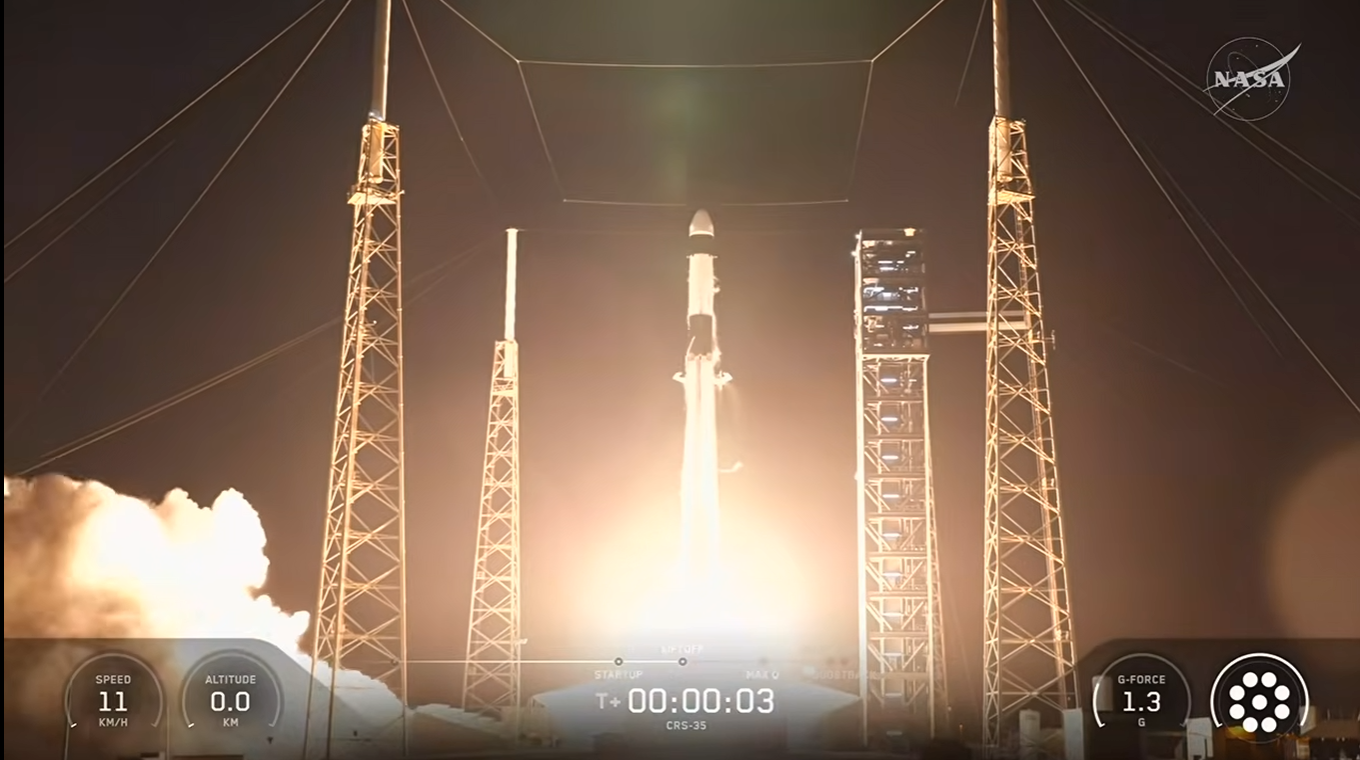
A SpaceX Falcon 9 rocket and Dragon spacecraft launched on Tuesday, Oct. 13, 2026, from Space Launch Complex 40 at Cape Canaveral Space Force Station in Florida as part of the company’s 35th Commercial Resupply Services mission to the International Space Station for NASA.
Credit: NASA
NASA’s SpaceX 35th commercial resupply mission lifted off at 6:33 a.m. EDT Tuesday aboard a Falcon 9 rocket from Space Launch Complex 40 at Cape Canaveral Space Force Station in Florida, carrying more than 6,300 pounds of supplies and hardware, bound for the International Space Station. Following its successful launch, the SpaceX Dragon spacecraft will carry new scientific experiments, cargo, and the final pair of International Space Station Roll-Out Solar Arrays to the orbiting laboratory.
Dragon is scheduled to autonomously dock at 11 a.m., Thursday, Oct. 15, to the space-facing port of the space station’s Harmony module. NASA will stream rendezvous and docking coverage beginning at 9:15 a.m., through a variety of platforms. Learn where to watch online:
The final pair of solar arrays will complete the space station’s power system augmentation, boosting available electricity for research, operations, and the station’s safe, controlled deorbit. Astronauts will install the arrays during a series of spacewalks planned for later this fall.
Dragon also is delivering several new experiments, including hardware to manufacture artificial retinas in microgravity that could help restore vision for patients on Earth and 3D heart tissue models to advance large-scale drug testing on future space missions. Dragon also will carry materials to study how a new type of glass is formed in microgravity, and brain organoids that could uncover potential treatment targets for neurodegenerative diseases like Alzheimer’s, Parkinson’s, and multiple sclerosis.
These are just a sample of the hundreds of investigations conducted aboard the orbiting laboratory in the areas of biology and biotechnology, physical sciences, and Earth and space science. Research and technology investigations taking place aboard the space station benefit people on Earth and lay the groundwork for other agency deep space missions. As part of NASA’s Artemis program, the agency will send astronauts to the Moon to prepare for future human exploration of Mars, inspiring the world through discovery in a new Golden Age of innovation and exploration.
The Dragon spacecraft is scheduled to remain at the space station until mid-November when it will depart and return to Earth with time-critical research and cargo, splashing down off the coast of California.
Learn more about the International Space Station, its research, and crew, at:
NASA’s Freedom 250 F-5 team, including NASA Administrator Jared Isaacman, performs a flyover during the national anthem at an NFL game between the Cleveland Browns and the Carolina Panthers at Huntington Bank Field, Sept. 27, 2026, in Cleveland.
Credit: NASA/Jordan Cochran
As part of the agency’s Inspiration Tour flyover, NASA Administrator Jared Isaacman will pilot one of three F-5 fighter jets to kick off the New York Jets vs. Cleveland Browns game in East Rutherford, New Jersey, on Sunday, Oct. 11.
NASA team members will engage with fans at the agency’s Experience Zone, located at the Jets Tailgate Zone outside the stadium, from 10 a.m. to 1 p.m. EDT before the game. Fans can learn more about NASA’s return to the Moon under the agency’s Artemis dome, enjoy interactive games, and capture photos with a large, inflatable SLS (Space Launch System) rocket.
Isaacman will be available for limited media interviews during the game. To arrange interviews, please contact Camille Gallo at: camille.m.gallo@nasa.gov or 202-531-8057.
With stops across the nation, NASA’s Inspiration Tour convenes academic, industry, and public sector stakeholders to connect the agency with the people, technologies, and organizations that drive American leadership in space.
The tour will culminate in MAX POWER, a public exposition of American air and space innovation, Saturday, Nov. 7, and Sunday, Nov. 8, on and near the agency’s Kennedy Space Center in Florida. Held in honor of America’s historic 250th anniversary, the multi-day, family-friendly event will showcase the next-generation aircraft, spacecraft, autonomous vehicles, and technologies that will help define the future of transportation in air and space.
For more information about MAX POWER and the agency’s missions, visit:
NASA is advancing American leadership in space by taking the next step toward a future where commercial space stations lead the way in low Earth orbit. On Friday, the agency released its final Request for Proposals inviting industry to submit plans for the next generation of commercial space stations.
“In alignment with the President’s National Space Policy, NASA is committed to maintaining a sustained American presence in low Earth orbit long after the International Space Station retires,” said NASA Administrator Jared Isaacman. “We will continue to need a place to conduct research, develop technologies, train crews, and prepare for missions to the Moon and Mars. Commercial space stations may provide that capability while creating new opportunities for American industry and allowing NASA to concentrate more of our resources on the near-impossible missions ahead.”
Building on the agency’s Ignition event earlier this year, NASA regularly has engaged with private industry to shape the agency’s future direction in low Earth orbit. This included publishing two Requests for Information in March to gather industry’s perspective on low Earth orbit destinations and transportation. The agency also published a draft Request for Proposals in July, followed by an industry day and one-on-one meetings that allowed interested companies to review and comment on the planned acquisition approach.
“We’ve made it clear that NASA will never give up its presence in low Earth orbit,” said Isaacman. “Since Ignition, we have spent a lot of time listening to industry and working through what it will take to make this transition successful. The opportunity is significant, but the economics ultimately have to work. We want to see credible plans, strong technical execution, and companies prepared to invest in destinations that can serve NASA while developing additional customers and markets of their own.”
Proposals are due Tuesday, Dec. 8, with contract awards expected in spring 2027.
Under the solicitation, NASA outlines requirements for companies interested in designing, building, testing, certifying, and operating commercial low Earth orbit destinations capable of providing end-to-end destination and transportation services for human spaceflight use.
NASA intends to award firm-fixed-price, multi-award, indefinite-delivery/indefinite-quantity contracts supporting development, certification, and services for continued low Earth orbit research and exploration. This will allow NASA to select two or more contractors through early development, followed by a competitive task order for final design, test, and evaluation, as well as certification and services from one or more contractors.
Learn more about NASA’s missions on the agency’s website:
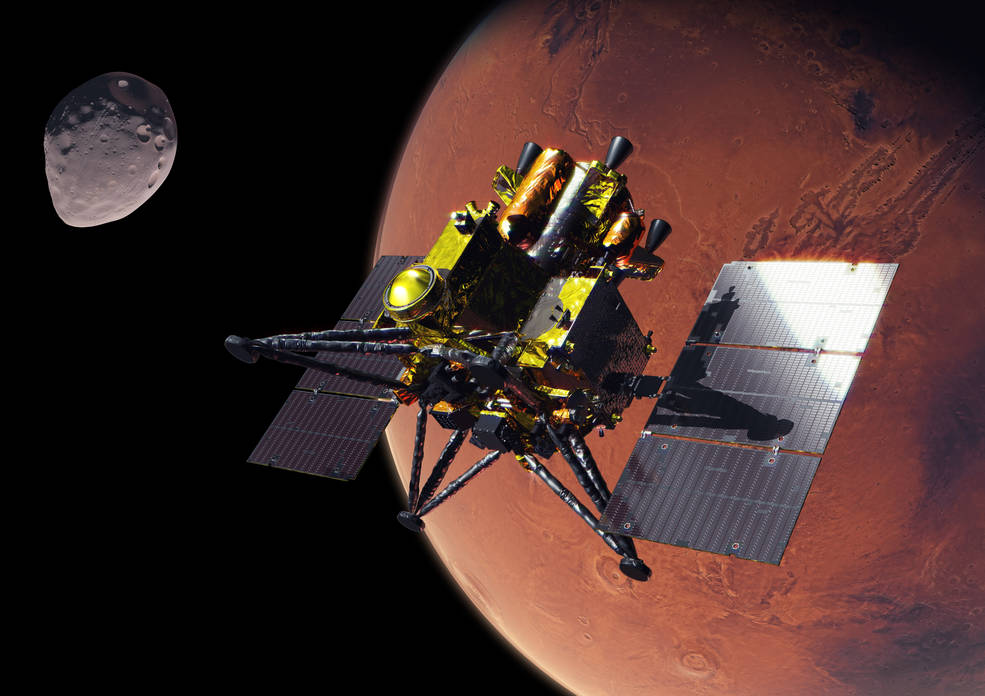
An artist’s concept of JAXA’s (Japan Aerospace Exploration Agency) Martian Moons eXploration (MMX) spacecraft at Mars.
Credit: JAXA
Media are invited to join NASA for a media teleconference at 4 p.m. EDT, Thursday, Oct. 15, to preview the agency’s contributions to JAXA’s (Japan Aerospace Exploration Agency) Martian Moons eXploration (MMX) mission. The mission is scheduled to launch from JAXA’s Tanegashima Space Center in Japan on Monday, Oct. 19 EDT (Tuesday, Oct. 20 JST).
Audio of the media teleconference will stream on the agency’s website at:
Participants in the briefing, who will provide an overview of the mission and NASA’s contributions, include:
Lindsay Hays, acting director, Planetary Science Division, NASA Headquarters in Washington
Tom Statler, MMX program executive and scientist, Planetary Science Division, NASA Headquarters
David Lawrence, MEGANE (Mars-moon Exploration with Gamma-rays and Neutrons) principal investigator, Johns Hopkins Applied Physics Laboratory
Kris Zacny, vice president, Blue Origin’s Honeybee Robotics
Media interested in participating by phone must RSVP no later than two hours prior to the start of the teleconference to Molly Wasser at molly.l.wasser@nasa.gov. A copy of NASA’s media accreditation policy is online.
The MMX spacecraft will arrive at Mars in August 2027 to begin its survey of the Red Planet’s two moons, Phobos and Deimos. After surveying Phobos in detail, the spacecraft will collect a sample of the moon’s surface no earlier than December 2028 and deliver it to Earth in 2031. NASA’s contributions to the mission include the MEGANE gamma-ray and neutron spectrometer, the spacecraft’s surface sampler mechanism, and communications and navigation support from the agency’s Deep Space Network, as well as funding United States scientists participating on the MMX science team.
The MEGANE instrument was developed by Johns Hopkins Applied Physics Laboratory. Honeybee Robotics, a Blue Origin company, developed the spacecraft’s pneumatic sampler mechanism. NASA’s contributions to the MMX mission were funded by the agency’s Discovery Program, which provides frequent flight opportunities for high-value, focused planetary science investigations. The Discovery Program is managed by NASA’s Marshall Space Flight Center in Huntsville, Alabama, for the agency’s Science Mission Directorate in Washington.
For more information about the MMX mission, visit:
Editor’s note: This release was updated Oct. 8, 2026 with the formal name of the summit.
NASA is launching two new science and technology initiatives to deepen scientific understanding and accelerate the innovation that will shape America’s future in space.
The initiatives are announced in conjunction with the White House Office of Science and Technology Policy’s (OSTP) “Science: A Golden Age Summit” in Washington on Thursday with top U.S. agency leaders. The programs reflect NASA’s commitment to pioneering research and transformative technologies and advancing the Trump Administration’s vision as outlined in the July report to the President, Science: A New Golden Age. One focuses on peer review and the other on fellowship researchers.
“NASA has a proud history of pursuing bold ideas and achieving the near impossible,” said NASA Administrator Jared Isaacman. “Under President Trump’s leadership, we are building on that legacy by creating new opportunities for great science, experimenting with how we evaluate and accelerate the best ideas, and investing in the next generation of researchers through the Genesis Mission Fellowships. We are entering a new Golden Age of American innovation and discovery, and NASA will be at the forefront.”
During a fireside chat, Isaacman and Michael Kratsios, assistant to the President for science and technology and director of OSTP, will discuss the following:
Establishing a coordinated metascience initiative within NASA’s Science Mission Directorate to strengthen the reliability, efficiency, transparency, and overall productivity of the agency’s scientific practices. As part of this effort, NASA is expanding the agency’s use of dual anonymous peer review to ensure proposals are evaluated solely on their intrinsic scientific merit. This approach enhances fairness and supports innovative and unconventional research ideas. Started as a pilot program during the first Trump Administration, this initiative has helped position NASA as a leader in advancing best practices in scientific review.
NASA will support 10 Genesis Mission Fellows, who are accelerated doctoral students with dual competencies in super intelligence (SI) and science or engineering. Fellows will work directly on NASA mission areas and conduct research at NASA laboratories, advancing SI-enabled scientific discovery. The fellowships will be based on NASA’s successful Future Investigators in NASA Earth and Space Science and Technology program.
NASA leads the nation in space exploration, scientific discovery, and technological innovation. Through these new initiatives, NASA will continue to inspire the world and drive progress in science and technology.
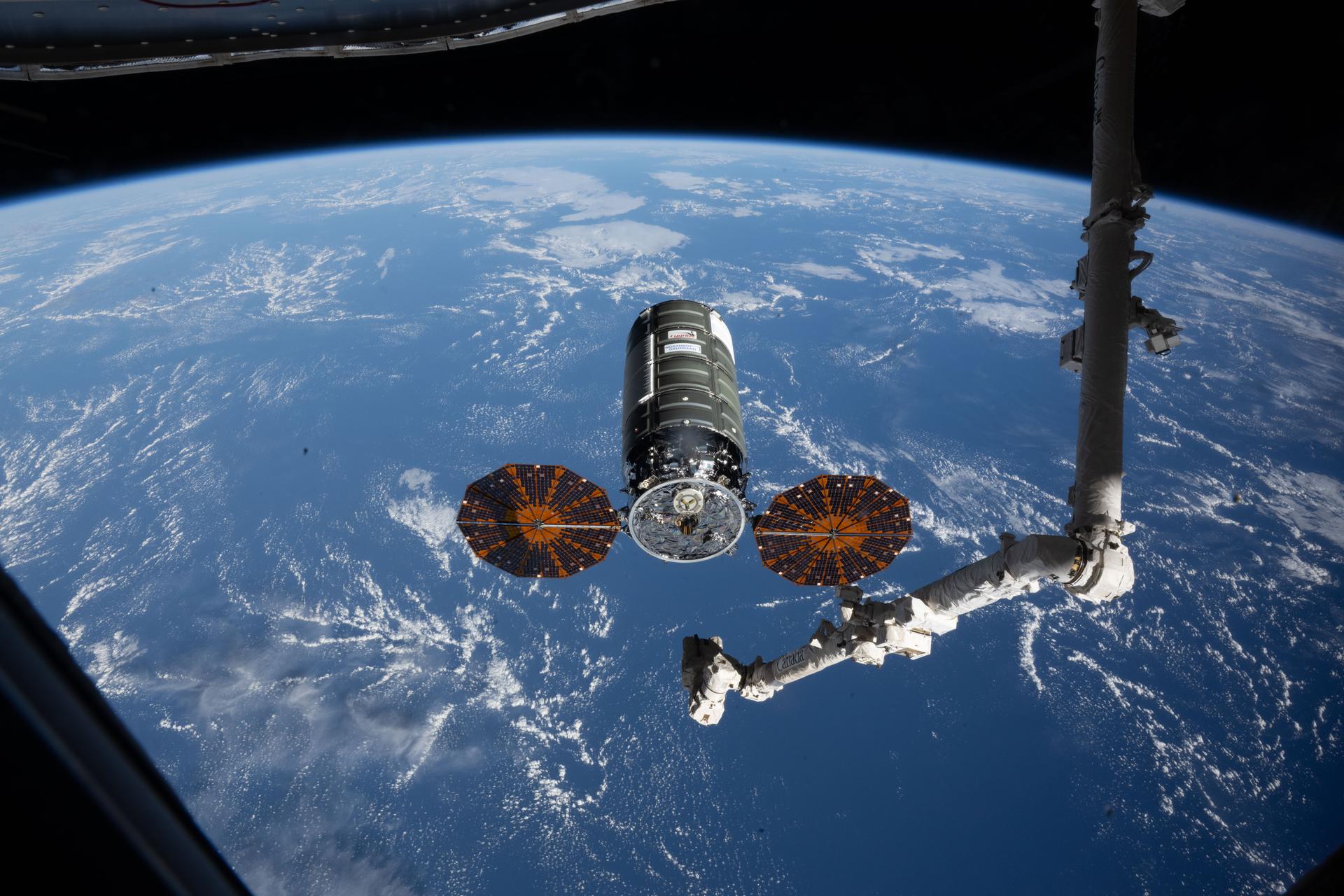
Northrop Grumman’s Cygnus XL cargo spacecraft rests at its capture point on April 13, 2026, 12 meters from the International Space Station, as the Canadarm2 robotic arm prepares to grapple the resupply ship.
Credit: NASA/Jessica Meir
After delivering more than 11,000 pounds of supplies, science experiments, and other cargo to the International Space Station for NASA, Northrop Grumman’s Cygnus XL spacecraft is scheduled to depart Friday, Oct. 9, as part of the company’s Commercial Resupply Services-24 mission, or Northrop Grumman CRS-24.
Watch NASA’s live coverage of undocking and departure beginning at 12:30 p.m. EDT through a variety of platforms. Learn where to watch online:
Flight controllers on the ground will send commands for the space station’s Canadarm2 robotic arm to detach the Cygnus XL spacecraft from the Unity module’s Earth-facing port and maneuver it into position for release at 12:45 p.m. NASA astronaut Luke Delaney will monitor the operation from aboard the orbital complex.
Loaded with thousands of pounds of disposal items and other unneeded cargo, Cygnus XL will deorbit Sunday, Oct. 11, for a destructive re-entry into Earth’s atmosphere, where it will safely burn up. NASA will not provide coverage of the spacecraft’s deorbit.
The resupply spacecraft launched on April 11 on a SpaceX Falcon 9 rocket from Space Launch Complex 40 at Cape Canaveral Space Force Station in Florida.
Learn more about this NASA commercial resupply mission at:
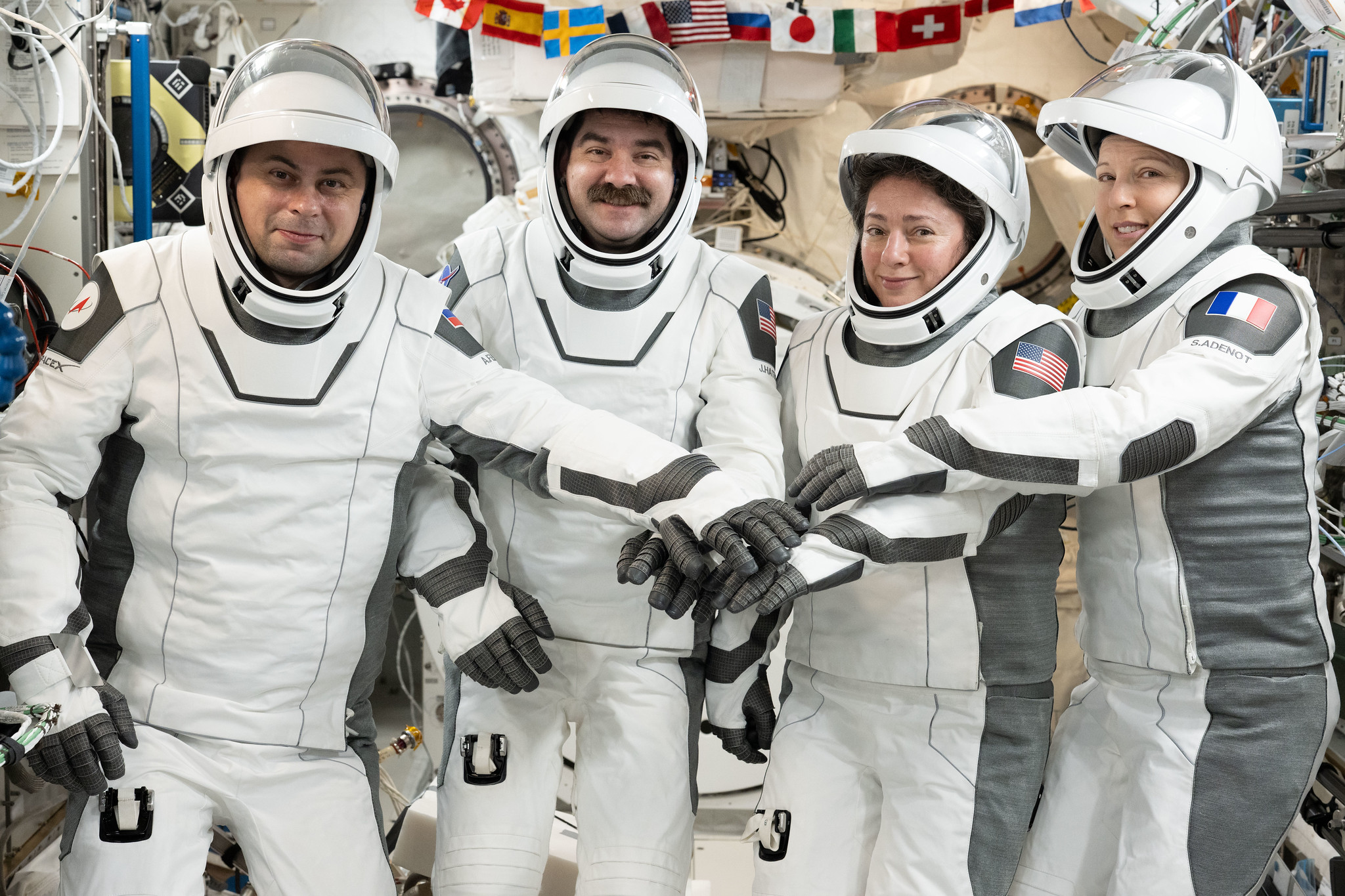
NASA’s SpaceX Crew-12 members gather for a portrait in the pressure suits they will wear when they depart the International Space Station inside the SpaceX Dragon spacecraft. From left, Roscosmos cosmonaut and mission specialist Andrey Fedyaev, NASA astronauts Jack Hathaway and Jessica Meir, Crew-12 pilot and commander respectively, and ESA (European Space Agency) astronaut and mission specialist Sophie Adenot.
Credit: NASA/Anil Menon
NASA and SpaceX are targeting no earlier than 8:05 a.m. EDT, Wednesday, Oct. 7, for the undocking of the agency’s SpaceX Crew-12 mission from the International Space Station, pending weather conditions.
An Oct. 7 undock puts NASA astronauts Jessica Meir and Jack Hathaway, ESA (European Space Agency) astronaut Sophie Adenot, and Roscosmos cosmonaut Andrey Fedyaev on schedule to splash down off the coast of California at approximately 11:34 a.m. on Thursday, Oct. 8.
NASA’s live Crew-12 return coverage will stream through a variety of platforms. Learn where to watch online:
Mission managers continue monitoring conditions in the recovery area, as undocking of the SpaceX Dragon depends on spacecraft readiness, recovery team readiness, weather conditions in the Pacific off the coast of California, and other factors.
NASA’s coverage is as follows (all times Eastern and subject to change based on real-time operations):
Wednesday, Oct. 7
6 a.m.: Hatch closure coverage begins
6:20 a.m.: Hatch closing
7:45 a.m.: Undocking coverage begins
8:05 a.m.: Undocking
Following the conclusion of undocking coverage, NASA will provide audio-only communications between Crew-12, the space station, and flight controllers during Dragon’s transit away from the orbital complex.
Bill Spetch, deputy manager of Commercial, NASA’s Low Earth Orbit Program
Dr. Liz Warren, deputy chief scientist, NASA’s Low Earth Orbit Program
Lee Echerd, senior mission manager, Customer Operations and Integration, SpaceX
Andreas Mogensen, leader, Human Exploration Group, ESA
To participate virtually in the teleconference, media must contact the NASA Johnson newsroom for call details by 12 p.m., Oct. 8, at: jsccommu@mail.nasa.gov or 281-483-5111. To ask questions, media must dial in no later than 10 minutes before the start of the call. The agency’s media credentialing policy is available online.
For more information about the Crew-12 mission, visit:
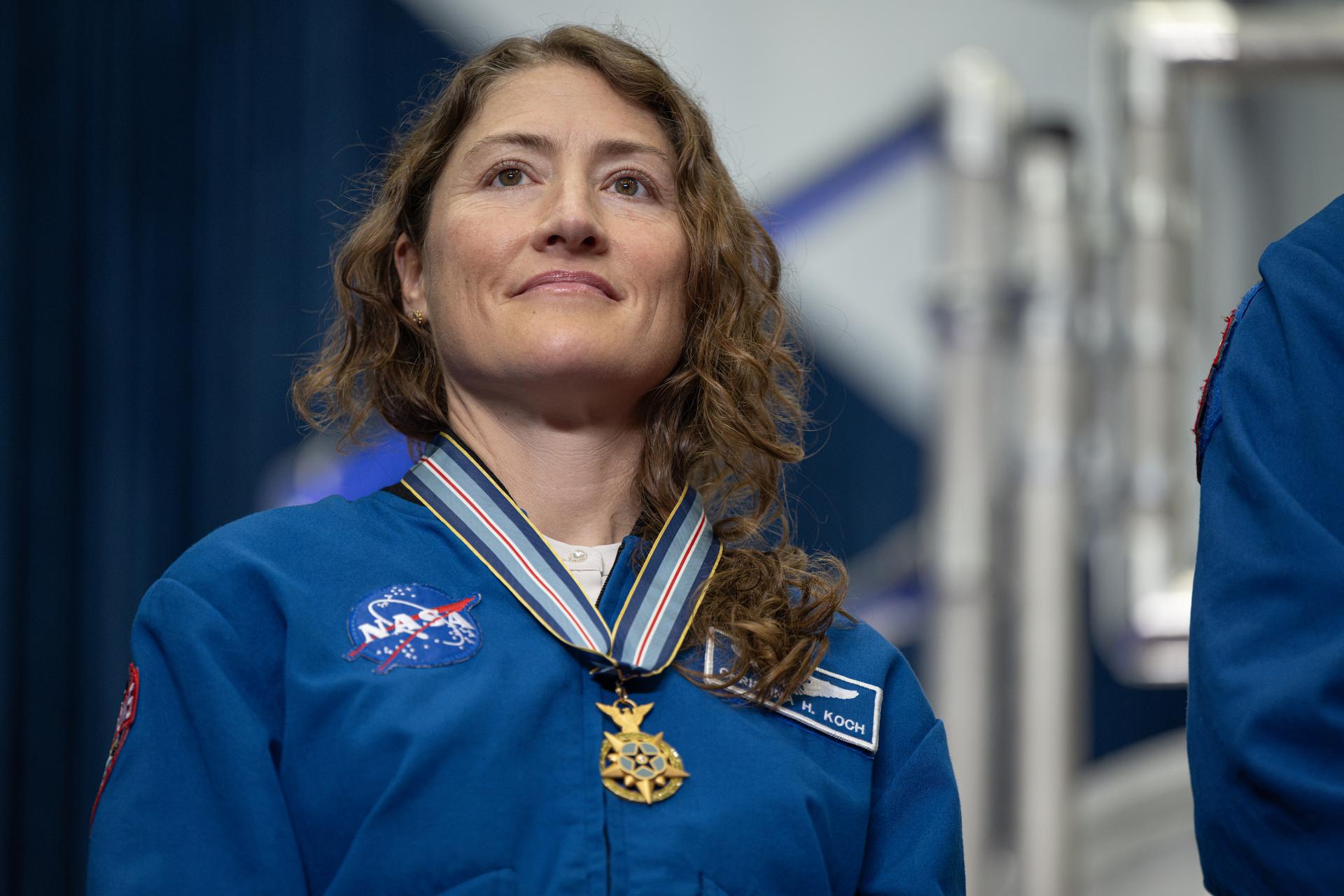
NASA astronaut Christina Koch is seen during an event to award the Congressional Space Medal of Honor to the Artemis II crew, Friday, Aug. 28, 2026, at the agency’s Johnson Space Center in Houston.
Credit: NASA/John Kraus
As part of NASA’s ongoing Inspiration Tour, NASA astronaut Christina Koch will highlight America’s strengths in space exploration and aeronautics innovation at the Philadelphia Eagles vs. Los Angeles Rams game in Philadelphia on Sunday, Oct. 4.
A self-proclaimed Philadelphia sports fan, Koch is an explorer and engineer who spent a total of 338 days in space across two missions, including serving as a mission specialist for the agency’s Artemis II mission earlier this year. On April 1, Koch launched from NASA’s Kennedy Space Center in Florida aboard the Orion spacecraft on top of the agency’s SLS (Space Launch System) rocket as part of Artemis II. Koch and her fellow crew members completed a historic lunar flyby, marking humanity’s return to the vicinity of the Moon for the first time in more than 50 years.
NASA team members will engage with fans at the agency’s Experience Zone, located outside the stadium from 10 a.m. to 1 p.m. before the game. Fans can learn more about NASA’s return to the Moon through the agency’s Artemis program, enjoy interactive games, and capture photos at a selfie station and with a large, inflatable NASA logo.
With stops across the nation, NASA’s Inspiration Tour convenes academic, industry, and public sector stakeholders to connect the agency with the people, technologies, and organizations that drive American leadership in space.
The tour will culminate in MAX POWER, a public exposition of American air and space innovation, Saturday, Nov. 7, and Sunday, Nov. 8, on and near the agency’s Kennedy Space Center in Florida. Held in honor of America’s historic 250th anniversary, the multi-day, family-friendly event will showcase the next-generation aircraft, spacecraft, autonomous vehicles, and technologies that will help define the future of transportation in air and space.
For more information about MAX POWER and the agency’s missions, visit:
Editor’s Note: This release was updated on Oct. 2, 2026, to clarify company names.
NASA selected 16 companies to provide Enterprise Logistics Support Services under new agreements that will standardize requirements, improve reporting, and streamline the management of costs and resources.
The $1.4 billion blanket purchase agreements will support equipment and property management, transportation, disposal, product support, flight hardware support operations, equipment maintenance and repair, export control, move operations, flight hardware, and other material purchases.
Under the General Services Administration’s One Acquisition Solution for Integrated Services Plus multiple-award blanket purchase agreements, NASA has the discretion to use firm-fixed-price, time-and-materials, labor-hour, or hybrid contract types.
The five-year base ordering period begins Thursday and runs through Sept. 30, 2031. It is followed by three optional one-year ordering periods and a six-month option to extend.
The companies selected are:
Akima Facilities Operations LLC
Akima Global Logistics LLC
Alutiiq Operations Services LLC
ASR International Corporation
ASRC Federal Administrative Services LLC
ASRC Federal Professional Services LLC
IAP World Services Inc.
KBR Wyle Services LLC
Leidos Inc.
LogiCore Corporation
Prime Response Inc.
S&K Applied Solutions LLC
TechTrans International Inc.
Tetra Tech Inc.
TRAX International Corporation
Yulista Support Services LLC
For more information about NASA and its programs, visit:
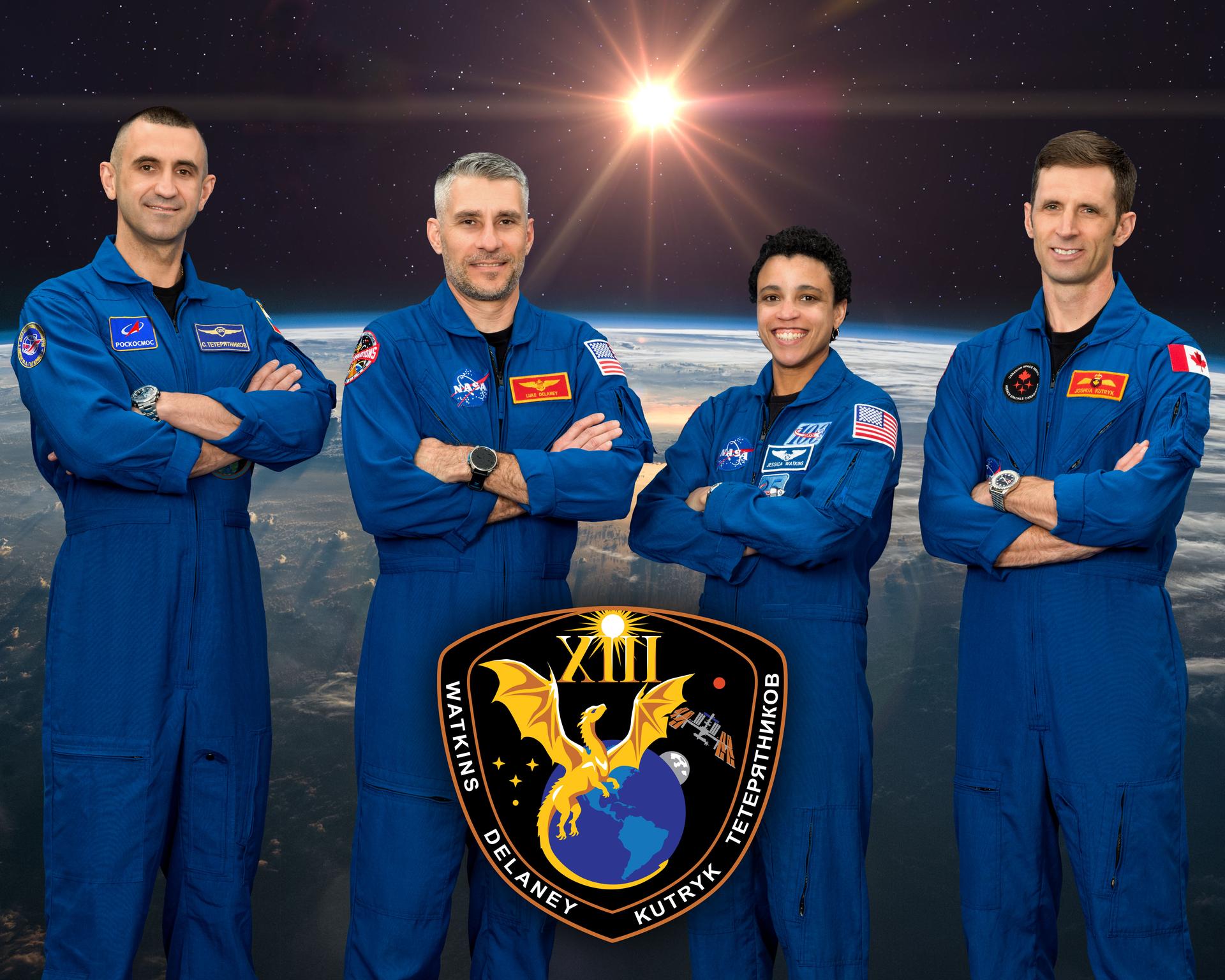
The four members of NASA’s SpaceX Crew-13 mission to the International Space Station pose together for an official crew portrait. From left are Roscosmos cosmonaut Sergey Teteryatnikov, NASA astronauts Luke Delaney and Jessica Watkins, and CSA (Canadian Space Agency) astronaut Joshua Kutryk.
Credit: NASA/Bill Stafford
Editor’s note: This advisory was updated Sept. 30, 2026 with an updated time for the prelaunch news conference.
NASA will provide live coverage of prelaunch, launch, and docking activities for the agency’s SpaceX Crew‑13 mission to the International Space Station.
Live coverage will stream through a variety of platforms. Learn where to watch online:
Crew‑13 is scheduled to launch at 11:10 a.m. EDT, Thursday, Oct. 1, from Space Launch Complex 40 at Cape Canaveral Space Force Station in Florida, with docking planned for about 7 p.m. The SpaceX Dragon spacecraft will carry NASA astronauts Jessica Watkins and Luke Delaney, CSA (Canadian Space Agency) astronaut Joshua Kutryk, and Roscosmos cosmonaut Sergey Teteryatnikov to the International Space Station for a long-duration science mission.
Any events in person are only open to previously credentialed media. Call details are available to media upon request.
NASA’s Crew-13 mission coverage is as follows (all times Eastern and subject to change based on real-time operations):
Wednesday, Sept. 30
6 p.m.: Prelaunch news conference with the following participants:
Dr. Lori Glaze, associate administrator, Human Spaceflight Mission Directorate, NASA Headquarters
Dana Weigel, manager, Low Earth Orbit Program, NASA’s Johnson Space Center in Houston
Mathieu Caron, director, Astronauts, Life Sciences, and Space Medicine, CSA
William Gerstenmaier, vice president, Build and Flight Reliability, SpaceX
Arlena Moses, launch weather officer, Cape Canaveral Space Force Station’s 45th Weather Squadron
Media may ask questions in person and via phone. Limited auditorium space will be available for in-person participation. For the dial-in number and passcode, please contact the NASA Kennedy newsroom no later than one hour prior to the beginning of the news conference at: ksc-newsroom@mail.nasa.gov.
Thursday, Oct. 1
9:20 a.m.: Launch coverage begins
11:10 a.m.: Launch
Following the conclusion of launch coverage, NASA will provide audio-only discussions between Crew-13, the space station, and flight controllers during Dragon’s transit to the orbital complex.
12:45 p.m.: Postlaunch news conference with the following participants:
NASA Administrator Jared Isaacman
Dr. Lori Glaze, associate administrator, Human Spaceflight Mission Directorate, NASA Headquarters
Dana Weigel, manager, Low Earth Orbit Program, NASA Johnson
Mathieu Caron, director, Astronauts, Life Sciences, and Space Medicine, CSA
Julianna Scheiman, director, NASA Science and Dragon Programs, SpaceX
Media may ask questions in person and via phone. Limited auditorium space will be available for in-person participation. For the dial-in number and passcode, please contact the NASA Kennedy newsroom no later than one hour prior to the beginning of the news conference at: ksc-newsroom@mail.nasa.gov.
NASA’s live Crew-13 coverage returns with rendezvous and docking streaming on a variety of platforms. The planned 7-hour, 50-minute trip from launch to docking on Oct. 1 will be the fastest by a U.S. spacecraft in space station history.
5:20 p.m.: Arrival coverage begins
7 p.m.: Targeted docking to the forward-facing port of the station’s Harmony module
8:45 p.m.: Hatch opening followed by welcome remarks
All times are estimates and could be adjusted based on real-time operations after launch. Follow the space station blog for the most up-to-date operational information.
Once aboard the station, the crew members will conduct a brief handover with the agency’s SpaceX Crew-12 mission, which is expected to begin its return to Earth no earlier than Monday, Oct. 5. NASA will share additional details on Crew-12’s return after Crew-13’s arrival.
NASA will provide a live video feed of Space Launch Complex 40 approximately six hours prior to the planned liftoff of the Crew-13 mission. Pending unlikely technical issues, the feed will be uninterrupted until the prelaunch broadcast begins on NASA+, approximately two hours prior to launch. Once the feed is live, find it online at: http://youtube.com/kscnewsroom.
Media who need access to NASA live video feeds may subscribe to the agency’s media resources distribution list to receive daily updates and links.
Audio-only coverage
Launch audio also will be available on Launch Information Service and Amateur Television System’s VHF radio frequency 146.940 MHz and KSC Amateur Radio Club’s UHF radio frequency 444.925 MHz, FM mode, heard within Brevard County on the Space Coast.
Attend launch virtually
Members of the public may register to attend this launch virtually. NASA’s virtual guest program for this mission also includes curated launch resources, notifications about related opportunities or changes, and a stamp for the NASA virtual guest passport following launch.
NASA website launch coverage
Launch day coverage of the mission will be available on the NASA website. Coverage will include live streaming at 9:10 a.m. on Oct. 1, and blog updates as the countdown milestones occur.
On-demand streaming video and photos of the launch will be available shortly after liftoff. For questions about countdown coverage, contact the NASA Kennedy newsroom at 321-867-2468. Follow countdown coverage on the commercial crew blog.
Watch, engage on social media
Follow the Crew-13 mission on X, Facebook, and Instagram by following and tagging these accounts:
NASA has delivered on its goal of safe, reliable, and cost-effective transportation to and from the International Space Station from the United States through a partnership with American private industry. This partnership is opening access to low Earth orbit and the International Space Station to more people, more science, and more commercial opportunities. For more than 25 years, people have continuously lived and worked aboard the space station, advancing scientific knowledge and demonstrating new technologies that enable us to prepare for human exploration of the Moon as we prepare for Mars.
For more information about the Crew-13 mission, visit:

 Login