Normal view

There are new articles available, click to refresh the page.
Yesterday — 22 July 2026NASA Breaking News

NASA Sets Coverage for Astronaut Chris Williams, Crewmates Return

22 July 2026 at 13:17
D4_2071158_20251127T124233_R_2025-11-27 12-42-38.NEF
The Roscosmos Soyuz MS 28 spacecraft is pictured in November 2025 shortly after docking to the International Space Station’s Rassvet module.
Credit: NASA

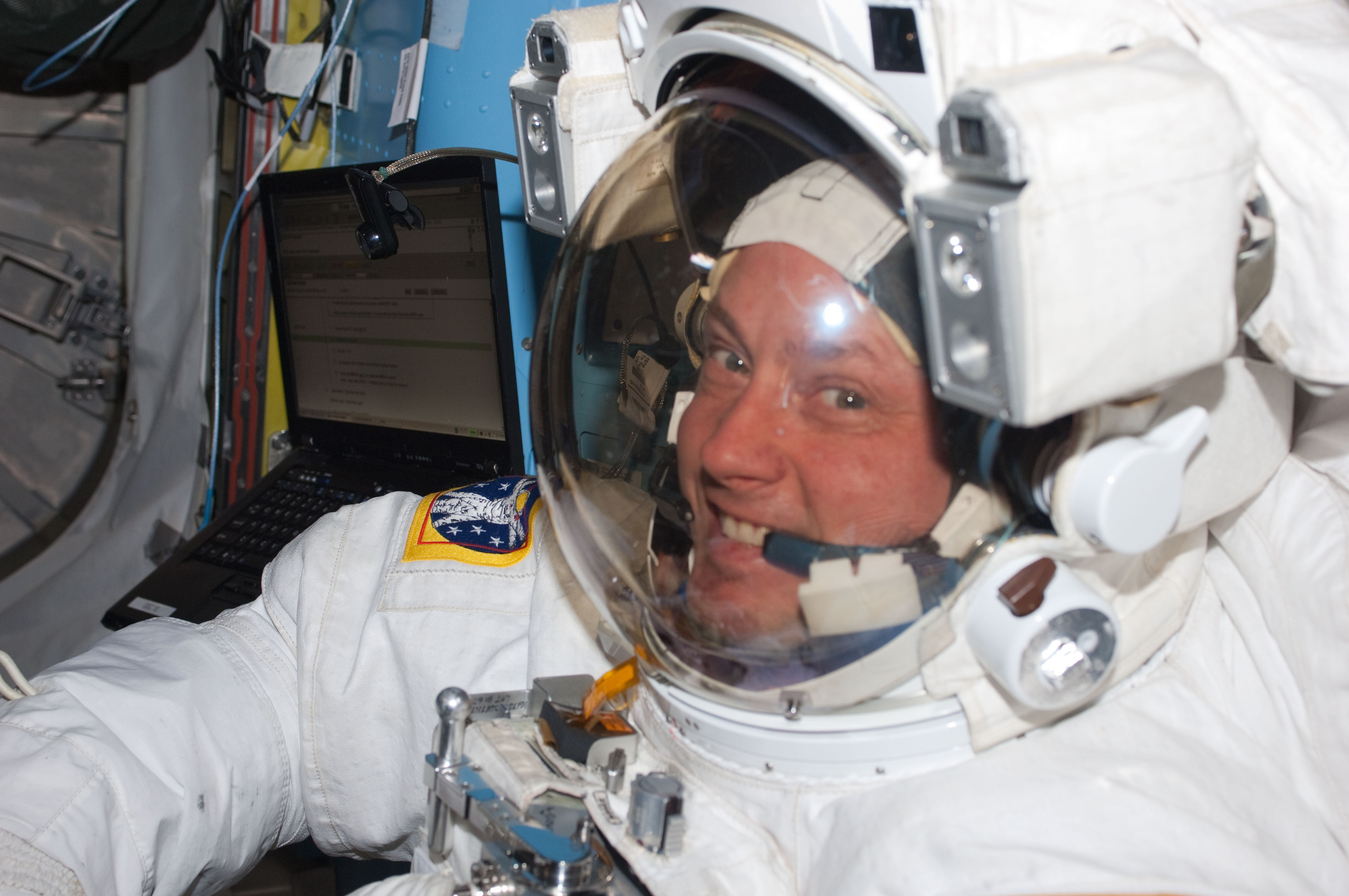
NASA astronaut Chris Williams and Roscosmos cosmonauts Sergey Kud-Sverchkov and Sergei Mikaev are wrapping up their 241‑day mission aboard the International Space Station.

The crew and its Soyuz MS-28 spacecraft will undock from the orbiting laboratory’s Rassvet module at 3:02 a.m. EDT Sunday, July 26, heading for a parachute-assisted landing at 6:26 a.m. (3:26 p.m. local time) on the steppe of Kazakhstan, southeast of Dzhezkazgan.

NASA’s live return coverage will stream through a variety of platforms. Learn where to watch online:

https://www.nasa.gov/live

Williams and his crewmates will complete 3,856 orbits and travel more than 102 million miles before returning to Earth. The flight marks the first mission for Williams and Mikaev and the second for Kud‑Sverchkov.

After landing, the crew will fly by helicopter to Karaganda, Kazakhstan, where recovery teams are based. Williams then will return to NASA’s Johnson Space Center in Houston, while Kud‑Sverchkov and Mikaev head back to their training base in Star City, Russia.

NASA’s live return coverage is as follows (all times Eastern and subject to change based on real-time operations):

Saturday, July 25

9:40 a.m. – Coverage of the Space Station Expedition 74/75 change of command ceremony begins.

Kud‑Sverchkov will transfer command of the orbital complex to NASA astronaut Jessica Meir. Expedition 75 officially begins when Soyuz MS‑28 undocks.

11:10 p.m. – Coverage of crew farewells and hatch closing begins.

11:30 p.m. – Hatch closing

Sunday, July 26

2:30 a.m. – Coverage of undocking begins.

3:02 a.m. – Undocking

5:15 a.m. – Coverage of deorbit and landing begins.

5:32 a.m. – Deorbit burn

6:26 a.m. – Landing

For more than 25 years, people have lived and worked continuously aboard the International Space Station, advancing scientific knowledge and making research breakthroughs not possible on Earth. The space station helps NASA understand and overcome the challenges of human spaceflight, expand commercial opportunities in low Earth orbit, and build on the foundation for long-duration missions to the Moon, as part of the Artemis program, and to Mars.

To learn more about International Space Station research, operations, and its crews, visit:

www.nasa.gov/station

-end-

Joshua Finch / Jimi Russell
Headquarters, Washington
202-358-1100
joshua.a.finch@nasa.gov / james.j.russell@nasa.gov

Leah Cheshier / Anna Schneider
Johnson Space Center, Houston
281-483-5111
leah.d.cheshier@nasa.gov / anna.c.schneider@nasa.gov

Before yesterdayNASA Breaking News

La NASA invita a los medios de comunicación al lanzamiento del telescopio espacial Roman

17 July 2026 at 15:27
Aquí puede verse el telescopio espacial Nancy Grace Roman de la NASA en la sala limpia del Centro de Vuelo Espacial Goddard de la agencia en Greenbelt, Maryland, donde este observatorio fue construido y sometido a pruebas. Los amplios y profundos sondeos de Roman explorarán la materia oscura, la energía oscura, los exoplanetas y prácticamente cualquier objeto celeste, desde nuestro propio sistema solar hasta galaxias situadas en los confines del universo observable.
Crédito: NASA/Jolearra Tshiteya

Read this release in English here.

Ya está abierto el plazo de acreditación de los medios de comunicación para el lanzamiento de la misión del telescopio espacial Nancy Grace Roman de la NASA.

El lanzamiento del telescopio Roman está programado para no antes de las 7:20 a.m. (hora del este) del domingo 30 de agosto, a bordo de un cohete Falcon Heavy de SpaceX, desde el Complejo de Lanzamiento 39A en el Centro Espacial Kennedy de la NASA en Florida. Este observatorio, que lleva el nombre de la primera astrónoma jefa de la NASA, ofrecerá una visión profunda y panorámica del cosmos, generando imágenes nunca antes vistas que revolucionarán nuestra comprensión del universo.

Los medios interesados en asistir al lanzamiento deben presentar su solicitud antes de los siguientes plazos:

  • Los representantes de medios de comunicación internacionales sin ciudadanía estadounidense deben presentar su solicitud antes de las 11:59 p.m. del domingo 26 de julio.
  • Los medios de comunicación de Estados Unidos y los ciudadanos estadounidenses que representen a organizaciones de medios internacionales deben presentar su solicitud antes de las 11:59 p.m. del jueves 30 de julio.•

Todas las solicitudes de acreditación deben ser enviadas en línea a través del sitio web:

https://media.ksc.nasa.gov

La política de acreditación de medios de la NASA está disponible en línea. Para consultas sobre la acreditación o para solicitudes logísticas especiales, envíe un correo electrónico a: ksc-media-accreditat@mail.nasa.gov.

Para otras consultas, comuníquese con la sala de prensa del Centro Espacial Kennedy de la NASA al teléfono: 321-867-2468.

Para obtener más información sobre esta misión, visite el sitio:

https://www.ciencia.nasa.gov/roman

-fin-

Alise Fisher / María José Viñas
Sede central de la NASA, Washington
202-385-1287
alise.m.fisher@nasa.gov / maria-jose.vinasgarcia@nasa.gov

Leejay Lockhart
Centro Espacial Kennedy, Florida
321-747-8310
leejay.lockhart@nasa.gov

Claire Andreoli
Centro de Vuelo Espacial Goddard de la NASA, Greenbelt, Maryland
301-286-1940
claire.andreoli@nasa.gov

Share

Details

Last Updated
Jul 17, 2026

Related Terms

NASA Invites Media to Roman Space Telescope, Crew-13 Launches

17 July 2026 at 14:00
Credit: NASA

Media accreditation now is open for the launch of NASA’s Nancy Grace Roman Space Telescope and the agency’s SpaceX Crew-13 missions, both targeting launch in the coming months.

The Roman telescope is slated to launch no earlier than 7:20 a.m. EDT Sunday, Aug. 30, aboard a SpaceX Falcon Heavy rocket from Launch Complex 39A at NASA’s Kennedy Space Center in Florida. The observatory, named after NASA’s first chief astronomer, will have a deep, panoramic view of the cosmos, generating never-before-seen pictures that will revolutionize our understanding of the universe.

NASA’s Nancy Grace Roman Space Telescope is seen here in the clean room at the agency’s Goddard Space Flight Center in Greenbelt, Maryland, where the observatory was built and tested. Roman’s vast, deep surveys will explore dark matter, dark energy, exoplanets, and almost anything from our own solar system to galaxies at the edge of the observable universe.
Credit: NASA/Jolearra Tshiteya

Crew-13 is scheduled to launch no earlier than mid-September from Space Launch Complex 40 at Cape Canaveral Space Force Station. The mission will carry NASA astronauts Jessica Watkins and Luke Delaney, CSA (Canadian Space Agency) astronaut Joshua Kutryk, and Roscosmos cosmonaut Sergey Teteryatnikov to the International Space Station for a science and research expedition. This will be NASA’s 13th commercial crew rotation mission with SpaceX’s Falcon 9 rocket and Dragon spacecraft.

NASA’s SpaceX Crew-13 members are pictured in their pressure suits seated inside a mockup Dragon spacecraft during a preflight training session at the company’s headquarters in Hawthorne, California. From left to right, Roscosmos Sergey Teteryatnikov, NASA astronauts Luke Delaney and Jessica Watkins, and CSA (Canadian Space Agency) astronaut Joshua Kutryk.
Credit: SpaceX

Media interested in attending either or both launches must apply by the following deadlines:

  • International media without U.S. citizenship must apply by 11:59 p.m. on Sunday, July 26.
  • U.S. media and U.S. citizens representing international media organizations must apply by 11:59 p.m. on Thursday, July 30.

All accreditation requests must be submitted online at:

https://media.ksc.nasa.gov

NASA’s media accreditation policy is online. For questions about accreditation or special logistical requests, email: ksc-media-accreditat@mail.nasa.gov.

For other questions, please contact NASA Kennedy’s newsroom at: 321-867-2468.

For more information about these missions, visit:

https://www.nasa.gov

-end-

Alise Fisher (Roman) / Joshua Finch (Crew-13)
Headquarters, Washington
202-385-1287 / 202-358-2546
alise.m.fisher@nasa.gov / joshua.a.finch@nasa.gov

Leejay Lockhart (Roman) / Steve Siceloff (Crew-13)
Kennedy Space Center, Fla.
321-747-8310 / 321-867-2468
leejay.lockhart@nasa.gov / steven.p.siceloff@nasa.gov

Claire Andreoli (Roman)
Goddard Space Flight Center, Greenbelt, Md.
301-286-1940
claire.andreoli@nasa.gov

NASA Welcomes Serbia as Newest Artemis Accords Signatory 

16 July 2026 at 18:37
Serbia’s Minister of Foreign Affairs Marko Đurić, right, shakes hands with NASA Deputy Administrator Matt Anderson, left, after signing the Artemis Accords Thursday, July 16, at NASA Headquarters in Washington.
NASA/Keegan Barber

The Republic of Serbia signed the Artemis Accords Thursday during a ceremony hosted by NASA at the agency’s Headquarters in Washington, becoming the 69th nation to join a large community of like-minded nations committed to the peaceful, transparent, and responsible exploration of space.

“Serbia’s connection to NASA reaches back to the Apollo program, when the work of Serbian engineers helped make some of humanity’s greatest achievements in space possible,” said NASA Deputy Administrator Matt Anderson. “Among them was Milojko ‘Mike’ Vučelić, who was awarded the Presidential Medal of Freedom for the critical role he played in bringing the Apollo 13 crew safely home. Their story stands as a reminder that the greatest achievements in space are made possible by talented people working together.”

The broader team of Serbian American engineers played key roles during the Apollo era across systems engineering, propulsion, power systems, spacecraft docking, electronics reliability, and mission coordination. Their expertise supported critical functions ranging from lunar landing analysis to safe spacecraft docking.

Serbia’s Minister of Foreign Affairs Marko Đurić signed the Artemis Accords on behalf of the country.

“The great beyond has always inspired humanity to achieve its greatest feats — from the Roman ‘per aspera ad astra’ to Norman Vincent Peale’s belief that if we aim for the Moon, we will at least land among the stars,” said Đurić. “Those words feel especially fitting today. We come from a nation of great minds like Nikola Tesla and Milutin Milanković, but also from the legacy of David Vujic, one of the pioneers of the Apollo missions and a member of the ‘Serbian Seven,’ a group of engineers and technicians whose contributions to NASA helped make the Moon landing possible. In that spirit, we owe it to both our brave ancestors and our children to keep pushing toward new frontiers — to explore, to inspire one another, and to dare even greater things.”

By signing the Artemis Accords, nations open the door to opportunities for future lunar exploration with NASA, such as providing science and technology payloads for the U.S.-led Moon Base and CubeSats for upcoming Artemis missions, advancing humanity’s return to the Moon, and shaping the Golden Age of space exploration and innovation.

Ambassador of the Republic of Serbia to the United States Dragan Šutanovac; State Secretary for Serbia’s Ministry of Science, Technological Development and Innovation Marija Gnjatović; and U.S. Department of State Assistant Secretary for Oceans and International Environmental and Scientific Affairs Wesley Brooks all participated in Serbia’s signing ceremony.

In 2020, NASA and the Department of State joined with seven other founding nations to establish the Artemis Accords, responding to the growing interest in lunar activities by both governments and private companies. They introduced the first set of practical principles aimed at enhancing the safety and coordination between nations as they explore the Moon, Mars, and beyond, committing nations to:

  • explore peaceably and transparently
  • render aid to those in need
  • enable access to scientific data
  • ensure activities do not interfere with those of others
  • preserve historically significant sites and artifacts by developing best practices

Five years later, President Donald J. Trump’s National Space Policy directed NASA to establish a sustained lunar outpost. With this Moon Base, NASA is putting the principles of the Artemis Accords into practice, inviting every signatory to take part in the endeavor.

More countries are expected to sign the Artemis Accords in the months and years ahead, as NASA continues its work to establish a safe, peaceful, and prosperous future in space. 

Learn more about the Artemis Accords at:

https://www.nasa.gov/artemis-accords

NASA Seeks Volunteers for New Yearlong Simulated Moon, Mars Mission

1 July 2026 at 12:15
A research volunteer uses augmented reality goggles to perform astronaut-like tasks during a simulated space mission. Participants selected for NASA’s first Moon and Mars Exploration Analog mission also will perform tasks in immersive, interactive environments while living inside habitats that simulate traveling to and living on the Moon and Mars.
Credit: NASA

NASA is recruiting research participants for the agency’s next simulated deep space mission. Beginning no earlier than August 2027, research volunteers will spend one year living and working in interplanetary environments at the agency’s Johnson Space Center in Houston, operating under isolated conditions expected during crewed missions to the Moon or Red Planet.
 
Insights from this new, yearlong experience, called the Moon and Mars Exploration Analog, can be used to help keep astronauts safe and mission-ready during future planetary surface operations. The results also could inform plans for a sustained lunar presence through the agency’s Moon Base and future Artemis missions.
 
NASA is looking for applicants for the approximately year-long mission simulation, which will take place in two confined habitats. In addition to specific physical and education requirements, volunteers must be willing to take part in a multi-day selection process and pass NASA’s physical and psychological assessments, found on the Moon and Mars Exploration Analog web page. Candidates also should have a strong desire for unique, rewarding experiences, and interest in contributing to NASA’s work to prepare for extended stays on the lunar surface and the first crewed mission to Mars.
 
The Moon and Mars Exploration Analog evolves elements of the agency’s HERA (Human Exploration Research Analog) and CHAPEA (Crew Health And Performance Exploration Analog) missions into a single, integrated mission to streamline how researchers evaluate astronaut adaptation across the full range of potential mission scenarios. Using the HERA habitat as a spacecraft and the CHAPEA habitat as a base, the volunteers will live and work in confined, isolated environments that simulate months-long flights to and from other planetary surfaces. They also will mimic surface operations, including mock Mars walks and using a rover to travel to exploration sites located beyond the main habitat.
 
Throughout the Moon and Mars Exploration Analog mission, researchers will study crew health and performance under resource limitations and mission demands. These missions also help NASA assess and validate hardware, technologies, protocols, requirements, and other systems designed to support crew health and performance on long-duration deep space missions, all without leaving Earth. The effort will provide valuable data for NASA’s Human Research Program, which innovates ways to keep astronauts healthy and mission-ready.
 
To apply, visit:

 NASA Analogs Recruiting

As part of the Golden Age of innovation and exploration, NASA will send astronauts on increasingly difficult missions to explore more of the Moon for scientific discovery, economic benefits, establish an enduring human presence on the lunar surface, and to build on the foundation for the first crewed missions to Mars.
 
For more about NASA’s Human Research Program, visit:

https://www.nasa.gov/hrp/


Share

Details

Last Updated
Jul 01, 2026

NASA Awards More Moon Base Science, Previews New Opportunities

30 June 2026 at 14:48
Three artist renderings depict commercial lunar landers from Astrobotic, Intuitive Machines, and Firefly on the Moon. NASA announced June 30 the landers will deliver more NASA science investigations and technology demonstrations to the lunar surface for NASA’s Moon Base Program.
Credit: Astrobotic/Intuitive Machines/Firefly

Editor’s note: This release was updated on June 30, 2026, to clarify the engineering development version for the PROMISE rover.

NASA announced Tuesday the selection of three companies to land four new missions on the Moon in late 2028 as part of the agency’s Moon Base Program. Astrobotic, Firefly Aerospace, and Intuitive Machines will deliver NASA science payloads to the lunar surface as the agency builds the first outpost on another celestial world.

“These new awards to our commercial partners, totaling nearly $600 million to land more missions on the Moon with science payloads, demonstrate our commitment to accelerating our effort to build a long-term presence on the lunar surface, and give us more opportunity to develop the skills we need to prosper there,” said Lori Glaze, associate administrator for the Human Spaceflight Mission Directorate at NASA Headquarters in Washington.

Astrobotic is awarded $297.9 million total for two deliveries, as well as Firefly Aerospace $144.2 million and Intuitive Machines $148.3 million for one delivery each as part of the agency’s CLPS (Commercial Lunar Payload Services) initiative, a backbone of the Moon Base. Each will use updated versions of already-flown lander designs to enable NASA’s increased mission cadence.

“We’re building a proving ground for Moon Base operations,” said Ryan Stephan, NASA’s Moon Base acting director of cargo landers. “Accelerating our Moon mission ordering cadence and launch opportunities enable us to move quickly to learn, iterate, and improve.”

With 17 lunar surface deliveries across multiple providers, NASA also announced new opportunities for American industry to contribute to the Moon Base. The agency is considering plans to send to the Moon, PROMISE (Polar Rover for Observation, Mapping, and In-Situ Exploration), a hybrid engineering development version of the Mars Perseverance and Curiosity rovers. Agency experts will define potential opportunities for PROMISE to characterize the lunar surface, subsurface, and prospect for resources.

In addition, NASA plans to solicit proposals in the coming months for lunar landers to deliver a power and avionics technology demonstration, another science manifest, and a South Pole optical imager. NASA also will share an open solicitation for Moon Base technology demonstrations and seek a lunar communication and navigation relay constellation to enable improved communication between Moon Base elements and Earth.

The awards announced June 30 will play a critical role in establishing the infrastructure for lunar surface operations. The companies are responsible for initiating and executing procurements, providing an assessment of a similar previous lunar lander, and incorporating lessons learned to improve the overall mission reliability.  

Each delivery will carry three NASA payloads to the lunar surface:

  • Stereo Camera for Lunar Plume Surface Studies (SCALPSS): An array of four cameras that uses a technique called stereo photogrammetry to produce a 3D view of the impact of an engine’s exhaust plume on lunar dust as the lander descends on the Moon’s surface. Collecting data from a variety of engine sizes, propellants, and landing locations, these high-resolution stereo images will aid in creating models to predict lunar dust erosion and ejecta characteristics, playing a vital role as bigger, heavier spacecraft and hardware are delivered to the Moon near each other.
  • Laser Retroreflector Array (LRA): Reflects laser beams transmitted by Moon orbiters or landing spacecraft to help them determine their orbit position or navigate to the surface. A small cookie-sized device made of eight quartz corner-cube prisms set into a dome-shaped aluminum frame, the array is passive, requiring no power or maintenance. These arrays have flown on previous CLPS landers and international lunar landers and will continue to be used to build a network of permanent location markers on the Moon for future exploration.
  • Linear Energy Transfer Spectrometer (LETS): Helps to better understand the radiation environment from a variety of lunar transit approaches and at different locations on the lunar surface. Derived from heritage hardware, this radiation monitor uses a tiny, advanced silicon detector to measure the energy carried by incoming space radiation. It will provide information about how strong radiation is and what kind of radiation is hitting the lunar surface, and provides the kind of detailed radiation data NASA needs to design safer missions, protect astronauts, and plan long‑duration exploration.

The agency also is reviewing options for these landers to deliver potential additional payloads to the Moon.

“By flying the same science instruments on multiple landers, we will better understand potential hazards during landing and build out a global network of environmental data and location markers on the Moon,” said Joel Kearns, deputy associate administrator for exploration, Science Mission Directorate, NASA Headquarters. “It’s akin to having weather stations in different locations on Earth. These three payloads are flight-proven and their data is critical to supporting safe human exploration of the lunar surface.”

NASA is advancing development of the Moon Base, a long-term lunar exploration and infrastructure initiative designed to enable sustained human presence and expanded scientific and commercial activity on the lunar surface.

As part of the Golden Age of innovation and exploration, NASA will send astronauts on increasingly difficult missions to explore more of the Moon for scientific discovery, economic benefits, and to build on our foundation for the first crewed missions to Mars.

For more information about NASA’s Moon Base plans, visit:

https://www.nasa.gov/moonbase

-end-

Rachel Kraft / Molly Wasser
Headquarters, Washington
202-358-1600
rachel.h.kraft@nasa.gov / molly.l.wasser@nasa.gov

Ivry Artis / Kenna Pell
Johnson Space Center, Houston
281-483-5111
ivry.w.artis@nasa.gov / kenna.m.pell@nasa.gov

💾

The Stereo Cameras for Lunar Plume-Surface Studies will help us to land larger payloads as we explore space. Olivia Tyrrell from the SCALPPS photogrammetry t...
❌
❌