I wanted a clock that, annoyingly, didn't seem to exist.
Since childhood, my bedside clocks have been a series of red, seven-segment LED clock-radio specials from Walmart or Target. They are invariably cheap, simple, and long-lived—but they require manual intervention at the start and end of Daylight Saving Time and whenever the power flickers. After a recent power flicker, as I found myself standing by the sideboard holding down "TIME" and mashing the "HOUR" button, frustration boiled over, and I thought to myself, "We're a quarter of the way through the 21st century. There has to be a better way!"
My perfect clock would be self-setting. It would offer auto-DST adjustment (or not, depending on how this bill fares!). It would manage drift and always show the exact sub-second time. It would show that time on a red seven-segment display—not blue, not green, not yellow, and absolutely not white. And I shouldn't have to install any privacy-destroying garbage apps to make it work.
Dave Brown, departing AWS executive, in 2023. (GeekWire Photo / Todd Bishop)
[Update, Friday, July 17: Brown is joining Meta, the WSJ reported. More here.]
Dave Brown, who joined Amazon Web Services as one of its earliest EC2 engineers and rose to lead its compute, AI and machine learning services, is leaving after nearly 19 years.
AWS CEO Matt Garman told employees in a memo posted publicly Wednesday that Brown will depart at the end of July for an unspecified “new role outside of the company.” Amazon exec Dave Treadwell, who joined the company in 2016 after 27 years at Microsoft, will take over the group Aug. 1.
Dave Treadwell. (Amazon Photo)
Brown’s exit comes about three months after Amazon promoted him to senior vice president. Brown had been on the company’s senior leadership team since 2023.
His tenure stretched back to the early days of the cloud. He joined AWS in 2007 in Cape Town, South Africa, where Amazon based part of its early EC2 engineering, before relocating to the Seattle area.
In an interview with GeekWire earlier this year, as the company marked the AWS 20th anniversary, Brown recalled Amazon CEO Andy Jassy, then the company’s top cloud executive, gathering the small Cape Town team in those days and telling them the business could one day be worth a billion dollars.
Brown said he could barely grasp the figure at a time when the service was bringing in tens of dollars a day: “I couldn’t even imagine how much a billion dollars was. It sounded like a lot of money.”
AWS today runs at roughly $150 billion in annualized revenue, and grew 28% in its most recent quarter — its fastest pace in nearly four years.
Brown’s role grew with the business. After starting as an engineer on EC2, or Elastic Compute Cloud, he went on to lead its broader compute organization, including close collaborations with the executives running Amazon’s custom silicon business. His purview also expanded to include the machine learning and AI services now central to AWS, such as the Bedrock and SageMaker platforms.
Treadwell has run Amazon’s eCommerce Foundation, the technical backbone of the company’s online retail operations, since joining in 2016. Before that he spent 27 years at Microsoft, where as a corporate vice president he worked on Windows, Xbox, and the .NET software framework.
In his memo, Garman described Treadwell — known internally as “Tread” — as one of AWS’s largest and most vocal internal customers, someone who pushed the cloud group to innovate and will now lead it.
Brown will remain through the end of July to help with the transition. In his own farewell note, he said it felt like the right time to begin a new chapter. “I’ll be cheering you all on from the sidelines,” he wrote.
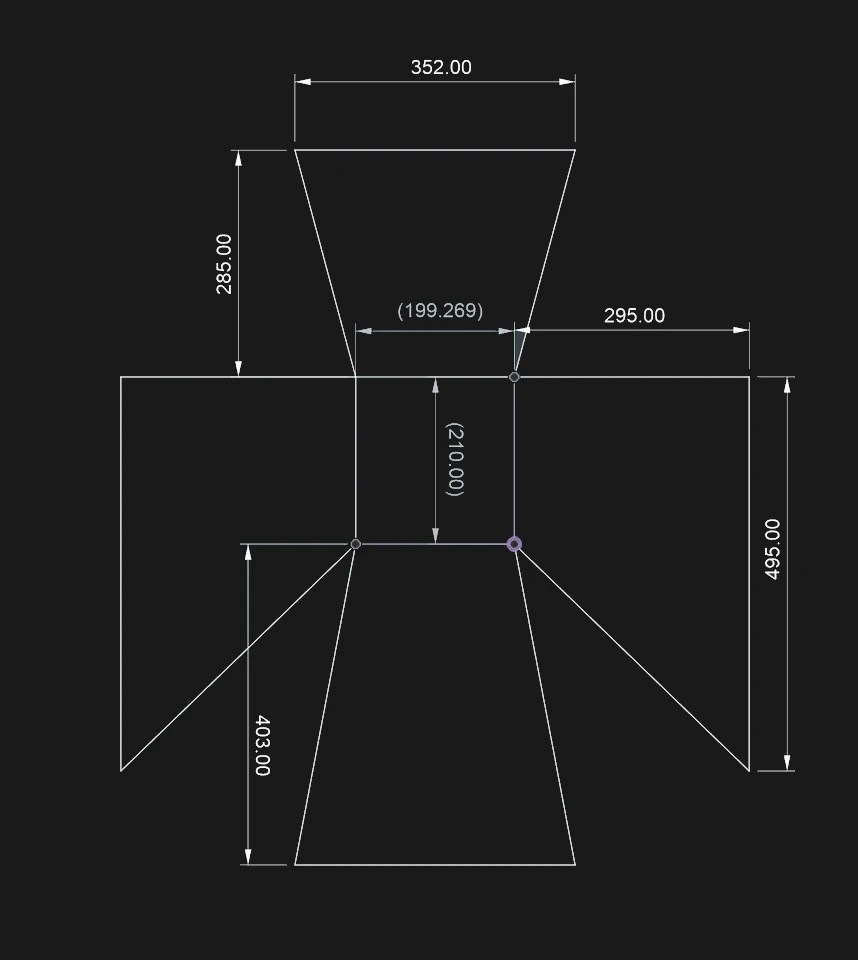
[cmh]’s ultra-simple top cover for the Snapmaker U1 3D printer has a 3D model, but don’t let that fool you. There’s no 3D printing at all involved in this project. Rather, the model is a reference shape for making an effective top cover out of cardboard or corrugated plastic sheet (also known as Coroplast) which is what [cmh] used.
The pattern can be cut from a single sheet, or from multiple pieces taped together.
Corrugated plastic is a versatile option for things like printer enclosures. It’s cheap, a good insulator, easy to cut, and available from just about any plastics supplier. We’ve made the case that they’re a good alternative to acrylic sheets for printer enclosures, but [cmh] goes even further with a design that requires no additional hardware whatsoever. Assembly doesn’t even require more than tape, really.
He provides a cutout diagram for pieces that, when assembled, make a sort of hat that is just right to cover the top of the Snapmaker U1 without obstructing the extruders. One can even lift the front panel to access the inside without removing the cover, which is a nice touch. Should one wish to add a viewing window anywhere, just cut out a square and tape a sheet of clear plastic over the hole.
For a 3D printer, an enclosure and top cover helps retain heat, block drafts, and keep dust (or curious fingers) away from the printer’s build area. The cover doesn’t need to be completely sealed to deliver those benefits, but if you do prefer your covers completely enclosed, a carefully-chosen IKEA storage box makes a conveniently great cover for the U1.
If you’re someone who travels often—whether it’s long road trips, camping weekends, RV adventures, or even daily commuting—you know the struggle: craving a fresh cup of coffee but nowhere close to a café. And brewing coffee in the car with a power bank? Not always safe… and definitely not convenient. That’s where the AMZCHEF Portable …

 Login
Login