❌

Normal view

There are new articles available, click to refresh the page.
Before yesterdayMain stream

Building a Simple Internet Radio

21 October 2026 at 11:30

Broadcast radio isn’t as popular as it once was, its popularity suffering in turn due to technologies like MP3 players and music streaming services. If you don’t fancy either of those, you might like to listen to some internet radio stations, using a rig like the one [CodersCafeTech] built.

It’s a simple desktop radio set, but instead of tuning in to AM or FM broadcast bands, it has an antenna for 2.4 GHz instead. That’s because inside this radio is an ESP32-S3 development board, which is equipped with onboard WiFi hardware that lets it connect to the internet. It’s hooked up to a 1.3-inch OLED display over I2C, which acts as a user interface in concert with a rotary encoder. Sound is handled with a MAX98357 I2S audio amplifier, hooked up to a small 3 W speaker. Once programmed appropriately, all the unit needs is a WiFi SSID and password, and the URL for the internet radio station you’d like to listen to.

We’ve featured a few internet radio builds over the years, as well as a rather fun build that saw a Macintosh SE/30 hooked up to Spotify. If you’re tinkering with something along those lines, don’t hesitate to let us know on the tipsline!
Super Mario 64 Comes to the Microsoft Zune

10 October 2026 at 01:00

As a portable media player, Microsoft’s Zune simply couldn’t compete with Apple’s juggernaut iPod β€” the latter essentially becoming the de facto personal media player until smartphones took over. But in 2026 it might be Microsoft that gets the last laugh, as thanks to [rsheldiii] the Zune can now play Super Mario 64.

The software is based on sm64ex, and notably doesn’t include the ROM file necessary to actually run the game. But presuming a legal dump of a cartridge has been done, building and loading it onto a Zune HD is straightforward enough. From there the player is presented with a controller interface on the device’s touchscreen overlaid with the video output from the game. Some interesting things are happening in the background here as well, like using NVIDIA’s Tegra tools to pre-compile shaders so the 2009-era processor can handle the rest of the gameplay.

Although it didn’t enjoy the mainstream success of the iPod, the Zune was actually a pretty solid device, and even though the last of them rolled off the assembly line back in 2012, there’s still a fairly active userbase for it. Modern improvements have added Bluetooth and solid-state drive upgrades for them have been available almost since they were first released.

With Latest Update, Alexa Refuses to Pass the Aux

By: Tom Nardi
8 October 2026 at 11:30

Although the feature has been deleted from newer models, there was a time when Amazon’s Echo devices included a 3.5 mm β€œaux” input jack that let you connect other audio sources to the smart speaker. Alexa would even let you switch over to an external source with a voice command β€” or at least, it used to.

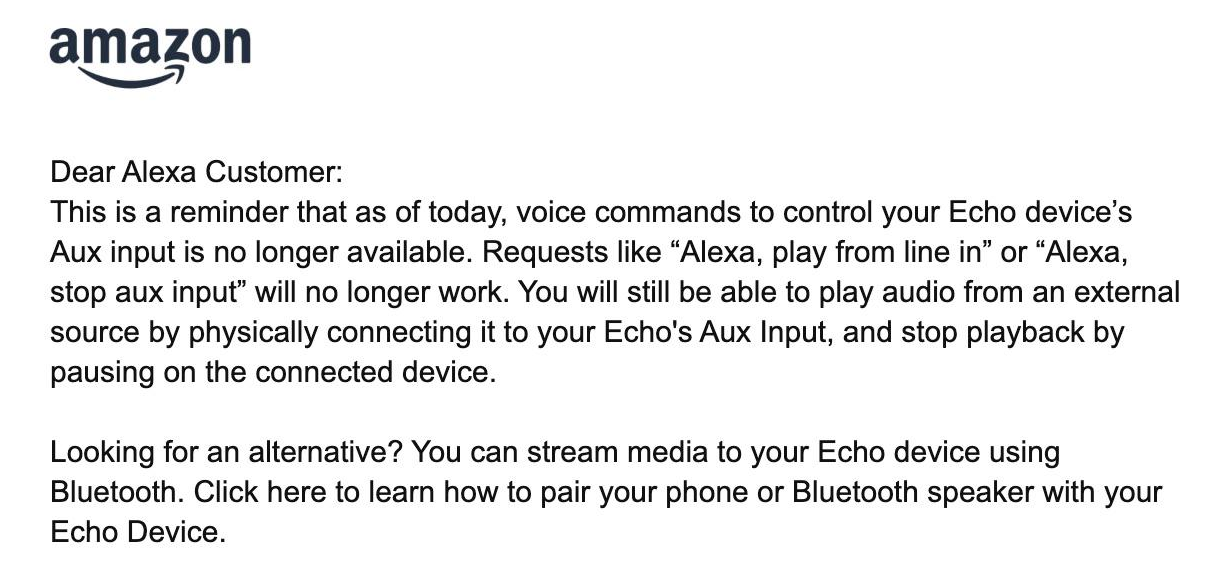
As first reported by Reddit user [n8-sd], Amazon has started informing users that voice control over the 3.5 mm jack is no longer supported. While the physical input will still function on models equipped with it, if you want to mute the audio coming from an external device you’ll have to wade through the Alexa smartphone application to do it.

In a statement to Ars Technica, an Amazon rep confirmed that voice control over the auxiliary input has been removed as of the latest software version, and that their analytics showed not many people were using the feature in the first place. They also pointed out that no changes have been made to voice control of Bluetooth devices. While we don’t doubt that the total number of users that were physically plugging an audio source into their Echos was probably low in the grand scheme of things, that doesn’t really explain why such a simple feature needed to be actively removed.

Some commenters have theorized that the real reason behind the change is the fact that Amazon has no way of monitoring what users are playing over the auxiliary input. Since cataloging and selling the media consumption habits of users is big business these days, that’s a problem. While they might prefer to disable the feature entirely, they know that would stir up some bad press, so they’re opting to simply make it more annoying to use. We’re not saying we entirely buy this explanation, but it’s not the craziest thing we’ve ever heard either.

Although the Echo devices have never been particularly hackable, they have enjoyed a certain amount of success with tech-savvy users, making it all the more disappointing to see the ecosystem seemingly becoming less capable over time.

❌
❌