โŒ

Normal view

There are new articles available, click to refresh the page.
Before yesterdayMain stream

Custom AMOLED Wearable Makes Great Icebreaker

10 September 2026 at 11:30

Nifty little AMOLED screens are easy to get nowadays, and [Sophie D] demonstrates they are both thin and light enough to be worn with OpenChoker, a design for a choker necklace that was a hit at DEF CON.

The choker consists of an AMOLED touchscreen flanked by short RGB LED strips. Behind the display is the PCB which contains an RP2350 and micro SD card slot for external storage, and at the rear of the choker is an 18650 cell to power it all. The display plays an eye-catching animation that gets generated on the fly while the LEDs sparkle away.
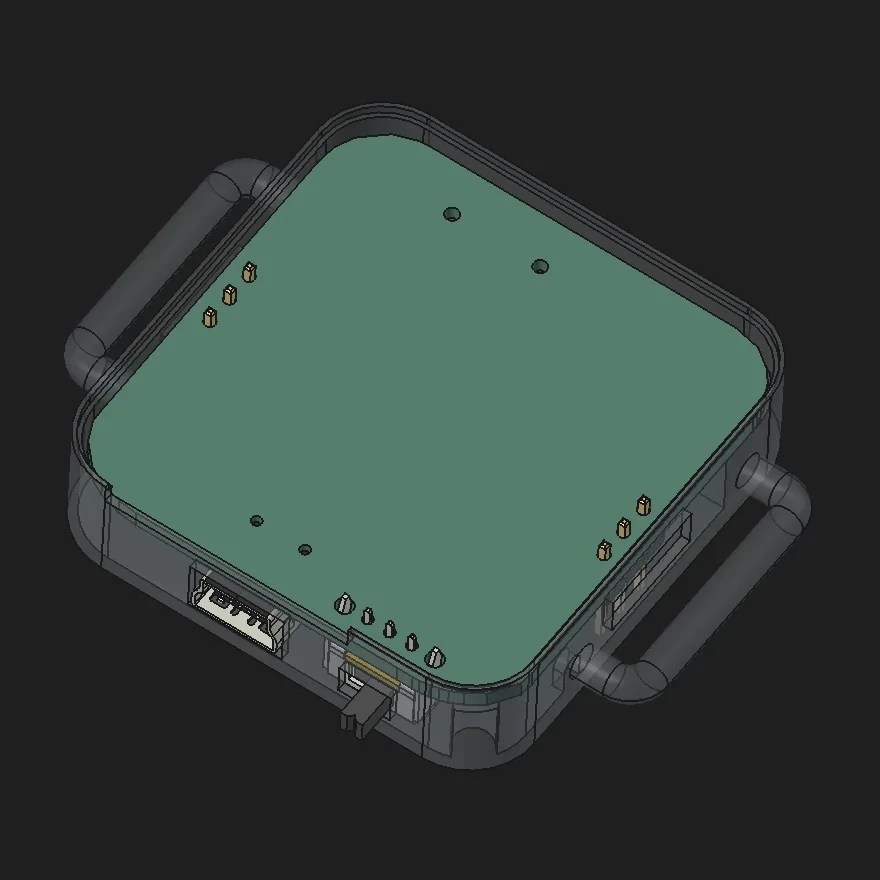
[Sophie] shares a number of interesting takeaways from designing and building this device. One is that the bulk of the PCB design work was interfacing to the display, since no existing footprint or reference design could be found. So if you find yourself with a Hello Lighting HL020E21-02 2.14โ€ณ touchscreen display youโ€™re hankering to use in your own project, do yourself a favor and check out [Sophie]โ€™s board design instead of starting from scratch.

Battery life was more than enough for a device like this. A single 18650 cell powered the choker effortlessly for a 16-hour stretch and still the cell measured a robust 3.7 V. While a light-up choker used indoors isnโ€™t a great candidate for wearable solar power, itโ€™s encouraging that thereโ€™s no need for a tethered battery pack.

Another tip to consider relates to the screenโ€™s touch sensitivity. In short, the capacitive touch screen responded perfectly when plugged into a development computer, but when mounted and isolated on the choker it responded so poorly as to be useless. It didnโ€™t keep the rest of the choker from doing its job, but it might be worth keeping in mind as something to watch out for with a device like this.

Thereโ€™s one final mystery [Sophie] ran into: with only one day to spare, glue used to affix some wires ended up melting away the wire insulation, revealing bare copper. Weโ€™re not sure what happened there, but if nothing else itโ€™s a reminder that Murphyโ€™s Law is always ready to strike when one is on a deadline.
Origami Sensors That You Can Wear

10 September 2026 at 01:00

Origami is a wonderful art form, but as a new project from the Shibaura Institute of Technology demonstrates, it can also have applications in the world of wearable tech.

The project involved creating paper-based sensors that could be worn on the body. These sensors were designed to be self-folding into helical forms, which would allow them to adapt neatly to the wearer over a wide range of body dimensions. This was achieved by using a standard inkjet printer to print patterns onto a flat piece of paper, with the printed patterns creating a self-folding behavior in the paper itself. Copper tape was then applied to the paper in order to act as an electrode for picking up triboelectric signals and measuring galvanic skin response. The idea is that these methods could be used to quickly and easily produce custom low-cost wearable sensors for a range of applications.

Weโ€™ve featured all kinds of interesting wearable hacks over the years, from power delivery via skin to shirts that will hide you from automated surveillance system. If youโ€™re working on your own fancy projects that hang, clip, or dangle from the human body, donโ€™t hesitate to let us know on the tipsline.

Wear Your Way Out Of AI Surveilance

29 August 2026 at 07:00

For decades now many of us have lived in surveillance societies where itโ€™s difficult not to be within the view of a camera. When being noticed depended on the attention span of a minimum wage security guard perhaps this mattered less, but in an age of AI, the vigilance has become always-on. To address this problem the German designer [Simon Weckert] has created a fabric designed to confuse an AI scanning an image, and cause it to not recognize the wearer as a person.

The result is perhaps best described as โ€œloudโ€, a pattern of saturated colors that targets the algorithms used in recognition. The tests he shows appear to work, but perhaps the most obvious thing from them is that he sticks out like the proverbial sore thumb to the eye wearing such aโ€ฆ vibrant garment. Also we wonder for how long it will remain effective, as algorithmic improvements seek to mitigate its attack.

This is no doubt only one salvo in what is likely to be an ongoing battle of wits. Itโ€™s certainly not the first time weโ€™ve seen things designed to confound an AI.

Straight Talk on 3D Printing Footwear At Home

25 August 2026 at 01:00

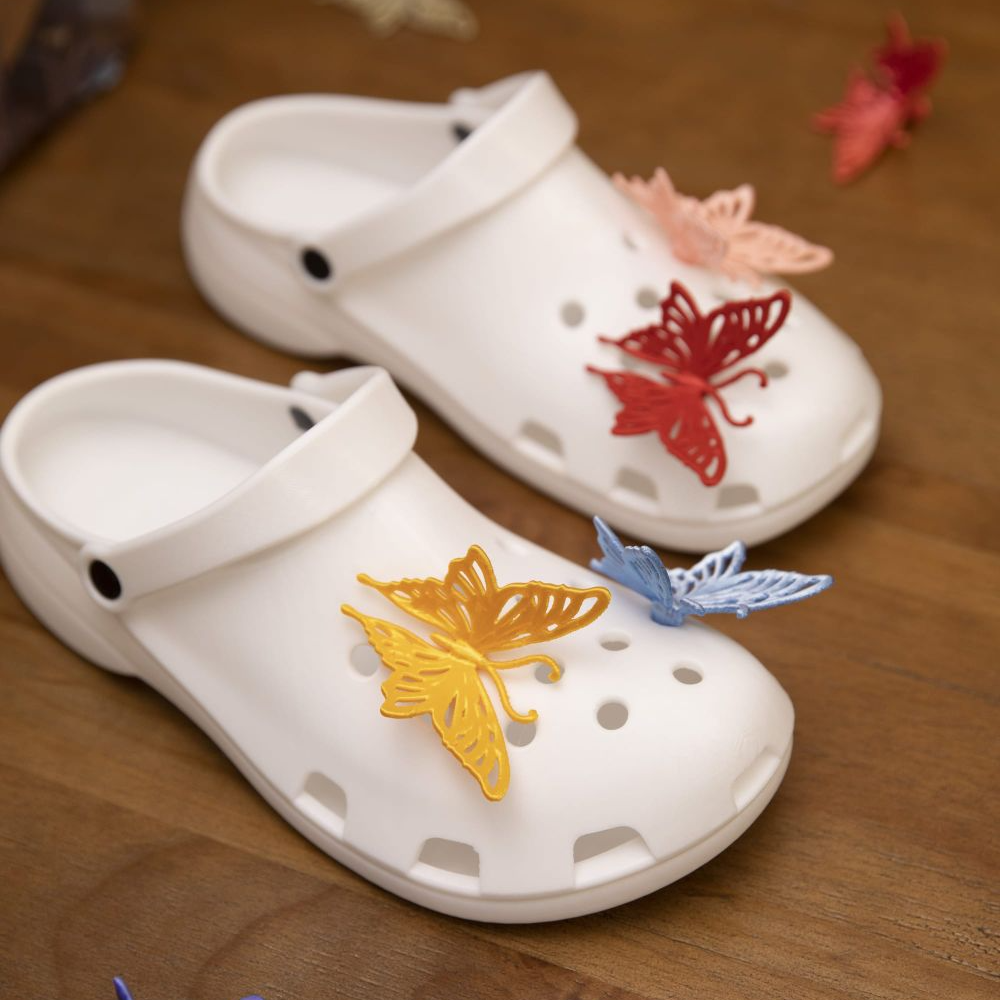
Printed footwear is an intriguing idea, but as far as projects go it is somewhat more complex than it first appears. This guide to 3D printing your own clogs not only provides a solid process, but also acts as a list of the challenges and pitfalls involved. After all, a piece of footwear is actually a fairly large object. Failed prints can be costly and time-consuming, so a guide like this is a valuable resource.

First of all, a 3D printer that can handle multi-material printing is called for. The footwear itself will be printed in TPU 90A as a sweet spot for hardness, but the print will require supports and those supports will need to peel away cleanly. The solution is a shoe printed in TPU with a rigid support structure of PLA. Using two different materials in the same print with anything remotely resembling efficiency calls for either a dual-nozzle print head, or a multi-toolhead printer.

3D printing oneโ€™s own clogs can be rewarding, if not necessarily cost-effective.

Here we want to take a moment and say that while the guide itself suggests PETG is also a suitable support structure, we suspect this might only be true for the exact filament formulations used in the guide. The safer approach is to use PLA. Why? As weโ€™ve seen in other tests, PETG has been observed to stick extremely well to flex filaments in general, whereas PLA doesnโ€™t really want to stick to anything other than PLA. The exact formulations of TPU and PETG used in the guide might be compatible with one another, but in general we recommend sticking to PLA as a rigid support for flexible filament.

Assuming a capable printer and suitable materials are nailed down, one also needs to worry about keeping the TPU dry. It is very sensitive to moisture, which directly affects print quality. Youโ€™ll also need to dial in the settings โ€” a gyroid-patterned infill of 15% provides the right amount of โ€œsquishโ€, which is most effectively fine-tuned by changing the infill pattern rather than the density.

Is it worth the time and effort and filament cost to print oneโ€™s own pair of slip-ons versus simply buying a pair of Crocsยฎ? Maybe not, but it can still be rewarding and this guide will help minimize any failed prints in the process. And if you do get a nice print but the TPU is sticking a little too well to the build plate, reach for the isopropyl alcohol.

HYDR8 Will Lead You to Water, But Will You Drink?

19 August 2026 at 19:00
An arm and a hand: on the arm is a chunky blue box, and in the hand is a phone showing a dashboard.

[Ayushmaan] states up front that most of his free time is spent โ€œbuilding things that probably didnโ€™t need to existโ€. Well, this one might be an anomaly, because it seems pretty useful to us.

HYDR8, as it says on the tin, is a wearable that knows when itโ€™s time to hydrate. The impetus for this one was something we all chase: the flow state. [Ayushmaan] would sit down, get deep into work, and look up hours later to to find that he had a headache and a full water bottle. Phone reminders were soon swiped away in annoyance.

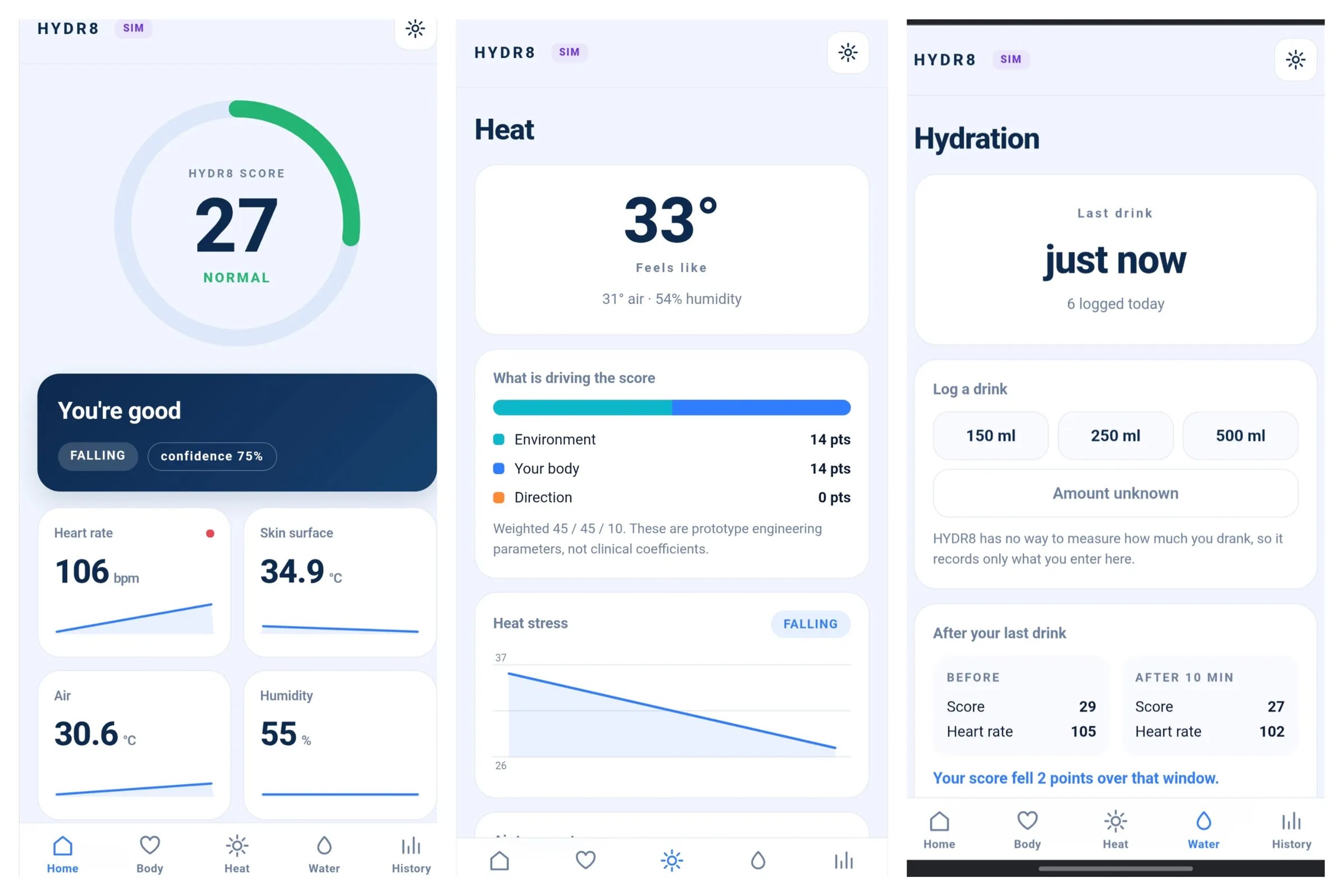
A triptych of screenshots showing the HYDR8 dashboard.This wearable is based on a XIAO ESP32-C3. It reads heart rate, oxygenation, skin temperature, and both the ambient temperature and humidity. It also learns your personal resting numbers range.

Taking all of this into consideration, it generates a heat/hydration stress score between 0-100. The thing is, HYDR8 tells you specifically what to do; sometimes itโ€™s โ€˜drink waterโ€™ and other times, itโ€™s โ€˜find shadeโ€™.

The wearable itself, while somewhat chunky, is pretty simple: it only shows the time and a message when it matters. The ESP32 hosts a full dashboard on your phone.

Keep in mind that this is not a medical device, itโ€™s an experiment, a prototype. It canโ€™t measure how hydrated you are. Instead, it measure hydration stress.

If you donโ€™t want to wear anything, hereโ€™s a smart straw that uses a tiny turbine flowmeter and a Hall effect sensor to record the volume sipped, and detect whether the sipper is low on fluids. And if you find yourself under the hot lights of a wet bulb event, hereโ€™s how to survive it.

โŒ
โŒ