Login
Login
Custom AMOLED Wearable Makes Great Icebreaker

Nifty little AMOLED screens are easy to get nowadays, and [Sophie D] demonstrates they are both thin and light enough to be worn with OpenChoker, a design for a choker necklace that was a hit at DEF CON.
The choker consists of an AMOLED touchscreen flanked by short RGB LED strips. Behind the display is the PCB which contains an RP2350 and micro SD card slot for external storage, and at the rear of the choker is an 18650 cell to power it all. The display plays an eye-catching animation that gets generated on the fly while the LEDs sparkle away.
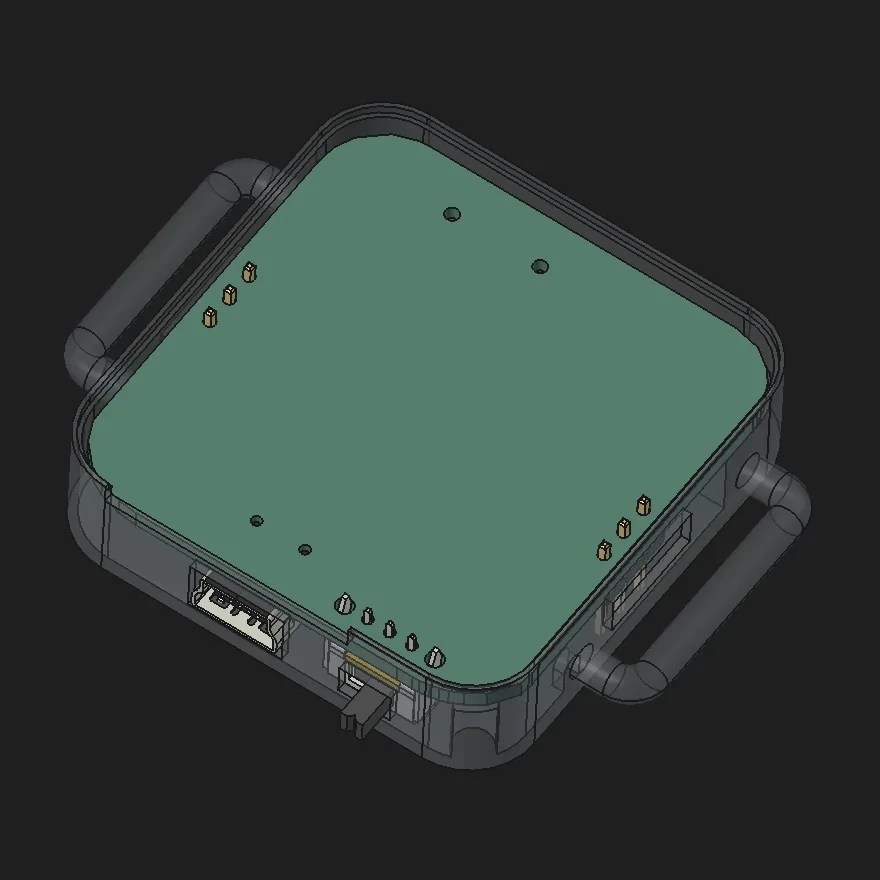
[Sophie] shares a number of interesting takeaways from designing and building this device. One is that the bulk of the PCB design work was interfacing to the display, since no existing footprint or reference design could be found. So if you find yourself with a Hello Lighting HL020E21-02 2.14″ touchscreen display you’re hankering to use in your own project, do yourself a favor and check out [Sophie]’s board design instead of starting from scratch.
Battery life was more than enough for a device like this. A single 18650 cell powered the choker effortlessly for a 16-hour stretch and still the cell measured a robust 3.7 V. While a light-up choker used indoors isn’t a great candidate for wearable solar power, it’s encouraging that there’s no need for a tethered battery pack.
Another tip to consider relates to the screen’s touch sensitivity. In short, the capacitive touch screen responded perfectly when plugged into a development computer, but when mounted and isolated on the choker it responded so poorly as to be useless. It didn’t keep the rest of the choker from doing its job, but it might be worth keeping in mind as something to watch out for with a device like this.
There’s one final mystery [Sophie] ran into: with only one day to spare, glue used to affix some wires ended up melting away the wire insulation, revealing bare copper. We’re not sure what happened there, but if nothing else it’s a reminder that Murphy’s Law is always ready to strike when one is on a deadline.