Investment bank Benchmark has raised its price target on Bitcoin miner Hut 8 following news that the company had signed a second 15-year lease worth $9.8 billion for its AI data center.
Equity research analyst Mark Palmer reiterated his “buy” rating on the Toronto- and Nasdaq-listed miner in a note Wednesday, raising its price target to $195, up from $165 — an 80% upside from Hut 8’s current share price of nearly $110 a pop.
Palmer argued that the deal validates Hut 8’s “power-first” approach to building out AI infrastructure.
Hut 8 announced Monday that it had signed a second 15-year lease for 352 megawatts of IT capacity at its Beacon Point campus in Nueces County, Texas — doubling the site’s tenant to 704 MW of contracted capacity and fully commercializing the campus against its 1,000 MW of utility capacity. Hut 8 shares climbed over 10% on the news, closing near $101 after peaking above $106.
Palmer estimates the new Beacon Point lease alone could contribute roughly $655 million a year in net operating income once stabilized, pushing the campus’s total contract value as high as $50.2 billion if renewal options are exercised.
Hut 8 is among a growing list of publicly traded Bitcoin miners pivoting toward AI and high-performance computing as mining margins get squeezed by a falling Bitcoin price and rising difficulty.
The company struck a Google-backed deal in December with Anthropic and Fluidstack to build out as much as 2.3 gigawatts of AI data center capacity in the U.S.
Hut 8’s mining ventures
Rivals including Terawulf, IREN, and Cipher Mining have signed similar multi-year HPC contracts with Google and Microsoft, while Bitfarms said last year it would wind down its mining operations entirely to focus on high-performance computing.
Hut 8, by contrast, has kept its mining business running through its majority stake in American Bitcoin, the mining venture backed by Eric Trump and Donald Trump Jr.
Hut 8 is scheduled to report second-quarter earnings on August 4.
In a July 21, 2026 blog post, Lightning Labs described Wavelength as “Bitcoin on Easy Mode for Agents and Humans.” The company stated that the Lightning Network already delivers instant, global, low-fee payments under user control, but previously required infrastructure most builders preferred not to operate. Wavelength closes that gap by turning the hard parts of Bitcoin and Lightning integration into a handful of API calls.
High-Level Overview
Wavelength embeds a self-custodial wallet that runs inside web or mobile apps (via WebAssembly or compiled binaries) or as a standalone client. Users control their own keys on-device. The system supports on-chain Bitcoin, Lightning payments via atomic swaps, and an Ark-like settlement layer for fast, low-cost off-chain transfers that can settle in batches to the blockchain. Every off-chain payment uses a standard BOLT 11 invoice, so the wallet interoperates with the existing Lightning Network from the first integration.
Lightning payments route through Loop for deep, reliable liquidity. A coordination service settles transfers between users but never takes unilateral control of funds. According to the announcement, users can always perform a unilateral exit to on-chain Bitcoin at any time via an explicit exit command, without needing cooperation, the Wavelength SDK is open source.
The same Wavelength API is exposed to AI agents as typed tool calls through the Model Context Protocol (MCP). Agents can hold balances and pay for API calls, data feeds, or other agent services in fractions of a cent. Wallet creation and unlocking designed to remain outside the agent channel so seeds and passwords are not exposed to the model. This pairs with L402, Lightning Labs’ protocol for machine-native authentication and per-request Lightning payments.
Core commands cover the full lifecycle: create/unlock, balance, recv (for addresses or invoices), send, activity, and exit. Integration options include the embedded SDK, a gRPC/REST API, browser WASM package, and an MCP server. Documentation is structured for both human developers and agents, including llms.txt indexes and agent onboarding guidance.
Availability and Roadmap
Wavelength is available immediately on Signet and testnet. Mainnet access is invitation-only; interested parties can request it after installing the toolkit. Bitcoin is supported at launch. Stablecoin support is planned via Taproot Assets so the same API surface can handle both. Future work includes deeper mobile embedding and optional direct Lightning channel support using Lnd.
Lightning Labs noted in its announcement that during the closed alpha, Lightning transactions carry a minimal 1 basis point service fee (plus standard network routing fees), with ordinary Bitcoin network fees applying for on-chain activity. Pricing may evolve.
On X, Lightning Labs summarized the release: “Announcing Wavelength, the easiest way to integrate bitcoin for agents and humans. With a simple non-custodial API, anyone can integrate Lightning into their app and get instant, high volume, low fee transactions. Machines can pay machines. Humans can pay humans. Anywhere.” A follow-up post directed builders to a form for early mainnet access.
The release positions Wavelength as infrastructure that lowers the barrier for application developers, “vibe coders,” and autonomous agents to offer self-custodial Bitcoin payments by default rather than as a specialist feature. Full documentation, quickstarts, and the open-source repository are available at wavelength.lightning.engineering and the linked GitHub project.
A newly disclosed SharkNinja vulnerability could let attackers access robot vacuum cameras, home maps, and Wi-Fi passwords through an unpatched cloud security flaw affecting millions of devices.
We’ll start this week off by giving our congratulations to Skyroot Aerospace of India for successfully launching the country’s first privately developed orbital rocket yesterday. The company’s Vikram-1 booster stands 24 m (79 ft) tall and uses a somewhat unusual four-stage arrangement, with the first three stages using solid propellant and the final liquid-fueled stage being responsible for putting the payload into a precise orbit. With this successful launch, India becomes only the third country in the world with a private company capable of performing orbital launches.
Generally, the rocket should be moving when the countdown hits zero.
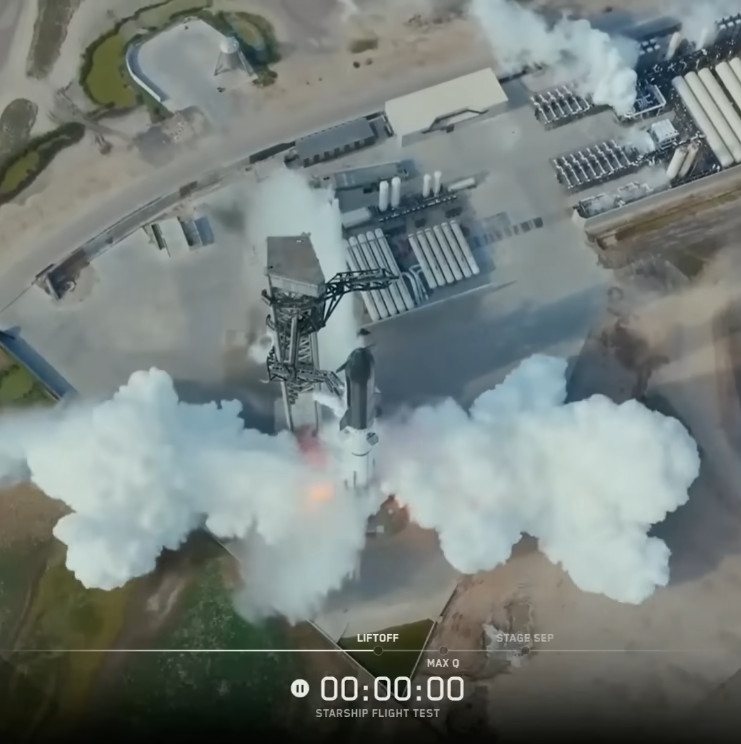
On the other end of the spectrum, we have SpaceX’s prototype Starship, which elected not to leave Earth during a last-second (literally) launch termination on Thursday. Aborted launches are, of course, nothing new in the world of rocketry, especially when dealing with an in-development vehicle that has 33 engines that need to fire up at the same moment before it can leave the pad. But this dramatic abort was unique as it was the first time lift-off of the massive 124.4 meter (408 ft) rocket had been called off when the engines were already running.
Onboard systems took advantage of the very narrow window between the time the Raptor engines are switched on and the rocket actually leaves the launchpad to decide that it was not a good day to visit space after all. Word from SpaceX is that two of the Raptor engines on the first stage will be replaced and that they should be ready to make another launch attempt sometime this upcoming week.
While getting rockets off the ground is never easy, one thing that seems to have no trouble going up is the price of gasoline. Even still, Americans seem largely uninterested in electric vehicles, or at the very least, the slate of EVs that are currently available to them — especially now that the $7,500 federal tax credit has ended. Yesterday, TechCrunch ran an article about all the EVs that have exited the US market over the last year due to stagnant sales or import difficulties, and it’s quite a list.
Some of the vehicles, like the Sony-branded Afeela, aren’t exactly surprising. But major players like Honda, Volkswagen, Nissan, and Hyundai also decided not to bring the 2026 models of various EVs in their lineup to the US. Polestar has been forced out of the market entirely due to new import restrictions on Chinese tech. Even Tesla is paring down their offerings by discontinuing their Model X and S vehicles.
Speaking of struggling sales, earlier this week, Amateur Photographer detailed a fairly dire situation over at GoPro. The company, once the undisputed market leader in rugged action cameras, looks like it might fold before the end of the year if they can’t bolster their cash reserves. GoPro’s legendary status for reliability in the most extreme of conditions is still intact, with NASA trusting the company’s cameras to return external views of the Orion capsule during its historic trip around the Moon on Artemis II. But for more mundane pursuits, consumers are increasingly reaching for cheaper alternatives.
One more piece of bad news while we’re at it: OnePlus took to their community forums on Thursday to announce they’ll no longer be selling new phones in Europe and North America. Anyone who owns a OnePlus phone in these territories will still get software support and updates through the originally marketed end date, and the warranty on the hardware itself will still be honored. But after that, they’ll have to find a new company to do business with. While the company wasn’t exactly a household name, they did offer some compelling hardware, and it’s always a shame to see fewer options on the market.
We’re pretty sure Dennis Nedry would read Hackaday if he hadn’t been eaten by a dinosaur.
In hopes it will lighten the mood a bit, we’ll leave you with this exhaustive look at the computers featured in 1993’s Jurassic Park, put together by Fabien Sanglard. It covers everything from laptops, which appeared in the background of shots, to the bank of glorious Thinking Machines CM-5 with their iconic arrays of twinkling red LEDs in the park’s control room. There’s even a section that dives into the software side of things, detailing the real-world applications as well as the more fanciful creations. As Fabien notes, the original Jurassic Park novel featured some surprisingly detailed descriptions of the computer tech used at the park, as author Michael Crichton was himself an accomplished programmer.
See something interesting that you think would be a good fit for our weekly Links column? Drop us a line; we’d love to hear about it.
It feels as if it should be illegal to even think about heating appliances during the height of summer—seriously, these heat waves in New York have been brutal—but we need to talk about heat pumps.
The appliances use electricity for heating, they’re incredibly efficient, and they’re on the rise. (For what it’s worth, many heat pumps can also be run in reverse to cool buildings.) In the US, heat pump sales have doubled over the past 15 years, according to a new report. And they’re winning the heating race against fossil fuels, outpacing natural-gas furnaces by 32% during the first quarter of 2026.
These stats are especially striking at this moment, because a key tax credit for heat pumps just ended with the close of 2025. But you wouldn’t know it from looking at the data. Why are heat pumps still so hot?
In case you need a quick refresher, heat pumps use electricity to essentially move heat from one spot to another. A refrigerant moves around a loop in the device, expanding and compressing, gathering and releasing heat at different points in the cycle. (For a more in-depth look at the thermodynamics, this explainer I wrote in 2023 still holds up.)
The result is an appliance that can be incredibly efficient. Once you pay for and install a heat pump, it’s generally significantly cheaper to run than a gas or oil furnace or other types of electric heating systems. And because they’re more efficient and don’t involve burning fossil fuels, heat pumps can be a major help in decarbonizing buildings.
One of the major hurdles to wider use of heat pumps is the appliances’ cost: They tend to be more expensive to buy and install than gas furnaces. For this reason, many governments offer incentives to encourage their adoption. In the US, people who installed heat pumps between 2023 and 2025 were eligible for up to $2,000 in tax credits.
Last year, though, the Trump administration slashed those tax credits, along with many of the other incentives that were part of the 2022 Inflation Reduction Act. Effective January 1, 2026, no more financial help for heat pumps.
I think I’ve seen this film before, and I didn’t like the ending. Tax credits of up to $7,500 for new EVs ended on September 30, 2025. In the quarter leading up to that deadline, sales spiked as people rushed to take advantage of the incentive. Then they fell off a cliff. Things are starting to normalize now, but clearly the tax credit’s sunset had a major effect.
But as it turns out, heat pumps are an entirely different story. In the first few months of 2026, sales have actually gone up, as Lucas Davis, an energy economist and UC Berkeley professor, points out in a new analysis.
Heat pump shipments were flat from December to January and have seen a gradual rise since then, according to data from the Air Conditioning, Heating, and Refrigeration Institute, a trade group that represents about 90% of the US market. This increase from winter into spring follows a seasonal trend seen in previous years—and it’s actually a bit stronger in 2026.
This data isn’t what you’d expect to see if losing the tax credit were hurting demand. As Davis lays out in his post, it seems the credit wasn’t really convincing people to install heat pumps, or at least the case for doing so was sufficient without the added incentive.
“It appears that the U.S. market for heat pumps is strong enough that it does not depend on tax credits,” Davis writes.
In 2024, MIT Technology Review put heat pumps on our annual list of breakthrough technologies. “We’ve entered the era of the heat pump,” I wrote at the time.
While heat pump sales have been up and down over the last few years, the era is going strong. The appliances have outsold gas furnaces in the US for the last four years. It’s not just the US, either. Countries including China and Germany have seen strong movement to heat pumps in recent years.
There’s rarely a straight path to adoption for new technology, especially something that requires so many individual households to make a significant change. But it’s encouraging that a major decarbonization tool is going strong, even when roadblocks pop up.
This article is from The Spark, MIT Technology Review’s weekly climate newsletter. To receive it in your inbox every Wednesday, sign up here.
Jurassic Park, while beloved as a film, has been the subject of snarky memes for the infamous line in which one of the characters declares, "This is a Unix system, I know this!" while using a computer with an unusual 3D file manager interface.
Despite the memes, the film's production team was meticulous in accurately sourcing the right PCs (and adjacent details) for the sets—not too much of a surprise, given writer Michael Crichton's background with computing and his obsessive attention to detail in the book the film is based on.
CleanSpark, the Nasdaq-listed bitcoin miner, said on July 14 that it has signed a 20-year infrastructure lease with an unnamed high-investment-grade global technology company at its campus in Sandersville, Georgia.
The deal marks the firm’s largest step from pure bitcoin mining toward high-performance computing for hyperscale clients.
The lease covers data center infrastructure that will support 175 megawatts of critical IT load. CleanSpark expects the initial term to generate $6.6 billion in contracted revenue, a figure that would climb to $11.6 billion if the tenant exercises both extension options.
The company has recently announced that it would repurpose part of its electricity capacity and mining infrastructure to power AI data centers, aiming to diversify beyond bitcoin mining.
CleanSparks’ average annual net operating income from the agreement should reach $330 million. First deliveries are due in the fourth quarter of 2027.
In a further sign of the tenant’s appetite, the two sides executed a letter of intent and an exclusivity arrangement covering CleanSpark’s entire Texas portfolio, a base of up to 885 megawatts of secured and planned power capacity. Should that convert into firm contracts, CleanSpark’s transition into an infrastructure landlord for artificial-intelligence and cloud workloads would deepen.
CleanSpark holds 13,924 bitcoin
The announcement lands as CleanSpark’s core mining business posts records. The company produced 614 bitcoin in early July and lifted its operational hashrate to 50 exahashes per second, a company high.
Treasury holdings rose to 13,924 bitcoin, one of the larger corporate stashes among public miners. Management has kept much of its mined bitcoin rather than sell into the market, a bet on the asset’s long-term price.
Wall Street has warmed to the compute pivot. Citizens began coverage with an Outperform rating and a $27 price target, citing the shift toward hyperscale compute capacity. Chardan lifted its target to $19 from $16 and kept a Buy rating. Both notes framed the Sandersville lease as proof that CleanSpark can monetize its power and land assets beyond mining, where margins swing with bitcoin’s price and network difficulty.
Investor reaction has been mixed. Shares of CleanSpark gained more than 20% in pre-market on the news but have since dropped to 9% gains on the day.
The Georgia lease offers somewhat of a hedge. Contracted rent from a creditworthy tenant provides a revenue stream that does not rise and fall with hash prices, while the company keeps its mining fleet and bitcoin treasury intact.
The next test is execution: bringing 175 megawatts online before the close of 2027 and turning the Texas letter of intent into signed leases.
Computer-generated imagery (CGI) has largely replaced physical models in major film productions these days, but the transition didn’t exactly happen overnight. For a time there was an effort to blend the physical and digital, which allowed animators on productions such as Jurassic Park to work with newer technology in a way they were familiar with. [Corridor Crew] took this concept a step further by manipulating digital models with nothing but a webcam.
Early in the production of CGI, animators found a purely digital workflow to be less intuitive than the use of physical elements such as puppets. Feeling the weight and touch of a miniature with joints and limbs made for a more natural animation, so they created the dinosaur input device to map movements of a physical model into a digital recreation.
Puppeteered humanoid input device for the film Species
Unfortunately for the future of dinosaurs made of motion sensors, none of these devices really caught on and the technology is essentially non-existent today. [Corridor Crew] decided to give the concept another chance with the application of newer motion capture research. Using just a camera and a small human miniature allowed for full animations to be made using one’s own hands. The motion capture plugin can be found here if you want to try it for yourself!
At the end of the day, the need for a stop motion intermediate was found to be unnecessary. That being said, there is some really cool tech discovered throughout its history. If you want to discover even more film tech, maybe try out an adventure making your own film camera!
MakerDAO’s Endgame transition has always been ambitious, and at times difficult to follow. The latest discussions around Spark rollout mechanics and token distribution help make the restructuring feel more concrete, especially for users trying to understand where DAI and the broader Maker ecosystem are heading.
That matters because Maker is not just another DeFi protocol. It is one of the oldest and most important stablecoin systems in crypto.
For more details, visit the official Forum platform.
The plan affects how users understand DAI, Spark, and future protocol incentives.
It shows Maker’s long-running rebrand and restructuring effort is moving closer to execution.
Why The Rebrand Is Complicated
Maker’s challenge is that it has a deeply recognized product in DAI and a complex governance structure behind it. Changing the brand, incentives, or token architecture risks confusing users even if the long-term plan is designed to improve growth.
Spark sits inside that transition as a key part of the protocol’s future strategy. The more detailed the rollout mechanics become, the easier it is for users and governance participants to judge what is actually changing.
Stablecoin Identity Matters
Stablecoins rely on trust, familiarity, and liquidity. Any shift in branding or structure has to be handled carefully because users do not want uncertainty around the asset they treat as a base unit.
That is why Maker’s Endgame process is so important. It is trying to evolve without breaking the confidence that made DAI meaningful in the first place.
What Governance Has To Solve
The key question is whether Maker can make the new structure feel simpler rather than more complicated. Token rollouts, yield products, and governance incentives can add value, but they can also overwhelm ordinary users.
For now, the SPARK discussion shows that the Endgame roadmap is becoming more operational. The execution phase is where the market will find out whether the plan can actually work.
The Part That Matters
The useful way to read this story is not as a standalone headline about MakerDAO, but as part of the wider pressure building around Stablecoins coverage this week. Markets have been jumping quickly from one catalyst to the next, so the cleaner value for readers is in separating the actual development from the instant reaction around it. In this case, the source material gives us a concrete event to work from, rather than a loose rumour or a recycled social-media talking point.
That distinction matters because crypto readers are being asked to process a lot at once: ETF flows, regulatory actions, exchange listings, protocol upgrades, wallet movements, and political signals. A story like this is most useful when it helps them understand where DAI fits into that broader map. It does not need to be inflated into a guaranteed price call to be worth covering. It simply needs to explain what changed, who is affected, and why the market is paying attention today.
The caveat is also important. Even clean source-backed developments can be overinterpreted when traders are hunting for a fast narrative. A listing does not automatically create lasting demand, a regulatory update does not immediately settle every legal question, and an on-chain movement does not always translate into a finished sale. The better read is to treat the development as a fresh data point and then watch whether follow-up activity confirms the direction of travel.
For Bitcoinist readers, that means keeping the focus on what can actually be verified from the source and avoiding the temptation to turn every update into a sweeping market verdict. The story is strong enough on its own terms: it gives investors and traders another piece of context around Stablecoins, while leaving room for the next filing, dashboard update, wallet movement, governance vote, or exchange notice to decide whether the angle grows into something bigger.
This article is based on MakerDAO governance materials.
This article was written by the News Desk and edited by Samuel Rae.
This report is based on information from Forum. at Forum
Meta's pitch to users is Spark's ability to handle large agentic workloads, fix bugs, and help with large code migrations — the kind of automation that enterprises are increasingly turning to AI companies to provide.
Auger co-founders Leigh Anne Clark and Dave Clark at the company’s Bellevue, Wash., office. (GeekWire Photo / Todd Bishop)
While investors spent much of the spring concerned that frontier AI models from companies like Anthropic and OpenAI would consume the software industry, Dave Clark was closing a funding round for exactly the kind of enterprise software those models are supposedly going to replace.
Auger, the supply chain technology startup founded in Bellevue, Wash., by the former Amazon executive, has raised $50 million in Series B funding led by Eclipse, with existing investor Oak HC/FT also participating in the new round.
The round brings total funding to $150 million for the company, which has grown to about 130 employees and counts Meta’s virtual and augmented reality division, sports merchandise giant Fanatics, and consumer products maker Kimberly-Clark among its customers.
Clark’s view is that general-purpose AI can generate insights but can’t handle deeply specialized domains like running a supply chain. Making financial and operational decisions and executing them at the scale of big companies requires systems built on strong supply chain expertise — what Auger calls its ontology, essentially a detailed map of how supply chains actually work.
“Many a pure technology company died on the hill of supply chain over the last decade,” said Clark, the company’s CEO, in an interview this week. “You really need to understand the complexity and the contextual requirements.”
Auger sits on top of a company’s existing systems — ERP, warehouse management, transportation management, and demand planning tools — and unifies the data into a single operating layer. Rather than replacing those systems, it connects them, using AI agents and traditional optimization models to make decisions and execute them automatically, as much as possible.
For example, in a recent demo at the company’s Bellevue office, Clark showed how the system would handle a supplier missing a delivery commitment when there isn’t enough product to go around. Auger identifies the shortfall, determines which customers get priority, reallocates inventory, and pushes the updated plan back to the company’s existing systems.
Most supply chain software, Clark said, generates alerts and waits for a person to act. Auger is designed to make routine decisions on its own and flag the exceptions for human review.
“We’re not really a tool,” he said. “We’re really the new employee.”
At Fanatics, the sports merchandise company, Clark said about 85% of decisions in the process Auger manages are happening autonomously, with a goal of reaching the mid-90s soon. In addition to the customers it has named so far, Clark said another eight to 10 companies are in contract negotiations or pilot programs.
Clark spent 23 years at Amazon, rising to lead the company’s worldwide operations and later its worldwide consumer business. He left in 2022 and became CEO of Flexport, the freight forwarding startup, but that tenure lasted less than a year amid a turbulent period for the company.
He launched Auger in 2024 with a team that includes Leigh Anne Clark, his wife, who serves as co-founder and president of the company’s fashion and beauty division, focused on an industry Clark describes as one of the most wasteful supply chains outside of groceries.
Clark moved back to the Seattle area from Texas to tap the region’s talent pool, and raised a $100 million Series A from Oak HC/FT. The company quickly assembled a C-suite drawn heavily from Amazon’s senior ranks, along with leaders from Johnson & Johnson, Microsoft, and Salesforce, spanning supply chain operations, AI, data science, and product development.
In March, Auger was named a premier supply chain partner on Microsoft Fabric, the tech giant’s data platform. Auger’s product is built on Azure, and Microsoft sales reps can earn commission on Auger deals. Clark said the partnership has generated engagement but is still early.
Clark said Auger went out for the Series B early, before the company needed it, to avoid the distraction of fundraising during what he expects to be a busy fall of customer onboarding.
With the investment, Eclipse partner Jiten Behl joined the Auger board, which also includes Clark, president and CFO Alex Ceballos, and Oak HC/FT’s Matt Streisfeld.
Auger hasn’t disclosed revenue or other financial metrics, but Clark said the valuation was roughly double the level set by Auger’s initial round. “We didn’t shoot for the crazy astronomical valuation,” he said. “We sat at a place that we felt really comfortable with.”
That pragmatic approach extends to how Auger operates. In Bellevue, the company works out of an office it subleased after Microsoft vacated the space. Auger kept the desks, monitors, and chairs the tech giant left behind, furnishing its new offices for next to nothing.
But Clark’s ambitions for the company are anything but modest. He said Auger’s goal is to have half of U.S. GDP flowing through its platform by 2030, with revenue exceeding $1 billion.
“That requires a pretty steep curve to get there,” he said. “We’re not playing small.”
MITS Capital, an American-Ukrainian investment group, announced on July 9 that it has invested in Dropla Tech, a Danish-Ukrainian defense technology company whose flagship system detects landmines, improvised explosive devices, and ambush drones in real time, though neither company disclosed the deal size or Dropla Tech’s current valuation. Dropla Tech’s core technology, called Blue Eyes […]
I was really looking forward to July 4, and not just because I love a poolside barbecue. This year the American holiday also marked a big symbolic deadline for US nuclear power.
Last year the Trump administration set a goal to see three new microreactors achieve criticality, a technical milestone establishing that a reactor can sustain a chain reaction, by the nation’s 250th birthday. And just in time, four reactors did so.
It was a lofty goal, and seeing not just three but four companies meet it is certainly a positive sign for emerging nuclear technologies at a time when the world is facing increased need to increase electricity supply and address climate change with emissions-free technologies.
But achieving criticality doesn’t mean a reactor is ready to provide electricity for the grid (or at all, for that matter). Let’s untangle what this program’s success could mean for nuclear power in the US, and where these companies might go from here.
The Reactor Pilot Program essentially opened a special door for prototype reactors to fast-track development. In August, the US Department of Energy selected 11 reactor projects for the program and offered them land and support from the national labs system. These are all microreactors; the large light-water reactors that dominate the grid today are tens or even hundreds of times their size.
Antares Nuclear was the first to achieve criticality, reaching the milestone in June in its Mark-0 test reactor. Reactors from Valar Atomics, Deployable Energy, and Aalo Atomics followed. (Aalo hit the mark in the early hours of July 4—an inspiring example of just barely meeting a deadline.)
The speed with which these companies hit this milestone is impressive, especially in an industry known for massive projects that frequently blow past deadlines and stated budgets. (Valar, Antares, and Aalo were all founded in 2023, and Deployable started in 2025.) But reaching criticality and running a reactor that can produce electricity are two totally different things.
All these reactors reached what’s called zero-power criticality. Basically, it’s a test of whether you can start a nuclear chain reaction, with no meaningful power coming from the reactor. “A zero-power-criticality test can be achieved without making real engineering progress on fuel or design,” Kathryn Huff, a former assistant secretary for nuclear energy and chair of the Department of Nuclear Engineering and Engineering Physics of the University of Wisconsin–Madison, said on an episode of the Catalyst podcast earlier this year.
Now, with the completion of this program, the companies will need to continue their work to make power, which could involve some big technical challenges. In some cases they’ll need to add significant equipment, like the cooling systems to transfer the heat out of the reactor core.
The companies are projecting aggressive timelines moving forward. Aalo says it’s already begun work on the second reactor and plans to produce 10 megawatts of electricity to power an on-site data center in 2027. Deployable Energy says it plans to deploy commercial reactors by 2028.
I tend to take timelines from startups, especially in nuclear, with a grain of salt. Not only are these remarkably complex technical machines, but companies often run into problems outside their own control, like regulatory challenges—which these new projects could soon face.
The Nuclear Regulatory Commission is in charge of civilian and commercial nuclear use in the US, and historically, the process to get nuclear reactors approved has been quite slow.
The agency did propose a new framework for microreactor approvals earlier this year, which is designed to speed up the process—but it’s yet to be seen how quickly things will move. (And it’s worth noting here that some nuclear experts have questioned whether the agency under the Trump administration is loosening nuclear rules too much.)
Some nuclear supporters aren’t applauding the microreactor milestone. Federal focus on the program is an “unhelpful diversion” from goals to meaningfully increase nuclear capacity, according to one analysis by Third Way, a public policy think tank. “Artificially accelerating project timelines is a short-term solution, not a long-term fix,” the memo reads.
Criticality is a big first step, but a lot will still have to happen for any of these microreactors to come online, much less for these small reactors to be a significant source of electricity for the grid.
This article is from The Spark, MIT Technology Review’s weekly climate newsletter. To receive it in your inbox every Wednesday, sign up here.
MakerDAO’s roadmap has sometimes felt like a maze of names, tokens, and governance layers. The SPARK distribution plan helps make one piece of that transition easier to see: how users and early participants may be rewarded.
The useful way to read this is not as a guaranteed price signal, but as a fresh piece of information in a market that is trying to sort real developments from noise. For MakerDAO, that is especially important because the Endgame transition touches one of DeFi’s most important stablecoin ecosystems. Clear incentives can make the move feel organized. Confusing incentives can do the opposite.
For more details, visit the official Forum platform.
TL;DR
MakerDAO outlined SPARK token distribution mechanics.
The plan gives more detail on incentives around Spark Protocol participation.
It brings the broader Endgame transition closer to concrete user-facing changes.
Why distribution details matter
Token distribution is where abstract governance design becomes personal. Users want to know who gets what, why they qualify, and whether the new structure rewards the behaviour the protocol wants to encourage.
For MakerDAO, that is especially important because the Endgame transition touches one of DeFi’s most important stablecoin ecosystems. Clear incentives can make the move feel organized. Confusing incentives can do the opposite.
The Market Read
Keep this version user/incentive focused, not just governance-process focused.
That is the balance readers need to keep in mind. Crypto markets are quick to turn every update into a single-direction trade, but most durable stories are more layered than that. They matter because they change positioning, incentives, infrastructure, or regulation over time.
What Comes Into Focus Now
From here, the important thing is follow-through. If the source data, company update, filing, or on-chain record continues to move in the same direction, this can become part of a larger trend. If it stalls, it is still useful as a snapshot of where attention is sitting today.
For traders and readers, the cleaner takeaway is to separate the confirmed development from the speculation around it. The confirmed part is what deserves coverage. The speculation is what needs caution.
For Stablecoins readers specifically, the story is useful because it gives a clearer frame for the next few sessions. It tells them what to watch, which part of the market is reacting, and where the first obvious risk sits. That is more valuable than simply saying a token, company, or regulator has made a move. The useful work is in connecting the update to liquidity, positioning, adoption, enforcement, or user behaviour without pretending that any single headline controls the whole market.
The practical question now is whether this remains an isolated update or becomes part of a chain of follow-through. A second filing, another wallet move, fresh dashboard data, a new governance vote, or a stronger market reaction can all turn a clean single-day story into a broader narrative. Without that follow-through, it still matters, but more as a marker of where attention was concentrated on July 8 than as a complete trend on its own.
That distinction is especially important in a market where headlines can travel faster than context. A source-backed update gives readers something firmer to work with, but it does not remove liquidity risk, execution risk, or the chance that traders fade the initial reaction once the first wave of attention passes.
In that sense, the headline is only the starting point. The better read is to watch how builders, exchanges, funds, wallets, regulators, or large holders respond after the first announcement has moved through the feed.
This report is based on information from forum.makerdao.com.
This article was written by the News Desk and edited by Samuel Rae.
MakerDAO’s roadmap has sometimes felt like a maze of names, tokens, and governance layers. The SPARK distribution plan helps make one piece of that transition easier to see: how users and early participants may be rewarded.
The useful way to read this is not as a guaranteed price signal, but as a fresh piece of information in a market that is trying to sort real developments from noise. For MakerDAO, that is especially important because the Endgame transition touches one of DeFi’s most important stablecoin ecosystems. Clear incentives can make the move feel organized. Confusing incentives can do the opposite.
For more details, visit the official Forum platform.
TL;DR
MakerDAO outlined SPARK token distribution mechanics.
The plan gives more detail on incentives around Spark Protocol participation.
It brings the broader Endgame transition closer to concrete user-facing changes.
Why distribution details matter
Token distribution is where abstract governance design becomes personal. Users want to know who gets what, why they qualify, and whether the new structure rewards the behaviour the protocol wants to encourage.
For MakerDAO, that is especially important because the Endgame transition touches one of DeFi’s most important stablecoin ecosystems. Clear incentives can make the move feel organized. Confusing incentives can do the opposite.
The Market Read
Keep this version user/incentive focused, not just governance-process focused.
That is the balance readers need to keep in mind. Crypto markets are quick to turn every update into a single-direction trade, but most durable stories are more layered than that. They matter because they change positioning, incentives, infrastructure, or regulation over time.
What Comes Into Focus Now
From here, the important thing is follow-through. If the source data, company update, filing, or on-chain record continues to move in the same direction, this can become part of a larger trend. If it stalls, it is still useful as a snapshot of where attention is sitting today.
For traders and readers, the cleaner takeaway is to separate the confirmed development from the speculation around it. The confirmed part is what deserves coverage. The speculation is what needs caution.
For Stablecoins readers specifically, the story is useful because it gives a clearer frame for the next few sessions. It tells them what to watch, which part of the market is reacting, and where the first obvious risk sits. That is more valuable than simply saying a token, company, or regulator has made a move. The useful work is in connecting the update to liquidity, positioning, adoption, enforcement, or user behaviour without pretending that any single headline controls the whole market.
The practical question now is whether this remains an isolated update or becomes part of a chain of follow-through. A second filing, another wallet move, fresh dashboard data, a new governance vote, or a stronger market reaction can all turn a clean single-day story into a broader narrative. Without that follow-through, it still matters, but more as a marker of where attention was concentrated on July 8 than as a complete trend on its own.
That distinction is especially important in a market where headlines can travel faster than context. A source-backed update gives readers something firmer to work with, but it does not remove liquidity risk, execution risk, or the chance that traders fade the initial reaction once the first wave of attention passes.
In that sense, the headline is only the starting point. The better read is to watch how builders, exchanges, funds, wallets, regulators, or large holders respond after the first announcement has moved through the feed.
This report is based on information from forum.makerdao.com.
This article was written by the News Desk and edited by Samuel Rae.
MakerDAO’s Endgame plan can sound abstract until the token mechanics start to appear. The SPARK rollout discussion gives the market something more concrete to evaluate: distribution, incentives, and how Spark Protocol participants may fit into the new structure.
The useful way to read this is not as a guaranteed price signal, but as a fresh piece of information in a market that is trying to sort real developments from noise. For MakerDAO, the challenge is making a complex restructuring feel coherent. DAI, Spark, governance, and future token paths all need to connect in a way that users can follow. This proposal is another attempt to make that transition legible.
For more details, visit the official Forum platform.
TL;DR
MakerDAO outlined mechanics for SPARK token rollout and distribution.
The plan gives governance participants more detail on how Spark Protocol incentives may work.
It is another step in MakerDAO’s broader Endgame transition.
Why token mechanics matter
Governance transitions succeed or fail partly on whether users understand what they are getting and why it matters. Token rollout plans are not just admin. They shape incentives, participation, and the way liquidity moves between products.
For MakerDAO, the challenge is making a complex restructuring feel coherent. DAI, Spark, governance, and future token paths all need to connect in a way that users can follow. This proposal is another attempt to make that transition legible.
The Market Read
Focus on clarity and incentives, not just token excitement.
That is the balance readers need to keep in mind. Crypto markets are quick to turn every update into a single-direction trade, but most durable stories are more layered than that. They matter because they change positioning, incentives, infrastructure, or regulation over time.
What Comes Into Focus Now
From here, the important thing is follow-through. If the source data, company update, filing, or on-chain record continues to move in the same direction, this can become part of a larger trend. If it stalls, it is still useful as a snapshot of where attention is sitting today.
For traders and readers, the cleaner takeaway is to separate the confirmed development from the speculation around it. The confirmed part is what deserves coverage. The speculation is what needs caution.
For DeFi readers specifically, the story is useful because it gives a clearer frame for the next few sessions. It tells them what to watch, which part of the market is reacting, and where the first obvious risk sits. That is more valuable than simply saying a token, company, or regulator has made a move. The useful work is in connecting the update to liquidity, positioning, adoption, enforcement, or user behaviour without pretending that any single headline controls the whole market.
The practical question now is whether this remains an isolated update or becomes part of a chain of follow-through. A second filing, another wallet move, fresh dashboard data, a new governance vote, or a stronger market reaction can all turn a clean single-day story into a broader narrative. Without that follow-through, it still matters, but more as a marker of where attention was concentrated on July 8 than as a complete trend on its own.
That distinction is especially important in a market where headlines can travel faster than context. A source-backed update gives readers something firmer to work with, but it does not remove liquidity risk, execution risk, or the chance that traders fade the initial reaction once the first wave of attention passes.
In that sense, the headline is only the starting point. The better read is to watch how builders, exchanges, funds, wallets, regulators, or large holders respond after the first announcement has moved through the feed.
This report is based on information from forum.makerdao.com.
This article was written by the News Desk and edited by Samuel Rae.
MakerDAO’s Endgame plan can sound abstract until the token mechanics start to appear. The SPARK rollout discussion gives the market something more concrete to evaluate: distribution, incentives, and how Spark Protocol participants may fit into the new structure.
The useful way to read this is not as a guaranteed price signal, but as a fresh piece of information in a market that is trying to sort real developments from noise. For MakerDAO, the challenge is making a complex restructuring feel coherent. DAI, Spark, governance, and future token paths all need to connect in a way that users can follow. This proposal is another attempt to make that transition legible.
For more details, visit the official Forum platform.
TL;DR
MakerDAO outlined mechanics for SPARK token rollout and distribution.
The plan gives governance participants more detail on how Spark Protocol incentives may work.
It is another step in MakerDAO’s broader Endgame transition.
Why token mechanics matter
Governance transitions succeed or fail partly on whether users understand what they are getting and why it matters. Token rollout plans are not just admin. They shape incentives, participation, and the way liquidity moves between products.
For MakerDAO, the challenge is making a complex restructuring feel coherent. DAI, Spark, governance, and future token paths all need to connect in a way that users can follow. This proposal is another attempt to make that transition legible.
The Market Read
Focus on clarity and incentives, not just token excitement.
That is the balance readers need to keep in mind. Crypto markets are quick to turn every update into a single-direction trade, but most durable stories are more layered than that. They matter because they change positioning, incentives, infrastructure, or regulation over time.
What Comes Into Focus Now
From here, the important thing is follow-through. If the source data, company update, filing, or on-chain record continues to move in the same direction, this can become part of a larger trend. If it stalls, it is still useful as a snapshot of where attention is sitting today.
For traders and readers, the cleaner takeaway is to separate the confirmed development from the speculation around it. The confirmed part is what deserves coverage. The speculation is what needs caution.
For DeFi readers specifically, the story is useful because it gives a clearer frame for the next few sessions. It tells them what to watch, which part of the market is reacting, and where the first obvious risk sits. That is more valuable than simply saying a token, company, or regulator has made a move. The useful work is in connecting the update to liquidity, positioning, adoption, enforcement, or user behaviour without pretending that any single headline controls the whole market.
The practical question now is whether this remains an isolated update or becomes part of a chain of follow-through. A second filing, another wallet move, fresh dashboard data, a new governance vote, or a stronger market reaction can all turn a clean single-day story into a broader narrative. Without that follow-through, it still matters, but more as a marker of where attention was concentrated on July 8 than as a complete trend on its own.
That distinction is especially important in a market where headlines can travel faster than context. A source-backed update gives readers something firmer to work with, but it does not remove liquidity risk, execution risk, or the chance that traders fade the initial reaction once the first wave of attention passes.
In that sense, the headline is only the starting point. The better read is to watch how builders, exchanges, funds, wallets, regulators, or large holders respond after the first announcement has moved through the feed.
This report is based on information from forum.makerdao.com.
This article was written by the News Desk and edited by Samuel Rae.

 Login
Login