
❌

Normal view

There are new articles available, click to refresh the page.
Yesterday β€” 27 July 2026Tech

Dopl raises $6.3M to bring remote robotic ultrasounds to rural patients as it pursues FDA clearance

27 July 2026 at 09:00
Illustration of a patient receiving an ultrasound using Dopl’s remote technology as a medical assistant looks on. (Dopl Illustration)

Dopl Technologies announced $6.3 million in new funding to support the development and commercialization of a remotely operated robotic ultrasound system. The Bothell, Wash.-based startup has now raised more than $8 million.

Dopl is pursuing FDA clearance for its platform, which pairs with off-the-shelf ultrasound probes and commercially available robots. The system facilitates communication between a remotely based ultrasound technician (or sonographer) and the robot, allowing the sonographer to conduct the exam with haptic feedback.

The platform also includes a video connection to allow conversations between the sonographer, patient and onsite healthcare personnel.

The goal, said CEO Ryan James, is to target underserved and rural communities β€œto improve access to care and the time it takes for patients to get that care.”

Ryan James, CEO and co-founder of Dopl Technologies. (Dopl Photo)

While Dopl could eventually create remote interfaces for a variety of health services, ultrasound alone has widespread applications.

β€œPeople say that ultrasound is the new stethoscope,” James said. Perhaps best known for its use in obstetric exams during pregnancy, the diagnostic tool is also employed for cardiac and vascular exams and can be used to detect stroke, cancer, heart disease and other conditions.

The startup was co-founded by James, Chief Operating Officer Steve Seslar, and Chief Medical Officer Wayne Monsky, who began researching novel care delivery methods together at the University of Washington in 2017.

The system pulls together a suite of technologies including fine-motor robotic control, haptics, computer vision, AI, and advanced networking.

The new investment allows the company to hire staff to help it navigate the FDA approval process. Dopl is conducting clinical evaluations of its platform and aims to submit an application for FDA clearance next year.

Dopl currently provides in-person ultrasounds using its technology through traveling sonographer services. FDA clearance would allow it to perform remote robotic exams and scale its platform.

The startup has a letter of intent with a rural health care collaborative that includes 31 critical access hospitals in Washington and has partnerships across the nation, including on the East Coast.

The company also expects to take advantage of opportunities through the Rural Health Transformation Program, a $50 billion federal effort that will distribute funds in every state from fiscal years 2026 to 2030. The program is targeting innovations that expand access to care.

The seed round was led by SpringTide Ventures, which was joined by WRF Capital, Tacoma Venture Fund (pre-seed round lead), HeartX, Transform Health Ventures, Precursor Ventures, and additional early-stage institutional investors.

Dopl was a finalist for startup of the year at the 2026 GeekWire Awards.

There is competition in this market, including traditional ultrasound companies and startups. A notable rival is AdEchoTech, which launched in France in 2008 and has since received FDA clearance to sell in the U.S.

James said Dopl’s haptic technology sets it apart, allowing remote technicians”to actually feel the patient as they’re scanning.”

The remote robotic care delivery industry is rapidly growing, James said, and β€œrepresents the next wave of care delivery and shift in mindset in terms of how clinicians operate.”
Before yesterdayTech

Mic Jammer Relies on Ultrasound

23 July 2026 at 14:30

Today’s phone microphones are perfectly adept at picking up sound in all sorts of conditions, and they’re backed by all kinds of processing techniques to filter out noise and capture clean audio. [mcore1976] has been working on a device to jam phone microphones that might be listening in, however, countering fancy processing techniques in turn.Β 

The build uses a microcontroller brain to control an array of ultrasonic transducers. [mcore1976] has created many revisions of the project, each time improving its ability to jam microphones in modern hardware. The latest revision uses an RP2040 microcontroller and a MOSFET drive stage to control 20-80 ultrasonic transducers. They’re driven with a PWM signal generated from the RP2040 itself. The signal output is specifically modulated to try and confuse the automatic gain control systems used in many modern phones in order to make it difficult for them to record clear audio when the jammer is running. As [mcore1976] demonstrates with an iPhone 17, his voice is completely lost amidst unintelligible garbled noise while the jammer is switched on.

It’s a niche idea, and perhaps most interesting because it affects phone microphones while being largely inaudible to the human ear. We’ve featured other interesting jamming devices of late, too. Video after the break.

Can’t Find That ISA Sound Card? No Worries!

13 July 2026 at 22:00

Many older hackers will have at some point gotten rid of an old piece of hardware that they later ended up regretting. All those ISA cards were next to useless back in 2006, but now their relative rarity plus the popularity of retrocomputing makes them sought-after. But if it’s a sound card you’re after then never fear! [Schlae] has got you covered, with the Beavis Ultrasound. It may have a name reminiscent of a ’90s cartoon series, but it’s a clone of the Gravis Ultrasound from back in the day.

There is of course a snag, to build one you need an AMD AM78C201. Assuming you’ve found one in a surplus supplier though, the rest of the card is analogue, some glue logic, and a ROM for samples. There is also a GAL for driving the IDE CD-ROM interface, from the days when sound cards came with such things.

New ISA cards are cropping up here from time to time, such as this very handy storage and network card.

Speak Silently With An Ultrasound Probe

12 July 2026 at 10:00

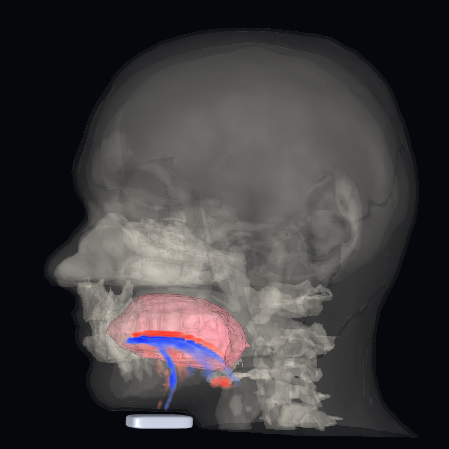
Speaking is much faster than typing, and while it’s an increasingly convenient way to interact with computers, it’s hardly private. Providing speech privacy in a way we haven’t seen before is this prototype tongue-reading system that uses machine learning and ultrasound to read tongue movements and turn them into decoded speech. Not only can a user speak without emitting a sound, since it doesn’t read sound waves it’s completely immune to noisy environments.

Tongues are a far richer source of speech data than reading lip and mouth movements.

It turns out that tongue movements are a very rich source of information about speech, and an ultrasound probe under the chin takes very clear video of a tongue. With a dataset consisting of only around 50 hours of training data, the system has a 15.6% error rate and generalizes across different speakers (as long as they speak with similar accents).

That error rate may seem high at first glance, but keep in mind this is for a prototype system built in a month around a relatively small training dataset. All indications are that better results are just a matter of better training.

Probably the biggest drawback at the moment is the size of the ultrasound probe and the way it must be held under one’s chin like a contact microphone, but at the moment the probe is an off-the-shelf model that is hardly optimized for either size, weight, or wearability. If the system seems promising enough, a probe resembling an adhesive patch might even be possible.

It’s certainly a different approach from others we’ve seen in the past, including whispering while inhaling and reading lip and mouth movements.

❌
❌