
❌

Normal view

There are new articles available, click to refresh the page.
Before yesterdayMain stream

Can’t Find That ISA Sound Card? No Worries!

13 July 2026 at 22:00

Many older hackers will have at some point gotten rid of an old piece of hardware that they later ended up regretting. All those ISA cards were next to useless back in 2006, but now their relative rarity plus the popularity of retrocomputing makes them sought-after. But if it’s a sound card you’re after then never fear! [Schlae] has got you covered, with the Beavis Ultrasound. It may have a name reminiscent of a ’90s cartoon series, but it’s a clone of the Gravis Ultrasound from back in the day.

There is of course a snag, to build one you need an AMD AM78C201. Assuming you’ve found one in a surplus supplier though, the rest of the card is analogue, some glue logic, and a ROM for samples. There is also a GAL for driving the IDE CD-ROM interface, from the days when sound cards came with such things.

New ISA cards are cropping up here from time to time, such as this very handy storage and network card.
Speak Silently With An Ultrasound Probe

12 July 2026 at 10:00

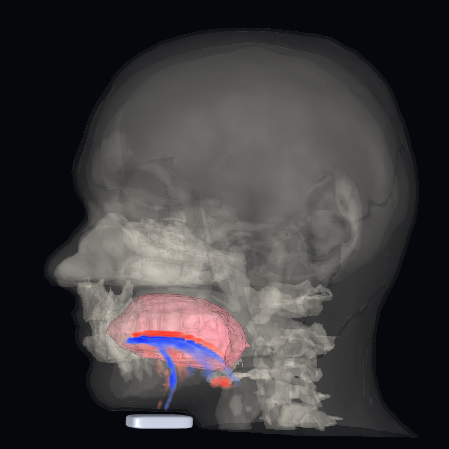
Speaking is much faster than typing, and while it’s an increasingly convenient way to interact with computers, it’s hardly private. Providing speech privacy in a way we haven’t seen before is this prototype tongue-reading system that uses machine learning and ultrasound to read tongue movements and turn them into decoded speech. Not only can a user speak without emitting a sound, since it doesn’t read sound waves it’s completely immune to noisy environments.

Tongues are a far richer source of speech data than reading lip and mouth movements.

It turns out that tongue movements are a very rich source of information about speech, and an ultrasound probe under the chin takes very clear video of a tongue. With a dataset consisting of only around 50 hours of training data, the system has a 15.6% error rate and generalizes across different speakers (as long as they speak with similar accents).

That error rate may seem high at first glance, but keep in mind this is for a prototype system built in a month around a relatively small training dataset. All indications are that better results are just a matter of better training.

Probably the biggest drawback at the moment is the size of the ultrasound probe and the way it must be held under one’s chin like a contact microphone, but at the moment the probe is an off-the-shelf model that is hardly optimized for either size, weight, or wearability. If the system seems promising enough, a probe resembling an adhesive patch might even be possible.

It’s certainly a different approach from others we’ve seen in the past, including whispering while inhaling and reading lip and mouth movements.

❌
❌