
❌

Normal view

There are new articles available, click to refresh the page.
Before yesterdayMain stream

Open Source Acoustic Drone Detection

10 September 2026 at 07:00

Drones have become a potent military threat, particularly on the small scale. Nimble multi-rotor drones are fast, difficult to spot, and can cause plenty of harm if allowed to go about their work unhindered. The first step to dealing with this issue is detectionβ€”a problem that [Agam Rossen] has put some work into.

The result is VolAntiβ€”an open-source drone detector. This route was chosen as a reliable way to detect incoming multi-rotors, since spinning propellers tend to create a telltale sound that can be plucked from the noise quite specifically. In a world where fiber optic drones eschew RF emissions, it also proves particularly useful for early warning of such craft.

VolAnti relies on a small four-microphone array, with the I2S output of all four mics summed together. The output is then fed into a 2048-point FFT running every 32 ms on an ESP32-S3. A comb score is given to try and pick out different blade rates from 70 Hz to 2000 Hz. Multiple detection algorithms run in parallel, because [Agam] noted a problemβ€”using an adaptive noise floor would miss drones that arrived in the area and hovered in place. With the noise not varying, it would get filtered out by the adaptive floor, so one algorithm in the four runs with no floor to catch drones that aren’t moving.Β Files are on GitHub for those curious to learn more.

We’ve featured other acoustic detection projects before, too. If you’re working on something similar, or conversely, you have the inside scoop on how toΒ hideΒ a drone’s noise signature, don’t hesitate to let us know on the tipsline.
Teardown Shows Low-Fi Microphone is Surprisingly Sophisticated

20 August 2026 at 07:00

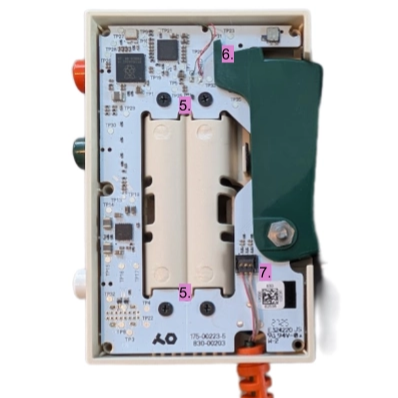
The Ting FX EP-2350 by Teenage Engineering is a standalone microphone with a few extras, including samples and built-in effect presets that can be modified by the user. It also has a distinctive design, and [Sam Holland] does an in-depth teardown that offers some insights that are worth keeping in one’s back pocket. The large, side-mounted lever in particular is an interesting bit, but more about that in a moment.

Inside the device is a single PCB, which has a cutout in the middle for a pair of AAA cells. A Raspberry Pi 2350 drives the device’s functions, supported by various components which [Sam] identifies, although he mostly looks at everything from the perspective of a mechanical engineer as he critiques the design. It’s a clean-looking, intentionally low-fi design thatΒ belies how complex the device really is.

The multi-function, chunky, spring-loaded side lever is of particular interest. It has three sensors: two switches and a potentiometer. One switch detects when the lever is at rest, or depressed by any amount at all. The potentiometer mates with the pivot point of the lever, allowing the device to directly sense how far the lever is pushed. The last switch triggers when the lever is pushed all the way in. Together, it forms an intuitive input that combines powering on (the device wakes up from sleep mode as soon as the lever is pressed) with the ability to adjust effects in proportion with how far the lever is pressed, while also bottoming out with a distinct clickΒ that itself acts as an input signal.

One other interesting bit is the light pipes that carry light from multiple indicator LEDs to the outside of the device. A textured surface acts as a diffuser and helps the lit surface look smooth, while a coating of silver paint prevents light bleed and (probably) maximizes light transmission through the plastic. Hot glue makes a pretty good light pipe material but if DIY light pipes end up in your next project, sanding the exit surface and giving the rest a coating of silver paint just might be worth a shot.

❌
❌