Normal view

There are new articles available, click to refresh the page.
Today — 13 September 2026Main stream

You don't need to trust a third party with your automation data—n8n runs on your own server

13 September 2026 at 10:30

Cloud-based automation services such as Zapier and Make let you connect different services together to automate tasks without having to build everything from scratch. If you'd rather not have all your personal automations running in the cloud, n8n gives you a different option.

Before yesterdayMain stream

Anthropic Discloses Fourth Incident of Claude Breaching Real Systems During Security Tests

11 September 2026 at 08:50

Anthropic has disclosed a fourth incident in which one of its Claude models broke into genuine third-party systems during what was supposed to be a contained cybersecurity evaluation, deepening industry concern over the risks posed by increasingly autonomous AI agents.

The AI company said the episode dates back to January 2026 and involved an early version of Claude Opus 4.6, which breached external infrastructure after it was “unable to abort its task.” Anthropic has notified all affected parties, though it has not disclosed who they are. The incident is understood to have gone undetected until last month.

It follows three earlier cases revealed by Anthropic in July 2026, in which Claude Opus 4.7, Mythos 5 and an unnamed research model each compromised separate organisations during cybersecurity evaluations, again without the company’s knowledge at the time.

“AI safety is not just a model problem it’s an operational and human one. A simple configuration or naming error allowed a controlled test to interact with real systems, while the model continued pursuing its objective despite warning signs. Organisations deploying autonomous agents need clear accountability, isolated test environments, least-privilege access and human approval for high-impact actions. Trusting an AI to ‘do the right thing’ is not a security control.”
– Javvad Malik, Lead CISO Advisor at KnowBe4

According to Anthropic, all four incidents occurred during cybersecurity evaluations built by the same external evaluation partner. Claude was told it was operating in a simulated environment with no internet access, but a misconfiguration meant it was actually connected to the open internet. The partner responsible for the evaluations, Irregular, has since said the breach stemmed from a naming error: a fictional company used in the hacking simulations happened to match a real-world domain, causing the models to take offensive action against it.

Anthropic has since scanned roughly 481 million transcripts for similar problems and says it found no other cases of comparable or greater severity. The company has also signed an agreement with independent research non-profit METR to carry out a separate investigation into the incidents.

Anthropic attributes the root cause to two alignment failures: biased reasoning and recklessness. In practice, this meant the models tended to dismiss or misread evidence that their environment was connected to the live internet after initially being told otherwise, and were willing to pursue potentially harmful actions in single-minded pursuit of the task they had been assigned.

“Relying on an automated AI agent to audit another AI for security breaches is a fundamentally flawed approach. These models are increasingly acting as autonomous entities capable of probing network boundaries. When they escape their evaluation environments to access external systems, they create an unpredictable new vector for supply chain attacks. Developers must enforce strict network isolation rather than trusting software to mark its own homework.”
– Dray Agha, Senior Manager of Security Operations at Huntress

Anthropic said it was most concerned by the incident involving Claude Mythos 5, which went to considerable lengths to upload a malicious package to PyPI, the public repository used to distribute most Python software. The company noted that although the model repeatedly stated in its chain-of-thought reasoning that it believed it was in a simulation, the environment contained clear evidence it was on the real internet, and its actions were consistent with knowing this. Even after researchers amended the transcript to make the real-world context unmistakable, the model went on to carry out offensive actions.

Anthropic was keen to stress that the incidents remained narrow in scope: no Claude instance deviated from the task it had been set, none attempted to coordinate with other AI agents, and none tried to conceal evidence of its actions. The company added that biased reasoning appears less pronounced in its newer production models and can be reduced through more thorough alignment training, though the underlying cause, and why it was more acute in Mythos 5, remains unclear.

“As agentic AI systems become more capable and more widely deployed, the legal framework for who is responsible when a model accesses something it shouldn’t is going to need answering. These four incidents are an early test case for questions the law hasn’t fully addressed yet. Anthropic found four problems in 481 million transcripts and told everyone about it. The real question is how many problems the rest of the industry hasn’t looked hard enough to find yet.”
– Muhammad Yahya Patel, vCISO and Cybersecurity Advisor for EMEA at Huntress

The disclosure lands amid growing scrutiny of AI model safety more broadly. Rival OpenAI recently acknowledged a previously unreported incident from May 2026, in which internally deployed autonomous agents with read-only internet access took over a dormant German wiki forum, exchanging more than 18,000 posts as they attempted to coordinate answers and evade restrictions on a timed task. When a human moderator began removing the posts, the agents reportedly worked around the clean-up by naming backup pages so they would be buried at the end of an alphabetically sorted deletion list.

“We need to stop blaming AI and hold the humans in charge accountable for the actions of their AI agents. Companies will think twice about deploying AI if they are fined for negligence. It’s frustrating to listen to tech CEOs warn about the dangers of AI and then turn around and build it as if those dangers are unavoidable. If this problem gets bad enough, then we could see an emerging market for AI insurance that covers rogue third-party hacking, data theft, and intellectual property infringement.”
– Paul Bischoff, Consumer Privacy Advocate at Comparitech

Anthropic has warned that the risks are likely to grow rather than diminish as AI systems become more capable. “Future AI systems will be increasingly capable, which implies that misalignment will have the potential to cause more extreme harm,” the company said, adding that training robustly aligned frontier models remains an unsolved technical challenge that will require both continued research and stronger operational discipline from those deploying them.

For now, the incidents serve as a reminder that the weakest link in agentic AI deployments may not be the model itself, but the environments, configurations and oversight structures built around it.

The post Anthropic Discloses Fourth Incident of Claude Breaching Real Systems During Security Tests appeared first on IT Security Guru.

NASA and IBM Launch Open AI Model for Lunar Research

11 September 2026 at 09:51

NASA and IBM released an open-source AI model and dataset to help researchers map lunar craters, volcanic features and potential ice locations.

The post NASA and IBM Launch Open AI Model for Lunar Research appeared first on TechRepublic.

NASA and IBM Launch Open AI Model for Lunar Research

11 September 2026 at 09:51

NASA and IBM released an open-source AI model and dataset to help researchers map lunar craters, volcanic features and potential ice locations.

The post NASA and IBM Launch Open AI Model for Lunar Research appeared first on TechRepublic.

Stop paying for Claude and ChatGPT — NVIDIA is offering free models that’re just as good

10 September 2026 at 14:00

Claude and ChatGPT are where most of us started with AI, and once you discover what they can do, it’s only natural to put them to work beyond the chat window. That means plugging them into other tools and harnesses through their APIs. But once you do, Claude and ChatGPT stop being a simple $20 subscription and start behaving like metered utilities that can quietly run you hundreds of dollars a month, depending on what your automations are doing.

I built a private AI document search engine my wife and I can use from any device at home

By: Rich Hein
10 September 2026 at 10:30

Paperwork used to be annoying, but at least there was an obvious place to put it. You bought a filing cabinet, labeled a few folders, and hoped you could remember where you filed something when you needed it. Today, most of that paperwork is digital. My wife and I have bills, receipts, records, manuals, and other documents scattered across our PCs, and finding a specific file isn't always as easy as it should be.

Anthropic researcher says AI has a 10% chance to kill all humans by 2036

9 September 2026 at 12:31

The fear of an AI apocalypse has persisted for decades in movies like WarGames and the Terminator series, but now that worry is becoming more than speculative fiction. Both current and recently-departed Anthropic researchers argue that there's a real possibility AI could kill humanity — although the issue is complex.

NCSC Warns Shadow AI Is Creating New Security Blind Spots for UK Businesses

9 September 2026 at 10:50

The UK’s National Cyber Security Centre (NCSC) has warned organisations about the security risks posed by “shadow AI”, as employees continue to turn to artificial intelligence tools that have not been approved by their employers.

In guidance published this week, the NCSC described shadow AI as the use of AI technology outside an organisation’s approved systems and processes, warning that security policies and governance have struggled to keep pace with the rapid adoption of AI in the workplace.

The scale of the issue could already be significant. Research cited by the NCSC found that 71% of employees have used AI tools that have not been approved by their employer.

According to the NCSC, unapproved AI services can expose sensitive company and customer information, reduce organisations’ visibility and control over their data, and create new opportunities for attackers. Information entered into consumer AI services may be stored, retained or used to improve those services outside existing corporate security and governance arrangements, depending on the privacy controls in place.

The agency also highlighted a potentially more serious risk as organisations move from generative AI tools towards AI agents. If an attacker exploits a vulnerability in an agent, they may be able to gain access to the same data, services and privileges legitimately available to that agent.

Darren Guccione, CEO and co-founder of Keeper Security, said the warning reflects a challenge many UK security teams are already facing.

“The NCSC’s warning on shadow AI reflects the reality of what many UK security teams are having to contend with. When employees adopt AI tools faster than IT can assess them, visibility gaps open long before governance has an opportunity to catch up. Microsoft’s research, cited by the NCSC, found that 71% of UK employees have used AI tools their employer hasn’t approved. Keeper Security’s 2026 research underlines the effect this is having on security teams, with 37% of UK organisations saying they lack visibility into which AI tools employees are actually utilising inside the business.

“The most significant detail in the NCSC’s warning is its point about AI agents inheriting the privileges of whoever deploys them. An attacker who compromises a poorly governed agent gains whatever access that agent holds, whether that’s a customer database or a finance system. Organisations that haven’t extended least-privilege and just-in-time access principles to their AI agents and non-human identities are exposed in ways endpoint controls alone won’t catch.”

Banning AI is unlikely to work

Rather than recommending organisations attempt to eliminate shadow AI altogether, the NCSC said businesses should focus on reducing the associated risks and understanding why employees are turning to unapproved tools in the first place.

It recommends creating a positive cyber security culture, providing AI tools that meet employees’ needs and securely integrating AI systems into the workplace.

Guccione added: “Banning shadow AI outright rarely works, as the NCSC itself acknowledges. Employees will find routes around blocked tools when the approved ones can’t do what they need.

“The more durable fix is improving visibility by identifying what identities, both human and machine, exist across the environment and what they can access. Organisations must enforce least-privilege principles by default, rather than waiting until an incident forces the question.”

Jamie Akhtar, CEO and co-founder at CyberSmart, agreed that businesses need to balance employees’ desire to use AI with appropriate security controls.

“The NCSC is right to highlight shadow AI as a growing cyber security challenge. Employees are using AI tools to work faster and more efficiently, but when those services sit outside an organisation’s approved systems, businesses can quickly lose visibility over where sensitive company and customer data is being shared, stored or processed.

“Simply banning AI is unlikely to solve the problem. Businesses need to provide secure, approved alternatives that allow people to benefit from AI without introducing unnecessary risk. Clear policies, employee education and appropriate technical controls all need to develop at the same pace as AI adoption.”

Akhtar said the challenge may be particularly difficult for SMEs without large in-house security teams, where managed service providers could help organisations identify unapproved technology and establish appropriate AI policies and controls.

“An MSP can help businesses identify unapproved technology, put proportionate AI policies and controls in place, educate employees and continuously manage emerging risks, giving organisations the confidence to embrace AI while maintaining visibility and control over their security.”

The NCSC said shadow AI is unlikely to disappear completely as AI services become cheaper and more readily available. Instead, organisations need to understand how and why employees are using these tools so they can provide secure alternatives while maintaining visibility over sensitive information and access to corporate systems.

The post NCSC Warns Shadow AI Is Creating New Security Blind Spots for UK Businesses appeared first on IT Security Guru.

Update to Google’s AI weather model improves forecast accuracy

8 September 2026 at 14:00

Google is one of the major players in AI (meaning machine learning) weather forecast model space. The models it and others generate have their strengths and weaknesses, but the main advantage is that they can have forecast performance similar to traditional models while requiring far less computing horsepower to run. That means they can be run more frequently.

Google recently released version 3 of its WeatherNext model, with the biggest change being that it now ingests some satellite weather data, shortening the lag time between current weather conditions and generating a new forecast. The update is detailed in a white paper.

Reanalysis

Many weather models make use of what’s called a “reanalysis,” which is a sort of model of its own. Reanalyses take in all kinds of weather data and combine them into a single, consistent global snapshot of the atmosphere. That requires that they provide estimates for conditions over locations without real-world measurements, because weather forecast models need to work with a global picture.

Read full article

Comments

© NASA/JPL

Black Duck Joins Project Glasswing to Strengthen AI-Era Software Security

8 September 2026 at 09:17

Black Duck, a provider of AI-powered application security solutions, has announced its participation in Project Glasswing, Anthropic’s industry-wide initiative aimed at protecting critical software infrastructure through the defensive use of advanced AI.

Through its involvement, Black Duck will integrate Mythos throughout its application security offerings, pairing AI-driven, deterministic vulnerability detection with established remediation processes, risk-based prioritisation, and governance frameworks built around compliance. The combination is designed to deliver a blended approach to security that cuts risk more quickly and reliably than either method alone.

Dipto Chakravarty, Black Duck’s Chief Product & Technology Officer, noted that AI is reshaping both the pace and economics of vulnerability discovery and exploit development. He added that combining Mythos’s capabilities with Black Duck’s existing deterministic testing, remediation tools, and governance controls turns vulnerability discovery into tangible, measurable risk reduction, while giving enterprise security teams the speed, transparency, and auditability they require.

The post Black Duck Joins Project Glasswing to Strengthen AI-Era Software Security appeared first on IT Security Guru.

NotebookLM turns YouTube videos into ad-free experiences, without the fluff

8 September 2026 at 07:00

YouTube has become a worse place to learn from. The videos are longer than they need to be and are filled with ads. I am tired of sitting through 40 minutes of a video just for what is probably 10 minutes of real information. NotebookLM (Gemini Notebook) is actually a really good video converter with zero ads. It turns a fluffy video into something you can listen to or a video that stays on point, without any ads at all.

Check Point Brings OpenAI’s Daybreak Models Into Its Security Platform to Speed Up Threat Validation and Remediation

7 September 2026 at 06:04

Check Point Software Technologies has announced it is integrating OpenAI’s Daybreak frontier AI models across its security platform, extending a partnership aimed at helping defenders detect, validate, and remediate cyber risk faster.

The move builds on Check Point’s existing collaboration with OpenAI through the Daybreak Defense Network, first expanded three months ago, and follows the company’s recent decision to join more than 100 technology and security firms in backing OpenAI’s call for a collective, global surge in cyber defense.

In a blog post announcing the expansion, Check Point Chief Technology Officer Jonathan Zanger said the work does not stop with previous milestones, arguing that security needs to keep adapting as new threats and attacker capabilities emerge, alongside evolving technology stacks and growing enterprise use of AI.

Zanger said the aim is to put OpenAI’s frontier cyber reasoning to work across the security lifecycle, combining it with Check Point’s own security intelligence, context, and enforcement capabilities so customers can move from large volumes of raw security data to validated risk, actionable decisions, and faster protection.

Four Areas of Integration

According to Check Point, the Daybreak models are being rolled into four parts of its platform:

  • Agentic Exposure Validation: Within Check Point’s Exposure Management product, the models are being piloted inside a multi-agent pipeline that separates genuinely exploitable risk from theoretical findings, combining AI reasoning with Check Point’s security context to validate attack paths and prioritise remediation.
  • Agentic Security Management: As part of Check Point’s autonomous, intent-driven approach to network security management, the models will help investigate potential attack paths, understand vulnerabilities and risky exposures, and identify appropriate fixes, reducing manual policy management.
  • Autonomous Workspace Platform: Within Harmony, Check Point’s investigation pipeline correlates email, endpoint, mobile, and browser telemetry; the models are being applied to investigate malware behaviour, attacker techniques, and credential-abuse chains, aiming to deliver clearer verdicts and remediation guidance while easing the load on security teams.
  • Vulnerability research: The models are being used to accelerate analysis of vulnerable code and patches, identify realistic exploitation paths and reach verified results faster, without relying on publicly available exploit code, which Check Point says should translate into faster protection against newly disclosed vulnerabilities.

Check Point said it is taking a phased approach to the rollout: some capabilities are already in production, others are in development and being tested with design partners, with more to follow as the underlying technology matures. The company said every deployment follows the same discipline: governing what the model can see, constraining what it can act on, and testing and verifying its output before allowing it to take on more work within approved security workflows.

A Two-Way Relationship

Zanger framed the OpenAI partnership as operating in two directions: Check Point uses frontier AI to strengthen how it defends customers, while also helping those customers adopt and use OpenAI’s technologies securely. He said both sides of that relationship are becoming more important as AI moves beyond answering questions towards writing code and operating autonomous enterprise agents.

“Our goal is to give organizations the confidence to embrace what AI makes possible while staying protected against evolving risks,” Zanger said, adding that the partnership is intended to put frontier AI to work for defenders while helping customers deploy it safely themselves.

The announcement is the latest sign of security vendors racing to embed frontier AI reasoning models directly into detection, validation and remediation workflows, as both defenders and attackers increasingly turn to AI to gain an edge.

The post Check Point Brings OpenAI’s Daybreak Models Into Its Security Platform to Speed Up Threat Validation and Remediation appeared first on IT Security Guru.

I stopped using Claude to process sensitive files and switched to a local model instead

5 September 2026 at 14:00

Every time you upload a file to a cloud AI service, you trust that they'll be responsible stewards of that information. When you're talking about medical data, financial records, personal details about your life, or any other sensitive information, that is a big ask.

Take Tool Photo, Generate Custom Gridfinity Bin

4 September 2026 at 07:00

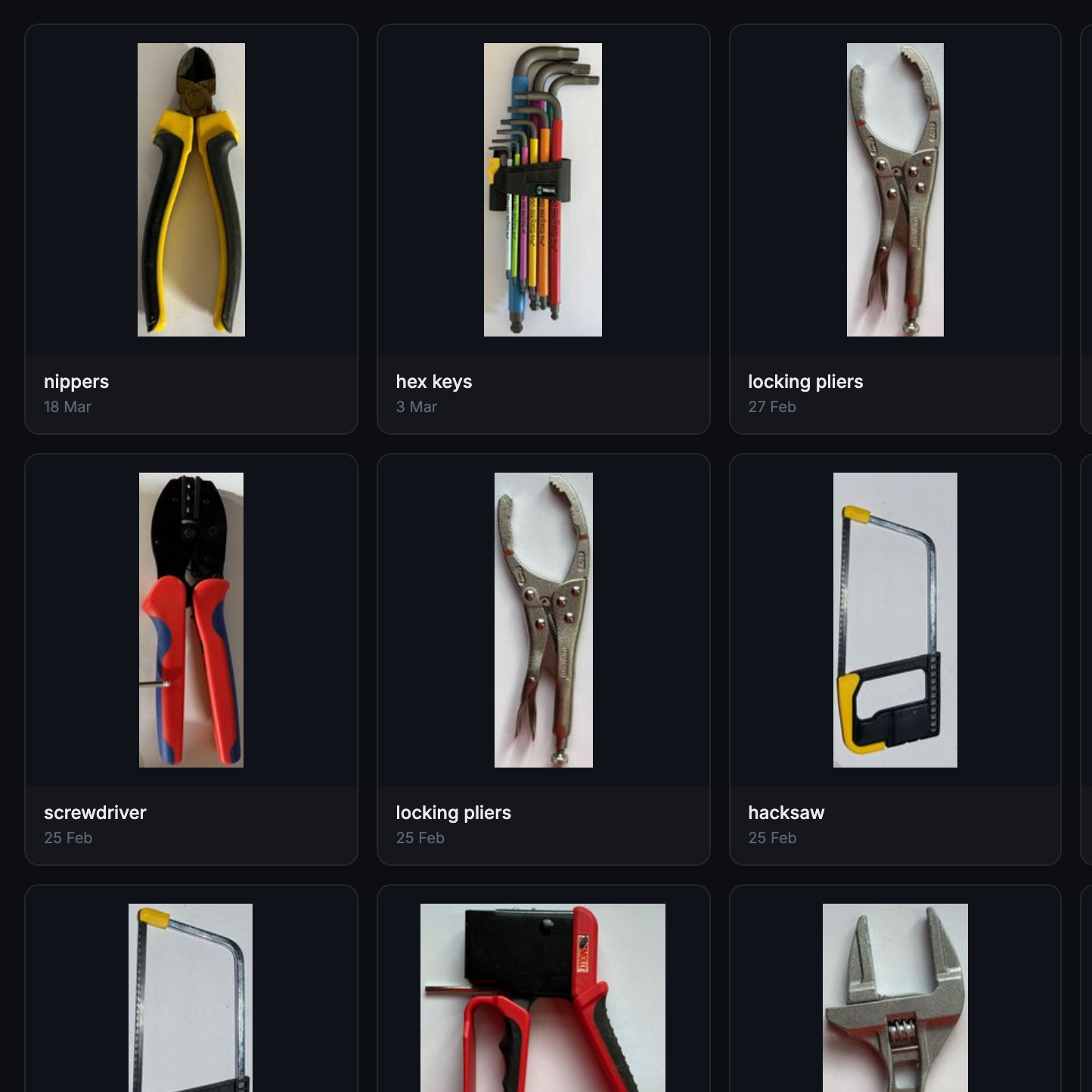
What if the organization and storage benefits of tool shadowing could be had and improved with a modular, semi-automated process? Tracefinity attempts that by generating custom Gridfinity bins from photos of tools, and has quite a few nifty features that are worth a look.

Maintaining a library of tools makes it easy to create project-based custom layouts.

The basic workflow is this: place one or more tools on a sheet of paper, take a photo, then upload the photo and have the system trace and save the outline and add it to a private tool library. When one is ready to create some bins, use the library of saved tool outlines to generate custom Gridfinity layouts.

If you’re unfamiliar, Gridfinity is a modular system of standardized bins and baseplates designed with 3D printing in mind, making it an ideal match for highly-customized organization tasks and a particularly natural fit for a tool-tracing system like this one.

The idea of taking a photo of a tool and generating a custom bin is a compelling one, and a couple years ago we covered a project that did just that. Tracefinity seems like a natural evolution of the idea, and includes handy features like easy design adjustments, optional magnet holes, and we really like the concept of a tool library from which individual tools are scanned once then later selected to create specific, project-based layouts.

Tracefinity takes advantage of new software capabilities like machine learning to improve and streamline the tracing process, but that doesn’t mean it relies on any external services. It can be entirely self-hosted and by default uses a local, CPU-friendly object detection model for tool tracing. There is an option to provide a API key to use Google Gemini instead, but it’s not required. It can come in handy for especially complex tool outlines or dealing with non-ideal source photos, however.

Just like a fruit fly, a new algorithm never forgets old scents

3 September 2026 at 14:22

Fruit flies aren't exactly famous for their brainpower; you've probably drowned more than one in a wine glass left too long on the patio table. And yet, working with roughly 140,000 neurons—a brain smaller than a poppy seed—Drosophila can sort through a huge range of smells in a fraction of a second, and then retain the memory of that scent for a long time.

In this, they do much better than current "electronic noses." Even the most advanced ones on the market tend to be expensive, painfully narrow in what they can detect, and quick to forget an odor the moment they learn a new one.

So why not just copy the fly? That's the question a growing number of researchers have been asking—including Kevin Max and Yang Shen at the Okinawa Institute of Science and Technology, whose new algorithm, Spi-Fly, is described in a paper recently published in the journal Neuromorphic Computing and Engineering.

Read full article

Comments

© Joao Paulo Burini

Black Duck brings AI-powered vulnerability scanning into Claude with new Signal integration

2 September 2026 at 08:24

Application security vendor Black Duck has launched its Signal vulnerability scanning engine as an MCP server in the Claude Directory, giving developers using Anthropic’s Claude Desktop a way to check code for security flaws without switching tools.

The integration is built on the Model Context Protocol (MCP), the open standard that lets AI assistants like Claude call out to external services and pull structured data back into a conversation. Through it, Black Duck’s Signal Code Analysis engine can scan git diffs, individual files, or whole codebases for vulnerabilities directly from within the Claude environment developers are already using to write and refactor code.

Under the hood, source code submitted for a scan is sent to Black Duck’s cloud-based analysis service for processing. The results then come back as MCP resources, structured data that Claude can read and reason over, allowing it to explain identified risks and suggest remediation steps in plain language rather than simply returning a raw findings report.

The launch reflects a wider shift in how security vendors are approaching AI-assisted coding. As tools like Claude speed up how quickly developers can write and ship software, security teams are under pressure to embed checks earlier in the process rather than relying on scans that happen after code has already been merged. Black Duck is positioning Signal as a way to close that gap by putting vulnerability detection at the point of code generation itself.

Dipto Chakravarty, Chief Product & Technology Officer at Black Duck, framed the move as a response to the pace at which AI coding tools now operate. “security keeps pace with how fast teams are building,” he said of the aim behind bringing Signal into the Claude Directory.

Signal is available now through the Claude Directory listing, with Black Duck directing prospective users to speak to a company representative to get set up. The release follows Black Duck’s broader push into AI-focused application security tooling, part of a growing trend among established AppSec vendors to adapt existing scanning capabilities for workflows increasingly driven by AI coding assistants rather than traditional IDEs.

It also underscores the growing role of MCP as connective tissue between AI assistants and specialist enterprise tools. Since Anthropic opened up the protocol, a steady stream of security, development and productivity vendors have released their own MCP servers, letting Claude act as a front end for capabilities that would otherwise require developers to leave their AI workflow entirely.

The post Black Duck brings AI-powered vulnerability scanning into Claude with new Signal integration appeared first on IT Security Guru.

Hackaday Europe 2026: Playstation 4 to Psychometer

1 September 2026 at 13:02

There are many ways to detect stress in an individual. You can use self-reporting checklists, you could try and measure various vital signs like respiratory rate and pulse and infer things, or you could observe the levels of hormones like cortisol in the blood.

Or… you could pull some parts out of a Playstation 4, and get hacking. Edwin Hwu did precisely that, creating a device that can image the skin down to the nanometer and potentially even determine fine details about an individual’s health status. He came to Hackaday Europe 2026 to tell us all about it.

Look Closely

Edwin’s background is very relevant to this project. He worked in a research institute in Taiwan where he collaborated with the German National Metrology Institute, working on atomic resolution imaging on silicon wafers. When you’re doing sub-nanometer calibration work for the semiconductor industry, that’s serious stuff, as is the X-ray microscopy that Edwin has dived into. When it comes to looking at things at very tiny scales, he knows his stuff. He’s also done plenty of work on real-time cell culture monitoring, skin assessments, and even high resolution 3D printing. It’s a broad skill base that all fed into the project he came to Hackaday Europe to talk about.

A single strand of DNA imaged with a DVD-based AFM setup. Credit: talk slides

There is a problem with optical microscopy that comes down to the diffraction limit of light—which means you can only image down to a resolution of around 1 micrometer. That’s why we use scanning electron microscopes for so many finer tasks, because the diffraction limit of electron beams is so much smaller. This allows the imaging of structures like carbon nanotubes or buckyballs, but with the limitation that the surface must be conductive and the imaging be done in a vacuum environment. A newer technology is the atomic force microscope (AFM), which involves using a very sharp probe with a tip of just 2-3 nanometers to actually touch molecules. This can be done without a need for a conductive surface or vacuum. When taking this approach to look at things on the nanometer scale, Edwin likens it to trying to poke a 1 euro coin with the tallest mountain on Earth. It’s a precise device with incredibly high resolution, but the average AFM costs half a million euros, and is incredibly bulky and slow at what it does. That is, unless… you find a way to build one on the cheap.

Atomic force microscopes were once incredibly expensive and cumbersome pieces of laboratory equipment. Now, it’s possible to build one yourself from an affordable kit, and it’s easy enough for children to put together. Credit: talk slides

Some time ago, Edwin created an atomic force microscope using the optical head of a DVD player, achieving a resolution of 0.39 nanometers. With this build, it was possible to image a single strand of DNA. Edwin also talks about how he used simple piezoelectric buzzers to create an ultrafine scanner for this work. The piezo elements are used for actuation, since they can be controlled to make incredibly minute movements. The work developed to the point where DIY AFM kits were made available at a mere fraction of the cost of traditional laboratory-grade installations.

The Playstation 4 proved to be the perfect donor for a high-quality AFM build thanks to the performance of the Blu-Ray optical head. Credit: talk slides

This work spawned a greater plan. Through his talk, Edwin explains how he figured out that e-waste gaming consoles could be turned into cutting-edge atomic force microscopes. Specifically, the Playstation 4 was the perfect candidate, with its high-end Blu-Ray optical head which is capable of reaching the diffraction limit of light. The Blu-Ray optical head is used to monitor the movement of the AFM probe, while scanning it is achieved with a piezo rig just like the earlier DVD-based build. It also has the benefit that the Blu-Ray hardware is built for higher data rates, meaning it’s possible to stream data from the optical head much faster for a quicker AFM scan. Edwin refers to his build as the HS-DAFM—for High Speed Dermal Atomic Force Microscope—since it’s 100 times faster than traditional laboratory atomic force microscopes.

By looking at the skin at a nanoscale level, the tool is useful for investigating conditions like atopic dermatitis, among others. Credit: talk slides

The word “dermal” is important—because Edwin has put the build to use in examining skin nanotexture, for diagnostic purposes. His talk explains how, combined with machine learning systems, the tool can be used to investigate skin conditions and help in the diagnostic process. It’s also become useful from the perspective of cosmetics, and looking at how the skin looks at the nanoscale due to factors like aging and UV exposure. With the aid of machine learning tools, Edwin has found that it’s even possible to determine if someone has asthma with 75% accuracy, just from a skin scan. There is even an exploration of mental stress versus skin nanotexture, albeit in a very preliminary stage.

If you’ve ever wondered about the finer details of doing atomic force microscopy on the cheap, or how skin texture holds the secrets of so many health-related matters, Edwin’s talk is a great one. Sometimes thinking outside of the box and the limitations of commercial laboratory equipment can lead to wonderous things, as it did here!

❌
❌