Cryptocurrency markets move fast, and keeping up with price shifts, on-chain activity, and trading signals across dozens of networks is a real challenge for retail traders and investors. Over the past few years, AI-powered tools have changed how people approach this work, offering automated analysis, pattern recognition, and data aggregation that would take hours to do manually.
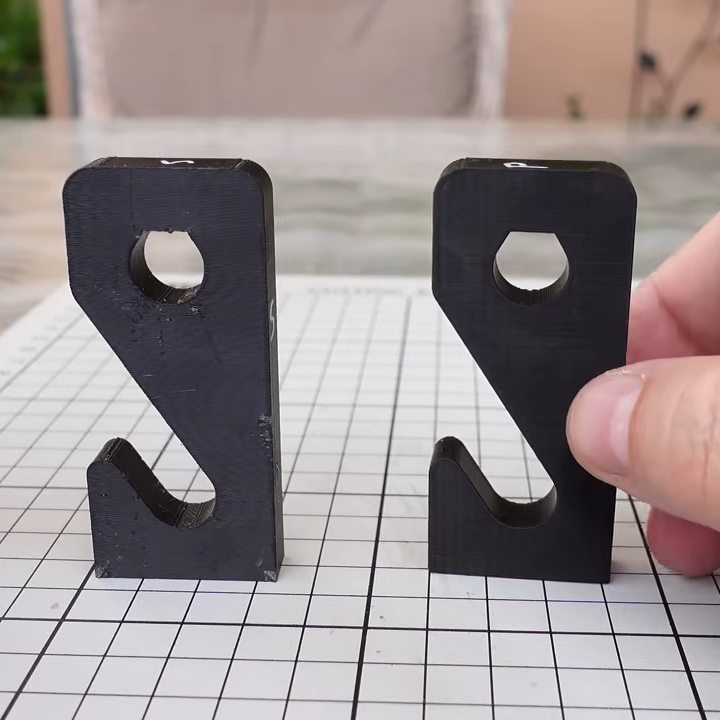
[Igor] of [My Tech Fun] set out to discover what differences, if any, can be found between parts printed in PC-ABS filament on an industrial 3D printer, and those from prosumer-grade machines and filament. His video is full of his usual attention to detail as he compares a test suite of parts printed at home in Polymaker PC-ABS with those from a Stratasys Fortus 450mc using proprietary PC-ABS filament.
PC-ABS is a filament that strives to deliver the benefits of both polycarbonate and ABS. It’s durable and has fantastic impact resistance, but it costs a bit more than either PC or ABS and requires a heated chamber.
In the end, PC-ABS from a home printer compares favorably to an industrial system, at a fraction of the price.
[Igor] has previously compared industrial ABS with comsumer ABS, but what made him curious about PC-ABS in particular was the large difference in print temperatures between Polymaker PC-ABS, and Stratasys’s own proprietary PC-ABS.
[Igor] prints Polymaker filament at 280º C in a 60-65º C chamber, whereas the Stratasys filament prints at 325º C with a chamber temperature of 95º C. That’s quite a difference. The industrial printer has over double the print time, to boot. Would test objects printed from the industrial filament, on an industrial machine, be noticeably different from those printed at home?
To find out, [Igor] orders a test suite of parts from a company with a Stratasys Fortus 450mc (who was also kind enough to take a short video of the machine in action) and prints his own on both a Prusa Core One L, and a Bambu Labs H2D. He then proceeds to compare them in a variety of ways while testing them to destruction.
What’s the bottom line? The industrial prints have better dimensional accuracy, but the home prints have the edge in appearance. When it comes to performance the differences are mostly minor, and not always in the industrial system’s favor. Broadly speaking, PC-ABS from the home workshop compares very favorably from an expensive industrial system and proprietary filament, at a fraction of the price. See it for yourself in the video, embedded just below.
If you’re in the market for an AI threat hunting solution, chances are you’re evaluating based on investigation quality. That’s an understandable and reasonable metric to go on – investigation quality is important, and most vendors focus their marketing on it.
It’s not, however, the most important metric. Pretty much every vendor has decent investigation quality. If they didn’t, they wouldn’t be competitive, and you wouldn’t be considering them.
You need to be looking at what happens after the investigation. Does a validated finding survive handoff into a live, tuned detection rule? Or does it become a case report that sits in a queue until someone manually rediscovers the same technique next time around?
This is called the hunt-to-detection gap, and it makes the difference between a tool you should consider, and one that’s not worth wasting budget on.
Most AI Threat Hunting Lists Miss The Hunt-to-Detection Gap
By the time you’re reading this, you’ll probably be a ways into your research. You’ll have checked out Reddit, reached out to your peers, and have read a fair few of these blogs.
Most of those blogs talk about the same capabilities: query flexibility, data source coverage, UI, how deep you can pivot into an investigation, that sort of thing. It all falls under the umbrella of investigation depth and feature breadth. They are, of course, important, but after a while, all the vendors start to blur into one. Some are marginally better than others, but not by much.
However, precious few of these blogs consider whether a validated hunt converts into a live detection rule without a human manually reconstructing the reasoning trail.
This is for several reasons. The first is that this is harder to communicate in a simple roundup blog. The second is that most AI threat hunting solutions can’t do this. And the third is that buyers often won’t get the answer in a vendor demo, and it doesn’t have the same pizazz as a screenshot of a slick query interface. It’s not sexy, but it matters.
Why the Hunt-to-Detection Gap Matters
The hunt-to-detection gap matters because speed has never been more important.
Mandiant’s M-Trends 2026 report puts global dwell time at 14 days, up from 11 the previous year, reversing the steady improvement of the past few years. In part, that jump materialized as a result of highly sophisticated, low-and-slow tactics. Automated detection tends to miss these attacks, so it’s AI threat hunting’s job to catch them.
However, catching a technique once isn’t enough. You want to catch it, fast, the next time it appears. If an AI threat hunting solution has a hunt-to-detection gap, it can’t do that. It will just rely on the same slow discovery process it did the first time around, and won’t cut dwell time.
Moreover, the SANS 2026 CTI Survey saw security operations reclaiming the top CTI use case, overtaking threat hunting for the first time since 2022. That’s likely because hunts are being folded into daily detection work. If that’s the case, tools that keep hunting and detection separate are behind the curve.
Evaluating a Vendor on Hunt-to-Detection Metrics
So, when evaluating a vendor, how can you make sure that the solution you’re buying does what you need it to do? Here are four questions that will help you do just that.
Does the solution provide structured evidence output?
A narrative summary is fine for a human, but it’s useless as an input for a detection rule. Make sure your solution breaks evidence into discrete, structured fields that include the specific telemetry, artifacts, and conditions that triggered the finding. It should also be formatted in such a way that you can feed directly into rule logic.
The Hunters SOC Platform is an example of a solution that does this properly. It expresses hunts in the same lead/detector schema that drives its production detections. That means findings are structured as a detection input from the moment they are created.
How complete is the reasoning trail?
If all a tool does is flag something as malicious but not tell you what signals mattered, in what sequence, and against what baseline, analysts will have to manually reconstruct that reasoning. That’s what delays conversion. Always ask to see the full trail behind a verdict.
Prophet Security, a leading AI SOC platform recognized in Rising in Cyber 2026, does complete reasoning trails particularly well. Every investigation ends with case documentation that already names the specific telemetry, artifacts, and reasoning steps behind the verdict. That means the reconstruction work is already done by the time the hunt is validated.
Does the solution have a direct translation path?
Validated hunts need to become tunable detection rules without a human rewriting the logic from scratch. Some platforms require a separate detection engineering step, in a different tool, by a different person, with nothing but a case report as the rough guide. That slows everything down.
For example, Anvilogic builds and versions a rule inside the same workspace as the hunt itself, so the translation is closer to a save action than a full rewrite.
Query.AI, meanwhile, runs detection directed against federated data with no ingestion pipeline required. That removes the data-migration step that stalls conversion on platforms with separate hunting and detection capabilities.
Prophet Security closes that gap from the detection side. Its AI Detection Engineer turns investigation and hunt findings into detections, backtests them against the organisation’s history, and ships each as a reviewable, version-controlled change to the SIEM already in place, with a person approving what goes live.
How long between a hunt validation and a live rule in production?
If a tool has structured evidence, a complete reasoning trail, and a direct translation path, this time should be short. If a solution takes weeks, even if the vendor has strong answers for the other three questions, something in the pipeline is still manual.
Vectra AI is a useful example here. Analysts can turn a saved hunt into a Custom Model, assigning it a threat and certainty score rather than reusing Vectra’s built-in behavioural models directly. That distinction matters: the resulting detection is analyst-scored, not scored by the same machine learning models that drive Vectra’s automated, unsupervised detections.
It took three years, but Coyote vs. Acme is finally in theaters and delighting audiences of all ages with its irresistible blend of slapstick humor, pointed satire, and even a warm fuzzy here and there. We're happy to report that the film was worth the wait.
(Some spoilers below but no major reveals.)
The film is based on a well-known satirical piece by Ian Frazier (also titled “Coyote vs. Acme”) published in The New Yorker in 1990. Development of a film version didn’t start until 2018, but some pretty talented people worked on the script, including James Gunn. Small wonder that Warner Bros.’ bizarre 2023 decision to shelve the film in order to take a tax write-off sparked outrage both within the industry and among fans online.
I wouldn’t call it cheap, but this monitor from Asus brings proper HDR-capable video editing to creators who couldn’t previously afford an OLED display.
The The X-Sense SC07 combo smoke and CO detector serves easy installation perk, reliable sensing, and real-time carbon monoxide readings without any subscription hassles or breaking your bank.
Sony’s REON Pocket Pro wants to replace neck fans with thermoelectric cooling. It's discrete, effective, and gets the personal cooling job done, but it's ask is a bit on the higher side.
Armed with a sleek metallic finish, the Cosori Iconic delivers a top-tier cooking experience and intuitive app controls. It's not cheap, but it's but it delivers plenty.
Viture Pro 2 deliver a fantastic mix of affordability, visual brilliance, comfort, and productivity perks. If you want to finally experience smart glasses, this one is a lovely pick.
OLED displays solve many of the problems suffered by LC displays, including color fidelity, dynamic range and power usage. That said, especially in the early days OLED gained a reputation for dim screens, short lifespans and burn-in. Over time better organic dyes were developed, along with burn-in prevention methods that have made OLEDs much closer to LCDs in terms of longevity. In a recent comparison between OLED TVs by RTings it’s however clear that between 2017 and 2023 there haven’t been any major advances beyond bumps in brightness.
The relatively dim screens were a major problem, as they prevented OLEDs from displaying HDR content. This issue has been well and truly addressed, as confirmed by RTings’ testing, but after an over 10,000 hours stress test that simulates about 10 years of regular use at maximum SDR brightness, especially static elements like the CNN TV banner happily burned in even on the newest models with all burn-in prevention measures enabled.
Here the biggest take-away is probably that even if the expected panel lifespan at full brightness is still the same, this higher brightness budget means that you can gain some lifespan by cranking the brightness way down. It’s also essential to keep features like pixel refresh cycles enabled, as demonstrated by [Hardware Unboxed] and their abuse of a QD-OLED monitor where a worst-case 6,000 hour stress-test managed to create some impressive levels of burn-in from uneven subpixel wear.
After a month of daily use, the MADE68 Ultra V2 impressed me with its gaming performance and software, but its typing feel ended up being the biggest surprise.
 Login
Login