Normal view

There are new articles available, click to refresh the page.
Before yesterdayMain stream

From the Corps to the Cosmos, featuring Jaden Caradine

8 September 2026 at 16:29

Jaden Caradine knew he wanted to be an engineer at eight years old. He just took a winding road to get there.

Before he enrolled at Embry-Riddle Aeronautical University, before he discovered the field that would become his focus, and before he landed a Pathways internship at NASA’s Langley Research Center in Hampton, Virginia, Caradine spent five years as a mechanic in the United States Marine Corps, four of them stationed in Japan. It was a deliberate detour, one that shaped how he approaches everything since.

“I’ve kind of always known I wanted to be an engineer,” he says. “I just had to figure out what kind.”

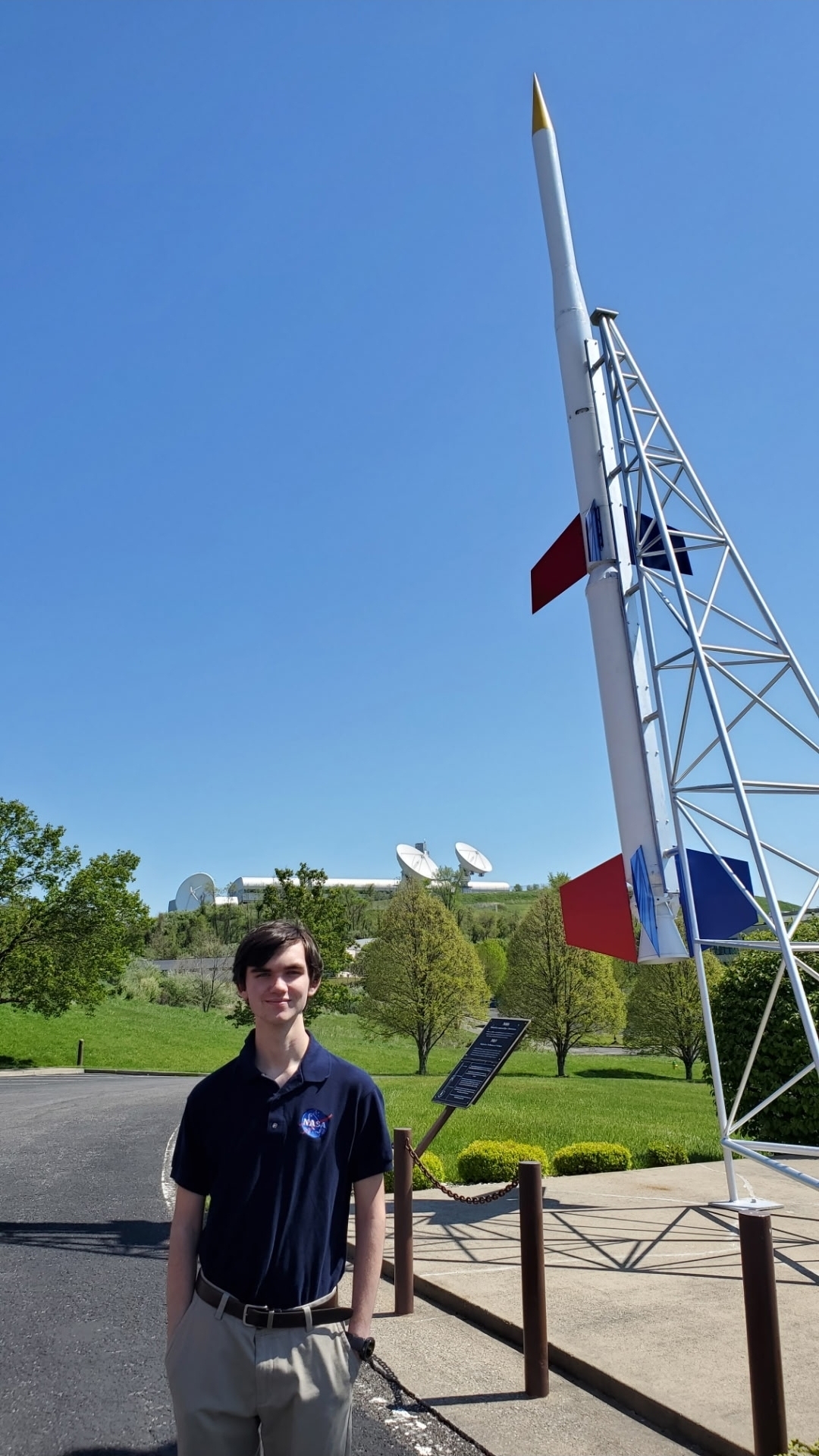
Jaden Caradine, NASA Pathways intern, at NASA Langley Research Center
NASA Pathways intern Jaden Caradine
Credit: NASA

Finding the Overlap

Caradine grew up in the Salt Lake City area, raised by a mother who put him on a snowboard at four and on a rock face not long after. He was the kind of kid who learned to love science not for its own sake, but for what it could do. “Math is an enabling skill,” he says. “It’s not about doing the math. Math has a purpose and it’s useful.”

By the time someone asked young Jaden what he wanted to be, the answer was immediate. “I was building Legos,” he says, “and I just thought — I want to build stuff. I can’t really see myself being anything other than an engineer.”

Right out of high school, Caradine enlisted in the Marines, trained as a mechanic, and shipped out to Japan. During those five years, between the technical work and the distance from home, he started reading books on decision-making, career planning, and long-term thinking. He found a framework he keeps coming back to: ikigai, a Japanese concept that maps the intersection of what you’re good at, what you enjoy, what the world needs, and what you’re paid to do.
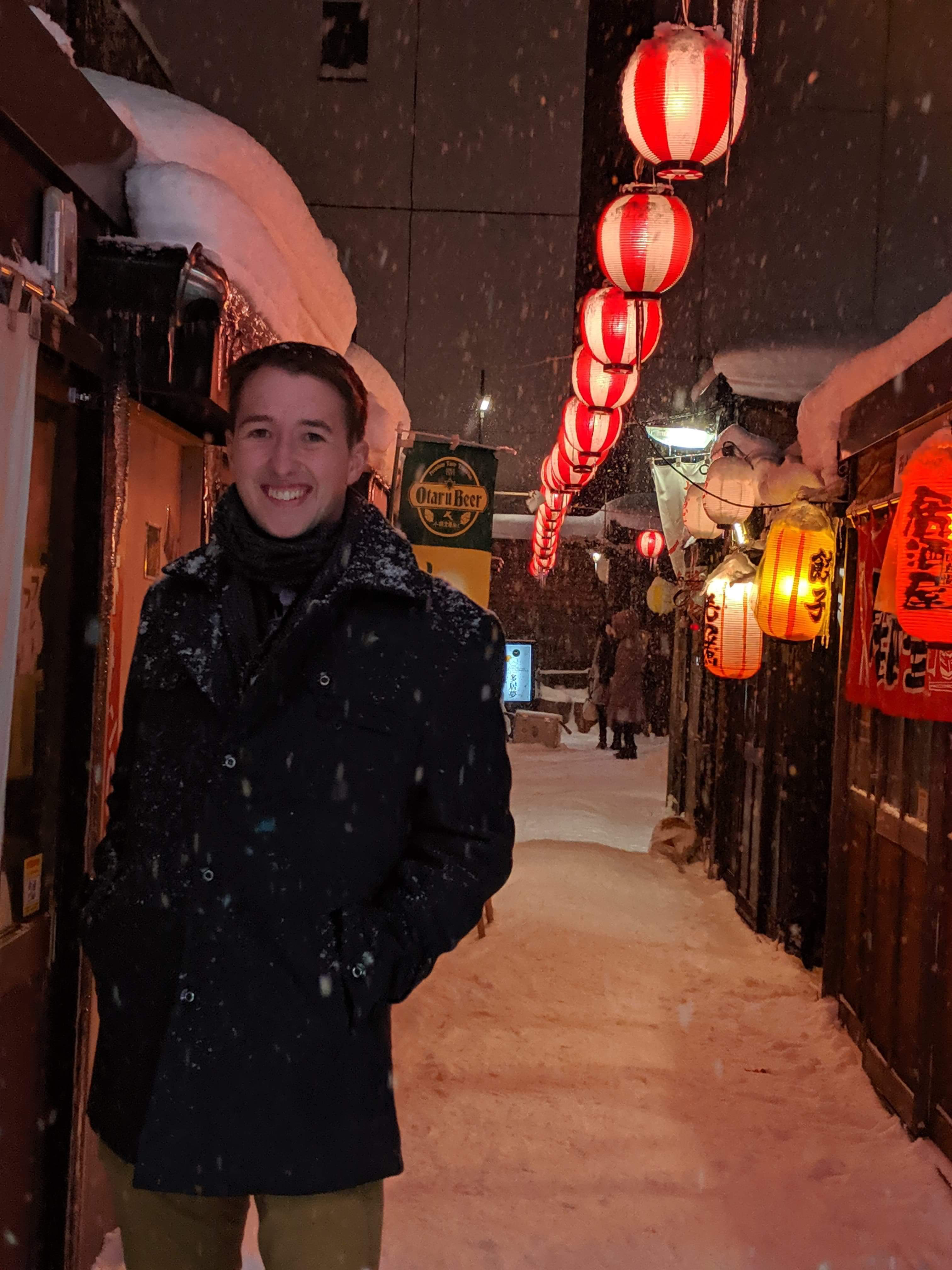
Jaden Caradine at the Sapporo Snow Festival in Hokkaido, Japan, during his service as a U.S. Marine
Caradine at the Sapporo Snow Festival in Hokkaido, Japan, while serving as a U.S. Marine
Credit: Jaden Caradine

“Your ikigai is the thing where all of those overlap,” he says. Engineering was already in the picture. The question was what kind.

Chasing the Signal

The answer arrived through research and a company Caradine stumbled on while scanning the landscape of emerging aerospace technology. They were using magnets to spin a launch system to 14,000 or 15,000 RPM and release small satellites into orbit, recovering the energy on the way down through the same magnetic system. “I thought that was awesome,” he recalls. “So, I started looking into aerospace engineering, and it was a good fit.”

Once he had the field, the destination wasn’t hard to find. Caradine transferred to Embry-Riddle Aeronautical University’s Daytona Beach campus to study aerospace engineering and immediately started showing up everywhere he could — satellite conferences at Kennedy Space Center, industry events in Orlando, small satellite gatherings back in Salt Lake City. “I went to all the career fairs, even though I wasn’t looking for a job yet,” he says. “I just wanted to learn as much as I could, as fast as I could.”

At every NASA booth, he asked questions. He learned about Pathways, the program that places undergraduate and graduate students at NASA centers with the potential to convert to full-time civil service positions, but he waited a year to apply. “I hadn’t really done the things I wanted to do in order to write a strong application yet,” he says. He wrote the next application with the intention of using it as a practice run. He got in.

His reason for choosing NASA over industry was simple and firm. “NASA doesn’t work for profit,” he says. “We’re here to remove barriers so that industry can eventually do the things they weren’t able to do before.”


“Human beings are far more capable than we give ourselves credit for. A journey of a thousand miles starts with a single step and can only be taken one step at a time.”


Work Worth Doing

At NASA Langley, Caradine is part of the Systems Analysis and Concepts Directorate, where “we help agency leaders figure out why they should make certain decisions, especially those that have lots of moving parts,” he explains. Specifically, he works with the in-space servicing, assembly, and manufacturing (ISAM) team, a group focused on the emerging field of building and maintaining infrastructure in space, rather than simply launching and discarding it.

A major part of his summer was curating the State of Play, a comprehensive document that consolidates everything happening in the ISAM sector across government, academia, and industry into a single, navigable resource.

“Jaden joined the team and immediately contributed to this year’s State of Play update,” says Dale Arney, aerospace engineer and Caradine’s mentor. “He also created an automated tool that will help the team create future updates more quickly.”  
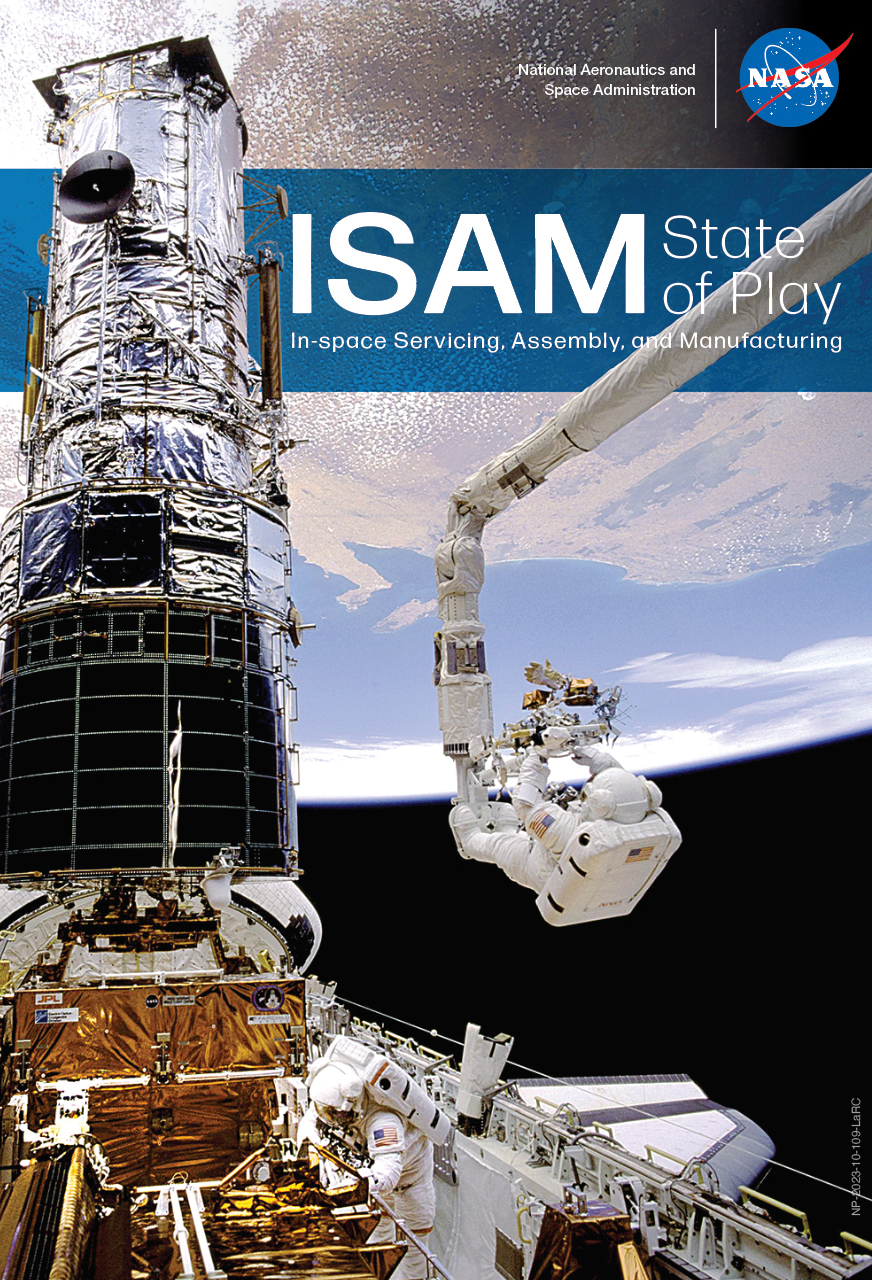
Cover of NASA's ISAM State of Play document, a survey of in-space servicing, assembly, and manufacturing capabilities across industry, academia, and government
The ISAM State of Play document is a survey of past, present, and near-future ISAM capabilities across industry, academia, and government agencies.
Credit: NASA

That tool scrapes aerospace news from across the web, compiles relevant updates into organized tables, and produces a readable summary on a regular cadence. “It kind of replaced the need for everyone on the team to spend 30 or 40 minutes every day scrolling through news to keep up,” he says.

“Jaden was constantly looking for ways to improve himself, the team, and our products,” Arney adds. “He was eager to take the lead in trying a number of new processes and ideas to try to make them work for us.” 

No Silos

The thing that surprised Caradine most about NASA Langley had nothing to do with the technical work. He had expected some departmental siloing that could develop in large organizations, where people become experts in narrow areas with limited cross-pollination among teams.

“That’s not something I’ve experienced here,” he says. “We all talk to each other, across all teams. We share resources. We collaborate quite extensively.” He describes a culture that expects everyone to engage with the whole problem, not just their corner of it. “Everyone kind of bounces around on different teams to learn the whole aspect of the problem and support each other.”
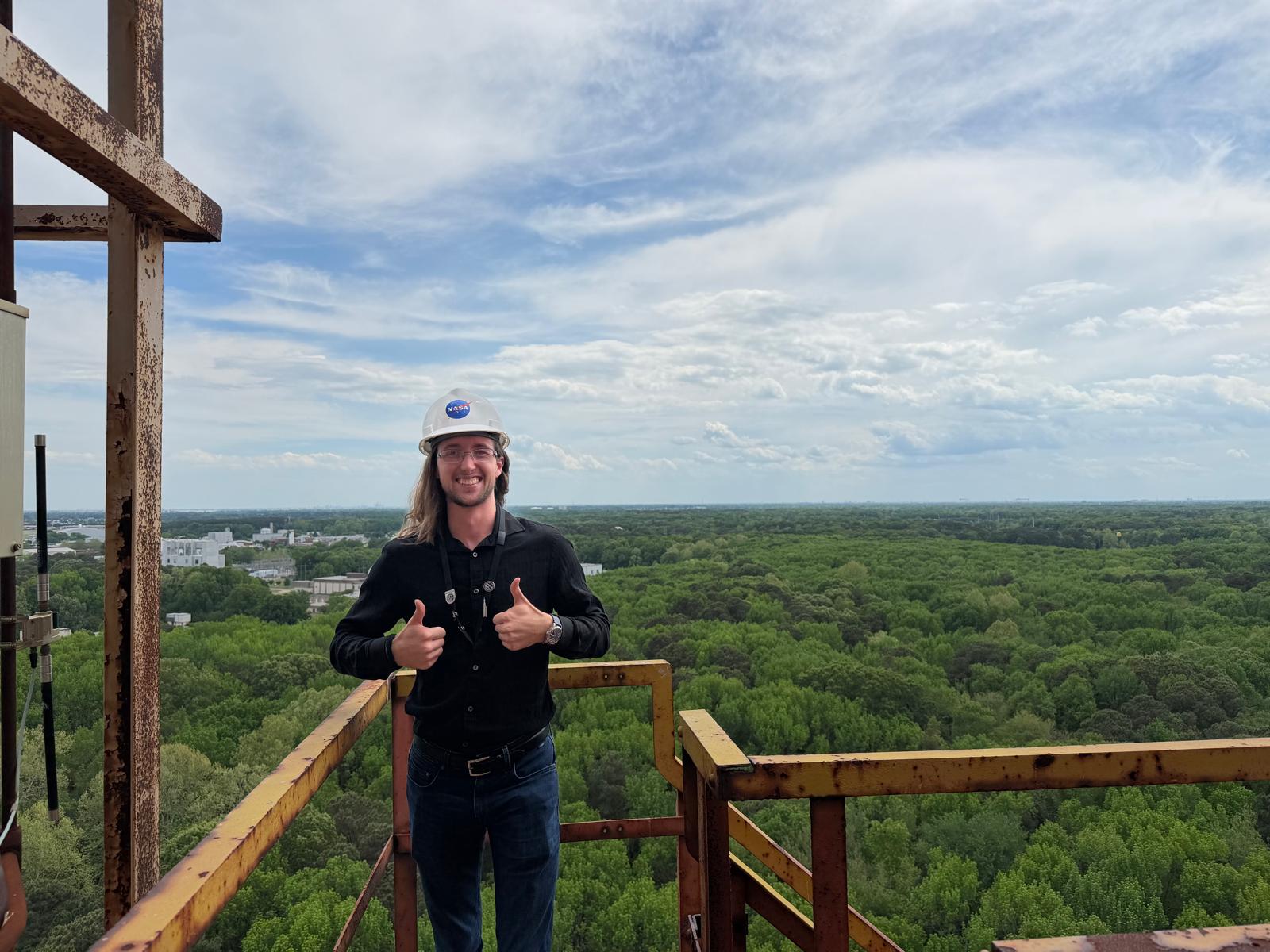
Jaden Caradine standing atop the gantry at NASA Langley's Impact Dynamics Facility
Caradine at NASA Langley’s Impact Dynamics Facility, enjoying the view at the top of the gantry
Credit: NASA

For anyone considering the Pathways program, his advice is direct. “Do it,” he says. “Human beings are far more capable than we give ourselves credit for. If it seems like too much, break it down. A journey of a thousand miles starts with a single step and can only be taken one step at a time.”

Caradine heads back to Embry-Riddle as a junior this fall, with plans to return to Langley next summer. Grad school is on the horizon, and he’s exploring programs that nurture important analysis skills for SMAB, including decision, strategic, and systems analysis.

“Before coming here, I was trying to do everything and cast a wide net,” he says. “Now I know what I need to know how to do. That’ll give me the opportunity to focus my efforts on the high-value skill sets.”

On Caradine’s Sci-Fi Shelf

The Sirens of Titan by Kurt Vonnegut

Dungeon Crawler Carl by Matt Dinniman

Caradine’s instinct runs more toward fantasy than science fiction, but this one, he says, hits something real.

“I enjoy the leveling aspect — constantly improving, constantly getting better. In books it might be physical strength, but in reality, strength takes on many different forms. Constant improvement is quite rewarding in real life, as it is in books.”

The audiobook production, he adds, is its own experience: full sound design, character actors, the works. “It’s like listening to a movie.”

The team also recently convinced him to start Dune, by Frank Herbert. He’s about halfway through.


Part of the Systems Analysis and Concepts Directorate at NASA’s Langley Research Center.
Learn more about our work by visiting our website.

Building Foresight for Earth Science, featuring Lindsey Jacobson

26 August 2026 at 15:14

NASA’s Earth-observing satellite missions track dozens of features of a changing planet — aerosols, sea levels, land cover, cloud cover — over years and decades. Sustaining that record for the scientific and operational communities who depend on it requires more than engineering talent. It requires planning for an uncertain future: anticipating where a mission delay or on-orbit event might create a gap in the data those communities rely on.

Lindsey Jacobson’s work helps NASA anticipate those disruptions before they happen and gives senior leaders options for managing them.
A Pathways intern in engineering, Jacobson supports NASA’s Earth Science Division through the NASA Earth Science Strategic Integration Environment (NESSIE) team within the Systems Analysis and Concepts Directorate (SACD) at NASA’s Langley Research Center in Hampton, Virginia.

NASA’s Pathways program connects undergraduate and graduate students with NASA centers through internships that, with satisfactory performance, can lead to full-time civil service positions. Jacobson has returned to NASA Langley every summer since 2022, splitting her time between the center and finishing her mechanical engineering dissertation at North Carolina State University.

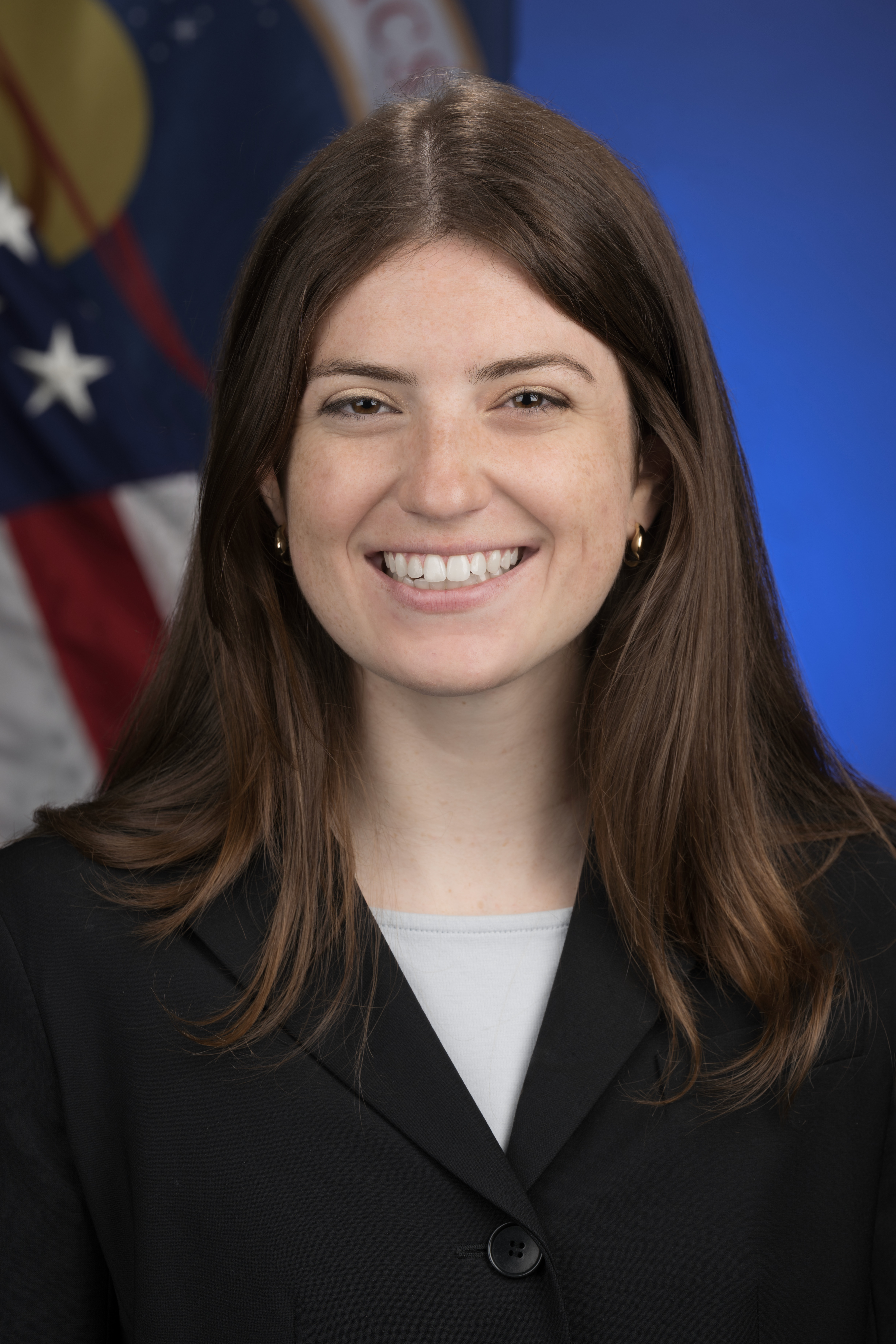
Lindsey Jacobson, NASA Pathways intern, at NASA Langley Research Center
Lindsey Jacobson, Pathways Intern
Credit: NASA


“The way we do Earth science is changing.


The Problem Space

Jacobson and the NESSIE team support the Earth science satellite portfolio — dozens of missions, each measuring specific features of the planet, from clouds to sea surface temperature to land use. The goal is providing end user communities with the data products they depend on. The challenge is the unknown.

Full-disk image of Earth captured by NOAA's GOES-8 satellite, which operated from 1994 to 2004
This image depicts a full view of the Earth, taken by the Geostationary Operational Environment Satellite (GOES-8), a satellite that was in service from 1994-2004. It was owned and operated by the National Oceanic and Atmospheric Administration (NOAA) and provided the kind of continuous monitoring necessary for intensive data analysis.
Credit: NASA

“There’s uncertainty about mission lifetimes and what could happen on orbit, and about schedules,” Jacobson explains. The team’s work gives NASA’s senior leadership a way to navigate that uncertainty: understanding where a gap in coverage might emerge and identifying options to mitigate or hedge against it. By providing alternative pathways for meeting end-user needs, this work supports senior leaders in managing a complex, interdependent portfolio.

Writing the Code

Within that effort, Jacobson’s focus is building analysis tools that give the team what she calls a “foresight ability.”

“It’s the ability to anticipate different things that might happen — changes that might occur across the portfolio of Earth-observing missions — and to have strategies in mind for how to respond, so we can keep delivering data to end users,” she says.

Not every change is bad news. Missions sometimes operate well beyond their planned lifespan, creating room to extend their value. But whether an adjustment is welcome or not, the principle is the same: know the options before anything happens.

Jacobson compares it to preparing for hurricane season. “You get the storm shutters, you buy the sandbags, and you have them pre-positioned,” she says. “Then when the warning comes, you’re not scrambling, and you’re not at risk of the store selling out. You already have what you need in place.” NESSIE’s work follows the same logic for the Earth-observing portfolio by understanding ahead of time what a disruption might mean and having a set of responses ready before anything happens.

“We proactively suggest the strategies and alternatives that could be enacted if there’s a change,” Jacobson says. “We do that ahead of time, so people understand what options might exist.”

Her approach carries echoes of her graduate research, which examines how complex systems — infrastructure that can’t simply be torn down and rebuilt, like the electric grid — must evolve deliberately instead. “We designed a grid, and now we live with that grid forever,” she says. “We can’t tear it down and build a new one. What we can do is modify, expand, and improve upon what we have.” It’s the same instinct for working with what exists, rather than starting from scratch, that shapes how she approaches her work at NASA.

Keeping Pace

Engineers arriving at NASA for the first time might expect the hardest part of the job to be technical. Jacobson found something else: the landscape itself is what demands the most adaptability.

“The way we do Earth science is changing,” she says. Commercial companies are increasingly contributing data alongside government agencies. New space agencies are entering the field. Innovative technologies and architectures are emerging all the time. Keeping pace with that shift — understanding how NASA’s own capabilities are evolving and how to best serve the communities that depend on the data — is as much a part of the job as any calculation.

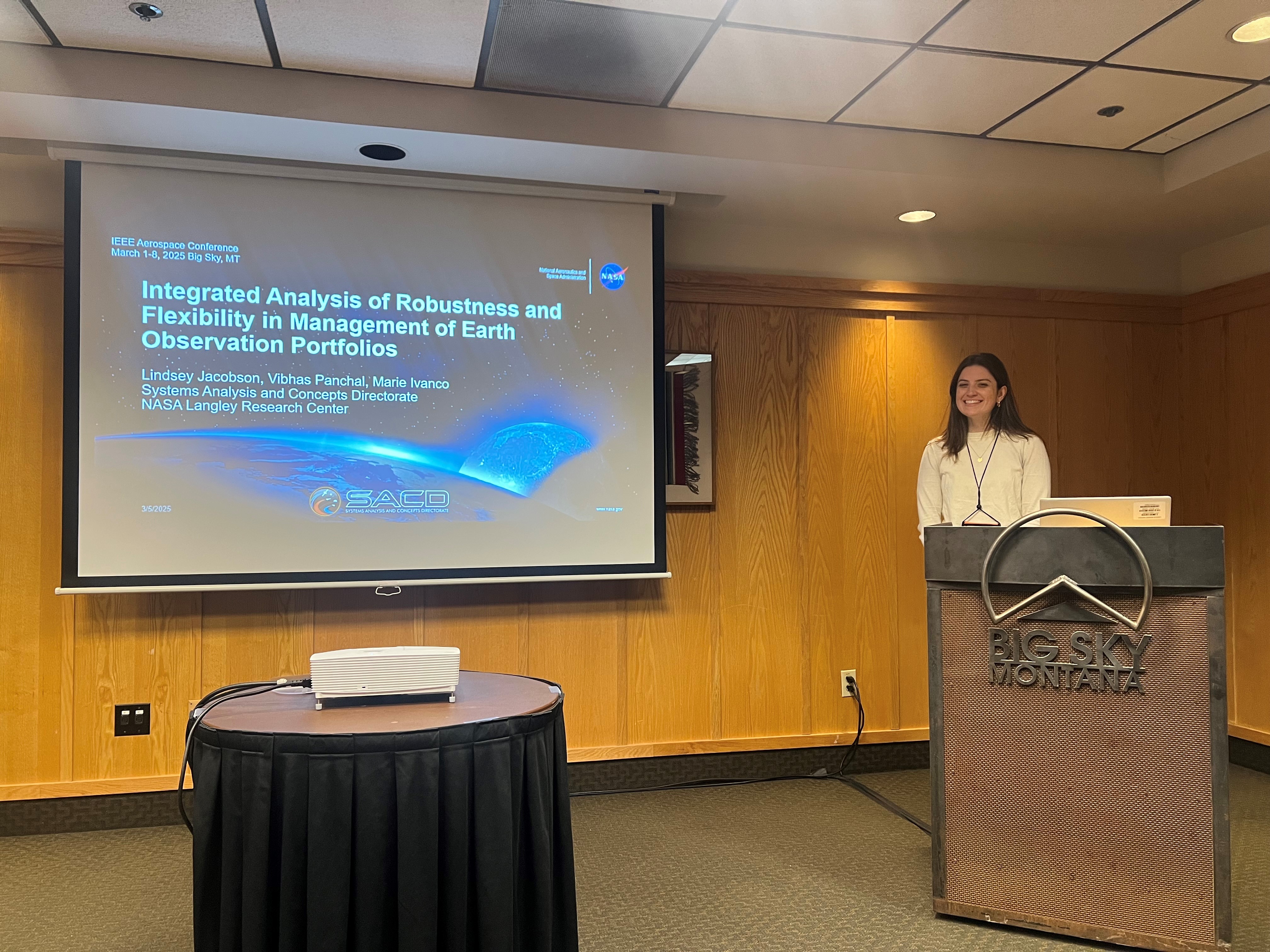
Lindsey Jacobson presents NESSIE's work on managing Earth-observing mission portfolios at the 2025 IEEE Aerospace Conference
Jacobson presenting NESSIE’s work on managing portfolios of Earth-observing missions to meet science needs despite uncertainties in mission scheduling and lifetimes, Institute of Electrical and Electronics Engineers (IEEE) Aerospace Conference, 2025.
Credit: NASA

Some of that adaptability shows up in smaller ways too, like the growing role of AI tools in her team’s own workflow. “Langley has done a lot of firsts,” Jacobson says, echoing something she heard recently from Trina Dyal, NASA Langley’s director, at an intern event. “And we want to continue to be the first. That means learning new things and figuring out how to bring them into how we work.”

On Jacobson’s Sci-Fi Shelf

The Sirens of Titan by Kurt Vonnegut

Jacobson received this novel in high school, let it sit on her shelf for years, and finally picked it up during the pandemic.

“It was very special. It touches a lot on the meaning of life, and that connects to some of the reasons I was motivated by space in the first place. The idea that space exploration can bring humanity together. That cosmic perspective.”


Part of the Systems Analysis and Concepts Directorate at NASA’s Langley Research Center.
Learn more about our work by visiting our website.
For West Virginia Engineer, Home Is Where the Heart Is… and NASA, Too

13 August 2026 at 15:03
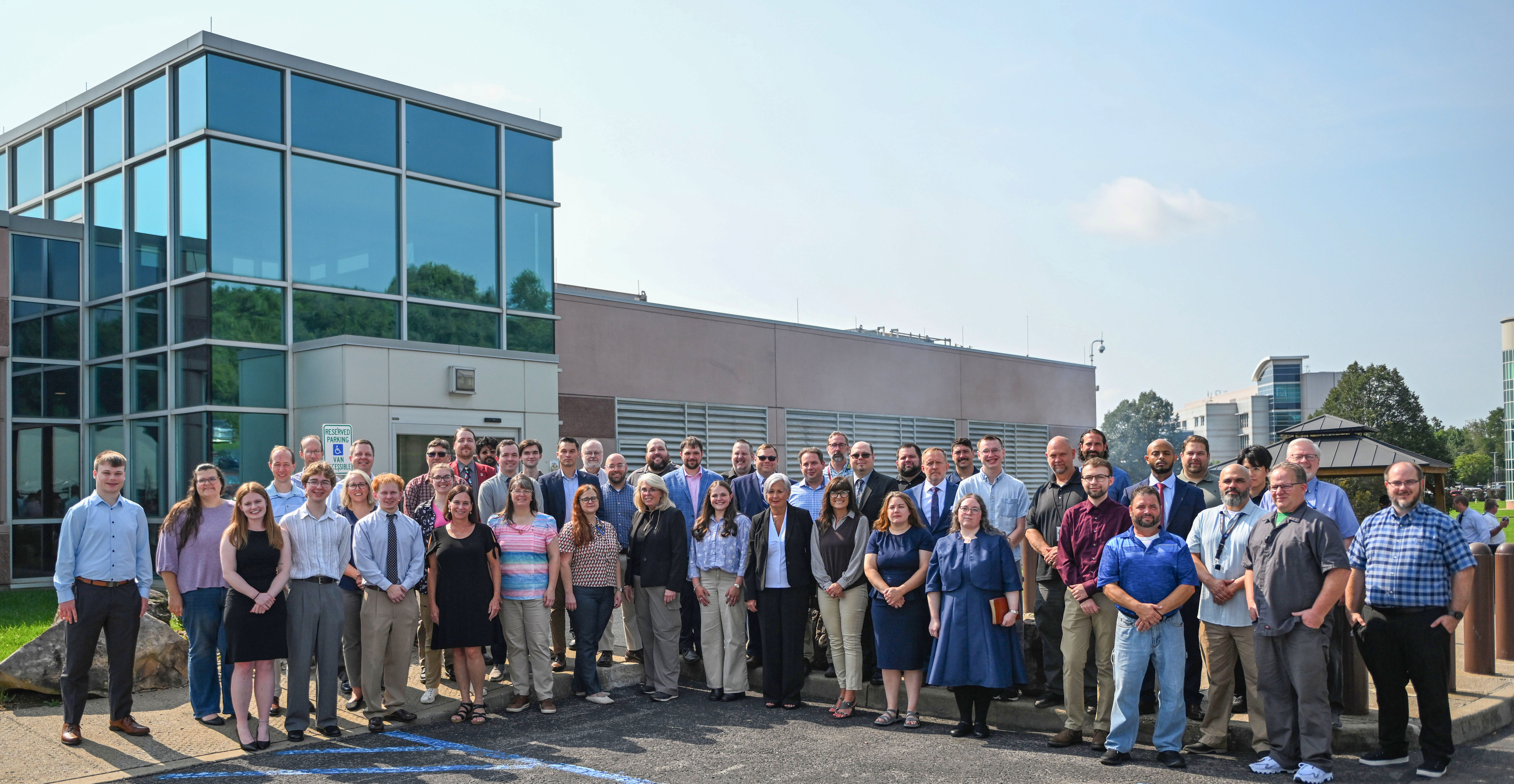
New civil servants pose together.
NASA’s Katherine Johnson Independent Verification and Validation Facility (IV&V) held a swearing-in ceremony for civil servants on Monday, Aug. 10, 2026, at the facility in Fairmont, West Virginia. In total, 51 new employees were hired at IV&V as part of NASA Administrator Jared Isaacman’s directive to strengthen NASA’s technical core competencies.

Growing up in Grafton, West Virginia, engrossed in Star Wars and all things science fiction, Fletcher Newell had an early interest in space exploration. That interest only grew when, in 2013, his fourth-grade class took a field trip to a nearby NASA facility he had not yet heard of – NASA’s Katherine Johnson Independent Verification & Validation Facility, located in Fairmont, West Virginia. Thirteen years later, Newell and 48 of his colleagues at the facility were sworn in as NASA civil servants during a ceremony on Aug. 10.

“I had always admired NASA from afar,” said Newell, who started working at IV&V as a systems engineer contractor in early 2025. “To my surprise, the agency was doing impactful work in my backyard.”
 
During high school, he began cultivating programming skills that would lay the foundation for his future. A self-professed computer aficionado, Newell taught himself how to code. In algebra class, he discovered that his graphing calculator was programmable, leading him to create basic scripts. He quickly moved to popular software applications, learning how they were built in order to develop his own programs. Artificial intelligence was still on the brink of becoming mainstream, but he was already asking himself, “What are the more interesting things we can teach computers to do?” As a junior in 2019, the precocious programmer merged his talents with his passion for space after being accepted into IV&V’s high school internship program.
Newell created a database for engineering methods, processing hundreds of documents to facilitate the work of his colleagues from a procedural aspect.

“Working as a high school intern really elevated my fascination for NASA,” he said.
 
Following graduation in 2020, Newell headed west to Stanford University in Palo Alto, California, majoring in, naturally, computer science, with a focus on AI and machine learning when both were scaling rapidly across industries and in everyday usage.
 
Instead of pursuing internships in the neighboring Silicon Valley – widely considered the global center for technological innovation – he returned to West Virginia for three consecutive summers, cutting his teeth at the Fairmont facility.

Fletcher Newell stands in front of a sounding rocket.
Fletcher Newell stands in front of the Katherine Johnson Independent Verification & Validation Facility in Fairmont, West Virginia, as a high school intern in 2019.
Photo courtesy: Fletcher Newell

He began researching AI safety as engineers learned how to give spacecraft more onboard autonomy and have them learn on their own. Later, he was on a team responsible for assessing the safety of Terrain Relative Navigation, a vision-based guidance technology that could enable spacecraft to land on planetary surfaces without GPS. During his final internship, generative AI – which creates content based on user prompts – was becoming widespread, and he worked on teams exploring how to responsibly integrate it into mission assurance.
 
Newell also performed research about autonomous space docking at Stanford’s Center for AI Safety, resulting in two publications. Following his undergraduate education, he remained at Stanford to earn a master’s in computer science.
 
When it came time to enter the workforce, one organization was atop his list. A contractor opportunity opened up at IV&V, and he leapt at the chance.
 
“I enjoyed the work at IV&V back in high school and college,” he said. “There’s nothing better than pursuing what aligns with your interests.”
 
As a systems engineer, he has worked primarily on mission safety and security, identifying and resolving system defects and vulnerabilities for such spacecraft as Space Reactor-1 (SR-1) Freedom, Orion, Gateway, and the Human Landing System, all while helping guide NASA’s responsible adoption and development of AI systems.
 
His colleagues took notice of their junior member’s contributions, resulting in Newell being named IV&V Engineer of the Year in 2025 less than a year into the job after identifying more than 70 issues in Gateway – and later SR-1 Freedom – with clear mission impact and, as noted in his award citation, developing a reputation for clearly articulating their implications.
 
“During his internships and now as a full-time engineer, Fletcher has consistently demonstrated exceptional talent, curiosity, and a passion for our mission,” said Wes Deadrick, IV&V director. “He could have gone almost anywhere after Stanford. The fact that he chose to come home to build his career supporting NASA through the IV&V Program makes me incredibly proud.”
 
The Aug. 10 ceremony for Newell and his colleagues was part of NASA’s workforce directive to bring core, mission-critical positions into the civil service, from early-career professionals to seasoned technical experts.
 
“It’s an investment in NASA’s future, giving us the opportunity to bring exceptionally talented people into the civil service while strengthening long-term technical capabilities that support our nation’s most challenging missions,” said Deadrick. “At IV&V, initiatives like this help ensure we continue providing independent expertise and mission assurance that our customers depend on.”
 
For Newell, as he takes this next step in his professional progression as a civil servant computer engineer, he looks forward to expanding on his responsibilities, especially to help NASA return to the Moon. He is currently helping identify safety and security issues, including ones that could impact crew safety and lead to the loss of spacecraft control, related to the agency’s lunar endeavors.
 
“At IV&V, teams are ensuring every major lunar vehicle and system will be ready to safely embark on their missions, not just for flying around the Moon, but also for putting American boots on the surface and eventually establishing and working on a Moon Base,” he said.
 
More than a decade after taking that field trip and now working on some of NASA’s high-priority missions, Newell readily admits he didn’t always envision staying in West Virginia.
 
“It was a little strange coming back, but I was continually getting to do amazing things at an amazing organization in a place I already know,” Newell said. “And that’s really cool.”

❌
❌