❌

Normal view

There are new articles available, click to refresh the page.
Before yesterdayMain stream

2026 Retrocomputing Challenge: Explore Space with a Credit Card Reader

By: Tom Nardi
27 October 2026 at 16:00

The humble credit card reader β€” most of us have used hundreds, perhaps even thousands of them over the years. But even for folks like us, it’s not the sort of device we give a lot of thought to. It’s just a keypad, a display, and a magnetic stripe reader. How interesting could it possibly be?

That may be true in some cases, but at least for the 1990s-era TRANZ 330, there’s a bit more to the story than that. As [CharlesD] explains, these particular readers are essentially complete Z80 computersΒ just waiting to do something more exciting than processing PINs. In the case of this particular unit, the addition of a GPS module and some new code has turned it into an interactive guide to the solar system.
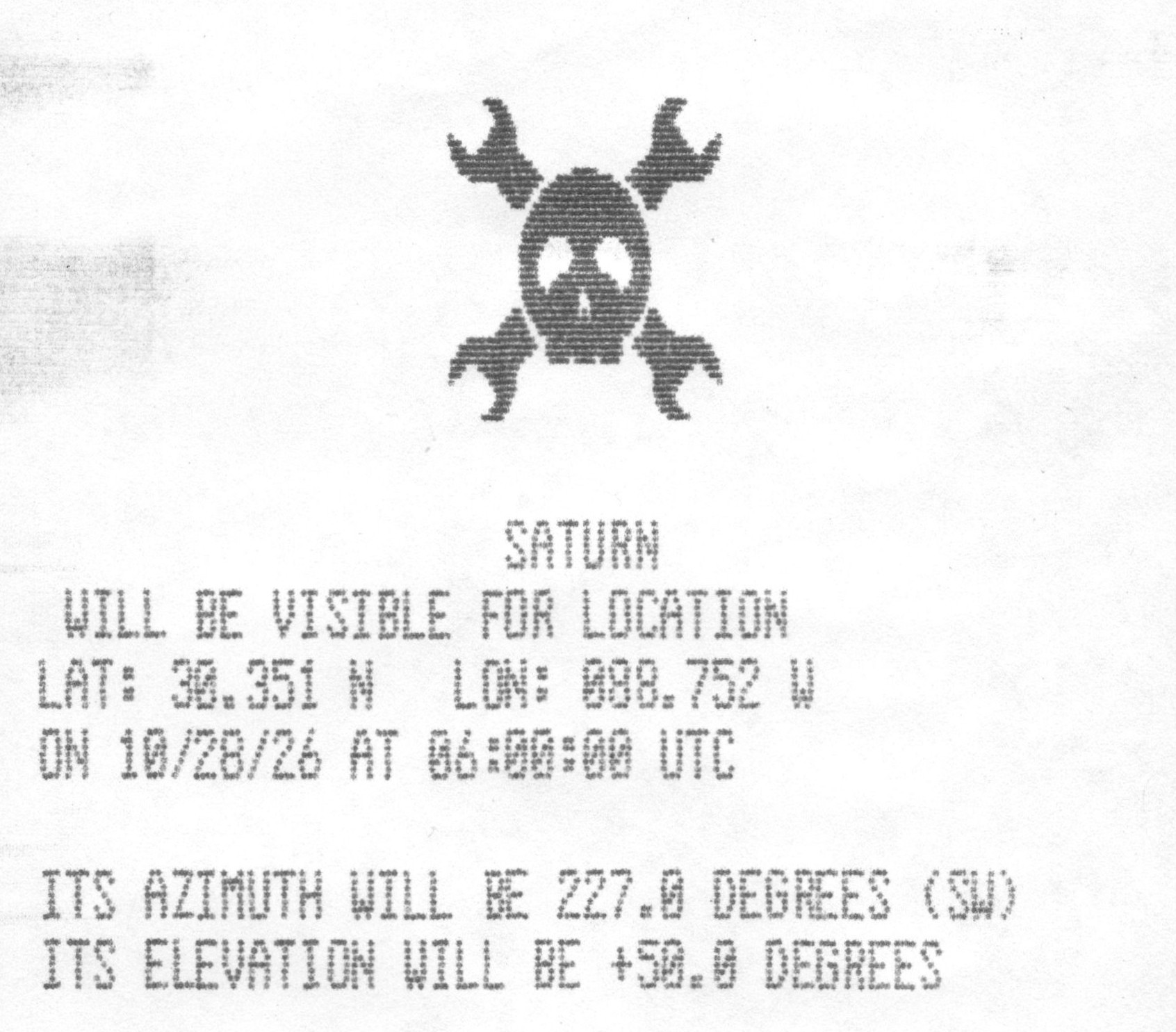
Thanks to the UV erasable ROMs used in the TRANZ 330, loading new code on the device is easy enough. With a bit of educated poking around, [CharlesD] was able to map out what did what. Working from the basics of getting the display and keypad working, he moved onto the serial interface, which in turn let him communicate with a modern GPS module and era-appropriate thermal printer. From there it was just a matter of getting the math implemented to compute the azimuth and elevation of a given planet, and he had an offline map of the solar system for use with his telescope.

This is one of those projects which is awesome enough on its own merits, but it’s particularly exciting to see just how easy it is to repurpose one of these card readers, especially since [CharlesD] was kind enough to share his source code. If you end up picking one of these up and getting something running on it, be sure to let us know.
2026 Hackaday Retrocomputing Contest

2026 Retrocomputing Challenge: I Would Do Anything For Serial Data

24 October 2026 at 16:00

These days we take high-speed networking for granted, but it can be difficult to get vintage computers talking to modern machines. To help solve this problem [jaime] came up with Meatloaf which can provide files to a Commodore regardless of their location or medium of storage.

Meatloaf is an ESP32 device at its core, which plugs in to any of several Commodore computers through their IEC serial port. Many similar systems exist to bridge the gap between the modern world and the now-retro one, but this one connects to a dedicated service which points towards files no matter where they’re stored. There is some local storage, but it can also retrieve files from any active URL, and Meatloaf retrieves the files and then sends them to the Commodore over that serial link.

Part of what makes this unique is that the user doesn’t need to configure Meatloaf in any particular way, everything is done from the Commodore as long as the URL is known to the user. The system can even parse nested files like archive file types and send them along to the computer just like it would if they were on a period-correct floppy drive. There’s a GitHub project page as well for anyone looking to get into the weeds of this serial data interface.

2026 Hackaday Retrocomputing Contest

Evolving RC circuits

By: Ian Bos
18 October 2026 at 07:00

We are surrounded by evolving algorithms and AI models, and it feels like we have to evolve to them as well. Of course, the world itself is always evolving, and when we have to implement filtering circuits based on current environments it might not last all that long. [Saikarthik Ramakrishnan] realized that this phenomenon can easily apply to simple RC circuits, so why not make them adapt to the changing world itself? This is exactly what the Darwin Board is meant to do: act like an evolving simple RC circuit for whatever environment or signal you want gone.

RC circuits are normally considered to be relatively simple in the world of circuits; however, the real world isn’t always all that simple. This simple evolutionary algorithm implemented by [Saikarthik Ramakrishnan] attempts to apply similar principles used in other evolving models to the humble RC circuit. Based on an ESP32, the Darwin Board is a fairly simple model of 2040 possible combinations of genomes. Yes, each possible RC circuit is its own genome, which allows simple evolution from one to another based on current requirements.

You should certainly consider checking out the project’s GitHub repository here to try out the mutating circuit itself. While this project might complicate what is normally fairly simple, there is sometimes beauty in simplicity. So why not use a comically simple circuit for a smart home feature?

2026 Retrocomputing Challenge: Oldputer Gives Old Eyes Relief with E-ink Display

By: Ian Bos
17 October 2026 at 13:00

Modern computers are towers of glass and metal with very few large deviations from one to another. Monitor A will go against B, except you can’t tell them apart unless they’re on. At least, that is, compared to how different the old bulky monitors look compared to the new. [Andrzej GΓ³rski] seems to agree with this sentiment with his Oldputer, a blast from the past.

[Andrzej GΓ³rski]’s inspiration came from one component, and the main component of the project, an old e-ink display. When life gives you one of the slowest versions of a display, there really isn’t too much else to do other than pair it with slow old computers of the past. From that inspiration, there isn’t entirely a whole lot to do other than throw in an ESP32 and some LEDs for indicator lights. Put all this into a fun case, and you get one pretty desk ornament for whatever information you wanna display.

If you want to replicate the past again, you might want to look for the project GitHub here. If you’re looking for something even older, check out the replica of the MCM/70!

2026 Hackaday Retrocomputing Contest

2026 Retrocomputing Challenge: NEC 286 Laptop Rides Again

9 October 2026 at 22:00

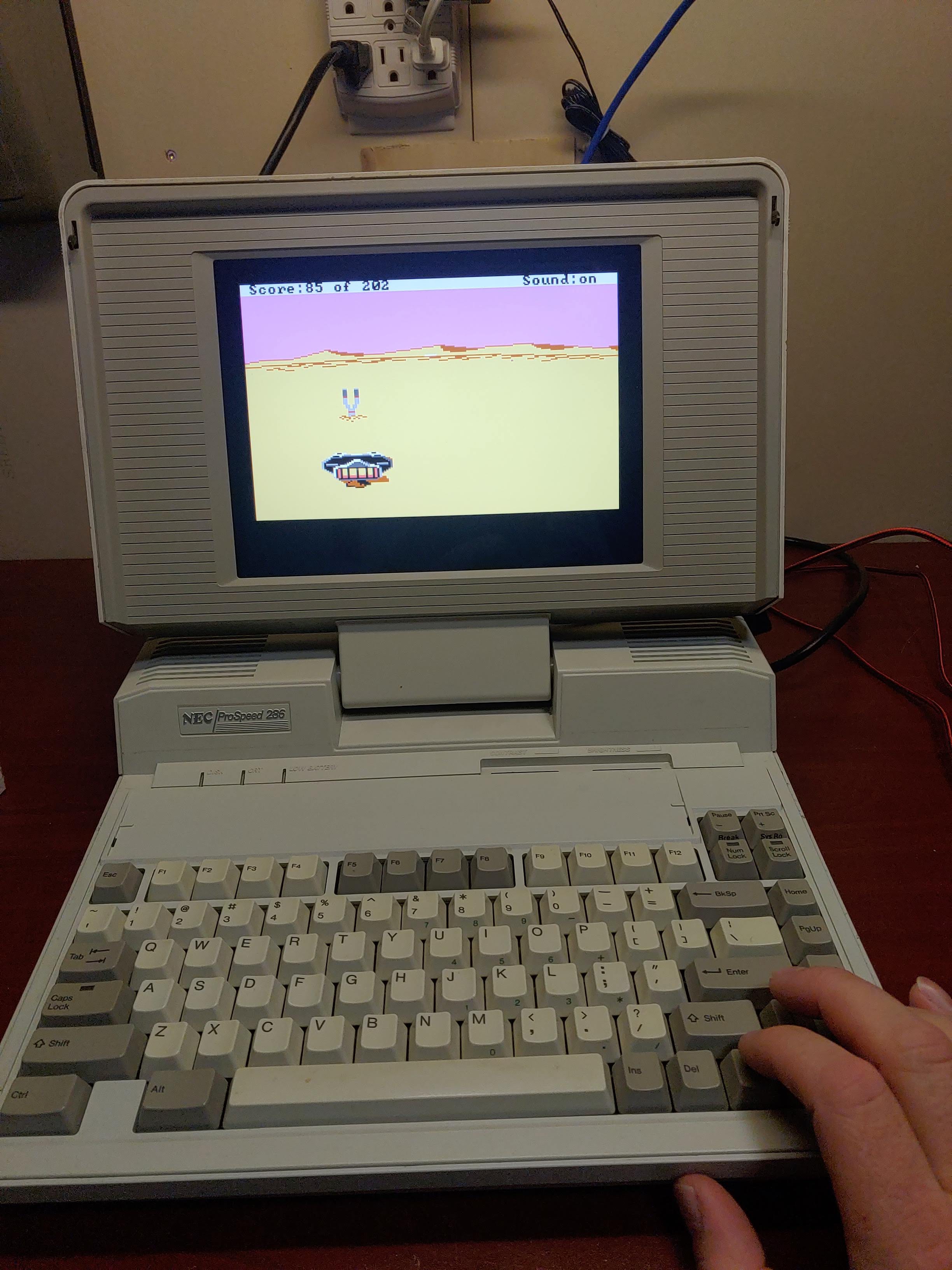
The sad reality is that all consumer electronics are going to be e-waste eventually. [Cory Whitesell] was determined his old NEC ProSpeed 286 Laptop wouldn’t meet that fate until absolutely necessary, so when his attempts at repairs failed, his efforts pivoted to create a retro battlestation from the stylish old machine.

That screen looks too good to be stock, but otherwise you can’t tell from this angle.

Externally, it looks pretty well stock, and [Cory] has retained as much of the internals as possible. The original power supply remains intact, with power taken off the original HDD’s molex connector. Said power drives a Raspberry Pi, which is small enough to fit inside without any gutting. The original keyboard connects easily enough via a PS/2 to USB adapter, while the passive-matrix LCD has been replaced with a modern screen of the same dimensions. You’d have to be a pretty hard-core purist to mourn that last change.

With emulation on the Pi, he can still have the DOS experience you’d expect from this machine, but its also powerful enough to be useful in the modern day. While we place no bets on whether or not this mod will stay relevant for another 38 years, a more powerful single-board computer or slightly-squished cell phone can be placed in the drive bay instead once the Pi’s ARM processor inevitably starts to look as anemic as the 286 does now.

Not everyone loves this kind of restomod, but we’ve featured more than a few and have a special category for it in our ongoing retrocomputing contest for those who will do everything to keep classics out of the e-waste bin, including remaking them.

2026 Hackaday Retrocomputing Contest

2026 Retrocomputing Challenge: Retro Terminal Bartop Arcade Topper

8 October 2026 at 04:00

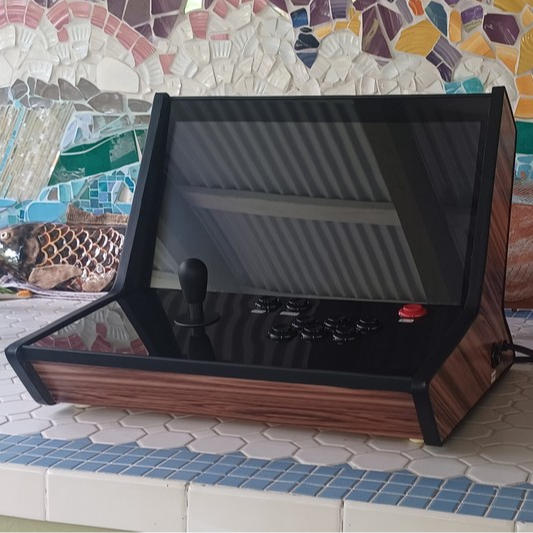
Retrocomputing is more than just hardware. It’s also a feel, a vibe, and [valkyrie0528]’s Retro Terminal Bartop Arcade Topper has it in spades.

The same unit, in bartop arcade machine mode.

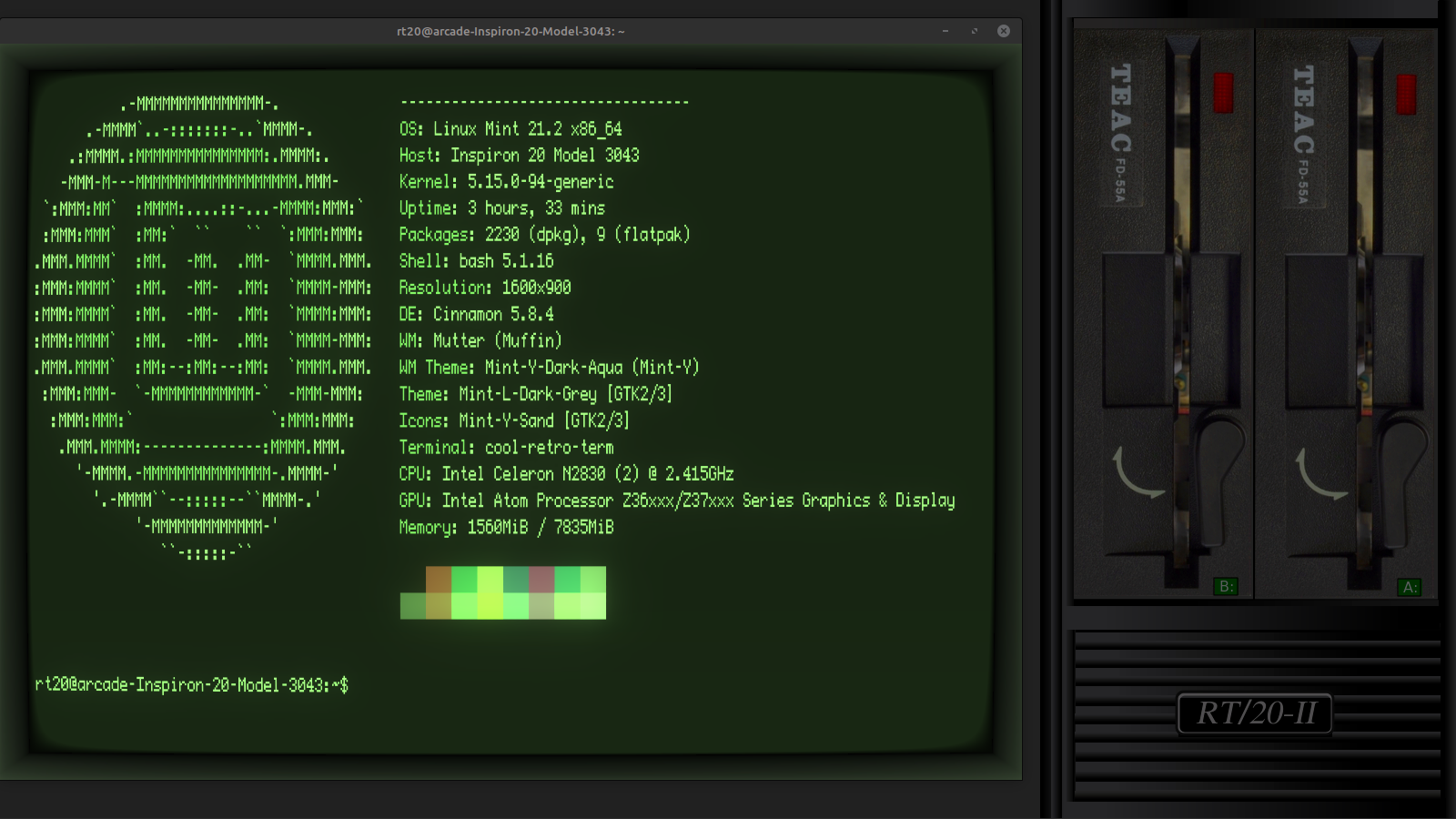
Here’s how it happened. The gorgeous device you see in the image above in fact started out as a bartop arcade cabinet build. The front section β€” with arcade buttons and joystick β€” is a removable panel. While building it, the panel was uninstalled and [valkyrie0528] placed a keyboard in the empty recess to do some configuration. Sitting at the machine like that felt like being right back in the 80s, perched at an 8-bit home computer. Cue a visit from the Good Ideas Fairy.

Now, in addition to being an arcade cabinet, one can swap the arcade controls panel for a one that has a keyboard (clicky and mechanical, of course), touchpad, and small USB breakout. The result looks amazing either way. As an arcade machine it’s beautiful, and in retro terminal mode it’s simply gorgeous.

The icing on the cake is [valkyrie0528]’s use of cool-retro-term as the terminal emulator, and there’s even a widescreen wallpaper accompanying it that puts an image of two 5.25β€³ floppy drives to the side. If you like that idea, you can download the wallpaper file from the project page for your own use.

A widescreen wallpaper with two 5.25β€³ floppy drives is the perfect complement to a retro terminal emulator.

There’s still time to enter our 2026 Retrocomputing Challenge, so if you find yourself inspired and want to show off your own take of things, there’s no time to lose!

2026 Hackaday Retrocomputing Contest

2026 Retrocomputing Challenge: Dungeons of Daggorath, But Without Quite So Much Typing

7 October 2026 at 11:30

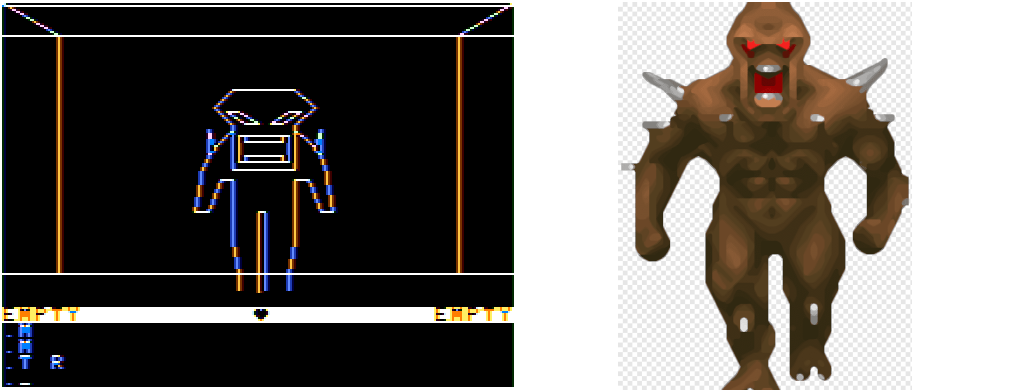
People mod games all the time, but it’s not every day someone mods Dungeons of Daggorath for the TRS-80. [Nick Bild] did exactly that, adding joystick support and a couple DOOM-inspired monsters for good measure. And while he was at it, optional unlimited player health and power because why not?

A pretty good representation, in our opinion.

Dungeons of Daggorath was pretty unusual for its time. It portrayed a dungeon and its contents from a first-person perspective, and events progressed in real time.

Gameplay-wise, most commands entered by the player revolved around moving around and attacking monsters, and that was done with text commands like ATTACK RIGHT which could mercifully be shortened to A R. Still, not the most efficient control scheme.

[Nick] downloaded the original source code and made several modifications. A joystick moves the player much more efficiently, with the button acting as a shortcut to attacking with whatever is in the player’s right hand. He also replaced the spider and viper enemies with creatures inspired by DOOMβ€˜s imp and cacodemon monsters, as well as the aforementioned optional limitless health and power.

[Nick] dubbed the modified game Dungeons of Doom and while the terms of the original don’t allow redistribution of modified code, his changes are simple enough to follow. Especially so for those from the generation that remembers typing programs in by hand from a magazine page.

2026 Hackaday Retrocomputing Contest
❌
❌