
 Login
Login
Reverse Engineered Grill Controller Gets Open Firmware

If you are a regular reader, then the odds are you have taken apart an electronic gadget, either for a fix, or simply because your curiosity got the better of you. Once inside, it’s all but impossible to help yourself from doing at least a little reverse engineering. That’s what happened when [PRBS23] took a look inside a MasterBuilt Gravity 800 Grill for a simple wire fix. But one thing led to the next, and now open source firmware for the grill is freely available!
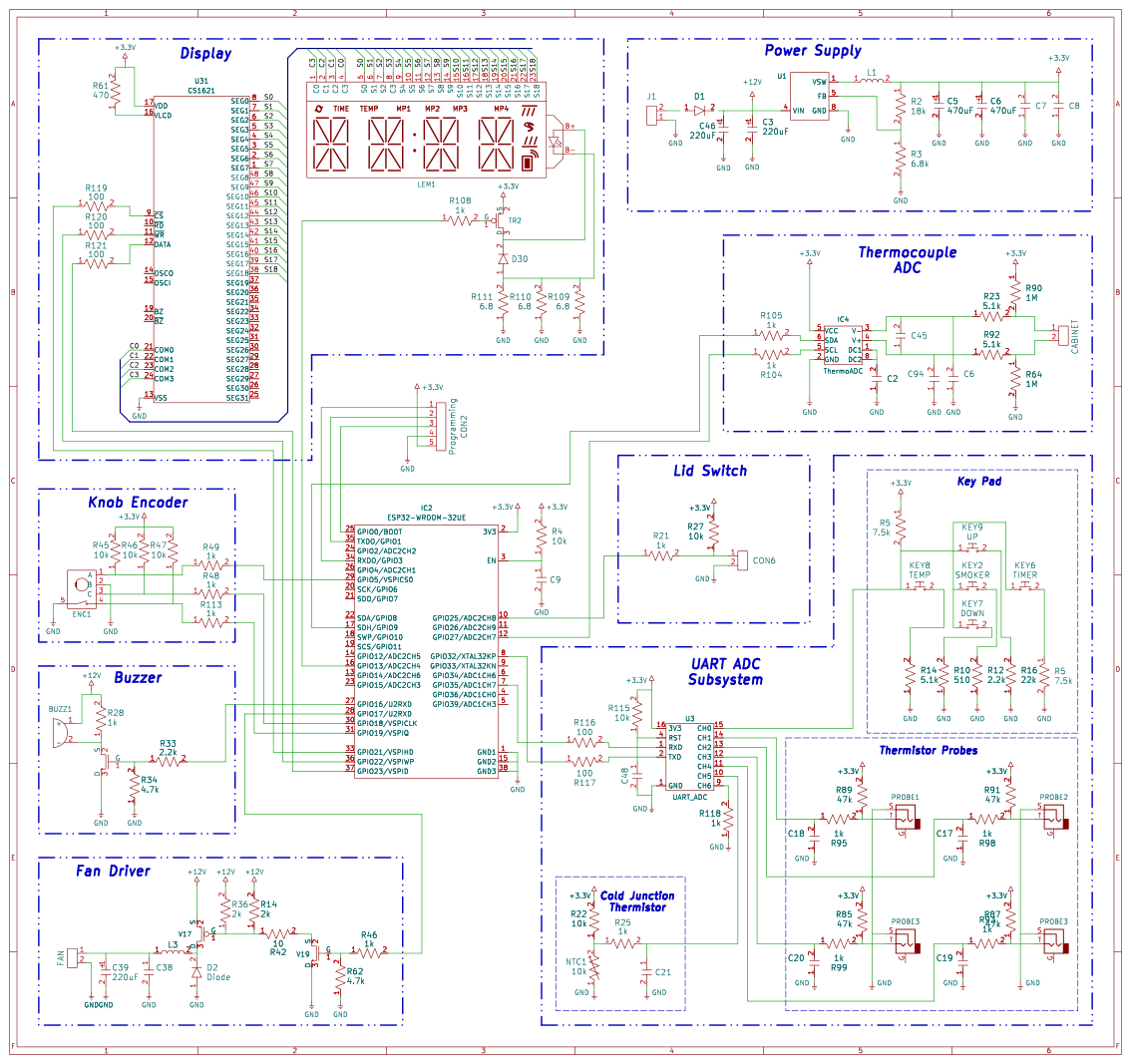
The first order of business in creating the firmware is reverse engineering the original controller. Opening it up immediately reveals an ESP-32 and a well-labeled programming port. The rest of the control board is equally simple, including connectors for four thermistor temperature sensors, lid open/close switch, fan driver, 16 segment LCD, piezo buzzer, and some physical inputs.
The thermistor along with the physical inputs are connected to a 16 pin chip, interfacing with the MCU over a 9600 baud UART connection. [PRBS23] cannot determine an ADC chip meeting these specifications, so the most likely answer is a cheap MCU programmed to act as a simple analog fronted.
The neatly labeled programming header is used to quite easily dump the firmware with the espflash utility. Analyzing this dump reveals a rather strange ADC correction function used by the original firmware. The necessity and overall utility of this function remains unclear, does corrects a maximum of around 40 degrees Fahrenheit.
Most of the other features ended up being at least somewhat easier. The CS1621 segmented display driver is reasonably well documented with datasheets making its implementation far easier. Likewise, the other odds and ends were implemented in a far more normal manner compared to the thermistors.
All this reverse engineering work got tied together into a neat little firmware package. It comes with over the air updates PID controlled temperature, and a real-time web interface. This also isn’t the first time we have seen an IoT device liberated from proprietary firmware, and this remains one of our favorite uses of reverse engineering!
