❌

Normal view

There are new articles available, click to refresh the page.
Before yesterdayMain stream

This Week in Security: It’s Patch Tuesday Again, TVs Spying, Supply Chain Worms Return, Prolonged Hack Impacts, Stolen IDs

11 September 2026 at 10:00

Several times this summer, Microsoft’s Patch Tuesday, the monthly roundup of major security patches for Microsoft products, has included record-breaking numbers of security fixes. The August 2026 patch set actually seemed to catch up. Was this a sign of the bug apocalypse lessening? Ha, nope!

Brian Krebs at Krebs On Security once again brings his excellent roundup of Patch Tuesday events, with this months patch set absolutely crushing previous numbers with nearly 1,000 security fixes.

Two of the fixes are for zero-day vulnerabilities under active exploitation in the wild, both allowing privilege escalation on Windows. Privilege escalation bugs turn general vulnerabilities in applications and games into full administrator access to gain persistence and deploy ransomware, and generally make any vulnerability significantly worse.

Krebs also calls out a CVSS 9.8 (so close to a perfect 10!) vulnerability that allows remote code execution in the Windows shell with no user interaction and no authentication, a remotely exploitable DNS bug present since Windows Server 2012 and Windows 10 which will likely see exploitation in the wild soon, and over a hundred other bugs are ranked β€œCritical”.

How the sheer volume of vulnerabilities in this patch will fit with recent Microsoft recommendations that companies should apply the patches immediately remains to be seen. (Likely: not very well, depending on what new behavior and issues the fixes cause!)

Is Your LG TV Spying on You?

Gamers Nexus continues their trend of high-quality investigation, and they have posted another tremendous multi-hour investigatory video. This time Gamers Nexus focuses on the ecosystem of LG televisions and monitors.

It shouldn’t likely surprise many here that β€œsmart” devices are usually more to the benefit of advertisers than consumers. Similarly, it shouldn’t be a surprise that a β€œsmart” device harvests user data to sell to advertises. What may be surprising is the degree to which LG devices appear to collect data, how much data is sent even when collection is turned off, and how overt executives at the company are, with multiple executives making statements in pitches to advertisers that LG β€œowns the glass”, β€œowns the living room”, and is designed to correlate devices, inhabitants of the environment, and viewing habits so that ads can be served to the TV and mobile devices in the same room simultaneously.

With tracking enabled, the smart TV captures telemetry of what applications are used, as well as continually capturing the video displayed and reporting fingerprints to LG servers and ad partners. The screen content is tracked not only for TV, but for the HDMI inputs, including if the TV is used as a PC monitor. If voice control is enabled, the TV also records audio and analyzes it. The TV also continually scans the local network and nearby Wi-Fi networks, reporting all the devices it finds on the local network, including host name, MAC address, and sometimes software running depending on the MDNS advertisements. Near-by Wi-Fi networks are sufficient for very precise geolocation, so LG effectively knows the location of every customer, as well.

Gamers Nexus makes the point that while the invasive ad tech is gross, it’s mostly limited if the user does not agree to the end-user license agreement – but the infrastructure required to enable it is riddled with security flaws, both discovered and likely additional undiscovered issues. A smart TV is basically a computer, usually running either some flavor of Android or Linux, with the attendant flexibility, power, and problems. A vulnerability in the TV operating system or its apps can provide a route into your internal network. (Not that this required an exploit: LG was called out earlier this summer because 42% of apps on the official app store contained residential proxy systems to sell your home Internet connection.) But it can also access any of the attached hardware, like the microphone.

Gamers Nexus demonstrates that a LG TV can be exploited to gain local root, and from there, it can record audio from attached devices – even when the primary microphone is muted. Gamers Nexus also discovered that muting the microphone on some models does not disconnect or disable the microphone, it simply sets the gain levels extremely low; recording is still possible, and with amplification, audio is still recoverable.

Spy tech and ad tech goes hand in hand; it will be interesting to see if LG responds by at least hardening the security on the devices, or if another company finds traction in selling modern televisions and monitors without the β€œsmart” advertising.

Shai-Halud NPM Worm Returns

Aikido.dev reports that after 111 days, the Shai-Halud worm returned to the NPM repository.

Shai-Halud was one of several worms hitting package repositories in the Spring of 2026, installing backdoors, stealing cryptocurrency wallets, and taking every login credential and authentication token it could find before infecting every package the tokens linked to. Since then, infections have remained quiet, and repositories like NPM have stated that they now scan every package as it is uploaded.

Charlie Erkisen at Aikido.dev observed that on September 7, 2026, four additional packages uploaded to NPM were infected with Shai-Halud; not a variant of the worm, but the original code, matching the known public signatures. Whatever scanning is in place in the NPM repository didn’t filter them, and if an exact match for a known, major worm isn’t caught by the infrastructure, it’s unclear how a new threat would be.

Boston Scientific Hack Continues

The apparent ransomware attack against Boston Scientific continues to have impacts, with Boston Scientific filing a report with the SEC that the attack is expected to have an impact on the company earnings.

Boston Scientific makes medical devices, like pacemakers, stents, and monitoring equipment. It has not yet been publicly disclosed what happened, or if customer data was compromised, but the SEC filing confirms that unauthorized access on β€œcertain systems” causing an outage. After several weeks of outages, the company reports that it is able to ship almost at capacity, and that the sterilization facilities for medical devices are online. While there is no estimate provided for full recovery, efforts are ongoing.

Commerce Sites Vulnerable

Adobe released a security bulletin that the Adobe Commerce and Magento platforms are under active exploitation from CVE-2026-75650, a flaw in the template engine.

These platforms power tens of thousands of commerce sites, and vulnerabilities in them are usually used to steal payment data or serve malware to customers during the checkout process. Previously this year, Magento patched another vulnerability which allowed uploading executable files to any store, and indications are that the current vulnerability has been exploited in the wild since early September 2026.

The current vulnerability allows implantation of PHP code by injecting custom styles into a query, which is then executed when Magento generates a failure email and renders the template. The attackers then download and install a control binary written in Rust which masquerades as a kernel thread task, which then monitors the store and collects payment data.

The vulnerability was publicly known and used for several days before Adobe made official statements of a fix being available, leaving any store running on Magento vulnerable with no official fixes, but as of writing this, Adobe has published patches and an advisory.

Microsoft to Block Unpatched Servers

Microsoft plans to block emails to to the cloud-hosted Exchange Online from unpatched on-premises Exchange servers.

Apparently the urge to self-host Microsoft Exchange is coupled with antipathy about actually patching it, to such a significant level that Microsoft is taking the steps to detect incoming mail from servers that have not patched since October 2025. While Microsoft updates rarely apply with zero problems, nearly a year is more than enough time to have tested and deployed a security fix.

β€œThis update released nearly a year ago, and all organizations should have updated to it”: so say we all.

Hackers Pose as Recruiters

Government-backed groups in Iran have been posing as recruiters trying to infect targets with malware.

The group, designated β€œNimbus Manticore”, is known to develop custom malware and remote access tools (RATs), and typically target specific individuals via spear-phishing attacks. The latest malware from the group is cross-platform and can infect Windows, macOS, and Linux, installing services to run websocket-based remote access tunnels, SSH tunnels, and a command-and-control client that allows live control of the infected device.

The group contacts targets posing as recruiters, but first the target must solve a coding challenge contained in a zip file. The zip contains a trojaned Node.js project which infects the victim system when compiled, deploying the remote access tools and setting up persistence to relaunch them if disabled. Multiple variants have already been spotted, generally targeting different countries, predominately Egypt, Afghanistan, and Ethiopia.

The latest version of the malware package also looks for settings and data from major security vendors like Symantec, CrowdStrike, and SentinelOne, as well as the contents of directories related to Google and Microsoft services.

The fake recruiting method has also been used by other groups in Iran and North Korea. Remember: any project with a build script can execute any commands as part of the build, and most IDE project files also allow embedding custom plugins and commands into the project. Triggering a compile on a project is the same as running arbitrary commands!

150 Million US Drivers Licenses Stolen

As many outlets are now reporting, a major ID validation company was compromised, leading to the theft of scans and data of 150 million US drivers licenses.

IDScan provides drivers license and identification card scanning services used by car rental companies, bars and dispensaries, hotels, concert venues, and a multitude of other businesses. If you’ve ever had to hand your ID over for validation, there’s a high chance you’ve interacted with IDScan or a similar company.

Evidence points to IDScan being compromised for at least a year, with full scans of licenses continually exfiltrated. The scans include everything visible on a typical license or ID card, including name, license identification number, ID photo, and home address, but also the date that it was scanned in. The collection even includes additional scans of the ID in ultraviolet and infrared to catch any watermarks. With 150 million entries, the data set contains everyone from the security researcher Brian Krebs who broke the story, to government officials like Pete Hegseth.

The data has been available for sale, individually or in bulk, although with the recent press coverage the site claiming to sell the data has gone offline for now. Before disappearing, the site claimed that all data was exfiltrated into their own databases, which means it’s still available somewhere, and shutting them out of the IDScan service won’t protect data already stolen.

Many aspects of this echo the scanned ID data stolen from validation services used by Discord and other online services: almost like scanning unchangeable government IDs is a bad plan?

American Meteor Society Knocked Offline

It’s all fun and games until they come for the geek hobbies. The American Meteor Society Fireball tracking program is was knocked offline, seemingly from a ransomware attack. Fortunately it looks like as of writing this, the admins were able to restore a backup and the site is online again.
Mantax OTAX Android Ransomware Spies on Users, Steals OTPs and Encrypts Files

11 September 2026 at 03:14

Mantax OTAX is aggressive Android malware family combines ransomware, spyware, credential theft, and remote device-control features in a single infection chain. Linked to Indonesian threat actors, the campaign targets users through sideloaded APKs and turns compromised devices into tools for surveillance, financial fraud and real-time extortion. Unlike conventional Android ransomware that focuses primarily on locking […]

The post Mantax OTAX Android Ransomware Spies on Users, Steals OTPs and Encrypts Files appeared first on GBHackers Security | #1 Globally Trusted Cyber Security News Platform.

Hackers Deploy New SloppyRAT via ClickFix to Enable Ransomware Lateral Movement

11 September 2026 at 02:17

A new Windows remote-access trojan dubbed SloppyRAT, which appears to be positioned as an intrusion-enablement tool for ransomware operations. First observed in June 2026, the malware is delivered through a multi-stage ClickFix chain and combines host reconnaissance, stealthy command execution, reverse proxying, and resilient command-and-control mechanisms to support post-compromise activity and lateral movement. Rather than […]

The post Hackers Deploy New SloppyRAT via ClickFix to Enable Ransomware Lateral Movement appeared first on GBHackers Security | #1 Globally Trusted Cyber Security News Platform.

Huntress Uncovers Phishing Attacks Using Fake Browser Pages and Rogue RMM Tools

9 September 2026 at 10:20

Huntress researchers have uncovered two phishing attacks that combined convincing fake browser windows with legitimate remote management software to establish persistent access to victims’ devices.

Both incidents, observed in August, began with phishing messages directing victims to attacker-controlled websites. The attackers then used a browser-in-the-browser (BiTB) technique to create what appeared to be a legitimate Adobe webpage, before convincing victims to download malicious software disguised as an Adobe Reader update.

Rather than deploying conventional malware, the attackers installed rogue instances of ScreenConnect, legitimate remote monitoring and management (RMM) software, giving them continued remote access to compromised endpoints.

Fake browser makes phishing harder to spot

BiTB attacks create a fake browser window inside a webpage using HTML, CSS and JavaScript. The window can replicate familiar features including an address bar, padlock and legitimate-looking URL, making traditional advice such as checking the web address less effective.

In the first attack, detected on 25 August, a victim clicked a link in a phishing email and was taken to a fake CAPTCHA page. They were subsequently presented with blurred documents and told they needed to download Adobe PDF Reader to view them.

The fake browser page appeared to show Adobe’s legitimate get.adobe.com address. However, the supposed Reader installer was actually ScreenConnect.

Once installed, the attackers deployed two rogue ScreenConnect clients, providing redundant routes for maintaining access. They then executed HideCursor.exe, a defence-evasion tool designed to conceal on-screen activity. Huntress intervened before the attack could progress further.

Second attack follows same playbook

Huntress identified another incident on 31 August involving the same Adobe Reader lure.

This time, the victim interacted with a malicious link delivered through AT&T Office@Hand, a legitimate communications service powered by RingCentral. The attackers again disguised ScreenConnect as an Adobe Reader update and installed two unauthorised instances.

The second ScreenConnect session was used to execute another defence-evasion binary, HideUL.exe. Microsoft Defender detected part of the activity, but the rogue ScreenConnect client still completed its installation before Huntress shut down the attack.

Legitimate tools remain attractive to attackers

The attacks demonstrate how threat actors can combine familiar phishing techniques with trusted software to make malicious activity harder to identify.

RMM abuse is a growing problem. Huntress’ 2026 Cyber Threat Report found RMM abuse increased 277% year on year and appeared in nearly a quarter of the incidents investigated by the company.

Huntress recommends organisations restrict who can install remote management tools, maintain an approved inventory of RMM software and monitor for new or unauthorised ScreenConnect clients. Employees should also be wary of unexpected software updates or file-viewing prompts, even when a webpage appears to display a legitimate address.

Read the full research here.Β 

The post Huntress Uncovers Phishing Attacks Using Fake Browser Pages and Rogue RMM Tools appeared first on IT Security Guru.

Panzer Ransomware Emerges With Windows, Linux, ESXi and FreeBSD Attack Support

8 September 2026 at 03:28

A newly identified ransomware-as-a-service operation, Panzer, has surfaced with advertised payload support for Windows, Linux, VMware ESXi and FreeBSD, positioning it as a cross-platform threat to enterprise and virtualized environments. The group’s rapid victim posting cadence, affiliate-focused infrastructure, and double-extortion model make it a ransomware operation security teams should begin tracking despite the current absence […]

The post Panzer Ransomware Emerges With Windows, Linux, ESXi and FreeBSD Attack Support appeared first on GBHackers Security | #1 Globally Trusted Cyber Security News Platform.

Ransomware Hackers Can Go From Network Access to Encryption in Less Than 24 Hours

3 September 2026 at 04:11

The Gentlemen ransomware-as-a-service operation can move from confirmed access inside a victim network to encryption in under 24 hours. Demonstrating how rapidly modern affiliates can turn stolen credentials or exposed infrastructure into a full-scale business disruption. Counter Threat Unit researchers tracking the operation as GOLD SHERWOOD found that the Gentlemen affiliates follow a repeatable post-compromise […]

The post Ransomware Hackers Can Go From Network Access to Encryption in Less Than 24 Hours appeared first on GBHackers Security | #1 Globally Trusted Cyber Security News Platform.

The Gentlemen Ransomware Hackers Use TukTuk C2 to Steal Credentials and Disable EDR Security

2 September 2026 at 07:25

The Gentlemen ransomware operation has been linked to a previously undocumented, cross-platform command-and-control framework namedΒ TukTuk, alongside EDR-disabling tooling, DLL sideloading research, and datasets apparently stolen from technology and healthcare organizations. Analysis of a Finland-hosted server identified what researchers assess as the complete TukTuk development project, providing an unusually detailed view into the group’s post-compromise capabilities. […]

The post The Gentlemen Ransomware Hackers Use TukTuk C2 to Steal Credentials and Disable EDR Security appeared first on GBHackers Security | #1 Globally Trusted Cyber Security News Platform.

This Week in Security: Android Malware, VOIP Hijack, Signal Contact Discovery, and TeamPCP Arrests

28 August 2026 at 10:00

On GitHub, [AyaanB] details buying a cheap Android TV streaming device, looking for, and finding, baked-in malware.

Multiple warnings have been issued by the FBI and CISA regarding malware on media box Android devices. Many devices have been caught participating in botnets providing residential proxies, ad-click fraud, and DDOS services. [AyaanB] sets out to discover if a $30 set-top streaming box is pre-infected with malware, and extracting it – without ever letting the device talk to the Internet or access other devices on the local network.

Picking a device named in the advisories, [AyaanB] discovered that it was, indeed, preloaded with multiple app stores and applications that wouldn’t typically make sense on a set-top TV box. After identifying the serial port test pads and obtaining a low-voltage serial adapter, they were able to gain access to the bootloader and from there dump the contents of the MMC over TFTP.

With the entire filesystem accessible out-of-body, proving it was infected with malware at the factory becomes simple: the malware is signed as a system application, baked onto the system partition of the MMC, granted SELinux exceptions to mark it as a system binary with shell privileges, and has multiple launch scripts to make sure it is executed even if partially removed. With the malware identified, [AyaanB] continues to dig through to uncover the capabilities.

By installing hooks into the low-level Android process spawning system, the malware installs hooks into every application as it is launched: even if an application isn’t trojaned already, by the time it finishes executing, it’s definitely been subverted. The functions patched and the methods used match the Vo1d botnet, which is used for account takeovers, residential proxies, free β€œVPN” services, and other unfriendly behavior.

Further digging into the system showed hooks for ad-click fraud, where hidden browser windows are allowed to run unthrottled and display overlays are configured to obscure ads below where the user may click. Other included tools bid in real-time ad auctions, claiming to directly publish ads to the user which may or may not be visible. To cap it all off, a root level backdoor allows botnet operators to access the systems directly and install additional tools.

Be sure to check out [AyaanB]’s writeup for more details on exfiltration methods and other malware found on the devices.

Hijacking Calls to Military Bases with DNS

In the early 2000s, a domain name scheme was developed to directly map telephone numbers to DNS records for SIP and VOIP calling. (Who knew? I didn’t!) But [Lina] did, with an excellent writeup on accidentally positioning themselves to intercept phone calls by registering an expired domain.

The e164-arpa number to name scheme was never widely adopted, and quickly forgotten about. As is the way with all forgotten standards, the infrastructure slowly fell apart. [Lina] noticed that several country records were delegated to name servers hosted in expired domains, and by simply registering them, they were able to begin resolving queries. For a five Euro registration fee, [Lina] gained control over an abandoned DNS resolution protocol for Saint Helena, Diego Garcia, and Ascension Island. After watching the logs for some time and not getting any traffic, and running into the bureaucratic tangle of standards committees and the actual United Nations, the project was shelved.

Six months later, [Lina] examined the logs of the other domains, and found hundreds of thousands of records of attempted calls, and since you read the section header, you already know where the calls were headed. Clearly some phone systems still attempt to use the ill-fated e164-arpa calling scheme even in 2026, and because the DNS records control the destination of the call, it would have been possible to hijack all the calls transparently and mine them for information, and all for five Euros. With military bases involved, and with one of the bases targeted by missiles during recent conflicts, suddenly agencies cared significantly more, and the story has the happy ending of the domains being transferred to the National Cyber Security Center in the UK.

AliExpress Fingerprinting Browsers

AliExpress has been caught using a hidden fingerprinting technique to try to identify users.

The fingerprinting plays a waveform in the background of the page with the volume set to zero, and measures variances in the computed values. Variances in the computed waveform are introduced by the browser type, CPU, audio hardware, and even the driver versions. While most of the headlines have focused on the audio fingerprinting, AliExpress also used other fingerprinting techniques to build profiles of each browser, including WebGL, WebRTC, screen resolution, and other web integrations.

The purpose of the advanced device fingerprinting is unknown: AliExpress could use it for fraud prevention, but could also be using it to identify and track customers when they have disabled traditional tracking cookies. The audio fingerprinting was discovered when a user experienced trouble with Bluetooth headphones being attached to the silent audio stream.

Unfortunately with fingerprinting techniques which leverage standard features in the browser it can be difficult to block them. Sometimes, ad blockers may be able to identify and block some of the fingerprinting resources, as can disabling some features in the browser, but many features like audio and WebGL can’t usually be turned off.

[Tom Ritter], who works for Firefox, mentions that they head this fingerprinting method off at the pass three years ago as part of their anti-fingerprinting campaign. This is clearly not the case for all browsers.

Attacking Signal’s Contact Discovery

Most chat apps allow you to discover users from your contacts list who also use that app – but then you’ve given your contact list to the app, helping them build their marketing and social graphs. Signal of course handles it differently, allowing you to discover users from your contacts list while preventing the Signal corporation from being able to access your list of contacts. Well, mostly.

Signal runs the contact discovery process inside an Intel SGX Enclave. A SGX Enclave is an Intel extension similar to a Trusted Execution Environment (TEE) on Arm, where memory and execution can be partitioned for a restricted process. In theory, code and memory inside an enclave can not be read by other processes, root processes, or even a hypervisor or virtualization system. Signal uses enclaves so that the users encrypted contacts list and the encryption key itself are fully insulated. The Signal client is then able to validate the integrity of the enclave using known measurement values baked into the client releases.

Researchers using the V12 AI agent discovered this wasn’t always the case. Because a SGX Enclave shares resources with the rest of the system, a malicious host could create exploitable race conditions in the algorithm by generating page faults and pausing execution of the enclave. The malicious server running the enclave is still unable to directly read the contents, but it could extract the secret values needed to then create false servers which could fully expose the user contact list.

A second attack would allow a malicious host to manipulate the list of clients connected to the enclave, gaining full code execution inside the enclave with the predictable result of exporting contact data.

Both of the issues were reported to Signal and fixed before the public writeup, and there is no evidence they were ever abused: to attack either flaw, a compromised host would have to be running the Signal enclave code and be part of the Signal infrastructure that clients would connect to.

Boston Scientific Hit by Cyberattack

Boston Scientific reported in a SEC filing that it has been hit with an unspecified cyber attack impacting operations, causing the stock to drop by almost 5% in a day.

The company has been unwilling to release any details of the attack, but expects to be able to resume shipping of medical products in β€œless than three weeks,” which sounds like a pretty major disruption. Boston Scientific manufactures defibrillators, pacemakers, and surgical equipment. It’s unclear if any patient data has been compromised, though presumably regulations will require disclosure if that’s determined to be the case.

With no additional information about the attack, it’s also unclear if any source code or other data which could aid attacking medical devices was impacted, either.

Carhartt Hit by Ransomware

The Carhartt clothing company has also been hit by ransomware, with 13 million accounts leaked.

The ShinyHunters group claims responsibility; previous victims of the group include casinos, car manufacturers, medical companies, and government agencies. The leak claims to include over 50 gigabytes of customer and employee data, with customer data including email, phone numbers, and physical shipping addresses. The group demanded $3.3 million in ransom for the data, and published it when Carhartt didn’t pay.

Have I Been Pwned linked the data to a compromise of the Databricks instance used by Carhartt, which is a platform for linking business data and AI.

AI Agents Installing Unknown Code

Multiple AI agents (Codex, Hermes, and Claude) have been observed executing arbitrary instructions and code contained in the llms.txt files on websites.

Normally, llms.txt and llms-full.txt are used to instruct AI agents on how to summarize and index the sites content, but researchers in Israel indexed the files of Fortune 500 companies, defense contractors, and tech companies and found that over a hundred of them included directions to install packages which didn’t exist or referenced domain names that were not registered. The researchers were able to create packages with matching names and record agents inside multiple high-profile companies installing and executing them.

While documenting the reach of the exposed packages, researchers found at least one had already been replaced by attackers with live malware which would execute inside whatever context the agent was executing in, potentially exposing authentication tokens or company data. The attacks which have been rampant in the NPM and PyPI package repositories can make even legitimate packages dangerous to install, but agents blindly following instructions from arbitrary websites inflates the danger even higher.

Alleged Members of TeamPCP Arrested

Finally, security reporter extraordinaire Brain Krebs brings news that suspected key operators of the TeamPCP group have been arrested in Australia.

TeamPCP has been behind some of the worst of the supply chain attacks plaguing PyPI, NPM, and VSCode plugin repositories, and have released the source code to some of the worms used in the supply chain attacks to muddy the waters and recruit new members. TeamPCP has also been involved in compromising thousands of GitHub repositories, and is affiliated with multiple other crime and malware groups.

While the identities of the arrested individuals have not been officially released, in typical Brian Krebs fashion, dozens of connections are correlated showing their likely identities and links to TeamPCP and other groups. If nothing else, this should serve as a reminder that the best time to pay attention to operational security was ten years ago.

As TeamPCP doesn’t appear to be a state-sponsored group, or even strongly organized, the arrests of a few members are unlikely to drastically slow down the compromises. Krebs details conversations held with one of the arrested men, in which they discuss struggles with sobriety and plans to leave the malware scene, stating that others have already taken over leadership roles in the group.

Threat landscape for industrial automation systems. Q2 2026

27 August 2026 at 06:05

All threats

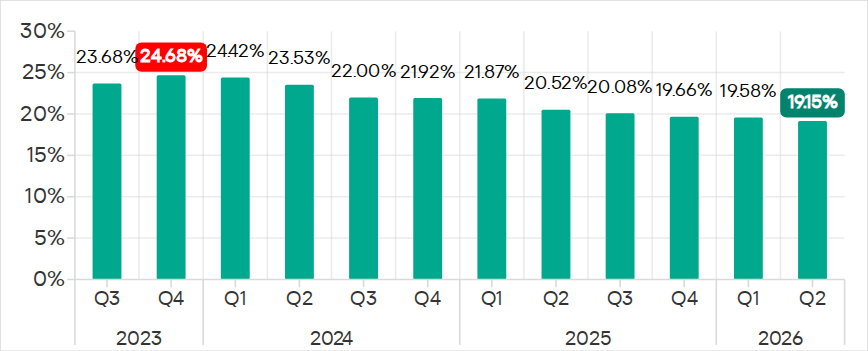
In Q2 2026, the percentage of ICS computers on which malicious objects were blocked continued to decrease, falling to 19.15%, its lowest level since 2022.

Percentage of ICS computers on which malicious objects were blocked, Q3 2023–Q2 2026

Percentage of ICS computers on which malicious objects were blocked, Q3 2023–Q2 2026

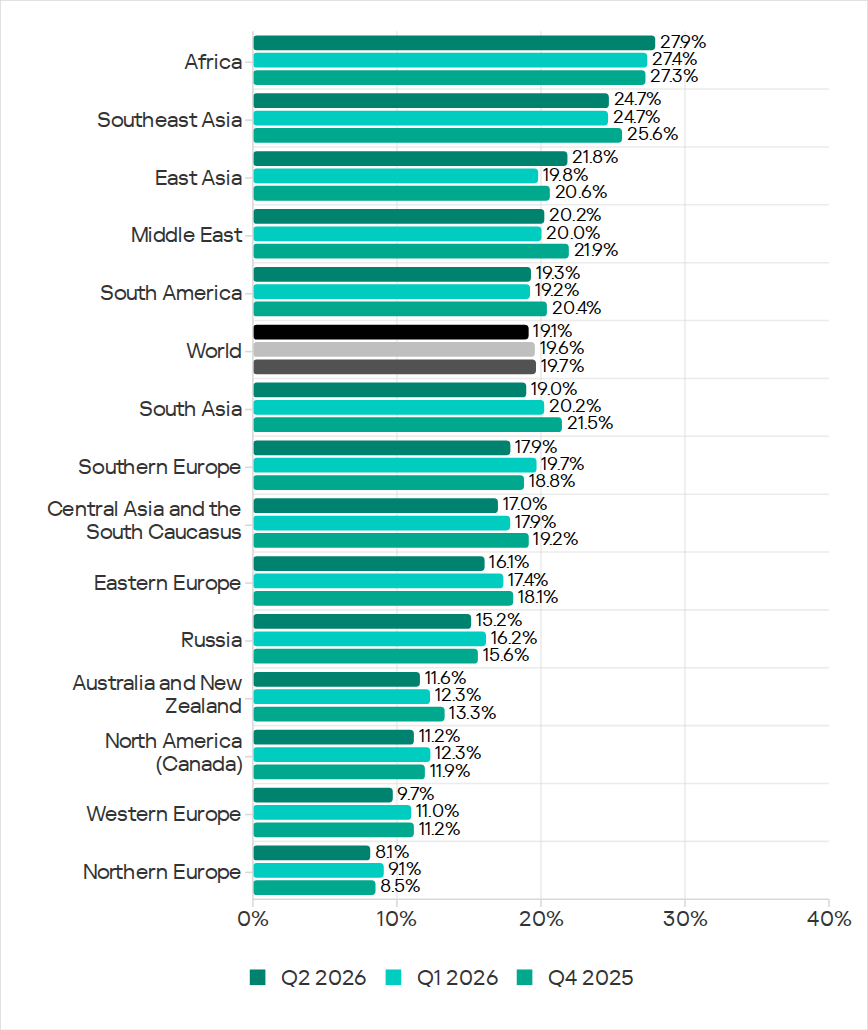
Regionally, the percentages ranged from 8.1% in Northern Europe to 27.9% in Africa.

Regions ranked by percentage of attacked ICS computers

Regions ranked by percentage of attacked ICS computers

The figures increased in five regions over the quarter, most notably in East Asia (by 2.0 pp) and Africa (by 0.5 pp).

East Asia saw increases in percentages for all threats except miners. The region ranked first in terms of growth for malicious scripts and phishing pages, spyware, and viruses. East Asia also led in terms of growth in threats from the internet. The percentage of ICS computers on which email threats were blocked also increased.

Selected industries

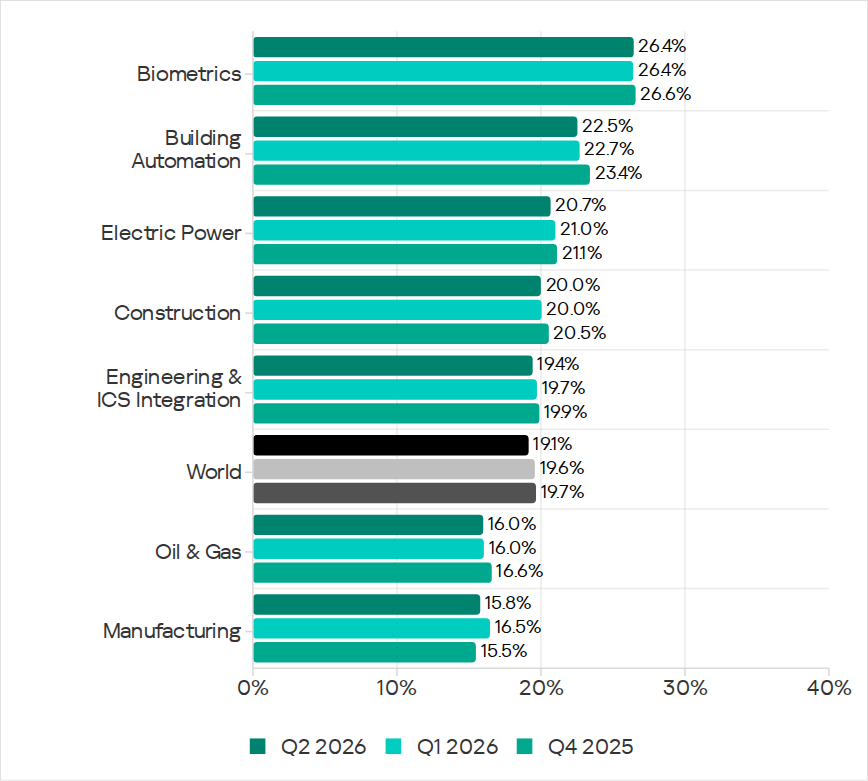
The biometrics sector (26.44%) has traditionally led the rankings of industries and OT infrastructures surveyed in this report in terms of the percentage of ICS computers on which malicious objects were blocked. Biometric systems are characterized by the availability of internet access, extensive email use for data exchange and approvals (e.g. access granting), and, in many cases, minimal cybersecurity controls within the organizations that use them.

Industries ranked by percentage of ICS computers on which malicious objects were blocked

Industries ranked by percentage of ICS computers on which malicious objects were blocked

The biometrics sector ranked first among industries in terms of the following threat categories: malicious scripts and phishing pages, malicious documents, spyware, ransomware, and worms. The sector is also leading among industries in terms of email threats. At the same time, unlike other industries, the percentage of affected ICS computers for email threats in biometrics exceeds that for internet threats.

In all selected industries, the global average follows a downward trend.

Threat categories

In Q2 2026, Kaspersky security solutions blocked malware from 10,904 different malware families of various categories on industrial automation systems.

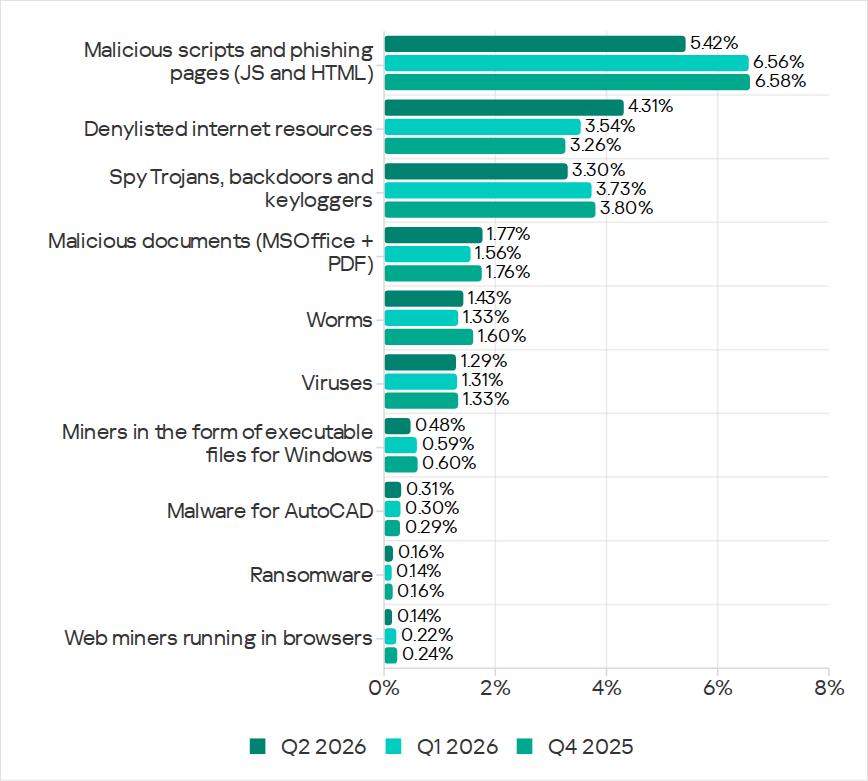
Over the quarter, the percentage of ICS computers on which malicious objects of the following categories were blocked increased: denylisted internet resources, malicious documents, worms, ransomware, and malware for AutoCAD.

Percentage of ICS computers on which the activity of malicious objects from various categories was blocked

Percentage of ICS computers on which the activity of malicious objects from various categories was blocked

Malicious scripts and phishing pages (JS and HTML)

Malicious scripts and phishing pages remained in first place in the threat category rankings based on the percentage of ICS computers on which the respective threats were blocked. In Q2 2026, the global average dropped to 5.42%.

Over the quarter, the figure for this category only increased in East Asia, rising by 0.93 pp to 4.86%. This is the second-highest figure in the region in the last three years.

In East Asia, the percentage of ICS computers affected by malicious scripts and phishing pages increased in all the industries surveyed, except construction. The highest figures were recorded for biometrics (9.01%) and building automation (6.49%).

Denylisted internet resources

In Q2 2026, denylisted internet resources rose in the threat category rankings from third to second place, displacing spyware. Globally, the percentage of ICS computers on which denylisted internet resources were blocked has been increasing for two quarters in row and reached 4.31%.

The figures increased in all regions over the quarter, most notably in Russia (by 1.33 pp). Moreover, Russia ranked first (5.17%) among the regions in terms of denylisted internet resources. Since 2022, the region has topped these rankings twice before, both times in Q2: in 2022 and 2024.

Among the selected industries in Russia, the highest figures for the denylisted internet resources were in the electric power (6.61%) and engineering and ICS integration (5.62%) industries.

Malicious documents (MSOffice + PDF)

Malicious documents ranked fourth in the threat category rankings by the percentage of ICS computers on which they were blocked. The percentage for this category decreased over the previous three quarters, reaching its lowest level in three years. However, in Q2 2026, it increased to 1.77%.

Over the quarter, the figures for malicious documents increased in seven regions, most notably in South America (by 1.35 pp) and Southern Europe (by 0.48 pp). These two regions are among the top three in terms of malicious documents, malicious scripts and phishing pages, as well as threats from email clients.

South America ranked second in the rankings of regions in terms of malicious documents. In Q2 2026, the percentage of ICS computers in the region on which this threat was blocked was 3.56%, which was the fourth highest in three years.

Among the selected industries in South America, the highest percentage of ICS computers on which malicious documents were blocked was in biometrics (6.67%).

Southern Europe ranked first in the rankings of regions in terms of malicious documents. In the previous quarter, the percentage of ICS computers in the region on which this threat was blocked was the lowest in three years, but in Q2 2026 it increased to 3.63%.

Among the selected industries in Southern Europe, the highest percentage of ICS computers on which malicious documents were blocked was once again in biometrics (11.48%).

Spyware

Spyware ranked third in the threat category rankings based on the percentage of ICS computers on which it was blocked. The percentage for this category (3.30%) is the lowest since 2022.

Over the quarter, the figures increased in three regions, most notably in East Asia (by 0.53 pp) and Southeast Asia (by 0.42 pp).

East Asia ranked third based on the figures for spyware (4.77%), behind Africa and Southeast Asia. This is the region’s highest rate since Q2 2025. Among the countries and territories in the region, the highest percentage of ICS computers on which spyware was blocked was in mainland China (6.61%). Among the selected industries in East Asia, the highest figures for spyware were in the electric power (11.75%) and manufacturing (5.87%) industries. In all the industries surveyed, the figures are higher than the regional average.

Southeast Asia ranked second after Africa in the ranking of regions in terms of spyware, with 5.32%. Among the selected industries in Southeast Asia, the highest figures for spyware were in biometrics (8.93%) and manufacturing (7.32%). The figures increased in all industries over the quarter.

Ransomware

The percentage of ICS computers on which ransomware was blocked decreased in the previous three quarters but increased to 0.16% in Q2 2026.

During the quarter, the percentage increased in all regions, except Western and Southern Europe and North America (Canada). Africa led the ranking in terms of growth for this metric.

In Q2 2026, Africa ranked first among the regions in terms of the percentage of ICS computers on which ransomware was blocked (0.29%). The only time the figure in the region was higher in the past three years was Q2 2025 (0.31%).

Among the selected industries in Africa, the highest figures for ransomware were in the electric power industry (0.72%) and biometrics (0.52%). Over the quarter, the figures increased in all industries, except manufacturing and construction. The biggest increase was recorded in the electric power industry.

In Russia, the percentage of ICS computers on which ransomware was blocked in biometric systems has increased for three consecutive quarters, reaching 1.22%. This is the highest level of ransomware across all industries in all regions.

Miners

In Q2 2026, the percentage of ICS computers on which miners were blocked was the lowest since 2021, for both miners in the form of executable files for Windows (0.48%) and web miners running in browsers (0.14%).

The figures for both categories decreased in all regions, except for Africa where figures for miners in the form of executable files for Windows increased slightly.

On average, the oil and gas industry led the rankings among the selected industries both in terms of miners in the form of executable files for the Windows OS (0.66%)Β and in terms of web miners (0.34%).

Worms

In Q2 2026, the percentage of ICS computers on which worms were blocked increased to 1.43%.

In Q2 2026, the Middle East (2.11%) was second (after Africa) in the rankings of regions in terms of worms, displacing Central Asia and the South Caucasus.

Among the selected industries in the Middle East, the highest percentage of ICS computers on which worms were blocked was in building automation (2.90%). Over the quarter, the figures increased in all industries.

Australia and New Zealand ranked 12th among the regions in terms of the percentage of ICS computers on which worms were blocked (0.41%). Over the past three years, the figure in this region was only higher in Q2 2024 (0.42%). The figures increased in all the surveyed industries in the region, most notably in manufacturing and electric power. As a result, for these industries they exceeded the regional average by 2.9 and 2.3 times, respectively.

Viruses

In Q2 2026, the percentage of ICS computers on which viruses were blocked decreased to 1.29%.

The top three regions for this metric remain unchanged: Southeast Asia (6.03%), Africa (4.22%), and East Asia (3.14%). These same regions lead the rankings in terms of malware for AutoCAD.

The figures increased in three regions: East Asia, Australia and New Zealand, and Africa, where it has been growing for four consecutive quarters and reached its highest value since 2022.

Among the selected industries in Africa, the highest percentage of ICS computers on which viruses were blocked was in construction (5.47%).

East Asia ranked third among the regions in terms of viruses, reaching the highest level in the region for the past three years. Among the countries and administrative regions of East Asia, mainland China is the clear leader in terms of viruses (5.07%).

Among the selected industries in East Asia, the highest percentage of ICS computers on which viruses were blocked was in construction (5.93%).

In Australia and New Zealand, the increase in the percentage of ICS computers on which viruses were blocked was primarily due to a 4.3-fold increase in the figure for the electric power industry: from 0.29% to 1.24%. For a region where the percentage of attacked ICS computers for all threats is 0.12%, this is a very high value.

Malware for AutoCAD

In Q2 2026, the percentage of ICS computers on which malware for AutoCAD was blocked increased to 0.31%.

The most notable increase over the quarter was observed in Africa. After more than doubling in the previous quarter, the figure for the region continued to rise (although not so dramatically), reaching 1.02%.

Among the selected industries across all regions, the highest percentage of ICS computers on which malware for AutoCAD was blocked was in construction in East Asia (6.38%) and in Southeast Asia (4.05%).

Main threat sources

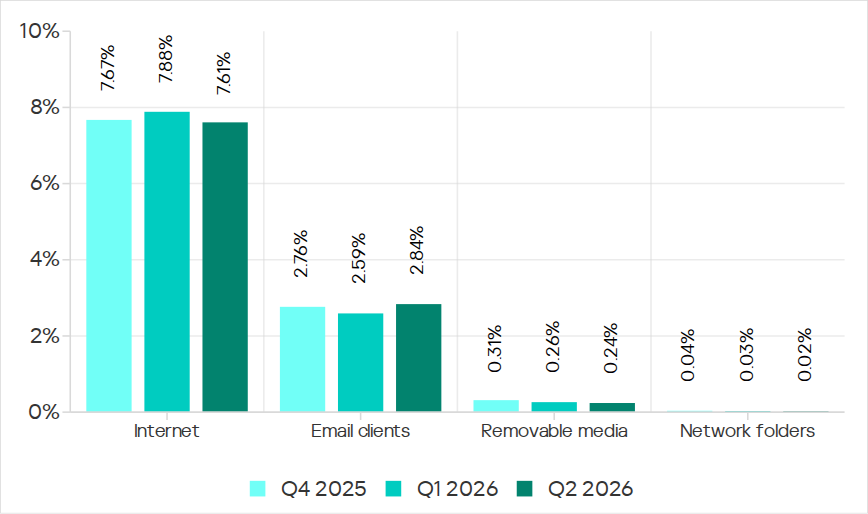
In Q2 2026, of all the threat sources, the percentage increased only for email.

Percentage of ICS computers on which malicious objects from various sources were blocked

Percentage of ICS computers on which malicious objects from various sources were blocked

Internet

The percentage of ICS computers on which threats from the internet were blocked decreased to 7.61%, reaching its lowest level since 2021.

Over the quarter, the percentage increased in three regions: East Asia by 0.8 pp (to 6.3%), South Asia by 0.3 pp (to 10.4%), and Russia by 0.3 pp (to 6.4%).

Among the selected industries across all regions, the highest percentage of ICS computers on which threats from the internet were blocked was in biometrics (13.03%) and engineering and ICS integration (12.16%) in South Asia.

Email

The percentage of ICS computers on which email threats were blocked increased to 2.84%.

In Q2 2026, the percentage of ICS computers on which email threats were blocked increased in South America by 1.0 pp (to 5.2%) and in Africa by 0.7 pp (to 4.3%).

Among the selected industries across all regions, the highest percentage of ICS computers on which email threats were blocked was in biometrics (19.14%) and building automation (12.49%) in Southern Europe.

Removable media

The percentage of ICS computers on which threats from removable media were blocked continued to decrease, reaching 0.24%, the lowest value for the period under review.

Among the selected industries across all regions, the highest percentage of ICS computers on which threats from removable media were blocked was in the electric power industry in East Asia (1.34%) and biometrics in Africa (1.29%).

Network folders

The percentage of ICS computers on which threats from network folders were blocked continued to decrease. In Q2 2026, it was the lowest for the period under review, at 0.023%.

The only region to see an increase in the percentage of ICS computers on which threats from network folders were blocked during the quarter was Africa. This was mainly due to an increase in the building automation figure to 0.05%.

Among the selected industries across all regions, the highest percentage of ICS computers on which threats from network folders were blocked was in biometrics (0.23%), building automation (0.17%), and engineering and ICS integration (0.13%) in East Asia.

For more information on industrial threats see the full version of the report.

Human Error Remains at the Core of AI-Enabled Social Engineering

24 August 2026 at 09:00

AI is making social engineering attacks significantly more effective, according to a new report from cyber insurance firm Resilience. These attacks were behind more than 85% of losses in the first half of 2026, compared to less than 20% during H1 2024.

Cybersecurity Challenges Facing the EMEA Travel and Tourism Industry

17 August 2026 at 09:00

Like many, the travel and tourism industry has undergone a radical digital transformation over the last few years. From AI-curated itineraries and biometric check-ins to interconnected booking engines and smart room tech, the modern β€œDigital Guest Journey” is more seamless than ever before.

❌
❌