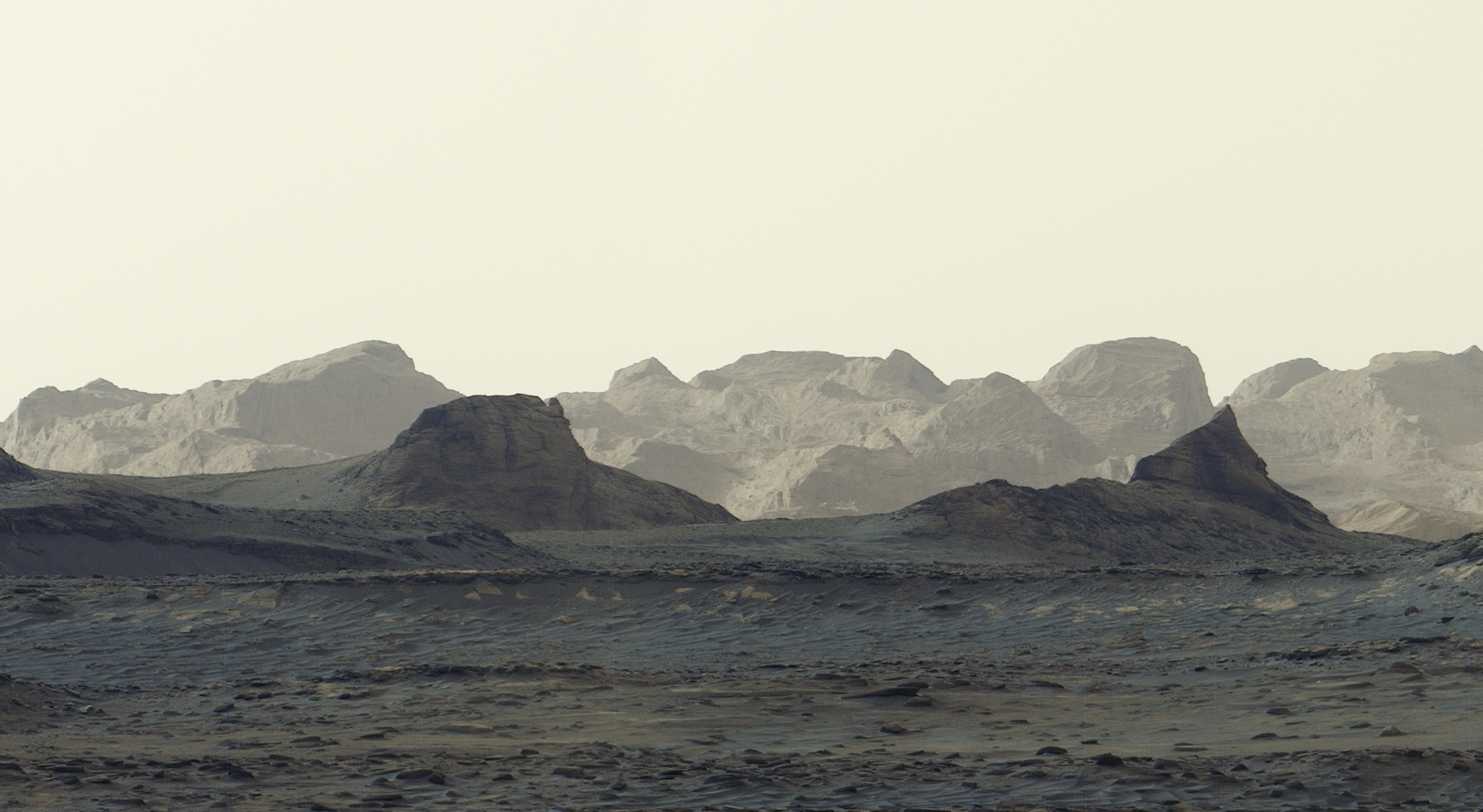
This 360-degree look at Neretva Vallis within Mars’ Jezero Crater was stitched together using 217 images acquired by the rover’s Mastcam-Z on May 20, 2024, the 1,155th Martian day, or sol, of the mission. While it is a wind-swept dusty vista today, billions of years ago it was home to a river channel that fed fresh water into Jezero Crater.
This is an enhanced-color version, which had its color bands processed to improve visual contrast and accentuate color differences,
Arizona State University leads the operations of the Mastcam-Z instrument, working in collaboration with Malin Space Science Systems in San Diego, on the design, fabrication, testing, and operation of the cameras, and in collaboration with the Niels Bohr Institute of the University of Copenhagen on the design, fabrication, and testing of the calibration targets.NASA’s Jet Propulsion Laboratory, which is managed for the agency by Caltech, built and manages operations of the Perseverance rover.
The large sunshade of NASA’s Near-Earth Object (NEO) Surveyor is mounted on an assembly ring during inspections in a clean room at BAE Systems Space & Mission Systems in Boulder, Colorado, in July 2026.
The sunshade structure stands 20 feet (6 meters) tall and measures 8 feet (2.4 meters) wide at its base. Its two flat panels, joined at a 23.5-degree angle, were covered with 864 interconnected solar cells and then tested before arriving in Colorado. This specialized solar array can produce up to 2 kilowatts of power and will generate all the required electricity to charge the onboard batteries that power the spacecraft’s systems.
Built by Applied Aerospace in Stockton, California, the sunshade structure was outfitted with its solar cells by SolAero Technologies in Albuquerque, New Mexico, in January. Environmental testing of the sunshade and solar array was completed at a commercial thermal vacuum testing facility in El Segundo, California, in March and it was delivered to BAE Systems Space & Mission Systems ahead of schedule in May.
When in space, NEO Surveyor will seek out some of the hardest-to-find asteroids and comets, some of which may be located in the direction of the Sun — a region of sky where ground-based optical telescopes have a harder time searching.
More information about NEO Surveyor is available at:
The large sunshade of NASA’s Near-Earth Object (NEO) Surveyor mission is inspected by a technician at BAE Systems Space & Mission Systems in Boulder, Colorado, in late July.
Built by Applied Aerospace in Stockton, California, the sunshade structure was outfitted with its solar cells by SolAero Technologies in Albuquerque, New Mexico, in January. Environmental testing of the sunshade and solar array was completed at a commercial thermal vacuum testing facility in El Segundo, California, in March and it was delivered to BAE Systems Space & Mission Systems ahead of schedule in May.
When in space, NEO Surveyor will seek out some of the hardest-to-find asteroids and comets, some of which may be located in the direction of the Sun — a region of sky where ground-based optical telescopes have a harder time searching.
More information about NEO Surveyor is available at:
This infographic illustrates the distances driven by various rovers on the surface of Earth’s Moon and Mars. Of the vehicles shown, the NASA Mars rovers Perseverance and Curiosity are still operational and moving across the surface; the figures shown for those two are distances driven as of Oct. 11, 2026. As of that date, Perseverance exceeded the distance record held by NASA’s Opportunity rover, which came to a final halt in 2018 at about 28.1 miles (45.16 kilometers) driven.
NASA’s Jet Propulsion Laboratory, which is managed for NASA by Caltech in Pasadena, California, built and manages operations of the Perseverance rover on behalf of the agency’s Science Mission Directorate in Washington, as part of NASA’s Mars Exploration Program portfolio.
Members of NASA’s Perseverance Mars mission team gather in the Mars Yard at the agency’s Jet Propulsion Laboratory in Southern California with a certificate from Guinness World Records marking the rover distance record on the Red Planet. Positioned in front of the team is OPTIMISM (Operational Perseverance Twin for Integration of Mechanisms and Instruments Sent to Mars), a full-scale engineering model used to plan the rover’s driving routes and science activities on Mars. NASA JPL, which is managed by Caltech, built and manages operations of the Perseverance rover on behalf of the agency’s Science Mission Directorate in Washington, as part of NASA’s Mars Exploration Program portfolio.
Rover tracks and a rocky Martian landscape are shown in this image captured by one of the navigation cameras (navcams) aboard NASA’s Perseverance Mars rover on Oct. 11, 2026, the 2,006th Martian day, or sol, of the mission. During that sol’s drive, spanning 299.6 feet (91.31 meters), the mission passed a major milestone: pushing Perseverance’s total driving distance beyond that of the agency’s Opportunity rover, which logged 28.06 miles (45.16 kilometers) during its 15-year mission on Mars.
NASA’s Jet Propulsion Laboratory, which is managed for the agency by Caltech in Pasadena, California, built and manages operations of the Perseverance rover on behalf of the agency’s Science Mission Directorate in Washington, as part of NASA’s Mars Exploration Program portfolio.
Voyager Technologies’ Griffin-1 Completes Environmental Testing at NASA JPL
PIA26708
Credits: NASA/JPL-Caltech
Downloads
Voyager Technologies’ Griffin-1 Completes Environmental Testing at NASA JPL
JPEG (30.76 MB)
PIA26708 Figure A
JPEG (26.47 MB)
PIA26708 Figure B
JPEG (26.42 MB)
PIA26708 Figure C
JPEG (19.28 MB)
PIA26708 Figure D
JPEG (1.10 MB)
Description
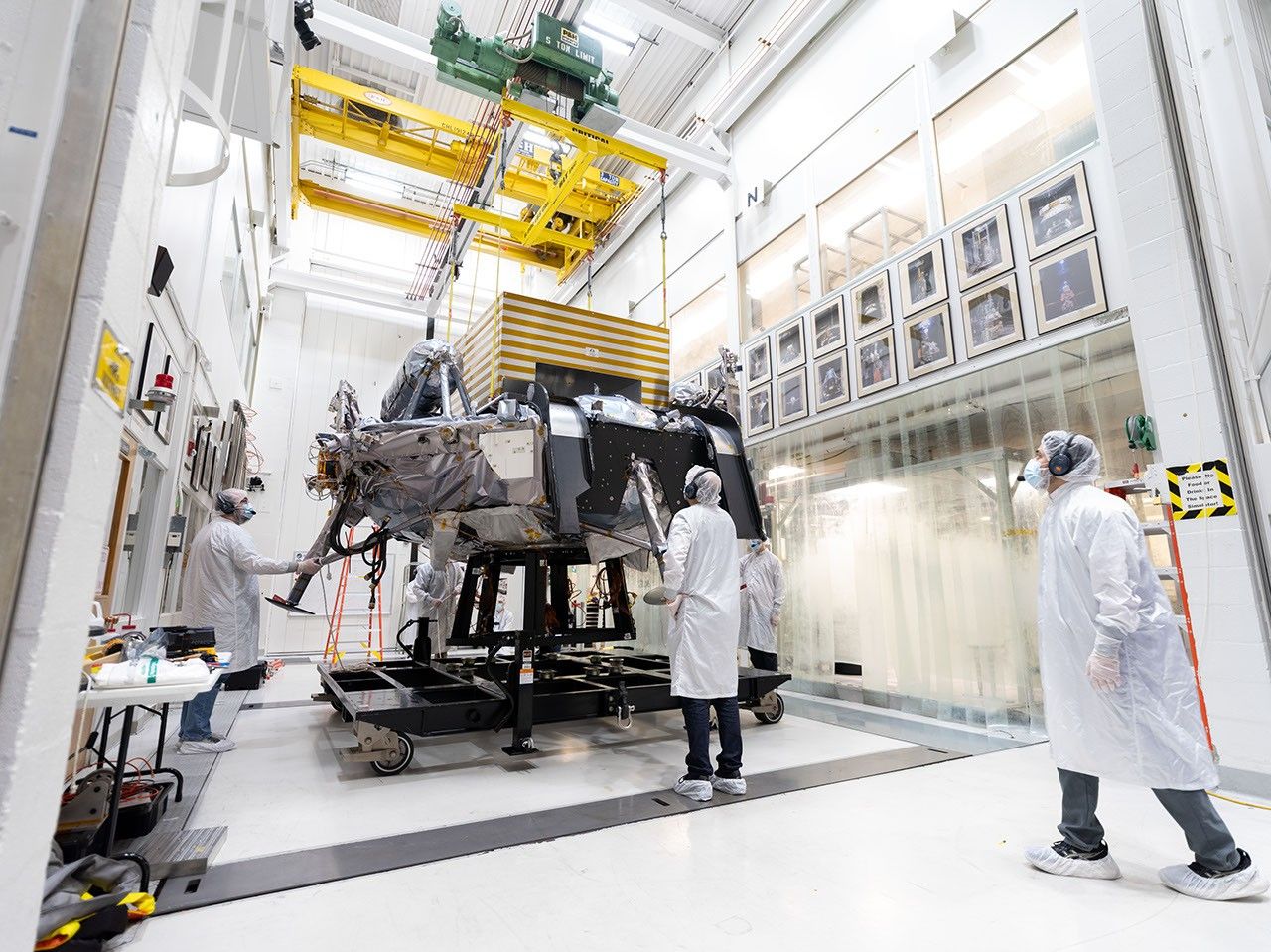
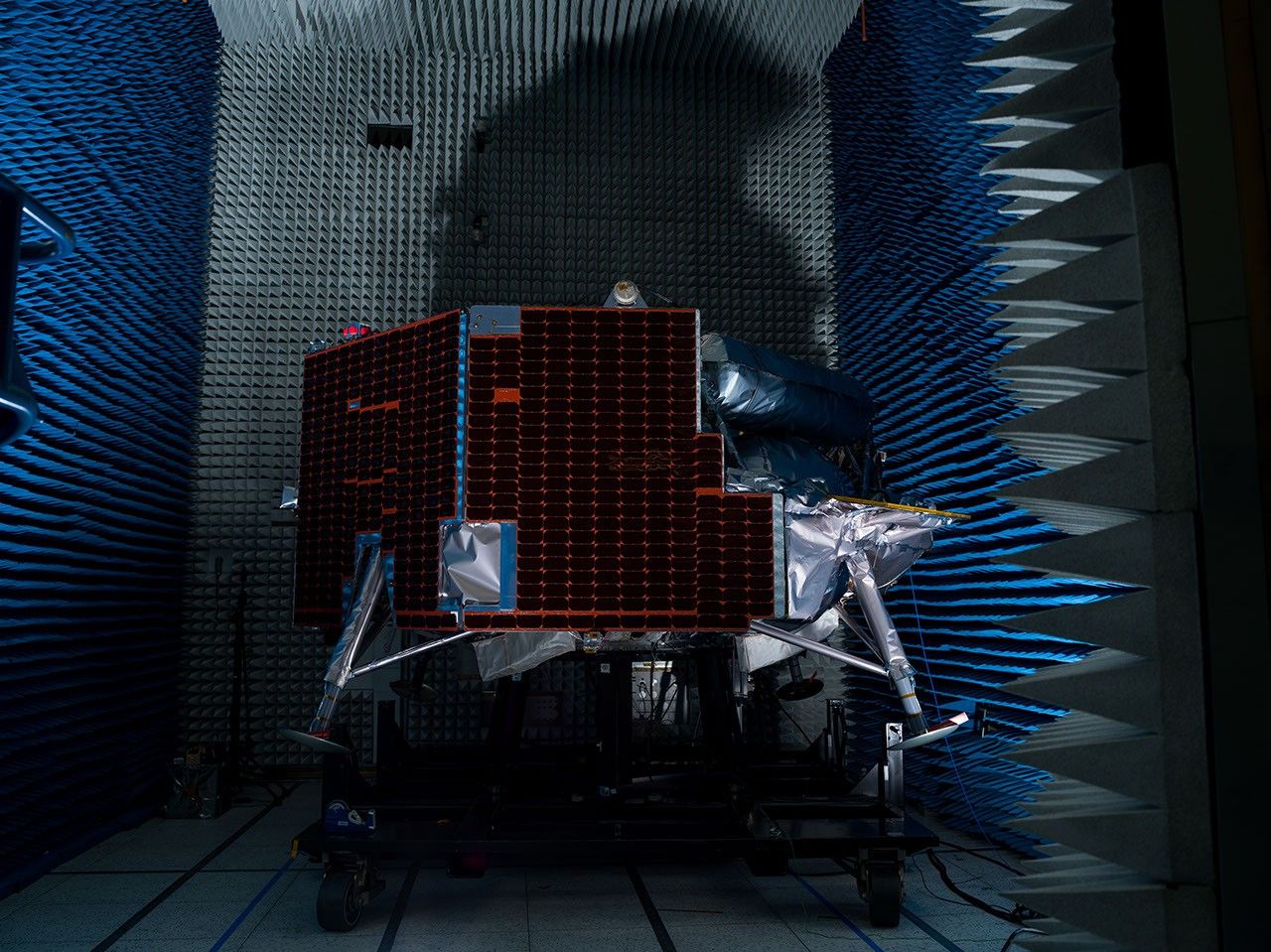
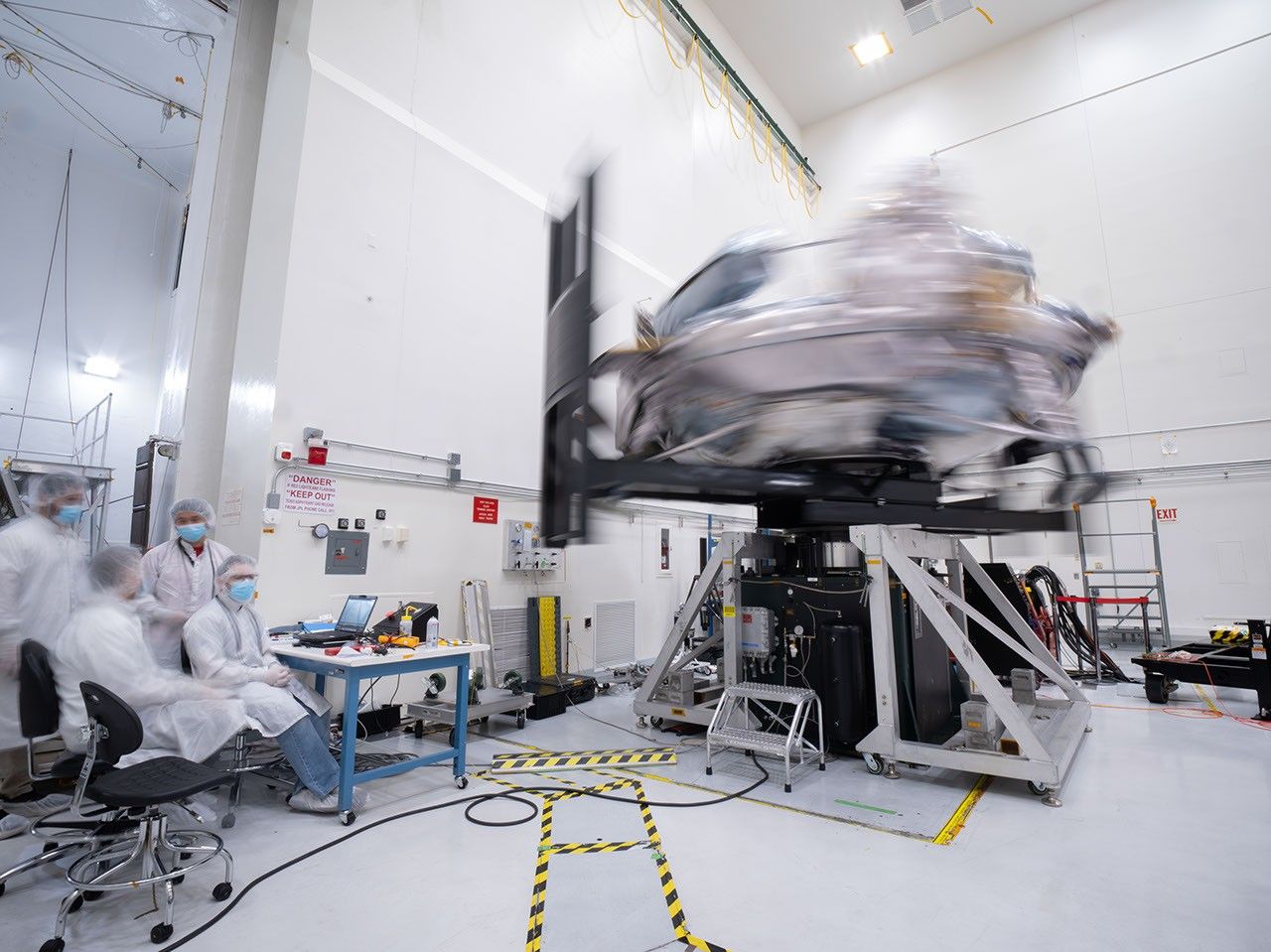
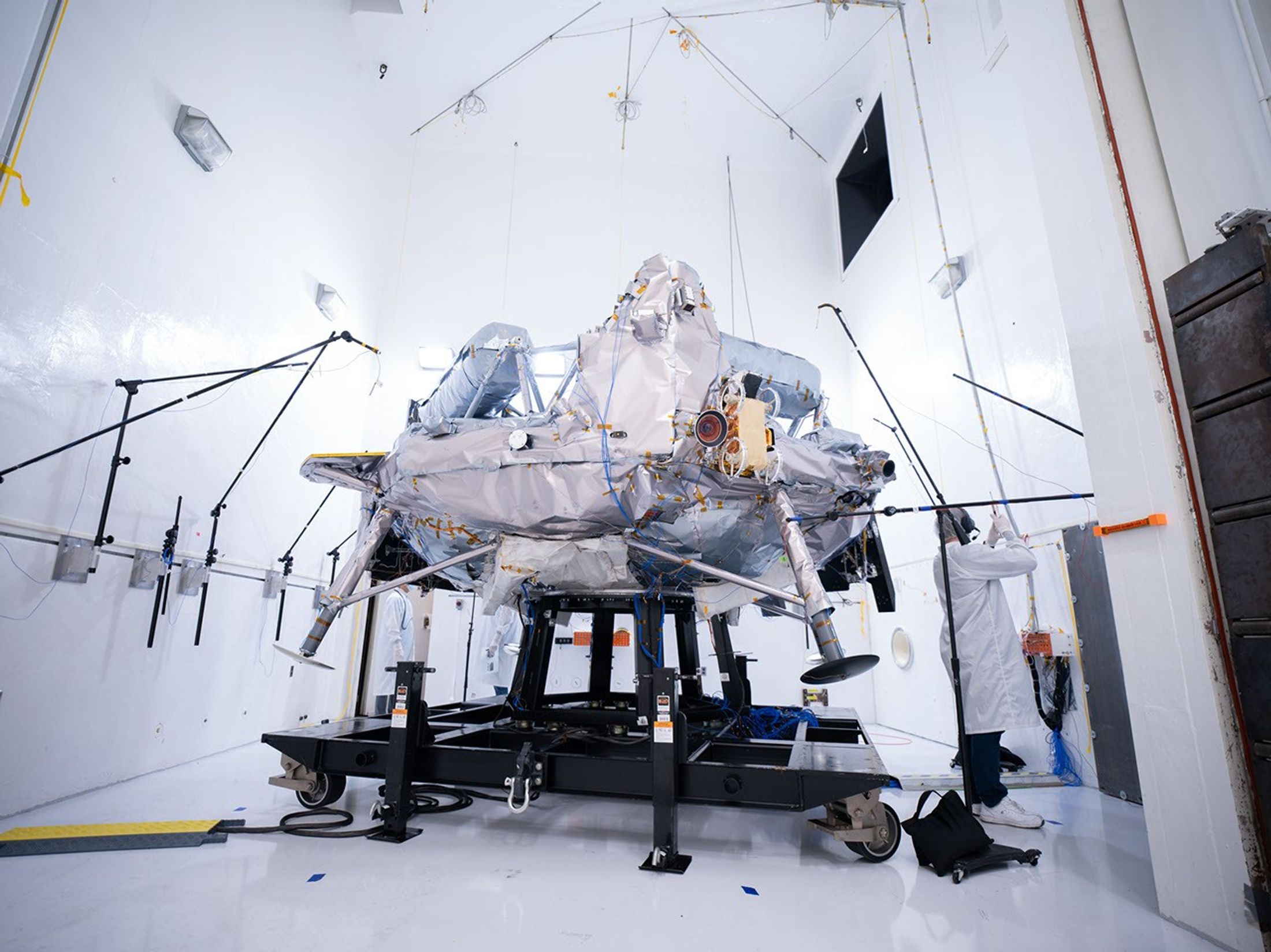
A lunar lander from Voyager Technologies completed nearly three months of environmental testing at NASA’s Jet Propulsion Laboratory in Southern California in late September 2026. The tests demonstrate that the spacecraft is prepared to face the harsh conditions of launch, its journey to the Moon, and landing on the surface. Its final trial was in JPL’s historic 25-Foot Space Simulator, a thermal vacuum chamber listed on the National Register of Historic Places for its role in supporting historic missions like those of the Ranger, Surveyor, Mariner, and Voyager programs.
Engineers and technicians on Aug. 31, 2026, used a crane to position the spacecraft within the towering chamber, where Griffin-1 alternately baked at up to 167 degrees Fahrenheit (75 degrees Celsius) and froze at temperatures as low as minus 148 F (minus 100 C). This thermal vacuum testing simulates the extreme temperatures the spacecraft will experience during its mission. The yellow-striped box atop the lander simulates a payload that will later be attached to the spacecraft: Astrolab’s FLIP (FLEX Lunar Innovation Platform) rover.
Figure A
In Figure A, engineers and technicians move Griffin-1 through a hallway leading to the 25-Foot Space Simulator on Aug. 31. The corridor is lined with photographs of some of the historic spacecraft that have been tested in the facility since the 1960s.
Figure B
Figure B shows Griffin-1 on July 29 in an anechoic chamber for electromagnetic interference and electromagnetic compatibility testing, which ensures signals from the spacecraft’s electronic components don’t interfere with one another. Long foam spikes line the chamber walls to absorb sound waves and electromagnetic waves.
Figure C
In Figure C, taken on July 20, Griffin-1 rotates rapidly on a special table to measure its mass properties, enabling engineers to look for any unexpected wobbles as they assess how the vehicle will move through space — vital information for determining the spacecraft’s readiness for flight and surface operations.
Figure D
In Figure D, microphones are arrayed around Griffin-1 on Aug. 12 during acoustic testing in which giant horns powered by compressed gaseous nitrogen blast the spacecraft with up to 153 decibels inside the sealed acoustic chamber to mimic the roar of launch.
Griffin-1 also endured vibration testing, during which hundreds of sensors monitored the spacecraft as a “shaker table” rattled it in three directions — with increasingly intense force — to simulate the ride out of Earth’s atmosphere atop a rocket.
After proving its mettle at JPL, Griffin-1 was shipped back across the country to Voyager Lunar Systems’ Pittsburgh facility for final assembly. Part of NASA’s CLPS (Commercial Lunar Payload Services) initiative within the Moon Base Program, Griffin-1 is expected to launch in late 2026 aboard a SpaceX Falcon Heavy rocket. The infrastructure-class lander will deliver more than 1,100 pounds (455 kilograms) of cargo — 10 payloads from six countries — to Nobile Crater near the lunar South Pole.
Caltech in Pasadena, California, manages JPL for NASA.
This artist’s concept depicts the proposed design for NASA’s PRobe far-Infrared Mission for Astrophysics (PRIMA), which was selected by the agency in September 2026. The PRIMA observatory is the first in a new class of NASA astrophysics missions, called Probe Explorers, within the agency’s longstanding Explorers Program. By observing far-infrared light, PRIMA will enable scientists to study cosmic objects heavily obscured by dust, providing new insights into the formation of planets, stars, and black holes, and even how water on Earth came to be. If confirmed by the agency, PRIMA will be targeted to launch in 2033, for a planned five-year mission.
NASA’s Curiosity Looks Back After Reaching Elevation Milestone
PIA26781
Credits: NASA/JPL-Caltech/MSSS
Downloads
NASA’s Curiosity Looks Back After Reaching Elevation Milestone
PNG (73.39 MB)
Description
NASA’s Curiosity Mars rover captured this view looking back at the floor of Gale Crater, with the crater’s rim visible in the distance, on Sept. 5, 2026, the 5,006th Martian day, or sol, of the mission. Just nine days prior, on Aug. 26 (Sol 4,996), Curiosity set a mission milestone by reaching 1 kilometer of elevation above the crater floor. Since 2014, Curiosity has been climbing the lower foothills of Mount Sharp, a 3-mile-tall (5-kilometer-tall) mountain located within Gale Crater.
A sand ridge extends across the foreground of the image, and a trench left by the rover’s right front wheel is visible at right. Geologic layering inside the ridge, as well as the size and composition of its sand grains, will provide clues to how the feature formed.
This panorama is made up of 95 individual images taken by Curiosity’s Mast Camera, or Mastcam. The color in these images has been adjusted to match the lighting conditions as the human eye would see them on Earth.
Curiosity was built by NASA’s Jet Propulsion Laboratory, which is managed by Caltech in Pasadena, California. JPL leads the mission on behalf of NASA’s Science Mission Directorate in Washington as part of NASA’s Mars Exploration Program portfolio. Malin Space Science Systems in San Diego built and operates Mastcam.
NASA’s Curiosity Captures Dawn Breaking on Wind-Carved Cliffs
PIA25629
Credits: NASA/JPL-Caltech/MSSS
Downloads
NASA’s Curiosity Captures Dawn Breaking on Wind-Carved Cliffs
PNG (11.91 MB)
PIA25629 Figure A
PNG (2.70 MB)
Description
NASA’s Curiosity Mars rover captured this panorama of sunrise illuminating distant, wind-carved features called yardangs on Aug. 11, 2026, the 4,982nd Martian day, or sol, of the mission. Scientists are eager to learn more about how the yardang layer formed.
Figure A
Figure A is a crop zooming in on the distant yardangs.
Since 2014, Curiosity has been ascending 3-mile-tall (5-kilometer-tall) Mount Sharp, which is made up of a series of distinct layers that were deposited one on top of the other. In the area of the vast mountain’s shoulder where the rover is climbing, that stack of layers ends with the yardang layer. Before the yardang layer was laid down, Mount Sharp may have begun eroding, creating a gap in the otherwise continuous record of climate history that Curiosity has been reading from the layers. Scientists aren’t entirely sure how the layer formed; one theory is that it’s a pile of volcanic ash, similar to what’s seen along the Red Planet’s equator.
This panorama was captured by Curiosity’s Mastcam and is made up six individual images that were stitched together after being sent back to Earth. Unlike most of Curiosity’s Mastcam images, this one was processed without the usual white balancing, an artistic choice that preserves the early morning appearance.
Curiosity was built by NASA’s Jet Propulsion Laboratory, which is managed by Caltech in Pasadena, California. JPL leads the mission on behalf of NASA’s Science Mission Directorate in Washington as part of NASA’s Mars Exploration Program portfolio. Malin Space Science Systems in San Diego built and operates Mastcam.

 Login