❌

Normal view

There are new articles available, click to refresh the page.
Yesterday — 29 October 2026NASA Breaking News

NASA Names Troy Asher Armstrong Flight Research Center Director
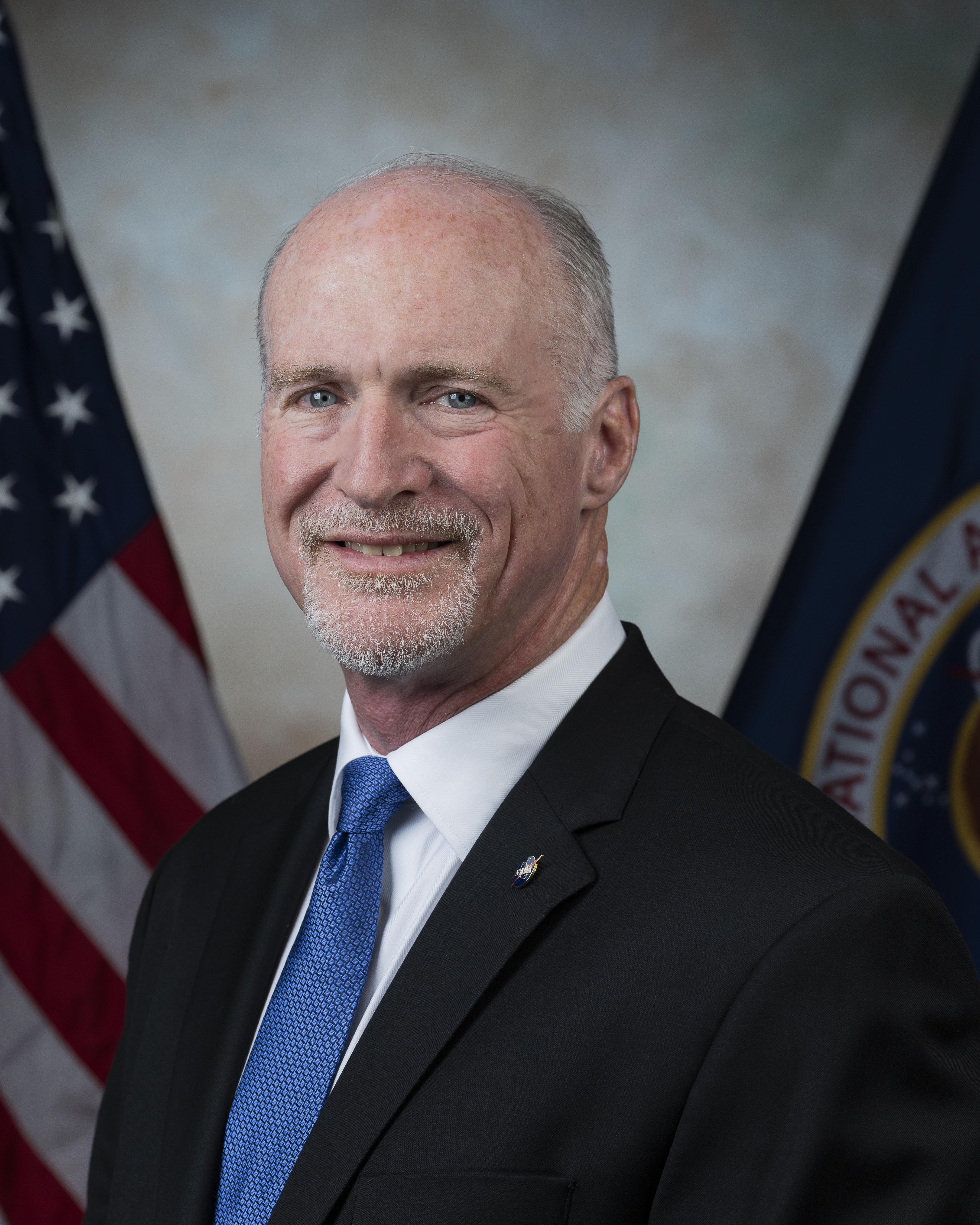
29 October 2026 at 14:00
Photo of Troy Asher

NASA Administrator Jared Isaacman has named Troy Asher director of the agency’s Armstrong Flight Research Center in Edwards, California. Asher, a veteran test pilot and aerospace engineer with decades of experience in flight research and operations, has served as the center’s acting director since March.

“Troy has spent his career pushing the boundaries of flight, both at the controls of experimental aircraft and leading the teams that make these missions possible,” said NASA Administrator Jared Isaacman. “He understands what it takes to turn ambitious ideas into successful flight tests, and his experience will be invaluable as Armstrong leads the way in rebuilding NASA’s X-plane portfolio, restoring our flight-test capabilities, and flying higher, farther, and faster than we have in decades.”

“Flight testing demands a rare combination of technical excellence, operational judgment, and trust in the teams that make every mission possible,” said NASA Associate Administrator and Chief Engineer Amit Kshatriya. “Troy’s service to America, from his distinguished career as an Air Force test pilot to his leadership of some of NASA’s most challenging flight research missions, embodies those qualities. Few people better understand the art and discipline of flight testing, and he brings a deep understanding of both the aircraft and the teams behind every successful mission. As director, Troy will help us revolutionize how we develop, evaluate, and fly new technologies, strengthening the capabilities that keep NASA at the forefront of aerospace research.”

Asher will oversee Armstrong’s workforce and operations, leading NASA’s efforts to advance flight research, aircraft operations, and the development of new aviation technologies. As NASA’s Flight Test and Aircraft Operations Center of Excellence, Armstrong plays a central role in the agency’s efforts to rebuild and expand its X-plane portfolio, pushing the boundaries of high-speed flight and developing experimental aircraft and technologies that will shape the future of aviation. The center also supports airborne science missions and flight research across the agency.

Prior to becoming acting center director, Asher served as director of Flight Operations at Armstrong, overseeing the center’s pilots, engineers, maintainers, and fleet of specialized aircraft supporting aeronautics research and scientific missions around the world.

Asher joined NASA in 2008 as a research test pilot and aerospace engineer. During his time as a NASA pilot, he conducted flight research aboard aircraft, including the F-15, F/A-18, Gulfstream III, and X-56A unmanned aircraft system. He served as the lead test pilot for the development of NASA’s Stratospheric Observatory for Infrared Astronomy (SOFIA) and flew scientific research missions aboard the agency’s DC-8 aircraft, supporting airborne science campaigns around the globe.

Before joining NASA, Asher completed a 24-year career in the U.S. Air Force, retiring as a lieutenant colonel. His military service included assignments as an instructor at the U.S. Air Force Test Pilot School at Edwards Air Force Base, commander of the 419th Flight Test Squadron, and director of the Bomber Combined Test Force. In 2003, he set 25 world speed records flying the B-1B bomber.

Asher earned a bachelor’s degree in astronautical engineering from the U.S. Air Force Academy and a master’s degree in mechanical engineering from California State University, Fresno.

Asher succeeds Bradley Flick, who retired in March following nearly 40 years of NASA service.

Established in 1946, Armstrong has been at the forefront of American flight research for eight decades, from the first supersonic flight aboard the Bell X-1 to today’s work advancing quiet supersonic flight through NASA’s X-59 aircraft. The center continues to push the boundaries of aviation while providing critical flight research and operational capabilities in support of NASA’s science, technology, and exploration missions.

For more information about NASA Armstrong, visit:

https://www.nasa.gov/armstrong

-end-

George Alderman
Headquarters, Washington
202-358-1600
george.c.alderman@nasa.gov

Dede Dinius
Armstrong Flight Research Center, Edwards, Calif.
661-276-5701
darin.l.dinius@nasa.gov
Share

Details

Last Updated
Oct 29, 2026
Before yesterdayNASA Breaking News

NASA Names Stephen Cash Marshall Space Flight Center Director

16 October 2026 at 16:14
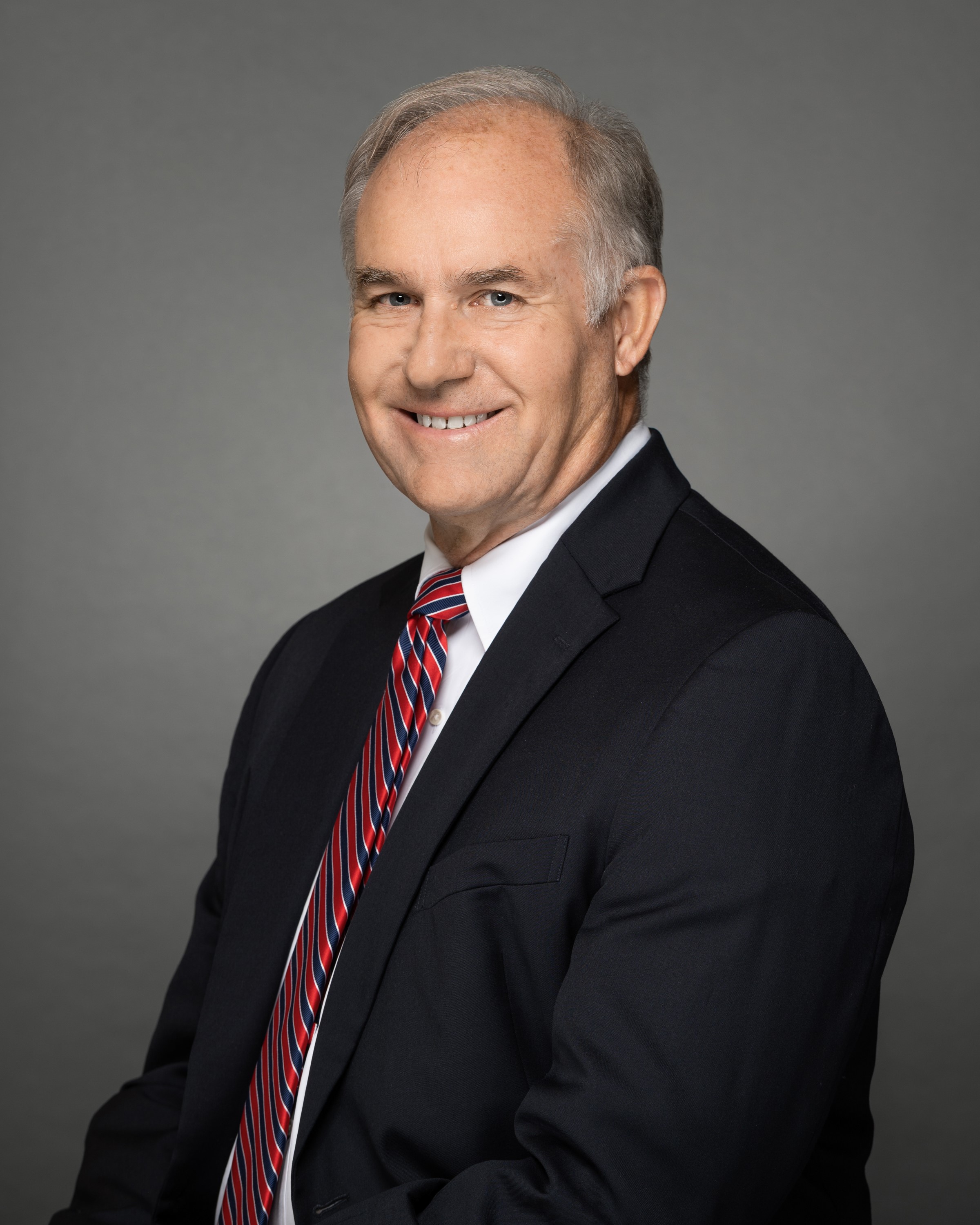
Stephen Cash
Photo of Stephen Cash

NASA Administrator Jared Isaacman has named Stephen Cash director of the agency’s Marshall Space Flight Center in Huntsville, Alabama, effective Monday, Oct. 19. Cash, a veteran NASA engineer and aerospace executive, returns to lead the center where he began his career more than four decades ago.

“Marshall contributions to NASA’s missions are historic and it’s no question why it’s the Center of Excellence for propulsion,” said Isaacman. “Steve Cash is a Marshall legend, has spent his career around the hardware, the people and has been in the seat before making the decisions when human spaceflight is on the line. As Marshall continues its critical role in Artemis and takes on new challenges in advanced propulsion, nuclear power, and the systems that will carry us deeper into the solar system, Steve brings the experience, technical judgment, and mission focus needed to lead the center into that next chapter. I am also grateful to Rae Ann Meyer for the leadership she has provided to Marshall during this transition and for her continued service to NASA.” 

“Leading a NASA center requires a commitment to its people and to the technical capabilities entrusted to them,” said Amit Kshatriya, NASA associate administrator and chief engineer. “Steve understands that the jewel of Marshall is its workforce and that engineering excellence is sustained by giving talented people the opportunity to design, build, test, and learn through hands-on work. As Marshall continues strengthening the manufacturing, structural loads and dynamics, and propulsion capabilities that underpin NASA’s exploration enterprise, Steve’s leadership will help ensure the workforce has opportunities to develop and apply the expertise needed to deliver the agency’s most ambitious missions.”

 As center director, Cash will lead one of NASA’s largest field centers, overseeing a workforce of more than 5,000 civil service and contractor employees and a broad portfolio of propulsion, space systems, scientific research, and technology development activities.  Marshall plays a critical role in NASA’s Artemis program, including the development of NASA’s SLS (Space Launch System) rocket, management of the Human Landing System Program, as well as other capabilities supporting sustained exploration of the Moon and future missions to Mars. Further, Marshall plays a key role in the advancement of nuclear power and propulsion, an area of focus that is expected to grow as NASA works towards sending the first humans to Mars.  

“It is a profound honor to be back home at the Marshall Space Flight Center,” said Cash. “I am humbled to stand alongside the brilliant minds here as we continue to turn the impossible into everyday history.”

Cash began his NASA career at Marshall in 1982 and spent 34 years with the agency, holding senior engineering and management positions supporting some of the nation’s most significant human spaceflight programs.

During his NASA career, Cash served as manager of Marshall’s Space Shuttle Propulsion Office, overseeing critical propulsion systems supporting shuttle through its final missions. He later served as director of Marshall’s Safety and Mission Assurance Directorate from 2011 until his retirement in 2016, providing leadership in safety, reliability, and quality engineering to support mission success across the center.

Following his retirement from NASA, Cash continued his work in the aerospace industry, including serving as vice president for advanced space systems at Axient, supporting the development and execution of major spaceflight programs. In 2024, he was inducted into the Alabama Engineering Hall of Fame in recognition of his contributions to engineering and the nation’s space program.

Cash succeeds Rae Ann Meyer, who has served as Marshall’s acting center director since September 2025. Meyer, who previously served as Marshall’s deputy center director and associate director, has provided leadership and continuity across the center’s programs and operations during her tenure as acting director. Meyer will return to her role as Deputy Center Director.

Established in 1960, Marshall has played a central role in American space exploration for more than six decades, from developing the Saturn rockets that carried astronauts to the Moon during Apollo to advancing the propulsion systems, infrastructure, and technologies supporting the next era of human spaceflight.

For more information about NASA’s Marshall Space Flight Center, visit:

https://www.nasa.gov/marshall

-end-

George Alderman / Cheryl Warner
Headquarters, Washington
202-358-1600
george.a.alderman@nasa.gov / cheryl.m.warner@nasa.gov

Lance Davis
Marshall Space Flight Center, Huntsville, Ala.
256-544-0034
lance.d.davis@nasa.gov

Share

Details

Last Updated
Oct 16, 2026

NASA Names Astronaut Christina Koch Acting Deputy Chief Engineer

13 October 2026 at 16:41
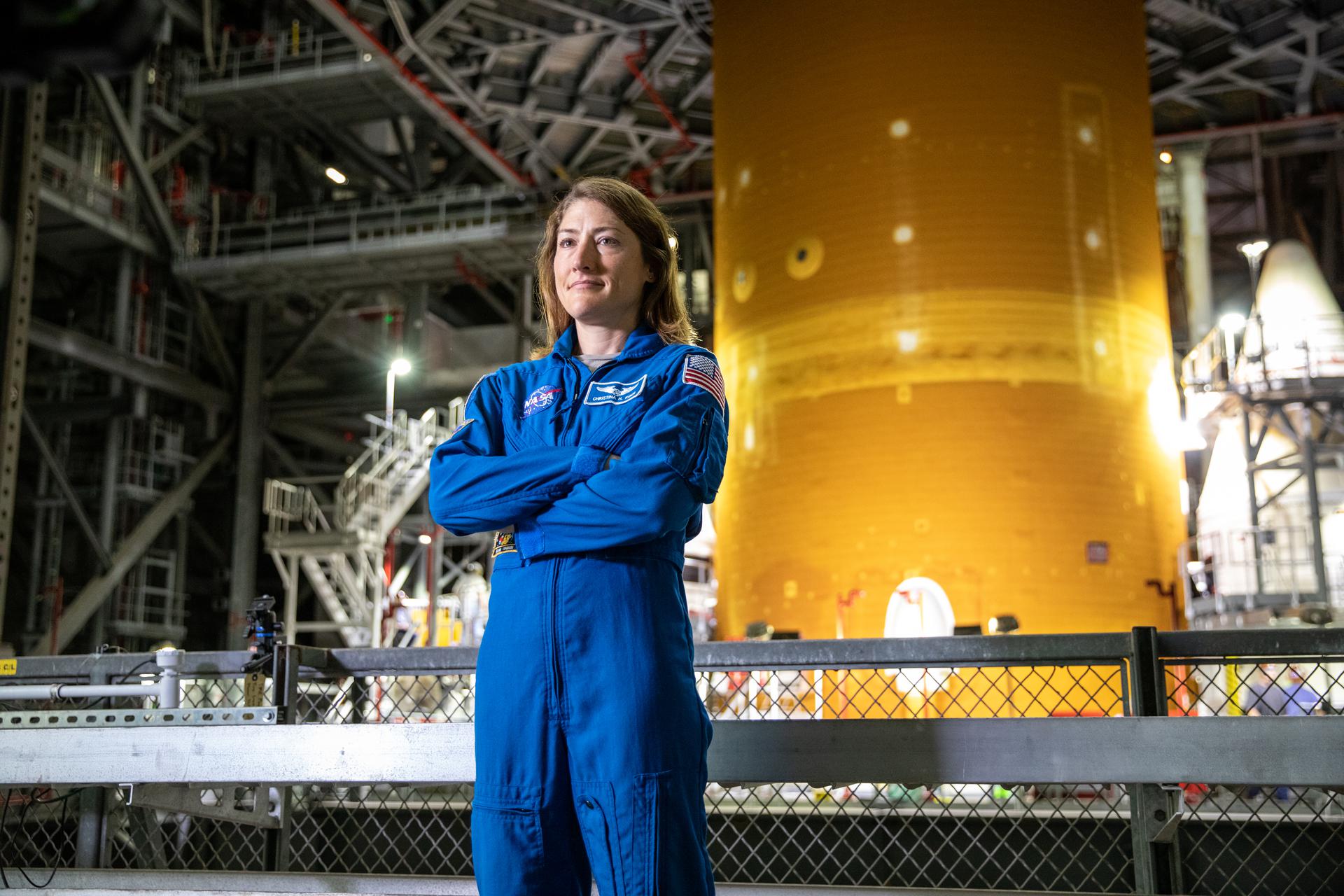
NASA astronaut Christina Koch stands inside Kennedy Space Center’s Vehicle Assembly Building on July 14, 2021, in front of the agency’s Space Launch System (SLS) rocket that ultimately powered the Orion spacecraft on the Artemis I mission. Koch later served as a crew member on the Artemis II mission in 2026, and on Oct. 13, 2026, NASA announced she will serve next as the agency’s acting deputy chief engineer.
NASA/Glenn Benson

NASA engineer and astronaut Christina Koch will serve as the agency’s acting deputy chief engineer beginning on Sunday, Nov. 1, following the retirement of Katherine Van Hooser, who will conclude more than 35 years of distinguished service to the agency on Wednesday, Oct. 21.

In her new role, Koch will help lead NASA’s engineering community, supporting technical oversight, mission readiness, and engineering excellence across the agency’s programs and projects. With this appointment, Koch will transition to management astronaut status and will no longer be eligible for future spaceflight assignments.

“Christina has seen NASA engineering from both sides of the equation: developing complex systems on the ground and trusting them with her life in space,” said NASA Administrator Jared Isaacman. “After spending nearly a year living and working aboard the International Space Station and helping lead America back around the Moon on Artemis II this year, she brings an extraordinary combination of technical expertise, operational experience, and judgment to this role. I am excited to see the impact she will have across NASA as we return Americans to the lunar surface, build the Moon Base, get underway on nuclear power in space, and develop the capabilities that will ultimately take us on to Mars.”

“Katherine has been an extraordinary leader throughout her career, bringing technical expertise, sound judgment, and an unwavering commitment to mission success to some of NASA’s most complex engineering challenges,” said Amit Kshatriya, NASA associate administrator and chief engineer. “Her leadership has strengthened our engineering community and helped guide the agency through critical milestones and transitions. Christina brings a unique combination of engineering expertise, operational experience, and proven leadership, both on the ground and in space. I am grateful to Katherine for her exceptional service and confident Christina will continue the tradition of technical excellence that is essential to everything we do at NASA.”

Koch most recently served as a mission specialist aboard NASA’s Artemis II mission in April, helping carry out the first crewed flight around the Moon in more than 50 years. She previously spent 328 consecutive days aboard the International Space Station, setting the record for the longest single spaceflight by a woman and participating in the first all-female spacewalks.

Koch began her NASA career as an electrical engineer at the agency’s Goddard Space Flight Center in Greenbelt, Maryland, developing scientific instruments for space missions. Before her selection as an astronaut in 2013, her experience also included scientific field engineering in Antarctica and the Arctic. She has since held leadership positions within NASA’s Astronaut Office and at the agency’s Johnson Space Center in Houston, bringing a combination of technical expertise, operational experience, and firsthand understanding of the demands of human spaceflight to her new role.

Van Hooser joined NASA in 1991 at the agency’s Marshall Space Flight Center in Huntsville, Alabama, beginning a distinguished career in propulsion engineering and technical leadership. Her early work focused on liquid rocket engine turbomachinery before she became chief engineer for the space shuttle main engine, leading engineering efforts through the final 21 shuttle flights. She later served as the first chief engineer for the Space Launch System’s Liquid Engines Element, helping advance the propulsion systems supporting NASA’s Artemis missions.

As Marshall’s chief engineer and, since 2023, NASA’s deputy chief engineer, Van Hooser provided critical technical leadership and oversight across the agency’s programs. Her steady guidance through complex engineering challenges and organizational transitions helped maintain continuity, strengthen collaboration, and keep mission readiness at the forefront of NASA’s work.

Learn more about NASA’s missions on the agency’s website:

https://www.nasa.gov/

George Alderman / Cheryl Warner
Headquarters, Washington
202-358-1600
george.a.alderman@nasa.gov / cheryl.m.warner@nasa.gov

Share

Details

Last Updated
Oct 13, 2026

❌
❌