
❌

Normal view

There are new articles available, click to refresh the page.
Before yesterdayNASA Breaking News

NASA Names Two Artemis II Astronauts to Emeritus Program
9 September 2026 at 09:24
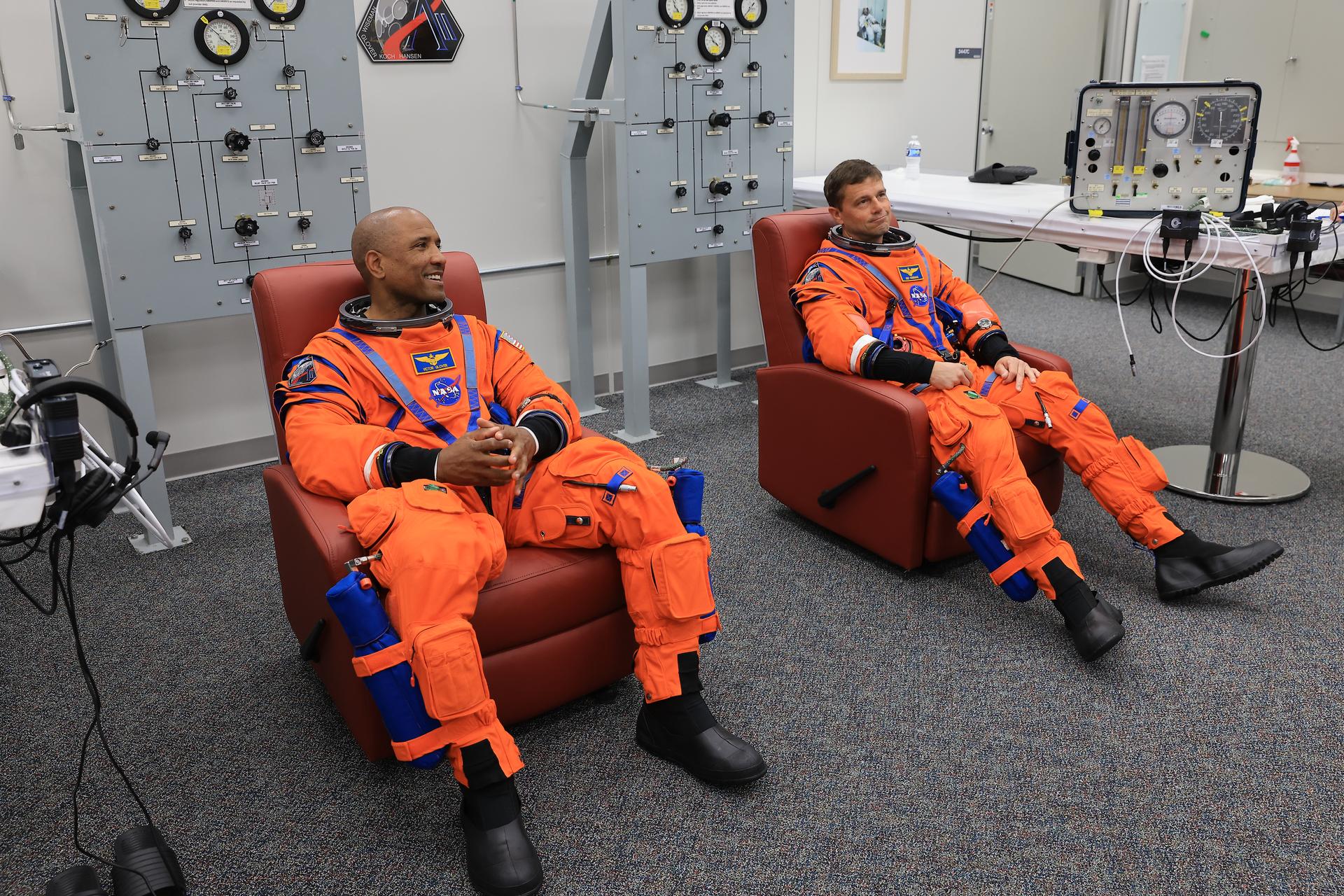
From left, NASA astronauts Victor Glover, Artemis II pilot and Reid Wiseman, Artemis II commander, are seated in chairs wearing orange jumpsuits. Behind them are two large gray panels with dials. The two astronauts are listening attentively and they prepare to conduct leak checks on his spacesuit inside the crew suit-up room in the Neil A. Armstrong Operations and Checkout Building at the agency’s Kennedy Space Center in Florida on Wednesday, April 1, 2026, ahead of the Artemis II test flight.
From left, NASA astronauts Victor Glover, Artemis II pilot, and Reid Wiseman, Artemis II commander, conduct leak checks on their spacesuits inside the crew suit-up room in the Neil A. Armstrong Operations and Checkout Building at the agency’s Kennedy Space Center in Florida on Wednesday, April 1, 2026, ahead of the Artemis II test flight.
Credit: NASA/Kim Shiflett

Following their landmark Artemis II mission earlier this year, distinguished NASA astronauts Victor Glover and Reid Wiseman are transitioning in September to emeritus status at the agency’s Johnson Space Center in Houston.

In an emeritus role, individuals with a high degree of technical and professional knowledge can continue to support the agency by donating their time to train and mentor the current workforce. This allows the agency to maintain access to top talent in a specialized consultant role, while simultaneously providing the individual with the flexibility to pursue other opportunities.

β€œI’ve had the privilege of knowing Reid and Victor for years, and both exemplify the leadership, character, and commitment that define NASA at its best.” said NASA Administrator Jared Isaacman. β€œReid commanded Artemis II after previously spending 165 days aboard the International Space Station, while Victor brought his experience as a naval aviator, test pilot, and Crew-1 astronaut to his role as pilot. Together, they took on one of the most challenging missions in human spaceflight and helped return America to the lunar environment. As Reid and Victor transition to emeritus status, I’m grateful they will continue sharing what they learned with our astronauts, flight controllers, and engineers as we prepare for Artemis III in 2027 and the missions that follow.”

Glover will support aerospace, leadership, and public service efforts as he transitions within and outside of NASA. He’s committed to transferring his knowledge of Orion and its spacecraft systems, among other expertise, to future Artemis missions.

β€œAs I grow into this new role, NASA and spaceflight remain a meaningful part of my journey of service,” said Glover. β€œI’m excited to keep uplifting my friends and cheering them on as they reach for the Moon. Together, we’ll keep pushing boundaries and inspiring the next giant leap.”

Wiseman is set to share his spaceflight experience with colleagues ahead of the agency’s Artemis III mission in low Earth orbit to test rendezvous and docking capabilities between Orion and commercial human landing systems.

β€œThere is no better place to work, and there are no better people to work with, than those in this agency,” said Wiseman. β€œNASA gave me tremendous responsibility, supported me through two space missions, and my time as chief astronaut, and was always there for my family when we needed it most. I’m thrilled to continue serving future missions and programs through the emeritus program.”

β€œReid and Victor’s commitment to exploration, steady leadership, and service to our astronaut corps and our nation have made a lasting impact,” said Vanessa Wyche, director of NASA’s Johnson Space Center in Houston. β€œThroughout their careers, they have each brought excellence, humility, and purpose to every role they have held at NASA. Their contributions have helped advance our mission and inspire those around them, leaving a legacy that will continue to shape the future of human spaceflight. We are immeasurably grateful for all they have given to NASA and are glad that this is not the end of their journey with the agency.”

β€œReid and Victor are trusted teammates whose professionalism, calm leadership, and unwavering commitment to NASA have strengthened our office and inspired everyone around them,” said Scott Tingle, chief of the Astronaut Office at Johnson. β€œAs they transition into their emeritus roles, they leave a legacy of operational excellence that will continue shaping the astronaut corps for years to come. We’re grateful that they will still be part of our community, sharing their experience and insight as they begin this next chapter.”

Among their many accomplishments at NASA, as Artemis II crew members, Glover and Wiseman were two of the four astronauts to first launch on top NASA’s SLS (Space Launch System) rocket aboard the Orion spacecraft for a mission around the Moon. Following a 10-day mission with crewmates NASA astronaut Christina Koch and CSA (Canadian Space Agency) astronaut Jeremy Hansen, they safely splashed down on April 10 as the first humans to travel to lunar orbit in more than 50 years, ultimately flying farther in space than anyone had before.

Support and knowledge transfer from both Glover and Wiseman is critical for the upcoming Artemis III mission as NASA prepares to return American astronauts to the lunar surface on the Artemis IV mission in 2028.

To learn more about NASA astronauts, visit:

https://www.nasa.gov/astronauts

-end-

George Alderman / Cheryl Warner
Headquarters, Washington
202-356-1600
george.a.alderman@nasa.gov / cheryl.m.warner@nasa.gov
Share

Details

Last Updated
Sep 09, 2026

President Trump Signs Executive Order to Create US Space Academy Β 

28 August 2026 at 13:21
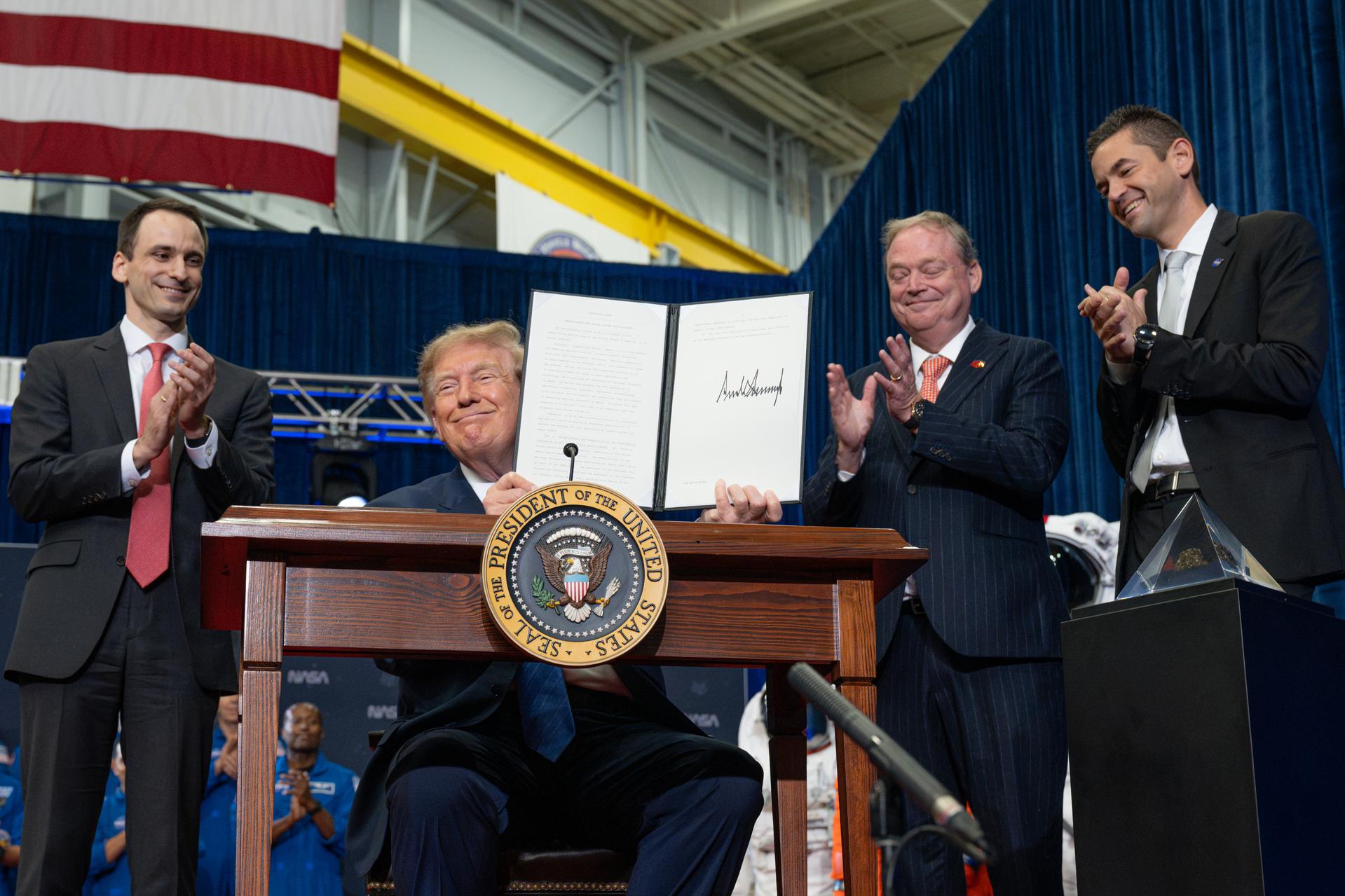
President Donald Trump presents an executive order establishing the United States Space Academy during an event to award the Congressional Space Medal of Honor to the Artemis II crew as Michael Kratsios, director of the Office of Science and Technology Policy, left; Kevin Hassett, director of the National Economic Council, third from left; and NASA Administrator Jared Isaacman, right, applaud, Friday, Aug. 28, 2026, at NASA’s Johnson Space Center in Houston.
Credit: NASA/John Kraus

To strengthen the nation’s space workforce and develop the next generation of space leaders, President Donald J. Trump signed an Executive Order on Friday to establish the nation’s first U.S. Space Academy.

The order highlights how space is a critical domain for American national security, economic growth, scientific discovery, and technological innovation. The proposed academy would focus technical education with leadership development, discipline, and a commitment to public service, helping ultimately advance U.S. interests in space.


β€œGiven the rapid growth of the U.S. Space Force and commercial space industry, and the expansion of our ambitions to the Moon and far beyond the Moon, it’s clear we will need to educate and train an entire generation of skilled service members, engineers, and civil operators,” said President Trump. β€œThat’s why I will sign an Executive Order to begin the process of creating a new a national academy called the U.S. Space Academy.”

The order also calls on NASA Administrator Jared Isaacman to serve as the chair of a new Presidential Commission on the United States Space Academy, and NASA Deputy Administrator Matt Anderson to serve as the executive director. They will work with vice chairs β€” Assistant to the President for Science and Technology, Michael Kratsios, and Assistant to the President for Economic Policy, Kevin Hassett β€” and other representatives from the White House and the interagency on the commission.

β€œPresident Trump’s vision for a new academy is a transformational step to educate the engineers, scientists, technicians, operators and even the astronauts who will be necessary for the inspiring future we are pursuing in space. In the years ahead, we will return NASA astronauts to the lunar surface, build the Moon Base, get underway on nuclear power, ignite the orbital economy and launch more missions of science and discovery,” said Isaacman. β€œI have no doubt that so much of the future talent that will graduate and contribute to these exciting endeavors will be educated at the United States Space Academy.”

A report from the commission to the President is due within 120 days of the signing with recommendations on governance framework, service obligations for graduates, physical location of the academy, legislative requirements, and more.

The signing of β€œEstablishing the United States Space Academy Executive Order,” took place at NASA’s Johnson Space Center in Houston where the President also presented the Artemis II crew members with the Congressional Space Medal of Honor.

The Executive Order is the latest from President Trump that demonstrates his commitment to maintaining U.S. leadership in space and advancing NASA’s Golden Age exploration and innovation. In December 2025, he signed the Ensuring American Space Superiority, and recently, a new National Space Transportation Policy memorandum on Aug. 20.

Read the full Executive Order on The White House website:Β 

https://www.whitehouse.gov/presidential-actions/2026/08/establishing-the-united-states-space-academy

-end-

Bethany Stevens / Cheryl Warner
Headquarters, Washington
202-358-1600
bethany.c.stevens@nasa.gov / cheryl.m.warner@nasa.gov

Share

Details

Last Updated
Aug 29, 2026
Editor
Jennifer M. Dooren

Related Terms

NASA Establishes State Hubs to Grow Technical Aerospace Workforce

19 August 2026 at 11:55
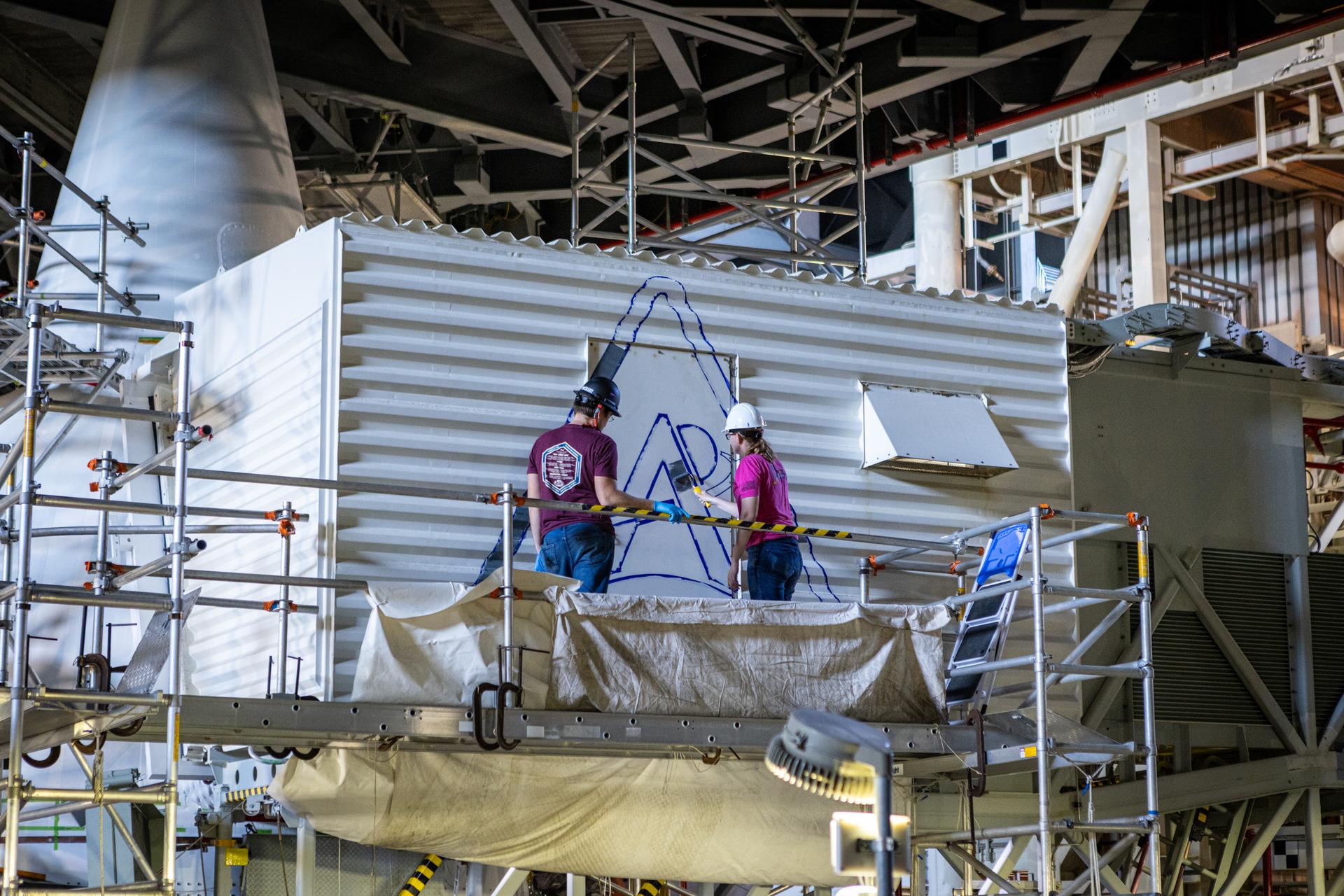
Two people standing atop scaffolding wearing hard hats. They are facing a large white rectangular structure that has an outline of the Artemis logo in blue. The two are preparing to paint the logoSean McCrary and Katie Mortensen, mechanical engineering technicians, paint NASA’s Artemis logo on the White Room connected to the crew access arm and mobile launcher inside the Vehicle Assembly Building at NASA’s Kennedy Space Center in Florida on Thursday, Dec. 4, 2025.
From left, Sean McCrary and Katie Mortensen, mechanical engineering technicians, paint NASA’s Artemis logo on the White Room connected to the crew access arm and mobile launcher inside the Vehicle Assembly Building at NASA’s Kennedy Space Center in Florida on Thursday, Dec. 4, 2025.
Credit: NASA/Frank Michaux

NASA has awarded approximately $10.5 million to seven institutions to help strengthen and streamline state-based pathways for students into skilled technical jobs in the aerospace industry.

The awards were made through the new NASA Aerospace Skilled Technical Workforce Hubs initiative, or NASA State Hubs. This investment in state ecosystems is designed to accelerate the development of technical roles to meet the talent demands of the space industry.

β€œThe need for technical talent is already urgent and will only continue to grow as we return humanity to the Moon and set our sights on Mars and beyond,” said Elaine Ho, associate administrator for the Office of STEM Engagement at NASA Headquarters in Washington. β€œNASA is uniquely positioned to be the catalyst and convener that accelerates America’s aerospace workforce development and fosters the next generation of technicians.”

The newly awarded NASA State Hubs, represented across seven states, will function as strategic conveners that align industry employers, community colleges, high school career and technical education programs, and workforce systems to facilitate bringing students into high‑demand technical jobs, including welders, electricians, machinists, and other highly trained workers who use advanced STEM knowledge and technical skills in their occupations.

Over the next three years, the selected organizations will create programs that build critical skills identified by industry leaders, illuminate career pathways through education and apprenticeships, and build connections between employers and job seekers.

The awarded organizations are:

  • Antelope Valley Community College District in Lancaster, California
  • Georgia Tech Research Corporation
  • Minnesota State Colleges and Universities
  • Southern Utah University
  • Space Florida
  • State Board for Community Colleges and Occupation Education, Arapahoe Community College in Littleton, Colorado
  • Texas Space Commission

NASA State Hubs cooperative agreements are funded by the Office of STEM Engagement through its Next Gen STEM Project. The Office of STEM Engagement advances NASA’s mission by boosting the nation’s research capacity, building technical expertise, and strengthening participation in aerospace fields. The Next Gen STEM project extends this impact by preparing high school and community college students for future aerospace careers through strategic partnerships and competitive awards that develop the vital skills needed to power our Golden Age of exploration and innovation.

For more information on NASA State Hubs, visit:

https://www.nasa.gov/learning-resources/nasa-state-hubs

-end-

Gerelle Dodson
Headquarters, Washington
202-358-1600
gerelle.q.dodson@nasa.gov

❌
❌