
 Login
Login
Hackaday Links: September 13, 2026

We try to steer clear of politics and societal issues here at Hackaday, so a protest is not usually the sort of thing we’d cover. But we figure it’s safe enough to bend the rules a bit when the ones doing the protesting happen to be robots.
About 30 bots gathered — or at least were commanded to gather by the event organizers — in Warsaw to spur discussion about the impact AI and robots will have on the labor market. Beyond getting public and media attention, the demonstration was also designed to raise awareness of what modern humanoid robots can do. While we appreciate the idea of showing robots taking the “jobs” of the protesters, it does seem somewhat ironic that marching around and chanting for hours is exactly the sort of repetitive work that most people would be happy to see taken over by machines.
Although we hope these protests remain peaceful, there’s always a chance things can turn violent when tensions are high. Should things go south, take comfort in the knowledge that a company in Japan has introduced a robot ambulance service. It’s probably more accurate to compare it with roadside assistance, as the goal is to repair the robot on-site. That said, if the fault is more serious, they can bring the damaged bot back to HQ. Of course, the major difference between this program and a traditional ambulance service is that they’ll be able to bring along a spare robot that can take over the patient’s job while repairs are being made. Should anyone start doing that for humans, expect a few more protests.
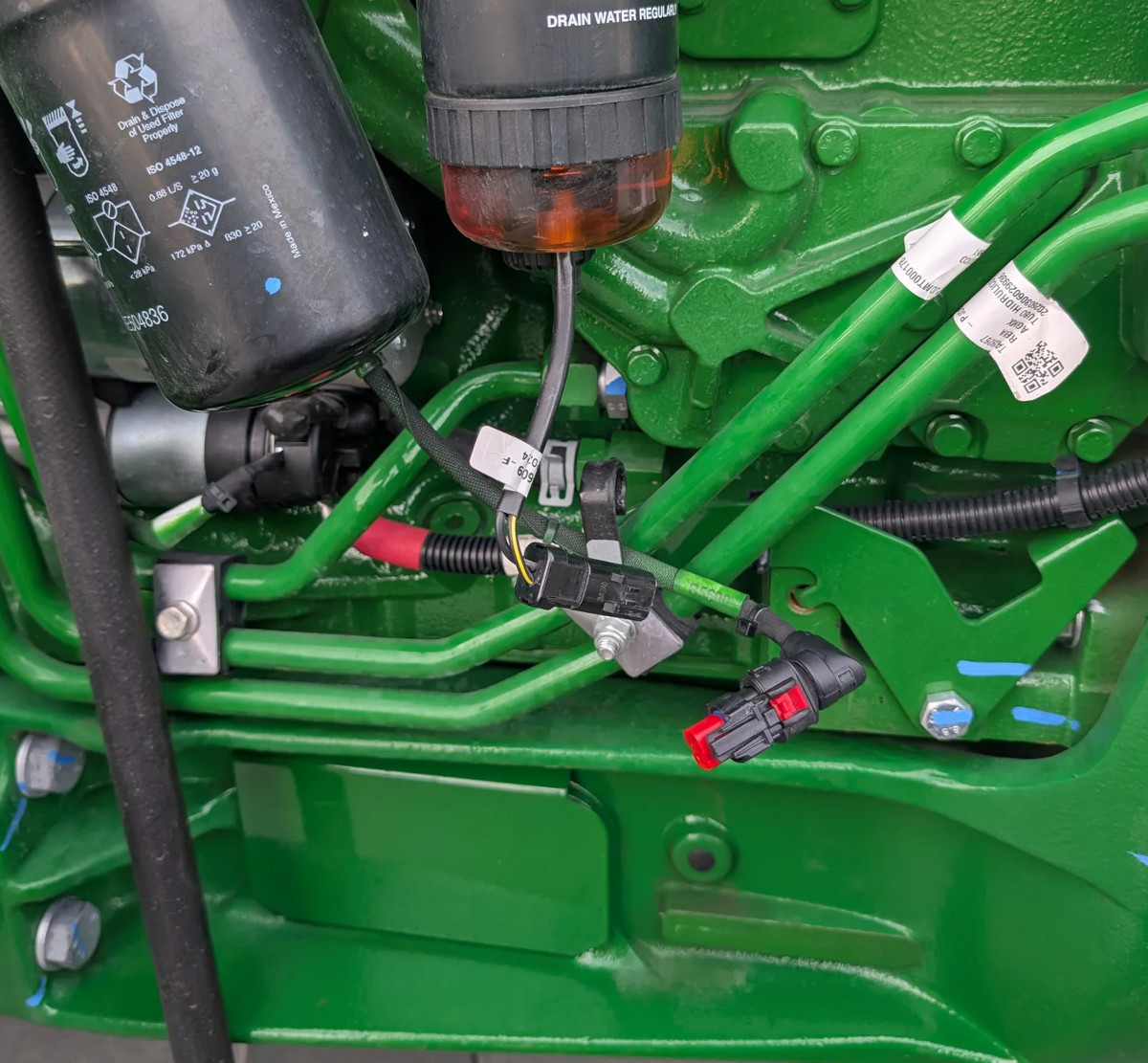
Speaking of repairs, [Boone Ashworth] at WIRED recently wrote up an interesting hands-on experience he had with John Deere’s AI-driven DIY repair service at the company’s corporate headquarters. Armed with a laptop and tasked with fixing the error message showing on a ~$120,000 USD tractor, he was able to follow the instructions provided by the software to identify a sensor that had been unplugged. Reconnecting the sensor fixed the error message and elicited applause from the Deere reps who presumably had carefully unplugged the sensor in the first place for the purposes of the demonstration.
If that doesn’t strike you as a particularly impressive display for a subscription service which starts at $195 a year for each individual machine, you aren’t alone. When Boone reported his experience to critics of Deere’s repairability track record, it was met with literal laughter. You don’t have to have worked in the fields to know that a sensor becoming unplugged ranks pretty low on the list of potential problems you might face in the middle of a harvest.
We can certainly understand why Deere wouldn’t ask journalists to fix a blown clutch or a leaky hydraulic cylinder for the purposes of a media demo. Even so, they could surely have come up with something a bit more challenging if their goal was to convince customers to log into their repair service — something the company claims only about a thousand users do each day.
 Finally, this one leans more heavily into the “arts and crafts” than we’d usually cover here on Hackaday, but [Terence Eden]’s Collection of Imaginary Software is too cool not to get a mention.
The idea is simple enough: make up fake disk labels for a bunch of fictional pieces of software (think the games David Lightman was trying to get his hands on in WarGames), stick them on some of the old 3.5 floppies we know you have hiding in a box somewhere, and put them in a frame.
As we’ve talked about in the past, many of us in the hacker and maker community were inspired by nerds in the media. This project strikes us as a fantastic way to show off just which examples you resonated with personally, and if any readers come up with something similar to adorn the walls of their basement, we’d love to see it.
See something interesting that you think would be a good fit for our weekly Links column? Drop us a line; we’d love to hear about it.
