
Normal view

There are new articles available, click to refresh the page.
Before yesterdaySpace

What’s Up: September 2026 Skywatching Tips from NASA

1 September 2026 at 15:15

Brilliant Venus and a Harvest Moon

Use the Moon to find Antares and the Teapot, spot brilliant Venus, welcome the equinox, and see the Harvest Moon near Saturn and Neptune.

Skywatching Highlights

  • Sept. 14-20: Use the Moon to find Antares and the Teapot; dark skies may reveal the Milky Way center
  • Sept 18: Venus reaches peak brilliance for this evening appearance
  • Sept. 22: September equinox; fall begins in the Northern Hemisphere and spring in the Southern Hemisphere
  • Sept. 26: Harvest Moon rises near Saturn and Neptune
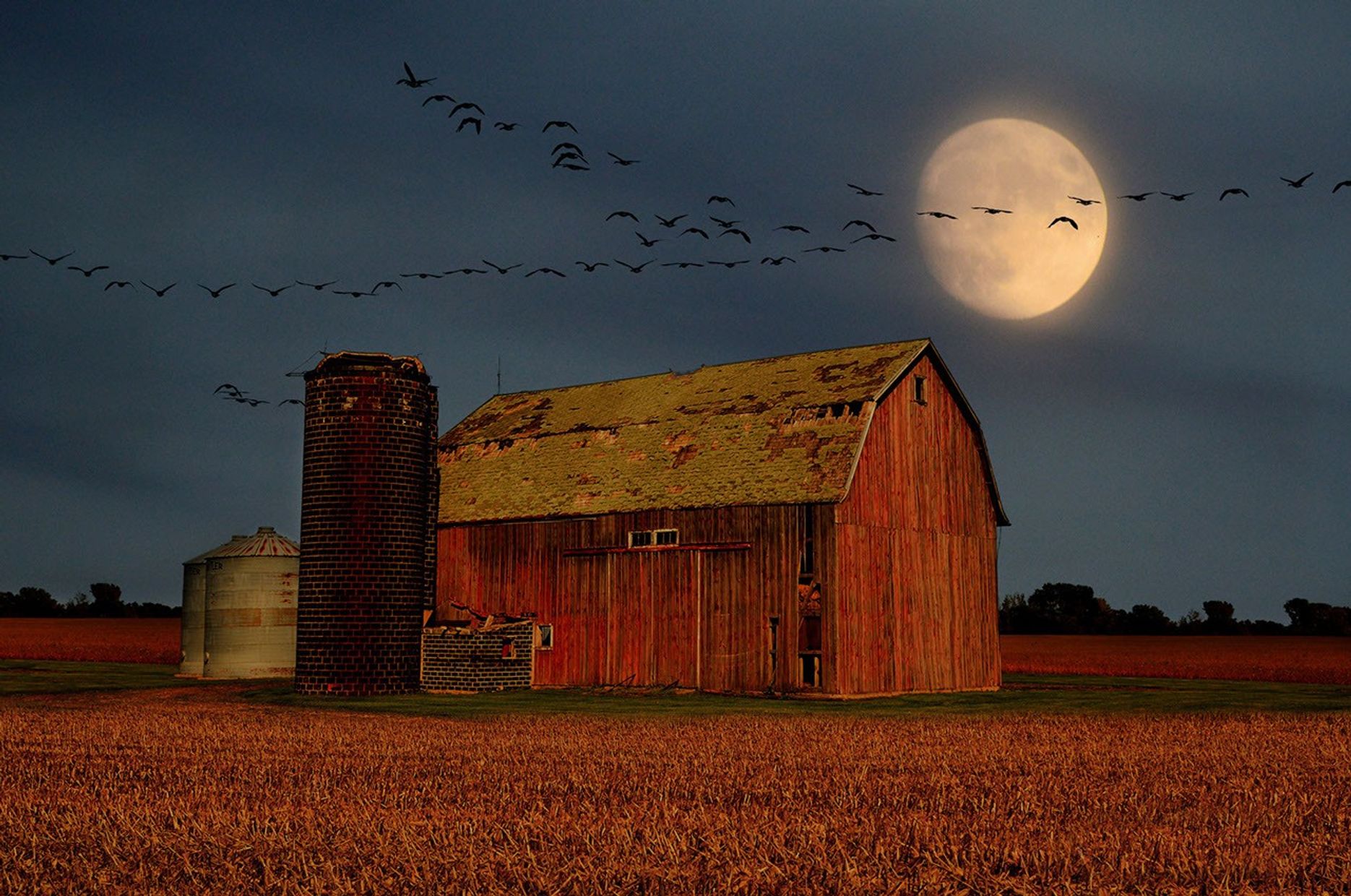
A large, glowing full moon shines bright yellow in a dark twilight sky above a rustic red barn and silo set behind a golden harvest field, with a long V-formation of birds flying across the sky.
Birds fly over a barn as a harvest Moon rises.
Mike Linnihan

Transcript

The Moon joins a tea party… Venus cranks up the brightness… the seasons officially change… and the Harvest Moon meets up with some planetary neighbors.

That’s What’s Up for September.
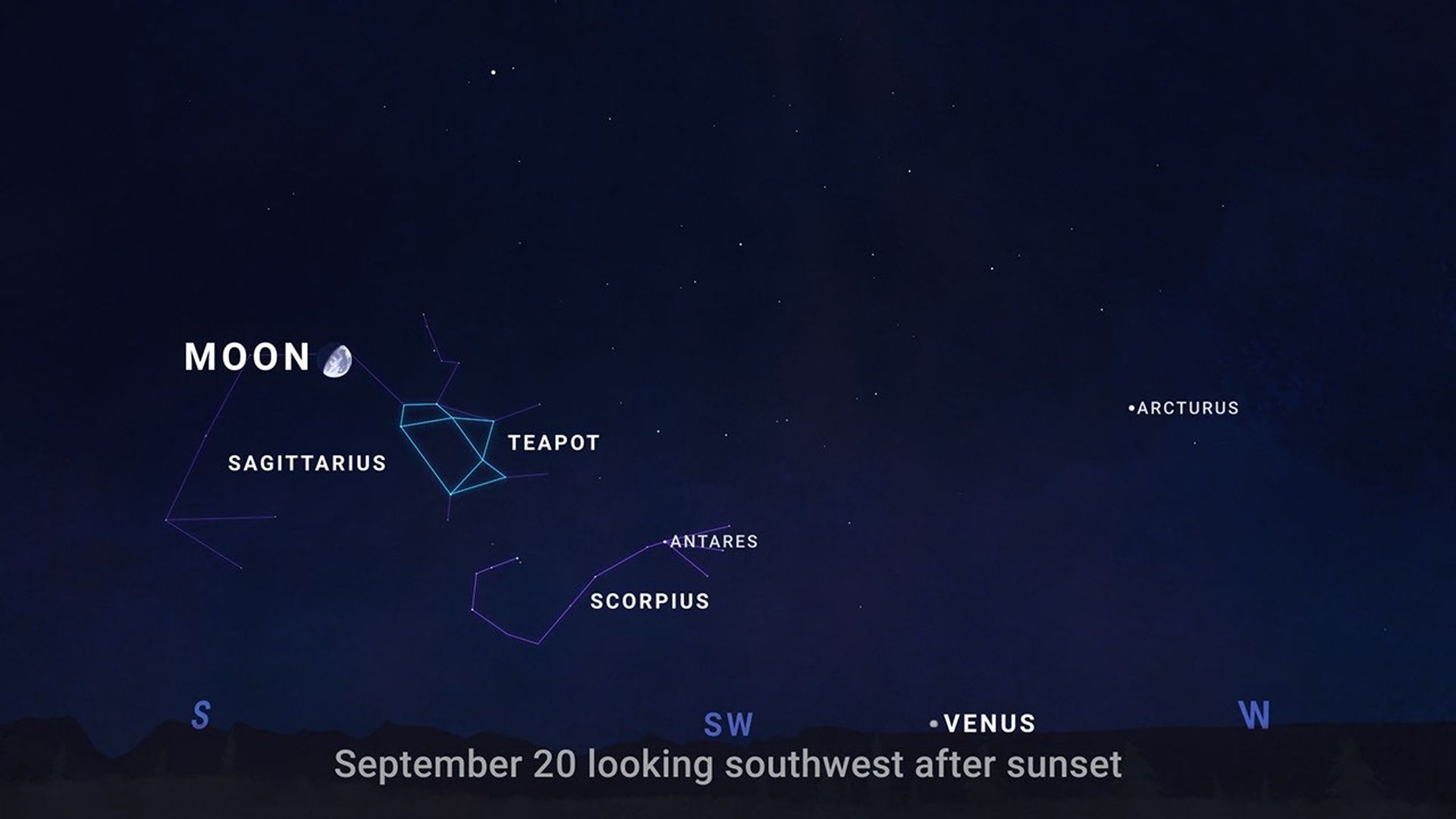
A sky chart looking southwest after sunset on Sept. 20, 2026.
NASA/JPL-Caltech

From September 14 through 20, let the Moon guide you to a few celestial landmarks. About an hour after sunset, look south to find the Moon in the evening sky.

Night by night, the Moon shifts position against the background stars, passing near Antares.

This bright, reddish star marks the heart of the constellation Scorpius.

Next you’ll see the Teapot, a group of stars in neighboring Sagittarius that really does resemble a teapot, complete with a handle, lid, and spout.

If you are under an especially dark sky… you may see hazy steam rising from the Teapot’s spout.
Follow that steam to its thickest part, and you’ll be looking toward the center of our Milky Way galaxy.
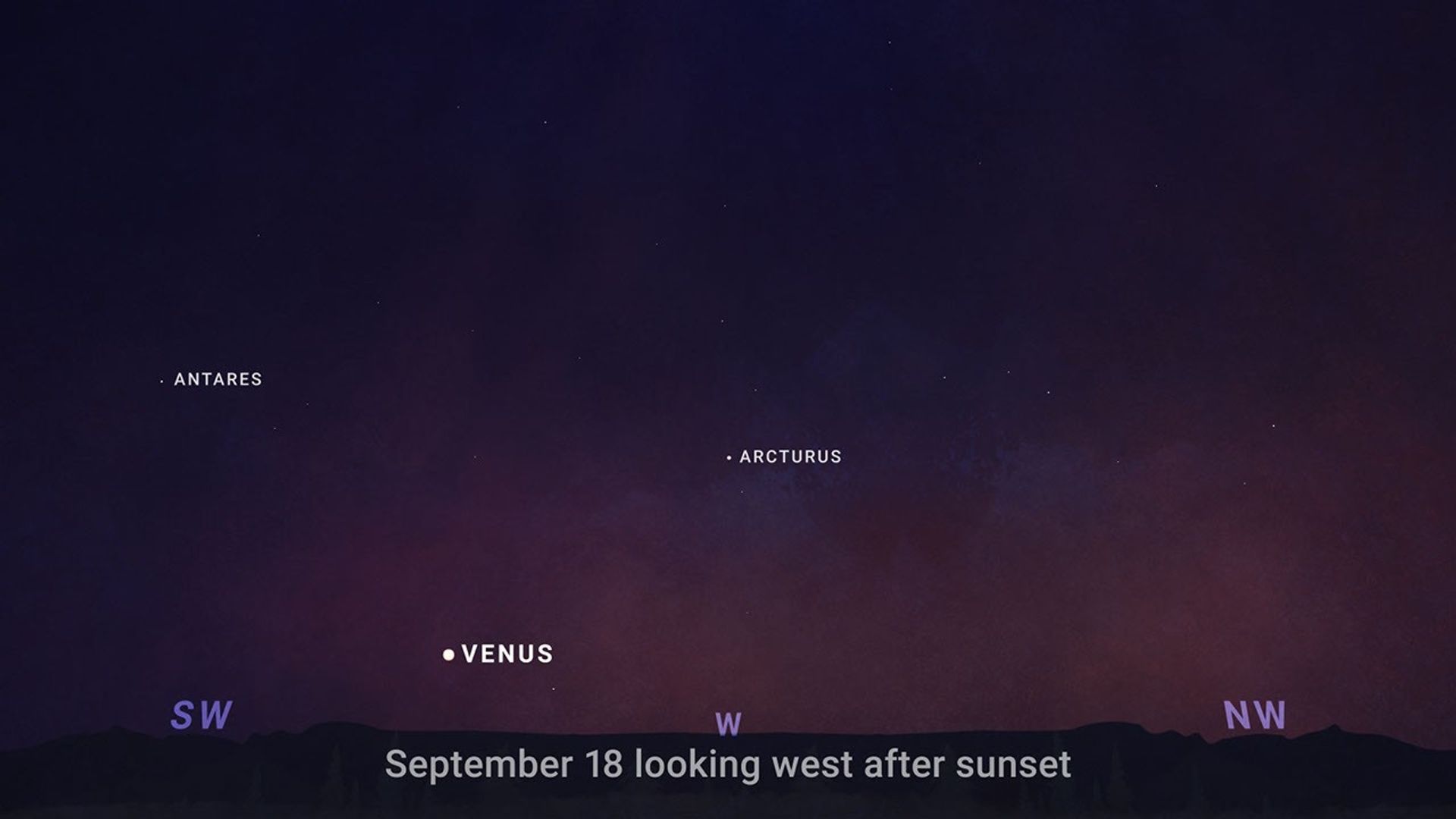
A sky chart looking west after sunset on Sept. 18, 2026.
NASA/JPL-Caltech

Look west on September 18 as Venus hits peak brilliance, shining at its brightest of this evening appearance..

You won’t have to search hard to find it. Shortly after sunset, Venus will stand out as a brilliant point of light low above the western horizon, outshining every star around it. A clear view of the horizon will give you the best chance to catch it before it sets.

On September 19, celebrate International Observe the Moon Night!

People around the world are invited to look up and connect with our nearest celestial neighbor while learning more about lunar science, exploration, and the many ways the Moon has shaped cultures around the world. Find an event near you — or learn how to participate from wherever you are — at go.nasa.gov/ObserveTheMoon.

Then on September 22, it’s officially fall in the Northern Hemisphere …while spring begins in the Southern Hemisphere.

That’s the September equinox, when the Sun is directly above Earth’s equator and day and night are close to equal in length around the world.

From there, daylight keeps getting shorter in the Northern Hemisphere and longer in the Southern Hemisphere.
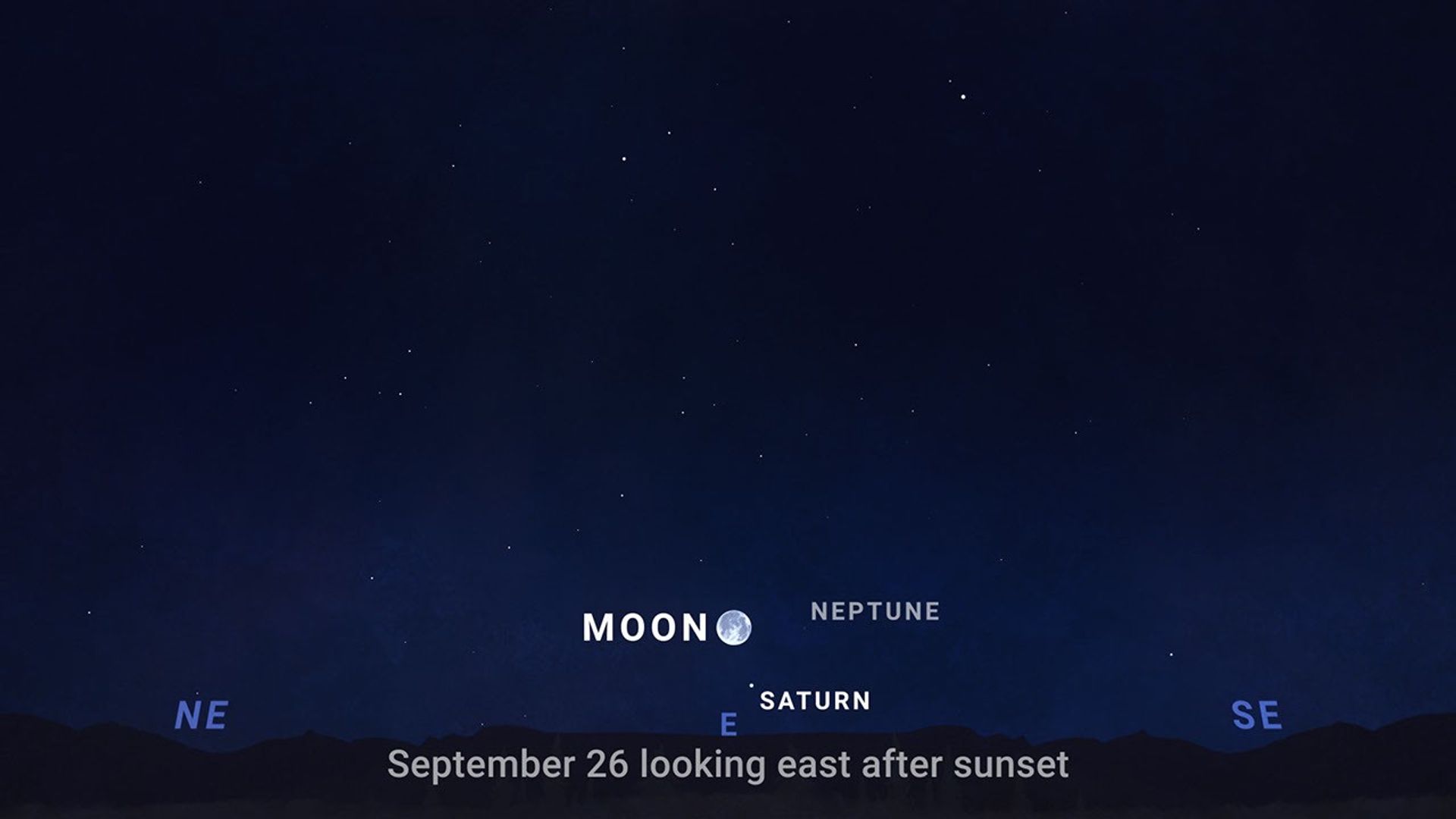
A sky chart looking east after sunset on Sept. 26, 2026.
NASA/JPL-Caltech

And on September 26, the Harvest Moon takes center stage, rising in the east shortly after sunset.

It won’t be alone. Saturn appears nearby, with faint Neptune completing a wide triangle in the sky.

Saturn is the easy one-you can see it with just your eyes. Neptune is a bit more challenging. At around magnitude 8, it’s too faint to see with the unaided eye …so you’ll need binoculars or a telescope to spot it. Darker skies and good observing conditions can help bring it into view.

Here are the phases of the Moon for September.
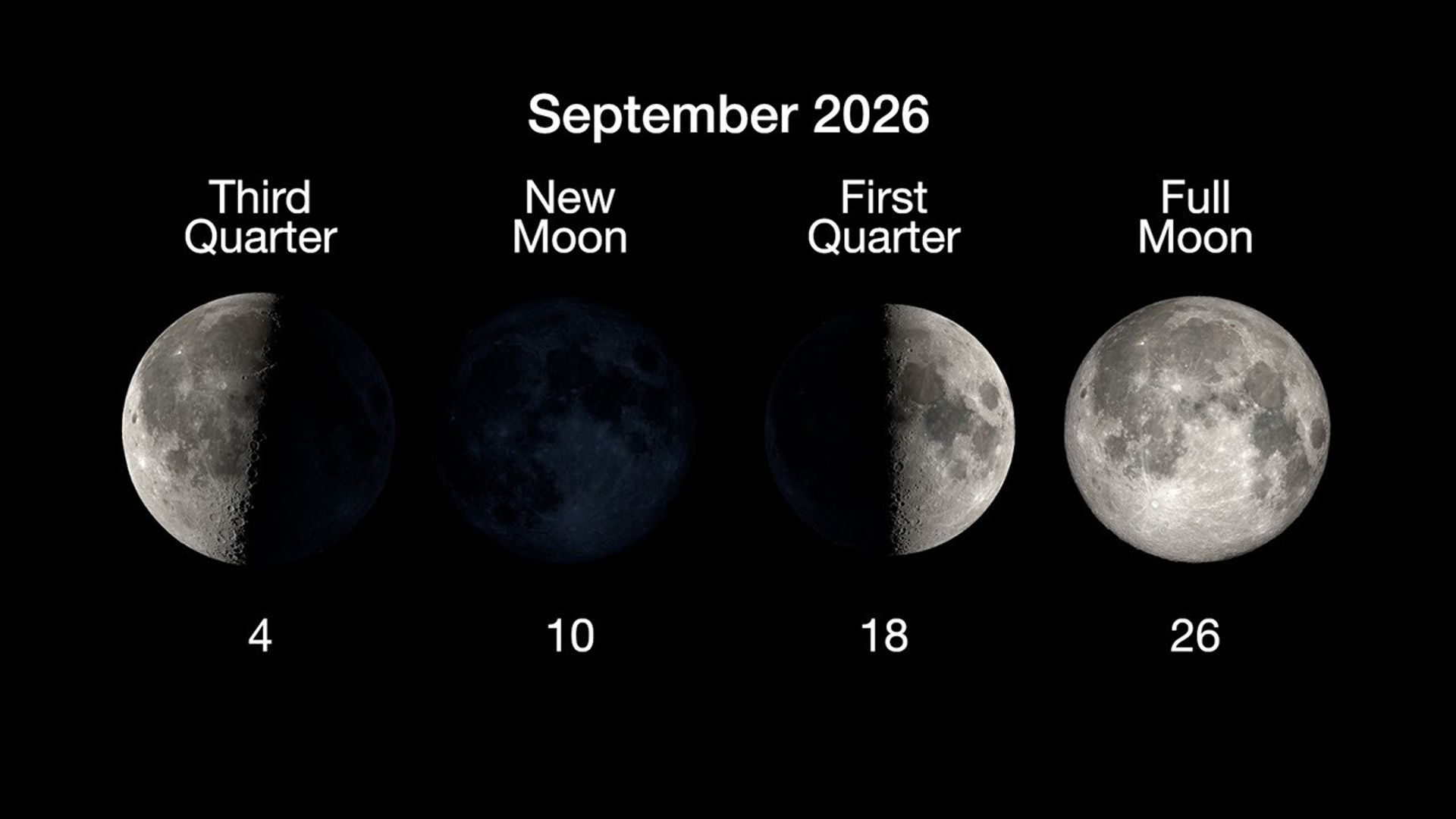
The phases of the Moon for September 2026.
NASA/JPL-Caltech

You can stay up to date on all of NASA’s missions exploring the solar system and beyond at NASA Science. I’m Raquel Villanueva from NASA’s Jet Propulsion Laboratory, and that’s What’s Up this month.

Learn More and Get Involved

A stylized logo graphic showing silhouettes of an adult pointing toward the sky, while a child holding a telescope looks on.

Night Sky Network

The Night Sky Network is a nationwide coalition of amateur astronomy clubs bringing the science, technology, and inspiration of NASA’s missions to the general public.

A scenic landscape photograph captures a large, glowing yellow full moon rising through a thin veil of clouds during twilight. In the foreground, a vintage metal windmill stands tall on a rustic farm property, silhouetted against a backdrop of rolling, arid hills. The sky is a deep, muted blue-grey, casting a soft, serene light over the dry grass and distant ridges. The composition creates a peaceful, rural atmosphere, highlighting the dramatic scale of the moonrise over the quiet countryside.

NASA Skywatching Resources

Expert skywatching tips and more from our experts.

Share

Details

Last Updated
Sep 01, 2026

NASA+ Debuts on discovery+, Coming Soon to HBO Max

10 August 2026 at 12:30
Credit: NASA

As NASA+ continues its expansion across multiple streaming platforms to bring space closer to home, NASA announced Monday programming is next heading to discovery+ and HBO Max. A continuous live feed of NASA+ programming is streaming on discovery+ live channels, while HBO Max will stream NASA’s special events, including the Artemis III mission in 2027.

Viewers on those platforms can stream NASA+ content in Dolby Vision on supported devices, which will bring space exploration to life with vivid colors, sharper contrast, brighter imagery, and richer detail. This enhanced streaming experience will help viewers experience space coverage in a uniquely immersive way.

Future programming may include science mission launches, a test flight for rendezvous and docking with human landing systems, robotic lunar deliveries, the first crewed mission to the Moon under Artemis, and more. As always, NASA+ also remains available for free, with no ads, through the NASA app and on the agency’s website.

“The National Aeronautics and Space Act of 1958 calls on us to share our story of space exploration with the broadest possible audience and we continue to honor that commitment,” said Rebecca Sirmons, general manager of NASA+ at the agency’s Headquarters in Washington. “Artemis II captured the hearts and minds of viewers globally, inspiring the Artemis generation. As we return to the Moon to stay, our goal is to provide transparent, engaging content coverage every step of the way.”

Earlier this year during its Ignition event, NASA shared plans for a bold path forward for the agency, including increasing its cadence of Artemis missions to the lunar surface, and building the first Moon Base, among other agency priorities. These continuous streaming agreements strengthen NASA’s promise to public engagement, making the agency’s mission and educational content available on multiple devices for viewers on their preferred channels

For more about NASA’s missions, visit:

https://www.nasa.gov

-end-

Jennifer Dooren / Lauren Low
Headquarters, Washington
202-358-1600
jennifer.m.dooren@nasa.gov / lauren.e.low@nasa.gov

Share

Details

Last Updated
Aug 10, 2026
❌
❌