❌

Normal view

There are new articles available, click to refresh the page.
Before yesterdayTech

2026 Hackaday Supercon: All the Speakers!

29 October 2026 at 13:00

We announced our first round of speakers, and then the workshops, and we were going to dribble out updates on the rest of the speakers as they came in, but then time slipped away from us. So we are left here announcing a veritable cornucopia of twenty wonderful talks that you absolutely won’t want to miss.

Supercon is just about a week away, and there are still a few tickets left, so grab them now before it’s too late.

And the talks are just half the fun. Between food, merriment, a killer badge with the biggest e-paper display that you’ve ever seen, and all the assorted shenanigans, it’s the highlight of our hacking year. Come join us!

Adam Batori and Kevin Colley
Rare Circuits: How we Used and Abused a $1 MCU to create the Aerospace Village Radio SAO

Software-Defined Radios have evolved from once being exquisite lab equipment to now an affordable tool accessible to hobbyists, thanks in large part to projects like HackRF and the $40 RTL-SDR. That got us thinking, are there any existing RF chips we could repurpose to make an even simpler and lower-cost SDR?

This talk dives into how we reverse-engineered the black box of the $1 TI SimpleLink Wireless MCU’s RF subsystem, and jailbroke it to unlock additional RF modes and custom protocols. We will demonstrate how we are able to receive analog AM, FM, and even raw IQ samples on this supposedly “digital RF” MCU, and developed our own tools to gain further insight into how the radio operates. Putting these capabilities together, we recount how we leveraged all of this to create the “Charlie” radio SAO for Aerospace Village and made it receive analog airband, stereo FM, UAT, and more! We also demonstrate how we made our unassuming SSD1306 OLED produce 4-level grayscale with perfect VSync, and the silicon-level hacking it took to pull it off!

Adriel Bustamante
Rover Tracks: A Retrospective on the Open Source Rover and What’s Next

The Open Source Rover has taken on a new life ever since the v2 release three years ago. In that time, I’ve joined the community of rover builders and become a maintainer on the project myself, doing outreach at community events and development work on the rover where I can.

In the time since I’ve been a maintainer, I’ve learned quite a few lessons about the practical and philosophical aspects of engineering for a project like this. I hope to be able to share some of what I’ve learned (changes I’ve had to make to my rover, improvements that can be made, what it’s like to be “the rover guy” at Maker Faire), and what comes next for both my own rover and the project at large.

Alley Cat
Designing Devices: Not Just PCBs in Boxes

PCBs and their enclosures are often designed as separate things, but the best results come from designing them together. This talk covers practical considerations to design boards with the final device in mind, account for the differences between CAD models and real hardware, and create enclosures specifically for FDM 3D printing. We’ll look at real-world tolerances, connector placement, production variance, clearances, overhangs, extrusion widths, layer heights, and other small details that can make the difference between a design that looks right in CAD and one that actually fits together.

Ames Evans
Blinkenlights That Remember: The Unsigned Firmware on your PC’s RAM

The RGB glow on your sick gaming PC comes from somewhere, and that somewhere is a microcontroller controlled by a program and a kernel module that the manufacturer ships. But if your vendor’s app can push a new lighting style to that microcontroller, why not a whole new firmware update? Is there anything actually stopping arbitrary firmware from being written to your RAM’s RGB controller?

I went looking for answers with Ghidra and my RAM’s onboard controller will happily accept and run firmware of my choosing, and I can make it do basically whatever I want. I will demonstrate a few of these possibilities live.
Andrew Denio and Danner Cronise
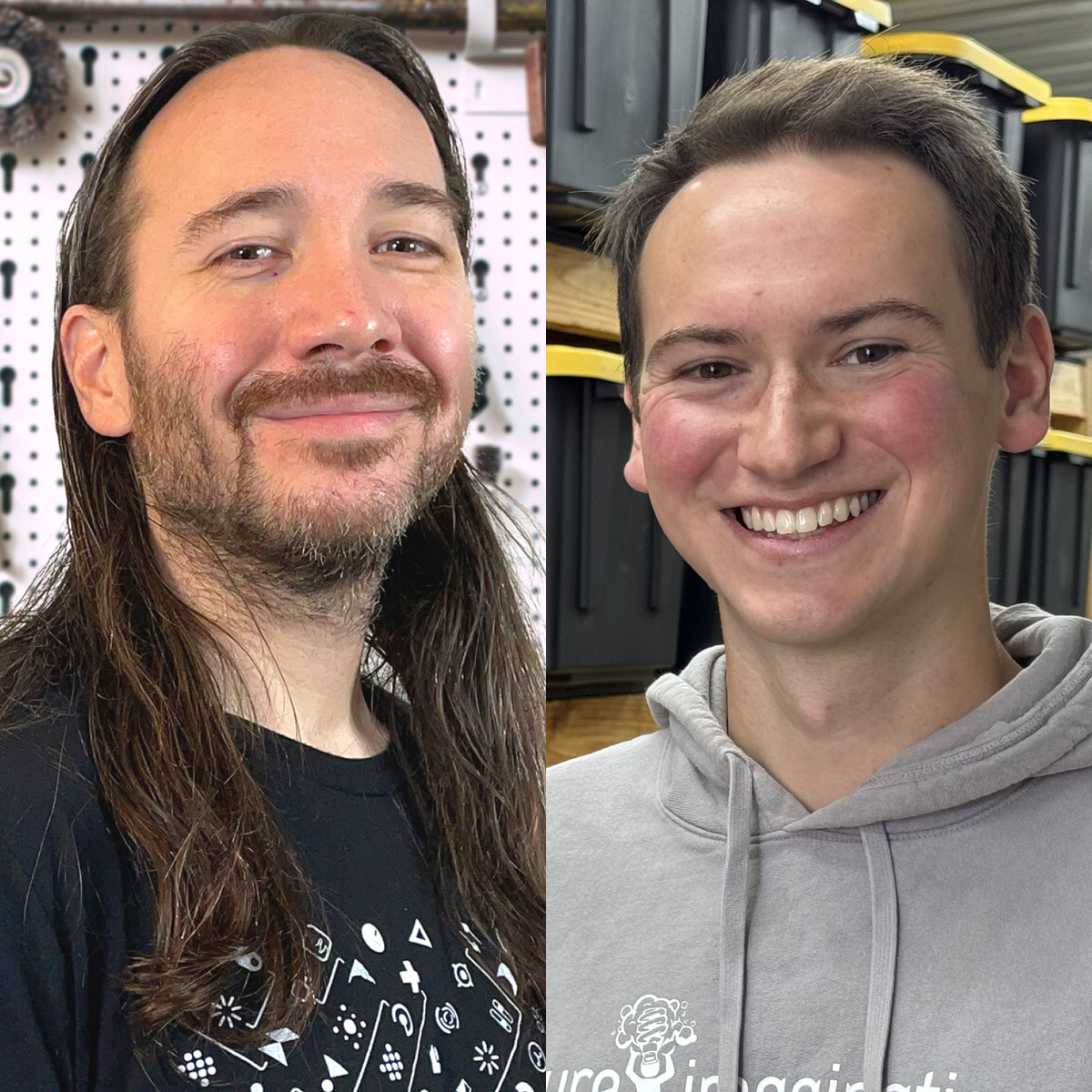
How to Rob a Bank Without Really Trying

Have you ever wondered how exploding bank dye packs work? During this talk, you will learn all about how banks utilize embedded electronics to either track or paint bank robbers. Using equipment purchased from auctions, MakeItHackin and Danner Cronise will cover the electronics hidden in stacks of cash, the various equipment inside banks to trigger a remote detonation, and how these electronics have evolved over the decades.

Can these protective measures be foiled… find out during this exclusive Supercon talk.

Ashleigh Pomerant
No Refresh Button: The Case For (and Against) Putting a Browser on Your Device

A user interface running in Chrome on a Raspberry Pi looks like any other web app from the outside. Underneath, most of the usual assumptions start to fall apart. This talk covers what actually changes when you ship on a device instead of a server: hardware owns the state, WebSockets replace REST because screen updates are often triggered by hardware sensors, and both memory and CPU limits become a real constraint.

It also covers why the trade is usually still worth making. The upside is options: rendering and layout are handled for you, there’s a library or a pattern for almost anything you need, and a large community to ask when something breaks. See this all come together in a device that uses RFID for input.

GC
EDA for Everyone: PCB Design in the Agentic Era

What if ANYONE could ship hardware? What if that what-if wasn’t a what-if? Find out how the next wave of open-source design software puts the power to create in your hands. (Editor’s note: this talk contains parody and hacks in about equal measure.)
Eric Hall
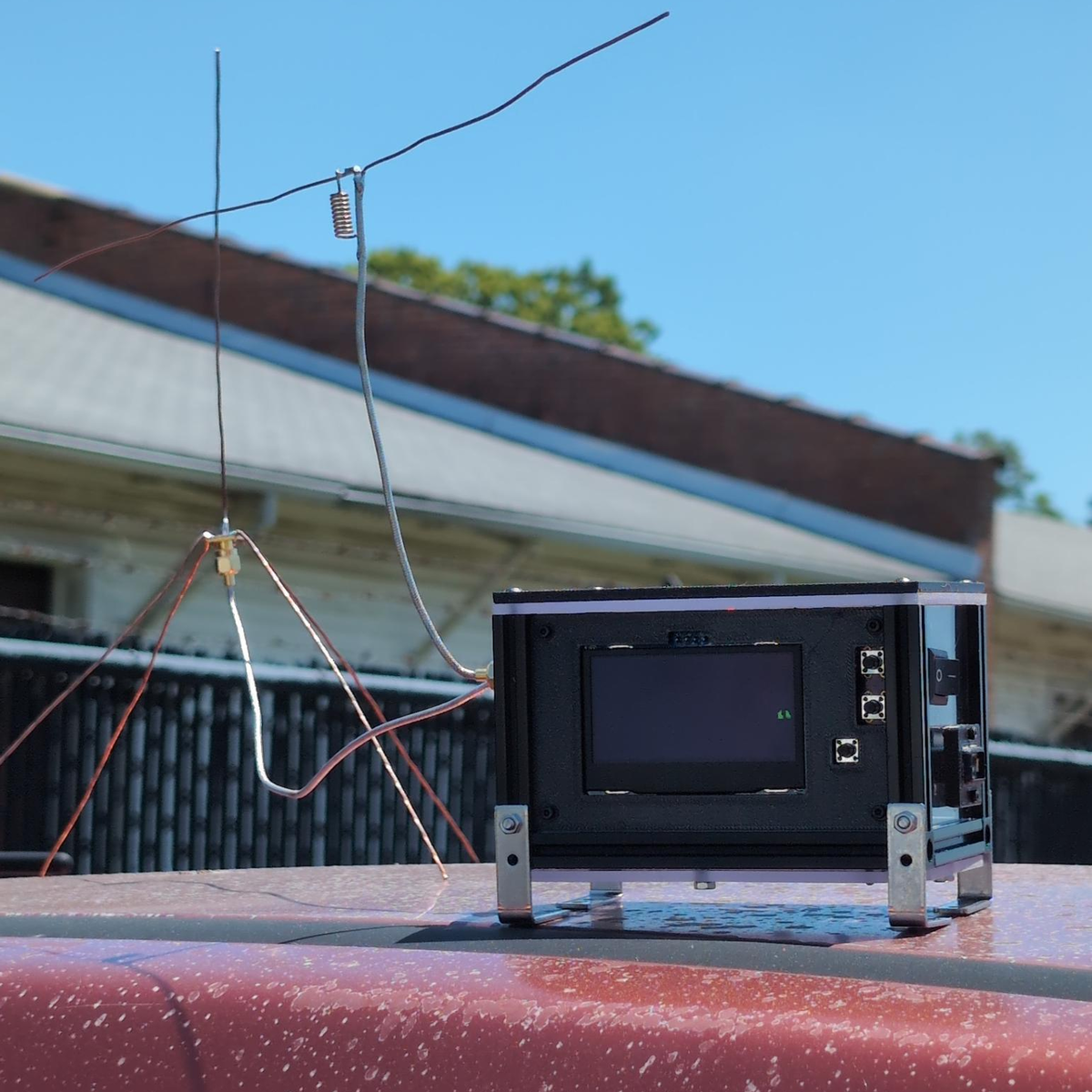
LoRa and Beyond

This talk explores building a small ground station for receiving LoRa satellite communications with affordable parts and custom made antennas. This project was built from the ground up without using existing frameworks like tinyGS.

Baird Bankovic
Achieving Quality Photoresist Uniformity on Asymmetric Substrates

The most popular method for fabricating nano-scale structures is with photolithography. The first step in any photolithography process is to coat a thin, uniform coating of photoresist on the substrate. Typically this is spun on, however if the substrate is not rotationally symmetric, strong edge effects can hurt thickness uniformity. I present a few different methods for increasing uniformity of photoresist coating. In particular increased uniformity on the silicon substrates (50mm x 100mm x 30mm) from 12% to 1%, which is close to industry standard uniformity on wafers. I will discuss various other photoresist coating techniques for oblong substrates as well.

Henry Amador
Beyond the Breadboard: Bringing PCB Fabrication into the Makerspace

This talk explores an in-house PCB fabrication workflow developed for a university makerspace that uses a fiber laser to selectively ablate copper from PCB blanks.I’ll share how the process was developed, what was learned along the way, and how access to rapid PCB fabrication has expanded what students can design, build, and iterate on during their engineering courses.
Joe Needleman and Dex
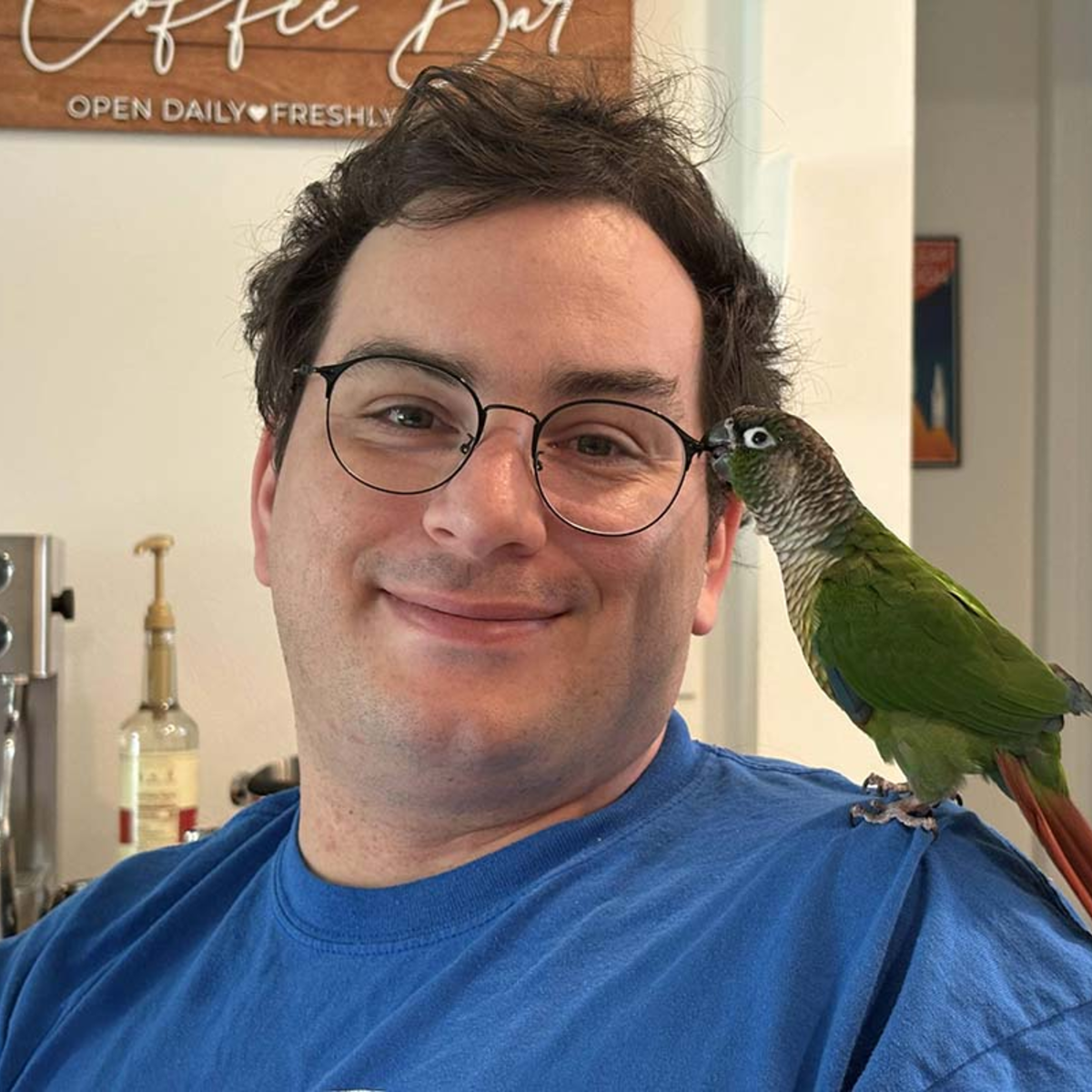
HM and I (Down the Rabbithole of Human Machine Interfacing)

This talk is for anyone who loves tactile inputs and physical controls, whether they’re on the big screen or in real life. We will be talking about human-machine interfaces (HMI for short), have evolved, and how fictional and real systems have shaped each other along the way. We’ll walk through three of our own designs, each with a distinct purpose. Every one is a real build, so we’ll cover the whole design, from hardware planning, firmware, and even the software that connects a computer to the machine interface. Finally, we’ll look at the future of HMI design and the growing role Agent-to-Agent (A2A) AI now plays in designing control systems.

John Zhang
How many neurons does it take to pump a swing?

Back in 2020, I became interested in applying reinforcement learning to teach a robot how to pump a swing, inspired by the Cook’s paper “It takes two neurons to ride a bike” and YouTube videos of gymnastic robots by Hinametetu. It’s an elegant toy problem with beautiful nonlinear dynamics and it turns out you can get away with just one neuron using a Q-learning approach. Now, in the blistering, chaotic summer of AI, it’s seems like an appropriate time to revisit this idea and ask what we can learn from this simple toy example for building physical intelligence.

Kaveh Pezeshki
The Hardware of Superconducting Quantum Computing

Superconducting quantum systems represent a new frontier for quantum simulation and computation. In this talk, I will discuss the technologies and hardware behind these systems – what is a transmon qubit? how do we control and measure its state? As the field is so new, much of what we use is adapted from technologies hardware hackers are familiar with. This talk will emphasize how we adapt and use common equipment for quantum measurement and control.

 

Kerry Scharfglass
How to Make and Have Feelings

Touch is an integral part of our lives, but how does it work? It’s easy to say “your skin senses pressure” but it can also tell you about things like the grain of a piece of wood, or that an animal’s fur is soft. The biomechanics of touch are a fascinating and complex topic without wide understanding. In this talk we will peel the covers back by discussing science’s current understanding of the collection of systems the human body uses to feel, and how it can infer things like texture from those rudimentary signals.

Expect to learn about how amazing our biological systems are, and how you can leverage that in different ways give people different haptic experiences.

Lily Gabriel
Spinning E-textile Yarns

This talk will be about e-textile materials and how to make your own when you can’t find commercially available options. E-textile materials include conductive thread, yarn, fabric, and wool roving, but these are hard to find from reliable sources (especially if you are a hobbyist maker and not looking to buy in bulk.) Methods I will be covering in the talk include hand-plying, drop spindle plying, core spinning, and supercoil. Hand plying is taking a single strand and introducing additional twist into it, then folding it in half and letting it twist back on itself. Drop spindle plying is similar, but using a weighted spindle to add more twist in less time. Core spinning is taking an overspun single and wrapping it with wool roving in the opposite direction. Supercoil is similar to core spinning, but instead of wool roving, another overspun single is twisted around a core.

Ryan Mast
The Perfect BLEnd: Reverse Engineering a Bluetooth-Controlled Smart Blender for Better Smoothies

Have you ever gone to make a smoothie, only to have the blades spin fruitlessly while the fruit sticks just out of reach on the walls of the cup? I’ve wrestled with a “smart” blender over this and other issues on many occasions, often resorting to tossing the single serving cup to dislodge stubborn pieces of fruit. Or perhaps you have another smart device that one day stops working because the vendor decided to stop updating the app for newer phones.

In this talk, I’ll share how I learned to reverse engineer BLE devices in order to control the exact settings used by the blender, including initial failures and how I overcame them — along with quickly creating an alternative for controlling the blender when the app stopped working after an iOS update. And in the end, we’ll create a custom blending profile for the perfect blend!

Sage Cadence
How to build things that people care about in the age of AI

In today’s age of abundant information, anyone with a computer can build and anyone with an opinion can make it known. How do you filter out the noise to build something that people actually care about? Learn how to combine the mental frameworks of engineer and a storyteller, cutting through the clutter and creating things that truly matter.

Sarah(í) Alvarez
Finding a Loop: Creative Uses for e-Waste

Artists, makers, and engineers must begin to explore creative, non-industrial approaches to managing e-waste. This talk chronicles experimentation with a niche source of e-waste – one record label’s backlog of unsellable compact discs. Learn about the mid-2010’s enthusiasm for recycled CD filament, the benefits of salvaged metal foil, and embracing the chaos of creative re-use.

Sher Amir Dullat
StageReady: a standalone, portable device for natural, studio grade vocal pitch correction in real time

We all love singing, but at some point we also realize that perhaps the performance sounds better inside our own heads than outside it. If there were a tool to bridge this gap, it would surely appeal to just about everyone. That tool does exist, it’s real-time pitch correction. So why are we all not carrying our own personalized pitch corrector with us?

Currently, real-time pitch correction requires studio grade hardware, but we create a real-time auto-tuner that can be personalized to a singer’s voice while pitch-correcting under real-time latency constraints on an edge device.
It does so by separating the voice into two parts: the resonant character that makes each person sound like themselves, and the underlying vocal source that sets the note. It corrects only the pitch, while a neural network running on chip’s AI accelerator rebuilds a natural, breathy vocal source at the corrected pitch.
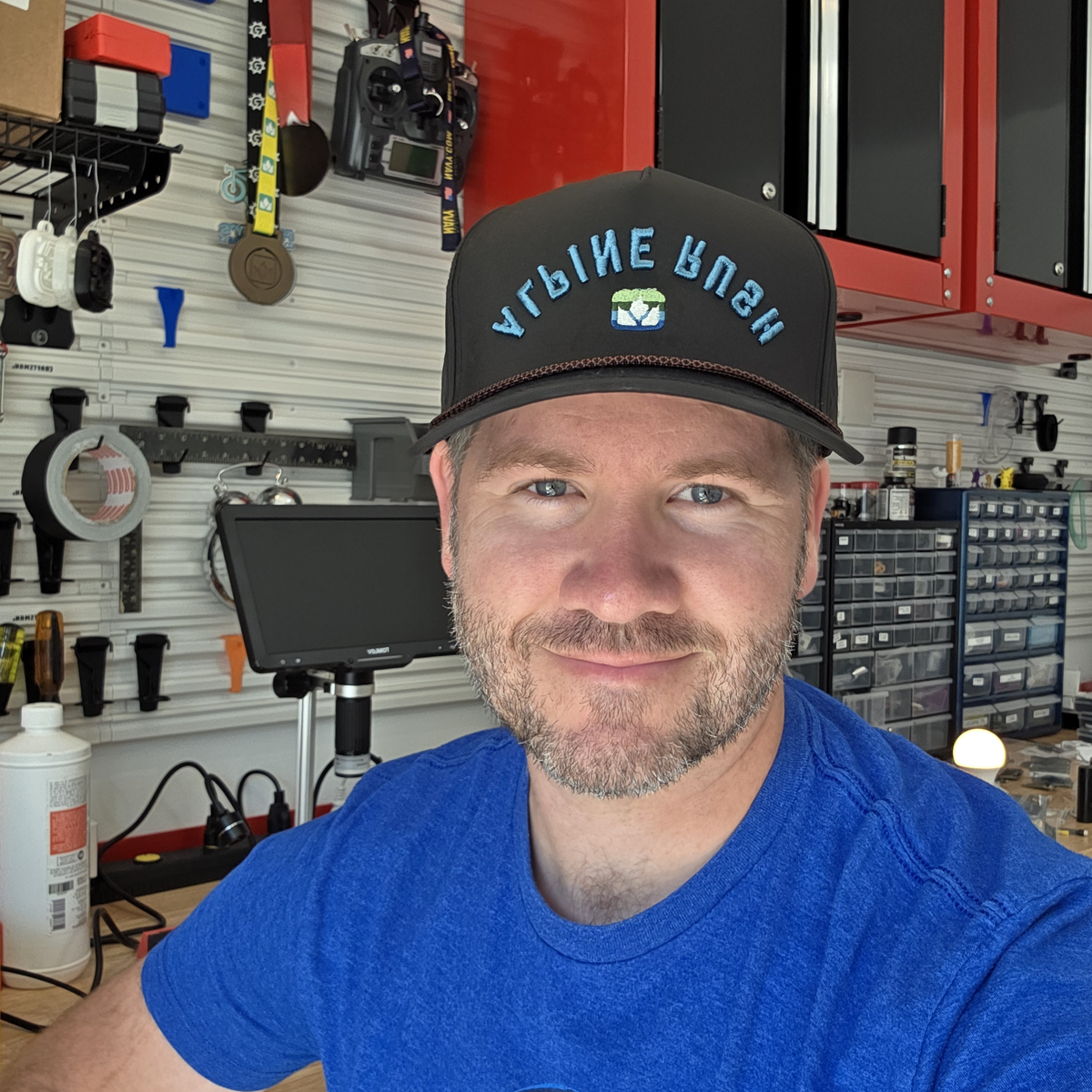
Stephen Farnsworth
Secrets of Ghidra: Reverse Engineering Proprietary Smart Home Sensors

After digging some old sensors from a security system I had out of a bin to integrate with Home Assistant, I realized several of them used a proprietary protocol used by a system I no longer used. Fortunately, a fellow enthusiast and tinkerer had just recently discovered you could dump the firmware of the humble TI MSP430 based device. That’s when I decided to dust off Ghidra and try to figure out what this device was doing.

Along the way, I’ve learned some great lessons on how to use the tool Ghidra to decompile monolithic microcontroller firmware. In this presentation I’ll share my journey with the tips that I wish I known before I started. For example, to understand the firmware, you need to pull resources from anywhere you can and look at the device as a whole to understand the inner workings. As a result, I was able to crack the protocol and give new life to hundreds of dollars of sensors that would still be collecting dust in a bin.

[If you read this far, you probably want tickets. Just sayin’.]

Making for Others

24 October 2026 at 10:00

One of the nicest things about the Hackaday community, and the open-source hardware community at large, is the incredible generosity of one hacker to another. But it’s not purely altruism – it’s also just a great feeling to be able to share your work with other folks who understand what it represents and how to use it.

I’m looking at my workbench right now. Because I’ve been testing out the Supercon badge prototype, there is a small pile of SAOs to the right. SAOs are the perfect size for giving out to fellow hackers, because they can be small, inexpensive, and yet still embody a ton of your creativity. [Tom]’s marvelous Ode to the SAO, even opens with this as one of the main benefits, alongside teaching you “full-stack” PCB production at small scale; they are cheap enough that you can give them away. Of course, you end up getting as many or more than you give, so it’s not just the pure joy of giving at work in the SAO scene.

On my left, I have a couple dev boards made by fellow hackers. One is a clone of the Raspberry Pi Pico that’s made by the high-school students of Hack Club, and the other is [CNLohr]’s ch32v003fun board and esp32s2-funprog programmer. I needed to test out a quick microcontroller application, and having a few dev boards on hand is always useful. Because I know the people who made these boards, I tend to reach for these over their commercial alternatives. Romantic? Maybe. But they were given to me by friends.

And of course the badge prototype is sitting in the middle of all this, and that’s how I really know about the joy of giving away your designs to fellow hackers. We at Hackaday are in the incredibly fortunate position of being able to dream up a new and fun badge every year, and give it out to hundreds of fellow hackers. Heck, this year, we’re making 1,000. I say “fortunate” because we don’t have to pay for them ourselves, but rather our Supercon sponsors help pick up the bill, and that means we can make stuff that’s far cooler than our budgets would otherwise allow.

So to everyone in the SAO scene, may you give away your designs to people who really appreciate them. For the folks who have built tools for other hackers to use, you should know that the recipients probably reach for your boards over their bland commercial alternatives. And for all of you coming to Supercon in two weeks, we hope you dig the badge. It has maybe become a bit of a cliché these days, but you should know that it’s made with love.

This article is part of the Hackaday.com newsletter, delivered every seven days for each of the last 200+ weeks. It also includes our favorite articles from the last seven days that you can see on the web version of the newsletter. Want this type of article to hit your inbox every Friday morning? You should sign up!

Discovering SDRs Everywhere

17 October 2026 at 10:00

To quote commenter [douyarou], “It’s like our little version of a Precambrian explosion”. A bunch of hackers have discovered, independently and building on each other’s work, software-defined radio (SDR) capabilities in more places than you can shake a stick at.

It all started with [Espargos] and [h0m3us3r] apparently independently discovering that the ESP32 family of chips had a “secret” debug mode that allowed direct access to the radio that’s normally used for WiFi. While the 2.4 GHz radio signal is almost always immediately converted into data by the MAC hardware, here they found a way to listen in upstream, to the raw IQ data.

Seeing this, folks were immediately inspired to find out if they could transmit as well. [marble] not only got transmit functionality working, but integrated the part in with the standard osmosdr data flow, which meant that a whole bunch of existing tools were ready to go. We didn’t know about it at the time, but apparently [jochenhammes] and [z1000biker] concurrently had their TX-capable hacks up and running: here and here.

At this point, folks have already started to use the capabilities for broadcasting digital TV signals, voice signals, FM Hell, and other hijinks. This reminds us of the early days of the RTL-SDR project, when a competent, if receive-only, SDR functionality was found in a bunch of USB TV-tuner dongles. Once the hardware capabilities were sussed out, people started writing all sorts of useful software, and it gave rise to all manner of radio projects, from simply poking at domestic wireless devices to tracking all the airplanes in the world as they fly by.

[Tom] and I were discussing this on the podcast, and he remarked that of course there are SDRs hidden everywhere there is a radio unit these days, and the question is just whether or not we could hack them into usability. And before the podcast was even finally edited, [Samson1te] told us about his find in the LR2021 LoRa chip. This is a radio that’s designed to be a radio, with 16-bit resolution, and covering lower frequencies from 150 MHz to 960 MHz.

Compared to the RTL-SDR revolution, this is all happening at incredible speed. Each of these hacks will enable us to use different slices of radio spectrum with different degrees of ease, but it’s clear that the cost of entry into playing around with digital radio has just dropped precipitously. We will see hundreds of new signals hacks in the next few months – the floodgates have been opened.

This article is part of the Hackaday.com newsletter, delivered every seven days for each of the last 200+ weeks. It also includes our favorite articles from the last seven days that you can see on the web version of the newsletter. Want this type of article to hit your inbox every Friday morning? You should sign up!

2026 Hackaday Supercon: Workshops are Open!

14 October 2026 at 13:00

Supercon is Hackaday’s annual gathering, and you absolutely need to be there.

Today, we’re pleased to announce our lineup of workshops, and it’s more than we’ve ever offered, thanks to moving to a bigger venue and to our awesome community of hackers stepping up to give them. There’s something here for everyone, so if anything strikes your fancy, be sure to book yourself a slot soon. (If you have a ticket already, you sign up for the workshop as an “add-on”, BTW.) Workshops always fill up fast, due to the small and hands-on nature of the beast.

If you’ve never been to Supercon, the short version of the story is that it’s three days of hacking, hanging out, food, drink, merriment, and great talks all rolled into one long weekend. Fridays are chilled out, and simply a great time to get to know everyone and start playing around with whatever hardware hacks you’ve brought along. Saturday and Sunday are filled with talks, activities, and of course even more hob-nobbing with the world’s coolest nerds.

Basically, it’s all the best of Hackaday, made even better by being live and in person. All that’s missing is you.

We have another round of speakers and hopefully a badge reveal coming up soon, so stay tuned!

Josh Martin
Making 3D Images (Lenticulars) and 3D Cameras

In this workshop, participants will learn what a 3D image looks like, the history behind 3D photography, and how to take 3D images using film and digital cameras. The workshop will walk participants through making their own 3D camera with off the shelf parts, a 3D printer, and custom software we have written.

Building on this foundation, the workshop also covers the process of how to take the 3D images captured with a 3D camera and transform them into a physical print called a lenticular.

Everyone will get to take their own lenticular print home at the end of this workshop.

Darcy Neal
Explore the EMF Around You

This workshop explores what EMF frequencies are, where they come from, how we can listen to them, and how to build your own sensing device.

Sessions end with a sound exploration where participants go discover what unique sounds they can find. The EMF Explorer Badge is a hands-on soldering kit that turns the invisible electrical activity of everyday electronics into sound. Walk around, listen, compare devices, and build intuition for the signals hiding in the modern world.

If time allows, we will open the board file in KiCad and learn how everyone can make their own creative PCB designs.

Shawn Hymel
Reinforcement Learning for Robotics

Reinforcement learning is reshaping how robots learn to move: it’s driving breakthroughs at labs like ETH Zurich, Boston Dynamics, and Disney Research, enabling robots to handle environments and challenges they were never explicitly trained for. The good news is that you don’t need a fully equipped research lab to get started. In this hands-on workshop, participants will train an AI agent from scratch to balance a two-wheeled robot, then watch it run on real hardware.

We’ll tackle two of the most common real-world challenges in robotics: how to make an agent that’s actually robust and how to transfer a policy trained in simulation onto a physical robot. By the end of the session, attendees will leave with hands-on intuition for modern robot learning.

Alessandra Noelting
Exquisite Circuit: Exquisite Corpse for Electronics

What happens when a circuit is designed by a room full of people who cannot see the whole circuit?

In this hands-on electronic version of Exquisite Corpse, each participant adds a stage to a shared low-voltage circuit, conceals their work, and passes it to the next builder. Participants inherit standardized power and signal connections – but no schematic, explanation, or design review.

At the end, we reveal the complete creations, attempt to reconstruct their collective logic, inspect them for safety, and apply power from a strictly current-limited supply. Functionality is optional. Surprise is guaranteed.

Bob Hickman and Estefannie
Bling It On: Programming Your Own Generative Art Matrix

This is a repeat of our wildly popular “Bling It On” workshop form 2025. In this intermediate-level maker workshop, you will learn the fundamentals of generative algorithms and apply them using either Circuit Python or C++ to create a dynamic display that can pull data over WiFi from one or more APIs and use the data to visualize some generative art.

The results will be beautiful and practical, and attendees will leave with an amazing 130 mm x 130 mm LED matrix. If you missed out on our sold out workshop last year, this is your chance to Bling It On!

Nathan Jones
Badge Hacking for Beginners

Calling all nerds, newbies, and first-time attendees to the world-famous Hackaday Supercon! You just received your super duper, neato conference badge… now what?

“Badge hacking” is a seminal part of the Supercon experience, but it can feel intimidating to attempt if you’re new to embedded systems. In this workshop, I’ll break down those barriers for you, by explaining exactly how the badge works and what you can do with it.

Then I’ll walk you through your very first badge hacks, one software-focused and one hardware-focused, so that you’ll be able to walk around with your very own, one-of-a-kind, customized conference badge. Maybe I’ll even be able to convince you to show it off during the “Badge Hacking Competition” on Sunday!

Debra Ansell
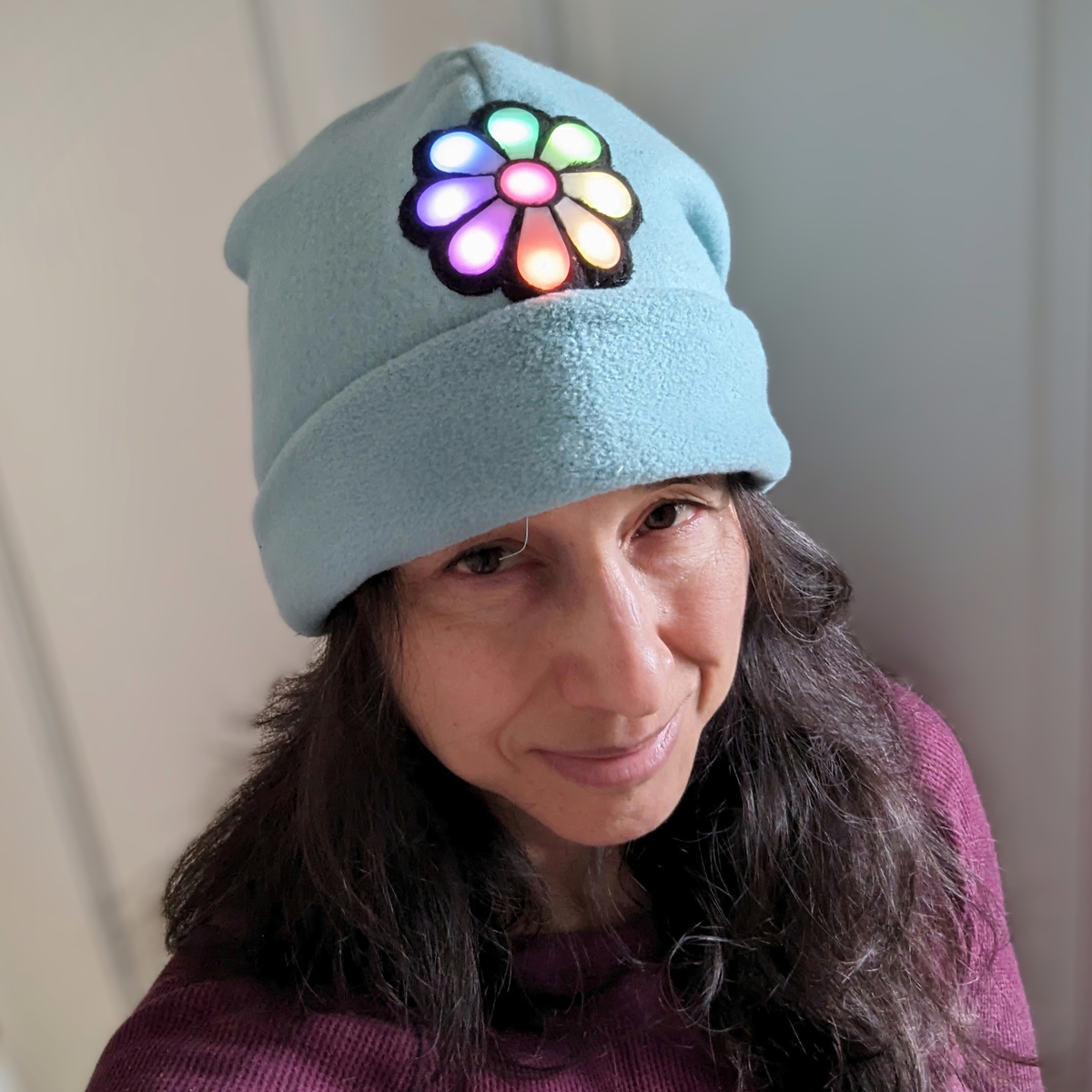
Powered Flowers and Prismatic Stars: LED Wearables with Illuminated Appliqué

This workshop goes beyond conductive thread and sewable LEDs. Participants will learn how to enhance clothing and accessories with assemblies of discreet 3D printed diffusers connected by mesh fabric and illuminated by addressable string lights. The result is attractive, flexible, durable, and versatile, and the technique can be adapted into different configurations and effects to enhance a wide variety of wearables.

All parts and tools necessary to create, power and animate LED patterns on an illuminated star- or flower- shaped applique are provided, as well as a hat or bag to sew the applique onto. Participants may also opt to bring their own item to decorate. If bringing your own piece of clothing or accessory, please choose one made from sturdy fabric such as denim or canvas that will support an electronics assembly.

An overview of controlling patterns and playlists with WLED will take place at the end, that will cover as much detail as time allows. Participants will want to bring a laptop (easiest) or smartphone to connect to and customize their wearable.

Ayesha Wilson and Alex Lynd
We have TCSM at Home! (Learn to build your own Antenna + Wireless Bug Hunting Tools)

Ayesha will walk you through the fundamentals of antenna design – we use OpenEMS to explore antenna geometry, impedance matching, and S-parameter simulation before importing the design into KiCad for PCB layout. You’ll learn to use a VNA for evaluating your antenna’s performance!

Alex will lead a short lesson on wireless tracking and a foxhunting exercise where attendees will use an ESP32 based console + custom antennas to locate Bluetooth beacons hidden around the venue!

This workshop is beginner friendly and will teach you the basics of wireless intelligence + PCB design, and attendees will walk away with an educational tool that can explore the RF landscape around them after the conference.

Pat Deegan
Tiny Tapeout

In this workshop, participants will get the opportunity to design and manufacture your own design on an ASIC!

Participants will learn the basics of digital logic, the basics of how semiconductors are designed and made, how to use an online digital design tool to build and simulate a simple design, and how to create the GDS files for manufacture on the open-source Sky130 PDK.

You will have the option to submit your designs to be manufactured on the next shuttle as part of the Tiny Tapeout project. (Thanks to sponsorship from ChipFoundry.io.)


ESP-SDR Can Now Transmit

13 October 2026 at 16:00

Well, that was fast! Last week, we reported on two apparently simultaneous hacks using the 2.4 GHz radio inside many ESP32 variants that enabled raw access to the radio samples, turning it into a listen-only software defined radio (SDR) platform. Listen only? That’s only half of the SDR story.

Last weekend, [marble] got started fixing that, and released an early early version of ESP32 firmware that can also transmit, and got it working with gqrx. The demo communicates between an S3 and a C6 using a Hellschreiber mode, something that’s certainly out of the WiFi spec. And it didn’t stop there, either. [marble] is working on 802.15.4 modulation at the moment, which means that maybe soon your ESP32 will speak ZigBee.

This is all in the roughly 2.4 GHz band, but [marble] suggests that it might be good down to 1.8 GHz. (Editor’s note: previously, we said 100 MHz, but that was incorrect.) So there is still some uncharted terrain, and it’s clear that the boundaries on the ESP-SDR are just starting to get pushed.

If the early hacks on the RTL-SDR set off a wave of hacker SDR radio experimentation, and we can only hope that this is the beginning of the ESP-SDR era. Thanks then to [marble]– and the original hacks coming from the Espargos team for kicking this all off!

The Weirdest Video Games were Hacks

10 October 2026 at 10:00

We were looking into the marvelous recent project by [Throaty Mumbo] to recreate and reimagine the forgotten world of VHS-tape-based video games. Wait, what? Yes, back in the day, when computer graphics were more primitive, there were attempts to mix the gameplay of video games with the graphics from a video cassette. Take the Action Max system. It worked with a light-gun that pointed at the screen while the video played, and you tried to shoot at things as they flew by. Think Duck Hunt, but in glorious VHS video quality with cheesy acting, and the same gameplay loop every time, because it’s on the tape.

The unreleased Control-Vision VHS gaming system, co-developed with none other than Steve Wozniak, took the idea a little further and ran simultaneous sub-videos, and your actions would choose which of the sub-tracks would play at any given time. This let them do things like switch between videos depending on whether you caught the bad guys or missed them entirely, for instance.

These games came in the late 1980s, though, and they were all derivatives of the seminal Dragon’s Lair, which is probably the least fun video game I’ve ever had the chance to play, but among the most entertaining in a weird way. Instead of a linear VHS tape, Dragon’s Lair, and the later but equally unplayable Space Ace, were based on the then-new video disc technology that could swap between entirely different tracks almost seamlessly.

“Almost” is the key word here, though. Although the animations were absolutely marvelously cartoony, and looked stunning in an arcade up against video games of the time, there was a significant fraction of a second of delay between commanding an action with the joystick and the machine swapping up to the correct track. There were a couple of sections where back-to-back actions were necessary, and the challenge was to work around the game’s exact track-swapping-glitch time. As good as they looked, the gameplay was no fun.

But the game was influential, as evidenced by its VHS-based clones. If you’d like to give it a try, you’ll not be surprised to hear that there’s an emulator for Dragon’s Lair and its spin-off games.

What do all of these have to do with each other? We love how these games took a current technology – in this case video discs or video tapes – and tried to make it do something else: These games were all hacks. If you look at them in that light, maybe you can look past the horrible acting in Night Trap or the frustrating glitches in Dragon’s Lair. (Or maybe not. Give me Robotron: 2084 any day.)

This article is part of the Hackaday.com newsletter, delivered every seven days for each of the last 200+ weeks. It also includes our favorite articles from the last seven days that you can see on the web version of the newsletter. Want this type of article to hit your inbox every Friday morning? You should sign up!
❌
❌