❌

Normal view

There are new articles available, click to refresh the page.
Before yesterdayTech

Tech Moves: Agility Robotics gets CFO; Microsoft security departure; Zap’s legal officer; new KEXP CPTO

23 July 2026 at 13:34
Michael Beer. (Agility Robotics Photo)

β€” Agility Robotics named Michael Beer as its chief financial officer. Current CFO and chief operating officer Jennifer Hunter will transition to serving exclusively as COO.

β€œMichael brings outstanding public company finance and capital markets experience, while Jennifer, with her prior experience as a publicly traded COO, will focus exclusively on scaling our operational excellence and manufacturing capabilities,” said CEO Peggy Johnson, in a statement.

The Salem, Ore.-based startup, whose two-legged Digit robots have been tested inside Amazon warehouses, is set to become the first publicly traded U.S. company dedicated solely to humanoid robots, the company announced last month.

Beer joins Agility Robotics from the California energy storage company Energy Vault, where he was CFO for two years. Past roles include venture partner at Vest Coast Capital and CFO at FreeWire Technologies.

Matt Fisher. (Efekta Education Photo)

β€” Seattle-area tech veteran Matt Fisher has taken the role of CTO for London-based Efekta Education. The company is developing an agentic teaching and learning platform.

β€œI’ve spent my career building technologies that help people learn, connect and achieve more. What attracted me to Efekta is its clear vision for using AI to enhance learning, support teachers and
make high-quality education accessible to more people around the world,” Fisher said.

Last August, Fisher joined immersive media startup Adventr as a late-stage co-founder. Prior to that, he was co-founder and CTO at Daydream, a startup that raised a $50 million seed round last year to shake up the way people find and buy clothing online. Other past roles include leadership at Amazon, Microsoft, Nordstrom and Auth0.

β€” There is another name to add to the raft of departures from Microsoftβ€˜s security leadership.

Rahul Prakash. (LinkedIn Photo)

Rahul Prakash, head of product for Microsoft Security Copilot, shared that he’s leaving his role after nearly a decade with the company.

β€œAs any Identity professional will tell you, the world of [Identity Access Management] is far more intricate than people realize, and it’s being rewritten for the world of AI agents. At Microsoft, I’ve had the privilege of going deep into this space…” Prakash said on LinkedIn.

On Monday, GeekWire reported that Rudra β€œRudy” Mitra, who spent more than 27 years at Microsoft, was joining Amazon Web Services as vice president of security services. Other recent departures include Krishna Kumar Parthasarathy, who resigned at after nearly three decades.

Nancy Lipson. (LinkedIn Photo)

β€” Nancy Lipson has joined Zap Energy as chief legal officer. The Everett, Wash.-based company is in pursuit of fusion energy, and recently expanded its scope to include next generation nuclear fission.

Lipson was previously executive vice president and CLO for the gold mining giant Newmont Corporation, departing after 18 years in 2023.

β€œNancy’s deep expertise in areas of corporate strategy, governance, compliance, and sustainability will be key assets as Zap pursues its integrated approach to advanced nuclear,” Zap posted on LinkedIn.

Jyoti Shukla. (LinkedIn Photo)

β€” Jyoti Shukla was named chief product and technology officer at KEXP, a nonprofit radio station serving Seattle and the Bay Area. The station includes community and performance spaces, and features wide-ranging music genres.

β€œThere is a lot of meaningful work ahead, and I’m excited to keep learning, building, and partnering with an amazing team as we shape what’s next,” Shukla said on LinkedIn.

Prior to taking the role, Shukla served on KEXP’s board of directors and was senior vice president of product design at SiriusXM. She has also worked in tech leadership roles at Nordstrom and Starbucks, and started her career at Microsoft.

β€” ZEV Co-op, a Washington-based nonprofit EV carshare cooperative, announced Ry Armstrong as its new executive director. Armstrong was previously at Sustainable Seattle, where they served as co-director.Β 

β€” Tirzah VanDamme has joined Gagen MacDonald as senior director of AI and digital transformation. She brings more than 20 years of experience and was most recently at Microsoft.

β€” The Washington State Academy of Sciences (WSAS) announced the election four new board members. They are:

  • Amanda Boyd, executive director of Native American Programs and Professor in the Elson S. Floyd College of Medicine at Washington State Universit
  • Mary Czerwinski, former research manager at Microsoft Research
  • John Stein, former science and research director of NOAA Fisheries’ Northwest Fisheries Science Center
  • Judith Wasserheit, professor emerita of Global Health, Medicine, and Epidemiology at the University of Washington

WSAS also elected 30 new members, who will assist the organization in providing scientific and technical information to state policymakers.

They include 26 scientists and engineers elected by their WSAS peers and four members recently elected to the National Academies of Science, Engineering, or Medicine or awarded the Nobel Prize and who reside or work in Washington state.

The members include 11 UW professors and eight from WSU, five researchers from Pacific Northwest National Laboratory, three from Fred Hutch Cancer Center, and three at private companies, with some participants holding roles at multiple institutions.
Brown Professor Suspects Majority of His Class Used AI To Cheat

By: BeauHD
10 July 2026 at 19:00
Longtime Slashdot reader schwit1 shares a report from Inside Higher Ed: For the first time since he started teaching Welfare Economics and Social Choice Theory nearly two decades ago, Brown University economics professor Roberto Serrano gave his students a take-home midterm this spring. Quite a few students had expressed anxiety about being in a classroom after a gunman killed two students and injured nine in a December mass shooting at Brown, and so "it was appropriate," he said, to allow students to take their exams at home. But by the end of the semester, Serrano regretted the decision. Dozens of students in the class likely used artificial intelligence to cheat and earn perfect or near-perfect scores on their midterm, he said. Serrano in turn made the final exam in-person, which led more than a dozen students to drop the course and even more to fail it. Administrators' response to the widespread cheating event has been "meek," he said, and the incident has raised questions about how universities can -- and should -- respond to AI-enabled cheating at scale. "I am not declaring [the midterm] void for now. I am going to give the class a chance to prove me wrong," he wrote. "That is, if the distribution of the final exam is roughly similar to the distribution of the midterm, I will count the midterm. Otherwise, which is of course what I expect to happen, I will declare the midterm void and reweigh the final accordingly." Serrano heard crickets from his students, but 18 of them subsequently dropped the class. Nine students remained enrolled but did not take the final exam. And Serrano said the results proved him right; three students earned a zero, and the average score on the final was 48.6 percent -- by far a historic low, he said. Previously, the average final exam score had never dropped below 65 percent. Only a few students scored similarly to how they did on the midterm.

Read more of this story at Slashdot.

When An Engineering Education Doesn’t Teach You How To Really Make Anything

7 July 2026 at 13:00

In the sweltering temperatures of an unusually hot European heatwave, I found myself having a chat withΒ  a friend of mine from my university days. After discussing the health of his cat who had solved the problem of a fur coat on a hot day by flattening himself out on the concrete floor in the coolest place in the house, we moved on to tech matters. We’ve known each other for not far short of four decades, so this is familiar territory for us. The problems that come with taking a prototype to manufacturing, a process which even the most seasoned of engineers can slip up on.

The Difference Between Making, And Making For Manufacture

If you’ve ever taken a project and replicated it, you will know the progression. If you’re making five or ten widgets, you can debug and rework as needed, tweak things, and get things going. If you’re making more then this, the process consumes a greater proportion of your time, until a point at which manufacture becomes impractical. Maybe that’s around fifty boards, sometimes more or less.

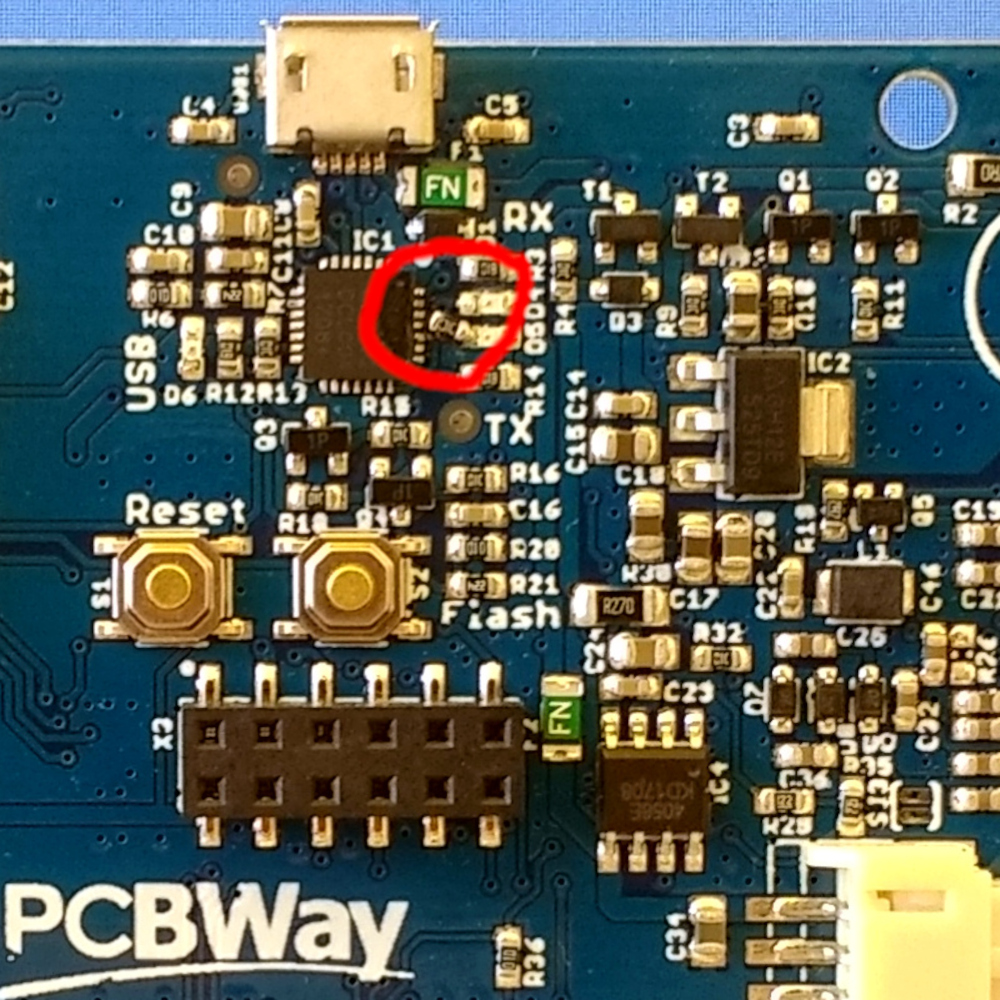
A picture of a printed circuit board covered with components, with a red ring drawn round a reworked part.
This rework on the SHA2017 badge was caused by counterfeit parts rather than bad design, but the work it created was very costly for the team.

The skill a professional engineer picks up here is designing for manufacture. It’s something I picked only progressively over the years, and learned with a bang when I became peripherally involved in the production of electronic conference badges. You learn to be much more exact in your PCB design to avoid those reworks and bodge wires, you pick your parts with much greater care, and pay far more attention to power supplies, decoupling, thermal issues, impedances, and ground isolation. Something that works has to become something that always works, first time. You go from having several spins of the prototype PCB to having maybe a couple, and you reach a point at which you can order 5000 boards and have less than 50 of them that need attention. My friend describes himself as more of a software expert than hardware, but he’s learned this process over the decades far more than I have.

One comment he made hit the mark so well that it prompted me to start writing this: that when hiring recent graduates they would design things that could not be volume manufactured, while the new hire apprentices’ designs could. This fit so well with our common experience when we came through an engineering education that it posed the question, were we failed by it? We both attended the University of Hull, on England’s north-east coast, but this isn’t specific to Hull or even our generation as the problem of inadequate preparation applies to so many other institutions. Last year I talked about a couple of young engineers wrestling with an analagous experience here in the 2020s, and they were a long way from the Humber.

Do Universities Secretly See Their Job As Training More Academics?

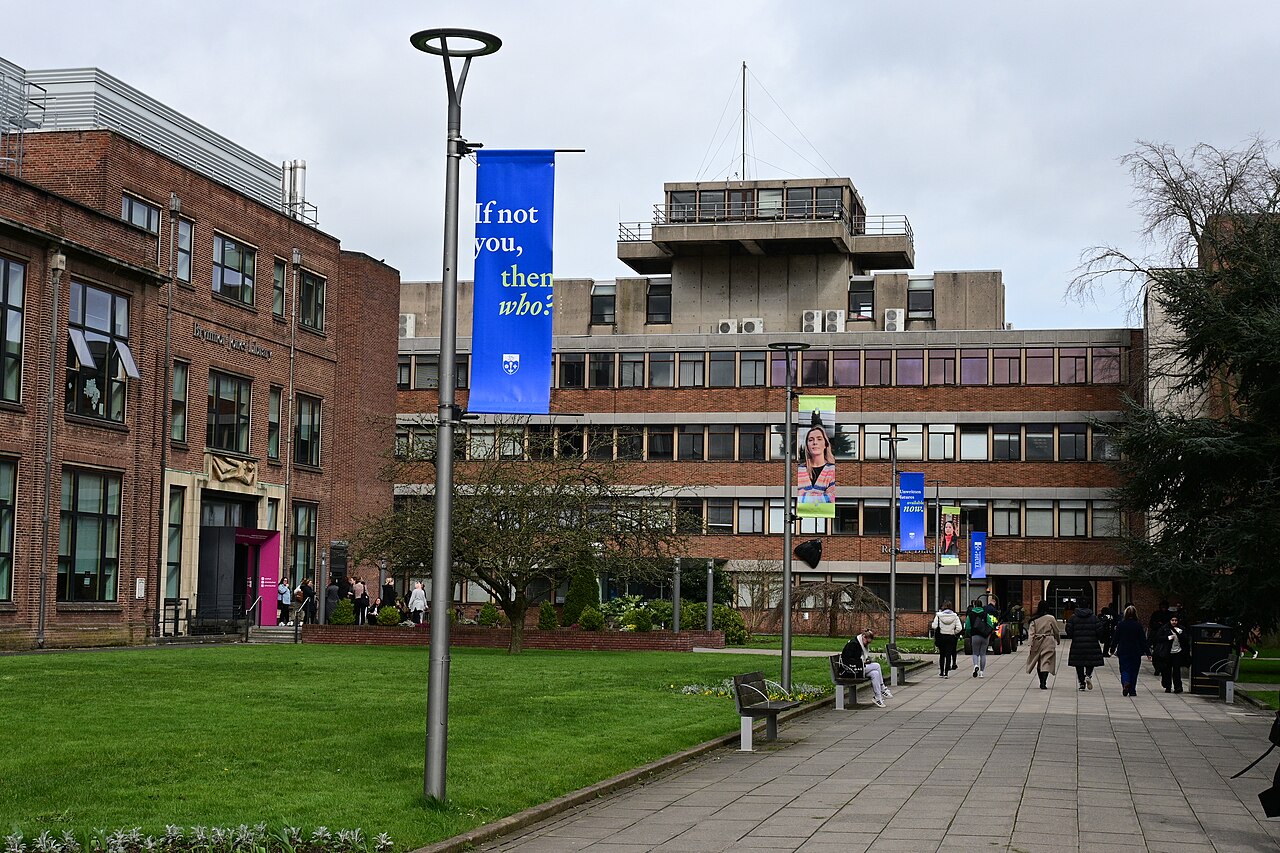
A brick-and-concrete university building, a lawn and paved path in the foreground.
Hull University Electronic Engineering Department, where I learned most of what I know about electronics (except how to make things for manufacture). Hullian111, CC BY-SA 4.0.

My overwhelming memory of my degree course was shared by my friend, that about half of it was composed of useful stuff, and the other half of it was either trying to teach you to be an electronic engineering academic like the people delivering the lectures, or a course that seemed only to be there because they had someone who could teach it.

My Achilies’ heel was the mathematics, something I was later told improved in later years when the engineering department wrested its students away from the maths department. We had a very small amount of practical work, including simple transistor circuits, digital logic using real 74-series chips, laying out a PCB using crΓͺpe paper tape on acetate film, and oddly considering it was outdated even in the early 1990s, wire-wrapping.

It’s easy to sit here and say that a university course teaches too much theory and not enough practice, but the fact is that universities aren’t there to teach you to solder. Indeed, while it’s a super-useful thing to be able to do and I’d urge every electronic engineer to learn it, soldering your own projects is not what makes you an engineer. Instead there has to be an exploration of where the boundary lies between the theoretical and the practical, and education should straddle that line rather than stay only on one side of it. It’s in deciding where that straddling point stops that the key lies.

There are university courses that manage that boundary by splitting it entirely. They combine time in industry with time studying, and a student on one of those courses would in theory learn the skills of a real-world engineer in their work placements. There are also industry sponsorship schemes placing students into industrial environments, but they are so few and the competition for them so fierce, that they might as well not exist for most students. Even the world of hackerspaces which gives the students a rare chance to mix with professional engineers in their off-time, is actively discouraged by universities. For a student in a full-time, study-based course, the challenge comes in how to bridge that gap into real-world manufacturing despite all these challenges, and learn something useful without the luxury of a real-world environment.

Torturing The Students With Diabolical Designs

The temptation for most courses is to start yet another group project. A team of six students are tasked with getting something working together, and learn stuff. The trouble with group projects though is that they either completely don’t work like our early 1990s assignment to make a telephone exchange from a Transputer link adapter chip, or a few participants end up doing all the hard work like my two young friends mentioned earlier. Group projects are inexpensive for an institution, but they look better than they really are.

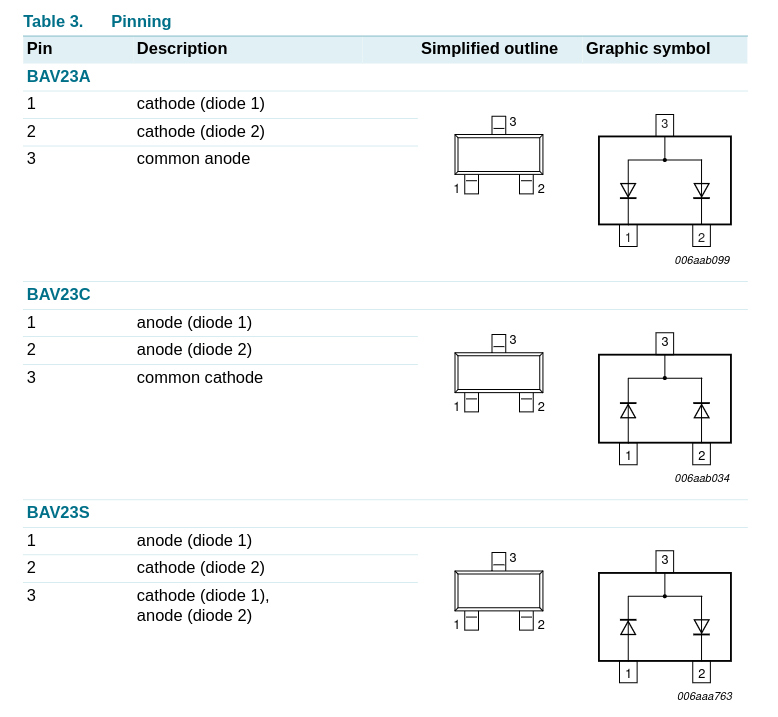
An excerpt from the datasheet for the NXP BAX23 dual switching diode, showing the three different pinout options for the same package.
Component pinouts like this one from the NXP BAV23 datasheet are a spectacularly evil trick to play on an unsuspecting student.

The hardware hacker world has been marked by a series of epochs, as new technologies bring with them a flowering of creativity. There’s one of those that I think has the potential to delover something impossible back in the 1990s when I was a student, and allow individual students to learn the art of manufacture without a group project in sight. I’m talking about inexpensive PCB manufacture, which allows multiple spins of a design to be completed with a bearable wait, and for not a lot of money.

So if I wanted to teach a bunch of students about designing for manufacture, I’d give them a ready made small project in software form, as EDA files, and as a BOM with a board assembly house. Of course, the project would be fatally flawed but fixable with probably two or maybe three spins, but I wouldn’t tell them that. Instead their first task would be to send the files off and receive a ready-made PCB, or if I was feeling charitable I could give them that first spin ready-made, and tell them to get on with it.

I would throw everything I could at this unfortunate design, a wrong-but-plausible footprint, badly thought out earthing, an accidental oscillator, and all the really annoying things which we’ve all in our time found. I am sure you could think of more diabolical but superficially plausible features. Their task would involve diagnosing the board and redesigning it before sending the files off to the assembly house. A week later they’d have that next spin, they’d have to hunt down any remaining bugs and repeat it all, and so on. I learned this process with my friends in the making of an event badge for 5,000 people, and I think it’s possible that you could learn it as a single trainee engineer with a much smaller board.

It may be unfair to throw all that is wrong with engineering education at the door of universities, even though it’s certain that there are some extremely low hanging fruit. But arriving in the workplace completely lacking an essential skill is perhaps the point at which something should be said. The question is, when it comes to designing for manufacture, is anyone listening?

❌
❌