Roborock's more affordable vacuum did well on corners and navigating my home, but thresholds and small objects remain a challenge. Still, it's a good vacuum for the price, especially when it's on sale.
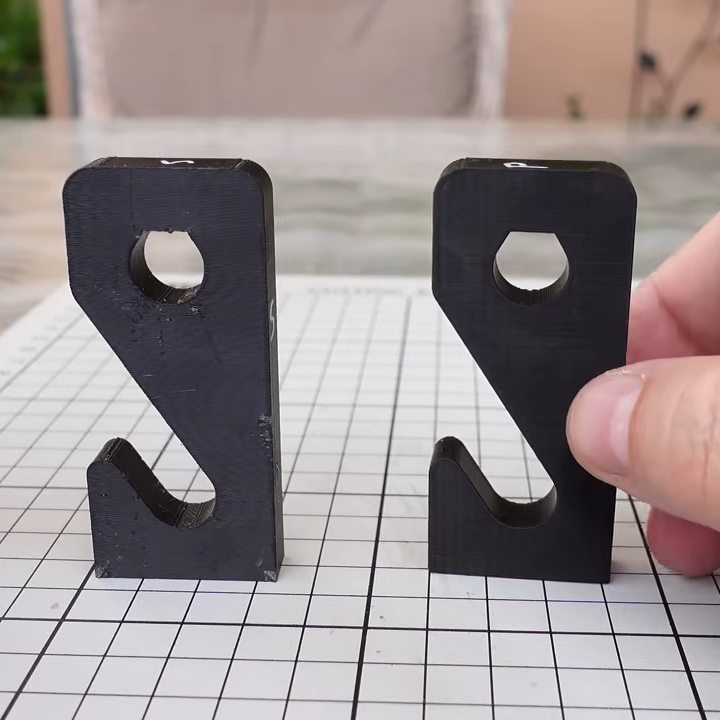
[Igor] of [My Tech Fun] set out to discover what differences, if any, can be found between parts printed in PC-ABS filament on an industrial 3D printer, and those from prosumer-grade machines and filament. His video is full of his usual attention to detail as he compares a test suite of parts printed at home in Polymaker PC-ABS with those from a Stratasys Fortus 450mc using proprietary PC-ABS filament.
PC-ABS is a filament that strives to deliver the benefits of both polycarbonate and ABS. It’s durable and has fantastic impact resistance, but it costs a bit more than either PC or ABS and requires a heated chamber.
In the end, PC-ABS from a home printer compares favorably to an industrial system, at a fraction of the price.
[Igor] has previously compared industrial ABS with comsumer ABS, but what made him curious about PC-ABS in particular was the large difference in print temperatures between Polymaker PC-ABS, and Stratasys’s own proprietary PC-ABS.
[Igor] prints Polymaker filament at 280º C in a 60-65º C chamber, whereas the Stratasys filament prints at 325º C with a chamber temperature of 95º C. That’s quite a difference. The industrial printer has over double the print time, to boot. Would test objects printed from the industrial filament, on an industrial machine, be noticeably different from those printed at home?
To find out, [Igor] orders a test suite of parts from a company with a Stratasys Fortus 450mc (who was also kind enough to take a short video of the machine in action) and prints his own on both a Prusa Core One L, and a Bambu Labs H2D. He then proceeds to compare them in a variety of ways while testing them to destruction.
What’s the bottom line? The industrial prints have better dimensional accuracy, but the home prints have the edge in appearance. When it comes to performance the differences are mostly minor, and not always in the industrial system’s favor. Broadly speaking, PC-ABS from the home workshop compares very favorably from an expensive industrial system and proprietary filament, at a fraction of the price. See it for yourself in the video, embedded just below.
It took three years, but Coyote vs. Acme is finally in theaters and delighting audiences of all ages with its irresistible blend of slapstick humor, pointed satire, and even a warm fuzzy here and there. We're happy to report that the film was worth the wait.
(Some spoilers below but no major reveals.)
The film is based on a well-known satirical piece by Ian Frazier (also titled “Coyote vs. Acme”) published in The New Yorker in 1990. Development of a film version didn’t start until 2018, but some pretty talented people worked on the script, including James Gunn. Small wonder that Warner Bros.’ bizarre 2023 decision to shelve the film in order to take a tax write-off sparked outrage both within the industry and among fans online.
The The X-Sense SC07 combo smoke and CO detector serves easy installation perk, reliable sensing, and real-time carbon monoxide readings without any subscription hassles or breaking your bank.
Sony’s REON Pocket Pro wants to replace neck fans with thermoelectric cooling. It's discrete, effective, and gets the personal cooling job done, but it's ask is a bit on the higher side.
Armed with a sleek metallic finish, the Cosori Iconic delivers a top-tier cooking experience and intuitive app controls. It's not cheap, but it's but it delivers plenty.
Viture Pro 2 deliver a fantastic mix of affordability, visual brilliance, comfort, and productivity perks. If you want to finally experience smart glasses, this one is a lovely pick.
OLED displays solve many of the problems suffered by LC displays, including color fidelity, dynamic range and power usage. That said, especially in the early days OLED gained a reputation for dim screens, short lifespans and burn-in. Over time better organic dyes were developed, along with burn-in prevention methods that have made OLEDs much closer to LCDs in terms of longevity. In a recent comparison between OLED TVs by RTings it’s however clear that between 2017 and 2023 there haven’t been any major advances beyond bumps in brightness.
The relatively dim screens were a major problem, as they prevented OLEDs from displaying HDR content. This issue has been well and truly addressed, as confirmed by RTings’ testing, but after an over 10,000 hours stress test that simulates about 10 years of regular use at maximum SDR brightness, especially static elements like the CNN TV banner happily burned in even on the newest models with all burn-in prevention measures enabled.
Here the biggest take-away is probably that even if the expected panel lifespan at full brightness is still the same, this higher brightness budget means that you can gain some lifespan by cranking the brightness way down. It’s also essential to keep features like pixel refresh cycles enabled, as demonstrated by [Hardware Unboxed] and their abuse of a QD-OLED monitor where a worst-case 6,000 hour stress-test managed to create some impressive levels of burn-in from uneven subpixel wear.
After a month of daily use, the MADE68 Ultra V2 impressed me with its gaming performance and software, but its typing feel ended up being the biggest surprise.
The Adiaro charm bracelet offers a stylish incentive to begin journaling your daily mood, and it does so while riding atop the scientifically proven benefits of the habit.
The Dell UltraSharp 52 is designed to do more than give you extra screen space. With a built-in Thunderbolt dock, KVM switch and expansive 5K2K display, it aims to replace an entire desktop setup. After several weeks of use, here's whether it succeeds.

 Login
Login