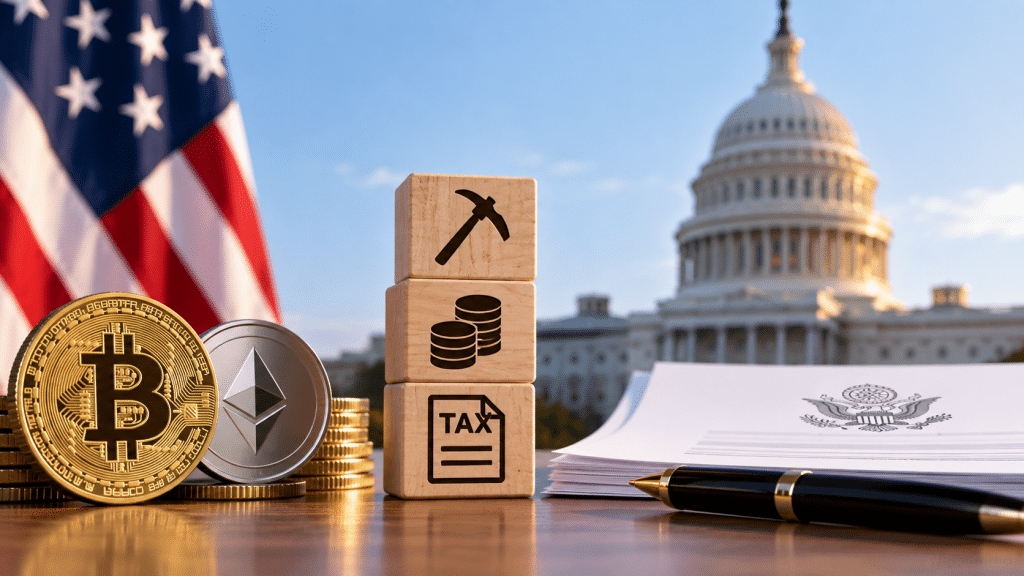
The US House Ways and Means Committee will review a broad digital asset tax package that excludes a key proposal sought by crypto miners and stakers. The 114-page Digital Asset Tax Certainty Act, H.R.
Ark Invest reduced several major crypto-linked positions on Monday as digital asset stocks moved higher. The firm’s biggest disclosed sale involved its ARK 21Shares Bitcoin ETF, followed by reductions in Circle and Coinbase.
Balancer is moving closer to a possible shutdown after its restructuring failed to produce a sustainable revenue recovery. The decentralized exchange has proposed an orderly wind-down that could return more than $9 million in treasury assets to BAL holders.
The CLARITY Act’s Polymarket probability of becoming law in 2026 dropped to 16% on Monday amid Senate Democratic resistance to Republicans’ revised ethics terms, with Democratic negotiators also working on a counterproposal. Traders had pushed the probability to 35% after Republicans circulated revised legislation containing broader ethics provisions.
Crypto exchange CoinEx will close after nine years of operation, blaming a prolonged market downturn, weaker trading activity, and growing pressure from regulation and compliance obligations. The Seychelles-based platform will stop taking new registrations on Sept.
Bernstein analysts said Monday the Clarity Act now appears more likely to make headway than markets anticipated last week, following Republican concessions on issues raised by Democrats ahead of Tuesday’s Senate procedure. The research and brokerage firm’s analysts, led by Gautam Chhugani, said markets have not fully factored in the possibility of a favorable legislative surprise.
TD Cowen has become more optimistic about The Smarter Web Company’s stock, raising its valuation target to £0.73 ($0.99) from £0.64 ($0.87). The firm maintained its Buy recommendation on the Bitcoin treasury company, with the new target sitting about 90% above Monday’s market price.
South Korean crypto investors are making another attempt to delay the country's digital asset tax, with a petition seeking a two-year extension having secured enough public support to reach lawmakers. The government, however, is still preparing to introduce the tax from January 1, 2027.
A U.S. Senate effort to establish a federal market structure for digital assets is approaching a critical procedural vote after Republican negotiators produced a revised CLARITY Act that makes concessions on government ethics, stablecoin rewards, and several regulatory provisions.
Blockstream has rejected a 10% bounty request from the group behind the Liquid Network breach, with 598 BTC from the incident still unreturned.
Blockstream said withholding assets obtained without authorization in exchange for payment does not constitute legitimate security research, distinguishing responsible disclosure from taking funds without permission.
The company had been in contact with the actors as it sought to recover user funds. Blockstream is now asking them to return what remains without attaching any financial conditions.
Hackers Seek 10% Bounty
The group outlined its terms in an on-chain message that Samson Mow, JAN3 CEO and former Blockstream chief strategy officer, shared on Wednesday. The proposal called for Blockstream to fund a 10% bounty and claimed Liquid holders could face a 15% loss without an agreement.
The demand came after the Sept. 6 breach of Liquid, when about 4,000 BTC was taken from the network’s federation wallet. The Bitcoin involved was valued at roughly $320 million at the time.
If those coins are withheld, Blockstream plans to involve law enforcement and seek assistance from exchanges, service providers and blockchain investigators. Such cooperation could help track where the Bitcoin moves and determine who controls it.
Liquid Moves Toward Restoring Operations
Meanwhile, Liquid took an initial step toward restoring the network on Thursday after implementing software fixes introduced in response to the breach.
Blocks began being created again, but without regular user transactions. Transfers between Bitcoin and Liquid also remained unavailable as the network continued to recover.
India has put 10.25 billion rupees ($107 million) of corporate debt onto its new tokenisation infrastructure, with three companies completing issuances as securities regulators and the central bank test a model that pairs distributed-ledger bonds with wholesale central bank digital currency.
The pilot, called Demat 2.0, is being run by the Securities and Exchange Board of India and the Reserve Bank of India. SEBI disclosed details of the initiative on Thursday.
REC, a state-owned lender, was the first to use the framework, raising 5 billion rupees from 18 investors in a Monday transaction. Two additional deals followed on Wednesday: Larsen & Toubro, the engineering group, raised 5 billion rupees from four investors, while IIFL, a non-bank financial company, sold 250 million rupees of bonds to one investor.
The scale of the first phase exceeds what had been reported in August. Reuters had said at the time that the planned test would involve selected investors and an REC offering valued at under 5 billion rupees. With L&T and IIFL also participating, the combined issuance is more than double the amount initially anticipated for REC.
More primary issuances are still being conducted under this opening stage, according to SEBI. Plans for subsequent phases include bringing the securities onto existing request-for-quote venues for secondary transactions and eventually allowing retail participation. SEBI said lessons from the trial would help determine how broadly to deploy the framework.
Notably, participation does not require investors to establish another securities account or repeat the Know-Your-Customer process. Tokenised bonds can be accommodated within an investor’s current Demat account. For transactions under the pilot, however, Demat 2.0 requires activation with the relevant depository, while the cash side requires a wholesale CBDC wallet maintained with a participating bank.
Distributed Ledger Links Bond Ownership With RBI Digital Currency
Demat 2.0 changes how the securities are represented and settled. Corporate bonds are generated as digital tokens on a distributed ledger operated by India’s statutory depositories. The payment side is connected to the RBI’s wholesale CBDC through the central bank’s Unified Market Interface.
That setup supports atomic settlement, which removes the time lag between money and securities transfers, SEBI said. It also shortens the funding timetable for issuers: proceeds can arrive on the bidding day instead of two to three days afterward. Smart contracts can automate interest distributions and bond redemptions.
The move to tokenisation does not modify the bonds’ legal standing, repayment responsibilities or protections available to investors, according to the regulator.
SEBI said the arrangement makes India the first country where corporate bonds originate natively on a distributed ledger, statutory depositories retain the ownership records, and CBDCs handle settlement, all within the existing regulated market infrastructure.
Sam Bankman-Fried is seeking relief from the U.S. Supreme Court, asking it to reverse a fraud conviction and eliminate an $11 billion forfeiture, arguing jurors received an incomplete picture of whether FTX customers ultimately lost money.
A new Senate Republican draft of the CLARITY Act would require some centrally controlled crypto trading protocols to register with the Commodity Futures Trading Commission, introducing a new regulatory requirement ahead of the bill’s first procedural vote on Sept. 15.
Bitwise will wind down its spot Dogecoin ETF roughly 10 months after its debut, marking an early end to the fund after limited uptake. The fund, BWOW, is expected to have its final NYSE trading session on Oct.
Nasdaq Ventures agreed to invest $100 million in Kraken parent Payward as the two companies broaden their collaboration around tokenized equities and digital-market infrastructure. The investment values Payward at $21 billion, according to people familiar with the matter cited by Bloomberg.
Coinbase Chief Executive Brian Armstrong expects Bitcoin to rise as the cryptocurrency approaches its next halving, saying he believes the market has already reached its low for the current cycle. Armstrong outlined that view during a Bloomberg Television interview on Thursday, placing the potential improvement in Bitcoin’s trajectory within the next one to two years.
Trezor and BitBox issued fresh phishing warnings after customers received fraudulent emails that appeared to originate from the hardware wallet companies’ communication channels. Both companies told users to avoid unexpected security messages, especially those that direct recipients to external links.
Hunter Biden’s LAPTOP memecoin lost more than 99% during a turbulent Wednesday debut, with the project saying automated sniper activity and insufficient liquidity in the launch pool drove the sharp price reversal. The token rose above $300 following its airdrop and, during its first hour of trading, briefly carried a market capitalization of roughly $110 billion.

 Login
Login