
Reading view

There are new articles available, click to refresh the page.

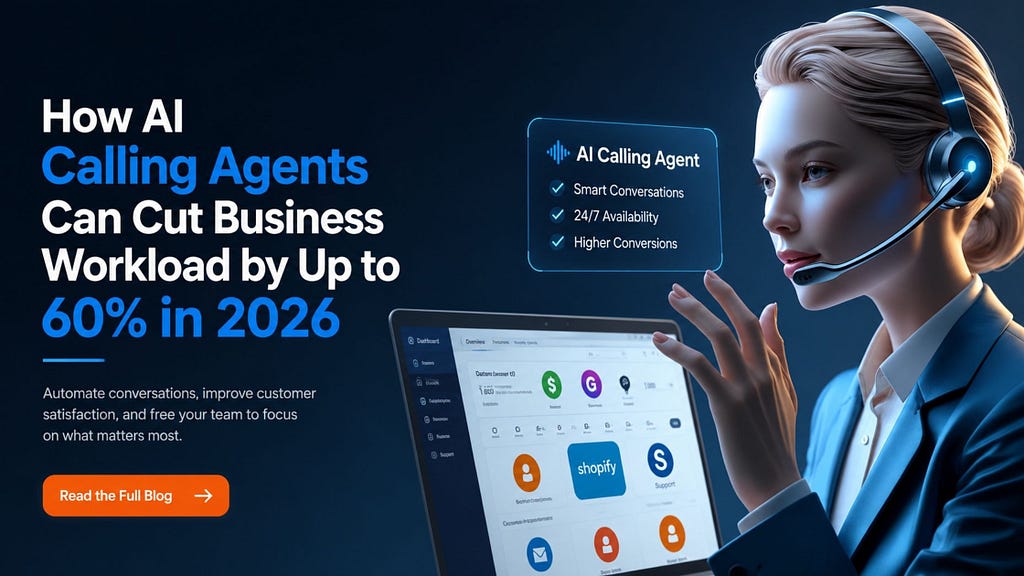
How AI Calling Agents Can Cut Business Workload by Up to 60% in 2026
Traditional IVR Systems

Have you ever noticed how much of a business day disappears into phone calls? A customer wants to book an appointment, another needs an order update, a new lead asks the same questions your team answered yesterday, and someone else calls just to confirm business hours. None of these conversations are difficult, but when they happen hundreds of times every week, they quietly consume valuable working hours. This is why many businesses are turning to AI Calling Agents in 2026. Instead of replacing employees, these intelligent systems handle repetitive conversations so teams can focus on work that requires human judgment. In organizations where routine calls make up a large portion of daily communication, automating those interactions can reduce manual call handling by up to 60%, depending on business processes, call volume, and how automation is implemented.

What Is an AI Calling Agent?

An AI Calling Agent is a voice-powered AI system designed to communicate with customers over the phone in a natural way. Unlike traditional IVR systems that force callers through long menu options, modern AI understands spoken language, recognizes customer intent, and responds conversationally. It can answer questions, collect information, schedule appointments, and even transfer complex requests to the right employee when necessary. The real advantage is not that AI speaks like a human, but that it can manage thousands of repetitive conversations with the same accuracy and consistency. This allows businesses to improve customer service while reducing the amount of routine work handled by their teams.

Can AI Calling Agents Really Reduce Business Workload?

The answer is yes but the result depends on what type of calls your business receives every day. The biggest gains come from reducing work that follows predictable patterns rather than conversations that require negotiation or expert advice.

For example, businesses commonly automate:

  • Appointment booking and confirmations
  • Lead qualification calls
  • Frequently asked customer questions
  • Order status and delivery updates
  • Payment reminder calls
  • Customer feedback collection

When these repetitive interactions represent a significant share of total call volume, businesses may reduce manual call-related workload by up to 60%. The exact outcome varies from one organization to another, which is why successful automation always begins with understanding existing workflows before introducing AI.

Why Businesses Are Investing in AI Calling Agents

Every business wants to improve productivity, but hiring more employees is not always the most practical solution. Rising customer expectations, growing call volumes, and the need for faster responses have encouraged organizations to rethink how phone communication is managed. An AI Calling Agent provides a scalable way to handle routine conversations while allowing employees to focus on customer relationships, sales discussions, and complex problem-solving. This approach also supports broader business workflow automation strategies. Instead of treating phone communication as a separate process, businesses can connect AI with scheduling systems, CRM platforms, and customer databases, creating a smoother experience for both employees and customers.

AI is best when used as a teammate

One of the biggest misconceptions about AI is that its purpose is to replace people. Routine conversations are handled automatically, while sensitive situations, negotiations, complaints, and important customer decisions remain with experienced team members. This balanced model improves productivity without sacrificing the personal interaction customers still expect in many situations. Rather than removing the human element, AI creates more opportunities for employees to spend time where their expertise makes the greatest difference.

Connect AI Calling Agents with Your Existing Business Systems

An AI Calling Agent becomes even more valuable when it works alongside the software your business already uses. Instead of functioning as a standalone tool, it can connect with CRM platforms, appointment scheduling systems, help desk software, and customer databases. As a result, employees no longer need to switch between multiple applications or manually enter the same information after every conversation. The entire communication process becomes faster, more organized, and less dependent on repetitive administrative work.

Business Benefits Beyond Reducing Workload

Reducing manual work is only one advantage of implementing an AI Calling Agent. As businesses continue adopting intelligent automation, they often discover improvements in customer experience and operational efficiency as well.

Some of the most noticeable benefits include:

  • Faster response times for incoming customer calls.
  • Consistent communication without variations between agents.
  • 24/7 availability, including weekends and holidays.
  • Better lead qualification before reaching the sales team.
  • Reduced waiting time during peak business hours.
  • Improved employee productivity by eliminating repetitive conversations.

These advantages help businesses create a smoother customer journey while allowing employees to focus on strategic tasks that contribute directly to business growth.

Common Mistakes Businesses Should Avoid

In reality, successful automation begins with understanding existing business processes. If workflows are poorly organized, automation may only speed up inefficient practices rather than improve them. Businesses should also avoid automating every conversation. The most successful companies use AI to manage routine interactions while allowing employees to handle conversations where experience and personal communication make the biggest difference.

The Future of AI Calling Agents

The next generation of AI Calling Agents will do much more than answer phone calls. They are expected to understand customer history, remember previous interactions, communicate across multiple languages, and coordinate with other AI systems to complete business tasks automatically. Instead of acting as simple virtual receptionists, they will become intelligent business assistants capable of supporting sales, customer service, and internal operations. As voice AI technology continues to improve, businesses that begin adopting these solutions today will be better prepared for future innovations without needing to rebuild their communication systems from the ground up.

Final Thoughts

Phone calls remain one of the most important ways businesses connect with customers, but they can also consume a significant amount of employee time when routine conversations are handled manually. An AI Calling Agent offers a practical solution by automating repetitive tasks, improving response times, and supporting employees instead of replacing them. For businesses with a high volume of predictable customer interactions, implementing AI-driven call automation can reduce manual workload by up to 60%, depending on operational workflows and implementation strategy. As organizations continue investing in smarter business communication during 2026, AI Calling Agents are becoming an essential tool for improving efficiency, enhancing customer experiences, and building scalable operations for the future.


How AI Calling Agents Can Cut Business Workload by Up to 60% in 2026 was originally published in Coinmonks on Medium, where people are continuing the conversation by highlighting and responding to this story.

How to Build a Successful AI Automation Agency in 2026: A Complete Guide

AI Automation Agency

A few years ago, businesses viewed automation as something only large enterprises could afford. In 2026, that mindset has completely changed. Companies of every size are searching for practical ways to reduce repetitive work, improve customer experiences, and increase productivity without continuously expanding their teams. This shift has created a growing demand for AI-powered business solutions, opening the door for entrepreneurs to build an AI Automation Agency. The opportunity is no longer about selling software, it is about helping businesses solve real operational challenges through intelligent automation that delivers measurable results.

Understand the Problems Businesses Want to Solve

Many new agency owners make the mistake of focusing on AI tools instead of business problems. Clients rarely ask for a chatbot or workflow automation simply because it is powered by AI. They want faster customer support, fewer manual tasks, improved lead management, and more efficient internal operations. Before offering any service, identify the everyday challenges businesses face. An AI Automation Agency that provides practical solutions instead of technical jargon will build stronger client relationships and long-term trust.

Choose a Clear Service Focus

Trying to serve every industry often makes a new agency appear unfocused. Instead, begin with a small set of services that solve common business needs. These might include AI customer support, appointment scheduling, email automation, CRM workflow automation, AI calling agents, or document processing. A focused approach allows your agency to build expertise, create repeatable processes, and deliver better outcomes. As your experience grows, you can gradually expand into more advanced automation solutions without losing service quality.

Build a Team That Combines Business and Technical Skills

Successful automation projects require more than technical knowledge. Clients expect agencies to understand their business goals before recommending solutions. This means your team should combine AI specialists with professionals who can analyze workflows, communicate with clients, and manage projects effectively. Strong collaboration between technical and business experts ensures that automation improves daily operations instead of adding unnecessary complexity. Building this balance from the beginning creates a stronger foundation for long-term agency growth.

Create Repeatable Solutions Instead of Starting from Scratch

Every client has unique requirements, but many automation challenges are surprisingly similar. Rather than building completely new systems for every project, develop reusable frameworks that can be customized for different businesses. Standardized onboarding processes, automation templates, and workflow models reduce development time while maintaining consistent quality. This approach allows an AI Automation Agency to handle more projects efficiently without increasing workload at the same pace.

Stay Focused on Measurable Business Results

Businesses invest in automation because they expect real improvements, not impressive demonstrations. Every solution should contribute to clear outcomes such as reduced response times, improved customer satisfaction, lower operational costs, or increased employee productivity. When agencies consistently measure and communicate these results, clients gain confidence in the value of automation. Demonstrating measurable impact also strengthens long-term partnerships and generates referrals, making sustainable growth much easier.

Develop Services That Can Grow with Your Clients

Businesses often begin with one automation project but expand their requirements as they see positive results. An agency should be prepared to support this growth by offering solutions that integrate with existing business processes. Workflow automation, AI-powered customer support, intelligent reporting, lead management, and voice-based automation can become part of a broader service portfolio. By providing scalable solutions instead of one-time implementations, an AI Automation Agency creates long-term business relationships and recurring opportunities.

Create a Pricing Model That Reflects Value

One of the biggest mistakes new agencies make is competing only on price. Businesses are willing to invest when they clearly understand the value automation delivers. Instead of charging solely for development hours, consider offering project-based packages or ongoing support plans that include maintenance and continuous improvements. A pricing strategy focused on business outcomes positions your agency as a strategic partner rather than just another technology provider.

Build Trust Through Real Results

Clients rarely choose an agency because it promises the latest technology. They choose partners who can demonstrate measurable improvements. Document successful projects, gather client feedback, and create detailed case studies that explain the challenges, the automation solution, and the business results achieved. Sharing practical examples helps potential clients understand how your services can improve their own operations. Trust built through proven outcomes is far more effective than relying on marketing claims alone.

Keep Learning as AI Continues to Evolve

Artificial intelligence is advancing at an incredible pace, and today’s best practices may change within a year. Agency owners should continuously explore new AI models, automation platforms, and workflow strategies to ensure they deliver modern solutions. Regular learning also helps identify emerging business opportunities before competitors do. An AI Automation Agency that embraces innovation while maintaining a practical, client-focused approach will remain relevant in an increasingly competitive market.

Final Thoughts

Building a successful AI Automation Agency in 2026 requires more than technical expertise. It begins with understanding business challenges, delivering practical automation solutions, and building lasting relationships based on measurable results. Agencies that focus on solving real problems, developing scalable services, and continuously adapting to new technologies will be better positioned for long-term success. As organizations across every industry continue embracing intelligent automation, the demand for trusted AI partners will only increase, making this an excellent time for entrepreneurs to establish a strong presence in one of the fastest-growing sectors of the digital economy.


How to Build a Successful AI Automation Agency in 2026: A Complete Guide was originally published in Coinmonks on Medium, where people are continuing the conversation by highlighting and responding to this story.

Top 10 High-Frequency Trading Bots Every Crypto Trader Needs to Know

Execute multiple trades in fractions of a second

The crypto market moves at a pace that few people can match manually. A trading opportunity can appear and disappear within seconds, making speed one of the biggest competitive advantages in digital asset trading. This is why more businesses, professional traders, and fintech start-up’s are investing in automated trading technologies that can analyze markets and execute trades with remarkable efficiency.

For entrepreneurs planning to build a crypto trading platform, understanding how professional trading bots operate is more than just industry knowledge. It helps shape better products, stronger business strategies, and more competitive services for modern traders.

An Hft trading bot is designed to monitor market activity, identify profitable opportunities, and execute multiple trades in fractions of a second. Instead of relying on emotions or delayed decisions, these systems use predefined strategies and market data to respond instantly.

Below are ten of the most recognized high-frequency trading bots and platforms that every crypto entrepreneur and trader should know.

Why High-Frequency Trading Matters in Crypto

Unlike traditional financial markets, cryptocurrency trading never stops. Markets remain active twenty-four hours a day, seven days a week, creating continuous opportunities across global exchanges.

For start-up’s entering the crypto industry, this constant activity presents enormous business potential. Modern traders expect platforms that deliver fast execution, reliable automation, and consistent performance. Businesses that understand these expectations are better positioned to attract active users and build long-term customer loyalty.

Professional trading bots help improve market efficiency by reacting to price movements faster than manual trading ever could. They also support liquidity and create smoother trading experiences across multiple exchanges.

Top 10 High-Frequency Trading Bots

1. Hummingbot

Hummingbot has become one of the most respected names in algorithmic crypto trading. Built with open-source flexibility, it allows users to create automated market-making and arbitrage strategies across multiple exchanges.

Key advantages include:

  • Open-source architecture
  • Multi-exchange connectivity
  • Strong community support
  • Highly customizable trading strategies

For businesses exploring automated trading ecosystems, Hummingbot demonstrates how flexibility and transparency can attract experienced traders.

2. HaasOnline

HaasOnline has built its reputation by offering advanced automation tools for serious crypto traders. Its extensive collection of indicators, scripting options, and backtesting capabilities allows users to refine strategies before deploying them in live markets.

Major highlights include:

  • Visual strategy editor
  • Advanced technical indicators
  • Strategy backtesting
  • Portfolio management tools

An Hft trading bot designed with similar flexibility can appeal to both experienced investors and institutional clients.

3. Cryptohopper

Cryptohopper offers a cloud-based trading experience that removes many technical barriers for users. Its user-friendly interface makes automated trading accessible while still providing sophisticated trading capabilities.

Core features include:

  • Cloud-based operation
  • AI-assisted strategy marketplace
  • Copy trading
  • Risk management settings

Its business model demonstrates how simplicity can encourage wider platform adoption.

4. 3Commas

3Commas has become a preferred choice for traders looking to automate portfolio management while maintaining full control over trading decisions.

Its strengths include:

  • Smart trading terminals
  • Automated take-profit strategies
  • Portfolio tracking
  • Multiple exchange integrations

For start-up’s building trading products, this platform highlights the importance of combining automation with an intuitive user experience.

5. Gunbot

Gunbot focuses heavily on customization. Traders can select from multiple trading strategies or create their own based on specific market conditions.

Notable capabilities include:

  • Strategy customization
  • Local installation
  • Extensive exchange compatibility
  • Automated portfolio balancing

An Hft trading bot with customizable trading logic often attracts professional users who prefer greater control over execution.

6. ProfitTrailer

ProfitTrailer specializes in automated cryptocurrency trading with a strong focus on configurable strategies and detailed market analysis.

Its primary benefits include:

  • Automated strategy execution
  • Multiple technical indicators
  • Advanced reporting
  • Continuous market monitoring

Businesses looking to serve experienced traders can learn valuable lessons from ProfitTrailer’s strategy-first approach.

7. Kryll

Kryll simplifies automated trading by allowing users to build strategies through a visual drag-and-drop interface instead of writing code.

Key features include:

  • Visual workflow builder
  • Strategy marketplace
  • Cloud execution
  • Performance tracking

This approach demonstrates how accessibility can expand the audience for automated trading platforms.

8. Coinrule

Coinrule enables traders to automate investment decisions using simple rule-based strategies. The platform removes much of the complexity that often discourages newcomers.

Important advantages include:

  • No-code strategy creation
  • Template library
  • Real-time automation
  • Easy portfolio management

An Hft trading bot that balances simplicity with professional functionality can significantly improve user adoption for growing exchanges.

9. Pionex

Pionex combines a cryptocurrency exchange with built-in automated trading bots, allowing users to start algorithmic trading without connecting third-party software.

Popular features include:

  • Integrated trading bots
  • Grid trading
  • Arbitrage opportunities
  • Low operational complexity

Its integrated ecosystem shows how combining multiple services within one platform can improve customer retention.

10. TradeSanta

TradeSanta focuses on delivering straightforward automation while maintaining enough flexibility for experienced traders.

Its strengths include:

  • Automated long and short strategies
  • Multiple exchange support
  • User-friendly dashboard
  • Performance monitoring

For businesses targeting retail investors, platforms like TradeSanta demonstrate that ease of use remains one of the strongest competitive advantages.

What Business Owners Should Learn from These Platforms

Every successful trading platform shares several characteristics. They prioritize speed, reliability, scalability, and security while creating a user experience that encourages long-term engagement.

Business owners entering the cryptocurrency industry should look beyond trading features alone. The strongest platforms invest equally in infrastructure, user confidence, and operational stability.

An Hft trading bot becomes more valuable when combined with secure APIs, real-time analytics, advanced order management, and seamless exchange connectivity. These elements create an ecosystem where traders can focus on strategy instead of technical limitations.

Scalability is equally important. As trading volumes increase, platforms must continue delivering consistent execution speeds without compromising performance. This is particularly important for a start-up’s long-term growth.

Choosing the Right Trading Bot

Every trading business has different priorities. Some focus on market making, while others prioritize arbitrage, liquidity management, or institutional trading.

When evaluating trading bots, decision-makers should consider:

  • Trading speed and execution quality
  • Multi-exchange compatibility
  • Security architecture
  • Strategy customization
  • Scalability for growing user bases
  • Risk management capabilities
  • Reliable customer support
  • Performance analytics

An Hft trading bot should not simply automate trades. It should become part of a larger business strategy that supports operational efficiency, customer satisfaction, and sustainable growth.

The Future of High-Frequency Crypto Trading

As cryptocurrency markets continue to mature, automation will become a standard expectation rather than a competitive advantage. Exchanges are processing larger trading volumes, institutional investors are increasing participation, and users expect faster execution than ever before.

This shift creates significant opportunities for start-up’s developing next-generation trading platforms. Businesses that invest in advanced automation today position themselves to serve tomorrow’s professional trading community.

Innovation will continue to focus on lower latency, smarter execution engines, stronger security frameworks, and seamless integration with global exchanges. Companies that embrace these developments early will be better prepared for an increasingly competitive market.

Conclusion

High-frequency trading has become an essential part of the modern cryptocurrency ecosystem. Whether you’re an entrepreneur launching a crypto start-up, an exchange operator expanding your services, or a business exploring automated trading solutions, understanding the leading platforms in the market provides valuable direction for future growth.

The most successful trading platforms are built around reliability, speed, intelligent automation, and user confidence. Those qualities continue to define the industry’s leaders and shape customer expectations.

If your goal is to build a future-ready crypto trading platform, investing in Hft trading bot Development is a strategic step toward delivering faster execution, enhanced trading efficiency, and a scalable solution that supports long-term business success.


Top 10 High-Frequency Trading Bots Every Crypto Trader Needs to Know was originally published in Coinmonks on Medium, where people are continuing the conversation by highlighting and responding to this story.

❌