❌

Reading view

There are new articles available, click to refresh the page.

Robotic Servicing Mission Launches with NASA Support

Following its liftoff from Cape Canaveral on July 21 aboard a SpaceX Falcon 9 rocket, the Mission Robotic Vehicle (MRV) hosting the NASA-supported Robotic Servicing of Geosynchronous Satellites (RSGS) payload is now en route to geosynchronous Earth orbit, where it will use its advanced robotics to service spacecraft.

RSGS leverages in-space robotics expertise from NASA, aligned with the agency’s broader goals to advance U.S. capabilities for in-space servicing, assembly, and manufacturing that can be applied to space commerce and exploration.
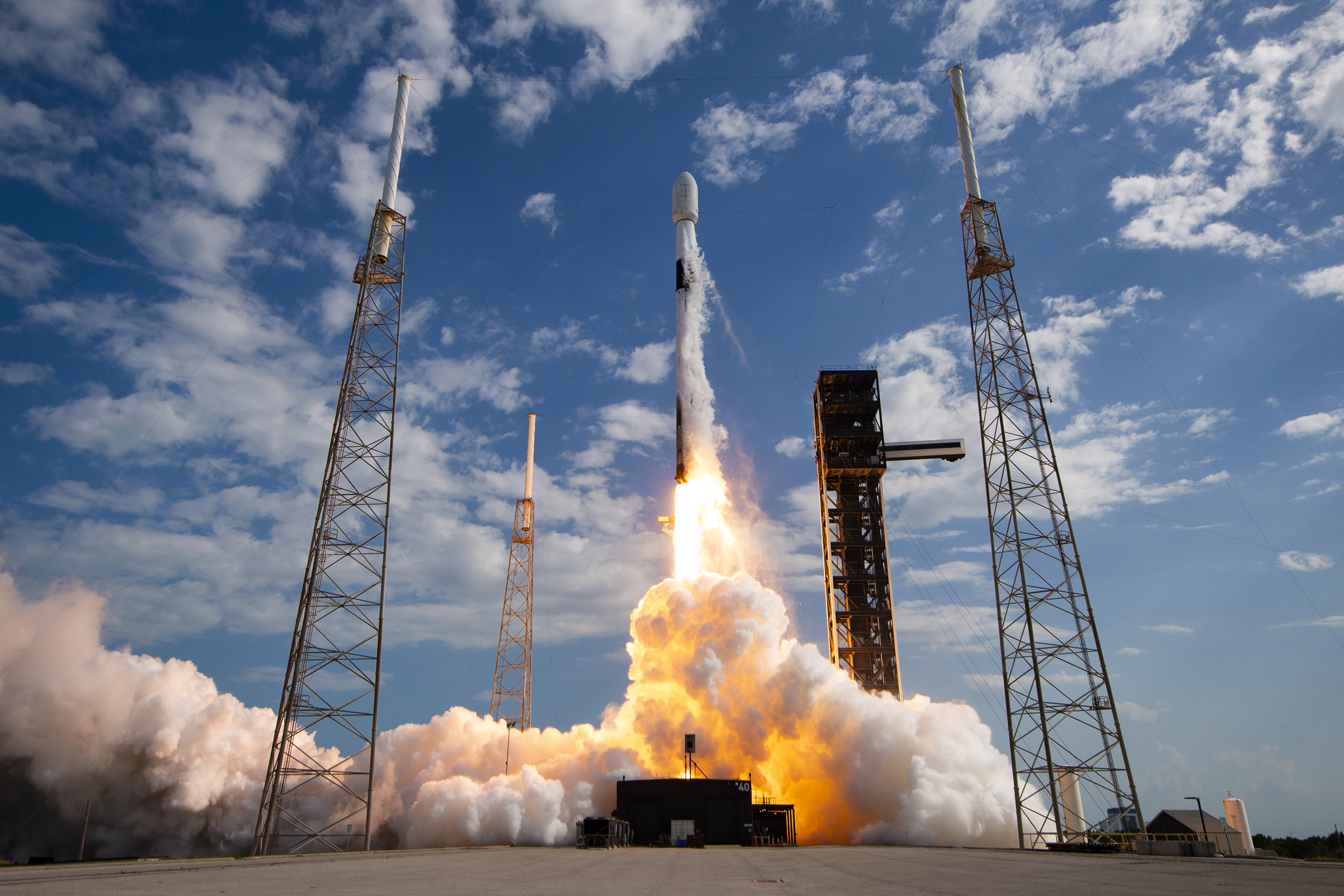
a rocket lifts off against a partly cloudy sky
Northrop Grumman’s Mission Robotic Vehicle hosting the NASA-supported Robotic Servicing of Geosynchronous Satellites (RSGS) payload launched aboard a SpaceX Falcon 9 rocket on July 21. The RSGS program is funded by the Defense Advanced Research Projects Agency (DARPA) and uses twin robotic arms developed by the U.S. Naval Research Laboratory.
SpaceX

Funded by the Defense Advanced Research Projects Agency (DARPA), the RSGS program uses twin dexterous robotic arms designed and developed by the U.S. Naval Research Laboratory. DARPA provided the robotic arm assembly for integration onto Northrop Grumman’s MRV, the nation’s first multi-mission robotic in-space servicer. The spacecraft will inspect and upgrade satellites in orbit by installing small propulsion modules – called mission extension pods – extending the operational life of existing spacecraft for years.

RSGS brings together government agencies and industry to test advanced robotic systems in space. NASA’s Goddard Space Flight Center in Greenbelt, Maryland, began supporting the RSGS mission in 2024 under an interagency agreement with DARPA.

NASA’s contributions to the mission leverage its legacy of servicing missions including the Hubble Space Telescope servicing missions and the Robotic Refueling Missions on the International Space Station. NASA support to RSGS program includes the development of dynamic simulation and analysis tools, software analysis for performance verification, and a team of flight robot operators who will support highly technical procedures in orbit. Hundreds of satellites are in geosynchronous orbit. Of those, fully functional satellites are often decommissioned early because they run out of fuel or their equipment becomes obsolete. Β RSGS establishes a critical U.S. capability to extend the lifetime of spacecraft in orbit, allowing for more innovative and cost-effective mission designs.

By Colleen Wouters
NASA’s Goddard Space Flight Center, Greenbelt, Md.
Share

Details

Last Updated
Jul 22, 2026
Editor
Rob Garner
Contact
Location
Goddard Space Flight Center

NASA Transfers β€˜Hundred Acre Wood’ to Patuxent Research Refuge

2 Min Read

NASA Transfers β€˜Hundred Acre Wood’ to Patuxent Research Refuge

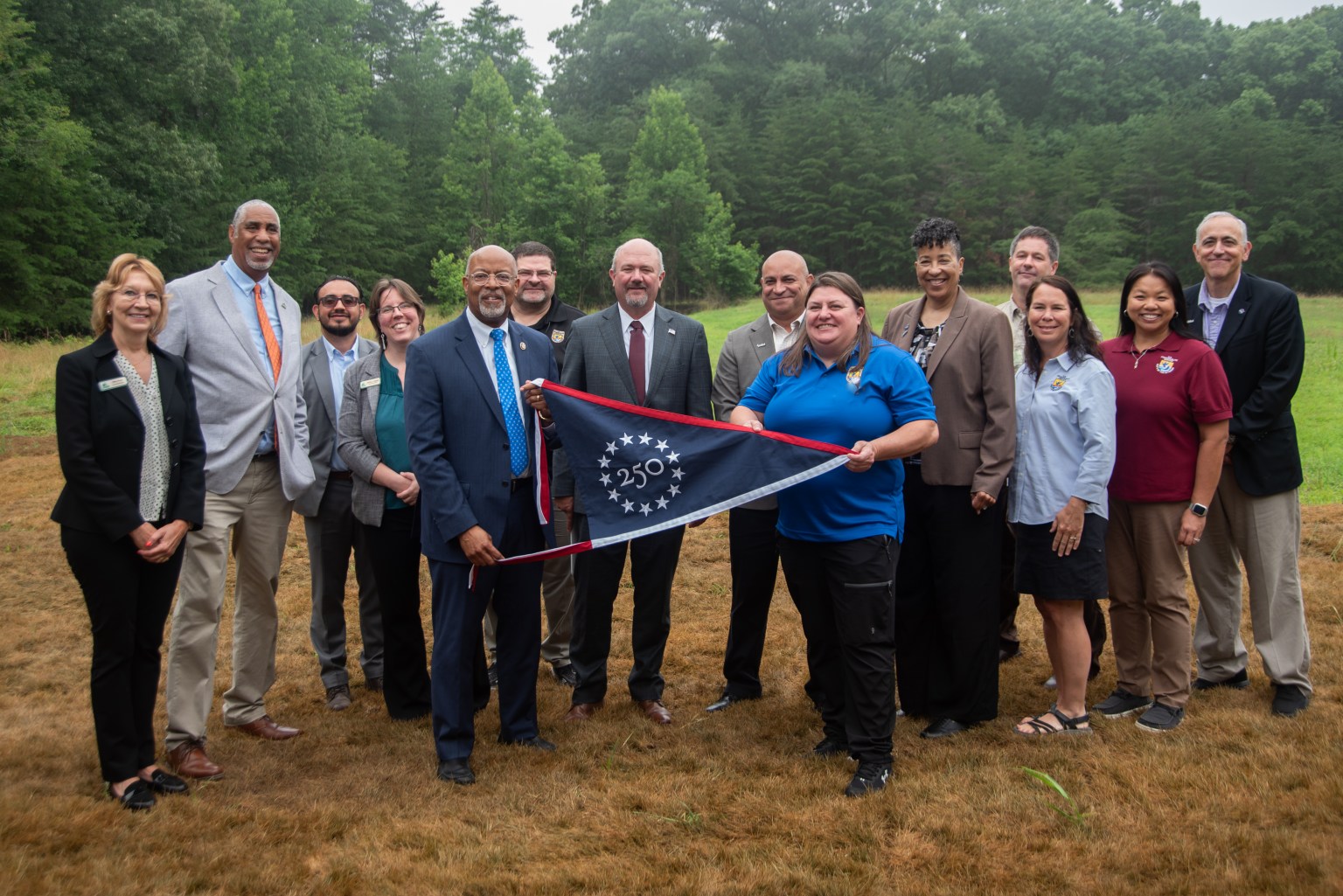
a small crowd holds up a triangular pennant flag with "250" on it, with a field and trees in the background
Following a ceremony on July 7, 2026, officials hold up a U.S. 250th pennant at β€œArea 400,” a 105-acre parcel previously part of NASA’s Goddard Space Flight Center in Greenbelt, Md., and now part of the U.S. Fish and Wildlife Service’s Patuxent Research Refuge.

NASA ceremonially transferred ownership of about 105 acres of wooded land at its Goddard Space Flight Center’s Greenbelt, Maryland, campus Tuesday to the adjoining Patuxent Research Refuge, managed by the U.S. Fish and Wildlife Service.

The property, formerly known as NASA Goddard’s Area 400, is now part of the largest block of unfragmented forest between Washington and Baltimore. The nearly 13,000-acre woodland is the nation’s only refuge specifically established to support wildlife research. The refuge also supports recreational uses, such as walking, biking, horseback riding, fishing, and hunting.

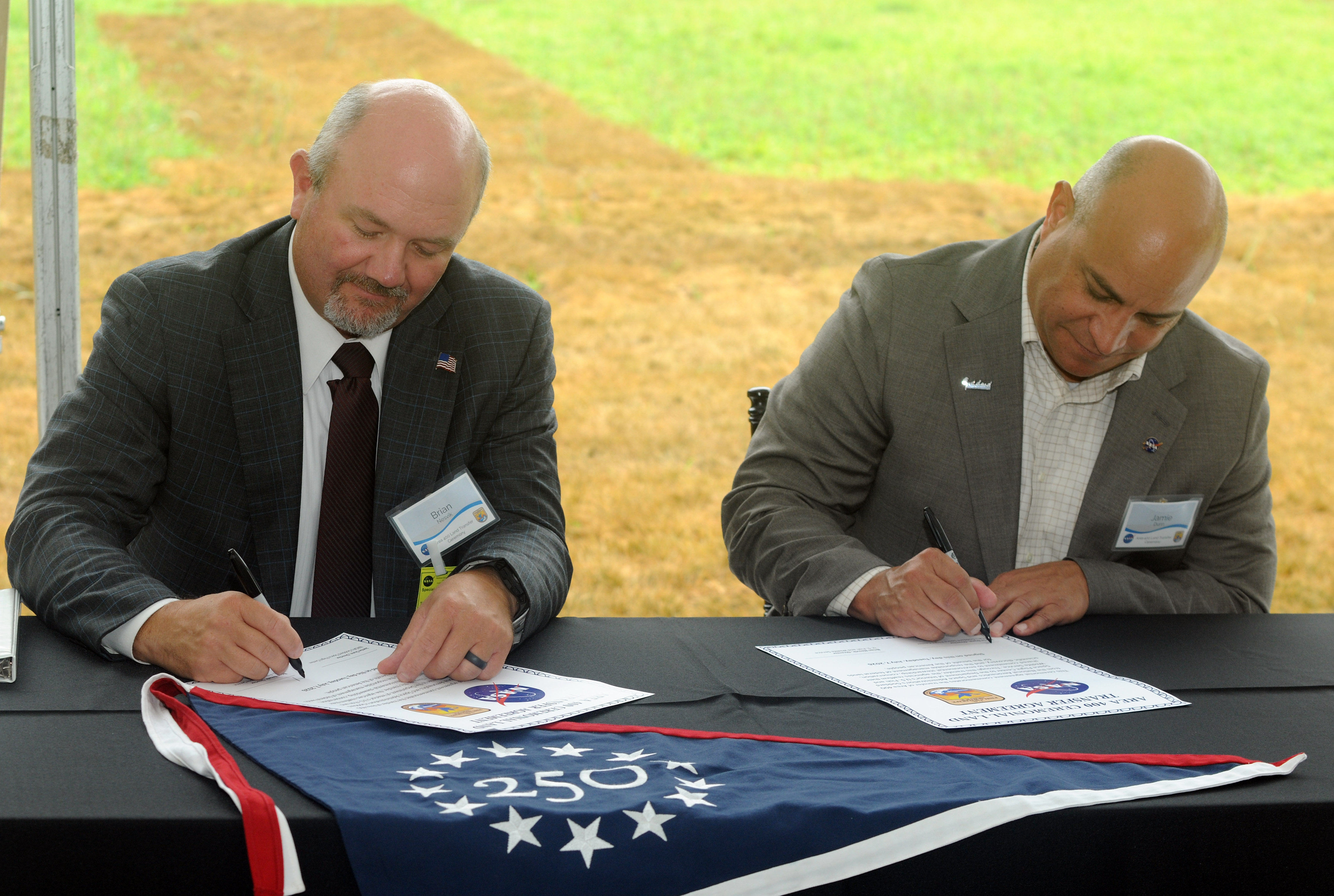
two men sign certificates on a table with black tablecloth
At a ceremony on July 7, 2026, U.S. Fish and Wildlife Service Director Brian Nesvik (left) and Jamie Dunn, center director, NASA’s Goddard Space Flight Center, Greenbelt, Md., sign certificates that ceremonially transfer a 105-acre parcel of property known as β€œArea 400” from NASA Goddard to the Service.
NASA

β€œFor over six decades, NASA Goddard has helped shape humanity’s understanding of Earth,” said Jamie Dunn, center director, NASA Goddard. β€œWe’re glad to present this land to our colleagues in the Fish and Wildlife Service, whose conservation and research helps do the real legwork in preserving our Blue Marble for future generations.”

NASA Goddard had used Area 400 for propellant research beginning in the 1960s. That work has largely since shifted to NASA facilities in other states or to commercial providers, and the property had long been a candidate for divestment. NASA and the Service began discussing a potential transfer in 2021.

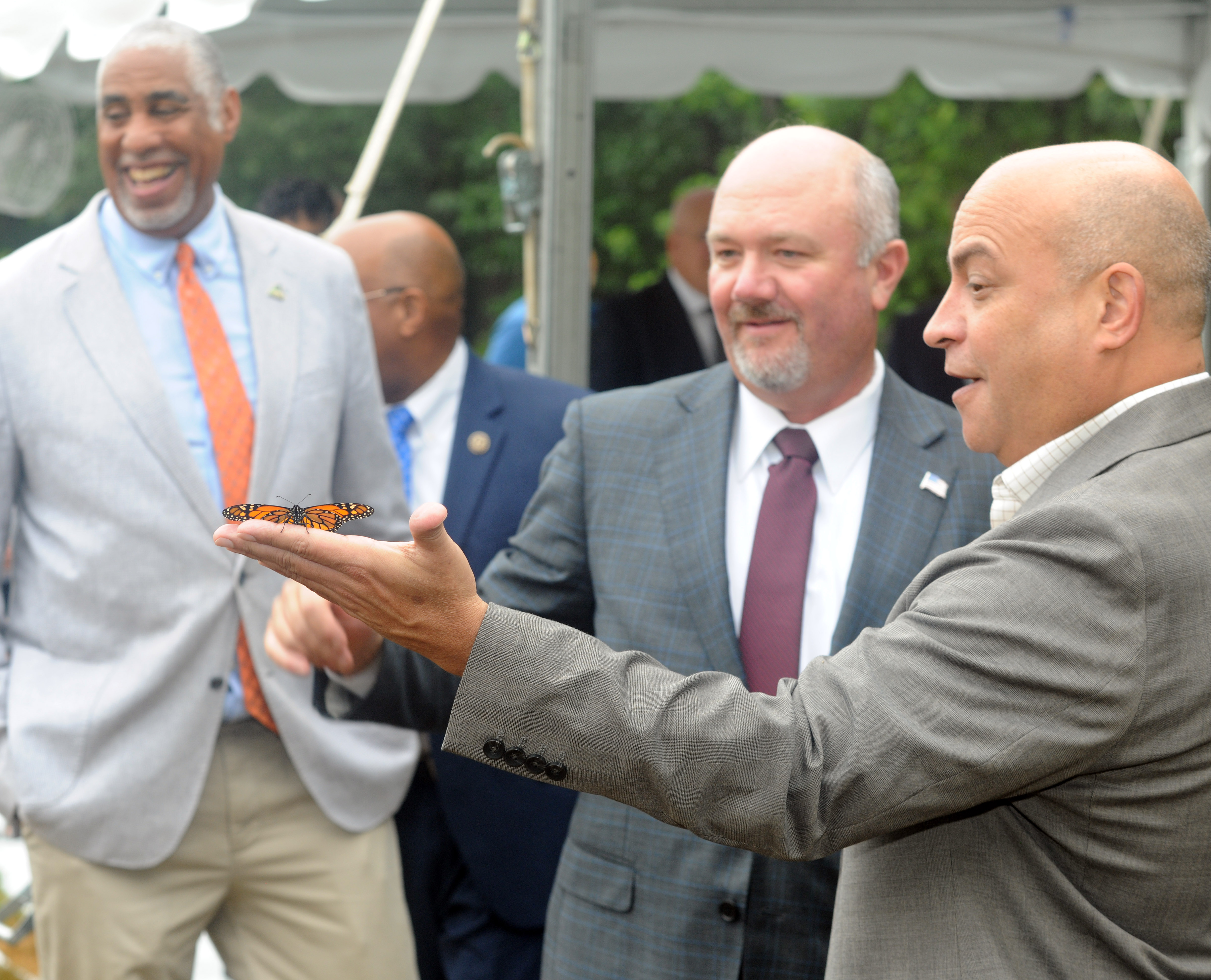
a Monarch butterfly rests on a man's hand
Following remarks from attending dignitaries and the signing ceremony, assembled guests participated in a monarch butterfly release and milkweed seed dispersal.
NASA

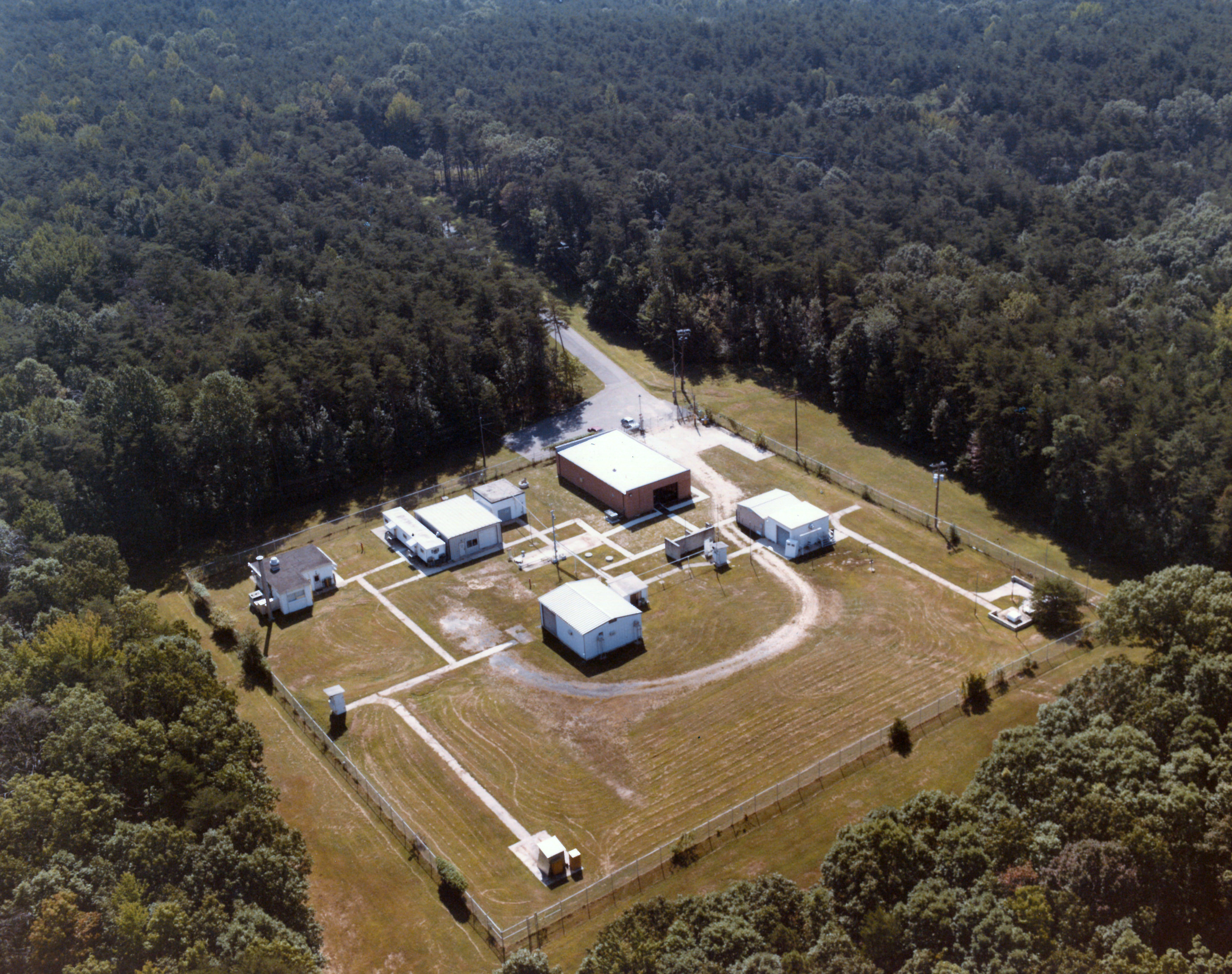
Prior to the transfer, Area 400 was still almost entirely wooded aside from a two-and-a-half-acre clearing with 11 small structures. The interagency transfer was effective on Feb. 23, and NASA recently completed its final closeout activities at the property, deconstructing the buildings, roadway, and utility service.

This aerial photograph shows Area 400’s appearance in 1984. The surrounding forest has remained largely unchanged since NASA Goddard occupied the property in the 1960s.
NASA

β€œThrough working with partners on the best use of land, as exemplified with this land transfer, we can continue to conserve America’s natural beauty and expand outdoor recreation opportunities for future generations,” said U.S. Fish and Wildlife Service Director Brian Nesvik.

Media contacts:

Rob Garner
News Chief, Office of Communications
NASA’s Goddard Space Flight Center

Keith Shannon
Regional Communications Lead – U.S. Fish and Wildlife Service Northeast Region
U.S. Department of the Interior

❌