
Reading view

There are new articles available, click to refresh the page.

UK’s Biggest Banks Are Preparing for the Future of Payments

The payments industry is entering a new phase.

Customers no longer compare their banking experience with other banks they compare it with the speed and convenience of every digital service they use. Whether it’s instant messaging, real-time order tracking, or same-day deliveries, expectations for financial transactions have changed dramatically.

To meet these expectations, some of the UK’s largest financial institutions are modernizing the way money moves across borders.

Major banks such as Barclays and HSBC are among the early adopters of SWIFT’s enhanced consumer payments framework, marking another important step toward a faster, more transparent, and more connected global payments ecosystem.
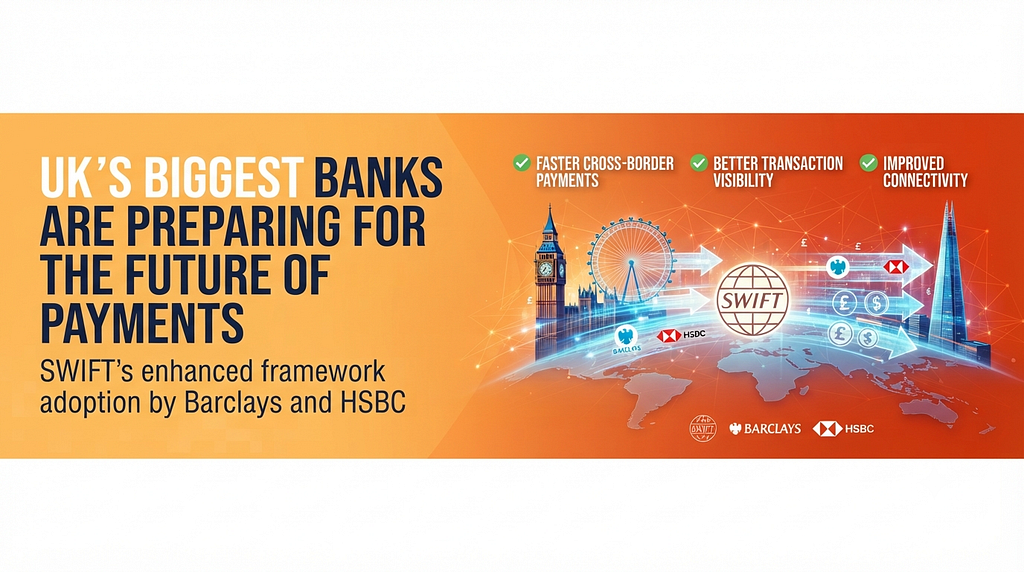
Image is generated by chatgpt

Why Payments Need to Evolve

Cross-border payments have traditionally faced several challenges:

  • Multiple intermediaries
  • Limited payment visibility
  • Delayed settlement times
  • Manual exception handling
  • Inconsistent customer experiences

For businesses operating internationally, these inefficiencies can increase operational costs and create uncertainty. Consumers also expect international transfers to be as seamless as domestic payments.

Modern payment infrastructure is designed to solve these challenges.

What Is SWIFT’s Enhanced Consumer Payments Framework?

SWIFT’s enhanced consumer payments framework builds on the organization’s global messaging network to improve how financial institutions exchange payment information.

Rather than simply moving payment instructions, the framework focuses on creating a more connected payment journey that improves speed, transparency, and consistency across participating institutions.

The initiative supports banks in delivering a modern payment experience without requiring customers to change how they bank.

What Benefits Can Businesses Expect?

Faster Cross-Border Payments

Businesses increasingly rely on international suppliers, customers, and partners. Faster settlement helps improve cash flow, reduces waiting times, and supports more efficient global operations.

Greater Transaction Visibility

One of the biggest frustrations with international payments is the lack of transparency.

Enhanced payment tracking allows banks and customers to gain better insight into where a payment is in its journey, making it easier to resolve delays and improve customer confidence.

Stronger Connectivity Between Financial Institutions

Payments rarely involve a single institution.

Improved communication standards enable participating banks to exchange richer payment information, helping reduce friction while supporting greater interoperability across the global financial ecosystem.

Better Customer Experience

Modern consumers expect payment experiences that are fast, reliable, and transparent.

By upgrading payment infrastructure, banks can deliver services that better align with today’s digital expectations while improving customer satisfaction and trust.

Why This Matters for UK Banks

The UK remains one of the world’s leading financial hubs.

As global commerce continues to expand, banks must support businesses that operate across multiple countries and currencies. Investment in payment modernization is no longer just a technology initiative — it has become a competitive advantage.

Banks that embrace modern payment frameworks can:

  • Improve operational efficiency
  • Strengthen international payment capabilities
  • Deliver better customer experiences
  • Support growing digital commerce
  • Prepare for future payment innovations

Early adoption also positions institutions to adapt more easily as new payment technologies, regulatory requirements, and customer expectations continue to evolve.

The Bigger Picture

The modernization of payments extends far beyond faster transfers.

Across the financial industry, institutions are investing in cloud-native infrastructure, ISO 20022 messaging, API-driven connectivity, real-time payments, artificial intelligence, and advanced fraud prevention. Together, these innovations are creating a more resilient and intelligent financial ecosystem.

SWIFT’s enhanced consumer payments framework represents another important piece of this transformation, enabling banks to collaborate more effectively while delivering greater value to customers.

Looking Ahead

The future of payments will be defined by speed, transparency, interoperability, and security.

As leading UK banks continue investing in modern payment infrastructure, businesses and consumers stand to benefit from more reliable cross-border transactions and a smoother digital banking experience.

Payment modernization is no longer a vision for the future — it’s happening today.

Financial institutions that embrace innovation now will be better positioned to meet tomorrow’s demands and shape the next generation of global payments.


UK’s Biggest Banks Are Preparing for the Future of Payments was originally published in Coinmonks on Medium, where people are continuing the conversation by highlighting and responding to this story.
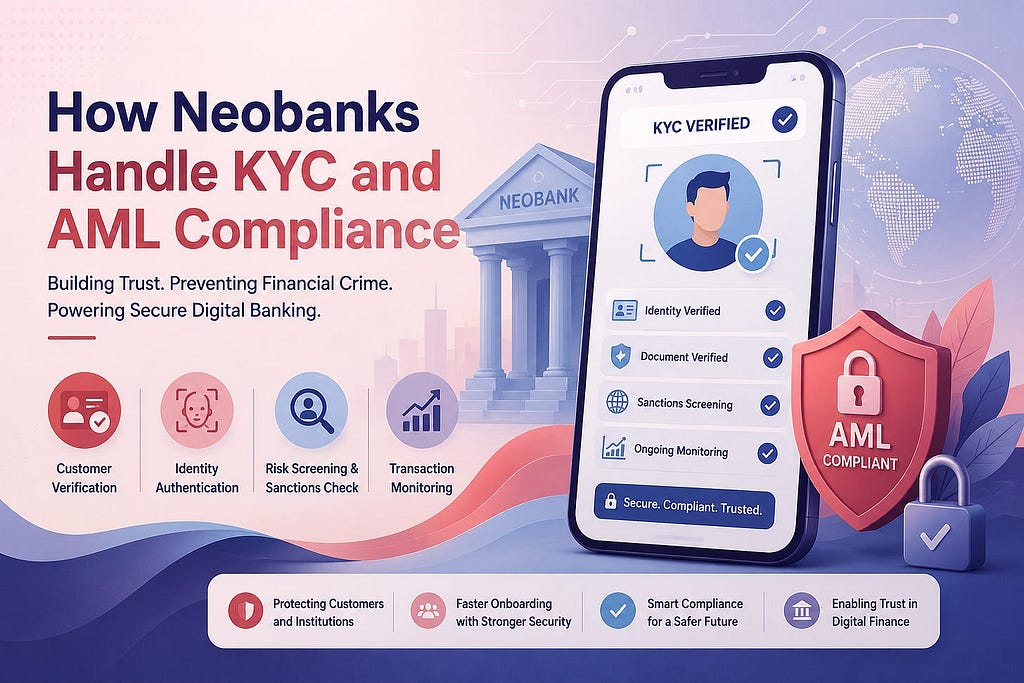
How Neobanks Handle KYC and AML Compliance

Neobanks have transformed banking by offering fully digital experiences, instant account opening, and seamless financial services without relying on physical branches.

But behind every fast onboarding process lies a complex compliance framework designed to protect customers, financial institutions, and the global financial system.

Two of the most important pillars of this framework are Know Your Customer (KYC) and Anti-Money Laundering (AML) compliance. While customers often experience a smooth sign-up process that takes only a few minutes, neobanks perform numerous checks behind the scenes to verify identities, detect suspicious activity, and meet regulatory requirements.

What Is KYC?

Know Your Customer (KYC) is the process financial institutions use to verify a customer’s identity before allowing access to banking services.

A typical KYC process includes:

  • Collecting government-issued identification documents.
  • Verifying personal information such as name, date of birth, and address.
  • Confirming that the person opening the account is genuine through biometric verification or a live selfie.
  • Screening customers against sanctions, politically exposed persons (PEP), and watchlists.

The goal is simple: ensure that every customer is who they claim to be.

What Is AML?

Anti-Money Laundering (AML) refers to the policies, technologies, and procedures used to detect and prevent financial crimes such as money laundering, fraud, terrorist financing, and other illicit activities.

Unlike KYC, which primarily focuses on verifying identity during onboarding, AML is an ongoing process that continuously monitors customer behavior and transaction patterns throughout the customer relationship.

How Neobanks Make Digital KYC Fast

One of the biggest advantages of neobanks is their ability to complete identity verification in minutes instead of days.

Modern digital onboarding typically includes:

Document Verification

Customers upload a passport, driver’s license, or national identity card. AI-powered systems verify document authenticity, detect tampering, and extract relevant information automatically.

Biometric Verification

A live selfie or short video confirms that the person opening the account matches the identity document. Facial recognition technology helps reduce identity fraud and prevents the use of stolen documents.

Database Validation

Customer information is cross-checked against trusted data sources, sanctions databases, and fraud intelligence systems to identify potential risks before the account is activated.

Continuous AML Monitoring

Compliance doesn’t end once an account is opened.

Neobanks continuously monitor customer transactions using advanced analytics and machine learning models.

These systems can identify unusual behaviors such as:

  • Sudden high-value transfers.
  • Frequent international transactions inconsistent with customer profiles.
  • Structuring transactions to avoid reporting thresholds.
  • Multiple accounts connected to the same suspicious activity.
  • Transactions involving high-risk jurisdictions.

When suspicious activity is detected, the system flags it for review by compliance teams, who determine whether further investigation or regulatory reporting is required.

The Role of Artificial Intelligence

Artificial intelligence has become a critical component of modern compliance.

AI helps neobanks:

  • Detect fraud in real time.
  • Reduce false positive alerts.
  • Identify unusual transaction patterns.
  • Improve identity verification accuracy.
  • Automate routine compliance reviews.

Rather than replacing compliance professionals, AI enables them to focus on high-risk cases while automating repetitive tasks.

Balancing Security and Customer Experience

One of the biggest challenges for neobanks is maintaining strong compliance without creating friction for customers.

Lengthy verification processes can increase customer abandonment during onboarding. On the other hand, weak verification exposes institutions to fraud and regulatory penalties.

Successful neobanks achieve this balance by combining automation, AI, risk-based verification, and intelligent workflow design. Low-risk customers can often complete onboarding within minutes, while higher-risk applicants undergo additional checks when necessary.

Why Compliance Is a Competitive Advantage

Many people see compliance as a regulatory obligation, but for leading neobanks, it has become a strategic advantage.

Strong KYC and AML programs help:

  • Build customer trust.
  • Reduce fraud losses.
  • Meet global regulatory requirements.
  • Enable international expansion.
  • Strengthen partnerships with payment providers and banking institutions.
  • Protect the platform’s reputation.

In an increasingly digital financial ecosystem, trust is one of the most valuable assets a financial institution can earn.

The Future of Compliance in Neobanking

The next generation of compliance will be more intelligent, automated, and proactive.

Emerging technologies such as AI-driven risk scoring, behavioral analytics, digital identity wallets, blockchain-based identity verification, and continuous authentication are expected to make compliance both stronger and less intrusive.

As financial crime becomes more sophisticated, neobanks will continue investing in technologies that allow them to identify risks faster while delivering the seamless digital experiences customers expect.

Final Thoughts

KYC and AML compliance are far more than regulatory checklists — they are the foundation of secure digital banking. Every instant account opening, secure payment, and trusted financial transaction depends on robust identity verification and continuous risk monitoring.

The most successful neobanks understand that compliance and customer experience are not opposing goals. By leveraging automation, artificial intelligence, and real-time monitoring, they create banking platforms that are both secure and user-friendly.

As digital banking continues to evolve, effective KYC and AML practices will remain essential to protecting customers, combating financial crime, and shaping the future of global finance.


How Neobanks Handle KYC and AML Compliance was originally published in Coinmonks on Medium, where people are continuing the conversation by highlighting and responding to this story.

❌