
Reading view

There are new articles available, click to refresh the page.

Your CRM Doesn’t Understand Crypto. That’s a Problem.

Salesforce was built for phone numbers and credit cards. Your users show up as wallet addresses. No wonder support tickets feel like chaos.

I’ve watched enough crypto teams wrestle with their CRM to notice a pattern: everyone eventually hits the same wall. The software works fine for a normal company. Then someone from support pulls up a customer record and it’s just… a name. Maybe an email. Nothing about the three failed swaps, the pending withdrawal, or the fact this person messaged support on Telegram, Discord, and email about the same issue and got three different answers.
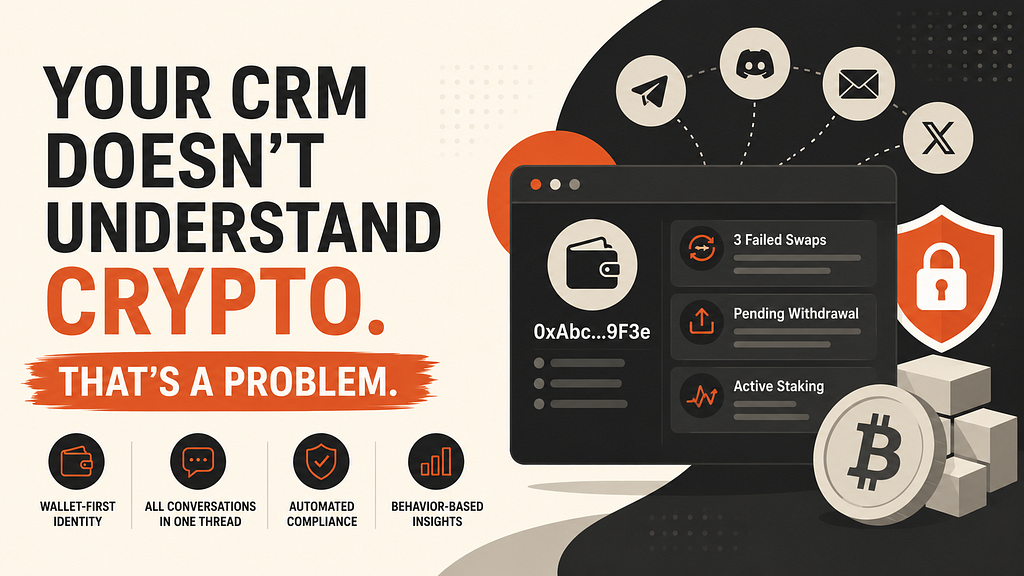
ChatGPT Generated Image

That’s not a support problem. That’s a tooling problem.

Traditional CRMs assume a customer looks a certain way, a name, a phone number, a card on file, a predictable path from lead to sale to renewal. Crypto users rarely fit that mold. Someone might interact with your project entirely through a wallet address and a Discord handle, never once giving you anything resembling a “real” identity. Add KYC checks, jurisdiction-specific compliance rules, and a support inbox that spikes tenfold the moment a token price moves, and it becomes obvious why off-the-shelf software buckles.

Where the Old Model Breaks Down

Legacy CRMs are built around a straight line: lead comes in, sales team works it, deal closes, support takes over from there. Crypto companies exchanges, wallets, DeFi platforms, whatever the flavor, don’t get that straight line. What they actually deal with looks more like this:

  • Users without names. A wallet address is often the only identifier you’ll ever get.
  • Conversations scattered everywhere. Telegram, Discord, X, email, in-app chat, often all at once, about the same issue.
  • Compliance that follows the person, not the company. KYC status and AML flags need tracking per user, and rules shift by jurisdiction.
  • Support volume that has nothing to do with your product. A market crash or a network outage can flood your inbox overnight.
  • Wildly different customer types. A retail trader, an institutional desk, and a liquidity provider need almost nothing in common from your support team.

Most teams respond by stitching together five separate tools. It sort of works, right up until nobody can see the whole picture anymore.

What Actually Fixes This

A CRM built for crypto stops treating the wallet as an afterthought and puts it front and center. A few things separate the tools that actually help from the ones that just add another tab to check:

Wallet identity as the anchor, not an add-on. Instead of forcing everything through a name field, on-chain activity, holdings, transaction history, staking behavior, sits right in the profile. No hopping between tools to piece together who someone is.

Compliance that runs in the background. KYC and AML status should update automatically as verification happens, visible at a glance, not buried in a spreadsheet someone checks once a week.

One thread, not five. When Telegram, Discord, and email all collapse into a single conversation history per user, agents stop answering the same question three times because nobody told them it had already been asked.

Live transaction context during support. An agent responding to a panicked user mid-crash needs to see recent transactions and pending withdrawals immediately, not five minutes later after checking a block explorer separately.

Segments based on behavior, not guesswork. Trading volume, staking duration, token holdings, these tell you far more about a user than any demographic field ever could.

How Teams Are Actually Handling This

From what I’ve seen, companies tend to land in one of three places:

  • They bolt customization onto Hub Spot or Salesforce, pulling in wallet data through APIs. Workable, but it needs constant engineering attention to keep from breaking.
  • They switch to a Web3-native CRM built around wallet identity and on-chain data from day one increasingly the path of least resistance.
  • They build something in-house, wiring it directly into their own blockchain infrastructure. Total control, but a real maintenance burden long-term.

None of these is objectively right. It comes down to company size, how much regulatory exposure you’re carrying, and how deep the on-chain integration actually needs to go.

A Few Questions Worth Asking Before You Commit

Before signing anything, it’s worth pressure-testing a shortlist against these:

  • Does it handle wallet-based identity without a workaround?
  • Will it plug into your KYC provider without a developer sprint?
  • Does it actually merge Telegram, Discord, and email into one history?
  • Can it surface live on-chain data inside the customer record?
  • Can you segment by behavior instead of static fields that don’t apply here?

If more than one answer is “not really,” that tool is going to slow you down eventually, even if it looks fine today.

Why This Actually Matters

Crypto companies win or lose on trust and a CRM, at its core, is a trust tool. When support has full context, compliance runs itself, and community managers can actually see engagement across channels, the whole customer experience gets noticeably better.

The CRM layer is quietly becoming just as important as the wallet infrastructure sitting underneath it. Get it right, and you’re not just running things more smoothly, you’re building the kind of trust that outlasts whatever the market does next.


Your CRM Doesn’t Understand Crypto. That’s a Problem. was originally published in Coinmonks on Medium, where people are continuing the conversation by highlighting and responding to this story.
Who’s Watching the Algorithm That’s Watching Your Money?

Banks have handed life-changing decisions to machines. Now the hard part: figuring out who’s accountable when those machines get it wrong

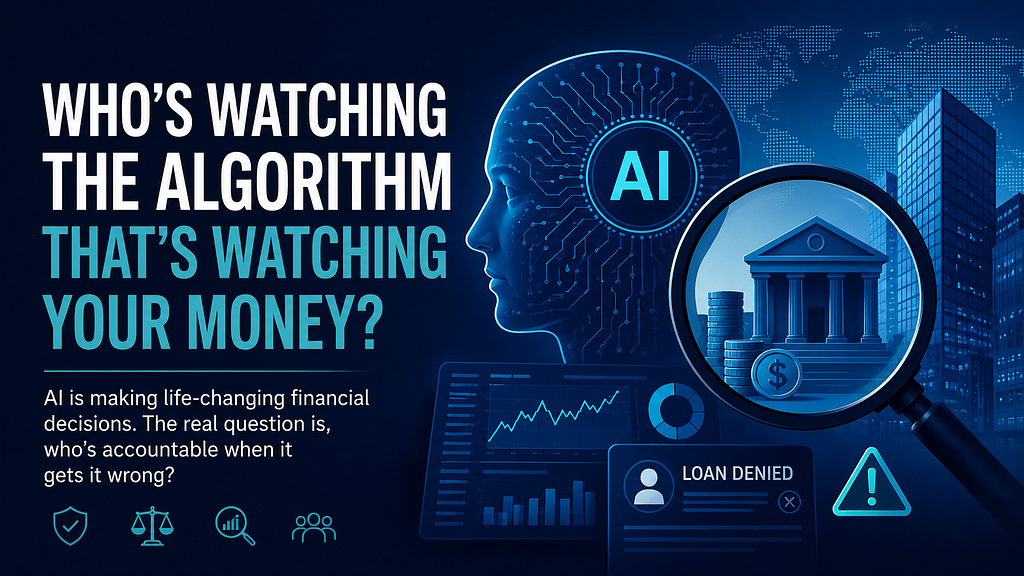
A few years ago, a loan officer would sit across from you, ask a few questions, maybe raise an eyebrow at your spending habits, and make a call. You could argue with that person. You could explain the rough patch on your credit report. Today, that officer is often a model, software trained on millions of past decisions, quietly deciding whether you’re worth the risk. You can’t argue with it. Most of the time, you don’t even know it exists.

ChatGPT Generated Image

That’s the backdrop to a conversation building steam across boardrooms and regulators alike: how do you govern something that decides faster than any human can review it, at a scale nobody can fully audit?

Finance Isn’t Like Other Industries

Plenty of sectors are wrestling with AI oversight right now. But finance carries a particular kind of risk, because money doesn’t stay in one place. It moves, it connects, it cascades. A recommendation algorithm messing up on a shopping app is annoying. A risk model messing up inside a major bank can spread through markets before anyone notices the source.

A few things make finance especially tricky:

  • Institutions are deeply interconnected, so one bad model at one firm can ripple outward fast.
  • Customers rarely get a real explanation when they’re denied a loan or flagged for fraud, which makes it hard to hold anyone accountable.
  • Trading and underwriting now happen at speeds no human reviewer can realistically keep pace with.

Regulators clearly see this coming. The EU’s AI Act, fresh guidance from the Federal Reserve and OCC, and ongoing work from bodies like the Financial Stability Board are all starting to treat AI as its own category of risk, not an IT upgrade, but something that belongs alongside credit risk and market risk.

So What Does Governance Actually Involve?

It’s not one policy or checklist. It’s closer to a set of habits a bank builds into how it treats every model, from the day it’s built to the day it’s retired. Institutions doing this well tend to focus on a handful of things:

  • Keeping a real inventory of every model in production, what it does, who owns it, and what it’s allowed to decide.
  • Making sure there’s a human-readable reason behind a rejected loan or a flagged transaction, not just a score nobody can explain.
  • Running regular audits to check whether a model is quietly discriminating against certain groups, even unintentionally.
  • Keeping humans in the loop for decisions with real legal or reputational weight.
  • Watching models after launch, since a system accurate on day one can drift as behavior and markets change.

None of this sounds exciting. It’s closer to fire codes than innovation. But that’s kind of the point, the boring stuff is usually what stops a small glitch from becoming a front-page problem.

The Part Nobody Really Talks About

The trickier issue might not be technical at all. It’s cultural. Data science teams are rewarded for accuracy and speed. Risk teams are trained to ask what could go wrong. For a long time, these were basically two departments that rarely spoke the same language. Good AI governance forces them into the same room, and that’s where things get uncomfortable.

Deployment slows down. A fraud model that looked ready to ship might sit in review for months while someone stress-tests it against every weird scenario they can think of. It’s frustrating short-term. But banks that lean into that friction, instead of fighting it, tend to end up ahead, not behind.

A few examples make it concrete:

  • A bank that can prove its lending model treats people fairly builds real trust with regulators and customers.
  • A trading firm that can walk an auditor through its algorithm’s decisions avoids a longer, costlier investigation later.
  • An insurer upfront about a model’s blind spots is in better shape if a claim ends up in court.

Seen this way, governance isn’t fighting innovation. It’s the scaffolding that keeps innovation from collapsing on itself.

Where This Goes Next

A few things seem likely to shape the next stretch of this story.

  • Different countries are writing their own AI rules, and global banks will push for common ground so they’re not juggling a dozen conflicting rule-books.
  • Banks are leaning more on outside vendors and foundation models, so governance can’t stop at the bank’s own walls anymore, it has to stretch across the whole chain of tools involved.
  • Generative AI is creeping from drafting memos into shaping investment advice, blurring the line between “helpful tool” and “thing making real decisions” in ways current rules weren’t built for.

None of this gets solved with one law or one audit. It gets solved the slow, unglamorous way most financial infrastructure gets built, through mistakes, corrections, and repetition.

Where This Leaves Us

AI in finance isn’t going anywhere, and neither is the risk that comes with it. The banks that come out ahead won’t be the ones shipping the flashiest models first. They’ll be the ones that can explain what their models did, defend those decisions, and fix them fast when something goes sideways. Governance isn’t slowing this industry down, it’s the seat-belt that lets it move fast without everything falling apart.

The rules are still being figured out, in real time, by people who don’t have all the answers yet. But the institutions taking this seriously now will probably be the ones still standing the next time something breaks.


Who’s Watching the Algorithm That’s Watching Your Money? was originally published in Coinmonks on Medium, where people are continuing the conversation by highlighting and responding to this story.

Real-Time Payment Checkout Is Quietly Reshaping Digital Commerce

Instant payments are the new competitive necessity in customer experience innovation

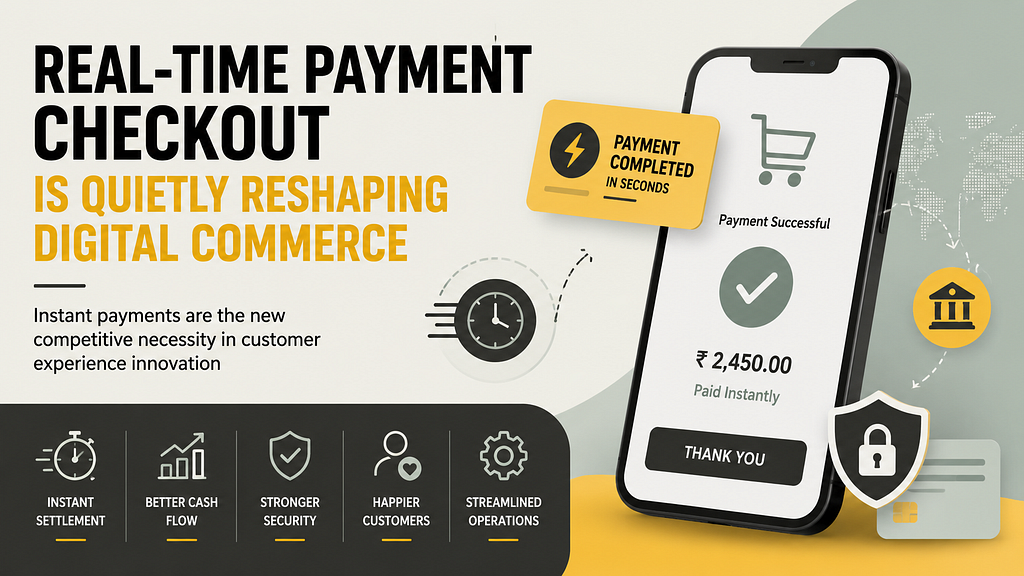
Checkout pages have long been optimized for fewer clicks in order to reduce the likelihood of a customer abandoning their cart. Real-time payment checkout, however, takes things a step further. It focuses on the value proposition of instant money transfer for both the customer and the business in order to increase customer confidence, reduce time spent on checkout, and create faster settlement.

Here’s why real-time payment checkout is the next big thing and how it can benefit your bottom line.

ChatGPT Generated Image

Why Legacy Checkout Is Due For An Upgrade

Traditional checkout processes have prioritized streamlined interfaces to reduce drop-off. While effective, this places the onus of optimization on the customer

Modern expectations demand immediacy from financial transactions. Settlement periods cause issues for both parties in an exchange, resulting in:

  1. Settlement delays
  2. Cash flow uncertainty
  3. Transaction risk
  4. Higher reconciliation costs
  5. More disputes
  6. Higher chargeback days

With digital transactions becoming the default choice for customers, the friction of payment processing is becoming more apparent. The immediacy of non-financial transactions (messaging, transportation, etc.) have raised customer expectations. Real-time payment checkout addresses this by enabling instantaneous movement of funds.

What Instant Payment Checkout Means For Business

Real-time payment checkout refers to a system where money moves between accounts within seconds. Unlike instant customer feedback, this process involves a back-end optimization which reduces processing delays and provides confirmation right after customer approval.

A modern instant checkout experience should involve:

  1. Authorization
  2. Instant confirmation
  3. 24/7 availability
  4. Faster merchant settlement
  5. Automated payment verification
  6. Reduced reconciliation

From a consumer perspective, it’s all very simple. However, this requires powerful payment messaging systems and reliable banking infrastructure to function.

How Real-Time Checkout Benefits The Consumer

Customers don’t care about the payment infrastructure, only the speed of the checkout experience. An instant confirmation of payment provides them with peace of mind. Their order has been processed and both the merchant and customer support don’t have to spend time double-checking if the money has arrived.

Minor UX improvements during checkout create major improvements across the business, including:

  1. Higher conversion rates
  2. Fewer abandoned carts
  3. Higher customer confidence
  4. Faster reorders
  5. Higher satisfaction scores

As customer expectations shift towards instant experiences, speed becomes a critical component of the product itself.

Industries Set To Benefit From Real-Time Checkout

While applicable to most digital transactions, some industries stand to benefit from instant payment settlement more than others.

E-commerce

Merchants will see faster checkout and easier order fulfillment for both physical and digital goods.

Digital Services

Subscriptions, apps, games, and streaming services can grant access to their products immediately after payment confirmation.

Marketplaces

Any platform connecting buyers and sellers stands to benefit from faster payouts as well as improved escrow services in the case of dispute resolution.

Travel & Hospitality

Booking services and related platforms can reduce uncertainty around payments.

Financial Services

Banks and fintech companies can provide faster account funding as well as settlement services to their business clients.

As competition intensifies across industries, payment speed goes from a nice-to-have to an absolute necessity.

Security Is Built Into The Speed

A common concern raised against instant payments is the potential risk and fraud. In reality, many security measures are being implemented to ensure that faster payments aren’t compromised.

Modern real-time payment systems utilize:

  1. Fraud prevention systems
  2. Encryption
  3. Authentication protocols
  4. Identity verification
  5. Monitoring systems
  6. Transaction tokenization

Since money moves immediately, fraud prevention measures have to be taken in real-time as well. Instant payment systems are actually driving fintech security innovation.

How Instant Checkout Payments Improve Financial Operations

Real-time checkout payments provide financial transparency as they settle immediately after confirmation. Instead of reconciling daily or weekly, businesses have access to precise financial data right away. This informs better business decisions around:

  1. Inventory management
  2. Cash flow planning
  3. Revenue forecasting
  4. Customer support
  5. Payment disputes
  6. Financial reporting

As such, instant checkout payments improve not only the financial health of a business but its overall operations.

The Technology Behind Real-Time Checkout Payments

There are several underlying technologies which make real-time payment checkout possible. Most involve optimizing the speed and reliability of money movement. Some of these include:

  1. Instant API payments
  2. Advanced banking infrastructure
  3. Cloud-based P2P platforms
  4. Identity verification
  5. Regulatory monitoring systems
  6. Smart payment routing

As financial institutions improve their own technologies, businesses can use these innovations to improve their own financial operations. What used to be only available to fintech giants is now accessible to small businesses as well.

The Future Of Commerce

The future of payments seems to be pointing towards instant fund transfers. However, it’s unlikely to exist as a standalone process. Rather, real-time payments will be used as enablers for richer digital experiences where the user isn’t actively aware of a financial transaction taking place.

Artificial intelligence will assist in fraud detection and optimization of payment transfers. Open banking will fuel account-to-account payments while embedded finance will provide financial services as a lubricant for industry-specific transactions. In the future, faster checkout payments can become an invisible expectation for the consumer.

Final Thoughts

Checkout has always served as the end-user culmination of a business’s operations. In many ways, it’s the first impression of the company. Real-time payment checkout is set to redefine customer expectations in a way that has lasting benefits for both sides of the transaction. It builds confidence, improves cash flow, streamlines operations, and enhances the overall digital experience.

As commerce trends towards immediacy, real-time payments will play a central role in delivering on those expectations. The companies best poised to succeed in this environment will be the ones that embrace faster checkout options and evolve with shifting customer sentiments.

While the next evolution of digital commerce takes shape, businesses would be wise to consider real-time payment checkout as a competitive differentiator.


Real-Time Payment Checkout Is Quietly Reshaping Digital Commerce was originally published in Coinmonks on Medium, where people are continuing the conversation by highlighting and responding to this story.

❌