❌

Reading view

There are new articles available, click to refresh the page.

Microsoft fixes a Windows 11 annoyance as PC revenue declines

Microsoft is beginning the rollout of a Windows 11 preview update that finally addresses a persistent power user complaint with the operating system: the right-click menu that obliterated years of muscle memory on command locations and hid others behind an additional click. The timing is notable, as the announcement comes alongside Microsoft's quarterly financial report, which showed a continued decline in the business of selling Windows licenses for new PCs.

The preview update, KB5127936, is cumulative for Windows 11 versions 26H2 and 25H2. The update will be a gradual rollout before eventually moving on to a normal rollout for all Windows 11 devices once it reaches general availability. The highlight of the new update should calm annoyed users who have spent years with custom scripts and services in an attempt to shape Windows the way they would prefer it. Users will get a "customize menu" button that controls what commands appear when they right-click their mouse. Users can toggle built-in commands such as Send To or Create Shortcut on or off, rearrange what appears on the main menu, and control which third-party extensions show up in either the main or submenus. The gripe with the right-click menu had been that Microsoft hid familiar command locations behind a top row of icons while moving other familiar commands under the "Show more options" submenu. Now, Windows users can customize the whole thing around their habits.
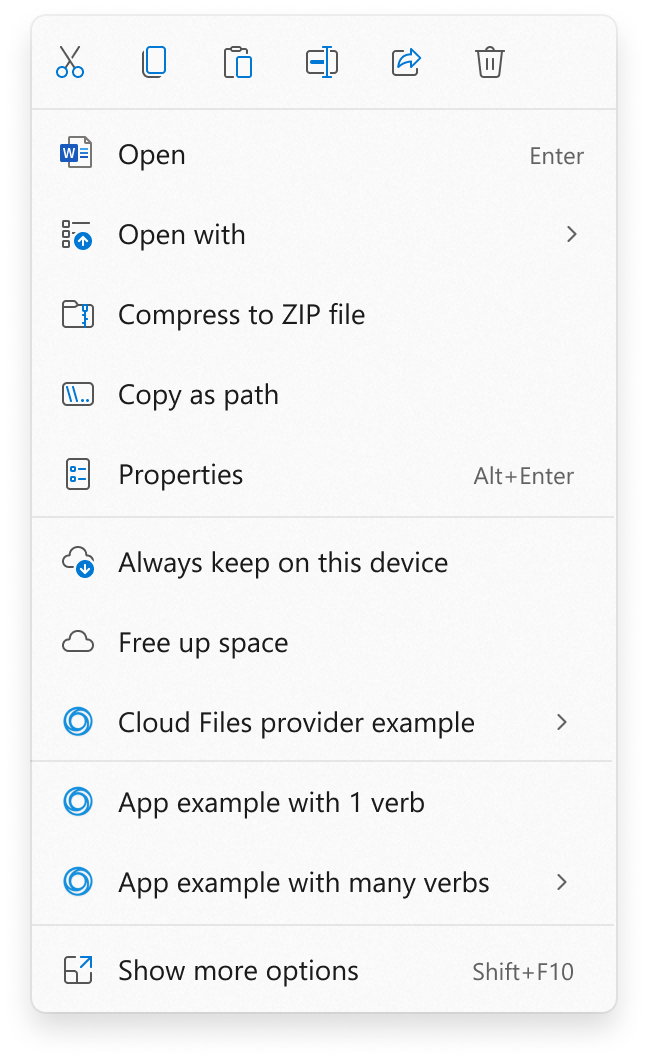
a screen capture of the old style Windows 11 right-click menu The original Windows 11 right-click menu is a mess. Credit: Microsoft

The new preview also highlights a new Windows feature called Cloud Rebuild, a recovery option that can reinstall Windows 11 directly from the cloud, even when an existing Windows 11 fails to boot. Cloud Rebuild will pull the Windows 11 image and needed system drivers directly from Windows Update. Users will not need a custom recovery image or external media to reinstall Windows. There is an important distinction to note, however. Microsoft classifies Cloud Rebuild as a recovery option, but it behaves more like a fresh Windows install than a repair, as existing applications and files will not be included. Those worried about data security can sanitize entire system drives prior to reinstalling. For a full list of improvements coming to Windows 11, including changes to Xbox mode and settings, you can view the official MicrosoftΒ release announcement.

Read full article

Comments

Β© Microsoft

Microsoft offers to buy out a quarter of its workforce

On Monday, Microsoft said it is offering voluntary buyouts to eligible employees in select parts of the company. CNBC reports that the buyouts will be offered to roughly 60,000 employees, or about a quarter of its global workforce. The company describes the offer as an opportunity for employees who may have already been considering career moves outside Microsoft. While Microsoft did not give a direct reason for the buyout package, it comes as the company has spent the last several years managing costs amid investment in AI infrastructure and data-center buildout.

Microsoft will extend the voluntary exit offer (VEO) to qualifying employees in the United States, India, Canada, and the United Kingdom. Microsoft employees at level 70 or below will be eligible for the buyout program. The company's employee rankings are internal, but according to the salary and career database Levels.fyi, levels 65–67 correspond to principal positions, and 68–70 are at the partner/distinguished level. According to Chief People Officer Amy Coleman, eligible organizations were selected "based on each business’s priorities, customer commitments and workforce needs."

The effort is the second time Microsoft has run a voluntary workforce reduction in 2026. In April, the company offered its first voluntary retirement package to 8,750 US employees. In July, the Xbox division laid off 3,200 employees, or about 20 percent of its entire gaming division. As reported by CNBC, about 30 percent of eligible employees accepted the retirement offer, lessening the impact of the planned layoffs, according to Coleman. While the offer in April went out to long-tenured employees who might be nearing the end of their career, the VEO expands the effort to a much larger potential pool.

Read full article

Comments

Β© Drew Angerer | Getty Images

From impulse purchase to pocket studio: The M-Vave FM-1

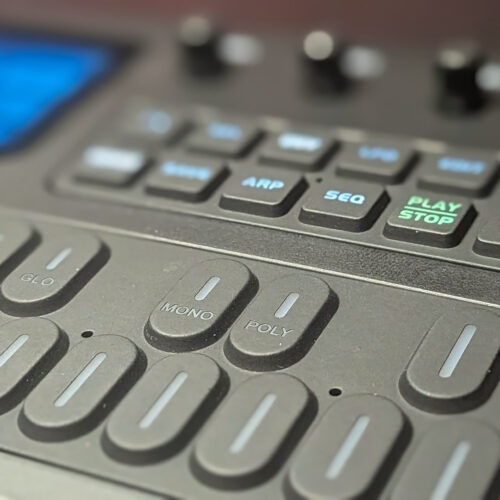
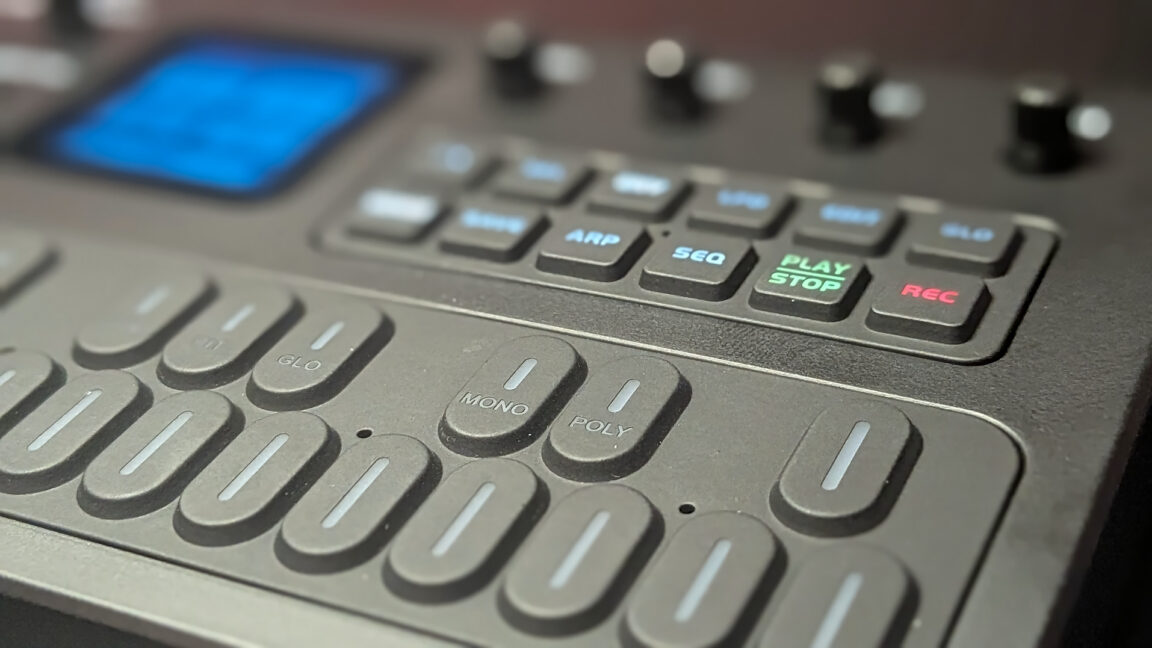
The M-Vave FM-1 is exactly the kind of device I have a weakness for. I may not have an intended use for the frequency-modulation synthesizer, but when a low price meets a high coolness factor, I'm powerless to keep it out of my cart.

Initially billed as a pocket cousin of the famous Yamaha DX7 synthesizer, the FM-1 is a bargain at only $59.72 after fees. At release, it was a cool device that did what it said on the box, but not much else.

But in July, some intrepid tinkerers on Reddit’s r/synthdiy board began reverse-engineering the FM-1's stock firmware to expand the device's abilities. By September, custom firmware began appearing. We're not even through October, and there are already more community firmware projects available to install on the FM-1 than I could ever hope to cover.

Read full article

Comments

Β© Nick Indge

Spotify ramps up policy enforcement on family plans

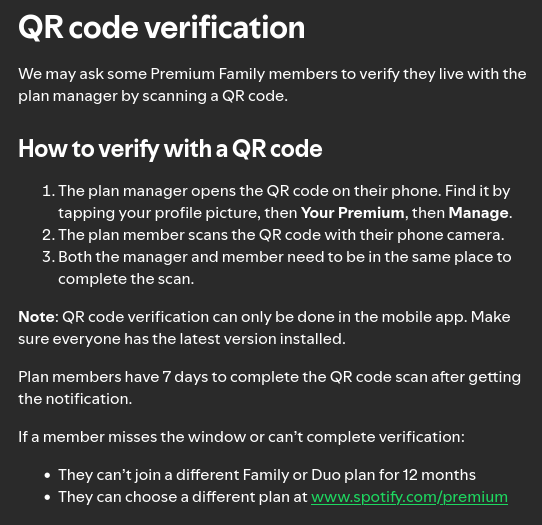
As reported by Music Business Worldwide, Spotify appears to be stepping up enforcement of existing policies regarding Family and Duo subscription plans by requiring users to scan a QR code in person on the plan manager's device in order to maintain access to it. Those who fail to scan the address verification QR code within seven days will see their account demoted to the free tier and be barred from joining any other Duo or Family plan for 12 months.

A Spotify policy on family sharing plans is outlined. Spotify's QR code plan enforcement. Credit: Spotify

Spotify's supportΒ documentation verifies the policy after users on Reddit began posting reports of receiving the QR prompt. The enforcement stems from Spotify's requirement that family plan members reside at the same addressβ€”a seemingly reasonable policy in concept. But what if you have a child away in college, a spouse who works on the road, or any number of other circumstances that might see families separated by physical distance? The policy could extend beyond friend groups looking to save a buck, affecting actual families who thought they were using the program as intended.

Goldman Sachs analysts, in their October 15 Music in the Air: 10 Years OnΒ report, made available by HITS Daily Double, estimate that "a meaningful share of family plan users are not actual household members, but rather friends sharing a plan to reduce costs." The report goes on to add, "We see additional monetization upside from tightening household verification on multi-user plans. Most family plans require members to reside at the same address, but enforcement has been minimal in practice."

Read full article

Comments

Β© Spotify

The past, present, and future share a show floor at Pinball Expo 2026

It's October in the Midwest, which means it's time for the pinball world to descend on a convention center in Chicagoland for the annual Pinball Expo. Once thought to be an entertainment sector slowly bleeding out, pinball has come back in a big way in recent years. I visited one of Chicago's last old-school manufacturers before heading down the road to see what's new in the silver-ball universe.

Behind the silver ball

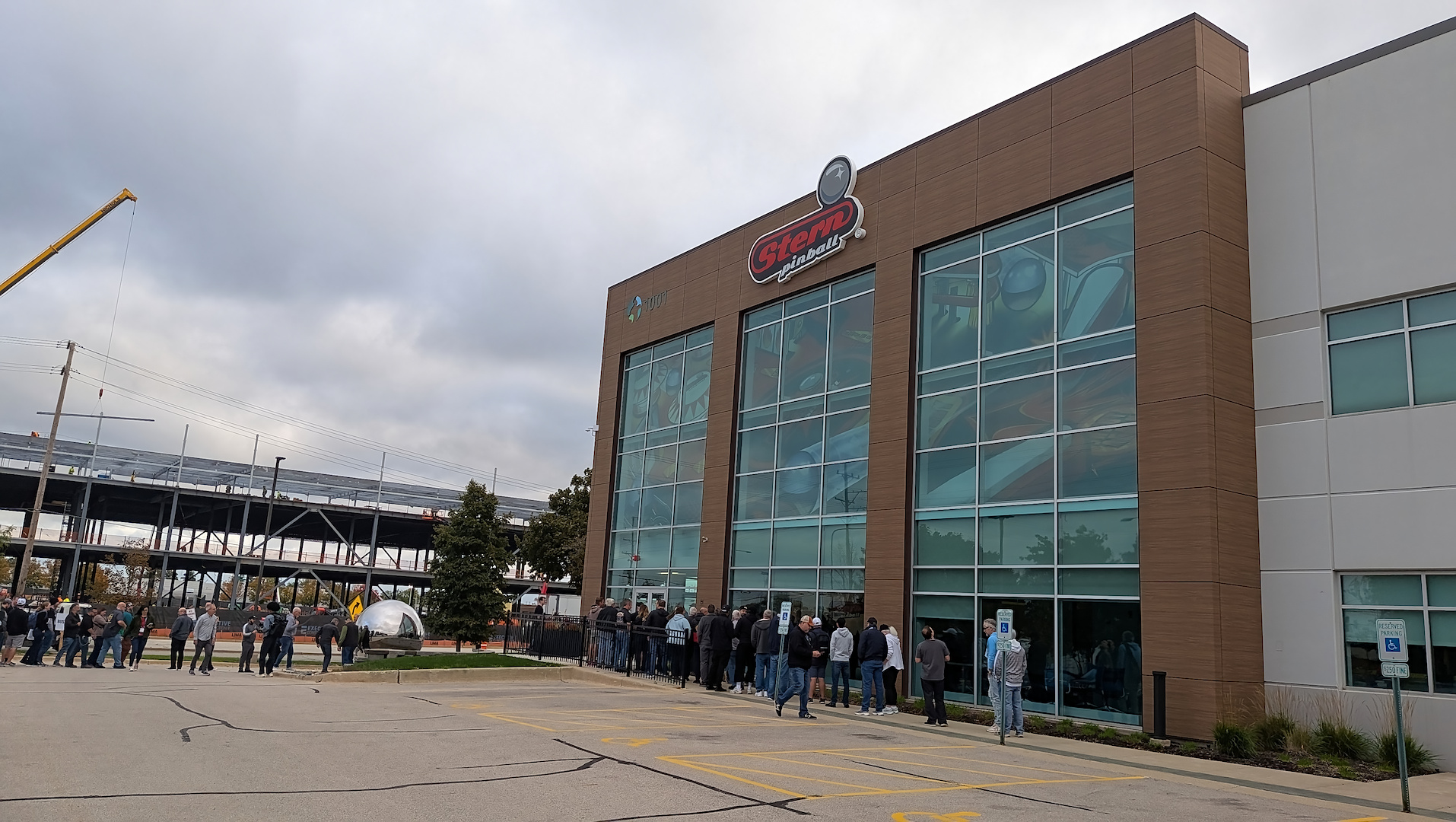
Hundreds gathered on a brisk fall Friday morning outside Stern Pinball's headquarters in Elk Grove, Illinois, waiting to enter a Wonka-like wonder factory where piles of raw parts become licensed creations from Jaws to the brand-new Fallout. Stern invited me to tour its offices and factory floor before heading off to the convention in nearby Schaumburg, Illinois.

An early morning line begins to form outside of Stern HQ as busses of Pinball Expo attendees arrived for tours. An early-morning line begins to form outside of Stern HQ as buses of Pinball Expo attendees arrive for tours.
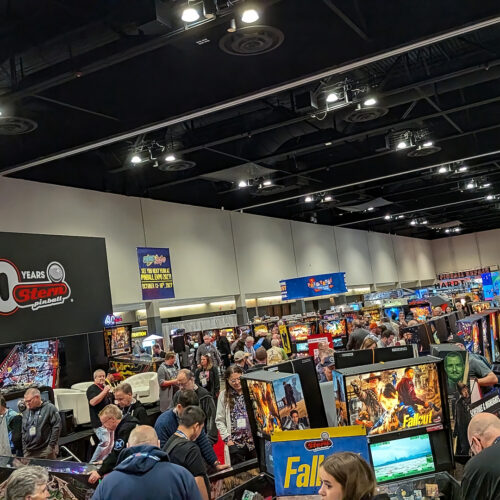
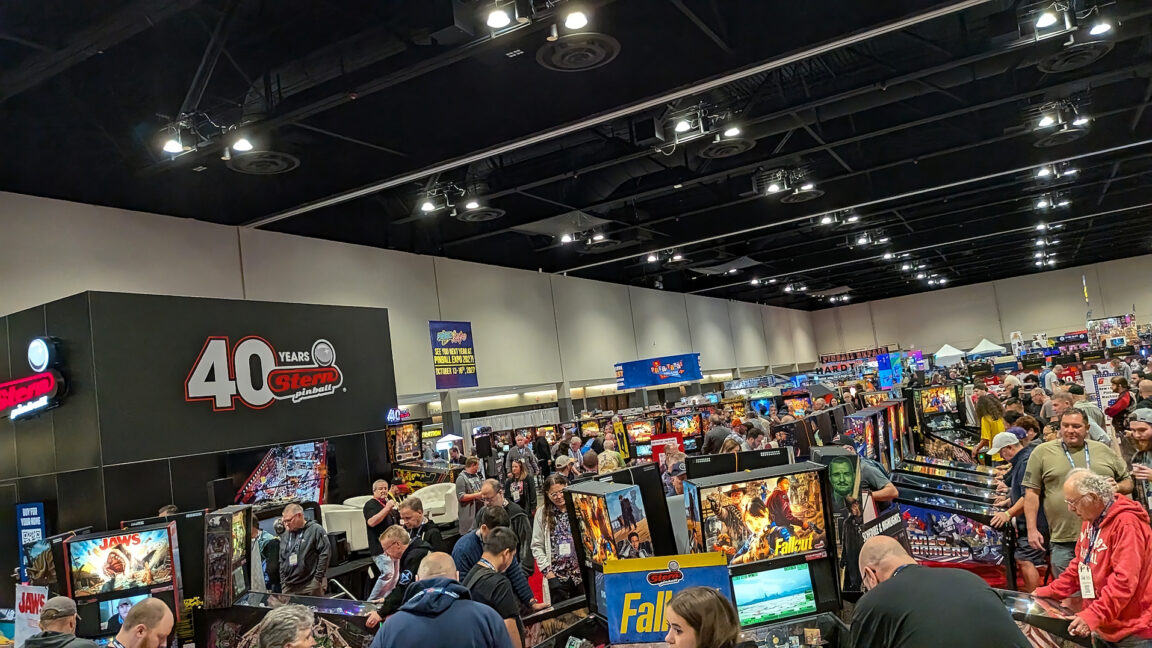
As I stood with my tour group in Stern Pinball's HQ lobby, mouth agape at the dozens of machines lining the walls, we were greeted by the man himself, Gary Stern, who gave us some background on the company's 40-year history. After a stop at Gary's podium, we were ushered to the factory floor entrance, where Stern employee and legendary game designer George Gomez briefed us on the tour rules and answered questions. According to Gomez, "at any given time, Stern controls 90 percent of the current pinball market, and everybody else splits the rest."

Read full article

Comments

OpenBSD 8.0 arrives with security record still intact

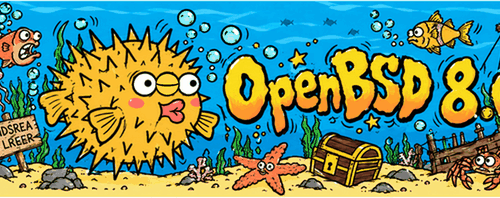
OpenBSD 8.0 is here, marking the project's 61st release and continuing its schedule of semiannual releases dating back to 1996. What started more than 30 years ago as a fork of NetBSD has grown into one of the most security-conscious operating systems in active development. In a post to the project's announcements mailing list, OpenBSD founder Theo de Raadt highlights a host of improvements included with the latest version and writes that the project remains "proud of OpenBSD's record of more than thirty years with only two remote holes in the default install."

The latest OpenBSD version brings new features and improvements across the board. These changes, particularly the new Intel Arc support and expanded virtual address space, should improve compatibility with modern graphics cards and allow the system to map more than 4GB of VRAM.Β Some of the major updates noted in the release newsletter are as follows:

  • Added support for Intel Arc A-Series (DG2/Alchemist) graphics cards.
  • 512GB kernel virtual address space on AMD64, up from 4GB, allowing VRAM mapping above 4GB.
  • Added hibernation support for ARM64 systems.
  • A new RPKI-to-router daemon: rtrd(8).
  • RISC-V improvements including kernel support for the 'V' vector extension and support for Advanced Interrupt Architecture.
  • Wireless network driver additions and improvements, including 802.11n and 40 MHz channels for the qwx(4) wireless driver.
  • Added support for up to 64 virtual CPUs per guest virtual machine.
  • Security and internal improvements for LibreSSL 4.4.0 and OpenSSH 10.6.
  • Improvements to the vmm/vmd virtualization stack.

The new OpenBSD also retires support for Loongson architecture after the port stopped working with the Clang 22 compiler. If you're interested in reading over all the changes that come with the new OpenBSD 8.0, you can take a look at the release announcement.

Read full article

Comments

Β© OpenBSD

ReactOS reaches major milestone with NTFS install support

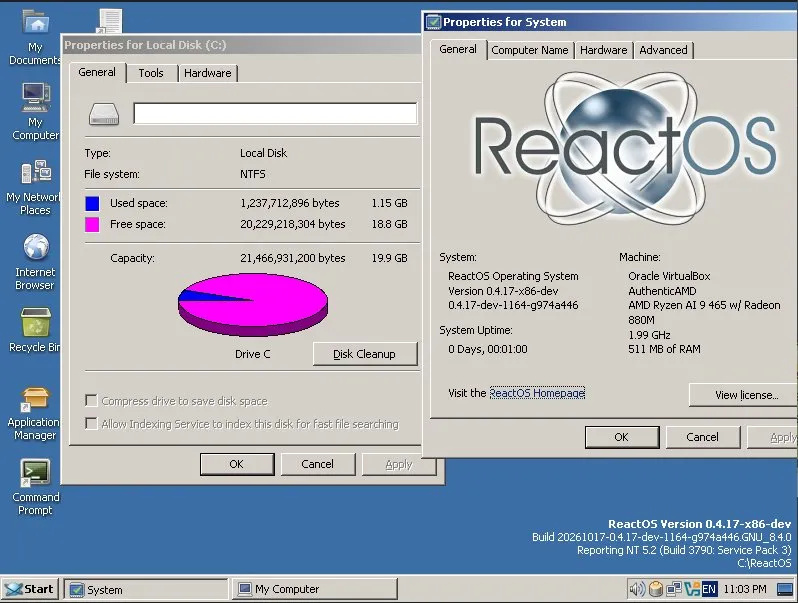
Open source Windows alternative ReactOS has reached a major milestone: The operating system can now be installed directly onto an NTFS drive partition. As reported by Phoronix, the move to NTFS clears a long-standing hurdle for the project and brings it one step closer to finally reaching beta.

Prior to this latest announcement, ReactOS required users to keep a FAT32 partition for installations. A proprietary Microsoft-developed filesystem, NTFS can trace its roots back through the Windows NT family lineage starting in 1993 with Windows NT 3.1. The variant introduced with Windows XP in 2001 remains the standard used by most Windows systems today. With ReactOS's stated goal of reaching binary compatibility with Windows Server 2003, being confined to FAT32 partitions was a practical barrier to clear on the way to reproducing the Windows environment.

However, users looking to hop off the Windows train shouldn't be grabbing their bags just yet. ReactOS wrote that the new driver still "lacks caching (which causes inferior performance), journaling and security support." So while the new driver is here, even the most intrepid of OS tinkerers should tread carefully. The ReactOS team warned in its announcement on X that there are still "potentially undiscovered bugs."

Read full article

Comments

Β© ReactOS

The Surface Laptop Ultra delivers on most of Microsoft's promises

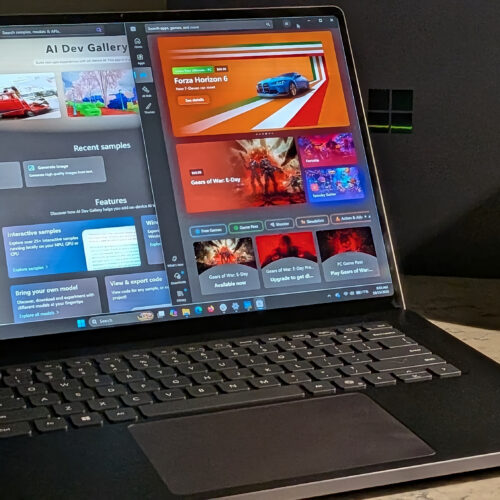
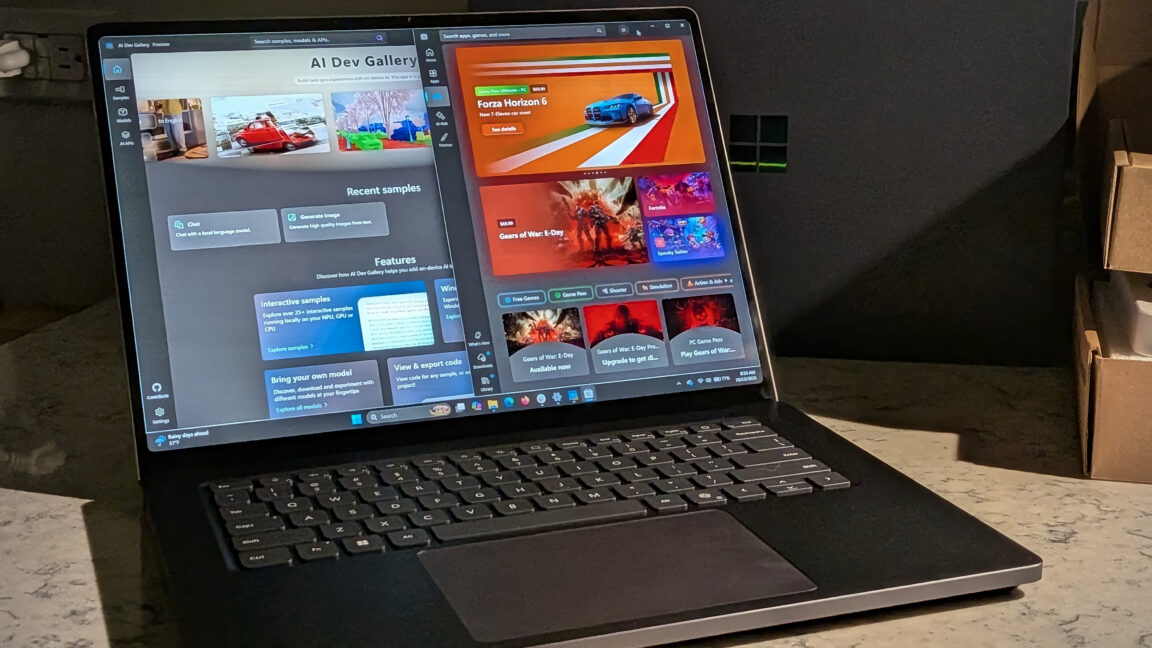
Over the past week, the laptop Microsoft sent me has been summarizing books and movies, generating images from my imagination, and running a 70-billion-parameter AI model that would be a stretch to fit on most laptops. It also played AAA games at a speed and fidelity I would have thought impossible on an ARM system just a year ago. Microsoft wants to sell you one computer for all of your needs, and for once that doesn't feel like total marketing fluff. Mostly.

Microsoft is throwing both arms around the new Nvidia RTX Spark platform with the Surface Laptop Ultraβ€”and setting its sights on the would-be MacBook Pro buyer, or as the company called it, "a high performance audience." The bet is that rather than a gaming desktop for fun and a development laptop for work, buyers will pay more for one machine that does both.

The Surface Laptop Ultra arrives at a strange time in personal computing. Recent industry numbers showed a 20 percent drop in total PC shipments year over year in the third quarter of 2026. That's not just consumer purchasing eitherβ€”that's across the board. Between the RAMpocalypse that has exploded consumer prices and an industry fixated on enterprise money, there hasn't been much new hardware to excite PC enthusiasts.

Read full article

Comments

KDE turns 30 with Plasma 6.8, remote upgrades, and an X11 farewell

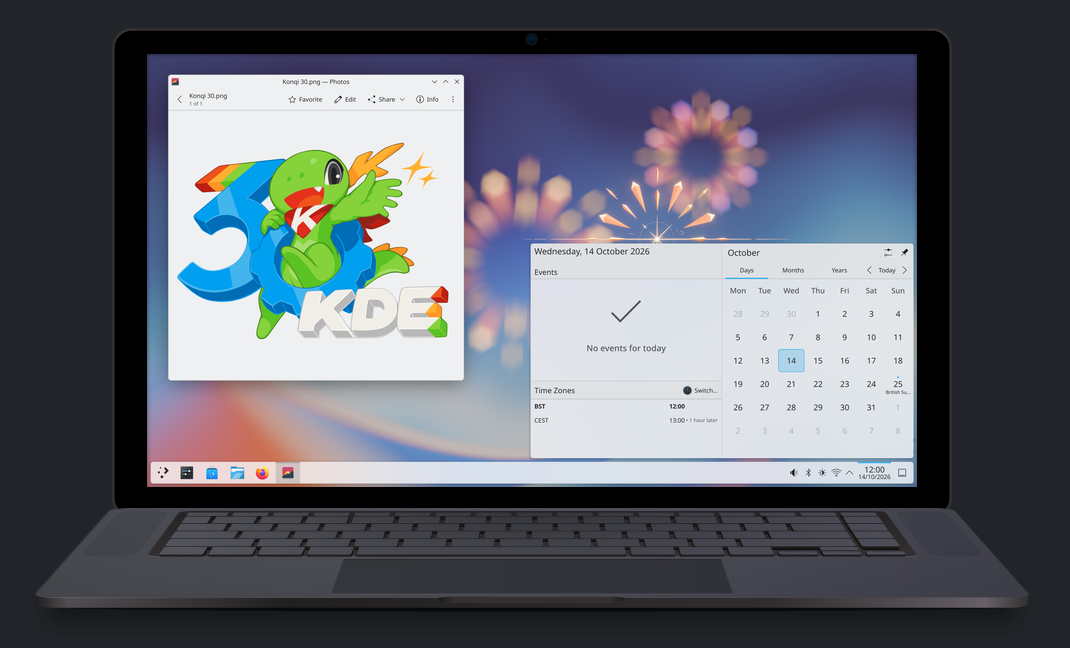
Marking the 30th anniversary of KDE on October 14, the project released Plasma 6.8, debuted a movie, and retired Plasma's native X11 session support. The announcement from KDE dubs the new Plasma 6.8 as the "30th Anniversary Edition" and describes the update as preparing Plasma for the future. Legacy X11 applications will still function via the XWayland compatibility layer, and KDE applications will also continue supporting X11 under other desktop environments.

After 42 years in service, the X11 protocol is losing another major desktop environment. Plasma will fully adopt the Wayland system and put support for starting new X11 sessions in Plasma to bed. Users opting to stay on Plasma 6.7 will keep their existing sessions for now. The move was expected, with GNOME officially dropping X11 sessions by default in 2025.

The new Plasma 6.8 brings many improvements, including increased support for adding window decorations (like shadows and rounded corners) to third-party apps, and a more streamlined Union theming system. Other notable additions include Nvidia triple buffering being enabled by default, Kup backup integration (KDE's backup utilityβ€”now integrated into Plasma), and kscreenctl, a command-line utility that allows power users to adjust display configurations.

Read full article

Comments

❌