Login
Login
Music NFTs: An Alternative to Streaming Services
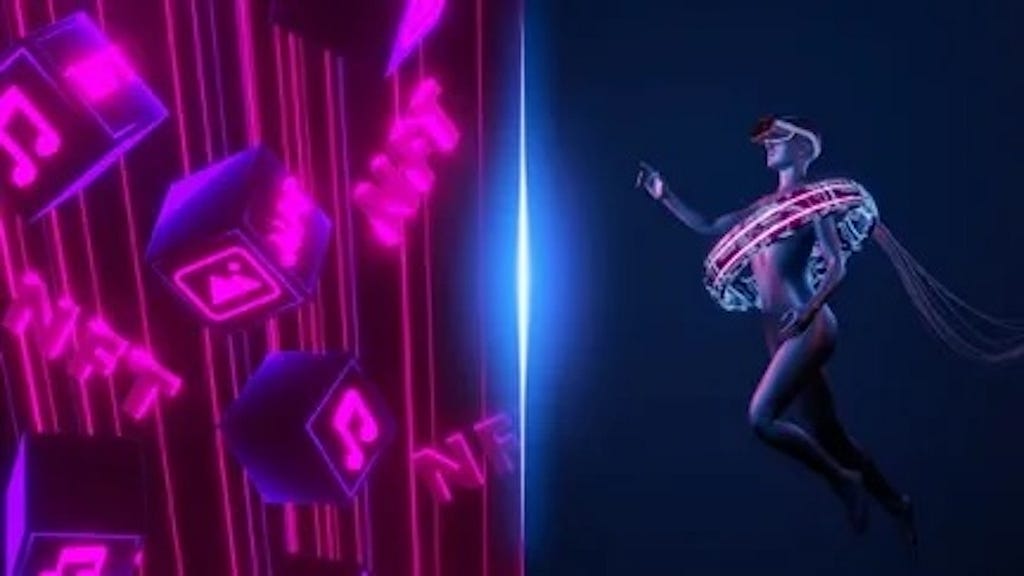
In the rapidly evolving landscape of the music industry, traditional streaming services like Spotify and Apple Music have dominated the way we consume music. However, as technology advances, new players like Open Sea and Kunstify have emerged on the scene. These new distribution channels are revolutionizing how artists connect with fans and monetize their work. In this article, we’ll explore how Music NFTs serve as a compelling alternative to streaming services and why they may shape the future of music consumption.
NFTs explained
At their core, Non-Fungible Tokens (NFTs) are unique digital assets recorded on a blockchain — a decentralized ledger technology that ensures transparency, immutability, and verifiability.
Thanks for reading Mark’s Substack! Subscribe for free to receive new posts and support my work.
Each NFT carries a unique identification code and metadata that differentiates it from every other token. Unlike cryptocurrencies such as Bitcoin or Ethereum — which are fungible, meaning each coin is identical and interchangeable — NFTs are non-fungible, no two NFTs are ever the same, even if they look identical.
This uniqueness allows NFTs to represent ownership of distinct items — whether a digital painting, a song, a video, a 3D collectible, or even a physical asset like real estate or jewelry. NFTs serve as a digital certificate of authenticity and ownership, securely stored on the blockchain.
To put it simply:
Owning an NFT, is like owning a one-of-a-kind piece of art. Its value lies in its uniqueness, provenance, and cultural relevance.
What Are Music NFTs?
Before diving into how Music NFTs can disrupt the industry, let’s clarify what they are.
Music NFTs are unique digital tokens that represent ownership of a specific piece of music or related content. Recorded on the blockchain, music NFTs function as direct-to-fan distribution channels, that allows artists to bypass intermediaries like record labels and traditional streaming platforms. By selling unique digital assets directly, musicians retain ownership of their work while offering fans exclusive perks like unreleased tracks, concert tickets, merchandise, and sometimes even fractional royalties. The general consensus across the music and tech industries is that music NFTs are not meant to be treated as traditional financial investments or passive income generators. They are merely a direct-to-fan model that allows artists to sell their music to fans without intermediaries.
The Benefits of Music NFTs
- Direct Artist Support: One of the most significant advantages of Music NFTs is that they allow artists to receive direct compensation for their work. Unlike streaming services that pay artists a fraction of a cent per stream, NFTs enable musicians to sell their music at a price they set. This direct-to-fan model empowers artists financially and fosters a closer connection with their audience.
- Ownership and Scarcity: Unlike the temporary access granted by streaming subscriptions, music NFTs create a sense of ownership that streaming services cannot offer. When fans purchase a Music NFT, they own a unique piece of art. This sense of ownership can enhance fan loyalty and create a community around the artist. Additionally, the scarcity of NFTs — often limited to a certain number of copies — can drive demand and increase value over time.
- Higher Artist Revenue: Artists receive a majority share of primary sales and can earn ongoing royalties from secondary market transactions via smart contracts.
- Decentralized Control: Creators maintain full control over pricing, release schedules, and distribution without needing a record label or streaming platform as a gatekeeper.
- Exclusive Experiences: NFTs can bundle concert tickets, backstage passes, unreleased tracks, or voting rights on future projects, deepening fan engagement.
Challenges and Considerations
While music NFTs promise innovation, they come with caveats:
- Market Volatility: The value of NFTs can fluctuate dramatically, posing financial risk for both artists and collectors.
- Environmental Concerns: Although many NFT platforms now use energy-efficient proof-of-stake blockchains, historical criticism of high energy consumption persists.
- Discovery and Reach: Unlike streaming’s algorithmic recommendations, finding new music on NFT marketplaces requires active browsing and community participation.
- Regulatory Uncertainty: Legal frameworks around digital ownership, copyright, and tax reporting for NFTs are still evolving across different jurisdictions.
How It Works: A Simple Transaction
Consider a typical scenario. An artist mints a limited edition of 100 NFTs for a new single, priced at $50 each. The smart contract ensures the artist receives $48.75 for each NFT sold, while the platform retains $1.25. If a fan later resells the NFT on a secondary marketplace for $200, the smart contract automatically pays $10 to the artist.
Future Outlook for Music NFTs
As of mid-2026, several major artists have launched full albums as NFTs, and a growing number of independent musicians rely on this model as their primary revenue stream. While streaming services remain dominant for casual listening, Music NFTs are carving out a sustainable niche for artists seeking fair compensation and deeper fan relationships.
The technology continues to evolve, with innovations like fractionalized ownership and interactive NFT experiences expanding the possibilities. For many creators, this represents not just an alternative, but a necessary evolution in the music industry’s economic structure.
Music NFTs: An Alternative to Streaming Services was originally published in Coinmonks on Medium, where people are continuing the conversation by highlighting and responding to this story.