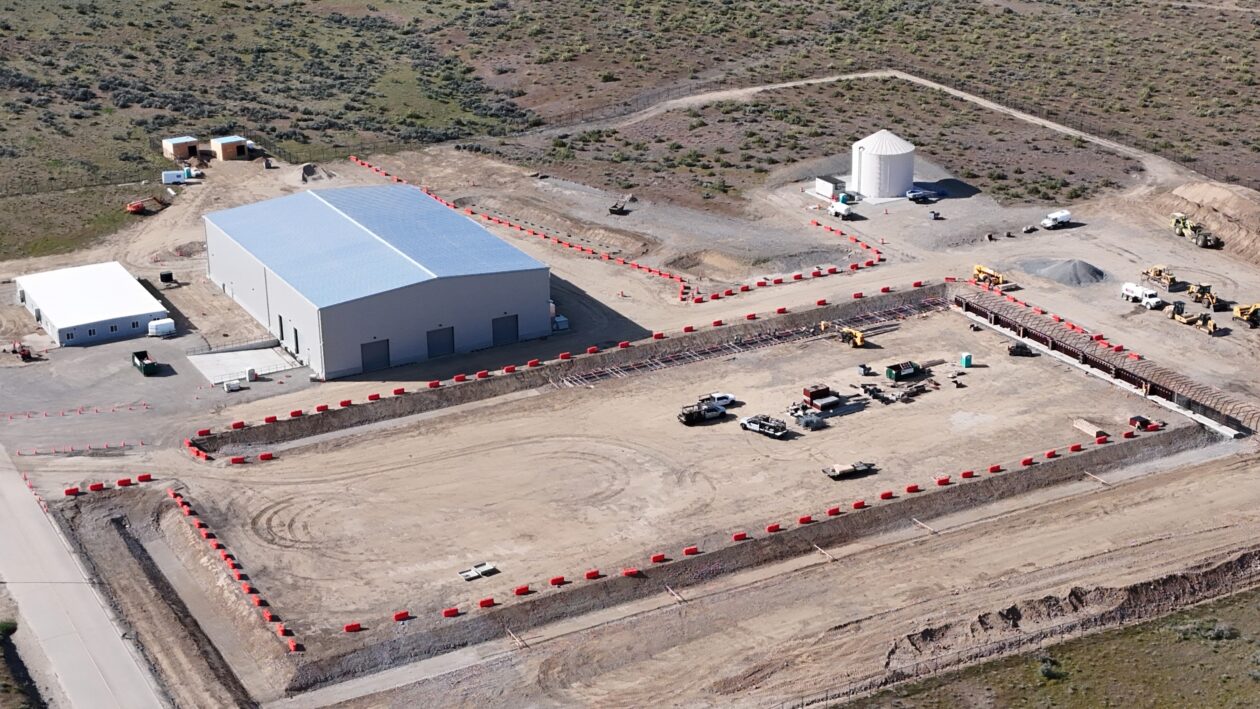
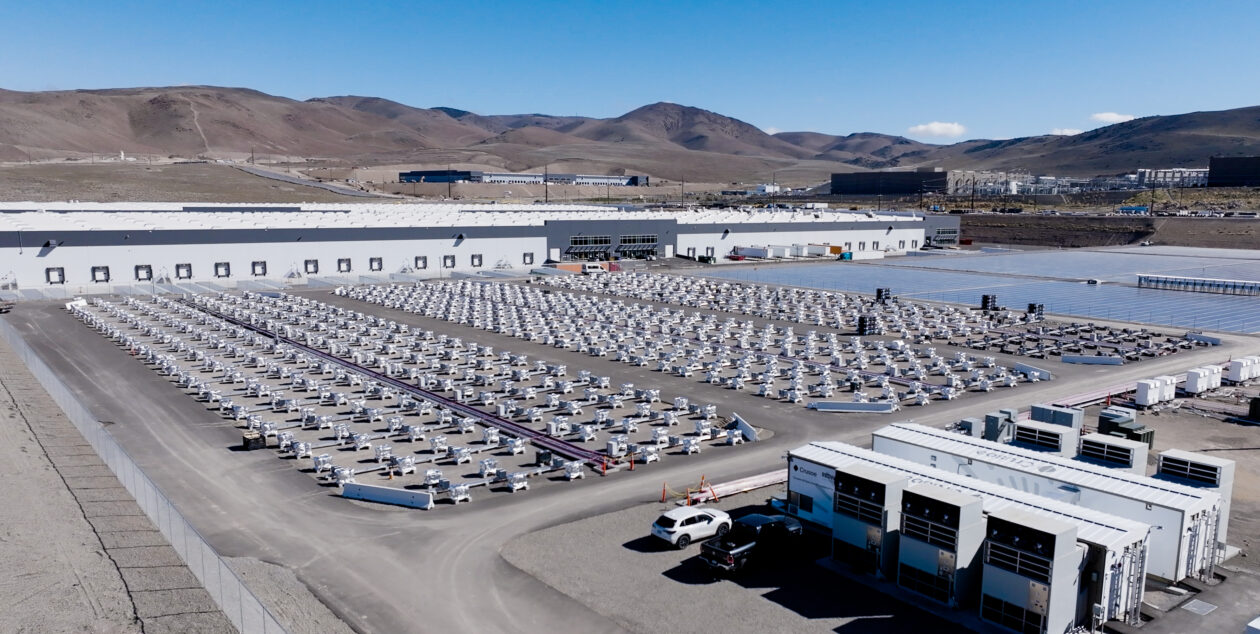
An aerial view of Orion, Helion Energy’s planned fusion plant being built in Malaga, Wash. (Helion Photo)
Helion Energy on Tuesday said that it added $35 million to a funding round initially announced in June. The Everett, Wash.-based fusion company originally shared news of a $465 million Series G round.
“After initially closing the round earlier this summer, we are excited to bring on several new investors and to have a round that includes crossover, pension, and sovereign wealth investors,” said David Kirtley, Helion’s co-founder and CEO, in a post on LinkedIn. Kirtley said the investment now totals $500 million.
The company aims to be the first in the world to commercialize fusion, replicating the reactions that power the sun and stars to produce nearly limitless clean energy. It has raised more than $1.5 billion to date.
The company is racing to hit an ambitious timeline, having signed a deal with Microsoft three years ago to supply energy to a Central Washington data center by 2028. The company broke ground on the 50-megawatt plant, dubbed Orion, in July 2025.
But Helion’s timing for hitting that energy target remains uncertain. When it announced the agreement with Microsoft, the company stated that Orion was “expected to be online by 2028 and will target power generation of 50 MW or greater after a 1-year ramp up period.”
Axios recently reported that full capacity might not be hit until 2030, according to a Helion executive. The news site also cited two scientific publications by plasma physicists questioning the company’s ability to produce a sufficient amount of energy from its fusion devices to power the grid, though Helion has responded to concerns raised by both on its FAQ site.
That said, Helion is hustling to resolve technical challenges. GeekWire in May reported on Tiny Merge, a small-scale testbed device the company is building at its R&D facility to answer questions its larger, more expensive prototypes haven’t — questions that need answers before final power plant designs are locked in.
Kirtley, however, remains bullish on the company’s trajectory and the vote of support from investors.
“Technical milestones remain the most important to me and the company,” he said, “but this new funding demonstrates the growing demand for, and confidence in, fusion energy and Helion’s ability to deliver fusion energy to the grid.”
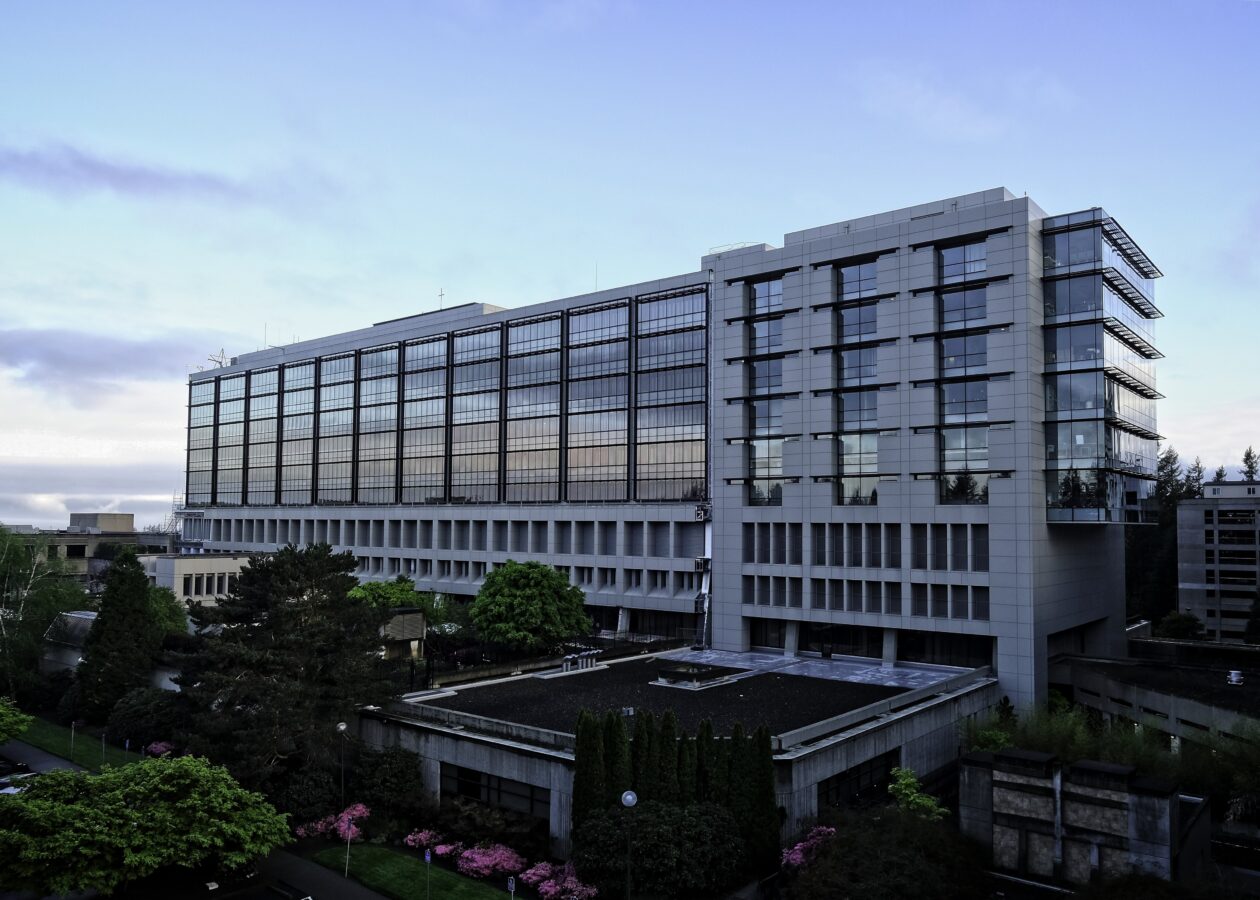
Oregon’s first hospital focused on women’s health will be built on the campus of Providence St. Vincent Medical Center in Portland. (Providence Illustration)
Providence will receive $1.1 billion — one of the largest gifts ever pledged to a U.S. healthcare institution — from Nike co-founder Phil Knight and his wife, Penny. The donation will allow the nonprofit health network to build Oregon’s first hospital focused on women’s health, increase support for cardiovascular services and improve patient care.
“Penny and I have always believed that real breakthroughs come from people willing to take on the toughest challenges,” Phil Knight said in a statement. “Providence has shown that kind of ambition in cardiovascular care, and we see the same opportunity to do something truly distinctive for women’s health.”
The new women’s hospital will be located on the campus of the medical center and provide care in specialties including gynecology, pregnancy, labor and delivery, menopause and cardiovascular care. Providence leaders note that many pregnant patients are also managing hypertension, diabetes, behavioral health and substance abuse, requiring more specialized services.
Providence St. Vincent Medical Center in Portland, Ore. (Providence Photo)
The Knights have previously donated $200 million over the course of 10 years to Providence Heart Institute, which sees nearly 63,000 patients each year across the Pacific Northwest, up from 40,000 a decade ago. Cardiovascular disease is the leading cause of death and hospitalization in the U.S.
The added support for the institute will help pay for diagnostic cardiac imaging, additional clinical trials, and the recruitment of leading doctors.
Knight, 88, co-founded Nike with Bill Bowerman in Eugene, Ore., in 1964. The business was originally called Blue Ribbon Sports before rebranding seven years later. Knight is currently worth an estimated $25.4 billion, according to Forbes.
“The Knights’ extraordinary gift is a generational investment, leading to bold and innovative ideas that will shape healthcare in Oregon for decades to come,” said Jennifer Burrows, chief executive of Providence Oregon.
— Silvia Candianihas been named corporate vice president of Worldwide Telco & Media within the Microsoft Frontier Company, a $2.5 billion initiative launched by the tech giant in July to embed engineers inside customers to build and run AI systems. In her new role, Candiani will lead Microsoft Frontier Company’s work with some of the largest telecommunications operators and media conglomerates.
“The momentum across our industry is extraordinary, and I believe we are only at the beginning of what AI can make possible,” said Candiani, who is based in Milan.
Before joining Microsoft in 2010 as a general manager, Candiani was a marketing director for Vodafone in Italy for more than a decade.
Kevin Frey. (LinkedIn Photo)
— Kevin Frey has been appointed vice president and chief impact officer of Microsoft Elevate, the company’s philanthropic effort providing technology support, donations, sales and AI training for educational organizations and nonprofits. Frey joined from UNICEF, where he was the first CEO of Generation Unlimited, the organization’s skills and employment initiative.
Frey said he was joining Microsoft because it’s “one of the only organizations in the world with the scale, scope and influence to bend the arc of the AI-powered future we are entering.”
“I will be spending my time and energy trying to ensure that the benefits of AI are shared broadly and safely across society — by every teacher, every student and every worker — regardless of their postal code,” he added.
— And while we’re on Microsoft, Anne Linge has been promoted to director of communications for commercial and consumer experiences after nearly 10 years with the company. She previously worked in communications at Weber Shandwick and Waggener Edstrom Worldwide, which has since rebranded as We.
Alexis Bateman. (LinkedIn Photo)
— Alexis Bateman has been promoted to director of global sustainability at Amazon Web Services after more than five years with the company. She was director of the MIT Center for Transportation & Logistics for 14 years before coming to Amazon.
Her work with AWS has given her the chance to help “shape sustainability at enormous scale,” Bateman said. “AI and cloud are transforming technology and society at an unprecedented pace, creating both enormous challenges and incredible opportunities for sustainability.”
Lynn Girotto. (LinkedIn Photo)
— Gradial has appointed Lynn Girottoas chief marketing officer. In June, the Seattle startup announced $65 million in new funding for its agentic AI platform that automates enterprise marketing. The company is No. 127 on the GeekWire 200, a ranked index of the Pacific Northwest’s top startups.
Girotto joins from Qualtrics, where she was CMO for two years. She has previously led marketing teams at companies including Vimeo, Tableau and Getty Images, and was a senior director at Microsoft for nine years earlier in her career.
“The best marketers I know want to build ideas and customer relationships, not manage processes,” Girotto said. “Gradial is the first company I’ve seen that’s built to give them that time back.”
Kam Ghaffarian. (LinkedIn Photo)
— A Seattle-area nonprofit group known as the Fermi Explorer Mission announced that Kam Ghaffarian has joined as co-founder. Earlier this month, the organization shared its plans to send a spacecraft on an 80,000-year trip to the nearest alien star system, Alpha Centauri.
Ghaffarian is a billionaire who helped launch companies including X-energy, Axiom and Intuitive Machines. “By committing to launching a spacecraft to Alpha Centauri by 2029, we are not just pushing the boundaries of current technology; we are inspiring a new generation to look up and dream of interstellar exploration,” Ghaffarian said.
Philip Johnston, co-founder and CEO of the Fermi Explorer Mission, also leads Redmond, Wash.-based Starcloud, a startup aiming to launch up to 88,000 satellites to serve as AI data centers.
Rachel Cougan. (LinkedIn Photo)
— Yoodli, the Seattle-based AI roleplay platform for enterprise training, has named Rachel Couganvice president of human resources. Cougan previously served as a fractional HR leader through her consultancy, Possible HR. Before that, she was VP of people for Logixboard and Hiya, and also served as VP of talent for Textio.
Yoodli, which launched in 2021, has grown to more than 100 employees. The company is No. 17 on the GeekWire 200.
Daniel Finney. (LinkedIn Photo)
— Kestra Medical Technologies has promoted Daniel Finney to vice president of research and development. The Kirkland, Wash.-based company sells cardiac monitoring and therapeutic devices. It raised $202 million in its IPO in March 2025 and was nominated for Deal of the Year at this year’s GeekWire Awards.
Finney has been with Kestra since 2019. CEO Brian Webster praised his role in developing the company’s FDA-approved monitoring device, adding that his “technical depth, product experience, and demonstrated leadership positions him to guide our next phase of innovation.”
Finney succeeds Phillip Foshee, Jr., who recently retired after leading Kestra’s R&D organization for nearly a decade.
— PATH has named Dr. Jeremy Farrar chief of its Asia, Middle East and Europe regional division. Farrar, a globally recognized leader in public health and clinical medicine, will join PATH effective Oct. 1 and be based in Geneva. His past roles include assistant director-general at the World Health Organization and director of the Wellcome Trust.
PATH CEO Nikolaj Gilbert praised the appointment, and noted that Farrar “possesses deep knowledge of the realities that prevent access, the people that make health care possible, and the need for PATH’s mission of ensuring breakthrough innovations reach all who need them.”
Emily Levesque. (AAS Photo)
— American Astronomical Society (AAS) announced that University of Washington scientist Emily Levesque is the next editor in chief of the AAS journals. She will succeed Ethan Vishniac, who is stepping down from the role at the end of summer 2027 after 12 years.
“In the writing and publishing landscape we’re facing today, sharing information has never been easier, but trusting information has never been harder — which makes the AAS journals’ combination of rigorous peer review and accessible science more valuable than ever,” Levesque said.
Levesque has been an assistant astronomy professor at the UW for 11 years. She leads the massive stars research group, which studies the evolution and death of the largest and “most extreme” stars in the universe.
— The Seattle Metropolitan Chamber has added eight members to its board of trustees:
Deniz Anders, Nordstrom’s executive vice president and chief marketing officer
Reuven Carlyle, founder of Earth Finance and former state senator
Carl Gipson, vice president of government and community affairs for Comcast
Trevor Gooby, executive vice president and chief operating officer for the Seattle Mariners
Daniel Huber, BNBuilders’ vice president of operations for the Northwest and Colorado
Helion Energy’s new Seattle office. (Helion Photo)
Helion Energy, in its hard-charging pursuit of fusion energy, has opened an office in downtown Seattle as its headcount swells to 800 employees.
The company already occupies five buildings in Everett, Wash., where it’s headquartered, plus operations in the central Washington town of Malaga, where Helion is building what it hopes could be the world’s first commercial fusion plant.
“Who would have thought it when we founded the company in 2013 with only five of us,” said CEO and co-founder David Kirtley in a GeekWire interview, marveling at the growth.
In June, Helion announced $465 million in new funding, bringing its total capital raised to more than $1.5 billion and its valuation to 10 times that figure.
The company is racing to master fusion, which produces energy by smashing together light atoms — essentially replicating the process that powers the sun and stars. No one has been able to create a commercially viable amount of energy from fusion here on Earth, though notable progress is being made by research institutions and private companies.
The planet is increasingly hungry for abundant, clean power as data centers gobble energy and transportation, buildings and industrial processes shift toward electrification.
That has helped spike interest in fusion, and the sector globally has raised $14.24 billion since 2021, according to the Fusion Industry Association, with multiple companies predicting they’ll succeed in producing sufficient energy in the next five to 10 years. Helion has one of the most ambitious targets, aiming to reach that mark in two years.
The company is No. 1 on the GeekWire 200, a ranked index of the Pacific Northwest’s top startups.
Inside Helion’s new Seattle offices. (Helion Photo)
The company’s Seattle office is 15,631 square feet in the 8th + Olive building, in a space formerly occupied by Airbnb. The move comes as Seattle pushes to bring businesses back into its core: The city’s urban neighborhoods had an office vacancy rate of 28.2% in the second quarter of this year, with downtown alone at 34.9%, according to Kidder Mathews research.
Kirtley said they’re hiring and the goal is to have 100 employees downtown working on business and operations, recruiting and finance.
Back in Everett, teams are running tests on the company’s prototype fusion device, named Polaris, and working to get a smaller fusion machine called Tiny Merge online. The startup is also ramping up a facility for assembly work where employees and automated systems will manufacture energy-carrying capacitors, semiconductor modules and other hardware. The facility is currently producing initial test pieces.
The Malaga site will be home to the Orion facility and will include three buildings: an office building, already complete and in use; a building for final assembly of components shipped from Everett, also finished; and the generator building, which will house the 50-megawatt Orion generator and associated power electronics. So far the beams are up for the last building, with the goal of getting it “weather tight” before winter, Kirtley said.
Helion is charging ahead with Orion and building its manufacturing capabilities while continuing to tackle the physics challenges of producing energy from fusion.
The plant must be operational in two years to meet Helion’s contract with Microsoft to provide energy for a nearby data center.
— Telecom giant T-Mobile announced that Jessica Uhl will join as chief financial officer-designate later this month, and succeed Peter Osvaldik as CFO in February. Uhl served as CFO of Shell and worked for the global oil and energy giant for more than 17 years. She joins T-Mobile from GE Vernova, where she was president.
“I am thrilled to welcome Jessica to T-Mobile,” Srini Gopalan, president and CEO of T-Mobile said in a statement. “She brings deep financial and strategic acumen, capital allocation expertise and an innovative growth mindset that is a perfect fit for T-Mobile’s next era.”
Osvaldik will transition to strategic advisor and retire from T-Mobile in July. He joined the company in 2016 and became chief financial officer in 2020. Osvaldik’s tenure “has been defined by disciplined financial stewardship, consistent financial outperformance, and an unwavering commitment to T-Mobile’s mission,” the company said.
The move marks the latest leadership shakeup at the Bellevue, Wash.-based company. Mike Katz, T-Mobile’s chief business and product officer, announced his departure in July, and Chris Sambar was named chief enterprise officer. T-Mobile has cut 470 jobs in its home state this year and closed numerous retail locations.
Brent Colburn. (LinkedIn Photo)
— Brent Colburn, Microsoft‘s vice president of global public affairs, is resigning after three years, effective mid-October.
“Stepping away from Microsoft is not a decision that I made lightly, but ultimately it is the right one for me and my family,” said Colburn, who has been commuting weekly between his home in Oakland, Calif., and Microsoft’s Redmond, Wash., headquarters.
Colburn’s career has spanned leadership roles in government, academia and philanthropy. That includes serving as principal advisor to the secretary of defense for communications and chief of staff to then-Secretary Shaun Donovan. More recent roles include communications vice president for the University of California in Oakland, Princeton University and the Chan Zuckerberg Initiative.
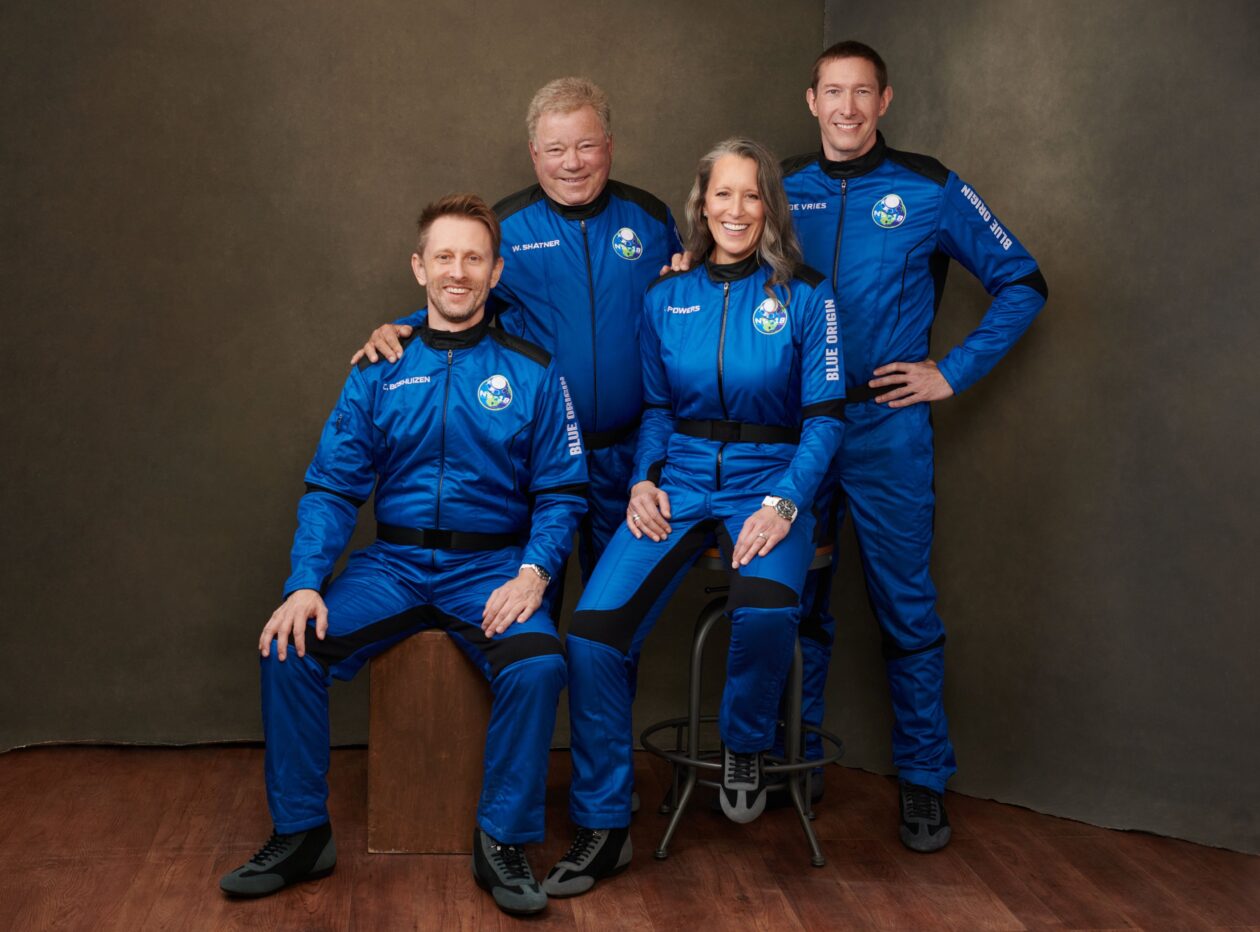
William Shatner stands alongside crewmates Chris Boshuizen (left), Audrey Powers and Glen de Vries. (Blue Origin Photo)
— After nearly 13 years, Audrey Powers has left Blue Origin, the aerospace company founded by Jeff Bezos that develops reusable rockets, spacecraft and rocket engines. She was on Blue Origin’s October 2021 spaceflight that also carried “Star Trek” star William Shatner and two others.
“Hopefully, I’ve helped change peoples’ impressions of rockets (they land, too), astronauts (they are everyone), and our Earth,” Powers said, adding that she was sad to leave, but grateful that she took a chance on “a little startup no one had heard of.”
Powers held the title of deputy and vice president of the New Shepard Business Unit, which is the program that carries people and research payloads into suborbital space. She is an attorney who has previously worked at NASA as a flight controller and as a senior systems engineer at Lockheed Martin.
Michael Levi. (LinkedIn Photo)
— Michael Levi has joined AZX as chief commercial officer of the Bellevue-based startup, which works with utilities and other industries to build in-house AI technologies supporting their missions.
Levi is based in San Francisco and was previously vice president of marketing and growth for KloudGin, where he helped reposition the company’s field service software into an AI-native platform for utilities and the public sector. He earlier founded L1CG, a go-to-market advisory, and has held leadership roles in energy, renewables, supply chain and fintech.
Jason Alafgani. (LinkedIn Photo)
— Jason Alafgani was named head of marketing for Caddi, a Seattle startup that launched out of AI2 Incubator and is automating basic business operations with generative AI. Alafgani is the co-founder of startups including the podcast company Jellypod and worked as marketing leader for Appwrite, Dodgeball, Mode and others.
— Dr. Amir Iravani has joined Los Angeles-based UCLA Health as director of the theranostics program, which focuses on treating cancer using targeted radiation therapy. Iravani previously served as theranostics clinical director at Fred Hutchinson Cancer Center in Seattle and was an associate professor of radiology at the University of Washington School of Medicine.
Kelly Lyons. (LinkedIn Photo)
— Portland Metro Region Innovation Hub has hired Kelly Lyonsas director of the organization, which provides networking, coaching, funding and other support to entrepreneurs. Lyons is the founder of two startups and has served in leadership at Core Education, Umpqua Bank and Development House, a social services nonprofit.
— DigiStor, a Vancouver, Wash.-based provider of secure data-at-rest protection solutions, appointed Michael Callahan to its board of directors. Callahan co-founded Awake Security and PolyServe, which was acquired by HP.
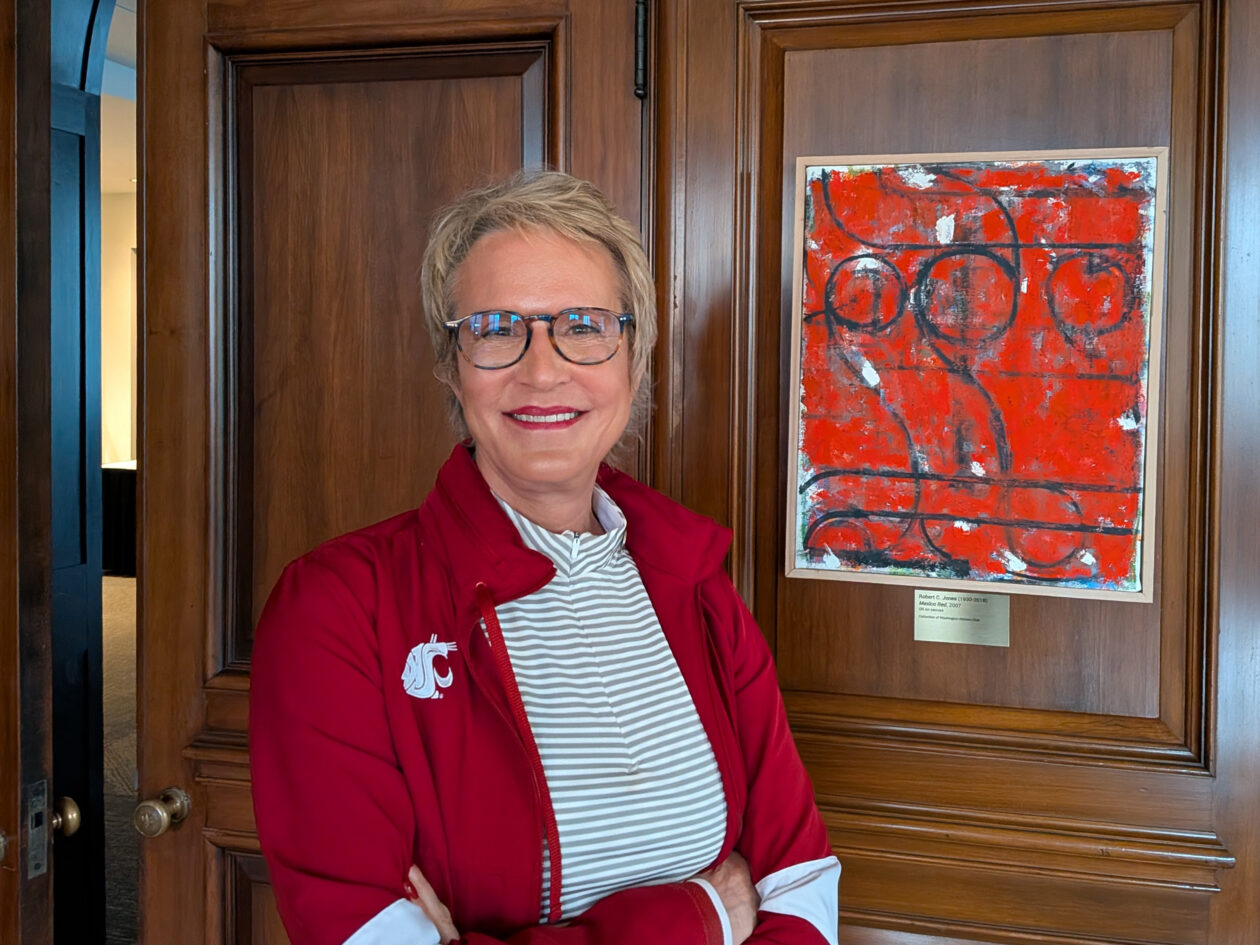
Betsy Cantwell, president of Washington State University, poses alongside an appropriately colored painting at Seattle’s Washington Athletic Club. (GeekWire Photo / Lisa Stiffler)
She spent more than two decades in national laboratories working on space exploration, energy and defense, followed by top leadership roles at state universities in Utah and Arizona driving significant growth in research funding. The longtime sci-fi fan embraces “future-casting” — a systems engineering approach to imagine and prepare for technological shifts a decade out.
But if that leads you to predict that the head of Washington State University is blanketing her campuses with artificial intelligence, you would be wrong.
The essential role of a university is to foster a sense of wonder in students, and that is something AI will never do, Cantwell said in a GeekWire interview on Friday.
That wonder, she said, “is innately human, and when we bring that into everything you do in a university, you create humans that will actually be much better at ideating, managing and creating value out of AI.”
In line with that philosophy, WSU faculty decide individually how to incorporate AI into their research and classrooms, with students actively involved in shaping its use. The technology serves as a tool to reach a goal, but is not the goal itself.
As the head of WSU — which serves 25,400 undergraduate and graduate students across its main campus in Pullman, four branch campuses, and an online program — Cantwell uses AI as a partner. On a $1.3 billion annual budget that also supports 39 county extension offices and research centers, she looks for practical AI applications to streamline and better inform her work.
Drawing on her national lab experience, Cantwell believes AI can bridge the gap between basic research and commercial production. Instead of universities simply “throwing papers over the transom,” she said AI-driven modeling helps build proofs-of-concept and testbeds that help attract private-sector investments.
This approach is at the foundation of WSU’s planned $50 million, federally funded research center using AI to support salmon recovery and sustainable aquaculture, as well as AI-enhanced micro-climate tools from the university to aid Washington’s farmers.
One area where Cantwell is personally using AI is in navigating the turbulent business of college athletics.
In 2023 — two years before Cantwell joined WSU — the University of Washington pulled out of the Pac-12, triggering an implosion of the century-old conference that left only WSU and Oregon State as members.
Cantwell believes strongly in the value of WSU’s athletics program, calling it a vital convener that brings alumni and fans together across political and social spectrums, while also providing an academic doorway for student-athletes who might not otherwise pursue higher education.
To navigate the financial fallout, she built her own custom AI agent to run tabletop scenarios and model financial paths for WSU’s sports enterprise. She treats the exercise much like national security strategic planning.
The AI agent allows her to analyze variables including coaching salaries, stadium operations, student-athlete employment litigation, federal regulatory proposals, and revenues generated through Pac-12 Enterprises, the conference’s business arm. Cantwell sees the grit of WSU rebuilding after the Pac-12 split as a compelling story of innovation and entrepreneurship, one that new digital media channels can help broadcast.
Where Cantwell draws the line, however, is AI use in sports betting, which she views as a concerning manipulation of human behavior that threatens the integrity of college athletics.
GeekWire came prepared for our interview by asking different AI chatbots to predict the outcome of Sunday’s Apple Cup showdown between WSU and UW at Seattle’s Husky Stadium. Suffice to say, the AI says it doesn’t look good for the squad from the Palouse.
But before we could deliver that news, the top Cougar made it clear she wasn’t interested in hearing what Gemini, Claude or any other AI platform forecast for the game.
“The only reason why I would want to know the score in advance is if I was betting and I don’t do that,” Cantwell said. “Why do you need to know in advance?”
— Aneesh Raman has taken the role of chief economic opportunity officer at Microsoft. He previously held the same title at LinkedIn, a Microsoft subsidiary where he worked for five years.
The job is focused on “helping companies, including our own, build and deploy AI tools in ways that will unlock new levels of economic opportunity and human capability for workers and workforces alike,” Raman said.
Raman, who is based in San Francisco, began his career as a TV journalist and served as a speechwriter for President Obama and other political leaders. More recently he was an adviser to Gov. Gavin Newsom and led economic impact for Facebook.
Jenny Lay-Flurrie. (LinkedIn Photo)
— Jenny Lay-Flurrie was promoted to corporate vice president of Microsoft‘s Trusted Technology Group. In February, she had taken the role of vice president and head of Trusted Technology, which focuses on privacy, safety, regulatory compliance, responsible AI use and related topics.
Lay-Flurrie announced the change on LinkedIn, saying that she was “honoured, humbled and a little lost for words (yes,, it does occasionally happen ;)).”
The tech leader has been with Microsoft since 2005, and led the company’s efforts on accessibility and disability inclusion for more than a decade.
Brian Gill. (LinkedIn Photo)
— Brian Gillhas resigned as chief product and technology officer for DAT Freight & Analytics, a Beaverton, Ore.-based freight company. Gill was with DAT for more than three years and previously served as CPO for Nordstrom.
In a LinkedIn post, Gill did not give specifics on his next move but said he would be “rolling up my sleeves and building the many ideas that are suddenly so much easier to bring to life.”
Gill’s other past roles include executive positions at Hotwire and nearly a decade at Expedia. Last month DAT announced multiple promotions and hires to its leadership team.
Colin Newman. (LinkedIn Photo)
— Colin Newman has joined Zillow Group as head of public policy. He was previously director of U.S. public policy for Amazon, leading initiatives on employment, workforce transformation, AI, transportation and economic development. He first took a government affairs role with Amazon’s Audible business in 2015 and moved to Amazon five years ago.
“I look forward to leveraging my government, legal, and public policy experience to support our efforts to simplify and democratize the housing process for everyone,” Newman said. His background includes legal counsel for former New Jersey Gov. Chris Christie.
Lisa Finnegan. (LinkedIn Photo)
— Lisa Finnegan is returning to Microsoft as vice president and human resources business partner for the Europe, Middle East and Africa (EMEA) region. Finnegan, who is based in Dublin, was previously with LinkedIn for more than eight years, departing in March 2025. Her interim role was with Lumera HR Consulting.
“It’s a pretty incredible time to (re)join Microsoft and the opportunity to help shape the people and organisation agenda across EMEA at this critical moment is incredibly compelling,” she said.
James Lau. (LinkedIn Photo)
— James Lau, chief product officer at Hiya, announced this is his last week at the Seattle startup, which battles fraudulent calls and provides technology to protect voice identity. He’s been in the role for three years and previously worked at Microsoft over multiple stints.
Lau is launching a company called Entrovox, which he describes as an AI phone team that helps insurance agencies land new customers through state-of-the-art AI voice agents, branded caller ID and smart campaigns.
“There has never been a more exciting time for building, and I am deeply passionate about voice AI. Making AI sound genuinely human is a challenge I find irresistible,” Lau said.
Jason Wilbur. (LinkedIn Photo)
—Jason Wilbur has left Oracle to join OpenAI‘s Seattle office as a leader in cloud partnerships.
Wilbur was with Oracle over two stints spanning more than six years and leaves the role of senior director of product management. Past jobs include CEO at Aarno Labs, co-founder of Require Security, and senior product manager at Amazon.
— Julia Liuson was appointed to Elastic’s board of directors. Earlier this year, Liuson resigned from Microsoft after more than 34 years. She was most recently president of Microsoft’s Developer Division. San Francisco’s Elastic bills itself as the “search AI company.”
Dan Walter. (LinkedIn Photo)
— Dan Walter was promoted to vice president of fission technology for Everett, Wash.-based Zap Energy. Walter joined Zap earlier this year as the clean power startup announced it was expanding to pursue fission micro-reactors as well as fusion-based nuclear energy. Zap is No. 11 on the GeekWire 200, a ranked index of the Pacific Northwest’s top startups.
Walter was previously at TerraPower for nearly a decade, most recently in a director role for the nuclear power company.
Kelsey Wolf. (LinkedIn Photo)
— Kelsey Wolf has joined next-gen battery company Group14 Technologies as director of communications and marketing. Wolf was previously the communications lead for Rad Power Bikes, the Seattle-based e-bike startup that went bankrupt and was acquired this past spring. Group14 is No. 34 on the GeekWire 200.
“I’ve spent my career telling exciting stories about technology that changes how we work, how we find home, and how we move around the world. Up next, I will get to tell stories about the technology and materials powering our world,” she said.
New members of the Tin Can team, from left: Evan Jacobs, Quinn Hawkins and Masud Khan. (Tin Can Photos)
— Tin Can, a Seattle startup selling Wi-Fi-enabled landline phones for kids, announced three hires:
Evan Jacobs has joined as head of engineering, previously serving as a software development manager at Amazon Web Services. Jacobs is also a startup founder.
Quinn Hawkins was named head of communities, joining from First Street, where he was chief product officer. His background includes leadership at Redfin and Microsoft.
Masud Khan was named staff software engineer. Past employers include Apple, Databricks, Meta and Amazon.
Tin Can, which launched last year, is No. 153 on the GeekWire 200.
Alex Gamoran. (LinkedIn Photo)
— EchoMark, the Bellevue, Wash., startup using forensic watermarking to identify the source of information leaks, has named Alex Gamoran vice president of enterprise sales. Gamoran was previously at Smartsheet for nearly a decade, leaving as regional vice president of commercial sales for North America.
“It struck me that every security-conscious enterprise is going to need a solution to the types of information leaks that conventional security software is blind to — and that’s when I knew I wanted to be part of EchoMark,” Gamoran said via email.
Sara Dutta. (LinkedIn Photo)
— Sara Duttawas named director of AI innovation and partnerships for Seattle biopharmaceutical company Omeros. She previously founded the life sciences consultancy Ocilisni and was a director at Novo Nordisk, focused on external partnerships and emerging technologies.
Last year, Omeros struck a deal worth up to $2.1 billion with Novo Nordisk, giving the latter exclusive global rights to develop and commercialize a clinical-stage drug candidate that treats rare blood and kidney disorders. Omeros won Deal of the Year at this year’s GeekWire Awards.
Rebekah Bastian. (LinkedIn Photo)
— Rebekah Bastian announced that she is leaving mpathic as chief marketing officer. She joined the Bellevue, Wash., startup working to make AI safe in December. Bastian previously launched and was CEO of the life-and-career social platform OwnTrail. She was with Zillow Group for more than 14 years and also worked at GlowForge.
“I’m giving myself some intentional time to explore ideas and let them incubate before deciding where they lead,” she said. That could include new companies or initiatives within existing companies, and her areas of focus span “human agency, creative entrepreneurship, economic opportunity, and generally how humans find meaning and thrive in the age of AI.”
— Seattle-area wine recommendation startup Theodora has appointed Heather Stephens founding marketing lead. Stephens has worked for more than a decade in consumer and B2B marketing, demand generation, and go-to-market strategy development.
— Marc Brown, former global head of M&A and strategic investments at Microsoft and now managing director of venture capital coverage at JPMorgan, has joined the board of trustees of the Institute for Citizens & Scholars, an organization supporting civic engagement for young people.
— Adrienne Lopez, a Seattle-based marketing leader who has worked on initiatives with organizations including Meta, WhatsApp, the Gates Foundation and Microsoft, was named executive vice president of WH Inc.
— Washington Research Foundation announced its new cohort of venture analysts: Jessica Ayers, Ankit Azad, Nello Gu, Michael Malone and Elya Shamskhou. The program helps graduate students and postdoctoral fellows gain expertise in technology commercialization and entrepreneurship.
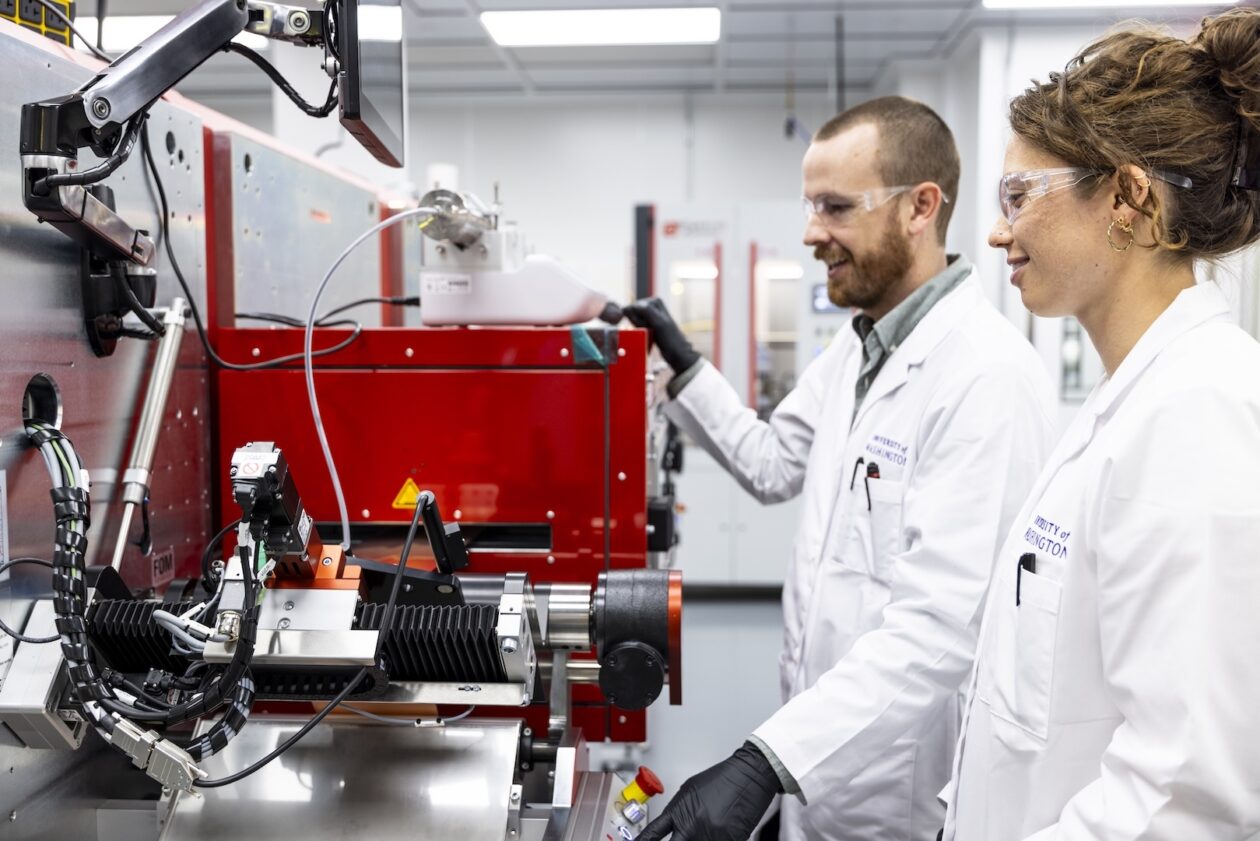
Staff in the Washington Clean Energy Testbeds use machinery in the expanded battery lab. (UW Photo)
The University of Washington on Thursday celebrated the opening of a public-access battery manufacturing lab that aims to propel energy innovation.
The new lab — the first of its kind on the West Coast — is housed within the UW’s Clean Energy Testbeds, a site that has helped launch multiple battery startups.
The expanded facility for researchers and entrepreneurs comes as battery demand surges, particularly for large deployments supporting solar energy and grid operations. Over the past three years, U.S. utility-scale battery storage capacity has grown at an average annual rate of about 70%, according to federal data. Other key applications include batteries for defense and transportation.
While China and other Asian nations overwhelmingly dominate the global supply of batteries, there is still room for U.S. companies to grow, particularly in developing new technologies, said Dan Schwartz, founding director of the Clean Energy Institute, which operates the Testbeds.
“We want to be part of the new chemistries that can serve new markets,” he said.
Those innovations include batteries using sodium or potassium ions, or replacing graphite with silicon-carbon materials in traditional lithium-ion batteries.
The new 1,600-square-foot lab was created by repurposing storage space inside the current 15,000-square-foot testbed facility, located east of the UW’s main Seattle campus. The $7.5 million capital project was completed in February and funded by the state’s Climate Commitment Act, which also supports additional facility staff.
The lab is focused on building pouch cells, a format that offers more flexibility than traditional cylindrical cells used in consumer goods. The metallic pouch, which resembles a Pop-Tart package, enables users to create and test both small-scale experimental cells and larger prototypes for wide-ranging applications.
The facility features a dry room equipped to mix electrode slurries, coat electrodes and assemble components inside plastic-lined aluminum pouches, alongside a room with tools to test battery performance. UW experts are on-hand to help.
Seattle startup Emerald Battery Labs produced its first pouch cells in the new facility. The company is developing sodium-ion batteries, which use cheaper raw materials, offer longer lifespans and pose fewer fire risks compared to lithium-ion alternatives.
“We wouldn’t have started this company in Seattle if not for the Testbeds,” said Kjell Schroder, co-founder and CTO of Emerald Battery Labs, in a statement. He added that the facility allows the startup to iterate and produce demo cells “for a range of potential applications without major capital expenditure.”
The UW announced plans for the lab in October 2024 with an expected summer 2025 launch. Permitting challenges and long lead times for high-demand tools delayed the opening until early 2026, Schwartz said.
The entire Clean Energy Testbeds was originally slated to relocate to a new building called Brightwork, but ground was never broken and the project was quietly scuttled.
Schwartz said the new lab is booked out for the coming months. Other companies using the space include a California startup called Project K Energy that’s pursuing potassium-ion batteries. The Testbeds also partners with academic institutions such as Big Bend Community College in Moses Lake, Wash., to offer battery fabrication workshops.
Schwartz sees potential for the facility to support specialized, high-value applications with Pacific Northwest ties, including aviation, data centers and electric semi-trucks.
When it comes to clean energy, “batteries are just winning,” Schwartz said. “And the question is, who’s going to win in all the sectors that batteries are transforming?”
NewDays founders Daniel Kelly (left) and Babak Parviz. (NewDays Photo)
NewDays, a Seattle startup using a generative AI therapy to treat people with mild dementia, has raised additional funding and closed its seed round with $16 million. The funding was led by Madrona and General Catalyst.
The company also announced on Wednesday that it has expanded its services to Nevada, joining Washington, California, Florida, Texas and New York. NewDays offers telehealth visits with human clinicians once or twice a month alongside unlimited conversations with an AI companion named Sunny.
“Our goal isn’t to add years — it’s to add quality to the years people have,” said CEO and co-founder Babak Parviz.
The startup is addressing a widespread issue: one in three Americans over 65 experiences cognitive decline, with 11% living with dementia and another 22% with mild cognitive impairment. Patients use Sunny to engage in conversational topics, memory exercises, and language or reasoning games designed to strengthen cognitive function.
While these cognitive strategies are clinically proven, they have historically lacked broad accessibility, Parviz said. NewDays aims to make treatment scalable using AI and demonstrate measurable improvement.
This past July at the annual Alzheimer’s Association International Conference, the company presented research showing that NewDays patients with dementia performed better on cognitive tests than expected historical decline curves — translating to roughly 18 months of preserved cognitive function. The study was limited to 24 patients, half of whom have dementia and the other half experiencing other cognitive impairment.
“Generative AI under the guidance of an expert human clinician is what finally lets us deliver a medically proven intervention at that scale. That’s the whole thesis of the company,” Parviz said via email.
To further validate its platform, NewDays is currently running a randomized controlled trial with Kaiser Permanente in California.
Users can try Sunny for free. If they’re interested in the full program, there is a free 20-minute assessment to evaluate suitability. NewDays is covered by traditional Medicare and working to secure in-network status with private insurers and Medicare Advantage plans. Participants in the program also have the option of paying $150 out-of-pocket for each clinical session.
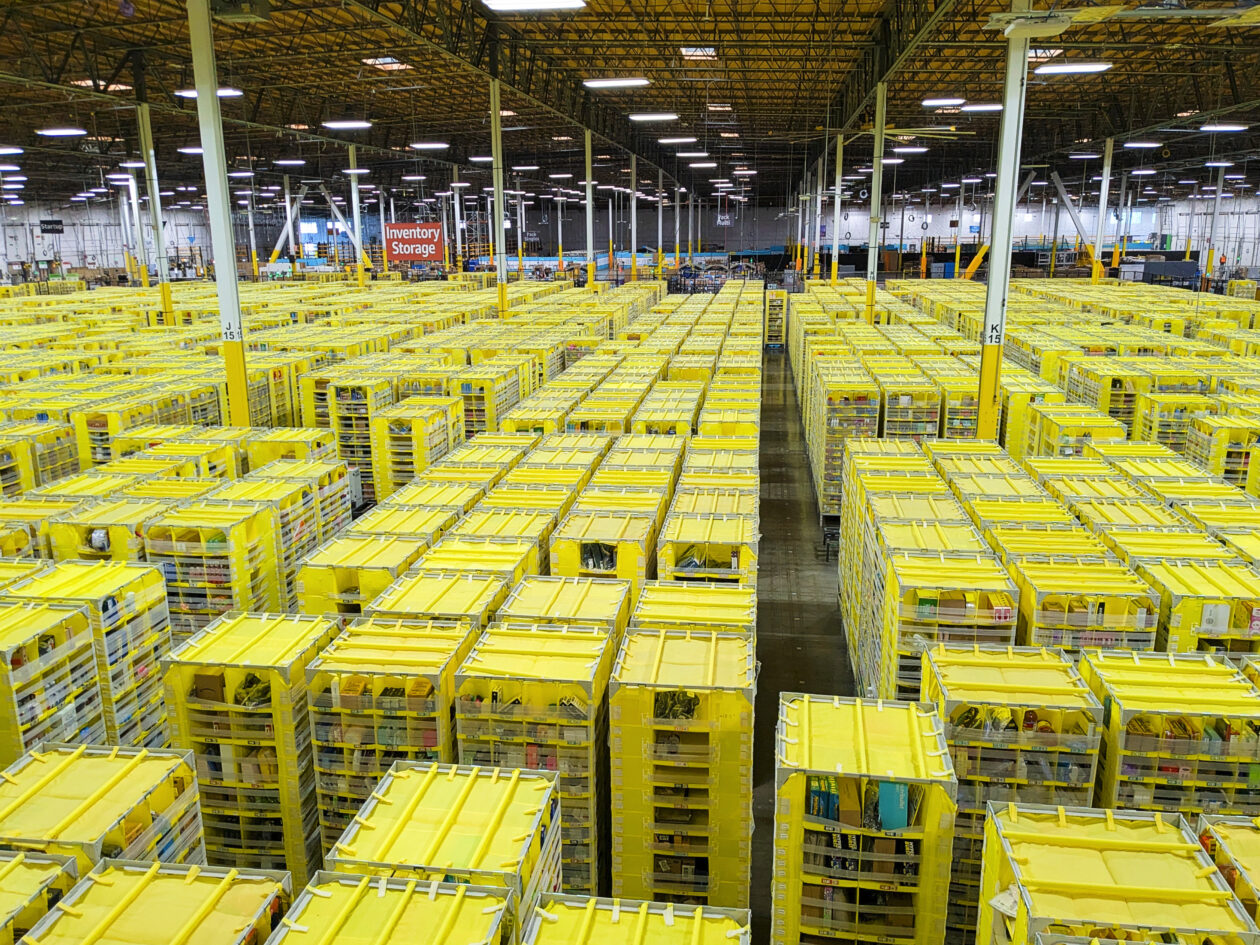
Movable shelving towers that hold items that are autonomously moved to Amazon employees who pack them for shipping. (GeekWire Photo / Lisa Stiffler)
Amazon is accused of artificially inflating the ad prices on its e-commerce site in a lawsuit filed Monday by Washington’s attorney general, the Federal Trade Commission (FTC) and 21 other states.
Amazon denies the allegations, saying its ad pricing has not harmed advertisers or shoppers and that the FTC’s claims mischaracterize how its system works.
Ads are sold on Amazon’s platform through so-called “second-price” auctions, in which businesses set a maximum price they’re willing to pay for an ad. If they’re the highest bidder, they pay only one cent more than the second-highest bid, and the auctions do not allow advertisers to see other bids.
Plaintiffs allege that beginning in late 2018, Amazon started adding surcharges to the prices, despite claims that it was still using a second-price system.
The lawsuit, filed in U.S. District Court for the Western District of Washington in Seattle, alleges the tech giant overcharged roughly 1.2 million ad customers by overriding and replacing auction results with “higher prices set by Amazon to increase its profits.” The amount collected through the allegedly deceptive pricing scheme totals $20 billion, according to the suit.
“Many small business owners in Washington rely on Amazon for their livelihoods, and our office is committed to making sure Amazon treats them fairly, transparently, and in accordance with the law,” said Nick Brown, Washington’s attorney general, in a statement.
Amazon posted an online response to the allegations. “The FTC’s claim fundamentally misunderstands how advertisers operate,” the company stated. “Advertisers adjust bids based on real-world performance, not descriptions of auction mechanics.”
The company said it prioritizes the relevance of an ad to the shoppers being targeted over bid price alone. As a result, Amazon said, 92% of winning ads in recent years were not given to the highest bidder, and ad performance has improved. Conversion rates — the percentage of shoppers who take a desired action after interacting with an ad — rose 24% from 2021 to 2025, according to Amazon.
The company also said that from 2019 to 2024, the average cost-per-click for sponsored product search ads was flat when adjusted for inflation.
Amazon acknowledged it has changed its ad pricing approach over time, saying that as the system prioritized ad relevance, winning bids increasingly fell below market value. As a result, the company now sets minimum prices, or “reserves,” for participating in an auction and for the minimum market value of the ad.
“Reserves like these,” it said, “are common across the industry.” The company said it does not charge advertisers more than their bid.
Amazon said it clearly explains its pricing process to advertisers. Plaintiffs dispute that, citing company employees who described creating fake auction participants.
The suit states that an Amazon senior scientist said that to increase auction prices, the company inserts “an invented auction participant representing how much Amazon thinks that particular ad slot is worth.”
The lawsuit is being led by the FTC and also includes the attorneys general of Alaska, Arizona, California, Colorado, Florida, Idaho, Illinois, Indiana, Iowa, Kentucky, Louisiana, Maryland, Nebraska, New Jersey, New York, North Carolina, Oklahoma, Pennsylvania, Rhode Island, South Carolina and Vermont.
The company is also in the FTC’s crosshairs in a separate, broader antitrust case accusing Amazon of maintaining an illegal monopoly in online retail, which is scheduled for trial next year.
Plaintiffs in the case announced Monday are asking the court to order Amazon to reform its practices, pay restitution and civil penalties for each violation, and cover attorneys’ fees.
Redfin, the Seattle-based real estate brokerage acquired last year by Rocket Companies, has named Alessio Sanfilippo as CEO.
Sanfilippo was previously Meta’s vice president of insights for Reality Labs, where he led teams working in data science, data engineering and user research to develop the company’s AI-enabled wearable glasses. He earlier served as a VP for Meta-owned WhatsApp overseeing data and user research.
Rocket, the nation’s largest mortgage lender, bought Redfin in a deal worth $1.75 billion. The Redfin brand kept its name and Seattle headquarters as a Rocket subsidiary. Redfin’s longtime CEO Glenn Kelmanstepped down in January to join the venture firm Greylock as an executive in residence.
Rocket CEO Varun Krishna had been running Redfin since the exit of Kelman, who led the company for more than 20 years and was “one of the industry’s most charismatic and memorable figures,” Real Estate News noted.
In a release announcing Sanfilippo’s hiring, Krishna said that the company’s new leader has spent his career making “complex products work better for enormous audiences.”
“I worked with Alessio at Intuit and saw firsthand how he combines deep analytical thinking with a real instinct for the consumer,” Krishna added. Sanfilippo’s past roles include leadership positions at SAP, goSeek and Hotwire.
Sanfilippo said he has used Redfin for multiple home purchases, adding that the platform “has always helped make an intimidating process easier to understand.”
The company last week joined Zillow in settling an antitrust case with the Federal Trade Commission and five states, just as a trial was set to begin.
The proposed settlement includes an agreement to undo part of a $100 million partnership that the government said effectively paid Redfin to stop competing in apartment rental advertising. The company will now be required to relaunch its apartment advertising operation within six months.
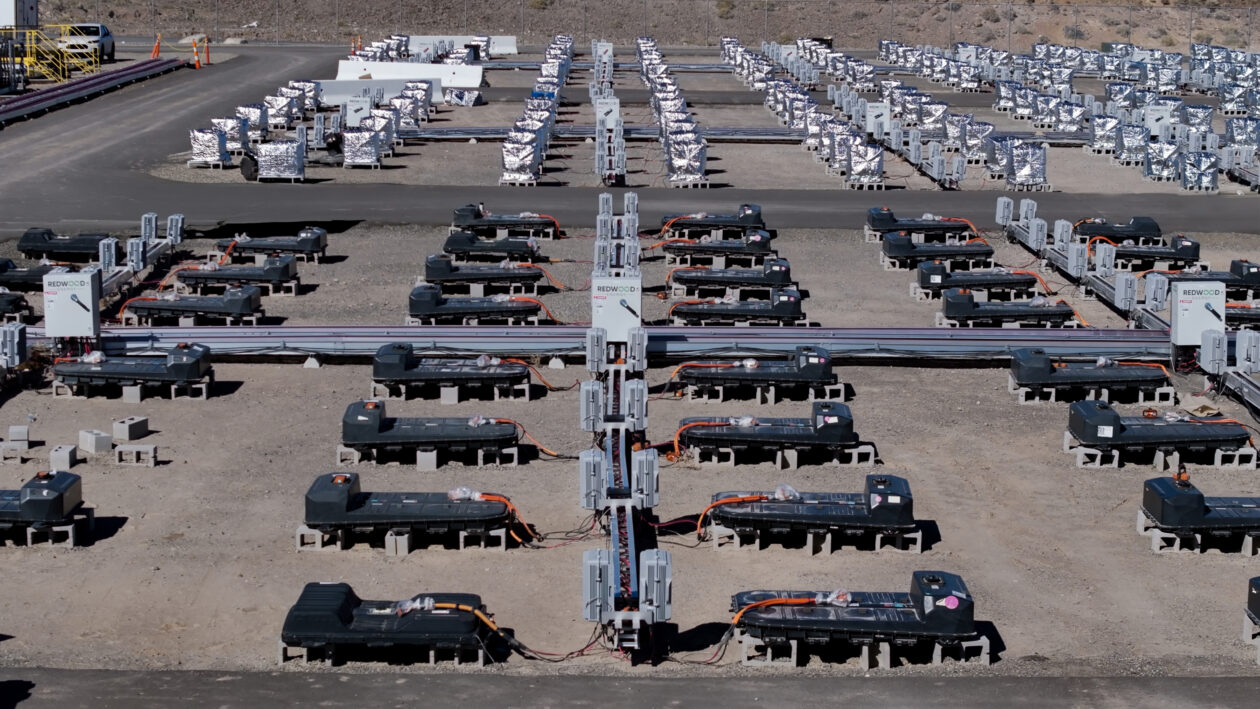
In the foreground are battery packs just as they would look installed in an EV, now repurposed by Redwood Materials and plugged into the microgrid serving Crusoe’s data center at Redwood’s campus in Nevada. (Redwood Photo)
A decade or two on the road will drain an EV battery’s range and hobble its acceleration. But while it peters out for daily commutes, that battery still has a lot of juice left.
A cohort of battery entrepreneurs is giving these units a second life, powering off-grid communities, industrial sites and energy-hungry data centers. Industry leaders — British Columbia’s Moment Energy and Redwood Materials in Nevada — are rapidly scaling up as the supply of aging batteries surges.
This summer, Moment moved into its 100,000-square-foot Megafactory 1 near Vancouver, converting a shell into its new HQ and manufacturing space in six weeks. It’s also building a Texas Gigafactory expected to open in January.
Redwood is likewise ramping up after unveiling the world’s largest used-EV battery system in June 2025: A 63-megawatt-hour solar and battery installation powering a Nevada data center run by AI infrastructure company Crusoe.
Absent reuse, these batteries end up in landfills or recycling shredders.
“Why recycle this battery prematurely when there’s over 95% life left?” asked Eddy Chiang, CEO and co-founder of Moment. When the batteries get recycled, some companies send the material to China for refinement, exporting valuable raw materials.
The market’s potential is massive. Chiang estimates that the used batteries available today could match Denver’s electricity use 20 times over — and 90 times over in four years.
The ‘Christmas light’ problem
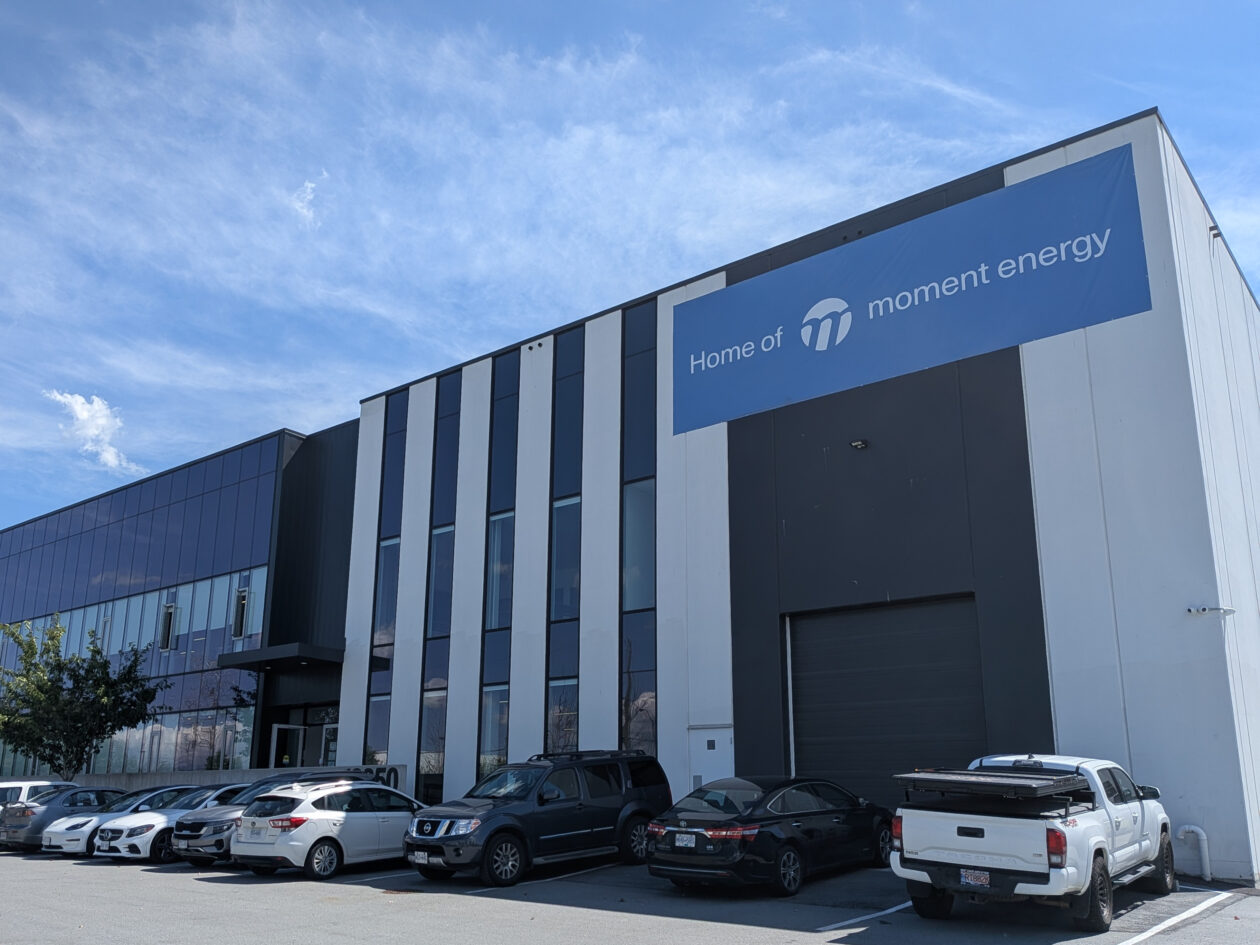
Moment Energy moved into its new 100,000 square foot MegaFactory 1 in Surrey, B.C., which will allow it to increase manufacturing of its repurposed EV battery storage systems. (GeekWire Photo / Lisa Stiffler)
So why pull an EV battery that still has 80% or more of its life left? Think Christmas lights, says Chiang.
Particularly with lights sold in the past, “if one light bulb burnt out, the whole string burns out,” he said. “And that’s what’s happening in the battery pack. The actual failure mode for EVs is actually due to a single cell failure, like that light bulb.”
EV battery packs contain hundreds or thousands of cells that are grouped into modules, which are housed in large metal shells affixed under the vehicle’s floorboard. The cells can be similar to the AA batteries in consumer electronics, while others are larger blocks or pouches.
When Moment receives used batteries, it first runs diagnostics to test their performance. Then it breaks down the packs into modules, and racks them in cooled shipping containers. Moment uses proprietary software to redirect energy away from weak cells to healthy ones to extend battery life.
The company’s largest storage system is called Luna, delivering up to 1 megawatt hour of energy, which is enough electricity to power roughly 49 Seattle households for 24 hours. It’s preparing to launch a new model, but keeping the details under wraps.
Moment customers range from God’s Pocket Resort, an eco-lodge on a tiny Canadian island where its system slashed the use of diesel generators, to Vancouver International Airport, which avoided up to $20 million in grid upgrades to power fast chargers for its EV fleet, Chiang said. “Instead, they bought a couple of our batteries.”
From recycling to reusing
The rows of silver-wrapped cubes contain repurposed EV battery packs providing power to a Crusoe data center, which is in the bottom right of the photo, paired with solar panels to the right that are part of the microgrid. (Redwood Photo)
Redwood Materials began nearly a decade ago as a battery recycler led by former Tesla executives. But in recent years, they recognized a missed opportunity.
“We had a group of people standing around watching our recycling operation, looking at these giant battery packs that we’re going to so much effort to disassemble, and just wondering, ‘Can we do more with these before we shred them?'” said Colin Campbell, Redwood’s chief technology officer.
Now 95% of the EV batteries Redwood receives are reused rather than recycled. And despite its Tesla roots, the startup accepts batteries from any automaker and has created a “universal translator” that manages battery packs with different voltages, power and chemistry.
Campbell touts the conversion of the EV devices to stationary storage as straightforward.
In its simplest terms, Redwood’s energy storage sites are “an electric vehicle parking lot with the wheels removed,” he said. “So it’s just literally the battery that was in the car. There’s lots of them arranged in a grid together and plugged in.”
That plug-and-play approach solved major headaches for Crusoe. By pairing repurposed EV batteries with solar power for its new AI data center in Nevada, Crusoe bypassed multi-year grid-connection delays, saved money and avoided emissions from diesel generators.
Scott Williams, vice president of energy at Crusoe, said the solution has worked well for his company, which builds data centers and offers its own AI cloud services.
“We’ve signaled to Redwood that we’re going to grow with them,” Williams said, including “multiple gigawatt hours paired with our modular units, which is super exciting.”
Industry headwinds
Despite the momentum, the sector faces headwinds. Communities have resisted large battery projects due to fire concerns, sparked by high-profile incidents like California’s Moss Landing fire.
The companies emphasize that EV batteries are built to survive high-speed crashes, making them inherently safer than standard stationary battery storage. The Moss Landing fire involved older, non-EV batteries in a very different setup than the startups are using. Additionally, Moment’s systems hold extensive UL safety certifications and Redwood has passed a UL fire-safety test.
Another industry hurdle is competition. Overbuilt recycling capacity — plus U.S. and European mandates requiring recycled content in new batteries — creates competition for used EV packs.
Yet from a climate perspective, repurposing is vital. Batteries are almost always “the most carbon-intensive component” in any electronic device, said Grayson Shor, executive director of the Pacific Northwest Battery Collaborative and co-founder of the startup Buckstop.
Repurposed EV systems can extend that initial carbon investment by providing clean power for 20 to 30 years and meet urgent energy demand.
“Everybody’s like, ‘Where are we going to get electricity?'” Campbell says. “And we have a really excellent option already here.”
Matt Allen, chief client officer at McKinstry. (McKinstry Photo)
Matt Allen wasn’t sure he wanted to pursue a career at McKinstry, the Seattle-based company his grandfather co-founded in 1960. The business started with plumbing and piping, evolving into a construction and energy services firm with national reach.
But after joining in 2012, Allen began appreciating the impact McKinstry has helping customers find affordable, planet-friendly solutions for their operations.
It could be as simple as replacing an old, natural gas boiler with a high-efficiency heat pump, Allen said, “but you feel like you’re part of that customer’s journey, and our societal journey, to get to a carbon-free environment.”
Now serving as McKinstry’s chief client officer, Allen shared his thoughts with GeekWire about sustainability. His quotes have been edited for clarity and length.
What’s your biggest worry when it comes to solving climate change?
With all the expansion in energy consumption and the race for compute, I worry about maintaining our progress around decarbonization. And having a young son, I do worry about rising temperatures and what the world is going to look like for young people. However, I am encouraged to see a continued emphasis in decarbonization action across industries. On the data center side, the hyperscalers that we work with are evolving their designs to focus on sustainability as much as possible.
What gives you hope for the planet?
Human ingenuity has been able to innovate our way through challenging spots. Western Washington is a big hotbed for clean nuclear solutions, deep geothermal, and some of these new, emerging clean energy generation technologies. When enough brain power is focused on those pieces, combined with capital infusion, progress is made. I think there is a lot of motivation to increase clean energy generation through innovative solutions. That gives me hope.
If you could invent one sustainabilitysolution overnight, what would it be?
Clean nuclear fusion. If you could accelerate Helion, Zap or Avalanche, that would be great. Or deep geothermal — Fervo Energy, for example, is developing a commercial project down in Utah. If we could snap our fingers and get some of those technologies to market, you could rapidly accelerate people’s willingness to electrify systems and connect to a clean grid. A lot of this comes back to having a clean grid, so when we’re doing electrification projects at a building level, the building owners can have confidence in having energy availability to reduce their carbon footprint.
What’s an underrated solution that deserves more attention?
Operations — that’s a big focus for us, finding optimized ways to operate buildings and turn down systems when appropriate. We joke that everyone talks about first cost when they’re building or doing a retrofit, but they don’t talk about the ongoing operation and maintenance costs. If we can find more efficient ways to operate buildings, that reduces strain on the grid and reduces overall energy consumption while providing real savings for our clients.
What’s one metric you watch obsessively?
We rigorously track greenhouse gas emissions. Our baseline started in 2019, around the time we signed the Amazon Climate Pledge, which has a net zero target of 2040. We hope to hit net zero sooner. We’re also tracking a couple of different measures. One is GHG emissions on a per-revenue basis. So, as we’re growing our revenue, are we still taking a bite out of emissions? We also track it on a per-FTE-employee basis. Those two measures hold us accountable as an institution to make sure we’re not taking our eye off the ball moving toward net zero.
The scope of the climate challenge is daunting —how do you approach this work?
For the work we do for customers, or even the work we do internally to reduce our own carbon footprint in our business operations, you just take it quarter by quarter, project by project — focus on doing a good job for your customers, bring things in on time and on budget, and help strategize with them on the most cost-effective ways to do things.
We do the same thing internally, creating a glide pattern. There is no magic bullet, so you take it one piece at a time. A good example for us is our biggest carbon emitter — our vehicle fleet. We have 600 service vans and another 300 utility trucks out on the road, and we track our progress toward electrifying that fleet. We’re 10 or 15% of the way through, and every time a vehicle needs to be replaced, we replace it with an electric one.
What impact do you hope your work has in 20 years?
I just hope that there isn’t an existential climate crisis, that we’ve taken collective action — whether it’s the Paris Climate Accord or some other macro commitment — and come together as a society to ensure we’ve left the campsite in a better place than we found it and that our world remains a habitable, thriving, healthy environment for the next generation to live in.
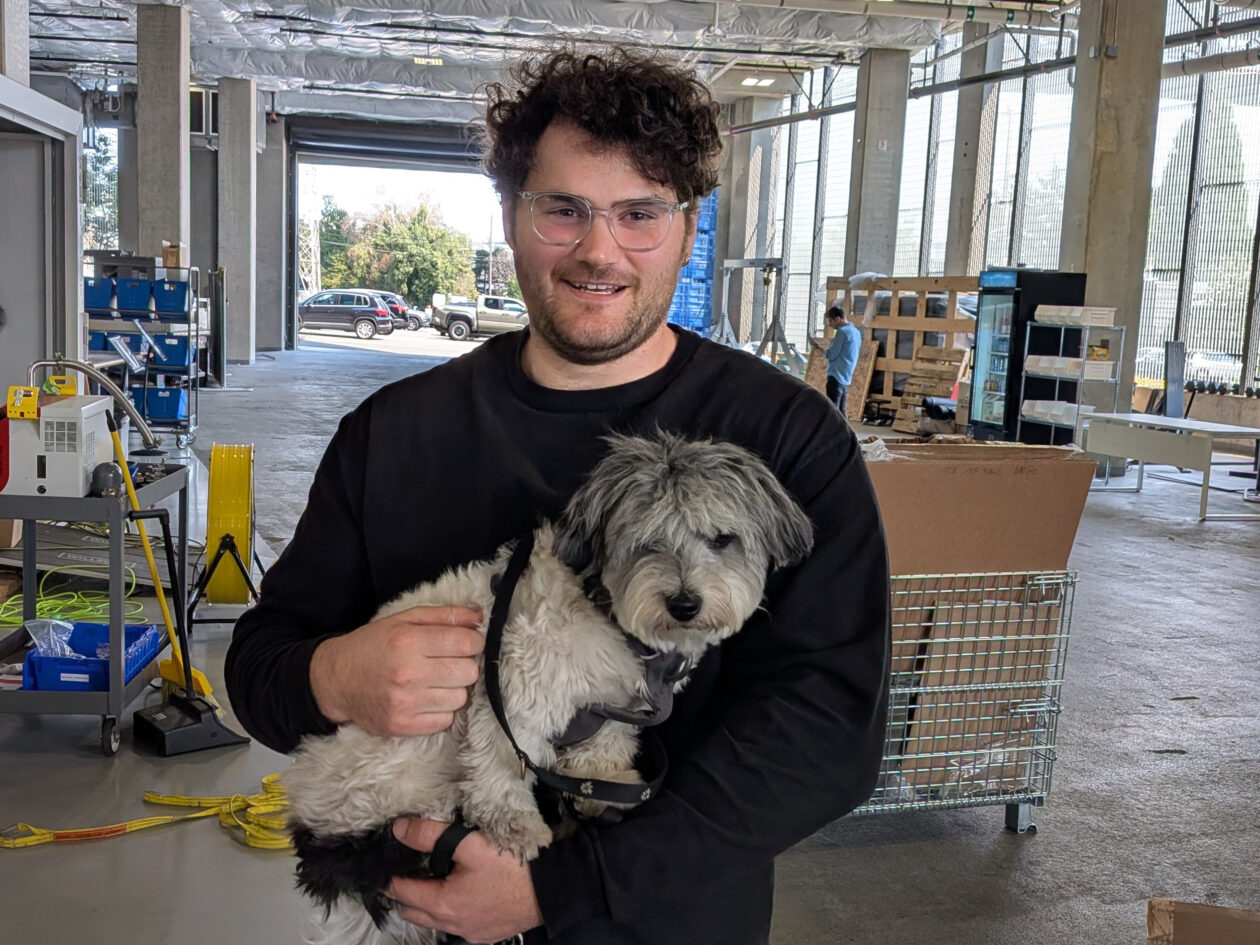
Andrew Redd, CEO and founder of Endurance Energy, with company puppy Maple as the startup preps to launch its next prototype system for geothermal energy production. (GeekWire Photo / Lisa Stiffler)
Next month, Endurance Energy will send Adélie — a 100-kilowatt geothermal generator named for a penguin — to an undersea volcano off the Oregon coast, tapping hydrothermal fluids that can reach 750 degrees Fahrenheit.
It’s the Seattle startup’s fifth deployment onto the ocean floor, part of founder and CEO Andrew Redd‘s bet that the technology can one day electrify entire cities.
“Addressing the clean power problem is a way to make significant, scalable impact,” Redd said. “It’s a fundamental of human life — people need power.”
Endurance is part of a broader race to harness geothermal energy — heat from water or steam under the Earth’s crust, converted into electricity. But while companies such as Fervo and Sage Geosystems focus on terrestrial sites, Endurance is the first commercial venture pursuing undersea sources.
Redd left an engineering role at SpaceX to launch his company in January 2025. Endurance’s headquarters sit on the north shore of Seattle’s Lake Union, in a building that once housed seafood processing, just down from Ivar’s Salmon House.
“There was a big crab on the wall. There were pinup pictures from the fishermen that would sleep out back,” recalled Nate Rodland, Endurance’s chief operating officer.
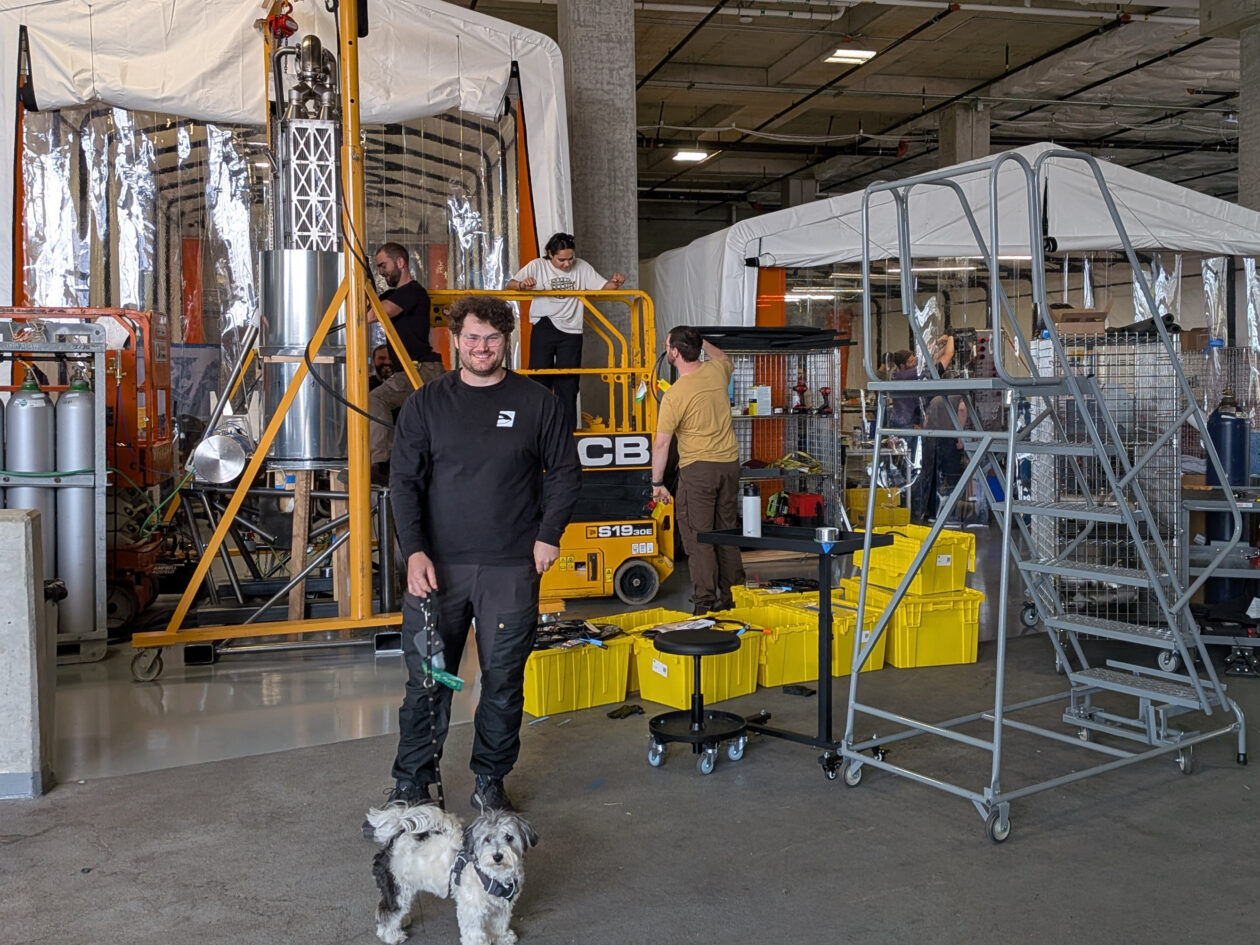
This summer, the team expanded across the street into a 25,000-square-foot concrete facility — it’s cavernous, like a parking garage with ultrahigh ceilings — where giant white tents now house separate R&D and manufacturing operations.
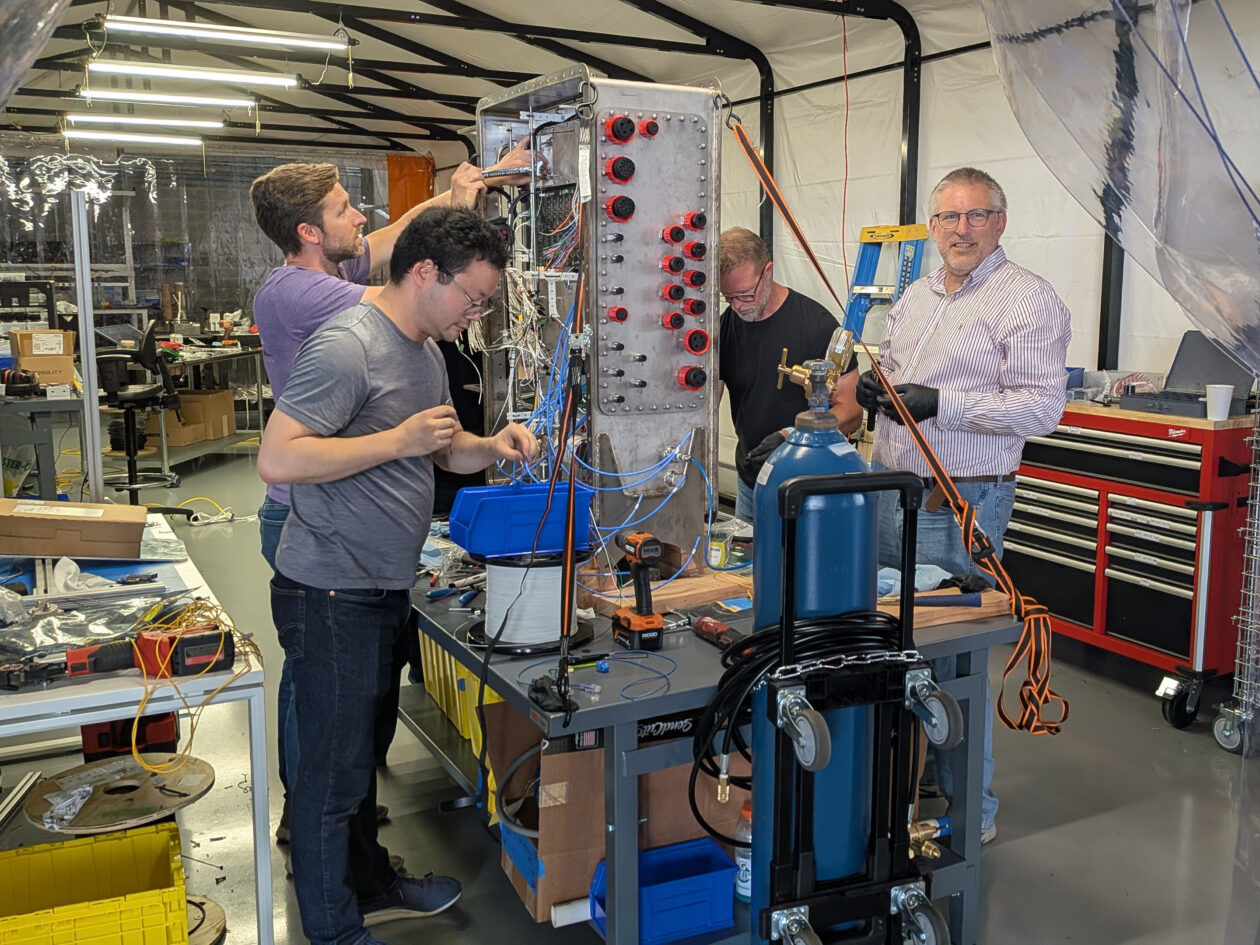
Members of the Endurance team work on the electronics that will control the geothermal system. (GeekWire Photo / Lisa Stiffler)
The space is bustling with employees assembling components ahead of the Sept. 7 pilot demonstration.
“Everyone is incredibly multidisciplinary. The challenge is incredibly multidisciplinary. That’s what makes it so fun and exciting,” said Redd, watching his team at work. He pointed to the company’s thermal fluids analyst, for example, who at that moment was assembling electronics enclosures.
The team’s roughly three-dozen members include 12 SpaceX alumni, plus veterans of fusion startup Helion Energy and space venture Blue Origin.
Here’s how the Endurance system works:
Drill a borehole: The team will drill a narrow hole a safe distance from active vent fields that will go about 200 feet into the seafloor to tap hydrothermal fluid.
Harness the heat: Hydrothermal fluid flows into a generator, heating a closed-loop refrigerant through titanium tubes until it boils and spins a turbine.
Reset: Naturally cold seawater cools the refrigerant back into a liquid state to repeat the cycle. The warmed water is released to the seafloor.
Move energy: The deployment next month will send performance data back to shore via Ocean Observatories Initiative’s Regional Cabled Array, operated by the University of Washington. Permanent installations will move electricity through undersea cables.
Control the process: Underwater, remotely controlled electronics are housed in oil-filled, pressure-balanced chambers to handle deep-ocean conditions.
“We kind of joke that everything we do is just heating, cooling and pumping,” said Aditi Bhatt, chief of staff, as she pointed out earlier prototype devices housed in Endurance’s original building.
Each unit is named for a sea creature, moving up the food chain as the generators grow — krill, silverfish, and eventually an orca pod. Adélie’s generating capacity would be enough to power a small neighborhood of homes.
The company touts the environmental sustainability of its system, which has a small physical footprint, creates limited noise, releases no toxic chemicals and emits no carbon.
Endurance occupies a 25,000-square-foot space in the basement of this building near Seattle’s Lake Union. (GeekWire Photo / Lisa Stiffler)
Endurance has done four prototype deployments, reaching a depth of about 2 miles and temperatures up to 726 degrees Fahrenheit. The company has previously visited the Pacific Northwest’s Juan de Fuca Ridge, the Mariana Trough, the East Pacific Rise off Mexico, and the Kingdom of Tonga in the South Pacific Ocean.
While the startup has made rapid progress, the strategy faces real challenges: high pressure and corrosive conditions, mineral scaling inside devices, and the risk of costly repairs to seafloor machinery. And though many population centers sit near shorelines, the systems will still need expensive subsea cables to carry power over potentially long distances.
But the potential to tap a limitless source of around-the-clock, carbon-free electricity is attractive, and the company has raised $63 million from investors.
The next device, at megawatt scale, will power Endurance’s first commercial pilot, with the Kingdom of Tonga. Work on that begins as soon as Adélie is deployed, with the goal of shipping next year.
The pace aligns with Redd’s experience at SpaceX.
“I remember many times working on the next rocket before the previous one had actually launched, just because of how much you learned from the process of building something,” he said, adding that the team is inspired by their mission.
“The sooner we can get clean, low-cost power on the grid, the more people we’re able to help,” Redd said. “So we’re really driving with intensity.”
Keep scrolling for additional photos.
Endurance’s Adélie geothermal device under construction in Seattle. (GeekWire Photo / Lisa Stiffler)Aditi Bhatt, Endurance chief of staff, pointing out features on a simulation system for testing geothermal energy technology. (GeekWire Photo / Lisa Stiffler)Endurance’s new cavernous space for R&D and assembling prototype devices. (GeekWire Photo / Lisa Stiffler)Endurance Energy CEO and founder Andrew Redd with company pup Maple at their R&D facility in Seattle. (GeekWire Photo / Lisa Stiffler)
— Dave Levy, vice president of AWS Worldwide Public Sector, has left Amazon for a role at Google, according to Nextgov/FCW. An AWS spokesperson confirmed his departure; Google did not respond to a request for comment. Levy, who is based in Arlington, Va., was with AWS for more than nine years. He was previously head of U.S. government sales at Apple for 12 years.
Amazon first launched government-specific cloud infrastructure in 2011 and now supports more than 11,000 government agencies. In November, the company announced it would invest up to $50 billion to expand AI and advanced computing infrastructure for U.S. government agencies. That includes support for Top Secret, AWS Secret and AWS GovCloud (US), which serve classified and sensitive workloads.
David Appel, VP of AWS Global Government, National Security and Defense, has taken Levy’s role in an acting capacity, according to his LinkedIn account. Levy’s last day was July 31.
Kristin Hamilton. (LinkedIn Photo)
— Kristin Hamilton has been named chief commercial officer for Funko, the Everett, Wash.-based makers of pop culture collectibles. Hamilton joined from Crunchyroll, a division of Sony Pictures Entertainment. She was previously at Hasbro for nearly 15 years, leaving as the consumer products division’s head of strategy and transformation. Hamilton begins work Aug. 24.
Funko has weathered financial and leadership bumps in recent years, with a quick succession of CEOs and the accumulation of significant debt. The company this month reported a strong second quarter with increased sales over the previous year.
Laurent Reichert. (Coinme Photo)
— Seattle cryptocurrency company Coinme has named Laurent Reichertas chief compliance officer, consumer protection officer and Bank Secrecy Act officer. Reichert, who is based in Miami, was previously chief compliance and risk officer for the blockchain company Paxos.
In January, Coinme announced that it had agreed to be acquired by blockchain payments company Polygon Labs. Polygon said it would also acquire wallet provider Sequence as part of a combined deal valued at more than $250 million.
Reichert praised Coinme’s currency trading platform, adding that he looks forward to “the next phase of growth, both domestically and as we move into new international markets alongside Polygon.”
— DAT Freight & Analytics, a Beaverton, Ore.-based truckload freight marketplace, announced changes to its leadership team.
John Xiao has been promoted to chief technology officer, leading work on DAT’s tech platform, analytics and AI integration. He joined the company two years ago from Nordstrom, where he oversaw technology strategy in merchandising, supply chain and inventory management.
Marcus Womack, who joined DAT last year through the acquisition of his fintech startup Outgo, is now responsible for DAT’s carrier segment in addition to financial services.
Kary Jablonski, former CEO of Trucker Tools, which DAT acquired in 2024, continues to lead DAT’s broker business and is also responsible for marketing and customer support.
— Seattle’s Membrion has promoted Emily Rabe to vice president of technology. Rabe has been with the industrial wastewater treatment startup for six years, leading its intellectual property efforts and most strategic technology programs while also working with external technology partners.
“She has a remarkable ability to take on hard, ill-defined problems, learn quickly and put durable solutions in place,” the company said on LinkedIn.
The startup made two additional promotions: Ryan Flores has risen to senior scientist, and Michael Moreland has been promoted to senior customer success engineer.
Membrion spun out of the University of Washington a decade ago, has raised $40 million and is No. 154 on the GeekWire 200, a ranked index of the Pacific Northwest’s top startups.
— Microsoft’s Jordi Ribas has been appointed to the board of Sprinklr, a company helping global brands manage their customer experience, social media, ads and other marketing. Ribas has been with Microsoft for 26 years, currently as president of search and AI.
— Seattle biotech company Omeros has named Joseph Schocken to its board of directors. In 1987, Schocken founded the investment bank Broadmark Capital, now Tranceka Capital.
— Jay Carney, who served as Amazon’s senior vice president of global corporate affairs for seven years ending in 2022, has left his position as Airbnb‘s global head of policy and communications. He did not indicate his next role.
Brad Younggren (left), president of Viome Pro, and Naveen Jain, co-founder and CEO of Viome. (Viome Photos)
Two Seattle-area health and longevity startups are joining forces through Viome Life Science‘s acquisition of Circulate Health. The two parties would not share specifics but said the deal was valued between $15 million and $50 million.
The acquisition will allow the companies to expand their reach and offerings of diagnostics, wellness supplements and a blood-cleaning service called therapeutic plasma exchange.
Here’s what each brings to the table:
Viome sells test kits for saliva, blood and stool samples for customers to use at home and send in for analysis. Based on the results, the company offers personalized supplements and oral care products.
Viome has also developed diagnostic tools that analyze RNA biomarkers to detect disease, including a test for early detection of oral and throat cancer that has received FDA breakthrough device designation but not formal FDA clearance.
Circulate operates machines providing therapeutic plasma exchange administered by its own specially trained nurses. The goal of the exchange is to provide a circulatory-system tune-up that removes inflammatory factors, microplastics and biological compounds associated with aging, returning clean blood cells with a replacement protein fluid.
Combining the services and expertise of the two companies could expand their reach and provide new insights into health and treatment, said Dr. Brad Younggren, Circulate’s co-founder and former CEO.
“We want to build the largest network in the world for plasma exchange to answer questions, to figure things out. We’re adding new diagnostics. We’re looking at different kinds of biomarkers and diagnostics in the chronic disease space,” Younggren said.
The merged company has 115 full-time employees, with an additional 10 consultants on staff. Most of Circulate’s workers retained their jobs following the acquisition. Younggren is now president of the newly formed clinical group, Viome Pro, which includes diagnostics, oral and throat cancer detection, and therapeutic plasma exchange. Naveen Jain is Viome’s CEO and co-founder.
Circulate operated in stealth mode for a couple of years and officially launched in January 2024. It raised $14 million prior to the acquisition. Viome was founded a decade ago and has received approximately $250 million from investors.
Circulate had previously operated in 40 health and longevity clinics, primarily in the U.S., with one each in the United Kingdom and the Bahamas, and had relationships with additional sites. Combined with Viome’s clinic partnerships, those connections could expand the company’s potential reach to 400 sites.
The expansion comes as both microbiome testing and plasma exchange face questions from the medical community about how well the evidence supports their claims of health benefits.
The microbiome health market is growing, though estimates of its size vary widely. Some researchers are wary of microbiome kit companies, criticizing a lack of scientific rigor and regulation.
Plasma exchange is considered medically effective for conditions including certain cases of multiple sclerosis and leukemia, Guillain-Barre syndrome, sickle cell disease, and organ transplants. The treatment has more recently been embraced by biohacking proponents who pursue cutting-edge and not necessarily scientifically verified strategies for improving mental performance and longevity.
In 2025, Circulate published a study of 42 adults in Aging Cell showing potential reductions in biological age following repeated treatments, though outside medical experts questioned the long-term significance of the findings. A separate 2026 study in the Journal of Clinical Apheresis showed its protocols helped reduce microplastics in the blood.
“We’ll continue to do research,” Younggren said. “We have new tools. We’re going to be doing a trial combining plasma exchange with all the technologies that already exist under the hood at Viome.”
—Hannah McClellan Richardshas left Amazon after more than 15 years to become chief operating officer of micromobility company Lime.
“Ensuring hundreds of thousands of light electric vehicles are available, fully charged, when and where riders need them, at global scale is exactly the kind of operational challenge I love,” she said on LinkedIn, praising Lime’s carbon-free, affordable transportation model.
McClellan Richards previously served as VP of operations, product and tech for Amazon’s pharmacy division. Other past roles include technical advisor and chief of staff to the CEO of Worldwide Amazon Stores, and VP of freight, inbound transportation and returns. She will serve in the new role remotely.
Ankur Sinha. (LinkedIn Photo)
— Ankur Sinha, former chief product and technology officer at Remitly, shared that he’s taken a role at Anthropic as head of enterprise and verticals. Sinha was at Seattle’s Remitly for more than four years, and was previously an engineering director at Google and spent more than a decade at Microsoft, working primarily on Xbox.
“Moving from transforming lives with trusted financial services that transcend borders (Remitly’s mission) to ensuring the world safely makes the transition through transformative AI (Anthropic’s mission), a few things stay constant,” Sinha said on LinkedIn. “The impact on human lives is what makes the work worth doing, and trust and safety are critical to doing it well. I’m super stoked to be part of this and to help carry it forward.”
Christine Chambers. (LinkedIn Photo)
—Christine Chambers has been named chief financial officer of Redmond, Wash.-based lidar maker MicroVision. She joins from Fusemachines and previously served as CFO of PetMeds and RealNetworks. Chambers was also a financial vice president at Seattle-area company Rosetta Stone.
MicroVision, which develops lidar sensors and perception software for autonomous driving and security use cases, cut 49 jobs in March, targeting engineering and technical roles.
Chambers’ appointment was disclosed in a federal filing and takes effect Aug. 27.
Dan Garrison. (Slalom Photo)
— Slalom has appointed Dan Garrison chief AI officer of the Seattle-based global business and technology consulting firm.
Garrison, who is based in Detroit, spent nearly 30 years at Accenture, most recently serving as chief technology officer for Accenture Song. His experience there included work in quantum computing and generative AI, integration of acquired businesses, and technology strategy leadership.
“Dan has an incredible amount of hands-on technical depth, enterprise transformation experience, and entrepreneurial energy,” said Brian Turner, Slalom’s chief capability officer, in a statement.
Celeste Grebe. (LinkedIn Photo)
— AI infrastructure and data center company Crusoe has hired Celeste Grebe as senior vice president of financial planning and analysis. She will be based in Crusoe’s Bellevue office, which opened in December.
Grebe joins from CoreWeave and was previously with Microsoft for more than a decade across two stints. She left the tech giant as chief financial officer of cloud and AI data centers. She was also with PicMonkey as a vice president.
“It’s rare to find a company positioned to shape infrastructure at this scale, with such a deep understanding of, and partnership with, its customers—and that’s exactly what drew me here,” Grebe said on LinkedIn.
— Gravyty, a Seattle-based ed-tech company, named two new executives:
Margaret Onisick Lawlesswill serve as chief product and technology officer, joining from TeachTown, where she held a comparable role for nearly five years. Onisick Lawless is based in North Carolina and will work remotely.
Brandon Stec has joined as senior vice president of marketing, coming from Frontline Education. Stec resides in Illinois and will also work remotely.
Richard Tso. (LinkedIn Photo)
— Richard Tsohas taken a role as senior director analyst of AI marketing strategy for Gartner. He joins from Microsoft, where he worked for nearly a decade over two stints. Tso was most recently director of product marketing management for Azure and has held marketing roles for Microsoft Viva, Edge, PowerPoint and other products.
Tso was a founding member of Round, an organization providing mentorship and support for tech executives. Other past roles include leadership positions at Persefoni and LivePerson.
Eric Williams. (LinkedIn Photo)
— TerraPower’s former chief operations officer, Eric Williams, is joining rival Hadron Energy as executive vice president of engineering. Williams was with Bellevue, Wash.-based TerraPower for 12 years, leading design and operations of its modular nuclear reactor and helping secure Nuclear Regulatory Commission construction permits.
“I have spent my career proving that advanced nuclear technology can be engineered, licensed, and deployed in the United States,” Williams said in a statement. “The mission at Hadron to commercialize a first-of-a-kind microreactor (MMR) is exactly where the nuclear industry needs to go.”
Williams’ move to New York-based Hadron is effective Aug. 31.
— Seattle’s Ian Wathen was promoted to chief financial officer of Conga, a Houston-based company that helps businesses coordinate their pricing, quoting, contracting, rebates and communications.
— Brittany Jarnot was promoted to senior manager of state and local government affairs in the West for Salesforce.
— Kristy Carrington was promoted to the role of chief executive for the North Division for Providence, overseeing operations in Western Washington and Alaska for the healthcare system.
— Colin Dale is now director of sales for Factal, a Seattle company providing risk intelligence, working out of its London office.
— And in case you missed it, Zillow announced a series of executive changes: CFO Jeremy Hofmann‘s role is expanding to include chief operating officer, while Jun Choo, who became chief operating officer in 2024, is stepping down to focus on his health and will serve as an advisor through the end of the year.
Editor’s note: Updated on Aug. 10 at 1:20 p.m. with news of Ankur Sinha’s new role.
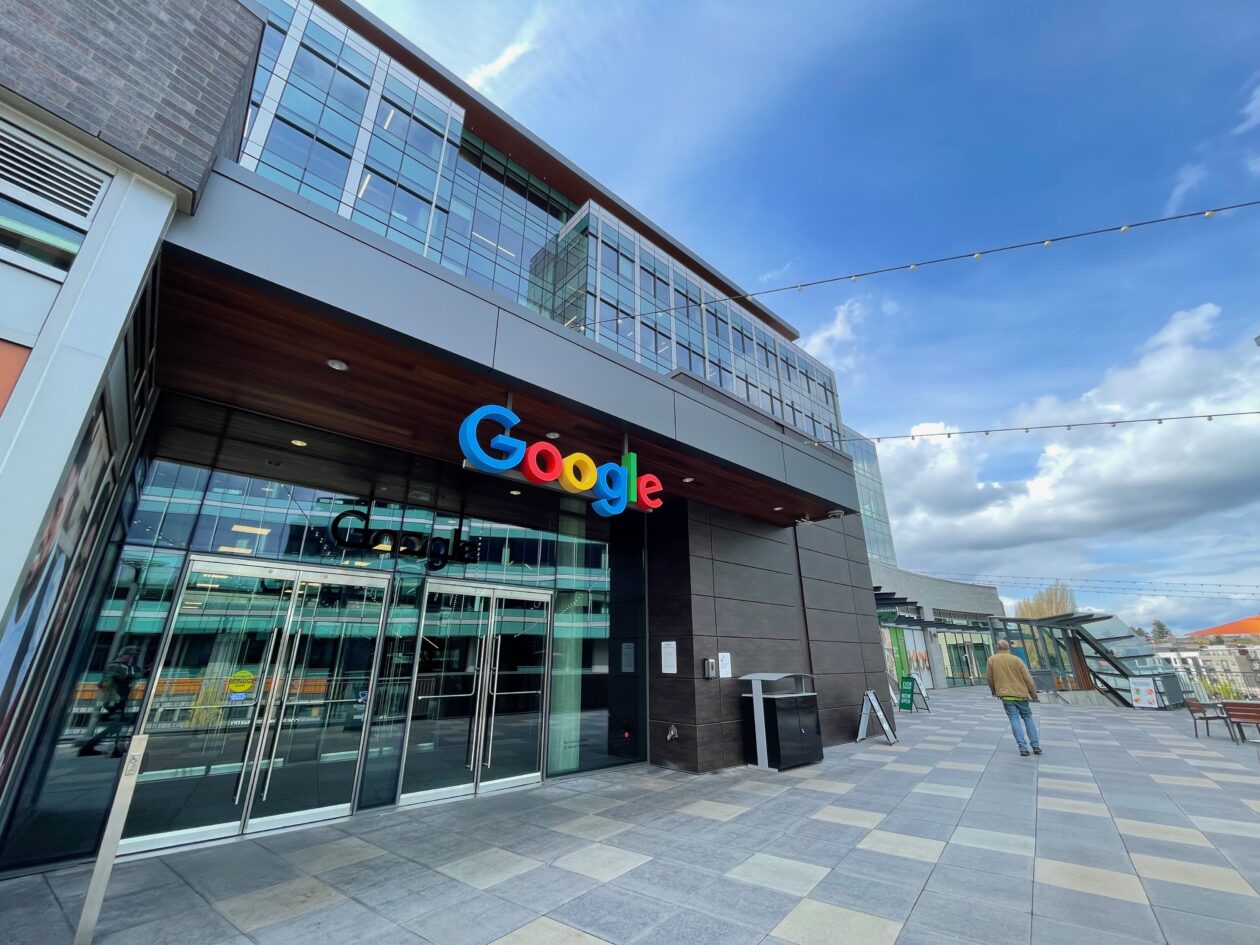
Google’s Kirkland Urban campus in Kirkland, Wash. (GeekWire File Photo / Kurt Schlosser)
Google is laying off 52 employees in Washington state, according to a state filing released Wednesday.
The job cuts include software engineers, engineering and product managers, mechatronics engineers, UX designers and recruiters located in Kirkland, Redmond and Seattle offices as well as remote employees.
The layoffs are scheduled to take effect in September and early October. The notice from Google filed with the state’s Employment Security Department did not provide an explanation for the cuts.
GeekWire has reached out to Google for comment and will update if one is forthcoming.
Business Insider reported layoffs in the Google Cloud division earlier this summer, but did not say how many jobs were impacted.
While Microsoft, Amazon and other tech companies have cut Washington employees in multiple rounds over the past year, this is Google’s the first significant reduction in the state since 2023. In January of that year, Google parent Alphabet shed 12,000 workers globally or 6% of its workforce. It did not indicate how many jobs were lost in Washington.
Washington is one of Google’s largest engineering hubs outside of its Bay Area headquarters. It opened offices in the state more than 20 years ago, with a focus on Android, Chrome, Cloud, Maps, Ads and other projects.
Zillow Group this week disclosed it is eliminating 91 jobs in Washington state, landing heavily on senior staff.
Older ferries like this vessel sailing across Washington’s Puget Sound are scheduled to be upgraded or replaced with electric-hybrid ferries to cut greenhouse emissions. (GeekWire Photo / Kurt Schlosser)
The sun is setting on Washington state’s aging diesel-powered ferry fleet as work begins on new hybrid-electric vessels.
Eastern Shipbuilding Group in Panama City, Fla., has started building the state’s first new ferry since the Suquamish launched in 2018. The hybrid ferries will use batteries and diesel engines to cut emissions, with the first vessel scheduled for delivery in 2030. Eastern will complete the second and third ferries in 2031 and 2032.
Washington State Ferries is the biggest contributor to greenhouse gases among state agencies. In 2018, then-Gov. Jay Inslee signed an executive order to begin electrifying the fleet.
The state has since developed a long-term plan to deploy 16 new hybrid ferries and convert six existing boats into plug-in vessels by 2040.
In 2019, the state struck a deal with Vigor, a Seattle shipyard, to build up to five hybrid-electric ferries, with the first due within three years. Negotiations between Washington State Ferries and Vigor over price and contract terms broke down, and the state ultimately relaunched a competitive bid for the project.
The three 160-car ferries under contract with Eastern will cost $714.5 million to build, plus additional costs for owner-furnished equipment, construction management, crew training, and risk contingencies. All told, the total price tag is $1.15 billion.
The Wenatchee, a 202-car ferry converted to hybrid-electric by Vigor, began sailing the Seattle-Bainbridge route last summer, making it the largest battery-powered ferry in North America. Two additional Jumbo Mark II-class ferries await conversion, but the state’s supplemental transportation budget adopted in March did not fund their upgrades.
The system has 21 vessels, 11 of which are more than 40 years old. State leaders say 26 ferries will eventually be needed. Washington operates the largest ferry system in the U.S., which transported more than 20.1 million passengers last year.
Construction began in Florida with a ceremonial steel-cutting event early Wednesday. Gov. Bob Ferguson did not attend because of Washington’s wildfires but recognized the milestone.
“In the past decade, we lost four ferries to retirement,” Ferguson said in a statement. “Today signifies a critical step in rebuilding our fleet with modern vessels that will allow us to provide more dependable service.”
Most climate news these days is grim. But at a rooftop happy hour during Pacific Northwest Climate Week, the mood in Seattle was upbeat — and not out of wishful thinking or environmental altruism. The hope was rooted in business fundamentals.
“We actually have all the tools right now to decarbonize,” said Mike Dieterich, an executive with Decarb Advisory. “We just need to focus on how to scale what’s working.”
Beneath the enthusiasm, however, investors and founders were clear about where capital should and shouldn’t flow. While pushing back against a wave of “tourist cash” chasing AI data centers and nuclear startups, attendees argued that profitable climate innovation often sits in essential infrastructure: grid upgrades, EVs, next-generation solar and ag-tech.
Karin Kidder, executive director of E8, a climate-focused angel-investing organization, is buoyed by the commitment from her group’s increasing membership. While decreased federal support and global politics are straining sustainability companies, “on an individual level, people are stepping up,” she said.
The annual climate tech event spanned Seattle, Portland and two Vancouvers — one in Washington, the other in British Columbia — with 313 events and nearly 7,000 participants.
GeekWire pulled attendees at the kickoff happy hour aside to ask about the most overhyped and underappreciated technologies, as well as what made them optimistic about the planet’s climate prospects, and what worried them.
Here’s what we heard.
Karin Kidder, executive director of E8, and Mike Dieterich, author and sustainability executive for Decarb Advisory. (GeekWire Photo / Laura Scott)
The data center ‘cash grab’
“Data center solutions are probably overhyped at this point,” said Jonathan Azoff, co-founder and general partner of the venture capital firm SNØCAP. “There’s a million of them, and they’re all trying to cash grab the big AI race.”
Azoff and others acknowledged that AI data centers, with their carbon-intensive building materials and huge energy demands, need innovation. But the concern is that some entrepreneurs are rushing into the space with half-baked, undifferentiated ideas that draw outsized dollars.
“They’re solving big problems for hyperscalers, and it’s worth a lot of money to [the tech giants],” said Yi Jean Chow, investment partner with Clean Energy Ventures. “So there are definitely investment opportunities there, but overhyped and high valuations for sure.”
Susan Su, partner at the venture capital firm Toba Capital and founder of the Climate Money podcast and Substack, also cautioned that data centers are stoking interest in costly nuclear fission and fusion energy. Customers and investors “think that nuclear is just going to be the end-all, be-all to power demand, and in reality it’s … taking the most time, costing the most money,” Su said.
That said, Azoff was excited to invest in an even riskier, more controversial form of nuclear — something called muon-catalyzed fusion. If the company, called LazeraH, were to succeed, “I can look back at and say this was my mark on clean energy,” he said.
Jonathan Azoff, co-founder and general partner of the venture capital firm SNØCAP (left) and Yi Jean Chow, investment partner with Clean Energy Ventures. (GeekWire Photo / Laura Scott)
Promising economics in sustainability
Companies in climate, sustainability and clean energy technologies are succeeding because they’re more affordable and perform better.
“People are choosing climate solutions, climate products, not because of the climate value, but because they offer other value propositions, too,” Chow said.
That includes the economics of electric vehicles, said Duncan Logan, co-founder and CEO of 9Zero, a climate innovation hub with Seattle and San Francisco locations. EVs are a “cheaper, better, faster way to move around” compared to combustion engine vehicles, he said.
Logan contrasted the U.S. with China, which is adopting electric semis, buses and scooters at lower costs. “We are falling so far behind,” he said. “So it’s a competitive thing.”
Susan Su, partner at the venture capital firm Toba Capital and founder of the podcast and Substack Climate Money (left), and Duncan Logan, co-founder and CEO of 9Zero climate innovation hubs. (GeekWire Photo / Laura Scott)
Don’t underestimate longstanding solutions
Longstanding climate-tech workhorses like solar, ag-tech and green construction are no longer shiny new sectors, but they’re still undergoing innovative breakthroughs.
Su said Chinese solar is becoming more expensive, and there are increasing opportunities for U.S.-made solutions beyond traditional photovoltaic panels. The emerging standard for solar is “silicon perovskite tandems” — a solution that stacks a thin layer of perovskite on a traditional silicon solar cell to capture much more sunlight. That transition, she said, “completely levels and reopens the playing field for new players to come in.”
Logan called out robotic farming devices, such as weed-zapping and rock-moving machines. Dieterich pointed to the use of AI to efficiently design sustainable buildings.
“We can build zero-carbon buildings at the same price point as code-built buildings,” he said. “So [AI] would allow us to do that faster and probably even cheaper.”
Ben Shwab Eidelson, co-founder and partner of Stepchange Ventures, co-host of the Stepchange Show podcast (left) and Darian Parrish, founder of Seattle startup PwrOn. (GeekWire Photo / Laura Scott)
An unprecedented time for the grid and batteries
The electrical grid is the linchpin for many areas of clean energy deployment, and opportunities to address that long-overlooked infrastructure can be game changing.
“We need to triple our grid by 2050, and for the first time, we now have people with large bags of money showing up to get the power now,” said Ben Shwab Eidelson, co-founder and partner of Stepchange Ventures and co-host of the Stepchange Show podcast. That influx of resources can create a “magic moment.”
Darian Parrish, founder of PwrOn, a Seattle startup developing portable clean power, is eager to see more batteries paired with grid operations, but worries about overblown safety concerns when the impacts of burning oil, gas and coal are more dangerous in many regards.
“Do you want a bunch of fire risk from fossil fuels and the inhalation of all those chemicals and exhaust, or do you want a lesser risk [from batteries] that might be hyperbolic in the media at the moment, but actually net safer?” Parrish said.
Kidder highlighted a company called It’s Electric that provides EV charging by plugging into buildings with excess energy available, bypassing the wait for additional grid capacity.
Tech alone won’t save us
Climate-friendly technologies that outperform polluting solutions are catching on and adoption is expanding. But human actions pulling in that direction are still essential.
“Technology alone will not, and was never going to save us,” said Su, of Toba Capital. “Only we can do that, and we have to do that through policy, through collective action, through awareness, and through behavior change. And those things are really hard. In many ways, they’re much harder to crack than nuclear fusion.”
The on-the-go Positive Charge recording setup. (GeekWire Photo / Laura Scott)
Sources and references
Interviews:
Jonathan Azoff, co-founder and general partner of the venture capital firm SNØCAP

 Login
Login