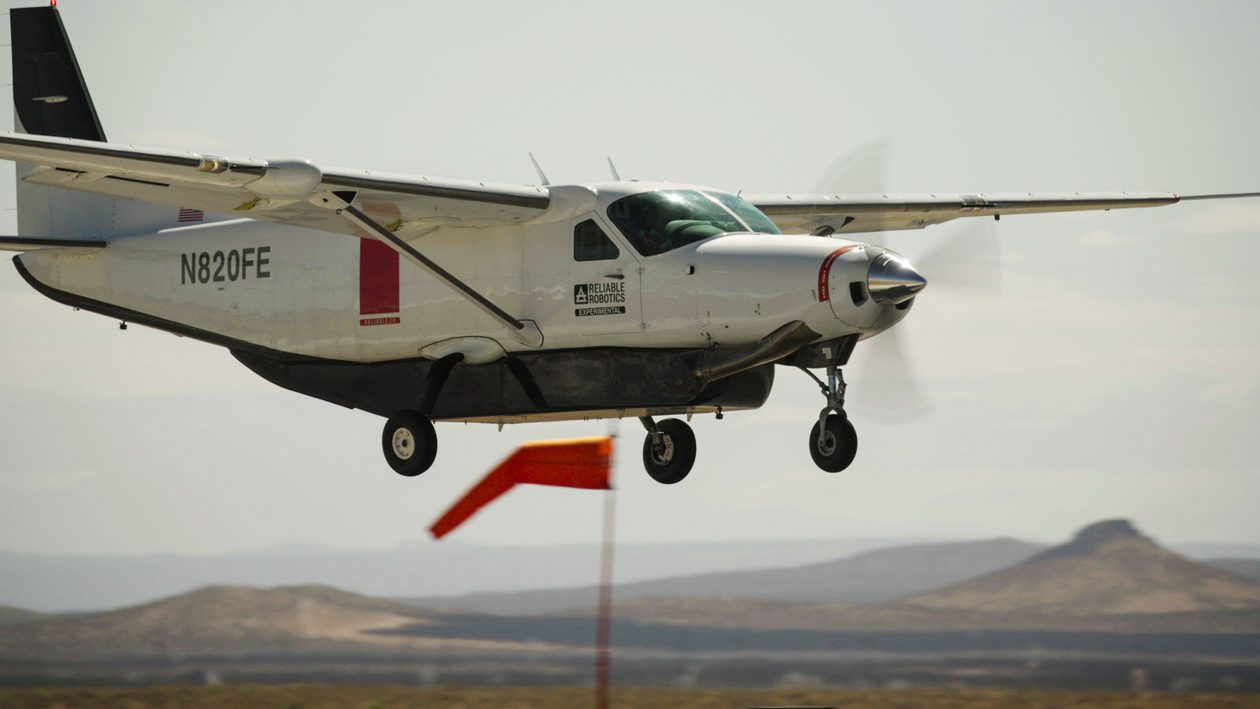
Reliable’s automated Cessna 208B Grand Cavan conducts autonomous operations in Mojave, Calif. (Reliable Robotics Photo)
Aviation startup Reliable Robotics is opening a new engineering hub in the Seattle area, establishing a radar research and development center in Bothell.
The Mountain View, Calif.-based company also announced Tuesday that it has raised $115 million, pushing its valuation above $1 billion. The funding will help expand its aircraft fleet, production facilities and engineering team as it works toward federal certification of its autonomous flight technology.
Reliable’s new office in the Bothell Highlands north of Seattle will open with about 25 employees and serve as its Radar Center of Excellence, a facility for developing and testing systems designed to help aircraft detect and avoid other aircraft. The company plans to grow the team and is heavily recruiting in the region, including roles across radar, embedded software, flight controls, guidance and navigation, simulation and systems engineering.
The expansion adds another player to the Seattle area’s growing mix of aerospace, robotics and autonomous systems companies.
Last month, GeekWire reported that San Diego-based Shield AI selected Des Moines, Wash., as the production and engineering hub for its X-BAT, an AI-piloted aircraft designed to take off and land vertically. The heavily-funded company is planning a 420,000-square-foot manufacturing and engineering facility and says it expects to employ about 4,000 people in the region by the early 2030s.
Reliable is developing systems that can automate aircraft operations, including engine startup, taxiing, takeoff and landing. Its longer-term ambitions include enabling aircraft to fly without a pilot aboard, with remote operators overseeing flights from the ground. The company is working toward certification from the Federal Aviation Administration.
Founded by former SpaceX engineers in 2017, Reliable has spent nearly a decade developing technology designed to work with existing aircraft rather than requiring entirely new planes. Its initial system is intended to keep a pilot in the cockpit while automating key flight operations, with more advanced levels of autonomy planned over time.
The 250-person company’s latest financing, including $90 million led by Nimble Partners and a $25 million term loan from Silicon Valley Bank, brings total funding to $380 million.
The company’s new Bothell lab will bring together engineers to design, build and test radar systems, including its active electronically scanned array air-to-air radar.
The technology is intended to support detect-and-avoid capabilities that would help autonomous aircraft safely operate in the national airspace alongside conventional planes.
“Seattle represents the past, present and future of aviation. For decades, engineers here have developed aircraft and systems that change how the world connects,” Chris Schulenberg, Reliable’s vice president of programs, said in the company’s announcement. “By expanding into the Pacific Northwest, Reliable is uniting the tech talent in Silicon Valley with the aviation expertise of Seattle.”
The Bothell office — located at 21222 30th Drive SE — will be led by Schulenberg and Marc Pos, a senior technical fellow focused on radar who previously spent more than two decades at Honeywell.
“Radar development is a hands-on process,” Pos said in a statement. “By bringing a team together in a centralized lab and engineering environment, with all of the resources we need at our fingertips, we can move from design through development and testing with the rigor, speed and precision unique to Reliable.”
Reliable also plans to expand its engineering operations in San Diego, where it will focus on aviation autonomy for military applications.
The two offices bring the company’s footprint to five locations, joining its headquarters and aircraft hangars in California and the operating hub of its subsidiary airline, Reliable Airlines, in Albuquerque, N.M.
This week on the GeekWire Podcast, we start by opening the listener mailbag, highlighting some recent comments that set a new standard for critical feedback, in different ways.
We discuss Vayo, the AI travel venture Booking Holdings is launching in Seattle, home of its biggest rival, Expedia. Led by recent guest Mike Fridgen, Vayo uses AI agents to manage your trips. It’s an example of the broader push to build personalized AI agents, even as more companies wall off their sites from rival agents.
Then we take on LinkedIn’s list of the top Seattle startups, where four of the top 10, including No. 1 Anthropic, aren’t headquartered in the region.
And finally, we talk about Amazon’s new Bee AI wearables, which can turn things you say into shopping suggestions on Amazon.com if you opt in and pay $12 a month. That leads into the GeekWire Trivia Challenge, about an earlier Amazon wristband that listened to you.
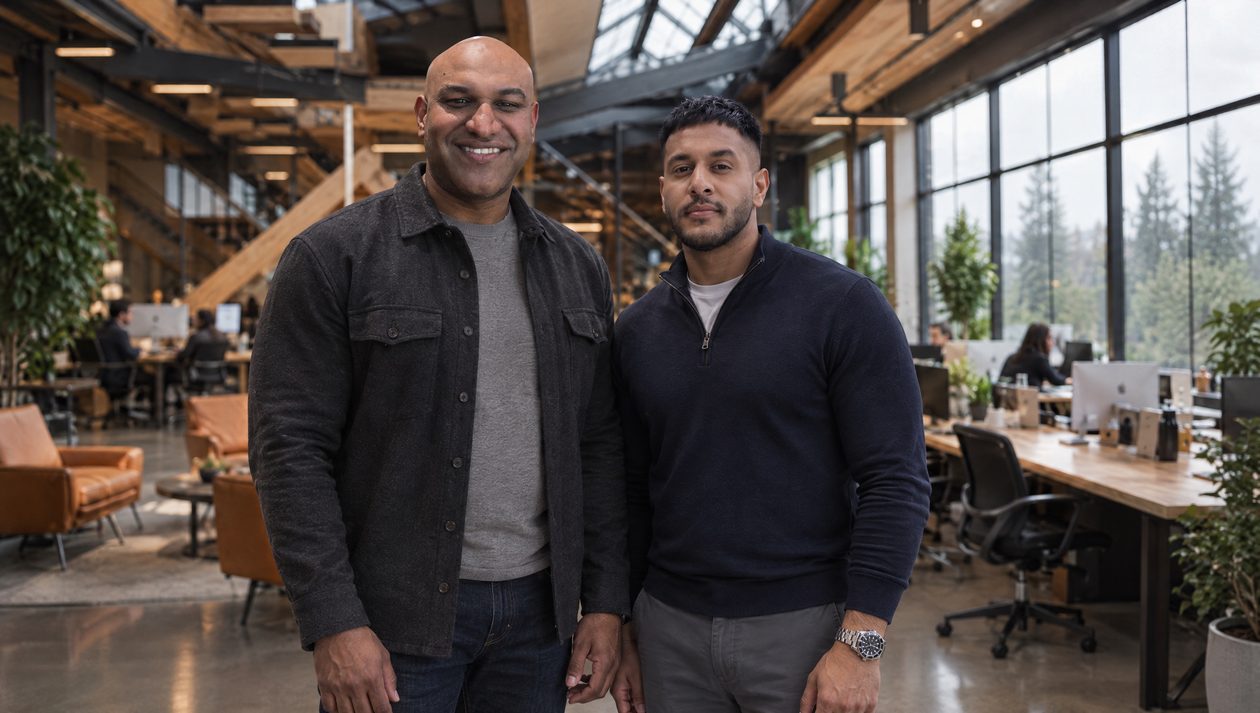
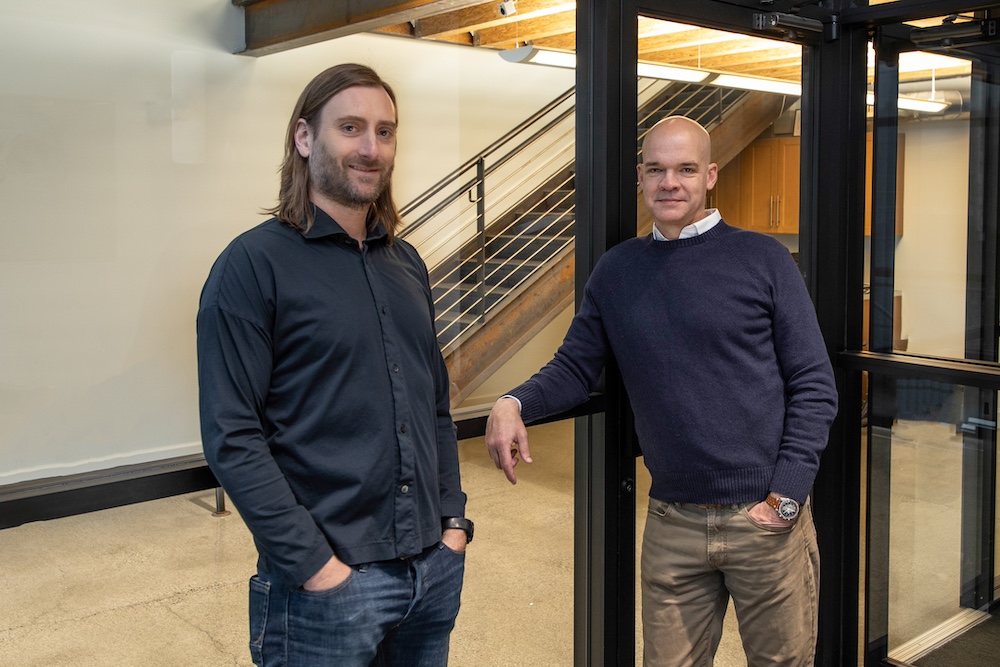
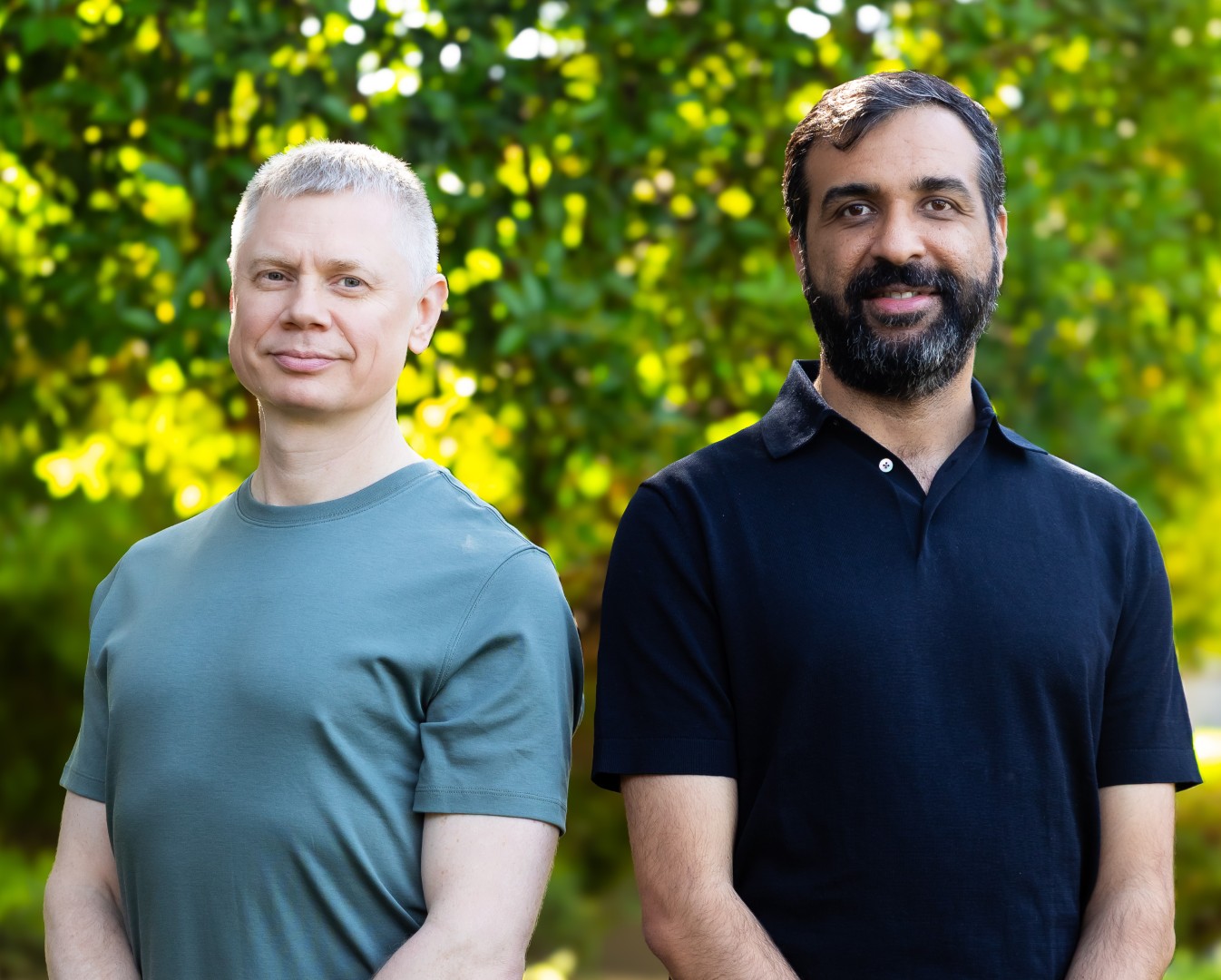
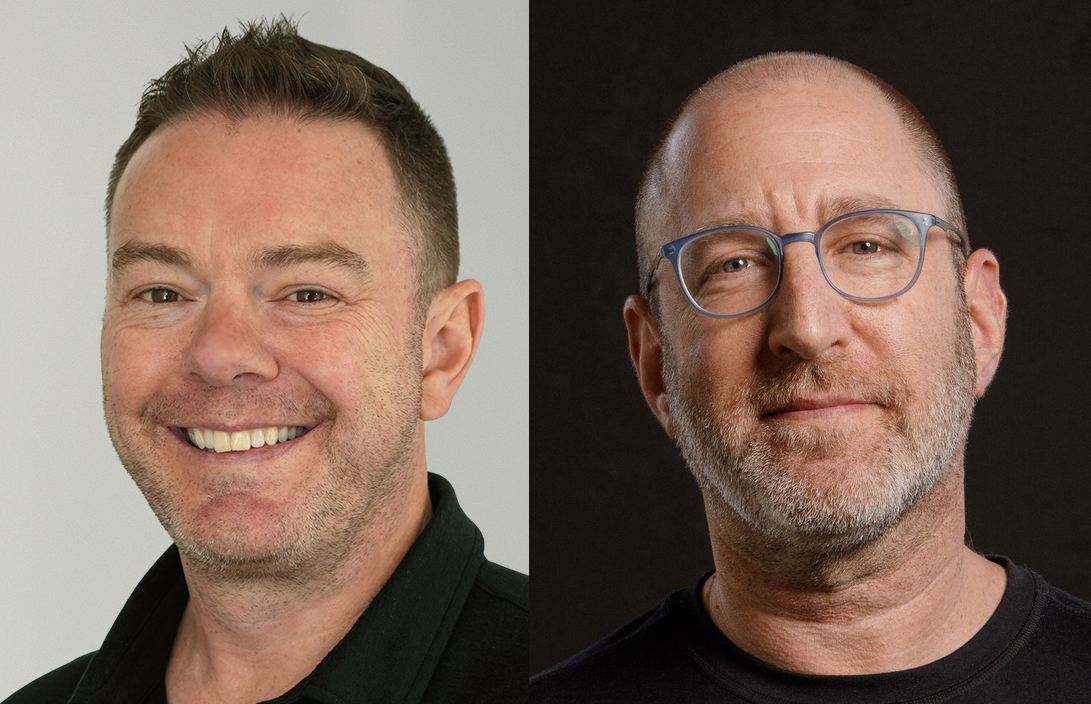
Zeacon co-founders Kris Naidu, left, and Jay Gounder. (Zeacon Photo)
Businesses spend heavily to attract visitors to their websites, but traffic doesn’t necessarily translate into sales. Bellevue, Wash.-based Zeacon is building AI tools to help companies connect their marketing content with customer behavior and understand what actually drives conversions.
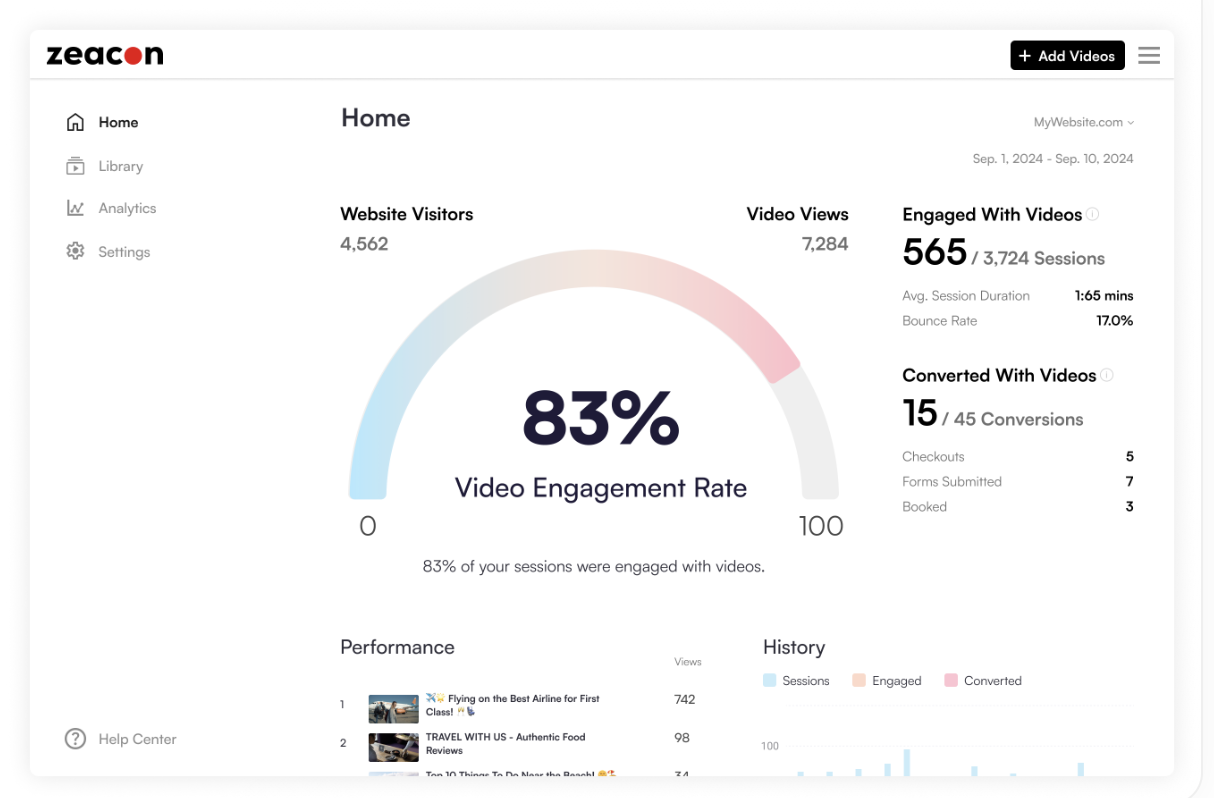
Co-founded by Kris Naidu and Jay Gounder, Zeacon uses AI to generate videos, personalize website content and track how visitors interact with it. The platform is also designed to identify bot traffic and analyze how both people and AI agents navigate websites — an increasingly important capability as AI changes how people discover and interact with businesses online.
Zeacon’s goal is to help companies move beyond traffic and content creation to understand what turns visitors into customers. As Naidu and Gounder see it, the real measure of success isn’t how many visitors a website attracts, but how many convert.
We caught up with Kris Naidu for our latest Startup Spotlight.
In 50 words or less, give us your elevator pitch:
We help businesses deploy AI agents that optimize their entire digital funnel, with an initial focus on video. Our AI agents can autonomously generate video content without prompting, publish it across social media and websites, personalize the experience for each website visitor and identify bots, while continuously analyze and optimize performance.
What problem are you obsessed with solving?
We are obsessed with helping businesses turn the attention they already paid for into sales. Brands invest in advertising and great video content, but the website where customers actually buy often doesn’t connect with those investments. Zeacon brings that content onto the website, personalizes it to the visitor, and connects engagement to buying behavior. We can also create new videos from product photos and website data based on what converts. The question driving us is simple: How can we help this business sell more while taking work off its team?
What surprised you after talking to customers?
How much opportunity exists in what they already have. Businesses have videos, product photos, website traffic, and customer data. What’s missing is the connection between them. A marketing team wants to know: Which content helps people buy? Where are we losing customers? What should we create next? That reinforced our belief that the real value is turning information into a decision they can act on which we can provide with our platform.
How has artificial intelligence changed the way you build your company?
AI changed what we could take off the customer’s plate. Zeacon can understand website and product information, generate video from pictures without prompting, choose relevant content for a visitor, and help teams ask questions about performance in plain English. We’re building those capabilities together: create, personalize, measure, and learn. Each result can inform the next decision. That’s a much bigger opportunity than making content faster which we can also do but it means helping a business continuously improve how it sells.
What’s one thing people misunderstand about your startup?
That revenue alone does not tell you how valuable an AI company is. Revenue matters it proves customers will pay. But data deserves equal attention because it determines what the system can learn and how useful it becomes. At Zeacon, we care about the connection between visitor behavior, content, and conversion. The advantage comes from the quality of that data and our ability to turn it into better customer outcomes. Investors should ask what a company is learning with every deployment, alongside what it earns that will help them understand the true growth value. Upfront value without long term vision effects companies and we were always focused on the end goal which was delivering a product that adds value not only in the near term but cannot be easily replaced.
What’s the toughest decision you’ve made in the past year?
Deciding what to say no to. When your technology opens up several opportunities, it’s tempting to pursue all of them. But customers need you to solve their problem well. Our focus is helping businesses use video and data to improve their website experience and grow sales. We have to judge opportunities against that purpose, even when they’re exciting. The data helped us understand the entire flow of users for our customers that when we had our moment. We realized it just was not about providing outcomes for sales but helping the customers fix issues within their website journey and using the content to help fill gaps for the desired outcomes.
What’s the one piece of advice you give to other entrepreneurs?
Focus. Get close to your customers, understand the problem they will pay you to solve, and keep delivering against it. Do not confuse more features with more value. Make something customers use, trust, and want to keep. It is hard but being focused is the key to winning.
We’ll know our company has made it when…
Zeacon is recognized for creating a new business science on relating content and user behavior to actual business outcomes.
Every so often, we get sucked into a list touting the top regional startups or the most robust entrepreneurial ecosystems.
Well, a startup list released today from Microsoft-owned LinkedIn — titled “The 10 companies on the rise in Seattle” — grabbed our attention, for all of the wrong reasons.
Let’s just say: We know a thing or two about Seattle-area startups around here. And so we had to do a little fact-checking.
First of all, four of the companies on LinkedIn’s list — Anthropic, Auger, Whatnot and Armada — are not even headquartered in the Seattle area.
San Francisco-based Anthropic — ranked #1 on LinkedIn’s Seattle startup list — has a growing engineering center at Dexter Yard North in Seattle’s South Lake Union neighborhood. But to think that Anthropic CEO Dario Amodei and his team are cutting deals at the Washington Athletic Club or debating the future of AI over lattes in Kirkland is a hallucination bigger than most AI models could create.
If the LinkedIn team were studying GeekWire’s coverage, they’d also realize that #2 on their list, Auger, is not headquartered in the Seattle area, either. The AI logistics startup, co-founded by former Amazon executive Dave Clark, moved its headquarters to Dallas in August, although it maintains a Bellevue engineering center.
It keeps getting more bizarre from there. The #3 company on LinkedIn’s Seattle list is Whatnot, the heavily funded video-based shopping startup that set up an engineering center in Seattle last year, but is clearly headquartered in the Los Angeles area.
Finally, ranked #9 on the Seattle list is data center upstart Armada — a company that, according to its own LinkedIn profile, is based in San Francisco.
So, just to summarize: Three of the top Seattle startups (according to LinkedIn) have their headquarters in California, and one has its headquarters in Texas.
GeekWire columnist and angel investor Charles Fitzgerald pointed out the flaws in the list, calling it a “half-assed” effort. “For a Microsoft-owned company, you’d think they’d have better insight into where Seattle is actually located,” Fitzgerald said.
The list does include some companies that are actually based in the Seattle area.
Making the top 10 are: Bellevue-based Truveta (#4); Seattle-based Yoodli (#5); Redmond-based Worldscape (#6); Seattle-based Overland AI (#7); Seattle-based Gradial (#8); and Kent-based Stoke Space (#10).
All of those companies (except for Worldscape) are listed on the GeekWire 200, our ranking of the top 200 privately held startup companies in the Pacific Northwest. The other companies — Anthropic, Auger, Whatnot and Armada — are listed on our engineering center list.
Notably absent from LinkedIn’s Seattle list is Chainguard, which ranked #42 on LinkedIn’s accompanying report on the top 50 startups in the U.S. Chainguard is headquartered in Kirkland but is a fully remote company. The Seattle ranking counts only employees and hiring in the city, which may explain why a remote company like Chainguard didn’t make the cut.
For our purposes, given that one of the co-founders of the cybersecurity startup calls the Seattle area home, we claim it as a Seattle-area startup.
In its defense, LinkedIn describes a Seattle startup a bit differently than we do here at GeekWire.
According to its methodology, the ranking weighs four factors: employment growth, engagement with company pages, interest in job openings, and the ability to recruit talent from LinkedIn’s list of top companies. The data covers July 2025 through June 2026.
LinkedIn requires privately-held companies to be less than seven years old and headquartered in the United States to qualify for its U.S. rankings, but doesn’t require them to be headquartered in the Seattle area to make the Seattle list. All of which explains how a startup can make a list of Seattle’s top startups without actually being based in Seattle.
UPDATE: LinkedIn provided this statement to GeekWire:
“While companies do not need to be headquartered in Seattle to qualify, they must have at least 30 full-time employees based in the metro area. Our city lists are designed to spotlight startups gaining momentum, locally, recognizing that growing companies often have employees and operations across multiple markets. Further, the data for the city lists are reflecting employees based in that city only, versus the entire country.”
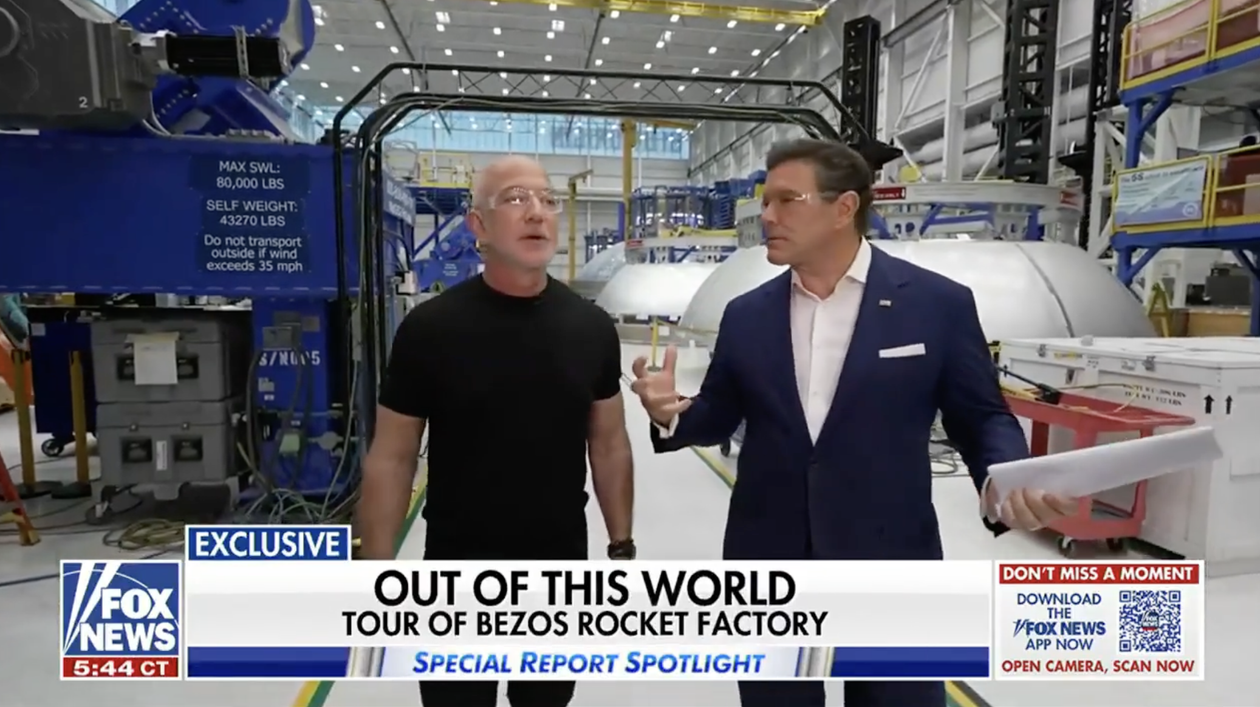
Amazon founder Jeff Bezos is interviewed by Bret Baier of Fox News in Florida. (Screen grab via Fox News)
When Jeff Bezos sat down on Blue Origin’s Cape Canaveral factory floor for an interview with Fox News’ Bret Baier earlier this week, he laid out an unapologetic defense of free enterprise and wealth creation.
“Success is not villainy,” Bezos said.
The Amazon founder’s point was simple: building a massively successful enterprise isn’t something society should apologize for or view with suspicion, it’s the natural result of creating something people actually want.
“There’s nothing wrong with making unbelievably good chicken that people love,” Bezos said, referencing the growth of Raising Cane’s and why restaurant entrepreneurs deserve their wealth. “And it doesn’t make him a bad person.”
Bezos, who stepped down as CEO of Amazon in 2021 and left Seattle for Miami in 2023, is currently the second richest person in the world with an estimated net worth of $380 billion, according to Forbes.
Bezos and Amazon transformed the Seattle region. The company now employs roughly 50,000 corporate and tech workers in the Puget Sound region, divided between its primary headquarters in Seattle and its growing operational footprint in Bellevue.
And his recent comments come at a key moment for Washington state, where voters will decide on Initiative 645 — a high-profile ballot measure aimed at repealing the state’s recently enacted high-earner tax and prohibiting future income taxes.
Bezos, along with other business leaders like former Starbucks CEO Howard Schultz, have claimed that scapegoating wealthy entrepreneurs risks driving away innovation. Bezos argued that politicians targeting business leaders are misdiagnosing the problem, noting that while affordability and social challenges are real, heavy-handed government interventions often fail to solve them.
“If there’s a politician who’s picking villains and pointing fingers, that probably means they don’t have a solution,” Bezos said. He noted that executives who relied on blame-shifting inside his own companies “wouldn’t be in our company for long.”
Watch the full interview below where Bezos also discusses the impact of AI on jobs, the need to beat China in the race to the moon and orbital data centers in space. The portion of the interview where Bezos notes that “success is not villainy” starts in minute 16.
Kapta Space co-founders Adam Bily (left) and Milton Perque. (Kapta Photo)
Kapta Space, a Seattle startup building lower-cost, steerable radar sensors for satellites, has raised $24 million in a Series A funding round to scale production and meet growing demand for defense intelligence contracts.
The deal highlights the ongoing momentum in the Pacific Northwest’s commercial space ecosystem, where a growing cluster of venture-backed startups is building hardware alongside major satellite operations like SpaceX’s Starlink facility in Redmond and Amazon’s Leo constellation program.
Founded in 2023 by CEO Milton Perque and Adam Bily, Kapta uses metamaterials for its proprietary Metamaterial Electronically Scanned Array (MESA) architecture. The tech provides high-resolution, geospatial imagery and ground-target tracking without the extreme cost, power demands, and manufacturing complexity of traditional systems.
Both founders bring deep local expertise to the hardware: Perque and Bily were previously engineering leaders at radar maker Echodyne. Perque’s background also includes stops at Metacept and Intellectual Ventures, while Bily served as an antenna engineer at Apple and satellite startup Astranis.
The fresh capital will help Kapta expand manufacturing, qualify its hardware for spaceflight, and prepare for initial orbital demonstration missions.
Kapta’s software-defined architecture aims to make persistent satellite tracking feasible at constellation scale, letting spacecraft rapidly steer beams to continuously detect and hold custody of moving targets across air, sea and land.
“The mission calls for persistent awareness, and that requires us to rethink how radar has to work at constellation scale,” said Milton Perque, Founder and CEO of Kapta Space, in a release. “Traditional architectures are cost-prohibitive and were never designed for the scale these missions now demand.”
Washington Harbour Partners, which specializes in defense tech investing, led the round, with Bison Ventures co-leading. Previous backer MetaVC Partners joined alongside MYDA Capital, Entrada Ventures, Aurelia Foundry, and Fitz Gate Ventures.
“Kapta’s MESA architecture changes that equation with a modular, highly manufacturable approach to electronically steerable radar,” said Mina Faltas, Founder and CEO of Washington Harbour Partners. “We believe its combination of performance, cost, and scalability will make Kapta a foundational supplier to the next generation of U.S. and allied space architectures, and we’re thrilled to lead the Series A.”
Bilkay Rose is a co-founder of Eluum, which is looking to bring digital memories together into a common story. Photo via Eluum
Eluum is taking aim at a problem created by the explosion of digital life: We chronicle our lives everywhere, but a single home for our most meaningful memories is hard to come by.
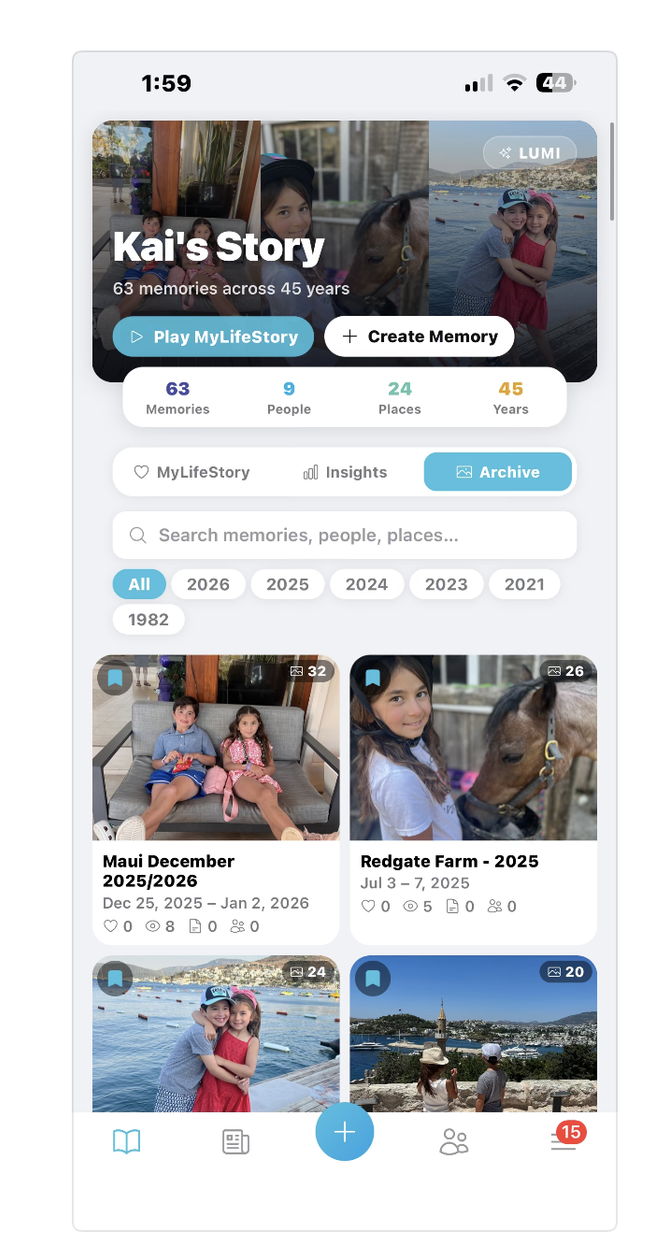
The Seattle startup’s new app brings together photos, videos, social posts, locations and other personal moments from across the digital landscape, using AI to help organize them into an evolving record of a person’s life, a feature it calls MyLifeStory.
The bootstrapped company, founded by former Microsoft and Avalara manager Bilkay Rose, former Microsoft software engineer Dale Rector and former investor relations exec Jennifer Gianola, sees an opportunity to create what it calls a user-controlled “memory layer” for social media.
The idea grew out of Rose’s own struggle to piece together years of family memories across a variety of platforms and devices. The app is available for iOS, Android and the web.
We caught up with Rose, who is part of the CoMotion entrepreneurial community at the University of Washington, for the latest installment of GeekWire’s Startup Spotlight.
In 50 words or less, give us your elevator pitch:
Eluum is building the future of social around people’s stories. MyLifeStory brings scattered photos, videos, social posts, places, and personal context into one evolving life story, helped by Lumi, our artificial intelligence memory companion, and controlled by the person whose life it represents.
What problem are you obsessed with solving?
Each of us creates thousands of digital artifacts, but they are scattered across camera rolls, social platforms, devices, and feeds. Nothing brings them together as the evolving story of a person’s life. Every person I know deals with this issue, but it seems too big to solve for most. We believe technology has finally reached the point where MyLifeStory can become real: a living story built across time, not another temporary feed built around advertising and engagement.
What surprised you after talking to customers?
People do not need another place to post. They want help making sense of what they have already created, and continue to create on a daily basis. What surprised us was how consistently people described feeling overwhelmed by their digital lives. They have the photos and posts, but the meaning — the people they actually create memories with, places they visit, experiences, and stories connecting everything — is being lost every single day.
How has artificial intelligence changed the way you build your company?
Artificial intelligence gives a small, determined team extraordinary leverage. It allows Dale, our CTO, and our broader team to build, design, test, and learn faster without requiring a massive organization or budget. More importantly, it makes our product possible.
Lumi helps users organize disconnected moments, add context, and gradually shape them into meaningful life stories. Artificial intelligence is the helper; the person remains the author. We have a bold vision for what technology can do for the average person, and we believe the first problem to solve is our memories. The most important thing in everyone’s lives is their journey through life.
What’s one thing people misunderstand about your startup?
People sometimes assume Eluum is another social network or photo-storage application. It is neither. Eluum is building a human memory layer for social.
Our integrated social tools help people manage and share content, but MyLifeStory is the destination: a private, user-controlled story of their life that becomes more valuable over time. As a female founder, my mission is to build a company that can solve real problems. Our mission is to solve problems and make our users’ lives better.
What’s the toughest decision you’ve made in the past year?
Our founding team had to decide whether Eluum was primarily a life-memory platform or an integrated social platform. We see two enormous problems: social media needs a new, human-centered model decoupling our social lives from ad and algorithmic platforms, and people need a way to preserve their fragmented digital lives.
We ultimately realized these ideas are connected. Integrated social is how moments flow into Eluum; MyLifeStory is what gives those moments lasting meaning. Balancing that product vision with limited resources — while continually asking what users truly want, need, and would think is genuinely exciting — remains our hardest discipline.
What’s the one piece of advice you give to other entrepreneurs?
Do not confuse limited resources with an inability to make progress. A determined small team, the right technology, and a meaningful problem can accomplish far more than most people expect.
Listen closely to users, but maintain enough conviction to build what they cannot yet describe. Think big and don’t get easily discouraged early on. Prove your idea.
We’ll know our company has made it when…
I cannot imagine declaring that we have “made it.” That would be naive because trust must continually be earned. Success would mean Eluum becomes a trusted brand people rely on to build and preserve their life stories, knowing our products were designed to work for them, protect what matters, and become more meaningful with time.
AI infrastructure startup Nscale is doubling down on its new Seattle-area presence before even opening the doors.
After initially leasing a single floor at The Eighttower in downtown Bellevue earlier this year, the London-based company has expanded by an additional floor, bringing its total footprint in the new development to approximately 46,000 rentable square feet, according to a report from The Broderick Group.
The expansion signals an aggressive ramp-up for Nscale’s primary U.S. engineering hub, slated to open in January 2027. While the initial 24,000-square-foot lease was pegged to accommodate up to 250 employees, the added space gives the fast-growing cloud provider room to scale its local team even further beyond its current 50 Seattle-area workers.
Founded in 2024, Nscale is riding a massive wave of capital and growth.
It raised a $2 billion Series C round at a $14.6 billion valuation earlier this year, backed by Nvidia, Dell, Citadel, Jane Street, and Point72, alongside a $900 million credit line.
The company also earlier this year hired Nidhi Chappell, the former Microsoft corporate vice president who led Azure AI and high-performance computing infrastructure, including the supercomputers that power ChatGPT. As Nscale’s new president of AI infrastructure, based in the Seattle area, Chappell will oversee the company’s global engineering and data center operations.
“I’ve had a front-row seat to some of the biggest moments in AI over the past several years, but one thing has always stood out: the world remembers the breakthroughs, but it’s the people building the infrastructure behind the scenes who make them possible,” Chappell wrote in a LinkedIn post earlier this year announcing the company’s first “onboarding” event in Seattle.
Nscale’s new office is set to open in January, with the second floor slated to open in June, reports The Puget Sound Business Journal.
The company’s growth underscores Bellevue’s growing magnetism for out-of-town AI players. The company joins a dense ecosystem of AI infrastructure and application hubs establishing outposts on the Eastside, including xAI, OpenAI, Databricks, CoreWeave, Armada, and Anduril.
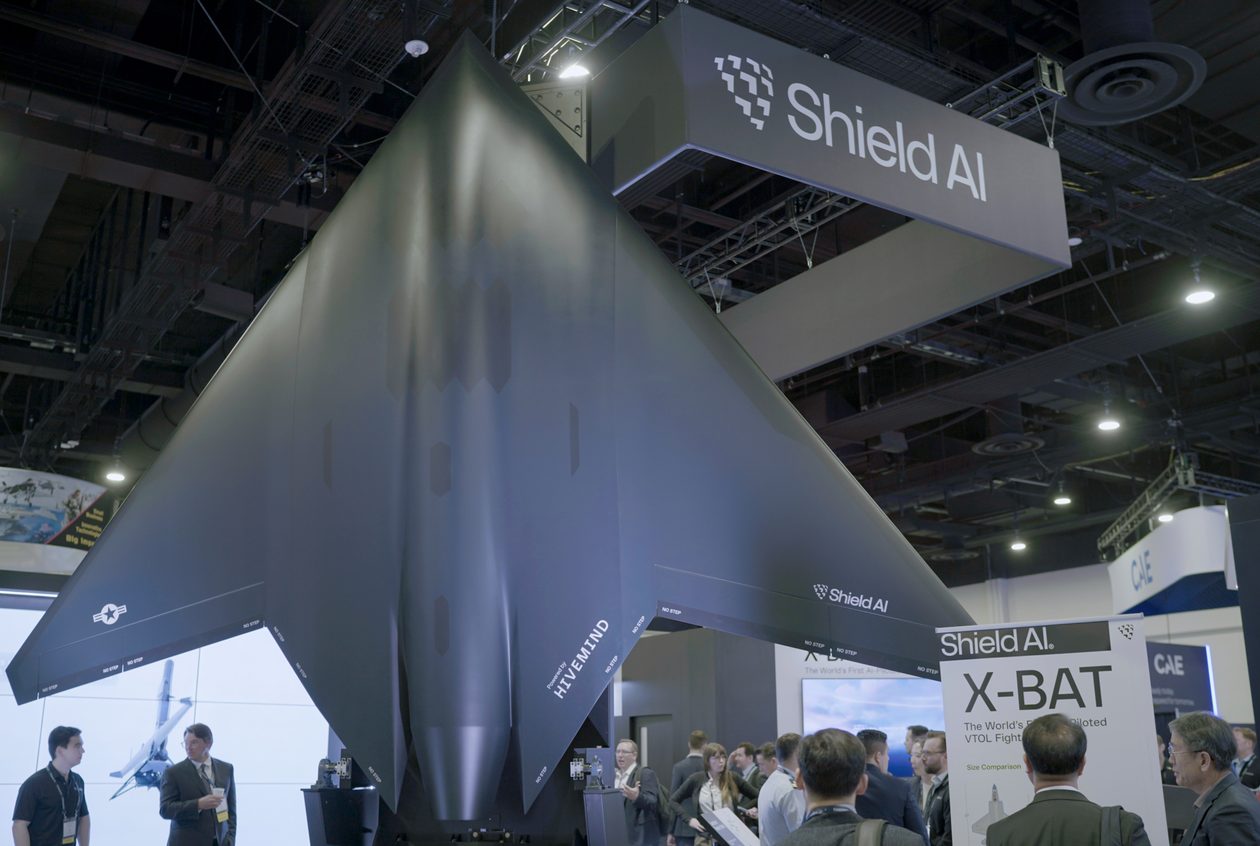
Shield AI’s new X-BAT autonomous fighter jet is designed to take off and land vertically. Photo via Shield AI.
Defense technology startup Shield AI has secured a $150 million contract from the U.S. Navy to advance development of its X-BAT autonomous fighter jet — providing fresh federal backing for the program as the company establishes its first major manufacturing footprint south of Seattle.
Last week, GeekWire reported on Shield AI’s plans to open a 420,000-square-foot engineering and production facility in Des Moines, Wash., dubbed “X-Forge 3.” The company, which is looking to add an additional one million square feet of space in the region, said it expects to employ about 4,000 workers in the Seattle area by the early 2030s.
The new $150 million contract with the Navy adds funding from the Office of the Under Secretary of Defense for Acquisition and Sustainment through its Defense Exportability Features program. The agreement supports efforts to design security and export capabilities directly into the X-BAT, a process that enables advanced U.S. military hardware to eventually be sold to international allies without exposing sensitive domestic technologies.
San Diego-based Shield AI, which raised a $2 billion venture capital round at a $12.7 billion valuation earlier this year, is matching the award with $150 million of its own capital.
Combined with a prior $100 million joint investment finalized in August under the Navy and Defense Innovation Unit’s (DIU) expeditionary strike effort, cumulative commitments behind the X-BAT now stand at $400 million.
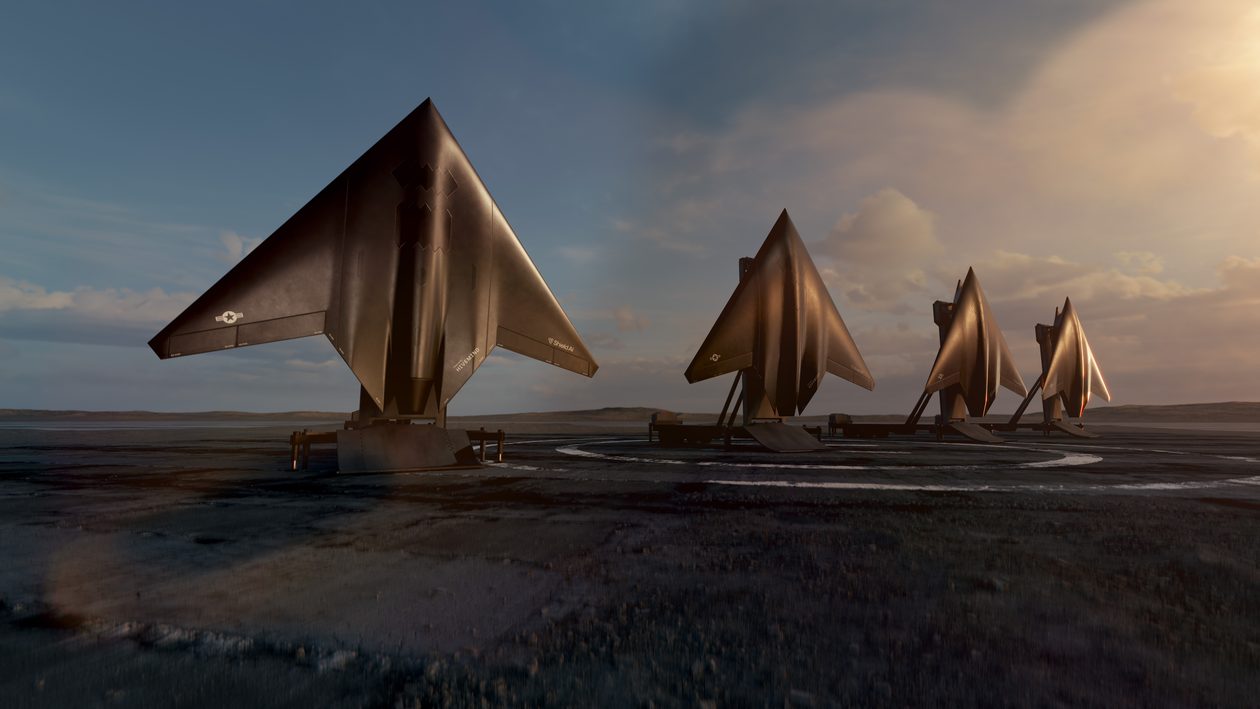
Designed to take off and land vertically, the X-BAT is built to operate from amphibious assault ships, destroyers, commercial cargo decks, and highway strips without relying on traditional concrete runways or aircraft carrier catapults. It launches from a specialized Launch and Recovery Vehicle — a mobile trailer that erects the jet vertically, allowing it to be towed on interstate highways or loaded onto ships.
At the time of its introduction last year, Shield AI co-founder and president Brandon Tseng, a former Navy SEAL, called X-BAT a “transformative, runway-independent aircraft” and noted that “airpower without runways is the holy grail of deterrence.”
The urgency behind runway-independent airpower was underscored last weekend when the U.S. Air Force withdrew strategic B-1 bombers from R.A.F. Fairford in Britain following reports of potential drone threats targeting the air base.
Shield AI expects to begin producing aircraft in Des Moines in 2028, scaling to a target production rate of roughly 150 jets per year by the early 2030s. While prototyping is based in Frisco, Texas, and flight testing will take place at Newton City-County Airport in Kansas, the Des Moines plant will house the core production line and engineering teams.
In an interview with GeekWire, Shield AI executives emphasized the speed at which it hopes to roll out the AI-piloted aircraft in Des Moines.
“This is a large program,” Armor Harris, senior vice president of aircraft at Shield AI, told GeekWire. “Building a next generation fighter jet is no small endeavor, and with the amount of interest that we’ve seen, both from our U.S. government customers and from international customers, we could be looking at building these at rates greater than fighter jets have been built in a really long time.”
Harris noted that keeping development and manufacturing closely linked allows the company to move significantly faster than traditional defense procurement cycles.
“We are testing early and often while working on the aircraft, mission systems, ship suitability and production in parallel,” Harris said in Thursday’s press release. “That approach helps us identify and resolve issues earlier, reduce development risk and move more quickly toward flight testing.”
An engineering team of roughly 500 across Shield AI and key suppliers — including GE Aerospace — is currently building flight-test aircraft.
While the X-BAT has yet to make its maiden flight, the program cleared major hardware milestones in mid-2026. Engineers completed ground engine light-off and thrust-vectoring nozzle integration using GE Aerospace’s F110 engine, alongside wind-tunnel testing to validate internal weapons bay aerodynamics at both low and high speeds.
The aircraft is powered by Shield AI’s Hivemind autonomy software, an AI pilot designed to execute tactical strike missions in contested environments where GPS and satellite communications are jammed.
The jet features a 1,000-nautical-mile combat radius and a 2,000-nautical-mile total range, topping the estimated 590-nautical-mile combat radius of the conventional Lockheed Martin F-35A.
Initial flight tests are scheduled for late 2026 in Kansas, with first production aircraft deliveries targeted for late 2028.
“X-BAT is being built to enhance the lethality, survivability and combat power of U.S. Naval Aviation,” said J.J. “Yank” Cummings, Shield AI’s head of mission solutions for the U.S. Navy and former commanding officer of the aircraft carrier USS Gerald R. Ford. “Its runway-independent design and small deck footprint can increase sortie generation and extend long-range air combat power.”
City of Seattle Mayor Katie Wilson set up a new task force to bolster the economy. (Photo via Katie Wilson for Mayor)
Seattle Mayor Katie Wilson is bringing together leaders from Amazon, Spotify, the Port of Seattle, organized labor, technology, cleantech, small business and other sectors as part of a new task force focused on rebuilding and diversifying the city’s economy.
Wilson on Wednesday announced 18 members of the Resilient Seattle Economy Task Force, which will look for ways to remove barriers to business growth, attract and retain companies and improve the process of starting and operating a business in Seattle.
“I’m charging this task force with identifying where the City can make connections, remove barriers and provide support within individual industries and across our economy,” Wilson said. “We need to diversify our economy while expanding opportunities for local entrepreneurs and young people.”
The effort builds on the city’s recently released Seawall: Building a Resilient Seattle Economy report, which called for Seattle to diversify beyond its heavy reliance on large technology companies and focus on sectors including artificial intelligence, cleantech, maritime, life sciences and space.
That report found that companies with at least 100 employees accounted for 74.5% of net job growth in the Seattle metro area from 2014 to 2023, while mid-sized companies accounted for just 16.6%.
The economic challenges have also put a spotlight on Seattle’s tax structure. As GeekWire recently reported, Seattle lost roughly 24,000 jobs between March 2020 and March 2025 even as city tax collections continued to grow, shifting more of the tax burden onto businesses.
Wilson has responded in part by freezing JumpStart tax rates in her proposed 2027 budget, citing “seismic shifts” in the technology sector.
The new task force will initially focus on downtown revitalization, business attraction and retention, cross-sector collaboration, and making it easier to open and operate a business. The task force also comes as Seattle’s business community has pressed City Hall for action on public safety, with dozens of regional CEOs recently calling for a 100-day plan with measurable goals and progress reports.
“Seattle is open for business,” said Beto Yarce, director of the Seattle Office of Economic Development.
The task force will hold industry-specific roundtables and listening sessions this year, with initial findings due in February 2027 and a final report expected in November 2027. Here’s a look at the task force members:
Bellevue, Wash.-based Temporal is expanding its security capabilities for AI agents following a $550 million funding round last month that valued the enterprise infrastructure company at $12.55 billion.
In an announcement Tuesday, Temporal revealed that team members from Oso, a New York-based startup specializing in application authorization, are joining the company to integrate access controls directly into Temporal’s platform. Meanwhile, holding company Tiny acquired Oso’s software product and customer base.
The move addresses a growing challenge for enterprise tech teams: while generative AI models handle reasoning, autonomous agents must interact with internal databases, execute multi-step workflows, and call external application programming interfaces without breaching security boundaries.
“AI safety doesn’t stop at the model,” Temporal VP of product Preeti Somal said in the release. “It extends into the applications where agents act, which is where access to systems and crucial data comes into play.”
Temporal’s primary technology, known as “durable execution,” maintains application state and execution history across system failures and network timeouts. By adding Oso’s security frameworks to this underlying engine, Temporal aims to ensure an agent’s permissions and human approvals remain intact, preventing agents from bypassing controls or repeating rejected actions.
Temporal said the addition of the Oso team will accelerate security features currently in development, with existing platform operations remaining unchanged.
“Our goal is practical: to help developers put agents to work with appropriate access and with guardrails their companies control,” said Somal. “In practice, that means asking, for each action an agent takes, who it is acting for and what that person is allowed to do, and getting the same answer every time the work is retried.”
“What makes agents valuable is the same thing that makes them dangerous – access to real systems and data. Temporal already powers agents in applications like Cursor and OpenAI Codex, and unlocking their full potential requires the right security controls. We’re joining Temporal to accelerate its work on agent authorization, giving developers more precise control over what agents can access and do.”
Co-founded in 2019 by Amazon and Microsoft veterans Samar Abbas and Maxim Fateev, Temporal provides open-source orchestration tools used by companies including OpenAI, NVIDIA, Netflix, Snap and JPMorgan Chase. The company recently surpassed $250 million in annualized revenue run rate, growing more than 200% year-over-year.
It employed about 570 people prior to the Oso deal, roughly double from a year ago, with 89 in the Seattle area. The company is fully remote. Its Bellevue office, previously occupied by OpenAI, is used mainly for meetings rather than daily work. The company recently rose to the #1 spot on the GeekWire 200, the list of the fast-growing privately-held tech startups in the Pacific Northwest.
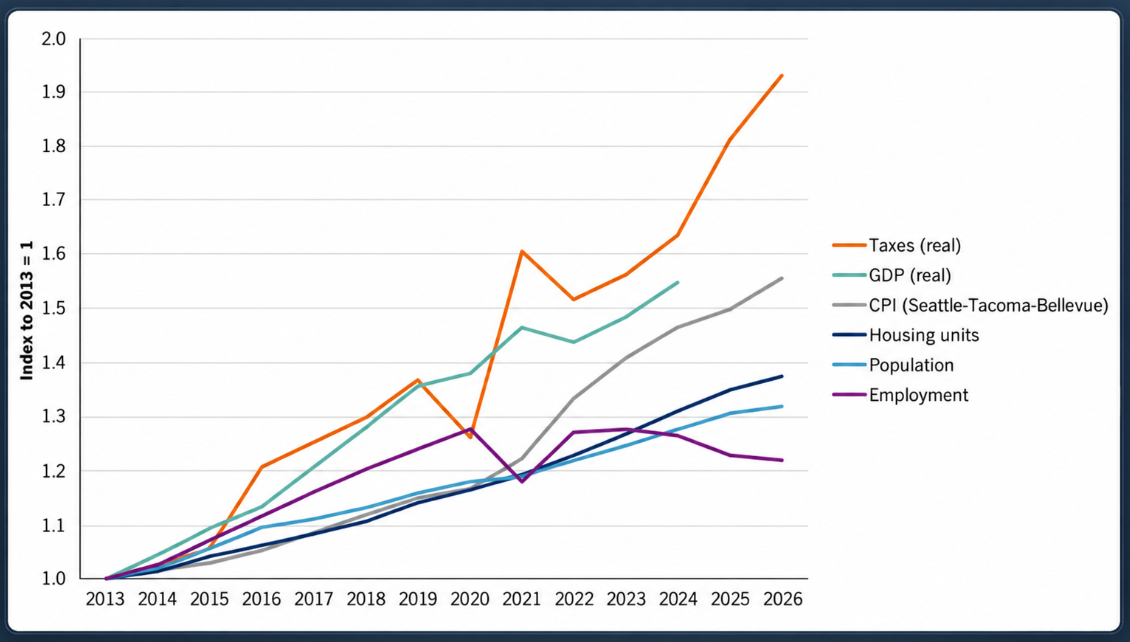
Taxes have outpaced population, employment and other other factors in Seattle (Image via ECOnorthwest)
Seattle’s tax collections have nearly tripled over the past decade, soaring from $900 million in 2013 to a projected $2.8 billion in 2026. But who pays those taxes, and how the tax revenue is collected, looks vastly different today than a decade ago.
A new report released by ECOnorthwest, commissioned jointly by the Downtown Seattle Association (DSA) and the Seattle Metropolitan Chamber of Commerce, show city tax revenues far outstripping population and job growth, driven by targeted corporate taxes on a small pool of major employers.
Between 2013 and 2025, Seattle’s tax revenues jumped 172%, outpacing population growth (31%), job growth (23%), and local inflation (50%). During that period, real tax growth grew 5.6 times faster than population and 7.5 times faster than employment.
The findings come as city leaders, major tech employers and regional business groups grapple with shifting post-pandemic work patterns and a political climate that has frequently placed large technology companies like Amazon in its sights.
According to the report, broad-based core taxes, such as property, sales, utility, and general Business & Occupation (B&O) taxes, comprised 83% of city tax collections in 2013. By 2026, those core broad taxes are projected to drop to just 52% of the total revenue.
Replacing them are narrow, targeted tax levies:
The JumpStart Payroll Expense Tax (2021): Paid by fewer than 500 companies, with the top 10 taxpayers footing 73% of the total bill.
The Social Housing Tax (2025): Paid by roughly 220 entities, with its top 10 taxpayers covering 66%.
Combined, two taxes that did not exist five years ago now account for nearly a third of all business tax dollars collected by the city. Overlap among top taxpayers means fewer than 20 companies account for roughly $356 million in annual City of Seattle revenue.
“Seattle’s tax collections are growing far faster than its population, jobs or inflation. Employers are carrying more of that burden. That trajectory is not sustainable,” said Seattle Metro Chamber president & CEO Joe Nguyen. “The question cannot always be how to collect more money. It must be how to deliver better results with the money we already have and build a tax structure that helps our economy grow.”
The heavy pivot to business revenue coincides with divergent employment trends between Seattle and its neighboring Eastside hubs.
Between March 2020 and March 2025, Seattle lost approximately 24,000 jobs, while the remainder of King County added 21,000. The report notes that Seattle lost 18,000 jobs in the single year leading up to March 2025 alone. And that figure that does not yet capture the full impact of major remote work policies and tech layoffs announced across the region.
However, in a sign that Mayor Katie Wilson is paying close attention to tech-sector headwinds and shifting job patterns, she proposed a $9.1 billion 2027 budget that would erase a $175 million general fund deficit and cut nearly $50 million in spending while freezing JumpStart tax rates.
A display at the Downtown Seattle Association’s annual event. (GeekWire Photo / Lisa Stiffler)
Seattle’s economic engine is stalling, and downtown is taking the brunt of the hit.
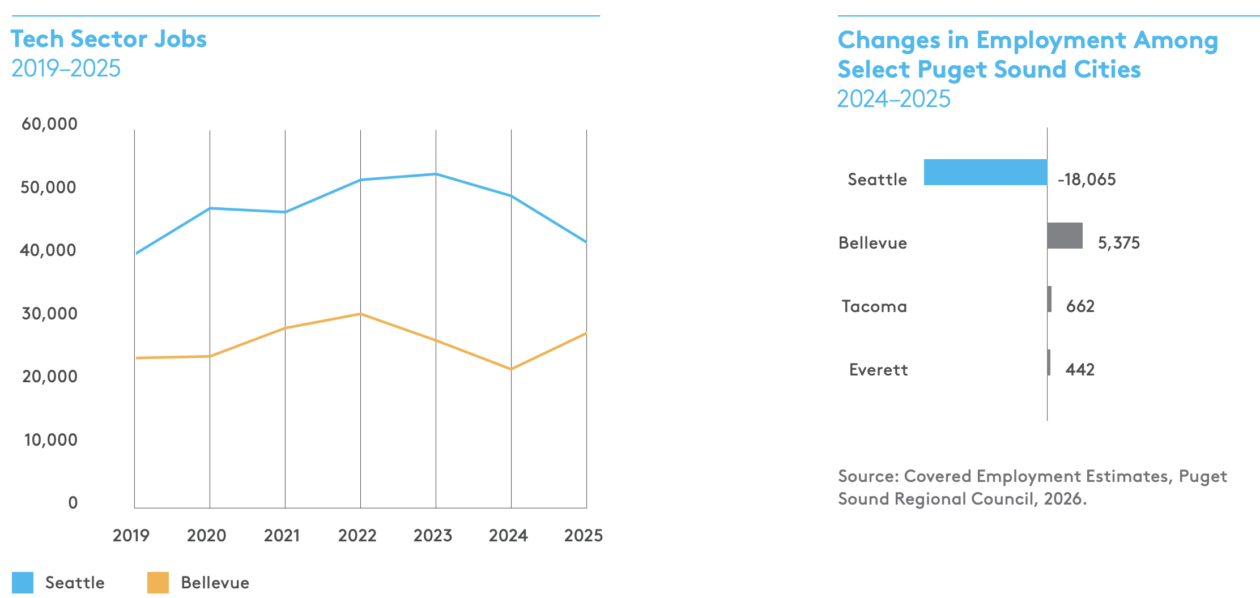
Between 2024 and 2025, Seattle shed 18,065 total jobs, with a staggering 70% of those losses—13,000 jobs—coming directly from the city’s downtown core, according to a new report released by the Downtown Seattle Association.
In some ways, it’s a tale of two cities.
While Seattle proper shrank, neighboring Eastside tech hub Bellevue gained 5,375 jobs over the same timeframe, highlighting a shifting center of gravity within the Puget Sound region.
A lot of that growth in Bellevue, and decline in Seattle is coming from one company: Amazon.
The online retail and cloud computing powerhouse employed 15,700 workers in Bellevue at the end of 2025, making it the largest employer in Bellevue at 9.85% of the total workforce, according to the city’s Annual Comprehensive Financial Report. That’s up from just a few hundred employees in Bellevue nearly a decade ago.
Amazon employs about 49,000 people in Seattle proper, though the Puget Sound Business Journal noted this week that the company has shed office space in downtown Seattle and dramatically slowed employment in the city.
A major shift is happening in tech employment as Bellevue’s tech employment grows, while Seattle’s shrinks. (Graphic via the DSA)
Other key findings from the Downtown Seattle Association report:
Tech Leads the Drop: Seattle’s sharpest sector declines were concentrated in Information and Technology, Professional Services, and Construction.
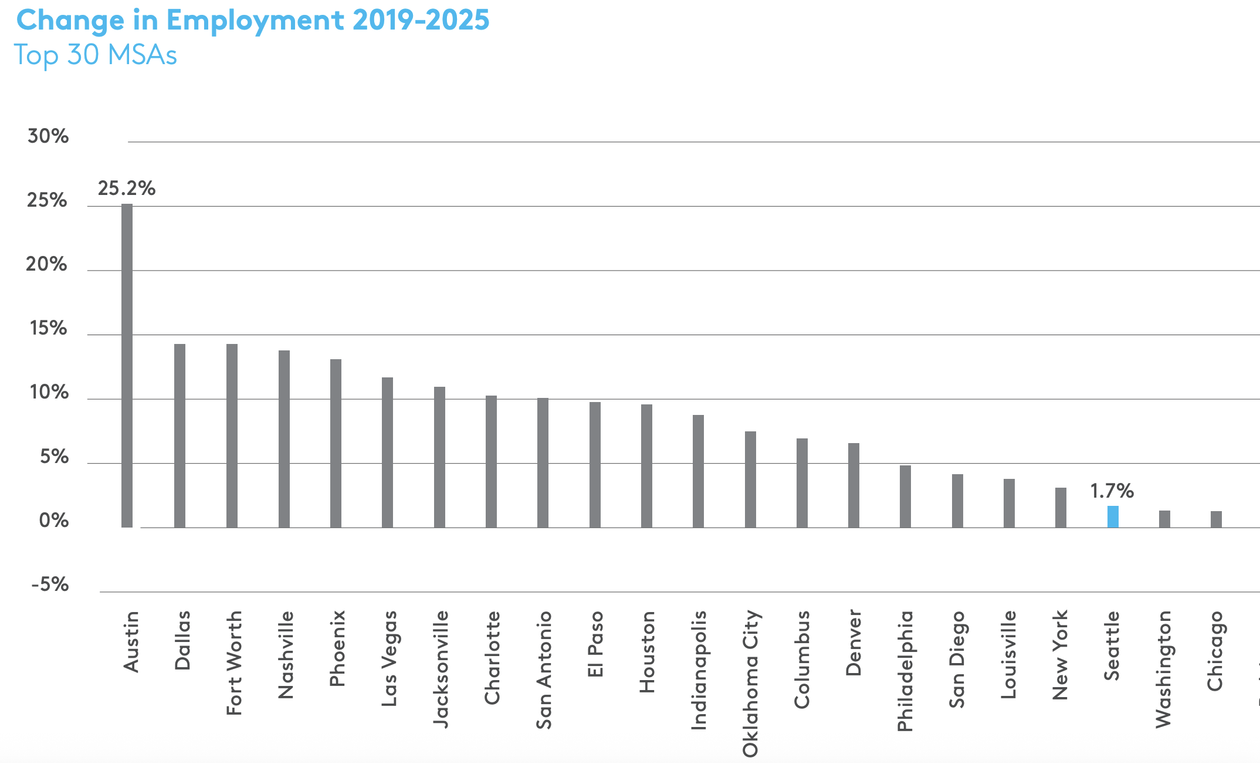
National Lag: Out of the top 30 U.S. metropolitan statistical areas, the Puget Sound region ranked 20th in job growth between 2019 and 2025. Total regional nonfarm growth rose just 1.7% over six years, vastly underperforming peer markets like Austin (25.2%), Dallas/Fort Worth (14%), and Nashville (14%).
Stagnant Commuter Foot Traffic: Inbound commuter visits to downtown Seattle remain stuck in the low 60% range compared to 2019 baselines, sliding 38% since the pandemic — a steeper loss than Bellevue (-21%), Austin (-23%), or Chicago (-32%).
Intra-Region Tech Shift: While Seattle’s tech headcount dropped from its 2023 peak, Bellevue’s tech job totals surged upward between 2024 and 2025, regaining momentum.
A new report shows weakness in Seattle’s economic growth from 2019 to 2025. (Graphic via the DSA)
The latest findings build on a growing chorus of criticism regarding the city’s fiscal climate. A June analysis by the DSA argued that Seattle’s controversial “JumpStart” payroll expense tax—passed in 2020 and targeting major employers like Amazon—is backfiring by driving business across Lake Washington.
The June report highlighted that since 2020, downtown Seattle lost roughly 30,000 jobs and saw office building values plummet 48%, while Bellevue—which levies no comparable head tax—gained jobs and expanded commercial values by 7%.
Though JumpStart projects $388 million in revenue this year, about 70% of that relies on just 10 major companies, underscoring how heavily Seattle leans on a handful of tech giants.
City of Seattle Mayor Katie Wilson has consistently pushed back against blaming downtown’s struggles on any single tax, pointing to broader post-pandemic remote-work trends, high interest rates and national tech restructurings that affect cities nationwide. She credited JumpStart with saving the city from drastic service cuts during the pandemic and noted that Seattle’s recovery remains resilient.
However, in a sign that Mayor Wilson is paying close attention to tech-sector headwinds and shifting job patterns in the region, she last week proposed a $9.1 billion 2027 budget, which would erase a $175 million general fund deficit and cut nearly $50 million in spending while freezing JumpStart tax rates.
Citing “seismic shifts” in the technology sector, the mayor’s freeze leaves the payroll tax untouched to offer big employers a period of tax stability, even as she continues directing JumpStart revenues beyond their original intent to cover core general fund operations.
“These were a set of taxes that may have provided some short-term gain to the city coffers, but are inflicting long-term pain,” DSA President and CEO Jon Scholes told GeekWire in an interview in June. “We predicted that at the time, and were sort of dismissed and ignored.”
Shield AI’s new X-BAT autonomous fighter jet is designed to take off and land vertically. Rendering via Shield AI.
Traditional military air operations rely heavily on fixed, vulnerable targets: long concrete runways and aircraft carriers.
Shield AI’s new X-BAT autonomous fighter jet is designed to bypass that infrastructure entirely, utilizing a vertical takeoff mechanism and a mobile launch trailer that can operate from highways, remote outposts or standard cargo ships.
Operated without a human in the cockpit, the aircraft relies on aboard algorithms to navigate and execute strike missions where GPS and satellite communications are jammed. The X-BAT has yet to make its maiden flight, but Shield AI and GE Aerospace cleared a critical milestone this summer by completing ground engine tests and integrating the jet’s F110 thrust-vectoring nozzle.
With news that the X-BAT will be mass produced in the Seattle area — bringing 4,000 jobs to the region by the early 2030s — we decided to take a closer look at this groundbreaking aircraft.
Takeoff/Landing Style: Vertical Takeoff and Landing (VTOL)
ObjectiveCombat Radius: About 1,000 nautical mile combat radius (out and back), topping the roughly 590 nautical miles of the Air Force’s F-35A.
Total Range: 2,000 nautical miles.
Internal Payload Bay Capacity: Up to 2,000-pound class weapons.
Engine: GE Aerospace F110
Software: Shield AI Hivemind autonomy system.
Primary Propulsion & Flight Control: Autonomous AI agent, replacing human onboard pilot.
Logistics & Mobility: Road-transportable via dedicated Launch and Recovery Vehicle (LRV) trailer; highway-mobile and ship-deployable (destroyers, LHA/LHD amphibious assault ships, expeditionary bases). Tagline: “Earth is our runway.”
Target Production Rate: ~150 aircraft per year by early 2030s
Key Operational Milestones: First vertical flights expected in 2026. Production is set to start in Des Moines in mid-2027. The first jet is projected to be built in early 2028 and fly by that summer. The Navy could start using it by the end of 2029. Full production is planned for the early 2030s.
The X-BAT autonomous fighter jet will be built at a new facility in Washington state. Renderings and images via Shield AI.
DES MOINES, Wash. — Defense tech powerhouse Shield AI is establishing a massive advanced manufacturing hub in Washington state, tapping the Seattle region’s deep aerospace and tech roots to build a next-generation autonomous fighter jet called the X-BAT.
The project could transform the regional labor market: Shield AI says it expects to have 4,000 workers in the region by the early 2030s as it ramps up mass production of the AI-piloted, 26-foot long aircraft.
It marks a major expansion of advanced aerospace manufacturing in the Seattle region, bringing autonomous military aviation directly into Boeing’s backyard and cementing the state’s position at the center of the AI-defined defense era.
The San Diego-based company, valued at $12.7 billion following a $2 billion venture capital round earlier this year, is looking to complete construction on a 420,000-square-foot facility in Des Moines, Wash., just south of Seattle, next spring.
That physical footprint is expected to grow quickly. Armor Harris, senior vice president of aircraft at Shield AI, told GeekWire that the company is actively looking to add another 1 million square feet in the region to support its long-term manufacturing push.
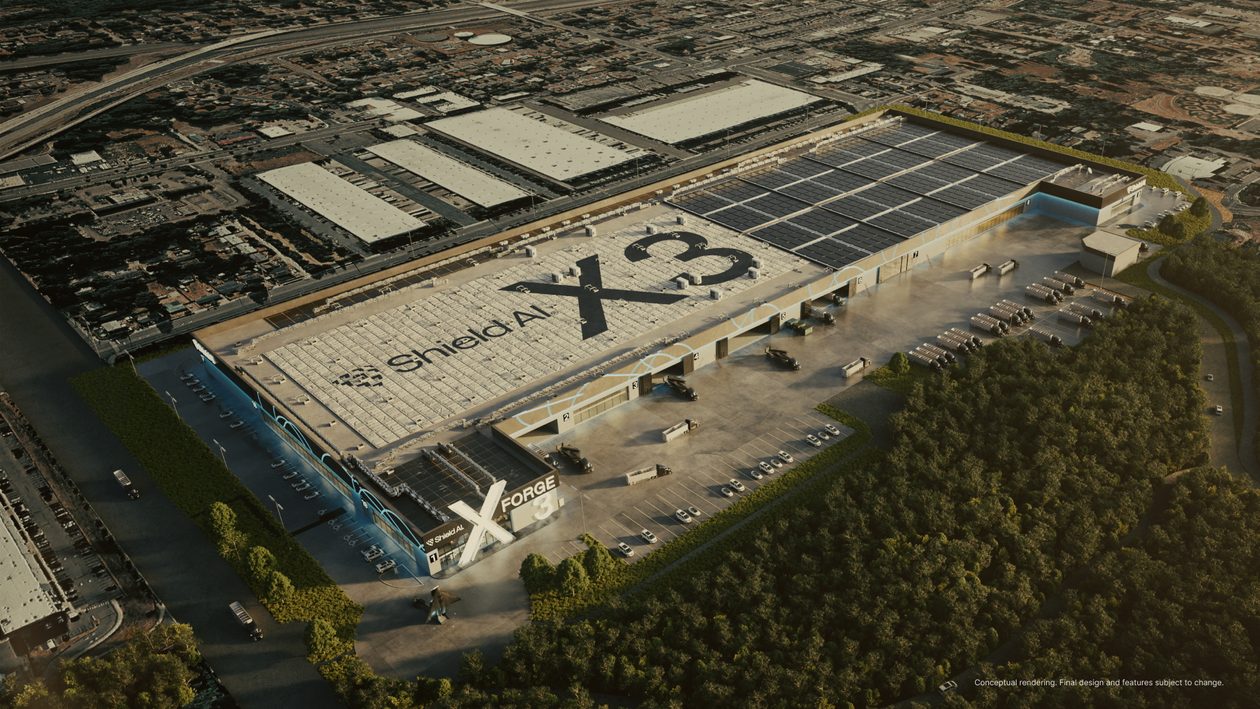
Named X-Forge 3, the initial facility will serve as the primary manufacturing and engineering center for the X-BAT. It’s now under construction about 15 minutes south of Sea-Tac airport in the Des Moines Creek Business Park West, at 1800 S 216th St.
Developed by Panattoni, the site was selected by Shield AI midway through construction. The company is now taking it to completion, with Harris noting that they are “putting the roof on right now.”
Shield AI’s new X-Forge 3 facility south of Sea-Tac airport is currently under construction with an opening date slated for next Spring.
Unveiled last year, the X-BAT is an AI-piloted strike fighter that takes off and lands vertically, carries up to 2,000-pound class weapons in internal bays, and is designed for a 1,000-nautical-mile combat radius — which, when it takes flight, would top the estimated 590 nautical mile combat radius of the Lockheed Martin F-35A.
An economic analysis released by the company estimates Shield AI’s X-BAT program will inject roughly $73 billion into Washington state’s economy over the next two decades as production scales toward full capacity. Projections provided by the company say up to 27,000 direct and indirect jobs — including suppliers — will be generated by the expansion by 2046.
“This is a large program,” said Harris in an interview with GeekWire. “Building a next generation fighter jet is no small endeavor, and with the amount of interest that we’ve seen, both from our U.S. government customers and from international customers, we could be looking at building these at rates greater than fighter jets have been built in a really long time.”
Harris said he expects the first X-BAT aircraft to roll off the line in Des Moines in 2028, with full production ramping up to about 150 aircraft per year by the early 2030s.
The company evaluated more than a dozen sites for the facility, and chose the Seattle area for a simple reason: talent.
Harris cited the region’s robust aerospace legacy, as well as technology giants like Amazon and Microsoft and a burgeoning space and satellite industry which has taken shape in recent years. A number of fast-growing and heavily funded defense tech companies — including Anduril, Armada and Nominal — have also established beachheads in the region in recent years.
He described the X-BAT as a “modern sixth-generation fighter jet” that’s essentially a “flying sensor suite,” ingesting information in real time in order to make lightning-fast decisions.
Deep aviation and technology roots
Building that type of aircraft takes a very specialized workforce, one that Harris said is rooted across technology, aerospace, artificial intelligence, materials science and advanced manufacturing. Those are major strengths of the Seattle area workforce.
“We’re able to tap into that existing lineage and not have to necessarily train a workforce from the ground up, which would be hard to do on the timelines we’re trying to execute,” said Harris, who is planning to relocate to Washington state from Dallas.
To support its ambitious production schedule, Shield AI is actively recruiting across both software engineering and specialized aerospace roles. The initial hiring push for the Des Moines facility spans autonomy developers, flight-control software engineers, composite technicians, and shop-floor assembly specialists.
In one job listing for an engineering manager to lead the X-BAT hardware test software team, the company notes that the ideal candidate “has personally built or led the development of automated hardware test systems used in production, manufacturing, qualification, or other high-consequence environments.”
In another Seattle area job listing for a staff fuel engineer, the company says it is looking for a someone with “strong thermofluid fundamentals, engineering judgment, and the ability to understand fuel system behavior across demanding aircraft operating conditions while serving as the focal point between propulsion, vehicle teams, suppliers, and flight operations.”
Pay across those engineering roles ranges from $169,000 to $300,000 annually, according to the company job postings.
The company currently lists more than 110 open roles in the Seattle area, including a dozen or more in categories such as avionics and electrical; mechanical and thermal; software and networks; and aerostructures.
Choosing Washington also allowed Shield AI to buck a pervasive defense industry trend: separating engineering teams from physical factory floors to shave down labor costs.
While shifting assembly lines to lower-cost regions can cut costs, Harris said that remote manufacturing introduces hidden operational friction when building complex, software-defined aircraft like the X-BAT.
“We fundamentally believe in the colocation of engineering and production is the fastest way to bring capability to our customers,” said Harris, adding that combining engineering and production in a common facility is “one of the secret sauces of Shield.”
In a statement, U.S. Rep. Adam Smith (D-Wash.) — whose district includes Des Moines — welcomed Shield AI and the X-BAT manufacturing facility to King County.
“This hub will create high-quality jobs, strengthen Puget Sound’s expanding technology and aerospace sectors, and further diversify our local economy,” Smith said. “Reimagining aviation will have a rightful home here in Washington’s Ninth District.”
Katherine Caffrey, the city manager for City of Des Moines, welcomed the new jobs and economic investment in the community.
“Des Moines sits at the heart of the Puget Sound aerospace industry, and these jobs and this investment reflects exactly what we want Des Moines to be, a place where families can build strong careers close to home,” Caffrey said.
The ‘holy grail of deterrence’
Shield AI officially introduced the X-BAT program to the public at an October 2025 event in Washington, D.C., unveiling the aircraft before an audience of military leaders, elected officials and defense industry partners.
At the time, Shield AI co-founder and president Brandon Tseng, a former Navy SEAL, called X-BAT a “transformative, runway-independent aircraft” and noted that “airpower without runways is the holy grail of deterrence.”
That vision quickly gained momentum.
Last month, the U.S. Navy backed the program through an initial $50 million development contract, envisioning the autonomous fighter jets operating directly from destroyers, amphibious assault ships and converted cargo vessels to project long-range airpower without relying on traditional aircraft carriers.
Shield AI recently won a contract with the U.S. Navy for the X-BAT, designed to take off and land vertically.
That momentum grew internationally earlier this month, when Shield AI signed a five-year letter of intent with Polish defense companies PGZ and WZL-2. Under the framework, the companies are exploring plans to help build, supply, and repair the X-BAT, a partnership that could give NATO allies a fighter jet capable of operating even if local airfields and runways are destroyed or non-existent.
The X-BAT launches and lands vertically using a specialized Launch and Recovery Vehicle —a mobile trailer that erects the jet vertically, allowing it to be towed on interstate highways or loaded onto cargo ships to set up a field launch pad in minutes.
Harris noted that while a final site selection for manufacturing the LRV trailers has not been made, expanding production into the Puget Sound region remains on the table given the area’s deep manufacturing base.
In addition to the mammoth manufacturing facility in Des Moines, Shield AI announced that it is expanding its presence in both Texas and Kansas.
In Frisco, Texas, the company operates its X-Forge 1 site to handle core prototyping, software integration, and initial engineering for the autonomous fighter. Meanwhile, at X-Forge 2 in Newton, Kansas, Shield AI has expanded its airport footprint to serve as the program’s dedicated flight test, customer acceptance and maintenance hub.
Shield AI expects its X-Forge 2 site in Kansas to support approximately 1,800 regional jobs by the early 2030s, growing to 2,900 positions by 2046 with a projected $5 billion in regional economic impact over that period.
Addressing the cross-country logistics of moving completed aircraft from the Puget Sound assembly line to Kansas for flight testing, Harris explained that the X-BAT can be easily moved via the existing transportation corridors.
“The X-BAT is designed to be road transportable,” he said. “So we’re taking advantage of that.”
Beyond the immediate manufacturing logistics, Harris views the multi-billion-dollar expansion as a major long-term validation of the region’s industrial relevance.
“There’s been a strong narrative of like, ‘Hey, all the jobs are migrating elsewhere,’ and I think this is a big win for the region to capture a major program from a rapidly growing company like this,” Harris said. “This can be the backbone for years of growth in the future.”
That’s a message that Gov. Bob Ferguson is getting behind, saying Washington state is a place where “big ideas take flight.”
“Shield AI’s decision to build its new X-BAT manufacturing facility here is another sign that the future of aerospace is being built in Washington,” Ferguson said in a statement. “We welcome Shield AI and the thousands of good-paying jobs this investment will bring.”
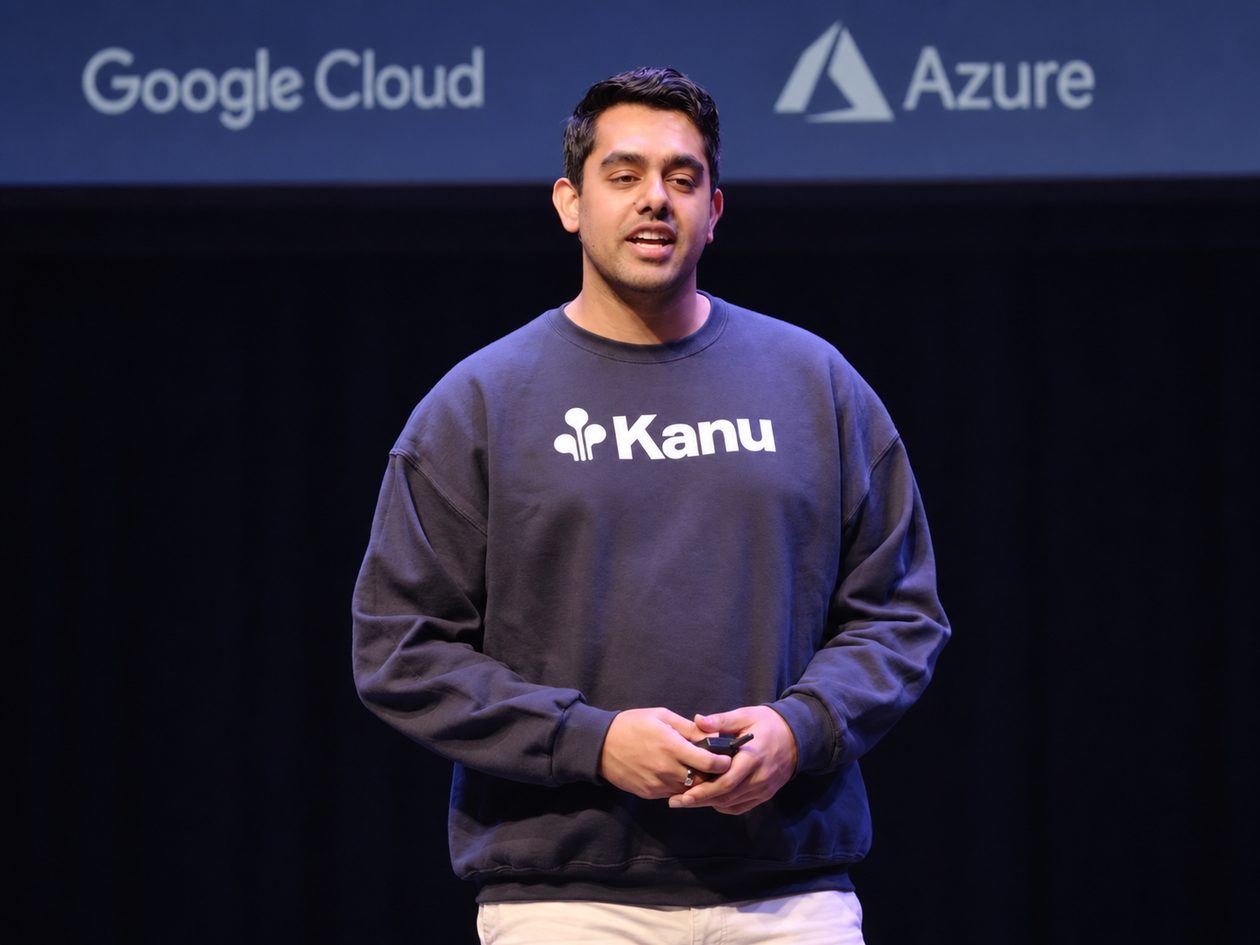
Karan Grover is CEO of the new Seattle startup Kanu AI. (Photo via PR Newswire)
Seattle-based Kanu AI announced $11.7 million in new funding on Wednesday to expand a platform that automatically turns everyday employee tasks into custom, enterprise-grade software.
Trilogy Equity Partners led the round, with participation from Andreessen Horowitz’s a16z speedrun, BMW i Ventures, and Accel.
Founded just over a year ago, Kanu AI addresses a common operational headache: valuable business knowledge getting trapped inside spreadsheets, inboxes, and individual workers’ heads. Rather than forcing companies to buy rigid off-the-shelf software or spend months on custom engineering, Kanu lets staff demonstrate how they complete work. The platform then builds, deploys, and updates those workflows directly within the customer’s cloud.
“Companies have spent decades buying software built around someone else’s idea of how they should work,” said Karan Grover, founder and CEO of Kanu AI. “Instead of renting generic intelligence from another vendor, companies can use Kanu to turn their own data, judgment, and operating expertise into an asset they own.”
Kanu reports that it has more than doubled its revenue in every quarter since launch. Its platform is currently used by enterprises across commercial real estate, insurance, financial services, and technology.
In one deployment for a national customer, Kanu said it compressed a complex data-analysis process spanning PDFs, emails, CRMs, and GIS systems from eight weeks down to under 10 minutes. The company expects the tool to cut its annual software costs by over $1 million while driving millions in new revenue.
To meet enterprise security standards, Kanu runs entirely inside the client’s own cloud infrastructure, ensuring data stays behind existing firewalls. The platform also includes human approval steps and provides full audit trails for every automated output.
Kanu AI plans to use the capital to hire across engineering and business roles. Its software is available today through the AWS and Google Cloud marketplaces. The company employs 10 people, with plans to reach about 15 employees by the end of the year.
Before founding Kanu AI, Grover was a machine learning engineer and three-time founder, as well as a Y Combinator alumnus. He previously worked as an engineer at Amazon and DoorDash. Early in his entrepreneurial career, he created a startup that built 3D audio tools to help blind individuals audibly “hear” and navigate their physical surroundings.
Kompeld founders Ryan Morel, left, and Adam Kapel, right, believe many go-to-market problems are actually messaging problems.
After working together for years — including at Seattle logistics startup Flexe — Adam Kapel and Ryan Morel reunited this spring to launch Kompeld, a Bainbridge Island startup focused on helping companies build better narratives.
Kompeld has developed a system for measuring how well companies explain what they do and why customers should care. The startup has tested it on more than 150 technology companies and found that about half have messaging that falls somewhere between average and weak.
The two-person, bootstrapped startup is using AI to turn the founders’ experience in business messaging into a system that helps companies focus their sales stories on what customers need, rather than on the products they sell.
We caught up with Morel for this edition of GeekWire’s Startup Spotlight to learn more about the startup.
In 50 words or less, give us your startup’s elevator pitch?
Kompeld narrative systems turn subjective storytelling into an objective revenue driver. We continuously diagnose, architect, improve and align commercial messages across every revenue funnel stage. We replace gut-feel branding with the structural logic that creates demand, increases win rates and accelerates growth.
What problem are you obsessed with solving?
The hidden revenue barriers caused by self-centered, product-first corporate messaging. Most B2B organizations plateau at one point or another because they focus entirely on themselves rather than the buyer’s operational reality.
What surprised you after talking to customers?
How many B2B leaders passionately want to be customer-centric yet lack any concrete framework to actually be customer-centric? Everyone treats it as a core goal, but struggles to turn that into action across the organization. They simply do not know how to hardcode buyer perspectives, behaviors and outcomes into their daily revenue process. That leaves customer-centricity as an abstract aspiration rather than an institutionalized system. And without that, go-to-market teams default to product-first habits, dilute messaging impact and hinder pipeline growth.
How has AI changed the way you build your company?
Three direct ways. First, AI allows us to turn our narrative expertise and best practices into the repeatable, defendable diagnostic structures and processes that customer-centric narrative systems require. Second, AI tools automate routine steps so we can deliver much faster. Third, AI shapes our delivery model. Instead of traditional software, we can deliver purpose-built narrative protocols based on customer’s specific needs.
What’s one thing people misunderstand about your startup?
Executives misunderstand the difference between a creative brand story and a revenue narrative. And as a result, they misunderstand the focus, approach and value of narrative. Brand stories serve a subjective purpose aimed at emotion, whereas narratives are structured, repeatable systems built strictly to drive revenue and growth.
What’s the toughest decision you’ve made in the past year?
Telling Adam (Kapel) he had to come out of semi-retirement to build Kompeld.
What’s the one piece of advice you give to other entrepreneurs?
Recognize that it’s not about you. Founding a company requires deep personal passion for your idea, but winning requires turning that perspective entirely toward the buyer. Step away from the internal origin story and feature pitches and focus on the customer’s operational reality, their daily disruptions, their urgent challenges and their decision-making criteria.
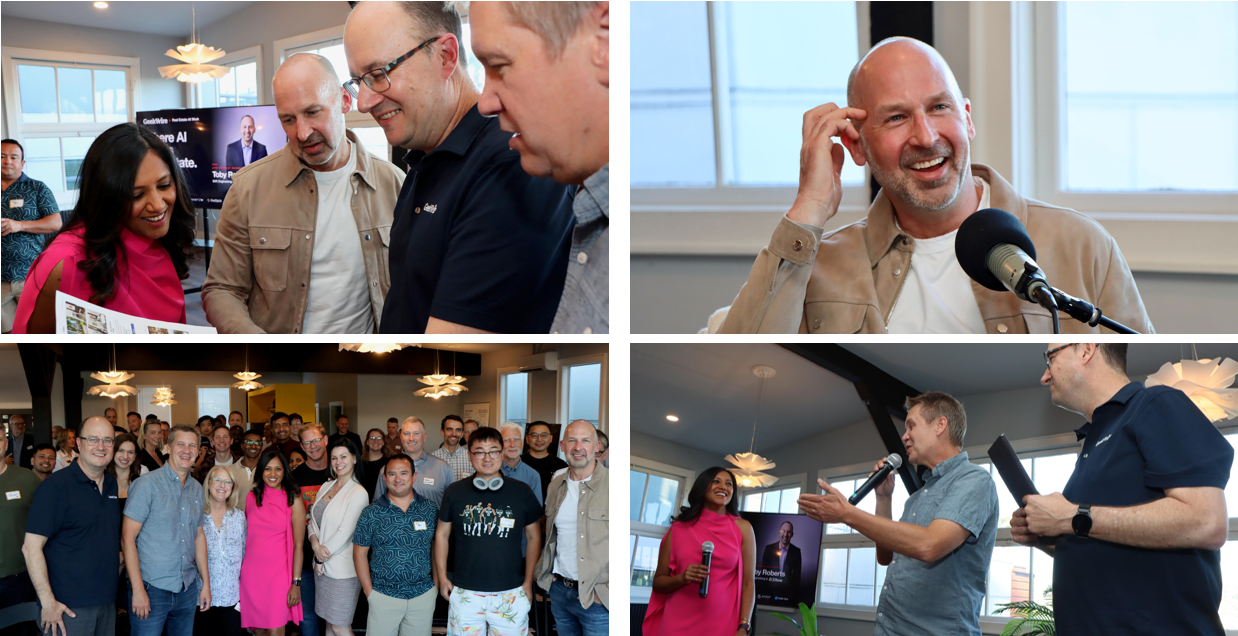
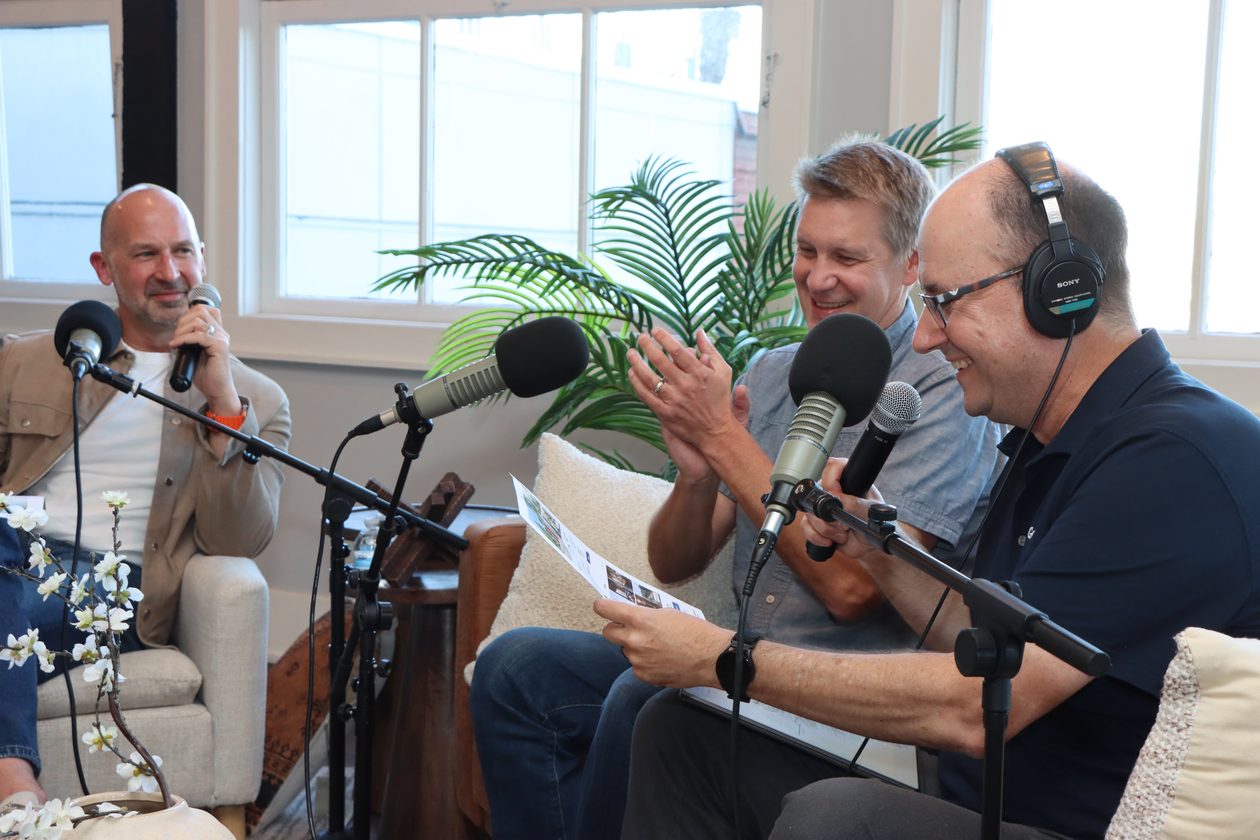
Scenes from the live GeekWire Podcast recording at Atmosphere Seattle, with Zillow Senior Vice President of Engineering Toby Roberts, Real Estate At Work host Leka Devatha, and GeekWire co-founders John Cook and Todd Bishop. (GeekWire Photos / Curt Milton)
Zillow launched 20 years ago, and we’ve been covering the Seattle-based company since before it had a name. This week, we’re looking ahead to what’s next in real estate and technology.
On this episode of the GeekWire Podcast, recorded live at Atmosphere Seattle overlooking Lake Union, Zillow Senior Vice President of Engineering Toby Roberts joins us to talk about what AI is doing to the business of buying and selling homes.
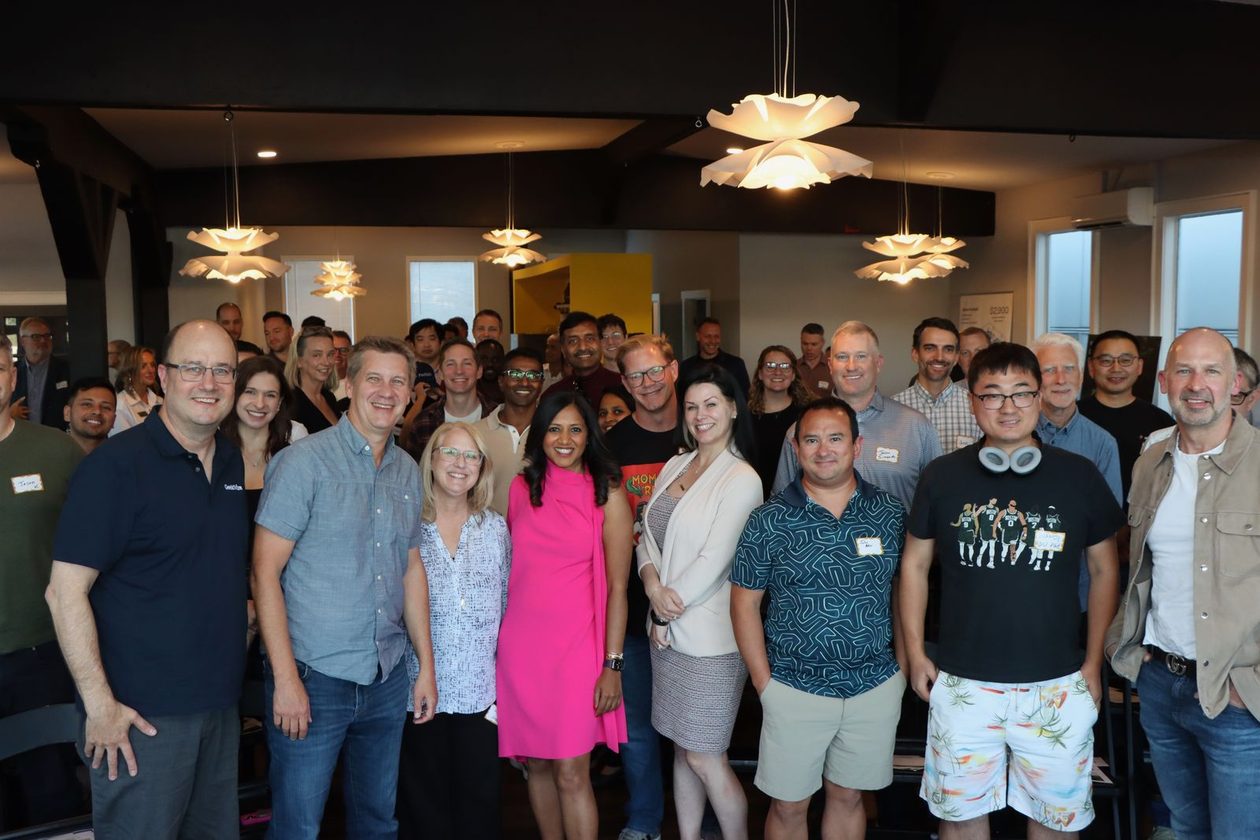
The show was recorded in partnership with Real Estate At Work, the networking group hosted by Leka Devatha, a broker with Real Residential and founder of the redevelopment firm Rehabit Homes, in front of a room of brokers, investors and technologists.
Listen here, or subscribe on Apple or Spotify, and keep reading for highlights.
AI agents and real estate agents: Roberts called AI “a complete watershed moment” that “has changed the full ecosystem” of buying and selling homes.
His position is that AI agents will work as a copilot for real estate agents rather than replace them. He cited what’s already happening inside Zillow’s CRM for agents, where the company has built conversation summaries and follow-up prompts, such as where the loan stands, whether the customer has submitted their documents, and what the next step should be.
But there’s still the human side of the business, with Roberts noting that 50% of people cry at some point during a home purchase. It’s the biggest transaction many people will ever take part in, with huge financial and personal stakes, and that’s the part of the job that still needs a person.
If the AI agents can do more of the grunt work for real estate agents, he said, “they can spend more time focused on that human connection that has to exist in this really scary transaction.”
Real estate professionals, investors and technologists at the live GeekWire Podcast recording at Atmosphere Seattle with Zillow’s Toby Roberts, presented with Real Estate At Work. (GeekWire Photo / Curt Milton)
Real or AI? John raised a New York Times story published days before the show, on listing sites filling up with fake fireplaces, enhanced views and virtual landscaping. Roberts said listings “should accurately represent the state of the home,” noting that fake fires in fireplaces predate AI, going back years to Photoshop.
In July, Zillow said on its site it “supports clear disclosure when A.I. is used to materially alter a listing image” and that “where possible, believes consumers should be able to view the original content alongside the altered version.”
Zillow does offer generative AI on the buyer’s side, where a shopper can restyle a listing photo to see the room a different way. Roberts said the point is that the buyer chooses it, rather than the original photo being altered before anyone sees it.
Zillow and ChatGPT: The company was a launch partner in OpenAI’s app store, which John tried the day before the show. He clicked to request a tour inside ChatGPT for a home on Whidbey Island, and a human agent called him two minutes later with no idea that the lead came from a chatbot.
Asked about the integration, Roberts said it’s still early, but the people who show up that way are serious about buying. Zillow built its own map inside ChatGPT, pins and all, and those leads reach agents the same way they would from Zillow’s own app.
One big consideration was security and permissions. Zillow connects to ChatGPT through MCP, the Model Context Protocol, the standard that lets a chatbot plug into an outside service.
It was still new when Zillow started, and the sign-in and permissions pieces were “still very much in its infancy,” so Zillow had to build some of it itself. Because the company originates mortgages, it also has to follow fair housing and fair lending rules, which he called “an absolute must.”
Zillow’s Toby Roberts, left, with GeekWire co-founders John Cook and Todd Bishop during the GeekWire Trivia Challenge at the live podcast recording at Atmosphere Seattle. (GeekWire Photo / Curt Milton)
AI inside Zillow: Roberts runs Zillow’s core technology initiatives, with a team of more than 650 engineers. He shared some of the numbers on AI-assisted coding inside Zillow: 97% of engineers are using the tools, and code is reaching production about 40% faster than in the past.
But even as engineers write more code, other engineers still have to review it. Roberts said that code review process is the next thing Zillow needs to speed up, “otherwise, we inundate our developers with just reading more and more code reviews, day after day.”
Roberts said Zillow hasn’t made the wholesale shift to small, self-contained teams that some have predicted. Instead it has placed AI champions across every part of the company, and set up internal groups where employees compare what worked and what didn’t.
It has also built a way for teams to share AI skills across the company. Roberts’ example was a financial calculation that comes up over and over. A team can build one skill and share it, so Zillow isn’t running “different, conflicting, and competing” versions of the same math.
Then it’s the GeekWire Trivia Challenge: We present four extraordinary Zillow listings for unusual buildings that were converted into homes. Three are real. One is an AI deepfake. Check out the handout here with the four listings, and see if you can tell the difference.
The 2025 “Uncommon Thinkers” award winners, from left: Anindya Roy, co-founder of Lila Biologics; Kiana Ehsani, co-founder of Vercept; Max Blumen of Tin Can representing winner Chet Kittleson, co-founder of Tin Can; Jeff Thornburg, co-founder of Portal Space Systems; Jay Graber of Bluesky; and Brian Pinkard, co-founder of Aquagga. (GeekWire Photo / Kevin Lisota)
It’s the final call to recognize the Seattle area’s boldest innovators — nominations for GeekWire’s 2026 Uncommon Thinkers Awards close this Friday. Help us select individuals who challenge conventional thinking, push boundaries and make an impact across the region.
Now in its fourth year, and in partnership with Greater Seattle Partners, the program aims to honor inventors, scientists, technologists and entrepreneurs who are transforming industries and driving positive change throughout the world.
Community nominations will be accepted through Friday, Sept. 18 at 11 a.m. PT, after which a panel of judges will select honorees. They’ll be celebrated on stage during a VIP reception at the annual GeekWire Gala on Dec. 10. Early-bird tickets available here.
Honorees are selected based on innovation, creativity and leadership and should have a track record of introducing novel ideas, technologies, or solutions that challenge the status quo. Nominees should also demonstrate a measurable and meaningful impact on their respective fields or industries, contributing to the betterment of society.

 Login