Reading view

There are new articles available, click to refresh the page.

European Union grants US request to restrict satellite images of Iran War region

The European Union has begun delaying the release of satellite images showing shipping lanes near the Strait of Hormuz by 24 hours. The move comes in response to an earlier US government request and coincides with the Trump administration ramping up the war with Iran once again.

The unusual change in the free and open data policy for Europe’s Copernicus Earth observation program was revealed by Space News, which reviewed a copy of the decision made by the Council of the EU on July 13. The ordered delay applies to images taken by Sentinel-1 and Sentinel-2 satellites and covers the Gulf of Oman region that includes shipping lanes leading to and from the contested Strait of Hormuz.

The US government first requested that the European Union restrict Copernicus satellite imagery on May 26, according to the decision document seen by Space News. That request occurred during a shaky ceasefire period for the war that began on April 8 and ended on July 8, when the US military resumed a broader campaign of military strikes following an announcement by President Donald Trump.


Read full article

Comments

© European Union | Copernicus Sentinel-2

Robot snakes searched for Venezuela earthquake survivors in collapsed buildings

Robots slithered like snakes into the rubble of collapsed buildings to search for trapped survivors in the aftermath of Venezuela’s double earthquake disaster.

The so-called snake robots represented a unique technological aid for international search and rescue efforts following two earthquakes that struck Venezuela on June 24, killing more than 5,000 people and leaving behind 16,740 injured. Rescuers from around the world used trained dogs, seismic and acoustic listening devices, video cameras on sticks, or thermal imaging cameras to search for signs of survivors—but the snakebots equipped with a video camera could squeeze through tight spaces to search deep within fallen building debris.

“The reason why snake robots are useful is they can get into tightly packed volumes that machinery and people otherwise cannot, and that's important in search and rescue because we were able to extend the visual reach of the rescue workers in a safe way,” Howie Choset, head of the Biorobotics Lab at Carnegie Mellon University in Pittsburgh, told Ars. “In a sense, you're doing minimally invasive surgery on a structure with a snake robot.”

Read full article

Comments

© Carnegie Mellon University

Hyundai claims humanoid robot plan is not part of talks with striking workers

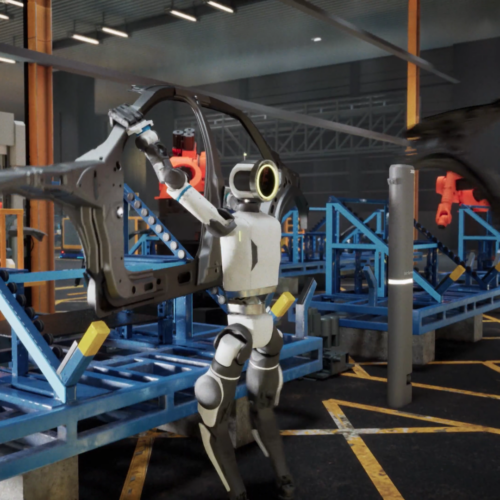
Hyundai Motor Company’s plan to put humanoid robots to work by 2028 is not part of current negotiations with striking South Korean autoworkers, according to the company.

The automaker is disputing news reports that partial labor strikes by the Hyundai Motor union at the world’s largest automotive plant in South Korea were spurred by concerns about the company's planned deployment of humanoid robots in the United States starting in 2028. A company statement shared with Ars describes the union’s demands as focusing on compensation-related issues such as wage increases, bonuses, and an extension of workers’ retirement age.

“Potential deployment of robots in Korean production facilities is not part of the current labor-management discussions,” according to the Hyundai statement. “Hyundai Motor Company remains committed to constructive engagement with the union and to reaching an agreement that supports the long-term interests of both employees and the company.”

Read full article

Comments

© Boston Dynamics

Ukrainian drones deliver robots directly into battle by sea and air

In the latest twist on battlefield innovations, Ukraine has used both flying drone carriers and drone boats to send ground robots armed with weapons or explosives into battle.

The drone-assisted deployments have enabled slower wheeled robots to bypass tough terrain and Russian defenses, and to carry out an unusual robotic amphibious assault on a contested position. Such tactics also showcase the Ukrainian military’s ongoing experimentation with using drones and robots to offset a Russian military advantage in manpower while also sparing Ukrainian soldiers from making dangerous assaults.

On July 19, a Russian military Telegram channel posted a video showing a Ukrainian hexacopter drone carrying a ground robot suspended below by a cable, according to the Ukrainian government-run news platform United24. The Russian Telegram channel described the Ukrainian heavy bomber drone as deploying a four-wheeled ARK-1 robot armed with explosive anti-tank mines on the ground where it continued toward Russian military positions—and apparently generated plenty of outraged comments from pro-Kremlin social media users.

Read full article

Comments

© Dmytro Smolienko/ Ukrinform/Future Publishing via Getty Images

Firefighting drones in the works as wildfires plague US nearly year-round

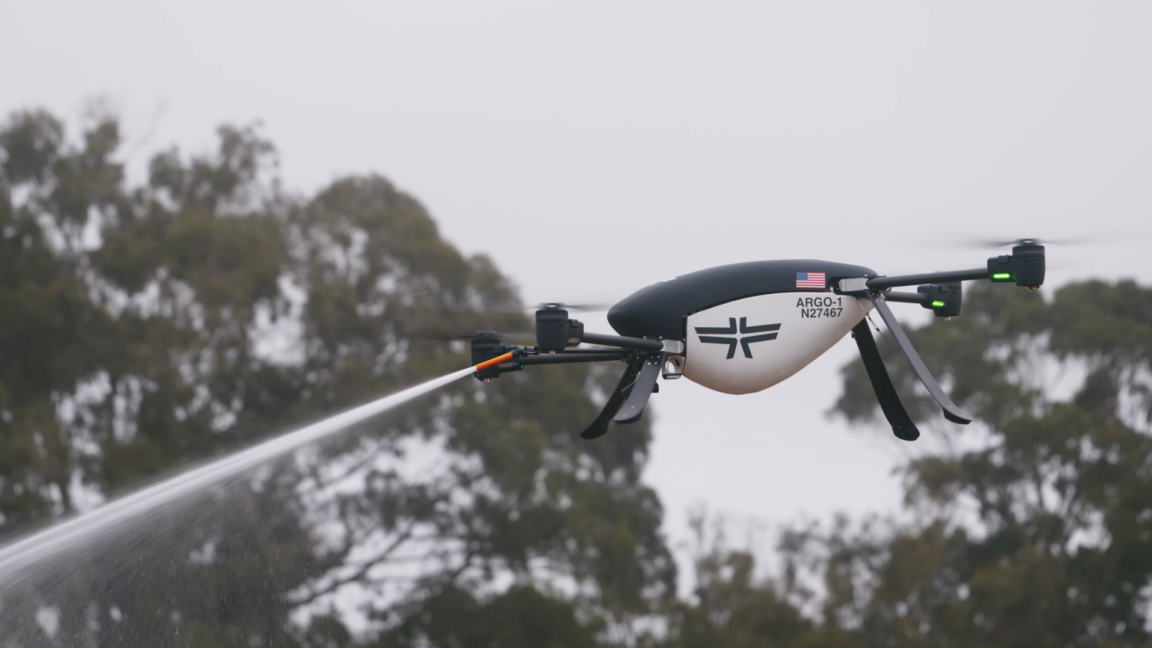
Drones capable of spraying water and fire retardants have been practicing how to snuff out wildfires early in California and Alaska this summer—demonstrating a possible rapid-response tool for firefighting as climate change transforms wildfire season into a nearly year-round risk for much of the United States.

Most drones are significantly smaller than crewed aircraft and have shorter flight ranges, meaning they cannot replace large airtankers in delivering massive payloads of water or other fire-suppressing payloads to remote wildfires. But companies and fire agencies—along with organizers of the $11 million XPRIZE competition—are testing whether drones can help firefighting crews respond more quickly to small fires and put them out before they become more destructive.

The California Department of Forestry and Fire Protection, also known as CAL FIRE, ran its own field test involving five autonomous drones that worked together to deploy between 500 and 1,000 gallons of foam combined for suppressing fires on July 15, according to the TV station KPMH. The demonstration was organized with the help of the nonprofit FireWERX and the California-based company Seneca, which is making the drones commercially available starting in 2026.

Read full article

Comments

© Seneca

Google-backed satellites for wildfire detection launch as smoke chokes US, Canada

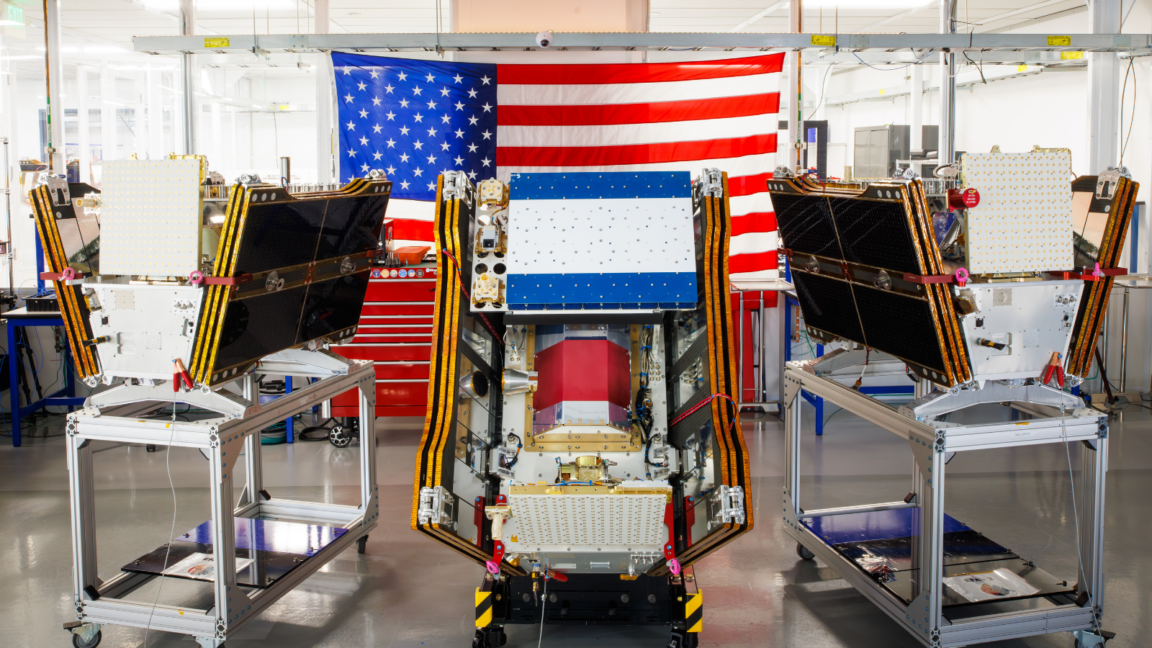
As smoke from hundreds of burning wildfires spread across Canada and the United States, the first three operational satellites in the Google-backed FireSat program successfully launched into orbit. The satellites will begin providing wildfire detection capable of spotting even small fires in the United States, Australia, and Europe before the end of the year.

The launch of the microsatellites aboard a SpaceX Falcon 9 rocket from Vandenberg Space Force Base in California on July 7, 2026 marks a transition to “initial operational capability” for the FireSat constellation managed by the nonprofit Earth Fire Alliance. After a three-month testing period, the three satellites will begin actively providing data to fire agencies while covering every fire-prone region on Earth at least twice per day.

FireSat represents the first satellite constellation purpose-built for detecting wildfires, including spotting smaller fires that other satellites may miss. The satellites were designed by California-based satellite manufacturer Muon Space and have received over $15 million from Google to support initial deployment. Other notable financial supporters include the Bezos Earth Fund that committed $26 million.

Read full article

Comments

© Muon Space

Fear of humanoid robots spurs human workers to strike at Hyundai auto factory

Thousands of unionized Hyundai auto workers began walking off the job early after negotiations with the South Korean automaker broke down over plans to deploy humanoid robots—the most significant pushback from organized labor so far over the latest wave of robotic automation.

The partial strike at Hyundai’s automotive production complex in the city of Ulsan in South Korea represents “the car industry’s first factory stoppage addressing humanoid robots,” according to The Wall Street Journal. Workers have already ended their day and night shifts two hours early at the world’s largest automotive plant from July 13 through July 15, and plan to start staging four-hour strikes from July 20 to 22 after 15 rounds of negotiations failed to reach an agreement, The Korea Times reported.

Union pushback began as soon as Hyundai Motor Group unveiled the latest version of the Atlas humanoid robot, a two-legged robot that stands at more than 6 feet tall and can lift more than 100 pounds, at the start of this year. Atlas is made by Boston Dynamics, the US robotics company that is about to become a wholly owned subsidiary of Hyundai.

Read full article

Comments

© Boston Dynamics

Move over, GPS: Navigation satellites in low-Earth orbit are making a comeback

New navigation satellites in low-Earth orbit could provide 100 times stronger signal strength compared to GPS and other global navigation satellite systems operating from higher orbital altitudes—enabling greater location accuracy within dense cities, under thick foliage, and even inside buildings. Such signals would also likely prove more resilient to interference at a time when commercial flights, maritime shipping, and even various smartphone apps face increasingly widespread disruption from GPS jamming.

That vision may start to take shape when the first six production satellites of California-based Xona Space Systems are scheduled to launch in October 2026, with early service starting in 2027. Once the full constellation of 258 Pulsar satellites has been launched in the following years, Xona claims that customers will be able to accurately pinpoint their locations anywhere on Earth to within several centimeters.

“That added power means that we can get into that indoor environment that GPS can't get to today,” Adrien Perkins, co-founder and VP of engineering at Xona Space Systems, told Ars. “Our higher power allows you to get into those jamming environments a lot further than you would with GPS by itself.”

Read full article

Comments

© Xona Space Systems

US military sent explosive drone boats into combat for the first time

For the first time in its history, the US military sent explosive-laden drone boats into combat by attacking an Iranian midget submarine and naval port. The unprecedented use of such kamikaze sea drones by the United States comes nearly a decade after Iranian and Houthi forces first demonstrated such weapons.

The US military shared a video showing three “one-way attack surface drones” exploding after approaching an Iranian midget submarine and ship maintenance facility at Iran’s Bandar Abbas Naval Base on the night of July 12. US Central Command, the US military combat command responsible for Middle East operations, described the strikes in a social media post as the “first time American forces have employed sea drones in combat operations.”

The US drone boats were able to “make a low-speed, uncontested approach” to their targets before exploding, according to USNI News, a news service from the nonprofit US Naval Institute. USNI News also identified one of the targets as an Iranian Ghadir-class midget submarine that was out of the water while being suspended from a gantry.

Read full article

Comments

© US Central Command

Ukrainian drone strikes forced Russia to stop shipping in vital sea corridor

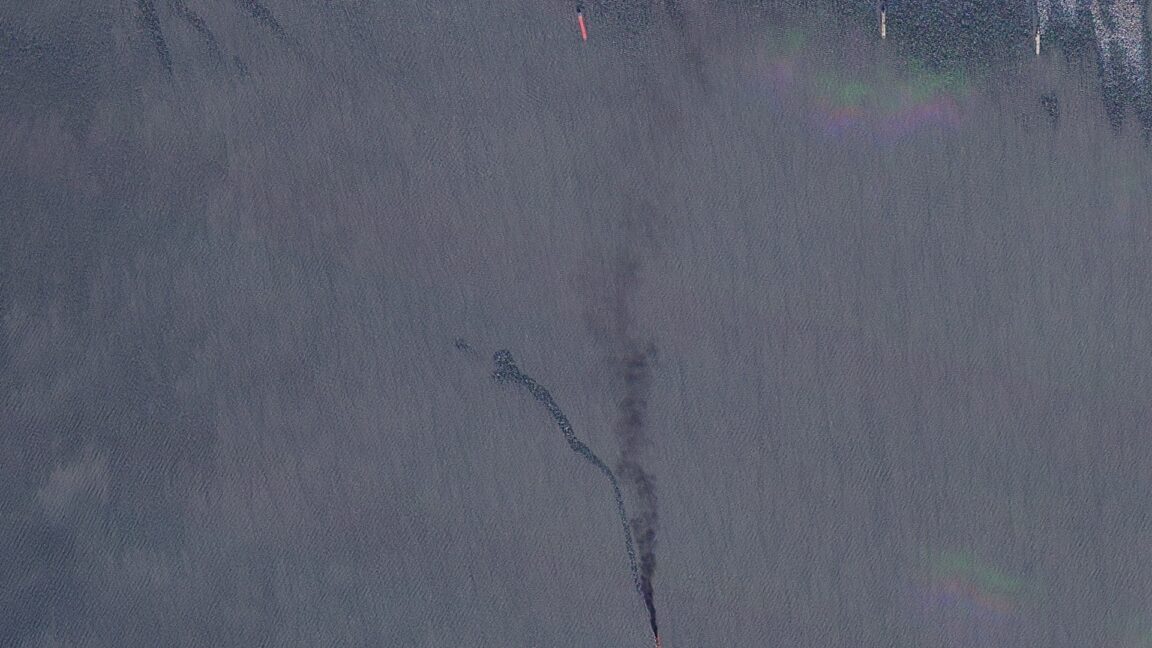
Ukrainian drone strikes have forced Russia to completely halt shipping in the Sea of Azov in less than a week, showing once again how a country without traditional naval power can still effectively blockade maritime corridors.

Ukraine’s Unmanned Systems Forces have flown one-way attack drones to target and strike more than 100 Russian tankers and other ships in total, along with posting video evidence showing such drone strikes occurring every night between July 6 and July 14. The campaign has forced Russia to completely shut down the shipping route that flows from Russia’s Don River into the Sea of Azov, and to halt all Kerch Strait shipping transits from the Sea of Azov into the Black Sea, according to Reuters reporting.

The shutdown of such maritime lanes has further isolated the Russian-occupied Crimean Peninsula by cutting off seaborne delivery of fuel in particular. Crimea had already been experiencing severe fuel rationing and power outages as Ukraine stepped up its mid- and long-range drone strike campaign on Russian energy infrastructure and supply lines, leaving behind damaged oil refineries with billowing black smoke and burned-out trucks littering highways.

Read full article

Comments

© Planet Labs PBC

Increased drone surveillance of illegal July 4th fireworks led to $100K fine

More cities and towns deployed drones to spot illegal fireworks during the Fourth of July celebrations commemorating America’s 250th anniversary—leading to a $100,000 fine in one instance and coming as part of a broader national trend of first responders turning to drone surveillance.

Police and fire departments have described using both increased drone surveillance and steep fines to deter people from shooting off illegal fireworks, with many departments publicizing their drone videos on social media and warning that their drones will be watching in the future. Incidents involving illegal fireworks have led to costly fires, injuries, and even multiple deaths each year, along with creating local air and noise pollution for residential neighborhoods.

This year, the $100,000 fine for illegal fireworks came from the Sacramento Fire Department in Northern California deploying its own drones for the first time on the Fourth of July, according to CBS News Sacramento. Sacramento Fire Captain Justin Sylvia described the fire department’s drones as being capable of recording scenes in high-resolution video to help investigators identify the house or closest location using Google Maps.

Read full article

Comments

© MediaNews Group/Orange County Register via Getty Images / Contributor

Humanoid robots controlled by surgeons did world-first operation on live pigs

Humanoid robots have surgically removed the gallbladders from living animals in an unprecedented medical experiment—but not as autonomous machines capable of replacing human doctors. Instead, skilled human surgeons remotely controlled the robots’ movements in a new example of human-robot teamups.

The teleoperated humanoid robots completed two minimally invasive surgeries by removing gallbladders from live pigs during a preclinical trial that was published in the journal Nature. If this approach eventually proves clinically ready for human patients, surgeons could use such humanoid robots to remotely perform robotic-assisted surgical care in smaller hospitals and clinics that lack the resources to install specialized but expensive surgical robots.

“It's a fraction of the cost and it takes a fraction of the space in an operating room,” said Shanglei Liu, an assistant professor of surgery at the University of California San Diego School of Medicine, in an interview with UC San Diego Today. “So it’s easy to deploy, anywhere from rural areas, to the battlefield, and even to space.”

Read full article

Comments

© UC San Diego

US seeks cheaper hunter-killer drones after Iran destroys $1B worth of Reapers

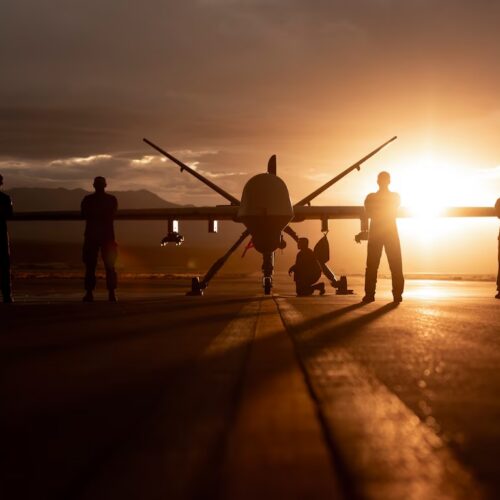
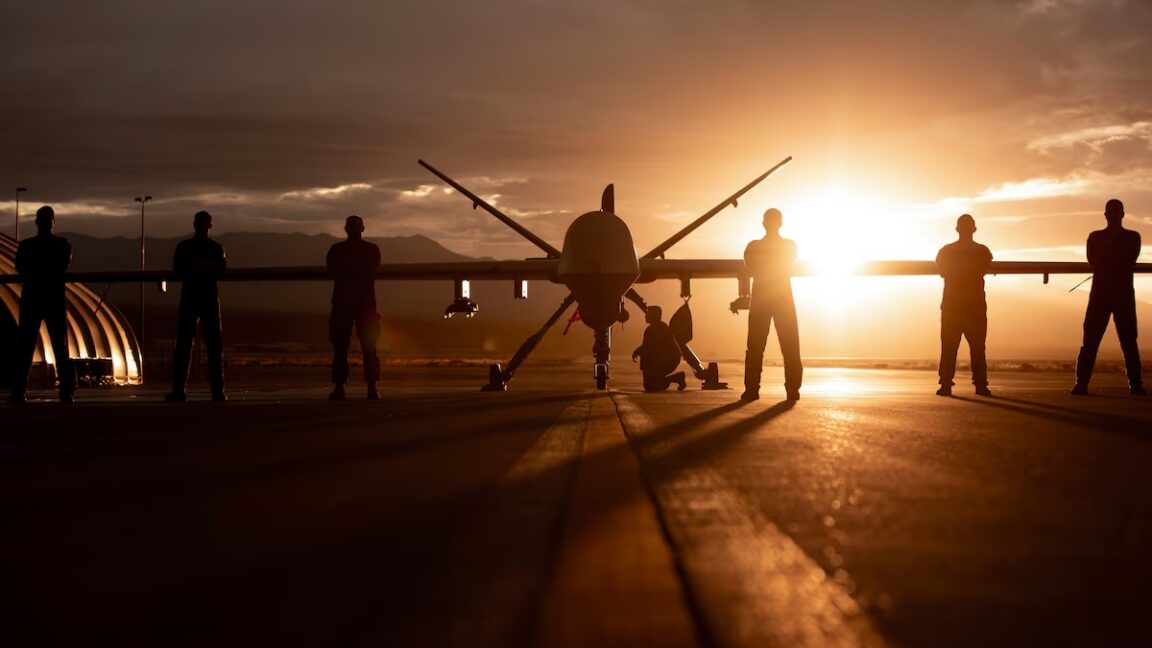
The US military has lost dozens of Reaper drones collectively worth more than $1 billion while carrying out surveillance and attack missions over Iran. Now the Pentagon is seeking large numbers of cheaper drones that can perform such missions despite the expectation that many will be lost in combat.

In a call for industry pitches, the Defense Innovation Unit’s notice described the US military’s current reliance on drones and crewed aircraft, each costing more than $30 million, as being “unsustainable against adversaries utilizing layered defenses enabled by increasingly low-cost antiaircraft capabilities.” It envisions deploying more “cost-effective” drones to “overwhelm enemy air defenses even while experiencing numerous [drone] losses.”

That is, in practice, what Ukraine’s military has been demonstrating with its long- and mid-range strike campaign against Russian supply lines, oil refineries, and various energy or industrial targets within Russia or occupied Ukraine. The Ukrainian campaign has been overwhelming Russia’s overstretched air defense capabilities by launching hundreds of relatively inexpensive drones and missiles on a daily basis to attack targets far behind the frontlines, while continuing to damage or destroy Russia’s most sophisticated air defense systems.

Read full article

Comments

How AI could enable autonomous robot workers in workplaces—and maybe homes

In a world where self-driving robotaxis glide through major city streets without drivers behind the wheel and delivery drones autonomously fly through the skies to drop off orders at customers’ homes, the idea of general-purpose robots helping humans with various tasks in workplaces or even homes may not seem far-fetched.

But that future hinges on developing increasingly autonomous robots powered by modern artificial intelligence—an ambitious vision that has motivated many researchers to become startup founders while also attracting billions of dollars in investment.

“When I started maybe about 15 years ago, I led a project team that was focused on autonomy, but in that era, the goal of that team was to just get a robot to navigate from point A to point B,” said Matt Malchano, vice president of software at the robotics company Boston Dynamics based in Waltham, Massachusetts. “And now, when we think of autonomy, we think of this huge space of tasks and things that we can imagine a robot doing on its own.”

Read full article

Comments

© Agility Robotics

Data centers’ energy demand threatens Trump’s “Made in America” plan

US manufacturers in many Rust Belt cities and towns are paying significantly higher electricity costs as growing energy demand from data centers strains the largest power grid operator in the United States. The resulting squeeze on profit margins for steelmakers and brick factories could further undermine President Donald Trump’s “Made in America” plan to revive US manufacturing, and it comes as Trump has simultaneously championed the tech companies behind the AI data center boom.

Factory electricity bills are generally rising faster than those for other business customers or residential customers, according to a Reuters analysis. It highlighted the example of the Belden Brick Company, a 141-year-old brick manufacturer in Ohio, whose electricity bills have soared from $1,600 to $12,000 per month due to a higher monthly capacity charge in the 13-state region served by the grid operator PJM Interconnection.

Meanwhile, the Steel Manufacturers Association warned that US steel companies concentrated in the Rust Belt region served by PJM Interconnection are paying tens of millions of dollars in higher power costs per year. Electricity accounts for 20 to 40 percent of the total production costs of making steel.

Read full article

Comments

❌