Reading view

There are new articles available, click to refresh the page.

Scientists unlock secrets of ancient Egyptian materials with proteomics

Credit: Museum of Mediterranean and Near Eastern Antiquities, Stockholm

The precise composition of ancient Egyptian paints, binders, adhesives, and similar materials used to make artifacts is largely unknown, in part because a full analysis would require taking samples that would damage those valuable artifacts. The development of cutting-edge, non-destructive techniques has been helping to unlock those secrets, aiding conservation efforts.

Most recently, researchers have used mass spectrometry-based proteomics to analyze the glues and adhesives in a broad set of Egyptian artifacts, according to a new paper published in the journal Science Advances. They found plenty of expected sources, such as animal collagens and egg proteins, but also plant proteins, specifically from sesame and drumstick tree (moringa) cereals.

As previously reported, the ancient Egyptians had a highly formalized (and easily recognizable) painting style, and there has been considerable interest in gaining insights into the specific pigments and painting techniques employed. Common pigments included hematite and realgar for red; goethite and orpiment for yellow; Egyptian blue; Egyptian green; carbon-based black; and calcite, gypsum, anhydrite, and huntite for white. (Just last year, Washington State University researchers were able to re-create Egyptian blue by mixing together silicon dioxide, copper, calcium, and sodium carbonate in varying proportions and heating them at very high temperatures akin to those of ancient kilns.)

Read full article

Comments

© Johan Jeppsson/Museum of Mediterranean and Near Eastern Antiquities, Stockholm

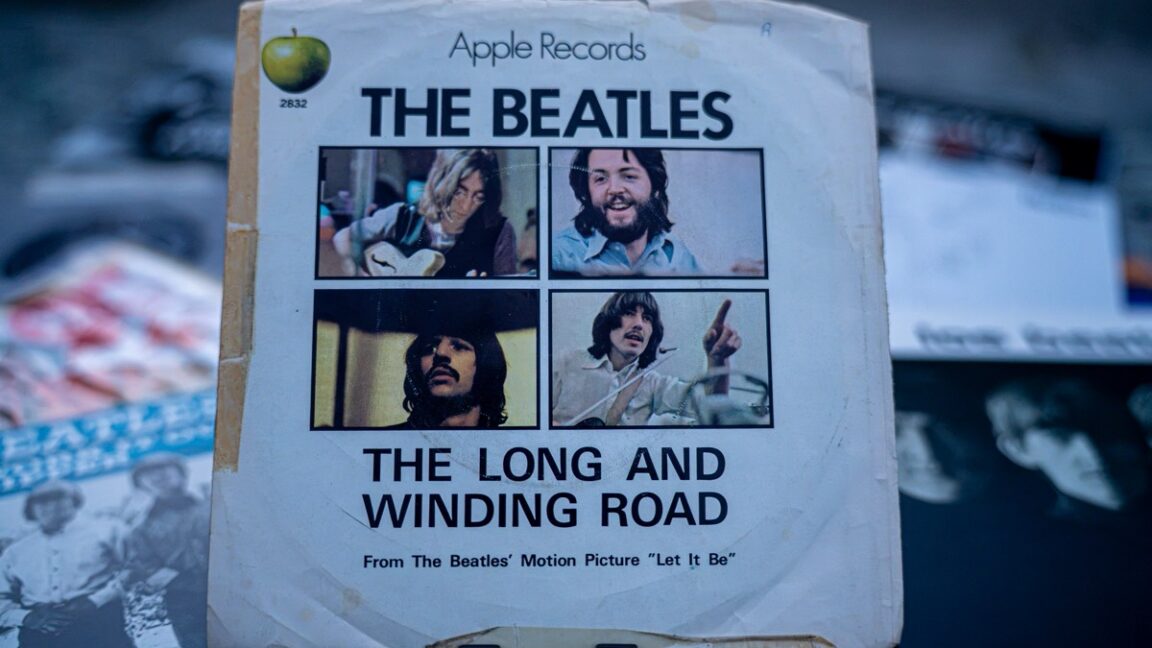
When it comes to Beatles references, scientists can't let it be

Scientists have an indisputable playful side, evidenced by frequent allusions to popular culture in their research publications. That includes popular song lyrics. And the most popular musical group, in terms of how frequently their songs and lyrics appear in the scientific literature, is The Beatles, according to a new paper published in the journal PLoS ONE.

“Some of these are genuinely brilliant," said co-author Gabriel Budel of Delft University of Technology in the Netherlands of the more than 3,000 references they found to The Beatles. "'The lung and winding road' is a paper on Long COVID that changes one vowel. 'Here comes the SU(N)' turns 'Here Comes the Sun' into a quantum computing paper about mathematical groups. Someone was having a very good day at their desk.”

Back in 2014, scientists at the Karolinska Institute in Sweden revealed that they had been deliberately inserting Bob Dylan lyrics into their papers as part of a long-running bet, starting with a 1997 Nature review entitled "Nitric Oxide and inflammation: The answer is blowing in the wind." That resulted in a 2015 study on whether Dylan lyrics appeared elsewhere in the biomedical literature; the most frequently referenced were "The Times They Are A'Changin'" and "Blowing in the Wind."

Read full article

Comments

© Ramon Dorenbos, CC-BY 4.0

Prime Video releases full trailer for Mike Flanagan's Carrie

I'm on record expressing a certain amount of skepticism about Mike Flanagan's rebooted Carrie miniseries for Prime Video. We don’t need another disappointing remake, so what story is there left to tell—especially stretched out over six episodes?

On the plus side, I'm a staunch fan of Flanagan's excellent Netflix horror fare, and he has a particular affinity for the works of Stephen King. He insists he has no intention of creating yet another straight adaptation of the novel.

Carrie was written half a century ago,” Flanagan said at San Diego Comic-Con earlier this year. “Carrie was adapted spectacularly by Brian De Palma. It is iconic. It is untouchable. There is no reason whatsoever to try to follow in those footsteps and to try to walk on that path. However, the world has changed quite a lot. I think a lot of people think they know what the show is. And the biggest thing I’m excited about today is just knowing what a big surprise our Carrie is going to be.”

Read full article

Comments

© Prime VIdeo

Godzilla Minus Zero IMAX trailer teases King Ghidorah

One of the cinematic highlights of 2023 was director Takashi Yamazaki's gloriously grounded kaiju epic, Godzilla Minus One, which became a major international hit and snagged an Oscar for best visual effects. Yamazaki is back this fall with the hotly anticipated sequel, Godzilla Minus Zero. Toho just dropped the full IMAX trailer, featuring not just our beloved Godzilla, but also a distinctive roar that teases the appearance of none other than the three-headed King Ghidorah.

(Spoilers for the 2023 film below.)

Godzilla Minus One focused on kamikaze pilot Kōichi Shikishima, who struggled with survivor's guilt after he failed to take action when Godzilla attacked the Japanese base on Odo Island in 1945. Knocked unconscious, Kōichi woke to find he was one of only two survivors—and the other, a mechanic named Tachibana, was furious about it. His parents and many others were killed in the World War II bombing of Tokyo. Kōichi rebuilt a life with a woman named Noriko and the orphaned baby she rescued, Akiko. But then Godzilla re-emerged, and Kōichi resolved to die fighting the monster to atone for Odo Island.

Read full article

Comments

© Toho

The secret to protecting next-gen spacecraft might be eggshells

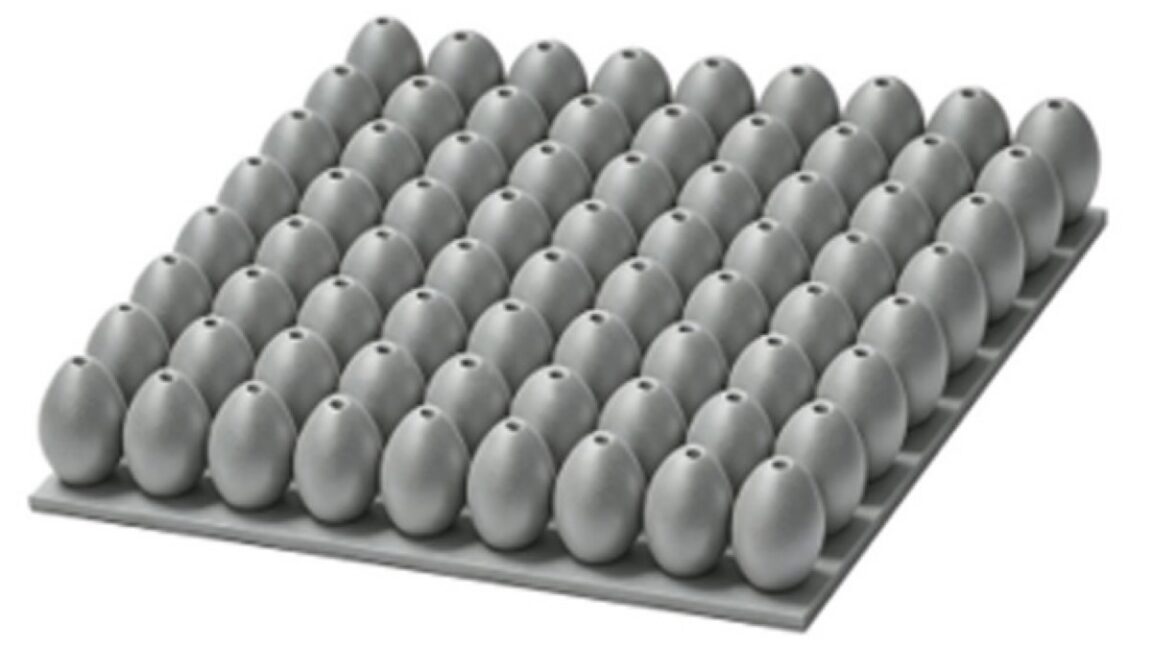
In 2007, a piece of space debris punched a bullet-like hole through the radiator panel of the US space shuttle Endeavor. The shuttle program ended in 2011, but the space debris problem has only intensified as we launch more and more satellite constellations, telescopes, and spacecraft into orbit. That's why Chinese scientists have devised a new aluminum material inspired by eggshells that they believe could offer enhanced protection against debris fragments, according to a new paper published in the Journal of Applied Physics.

Eggshells have long fascinated scientists because of their mechanical properties. For instance, it's well known that cracking an egg requires applying just enough force to the center to achieve a clean break without completely shattering the shell. In 2012, MIT mechanical engineer Pedro Reis co-authored a paper demonstrating the link between an egg's ovoid geometry and its rigidity, a major factor when predicting how much force an object can endure before cracking. (As I wrote for Slate at the time, rigidity is related to, but distinct from, strength. If one eggshell has tiny cracks and the other doesn't, both shells have different strengths—the cracked one will break more easily—but the same rigidity.)

Reis started studying eggshells after participating in a popular physics demonstration: walking on cartons of eggs without breaking them. The key, he learned, was to align the eggs with their narrow tip (the most crack-resistant part) pointing up, and then carefully place one's feet to distribute one's weight over the entire surface area. This ensures that no single egg is overloaded. While it takes around 5.5 pounds of force to crack an egg, that depends on the direction in which the force is applied, as well as its distribution over the shell's surface.

Read full article

Comments

© Wang et al., 2026

Medieval manuscripts are "biological time capsules" for deadly sheeppox virus

Sheeppox is a highly contagious, often fatal viral disease that was largely eradicated from much of European livestock in the 20th century. But there is still the occasional regional outbreak, such as the one that afflicted many flocks of sheep in Greece last year. In order to reconstruct how the virus has evolved over the last 3,500 years, scientists extracted and sequenced sheeppox DNA preserved in the animal skins used for the parchment of numerous medieval manuscripts. They reported their findings in a new paper published in the journal Science Advances.

“The recording of ancient DNA of pathogens has completely changed our understanding of infectious disease in the past, and here we show that parchment can also preserve animal pathogen DNA. It is possible that archives and libraries around the world also contain the genetic traces of disease outbreaks in animals in the past,” said co-author Louis L’Hôte, a graduate student at University College Dublin. “These genomes help us understand how these pathogens evolved and how they impacted past societies—such as sheeppox virus, which we show has been affecting Eurasian sheep herds for at least three and a half millennia.”

Per the authors, the earliest known written evidence of sheeppox infection dates to the first century CE, when Roman accounts described outbreaks of skin lesions ("pustules") in the animals. There are more frequent mentions of deadly outbreaks of "pockes" or "variola" in sheep by the Middle Ages, recorded in various agricultural texts and accounting documents in France, Spain, and England. There seemed to be a decline in outbreaks in 17th-century France, although frequent outbreaks re-emerged in the 18th and 19th centuries, often with high mortality rates in the flocks. Great Britain did not experience a sheeppox resurgence until 1847.

Read full article

Comments

© Seraaron/CC BY-SA 4.0

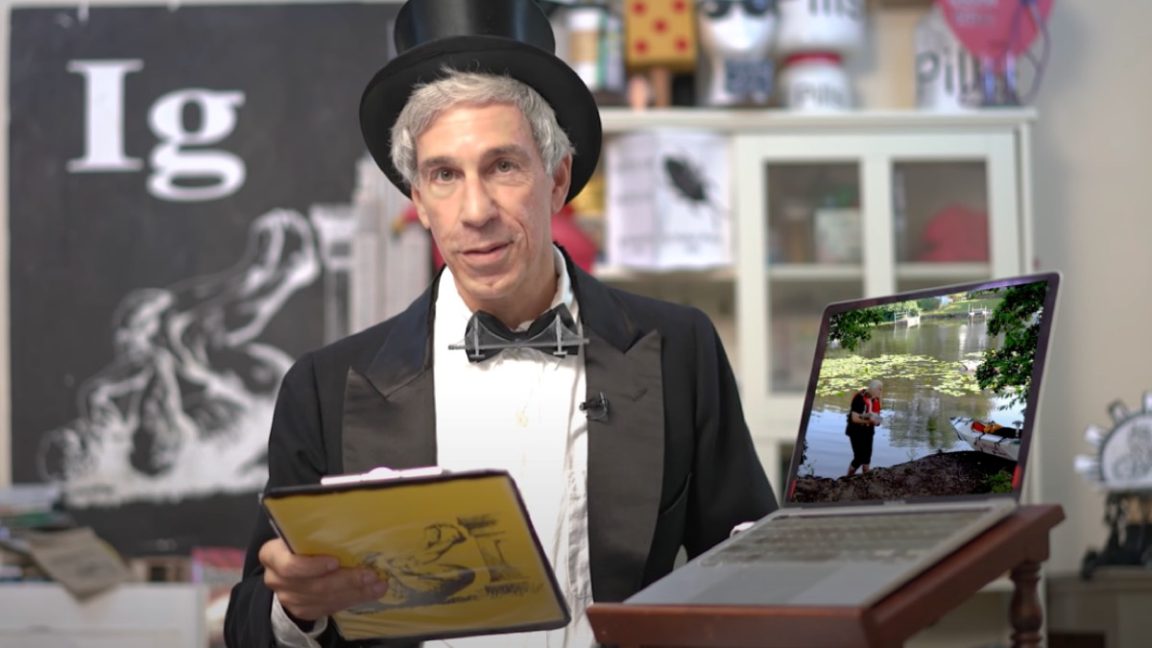
Meet the 2026 Ig Nobel Prize winners

It's that time of year again, when we learn which lucky scientists are among the winners of the Ig Nobel Prizes. This year, the prizes honor research on designing the perfect splash-free urinal; using mosquito proboscises to "necroprint" tiny nozzles; studying composition rates of buried cotton underwear; and the aerodynamics of a healthy nose-blow, among other highlights.

Established in 1991, the Ig Nobels are a good-natured parody of the Nobel Prizes; they honor “achievements that first make people laugh and then make them think.” The unapologetically campy awards ceremony features miniature operas, scientific demos, and "24/7 lectures," whereby experts must explain their work twice: once in 24 seconds and the second in just seven words.

Acceptance speeches are limited to 60 seconds. And as the motto implies, the research being honored might seem ridiculous at first glance, but that doesn’t mean it’s devoid of scientific merit. In the weeks following the ceremony, the winners will also give free public talks, which will be posted on the Improbable Research website.

Read full article

Comments

© YouTube/Improbable Research

Research roundup: 7 cool science stories we almost missed

It’s a regrettable reality that there is never enough time to cover all the interesting scientific stories we come across. So every month, we highlight a handful of the best stories that nearly slipped through the cracks. August’s list includes the discovery of a new celestial object astronomers have dubbed a "black hole star"; breaking down plastics with microbes and turning them into edible cookies; how whale calls are connected to Einstein's special theory of relativity; and how avocado tree flowers switch sex during the day, among other highlights.

Discovery of a "black hole star"

Credit: Rohan Naidu (University of Hawai'i)

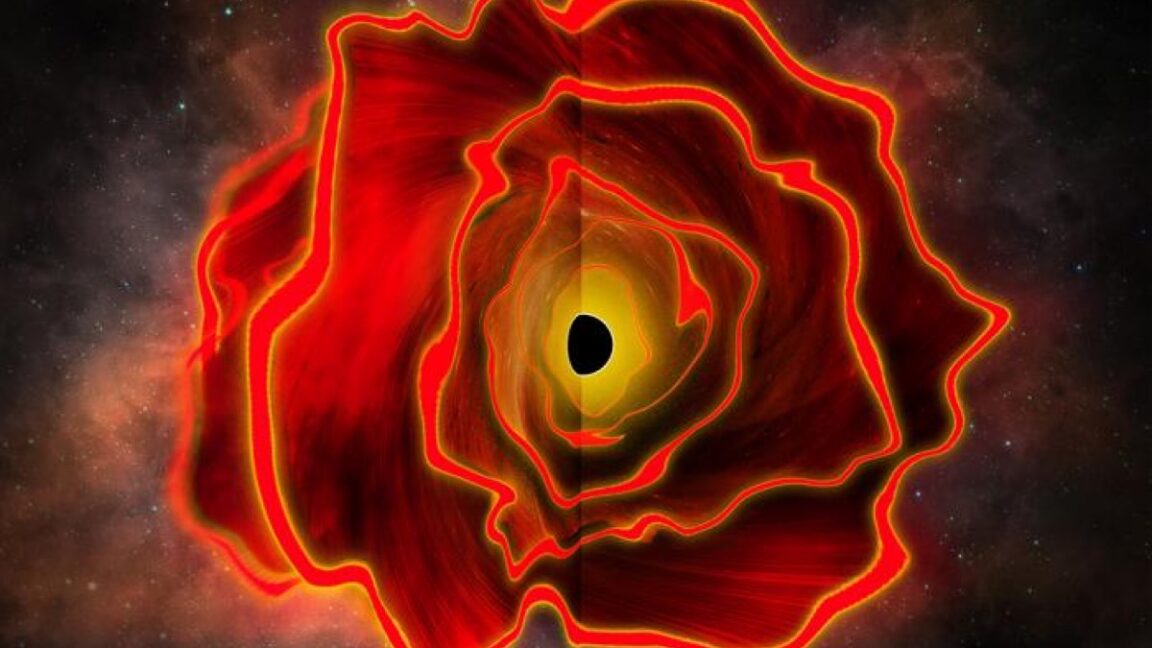
In 2024, astronomers combing through datasets taken by the James Webb Space Telescope noticed hundreds of mysterious little red dots lurking therein, believed to be baby quasars. They existed when the Universe was just a few hundred million years old. One such object in particular captured scientists' interest: a red dot that was extremely red and very bright, but whose properties didn't fit with any known astrophysical object. Astronomers have now concluded that the little red dot is a "black hole star," so named because it is the size of a large star but produces far more energy than would be possible via nuclear fusion—energy comparable to what an active black hole would produce.

Read full article

Comments

© ose-Luis Olivares, MIT

Review: Coyote vs. Acme is an unabashed love letter to Looney Tunes

It took three years, but Coyote vs. Acme is finally in theaters and delighting audiences of all ages with its irresistible blend of slapstick humor, pointed satire, and even a warm fuzzy here and there. We're happy to report that the film was worth the wait.

(Some spoilers below but no major reveals.)

The film is based on a well-known satirical piece by Ian Frazier (also titled “Coyote vs. Acme”) published in The New Yorker in 1990. Development of a film version didn’t start until 2018, but some pretty talented people worked on the script, including James Gunn. Small wonder that Warner Bros.’ bizarre 2023 decision to shelve the film in order to take a tax write-off sparked outrage both within the industry and among fans online.

Read full article

Comments

© Ketchup Entertainment

Our 10 favorite scenes from T2: Judgment Day

I'm on record declaring James Cameron's Terminator 2: Judgment Day (1991) to be The Best Damn Sequel of All Time, and I stand by that assessment. August 29, the fictional date (in 1997) of the franchise's original nuclear holocaust, is fast approaching, and Judgment Day is celebrating its 35th anniversary this year. So StudioCanal has decided to mark both occasions with a special theatrical rerelease of the film this weekend. What better time to revisit some of our favorite scenes from this seminal sci-fi action blockbuster?

(Many, many spoilers below.)

Nobody really expected 1984's The Terminator to be a hit, but it racked up an impressive $78 million at the box office against its modest $6.4 million budget. Star Arnold Schwarzenegger was keen to do a sequel, but Cameron was busy with other projects, including Aliens in 1986 (another killer sequel). There were also legal complications over the film rights until Schwarzenegger convinced Carolco Pictures, the studio behind Total Recall (1990), to buy everyone out and hire Cameron to make Judgment Day.

Read full article

Comments

© Paramount/Studio Canal

Why did 1,000 world citizens bury their underpants?

A thousand people voluntarily buried their cotton underpants for two months—not to keep the Underpants Gnomes from stealing them, but as part of a citizen science project to map out soil health in 25 countries around the world. The results of this unique experiment were reported in a new paper published in the journal Plants People Planet.

“Our results show that how soil is managed can significantly affect both soil life and soil quality,” said co-author Marcel van der Heijden, an agroecologist at the University of Zurich. “Healthy, biologically active soil is crucial for fertility, nutrient cycling and many other ecosystem services.”

Soil health is critical for agriculture and, by extension, food security, not to mention a healthy global ecosystem, but it has been declining worldwide, per the authors. One key indicator of soil health is decomposition rates of complex organic matter, breaking down stuff like leaves, wood, even cadavers into simpler organic and inorganic compounds, releasing C02 and nutrients in the process. There have been relatively few large-scale national decomposition studies involving different land use types, although smaller studies have shown that how humans use a site can significantly affect the soil's biological diversity.

Read full article

Comments

© Nicolas Zonvi

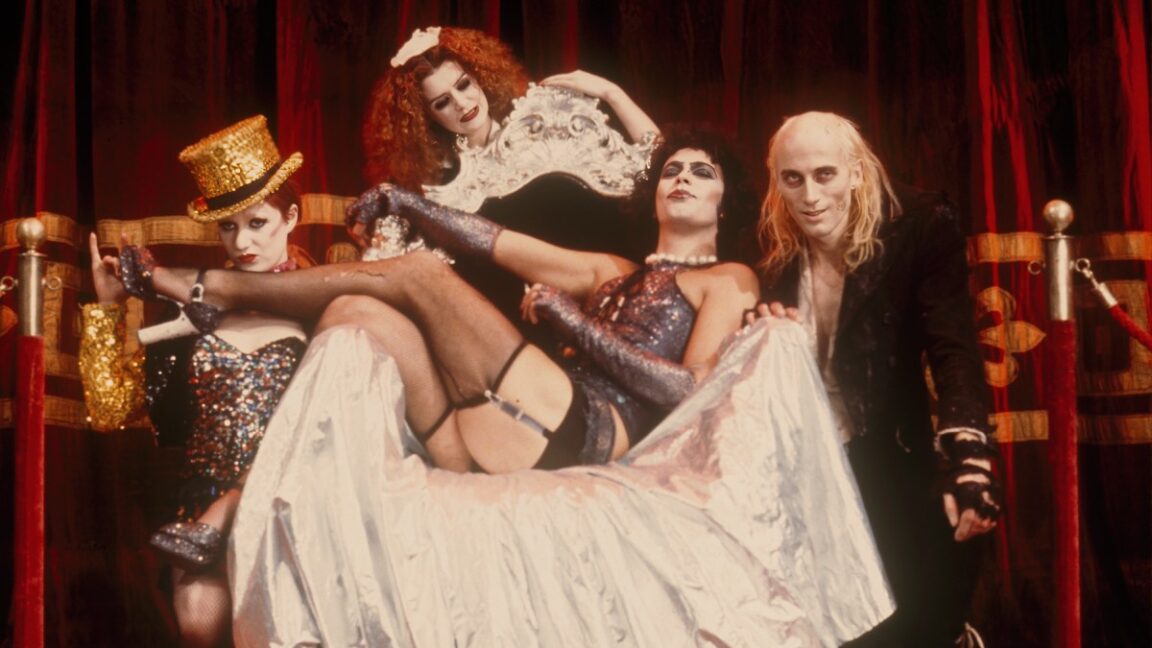
RIP, Tim Curry: Ars remembers his top 10 iconic performances

It's said celebrity deaths come in threes. We lost Sam Neill last month, and the legendary Dolly Parton yesterday. Now we find out that the universe has also seen fit to deprive us of the glorious presence of Tim Curry, who died at home yesterday in Los Angeles at the age of 80. No cause of death has been given, but Curry had been in ill health since 2012, when he suffered a stroke and required brain surgery; he had been confined to a wheelchair ever since.

Curry's longtime friend and manager, Marcia Hurwitz, confirmed the actor's passing to Deadline and said Curry had died peacefully. Per the official announcement:

Throughout his life, he refused to be boxed in or confined to others’ expectations. Across five decades, he moved fluidly between comedy, horror, drama, and music, delighting himself and his legion of fans with his countless dynamic personas. … He is, depending on who you ask, the definitive Dr. Frank-N-Furter, the definitive Pennywise, the man who made a butler’s death-scene monologue in Clue an all-time comedic bit, or simply ‘that unforgettable voice’ from a beloved cartoon of someone’s childhood.

Few actors can claim to have left as many distinct fingerprints on pop culture and though he suffered a debilitating stroke in 2012, he continued adding to his achievements as an artist and, most recently, a writer. Though widely known for his inimitable, flamboyant characters and colorful stage performances, his greatest legacies to those who knew him were his curious, expansive mind and generous, gentle heart, both of which remained open and filled with anticipation until his final breath.

As obituaries and fond tributes roll in, we at Ars choose to mark the passing of this extraordinary performer with our choices for Curry's top 10 most iconic portrayals on stage, in film, and on television.

Read full article

Comments

© 20th Century Studios

Preserving glow-in-the-dark art and fashion for future generations

Fashionistas of a certain age no doubt remember the late designer Stephen Sprouse, who gave Blondie's Debbie Harry her distinctive Bowery punk style. Sprouse's first collections in the mid-1980s made a major splash, melding graffiti prints, a playful '60s aesthetic, and bright Day-Glo colors that won admirers such as Andy Warhol.

Several examples of Sprouse's work are preserved in the textiles collection of the Indianapolis Museum of Art at Newfields, where conservationists are trying to learn more about the phosphorescent and fluorescent pigments the designer used in his creations in order to keep the colors from dulling over time. They described recent advances in that research at a meeting of the American Chemical Society (ACS) held this week in Chicago.

Scientists began describing minerals that glowed in the dark as phosphors in the Middle Ages. Typically, such materials take on a charge when exposed to light, storing the absorbed energy and releasing it gradually as re-emitted light. Henri Becquerel discovered radioactive decay in 1896 because of his work with phosphorescent uranium salts: He left the salts in a closed drawer with photographic plates, which fogged up even without a light source. DayGlo paints and similar materials exploit the related phenomenon of fluorescence. DayGlo pigments fluoresce in daylight by essentially converting UV light into visible light to produce brighter, more vibrant colors.

Read full article

Comments

© Indianapolis Museum of Art at Newfields, Gift of Joanne Sprouse, in memory of her son Stephen Sprouse, 2020.58

Buyer beware: Those mummified remains might carry toxic spores

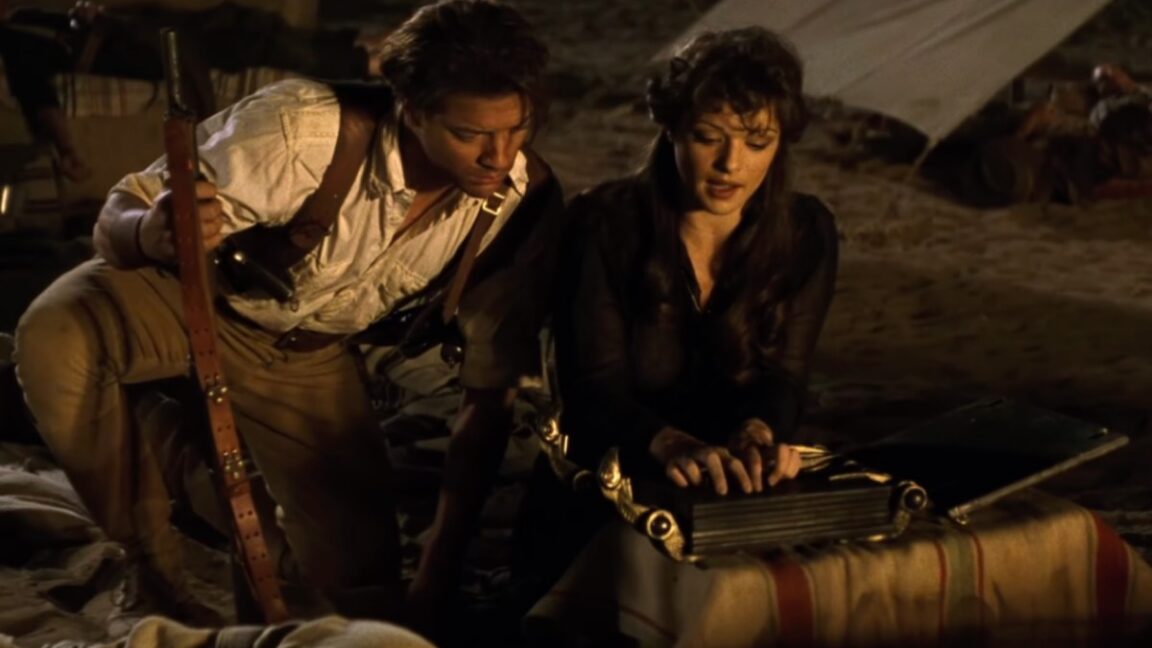
Mummified human and animal remains have long been in demand among collectors, and such items are sufficiently rare that their acquisition may involve unregulated, occasionally clandestine trade practices—if not outright illegal ones. According to the authors of a paper published in the International Journal of Cultural Property, the risks to would-be collectors aren't just legal. Mummified remains may also pose a significant health hazard due to toxic substances used in their preservation and microbial growth due to improper storage. In fact, toxic spores or fungi are often cited as the source of the legendary "mummy's curse" tied to the excavation of King Tutankhamen's tomb.

Per the authors, the mummification process throughout history has relied on various toxic materials and substances to help preserve the remains—heavy metals like arsenic, mercury, and lead, for example—which is why careful handling is necessary to avoid adverse health effects. (Professionals typically don masks, gloves, and lab coats when working with such remains.) Various micro-organisms (bacteria, fungi, yeasts) can also lie dormant in the tissues for centuries and can recolonize and multiply due to a ready supply of organic material—particularly if the remains have been stored in suboptimal conditions.

A 1962 case, for example, revealed the presence of poisonous fungi spores in mummified remains that would cause respiratory inflammation and infection if inhaled, as well as fever. A 2013 study found that the hundreds of mummies on display at the Capuchin Catacombs in Palermo, Sicily, are prone to microbial and fungal growth after years of unstable environmental conditions. Similarly, in 2012, scientists identified three species of fungi (Aspergillus, Penicillium, and Stachybotrys) on human remains, coffins, walls, and in the air in the crypts of the Church of St. Peter and Paul in Krakow, Poland.

Read full article

Comments

© Universal Pictures

❌