❌

Reading view

There are new articles available, click to refresh the page.

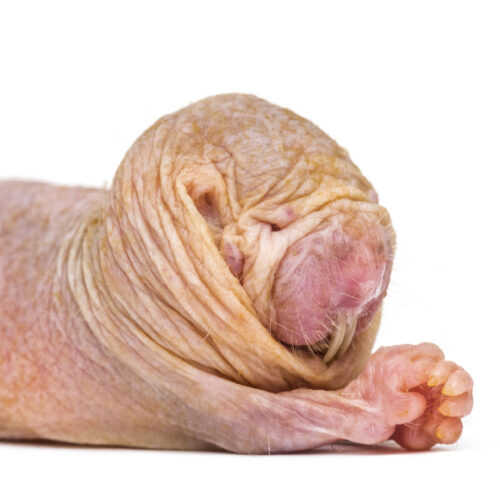
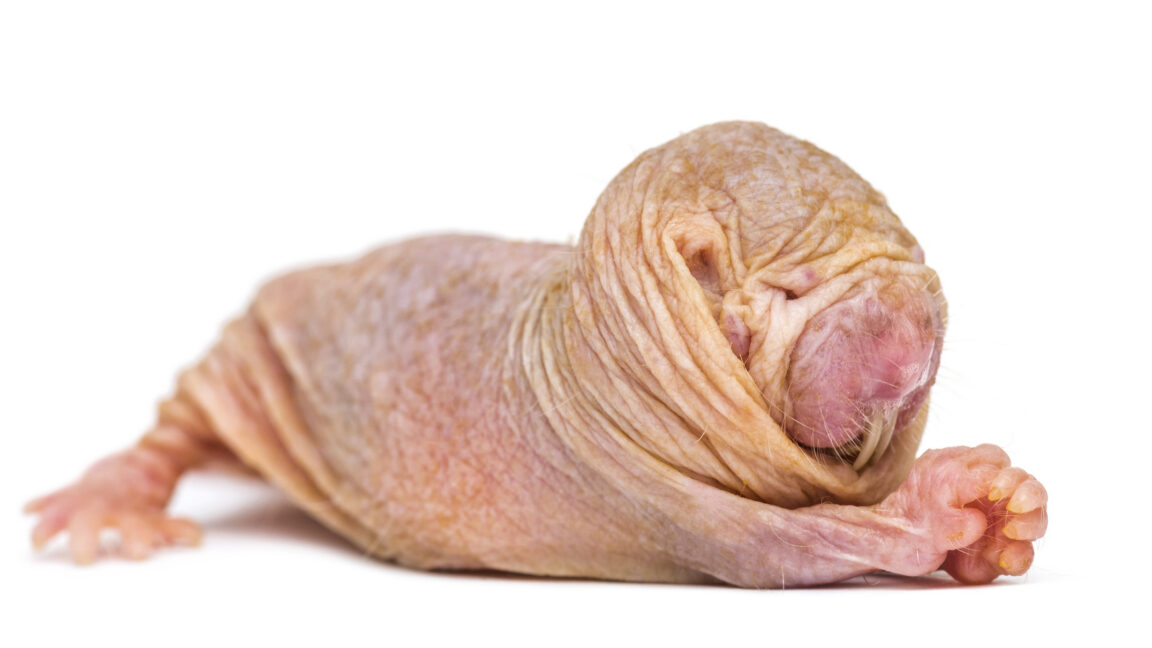
Naked mole-rat queens use a chemical signal to suppress fertility in rivals

Naked mole rats are weird. They spend their lives almost entirely underground, are largely insensitive to some kinds of pain, can persist without oxygen for a long time, rarely develop cancer, and can live past 30 years, which is decades longer than similarly sized rodents. They are also eusocial, like ants, bees, or termitesβ€”in a colony that can hold more than a hundred animals, only one female, the queen, breeds.

We didn’t know how exactly naked mole-rat queens stop other females from breeding. For a long time, our leading hypothesis was bullying and violence, but that may be a bit impractical, given their kingdoms are vast networks of tunnels that can stretch for up to three kilometers. But now a team of Lewin Lab scientists at Max DelbrΓΌck Center for Molecular Medicine in Berlin discovered it’s actually just one part of a sophisticated olfactory signaling program.

Running on smell

"It's very clear that mole rats actually have quite big noses and smell a lot," says Gary Lewin, a neurobiologist at the Max DelbrΓΌck Center for Molecular Medicine and senior author of the study. Naked mole rats have around 1200 olfactory receptor genes, more than mice (which have roughly 1,000 of them) and way more than the few hundred in humans. They're also blind. "They have to be able to navigate and move around without vision, so smell is one of those things that’s enhanced," Lewin said.
Read full article

Comments

Β© imageBROKER/Eric Isselee

A Jupiter-size planet that escaped its star's death

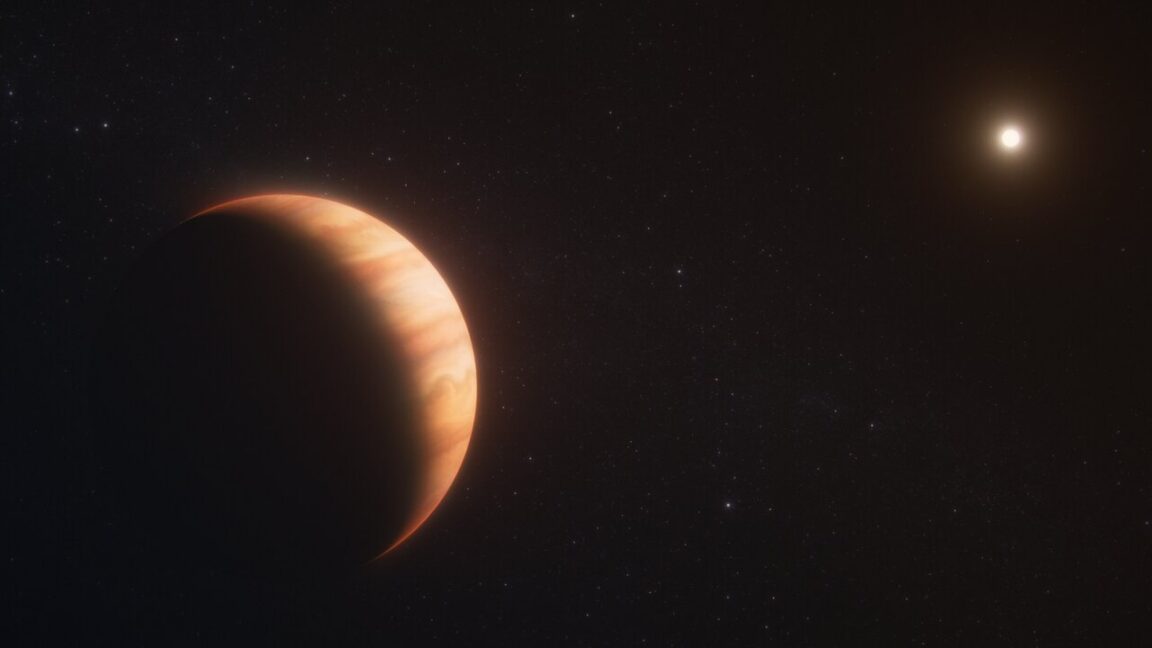
WD 1856 b is the only confirmed case of a planet that survived the death of a Sun-like star. It’s a Jupiter-size world orbiting a white dwarfβ€”the burned-out remnant of a Sun-like star. Now, a team of astronomers has used the James Webb Space Telescope to take a closer look at this planet for the first time, and what they found makes an already strange system even stranger.

A feeding frenzy

WD 1856 b was an accidental discovery. Astronomers pointed the TESS observatory at a sample of roughly 2,000 white dwarfs in 2020. These stars are the remains of a Sun-like star that have already gone through a red-giant phase, leaving behind an Earth-size body that’s primarily composed of elements like carbon and oxygen. The TESS team was searching for small objects like comets or asteroids that might transit across the face of these dead stars.

What they found in the WD 1856 system was a gas giant. β€œAs soon as they looked at it, they said, okay, that’s weird,” said Christopher O’Connor, a theoretical astrophysicist at Cornell University and co-author of the recent Nature study on WD 1856 b.

Read full article

Comments

Β© NASA, ESA, CSA, R. Crawford

An orbiting disco ball gave Einstein’s theory its most precise test yet

Albert Einstein’s general theory of relativity predicts that a rotating mass like the Earth pulls the fabric of space and time around with it in a perpetual swirl. This phenomenon is known as frame dragging or the Lense-Thirring effect, after the two physicists who modeled it back in 1918. Frame dragging becomes more significant with larger masses and faster rotation, so we’ve mainly observed it around huge black holes.

Measuring how much the Earth twists spacetime as it rotates has been much more challenging because our pale blue dot of a planet is millions of times lighter than a typical black hole and rotates rather slowly.

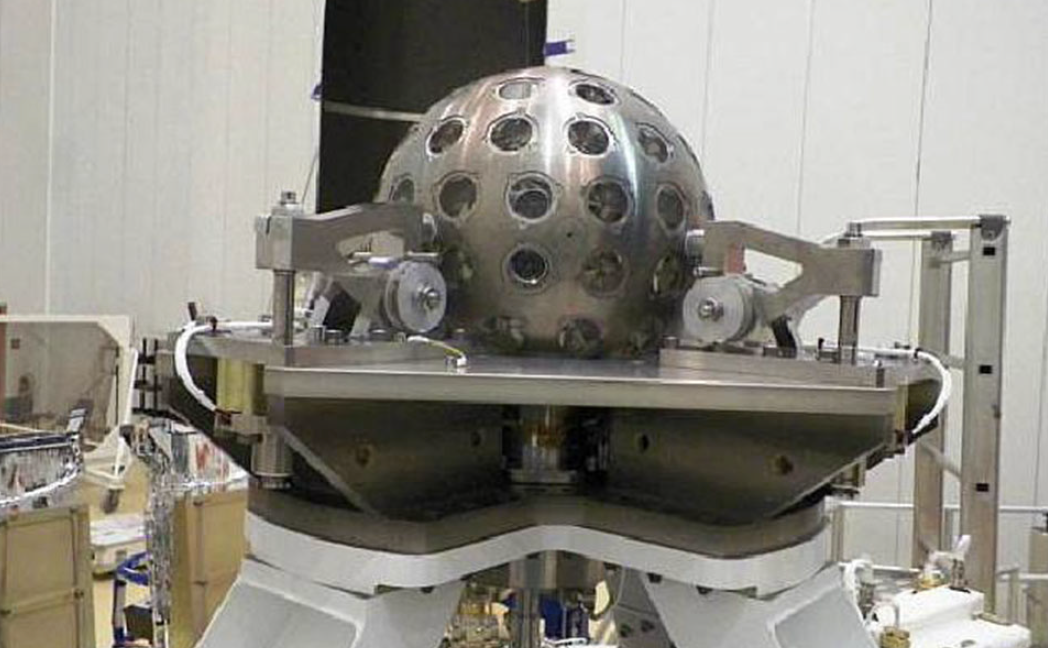
But now, a team of astronomers led by Ignazio Ciufolini, a physicist at the Wuhan Institute of Physics and Mathematics in China, reports the most accurate measurement of the terrestrial Lense-Thirring effect to date. Their work brings our uncertainty down from a few percentage points to just 0.2 percent. And they did it with a satellite that looks like a cross between a golf ball and a disco globe.

Read full article

Comments

Β© NASA

❌