VLC will always have a place on any Windows, macOS, or Linux PC I own. It's been the Swiss Army knife of media players for decades at this point, and you'd be forgiven if you simply stopped looking once you found the one media player to rule them all.
Streaming may have made physical media feel obsolete, but that doesn't mean there's no reason to start collecting Blu-rays. In fact, owning your favorite movies and shows on disc can still offer some major advantages, from better picture quality and reliable playback to the simple peace of mind that comes with actually owning what you want to watch. You also don't necessarily need to spend hundreds of dollars on a dedicated Blu-ray player to get started.
In 2020, Microsoft announced that Game Pass Ultimate subscriptions would include unlimited access to its new Xbox Cloud Gaming service (then still known as Project xCloud). Now, that kind of streaming buffet service is coming to an end, as Microsoft announced strict new limits on how much streaming is included in its various Game Pass subscriptions.
Starting in November, Game Pass subscriptions will include the following monthly limits on game streaming time:
Game Pass Ultimate ($23/month): 15 hours
Game Pass Premium ($15/month): 10 hours
Game Pass Essential ($10/month): 5 hours
Subscribers who use up their monthly streaming allotment will be able to buy additional time, Microsoft said, without sharing specific pricing or availability for that streaming time. Access to downloadable versions of games included in a Game Pass subscription remains unaffected.
Agnes Kim, founder of ViaJiin, a Korean-sourced beauty supply startup based in the Seattle area, with some of the skincare products that her new company offers. (ViaJiin Photos)
Long before the July email arrived confirming she was one of thousands of Xbox employees laid off in Microsoft’s latest round of job cuts, Agnes Kim could feel the impending doom hanging over big tech.
But instead of waiting around for the next pendulum swing, the eight-year Xbox veteran spent her nights and weekends laying the groundwork for a very different kind of reboot: a boutique Korean skincare startup called ViaJiin.
The pivot from big tech and gaming to startups and beauty is an illustration in how preparation can help a laid off worker upend the usual five stages of grief that come before figuring out what to do next. Kim skipped straight to acceptance — announcing her new venture on LinkedIn just two days after getting her pink slip from Microsoft.
Kim joined the tech giant in 2018 after roles at Sony Pictures Entertainment and Deloitte Consulting, eventually rising to director leading Xbox’s market expansion in Asia. For years, she thrived in the role, building teams and expanding the gaming footprint in regions close to her roots. But as post-pandemic gaming demand normalized, the environment shifted from ambitious growth to what felt like a cycle of corporate survival.
Starting in early 2023, layoffs began rolling through the company every six months. Seeing the predictable pattern take its toll on team morale, Kim realized she couldn’t rely on long-term corporate stability to fulfill her goal of becoming an entrepreneur.
“You have a sense of impending doom,” Kim recalled. “There’s a shadow lurking. I felt like every six months we were waiting for the next round. I just didn’t feel like I was in an upswing anymore.”
Determined to take control of her timeline, she began tinkering with her business concept in late 2025, officially forming an LLC for ViaJiin in March 2026 and running focus groups by May — all while balancing her full-time executive role. When the July cuts finally hit Xbox, eliminating 1,600 jobs, Kim had already built six months of momentum.
Kim’s connection to skincare is deeply personal, rooted in her childhood spent living in South Korea from ages eight to 15. She grew up watching her mother religiously follow a multi-step routine and stress the daily necessity of sunscreen — a reflection of a culture where maintaining a youthful appearance carries immense social expectation.
That intense domestic demand has birthed a fiercely competitive market of over 30,000 brands, driving rapid scientific innovation. It has also turned South Korea into a global beauty powerhouse, with cosmetics exports surging past $10 billion as the U.S. recently surpassed China as the top destination for Korean beauty products.
Agnes Kim, second from left, with guests checking out ViaJiin’s skincare products at an event in Bellevue. (ViaJiin Photo)
ViaJiin aims to solve the overwhelming paralysis that American consumers face when trying to navigate the K-beauty market. Instead of building a massive retail catalog or pushing complicated 12-step routines, Kim simplifies the process into a streamlined four-product kit — cleanser, toner, serum, and cream — curated through a digital skin quiz. And she bypasses mainstream brands sold at big-box retailers to source exclusively from boutique Korean makers.
“The products I carry, you can only get through me,” Kim said. “I find boutique products that are filled with good ingredients, come to the U.S. compliantly, and turn it into a kit.”
ViaJiin’s full kits sell for $179, while smaller duo sets are priced at $99. Since shipping her first orders in August, Kim has been hand-packing boxes herself with personalized touches, building early traction online while hosting small, local events like “ViaJiin Nights” to let clients test products in person. The kits have also secured retail shelf space at K-Beauty & Skin in Renton, Wash., where Kim lives.
Kim’s transition from managing corporate teams to operating as a solo founder has meant trading human delegation for AI assistance.
Toward the end of her tenure at Microsoft, every conversation and initiative was dominated by a relentless push toward AI. Kim is now embracing those tools to execute work that would typically require a suite of employees or contractors.
She’s relied on Anthropic’s Claude as a virtual strategist and used platforms like Lovable to try her hand at “vibe coding” — the trend of using conversational natural-language prompts to generate functional software code — building out ViaJiin’s website and skin quiz without hiring a developer.
“I don’t have a co-founder… I’m delegating to Claude and GPT,” Kim said. “People are very surprised by my website or the skin quiz. I’m not an engineer, but it looks like I hired a web designer.”
While AI can handle code and logistics prompts, Kim quickly found that software can only go so far when running a physical inventory business. Between navigating complex U.S. FDA labeling regulations, managing customs paperwork, and verifying ingredient compliance, the operational heavy lifting remains resolutely analog.
And the shift from corporate structure to total solitary accountability is daunting at times.
Without a team to delegate to or a clear roadmap of objectives and key results, Kim admits there are moments where the freedom of entrepreneurship gives way to self-doubt.
“I think I understand why some people just work for the man,” Kim joked. “When you work for Microsoft, certainty and structure are more there. There are definitely moments where I’m like, ‘What the f*ck am I doing? What is today’s goal?'”
Still, Kim has no interest in turning back. Energized by the daily hustle and the creative control of building something from scratch, she insists she wouldn’t trade the experience for her old corporate desk. She hopes to grow ViaJiin into a household national brand while staying out of big tech for as long as she can.
“I’m 1,000% energized. I absolutely would not trade it,” Kim said. “This is allowing me to be truly the version of Agnes that I thought I would be when I was 12, and I want to keep going at it.”
Marc Whitten, the new president and CEO of Dolby Laboratories. (Dolby Photo)
— Marc Whitten, a former Microsoft and Amazon executive, was named president and CEO of San Francisco-based Dolby Laboratories. He succeeds Kevin Yeaman, who is retiring after leading the entertainment technology company for nearly 20 years.
Whitten spent 17 years at Microsoft, rising to corporate vice president and chief product officer for Xbox. He went on to serve as chief product officer at Sonos before joining Amazon as vice president of entertainment devices and services, overseeing products including Alexa, Kindle and Fire TV.
He later served as president of Unity Create and CEO of Cruise. Most recently, he was vice president of robotics at Meta.
Dr. Lawrence Fong was named senior vice president and director of the Translational Science and Therapeutics Division, effective Dec. 1. He succeeds Dr. Geoff Hill, who is departing the organization in December.
Fong joined Fred Hutch in 2024 as scientific director of the Immunotherapy Integrated Research Center and Bezos Family Distinguished Scholar in Immunotherapy. He previously founded the Cancer Immunotherapy Program at the University of California, San Francisco.
Dr. Andrew Hsieh. (Fred Hutch Photo)
Dr. Andrew Hsieh, the associate director of the Fred Hutch Human Biology Division, was named the inaugural Larry and Virginia Gordon Endowed Chair in Prostate and Bladder Cancer Research. Hsieh is a physician-scientist at Fred Hutch specializing in genitourinary cancers.
— Two recent notable Microsoft AI-related exits:
Andréa Mallardis leaving her role as chief marketing officer of Microsoft AI after joining from Pinterest in January, according to Business Insider. She will stay on as an advisor until early next year. Mallard, who is based in the San Francisco Bay Area, previously served as global chief marketing officer at Pinterest for eight years.
Ece Kamar departed Microsoft Research after 16 years with the company. She was corporate vice president and managing director of the AI Frontiers Lab, where she worked on small language models and the company’s agentic AI stack. She has not announced her next role.
Poppy MacDonald. (File Photo)
— Poppy MacDonald was named president of NationSwell, a social impact membership organization. MacDonald previously served as president of USAFacts, the nonpartisan civic data initiative founded by former Microsoft CEO Steve Ballmer, for seven years. A past recipient of an Uncommon Thinkers award from GeekWire and Greater Seattle Partners, she is also the former president and COO of POLITICO.
— Jeff Buhrman joined Seattle startup Tin Canas head of finance. The company is building a screen-free, WiFi-enabled phone designed to let kids connect with friends and family. Buhrman previously served as CFO of Seattle-based Sleep Doctor for more than four years.
— Susan Loosmore was confirmed to the Major League Baseball Stadium Public Facilities District board, which oversees T-Mobile Park. The King County Council approved the appointment Aug. 25. Loosmore spent more than 17 years in executive leadership at T-Mobile and previously served as chair of the Seattle Metropolitan Chamber of Commerce.
Musierowicz, who is based in Atlanta, previously served as chief revenue officer at SmartBear and Keyfactor. Earlier, he led global channels and alliances at Atlassian through its IPO.
Packham, who is based in Salt Lake City, Utah, joins from Dragos, where he was CMO. He previously served as executive vice president of marketing at DigiCert.
— Vancouver, B.C.-based Integrated Quantum Technologies, an enterprise AI infrastructure company, appointedHusam Fezzani as CEO. He succeeds Alan Guibord, who moved to chairman. Fezzani spent nearly 30 years at HSBC, where he held senior technology and engineering leadership roles including global engineering head for the bank’s Commercial Technology Division.
For decades, console owners have faced a choice between the convenience of digital downloads and the permanence of physical game discs. Soon, Xbox owners will be able to get the best of both worlds for thousands of supported titles as part of a newly announced disc-to-digital program.
The program—announced today ahead of testing for Xbox Insiders starting August 31—will let players claim a "digital entitlement" for "most Xbox One and Xbox Series X disc-based games" simply by inserting the disc into a console and launching it. That game will then be playable completely digitally, without the need to ever insert the disc, as long as you (or a member of your family account) is logged in. The digital entitlement will also allow access to features like Xbox Play Anywhere (for play on PC) and Xbox Cloud Gaming, for supported titles.
Microsoft says that your physical disc will "continue to work exactly as it always has" after the digital entitlement is claimed. But before you get any ideas, the fine print on the announcement mentions that there is only "one revokable license per game disc," so if you resell that disc or loan it to a friend, that digital entitlement could be transferred to a new account when someone else puts it into their console.
One of the video game studios impacted by Xbox’s layoffs in July has successfully reclaimed its independence, as well as control over its intellectual property.
Compulsion Games, headquartered in Montreal, was founded as an independent studio in 2009 and acquired by Xbox in 2018. Its one release as a member of the Xbox Games Studio network was 2025’s South of Midnight, an action/adventure game set in a magical Deep South.
In July, Microsoft announced the first wave of a planned 3,200 job cuts throughout its Xbox department, alongside plans to spin out or shut down five of its studios. Compulsion Games was one of those five, alongside Double Fine Productions (Psychonauts), Ninja Theory (Hellblade), Undead Labs (State of Decay), and Arkane Studios (Deathloop, Dishonored).
Subsequently, on Aug. 20, Compulsion CEO Guillaume Provost revealed in an interview with GamesBeat’s Dean Takahashi that Compulsion’s management had successfully reacquired the studio, its staff, and the South of Midnight IP on Aug. 11.
South of Midnight is still available via its previous storefronts, including Steam and the PlayStation Network, but is currently self-published by Compulsion.
Provost told GamesBeat that no layoffs had been made at Compulsion as it transitioned to independence, and most of the team elected to stay together.
As for the other studios affected by Xbox’s July 6 layoffs:
Double Fine Productions, headquartered in San Francisco, confirmed on July 28 that it had laid off 23 employees to return the studio to a “sustainable size.” It is once again fully independent and has control of its IP, such as Psychonauts, and will be exhibiting in Seattle on Labor Day weekend as part of the Penny Arcade Expo.
Ninja Theory, from Cambridge, England, was one of the more unexpected shutdowns, as it had debuted Senua, a third entry in its Hellblade series, only a few days before the layoffs announcement. It has reportedly been spun off from Microsoft and will continue work on Senua under an unspecified new owner.
Likewise, Seattle’s Undead Labs is currently under unidentified new ownership and still plans to release the long-anticipated third entry in its zombie survival series State of Decay at some point next year.
Finally, Arkane’s status has yet to be firmly established. It formerly consisted of two studios, in Austin, Texas and Lyon, France, but its Austin office was closed down as part of a wholly separate wave of Xbox layoffs in May 2024. Several of the affected employees in Texas, including former studio head Harvey Smith, announced on Aug. 19 that they’d founded a new company, Black Pony Immersive, with plans to create new games in the same “immersive sim” subgenre as Dishonored.
Xbox is currently exhibiting at the Gamescom conference in Cologne, Germany.
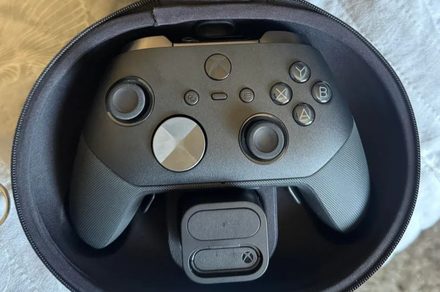
Someone reportedly paid $200 for a mystery Xbox controller on OfferUp, and the apparent Microsoft prototype could be an early Elite Series 3 complete with a tiny built-in display.
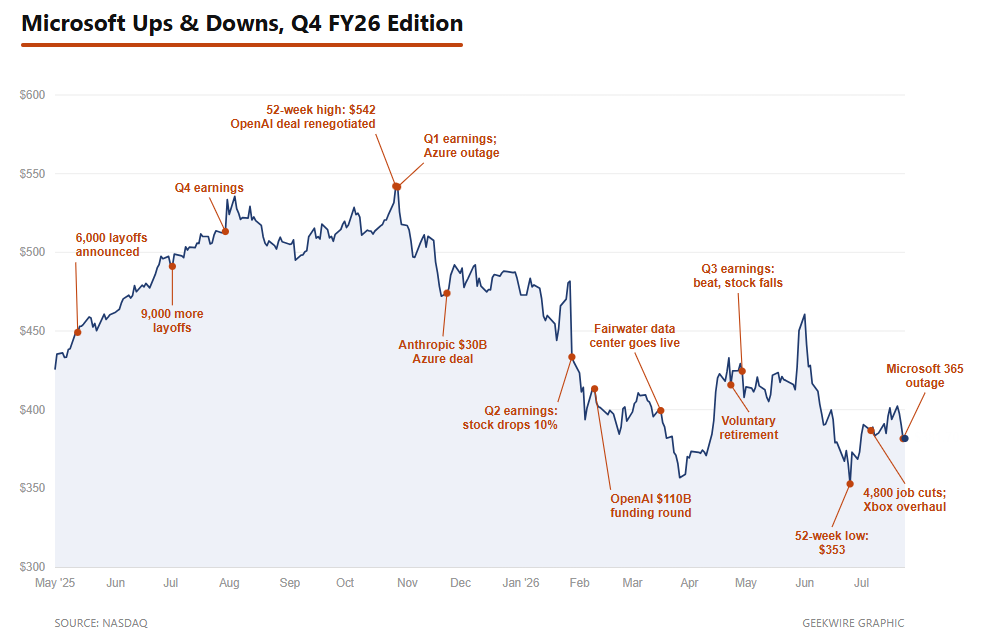
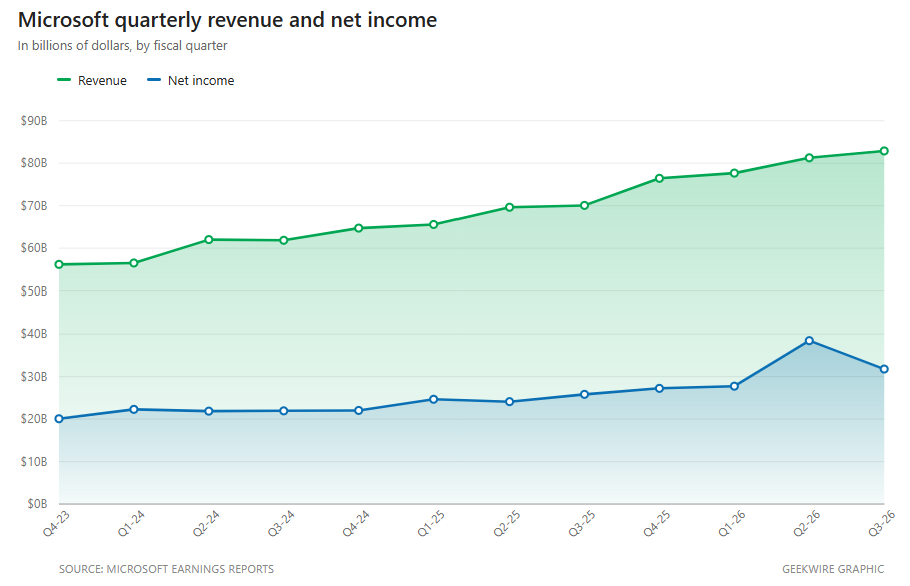
Microsoft has topped earnings expectations consistently in recent years, yet its stock is near a one-year low. So while it’s worth paying attention to revenue and profits when the company reports its fiscal year-end results Wednesday, there are clearly other forces at play on Wall Street.
Here are the key stats and trendlines to watch going into the earnings report for the fourth quarter of the company’s 2026 fiscal year, ended June 30.
Core numbers: Analysts expect revenue of about $87.7 billion for the quarter, up 14.7% from a year ago, and earnings of $4.24 per share, up 16%, according to Yahoo Finance. Microsoft’s own revenue guidance was $86.7 billion to $87.8 billion — meaning Wall Street is looking for a result at the very top of the company’s range.
For the full fiscal year, that works out to roughly $329 billion in revenue, up 17% from $281.7 billion in fiscal 2025.
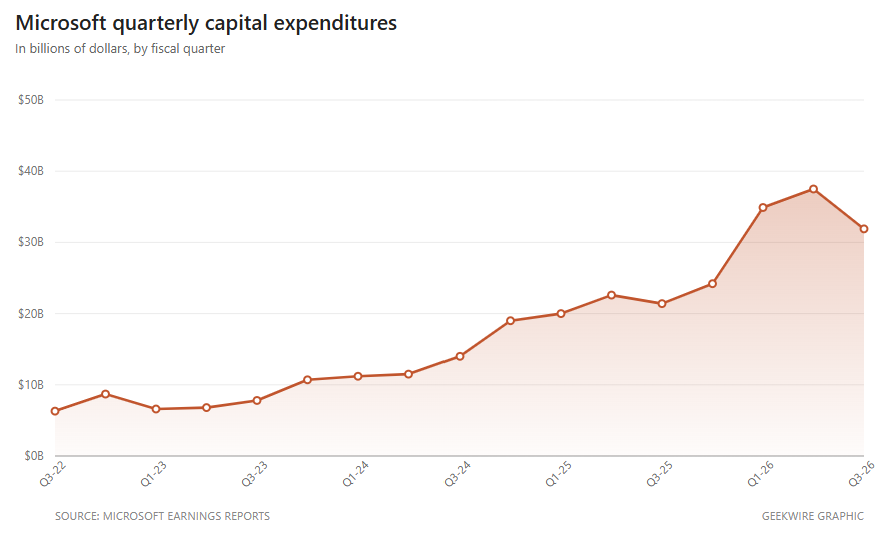
Capital expense: This is the big one. Microsoft told investors to expect more than $40 billion in capital spending for the quarter, which would be a record — up from $31.9 billion in the March quarter and $37.5 billion in the one before that. About two-thirds goes to GPUs and other short-lived hardware.
For the calendar year, the company expects to spend roughly $190 billion. Chief Financial Officer Amy Hood said about $25 billion of that total is the result of higher component prices.
One big question this week will be the company’s guidance for capex going forward. Because this is the fiscal year-end, Wednesday brings the company’s first capital spending guidance for fiscal 2027, which began July 1.
Capex concerns: Google parent Alphabet last week foreshadowed what may happen to Microsoft. It reported revenue up 24% and cloud revenue up 82%, then raised its own capital spending forecast to as much as $205 billion — well above the roughly $188 billion analysts expected. The stock fell 7% the next day and Alphabet fell below its prior $4 trillion market valuation.
Big picture, investors seem to have decided the capital spending is getting ahead of the payoff. Data centers and chips cost money now, while the AI revenue meant to justify them arrives over years — if it ever reaches the scale these companies are promising.
Moody’s Ratings raised its own red flags about this last week, saying the six largest cloud and AI platforms will spend about $785 billion this year and close to $1 trillion in 2027. Demand is real and accelerating, the ratings agency said, but “the ultimate return on investment is unclear.”
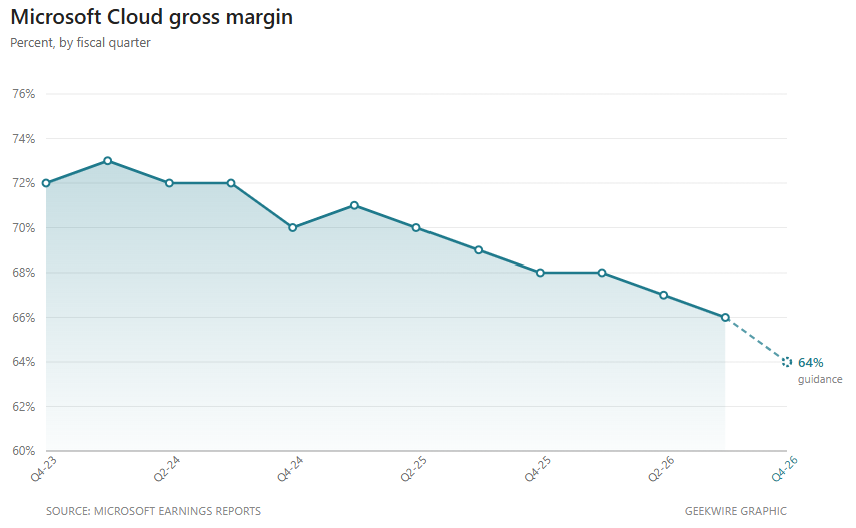
Cloud margins: This is where the capital spending starts to become evident in the company’s core quarterly results. Microsoft Cloud gross margin — the share of cloud revenue left after the cost of delivering the service — has slipped from 72% three years ago to 66% last quarter.
For the quarter it reports Wednesday, Microsoft told investors to expect about 64%. On the prior earnings call, Hood attributed the decline to AI infrastructure costs and growing use of GitHub Copilot, partly offset by efficiency gains in Azure.
Microsoft doesn’t absorb the cost of a data center all at once. It spreads the expense across the years the equipment is expected to last. That cost shows up here, in the expense of running the cloud — making this one of the first places where the capital spending hits earnings.
Microsoft Azure: On its prior conference call, Microsoft said it expected the Azure cloud business to grow 39% to 40% in constant currency in Q4, a slight acceleration from the 39% posted in Q3. Analysts expect roughly the same, with some outliers such as BNP Paribas looking for 41%.
But the published expectations aren’t the real bar. In January, Azure grew 38% — ahead of Microsoft’s guidance — and the stock fell 10%, because Wall Street had privately been expecting 39.4%.
Azure’s growth rate also reflects a choice as much as it does demand. Microsoft has been routing scarce computing capacity to its own products first — Copilot, GitHub Copilot, internal research — and selling what remains to Azure customers. Hood has said the growth rate would have been higher had that capacity gone to customers instead. Demand continues to outrun supply, and the company expects to stay “constrained at least through 2026.”
Business Insider reported Sunday that the shortage of supply has pushed Microsoft to shop for additional computing capacity outside its own data centers, evaluating capacity from Amazon and Google, and that Amazon stepped in following a series of GitHub outages.
Copilot and AI revenue: Microsoft said in April that its AI business had reached a $37 billion annual revenue run rate, up 123% from a year earlier. It was the first update to that number since January 2025, when the company put it at $13 billion. Whether Microsoft discloses it a third time Wednesday is a signal in itself.
Microsoft 365 Copilot passed 20 million paid seats last quarter, up from 15 million in January. That’s about 4.4% of the 450 million commercial seats across Microsoft 365 — the gap that has drawn skepticism from investors all year. Microsoft said it expects the number of new paid seats to grow again this quarter.
Meanwhile, the company is launching new initiatives to drive adoption of AI among its customers. Earlier this month it launched the Microsoft Frontier Company, a $2.5 billion effort to put 6,000 engineers inside customer organizations to help them deploy AI.
Wednesday is also the first report since Microsoft changed how it charges for GitHub Copilot. As of June 1, customers pay based on usage rather than a flat fee per user.
The OpenAI backlog: Microsoft’s remaining performance obligations — RPO, a measure of contracts customers have signed but the company has not yet fulfilled — reached $627 billion last quarter, up 99% from a year earlier. About a quarter of that is expected to become revenue in the next 12 months. It’s the strongest evidence that there’s real demand supporting the AI buildout.
But the RPO is also highly concentrated. In January, when it stood at $625 billion, 45% was tied to OpenAI — roughly $281 billion committed by a single customer that is still losing money. Take OpenAI out of last quarter’s figure and the growth drops from 99% to 26%.
Then in April, Microsoft and OpenAI revamped their partnership, and OpenAI ended its exclusive commitment to run on Azure.
Reliability: On July 23, a bug in Microsoft’s automated network maintenance tooling cut a West US Azure data center off from the company’s global network, knocking out Teams, SharePoint, OneDrive and Copilot Chat for about five hours. Microsoft has published a preliminary post-incident report, and a final one is due within two weeks.
The outage falls in the quarter that began July 1, so it won’t appear in Wednesday’s numbers. But it comes as Microsoft is asking businesses to hand AI agents real control of their operations.
Retirement charge: Wednesday’s results will include about $900 million in one-time costs from Microsoft’s voluntary retirement program, the first in the company’s 51-year history. Hood said roughly $350 million falls in the cost of revenue and $550 million in operating expenses.
About 8,750 U.S. employees were eligible — 7% of Microsoft’s U.S. workforce — and about 30% accepted, Chief People Officer Amy Coleman confirmed in an interview with GeekWire, in line with what the company expected. Those departures reduced the size of the 4,800-job cut Microsoft announced July 6, which happened after this quarter ended.
Even with the retirement costs, Microsoft told investors it expects operating margins for the full fiscal year to be about a point higher than last year. Hood also said on last quarter’s call that headcount declined year over year and will keep declining in fiscal 2027.
Windows: Microsoft expects Windows OEM revenue — what PC makers pay to put Windows on their machines — to decline close to 20% this quarter.
A few factors are driving this:
Last year’s wave of PC upgrades, when support for Windows 10 ended, makes for a tough comparison.
PC makers stocked up on parts and machines ahead of rising memory prices and are now working through them.
The PC market itself is slower, because memory prices have made computers more expensive.
The memory shortage is hitting Microsoft a few different ways. In addition to adding about $25 billion to the company’s capital spending this calendar year, as noted above, it lowers what Microsoft earns from Windows. Also, in late June, Microsoft raised Xbox console prices by $100 to $150, saying storage and memory costs had risen more than 2.5 times.
This week: Facebook parent Meta reports the same afternoon as Microsoft, with Apple and Amazon on Thursday and Alphabet already out. Check back Wednesday afternoon for coverage.

 Login
Login